




Connect with us

Crypto World

Strategy CEO says Bitcoin holdings will grow again in 2026

Published

on

Strategy CEO says Bitcoin holdings will grow again in 2026

Strategy CEO Phong Le has said the company plans to increase its Bitcoin holdings again this year, even after recent sales reduced its reserve to 840,447 BTC.

Summary

  • Strategy plans to resume Bitcoin accumulation before the end of 2026.
  • Recent sales have reduced its holdings to 840,447 BTC.
  • Strategy sold 3,328 BTC for $213.3 million across the past two reporting periods.
  • Its US dollar reserves have increased to $4.65 billion.

Fox Business reported that Le expects Strategy to return to Bitcoin accumulation as the company builds its US dollar reserve and supports its preferred stock products.

Le’s comments place the company’s long-term buying plan alongside a capital-management program that has produced two consecutive weekly Bitcoin sales. Strategy has used the proceeds to repurchase its variable-rate preferred stock, while common-share sales have provided cash for its dollar reserve.

Advertisement

During an earlier Bloomberg interview in July, Le linked the next buying phase to a recovery in Strategy’s Stretch preferred stock, which trades under the ticker STRC.

“We’ll continue to build that. And yeah, when Stretch gets back to par, we’ll issue more. We’ll buy more Bitcoin,” Le said.

Strategy plans to resume Bitcoin accumulation

Strategy has not announced a date for its next purchase, and Le’s comments describe a plan for later in 2026 rather than an immediate transaction.

Advertisement

The company’s recent activity has focused on restoring STRC toward its $100 stated amount. Because Strategy can issue the preferred shares to raise capital, a recovery toward that level would give the company another source of funds for Bitcoin purchases.

As crypto.news reported on July 16, Le said Strategy would issue more STRC and buy more Bitcoin after the security returned to par. STRC traded near $87 at the time after falling below $75 in late June.

Strategy designed STRC with a variable dividend rate that management can adjust to encourage the shares to trade close to $100. The company kept the annualized rate at 12% for August, despite the stock ending July below $90.

Management has also been repurchasing STRC shares when they trade below the stated amount. Strategy said the purchases were intended to reduce the number of preferred shares outstanding and improve what it calls STRC’s “Bitcoin credit,” a company metric measuring Bitcoin and cash backing relative to its preferred obligations.

Advertisement

Le said in July that Strategy wanted STRC to trade between $99 and $100. The company has described regular repurchases below that range as part of its plan to support the security before issuing additional shares.

Bitcoin sales fund another STRC repurchase

An Aug. 10 SEC filing showed that Strategy sold 1,690 BTC between Aug. 3 and Aug. 9, receiving $108.6 million after fees and expenses.

The company sold the Bitcoin at an average price of $64,262 and used the proceeds to repurchase 1,152,020 STRC shares. Strategy paid an average of about $94.29 per preferred share, leaving approximately $785.2 million available under its STRC repurchase authorization.

Following the transaction, Strategy’s Bitcoin reserve fell from 842,138 BTC to 840,447 BTC. The remaining holdings were acquired for about $63.36 billion at an average price of $75,385 per coin, according to the company’s filing.

Advertisement

The transaction followed a sale of 1,638 BTC for $104.73 million during the week ending Aug. 2. Strategy used $52.4 million from that sale to pay preferred-stock dividends and directed another $52.3 million toward STRC repurchases.

As previously covered, the earlier sale occurred at an average price of $63,957 and reduced Strategy’s reported holdings to 842,138 BTC.

Across the two latest reporting periods, the company has sold 3,328 BTC for approximately $213.3 million. Strategy’s public ledger shows that its reserve has declined from 847,363 BTC on June 22 to 840,447 BTC following several sales.

The company sold 3,588 BTC for about $216 million between June 29 and July 5, before keeping its holdings unchanged for several weeks. Strategy also sold 32 BTC around the end of May, its first disclosed disposal since December 2022.

Advertisement

Dollar reserve reaches $4.65 billion

While reducing its Bitcoin position, Strategy has increased the amount of cash available for dividends, interest payments, and other corporate obligations.

The Aug. 10 filing showed that Strategy sold 6,585,329 shares of MSTR common stock through its at-the-market programs. The sales generated approximately $653.1 million in net proceeds.

Management placed $650 million into the company’s designated US dollar reserve and added the remaining $3.1 million to unrestricted cash. The contribution lifted the reserve from $4 billion to $4.65 billion as of Aug. 9.

In late July, Strategy had reported a reserve of $3.75 billion, which management estimated could provide about 2.1 years of coverage for preferred dividends and interest payments. A subsequent $250 million contribution raised the balance to $4 billion and extended the company’s stated coverage period to about 2.3 years.

Advertisement

The reserve is management-designated liquidity rather than a legally restricted account. Strategy established it in December 2025 to support payments on its preferred securities and outstanding debt, and the company can change the reserve’s size according to capital needs and market conditions.

Le told Fox Business that Strategy had been adding to its dollar holdings, making liquidity one of the company’s current priorities. During Strategy’s second-quarter earnings call, he said the company had learned the importance of holding dollars instead of relying only on Bitcoin as a liquid balance-sheet asset.

US investors retain exposure through MSTR and STRC

Strategy’s latest transactions directly affect US investors because MSTR and STRC trade on Nasdaq, and the company reports its Bitcoin, equity, and preferred-stock activity through filings with the US Securities and Exchange Commission.

MSTR provides equity exposure to Strategy’s Bitcoin reserve, software operations, debt, and preferred-stock obligations. Its performance can therefore differ from Bitcoin’s price because changes in the company’s share count, cash reserve, and capital structure also affect shareholders.

Advertisement

Strategy’s Aug. 10 filing showed that adjusted shares outstanding rose to about 423.85 million after the latest common-stock sales. The company still had approximately $11.7 billion of MSTR shares available for issuance across two at-the-market programs.

STRC gives investors a different form of exposure through a variable cash dividend rather than direct ownership of Bitcoin. Strategy can change the dividend rate each month under the security’s terms, while the preferred shares have no maturity date and are not guaranteed to trade at their $100 stated amount.

After the latest repurchases, Strategy retained a separate $1 billion authorization to buy back MSTR common stock. The company had not used that authorization as of Aug. 9, according to its SEC filing.

Advertisement

Source link

Continue Reading
Click to comment

You must be logged in to post a comment Login

Leave a Reply

Crypto World

Address poisoning attack drains $100K USDT

Published

on

Address poisoning attack drains $100K USDT

A crypto user has lost approximately 100,000 USDT after transferring the funds to a lookalike wallet address planted in the victim’s transaction history 66 days earlier.

Summary

  • A victim has lost approximately 100,000 USDT in an address poisoning attack.
  • The attacker planted the fake address in the wallet’s history 66 days before the transfer.
  • The stolen USDT was converted into about 52.8 ETH, according to Cyvers.
  • Address poisoning exploits users who copy addresses without checking the complete character string.

Cyvers Alerts reported on Aug. 11 that its monitoring system detected the loss after the victim sent funds to an address controlled by an attacker.

How the $100K address poisoning attack unfolded

About 66 days before the theft, the attacker sent transactions involving the victim’s wallet, according to Cyvers. The activity placed a malicious address in the wallet’s transaction history, where it appeared similar to an address the victim had used for a normal transfer.

When the victim later prepared the 100,000 USDT payment, Cyvers said the user relied on the historical record without comparing the complete destination address. The funds consequently went to the lookalike address rather than the intended recipient.

Address poisoning does not require an attacker to obtain a private key, compromise a smart contract, or take control of the victim’s wallet. Instead, the method depends on the length and format of blockchain addresses, which many wallets and block explorers shorten by displaying only their first and last characters.

Advertisement

Attackers generate addresses that match the visible parts of a recipient’s genuine address and then use small or zero-value transfers to place the imitation in a target’s transaction record. A user who checks only the opening and closing characters can therefore select the attacker’s wallet even though the complete strings are different.

In the latest case, Cyvers attributed the loss to the victim’s failure to check the full address. The security company advised users not to treat transaction history as a trusted address book and recommended verifying every character before approving an on-chain payment.

Attacker converts stolen USDT into 52.8 ETH

Following the transfer, the attacker exchanged the stolen USDT for Ethereum, Cyvers reported. The receiving wallet held approximately 52.8 ETH when the security company published its alert.

Advertisement

Cyvers said the conversion appeared designed to reduce the risk that the stolen stablecoins could be frozen. USDT is issued by Tether through smart contracts that allow specific addresses to be blocked, while native ETH does not have an issuer with an equivalent freezing function.

The conversion also means the value of the attacker’s holdings can change with the ETH market price. Cyvers did not report any recovery, return agreement, or exchange intervention in its initial alert, nor did the company identify the victim publicly.

No evidence cited in the alert suggested that a flaw in Tether, Ethereum, or the victim’s wallet software caused the transfer. Cyvers instead described the incident as a social-engineering attack that used a forged address record to exploit the victim’s payment habits.

Address poisoning losses have reached millions

The $100,000 incident follows several larger cases involving the same method. In February, crypto.news previously reported that two users had lost a combined $62 million after copying fraudulent addresses from their transaction histories.

Advertisement

Scam Sniffer attributed about $50 million of that total to a December 2025 incident, while another victim lost approximately $12.25 million, or around 4,556 ETH at the time, in January 2026. The security company said attackers had quietly inserted lookalike addresses into both victims’ recent activity records.

During the December case, a stablecoin holder first sent a 50 USDT test payment to the correct destination. An attacker then inserted a fraudulent address into the history with a 0.005 USDT dust transaction, after which the victim mistakenly sent 49,999,950 USDT to the poisoned address.

The stolen assets were converted into ETH and spread across several wallets, according to an earlier report on the theft. The victim later offered the attacker a $1 million bounty for the return of the remaining funds and threatened to involve international law enforcement.

Low transaction costs have also made automated poisoning campaigns cheaper to operate. Scam Sniffer said in February that millions of dust transactions were being sent each day, with many created to prepare for possible future thefts rather than move funds between genuine users.

Advertisement

In March, a stablecoin user reported receiving 89 poisoning alerts within 30 minutes after completing only two legitimate transfers. Former Binance CEO Changpeng Zhao subsequently criticized transaction explorers that continued to display the malicious entries.

US lawmakers have proposed a crypto fraud task force

For U.S. users, address poisoning falls within a growing category of digital-asset fraud that lawmakers have sought to address through interagency coordination. Senators Elissa Slotkin and Jerry Moran introduced the bipartisan Strengthening Agency Frameworks for Enforcement of Cryptocurrency Act, known as the SAFE Crypto Act, in 2025.

According to the bill’s sponsors, the proposed legislation would establish a federal task force focused on identifying, monitoring, and preventing cryptocurrency scams. Its members would include representatives from government agencies, law enforcement, digital-asset companies, stablecoin issuers, blockchain intelligence firms, and consumer-protection organizations.

The proposal covers several forms of crypto crime, including investment fraud, money laundering, Ponzi schemes, rug pulls, and fraudulent token sales. Sponsors said the task force would examine scam patterns and improve coordination between federal authorities and private-sector specialists.

Advertisement

The bill does not create a reimbursement program for users who mistakenly authorize irreversible transfers. As earlier coverage explained, its proposed task force would focus on detection, disruption and cooperation among agencies and industry participants.

Full address checks can expose poisoned records

Cyvers advised users to compare complete wallet addresses rather than relying on shortened records in transaction histories. For large transfers, security specialists also recommend confirming the destination through a separate communication channel and sending a small test amount before moving the remaining balance.

A test payment alone may not prevent a poisoning attack, as the December 2025 theft demonstrated. Because an attacker can insert a lookalike address immediately after the test, the sender must verify that the address used for the main transfer is identical to the one used for the test transaction.

Address whitelists can add another check by limiting withdrawals to destinations approved in advance. Hardware wallets can also display transaction details before signing, though users must still read and compare the destination shown on the device.

Advertisement

Wallet interfaces and blockchain explorers have started filtering suspicious entries, but the protections vary by platform. A March report found that Etherscan hid zero-value transfers by default, while BscScan and Basescan required users to activate a “hide 0 amount tx” option to remove such records from view.

Source link

Advertisement
Continue Reading

Crypto World

Strategy Remains Committed to Bitcoin Buys Despite Recent BTC Sales, CEO Says

Published

on

Strategy Remains Committed to Bitcoin Buys Despite Recent BTC Sales, CEO Says

Strategy CEO Phong Le said the company plans to resume accumulating Bitcoin later this year, even after shifting business priorities prompted it to sell portions of its holdings in moves that drew scrutiny from the market.

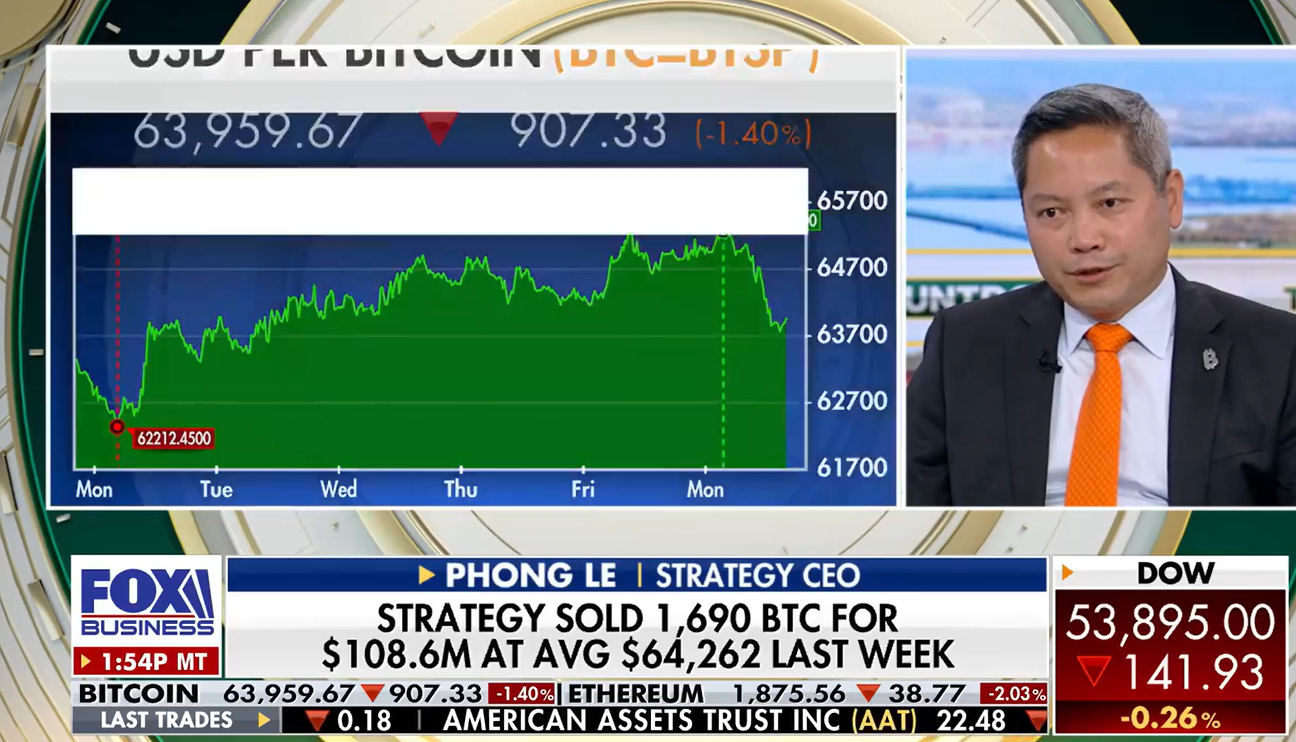
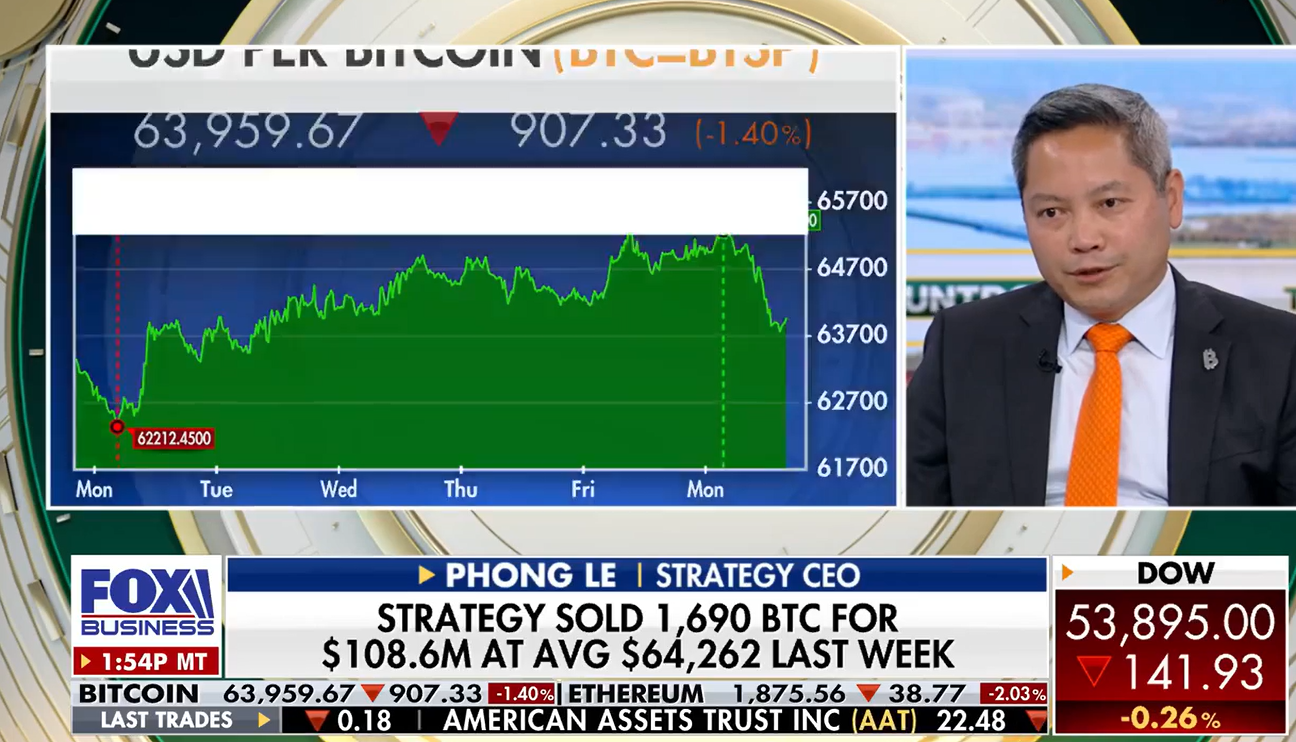
In a Monday interview with FOX Business, Le said Strategy had purchased around 175,000 Bitcoin since the beginning of the year while selling roughly 7,000 BTC, making the company a significant net buyer.

That’s “about 25 times more” buying than selling, Le said. He added that Strategy has gone from the world’s second-largest institutional Bitcoin holder to the largest.

“We’ll get back to buying more Bitcoin throughout the course of the year,” Le said.

Advertisement

Strategy CEO Phong Le appears on FOX Business. Source: FOX

While Strategy has accumulated more than 840,000 BTC, it has sold Bitcoin on four occasions since May, with the most recent sale totaling 1,690 BTC. The company has used proceeds from its recent sales to support preferred stock dividends, share repurchases and its US dollar reserve.

Despite the relatively small size of the sales compared with its overall holdings, Strategy has faced scrutiny for departing from its long-standing “never sell” approach to Bitcoin. The shift highlights the competing demands facing Strategy as a public company, including obligations to common and preferred shareholders alongside its Bitcoin accumulation strategy.

Related: Strategy unveils capital framework to preserve Bitcoin exposure, pay dividends

Advertisement

BTC treasury model faces pressure amid bear market

The corporate Bitcoin treasury model has come under pressure as weaker market conditions challenge the economics that helped fuel its rapid expansion. Public companies hold more than 1.26 million BTC, trailing exchange-traded funds and other funds, which hold more than 1.6 million BTC, according to BitcoinTreasuries.NET.

The model has historically benefited from a financing cycle in which Bitcoin treasury companies traded at premiums to the value of their BTC holdings, allowing them to raise capital through equity or debt and use the proceeds to buy more Bitcoin, according to Novaque Research.

However, that cycle becomes more difficult to sustain when companies trade below the net asset value of their Bitcoin holdings because raising new capital becomes increasingly dilutive to shareholders.

Magazine: Sorry everyone, Bitcoin is headed down to $43,500: Michael Terpin

Advertisement

Source link

Continue Reading

Crypto World

XRP Price Drops Below $1 After Coreum Bridge Hack. First-Time Since 2024

Published

on

Bridge XRP balance · 9 Aug 2026, 97 minutes. Source: XRPL.to

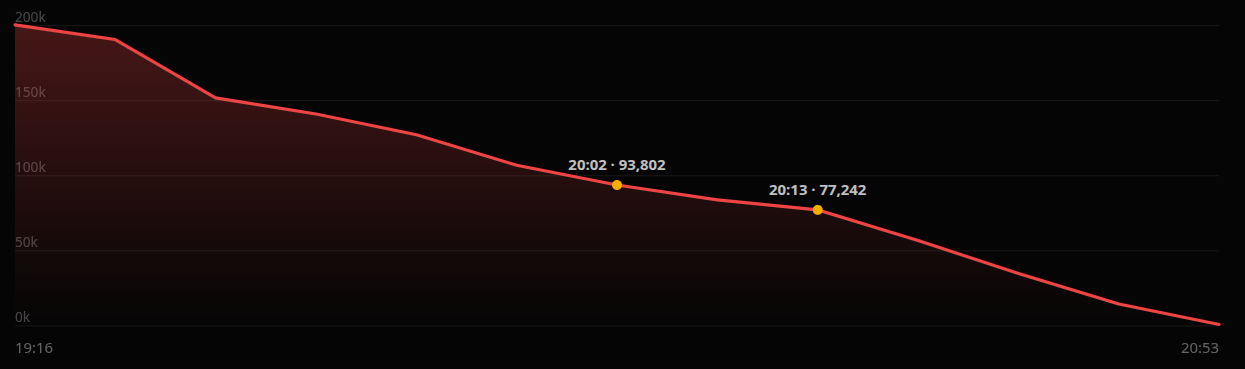
An attacker drained nearly 200,000 XRP tokens from the Coreum bridge in 97 minutes on August 9, exploiting a validation gap in the relayer software rather than any weakness in the XRP Ledger.

The bridge halted operations as XRP slid below $1 amid broader market caution.

What Actually Went Wrong on the Bridge

A blockchain bridge is an infrastructure that connects two separate networks. This allows users to move value between chains that cannot communicate directly. Relayers monitor both sides and authorize transfers.

Advertisement

Coreum Bridge lets users lock XRP on XRPL and receive an equivalent bridged version on the Coreum blockchain, which they can use in Coreum apps and later bridge back to XRPL.

So, how did the hack happen? The numbers tell a precise story. The bridge account held roughly 200,410 XRP before the incident and began releasing funds at 19:16 UTC.

Over 97 minutes, the account executed 94 payments totaling 199,916.3 XRP to two newly created wallets, leaving just 493.5 XRP behind.

Follow us on X to get the latest news as it happens.

Advertisement
Bridge XRP balance · 9 Aug 2026, 97 minutes. Source: XRPL.to

Every transfer carried a valid authorization. A quorum of 17 out of 28 relayer keys signed each outgoing payment through the multi-signature process. Early social media explanations proved wrong. Warnings blamed rippling and the DefaultRipple flag, though native XRP cannot ripple because it has no issuer or trust lines.

The actual cause sat in the code. Relayers monitor XRP Ledger transactions and submit attestations whenever they detect payments carrying a Coreum-recipient memo.

One check was missing entirely. The software never verified that the payment destination was the bridge itself before crediting the corresponding balance. That omission opened the door.

Transfers between wallets controlled by the attacker were treated as genuine deposits, generating credits that later funded withdrawals of real XRP.

Valid signatures, correct procedure, false premise. The bridge credited the attacker with a transfer he sent to himself, recording it on Coreum as though the money had genuinely come in. Source: XRPL.to

Why the XRP Ledger Was Never at Risk

The execution followed a pattern. Small probe transfers doubled in size before a steady stream of payouts averaging roughly 1,695 XRP every 50 seconds. Laundering began immediately. The receiving wallets forwarded most of the funds, complicating efforts to trace where the proceeds ultimately landed.

An important distinction deserves emphasis. No private keys were compromised, and the multi-signature process functioned exactly as designed, only on flawed evidence.

Advertisement

The XRP Ledger itself remained fully secure. The incident did not affect any of its core protocols, consensus mechanisms, or native transaction handling. Coreum suspended the bridge pending repairs.

Any restart will require destination-address verification, the check whose absence enabled the entire sequence.

An official post-mortem remains pending. Until it arrives, the full timeline and remediation plan stay incomplete for affected users.

XRP traded below $1 on August 11, down roughly 3.30% in the last 24 hours, according to BeInCrypto data.

Advertisement

Subscribe to our YouTube channel to watch leaders and journalists provide expert insights.

XRP Price Performance. Source: BeInCrypto

The post XRP Price Drops Below $1 After Coreum Bridge Hack. First-Time Since 2024 appeared first on BeInCrypto.

Source link

Advertisement
Continue Reading

Crypto World

Tether is Killing Its Gold Stablecoin Experiment in 37 Days. Should Investors Worry?

Published

on

Tether is Killing Its Gold Stablecoin Experiment in 37 Days. Should Investors Worry?

Tether will shut down Alloy, its gold-backed lending platform, on September 17. Five customers still owe 399,088.74 aUSDT against 194.41 Tether Gold (XAUT) in collateral, and the clock now reads 37 days.

But there’s a bigger concern. For every $10,000 in Tether Gold, about $3 sits in Alloy. The other 99.97% of the token is untouched.

What’s Happening to Tether’s Alloy Platform

Alloy launched on June 17, 2024, and CEO Paolo Ardoino pitched it as a new breed of gold-backed digital money. Users deposited XAUT, a token backed by one troy ounce of Swiss-vaulted gold. Against that, they borrowed aUSDT, a dollar-tracking token.

The product never grew. Its June 30 attestation valued all collateral at just $1.9 million. Tether runs USDT, a $183 billion stablecoin, so Alloy amounted to a rounding error.

Advertisement

Two years to the day after launch, Tether announced the wind-down. New minting stopped immediately. September 17 is the last day to repay aUSDT and pull collateral out.

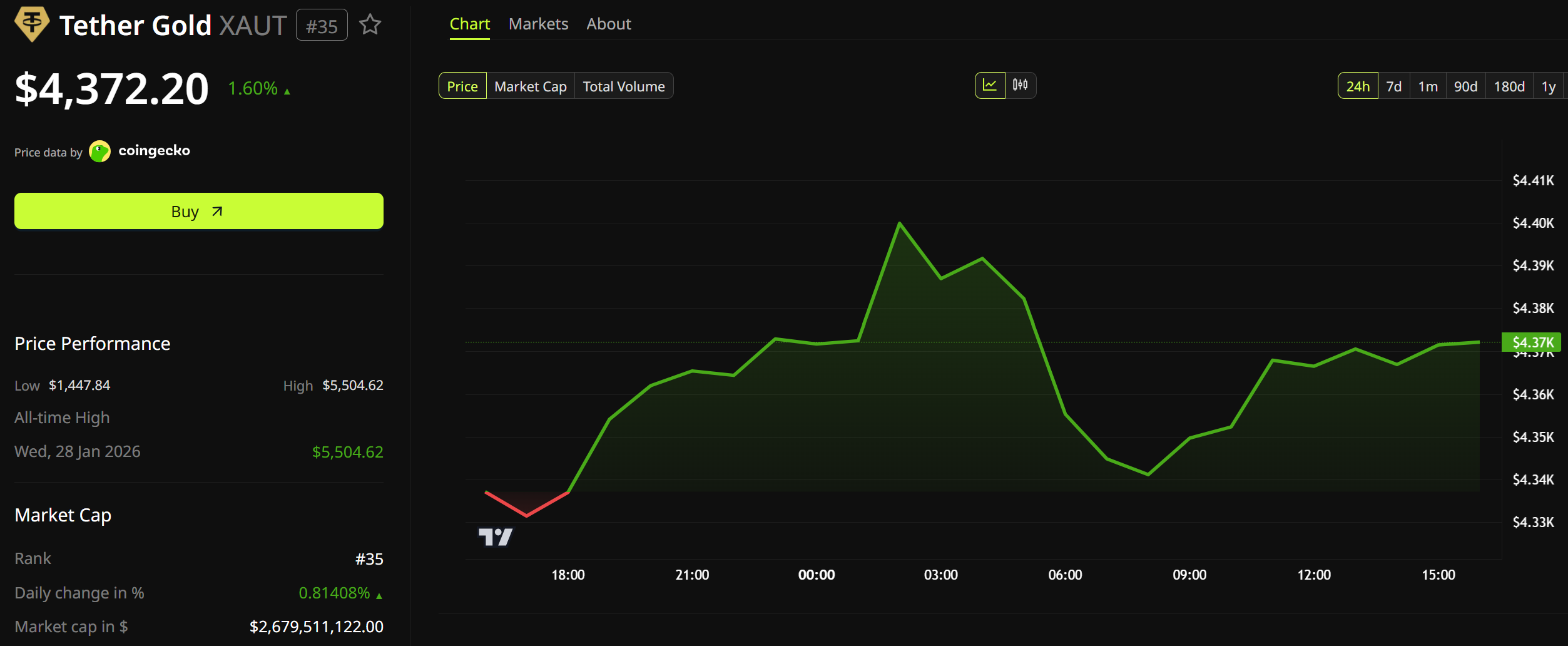
Since then, borrowers have repaid more than half. Alloy’s own data listed just five open positions on August 10. Their gold is worth about $850,000 at XAUT’s current price of $4,372.

Tether Gold (XAUT) Price Performance. Source: BeInCrypto

What the Shutdown Means for Tether Gold Investors

Regular holders can relax. XAUT is not closing, and it remains a $2.7 billion token. The 194 locked ounces equal 0.03% of its 707,747-token supply.

Two cautions still apply. Exiting costs a 0.25% fee, and Tether has published no recovery path for anyone who misses the date. Buying aUSDT on the open market also grants no claim on anyone’s locked gold.

Meanwhile, demand for the token itself looks healthy, and Tether Gold whale flows have picked up in recent weeks. The real question is smaller than the headline. Will five borrowers settle up in the next 37 days?

Advertisement

The post Tether is Killing Its Gold Stablecoin Experiment in 37 Days. Should Investors Worry? appeared first on BeInCrypto.

Source link

Continue Reading

Crypto World

Bitcoin Carry Trade Tops Treasury Yields at 7.89%: Will Wall Street Rotate?

Published

on

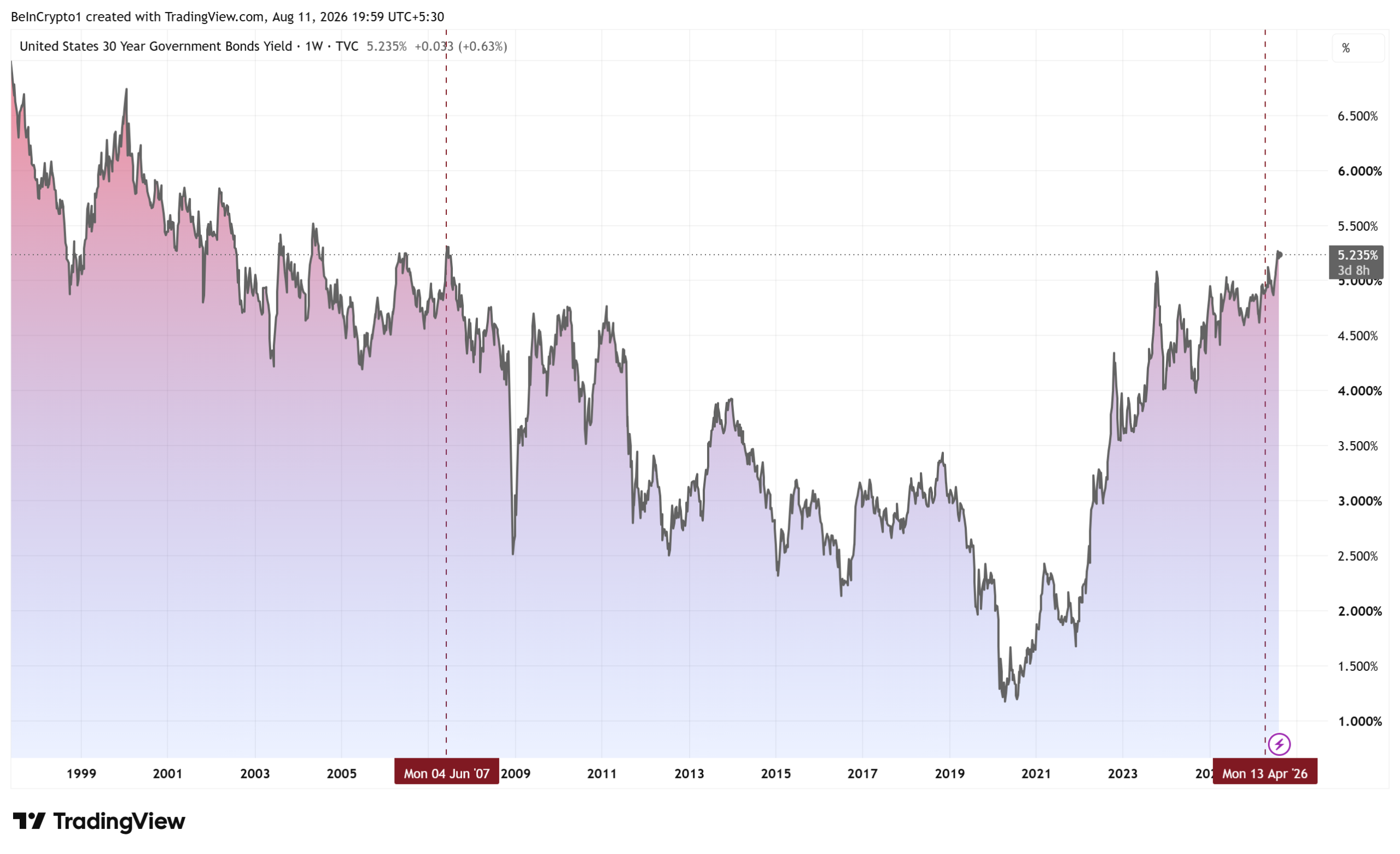
30-Year US Treasury Yields. Source: TradingView

The Bitcoin carry trade now pays more than US government debt. On August 7, annualized Chicago Mercantile Exchange (CME) Bitcoin (BTC) futures carry reached 5.69% to 7.89%, well above the 4.19% two-year Treasury yield recorded the same day.

The flip lands at an awkward moment for bonds. Long-term Treasury yields sit at their highest levels since 2007, and forecasters keep raising their estimates.

30-Year US Treasury Yields. Source: TradingView

Bond Forecasters Keep Chasing Yields Higher

A Reuters poll sees calmer bonds ahead. The median forecast puts the 10-year yield at 4.50% in three months and 4.34% in a year. The two-year is seen sliding to 3.80%.

However, the same survey carries a warning. Eighteen of 22 strategists said the 10-year is more likely to overshoot those forecasts than undershoot them.

Advertisement

Their track record explains the caution. In March, the same poll series saw the 10-year near 4.25% a year out. Five months later, it trades above 4.70%.

Meanwhile, the long end is already breaking ranks. The 30-year yield touched 5.27% on Tuesday, its highest since 2007. BeInCrypto covered the 30-year Treasury yield closing at a 2007 high in late July.

Real yields are doing the damage, not inflation bets. In other words, investors want more compensation for US deficits and heavy debt sales.

Bitcoin Carry Trade Outpaces the Two-Year Treasury

The trade itself is simple. A desk buys spot Bitcoin and shorts a CME futures contract against it. The gap between the two prices becomes the return, collected as they converge at expiry. Think of it as crypto’s version of a bond coupon.

On August 7, that gap beat the government. Measured against the $64,880 CME New York spot benchmark, the August contract settled at $65,175. That works out to a 7.89% annualized return.

September paid 6.25% and December 5.69%. Official Treasury data put the two-year at 4.19% that day, and 4.25% by August 10.

Comparison of Aug. 7 CME Bitcoin futures gross annualized basis versus the two-year Treasury yield, illustrating the Bitcoin carry trade advantage. Source: BeInCrypto

Positioning suggests the shift has teeth. CME data showed hedge funds turned bullish on Bitcoin this month for the first time in years.

Historically, those funds ran net short futures, the classic footprint of carry desks hedging spot and ETF holdings.

Advertisement

ETF Money Flows In, but the Fine Print Matters

Fresh cash is arriving on the spot side too. Farside data shows US spot Bitcoin ETFs pulled in $865 million in the week ended August 7, with every session positive. BlackRock’s IBIT took roughly $694 million of that, about 80%.

Bitcoin ETF Flows. Source: Farside Investors

Still, the flows cannot show motive. No public dataset links an ETF purchase to a futures hedge. Commodity Futures Trading Commission (CFTC) reports only aggregate positions by trader type.

The gross spread also flatters the trade. Financing, margin, and fees all take a cut before a desk keeps anything. A Bank for International Settlements study found crypto carry can top 40% a year during booms, yet margin frictions stop arbitrage capital from fully closing the gap.

Bitcoin trades near $63,930, up 0.3% over the past day. Therefore, the number to watch is the net spread after costs, read beside CME open interest and ETF flows. Wednesday’s July CPI print could move both sides of that ledger.

The post Bitcoin Carry Trade Tops Treasury Yields at 7.89%: Will Wall Street Rotate? appeared first on BeInCrypto.

Advertisement

Source link

Continue Reading

Crypto World

What Are Trump’s Patriot Games? Teens From Every State Are Competing for a $250,000 Prize Pool

Published

on

What Are Trump's Patriot Games? Teens From Every State Are Competing for a $250,000 Prize Pool

Two teenagers from each of the 50 U.S. states, as well as several territories and tribal nations, are competing this week for a hefty scholarship fund in President Donald Trump’s “Patriot Games” as part of the U.S. government’s commemoration of the country’s 250th birthday

The games consist of a series of physical challenges that are “designed to test strength, endurance, agility, teamwork, and perseverance,” the Freedom 250 website reads. 

Participating athletes arrived at the campus of SPIRE Academy, a sports-focused boarding school in Geneva, Ohio, late last week and began competing on Sunday. The events will continue through the finale, which is set to take place at 7 p.m. ET on Tuesday, and a one-hour special recapping the event is then set to air on Thursday. 

Trump is expected to attend the finale, according to Press Secretary Karoline Leavitt.

Advertisement

“President Trump looks forward to attending the Patriot Games in Ohio on Tuesday as we continue to celebrate 250 years of American greatness!” Leavitt posted on X. 

The games follow a number of other semiquincentennial celebrations that have been organized by Freedom250, a nonprofit effort created by President Trump for the purpose, including a UFC fight on the White House lawn, a presidential State Fair on the National Mall, and the largest fireworks show in history on July 4th.

“This once-in-a-generation event will showcase the extraordinary talents that thrive across our country, proving to the world that the American competitive spirit is stronger and more vibrant than ever before,” Trump said in May of the Patriot Games.  

Here’s what to know about the competition.

Advertisement

Who’s competing?

A total of 120 student athletes ranging in age from 14 to 17 are competing in the games. 

They are “representing America’s great states and territories, alongside athletes from tribal nations,” in the competition, according to the Freedom 250 website.One boy and one girl were chosen from each of the 50 states to compete. The games also include athletes from some U.S. territories, including Puerto Rico and Guam; military bases; and tribal nations, though the event’s website does not specify which.

To be eligible to compete, each of the athletes is required to be a U.S. citizen; a resident of the state, territory, or tribal nation they are representing; and in good academic standing. 

Advertisement

Applicants for the games submitted short videos explaining their desire to compete. A Patriot Games Selection Committee then reviewed the submissions and selected the final competitors for the games. 

Tylee Herrmann, a 16-year-old from Arizona representing the Cherokee Nation, said that she wanted to “bring patriotism back to the U.S.” in her application video, according to CNN. “I think we need something to bring us all together, because we’re the United States of America, and we need to be a little more united,” she told the outlet.

Addalee Taflinger, another 16-year-old representing the Commonwealth of the Northern Mariana Islands, a U.S. territory located in the western Pacific Ocean north of Guam, told the Marianas Press that she was “shocked” to be accepted and wants to “bring awareness about Saipan, the typhoons, and all that we’ve been through and how we’re still able to go out and do cool things like this after.”

What are the events?

Advertisement

The events include a “Presidential Fitness Test, a military-inspired boot camp circuit, an obstacle course, and team competitions such as Kickball, Dodgeball, Tug of War, and Victory Hoops,” according to the Patriot Games website. 

Qualifying rounds, along with kickball and dodgeball, took place on Sunday. On Monday, male and female competitors participated in a “varsity circuit” that strung together many sports: athletes had to throw footballs at targets, catch tennis balls out of the air, kick a soccer ball at a target, spike volleyballs over a net, hit wiffle balls with a bat, and sprint around a baseball diamond. Also on Monday, athletes competed in “operation endurance,” in which they had to maneuver through an obstacle course that involved army crawling, climbing nets, lifting heavy tires, monkey bars, and balance beams.

Tuesday’s events consist of tug of war; “victory hoops,” in which competitors shoot basketballs into an arcade-style hoop; the semifinal; and the final. 

What’s the prize for the winners?

Advertisement

One male winner and one female winner will each receive a $125,000 scholarship. Competitions are separated between male and female athletes.   

How can you watch?

The games are being streamed live on ESPN from August 9-11. 

The one-hour prime time special will air on ABC on August 13 at 9 p.m. ET. 

Advertisement

Source link

Continue Reading

Crypto World

The Promise We Made to Americans with Disabilities Is Under Attack

Published

on

The Promise We Made to Americans with Disabilities Is Under Attack

These activities are neither optional nor negotiable—they’re the foundation of the inclusion that this country promised through the ADA.

The notion that families should provide care without additional support is unrealistic and shortsighted, especially for families of people with highly complex medical or behavioral needs. Direct support professionals are trained to implement individualized care plans with a person-centered approach, respond to behavioral crises, administer medications, and more. 

Moreover, this thinking also ignores reality. For instance, many disabled adults’ parents are elderly or deceased. Many of their spouses work full time, sometimes in multiple jobs to meet their families’ financial needs. Many of their siblings are in the same boat but may live hundreds of miles away. Some have no family to fall back on at all. 

Suggesting that people don’t have the right to community-based support while insisting families provide needed care for free risks undoing more than a quarter-century of civil rights progress made possible by Olmstead. Furthermore, dismantling the spectrum of community-based services is expected to have negative down-the-line ramifications. We anticipate that more families will languish on states’ waiting lists for longer, more providers will reduce services or go out of business altogether, more professionals will leave the workforce to fill caregiving gaps, and more people with disabilities will be left with no other choice but expensive, isolating institutions. 

Advertisement

Source link

Continue Reading

Crypto World

UK lawmaker group APPG questions lenders over lack of banking for the country’s crypto firms

Published

on

UK lawmaker group APPG questions lenders over lack of banking for the country’s crypto firms

A U.K. parliamentary group wrote to the bosses of the country’s largest lenders about the lack of banking services for crypto firms.

The “Dear CEO” letter, signed by co-chairs of the Crypto and Digital Assets All-Party Parliamentary Group (APPG), Gurinder Singh Josan and Ed Vaizey, asked banks to explain their approach to providing banking services to U.K. crypto and digital asset businesses.

“We have heard of repeated instances where crypto and digital asset firms have struggled to open accounts with U.K. banks. We have similarly heard reports that several banks have introduced restrictions on crypto-related payments and transactions,” Josan, a Labour MP, and Vaizey, a Conservative peer, wrote in the letter.

British banks that have introduced restrictions on crypto-related payments include HSBC, Nationwide, NatWest, Santander UK and Starling Bank.

Advertisement

Ever since crypto came into being, difficulties around attaining banking relationships have made life hard for industry participants, with the systematic debanking of firms and individuals, particularly in the U.S., being referred to as “Operation Chokepoint 2.0.”

Source link

Continue Reading

Crypto World

Ousted Pudgy Penguins Co-Founder Sells Out 44,444-Piece NFT Mint on Robinhood Chain

Published

on

Ousted Pudgy Penguins Co-Founder Sells Out 44,444-Piece NFT Mint on Robinhood Chain


Cole Villemain, the Pudgy Penguins co-founder whose holders voted him out in January 2022, sold out a 44,444-piece NFT collection on Robinhood Chain in under an hour early Tuesday, taking in roughly $1.28 million according to an onchain tally of the mint transactions. Villemain, who posts as… Read the full story at The Defiant

Source link

Continue Reading

Crypto World

Luke Dashjr removed as Bitcoin BIP editor after controversial BIP-110 fork stalls

Published

on

Luke Dashjr removed as Bitcoin BIP editor after controversial BIP-110 fork stalls

Luke Dashjr, one of the key proponents of BIP-110 soft-fork attempt, has been removed from his position as an editor of such proposals for the development of the Bitcoin network.

The motion’s forwarding and subsequent carrying followed shortly after the controversial BIP-110, an attempt to temporarily restrict use of the Bitcoin network for non-financial purposes, stalled almost immediately after entering a signaling period for miners and node operators to demonstrate their support.

Dashjr, who was one of the most prominent Bitcoin developers driving the BIP-110 initiative, was accused of abusing his editorial authority in doing so, such as attempting to assign the proposal a BIP number before it had been discussed and then quickly merging an update into the repository without following due process.

“The latter is particularly notable given that Luke has otherwise made hardly any contributions to the day-to-day work of the BIP Editors since the additional editors began serving in April 2024: he left fewer than 1% of the BIP Editor comments in the repository since then, and the merge action of this PR was his first since May 2024,” Bitcoin developer Mark Erhardt wrote in a motion calling for Dashjr’s removal on Aug. 9.

Advertisement

Source link

Continue Reading

Trending

Copyright © 2025