
Crypto World
Strategy, Metaplanet unrealized bitcoin losses highlight risk of concentrating on just one token: Crypto Daily



Compounding the issue, many DAT firms have consistently favored issuing debt to fund purchases of BTC. That strategy raises the question of how different they are from governments that borrow heavily to fund investments that fail to generate adequate returns. Both, ultimately, lead to high indebtedness relative to income. As we have noted before, bitcoin lacks inherent yield, return or cash flow.
For now, however, the market doesn’t appear to be worried about these dynamics. BTC continues to trade between $62,000 and $66,000, as it has for weeks, with today’s price action largely below $64,000.
Some analysts say they remain optimistic that the bear market has run its course, pointing to a price range that corresponds with the previous bull-cycle high.
“The peaks of the 2021 bull market were close to these levels,” Alex Kuptsikevich, the chief analyst at FxPro, said in an email. “Three years ago, Bitcoin’s decline generally halted at $20K, which was close to the peak of the previous bull market at the end of 2017. This supports our view that the decline may have run its course, with bearish momentum fading as Bitcoin approaches the 200-week moving average.”
Other analysts have turned their focus to August’s Jackson Hole symposium of central banks and economic data for trading cues. Stay alert!

Crypto World
Bitcoin treasury company Metaplanet (3350) unveils BitBonds with $1.3 million private debt sale


Japanese bitcoin treasury company Metaplanet (3350) unveiled a continuous bond issuance program, dubbed “BitBonds,” completing its first sale with four privately placed series worth about 200 million yen ($1.3 million).
The Tokyo-listed company said the unsecured senior bonds mature in roughly three years and carry annual interest rates of 4% to 4.3%. Solicitation began in late July and has now closed, according to an Aug. 13 disclosure.
Metaplanet said BitBonds will sit alongside common stock, equity-linked securities and preferred shares as a core funding channel. Future issuance will depend on funding needs, market conditions and investor demand, with the company eventually considering registered public offerings.
Unlike Metaplanet shares, which tend to reflect changes in the value of its bitcoin holdings, the bonds offer fixed interest and principal repayment based on the company’s creditworthiness. However, they are unsecured, unrated and not principal-protected, while the issuer’s financial position remains heavily exposed to bitcoin price swings.
The bonds also carry transfer restrictions, and liquidity before maturity is not guaranteed.
The inaugural securities were distributed through wholly owned Metaplanet Securities to individuals and companies under Japan’s small-number private placement rules, marking the firm’s broader push into Japan’s yen-denominated credit market.
JPMorgan Chase stopped providing its banking services to the decentralized prediction market platform Polymarket late last year, according to the Financial Times.
In October 2025 the bank told Polymarket it would have to secure a different banking partner amid regulatory worries. Polymarket has already moved to another lender, though that firm’s name remains undisclosed, the FT report said.
Polymarket was barred from serving U.S. users in 2022 after the CFTC hit the platform with a $1.4 million settlement for running an unregistered derivatives trading venue. The company nonetheless returned to the U.S. market in late 2025 once the Trump administration loosened federal rules.
Even after cutting the formal banking link, JPMorgan has reportedly kept some connection. For instance, it invited Polymarket CEO Shayne Coplan to address a private client conference in February 2026 and is still angling for a role underwriting any future IPO.
CoinDesk reached out to Polymarket for a comment on the matter.


MSCI is considering a new methodology that could remove Strategy and Metaplanet from its Global Investable Market Indexes as early as the November 2026 Index Review.
Summary
- MSCI’s May simulation would delete Strategy, Metaplanet and Yellow Cake under proposed non-operating company screens.
- SharpLink would enter a watchlist because current constituents need two consecutive annual failures before removal.
- Companies failing the core screen become ineligible after triggering four of five financial ratio tests.
- Consultation closes September 30, with results due October 16 and possible November implementation by MSCI.
- MSCI abandoned its earlier crypto-only exclusion proposal in January and promised this broader company review.
A simulation using May data identified the two Bitcoin treasury companies and U.K. uranium investor Yellow Cake as the three existing constituents that would be deleted under the proposed rules.
The proposal remains a consultation, not a final index decision. MSCI’s announcement says feedback remains open through Sept. 30, with results expected by Oct. 16. Any methodology change would then be targeted for the November review. MSCI explicitly warns that the consultation “may or may not” result in the proposed changes.
MSCI proposal replaces the earlier crypto specific test
The current review is broader than MSCI’s earlier attempt to exclude digital asset treasury companies based largely on their crypto holdings. In January, the index provider abandoned that proposal for the February review after investors raised questions about whether a simple asset threshold could distinguish an operating company from an investment vehicle.
As previously reported, MSCI delayed its earlier crypto treasury exclusions and opted for a wider review. Strategy had opposed the previous 50% digital asset threshold, calling it “arbitrary” and arguing that companies holding large concentrations of other assets were not subjected to the same rule.
The new methodology addresses that criticism by applying financial tests across industries rather than singling out Bitcoin or other cryptocurrencies. The presence of Yellow Cake alongside Strategy and Metaplanet in MSCI’s simulated deletions illustrates the broader approach.
Strategy and Metaplanet fail MSCI’s simulated screen
MSCI proposes a two stage test. A company first passes automatically if operating assets exceed 50% of total assets. Companies falling below that level move to a second test based on operating asset intensity, expenses, operating cash flow, non-operating fair value changes and reliance on financing for asset accumulation.
An issuer would be treated as a non-operating company if it triggers at least four of those five flags. For existing constituents, MSCI proposes less restrictive thresholds and requires failure in two consecutive annual reviews before deletion. New candidates would need to fail only the latest review to become ineligible for addition.
Using May 2026 data, MSCI’s simulation would remove Strategy, with a free float adjusted market capitalization of $23.93 billion; Yellow Cake, at $1.81 billion; and Metaplanet, at $654 million. SharpLink, Center Laboratories and Lydia Holding would instead enter a public watchlist because the simulation found only one qualifying period of failure.
SharpLink’s inclusion is notable for the crypto treasury sector. The Nasdaq listed company reported 888,938 ETH and ETH equivalents as of Aug. 3 and said equity financing remains one of its main sources of liquidity. Its filing also says it uses most capital raising proceeds to acquire ETH, although MSCI’s May simulation predates that latest quarterly filing.
Index removal could create passive selling pressure
Deletion would matter because funds designed to track affected MSCI benchmarks would have to adjust their portfolios when the index composition changes. However, MSCI has not published an estimate of possible selling tied to the new proposal, so current claims of a specific forced outflow figure should be treated cautiously.
During the earlier crypto treasury debate, JPMorgan estimated that Strategy could face about $2.8 billion in passive selling if MSCI removed it, with a larger figure possible if other index providers followed. That estimate concerned the previous proposal and should not be presented as a forecast for the new methodology.
Strategy’s balance sheet remains heavily centered on Bitcoin. Its latest SEC filing showed 840,447 BTC as of Aug. 9 after it sold 1,690 BTC for $108.6 million and used the proceeds to repurchase STRC preferred stock. The company also raised about $653.1 million through MSTR share sales during the week, most of which went into its U.S. dollar reserve.
Metaplanet, meanwhile, currently reports 43,000 BTC on its corporate tracker. Its exposure to MSCI dates back to February 2025, when, as crypto.news reported, the company joined the MSCI Japan Index.
What happens next for Strategy and Metaplanet
Nothing has been removed under the new rule yet. MSCI published its regular August Index Review on Aug. 12, with those changes due after the Aug. 31 close, while the separate non-operating company proposal remains scheduled for possible action in November.
The next deadline is Sept. 30, when consultation feedback closes. MSCI expects to announce its decision by Oct. 16. If the methodology is adopted, qualifying deletions could be incorporated into the November 2026 review.
The May simulation also should not be treated as a guaranteed November constituent list. Company filings and financial structures can change, and MSCI’s proposal incorporates annual financial data and persistence tests. The current simulation shows which companies would have failed using the stated May dataset, not an irreversible decision on Strategy, Metaplanet or SharpLink.
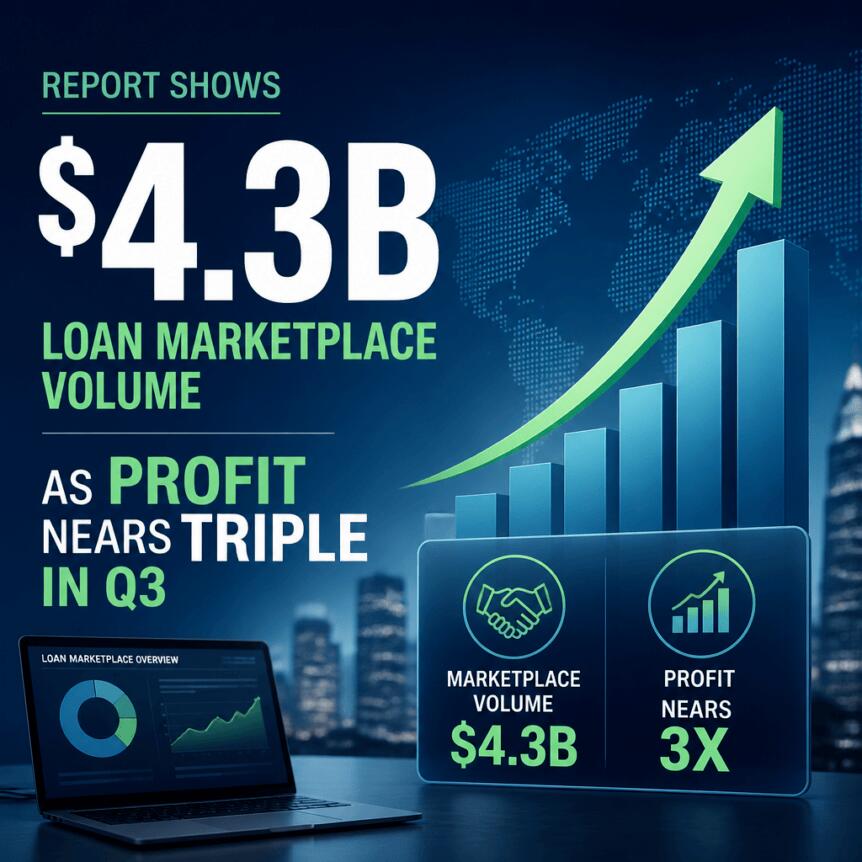
Figure Technology Solutions is pointing to a strong second quarter in its consumer lending marketplace business, reporting $4.3 billion in consumer loan marketplace volume—up 132% year over year. The company also said profitability improved sharply, with quarterly net income nearly tripling as results continued to scale alongside its marketplace platform.
In a statement released Thursday, Figure said net income rose 192% year over year to $87 million, up from roughly $30 million. Net revenue more than doubled to $226 million, and net income margin increased by 10.5 percentage points to 38.8%.
Key takeaways
- Figure posted $4.3 billion in consumer loan marketplace volume for Q2 2026, up 132% from the prior year.
- Net income grew 192% year over year to $87 million, while net revenue increased to $226 million.
- The company’s marketplace volume includes loans originated via its system plus third-party loans traded on Figure Connect; Figure Connect represented $2.8 billion (65%) of the quarter’s total.
- Marketplace volume rose 262% year over year after the platform launched in June 2024, and Figure added 102 loan-origination partners in the quarter.
- Figure expects third-quarter marketplace volume of between $4.8 billion and $5.2 billion.
Marketplace growth and profitability accelerate
Figure’s quarterly update highlights both top-line expansion and a wider path to profit. The $4.3 billion in consumer loan marketplace volume reflects activity across the company’s lending marketplace, which aggregates loan products and routes them through its origination and trading infrastructure.
According to the company’s figures, the scale of the quarter also translated into improved margins. Net income margin rose to 38.8%, helped by revenue growth that outpaced costs as the marketplace expanded.
The company’s disclosed performance matters for investors because it signals that growth in marketplace volume is not merely adding transactions—it is improving efficiency, at least within the time window covered by the quarter’s financial results.
What’s included in “marketplace volume”
Figure’s reported marketplace volume is not a single product line; it combines multiple loan categories processed through its loan origination system and loans traded through its marketplace infrastructure.
The company said marketplace volume includes:
- Home equity lines of credit
- Debt-service coverage ratio loans
- Personal loans processed through Figure’s loan origination system
- Third-party loans traded on Figure Connect
For the quarter, Figure Connect activity totaled $2.8 billion, making up 65% of the overall marketplace volume. That mix is notable because it indicates that the marketplace is increasingly dependent on—and benefited by—third-party lending flows rather than only Figure’s own origination pipeline.
Figure Connect launched as part of the broader marketplace approach, and the company’s disclosures suggest third-party participation is becoming a consistent driver of volume.
Momentum since June 2024 and partner expansion
Figure launched its consumer loan marketplace in June 2024. Since then, the company’s year-over-year comparison has shown steep growth. For Q2, Figure reported marketplace volume up 262% from the same period last year.
Operationally, Figure also emphasized partner growth. It added 102 loan-origination partners during the quarter, taking its total to 489. Partner expansion is a key lever for marketplace businesses because it can broaden supply and increase match rates between lenders and borrowers, which in turn can support continued volume growth.
In addition, Figure’s management said weekly loan applications surpassed $1 billion in July. While that metric is not directly equivalent to marketplace volume, it offers a signal about pipeline strength leading into the period.
Guidance and what investors should watch next
Looking ahead, Figure expects consumer loan marketplace volume of between $4.8 billion and $5.2 billion in the third quarter. That guidance implies further growth from the $4.3 billion level reported for Q2.
For market participants, the main question is whether the company can sustain the relationship between volume growth and margin expansion. With Q2 results showing a substantial jump in net income and a widening net income margin, investors will likely watch for whether future quarters maintain similar efficiency as volumes scale—particularly given the marketplace mix that relies heavily on third-party loans via Figure Connect.
Analyst commentary highlighted by the company’s announcement also points to the marketplace’s data visibility. Bernstein analysts, in coverage dated May, predicted record second-quarter volume for Figure and tied that expectation to what they described as live blockchain data that could allow investors to monitor lending activity more closely in real time.
Figure’s next reporting cycle will therefore be closely watched for confirmation that application strength continues to convert into marketplace volume, and for evidence that partner growth and Figure Connect participation remain steady enough to support the mid-point of its Q3 range.
As Figure moves through the third quarter, traders and long-term investors alike should watch for whether reported volume continues to rise in line with guidance—especially the contribution from Figure Connect—and whether improved profitability persists as the company scales its marketplace network.
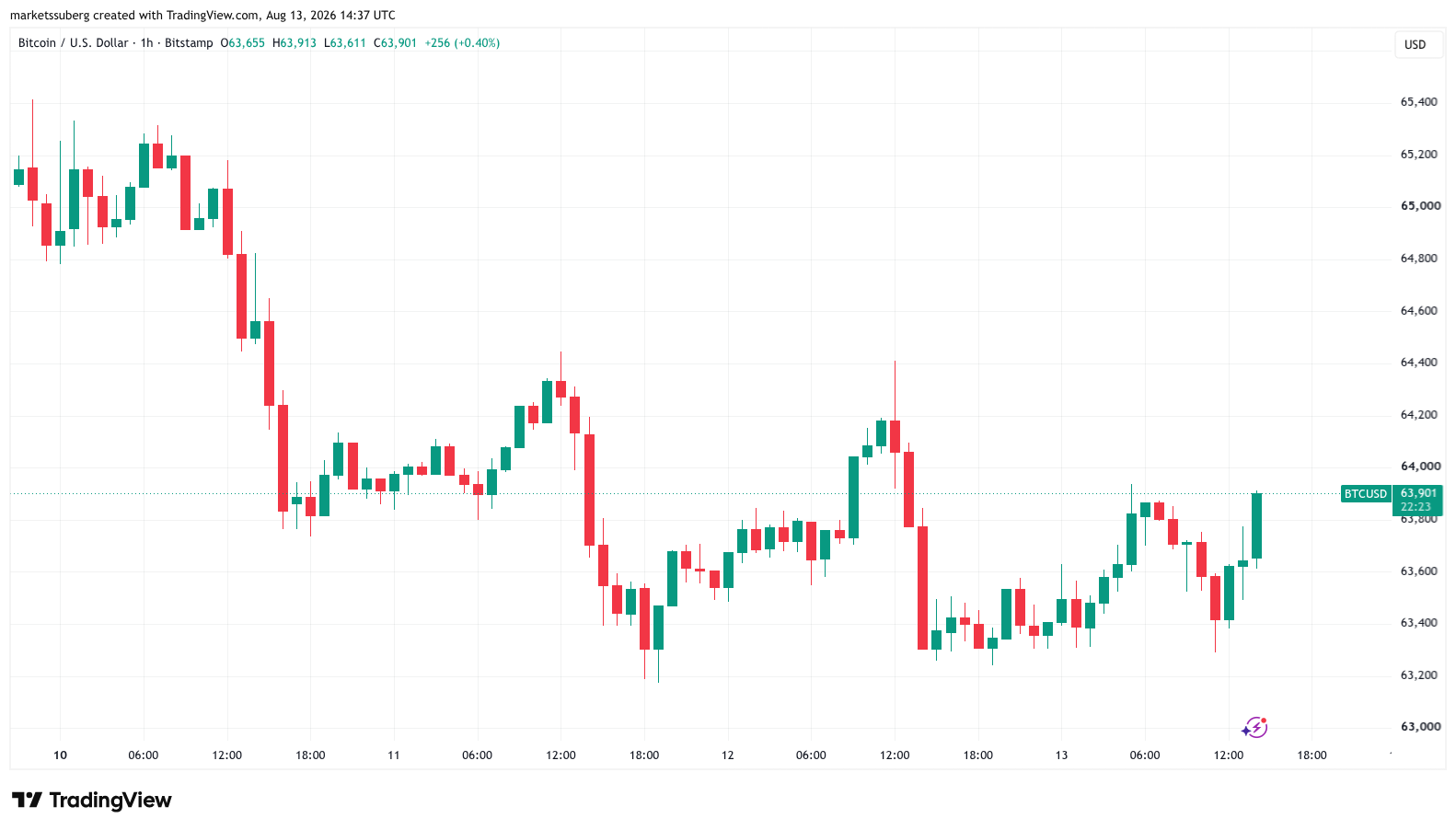
Bitcoin (BTC) edged away from weekly lows on Thursday after the US Producer Price Index (PPI) narrowly cooled in July.
Key points:
- Bitcoin avoids further downside as US PPI data provides a boost to US equities.
- Cleveland Fed president stays hawkish on the outlook for interest-rate policy.
- Bitcoin long liquidations make $61,000 a key level to watch.
July PPI extends cooler US inflation trend
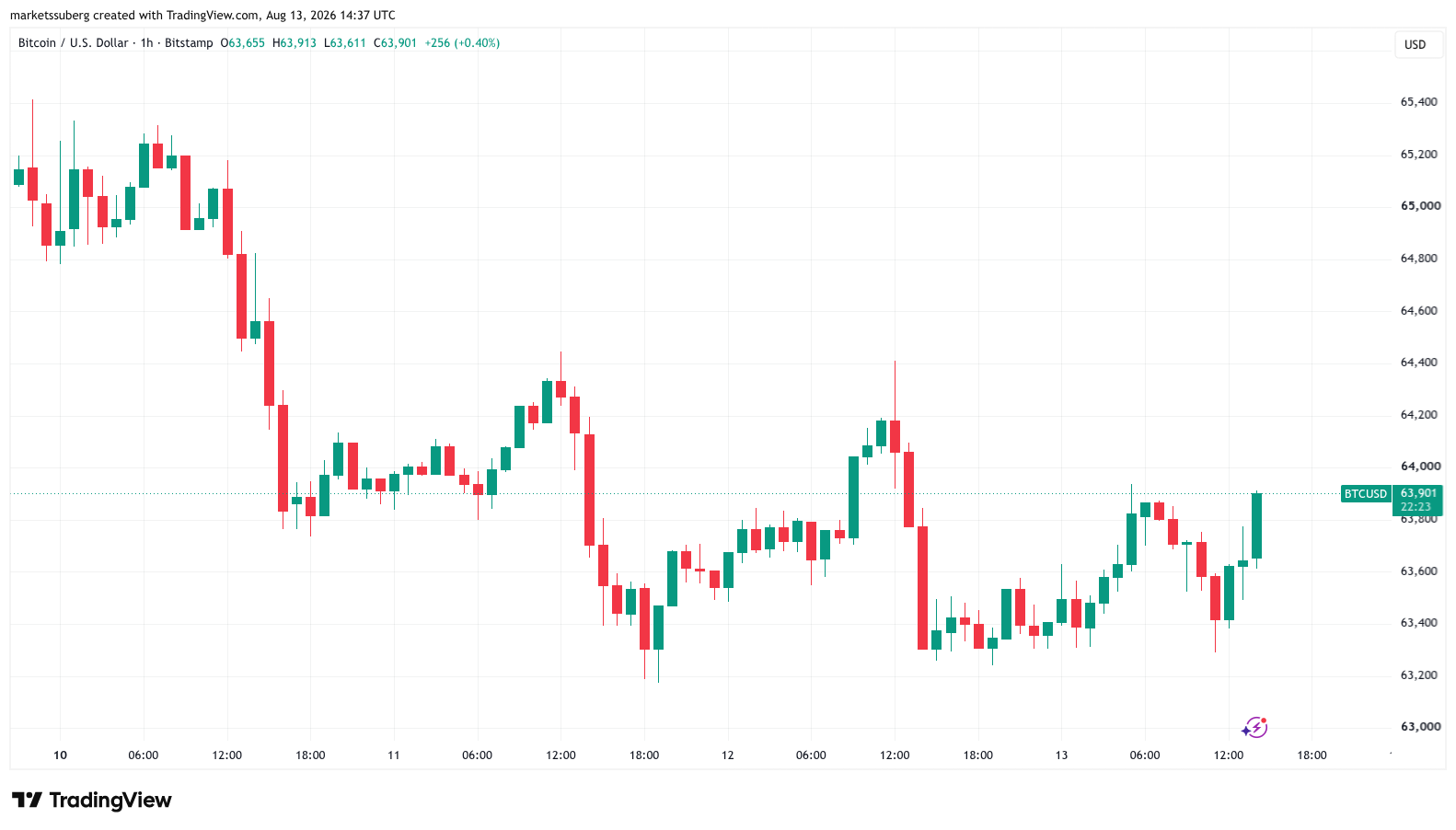
BTC/USD was up around 0.5% on the day near $63,900 with volatility broadly absent, data from TradingView showed.
BTC/USD one-hour chart. Source: Cointelegraph/TradingView
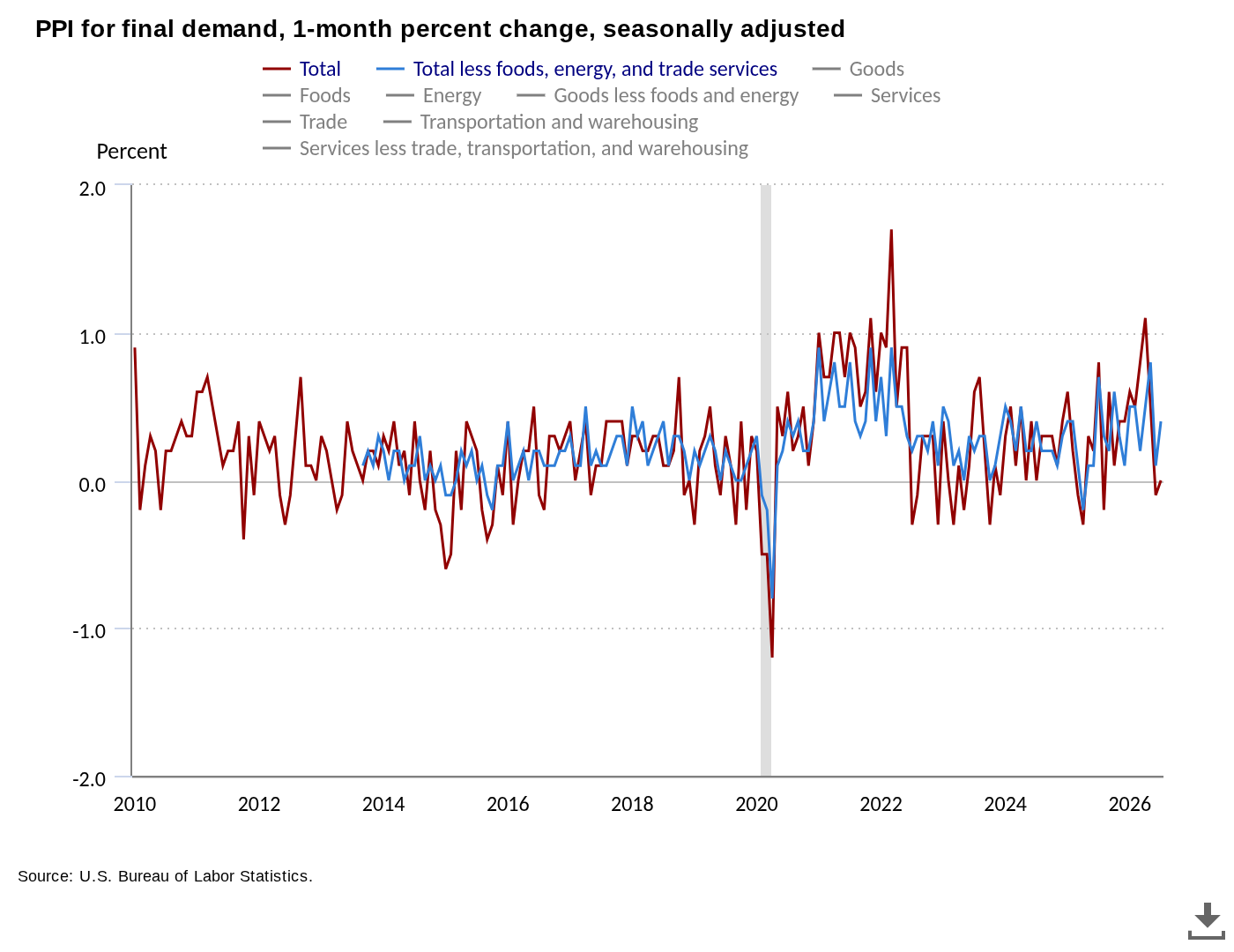
The July US Producer Price Index (PPI) print was unchanged month-on-month at 0.2%, while year-on-year increased 4.7% versus an anticipated 4.9%, per data from the Bureau of Labor Statistics (BLS).
“In July, a 0.2-percent increase in the index for final demand services and a 2.2-percent advance in prices for final demand construction offset a 0.7-percent decrease in the index for final demand goods,” the BLS release said.
“Falling gasoline and energy prices provided the biggest relief,” Econoday analysts highlighted.
US PPI one-month % change. Source: BLS
US stocks gained at the Wall Street open as PPI further cooled market bets on interest-rate hikes from Federal Reserve policymakers. The S&P 500 index and tech-heavy Nasdaq Composite index were up 0.87% and 0.94%, respectively, at the time of writing.
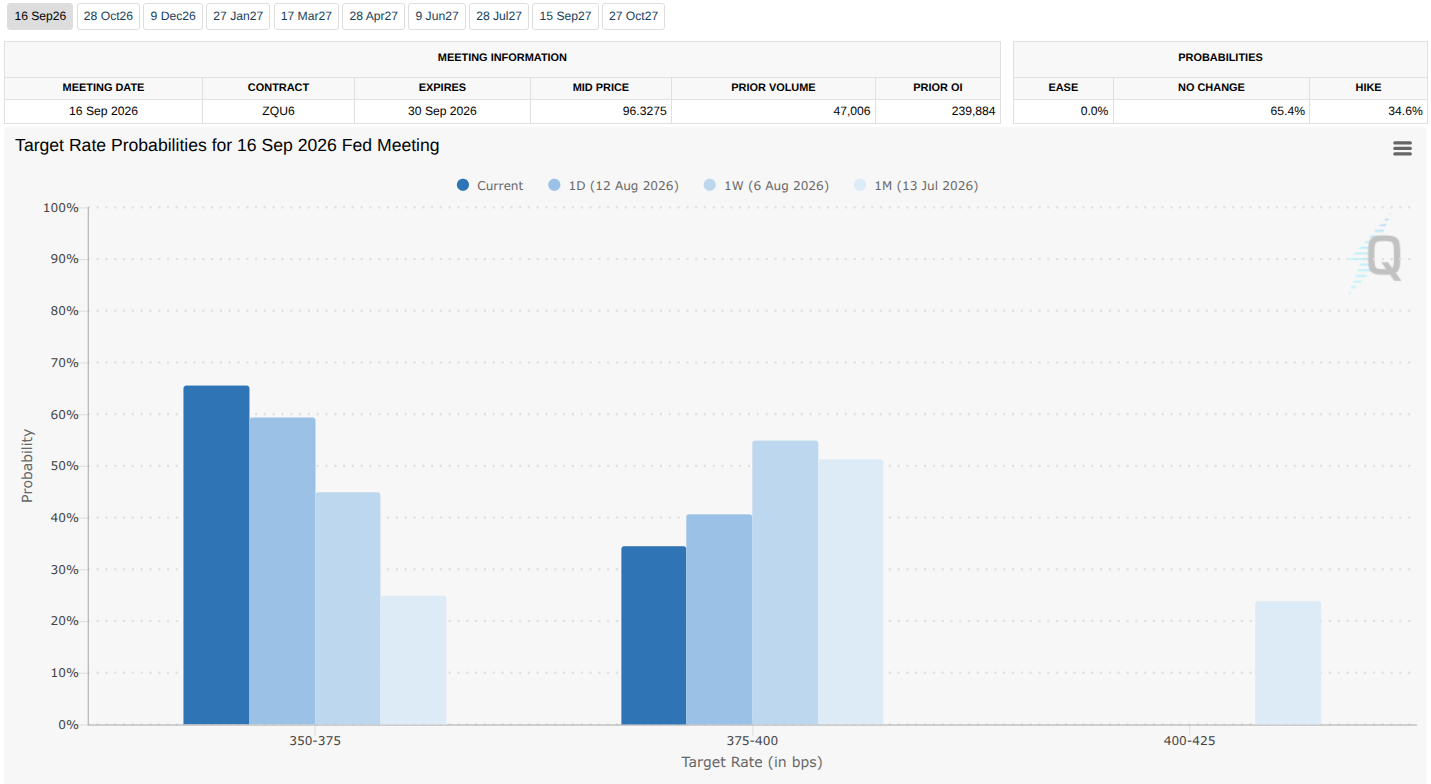
CME Group’s FedWatch Tool showed 65.6% odds of those policymaker holding rates at the current 3.50-3.75% level at the Federal Open Market Committee (FOMC) September meeting. Wednesday’s July Consumer Price Index (CPI) numbers matched expectations, already resulting in a boost to the rate-pause outlook.
Fed target-rate probability comparison for September FOMC meeting (screenshot). Source: CME Group
After their biggest split over the interest-rate path since 1970 in July, Fed officials continued to strike a cautious tone over policy. Speaking at an event with the Dayton Area Chamber of Commerce in Kettering, Ohio, Cleveland Federal Reserve Bank president Beth Hammack questioned whether even recent cooler data prints would be enough to bring inflation down to the Fed’s 2% target.
“Maybe we’d get there, but if it takes another three to four years to get there, is that OK? Is that enough?” she said, quoted by Bloomberg.
Hammock was one of three officials to vote in favor of a 0.25% rate hike in July.
Related: Bitcoin speculators keep BTC price ‘pinned’ below $68.7K: Glassnode
Bitcoin faces long position liquidations at $61,000
With BTC price action still acting within a tight range, market participants’ attention focused on the extremes.
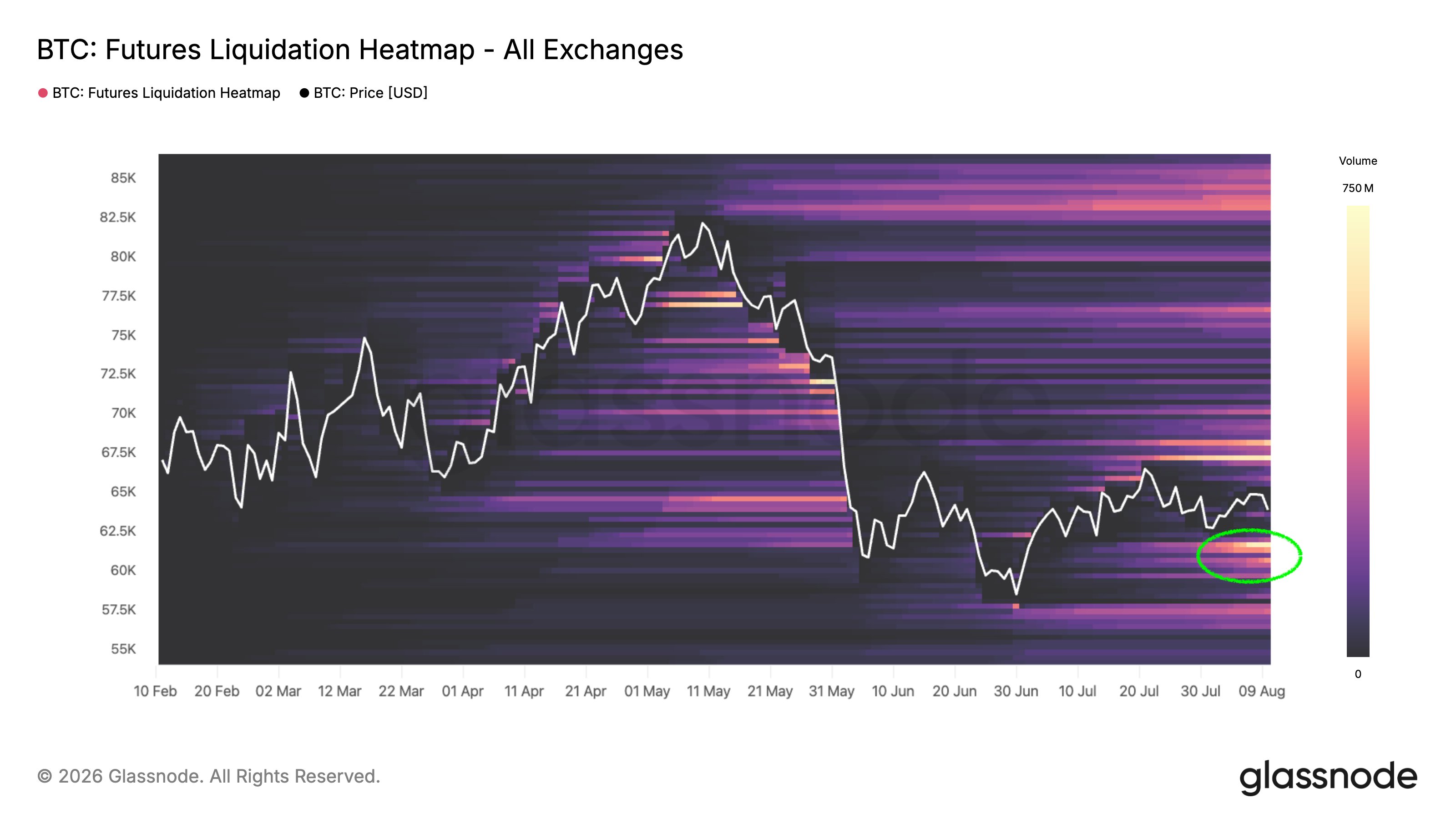
Rafael Schultze-Kraft, cofounder of onchain analytics platform Glassnode, suggested that $61,000 could become a flashpoint thanks to the large potential long position liquidations that would occur if price were to reach it.
“Long liquidation risk has built up around $61K in the past weeks. If we get there, I’d expect forced selling to add momentum to the downside,” he wrote in a Tuesday X post.
Previously, Cointelegraph reported on $63,000 now forming another key BTC price level as repeated retests increased the odds of support failure.
Bitcoin futures liquidation heatmap. Source: Rafael Schultze-Kraft on X.com


Cryptocurrency wallet company Trezor reported a breach of personal data affecting about 14,000 users through its shipping provider, ShipMonk.
Trezor’s Wednesday blog post said users who received its products from the US, UK, Sweden, Colombia, Brazil, Italy, and Portugal between May 10 and Aug. 8 were at risk from potential phishing attacks using their personal information. The company reported that 11,742 customers could have had their name, physical address, phone number, and email address compromised, while 1,947 users potentially had their name, city, and email address breached.
“To be clear, our systems were not compromised, and your Trezor device is secure, but the affected customers might be targeted by more sophisticated phishing attempts,” said the company. “Scammers can use the leaked information to send fake emails, make fake phone calls, send fraudulent letters, or potentially impersonate banks, crypto exchanges, or even Trezor.”
The breach was the latest incident involving scammers potentially targeting crypto holders using personal data. Trezor reported in January 2024 that about 66,000 users were at risk of phishing attacks if they had contacted the company’s support team since December 2021.
Crypto wallet users have revealed that scammers use a variety of techniques in attempts to gain access to their funds, including through physical letters in the mail. Other methods include text messaging, emails and phone calls claiming to be family members in need of help or impersonating authorities asking for repayment of a fake debt.
Related: Do the Coldcard attacks mean all hardware wallets are now insecure?


Decentralized finance (DeFi) protocol Neutrl has suspended minting and redemptions for its NUSD synthetic dollar after unspecified circumstances affected protocol reserves, leaving the cause and scale of any potential impairment unclear.
On Thursday, Neutrl said it had also paused other protocol functions on legal advice while it assesses the impact. The protocol did not identify the affected asset or counterparty, say whether reserves suffered a realized loss or provide a timeline for resuming operations.
Structured-yield protocol Strata later said it paused minting, redemptions and related functions for contracts in its Neutrl market, which supports several NUSD-linked products. Strata said its other markets remained operational.
With about $53.6 million in NUSD in circulation, the suspension prevents approved counterparties from exchanging the token for its backing assets while Neutrl determines whether its reserves have been impaired. Neutrl said it would provide timing and next steps when available.
Cointelegraph contacted Neutrl for comment but had not received a response by publication.
NUSD supply falls 18% over 30 days
According to RWA.xyz, NUSD had a market capitalization of about $53.6 million on Friday, down 18.4% over 30 days, while monthly transfer volume fell 72.4% to $71.4 million. However, the data does not establish that the earlier contraction was related to the reserve issue.
The synthetic dollar is designed to track the US dollar using yield-bearing crypto assets and market-neutral strategies rather than deposits held in a bank. RWA.xyz showed NUSD trading at about $0.9984, with 615 holders and 347 active addresses over the preceding 30 days.
On May 25, verification platform Accountable said its Neutrl dashboard provided continuous cryptographic proof that NUSD reserves matched the protocol’s liabilities.
Related: ‘DeFi doesn’t exist anymore,’ just onchain finance: Andre Cronje
A February assessment by risk-advisory team BA Labs nevertheless classified a proposed Neutrl integration as higher risk because of counterparty, operational and liquidity exposure. It said direct redemptions were limited to KYC or KYB-approved counterparties and that requests exceeding the liquid buffer could enter a queue targeted for completion within 48 hours, without a guarantee.
BA Labs estimated NUSD supply at $226 million and reserves at $233.7 million at the time, implying a 103.6% collateralization ratio. It said more than 87% of reserves were held through Fireblocks, while smaller amounts sat on centralized exchanges.
Magazine: Inside the fake crypto startup that fooled North Korean IT workers

The change comes after several European countries boycotted this year’s competition over the inclusion of Israel. Israel came second in both the 2025 and 2026 contests, raising questions about whether it would be allowed to host if it won.
The contest’s governing body approved the amendment after receiving feedback from participating broadcasters.
“These changes are about giving everyone involved greater clarity, protecting artists and ensuring the contest continues to provide a safe and welcoming environment, while preserving the spirit and integrity that make the Eurovision Song Contest so special,” Martin Green, director of the Eurovision Song Contest, said in a statement.
Eurovision organizers made several more changes to the competition’s rules, including raising the minimum age for performers as of the first day of rehearsal from 16 to 18.
Controversy
Five countries—Spain, Iceland, Ireland, the Netherlands, and Slovenia—boycotted this year’s competition in Vienna, Austria, in May after the European Broadcasting Union refused calls to suspend Israel from the contest. Ireland’s public broadcaster RTÉ said in a September statement that its “participation would be unconscionable given the ongoing and appalling loss of lives in Gaza.” José Pablo López, president of Spain’s public broadcaster RTVE, said that same month that “it was about time to break the silence within the EBU regarding the genocide in Gaza.”
Crypto World
MyEtherWallet (MEW) Integrates Ondo Perps, Unlocking 24/7 Leveraged Trading for Onchain Equities, & ETFs.

[PRESS RELEASE – Los Angeles, United States, August 13th, 2026]
MyEtherWallet (MEW), the world’s most intuitive digital wallet, today announced its integration with Ondo Perps, expanding its suite of decentralized financial products to include perpetual futures, derivative contracts with no expiration date. Through this integration, users can now trade continuous perpetual contracts with up to 20x leverage on leading U.S. stocks, ETFs, and commodities, 24 hours a day, 7 days a week on MyEtherWallet.com.
The integration bridges traditional financial markets and self-custodial Web3 technology. MEW customers can now access Ondo Perps to take long or short positions on major traditional market assets while maintaining full self-custody of their funds. Unlike traditional brokerages that restrict trading to rigid exchange hours and limited geographic access, eligible users can manage exposure to global markets around the clock using any supported wallet connected to the MEW web interface.
“Our mission has always been to make decentralized finance accessible, flexible, and fully self-custodial,” said MEW Founder and CEO Kosala Hemachandra. “Integrating Ondo Perps is the natural next step in our vision for the wallet as an all-in-one financial hub. Whether investors want to buy and hold tokenized equities or manage risk with up to 20x leverage on stocks and commodities, they can now execute advanced trading strategies 24/7 without surrendering control of their assets.”
Key Features of MEW’s Ondo Perps Integration:
- 24/7 Perpetual Trading: Users can access uninterrupted liquidity and trade leading U.S. equities, ETFs, and commodities outside of traditional stock exchange market hours.
- Up to 20x Leverage: Execute long and short position strategies with flexible leverage options tailored to different risk profiles.
- Universal Wallet Compatibility: Users can trade directly on MyEtherWallet.com using any wallet connected through MEW Portfolio—including MEW wallet mobile, Browser Extensions such as Metamask, hardware wallets, and WalletConnect.
- Non-Custodial Risk Management: Users can maintain full control over private keys while accessing advanced derivative products in a streamlined interface.
How to Access Ondo Perps on MEW:
- New users can create a wallet at MyEtherWallet.com to begin trading perpetual futures instantly.
- Existing wallet holders can connect their preferred wallet to MEW Portfolio to access Ondo Perps features directly.
For more information on MEW’s Ondo Perps integration and latest portfolio features: www.myetherwallet.com.
This product is not available nor intended for US citizens. Restrictions apply. For more information: https://docs.ondoperps.xyz/
About MyEtherWallet (MEW)
Focused on simple, free, and secure access to the global financial system, MyEtherWallet (MEW) empowers users to build wealth with digital assets. From launching the first Ethereum user interface in 2015 to bringing self-custodial RWAs and advanced trading tools to the masses, MEW is continually innovating its products to turn blockchain technology into a user-friendly and easy-to-use part of daily life.
The post MyEtherWallet (MEW) Integrates Ondo Perps, Unlocking 24/7 Leveraged Trading for Onchain Equities, & ETFs. appeared first on CryptoPotato.

An ICE spokesperson said in a statement that TPS had been allowed to function as a de facto amnesty program and that the program was always intended to be temporary.
“What we would say now is it’s closing time which means you don’t have to go home, but you can’t stay here,” the spokesperson said in an unsigned statement. “The good news is it’s not too late to get a $2,600 check and a free flight home.”
Scores of Haitian immigrants have also reportedly lost their jobs. Piervil said large amusement parks, hotels, and nursing homes in Orlando have begun dismissing hundreds, if not thousands, of Haitian workers since the Supreme Court ruling.
The fraught situation in the U.S. is prompting some Haitians to contemplate fleeing to a third country, despite the obstacles. Aside from the costs and a possible language barrier, many Haitian immigrants are also concerned about their own safety if they move to a third country, according to Felipe Sousa-Lazaballet, a community organizer in central Florida. That fear was heightened after reports in February that four decapitated Haitian women were found in the Dominican Republic—Haiti’s neighbor—after they had been deported from Puerto Rico. The Dominican Republic has also been deporting hundreds of thousands back to Haiti each year.

Engineers inspected Lewes train track 24 hours before derailment

Galaxy Surfactants shares hit 20% upper circuit as Q1 profit more than doubles YoY to Rs 166 crore

Bitcoin treasury company Metaplanet (3350) unveils BitBonds with $1.3 million private debt sale


-

 Fashion6 days ago
Weekend Open Thread: Mattifying Sunscreen
-

 Fashion7 days ago
Frugal Friday’s Workwear Report: Cap-Sleeve Pointelle Crewneck Sweater
-

 News Videos6 days ago
Can Astrology Help Find Gold and Silver Trends? A Financial Astrology Guide
-

 Tech6 days ago
Rinn Pharma & Biopharma to join NordicPharmaTrain network
-

 Business5 days ago
How to Start a Cleaning Business: A Step-by-Step Guide
-

 Business5 days ago
Datadog: Best Of Breed For Multiple Reasons
-

 Business5 days ago
BDC Weekly Review: Private BDC Q2 Numbers Are Strong
-
 NewsBeat2 days ago
Communication cards help banking customers access services or report scams
-
 Business3 days ago
Oil Price Today (August 11): Crude oil rises to $88 after Trump’s compensation demand dents Hormuz opening. Here’s why
-

 Fashion7 days ago
Weekly News Update, 8.6.26 – Corporette.com
-
 Entertainment7 days ago
Brand New Day’ Characters, Ranked
-

 Business7 days ago
Aussie shares lose steam to close record-breaking week
-

 Fashion7 days ago
Irina Shayk Wows in REVOLVE Los Angeles’ Summer Styles
-

 Fashion7 days ago
Burberry Fall 2026 Takes On Commuter Style
-

 Fashion5 days ago
Amazon Sundays: Closet Care Before Fall
-

 Politics6 days ago
Be quiet, Miriam! – spiked
-

 Business7 days ago
CXMT Shares Drop 4.3% as Post-IPO Rally Cools Amid Global Memory Chip Pressures
-

 Business6 days ago
Mutual Fund Manager Scoops Up Beaten-Down Stocks
-

 Sports7 days ago
Report: Kawhi Leonard had undisclosed deal with Clippers’ scoreboard maker
-

 Crypto World7 days ago
How XRP holders can earn $4,600 daily
You must be logged in to post a comment Login