

Crypto World
Strategy’s $13 billion paper loss dwarfs dogecoin, BlackRock’s BUIDL and hundreds of other tokens

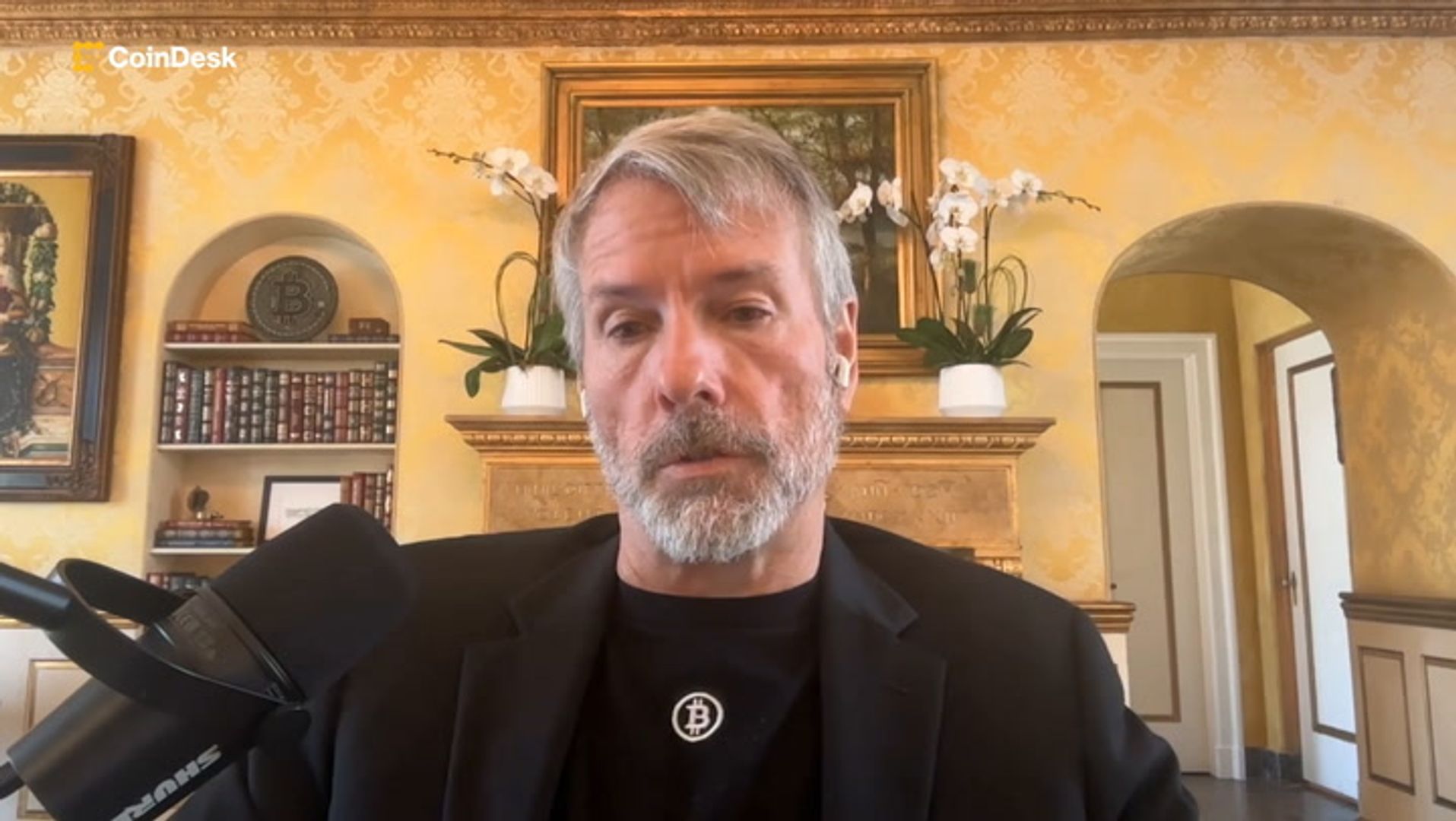
Strategy (MSTR) is sitting on one of the largest unrealized losses in corporate history and it’s bigger than some of crypto’s most prominent projects.
The software-turned-bitcoin-treasury company holds roughly 844,000 BTC, acquired at an average price near $75,600, according to data source BitcoinTreasuries.net. With BTC trading near $60,000 as of writing, the mark-to-market hit exceeds $13 billion, which as per fair-value accounting rules, flows straight through the income statement, generating headline-grabbing quarterly losses.
To put that number in perspective: Strategy’s paper loss now surpasses the total market capitalization of dogecoin (around $11.5–12.7 billion), a long running memecoin project and behind Hyperliquid’s HYPE token, which hovers around $18 billion. HYPE is the ninth-largest digital asset globally and a top pick for many analysts and funds. They point to substantial upside potential as the decentralized platform has emerged as the preferred marketplace for trading not only cryptocurrencies but also assets tied to traditional finance.
Strategy’s paper loss is also bigger than the market caps of countless other DeFi, privacy, oracle projects such as Monero, Cardano, Chainlink, Bitcoin Cash, Litecoin, BlackRock’s BUIDL, Uniswap, Near Protocol, Aster and others.

Crypto World
Ethereum Price Prediction: A Forgotten Bull Signal as SharpLink Loads Up on ETH After 8 Month Hiatus

SharpLink Gaming just broke an eight-month silence on Ethereum, and could likely flip its price prediction. ETH itself is currently on a downtrend, barely holding above a structural trendline break.
Just a few hours ago, SharpLink added 5,000 ETH to its treasury after an eight-month pause, resuming accumulation despite sitting on a reported $1.71 billion unrealized loss on its existing position.
It’s not pretty, but buying through a nine-figure drawdown shows conviction, and it echoes institutional treasury accumulation logic that preceded major Bitcoin re-ratings when Strategy held through similar paper losses. The move also landed while spot ETH ETF inflows remain inconsistent, which makes the corporate bid marginally more significant as a demand signal.
Not just Ethereum, derivatives activity hit record levels this week alongside the SharpLink announcement. But what’s next for ETH? Can it break its downtrend?
Discover: The Best Token Presales
Ethereum Price Prediction: Running Before the Resistance Band Breaks It?
Ethereum is trading at $1,550 after a sharp decline this month. Price remains below major resistance, while recent sessions show buyers defending the lower range. The nearest support sits around $1,500–$1,550, a zone that has attracted demand several times recently.
Meanwhile, momentum remains mixed. The market has not reached overheated conditions, leaving room for a recovery if buying pressure improves. However, bulls still need to reclaim higher resistance levels before a stronger trend reversal can be confirmed.

On the upside, immediate resistance stands near $1,700–$1,750. A sustained move above that area could target $1,850 and potentially $2,000. Until then, Ethereum remains in a recovery phase rather than a confirmed uptrend.
The bullish scenario requires Ethereum to hold above the $1,500 support zone and break through $1,750. In that case, momentum could accelerate toward higher levels. Conversely, a failure to defend support may expose the market to another test of recent lows near $1,400.
Institutional interest and long-term accumulation remain supportive factors. Even so, price action remains the key signal. A decisive close above major resistance is still needed before the market can confirm a durable trend change.
Discover: The Best Crypto to Diversify Your Portfolio
LiquidChain Targets Early-Mover Upside as Ethereum Tests Key Levels
ETH at $1,500 is structurally constructive. But for traders who’ve watched Ethereum grind through resistance for months, the upside math from current levels, even to $2,000, requires patience and tolerance for drawdowns that could touch $1,800 first. That’s not a knock on ETH; it’s just the reality of buying into a $200 billion asset at a technical decision point. Early-stage infrastructure plays offer a different risk profile entirely.
LiquidChain ($LIQUID) is a Layer 3 infrastructure project targeting the cross-chain liquidity problem directly, fusing Bitcoin, Ethereum, and Solana liquidity into a single execution environment through its Unified Liquidity Layer.
The Order prepares…
LiquidChain grows in power.⟁https://t.co/vqvBcdSQYC pic.twitter.com/uOSFmzyQ74
— LiquidChain (@getliquidchain) June 26, 2026
The architecture includes Single-Step Execution, Verifiable Settlement, and a Deploy-Once model that lets developers access all three ecosystems without rebuilding for each chain. Presale price is currently $0.01473, with $870K raised to date.
Research LiquidChain before the current presale tranche closes.
Don’t Miss Out on Our $1,000 USDT Airdrop on ByBit
The post Ethereum Price Prediction: A Forgotten Bull Signal as SharpLink Loads Up on ETH After 8 Month Hiatus appeared first on Cryptonews.
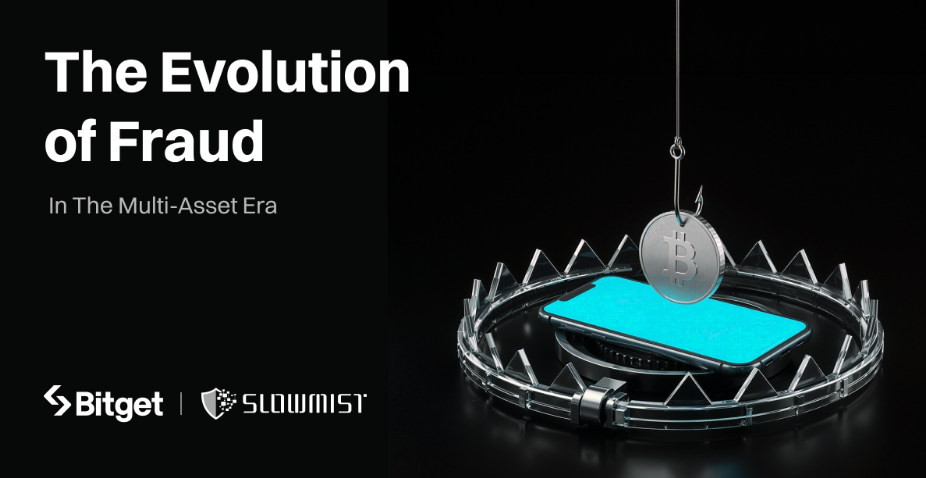

Bitget, the world’s largest Universal Exchange (UEX), has launched the third year of its Anti-Scam Month initiative with the release of its Anti-Scam Report 2026 titled “The Evolution of Fraud in the Multi-Asset Era”, developed in partnership with blockchain security firm SlowMist. As digital finance expands across cryptocurrencies, tokenized assets, stocks, CFDs, wallets, and AI-powered investment tools, the report examines how fraud is adapting to changing investor behavior and increasingly interconnected financial ecosystems.
The report finds that changes in user behavior are reshaping how fraud campaigns are designed and deployed across digital finance. According to Bitget Research, the share of active users participating across two or more asset classes grew from under 1% in mid-2025 to more than 10% by May 2026. As users move across a wider range of products and platforms, fraud campaigns are increasingly blending multiple narratives, social engineering tactics, AI-generated content, and multiple communication channels within a single operation.
Drawing on Bitget Research and investigations conducted by SlowMist, the report found that many successful scams no longer rely on a single point of compromise. Fraud operators guide victims through a sequence of interactions spanning social media platforms, messaging applications, investment communities, phishing infrastructure, and wallet activity before assets are ultimately stolen. Between July 2025 and June 2026, Bitget’s security infrastructure intercepted more than 150 million malicious requests, identified over 13,000 high-risk malicious IP addresses, handled 18,135 user protection cases, and supported the recovery of $32.3 million linked to security incidents and fraudulent activity.
“Security challenges evolve alongside markets. As more users participate across crypto, stocks, tokenized assets and AI-powered products, fraud campaigns are becoming sophisticated in how they build trust and influence decision-making. Understanding those risks is an important step toward protecting users and strengthening confidence across the broader ecosystem,” said Gracy Chen, CEO of Bitget.
The report identifies several trends shaping the current fraud environment, including AI-generated investment personas, deepfake-enabled scams, voice-cloning attacks, synthetic investment communities, wallet-draining operations, malicious smart contracts, and increasingly sophisticated phishing campaigns. Among the cases examined are a deepfake investment scam impersonating Cypriot President Nikos Christodoulides, an AI-generated investment advertising campaign that reportedly defrauded thousands of Swedish investors, the Truman Show synthetic community scam involving approximately 90 fabricated investor identities, and the Rublevka Team wallet-draining operation documented in early 2026.
Beyond examining how scams operate, the report explores victim psychology, common scam entry points, post-theft asset movement, and recovery challenges. It also outlines practical measures users can take to strengthen account security, recognize AI-enabled deception, evaluate investment opportunities more effectively, and respond to security incidents.
Since launching Anti-Scam Month in 2024, Bitget has worked with security researchers, ecosystem partners, and industry organizations to improve awareness around emerging threats and promote stronger user protection practices. Throughout June, Bitget’s Anti-Scam Month campaign will feature educational content, security awareness initiatives, and collaborations with industry partners aimed at helping users identify emerging threats and strengthen their ability to protect digital assets.
For more information, please read the report here.
About Bitget
Bitget is the world’s largest Universal Exchange (UEX), serving over 125 million users and offering access to over 2M crypto tokens, 500+ tokenized stocks, ETFs, commodities, FX, and precious metals such as gold. The ecosystem is committed to helping users trade smarter with its AI agent, which co-pilots trade execution. Bitget is driving crypto adoption through strategic partnerships with LALIGA and MotoGP™. Aligned with its global impact strategy, Bitget has joined hands with UNICEF to support blockchain education for 1.1 million people by 2027. Bitget currently leads in the tokenized TradFi market, providing the industry’s lowest fees and highest liquidity across 150 regions worldwide.
For more information, visit: Website | Twitter | Telegram | LinkedIn | Discord
The post Bitget Launches Third Year of Anti-Scam Month with New Report on Multi-Asset Fraud appeared first on BeInCrypto.
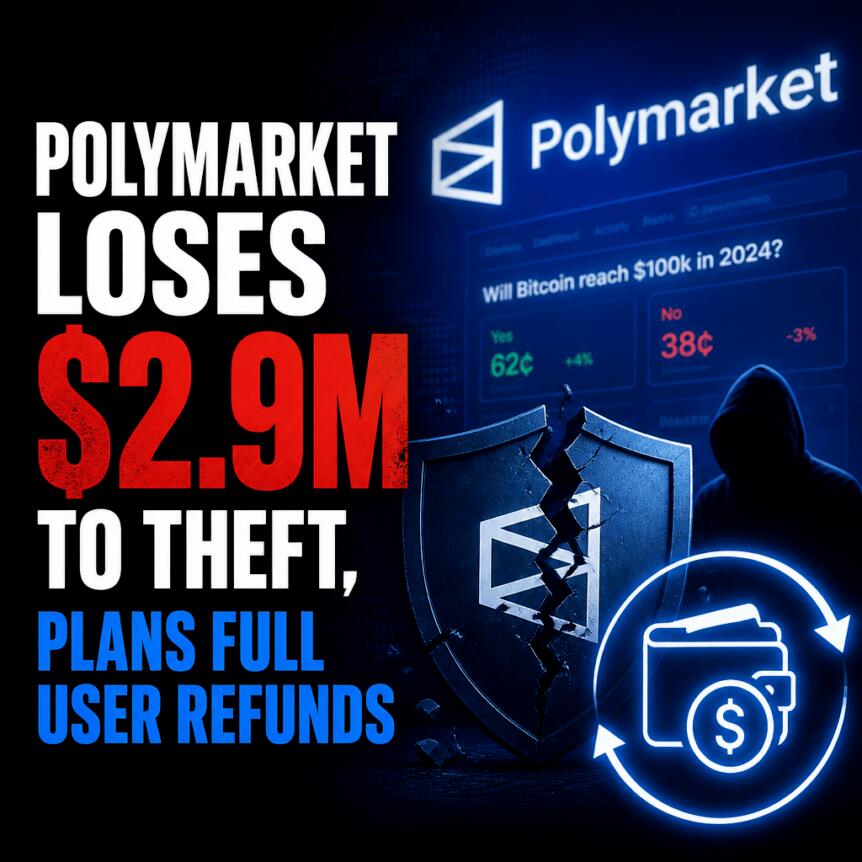
A third-party vendor compromise allowed attackers to inject malicious code into Polymarket’s frontend, leading to a phishing drain from user wallets, according to blockchain analyst Specter. The incident was discovered on Thursday and reportedly targeted at least 11 Polymarket users, with Specter estimating losses of $2.94 million.
Polymarket said on X that the issue has been contained, the affected dependency removed, and that users will be fully refunded. While Cointelegraph attempted to follow up for additional comment, no response was received before publication.
Key takeaways
- Specter attributed the Polymarket incident to malicious script injection following a vendor compromise, with an estimated $2.94 million drained from at least 11 wallets.
- Polymarket states the compromise has been contained and that the impacted dependency was removed, with full user refunds promised.
- DefiLlama data shows June exploit losses reached $74.9 million across 29 incidents—more than May’s $60.5 million, but far below April’s $644 million.
- Across the last 30 days, private key compromises accounted for 43% of reported exploit losses, making it the leading attack vector.
- DefiLlama’s breakdown points to other recurring methods, including “fake proof” exploits (10%) and reverse MEV honeypots (8%).
Polymarket: vendor compromise leads to frontend phishing
Specter said the malicious script appeared to be designed to facilitate phishing, ultimately draining funds from multiple Polymarket wallets. The key operational detail in the account is that the attacker did not need to compromise Polymarket’s core smart contracts directly; instead, the issue originated from a third-party vendor compromise that enabled code injection into the platform’s frontend.
That distinction matters for users because frontend-based attacks can succeed even when on-chain contracts remain intact. In practice, phishing scripts can trick users into approving malicious actions, entering credentials into spoofed interfaces, or signing transactions that benefit attackers.
Polymarket’s response emphasized containment and remediation: the platform said the compromise has been stopped, the problematic dependency removed, and affected users will receive full refunds. With those steps, the immediate risk of further wallet draining should decline, though users will still want to monitor their accounts and transaction history for any suspicious approvals.
Why this sits within a larger pattern of crypto incidents
The Polymarket event comes amid a sustained run of reported crypto security breaches. DefiLlama data lists the Polymarket incident as the 89th reported crypto security breach of the second quarter. That count extends what DefiLlama categorization describes as the most-hacked quarter on record by incident count.
Earlier in June, DefiLlama’s monthly totals already reflected elevated activity. June exploit losses climbed to $74.9 million across 29 reported incidents, surpassing May’s $60.5 million. However, April’s $644 million remains the standout outlier for magnitude, underscoring that while breach frequency remains high, individual months can vary dramatically based on whether large incidents occur.
June’s reported exploit losses: the biggest June incidents
DefiLlama’s aggregation highlights several of the largest June events. The most prominent was the $36 million Humanity Protocol exploit. Other notable losses included the $4.7 million Secret Network bridge exploit, two Aztec-related exploits worth $2.1 million each, and a $1.7 million bridge exploit tied to Taiko, according to the article’s cited figures and linked coverage.
Taken together, the list shows that bridge ecosystems and cross-chain integrations continue to attract high-impact attacks. While frontend phishing attacks like Polymarket’s are distinct from bridge exploits, both categories fall under the broader umbrella of “exploit losses”—the measurable outcomes when attackers successfully compromise systems or user interactions.
Attack vectors over the last month: key compromise still leads
DefiLlama data summarized in the piece indicates that the primary driver of reported exploit losses over the past 30 days was private key compromise, responsible for 43% of losses. Fake proof exploits accounted for 10%, while reverse MEV honeypots made up 8% of losses, based on DefiLlama’s breakdown.
The vector mix is useful because it shifts how defensive priorities are framed. Private key compromise suggests either user-side weakness (including wallet security practices) or operational weaknesses involving signing keys—issues that often persist across unrelated protocols. Meanwhile, fake proof and reverse MEV honeypots reflect more sophisticated adversarial tactics at the application and execution layers, targeting how systems validate claims or how trading bots execute orders.
The article also notes that roughly a month before Polymarket’s latest attack, the prediction market disclosed a separate $600,000 exploit traced to a six-year-old private key used for internal top-up operations. Polymarket leadership said at the time that user funds and contracts were safe and that permissions tied to the key had been revoked, emphasizing that the platform has dealt with operational key risks before.
Polymarket’s scale and what users should monitor next
DefiLlama data cited in the article places Polymarket’s total value locked at over $450 million, up 301% from $112 million a year earlier. As platforms grow, they often become more attractive targets—not only for contract-level attacks but also for the broader supply-chain and integration risks that can surface through third-party dependencies.
Going forward, readers should watch for two signals: confirmation from Polymarket and security analysts that the injected frontend dependency is fully removed and no similar vendor-based pathways remain, and whether wallet-level incidents prompt changes in how users interact with the platform (for example, renewed scrutiny of approvals and transaction prompts). With refunds promised, the immediate impact may be contained, but the recurrence of earlier key-related disclosures underscores that operational security remains a critical focus for both users and the platforms they rely on.

Key Takeaways
- Samsung Electronics shares plummeted 7.8% to ₩330,500 Friday amid a broad technology sector selloff across Korean exchanges
- Investor sentiment deteriorated after Apple revealed price hikes for MacBook and iPad products, casting doubt on AI hardware demand
- Amplified losses occurred through leveraged single-stock ETFs focused on Samsung and SK Hynix
- The KOSPI index tumbled over 8%, activating its fifth circuit breaker halt in 2026
- Reports emerged of Samsung preparing a ₩1,000 trillion ($646 billion) decade-long investment strategy covering chips, AI infrastructure, and more
Samsung Electronics shares collapsed 7.8% to close at ₩330,500 Friday, compounding a devastating week that witnessed a single-day decline exceeding 12% just two days earlier on June 23.
Samsung Electronics Co., Ltd., SMSD.L
The Monday session’s plunge activated the KOSPI’s fourth trading halt of 2026. Friday’s action brought a fifth suspension, with the Korea Exchange implementing a 20-minute freeze beginning around 12:10 p.m. Seoul time as the main index crashed through the 8% decline threshold.
The catalyst for Friday’s turmoil originated from Apple, which revealed significant price increases spanning its MacBook and iPad product portfolios, citing elevated memory and component expenses. The announcement shattered confidence among investors banking on a prolonged AI-fueled hardware expansion cycle.
Chip manufacturers worldwide absorbed heavy losses. SK Hynix, Samsung’s primary domestic competitor, suffered a parallel decline exceeding 8%, while leveraged ETFs tracking both semiconductor leaders plunged beyond 15%.
Leveraged Products Intensified Selling Pressure
Single-stock leveraged exchange-traded funds concentrated on Samsung and SK Hynix have emerged as a mounting worry for South Korean financial authorities. Friday’s session validated those concerns as these instruments amplified market movements far beyond what underlying business fundamentals would typically justify.
The outcome generated a self-reinforcing cycle of liquidation that punished Samsung more severely than headline developments alone warranted.
Japan’s Nikkei 225 index similarly declined in response, demonstrating the velocity at which the selloff propagated throughout the region.
Following a substantial rally during the previous twelve months, Friday’s decline partially reflects profit-taking behavior after an impressive advance. Market reversals can accelerate dramatically when investor psychology shifts.
Massive $646 Billion Capital Plan Sparks Investor Anxiety
The timing proved particularly unfortunate. Domestic media outlets disclosed this week that Samsung intends to unveil a ₩1,000 trillion ($646 billion) investment blueprint spanning the next ten years — potentially representing the largest corporate capital commitment in South Korean corporate history.
The initiative reportedly encompasses semiconductor manufacturing facilities, AI data infrastructure, battery production, and display technology. Approximately ₩300 trillion targets chip fabrication plants in the nation’s southwestern region, while more than ₩350 trillion focuses on AI data centre development.
South Korean President Lee Jae Myung plans to convene a national economic presentation on June 29, where Samsung Vice Chairman Jun Young-hyun and SK Hynix CEO Kwak Noh-jung will both outline their respective investment strategies.
Rather than embracing the announcement enthusiastically, certain investors interpreted the enormous spending obligation as problematic. Committing hundreds of trillions of won toward infrastructure development during uncertain chip demand conditions represents considerable risk exposure.
SK Hynix independently disclosed intentions to secure up to $29.4 billion through a Nasdaq listing of American Depositary Receipts, channeling proceeds toward expanded fabrication plants, advanced packaging operations, and manufacturing equipment.
Both declarations arrive as South Korea endeavors to maintain competitive positioning in the worldwide AI and semiconductor landscape amid escalating competition from the United States and China.
SK Hynix shares traded down 8.36% at press time, while Samsung recovered slightly to ₩339,500 after trimming earlier losses.

Crypto World
Critical Moment for Ripple (XRP), Important Pi Network (PI) Updates, and More: Bits Recap June 26

The cryptocurrency market just can’t catch a break, sliding into yet another sharp pullback several hours ago. Ripple’s XRP tumbled to its lowest level since late 2024, while Cardano’s ADA fared even worse.
Meanwhile, Pi Network’s team issued key announcements and hinted at major updates that could arrive later this week.
XRP on the Edge
Ripple’s cross-border token lost another 21% of its value over the past month, and several hours ago it plummeted to just north of the psychological $1 mark.
Speaking on the downturn, X user CasiTrades highlighted some key levels that could come into play if the bears remain in charge. She described $0.93 as a buying opportunity, while $0.87 was depicted as a primary target. The analyst also argued that XRP is at its “most critical moment in the market cycle.”
“Correction is approaching its final level. The fear will be LOUD! People will likely start calling for lower and lower prices as the level is reached. They’ll tell you the market is going to zero. But don’t let someone else’s fear cause you to miss your own opportunity. Every major trend begins when sentiment is at its worst. The correction is doing exactly what it should. This is a perfect market structure,” she added.
X user Gerla also gave their two cents. They claimed that XRP is nearing the end of a seven-year wedge and predicted that “the next move could be the biggest one in years.”
What Is Pi Network Preparing?
The Core Team has been quite active lately, unveiling important protocol updates and other ecosystem advancements. The community, though, expects more groundbreaking announcements that could trigger a price rally for PI, which is why it has set its attention on Pi2Day – the symbolic day celebrated each year on June 28.
Earlier this week, Pi Network added more fuel to the mounting speculation by highlighting last year’s event, which included Pi App Studio, Directory Staking, Node updates, and other releases.
“Stay tuned on June 28 for what’s to come,” it teased.
Additionally, the team reminded that Pi2Day represents the final deadline for the Vibe Coder campaign, which aims to bring AI-powered apps into the project’s distribution network via Pi App Studio. June 28 will also mark the close of the Pi Launchpad testing period, which features the debut of the SLICE test token.
ADA Bleeds Heavily
The token is no longer part of crypto’s top 20 club, and earlier today its price briefly fell below $0.14 for the first time since 2020. Some of the primary reasons behind its downfall include the broader market collapse, Charles Hoskinson’s concerning comments, and the exploit of the Cardano ecosystem project SecondFi.
The popular analyst Ali Martinez revealed that ADA’s TD Sequential indicator flashed a buy signal, which could result in a resurgence to as high as $0.176. However, the revival might be short-lived and followed by another leg down:
“While this indicator signals a near-term bounce, the broader market structure suggests caution. This localized push may act as a trap to lure in buyers before hitting immediate resistance and continuing lower.”
The post Critical Moment for Ripple (XRP), Important Pi Network (PI) Updates, and More: Bits Recap June 26 appeared first on CryptoPotato.


Sharplink (SBET) received 5,000 ether (ETH) worth about $7.85 million on Thursday, its first ether inflow in eight months, according to Arkham data showing the coins arriving from crypto brokerage FalconX.
The inflow is small against the company’s existing pile and lands at an awkward moment. Sharplink held 876,285 ether as of June 21, worth roughly $1.3 billion, making it the second-largest public ether treasury company behind Tom Lee’s Bitmine Immersion (BMNR), which held about 5.67 million ether in mid-June.
Onchain analyst EmberCN put Sharplink’s average purchase price at about $3,609 per coin, which implies an unrealized loss of around $1.79 billion with ether trading near $1,555.
Its last inflow came in October 2025, when it added 19,270 ether for $78.3 million, also now deep underwater.
The ether arrived as the token fell 5% over 24 hours in a broad crypto selloff, dropping below $1,560 as bitcoin slipped under $59,000. Tether’s USDT briefly overtook ether by market value during the rout, at about $186 billion to ether’s $185 billion.


South Korea has expanded cryptocurrency disclosure requirements for its public debt relief program by including virtual asset holdings in applicant asset reviews and linking debt forgiveness more closely to repayment capacity.
Summary
- South Korea will include crypto holdings in New Start Fund asset reviews.
- Applicants using major won-based exchanges must submit virtual asset balance certificates.
- Debt relief will be reduced for borrowers with stronger repayment capacity.
According to local media, the Financial Services Commission said after a June 25 review meeting with the Korea Asset Management Corporation (KAMCO) that it would revise the New Start Fund, a debt restructuring program for small business owners and self employed borrowers, to strengthen property assessments, debt adjustment standards, and post approval monitoring.
Authorities will now examine investment assets such as cryptocurrencies and unlisted shares that were previously difficult to verify through financial statements and government administrative records. The commission said the changes aim to distribute public support more efficiently and prevent unnecessary spending.
Applicants identified as users of South Korea’s five major won based cryptocurrency exchanges have been required to submit virtual asset balance certificates since January after the government reached agreements with the exchanges. KAMCO uses the documents during property assessments to determine eligibility for debt relief.
Officials also began requiring applicants to disclose holdings of unlisted shares in May. Shares in privately held companies operated directly by the applicant remain excluded from property reviews because authorities considered the need to preserve business income.
Debt relief tied to repayment capacity
The Financial Services Commission said debt forgiveness under the New Start Fund will depend more closely on each applicant’s repayment ability.
Current rules allow principal reductions of 60% to 80% for unsecured debt that has remained delinquent for more than 90 days, with low-income and vulnerable borrowers eligible for reductions of up to 90%. The commission said the existing minimum reduction left limited room to distinguish borrowers with stronger repayment capacity.
Borrowers whose repayment capacity exceeds 100% will now face a minimum principal reduction of 30% instead of 60%. Authorities will lower debt relief by between 5 and 30 percentage points, depending on repayment ability.
Amendments to South Korea’s Credit Information Act, which take effect on Aug. 13, will allow government debt restructuring agencies to obtain property information in bulk. The Financial Services Commission said authorities will receive cryptocurrency and unlisted share data regularly from relevant institutions to verify applicants’ asset declarations after debt restructuring approvals.
South Korea has introduced several digital asset policy measures this month beyond the New Start Fund revisions.
The Financial Services Commission recently proposed expanding its regulatory sandbox to cover digital asset laws, while the government has also approved a licensing framework for cross-border virtual asset transfers that will take effect in December.
Authorities have introduced these measures as digital asset activity continues to grow across South Korea’s financial sector. As previously reported by crypto.news, cryptocurrency-based overseas remittances increased 380% over the past three years as banks and fintech firms have continued to develop blockchain-based payment infrastructure.


Ripple built its identity on replacing SWIFT, the bank-messaging network that moves roughly $150 trillion a year, with XRP as the bridge that would kill slow correspondent banking. A decade on, the banks kept SWIFT, adopted Ripple as a fast lane beside it, and the disruptor is learning to integrate. What that pivot means for XRP is the real question.
Summary
- Ripple built its identity on replacing SWIFT, the messaging network linking roughly 11,000 banks and about $150 trillion in annual flows, with XRP cast as the bridge that would end slow correspondent banking.
- A decade later, banks have kept SWIFT and adopted Ripple as a fast lane alongside it, not a replacement, and Ripple’s posture has shifted from disruption toward integration.
- Signals now point to Ripple working with SWIFT-connected infrastructure rather than purely against it, a pragmatic maturation of its original pitch.
- Rival Chainlink has already connected SWIFT to blockchains through its cross-chain messaging layer, showing that integration, not replacement, is where the institutional money is flowing.
- For XRP, the open question is whether it ends up as a settlement layer beneath SWIFT messaging or gets sidelined as banks keep messaging on SWIFT and settle in stablecoins.
For most of its existence, Ripple defined itself by a single enemy: SWIFT, the global messaging network that connects roughly 11,000 banks and underpins the movement of something like $150 trillion a year.
Ripple’s founding pitch was that SWIFT was slow, antiquated plumbing, that moving money across borders through it took days and trapped capital in pre-funded accounts around the world, and that XRP could replace all of that by acting as a neutral bridge asset that settled value in seconds.
The company’s executives spent years framing the contest in exactly those terms, as a young, fast technology coming to take the lunch of an aging incumbent.
A decade later, the scoreboard tells a more complicated story. SWIFT is still standing, still carrying the world’s bank messaging, and the banks that adopted Ripple mostly did so as a fast lane running alongside SWIFT rather than as a replacement for it.
And now, in a quiet but telling shift, Ripple appears to be moving from trying to replace SWIFT to looking for ways to plug into the world it once vowed to dismantle.
This piece examines that reversal, why it happened, and the question it raises for XRP holders, which is whether the token has a place in an integrated future or gets left out of it.
The arc matters because it is really a story about how disruption meets entrenched infrastructure, and how the ambitious narratives that sell a token in its early years collide with the slower reality of how global finance actually changes.
Ripple’s evolution from would-be SWIFT killer to prospective SWIFT partner is not a humiliation; it is a maturation, and arguably a smart one. But it scrambles the original thesis that many XRP holders bought into, the one in which the token replaces a $150 trillion network and captures the value of doing so.
This guide traces the original pitch, what SWIFT actually is and why it survived, what really happened when banks adopted Ripple, the pivot toward integration, how a rival already executed that integration, and what the whole shift means for the token at the center of it.
The original pitch: replace SWIFT
To appreciate the reversal, you have to remember how absolute the original ambition was.
Ripple was sold, for years, as the technology that would render SWIFT obsolete. The argument was concrete and, on its own terms, compelling.
When money moves across borders through the traditional system, it does not actually travel. Instead, banks send messages to one another through SWIFT and settle through a chain of correspondent banking relationships, in which each bank holds pre-funded accounts in foreign currencies at other banks.
This system is slow, taking days for some transfers, and it is capital-intensive, because trillions of dollars sit idle in those pre-funded accounts around the world. That money cannot be used for anything else.
Ripple’s pitch was that XRP could eliminate all of it by serving as a bridge asset: a bank could convert its currency into XRP, move the XRP across the world in seconds, and convert it into the destination currency on the other end, with no need for pre-funded accounts and no multi-day delay.
In that vision, XRP was not a speculative token but the grease in a new global settlement machine, and its value would rise with the volume of cross-border payments it bridged.
Ripple’s leadership leaned into the rivalry, repeatedly casting SWIFT as the slow, outdated incumbent and Ripple as the disruptor coming to replace it.
For holders, this was the heart of the bull case, and it was intoxicating precisely because the prize was so vast. If XRP became the bridge for even a meaningful slice of global cross-border value, the implications for its price were enormous.
The entire thesis rested on replacement, on XRP supplanting the old rails rather than complementing them. That framing shaped how a generation of holders understood what they owned.
It is also the framing that reality has spent the past decade quietly dismantling.
What SWIFT is, and why it did not die
The flaw in the replacement thesis was an underestimation of what SWIFT actually is and how hard it is to displace.
SWIFT is not a settlement system that moves money. It is a messaging standard, a secure, standardized language that banks use to instruct one another to move funds.
Its power comes not from technology but from its network: roughly 11,000 institutions all speaking the same language, with decades of trust, integration, and regulatory acceptance built around it.
Replacing a network like that is categorically harder than building a faster alternative, because the value of SWIFT to any one bank is that every other bank is already on it.
A faster technology does not automatically overcome that. A bank cannot unilaterally switch to a system the rest of the world is not using.
SWIFT also did not stand still. Faced with the threat from blockchain-based challengers, it modernized, rolling out faster services and adopting new global messaging standards designed to carry richer data and move more quickly, narrowing the speed advantage that challengers like Ripple had built their pitch around.
The combination, an entrenched network effect plus a modernizing incumbent, proved far more durable than the disruptor narrative allowed.
Banks, it turned out, had little appetite to rip out the messaging standard that connects them to every other bank on earth in favor of a system built around a volatile cryptocurrency, however fast it settled.
The result was not the replacement Ripple had promised but something the original pitch did not really contemplate: coexistence. SWIFT kept doing what it does, and Ripple’s technology found a narrower role beside it.
What actually happened: banks kept both
The reality that emerged is that banks adopted Ripple’s technology selectively, as a fast lane for specific corridors and use cases, while keeping SWIFT for the vast bulk of their messaging.
Hundreds of financial institutions came to have some relationship with Ripple’s network, and its on-demand liquidity service, which uses XRP as a bridge to avoid pre-funded accounts, found genuine adoption in particular remittance corridors where it offered real advantages.
But this was adoption as a complement, not a conquest. A bank might route certain payments to certain countries through Ripple while continuing to handle the rest of its global business through SWIFT, treating Ripple as one specialized tool in a kit instead of as the new foundation of cross-border payments.
This coexistence is the crucial fact that the replacement narrative obscured. XRP did not become the bridge for global finance; it became a useful option for slices of it, valuable in specific corridors but nowhere near the universal settlement asset the original pitch envisioned.
And even within Ripple’s own growing business, the company increasingly leaned on its dollar stablecoin instead of XRP for the cash leg of institutional settlement, because a stable, dollar-denominated instrument suits banks and treasurers better than a volatile token.
As previously reported, that is the coexistence reality now defining Ripple’s 2026: bank partnerships can deepen while XRP still waits for direct demand.
So the decade did not deliver the dramatic replacement of SWIFT by XRP. It delivered a more modest reality in which SWIFT remained the backbone, Ripple’s technology served as a fast lane for particular needs, and even Ripple’s own institutional ambitions came to rest as much on its stablecoin as on its token.
That is the landscape into which Ripple’s strategic pivot arrived, and it is why the pivot makes sense.
The quiet pivot from replacement to integration
Against that backdrop, Ripple’s posture has shifted in a way that would have been hard to imagine in the company’s combative early years.
Instead of positioning itself purely as SWIFT’s replacement, Ripple has increasingly built itself into the institutional financial system as it actually exists: adopting the new global messaging standards that SWIFT uses, pursuing banking charters and regulated custody, expanding a dollar stablecoin designed to fit institutional settlement, and signaling interest in connecting to, instead of only competing with, the SWIFT-based infrastructure that banks already run.
That is Ripple’s integration-ready stack: banking access, custody, stablecoin rails, and the XRP Ledger sitting beside the traditional system rather than outside it.
The disruptor that once vowed to dismantle the old rails is learning to plug into them.
This pivot is pragmatic, and it reflects a hard-won recognition. If you cannot persuade 11,000 banks to abandon the messaging standard that connects them, the smarter play is to become the layer that their existing messaging can trigger, the settlement and tokenization infrastructure that sits beneath SWIFT instead of in opposition to it.
In that model, a bank does not stop using SWIFT. It keeps sending SWIFT messages, and those messages reach into a faster settlement or tokenization layer where companies like Ripple operate.
Ripple’s whole banking and stablecoin build, its charter, its custody business, its regulated rails, positions it to be exactly that kind of layer.
That is also why Ripple USD becoming available in Japan through SBI after JFSA approval matters. It shows Ripple building a regulated settlement asset inside one of the markets most important to XRP’s history and liquidity.
The shift from replacement to integration is not an admission of defeat so much as a recalibration toward how global finance actually adopts new technology, which is by addition and connection, not by wholesale demolition.
It is a more realistic strategy. The question it raises is what role the token plays in it.
Chainlink already did it
The integration path is not hypothetical, because a rival has already walked it, and watching that rival clarifies where the institutional money is flowing.
Chainlink, the oracle and interoperability network, built its institutional strategy around connecting SWIFT to blockchains instead of replacing SWIFT. It advanced that integration to a pre-production stage in which banks can send their familiar SWIFT messages to trigger smart-contract actions across blockchains, without tearing out their legacy systems.
That is the rival that integrated first. The model is precisely the integration thesis made concrete: SWIFT stays, the banks keep their existing messaging, and a crypto-native infrastructure layer connects that messaging to the on-chain world.
The banks do not have to choose between the old system and the new one, because the new one plugs into the old.
That a major competitor reached this integration first is instructive for Ripple and for XRP holders, because it shows both the viability and the competitiveness of the integration approach.
The institutions tokenizing assets and modernizing settlement are not looking for a single technology to replace their entire stack. They are looking for connective infrastructure that links what they already use to the blockchain rails they are starting to explore.
That is the opportunity, and it is a crowded one, with Chainlink, Ripple, and others all positioning to be the layer that bridges traditional messaging and on-chain settlement.
The race is no longer about who can replace SWIFT, because the market has decided SWIFT is not going anywhere. It is about who becomes the indispensable connector between SWIFT’s world and the tokenized future, and that is a fundamentally different competition than the one Ripple originally framed.
Why integration beats replacement
It is worth dwelling on why the integration strategy is the right one, because understanding that explains both Ripple’s pivot and the constraints on XRP.
Global finance does not adopt new infrastructure by abandoning the old. It adopts by layering the new on top of the existing, connecting them, and migrating gradually as trust and standards develop.
A bank evaluating blockchain settlement is not going to disconnect from the network linking it to every other bank on earth. It is going to look for a way to use blockchain capabilities while keeping that connection intact.
Any strategy that demands wholesale replacement is fighting the fundamental way the system changes, which is why the SWIFT-killer pitch, however exciting, was always going to struggle against the slower reality.
Integration, by contrast, works with that reality. By becoming the settlement and tokenization layer that existing messaging can reach, a crypto-native firm makes itself useful without asking banks to take the impossible step of abandoning their core infrastructure.
This is why Ripple’s evolution toward regulated banking, institutional custody, a fitting stablecoin, and connection to existing standards is a more credible path to relevance than the original replacement dream ever was.
It positions Ripple to capture real institutional business in the way institutions actually adopt technology. The strategy makes sense, and the pivot is wise.
But the very logic that makes integration the right move for Ripple the company also reshapes the role available to XRP. In an integrated world, the cash leg, the part that actually settles value, can be filled by a stable instrument.
That is precisely where the token’s place becomes uncertain.
What it means for XRP
Here is the question the whole reversal forces, and it is uncomfortable for the original thesis.
In the replacement vision, XRP was indispensable: it was the bridge asset that would carry global value across borders, and its necessity was the entire point.
In the integration vision, that necessity is far less clear. If the model is that banks keep using SWIFT for messaging and connect to a settlement layer beneath it, then the critical question becomes what does the settling, and there are two candidates.
One is XRP, used as a neutral bridge asset to move value between currencies in seconds. The other is a stablecoin, used as a steady dollar instrument that banks and treasurers find easier to work with because it does not swing in value.
Ripple has built a capable stablecoin precisely because institutions want that stability, and across its own business the stablecoin has increasingly taken the settlement role.
That is the settlement asset competing with XRP. RLUSD may be good for Ripple’s institutional strategy while making XRP’s direct role less automatic.
This is the heart of the matter for holders. The integration strategy that makes Ripple more relevant as a company does not automatically make XRP more relevant as a token, because the settlement function XRP was meant to perform can be performed by the stablecoin instead, and often is.
XRP retains a genuine potential role as a bridge asset in cross-currency flows where converting through a neutral token is more efficient than holding many stablecoins, and that role is real and not negligible.
But it is no longer the indispensable, central role the replacement pitch promised. It is a contested role, competing for relevance with the stablecoin inside Ripple’s own integrated infrastructure.
The regulatory backdrop still matters here. If the CLARITY Act codifies digital-commodity treatment for XRP, it could make institutions more comfortable using the token where it actually has settlement utility.
But legal clarity alone does not decide the routing question. Banks still have to choose XRP over a stablecoin for actual value transfer, and that is a use-case decision, not just a regulatory one.
So the pivot from fighting SWIFT to plugging into it is good strategy for Ripple and ambiguous news for XRP. It improves the company’s odds of institutional relevance while leaving genuinely open whether the token shares in that relevance or watches the stablecoin capture the settlement role it was built to fill.
The decade in perspective
Stepping back, the arc from SWIFT killer to SWIFT partner is best understood not as a failure but as a lesson in how technological change actually unfolds in finance, and it carries a clear-eyed conclusion for anyone holding the token.
Ripple set out to replace the world’s bank-messaging network and learned, as most disruptors of deeply entrenched infrastructure do, that the incumbent’s network effects are more durable than any speed advantage. It also learned that the path to relevance runs through integration instead of demolition.
The company adapted intelligently, building the regulated, institutional, integration-ready business that actually fits how banks adopt new technology. That adaptation is a strength, and it positions Ripple far better for real institutional adoption than the original confrontational pitch ever did.
For XRP, though, the maturation is double-edged, and honesty requires holding both sides. The good news is that Ripple is becoming a more serious, more credible institutional player, which strengthens the ecosystem the token lives in.
The hard news is that the integrated future Ripple is building does not obviously need XRP the way the replacement future did, because the settlement role the token was created to fill can be, and increasingly is, filled by a stablecoin instead.
The decade did not deliver the dramatic story holders were sold, in which XRP supplants a $150 trillion network and captures the value of doing so.
It delivered a more modest and more realistic story, in which Ripple earns a place inside the existing system and XRP fights for a role within it.
For that role to matter, value still has to enter and exit the rails. That is why how value enters and exits the rails remains central to any serious XRP thesis.
Whether plugging into SWIFT eventually means real demand for the token, or simply real relevance for the company that issues it, is the question the next decade will answer.
The disruptor grew up. Whether its token grows with it remains to be seen.
Frequently asked questions
Did Ripple really try to replace SWIFT?
Yes. For years Ripple’s defining pitch was that SWIFT, the messaging network connecting roughly 11,000 banks, was slow, outdated plumbing, and that XRP could replace it by acting as a bridge asset that settled cross-border value in seconds without the pre-funded accounts that correspondent banking requires. The company’s leadership repeatedly framed the contest as a fast disruptor coming to take the incumbent’s business. That replacement vision, in which XRP became the bridge for global payments, was the heart of the bull case many holders bought into.
Why did Ripple not replace SWIFT?
Because SWIFT’s power is its network, not its technology. Roughly 11,000 banks all use the same messaging standard, and the value to any one bank is that every other bank is already on it, which makes replacement far harder than building a faster alternative. SWIFT also modernized, adopting faster services and new messaging standards that narrowed the speed gap. Banks proved unwilling to abandon the standard connecting them to every other bank in favor of a system built on a volatile token, so instead of replacement, the result was coexistence, with Ripple used as a fast lane alongside SWIFT.
What does it mean that Ripple wants to plug into SWIFT?
It reflects a strategic pivot from replacement to integration. Instead of trying to dismantle SWIFT, Ripple is building itself into the existing financial system, adopting the messaging standards banks use, pursuing banking charters and custody, expanding a stablecoin suited to institutional settlement, and signaling interest in connecting to SWIFT-based infrastructure instead of only competing with it. The idea is to become the settlement and tokenization layer that existing bank messaging can trigger, so banks keep SWIFT while reaching into faster on-chain settlement. It is a more realistic strategy than the original replacement dream.
How did Chainlink connect SWIFT to crypto?
Chainlink built its institutional strategy around connecting SWIFT to blockchains instead of replacing it, advancing to a pre-production stage where banks can send their familiar SWIFT messages to trigger smart-contract actions across blockchains without rewriting their legacy systems. SWIFT stays in place, the banks keep their existing messaging, and Chainlink’s infrastructure connects that messaging to the on-chain world. It is the integration thesis made concrete, and that a major competitor reached it first shows both the viability of the integration approach and how competitive the race to be the connecting layer has become.
Is the pivot bad news for XRP?
It is ambiguous instead of simply bad. In the replacement vision, XRP was indispensable as the bridge asset. In the integration vision, the settlement role XRP was meant to fill can also be filled by a stablecoin, which banks often prefer because it holds a steady value. XRP retains a real potential role as a bridge asset in cross-currency flows, but it is no longer the central, indispensable role the original pitch promised. It now competes with the stablecoin inside Ripple’s own infrastructure. So the pivot strengthens Ripple the company while leaving open whether XRP shares in that relevance.
Does XRP still have a role in cross-border payments?
Yes, but a more contested one than the original pitch suggested. XRP can serve as a neutral bridge asset in cross-currency settlement, where converting through a single token can be more efficient than holding many different stablecoins, and that role is genuine. But within Ripple’s own integrated, institutional business, the stablecoin has increasingly taken the settlement role because its stable value suits banks better. So XRP has a real but no longer indispensable role, competing for relevance with the stablecoin instead of serving as the sole bridge the replacement vision envisioned. Whether it captures meaningful settlement volume is the open question.
This article is information, not investment advice. Cryptocurrency is volatile, and corporate strategies, partnerships, and figures reflect reporting available as of June 26, 2026, which can change quickly. Verify current data from primary sources before making any decision.


Polymarket has confirmed that attackers compromised a third party vendor and used the access to inject malicious code into the platform’s frontend, leading to a phishing attack that drained an estimated $2.94 million from users.
Summary
- Polymarket said a third party vendor compromise enabled a phishing attack that stole about $2.94 million from at least 11 user wallets.
- The platform removed the malicious dependency, contained the incident and said all affected users will receive full refunds.
- DefiLlama recorded the attack as the 89th crypto security breach of the second quarter, the highest quarterly total by incident count on its records.
Polymarket disclosed on X that it has removed the affected dependency, contained the incident, and will fully reimburse affected users.
Blockchain analyst Specter estimated that the attack drained funds from at least 11 wallets after the malicious script appeared on the platform’s frontend.
Frontend compromise targets user wallets
Specter identified the attack as a phishing campaign rather than a protocol exploit. The analyst said the injected script enabled attackers to steal funds from connected wallets after users interacted with the compromised interface.
DefiLlama recorded the incident as the 89th reported crypto security breach of the second quarter, making it the highest quarterly total by incident count in the platform’s records.
DefiLlama also reported $74.9 million in losses across 29 crypto exploits during June. That total exceeded May’s $60.5 million but remained well below April’s $644 million.
The platform listed the $36 million Humanity Protocol exploit as June’s largest attack. Other major incidents included a $4.7 million exploit involving the Secret Network bridge, two separate $2.1 million exploits affecting Aztec, and a $1.7 million bridge exploit on Taiko.
DefiLlama reported that private key compromises accounted for 43% of exploit losses over the past 30 days. Fake proof exploits represented 10% of losses, while reverse MEV honeypots accounted for 8%.
Previous exploit traced to compromised private key
Polymarket disclosed a separate security incident about a month earlier after attackers exploited a six year old private key used for internal top up operations and stole about $600,000.
Security researchers, including ZachXBT, PeckShield, and Bubblemaps, initially flagged suspicious activity involving Polymarket’s UMA CTF Adapter contract on Polygon. Bubblemaps reported that attackers withdrew 5,000 POL every 30 seconds before estimating total losses at roughly $600,000.
Polymarket protocol contributor Shantikiran Chanal later attributed that incident to a compromised wallet used for internal operations rather than a vulnerability in the platform’s contracts or core infrastructure.
Josh Stevens, the company’s vice president of engineering, stated at the time that user funds and smart contracts remained secure and that all permissions linked to the compromised key had been revoked.


Grant Cardone, CEO of Cardone Capital, used this week’s crypto slide to restate the case for his bitcoin-and-property model, saying the structure is designed to keep buying as prices fall.
“We work to improve the cash flow of the real estate and buy more bitcoin as it falls,” Cardone said in a post on X.
Cardone Capital, which has about $5.3 billion under management, uses the income generated from its real estate assets to buy bitcoin at regular intervals regardless of its price, smoothing out the expenditure in a process known as dollar-cost averaging. The largest cryptocurrency has lost 4.7% this week.
Cardone said the model was “inspired by treasury companies but with real assets and real cash flow,” and called his firm the largest real estate-bitcoin hybrid in the world, with no institutional investors shaping its strategy.
I’ve consistently promoted combining BTC to real assets and using cash flow from the real asset to dollar cost average into BTC through its volatility. We work to improve the cash flow of the Real Estate and buy more BTC as it falls.
Cardone Capital BTC hybrid was inspired by…
— Grant Cardone (@GrantCardone) June 26, 2026
His comment draws a distinction with the corporate bitcoin treasury model popularized by Strategy (MSTR), in which companies raise money by issuing stock or debt to buy bitcoin.
That approach has come under pressure this week, with Strategy’s stock trading below the value of the bitcoin it holds and analysts at CryptoQuant arguing the firm has overextended itself.

Watch Scotland’s skies explode with spectacular thunder and lightning as storm strikes Central Belt

EU Private Equity Investment In Local AI Companies Soars To $6.8B In 2025
Ethereum Price Prediction: A Forgotten Bull Signal as SharpLink Loads Up on ETH After 8 Month Hiatus


-

 Fashion7 days ago
Weekend Open Thread: Miami – Corporette.com
-

 Entertainment6 days ago
Renter of Home in Anne Heche Crash Denies Settlement With Son
-
 Sports3 days ago
Two goals and an assist by sheer aura: Cristiano Ronaldo just entered the World Cup chat
-

 Tech4 days ago
Microsoft accidentally kills epic Outlook email threads
-

 Business6 days ago
Soccer-U.S. defends Iran World Cup travel restrictions, says discussions ongoing
-

 Politics8 hours ago
Potential 2028er World Cup attendee leaderboard
-

 Politics6 days ago
Andy Burnham and the meaning of Makerfield
-

 NewsBeat7 days ago
Keir Starmer Allies Question His Chances For No 10
-

 Politics4 hours ago
The House | Manchesterism won’t survive the painful trade-offs unless it gets citizens on board
-

 Tech15 hours ago
A Look At A Gaggle Of Transputer Boards
-
Crypto World2 days ago
Bitcoin (BTC) Dips Below $62K, Ethereum (ETH) Plunges 6% Daily: Market Watch
-

 Crypto World2 days ago
Securitize Wraps Roubini's SEC-Registered ETF as Dubai VARA Digital Security
-
Business2 days ago
Entergy settles forward sale agreements, raises $672 million in cash proceeds
-
 Business6 days ago
Wall Street Week Ahead: Investors see Micron earnings as pulse check of AI rally momentum
-
 Crypto World17 hours ago
Dell (DELL) Shares Tumble Over 5% Following Analyst Downgrade to Hold
-
 Crypto World6 days ago
Can Charles Hoskinson Really Rescue Cardano?
-

 Entertainment6 days ago
Jose Alvarado Wants Taylor Swift at More Knicks Games
-

 Crypto World6 days ago
HIVE shares jump as $220M AI deal speeds Bitcoin mining pivot
-

 Crypto World6 days ago
Jake Chervinsky accuses CME of protecting derivatives monopoly
-
 Tech5 days ago
Signal’s Meredith Whittaker says AI chatbots ‘are not your friends’ and calls Copilot agents a backdoor
You must be logged in to post a comment Login