
Crypto World
Tesla (TSLA) Stock Slides in After-Hours Trading Despite Strong Q1 Earnings Performance


Key Takeaways
- Tesla exceeded first-quarter 2026 expectations with earnings per share of $0.41 compared to the $0.36 consensus, while revenue reached $22.39B against a $22.28B forecast
- Shares surged more than 4% immediately following the earnings release but subsequently declined approximately 2.5% in extended trading after CEO comments
- CEO Elon Musk indicated Optimus humanoid robot manufacturing will ramp up gradually, stating he’s unable to forecast 2026 production volumes
- Revenue from robotaxi operations and autonomous vehicle technology will remain minimal through 2026, though Musk projects substantial contributions by 2027
- The electric vehicle manufacturer raised its 2026 capital expenditure forecast to $25B from the previous $20B projection
Tesla delivered a stronger-than-expected first-quarter performance on Tuesday, yet investor enthusiasm proved short-lived. What began as an after-hours surge exceeding 4% quickly reversed course, settling at a decline of approximately 2.5% following CEO Elon Musk’s remarks during the earnings conference call.
The electric vehicle giant reported earnings of $0.41 per share alongside $22.39 billion in quarterly revenue. Analysts had projected $0.36 per share and $22.28 billion in sales. The automotive segment, which market observers had worried might underperform, delivered surprisingly strong results.
Automotive revenue increased 16% compared to the prior year, reaching $16.23 billion. The gross margin expanded to 21.1%, representing a 478 basis point improvement year-over-year and significantly exceeding the Street’s 17.7% estimate.
The company delivered 358,023 vehicles during the first quarter, marking a 6% increase from the comparable 2025 period. Manufacturing output totaled 408,386 vehicles, reflecting 13% year-over-year growth.
Tesla additionally returned to generating positive free cash flow, a metric that garnered attention from market analysts. Interactive Brokers’ Steve Sosnick characterized the results as “good enough for the 4% bounce.”
CEO Tempers Expectations on Humanoid Robot Rollout
Investor sentiment changed during the conference call. Musk acknowledged uncertainty regarding Optimus humanoid robot production volumes for 2026. He characterized the conversion from traditional Model S and Model X assembly lines to robotic manufacturing as exceptionally challenging.
“Optimus is a completely new product with a completely new production line. It’s just literally impossible to predict,” Musk explained. He emphasized that initial manufacturing volumes would be “quite slow at first.”
Regarding autonomous vehicle technology and robotaxi income streams, Musk recommended tempering near-term expectations. He indicated these business segments would generate revenue that’s “not be super material” throughout 2026, with significant contributions delayed until 2027.
Musk additionally disclosed that Tesla vehicles equipped with the earlier Hardware 3 computing platform won’t gain access to unsupervised full self-driving capabilities. This limitation affects approximately 4 million Tesla vehicle owners — a significant detail that captured market attention.
Elevated Capital Spending Plans Weigh on Sentiment
The automaker announced plans to invest $25 billion in manufacturing facilities and equipment throughout 2026. This represents an increase from the previously communicated $20 billion guidance, contributing additional downward pressure on shares in extended trading.
Despite the negative market reaction, Tesla confirmed that Optimus manufacturing preparations at its Fremont production facility will “begin shortly” during the second quarter. The inaugural assembly line targets annual capacity reaching 1 million humanoid robots.
Tesla is simultaneously preparing its Texas Gigafactory for a next-generation robot production line designed for eventual annual output of 10 million units.
Concerning the Cybercab autonomous taxi program, paid travel miles during Q1 approximately doubled compared to Q2 levels. Company executives indicated the Cybercab platform should ultimately surpass Model Y as the highest-volume vehicle in the long term.
TSLA has declined 13.8% year-to-date, positioning it as the weakest performer among the Magnificent 7 technology stocks in 2026. The broader S&P 500 index has gained 4.3% during the identical timeframe.
In after-hours trading, shares changed hands around $384, representing approximately 0.7% below the regular session closing price of $387.51.


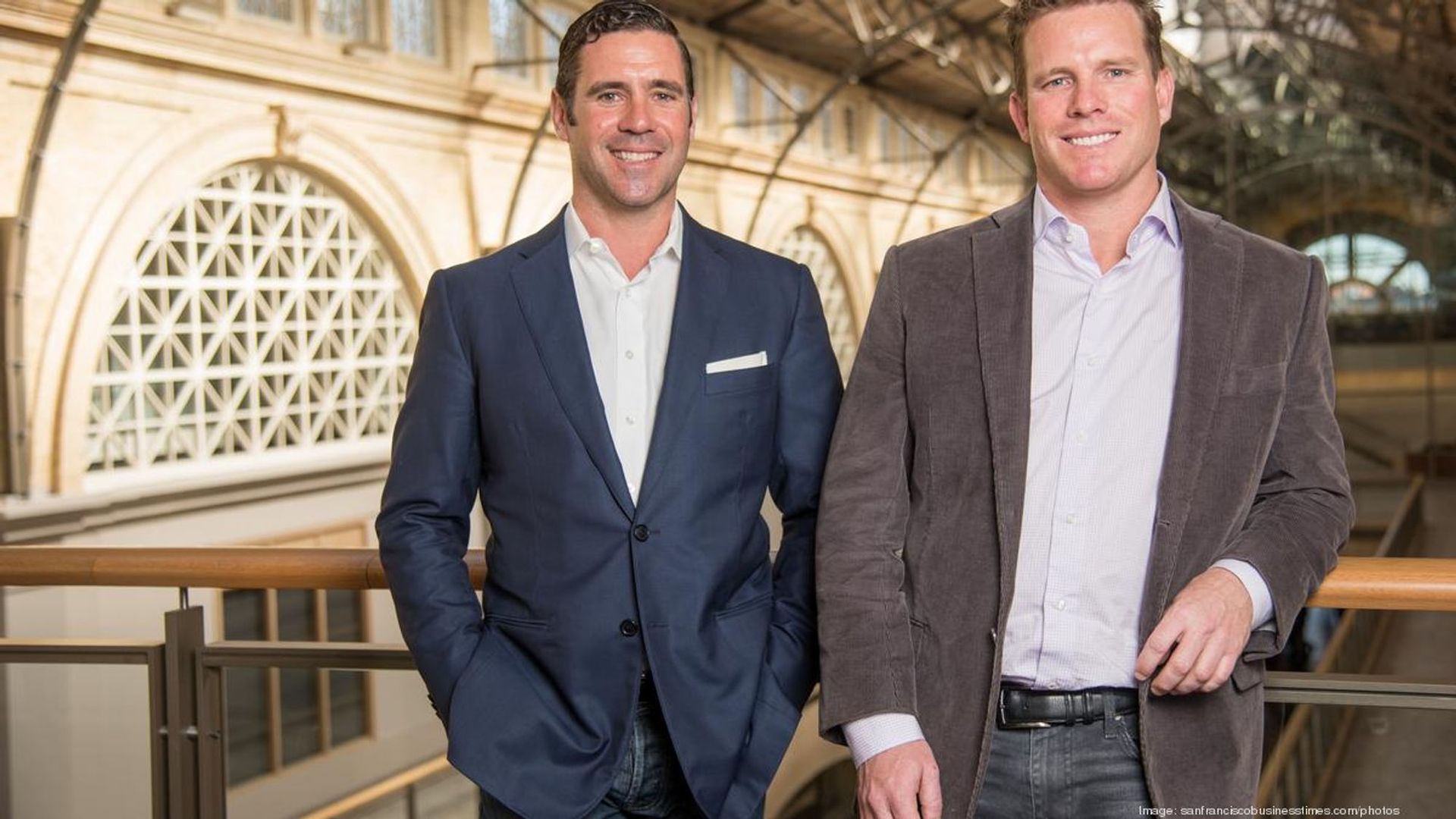
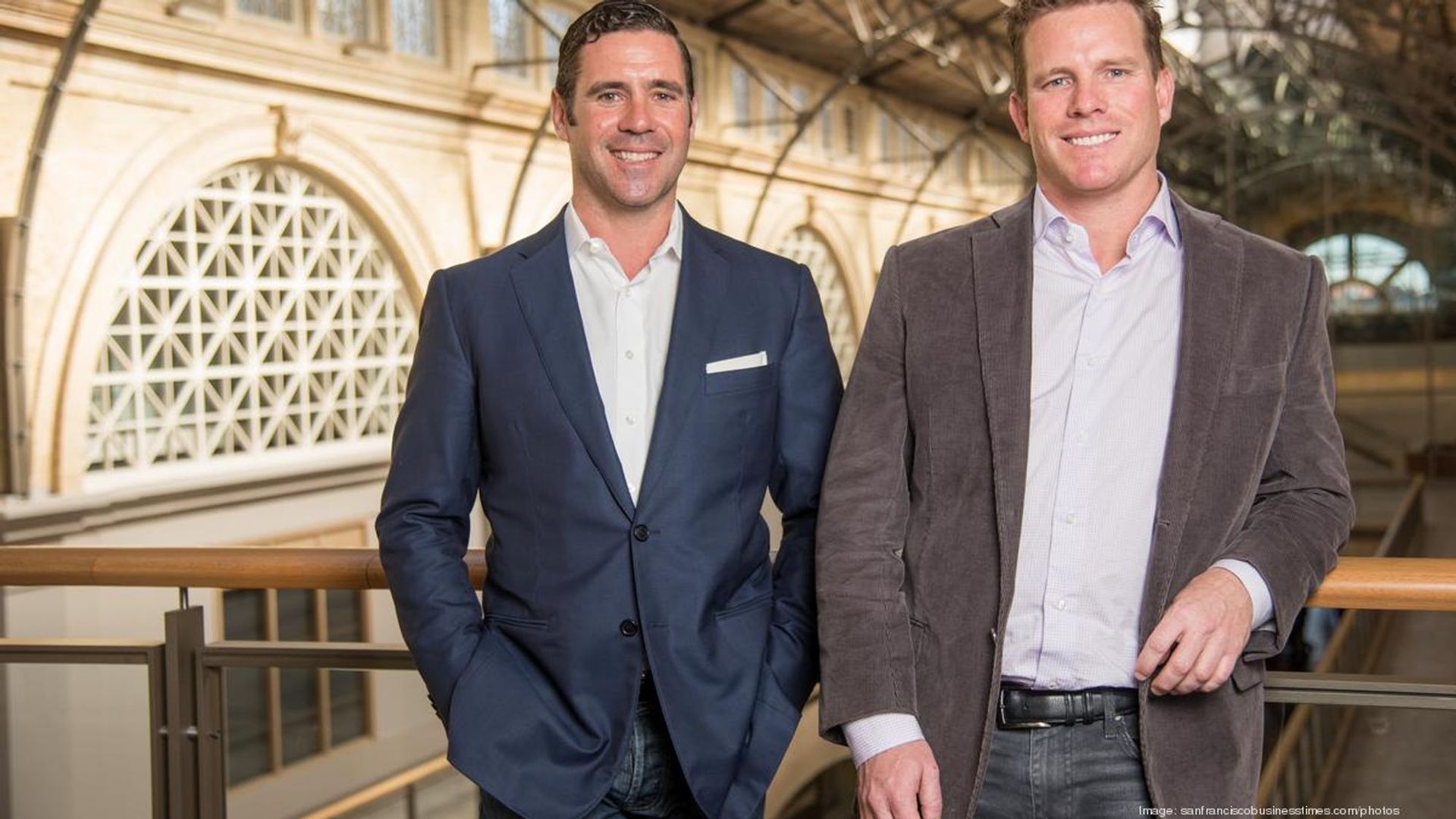
Cryptocurrency venture capital company Blockchain Capital is raising $700 million for two new funds, Bloomberg reported on Thursday.
The San Francisco-based firm is raising for its seventh early-stage fund and second growth fund, which are expected to be completed in the next five to six months, according to the report, citing a person familiar with the matter.
The firm did not respond to CoinDesk’s request for comment.
Blockchain Capital, run by two co-founders and managing partners, Bart Stephens and Brad Stephens, has previously raised around $1 billion for crypto investment, with digital asset giants such as Coinbase, Circle and Tether in its portfolio.
The company’s last major raise came in 2023 when it drew $580 million for its sixth early-stage fund and one late-stage fund.
Blockchain Capital’s limited partners largely come from a traditional financial (TradFi) background, including university endowments, sovereign wealth funds, U.S. pension plans and the like. The firm manages already manages $2 billion in fee-bearing assets and a total portfolio worth more than $6 billion, according to Bloomberg.
Key Highlights
- Order intake surged 104.5% year-over-year to €269.7 million, exceeding analyst projections by approximately 4%
- Net income climbed 63.8% to €51.6 million; quarterly revenue increased 28.3% to €184.9 million
- Growth momentum fueled by hybrid bonding technology and packaging solutions for AI processors
- Management forecasts Q2 revenue expansion of 30% to 40% quarter-over-quarter, targeting gross margins of 64–66%
- Second major client initiated qualification process for high bandwidth memory (HBM) hybrid bonding applications
BE Semiconductor Industries delivered impressive first-quarter results, with order intake more than doubling and net income surging nearly 64% amid robust demand for sophisticated chip packaging solutions driven by artificial intelligence applications.
The Netherlands-based semiconductor equipment manufacturer announced Q1 2026 order bookings totaling €269.7 million, representing a 104.5% increase from the €131.9 million recorded in the same period last year. This performance exceeded Wall Street expectations by approximately 4%, according to analysts at J.P. Morgan.
Quarterly revenue reached €184.9 million, marking a 28.3% year-over-year improvement. Net income climbed to €51.6 million from €31.5 million in the first quarter of 2025, supported by revenue expansion and enhanced operational efficiency measures.
The firm’s outstanding order backlog more than doubled during the three-month period to €268.7 million. Executives attributed this strength to robust deliveries across premium mobile devices and 2.5D artificial intelligence computing platforms.
Advanced Packaging Technology Drives Momentum
Hybrid bonding technology — an innovative packaging approach that enables direct chip-to-chip bonding without traditional interconnects — continues to serve as a primary catalyst for Besi’s expansion. Industry experts view this technology as essential for advancing AI accelerators and high bandwidth memory solutions.
During the quarter, a second major customer initiated the qualification process for Besi’s hybrid bonding capabilities within the high bandwidth memory sector. Market analysts interpret this development as an encouraging indicator of accelerating HBM technology adoption.
J.P. Morgan characterized the quarterly performance as evidence that hybrid bonding integration is gaining significant traction throughout the memory semiconductor industry, describing it as “a positive print” for the equipment supplier.
Besi’s early leadership position in hybrid bonding technology has positioned the company to capitalize directly on the expanding AI chip infrastructure buildout. The customer roster includes semiconductor manufacturing leaders TSMC, Intel, and Samsung Electronics — all actively investing in production capacity expansion.
TSMC and Samsung have both recently announced intentions to accelerate production scaling, which analysts expect will translate into increased equipment procurement from Besi in upcoming quarters.
Second Quarter Outlook Shows Continued Strength
For the current quarter, management projects sequential revenue growth ranging from 30% to 40% compared to the Q1 baseline of €184.9 million. This guidance translates to anticipated Q2 revenue between approximately €240 million and €259 million.
Gross profit margins are projected to expand to a range of 64% to 66% in the second quarter. Management also anticipates substantial net income growth during the period.
The forward guidance underscores persistent strength in AI-related semiconductor demand, despite ongoing weakness in alternative chip market segments including automotive, personal computing, and consumer memory applications.
In related European semiconductor industry developments, STMicroelectronics similarly exceeded first-quarter expectations, signaling emerging recovery trends across its primary business segments.
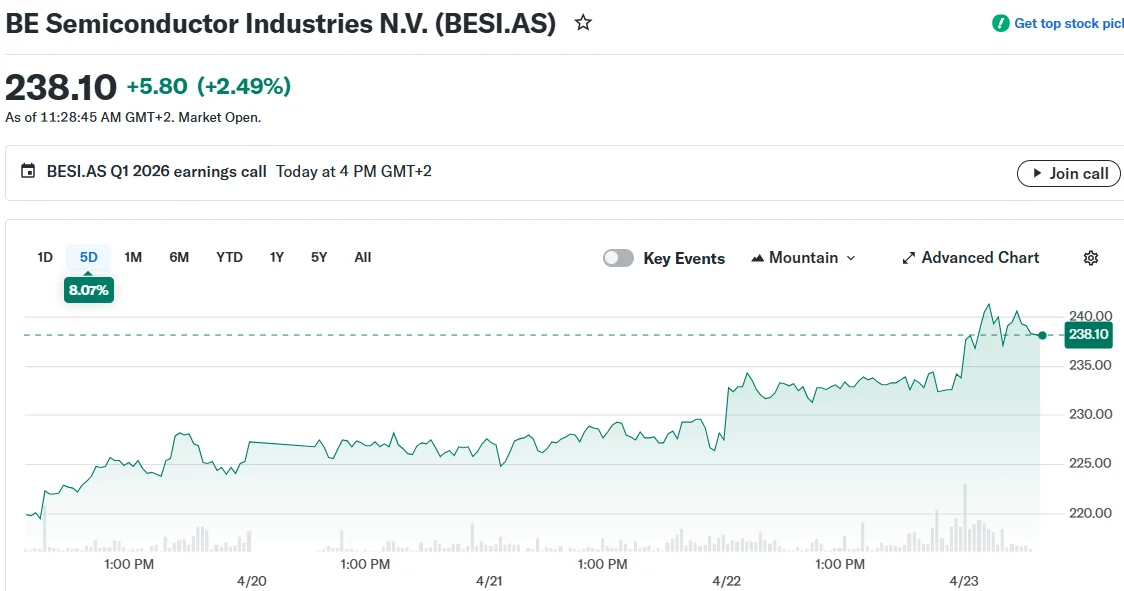
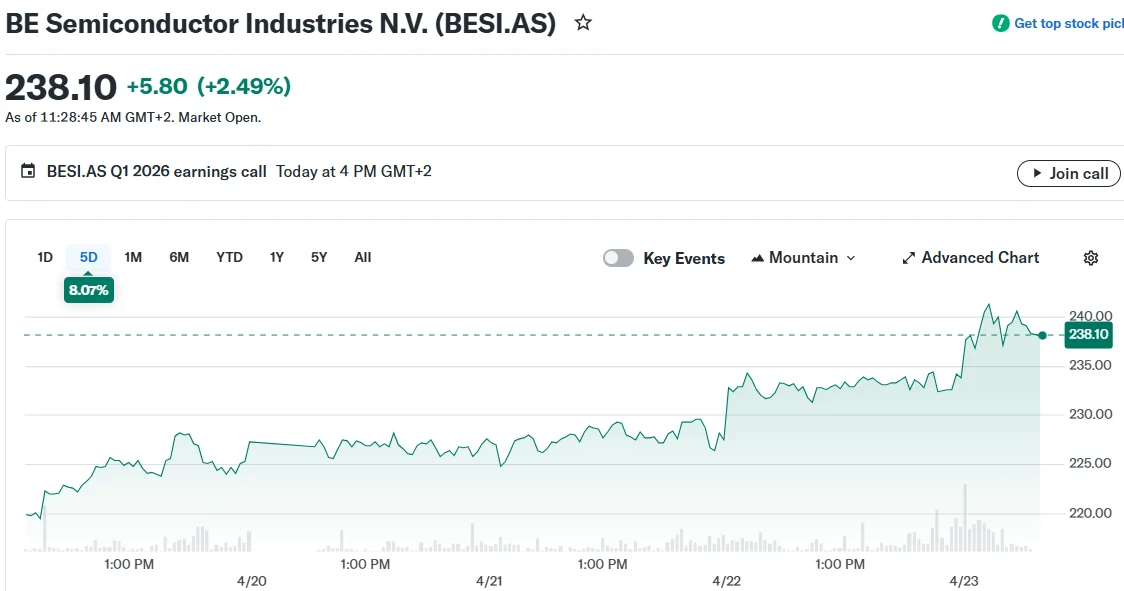
BESI shares advanced approximately 3% during early Thursday trading in Amsterdam, outpacing the broader Dutch AEX benchmark index. Including Thursday’s session, the stock has appreciated roughly 79% since the beginning of the year.
Pi Network has kept protocol work at the center of its April update cycle.
Summary
- Pi Network expanded smart contract tools on Testnet as node operators prepared for Protocol 22.
- The project will appear at Consensus 2026 as co-founders discuss utility and digital identity.
- PI price stayed weak despite upgrades, trading far below its all-time high levels.
In its Pi Day 2026 post, the team said Mainnet and Testnet2 moved through v19.6 on February 15, v19.9 on March 1, and v20.2 on March 13. Pi said those upgrades were part of the groundwork for smart contract functionality across the network.
That work moved forward again on April 17, when Pi Network introduced subscription smart contract capability on Testnet. The team said the feature is meant to support recurring blockchain-based services and business models. Pi described the release as part of its effort to build “real, recurring, utility-driven” use cases inside the ecosystem.
PiRC2 opens the feature to technical review
Alongside the Testnet feature, Pi Network released PiRC2, the second Pi Request for Comment. According to the project, the document opens the subscription smart contract to technical review and community feedback before any Mainnet rollout. Pi said the process gives developers and reviewers a chance to check the design, spot edge cases, and suggest changes.
Pi said the contract is built so users can approve a defined budget without signing each billing event again. The project added that approved funds stay in the wallet until charges are processed. Pi also said external auditing services are reviewing the smart contract. That setup points to a payment model aimed at subscriptions, commerce, and other repeated onchain actions.
Moreover, Pi Network also faces a near-term node deadline. A PiCoreTeam notice referenced by Coindar said Mainnet nodes must upgrade to Protocol 22 by April 27 to “remain connected to the network.” The deadline keeps attention on infrastructure readiness as Pi continues to add smart contract-related tools.
Beyond the network update, Pi Network is listed as a sponsor for Consensus 2026 in Miami. Chengdiao Fan is scheduled to speak in a session titled “Aligning Web3, AI, and Blockchain for Utility,” while Nicolas Kokkalis is listed on the panel “How to Prove You’re Human in an AI World (Without Doxing Yourself).” The event pages frame both sessions around utility, identity, and trusted participation online.
PI price stays under pressure ahead of new catalysts
Despite the fresh development activity, PI has not posted a strong market response. CoinGecko showed PI (PI) at $0.1687 on April 23, with a 24-hour trading volume of about $11.17 million and a market capitalization of about $1.73 billion, ranking it 49th on the site. Over the last seven days, the token was down 1.0%.
The token also remains far below its previous peak. CoinGecko data shows PI reached an all-time high of $2.99 on February 26, 2025, and now trades 94.4% below that level.
For now, traders appear to be watching whether the Protocol 22 deadline, Testnet progress, and Consensus 2026 appearance can give the project fresh momentum.


The KelpDAO hacker has accelerated its laundering operation. An on-chain analyst highlighted that 75,700 stolen Ethereum (ETH), worth about $175 million, has now been “almost entirely” swapped for Bitcoin (BTC).
The conversion followed Arbitrum’s Security Council freezing attacker-linked ETH earlier this week, which pushed the hacker to accelerate fund movements.
KelpDAO Exploiter Converts Stolen ETH to Bitcoin
According to on-chain analyst EmberCN, the KelpDAO hacker has moved the stolen funds at a blistering pace, offloading assets in roughly 1.5 days. The attacker relied heavily on THORChain to cross-chain swap ETH into BTC.
“The hacker’s activity also brought THORChain $800 million in trading volume along with $910,000 in platform fee revenue,” the analyst wrote.
Follow us on X to get the latest news as it happens
The rapid exit follows an earlier setback for the attacker. EmberCN noted that the hacker lost access to the ETH held on Arbitrum. Afterward, he began laundering the ETH.
Several small transfers were made through Umbra Cash, the privacy-focused stealth payment protocol. Umbra has since pulled its hosted frontend offline and placed it in maintenance mode.
In a statement, the team said access to the hosted frontend would be restored only once doing so would not interfere with ongoing recovery efforts.
The fallout has continued to hit the DeFi space. In a separate post, EmberCN highlighted that Aave’s total deposit volume fell from $45.8 billion to about $29.6 billion. The cumulative outflow reached $16.2 billion after the rsETH incident.
Subscribe to our YouTube channel to watch leaders and journalists provide expert insights
The post KelpDAO Attacker Launders 75,700 ETH Into Bitcoin in Day-and-a-Half Sprint appeared first on BeInCrypto.

Key Highlights
- First-quarter earnings per share of -$0.16 surpassed analyst expectations of -$0.18 by 11.11%
- Shares of QS climbed 4.87% in after-hours trading, reaching $7.17
- Quarterly net loss totaled $100.8 million alongside operating expenses of $109.2 million
- QuantumScape maintains $904.7 million in available liquidity and confirmed full-year projections
- Eagle Line automated production facility has completed installation and commenced startup operations
Shares of QuantumScape (QS) rallied in extended trading on April 22 following the release of first-quarter 2026 financial results that exceeded Wall Street’s expectations. The stock advanced 4.87% to reach $7.17 after the market close.
The solid-state battery developer delivered earnings per share of -$0.16, surpassing the analyst consensus estimate of -$0.18. The 11.11% beat was sufficient to drive positive momentum despite the company continuing to operate at a loss.
The quarter’s net loss stood at $100.8 million. The company recorded operating expenses of $109.2 million, while the adjusted EBITDA loss reached $63.2 million.
Revenue from customer billings totaled $11 million during the first quarter. Notably, this figure includes the company’s inaugural billings from ecosystem partners — a modest yet significant development closely monitored by investors.
Capital spending during the quarter amounted to $10 million. Management maintained its full-year capital expenditure outlook in the range of $40 million to $60 million.
QuantumScape closed the first quarter with $904.7 million in available liquidity. With a current ratio of 15.95, the company maintains substantial financial flexibility for the foreseeable future.
Management reaffirmed its guidance for the full year. The company anticipates an adjusted EBITDA loss ranging from $250 million to $275 million for 2026.
Eagle Line Achieves Operational Status
QuantumScape’s Eagle Line, the company’s state-of-the-art automated pilot manufacturing facility for solid-state lithium metal batteries, has finished installation and entered the startup phase.
The company has also incorporated artificial intelligence models into Eagle Line operations. According to management, this integration has yielded measurable improvements in both cell quality and reliability metrics.
President Dr. Siva Sivaram commented that enhanced production efficiency and strategic partnerships “position us well for future growth.” The company continues close collaboration with major automotive manufacturers, including Volkswagen, and has delivered cells to an automotive joint development agreement partner for evaluation.
Expanding Into Emerging Applications
QuantumScape disclosed that it is investigating potential opportunities in AI data center infrastructure and defense applications. Management believes the company’s solid-state battery platform delivers competitive advantages in energy density and safety for these sectors.
These market segments represent nascent opportunities for QS, and leadership acknowledged they may necessitate additional capital investment and resource allocation.
Over the trailing twelve months, the stock has delivered returns of 88.89%. However, shares continue trading substantially below the 52-week peak of $19.07, and have declined roughly 46% over the past half-year.
QS presently maintains a market capitalization of approximately $4.42 billion. The latest after-hours trading price stood at $7.17.
It’s no surprise that there’s a general pivot from blockchain to artificial intelligence right now.
Every week brings another report of a company or person either leaving the cryptocurrency industry entirely or adding artificial intelligence to their portfolios. Bitcoin miners are moving away from mining to increasingly focus on AI infrastructure and venture capital firms are funding AI firms rather than crypto companies.
But it’s unusual when the leading members of the same team leave one company and jump into another just down the road. That’s exactly what appears to have happened to the senior marketing team at crypto exchange Coinbase (COIN), which, over the course of a year or so, has landed at San Francisco-based OpenAI, the maker of ChatGPT. Coinbase maintains a 150,000-square-foot office in the city.
It’s worth noting that Coinbase employs a large number of marketing staff and six — albeit quite senior roles — make up only a small portion of the entire team.
The marketing talent migration began with Sarah Russell, who joined OpenAI as VP, integrated marketing and ops in November 2024. She had spent one year and three months as the senior director of integrated marketing at Coinbase, a position she left in January 2023. It’s worth noting that earlier in her career, she worked at Facebook’s (now Meta) Menlo Park headquarters.
A month later, Kate Rouch became OpenAI’s chief marketing officer. Directly prior to that, she spent three and a half years in the same role at Coinbase. Before that, she spent over 11 years as global head of brand and product marketing at Meta.
Rouch was followed by Elke Karstens, who joined OpenAI as head of international marketing in March 2025, though she didn’t move directly. Karstens spent three months at a London-based paytech startup called Finom. Karstens also spent over 10 years at Meta in various marketing roles.
The following September saw another two transitions: Kaitlin Gianetti became head of integrated marketing management at OpenAI a month after leaving Coinbase, and Amy (Good) Robbins joined as brand insights lead directly after leaving Coinbase. Gianetti had spent just over four years as director of integrated marketing at Coinbase. Prior to that, she also worked as a brand marketing executive at Meta. Robbins spent three and a half years as senior manager of insights at Coinbase.
Most recently, Nina Mogavero joined OpenAI in December 2025 to work in marketing strategy and operations, a month after leaving Coinbase where she’d spent three years in marketing and strategy.
A person familiar with the situation said the exodus was no coincidence. The person described Rouch as the “nexus,” when it comes to enticing former Coinbase colleagues to move over to OpenAI.
“To be fair, she hired a lot of them or brought them from Facebook,” they said. Kate Rouch did not respond to a request for comment.
A Coinbase spokesperson brushed away the departures. “The marketing team at Coinbase is over 150 people and while some folks have left to join OpenAI last year, and we wish them the best, characterizing this as anything other than normal people moves would be incorrect,” the spokesperson said via email.
OpenAI did not respond to requests for comment.
Marketing isn’t the only department that’s seen AI as more attractive than crypto. Earlier this month, Tom Duff Gordon, the former VP of international policy at Coinbase, left to become OpenAI’s head of EMEA Policy.
Other Coinbase alumni who have headed to OpenAI include
- Yi X, who joined the AI firm as product manager in April 2025
- The head of design at decentralized trading platform Base, Alexandra Fitzroy, left Coinbase in October 2025 after just over five years
- Abe Sprague left Coinbase in September 2024 to become a member of OpenAI’s data science team.
OpenAI isn’t the only machine learning shop to win over Coinbase marketing talent. Earlier this month, Sarah Wolf, the marketing lead behind Coinbase’s Base layer-2 network, left after nearly five years at the exchange to head startup marketing at AI lab Anthropic.
Ethereum price is slightly pumping as institutional infrastructure around ETH continues to expand at a pace building bullish prediction. GSR Markets just launched the BESO ETF on Nasdaq, the first US-listed crypto fund to actively manage a multi-asset basket of BTC, ETH, and SOL with built-in staking yields. It’s a product category that did not exist a week ago.
BESO charges a 1% annual fee, rebalances weekly, and passes through protocol-level staking yield from ETH with 3.3–4.0% APY directly to shareholders. That stacks it against BlackRock’s IBIT with $54 billion AUM, and Bitwise’s BAVA, which offers concentrated AVAX exposure at 5.4% staking APY.
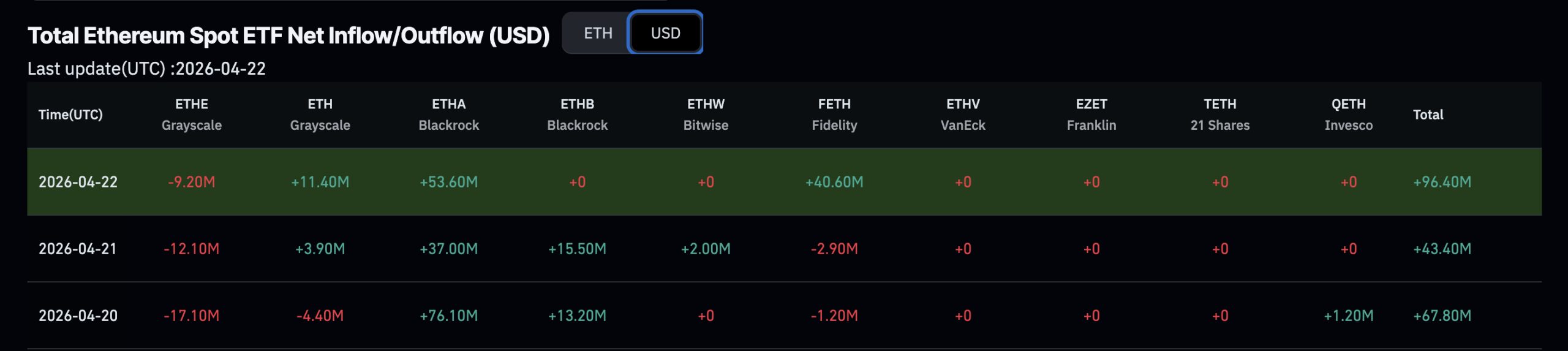
Three different bets on where crypto belongs in a portfolio. Spot Ethereum ETFs logged $206 million in net inflows for 3 days this week the strongest weekly figure since launch, with the week still has 2 more days of open trading day. This has also pushing cumulative inflows close to $12 billion. ETH network transactions also surged 41% week-over-week as the macro setup tightens.
Discover: The best pre-launch token sales
Ethereum Price Prediction: $7,500?
ETH is consolidating within a $2,200–$2,400 support zone that has been tested multiple times, especially at $2,400, which now serves as the critical pivot. The Fear & Greed Index has remained stable since yesterday at 33 (Fear), with 5% 30-day volatility and 17 of the last 30 days closing green.
The April 17 surge to $2,440 on heavy ETF inflow volume established a near-term ceiling that the price has since struggled to reclaim. Exchange supply is dropping as staking pulls assets off-market, a structural supply squeeze that historically precedes directional moves. Institutional accumulation continues in size, with smart money adding on dips. Why ETH?
— DeFi Dad ⟠ defidad.eth (@DeFi_Dad) April 22, 2026
 New @Edge_Pod
  The $250k ETH Thesis: Why Wall Street Is Betting ETH Beats Gold and Bitcoin
0:00 – Intro
3:06 – Background on Wall Street
5:18 – ETH is better money than BTC or gold
10:03 – What is productive money?
12:15 – Wall Street buys ETH as productive money
16:02 -… pic.twitter.com/3Et0Kn26S4
With sustained ETF demand over the next 72 hours, ETH could push through $2,400 resistance, opening a run toward $2,500. Big guys like TD Cowen target $3,650, and Standard Chartered has a $7,500 institutional-flow thesis.
The institutional accumulation thesis carries significant weight heading into the second half of 2026.
Discover: The best crypto to diversify your portfolio with
Maxi Doge Could Be the Next Memecoin to Run on ETH
Let’s get real, ETH memecoins are still the ones that people hold. Solana memecoins have less than 1 minute of holding time on average, according to data. That gap between “solid long-term thesis” and “near-term explosive upside” is exactly where ETH memecoins, especially the ones in early-stage presales, operate.
Maxi Doge ($MAXI) is a meme token built on Ethereum (ERC-20) with a concept that is almost offensively on-brand for the current market: a 240-lb canine juggernaut embodying 1000x leverage trading mentality.
The tagline “never skip leg day, never skip a pump” is absurd in the best possible way. The presale has raised $4.7 million at a current price of $0.0002814, with 60% APY staking already live. Features include Holder-Only Trading Competitions with leaderboard rewards and a Maxi Fund treasury earmarked for liquidity and partnerships.
Meme-first marketing with viral gym-bro humor is the distribution engine.
Research Maxi Doge before presale closes.
The post Ethereum Price Prediction: GSR Launces ETH ETF to Rival BlackRock and Bitwise appeared first on Cryptonews.


A suspected manipulation of weather data tied to a prediction market payout has renewed scrutiny around the “oracle problem” in blockchain systems.
The case centers on temperature readings from the Météo France temperature sensor at Charles de Gaulle Airport, which was reportedly used by Polymarket to settle bets on daily weather outcomes in Paris.
The Polymarket Manipulation No One Anticipated
According to media reports, on April 6, the station recorded a sudden spike to 21°C in the evening, an anomaly inconsistent with surrounding data.
The move enabled a bettor to win approximately $14,000. A similar pattern emerged on April 15, when the sensor briefly jumped from 18°C to 22°C.
Follow us on X to get the latest news as it happens
Speaking to BFMTV and Le HuffPost, Météo-France confirmed on April 21 that it had filed a complaint for “tampering with the operation of an automated data processing system” with the air transport gendarmerie in Roissy.
Following the incidents, Polymarket reportedly shifted its data source to Le Bourget Airport station (LFPB).
Crypto’s Oracle Problem Moved Off the Blockchain and Onto a Paris Runway
In a post on X, podcast host Aakash Gupta argued that the core vulnerability remains unresolved despite reported changes to the data source.
He noted that shifting to another nearby weather station does little to mitigate risk, describing it as replacing one exposed data point with another of similar security standards, effectively maintaining a single point of failure.
“Every crypto whitepaper for the last decade has warned about the oracle problem. Someone finally demonstrated it for $34,000 using a hair dryer,” he said.
Gupta contrasted the sophistication of blockchain infrastructure with the fragility of its real-world inputs. While the underlying system executing these markets reflects years of technical development, he pointed out that the outcome still hinges on “airport equipment in a plastic box.”
He further suggested that this issue extends beyond weather-based contracts on Polymarket. According to Gupta, many prediction markets rely on a single authoritative data source for sports results, election outcomes, and other events.
This structure, he argued, creates a repeatable attack surface: identify the weakest link in the reporting chain, influence the input, and benefit from the resulting market imbalance.
“The hardest part of crypto is the chain. The weakest part is the thermometer,” Gupta added.
The episode reveals a persistent challenge for decentralized systems. While blockchain infrastructure can ensure deterministic and tamper-resistant execution, it remains only as reliable as the external data it consumes.
BeInCrypto has reached out to Polymarket for comment.
Subscribe to our YouTube channel to watch leaders and journalists provide expert insights
The post A Paris Airport Thermometer Just Exposed Crypto’s Oldest Unsolved Problem appeared first on BeInCrypto.

Si estás buscando un lugar donde jugar al casino online sin necesidad de una licencia, España es el lugar perfecto. Con una gran variedad de opciones disponibles, es importante encontrar la mejor para ti. En este artículo, te presentaremos una comparación de las mejores opciones de casinos online sin licencia en España.
La primera opción que te presentamos es BitStarz, un casino online sin licencia que ofrece una gran variedad de juegos de azar y apuestas deportivas. Con una amplia gama de opciones de pago y retirada, es fácil encontrar una que se adapte a tus necesidades.
Otra opción interesante es Wildz, un casino online sin licencia que se centra en la experiencia del jugador. Con una amplia gama de juegos de azar y apuestas deportivas, es un lugar ideal para aquellos que buscan una variedad de opciones.
Por último, pero no menos importante, hay Casino Adonis, un casino online sin licencia que se centra en la seguridad y la transparencia. Con una amplia gama de opciones de pago y retirada, es un lugar ideal para aquellos que buscan una experiencia segura y transparente.
En resumen, si estás buscando un lugar donde jugar al casino online sin necesidad de una licencia, España es el lugar perfecto. Con una gran variedad de opciones disponibles, es importante encontrar la mejor para ti. En este artículo, te presentamos una comparación de las mejores opciones de casinos online sin licencia en España.
Recuerda que, al igual que en cualquier otro lugar, es importante ser responsable y jugar de manera responsable. ¡Disfruta de tu experiencia de juego online!
¿Qué son los casinos online sin licencia?
Los casinos online sin licencia son plataformas de juego en línea que no tienen una licencia emitida por una autoridad reguladora, como la Dirección General de Ordenación del Juego (DGOJ) en España. Estos casinos no están sujetos a las mismas normas y regulaciones que los casinos online con licencia, lo que puede ser un riesgo para los jugadores.
Es importante tener en cuenta que los casinos online sin licencia pueden ofrecer juegos de azar y apuestas deportivas, pero no ofrecen la misma seguridad y protección que los casinos online con licencia. Además, los casinos online sin licencia pueden no cumplir con las normas de privacidad y seguridad, lo que puede poner en peligro la información personal y financiera de los jugadores.
En resumen, los casinos online sin licencia no son una opción recomendable para los jugadores, ya que no ofrecen la misma seguridad y protección que los casinos online con licencia. Es importante buscar casinos online con licencia y que cumplan con las normas de privacidad y seguridad para disfrutar de una experiencia de juego en línea segura y divertida.
Comparativa de casinos online sin licencia: características y ventajas
Cuando se trata de casinos online sin licencia en España, es fundamental conocer las características y ventajas de cada opción para tomar una decisión informada. En este sentido, es importante destacar que los casinos online sin licencia en España no están sujetos a las mismas regulaciones que los casinos tradicionales, lo que puede ser un atractivo para algunos jugadores.
Sin embargo, es importante tener en cuenta que la falta de licencia no garantiza la seguridad y transparencia de los casinos online. Por lo tanto, es fundamental investigar y comparar las características y ventajas de cada opción antes de tomar una decisión.
A continuación, te presento una comparativa de algunos de los casinos online sin licencia en España, destacando sus características y ventajas:
Comparativa de casinos online sin licencia en España
Casino 1: 100% de depósito en bonus, 24/7 soporte en español, amplia variedad de juegos de azar y apuestas deportivas.
Casino 2: 200% de depósito en bonus, 24/7 soporte en español, amplia variedad de juegos de azar y apuestas deportivas, y un programa de lealtad que premia a los jugadores más fieles.
Casino 3: 150% de depósito en bonus, 24/7 soporte en español, amplia variedad de juegos de azar y apuestas deportivas, y un sistema de pago seguro y rápido.
En resumen, los casinos online sin licencia en España pueden ofrecer ventajas como depósitos en bonus, soporte en español 24/7, amplia variedad de juegos de azar y apuestas deportivas, y programas de lealtad que premian a los jugadores más fieles. Sin embargo, es fundamental investigar y comparar las características y ventajas de cada opción antes de tomar una decisión.
¿Cómo elegir el mejor casino online sin licencia para ti?
Antes de empezar a jugar en un casino online sin licencia, es importante elegir el mejor para ti. Con tantas opciones disponibles, es fácil sentirse abrumado. Sin embargo, siguiendo algunos consejos simples, puedes encontrar el casino online sin licencia que mejor se adapte a tus necesidades.
Primero, debes considerar la licencia y la regulación. Aunque los casinos online sin licencia no están sujetos a la misma regulación que los casinos tradicionales, es importante buscar aquellos que tengan una buena reputación y sean transparentes en sus operaciones.
Segundo, debes investigar las opciones de pago y retirada. Asegúrate de que el casino online sin licencia ofrezca opciones de pago y retirada seguras y fiables. También debes verificar si el casino tiene un sistema de soporte al cliente efectivo y disponible en español.
Tercero, debes considerar la variedad de juegos y la calidad de la plataforma. Asegúrate de que el casino online sin licencia ofrezca una variedad de juegos y que la plataforma sea fácil de usar y navegar.
Consejos para elegir el mejor casino online sin licencia
Lee reseñas y comentarios de otros jugadores para obtener una idea de la reputación del casino.
Verifica si el casino tiene una licencia y regulación en un país con una buena reputación.
Asegúrate casinos sin licencia españa de que el casino ofrezca opciones de pago y retirada seguras y fiables.
Verifica si el casino tiene un sistema de soporte al cliente efectivo y disponible en español.
Asegúrate de que el casino ofrezca una variedad de juegos y que la plataforma sea fácil de usar y navegar.
Siguiendo estos consejos, puedes encontrar el casino online sin licencia que mejor se adapte a tus necesidades y disfrutar de una experiencia de juego segura y divertida.


Dan Finlay, co-founder of MetaMask and a longtime developer at Consensys, has announced that he is leaving the company.
Summary
- Dan Finlay said he is leaving Consensys after helping build MetaMask over the past decade.
- MetaMask launched Advanced Permissions, letting dApps execute approved transactions without requiring users to sign each time.
- The new feature could support recurring crypto payments with user-set spending limits and clearer permissions.
In a post on X, Finlay said Wednesday was his “last day” at Consensys after about 10 years of work on the crypto wallet.
Finlay said he plans to spend more time with his family and cited “burnout” after years of building MetaMask. His exit marks a leadership change for one of the best-known wallet products in the Ethereum ecosystem.
“Wishing the team the best — they have an amazing road ahead of them,” he wrote.
MetaMask expands beyond Ethereum
MetaMask launched in 2016 under Consensys and became one of the most widely used Ethereum wallets on desktop and mobile. The product helped many users access decentralized applications and manage digital assets during the rise of decentralized finance, NFTs, and other blockchain-based services.
Over time, MetaMask expanded beyond its early Ethereum focus. The wallet added support for more networks, including non-EVM chains such as Bitcoin and Tron. It also moved into newer product areas such as prediction markets, tokenized stocks, and a payment card launched with Mastercard that offers cashback in mUSD.
Soon after announcing his departure, Finlay pointed to the release of Advanced Permissions, also known as ERC-7715. The feature lets decentralized applications request specific permissions from users so they can carry out approved actions without asking for a fresh signature every time.
According to MetaMask’s developer documentation, the system can support use cases such as scheduled purchases or repeated onchain actions with set limits. One example states that a user can allow a dApp to spend “10 USDC per day” to buy ETH over a month. Once approved, the application can use that daily amount directly from the user’s wallet under the permission settings.
New feature targets recurring crypto payments
The new permissions model focuses on reducing friction for users who interact with applications often. Instead of approving every single transaction, users can set rules in advance. That structure may help apps offer smoother payment flows and more consistent user experiences inside the wallet.
Tornado Cash co-founder Roman Storm reacted to the update on X and called the feature “extremely important.”
“Finally, the crypto market can offer something everyone has envied about Visa and Mastercard — recurring payment systems, which crypto hasn’t had,” he added.
His response points to one possible use case as MetaMask continues product development after Finlay’s exit.

Ex-Philippine president Duterte to face trial on crimes against humanity charges

Coinbase backer Blockchain Capital hunts $700 million for new funds

Sandra Lee Calls Off Engagement With Partner Of Five Years

Manchester United reach agreement with Casemiro over contract clause amid transfer speculation

Steven Gerrard disagrees with Gary Neville over ‘shock’ Chelsea and Arsenal claim | Football

US brings back mandatory military draft registration


-

 Sports6 days ago
NWFL Suspends Two Players Over Post-Match Clash in Ado-Ekiti
-

 Fashion6 days ago
Weekend Open Thread: Theodora Dress
-

 Politics6 days ago
Palestine barred from entering Canada for FIFA Congress
-
Entertainment3 days ago
NBA Analyst Charles Barkley Chimes in on Ice Spice McDonald’s Fiasco
-

 Business4 days ago
Powerball Result April 18, 2026: No Jackpot Winner in Powerball Draw: $75 Million Rolls Over
-

 Tech4 days ago
Auto Enthusiast Scores Running Tesla Model 3 for Two Grand and Turns It Into Bare-Bones Go-Kart
-

 Politics4 days ago
Zack Polanski demands ‘council homes not luxury flats for foreign investors’
-

 Crypto World5 days ago
Russia Pushes Bill to Criminalize Unregistered Crypto Services
-

 Politics3 days ago
Gary Stevenson delivers timely reminder to register to vote as deadline TODAY
-

 Politics15 hours ago
Disabled people challenge government SEND proposals over segregation concerns
-

 Politics15 hours ago
Making troops accountable for war crimes threatens US alliance, ex-SAS colonel warns
-

 Business1 day ago
Rolls-Royce Voted UK’s Most Iconic Trade Mark as IPO Register Hits 150
-
 Business7 days ago
Creo Medical agree sale of its manufacturing operation
-

 Crypto World5 days ago
Russia Introduces Bill To Criminalize Unregistered Crypto Services
-

 Politics16 hours ago
Starmer handler McSweeney to be dragged from shadows by Foreign Affairs Committee
-

 Politics16 hours ago
Zack Polanski responds to home secretary’s taser threat
-
Politics17 hours ago
Wings Over Scotland | How To Get Away With Crimes
-
 Crypto World4 days ago
Kelp DAO rsETH Bridge Hack Drains $292M as DeFi Losses Top $600M in Two Weeks
-

 Politics14 hours ago
‘Iran is still a nuclear threat’
-

 Business7 days ago
Cheaper Doritos and Lays helps PepsiCo win back struggling snackers
You must be logged in to post a comment Login