
Crypto World
The Art Of The Exit: Dodging Panic When Dell Stock Breached Stop

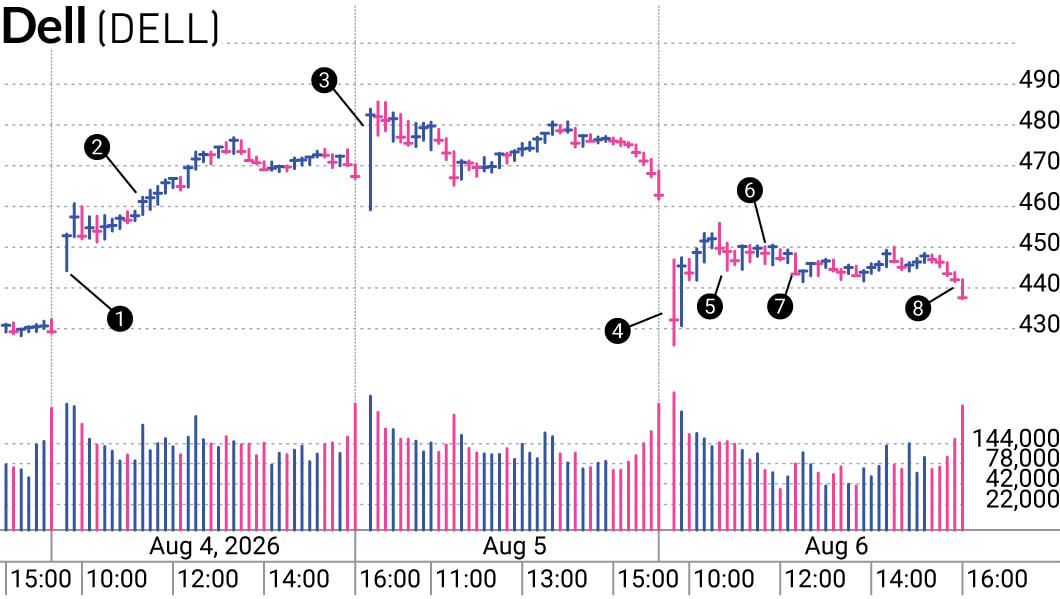
Every entry needs an exit strategy in order to limit risk. Once you know the risk, then you can also set an appropriate position size for the trade. But the big assumption is that you can get the exit price you want in order to keep the loss small. What happens when a gap-down at the open demolishes your risk…
Copyright ©2026 Investor’s Business Daily, LLC. All rights reserved. 87990cbe856818d5eddac44c7b1cdeb8


Perhaps due to the delay of the CLARITY Act at the end of the week, Ripple’s cross-border token slipped to a major support level at just over $1.00, and questions arose whether a dip below that line is only a matter of time.
However, it has managed to remain above it during the weekend, and now a few analysts have noted that a major rebound is coming. One even called it ‘the strongest in history.’
Will XRP Bounce Immediately?
The asset’s slip to $1.02 on Friday pushed its RSI into a highly oversold area, which, according to popular analyst Dark Defender, means that the indicator has bottomed on the weekly timeframe. They explained it as the sub-wave structure within the Grand Wave, suggesting the completion of the major correction.
Consequently, Dark Defender turned highly bullish, indicating that investors should “expect the strongest reversal in history” once XRP reclaims the $1.05 zone, which is still being tested from the downside.
Fellow analyst Gerla agreed, noting that the asset just “swept the lows and bounced straight from major support.” He added that the price printed a lower low, while the RSI charted a bullish divergence. As long as XRP remains above $1.02, it has the chance to reclaim $1.08, which could send it “into a serious reversal.”
$XRP just swept the lows and bounced straight from major support.
Price made a lower low while RSI printed a bullish divergence.
The long-term trendline is also being tested perfectly.$1.02 held.
Now a reclaim of $1.08 could send $XRP into a serious reversal. pic.twitter.com/OXCKFiCGr2
— Gerla (@CryptoGerla) August 8, 2026
Meanwhile, other highly optimistic analysts, such as ChartNerd and EGRAG CRYPTO, presented long-term charts hinting at a major breakout ahead for XRP. Their targets sound quite far-fetched at the moment, given the current market conditions, but they are aligned on the expectation that they will be in the low- to mid-double-digit range.
Polymarket Odds Disagree
Unlike the aforementioned bullish expectations, traders on Polymarket are quite convinced that XRP’s path includes a dip below the coveted $1.00 level. In fact, the odds have risen to 65% for such a drop even by the end of the month. In contrast, a rise to $1.20 has a much smaller probability percentage of 17%, while a more profound rebound to $1.40 is at a negligible 2%.
BREAKING: XRP projected to crash below $1.00 by the end of the month.
65% chance.https://t.co/z5yfnlniyq
— Polymarket (@Polymarket) August 8, 2026
XRP’s painful history in August could be among the reasons behind this rather bearish view, as the asset has closed in the red in all four of the last editions. Moreover, it was just four times in the green since 2013.
The post Analyst Expects XRP’s Strongest Price Reversal Ever, but Polymarket Disagrees appeared first on CryptoPotato.
BTCPay Server has taken a defensive step for Bitcoin Lightning users, temporarily blocking public remote connections to Lightning Network nodes running LND after attackers reportedly exploited a critical vulnerability to steal credentials and move funds.
The project said Lightning payments can still be processed, but external wallets—such as Zeus—will be unable to connect via a BTCPay Server domain or a Tor onion address in Docker-based deployments until BTCPay decides it is safe to re-enable that remote access pathway.
Key takeaways
- BTCPay Server has temporarily restricted public remote access to LND nodes in Docker deployments to reduce the chance of further credential misuse.
- Version 2.4.2 installs LND 0.21.1 and automatically regenerates Lightning “macaroon” credentials for standard BTCPay installations.
- Operators are urged to look for signs of compromise, including unauthorized payments, unexpected channel closures, unfamiliar peers, and mismatches between onchain/Lightning balances.
- Deployments that expose LND through routes outside BTCPay—such as a user-managed reverse proxy, Tor service, or forwarded ports—must rotate credentials separately.
Why BTCPay is limiting remote access
In a statement shared by BTCPay Server on X, the team said the restriction is designed to prevent external wallets from reaching affected Lightning nodes through BTCPay’s publicly exposed endpoints. The immediate concern is not the Lightning protocol itself, but how remote access can be abused when attackers gain control over the credentials that authorize actions on an LND node.
BTCPay emphasized that the change is intended to be temporary. It also indicated its plan is to bring remote access back once it determines it is safe—an important operational detail for service providers that rely on broad wallet connectivity for day-to-day payments.
What version 2.4.2 changes in LND authentication
BTCPay’s fix centers on credential rotation. According to the project’s security guidance, attackers were able to obtain “macaroon” credential files without proper authentication. Macaroons are the authorization artifacts LND uses to control access to node capabilities. If an attacker acquires them, the potential outcome is full take-over of the LND node and the ability to move funds.
BTCPay said version 2.4.2 addresses the issue by installing LND version 0.21.1 and automatically regenerating macaroon credentials on standard BTCPay setups. For operators, this is significant because it reduces the likelihood of lingering compromised credentials after an update—though it does not eliminate the need for active incident checks.
The project advised operators to verify whether compromise attempts occurred by reviewing several common indicators: unauthorized payments, unexpected channel closures, unfamiliar peers, and discrepancies between their records and either onchain or Lightning balances.
Actions operators must take beyond updating BTCPay
BTCPay’s instructions also draw an important line between what the software controls and what an operator configures. The team stated that installing the update does not automatically close access routes managed independently by the operator. If an LND node is exposed through other paths—such as a reverse proxy configured by the operator, a Tor service not run through BTCPay, or a forwarded port—then credential rotation may need to happen separately.
That distinction matters because it changes the practical remediation workflow. Updating BTCPay may fix the credential lifecycle for standard deployments, but it may not fully protect a node that is independently reachable. For operators, the key is to inventory how their LND node is reachable and ensure authorization material is rotated everywhere that the node can be accessed.
Reported impacts from operators
BTCPay’s warning is not theoretical. At least two operators publicly reported that their Lightning nodes were drained after the incident.
Foundation CEO Zach Herbert said the Lightning node associated with the hardware-wallet company’s setup was drained overnight. He later clarified that the company’s hot wallet was unaffected, while its Lightning channels were closed and funds were swept. The operators did not disclose the amount lost.
Bitcoin publication Citadel21 also reported that its Lightning node had been swept, without specifying the size of the loss.
While these reports are limited, they underline the risk that credential compromise can translate into direct fund movement via Lightning channels—reinforcing why BTCPay is restricting public remote access and why operators are being asked to check channel and peer activity closely.
Broader security implications for Bitcoin users
BTCPay’s incident comes amid a wider pattern of security problems affecting popular Bitcoin products. The BTCPay breach is described as part of the most recent wave of vulnerabilities impacting Bitcoin-adjacent tooling, following a Coldcard hardware-wallet flaw that was linked to more than $100 million in confirmed losses, as referenced in earlier coverage by Cointelegraph.
In other words, the underlying Bitcoin network is not the target; the failures occur in the surrounding systems—wallets, custody interfaces, and node management software—that users depend on to interact with the protocol.
For Lightning operators, the immediate next steps are clear: update to BTCPay Server version 2.4.2 (or apply the relevant fixes), verify that macaroon credentials are rotated as expected, and actively audit for unauthorized payments, unexpected channel behavior, unfamiliar peers, and balance mismatches. As BTCPay evaluates when to restore remote access, operators should also monitor how their own exposure routes outside BTCPay are configured—because those may determine whether the risk has truly been eliminated.
BTCPay Server has temporarily blocked public remote connections to Lightning Network nodes running the Lightning Network Daemon (LND) after attackers exploited a critical vulnerability to obtain credentials and move funds. The project says Lightning payments can still proceed, while it works to make remote access safe again.
In a security-driven update, BTCPay Server announced that version 2.4.2 installs LND version 0.21.1 and automatically regenerates the “macaroon” credential files used to control LND on standard deployments. Operators are also urged to inspect their nodes for signs of compromise, including unauthorized payments, unexpected channel closures, suspicious peers, and mismatches between recorded balances and what’s actually present onchain or in Lightning.
Key takeaways
- BTCPay Server 2.4.2 restricts public remote connections to LND on Docker deployments, preventing external wallets from connecting via BTCPay domains or Tor onion addresses.
- The update automatically installs LND 0.21.1 and regenerates LND macaroon credentials on standard BTCPay installations.
- Operators should monitor for unauthorized payments, unexpected channel closures, unfamiliar peers, and balance discrepancies as indicators of theft.
- If an operator exposes LND through their own reverse proxy, Tor service, port forwarding, or other routes outside BTCPay, credentials must be rotated separately.
Why BTCPay moved to block remote LND access
BTCPay Server’s advisory centers on a specific failure mode: a critical vulnerability that, according to BTCPay, allowed an unauthenticated remote attacker to obtain the macaroon credential files that authorize control of an LND node.
Those credentials are effectively the key material that lets a party manage or act on behalf of the node. BTCPay warned that exposed credentials could enable attackers to take control of the LND instance and move funds.
To reduce the attack surface while remediation is rolled out, BTCPay temporarily restricted public remote connections to Lightning nodes running LND software through BTCPay-managed endpoints. In its statement, BTCPay highlighted that the change blocks external wallets—including Zeus—from connecting through a BTCPay Server domain or a Tor onion address in Docker deployments.
Importantly for day-to-day operators, BTCPay said Lightning payments can continue. The restriction is framed as a stopgap measure until the project believes it is safe to restore the prior remote-access functionality.
What the 2.4.2 update changes for operators
BTCPay’s fix is delivered through version 2.4.2. The project says this release installs LND version 0.21.1 and automatically regenerates macaroon credentials on standard BTCPay installations.
That automatic rotation is designed to address the core risk identified in the security advisory: attackers who acquired credentials could use them after the fact unless the underlying authorization artifacts are replaced. By updating both the LND version and the credentials used for control, BTCPay is effectively forcing the authorization state to reset for typical deployments.
Alongside the software changes, BTCPay provided a targeted checklist for operators to validate that compromise has not occurred. The project advised checking for:
- Unauthorized payments, which would indicate someone managed the node outside the operator’s intent.
- Unexpected channel closures, which can signal hostile channel management or forced routing behavior.
- Unfamiliar peers, which may reveal that an attacker established connections to the node.
- Discrepancies between what operators expect and what appears in their onchain or Lightning balances.
Crucially, BTCPay also addressed a deployment reality: not every operator exposes LND only through BTCPay’s own routing. For those running their own reverse proxy, Tor service, forwarded port, or alternative access path, BTCPay said installing the update does not close access routes managed independently. In those cases, operators must rotate credentials separately for any LND exposure outside BTCPay-controlled endpoints.
Public reports of losses, without disclosed amounts
After the vulnerability and remediation became part of the public conversation, at least two operators reported losses linked to their Lightning nodes being swept, though neither disclosed the amount taken.
Foundation CEO Zach Herbert stated that the hardware-wallet company’s Lightning node was drained overnight. He later clarified that its hot wallet was unaffected, while its Lightning channels were closed and the funds were swept—suggesting the compromise was confined to Lightning-channel controls rather than broader wallet infrastructure.
Separately, Bitcoin publication Citadel21 reported that its Lightning node had been swept. Like Herbert’s comments, the publication did not provide figures for how much was lost.
While the reports do not establish the scale of the incident across all BTCPay users, they do reinforce the advisory’s practical implication: credential exposure can translate into actionable control over Lightning funds, and remediation needs to happen quickly and thoroughly.
Security incidents keep targeting Bitcoin infrastructure around the network
BTCPay’s incident is the latest in a run of security problems affecting popular Bitcoin products. Earlier coverage from Cointelegraph highlighted a Coldcard hardware-wallet flaw associated with more than $100 million in confirmed losses, underscoring that the targets have tended to be software and infrastructure components built around Bitcoin—not the Bitcoin protocol itself.
This pattern matters because it shifts risk away from “Bitcoin as a network” and toward the systems people use to interact with it: wallets, node operators, payment servers, and bridging software between users and blockchain operations. In practice, that means the most valuable defenses are often operational—timely patching, correct credential rotation, careful exposure management, and continuous monitoring for anomalies.
BTCPay’s temporary restriction of remote access can be read as another step in that operational defense model: reduce inbound paths that could allow credential abuse, even as updates roll out and operators harden their setups.
For now, the most important thing for BTCPay operators is to apply version 2.4.2 and verify their exposure paths, then audit their nodes for the specific compromise indicators BTCPay listed. Readers should also watch for whether BTCPay restores remote-access features once it determines the remaining risk has been fully mitigated for the relevant deployment types.

The CLARITY Act got stuck in political limbo at the end of the business week until lawmakers return from their August recess, and Grayscale laid out a potential plan ahead for the US crypto industry if Congress ultimately fails to deliver the highly anticipated market structure this year.
There’s no need to sugarcoat it: it would be a setback at first, but the company sees a path forward.
Crypto Will Survive
Grayscale has weighed in on several occasions on the bill’s potential, and its latest analysis admitted that an agreement this year still remains technically possible. However, the reality of the Senate calendar and the upcoming midterm elections have made official passage increasingly difficult.
Their report comes just as Senate Majority Leader John Thune filed cloture on the motion to proceed with the legislation before lawmakers left Washington last week. The procedural vote is scheduled for September 15 but still requires 60 votes. Importantly, it’s not a final vote on the bill, just to determine whether senators can advance toward formally considering it.
If they fail to do so, Grayscale argued that Washington has several other avenues to move crypto regulation forward even without comprehensive legislation from Congress. Perhaps the most significant path is the regulatory agencies themselves.
The CFTC and SEC have already become considerably more accommodating toward the crypto industry compared to previous years, as they can continue developing rules and interpretations governing the market even if Congress remains on the sidelines.
Nevertheless, these watchdogs are still limited in what they can accomplish without new legislation, particularly when it comes to establishing permanent jurisdictional boundaries between themselves. Yet, they can still address some major points of inflection within the industry, such as tokenized securities, custody, and trading.
On the plus side, institutional involvement has skyrocketed over the past few years through spot ETFs, stablecoins, tokenized RWAs, and growing Wall Street participation even as the CLARITY Act lingers. The GENIUS Act already provided a federal framework for payment stablecoins, which was a major win, added Grayscale’s Head of Research, Zach Pandl.
Odds Keep Slipping
The bill’s stagnation at the end of the business week was a blow for the industry, but Thune’s cloture brought some hope. However, several key issues remain, such as ethical disagreements, illicit finance rules, and language from the Senate Agriculture Committee.
Republicans don’t have enough votes to proceed alone, even if they all support the bill, as they need at least seven Democrats or independents. These difficulties, without a clear resolution in sight, have harmed expectations for passage this year, with Galaxy Research cutting the probability from 50% to just 30%.
The post No CLARITY Act, No Problem? Grayscale Explains Crypto’s Plan B appeared first on CryptoPotato.
BTCPay Server has temporarily restricted public remote connections to Lightning Network nodes running Lightning Network Daemon (LND) software after attackers exploited a critical vulnerability to obtain credentials and move funds.
BTCPay said the restriction prevents external wallets such as Zeus from connecting through a BTCPay Server domain or Tor onion address on Docker deployments. BTCPay said Lightning payments can continue and that it plans to restore the remote-access option when it considers it safe.
Version 2.4.2 installs LND version 0.21.1 and automatically regenerates the macaroon credentials on standard BTCPay installations. The project advised operators to check for unauthorized payments, unexpected channel closures, unfamiliar peers and discrepancies in their onchain or Lightning balances.
The BTCPay breach is the latest security incident involving widely used Bitcoin products, following a Coldcard hardware-wallet flaw linked to more than $100 million in confirmed losses. The separate incidents affected software surrounding Bitcoin rather than the network’s underlying protocol.
Update automatically rotates Lightning credentials
BTCPay said the vulnerability allowed an unauthenticated remote attacker to obtain “macaroon” credential files used to control LND, an implementation of the Lightning Network. The project said the exposed credentials could allow attackers to take control of an LND node and move its funds.
According to the project’s security advisory, version 2.4.2 installs LND version 0.21.1 and automatically regenerates macaroon credentials on standard BTCPay installations. It advised operators to check for unauthorized payments, unexpected channel closures, unfamiliar peers and discrepancies between their records and onchain or Lightning balances.
Related: Coldcard exploit pushes July losses to $247M as second-worst month of 2026
BTCPay also said operators exposing LND through their own reverse proxy, Tor service, forwarded port, or another route outside BTCPay must rotate their credentials separately. The project said installing the update does not close access routes managed independently by the operator.
At least two operators publicly reported losses. Foundation CEO Zach Herbert said the hardware-wallet company’s Lightning node was drained overnight. He later clarified that its hot wallet was unaffected, while its Lightning channels were closed and the funds swept.
Bitcoin publication Citadel21 also reported that its Lightning node had been swept. Neither operator disclosed the amount lost.
Magazine: 10 weirdest things ever tokenized… including farts
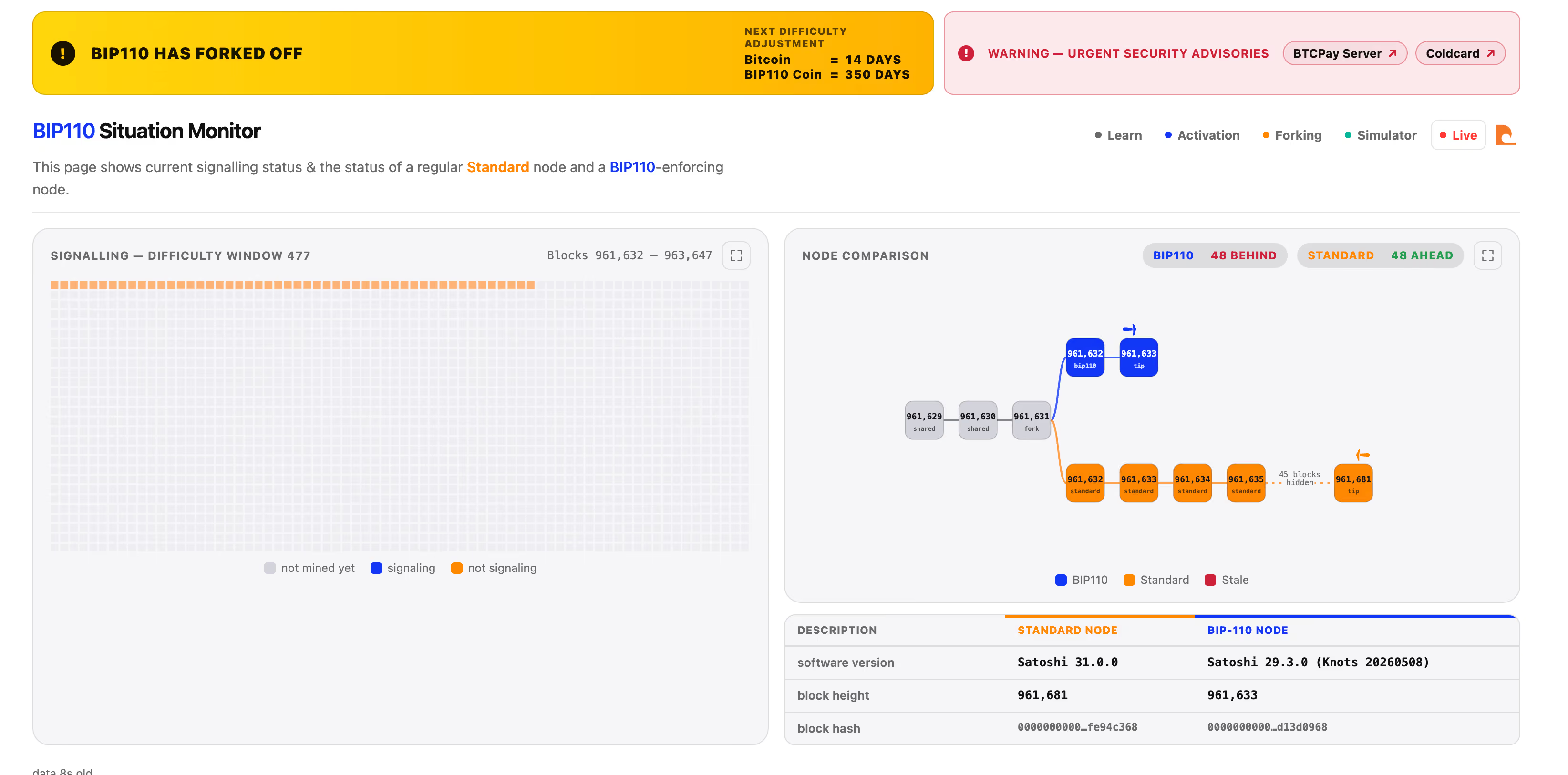
Bitcoin mining firm AntPool mined the first non-signalling block, which the rest of the network accepted and BIP-110 nodes rejected, and a miner using Ocean produced the alternative that the breakaway chain followed instead. (A miner is an entity that uses massive computing resources to maintain bitcoin and process its transactions, earning newly issued bitcoin and fees for the work.)
AntPool and Ocean are mining pools, where many operators combine their machines and share the rewards.
The stall has a mechanical cause that is hard to escape. Bitcoin recalculates how difficult mining is every 2,016 blocks, aiming to keep blocks arriving roughly every ten minutes.
The breakaway chain inherited bitcoin’s current setting but has a tiny share of the machines, so its blocks arrive at long intervals. It cannot make mining easier until it completes 2,016 blocks at that pace. The monitor puts that at 350 days away, against 14 days for bitcoin.

Support was never there. Only 2.53% of blocks signalled for BIP-110 over the past two weeks, against the 55% needed to activate it without a split.
That leaves the fork coin in an awkward position for anyone hoping to sell it. Both chains still accept identical transactions, so a signed transaction sending fork coins also works on bitcoin, and a buyer can rebroadcast it there and collect real BTC from the same seller — opening up the chances of a novel attack method that users should keep track of.
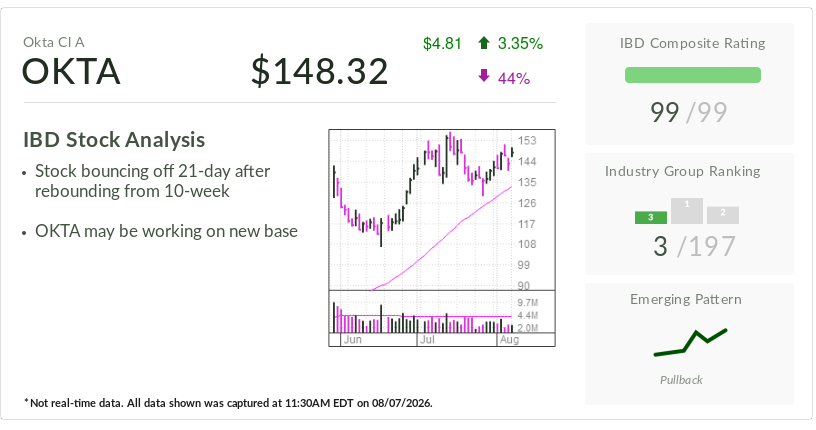
Okta Cl A Okta Cl A OKTA $ 148.32 $4.81 3.35% 44% IBD Stock Analysis Stock bouncing off 21-day after rebounding from 10-week OKTA may be working on new base IBD Composite Rating 99/99 Industry Group Ranking 3/197 Emerging Pattern Pullback Pullback A stock may pull back after a breakout, often to the 50-day line. A rebound from the first…
Copyright ©2026 Investor’s Business Daily, LLC. All rights reserved. 87990cbe856818d5eddac44c7b1cdeb8
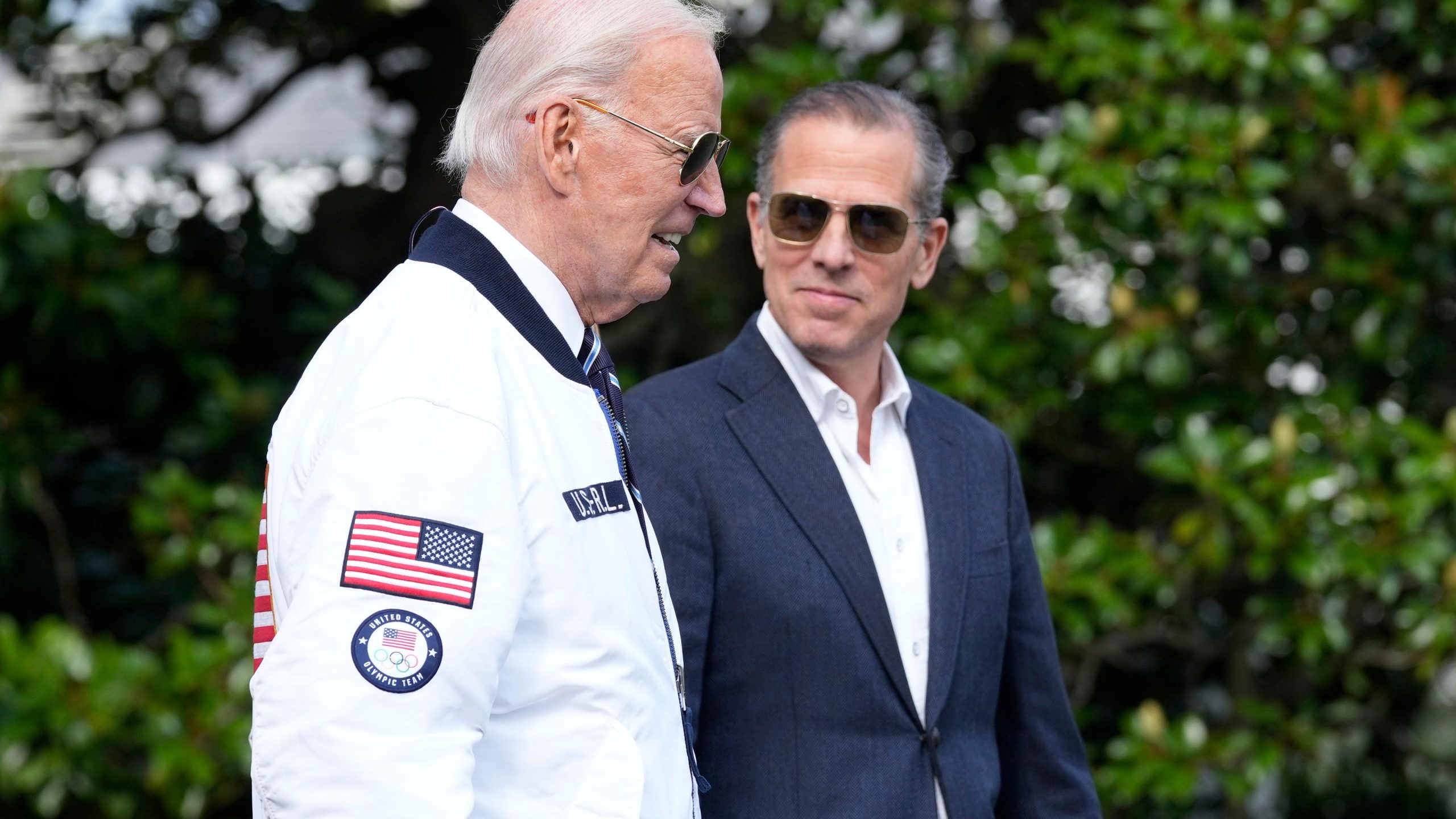
However, he added that his father’s concerns about the incoming President were likely well-founded.
“I think that Donald Trump has proven to be exactly who my dad thought he was going to be, as it relates to the revenge and retribution that he would seek on his political enemies,” he said.
The Biden family’s history with cancer
The Bidens have long advocated for comprehensive cancer research. Joe Biden’s eldest son, Beau, whom he had with his first wife Neilia Hunter Biden, died of glioblastoma, a type of brain cancer, in 2015.
“Cancer uses every tool at its disposal — it hides from the immune system, builds its own blood supply, uses viruses to spread, engineers a friendly cellular environment to support its survival and growth, and knows how to spread through the body by using pathways and mutations we do not understand fully,” the 46th President and his wife, Jill, wrote in an article for TIME in 2017, during which they shared their reasons for launching the Biden Cancer Initiative. “Cancer never gives up; it never surrenders.”
The delay of the US CLARITY Act announced at the end of the business week harmed several altcoins, but XRP’s price dipped the most among the larger caps.
BTC and ETH managed to hold support on Friday, remaining above or at key milestones at $64,000 and $1,900. XRP, on the other hand, slipped to just over $1. That’s why we decided to ask ChatGPT for its analysis of the matter and whether Ripple’s token will continue to face adverse consequences.
Why Such a Reaction, XRP?
The answer to whether the token will inevitably crash below $1, according to the popular AI solution, was “not necessarily, but the risk has increased.” It explained that the cross-border altcoin has become uniquely tied to US regulatory developments, dating back to the beginning of the lawsuit against the SEC nearly six years ago.
Unlike bitcoin, which has institutional and ETF demand, or Ethereum, which benefits from tokenization, stablecoins, and treasury accumulation from companies like Bitmine, much of XRP’s bullish narrative over the past few years has centered on regulatory clarity.
Passage of the CLARITY Act would likely cement its commodity status in federal law and provide greater certainty for banks, institutions, and ETF issuers. In contrast, delaying the process postpones those potential inflows rather than eliminating them.
OpenAI’s solution pointed out that XRP had historically rallied aggressively on regulatory optimism earlier in the cycle, making it more vulnerable to disappointment when the catalyst faded. Certain analysts agree with the thesis that XRP could indeed slip below $1 soon, but they believe this would open the door for a more profound rally.
Is Sub-$1 Inevitable?
Again, ChatGPT doesn’t believe this is the most probable scenario; instead, it thinks XRP has several catalysts that could prevent such a move. Perhaps the most significant support comes from the company behind the token and its substantial expansion experienced over the past few years, which included major partnerships, acquisitions, and regulatory wins, albeit in other jurisdictions.
The AI also noted that markets tend to overreact to legislative delays – after all, it doesn’t necessarily mean the bill will fail. If investors begin pricing in eventual approval rather than focusing solely on timing, Ripple’s token could stabilize before Washington returns in September.
Nevertheless, it didn’t completely rule out a dip below $1.00, especially if the broader crypto sentiment deteriorates and BTC loses key support. In addition, macroeconomic news or war escalation can trigger another leg down, and both of those factors are outside the scope of the regulatory delay.
The post We Asked ChatGPT: Is XRP Doomed to Fall Below $1 After the CLARITY Act Delay? appeared first on CryptoPotato.
Twilio (TWLO) stock jumped Friday after the communications software maker reported second-quarter earnings and revenue that topped consensus estimates as a new voice-based artificial intelligence product gained traction. The company’s September quarter sales outlook came in above expectations. The San Francisco-based company reported earnings after the market close on Thursday. Twilio EPS rose 24% to $1.47 for the June quarter…
Copyright ©2026 Investor’s Business Daily, LLC. All rights reserved. 87990cbe856818d5eddac44c7b1cdeb8
Ukraine drone attacks put Russia’s Wildberries and banks under pressure

Hailey Bieber’s $1B Rise Reportedly Flips Her Dynamic With Justin

Jessie Cave claims she was left in tears after being fat shamed by a Harry Potter costume designer after gaining weight

Renter of Home in Anne Heche Crash Denies Settlement With Son

No Jackpot Winner as $257 Million Prize Rolls Over to $269 Million Monday Draw

Weekend Open Thread: Staud – Corporette.com

CRYPTO BOTTOM Forming…Saylor Sells $100m Bitcoin, Coldcard Hack, Market Holds!

Crypto Update #trading #crypto #gold #goldtrading #forextrading #cryptocurrency

The Sophistication of Trump’s Financial Dealings (FULL SHOW)- Dave Collum and Matt Smith
-

 Politics7 days ago
Zack Polanski: an incitement to murder Nigel Farage?
-

 Fashion2 days ago
Frugal Friday’s Workwear Report: Cap-Sleeve Pointelle Crewneck Sweater
-

 Crypto World7 days ago
Crypto PAC spending tops $2M in Michigan House race
-

 Fashion2 days ago
Weekend Open Thread: Mattifying Sunscreen
-

 Business6 days ago
DTCR: Deleveraging And A Hedge Fund Collapse Point To A Possible AI Bottom
-

 Crypto World7 days ago
XRP Ledger urges node upgrade after manifest flood
-

 Sports3 days ago
Jordan Coyle & Cordiamo take Laya Arena Stakes at RDS
-

 News Videos21 hours ago
Can Astrology Help Find Gold and Silver Trends? A Financial Astrology Guide
-
 Crypto World5 days ago
US Tech Stocks See Largest 5-Week Inflow in History: Can Nasdaq Break Its Downtrend?
-
 Business3 days ago
US stocks: Dow closes at record on Mideast optimism; SpaceX, AMD drag Nasdaq
-

 Tech7 days ago
Page Not Found | WIRED
-

 Politics3 days ago
Reform UK And Greens Sink To Lowest Favourability Ratings To Date
-

 Business4 days ago
Nvidia Stock Climbs 2.5% as Chip Sector Rally Builds Ahead of AMD Earnings, Nvidia’s Own Report Looms
-

 Crypto World5 days ago
Polymarket targets $20 billion valuation as competition heats up in prediction market sector
-

 Tech4 days ago
OpenAI, Anthropic AI agents targeted real people and systems in cyber tests
-

 Tech6 days ago
OpenAI teases Astra, its next major AI model, after it solves 10 long-standing math problems
-

 NewsBeat7 days ago
Tourist plane crash at Peru’s Nazca Lines kills all 13 on board | News World
-

 Business6 days ago
Myspace owners announce plans to relaunch the once-popular platform
-

 Business3 days ago
Supply chain issues impact Ingredion
-

 News Videos6 days ago
#crypto #cryptocurrency #cryptonews #cuet2026 #ceuta
You must be logged in to post a comment Login