





Connect with us

Crypto World

The Bond Market’s Supply and Demand Problem

Published

on

The Bond Market’s Supply and Demand Problem
  • Government debt-service costs rising relative to government revenue to unacceptably squeeze out spending. 

  • The supply of government debt becoming too large relative to demand for it, causing long-term interest rates to rise faster than short-term rates.

  • The government treasury shortening the maturity of its debt sales to reduce the supply of bond sales.

  • The currency weakening, particularly relative to hard asset storeholds of wealth such as gold.

  • With a further lag, higher interest rates hurting the prices of other investment assets like stocks and real estate, and, after another lag, hurting the economy and creating credit problems.

  • Central banks “printing” money and credit, purchasing bonds, and guaranteeing debt. 

  • Central Banks incurring large losses and monetizing their own debt. 

  • Late in the cycle, governments adopting more extraordinary measures to manage the growing mismatch between their debt offering and debt service obligations and their available financing. These measures can take the form of: shutting down banks or forcing bank mergers because the banks’ losses and lack of liquid funds make fully paying their depositors’ withdrawals impossible; unusual financial supports for systemically important companies; the establishment of capital controls to prevent money from leaving the country; and the outlawing of hard asset monies such as gold.   

  • The process reaches a breaking point when debt service crowds out essential spending, bond supply overwhelms demand and pushes interest rates higher, or central-bank money creation becomes excessive and undermines the value of the currency. 

  • Source link

    Continue Reading
    Click to comment

    You must be logged in to post a comment Login

    Leave a Reply

    Crypto World

    Run, Don't Walk, to See Coyote vs. Acme

    Published

    on

    Run, Don't Walk, to See Coyote vs. Acme
    Lana Condor, Wile E. Coyote, and Will Forte —Courtesy of Ketchup Entertainment

    If you’re still not convinced that creativity and originality are under siege, particularly in the movie business, look no further than the tangled tale of how the wholly joyous Coyote vs. Acme very nearly didn’t make it to a theater near you. As of summer 2018, the picture—a blend of animation and live action, adapted from a 1990 New Yorker article by Ian Frazier inspired by the forever-enduring Looney Tunes shorts—was already in development. In the spring of 2022, live-action filming took place in New Mexico. In November 2023, seeking a tax write-off, Warner Bros. Discovery decided to shelve the film; the company eventually agreed to allow the filmmakers to look for another distributor. After numerous false starts, Ketchup Entertainment acquired the rights to Coyote vs. Acme, which is why you’re now able to see the film in theaters, and eventually via streaming. In a world where entertainment conglomerates are clearly focused only on profits, this seems like a small miracle, which is why you should run—Beep beep!—not walk to see this late-summer delight on the big screen.

    The premise is simple yet ingenious: After years of being zonked out by iron wrecking balls, of having slingshots overshoot the mark not by feet but by miles, of having dynamite blow his face off, Wile E. Coyote, a longtime consumer of ACME products, has decided to sue the company that has caused him so much misery. He has used all that ACME stuff for one purpose only: to ensnare the object of his eternal salivation, the tufted blue-and-yellow speed demon known as the Road Runner, both uncatchable and unknowable. But now, it seems, enough is enough, and maybe ACME is the problem. Wile E. enlists the help of a law firm specializing in personal injury cases (it’s called Avery, Jones & Maltese, a nod to three of the Looney Tunes’ chief architects, Tex Avery, Chuck Jones, and Michael Maltese), and it’s headed by Kevin Avery (Will Forte), whose specialty is getting settlements of a hundred bucks here or there from cartoon characters who have had limbs and such blown off—temporarily, thank god—by faulty products.

    Forte as Wile E.’s lawyer —Courtesy of Ketchup Entertainment

    Coyote vs. Acme is set in a world where cartoons and humans coexist without batting an eye, so it’s business as usual when Wile E. shows up at Avery’s Albuquerque headquarters. Avery is pretty sure he can get his client a few hundred smackers for the defective rocket-powered roller skates our coyote friend has hauled in as Exhibit A. But then Wile E. unfurls, magically, a bundle including every single ACME product that has ever clocked his noggin or blasted him to oblivion: these million and one instruments of pain and suffering spring high into the sky, like magic rocks gone wild. Avery is still reluctant to sue the pants off ACME. But his niece and intern Paige (Lana Condor) persuades him this is one case that could really make a difference for thousands of disadvantaged cartoon characters, many of whom, including Porky Pig, Daffy, and Tweety Bird, show up in sprightly cameos. That’s how Avery finds himself up against ACME’s bulldog lawyer Buddy Crane (John Cena, who, with his square, precise jaw and squinty smirk, looks like a work of vintage hand-drawn animation himself). He also learns that Wile E.’s case isn’t isolated: ACME has long been involved in a nefarious plot to make millions by taking advantage of hapless cartoon characters.

    Coyote vs. Acme was directed by Dave Green, whose highest-profile movie to date may have been 2016’s Teenage Mutant Ninja Turtles: Out of the Shadows. But his confidence sings here: to say Coyote vs. Acme benefits from a light touch may seem odd—this is, after all, a movie where heads are clonked with mallets and facial features are rearranged by malfunctioning explosives. But the spirit of Coyote vs. Acme is everything. The script was written by Samy Burch, James Gunn, and Jeremy Slater; the voices of most of the characters—including Bugs Bunny, as a trenchcoat-wearing informant, and Elmer Fudd, as an earnest senator in charge of questioning “Mr. Runner” during a hearing—are provided by voice actor Eric Bauza, who clearly aced his studies at the University of Mel Blanc. Forte makes a fabulous foil for his cartoon costars: he never tries to outdo them, preferring to bow to their lunatic majesty. He knows they’re what we’ve come here for.

    John Cena and Tweety Bird —Courtesy of Ketchup Entertainment

    Because the Road Runner cartoons—which, along with the other works of genius in the Looney Tunes galaxy, made many of us the warped individuals we are today—were never really about the Road Runner. He’s moving too fast for us to ever get a handle on him; his job is to outsmart the coyote who hopes to catch him and turn him into stew, and he’s simply too good at that job. We know he’s always going to win, which makes him less interesting than his nemesis. Wile E. Coyote, with his conniving yellow eyes, a voiceless beast who communicates by holding up a series of signs scrawled with simple lines of dialogue, is the character we love in spite of ourselves. His untrustworthiness is his greatest quality; when he pretends to be nice, his canine lips turning up in a facsimile of a canine smile, we know it’s an act, and we can wear the joy of not being taken in by his deceptions as a badge of honor. It’s both funny and a little horrible when he goes splat into a slab of rocky desert clay, cutting a Wile E.-shaped hole into nature’s landscape. In Coyote vs. Acme, we almost feel something for him—almost. But in the end, he lets us off the hook; he will not let us fall victim to sentimentality. We’re in on his con, and it’s a pleasurable place to be.

    Coyote vs. Acme is all about the little guys fighting, and winning against, a corporate behemoth. Could it be that Chuck Jones and his cohorts, by inventing a do-it-all, know-it-all company that could fulfill our every material desire, dropping off packages almost before we’d even placed an order, had in some cracked way foreseen the rise of Amazon? They probably couldn’t have imagined it, and it’s just as well, because the world they dreamed up—one of slapstick escape, of kerpow explosions that never did any actual harm, of faces and voices that we can summon in our memories as easily as those of our loved ones—is better than anything money can buy. In Coyote vs. Acme, the little guy wins, and we do too. Instead of being handed, in movie form, an exploding cigar that someone else thinks we want, we get the thing we didn’t know we wanted: a movie about a coyote, a bird, and a lawsuit, one that both speaks to our time and allows us, for the space of an hour or two, to escape it.  

    Source link

    Advertisement
    Continue Reading

    Crypto World

    Bullish Secures $100M USD.AI Stablecoin Facility for GPU Lending

    Published

    on

    Crypto Breaking News

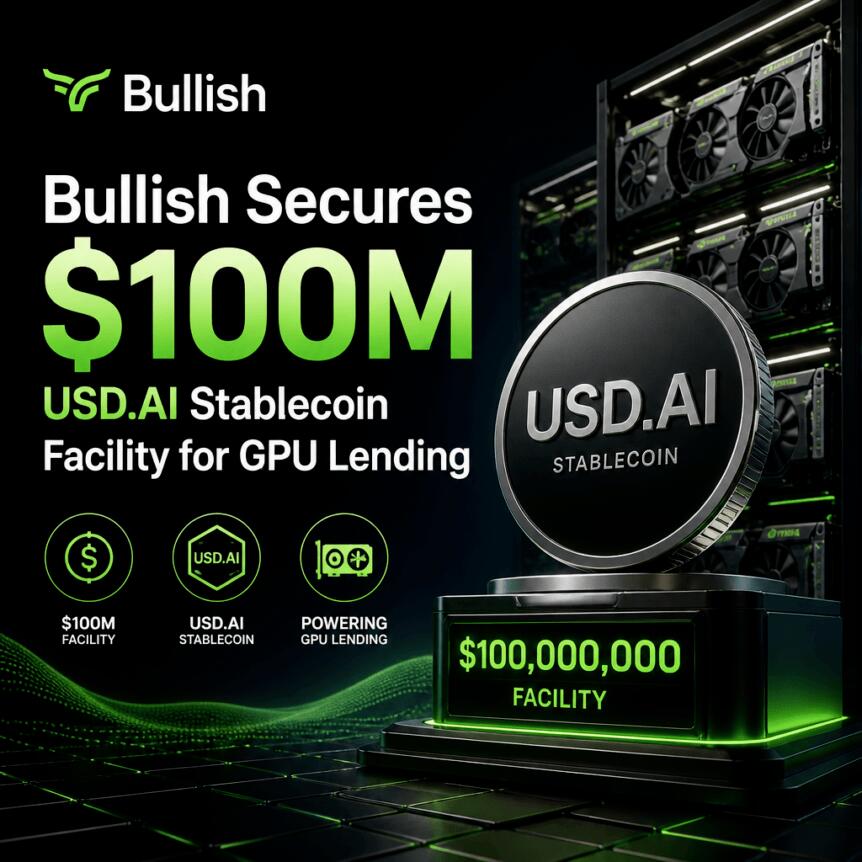
    Bullish, an institutional crypto exchange and market infrastructure operator, has agreed to extend a $100 million stablecoin-backed debt facility to USD.AI to fund loans secured by GPU hardware. The companies said the financing will support onchain lending to AI infrastructure operators, with collateral tied to the computing equipment rather than the borrowers’ broader corporate balance sheets.

    The move reinforces USD.AI’s strategy of turning stablecoin liquidity into GPU infrastructure credit, while giving Bullish an additional pathway to deepen liquidity around GPU-backed tokenized debt through a dedicated trading and market-making effort.

    Key takeaways

    • Bullish is providing a $100 million stablecoin-based debt facility to USD.AI for GPU-secured lending.
    • USD.AI’s loans are collateralized by the underlying GPU hardware, not general corporate assets.
    • Bullish plans to list USD.AI’s sUSDai across multiple trading pairs and run a market-making program to support liquidity.
    • The facility builds on USD.AI’s recent GPU-backed financing activity, including loans tied to Nvidia B300 and B200 GPU configurations.

    Stablecoin credit aimed at GPU-backed collateral

    Under the announced arrangement, USD.AI will deploy the facility by extending financing to AI infrastructure operators whose repayment claims are secured by the GPUs themselves. The structure is designed to reduce reliance on general corporate collateral by anchoring loan exposure to specific, identifiable computing hardware.

    USD.AI is an onchain financing platform built by Permian Labs. It positions itself as an intermediary between stablecoin liquidity and the funding needs of the GPU infrastructure sector, where capacity purchases and deployments often require large upfront capital outlays.

    Bullish plans token support and tighter secondary liquidity

    Bullish said it intends to list USD.AI’s sUSDai token across multiple trading pairs. It also plans to back the token with a dedicated market-making program, aiming to improve secondary liquidity and strengthen price discovery for debt products linked to GPU collateral.

    Advertisement

    For market participants, the practical significance is that tokenized, asset-backed credit can become easier to access and hedge when trading venues and market makers provide consistent bid-ask liquidity. Bullish’s involvement suggests it wants this GPU-backed financing stack to be more than a primary-deal story, with ongoing tradability playing a larger role.

    Growing GPU financing footprint

    This $100 million facility expands USD.AI’s GPU-linked lending business. In June, USD.AI announced a $98.1 million loan backed by 2,304 Nvidia B300 GPUs. Around the same time, it also disclosed that a $34 million loan backed by 768 Nvidia B200 GPUs had been fully funded.

    Taken together, those earlier announcements highlight a pattern: USD.AI’s lending is tied to identifiable GPU batches and configurations, and its ability to complete funding rounds indicates demand for this style of AI infrastructure credit. With Bullish adding a larger stablecoin debt line, investors and operators may expect USD.AI to scale the volume of GPU-secured financing more quickly, assuming ongoing collateral sourcing and operational rollout can keep pace.

    Previous Bullish investment adds continuity

    The deal also follows earlier capital support from Bullish Capital. According to the companies, Bullish Capital made a $4 million investment into USD.AI in September 2025—described by Bullish as its first investment since going public.

    Advertisement

    That continuity matters because it suggests Bullish is not treating the current facility as a one-off product test. Instead, the firm appears to be expanding an existing relationship into a larger operational role—using stablecoin-backed debt infrastructure alongside trading and liquidity initiatives.

    More broadly, the arrangement underscores a growing intersection between digital asset market infrastructure and AI hardware financing, where stablecoins and onchain credit mechanics can potentially shorten the path from liquidity to real-world infrastructure commitments.

    Investors should watch how sUSDai trading develops after listing and whether Bullish’s market-making program meaningfully improves liquidity depth over time. Equally important will be how USD.AI manages loan origination, GPU collateral custody, and the operational mechanics of hardware-backed repayment as deal sizes scale under this new facility.

    Risk & affiliate notice: Crypto assets are volatile and capital is at risk. This article may contain affiliate links. Read full disclosure

    Advertisement

    Source link

    Continue Reading

    Crypto World

    Meme Coin TRUMP Soars 20% Daily After a Major Announcement: What Are the Next Targets?

    Published

    on

    Most leading cryptocurrencies have posted minor gains or losses over the past 24 hours, suggesting the broader market has consolidated after recent turbulence.

    However, Official Trump (TRUMP) has defied the ongoing calm after pumping by double digits within the timeframe. Check out what triggered the move and whether this is the start of a major bull run.

    ‘Big Manipulation’ Ahead?

    The meme coin briefly touched $2.90 before retreating to the current $2.75 (per CoinGecko), representing a roughly 20% daily increase. Its market capitalization has surged to almost $700 million, making it the 90th-largest cryptocurrency and the sixth-biggest in its niche.

    The most obvious catalyst for the rally appears to be the announcement that Official Trump will make an appearance at Korea Blockchain Week (a major blockchain event taking place between September 29 and October 1 in Seoul).

    Advertisement

    According to numerous analysts, the meme coin may chart much more substantial gains in the near future. X user Cyriptoman4 noted that the price hasn’t broken the $3-$3.15 resistance level yet, envisioning a rally above $10 if it stays persistently above the upper boundary.

    Crypto Patel claimed the asset has decisively broken out of the crucial zone at $2.055, arguing that if this level holds as support, it could open the door to a parabolic surge toward $15.

    “TRUMP is already up 160% from the bottom in just 10 days. Don’t chase the green candle. Wait for a healthy retracement and let price come to you,” the analyst added.

    X user Crypto with Haris ₿ also gave his two cents on the matter, forecasting a price explosion for the meme coin to $20 before Donald Trump steps down as the President of the United States.

    The token saw the light of day right before his inauguration in January 2025 and entered the space with a storm. At one point, its price skyrocketed to nearly $70, while its market capitalization soared past $14 billion. Thus, TRUMP briefly became the second-largest meme coin after flipping Shiba Inu (SHIB). Since then, though, the token has experienced a massive overall downfall, currently trading 96% below its historic peak.

    Is It a Scam Token?

    Earlier this week, Crypto with Haris ₿ made another comment related to the meme coin. He advised investors to stay away from TRUMP and MELANIA, describing them as “scam tokens” in which only insiders can make money while retail investors always lose.
    “Real values of TRUMP lie below $1 and MELANIA below $0.01,” he concluded.
    The meme coin is indeed primarily driven by speculation and hype rather than fundamentals, meaning traders and investors willing to jump on the bandwagon should be extra careful. TRUMP’s holder distribution should serve as another red flag. According to CoinMarketCap, the top 10 addresses control over 90% of the token’s supply, increasing the risk of price manipulation.
    TRUMP Holders Distribution
    TRUMP Holders Distribution, Source: CoinMarketCap

    The post Meme Coin TRUMP Soars 20% Daily After a Major Announcement: What Are the Next Targets? appeared first on CryptoPotato.

    Source link

    Advertisement
    Continue Reading

    Crypto World

    Tokenized gold is becoming productive collateral in crypto lending, Arch says

    Published

    on

    Kraken launches institutional crypto lending model with Maple

    Tokenized gold has moved deeper into crypto lending after Aave’s XAUT-backed debt reached a $25 million ceiling and Arch Lending added loans against the two largest gold tokens.

    Summary

    • Aave’s $25 million XAUT debt ceiling was fully used before additional capacity filled within 24 hours.
    • Arch’s Himanshu Sahay said investors increasingly want to use tokenized gold instead of passively holding it.
    • Arch now accepts PAXG and XAUT as collateral for loans at up to 75% LTV.
    • Borrowers retain their gold exposure but face interest, liquidation, custody, and issuer risks.

    Arch co-founder and chief technology officer Himanshu Sahay told crypto.news that demand for tokenized gold loans shows holders are beginning to treat the assets as usable parts of the digital financial system, rather than only as a way to track bullion prices.

    “The most interesting thing about the demand we’re seeing around tokenized gold is that people aren’t just treating these assets as a way to get exposure to the price of gold. They’re increasingly looking at them as something that can be put to work within the broader crypto financial system.”

    Demand recorded on Aave provides one example. In late January, the decentralized lending protocol’s XAUT market reached its $25 million debt ceiling, according to a Chaos Labs assessment.

    Advertisement

    Chaos Labs recommended raising the ceiling to $30 million after finding demand to use XAUT as collateral for stablecoin borrowing. Within days, the risk manager reported that the added capacity had filled in less than 24 hours and proposed staged increases to $36 million, $43 million, and eventually $50 million.

    Aave demand has tested tokenized gold lending capacity

    Although the Aave activity showed that investors were willing to borrow against tokenized bullion, Chaos Labs found that the market was highly concentrated. Its February assessment said the largest position accounted for more than 75% of all debt secured by XAUT.

    The same report described the users’ health factors as moderately safe and cited XAUT’s liquidity and relatively conservative volatility when assessing liquidation risk. Aave listed XAUT in isolation mode, preventing holders from using the asset to borrow more volatile tokens.

    Initial parameters allowed users to borrow up to 70% of their XAUT collateral’s value, while liquidation could begin at 75%. The arrangement treated XAUT as collateral only, meaning users could supply it to support debt but could not borrow the gold token itself.

    Advertisement

    Sahay described the January activity as more meaningful than a one-time jump because the extra capacity was also used quickly. According to him, the demand indicates that “the collateral itself is becoming useful.”

    Current balances require a separate reading from the January episode. Aave’s Ethereum v3 reserve page recently showed about $70 million of XAUT supplied but no XAUT-backed debt, according to figures provided by Sahay. He said the earlier borrowing should therefore be treated as historical evidence of willingness to use the asset, rather than a description of Aave’s present debt balance.

    Recent activity has also extended beyond lending. An August CoinShares report found that real-world asset deposits had tripled to $7.4 billion even as DeFi activity declined, with XAUT and PAXG producing much of the measured spot activity. As reported earlier this month, traders used the two tokens to change their gold exposure as bullion prices moved.

    Advertisement

    Tokenized gold lets holders borrow without selling

    For investors who still want exposure to gold, Sahay said borrowing and selling meet different financial needs. A sale closes the position, while a collateralized loan supplies cash or stablecoins without requiring the investor to give up the asset immediately.

    “If an investor sells their gold exposure, they have exited the position,” Sahay said. “Borrowing allows them to access liquidity while retaining exposure to the underlying asset.”

    Tokenization reduces some practical barriers because the collateral already exists on a blockchain. Holders do not have to transport physical bullion into a lending arrangement or arrange separate storage before seeking a loan.

    PAXG and XAUT each represent a claim linked to physical gold, although their legal and operational structures differ. Paxos says one PAXG represents one fine troy ounce of London Good Delivery gold held in professional vaults. Tether says one XAUT represents one fine troy ounce of gold held in Switzerland.

    Advertisement

    On Aug. 28, Tether’s website placed XAUT’s market capitalization at approximately $3.27 billion, while CoinGecko valued PAXG at about $1.93 billion. The figures give the two products a combined market value of approximately $5.2 billion.

    Tokenized gold previously reached another milestone in March when Tether deployed XAUT on BNB Chain. The BNB Chain expansion gave the token another settlement network alongside its existing infrastructure, while each unit remained tied to an ounce of physical bullion.

    Sahay cautioned that digital access does not remove the dangers created by debt. In his view, a lending service still needs suitable LTV limits, custody arrangements, and risk controls because collateral can be liquidated when its value no longer supports the outstanding loan.

    “The fact that an asset can be used as collateral doesn’t mean it should be leveraged aggressively,” he said.

    Advertisement

    Gold and Bitcoin serve different collateral needs

    Rather than presenting tokenized gold as a replacement for Bitcoin, Sahay said the assets offer different characteristics to borrowers and lenders.

    Bitcoin has more established liquidity across crypto markets and plays a central role as a native digital asset. Gold, however, has a much longer record as a store of value and has historically experienced less price volatility than Bitcoin, according to Sahay.

    Gold-backed tokens may therefore appeal to investors who want on-chain borrowing without taking the same level of directional exposure associated with Bitcoin. The blockchain token still introduces risks tied to its issuer, custodian, smart contract, and redemption terms, even when the underlying bullion moves less sharply than BTC.

    “I don’t think tokenized gold replaces Bitcoin as collateral. I think it expands the range of assets that can support crypto-native liquidity.”

    His comments follow a previous interview in which he identified qualified custody, zero rehypothecation and clear collateral rules as safeguards for digital-asset loans. The custody discussion also covered margin calls and liquidations, which can force a sale when borrowers fail to add collateral or reduce their debt.

    Advertisement

    Arch has added PAXG and XAUT-backed loans

    Within that developing market, Arch Lending has started accepting PAXG and XAUT as collateral at up to 75% LTV, according to information supplied by the company. Anchorage Digital will hold the pledged tokens.

    Arch says it does not rehypothecate borrower collateral, meaning the assets are not lent to another party to produce revenue. Its website states that Anchorage holds collateral in segregated wallets and that Arch uses partial liquidations intended to sell only the amount required to restore a loan’s health.

    The company’s public website has not yet added PAXG and XAUT to its displayed list of supported assets, which still names BTC, ETH and SOL and shows an LTV of up to 60% for existing loans. The 75% limit and support for both gold tokens therefore come from the company’s new product information.

    Competitors already offer parts of the same service. Nexo says eligible customers can borrow against PAXG or XAUT, subject to location and account requirements, while YouHodler and CoinRabbit advertise PAXG-backed products. Ledn announced XAUT-backed lending in June but said the service would become available later in 2026.

    Advertisement

    US borrowers face tax, access and liquidation questions

    For US investors, borrowing against an appreciated digital asset generally differs from selling it because the Internal Revenue Service treats a sale or other disposal as an event that requires the owner to calculate a capital gain or loss. A loan does not involve the same immediate disposal, although a lender’s sale of collateral may create tax consequences.

    Individual circumstances, loan structures and liquidation events can affect reporting, and the IRS advises digital-asset owners to keep transaction records and consult a qualified tax professional when necessary.

    Arch operates legally as ChainFi Inc. and provides loans to US borrowers under NMLS number 2637200. Its disclosures state that product availability and interest rates vary by jurisdiction, loan type, and principal amount.

    According to the company’s current state restrictions, loans are unavailable to individual residents of California, Delaware, Hawaii, Maryland, Mississippi, Montana, Nevada, North Dakota, Rhode Island, South Carolina, and Vermont. Arch also requires borrowers to complete identity checks before transferring collateral and receiving USD or USDC.

    Advertisement

    Disclosure: This article does not represent investment advice. The content and materials featured on this page are for educational purposes only.

    Advertisement

    Source link

    Continue Reading

    Crypto World

    Rep. Chuck Edwards Makes Last-Minute Attempt to Avoid Censure

    Published

    on

    Rep. Chuck Edwards Makes Last-Minute Attempt to Avoid Censure

    Republican Rep. Chuck Edwards of North Carolina is appealing to his House colleagues not to censure him over his conduct toward two female staffers.

    Ahead of the vote, however, Edwards wrote a six-page letter addressed to other House members defending himself, saying that while he recognizes some of his colleagues may view his interactions differently, “context matters” in assessing them.

    “An affectionate friendship is not a sexual proposition,” Edwards wrote in the letter, dated Aug. 25 and first obtained by NOTUS and reported on Thursday. “A gift is not sexual misconduct. A compliment is not sexual misconduct. Poetry is not sexual misconduct. Socializing with a colleague is not sexual misconduct. Caring deeply about someone with whom you have worked and come to know for years is not sexual misconduct.”

    The 65-year-old lawmaker noted that the panel concluded he had “neither engaged in sexual activity with nor explicitly propositioned any individual staff member,” that he “did not violate federal sexual harassment law,” and that “the allegations in this matter do not implicate quid pro quo sexual harassment.” He claimed in the letter that his behavior toward the two staffers was similar to that toward his other staff—including gifts he’d given and trips he’d taken with or arranged for them.

    Advertisement

    Attached to the letter was a one-page factsheet and a memo submitted by Edwards’ counsel to the House committee responding to the report. Edwards alleged the panel had cherry-picked certain evidence to fit a narrative.

    While censure does not remove a House member from office, it is one of the strongest forms of public rebuke in the chamber. A majority vote is required to censure a lawmaker.

    TIME did not immediately hear back from Edwards’ office or the House ethics panel when asked for comment.

    Former Reps. Eric Swalwell of California, a Democrat, and Tony Gonzales of Texas, a Republican, resigned in April under bipartisan pressure from their colleagues and threats of expulsion amid separate allegations. 

    Advertisement

    Besides Edwards, the House ethics panel is also investigating allegations against Republican Rep. Cory Mills of Florida, who lost his Aug. 18 primary

    On Aug. 17, the panel also announced it was reviewing allegations that Democratic Rep. Jimmy Gomez of California may have engaged in inappropriate sexual contact with a House staffer.

    What the committee found regarding Edwards

    The ethics panel report found that the two women involved, who previously worked with Edwards from since he was a State Senator, “were subject to increasingly unusual attention from the Congressman while they worked for him, creating an environment where both they and their coworkers felt uncomfortable.”

    Advertisement

    The panel detailed some of the alleged instances. In one, Edwards allegedly told one of his female staffers, who was in her early 20s and had rejected a dinner request because of rumors surrounding Rep. Edwards and a staffer, that it was “disappointing to feel something that used to be easy has gotten complicated.”

    Per the report, Edwards had given the two staffers several gifts, including jewelry worth over $1,000, as well as “designer purses, guns, shoes, flowers, a laptop and cell phone, KitchenAid mixer, robotic vacuum, vacations, tickets to performances, and one-on-one dinners.” 

    Edwards, according to the report, also went to the house of the staffer in her 20s to “perform chores like yardwork, pick her up and drop her off for events and activities with his driver, and decorate her Christmas tree together (for which he skipped votes in the House that evening).” It also stated that Edwards wrote a poem for one of the staffers that he read aloud at her going away party in the congressional office. 

    The report added that Edwards was, “at minimum blind to that reality, and at worst, dismissive of the impact his inappropriate conduct had on the careers and wellbeing of two women on his staff.” 

    Advertisement

    Current House rules state members are disallowed to engage in “unwelcome sexual advances or conduct” toward any employee. Edwards insisted in his letter that he’s not asking anyone to approve of his behavior, but argued “many of the activities emphasized by the report are not themselves prohibited.” 

    How have Edwards’ colleagues reacted to his letter?

    The condemnation has come from across the political aisle.

    Rep. Kat Cammack of Florida, who chairs the Republican Women’s Caucus, posted on X that “22 pages of explanation do not change a fundamental fact: Members of Congress hold extraordinary power over their staff. With that power comes a responsibility to exercise sound judgment and maintain appropriate boundaries.”

    Advertisement

    Rep. Teresa Leger Fernández of New Mexico, chair of the Democratic Women’s Caucus, in a statement to CNN and others, referred to the letter as “22 pages of ramblings by someone who refuses to understand sexual harassment or his abusive power over the women who worked for him. His lack of remorse speaks for itself.” 

    Source link

    Continue Reading

    Crypto World

    Avici attack drains over $1M from Solana users

    Published

    on

    DxSale exploit drains $7.3M in BNB through hidden contract backdoor

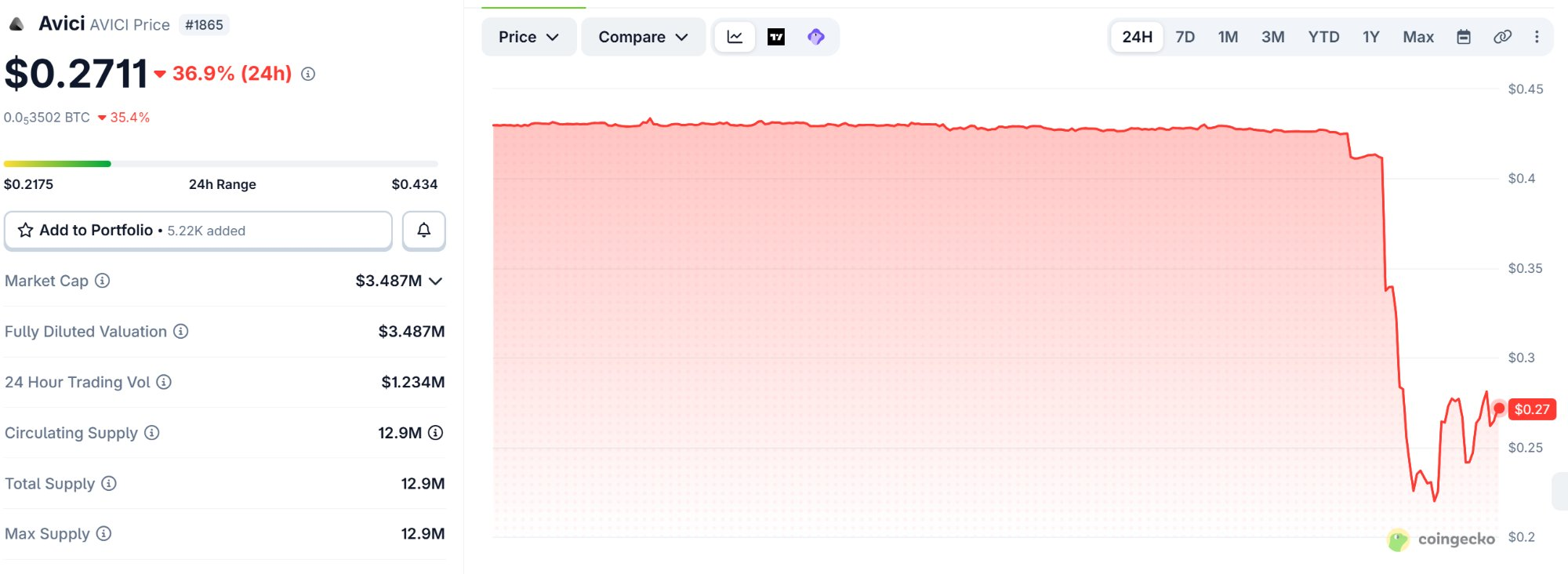
    An ongoing attack against Solana-based crypto card platform Avici has reportedly drained more than $1 million from user collateral accounts while sending its AVICI token to an all-time low.

    Summary

    • The suspected attacker held 10,005 SOL and about $11,600 in stablecoins at one checkpoint.
    • On-chain records showed repeated calls that added an administrator before collateral withdrawals.
    • Avici acknowledged a card balance withdrawal issue but did not confirm the reported loss.
    • AVICI fell 49.4% within 24 hours and touched a record low of $0.2175.

    Avici attacker adds administrators before withdrawals

    According to reports, the suspected attacker had collected 10,005.03 SOL, worth about $1.07 million at 18:58 UTC, along with approximately $11,600 in USDC and USDT. Its analysis was based on Solana transaction logs and RPC data gathered while the attack was still underway.

    The wallet received its initial funding through deBridge at 13:40 UTC, when 1.79 SOL arrived from another network. After remaining inactive for about three hours, the address made its first call involving Avici’s programs at 16:49:48 UTC.

    Advertisement

    Transaction logs reviewed by the publication showed the same three-step process across affected accounts. First, the wallet called SubmitSignatures through Avici’s authorization program in a transaction that also used Solana’s Ed25519 signature verification program.

    Next, the attacker called AddCollateralAdmin on Avici’s collateral program, registering an additional administrator for the user’s account. A final WithdrawCollateralAsset call then transferred the collateral to an account controlled by the attacker.

    In one reviewed transaction, the withdrawal instruction moved 2,346.77 USDT from a user’s collateral account. The attacker also converted some of the collected stablecoins into SOL, including one swap that returned 209.76 SOL.

    Advertisement

    By the publication’s checkpoint, the wallet had signed 14,672 transactions, of which 2,344 had failed. Its SOL holdings increased by about 2,595 tokens, then worth approximately $277,000, during an 11-minute period.

    Anonymous on-chain analyst STACC also created a live tracker for the affected transfers. According to figures cited from the tracker, 125 sending accounts had been identified, with individual transfers ranging from approximately 9 USDC to more than 26,000 USDT.

    Neither Avici nor an independent security company has published a post-mortem identifying how the attacker obtained authorization. Although the transaction sequence shows how funds moved, it does not establish whether the incident resulted from a program flaw, compromised credentials, an exposed signing authority, or another failure.

    Avici confirms card withdrawal issue

    Avici acknowledged the incident in an X post published about one hour and 53 minutes after the first reported transaction involving its programs.

    Advertisement

    “We’re aware of an issue affecting card balance withdrawals and are closely monitoring the situation.”

    The company added that it was working directly with relevant partners and would provide updates once more information became available. Avici did not call the incident an exploit, confirm how much had been taken or state how many customers were affected.

    Several other questions also remain unanswered, including whether the activity has stopped, whether Avici has paused its programs, and whether affected users will receive compensation. The company has not disclosed whether any signing keys or administrative accounts were compromised.

    Users had reported missing balances on social media before Avici released its statement. One user notably said their entire Avici balance had been drained while they waited for information from the project.

    The incident concerns Avici’s card collateral and authorization programs rather than the Solana network itself. No available report has identified a vulnerability in Solana’s underlying blockchain.

    Advertisement

    Both Avici programs were upgradeable and shared the same upgrade authority, according to reports. The authority was reportedly a standard Solana account rather than a multisignature account, although no evidence has yet shown that the upgrade authority caused or enabled the withdrawals.

    Operational controls have received increased attention as attacks move beyond flaws contained in smart contract code. In July, crypto.news reported security findings showing that compromised keys, signers and infrastructure accounted for 88.3% of roughly $764 million stolen during the second quarter of 2026. The Hacken report cited in the article found that only 4% of tracked projects combined audits, active bug bounties, and third-party monitoring.

    Avici attack challenges its self-custody claims

    Avici describes its product as a self-custodial wallet connected to a secured Visa credit card. Its Apple App Store listing states that users remain in control and that Avici never holds their funds.

    Under the card model, customers deposit crypto into collateral accounts and receive a corresponding credit limit. Purchases reduce the available card balance, while the related collateral is later used for settlement.

    Advertisement

    The reported ability to add another administrator and remove unspent collateral raises questions about how Avici’s authorization controls enforce its advertised self-custody model. A technical finding will require Avici or an independent security company to explain why the attacker’s signature submissions were accepted.

    Avici’s documentation identifies Rain as a partner involved in its card service. Rain supplies stablecoin payment infrastructure and works with licensed institutions to issue cards connected to Visa and Mastercard. Available transaction analysis points to Avici’s Solana programs, and neither Avici nor Rain has said that Rain’s or Visa’s systems were compromised.

    The distinction is important for users because a self-custodial payment product is supposed to keep unspent assets under the wallet owner’s control. Tangem introduced a similar model in November 2025, with on-chain USDC spending through a virtual Visa card while users retained custody of their funds.

    Payment infrastructure has also faced separate wallet-related incidents. In July, on-chain analysts identified suspicious outflows exceeding $9.7 million from wallets linked to stablecoin payment provider Triple-A across networks including Solana, Ethereum, TRON and TON. Triple-A had not confirmed whether customer assets were involved when the report was published.

    Advertisement

    AVICI falls 49% to an all-time low

    AVICI dropped 49.4% over 24 hours to $0.2175 as reports of the withdrawals spread, according to CoinGecko data cited at the time. The selloff reduced the token’s market capitalization to approximately $2.84 million and pushed its price to a record low.

    Trading volume reached about $656,543 during the same 24-hour period. Most AVICI trading occurred through MetaDAO’s futarchy automated market maker, while LBank, KCEX and MEXC accounted for the remaining reported activity.

    CoinGecko lists AVICI’s record high at $7.56, reached on Nov. 26, 2025. The incident-day low left the token approximately 97% below that peak.

    Avici Inc. is a US company that lists a San Francisco address on its website, while its privacy policy identifies it as a Delaware corporation. The platform also provides separate card terms for US customers, creating direct exposure for eligible American users of its wallet and secured card services.

    Advertisement

    The company raised $3.5 million through a capped MetaDAO token sale in October 2025. MetaDAO’s fundraising record shows that 7,352 contributors committed approximately $34.23 million, but Avici returned about 89.8% of the pledged USDC after applying the sale cap.

    The offering priced AVICI at $0.35 and valued the project at approximately $4.52 million on a fully diluted basis. Avici issued 10 million tokens through the sale, representing about 77.5% of its 12.9 million-token supply.

    Source link

    Advertisement
    Continue Reading

    Crypto World

    HyENA shuts down after processing $4B in trades

    Published

    on

    1inch co-founder exits after firing claim, unveils Second Tier

    HyENA has announced plans to close every market between Aug. 31 and Sept. 2 after processing more than $4 billion in trades for over 12,000 users.

    Summary

    • HyENA will remove one market each hour from Aug. 31 through Sept. 2.
    • Open positions will settle automatically, while margin will return to users’ spot balances.
    • HLPe depositors can redeem their holdings and earned rewards through Upshift at a 1:1 rate.
    • HyENA generated nearly 2.5 million USDe in rewards but will not issue a token.

    HyENA will remove markets over three days

    HyENA said in an Aug. 28 shutdown announcement that it would stop operating after changes in Hyperliquid’s stablecoin setup reduced the opportunity for USDe-backed margin products.

    The platform will begin delisting markets on Aug. 31 and complete the process on Sept. 2. Rather than closing every contract at once, HyENA will remove one market per hour throughout the scheduled period.

    Advertisement

    Users do not have to close their positions manually before each delisting, according to the announcement. Once a market is removed, its mark price will move toward the one-hour weighted average of the relevant oracle price before the remaining positions settle automatically.

    Margin released through that process will return to each trader’s spot balance. HyENA said user funds are not at risk during the closure, although traders may still choose to exit positions before their respective markets reach the settlement stage.

    “User funds are safe,” the team said, adding that the planned process is designed to let customers withdraw their assets without requiring manual settlement.

    Advertisement

    HyENA has handled more than $4 billion in cumulative trading volume since launch, according to the team. Over 12,000 traders used the platform, while holders of USDe margin received almost 2.5 million USDe in rewards.

    Built by the Based team, HyENA used Hyperliquid’s HIP-3 system to offer perpetual contracts with Ethena’s USDe serving as margin. The design allowed traders to keep margin in USDe and receive rewards while using the same capital to support open derivatives positions.

    Hyperliquid’s USDC alignment reduced room for USDe

    At launch, HyENA operated during a period when several dollar-linked assets were competing for a larger role within Hyperliquid. The team identified USDT, USDe, and USDH among the assets seeking use across the trading network.

    Hyperliquid’s closer relationship with USDC later changed the conditions supporting HyENA’s model, the announcement said. While the team described stronger USDC integration as a reasonable course for Hyperliquid, it also said the arrangement left less room to expand USDe-based margin.

    Advertisement

    In May, Coinbase became Hyperliquid’s official USDC treasury deployer under an agreement that also made USDC an aligned quote asset across the ecosystem. As crypto.news previously reported, Hyperliquid held about $5 billion in circulating USDC at the time, roughly twice the amount recorded a year earlier.

    USDC gained another defined role under the agreement, with Circle supplying cross-chain infrastructure through its Cross-Chain Transfer Protocol and Coinbase handling treasury deployment. The arrangement also gave Coinbase purchasing rights for USDH-branded assets through Native Markets.

    By June 11, USDC had become Hyperliquid’s preferred stablecoin, according to a July JPMorgan research note. The bank estimated that Hyperliquid held about $6 billion in USDC, equal to roughly 8% of the stablecoin’s circulating supply.

    JPMorgan also said Coinbase would return 90% of the reserve income earned from USDC held on Hyperliquid to the protocol. The bank cut earnings estimates for Coinbase and Circle after assessing how the revenue-sharing terms could affect the two companies’ stablecoin income.

    Advertisement

    The agreement provides a direct U.S. connection because Coinbase and Circle are publicly traded American companies. JPMorgan’s assessment tied Hyperliquid’s stablecoin setup to the earnings outlook for both firms, although the bank still expected USDC-related income to grow through 2027 based on its interest-rate forecast.

    HIP-3 leaves settlement duties with market deployers

    HyENA’s closure also shows how HIP-3 market operators can manage contracts built on Hyperliquid without the core protocol directly running each product.

    Under HIP-3, independent teams may introduce perpetual markets while using Hyperliquid’s order books, margin tools and liquidation system. Deployers choose the contract, oracle, leverage limits, and settlement terms, giving each operator responsibility for managing its markets.

    A May report on HIP-3 noted that the framework went live in October 2025 and requires teams to stake HYPE before creating perpetual contracts. Products launched under the framework have included synthetic markets tied to commodities, listed shares, and private companies.

    Advertisement

    More recent coverage of a sharp move in an SK Hynix-linked perpetual explained that a HIP-3 deployer supplies oracle prices, external perpetual prices, and as many as two additional mark-price inputs. Hyperliquid then combines the submitted figures with local trading data to calculate the contract’s mark price.

    The same HIP-3 market controls allow deployers to halt trading, adjust open-interest limits or settle contracts. HyENA is using that settlement authority to close its remaining markets according to the published schedule.

    For its shutdown, HyENA said each final mark price would converge with the one-hour weighted average of the oracle price before settlement. The method matters for traders holding leveraged positions because the final mark price will determine the value at which outstanding contracts close.

    HLPe withdrawals will continue through Upshift

    Alongside the market closures, HyENA said users with HLPe deposits can claim their principal and accumulated rewards through Upshift. Deposits will be redeemable at a 1:1 rate, with no withdrawal charge from HyENA and a one-day redemption period.

    Advertisement

    The final regular reward distribution took place on Aug. 27, one day before the shutdown announcement. Affiliate rewards are scheduled for their last payment on Sept. 9, after the market-removal process has finished.

    Ethena ended its exchange reward program in June 2026, according to HyENA. With that campaign already closed, the platform will leave HyENA Points in their final recorded state instead of taking another snapshot.

    No point conversion or distribution will occur, and the points carry no monetary value, the announcement said. Addressing possible expectations of an eventual airdrop, the team also stated that HyENA has no token and no plans to issue one.

    Advertisement

    Source link

    Continue Reading

    Crypto World

    A One-Time Treatment for High Cholesterol Shows Promising Results

    Published

    on

    A One-Time Treatment for High Cholesterol Shows Promising Results

    The fact that the people in the study were able to maintain lower levels of LDL and triglycerides for up to a year means that CRISPR was able to edit enough cells in the liver, where much of the body’s cholesterol and triglycerides are produced, to give patients the benefit of having lower levels of the lipids. It also shows that these edited cells continue to produce new generations of cells that carry the CRISPR edit in AGNPTL3. People who received the highest dose of the CRISPR therapy saw levels of the ANGPTL3 enzyme drop by nearly 80%, which contributed to a drop in LDL and triglycerides of about 50%. “This is a really big step for CRISPR to show the durability of the result,” says Dr. Luke Laffin, co-director of the Center for Blood Pressure Disorders at the Cleveland Clinic and lead author of the study.

    The CRISPR therapy did not cause significant side effects—and researchers did not expect it to, since people born with the defective ANGPTL3 gene don’t seem to have serious diseases either. That means the one-time therapy could potentially replace the current treatment for high LDL and triglycerides: daily statin pills. While effective, many people don’t take the pills on a daily basis for years, which lowers their effectiveness. “We could look at a situation further down the line where we are able to give people a choice,” says Laffin. In the future, if someone has a serious family history of heart disease or high cholesterol, for example, “this therapy may be an option for them where we could treat them now, edit their [liver cells], and they can continue to have a genetic defect that we know is safe and will control their cholesterol.”

    Source link

    Continue Reading

    Crypto World

    Solana Validators Vote to Speed Up SOL Disinflation Rate

    Published

    on

    Crypto Breaking News

    Solana validators have approved a major change to the network’s token supply schedule, voting to double the protocol’s annual disinflation rate. The decision is expected to slow future SOL issuance while preserving Solana’s long-term inflation endpoint.

    Finalized results posted on Solana’s governance portal show the proposal—SGP-0002, also called “Double Disinflation”—received 67% support, with 25.16% voting against and 7.84% abstaining. Participation reached 60.7% of eligible stake, according to the finalized tally.

    Key takeaways

    • SGP-0002 passes with 67% support, despite notable opposition and a meaningful abstention share.
    • Annual disinflation is set to rise from 15% to 30%, while the terminal inflation target remains at 1.5%.
    • Solana is projected to reach 1.5% inflation faster—about 2.8 years instead of roughly 5.7 under the prior schedule.
    • Lower issuance likely means less dilution for SOL holders, but staking rewards for delegators and validators may also decline.
    • Large participants were split, with some major voting blocs shifting or diverging strongly from each other.

    What the governance vote changes on Solana

    SGP-0002 updates Solana’s disinflation mechanism by increasing the annual disinflation rate from 15% to 30%. Importantly, the proposal does not alter Solana’s long-term inflation target, which remains at 1.5%—meaning the network still aims to converge on the same terminal rate, just on a faster timeline.

    According to Solana Compass, the revised schedule is expected to bring Solana to the 1.5% terminal inflation level in about 2.8 years, compared with an estimated roughly 5.7 years under the previous disinflation pace.

    The same analysis estimated that the new policy would reduce issuance by about 18.9 million SOL over the next six years. That reduction is the core trade-off of “double disinflation”: potentially less token dilution over time, paired with reduced inflation-driven incentives that feed staking returns.

    Advertisement

    Numbers behind the approval: turnout and dissent

    The finalized results reflect not only a clear majority in favor, but also substantial minority resistance. Per the governance tally, 25.16% of voting stake opposed the measure, while 7.84% abstained. Overall participation was 60.7% of eligible stake, a meaningful share that helped finalize the outcome.

    The decision was part of Solana’s first binding governance process. Alongside SGP-0002, validators approved a proposed Solana Constitution and rejected a separate proposal related to resource and inclusion fees. The supply-rate vote therefore landed in the middle of a broader governance package rather than as a standalone change.

    Big voters split—and one notable stance shifted

    While the final result leaned toward approval, some of the largest governance participants were not aligned. Solana Compass noted that major participants were divided over SGP-0002. Figment—identified as the largest voter shown in the finalized governance data with 17.1 million SOL staked—voted entirely against the measure.

    Other large participants reportedly took the opposite view. Helius and Jupiter, for example, backed the proposal overwhelmingly, according to the governance reporting referenced by Solana Compass.

    Advertisement

    Kraken’s voting behavior also drew attention. Solana Compass reported that Kraken’s position shifted during the vote. The US-based exchange initially voted against SGP-0002 at 12:33 UTC, which temporarily reduced support below the required threshold. By the end of voting, more than 90% of Kraken’s roughly 8.9 million SOL voting stake backed the proposal.

    That kind of late re-alignment matters in binding governance systems, because threshold conditions can make outcomes sensitive to large holders’ final preferences.

    Why the faster path to 1.5% matters for SOL holders

    From an investor and network economics perspective, the key effect of doubling disinflation is the speed at which Solana’s inflation rate declines toward its terminal 1.5% target. A faster decline typically reduces the ongoing flow of new tokens into the market, which can lower dilution pressure for long-term SOL holders.

    However, the vote also signals a change to the balance between supply control and staking incentives. Because disinflation determines the rate at which new SOL is reduced, moving to a higher disinflation schedule can correspond to lower inflation-driven rewards over time. That means delegators and validators may face a less generous reward environment relative to what the previous schedule implied.

    Advertisement

    In other words, SGP-0002 tightens the emissions profile while leaving the terminal destination unchanged—shifting the timing of rewards and token issuance rather than eliminating them outright.

    Governance decision arrives alongside ETF momentum

    Solana’s governance vote also landed amid continued interest in US-listed SOL exposure products, even with weaker performance for SOL earlier in the year.

    According to an X post shared by Bloomberg ETF analyst Eric Balchunas, Bitwise’s Solana ETF surpassed $1 billion in assets, becoming the first Solana ETF to reach that milestone. Balchunas also said US Solana ETFs have accumulated roughly $1.7 billion in cumulative net inflows, with little sustained outflow since their launch, based on his Friday update.

    While governance changes and ETF flows aren’t directly linked, the juxtaposition highlights a broader theme: Solana is simultaneously adjusting its long-term supply mechanics and drawing continued investor capital through regulated investment channels.

    Advertisement

    Next, SOL stakeholders should watch how quickly the new schedule translates into staking economics and whether major validators and large delegators adjust their strategies in response. On the market side, the key question is whether ETF-driven demand can counterbalance any reward-related expectations shifting due to lower future issuance.

    Risk & affiliate notice: Crypto assets are volatile and capital is at risk. This article may contain affiliate links. Read full disclosure

    Source link

    Advertisement
    Continue Reading

    Crypto World

    Solana Neobank Avici Hacked for $650,000. Token Crashes 40%

    Published

    on

    AVICI Price Performance. Source: Coingecko

    An attacker drained over $653,000 from card collateral vaults at Avici, a Solana neobank whose own documentation promised that only a user’s wallet could ever move that money.

    The token Avici (AVICI) has since fallen by about 40% to $0.24. The sum taken equals close to a fifth of its entire market value.

    AVICI Price Performance. Source: Coingecko
    AVICI Price Performance. Source: Coingecko

    What the Avici Exploit Broke

    Avici sells a Visa credit card backed by USDC. Users lock the stablecoin in a smart contract, and spending draws it down. Third National issues the card, not Avici.

    “Only user’s wallet can withdraw funds from escrow contract after deducting the spends,” the company’s documentation states, indicating who holds the keys.

    On Friday, the vaults emptied anyway, with a live tracker counting $653,548 pulled out as of this writing

    Avici Attack. Source: Live Tracker
    Avici Attack. Source: Live Tracker

    Self-custody set out who could not take the money. It did not remove every privileged path written into the program itself. That gap is where the funds went.

    On-chain researchers say the attacker submitted a crafted signature bundle, made itself an admin on the escrow accounts, then withdrew. Avici has not confirmed that method.

    Advertisement

    Follow us on X to get the latest news as it happens

    Why This Is Not a Treasury Hack

    Each customer holds a separate escrow contract. So the money was left account by account. There was no single pot to empty.

    It suggests a familiar pattern, such as when a Solana governance attack took $20 million from one BONK DAO treasury in a single stroke.

    Advertisement

    Associated tokens rarely shrug such incidents off, which is why the AVICI token fell almost 40%. In the same way, a bridge breach sent Midnight’s token to a record low in July.

    Midnight (NIGHT) Token Price Performance. Source: BeInCrypto Markets
    Midnight (NIGHT) Token Price Performance. Source: BeInCrypto Markets

    Avici has said only that it is aware of an issue affecting card balance withdrawals. No post-mortem has followed.

    The company has not said whether the remaining vaults can still be called, or whether card settlement with Third National is affected.

    The post Solana Neobank Avici Hacked for $650,000. Token Crashes 40% appeared first on BeInCrypto.

    Advertisement

    Source link

    Continue Reading

    Trending

    Copyright © 2025