
Crypto World
The SEC just proposed actual crypto rules: Regulation Crypto Assets explained



A 402 page proposal, two fundraising exemptions, and a safe harbor that could remove the investment contract label from qualifying tokens. What the framework means and where it falls short.
Summary
- The SEC published a 402 page proposing release for Regulation Crypto Assets on August 18, 2026, creating two new exemptions from Securities Act registration for offerings involving crypto asset investment contracts.
- The startup exemption allows offerings of up to $5 million over a four year period, while the fundraising exemption permits up to $75 million in any rolling 12 month period with tiered disclosure requirements.
- A conditional safe harbor would remove the investment contract label from a crypto asset once the issuer has permanently ceased all essential managerial efforts it previously promised to undertake.
- The proposal comes six days after the CLARITY Act stalled in the Senate, with Congress leaving for August recess without a floor vote and Polymarket passage odds collapsing from 82% to roughly 16%.
- Public comments are open for 60 days following Federal Register publication on August 21, with the proposal representing the SEC’s first formal rulemaking dedicated to crypto asset offerings.
For a decade, the crypto industry asked the SEC for clear, written rules. The agency responded with enforcement actions, no action letters, and speeches that implied the rules existed somewhere but could not be found in any statutory text or formal rulemaking document. On August 18, 2026, the SEC did something it had never done before: it published actual rules.
Regulation Crypto Assets is a 402 page proposing release that creates a standalone offering framework for investment contracts involving crypto assets. It includes two registration exemptions, a safe harbor that could potentially remove the “investment contract” label from qualifying tokens, and disclosure requirements calibrated for crypto rather than borrowed from the traditional securities playbook.
The proposal landed six days after the Senate left for August recess without voting on the CLARITY Act, the congressional bill that many in the industry viewed as the definitive solution to a decade of regulatory ambiguity. With Polymarket odds for the bill’s 2026 passage collapsing from 82% to roughly 16%, the SEC stepped into the vacuum. Whether the agency is filling a gap or building a rival framework depends on who you ask.
This article breaks down what the proposal actually says, where it overlaps with and contradicts the CLARITY Act, what its structural weaknesses are, and what it means for the builders, investors, and regulators who will spend the next 60 days arguing about it.
Commissioner Peirce captured the shift most succinctly in her statement: “A whole generation has struggled with the SEC’s insistence, without regard for adverse effects on investors and entrepreneurs, that people apply a set of inapt rules to crypto.” The proposal is the first acknowledgment in rule form that the existing disclosure regime is structurally unsuited for crypto asset offerings.
The two exemptions: $5 million and $75 million
The core of Regulation Crypto Assets is a pair of exemptions from Section 5 of the Securities Act of 1933, which requires registration of securities offerings. Both exemptions are available only for offerings of “covered investment contracts” involving crypto assets, not for all crypto tokens broadly.
The startup exemption permits offerings of up to $5 million during a four year period. Issuers using this exemption must provide investors with principles based narrative disclosures written in plain language instead of the dense format of a traditional registration statement. There is no requirement for audited financial statements. The four year window is designed to give early stage projects time to develop their networks before facing heavier compliance burdens.
The fundraising exemption permits offerings of up to $75 million during any rolling 12 month period. This exemption carries two tiers. Under the first tier, issuers can raise up to $20 million per year without audited financial statements. Under the second tier, issuers can raise the full $75 million but must provide financial statements and comply with ongoing reporting requirements.
Both exemptions leave issuers fully subject to the antifraud and antimanipulation provisions of federal securities law throughout the offering and beyond. This is a critical distinction that the industry should not overlook. The exemptions remove the registration requirement, not the liability for fraud. A project that raises $4 million under the startup exemption and makes materially misleading disclosures can still face SEC enforcement.
The dollar thresholds are deliberate. The $5 million cap mirrors the existing Regulation Crowdfunding limit (raised from $1 million to $5 million in 2020). The $75 million cap matches Regulation A+, the existing exemption for small and medium sized offerings. By anchoring the crypto exemptions to familiar numbers, the SEC signals that it views crypto offerings as a variation on existing capital formation, not a fundamentally different activity.
The disclosure requirements also reflect a deliberate calibration for crypto. Under the startup exemption, disclosures are principles based and narrative not prescriptive. Issuers must explain the project, the technology, the team, the token economics, and the risks in plain language. This is a lower bar than a full S1 registration statement, which can run hundreds of pages and cost hundreds of thousands of dollars in legal fees.
Under the fundraising exemption, the compliance burden scales with the amount raised. The first tier, up to $20 million, requires unaudited financial statements. The second tier, up to $75 million, requires audited financials and ongoing periodic reporting similar to what Regulation A+ issuers currently file. For projects that have already raised capital through private placements or SAFT agreements, the ongoing reporting requirement represents a new obligation that will require dedicated compliance infrastructure.
The proposal also specifies that both exemptions are available only to issuers of “covered investment contracts,” a defined term that excludes tokens already classified as digital commodities under the March 2026 joint interpretation. This means that Bitcoin, Ethereum, XRP, Solana, and the 12 other tokens classified as commodities do not need these exemptions. They are already outside the securities framework. The exemptions are designed for newer projects whose tokens have not yet achieved the decentralization or functional maturity that the commodity classification requires.
The safe harbor: when does an investment contract stop being one?
The most consequential provision is the conditional safe harbor from the definition of “investment contract” under both the Securities Act and the Securities Exchange Act. Under Howey, an investment contract exists when there is an investment of money in a common enterprise with an expectation of profits derived from the efforts of others. The safe harbor would allow a crypto asset to exit that definition once specific conditions are met.
The trigger is straightforward in concept but complex in practice. The safe harbor becomes available when an issuer has “completed or otherwise permanently ceased all essential managerial efforts that it represented or promised it would engage in under the covered investment contract.” In other words, when the project team stops being the reason people expect profits, the token stops being a security.
This mirrors the logic of the July 2023 Ripple ruling, in which Judge Analisa Torres held that programmatic sales of XRP on exchanges did not constitute investment contracts because purchasers did not expect profits from Ripple’s efforts. The safe harbor would formalize that logic into a regulatory pathway instead of leaving it to case by case litigation.
But the implementation raises questions that the proposal does not fully answer. How does an issuer prove it has permanently ceased essential managerial efforts? The proposal relies on self certification, meaning the issuer declares that it has met the conditions. The SEC retains the ability to challenge that declaration after the fact. For projects operating in a gray area, the safe harbor could function less as a clear exit ramp and more as a provisional shield that the agency can pierce if it disagrees with the self assessment.
The safe harbor is the provision that has generated the most debate since the proposal’s publication. Commissioner Mark Uyeda, in his supporting statement, emphasized that the safe harbor provides “predictability” by giving issuers clear criteria to evaluate before conducting an offering. Commissioner Hester Peirce, while voting in favor of the proposal, offered a more critical perspective, noting that the approach effectively asks projects to prove a negative. Demonstrating that essential managerial efforts have permanently ceased requires showing that the network functions independently of the founding team, a standard that is conceptually clear but practically ambiguous. How decentralized is decentralized enough? The proposal does not specify quantitative benchmarks.
How it compares to the CLARITY Act
The CLARITY Act, which passed the House 294 to 134 in July 2025 and cleared the Senate Banking Committee 15 to 9 in May 2026, takes a different approach to the same problem. Where Regulation Crypto Assets addresses offering exemptions within existing SEC authority, the CLARITY Act rewrites the jurisdictional boundary between the SEC and CFTC through statutory law.
The most significant difference is in the decentralization definition. The CLARITY Act uses a four part “mature blockchain” test with a hard 20% ownership cap. If no single entity controls more than 20% of the voting power or economic interest in a network, the network qualifies as decentralized, and its token falls under CFTC commodity oversight instead of SEC securities regulation. Regulation Crypto Assets relies instead on the softer standard of self certified cessation of essential managerial efforts.
The scope is also different. Regulation Crypto Assets addresses only the offering side of the equation. It does not cover secondary trading, exchange registration, custody requirements, or market manipulation rules. The CLARITY Act attempts to address all of those questions in a single legislative package. The narrower scope of the SEC proposal means that even if Regulation Crypto Assets is finalized, significant regulatory gaps will remain.
There is also a temporal mismatch. The CLARITY Act was drafted over the course of more than a year with extensive industry input, multiple committee markups, and bipartisan negotiations. Regulation Crypto Assets was published on August 18, four days after the SEC cancelled an August 14 meeting at which commissioners were expected to vote, citing an “unforeseen scheduling issue.” The compressed timeline suggests that the SEC moved to publish the proposal once it became clear that the CLARITY Act would not pass before the recess, a political calculation as much as a regulatory one.
White House crypto advisor Patrick Witt framed the relationship between the two frameworks as complementary. If Congress passes the CLARITY Act, the statutory framework would govern. If Congress does not, the SEC’s rulemaking fills the gap. But the two frameworks contradict each other on questions that matter. The CLARITY Act’s 20% ownership test is a bright line rule that projects can plan around. The SEC’s cessation of essential managerial efforts standard is a principles based test that requires case by case evaluation. Both cannot be the governing standard simultaneously.
The durability question compounds this tension. A statute passed by Congress and signed by the president can only be changed by another act of Congress. An SEC rule adopted under one commission can be amended, suspended, or repealed by the next commission through notice and comment rulemaking. For an industry that spent five years under Gary Gensler’s enforcement driven approach, the impermanence of an administrative rule is not a theoretical concern. Gensler’s SEC revoked staff accounting guidance (SAB 121) that had shaped crypto custody practices, demonstrating how quickly regulatory positions can shift with a change in leadership. A future commission hostile to crypto could reopen the rulemaking, narrow the exemptions, or redefine “essential managerial efforts” so broadly that no project qualifies for the safe harbor.
The industry’s reaction has been cautiously positive but divided along predictable lines. Projects that have been unable to raise capital in the US due to securities law uncertainty view the exemptions as a breakthrough. Projects that have already raised capital through offshore structures view them as insufficient without matching reforms on the trading and exchange sides. And projects in the DeFi space, which the proposal does not address, view the framework as irrelevant to their operations. The comment period will reveal whether these constituencies can coalesce around a revised proposal or whether their competing interests fragment the rulemaking process.
State preemption and the federalism fight
Regulation Crypto Assets includes a provision that would preempt state securities laws for offerings conducted under either exemption. This means that a project raising $75 million under the fundraising exemption would not need to comply with the separate registration requirements of each state in which it sells tokens. Federal preemption would replace the current patchwork of 50 state blue sky laws with a single federal standard.
State securities regulators have historically guarded their authority as a front line investor protection tool. The North American Securities Administrators Association, which represents state regulators, has pushed back against previous federal preemption efforts in traditional securities markets. A federal rule that overrides state authority for an entire asset class invites organized opposition during the comment period and potentially in court.
The preemption provision also creates a political dynamic. State regulators tend to be more aggressive on consumer protection than the SEC, particularly under commissions that favor deregulation. Removing their authority over crypto offerings could create a gap in which federally exempt offerings proceed without the additional scrutiny that state regulators would otherwise provide. The SEC acknowledges this tension in the proposing release but argues that the antifraud provisions of federal law provide sufficient investor protection.
For builders, federal preemption is straightforwardly positive. Complying with 50 different state registration regimes is expensive and time consuming, particularly for small teams. A Series A stage crypto project that wants to sell tokens in all 50 states currently needs to navigate a compliance process that can take months and cost more than the offering itself raises. If finalized, the preemption provision would reduce compliance costs for legitimate projects while also reducing friction for fraudulent ones. The net effect depends on whether federal enforcement can compensate for the loss of state level oversight, a question that the comment period will likely address at length.
The preemption provision also has implications for the ongoing tension between federal and state approaches to consumer protection in crypto. Several states, including New York with its BitLicense regime and California with its Digital Financial Assets Law, have developed their own crypto regulatory frameworks. Federal preemption would not eliminate those regimes entirely, since they address activities beyond securities offerings, but it would remove the offering registration component, which is often the most expensive compliance step for new projects.
What the proposal does not cover
The most important thing about Regulation Crypto Assets is what it leaves out. The proposal does not address secondary market trading. It does not create a registration category for crypto exchanges. It does not define custody requirements for digital assets held by intermediaries. It does not impose market surveillance obligations for platforms that match crypto orders. And it does not codify the March 2026 joint SEC and CFTC interpretation that classified 16 tokens as digital commodities, meaning the carve outs for staking, mining, and airdrops remain guidance, not rule.
These omissions are not oversights. They are scope limitations inherent to the SEC’s rulemaking process. The SEC’s rulemaking authority is broad, but each new rule requires its own notice and comment process. Regulation Crypto Assets represents a single rulemaking focused on the offering stage of the lifecycle. Additional rulemakings for trading, custody, and exchange registration would need to follow separately.
The practical implication is significant. Even under a best case scenario in which Regulation Crypto Assets is finalized in its proposed form and adopted without major revision, the regulatory framework for crypto in the United States will remain incomplete. A project can raise $75 million under the fundraising exemption and then find that there is no clear federal framework governing how the resulting tokens are traded, custodied, or reported on the secondary market. The offering stage is only one piece of the puzzle.
For DeFi builders, the gaps are more acute. Regulation Crypto Assets contains no DeFi specific provisions. Automated market makers, lending protocols, and yield aggregators operate without issuers in the traditional sense, making the exemptions and safe harbor structurally inapplicable. The March 2026 interpretation classified certain DeFi activities as outside the scope of securities law, but that interpretation is guidance, not rule, and could be withdrawn by a future commission without the procedural protections that attach to formal rulemaking.
Chairman Paul Atkins, in his statement accompanying the release, acknowledged these limitations while framing the proposal as a first step. The proposal creates, in his words, a “fit for purpose framework” that addresses the most immediate regulatory bottleneck: the inability of crypto projects to raise capital legally without prohibitive compliance costs. The unstated implication is that additional rulemakings will follow for trading, custody, and exchange registration. The question for the industry is whether those additional rules will arrive quickly enough to complete the framework before a change in commission composition alters the regulatory direction.
The CFTC’s posture adds another layer of complexity. CFTC Chairman Mike Selig announced on August 20 that the agency would begin writing its own crypto rules if the CLARITY Act fails to pass. The prospect of simultaneous SEC and CFTC rulemakings covering adjacent but overlapping aspects of the crypto market raises the possibility of jurisdictional conflicts, duplicative requirements, and compliance confusion for projects that straddle the commodity and securities boundary.
What to watch
- 60 day comment period closing date: comments are due approximately October 20, 2026. The volume and substance of comments will signal whether the proposal survives in its current form or faces significant revision.
- CLARITY Act Senate vote on September 15: if the bill advances, Regulation Crypto Assets becomes a backstop. If it fails, the SEC proposal becomes the only game in town.
- State regulator response: organized opposition from NASAA or individual state attorneys general could challenge the preemption provision legally or politically.
- Safe harbor usage patterns: whether any project self certifies under the safe harbor in the proposal’s current form, or whether the ambiguity of the “essential managerial efforts” standard deters early adopters.
- Midterm election dynamics: the regulatory environment after November 5, 2026, depends on the composition of the next Congress and the resulting appetite for either codifying or overriding the SEC’s rule.
Disclaimer: This article is for informational purposes only and does not constitute legal or financial advice. Regulatory proposals are subject to change during the comment and finalization process. Readers should consult qualified legal counsel for guidance on compliance. Published August 25, 2026.

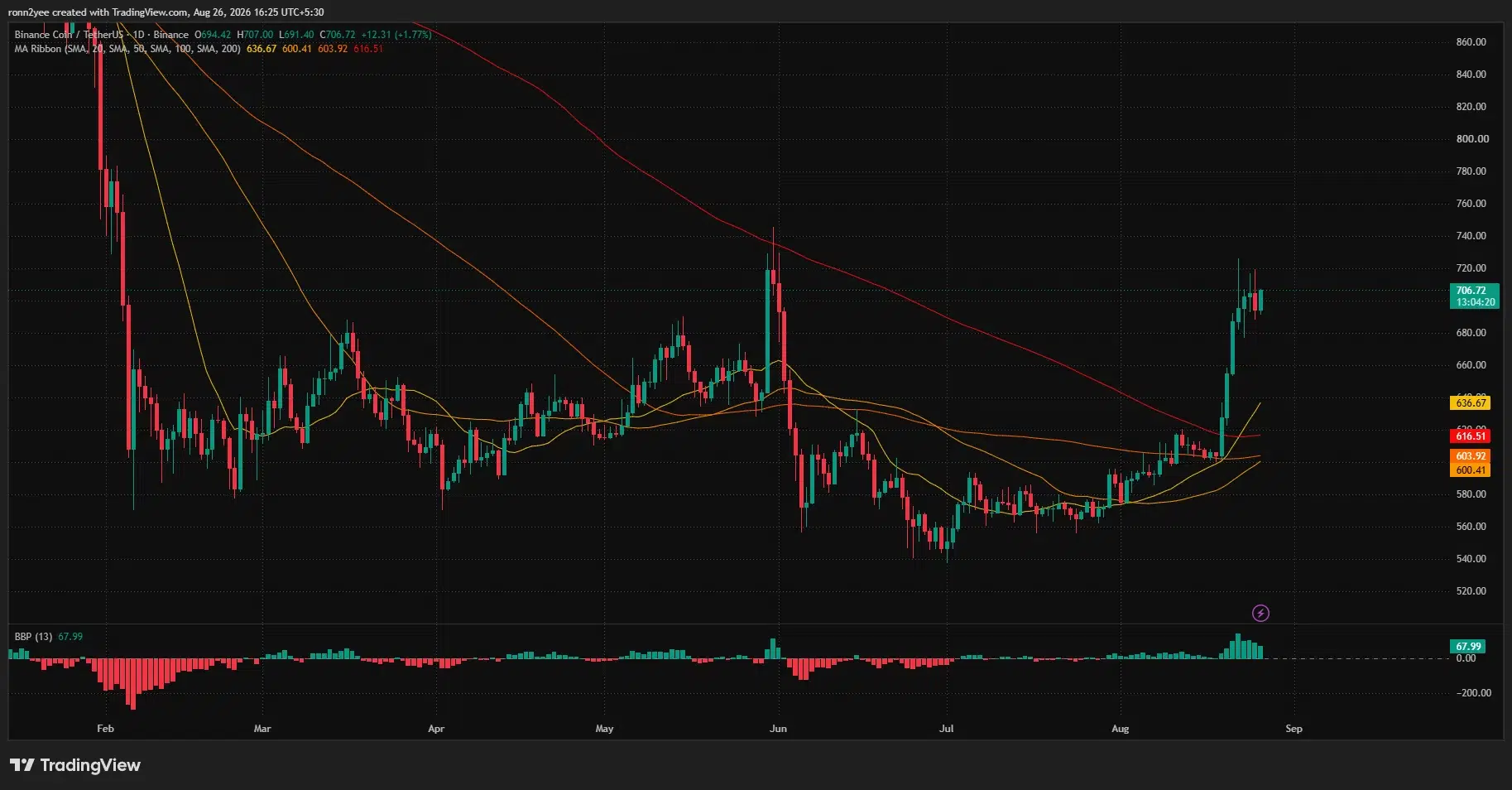
BNB price traded near $707 on Aug. 26 after gaining nearly 13% from its Aug. 20 opening price, with technical charts showing strong momentum but growing resistance between $712 and $725.
Summary
- BNB price rose from $626.47 on Aug. 20 to about $707 on Aug. 26.
- The daily price remains above all four major moving averages shown on the chart.
- 4-hour Bollinger Bands place immediate resistance near $712.50 and support near $687.
- Analysts identified $725 and $745 as the main levels needed to extend the rally.
BNB price consolidates after its weekly breakout
According to data from crypto.news, BNB (BNB) price was trading at $706.72 on Aug. 26, up 1.77% during the current daily session. The token has gained approximately 12.8% from its Aug. 20 opening price of $626.47.
BNB reached an intraday high near $725 on Aug. 22 before buyers lost momentum. Price has since consolidated between roughly $685 and $720, suggesting traders are deciding whether the weekly surge can develop into a larger breakout.
The latest move followed a rapid expansion from the $600 area, where BNB had traded before breaking above several moving averages. Although the price has pulled back from its weekly high, it has held most of its gains and returned above the psychological $700 level.
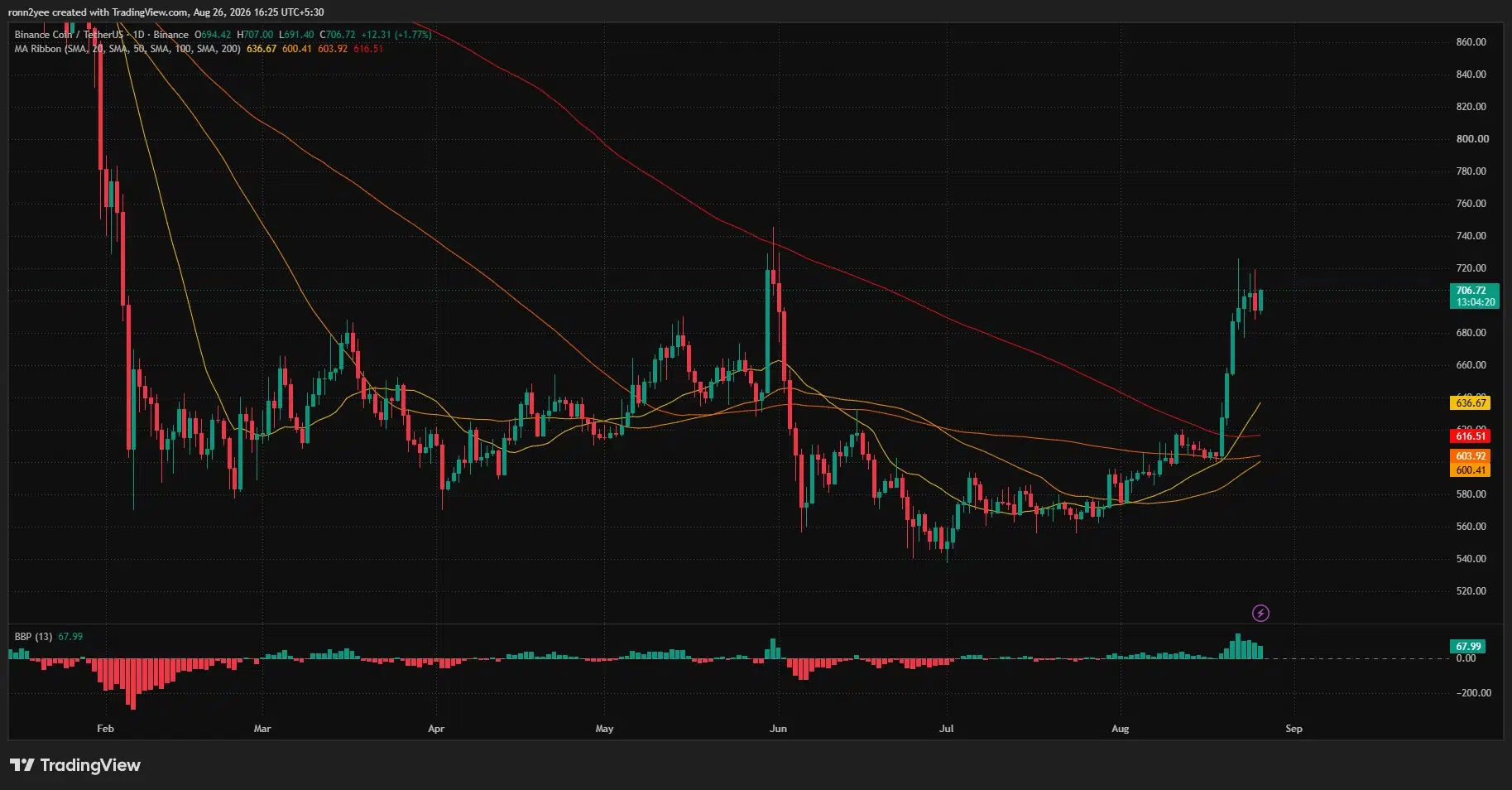
Daily momentum also remains positive. The bull-bear power indicator printed a positive reading of 67.99, although its bars have declined from their recent peak. The change suggests buyers remain in control but are no longer pushing the market with the same force seen during the initial breakout.
Moving averages support the bullish BNB structure
BNB’s daily chart shows the price trading above its 20-, 50-, 100-, and 200-day simple moving averages. The 20-day average sits at $636.67, while the other three averages are grouped between approximately $600 and $617.
The wide gap between the current price and those averages shows how quickly BNB advanced. It also leaves the token exposed to a deeper pullback if buyers cannot defend the newly established support zones.
The 200-day moving average, shown near $616.51, is particularly important because BNB had traded below it for much of the preceding decline. The break above that level changed the medium-term structure, but maintaining the bullish setup will require price to avoid a sustained return below the $600–$617 cluster.
On the 4-hour chart, BNB is trading slightly above the Bollinger Band midpoint at $699.94. The upper band stands at $712.51, while the lower band is near $687.36.
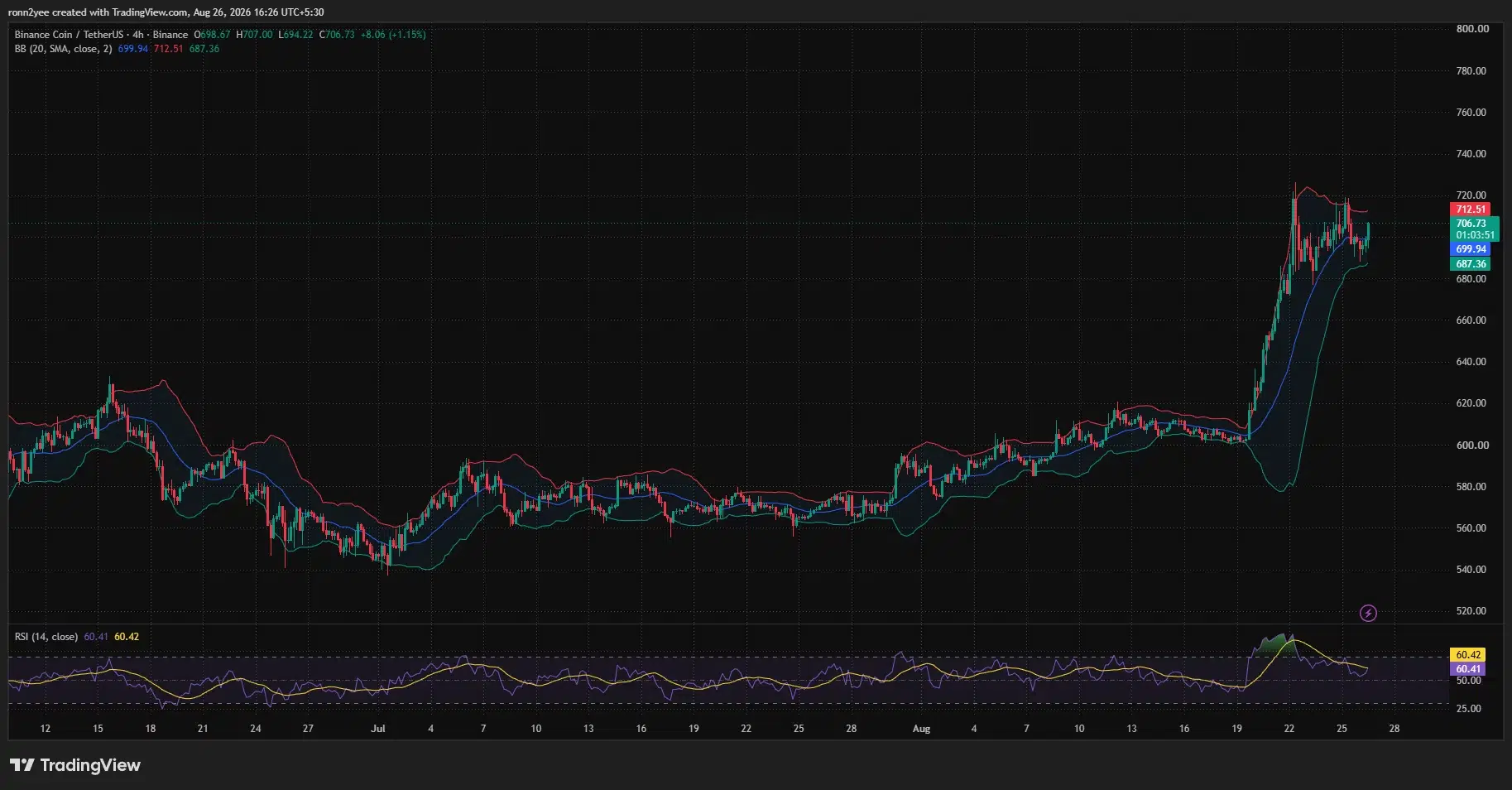
A 4-hour close above the upper band could signal another expansion toward $720–$725. Failure to hold the midpoint would raise the likelihood of a retest of $687, where the lower band overlaps with recent intraday support.
BNB’s 4-hour relative strength index has cooled to 60.41 after entering overbought territory during the initial rally. The lower reading removes some of the earlier overheating without pushing momentum into bearish territory.
Liquidation levels surround $680 and $725
CoinGlass’s three-day BNB liquidation heatmap shows concentrated leveraged positions on both sides of the current price.
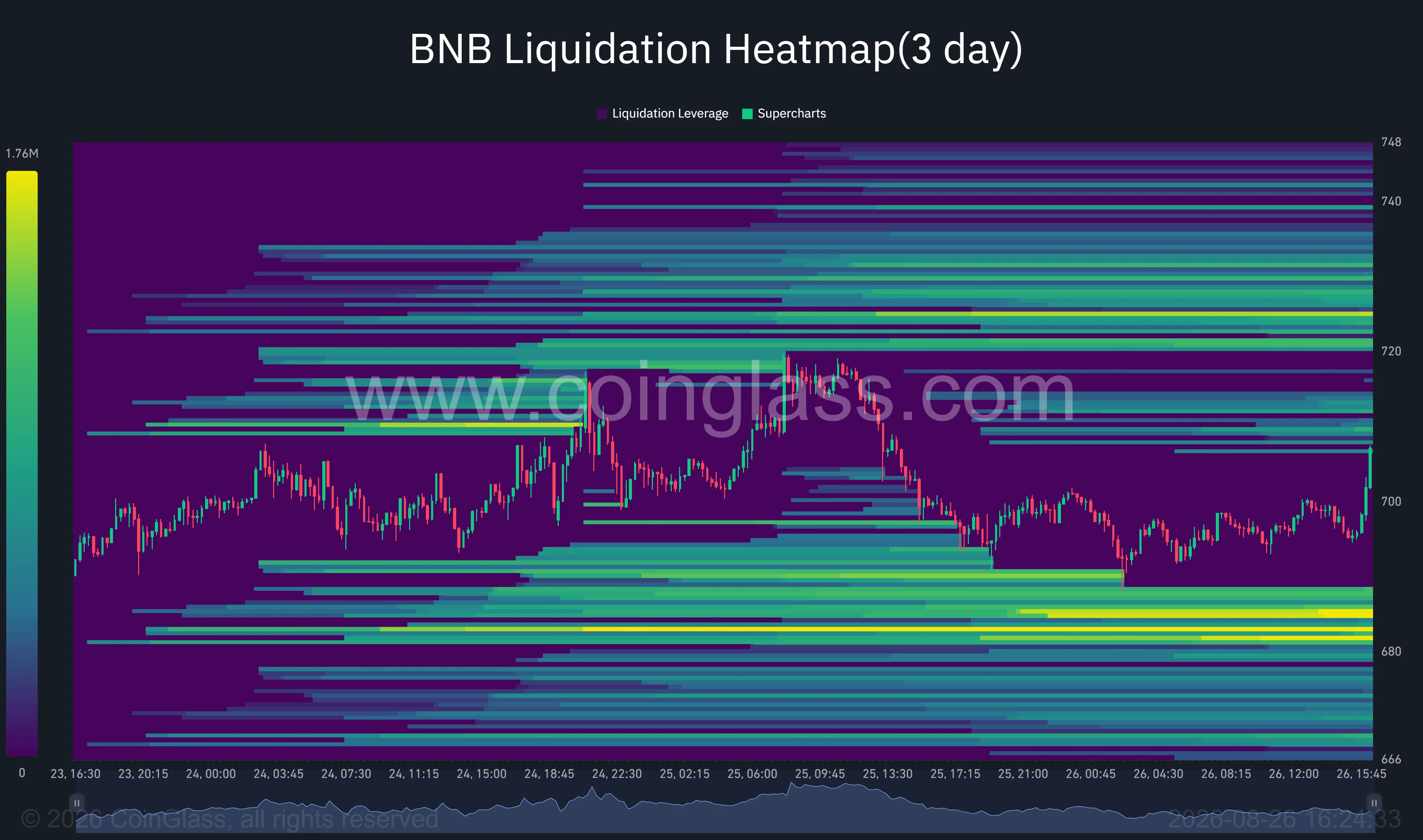
The closest major overhead liquidity appears around $724–$726, broadly matching the resistance visible on the price charts. A move into that area could force short positions to close, adding market buy orders and supporting a brief extension of the rally.
Additional liquidation bands appear between $730 and $745. However, liquidity maps identify areas where leveraged positions may be vulnerable; they do not guarantee that price will reach those levels.
Below the market, the strongest visible concentration sits around $680–$685. A loss of $695 and then $687 could draw BNB toward that cluster, potentially accelerating losses as leveraged long positions are closed.
The heatmap therefore places BNB between two competing liquidity areas. The $724–$726 zone is the nearest upside target, while the $680–$685 area represents the clearest downside risk if the consolidation breaks lower.
Analysts focus on the $725 and $745 barriers
Crypto analyst Bitcoin Professor said BNB had gained nearly 18% over the seven-day period measured in his Aug. 25 chart and identified $710–$725 as the key resistance range.
“A clean breakout above $725 could accelerate the bullish momentum,” the analyst said.
Bitcoin Professor added that short-term momentum could weaken if BNB loses the $690–$695 area. That warning aligns with the 4-hour Bollinger Band midpoint near $700 and the lower band around $687.
A separate analyst using the name Einstein said BNB had broken its descending trendline and was approaching a major breakout area.
“Weekly close above $745 = breakout confirmation,” Einstein said, identifying $960 as the first major target if that confirmation occurs.
The analyst also described $537 as the wider structural support level. However, that level sits far below the nearer support areas shown on the daily and 4-hour charts, making $687, $637, and the $600–$617 moving-average cluster more relevant during the current setup.
The forecasts represent analysts’ interpretations and do not establish that BNB will reach either $745 or $960.
BNB needs a close above $725 to extend the rally
The immediate bullish case depends on BNB holding $699–$700 and closing above the $712–$725 resistance region. A confirmed breakout would expose $745, which marks the larger resistance level identified by Einstein and overlaps with the upper section of the liquidation map.
The bearish case begins with a 4-hour close below $687. Such a move would weaken the recent consolidation and place the $680–$685 liquidity cluster at risk. Below that area, the 20-day moving average near $637 would become the next major technical reference.
For US traders, BNB remains available through some trading venues, but access varies because Binance.US operates separately from Binance’s global exchange and offers a more limited market. Traders should confirm platform availability and local restrictions before acting on the setup.
BNB’s broader structure remains bullish while price holds above the breakout area, but the declining short-term momentum and nearby resistance make the next confirmed close more important than an intraday move above $720.
Disclosure: This article does not represent investment advice. The content and materials featured on this page are for educational purposes only.

Ethereum trades at $2,450 as it continues probing the $2,500 price ceiling it’s failed to convincingly break for the third straight session. At the same time, the Crypto Fear and Greed Index hit 74, its highest print since October 5, 2025.
That earlier October reading? Bitcoin set an all-time high the very next day. But this time, the setup looks shakier: a US Treasury decision to double long-end debt buybacks triggered a short squeeze that liquidated $2.74 billion and wiped out 172,202 traders in a single session.
That disconnect between price and conviction is exactly what traders need to understand before chasing ETH through resistance. Institutional holders aren’t panicking, but they aren’t piling in yet.
Discover: The Best Crypto to Diversify Your Portfolio
Can Ethereum Price Punch Above $2,500 This Week?
ETH sits at $2,450, with intraday action ranging between $2,410 and $2,470 in a tight band that puts $2,500 within reach but not yet conquered. Volume remains elevated, with Coingecko clocking roughly $18.6 billion in 24-hour turnover, or about 6% of ETH’s market cap, signaling real participation rather than a thin, low-liquidity drift.
Pivot data pegs immediate resistance at $2,470–$2,490, with the psychological $2,500 level sitting just above that cluster. Support holds near $2,455 and $2,445, with a deeper floor at $2,440 if momentum fails.

For the Ethereum price to run, it needs a clean close above $2,500, which opens room toward $2,530–$2,540, extending the week’s ~28-30% run. ETH might also grind sideways in the $2,440–$2,490 channel while the market digests the Fear and Greed spike.
However, a rejection at resistance sends price back toward $2,440 support, especially if broader sentiment cools further from its current 65 reading.
Trade Ethereum on Bybit and Get a Chance to Win Our $1,000 USDT Airdrop
Bitcoin Hyper Targets Early Mover Upside as Ethereum Tests Key Levels
ETH holders sitting on a 28-30% weekly gain have earned the right to feel good. But here’s the uncomfortable math: at a $2,450 price point and a market cap north of $295 billion, doubling from here requires nearly $300 billion in fresh capital.
The math data is not a knock on Ethereum, but it’s the reality of scale. Early-stage infrastructure plays don’t carry that gravitational drag, which is why traders rotate capital toward presales precisely when majors stall at resistance like this.
Bitcoin Hyper ($HYPER) is building the first Bitcoin Layer 2 with native SVM integration, aiming for execution speeds faster than Solana itself while inheriting Bitcoin’s base-layer security. The pitch: fix Bitcoin’s three structural weaknesses, like slow settlement, high fees, and zero programmability, without abandoning the network’s trust model.
The project has raised $33 million at a current token price of $0.0136852, with staking rewards available for early participants. Its decentralized canonical bridge and low-latency processing layer are the technical backbone of the pitch.
Research Bitcoin Hyper before the presale closes.
Discover: The Best Token Presales
The post Ethereum Price Hits $2,500 Resistance Wall as Fear and Greed Reaches Extreme Levels appeared first on Cryptonews.


A federal judge has adjourned Roman Storm’s Tornado Cash retrial to April 26, 2027, as the developer’s pending motion for acquittal is weighed.
Judge Katherine Polk Failla signed the two-page order on August 25 in the Southern District of New York. The later date came at Storm’s own request rather than from prosecutors.
Why the Tornado Cash Retrial Slipped to 2027
Storm requested a date in late April 2027 from the court, according to the order. Failla granted it, citing his pending motion for acquittal. Storm still has a Rule 29 motion for acquittal pending. His lawyers want the guilty verdict thrown out, arguing prosecutors never presented enough evidence to support it.
Meanwhile, the judge excluded time under the Speedy Trial Act through April 26, 2027. The Speedy Trial Act is a US federal law that requires the government to bring a criminal defendant to trial within a specified period rather than allowing a case to remain pending indefinitely.
“The ends of justice would be served by excluding time under the Speedy Trial Act through April 26, 2027, and that this would outweigh the interests of the public and the defendant in a speedy retrial,” the order read.
Follow us on X to get the latest news as it happens
Failla amended the pretrial schedule at the same time. Government expert disclosures are due on February 5, 2027, and defense disclosures are due on March 5, 2027.
Daubert motions and motions in limine are due March 30, 2027. A final pretrial conference is set for April 20, 2027.
A jury in the Southern District of New York found Storm guilty on August 6, 2025, of conspiring to operate an unlicensed money transmitting business. Prosecutors had pushed for a retrial on two unresolved charges, proposing an October 2026 start date.
Subscribe to our YouTube channel to watch leaders and journalists provide expert insights
The post Roman Storm Won’t Face a Tornado Cash Retrial Until 2027 appeared first on BeInCrypto.
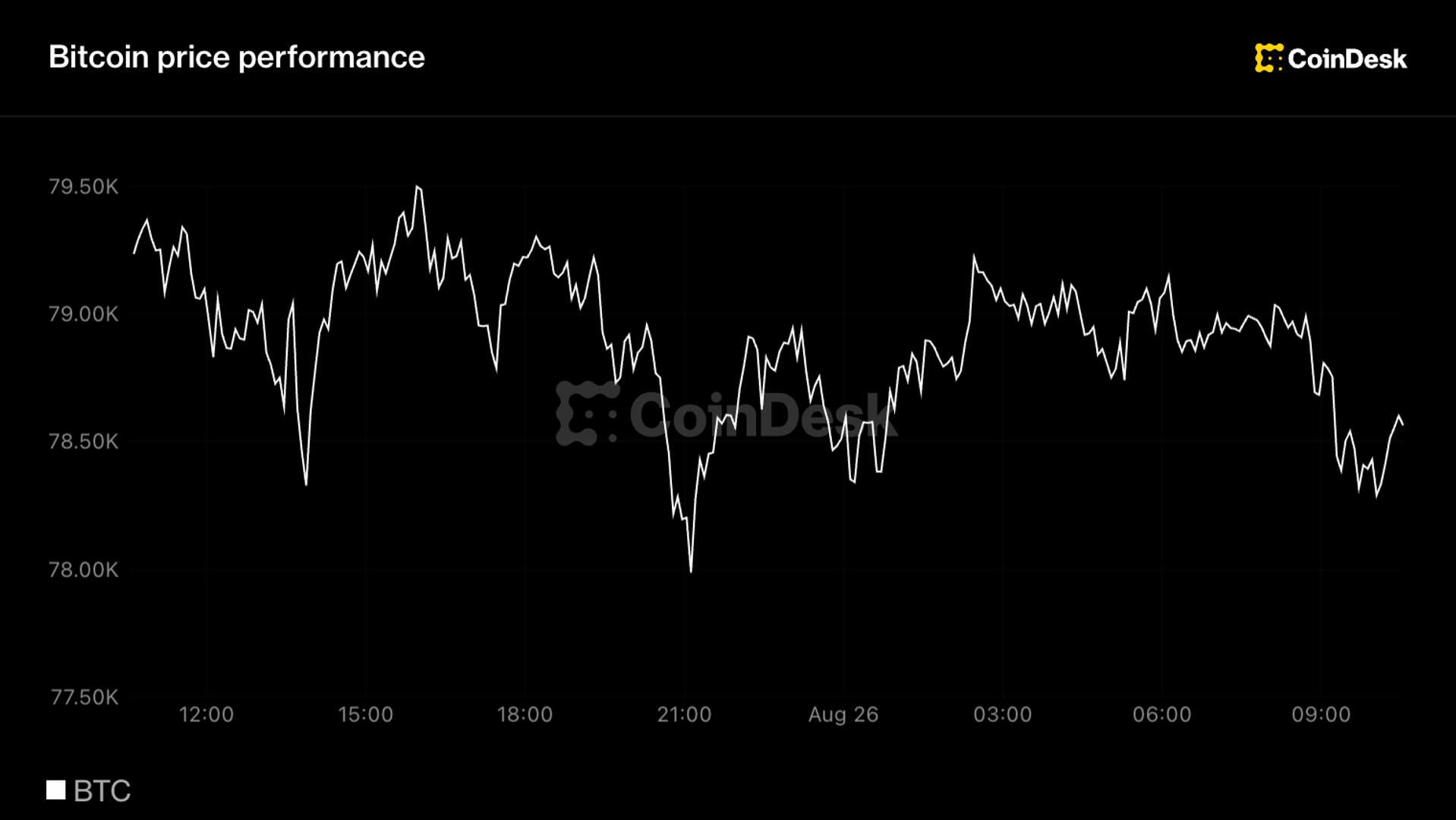
The price of bitcoin fell to $79,000 on Wednesday after gaining 23% in seven days as August ETF inflows climbed above $3 billion.
In BlackRock Bitcoin news, the World’s largest asset manager has reduced the reported minimum for in-kind creations and redemptions involving its iShares Bitcoin Trust (IBIT) from $25M to $1M, reports suggest that the change was reflected in an updated SEC filing.
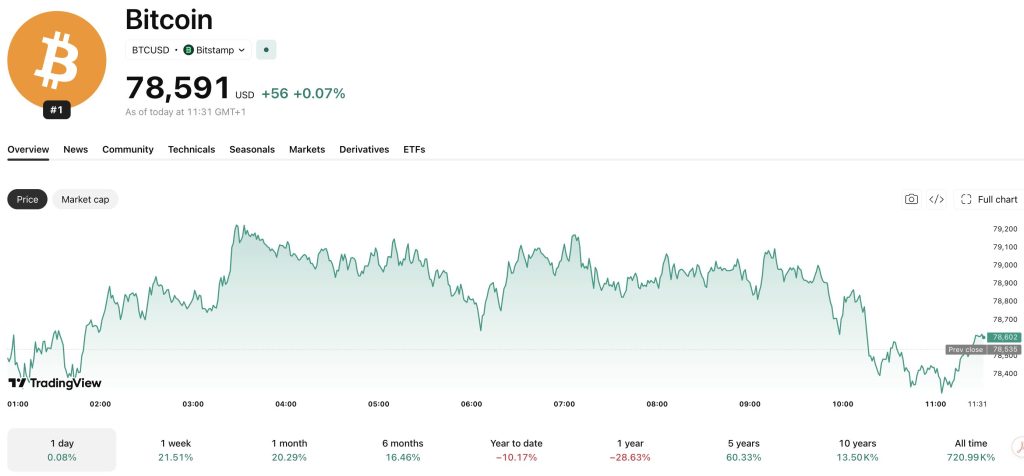
This news comes as BTC USD is trading at $78,800, down -1.4% overnight but still up +22% over the past week following a huge rally that saw it climb from $64,400 to nearly $80,000, single-handedly reinvigorating the crypto market.
BlackRock Bitcoin News: What the Reported Change Means
According to FinanceFeeds, in-kind creation and redemption allow authorized participants to exchange Bitcoin and IBIT shares rather than settle those transactions in cash.
The report said the lower minimum expands access to the process for mid-sized institutional participants, including registered investment advisers, family offices, and smaller trading firms operating through authorized participants.
FinanceFeeds also reported that retail investors cannot redeem IBIT shares directly for Bitcoin and that the change concerns the fund’s creation and redemption process rather than open-market purchases of IBIT shares.
IBIT’s Reported Scale

BlackRock’s IBIT product page listed an indicative basket of 22.65 Bitcoin, with a basket amount of $1,788,793.04, as of August 25, 2026. The page also listed a net asset value of $44.7252 per share and a sponsor fee of 0.25%.
The product page showed Bitcoin holdings with a market value of $60,696,470,292.63 as of August 24, 2026. It listed 768,039.86710 Bitcoin and $18,840.14 in US dollar cash. BlackRock cautions that holdings are subject to change and that the values shown for holdings are based on a third-party vendor’s pricing.
For performance, BlackRock listed IBIT’s year-to-date NAV total return at -9.86% as of August 24, 2026. For the one-year period ended June 30, 2026, the product page listed a total return of -45.62%, compared with -45.48% for its benchmark.
Trade BTC and Other Tokens on Bybit and Get a Chance to Win Our $1,000 USDT Airdrop
What to Watch in Future Disclosures
In other BlackRock Bitcoin news, FinanceFeeds identified the ratio of in-kind to cash creations in future quarterly disclosures as a measure to watch following the reported minimum change. A future filing could show whether in-kind activity changed during the period.
IBIT seeks to track the price of Bitcoin and offers exposure to Bitcoin through an exchange-traded product, according to BlackRock. The firm says investors should carefully consider the risk factors and other information in the prospectus before making an investment decision.
Bitcoin ETF Flows in August: BlackRock Leading the Way

US spot Bitcoin ETFs are having their best month in nearly a year. On Tuesday, August 25, the funds pulled in $314.37M in net inflows, marking a seventh straight day of gains. That streak has pushed August’s total inflows to $3.03Bn, putting the month just $390M behind October 2025’s record with a handful of trading days left.
The rebound has been dramatic. Year-to-date net outflows have been cut by more than half, down to $2.26Bn, while total net assets across the funds reached $99.05Bn and cumulative net inflows climbed to $54.36Bn.
BlackRock’s IBIT remains the dominant force, accounting for roughly 62% of Monday’s category-wide inflows on its own. The surge coincides with Bitcoin’s push toward $80,000, though the asset was trading near $78,880, down about 2% over the prior 24 hours at the time of the latest report- a reminder that even strong ETF demand hasn’t fully insulated price action from volatility.
Discover: The Best Token Presales
The post IBIT Opens In-Kind Bitcoin Process to More Institutions appeared first on Cryptonews.
And yet the SAVE Act is only one front of the attack on our democracy. There are other examples of disturbing ways that the Trump Administration is fearmongering about immigrants, effectively sowing mistrust in our electoral systems.
Since May 2025, the Department of Justice has demanded that nearly all states and the District of Columbia turn over full, unredacted voter rolls, including driver’s license and partial Social Security numbers. When most of those states refused, DOJ filed lawsuits against 30 of them and D.C. For the states that did provide the data, DOJ then shared it with the Department of Homeland Security to supposedly “scrub aliens from voter rolls.”
Since then, the pressure has only escalated. In July, a day after Trump gave a primetime speech in which he again railed against immigrants, made unsubstantiated claims of noncitizen voting and demanded that states change their election policies, Homeland Security Sec. Markwayne Mullin then threatened state election officials with prison time if they don’t acquiesce to Trump’s demands.
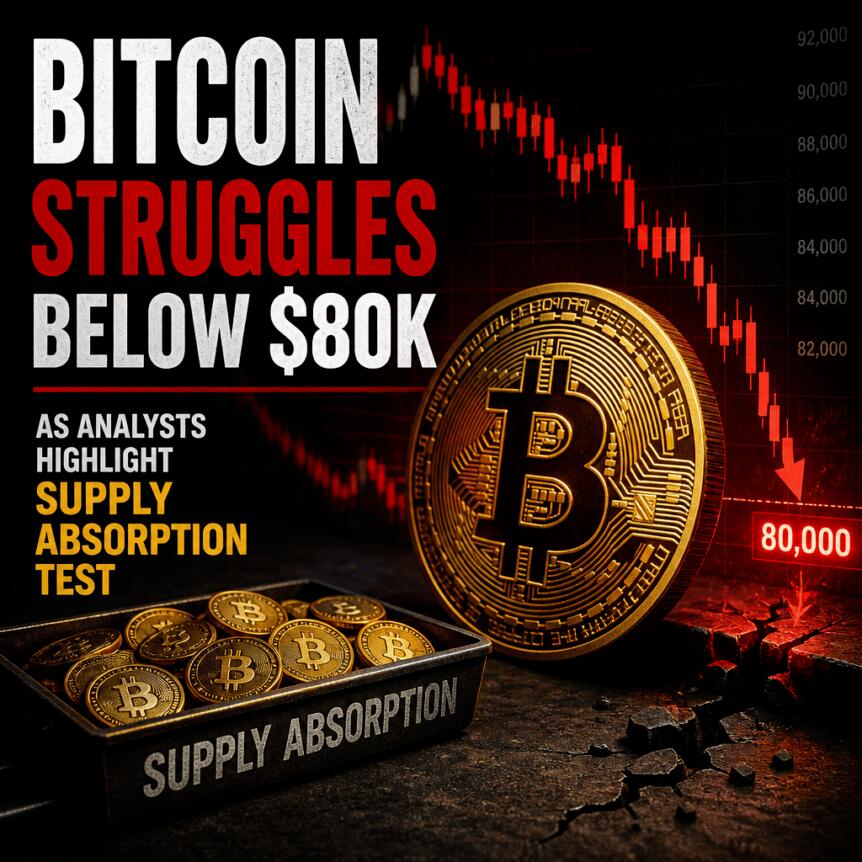
Bitcoin has reclaimed the $80,000 area, but on-chain signals suggest the rally is running into a familiar problem: even when buyers show up, sell-side pressure from investors sitting on profits can reappear quickly.
According to on-chain analytics from CryptoQuant, older “long-term holder” coins have become more active around recent local highs, while a widely watched gauge of U.S. demand—the Coinbase premium—remains slightly negative. Together, the data points to a market that can push upward, but struggles to sustain momentum without stronger fresh buying from the U.S.
Key takeaways
- CryptoQuant data shows the spent output profit ratio (SOPR) for long-term holders rose to 1.48 on Aug. 22, indicating profit-taking-related activity is increasing among older coins.
- The SOPR ratio (short-term holders vs. long-term holders) peaked at 1.4 near $79,500—its highest reading since July 25—before slipping to 0.93, implying relative selling dynamics may be shifting back toward short-term holders.
- All major holder cohorts are reportedly in profit on aggregate, creating conditions where additional upside requires demand strong enough to absorb profitable supply.
- The Coinbase premium index is still negative at -0.015, underscoring that U.S. spot demand has not fully regained strength despite Bitcoin’s local push higher.
Older Bitcoin holders increase on-chain profit-taking signals
CryptoQuant’s monitoring highlights that “older” Bitcoin coins moved on-chain more actively during the latest rise. The firm links this behavior to a period when BTC/USD gained more than 25% over the past week, according to the related market context cited alongside the analysis.
The specific on-chain indicator at the center of the update is the spent output profit ratio (SOPR). SOPR compares the value of recently spent UTXOs against the value at the time those outputs were created. In CryptoQuant’s read, SOPR ticking up to 1.48 on Aug. 22 points to increased movement involving in-profit coins—an environment that often accompanies selling or at least reallocation of positions.
CryptoQuant also points to a second metric: the SOPR ratio, which divides the SOPR of short-term holders (STH) by that of long-term holders (LTH). Here, STH refers to wallets that hold BTC for up to six months, while LTH refers to wallets holding longer than six months.
As price consolidated around $79,500, the SOPR ratio reached 1.4, the highest reading since July 25. In CryptoQuant’s framing, that peak suggested long-term holders were realizing profits at a higher relative rate than short-term holders at that moment.
However, the picture quickly cooled. CryptoQuant later reported the SOPR ratio had fallen to 0.93, saying the shift implies short-term holders’ realized performance is now relatively stronger than long-term holders’ realized performance.
Why the SOPR trend matters for traders near $80,000
Profit-taking signals often show up with a lag: price can rise while the market is still digesting prior positioning, but once more investors become “in profit” enough to consider exits, upward momentum can stall. CryptoQuant notes that the SOPR ratio has been forming a broad downtrend since early 2025. By the end of June, it reportedly hit 0.62—its lowest levels in three years as BTC/USD traded near $58,000.
That earlier low matters because it sets the stage for what investors should watch now. While Bitcoin has only reversed modestly higher since that period, the market has not been able to remain above $80,000, implying the rebound has met persistent resistance from supply and realized profit behavior.
In a key takeaway from CryptoQuant, the firm emphasizes that the market question is less about whether Bitcoin can “briefly touch” $80,000 and more about whether new demand is sufficient to absorb selling from profitable holders. That distinction is important for both short-term traders and longer-term investors: price can reach a level, but the sustainability of the move depends on whether incremental buyers continue stepping in as profit-taking grows.
U.S. demand still weak as Coinbase premium stays negative
While on-chain SOPR metrics describe behavior among existing holders, the Coinbase premium index helps describe demand conditions—particularly from U.S. participants. CryptoQuant tracks the difference between BTC/USDT pricing on Coinbase versus Binance; when the premium is negative, the indicator suggests the U.S. market is not paying a “premium” relative to global liquidity.
In this latest update, CryptoQuant reports the Coinbase premium has failed to return to positive territory and remains negative. The firm says it moved above zero only briefly on hourly time frames as Bitcoin broke above $78,500, but it has not sustained a positive reading.
As of Wednesday, CryptoQuant lists the Coinbase premium at -0.015, compared with -0.094 at the start of August. Even with that improvement, the index remains below zero—an asymmetry that matters because it suggests that despite improving activity and price strength, the broader U.S. buyer base is not yet strong enough to lift demand sentiment into “buying over sellers” territory.
CryptoQuant frames the next signal plainly: whether the premium can cross above zero and remain positive. The firm argues that if Bitcoin continues recovering while the Coinbase premium turns positive, the market could shift from easing selling pressure toward a phase characterized by stronger renewed U.S. spot demand.
What to monitor next: holder profits versus fresh inflows
For now, CryptoQuant’s data points to a market where holder cohorts are, in aggregate, already in profit—meaning there is potential for realized selling to reappear during pullbacks or consolidation. At the same time, the Coinbase premium suggests U.S. spot demand is still not fully supporting sustained breakout conditions.
Going forward, investors should watch whether the SOPR ratio stabilizes rather than continues sliding, and whether the Coinbase premium can hold above zero. Those two developments—profit-taking dynamics among holders and persistent demand signals from U.S. trading venues—may determine whether $80,000 becomes a new floor or remains a ceiling.
Crypto World
Dallas Fed warns tokenized deposits could strip $700 billion from U.S. banks' lending capacity


Programmable deposits and AI agents may enable instantaneous, automated bank switching for higher yields, driving up bank funding costs.
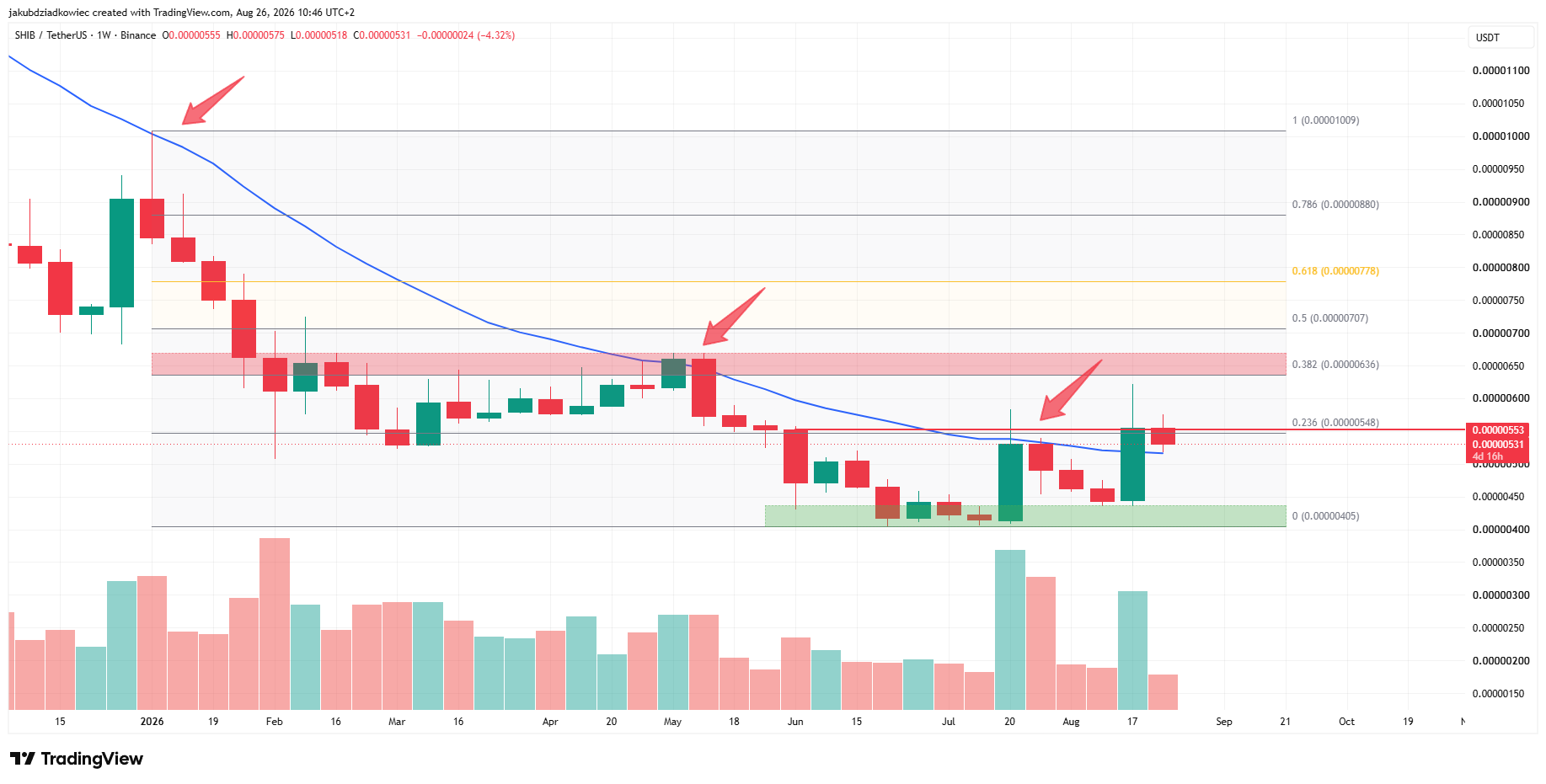
Shiba Inu (SHIB) price has closed above its 20-week moving average for the first time since September 2025, ending an 11-month downtrend.
The break arrived in the same week Japan approved a Nomura-backed exchange to list SHIB. The token now trades at $0.00000528, down 4.27% in 24 hours, while it retests the breakout.
Japan Says Yes to Shiba Inu
Japan’s Financial Services Agency registered Laser Digital Japan as a crypto asset exchange service provider. The subsidiary of Nomura’s digital assets arm secured the first new exchange approval in the country in four years.
SHIB is one of six launch assets. It sits beside Bitcoin (BTC), Ethereum (ETH), XRP, Bitcoin Cash (BCH), and Litecoin (LTC), and it is the only meme coin on that list. The token joined the Japan Virtual and Crypto Assets Exchange Association Green List in November 2025.
Meanwhile, whales moved in the same direction. An unidentified wallet withdrew 280.8 billion SHIB from OKX on August 24, worth roughly $1.56 million. Exchange reserves fell to 86.98 trillion tokens. SHIB ranks 31st by market capitalization at $3.11 billion.
Shiba Inu Price Breaks an 11-Month Downtrend
The weekly chart shows the trend change clearly. SHIB rejected the 20-week moving average near $0.00001000 in January and again near $0.00000650 in May. It has now closed above it.
Structure improved underneath. A June low near $0.00000405 was followed by a higher low near $0.00000445 in early August. The week of August 17 gained about 25% on heavy volume.

However, that candle wicked to roughly $0.00000620. It stopped just short of the 0.382 Fibonacci resistance at $0.00000636, a level that has capped every rally since February.
One Level Decides It
The daily chart places SHIB inside an ascending parallel channel. Price tagged the upper band near $0.00000600 on August 21, then reversed.
Support at $0.00000531 now matters most. It marks the channel midline, the July 26 swing high, and the 20-week moving average at once. Below it sits the $0.00000499 level, and the channel base near $0.00000450.
Reclaiming $0.00000553 would open $0.00000600 and then $0.00000636. The relative strength index has cooled to 58. Its twin peaks near 77 suggest momentum did not expand on the second push.

Therefore, two caveats temper the case. A recent 441% burn rate spike removed only about $230 worth of SHIB, and Shibarium activity remains near 1,180 daily transactions.
A team member has teased news from Shytoshi Kusama and Kaal Dhairya before August 31. Neither has confirmed it. That window closes inside the weekly candle that settles this retest.
The post Shiba Inu (SHIB) Breaks 11-Month Downtrend After Japan Approval appeared first on BeInCrypto.


The FSA, Finance Ministry, BOJ and financial institutions plan to study the infrastructure and produce a development plan by early 2027.

Silver Storm Mining Ltd. (TSX-V: SVRS) (OTCQX: SVRSF) | VNDR | Renmark Financial Communications

Cop murderer who spent 15 years on the run dies in notorious jail 10 months into his 40-year sentence

Does OpenAI Face A Netscape Moment? How that Could Boost Google Stock.





-

 Fashion5 days ago
Weekend Open Thread: Madewell – Corporette.com
-

 Business4 days ago
Musk’s Tesla, SpaceX Confirm $16.8 Billion ‘Terafab’ Chip Plant as World’s Largest Building in Texas
-

 Crypto World4 days ago
anatomy of crypto’s biggest liquidation event since 2021
-

 Crypto World2 days ago
A $30 Billion AI Fund Implodes, Now the SEC Is Investigating Wall Street’s Role
-

 Politics4 days ago
6 months on, Irish renters crushed by effects of government housing bill
-

 Crypto World13 hours ago
SpaceX stock could rise 75% to $240, JPMorgan says
-
 NewsBeat4 days ago
The ‘Lucky Dip Gang’ causing carnage for clicks: After five thugs were killed speeding in the wrong direction on a motorway, GUY ADAMS investigates a sick new trend… and why police aren’t even allowed to pursue them
-

 Business3 days ago
Mystery AI Model ‘Ox Alpha’ Draws Developers With Free Access as Chinese Lab Origins Remain Debated
-

 News Videos6 days ago
Don’t Leave Your Financial Future To Chance | August 19, 2026
-

 Business7 days ago
Marvell Shares Jump 7% as Google Chip Deal Confirms Custom AI Silicon Partnership, Analysts
-

 Business6 days ago
Five Below: Kids Discount Retailer Reaps Rich Rewards
-

 Business2 days ago
Moderna CEO warns China is pouring state money into mRNA technology
-

 Business5 days ago
UK firms in critical financial distress rise 9% to 53,756
-

 Business2 days ago
NVIDIA Stock Drops Nearly 2 Percent to $210 on Seventh Losing Day Ahead of Critical AI Earnings
-

 Sports3 days ago
Deshaun Watson fires back at Browns fans after being booed: ‘It’s a disrespectful thing’
-

 Fashion7 days ago
Jimmy Choo Autumn 2026 collection
-
 Entertainment7 days ago
10 Most Perfect Fantasy Shows of the Last 25 Years
-

 Tech6 days ago
OpenAI confirms ChatGPT is down as logins and signups fail
-

 Crypto World6 days ago
Optimism-funded team's deciding vote shifts $49 million in OP tokens away from users
-

 Business6 days ago
PayPal and Venmo now accepted for tuition at several universities
You must be logged in to post a comment Login