

Crypto World
Three Bitcoin Signals Point to $80K as Next BTC Target for Bulls


Bitcoin (CRYPTO: BTC) bulls are targeting a move back toward $80,000 in March, supported by a technical setup that has begun to show meaningful upside momentum. After a rally that pushed BTC above key levels, the asset retraced and then re-accelerated, signaling that demand is re-emerging as buyers step in around pivotal price zones. In recent trading, BTC rose more than 5% to around $71,900, a move that coincided with a breakout from what some analysts characterized as a bear pennant, though others see it as the early stages of a bullish symmetrical triangle. The pattern suggests a potential catalyst for a larger advance if buying interest remains firm and volume sustains its uptick.
The evolving chart pattern centers on a symmetrical triangle, formed as price makes lower highs and higher lows within a narrowing price range. In practice, the triangle’s widest cross-section spans roughly from $63,000 on the lower side to $71,000–$72,000 on the upper edge. A breakout above the upper boundary could unleash a measured move toward the $80,000 area, a target that also happens to align with BTC’s 100-day exponential moving average, a level many traders view as a significant longer-term gauge of trend health. The breakout’s credibility hinges on follow-through volume, with higher turnover often translating into increased conviction behind the move.
From a near-term perspective, the chain of moving averages presents both a challenge and an objective. The 50-day EMA sits near $74,400, posing a near-term hurdle. A rejection around that level would raise the odds of a pullback toward the 20-day EMA, which sits closer to $68,700, potentially reigniting short-term volatility. Still, if BTC can clear the 50-day EMA and maintain momentum, the path toward the broader target remains plausible, with the 100-day EMA acting as a guidepost for the longer-term trend.
Beyond pure price action, the market atmosphere is colored by a functional market mechanics element: an unfilled CME futures gap. That gap sits approximately in the $79,660–$81,210 zone, offering a magnet for price in the event of rebalancing between the spot market and the futures market. The dynamic arises because CME futures markets do not trade over the weekend, so when spot prices move during those periods, a gap can form that the futures market may revisit once trading resumes. Traders monitor this area closely as a potential catalyst zone where price could pause or accelerate in the days ahead.
On the speculative side, market-derived odds from prediction platforms have started tilting more decisively toward a bullish outcome for BTC in March. Polymarket has shifted toward pricing in a 40% probability that Bitcoin reaches $80,000 this month, up from 20% a day earlier. The odds for a price of $75,000 in March are even higher, around 70%, signaling a stronger collective belief among market participants in a constructive move in the near term. Conversely, the probabilities for a more pronounced downside in March have declined, suggesting traders are trimming expectations for deeper retracements.
Another data point enhancing the bulls’ case is the broader ETF narrative, which has been getting attention as institutions evaluate real-world demand versus supply pressures. Coin-media coverage has highlighted inflows into spot Bitcoin exchange-traded products as a factor supporting a steady bid around the $80,000 mark, with inflows and redemption dynamics shaping near-term price discovery. This context complements the technical setup, underscoring how demand dynamics interact with market mechanics to shape BTC’s trajectory in the weeks ahead.
Finally, a pattern is emerging that many traders watch closely: the accumulation and reallocation narratives that tend to re-emerge at critical price levels. An ongoing focus on the $80,000 region, supported by a history of CME gap fillings, adds another layer of potential momentum if price can sustain a breakout and clear immediate resistance. With Polymarket indicating growing odds for a March push and with the 100-day EMA aligned with the target, the stage appears set for a test of the upper triangle boundary and, if successful, a potential extension toward the $80k target in the coming weeks.
Why it matters
Bitcoin’s struggle to retake $80,000 has been a focal point for traders seeking signs of renewed momentum after a period of consolidation. A sustained breakout beyond the upper trendline would reaffirm a broader technical setup that has attracted attention from both technical analysts and derivative market participants. The alignment of the target with the 100-day EMA adds a level of significance because this moving average is widely watched as an indicator of the longer-run trend, not merely a short-term impulse. If price action confirms the breakout, it could attract additional buyers who are looking for a clearer signal of trend continuation rather than mere volatility spikes.
Moreover, the CME gap provides a practical reminder of how futures dynamics can accentuate price moves. Gaps are not guarantees, but they can act as magnets when market participants anticipate a return to a fair price after periods of dislocation. The $79,660–$81,210 zone has persisted for weeks, and a close above that area could signal renewed risk appetite and confidence in a new leg higher. In the same vein, the contemporaneous market sentiment reflected in Polymarket’s odds adds a qualitative dimension to the story: a shift in probability toward a higher price target implies traders are pricing in a more favorable near-term trajectory for BTC.
Finally, the conversation around spot Bitcoin ETFs adds a macro layer to the narrative. Inflows associated with these products can influence demand dynamics by providing institutional exposure that complements a rising risk-on environment. While not a guarantee of a specific price path, the presence of sustained demand from ETF products reinforces the underlying thesis that BTC could participate in a broader upswing if macro and liquidity conditions remain supportive.
What to watch next
- Watch for a daily close above the triangle’s upper boundary to confirm a breakout with sustained momentum.
- Monitor the 50-day EMA around $74,400 as the near-term hurdle; a clear hold above this level would strengthen the bullish thesis.
- Track the CME gap region near $79,660–$81,210 for signs of price reversion or continuation as futures reopens.
- Observe Polymarket’s updated odds for March to gauge whether market sentiment continues to tilt toward higher BTC prices.
- Assess whether price action in the coming sessions can stage a clean move toward the $80,000 target and test the 100-day EMA as a guiding benchmark.
Sources & verification
- Bitcoin price action and the breakout context: https://cointelegraph.com/news/bitcoin-price-nears-one-month-high-as-bulls-propel-btc-toward-72k
- CME gaps and their trading implications: https://cointelegraph.com/news/bitcoin-cme-gaps-how-to-trade-them
- Polymarket odds for BTC in March: https://polymarket.com/event/what-price-will-bitcoin-hit-in-march-2026
- Bitcoin accumulation wave and the $80k case: https://cointelegraph.com/news/bitcoin-accumulation-wave-puts-dollar80k-back-in-play-analyst
- ETF inflows context and market impact: https://cointelegraph.com/news/bitcoin-etf-225-million-inflows-blackrock–ibit-counters-selling



As artificial intelligence reshapes everything from finance to cybersecurity, the Ethereum Foundation (EF) is carving out a strategy for how the world’s second-largest blockchain fits into that future.
Instead of trying to fuse blockchains and AI at the level of raw computation — something Ethereum was never designed to handle — the EF sees the network playing a different role: acting as a coordination and verification layer in an increasingly AI-mediated world.
Davide Crapis, the AI lead at the EF, argues that the motivation is as philosophical as it is technical. More and more digital activity is being handled by AI systems, whether it’s answering questions, executing trades, screening applications or writing software. If those systems are controlled by centralized entities, the values that underpin much of the crypto movement — decentralization, self-sovereignty, censorship resistance and privacy — could erode.
“If AI doesn’t have the properties we care about — self-sovereignty, censorship resistance, privacy — and then we use AI for everything, basically no one has those properties anymore,” he said to CoinDesk in an interview at NEARCON 2026.
In that sense, Ethereum’s AI push is less about competing with OpenAI or Google on model size and more about ensuring that as AI becomes the interface to the internet, it doesn’t quietly recentralize power.
The EF’s strategy rests on two broad fronts. The first is what Crapis calls decentralized AI coordination. As autonomous AI agents — software programs capable of carrying out tasks on their own — become more common, they will need ways to identify themselves, build trust and exchange payments. Ethereum, he argues, is well-suited to provide that infrastructure.
“Ethereum functions as a public, governance-less verification layer for AI,” he said.
In practical terms, that means the heavy computing work of AI remains off-chain, on traditional servers. But Ethereum can help agents discover one another through public registries, assess reputation through transparent histories, route payments and anchor cryptographic proofs that verify outcomes. Crapis likens it to a decentralized version of Google Reviews combined with payment rails.
The EF has been involved in developing standards to formalize this ecosystem, including a protocol for agent identity and trust, known as ERC-8004. According to Crapis, these standards are gaining traction beyond Ethereum, signaling that the coordination layer for AI agents may become blockchain-based even if the AI itself is not.
The second focus area centers on bringing Ethereum’s core principles — such as privacy, openness, censorship resistance, and security — into the world of AI. Crapis refers to this effort internally as “Props AI,” shorthand for the values the Ethereum ecosystem has historically prioritized.
Privacy is a major part of that conversation. Interacting with centralized AI services can gradually generate detailed user profiles based on queries, usage patterns and behavior.
From Ethereum’s perspective, the challenge is to design AI systems that allow users to retain greater control over their data and identity. One approach is to encourage more AI processing to occur locally on users’ devices whenever possible, reducing the amount of information that needs to be sent to centralized servers.
The broader goal is to ensure that as AI becomes embedded in everyday digital interactions, individuals still retain meaningful control over their data and how it is used, rather than handing that power entirely to large platforms.
“We want to create a world where users retain as much data and power as possible,” Crapis said. “We just don’t give it to operators.”
Security concerns also underpin the strategy. As AI systems grow more capable, they are likely to automate and scale cyberattacks in ways that strain existing defenses. Crapis predicts a near future in which AI systems can convincingly impersonate humans, undermining traditional authentication methods.
“We will probably see hacks orchestrated by AI,” he said. “The old security models break when AI can impersonate a human.”
In that environment, cryptographic keys may become more important. Control of a private key is mathematically verifiable and does not depend on human judgment. Crapis frames Ethereum’s long-term role in stark terms.
“In a world where AI is in the wild, we want Ethereum to be the place with the big lock,” he said. “If I have the keys, I still have power.”
Crapis described the AI initiative that the EF is doing as one of several major priorities rather than the dominant one. Still, the move reflects a growing recognition within the crypto industry that AI will shape the next phase of the internet. If that future is mediated by intelligent agents rather than human clicks, the question becomes who controls the rails those agents run on.
Ethereum’s bet is that even if it doesn’t power the brains of AI, it can help govern the environment in which those brains operate, anchoring identity, coordinating payments and preserving user control.
Read more: Ethereum Foundation Starts New AI Team to Support Agentic Payments


The move expands Backpack’s existing partnership with Robert Leshner’s tokenization firm.
Centralized exchange (CEX) and wallet app Backpack announced today, March 4, that it will offer early access to initial public offerings on-chain in partnership with Superstate.
Currently, Backpack is offering users access to a waitlist for the new offering. The exchange — which was founded by former employees of the now defunct FTX and Alameda — said in its announcement that it’s providing access to IPO shares “prior to open market trading.”
The IPO shares will be available on the Solana blockchain and give traders direct ownership of equity, the firm noted in its announcement.
The move expands on Backpack’s existing partnership with Superstate, the tokenization firm founded by Compound co-founder Robert Leshner. The two firms previously announced that Backpack had integrated Superstate’s on-chain equity platform Opening Bell to let the CEX’s users trade on-chain versions of U.S. Securities and Exchange Commission (SEC)-registered stocks, as The Defiant reported.
Superstate first announced back in December that it will let companies issue new shares directly on-chain, on both Ethereum and Solana.
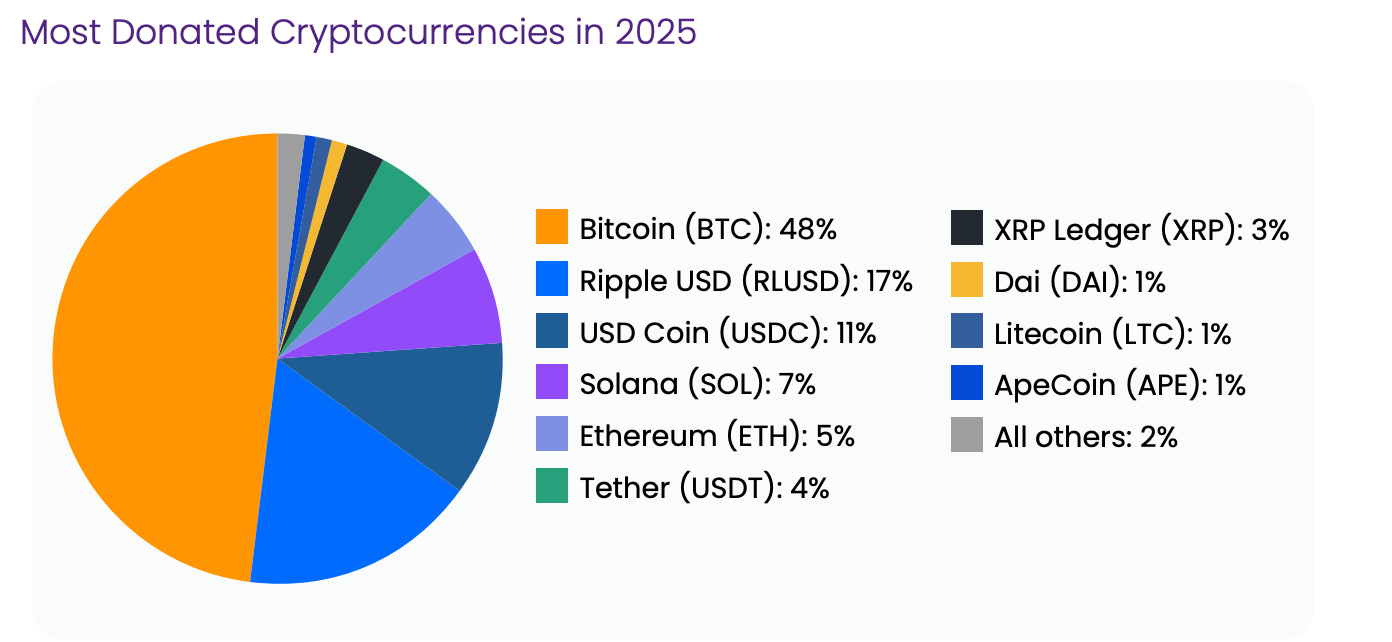
The cryptocurrency fundraising platform Giving Block reported that it had seen a surge in donations with stablecoins in 2025 compared with previous years.
In its annual report released on Wednesday, the Giving Block said there had been a “major shift” in donations using stablecoins, particularly with Ripple USD (RLUSD) and Circle’s USDC (USDC). The platform reported that it had facilitated more than $100 million in crypto donations in 2025, with more than $32 million coming through USDC, RLUSD, Tether’s USDt (USDT), Dai (DAI), and other stablecoins.
“The trend is clear: stablecoins are no longer a side story in Crypto Philanthropy—they’re becoming one of its fastest-growing channels,” said the report.

Notably, however, it was that $25 million in RLUSD may have come directly from Ripple Labs, which pledged the funds to the nonprofit organizations DonorsChoose and Teach For America in May. The Giving Block projected in its 2025 annual report that it could see up to $2.5 billion in total crypto donations.
Related: Spanish Red Cross launches privacy-first blockchain aid platform
Givepact, another crypto donation platform, reported in July that stablecoins had “rapidly become the top donated asset in crypto philanthropy,” citing data from the Giving Block. The platform said that the payment stablecoin bill signed into law in the US in 2025 elevated the assets to “cash-equivalent” status, which “eliminates lingering concerns about issuer solvency, particularly for nonprofits relying on predictable donation value.”
“Even during bear markets, donors are willing to give in stablecoins — helping nonprofits avoid volatility and process donations faster,” said Givepact. “With the GENIUS Act now in place, this trend is accelerating. Stablecoins are no longer just convenient — they’re federally recognized and institutionally trusted.”
Stablecoin yield under scrutiny in US market structure bill
As the US Senate considers legislation to establish comprehensive market structure for digital assets, the issue of stablecoin rewards has divided many industry leaders and lawmakers. The Senate Banking Committee has not yet rescheduled a markup to address the bill after a January postponement, while the White House has had three meetings with industry leaders to discuss how the government might handle stablecoin yield.
On Tuesday, US President Donald Trump took to social media to urge banks not to hold market structure “hostage” over digital assets. Many crypto companies and interest groups oppose a ban on stablecoin rewards in the bill, whose text has yet to be finalized before a potential vote in the full Senate.
Magazine: Bitcoin may face hard fork over any attempt to freeze Satoshi’s coins


Elon Musk’s claim that Tesla could be the first company to achieve Artificial General Intelligence (AGI) sent Decentralized AI (DeAI) tokens surging up to 7.4% within 24 hours.
The post reignited speculative demand across blockchain-based AI infrastructure tokens, lifting trading volumes across the category.
Why it matters:
- AGI narrative cycles historically drive short-term capital rotation into DeAI and tokenized compute projects
- Elevated volume across the AI-token basket signals active sector repositioning, not isolated price moves
- Musk’s reach on X (Twitter) amplifies retail momentum faster than most market catalysts
The details:
- Bittensor (TAO) and Virtuals Protocol each climbed 7.4% in the 24 hours after the post
- Internet Computer (ICP) rose 6.4% and Kite added 6.6% over the same window
- Artificial Superintelligence Alliance (FET) posted a smaller gain of 4.7%
- Musk’s post on X drew immediate engagement, including a reply thread from entrepreneur Simon Squibb
- Not all AI-linked tokens moved higher, as performance across the broader category was mixed
The big picture:
- DeAI tokens covering decentralized compute, agent economies, and tokenized intelligence networks have traded closely with AGI-related news cycles throughout 2024–2025
- Tesla’s robotics and autonomous AI divisions give Musk’s AGI claims more structural credibility than social media speculation alone
- The broader AI token category on CoinGecko tracks dozens of projects, making selective rotation a key indicator of conviction within the sector

Bitcoin is navigating a delicate chart landscape as traders weigh the risk of a protracted bear cycle against the possibility of a renewed bounce. After a March rally, market watchers say a sustained move higher will require a meaningful bullish catalyst to overcome persistent resistance and the weight of the larger trend. The asset touched monthly highs near $73,000 as geopolitical tensions underscored a broader risk-off tone, yet the path forward remains uncertain amid technical signals that historically precede retracements in bear markets.
Key takeaways
- A weekly death cross—where shorter-term momentum crosses below longer-term moving averages—remains on track to confirm further downside unless a major bullish catalyst materializes.
- Key overhead resistance sits in the mid-$70,000s, with psychological resistance around $75,000 and technical resistance near the 50-day simple moving average around $76,350.
- Nearby levels include the 21-day SMA near $67,550, while the 21-week and 100-day SMAs sit near $88,000 and $87,300 respectively, defining longer-range tension points.
- Longer-term expectations for the bear market point to a bottom at or below $50,000, though timing remains contested and depends on external catalysts and market momentum.
- Market sentiment remains sensitive to macro factors and regional developments, translating into continued volatility even as the market tries to establish a clearer directional bias.
Tickers mentioned: $BTC
Sentiment: Bearish
Market context: The current setup mirrors a broader regime where liquidity and risk appetite are closely tied to macro cues and geopolitical risk. While occasional rallies spark talk of a new cycle, technicians emphasize that a durable shift requires sustained demand above key moving-average thresholds and a clean weekly close that confirms a change in trend rather than a temporary squeeze.
Why it matters
The looming death cross, a classic sign of potential downside in traditional market analysis, has traders watching the weekly chart for a potential inflection. If the cross confirms, it could signify a shift in momentum away from the recent bounce and toward a renewed leg lower. In that scenario, buyers would need to muster not just price strength but also conviction across timeframes to reassert control before the market slips further.
Beyond the technical read, the narrative around BTC remains tethered to external catalysts. The market has shown that headlines and macro developments can inject volatility even when chart patterns appear instructive. In the current environment, a decisive move higher would likely require a confluence of fundamental catalysts—such as positive developments in adoption, clearer regulatory signaling, or a surge in institutional demand—that can sustain a breakout beyond the mid-$70,000s. Until such catalysts emerge, the chart suggests that a period of consolidation or another test of support could define the near term.
Historically, the death cross has coincided with periods of drawdown or volatility, but it is not a guaranteed predictor of direction. Traders, therefore, emphasize risk management, looking for confirmation across multiple signals rather than relying on a single technical event. In this light, the market’s resilience around support zones—should price dip again—will be a critical test of whether buyers are accumulating for a more durable reversal or simply attempting to stall a broader decline.
What to watch next
- Next weekly close: Watch whether BTC sustains levels above or around the 21-week/100-week moving averages to assess the strength of the longer-term trend.
- Immediate resistance around $75,000 and the 50-day SMA near $76,350: A convincing breakout above these marks would be needed to alter the short-term narrative.
- Support tests: A pullback toward or below the 21-day SMA around $67,550 could indicate whether bulls are building a base for a larger move or if sellers regain control.
- Timescape & key technical levels: Monitor the interaction with notable levels, such as the Timescape Level around $71,300, for potential reversals or accelerations in price action.
- External catalysts: Keep an eye on macro developments, regulatory signals, or significant on-chain activity that could alter risk sentiment and liquidity in the market.
Sources & verification
- Keith Alan, cofounder of Material Indicators, X update noting continued price weakness beyond lower timeframes and highlighting key level references.
- TradingView price data for BTCUSD, including the 21-day SMA and other moving-average levels used to anchor near-term analysis.
- Cointelegraph coverage referencing the potential bottom around $50,000 and the looming weekly death cross as part of the longer-term bear-market narrative.
- Historical context around the 21-week and 100-week SMAs and their role in shaping crossovers and potential trend shifts.
Rewritten Article Body
Bitcoin at a crossroads as weekly death cross looms and bears watch carefully
Bitcoin (CRYPTO: BTC) is negotiating a pivotal juncture as traders weigh whether a renewed leg lower is on the horizon or whether a bullish catalyst could reverse the current momentum. The asset flirted with monthly highs in the low-to-mid $70,000s, a level that has repeatedly tested bulls’ resolve in a market that remains sensitive to macro risk appetite and geopolitical headlines. The interplay of short-term momentum and long-term trend signals has created a scenario where a single daily candle could tilt expectations toward either sustained consolidation or a renewed surge—provided buyers muster the necessary conviction and volume to invalidate the bears’ case.
On the technical front, the market is watching for confirmation of a death cross that could signal a deterioration in momentum on a broader horizon. The setup involves the convergence of shorter- and longer-term averages in a way that historically precedes renewed downside pressure when not offset by a corresponding bullish catalyst. Traders point to the looming cross between the 21-week and 100-week SMAs as a potential precursor to the next leg down, a pattern that would reinforce a cautious stance unless buyers reassert themselves with a fundamental driver or a sustained breakout.
From a price-action standpoint, BTC has encountered a dense wall of resistance around the mid-$70,000s. The round-number psychology of $75,000 adds a psychological layer to the technical challenge, while the 50-day SMA near $76,350 introduces a second hurdle for a near-term breakout. The chart literature suggests that even if a bounce materializes, the market would need to secure a clear break above these milestones to shift the bias decisively away from a risk-off stance that has dominated sentiment in recent weeks.
Analysts emphasized the importance of the immediate price structure and the reaction to key levels. For instance, discussions around the 21-day SMA—roughly around $67,550—highlight the possibility of a test of near-term support if selling pressure intensifies. Such a test would be more than a routine retest; it could reveal whether the market is accumulating for a larger move or capitulating to a renewed wave of selling pressure. The balance between support and resistance in this zone is a microcosm of the broader struggle between buyers seeking a durable bottom and sellers pressing for lower prices in anticipation of more favorable entry points.
The broader market context cannot be ignored. Periods of heightened geopolitical tension, coupled with macro uncertainty, tend to compress liquidity and amplify price swings across crypto markets. In such environments, even patterns that are traditionally considered indicators of trend shifts must be interpreted against the backdrop of trader risk appetite and the availability of funds for leverage and financing. The presence of a potential death cross adds a layer of caution, but it does not by itself determine inevitability. A sustained positive catalyst—from institutional interest to regulatory clarity or meaningful adoption signals—could still catalyze a repricing that defies the immediate chart signal.
Within this framework, market participants are watching for a sequence of confirmations rather than relying on a single data point. The price level around $71,300, often cited in Timescape-era analyses, serves as a marker for whether the market is merely consolidating or preparing for a genuine breakout. The path forward may hinge on whether bulls can absorb selling pressure and maintain bid support at critical moving averages, allowing price to advance toward the next set of technical obstacles and perhaps establish a new foothold above the $75,000 threshold.
Beyond the charts, the narrative around Bitcoin remains influenced by external catalysts that can abruptly shift risk sentiment. Notably, the market’s sensitivity to developments in the broader financial ecosystem—ranging from regulatory signals to shifts in macro liquidity—means that even a technically fragile scenario can flip if a transformative event unfolds. In such moments, traders tend to recalibrate quickly, reassessing whether the current range represents a temporary pullback or the onset of a more meaningful downturn.
Ultimately, the question facing market participants is whether the bear-market thesis will hold in the near term or whether the combination of resistance, a potential death cross, and macro caution will be overridden by a potent, confidence-affirming catalyst. For now, the balance of evidence leans toward caution: the presence of tight ranges and overlapping moving averages suggests that a decisive breakout will require more than a routine swing; it will demand a convincing expansion of demand that can sustain price beyond the crossings and into a new structural regime.
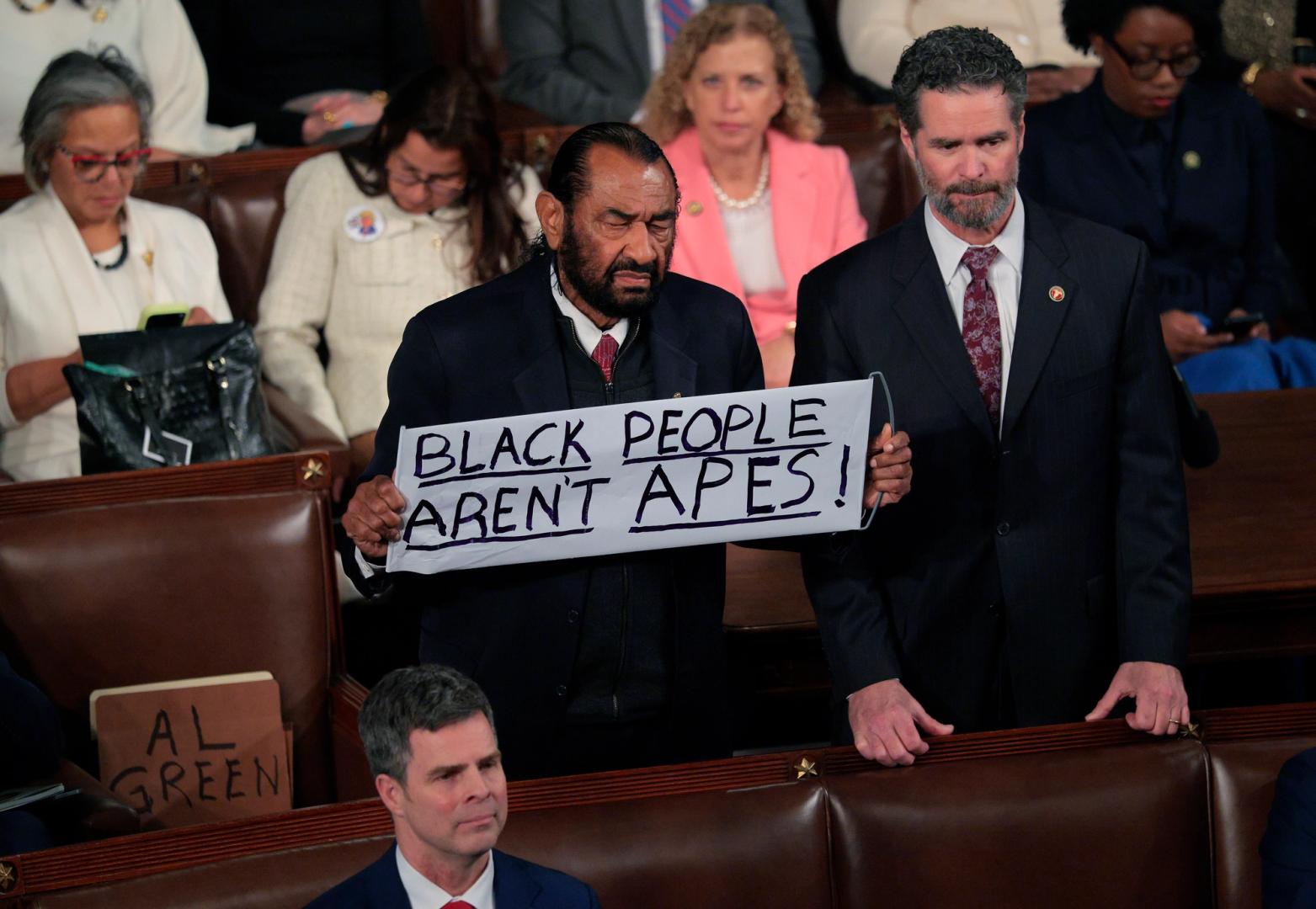
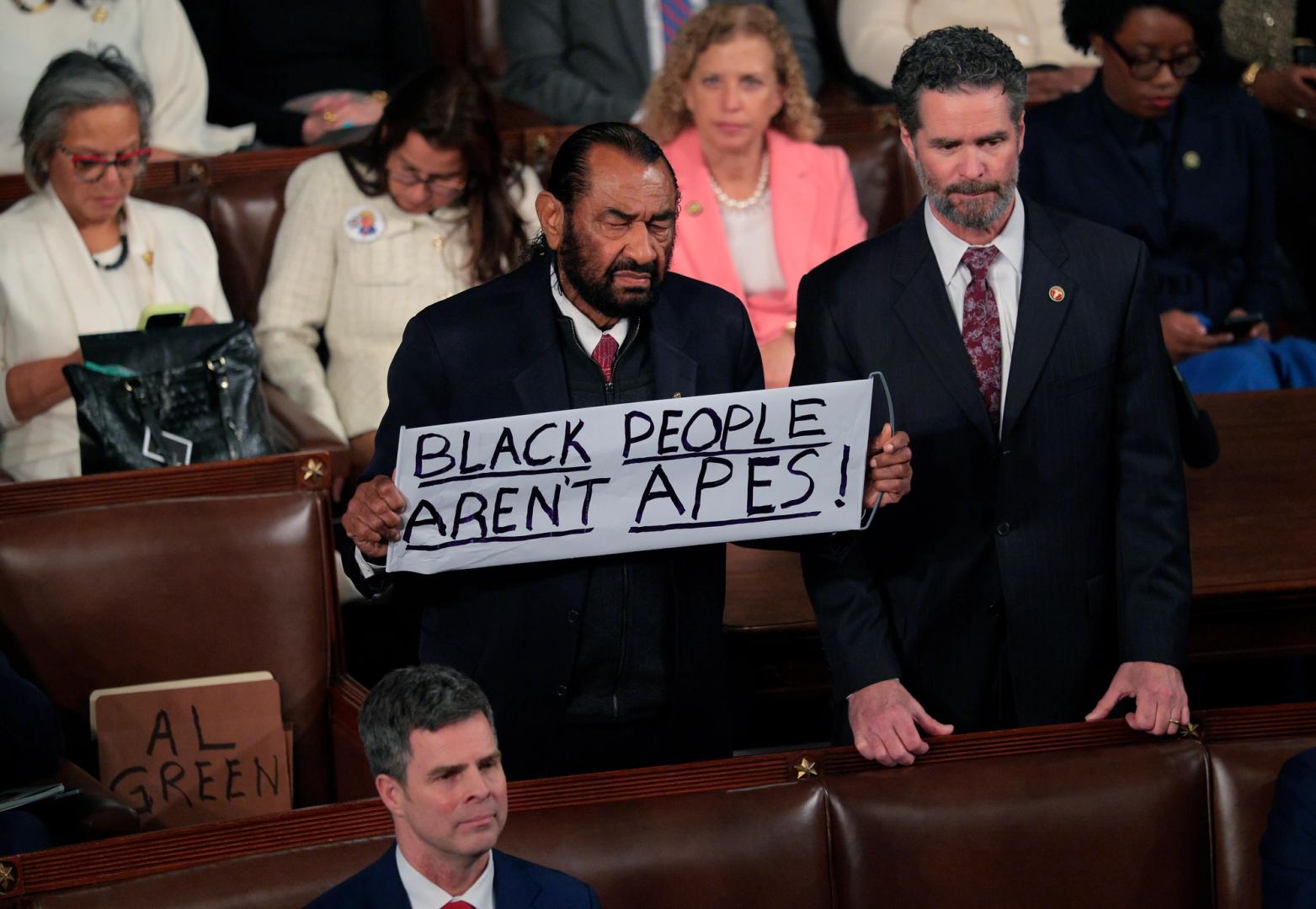
The crypto industry’s campaign-finance arm, the Fairshake political action committee, is already grinding out wins in the opening primaries of the 2026 U.S. congressional midterms, having supported several lower-profile candidates while also opposing a prominent, longtime congressman in Texas, Al Green.
A former Department of Justice lawyer backed by President Donald Trump, Jessica Steinmann, secured a dominant victory with almost 70% of the vote in the Republican primary for Texas’ 8th District, according to state voting results. Among several candidates supported by Fairshake in Tuesday’s contests, she was given the most, with more than $750,000 reported in the most recent Federal Election Commission filings.
Her campaign website described her as “a strong supporter of digital assets, blockchain technology, and financial innovation that expands economic freedom,” and her primary win in a Republican-leaning district bodes well for a potential general-election victory in November.
“Voters responded to her commitment to strengthening the economy through innovation, and ensuring that emerging technologies, like crypto, create jobs and prosperity in her community,” Fairshake said in a statement released after the primaries. With Steinmann and several other winners in these primaries, Fairshake will already count on some likely additions to its pro-crypto allies after the general election.
One of Fairshake’s biggest Tuesday tests — its attempt to knock a veteran Texas Democrat, Green, from his seat — appears to be heading toward a runoff. Green has been among the more vocal Capitol Hill opponents of the crypto sector, voting against legislation and earning an “F” grade from advocacy group Stand With Crypto. But after Fairshake opposed Green with $1.5 million in ads, the longtime lawmaker trailed his Democratic opponent, pro-blockchain Christian Menefee, in the newly redrawn congressional district both incumbents were forced to pursue. Since neither candidate took more than half the vote, they head to a later runoff.
Also in Texas, Fairshake backed Republicans Chris Gober in the 10th, a conservative lawyer who founded Lex Politica to focus on political litigation and government investigations, and Trever Nehls in the 22nd, an Army veteran and Trump loyalist who is seeking to replace his identical twin brother in the seat. Gober won with more than 50% of the vote in a crowded field, and Nehls got 76%. Both districts have have been Republican-dominated, giving Fairshake’s candidates a good chance to win the general election.
The super PAC had also supported Representative French Hill, the Arkansas Republican who is chairman of the House Financial Services Committee and the political tip of the spear in crypto legislation in the House of Representatives. Hill, supported with more than $400,000 in Fairshake ads, easily won his primary with 77%.
In North Carolina, the PAC backed a freshman incumbent, Republican Representative Tim Moore, who won 83% of the vote. His crypto voting record won him an “A” rating from Stand With Crypto, and Fairshake put more than $80,000 into his race.
The crypto industry’s top PAC (and its two PAC affiliates) had $193 million on-hand at the start of the campaign season. Fairshake is by far the sector’s dominant conduit for campaign contributions, so large that it’s among the biggest PACs in the country, rivaling even the political parties’ own campaign arms.
When it weighs into an election, it doesn’t do so to influence voters’ views on crypto. The ads Fairshake buys — without direct coordination with campaigns — make purely political arguments on behalf of or opposing a candidate, with no mention of digital assets. In the 2024 elections, it supported 53 candidates that are currently serving in Congress.
Read More: Crypto PAC Fairshake seeks to force resistant Texas Democrat Al Green from U.S. House
Key takeaways
-
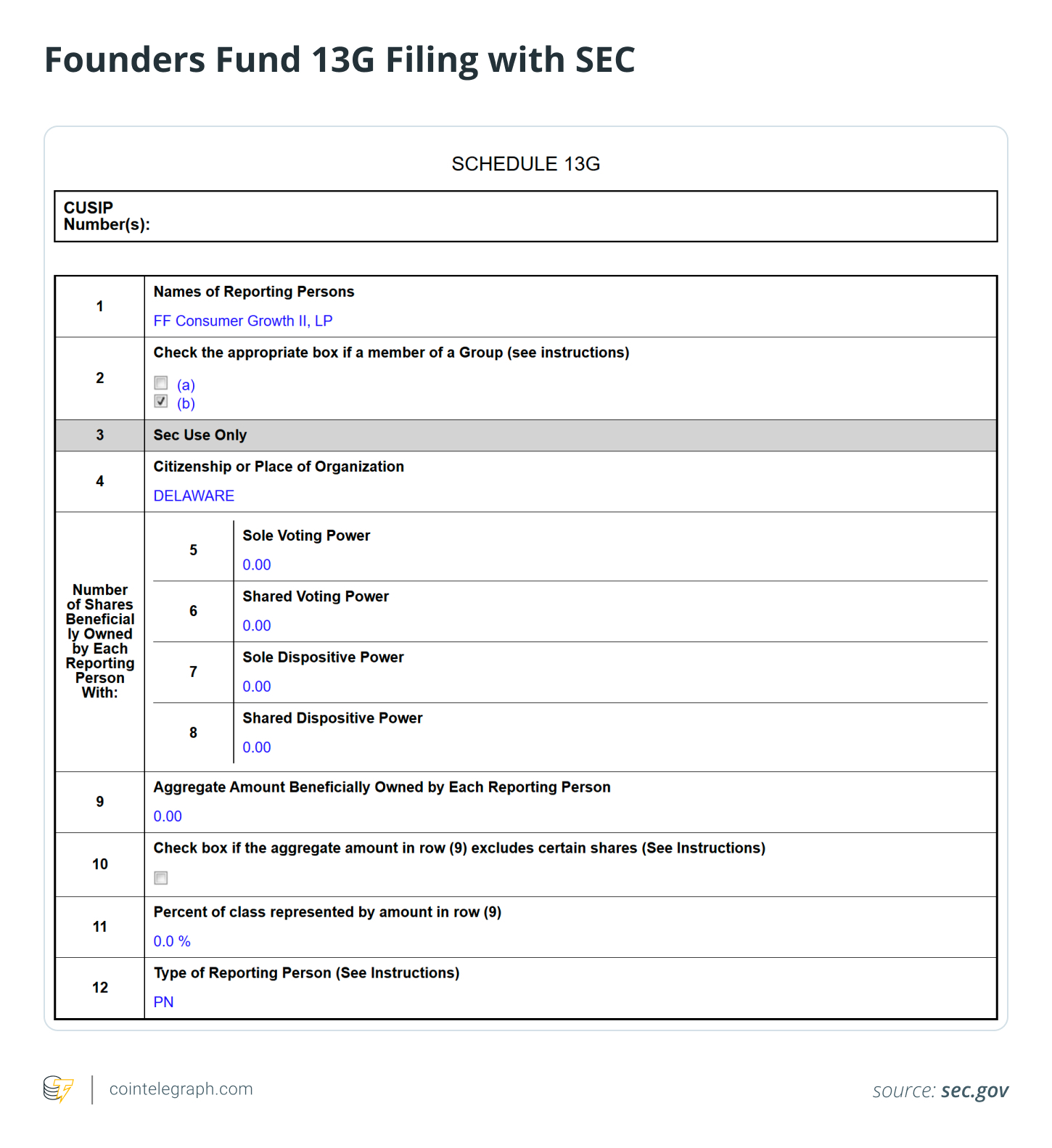
Founders Fund fully exited ETHZilla after previously holding a 7.5% stake. SEC filings show that Peter Thiel-linked entities had reduced their ownership to zero by the end of 2025, signaling a decisive retreat from an Ether-focused public treasury strategy.
-
ETHZilla’s pivot from biotech to an Ether treasury strategy was aggressive. After raising $425 million and later seeking $350 million through convertible bonds, the company accumulated over 100,000 ETH, positioning itself as a leveraged equity proxy for Ether exposure.
-
Debt-driven models can force crypto sales at unfavorable times. ETHZilla’s sale of 24,291 ETH in December 2025 to meet debt obligations highlighted a structural weakness. Leverage combined with crypto volatility can trigger asset liquidation during downturns.
-
Ether treasury strategies carry more operational complexity than Bitcoin treasuries. Ether-focused models often pursue staking and DeFi yields, introducing smart contract, liquidity and counterparty risks that Bitcoin “hold-only” treasury models typically avoid.
Peter Thiel, the renowned contrarian billionaire investor and co-founder of PayPal and Palantir, has a long history of bold, unconventional bets. A US Securities and Exchange Commission (SEC) filing revealed that Thiel-linked Founders Fund entities exited ETHZilla after disclosing a 7.5% stake in 2025. ETHZilla is an Ether-focused digital asset treasury company.
The sale underscores broader market pressures on Ether treasury models, as ETHZilla’s stock has fallen sharply from its summer 2025 highs amid falling Ether (ETH) prices. This comes at a time when investor enthusiasm for leveraged or equity-wrapped crypto exposure appears to be waning.
This article examines why Thiel’s Founders Fund exited ETHZilla and analyzes the risks of leveraged Ether treasury models, debt-driven balance sheets and forced asset sales. It explores what the move signals about volatility, capital discipline and the sustainability of public crypto treasury strategies.
ETHZilla: From biotech to Ether treasury
In July 2025, biotech company 180 Life Sciences made a bold shift, raising $425 million to launch an Ether-focused treasury strategy and rebranding as ETHZilla. It positioned itself as a publicly traded vehicle for gaining exposure to Ether, with plans to build up its Ether holdings and deploy them in decentralized finance (DeFi) protocols and tokenized asset initiatives.
Just two months later, ETHZilla sought to secure an additional $350 million through convertible bonds to expand its reserves and support further projects. Reports indicated that the company held over 100,000 ETH on its balance sheet at one stage.
The idea behind the endeavor was straightforward: Secure funding, buy and hold Ether, generate potential returns through staking or DeFi activities and offer public shareholders leveraged exposure to Ether’s growth.
However, the strategy faced significant challenges as market conditions deteriorated.
Did you know? In September 2022, Ethereum transitioned from proof-of-work (PoW) to proof-of-stake (PoS) in an event known as “the Merge,” reducing its energy consumption by more than 99%. It is one of the most ambitious upgrades ever attempted on a live blockchain.
ETHZilla’s pivotal sale and Peter Thiel’s exit
As crypto markets retreated from their earlier highs, ETHZilla began reducing its Ether position.
In December 2025, ETHZilla sold 24,291 ETH, generating roughly $74.5 million at an average price of about $3,068 per coin. The stated purpose of the sale was to meet debt repayments. Following the transaction, its Ether holdings reportedly fell to around 69,800 ETH.
The sale of ETH marked a pivotal turning point for the company.
For a company built around an Ether treasury, being forced to offload ETH to cover debt highlighted a fundamental vulnerability. Combining leverage with crypto’s volatility can trigger the sale of holdings at any time. A strategy originally designed for patient, long-term accumulation can quickly transform into a scramble to stabilize the balance sheet.
Not long afterward, Thiel’s Founders Fund reduced its ownership in ETHZilla to zero, fully exiting its position by the end of 2025, according to SEC filings.

What a schedule 13G exit signals and what it doesn’t
A Schedule 13G filing signals passive investment. An amendment reporting zero shares simply means the filer no longer holds enough to meet the disclosure threshold.
These filings, however, do not reveal the reasons behind the change. They offer no insight into whether the sale stemmed from routine portfolio adjustments, risk reduction, valuation concerns or broader doubts about the Ether treasury approach itself.
Timing also matters in this case. Founders Fund’s complete exit came shortly after ETHZilla’s partial Ether liquidation amid mounting pressure on similar Ether-centric balance sheet strategies.
Did you know? Before becoming synonymous with contrarian macro bets, Peter Thiel invested $500,000 in Facebook in 2004 for a 10.2% stake, a deal that later became one of Silicon Valley’s largest venture returns.
Bitcoin vs. Ether treasuries: Store of value vs. layers of hidden complexity
While comparisons to Bitcoin (BTC) treasury strategies are inevitable, Ether introduces layers of complexity that Bitcoin treasuries typically avoid.
Heightened volatility amplified by leverage
Ether tends to experience greater price volatility driven by underlying sentiment compared to Bitcoin. This behavior stems from Ether’s role as both a digital asset and the fuel for a programmable blockchain platform. When treasury companies rely on convertible debt or other forms of leverage, drawdowns may trigger forced selling.
Yield pursuit introduces new risks
Bitcoin treasury companies typically follow a straightforward hold-and-appreciate model. Ether-focused companies, on the other hand, often emphasize staking rewards or DeFi yields to enhance returns. However, this approach comes with trade-offs:
What promises higher returns can also increase operational complexity and systemic vulnerabilities.
Greater narrative and perception challenges
Bitcoin treasury players benefit from a “digital gold” narrative rooted in scarcity and store of value appeal. Ether, however, represents a dynamic, evolving ecosystem shaped by network upgrades, gas fee dynamics, shifting regulatory views and competition from other blockchains. This added complexity heightens uncertainty and makes it harder for markets to price the strategy.

Ether accumulators following diverse paths
Not all companies that opted for Ether treasuries reacted similarly to the downturn in crypto markets.
Some of these companies continued to accumulate ETH, trusting that Ether’s long-term network expansion and utility would outweigh near-term price turbulence. Others took the opposite path, liquidating all or a significant portion of their holdings and realizing substantial losses.
This divergence in approaches suggests that the Ether treasury model is not inherently flawed or doomed across the board. Its sustainability depends on factors such as leverage levels, risk controls and resilience to market cycles.
Did you know? Unlike Bitcoin’s simple transaction fee model, Ether uses “gas” to measure computational work. During peak non-fungible token (NFT) booms, users at times paid hundreds of dollars in gas fees just to mint digital collectibles.
Capital structure risks in volatile asset classes
Convertible debt structures can amplify potential gains in bull markets by providing relatively low-cost leverage to acquire additional assets such as Bitcoin, effectively magnifying returns as prices rise.
When companies trade at premiums to their net asset value (NAV), they can issue equity or convertible instruments to raise capital, which boosts holdings and may further enhance upside.
However, in downturns, when equity discounts widen and crypto prices fall, the feedback loop can reverse:
In this kind of bearish environment, even long-term investors with large Ether portfolios may decide to trim or exit positions to limit downside risk.
Opportunity cost and cleaner exposure
Today’s institutional investors have far more direct avenues for gaining Ether exposure than in earlier market cycles. Options include secure direct custody solutions, regulated spot exchange-traded funds (ETFs), staking-enabled products and sophisticated derivatives. These structures can reduce exposure to company-specific operational, execution or governance risks.
By contrast, investing through an equity wrapper around a leveraged crypto treasury strategy adds an extra layer of complexity and uncertainty. This includes exposure to management’s discretionary decisions, funding and refinancing strategies, governance structures and capital allocation priorities, which may diverge from pure asset performance.
Founders Fund is a venture firm historically focused on backing high-growth operating companies with scalable, technology-driven business models. A vehicle centered on a leveraged crypto balance sheet may not align seamlessly with its long-term portfolio strategy or risk preferences. Recent developments, including its complete exit from Ether treasury plays such as ETHZilla amid market pressures, underscore this selective approach to crypto exposure.
Cointelegraph maintains full editorial independence. The selection, commissioning and publication of Features and Magazine content are not influenced by advertisers, partners or commercial relationships.

Key highlights:
-
Byreal CLI enables AI agent trading, farming on Solana DEX
-
Copy Farmer auto-replicates top LP strategies with risk preview
-
Agent skills include pool analysis, swaps, CLMM management
Byreal unveiled its first AI agent skillset Tuesday, launching an open-source CLI designed specifically for autonomous economic actors on its Solana-based decentralised exchange.
The move marks one of the earliest attempts to build DeFi infrastructure natively for machine users rather than just human traders.
The CLI, published as an Openclaw skill, allows AI agents to execute swaps, analyse liquidity pools, manage concentrated liquidity positions and replicate top-performing farming strategies — all without human intervention.
Byreal founder Emily Bao framed the release as a structural pivot: “Byreal is now building for agents. We believe agents will become autonomous economic actors.”
Agent-native farming debuts with Copy Farmer
At the core of the launch is Copy Farmer, Byreal’s liquidity replication system that lets agents scan top liquidity providers, evaluate APRs, volatility and range positioning, then automatically mirror those strategies. Users — or agents — can preview positions before capital deployment, addressing a key risk in automated yield farming.
The CLI architecture rests on three principles:
-
Deterministic execution to eliminate AI hallucination risks
-
Constraint-based skills that convert intent into bounded actions
-
Machine-readable documentation parsed directly by models
Additional skills cover pool analysis (APR modelling, risk scoring), swap execution (AMM + RFQ routing), CLMM position management (tick alignment, fee claiming) and token discovery.
This stack extends beyond trading automation into capital formation — a shift Bao called essential for agent economics.
Machine-first protocols challenge DeFi UX norms
Traditional DEXes prioritise human‑facing interfaces: slick UIs, mobile apps and educational content. Byreal flips this model, treating agents as first‑class users requiring identity, wallet control and permissionless execution.
“Crypto uniquely provides all three,” Bao said. “Trading is only half the system — capital formation and yield deployment matter just as much.”
The release coincides with growing AI agent hype in crypto, but Byreal differentiates by embedding structured farming directly into the conversational layer.
Most agent projects focus on high-frequency trading; Byreal targets LP optimisation — historically 60–70% of DeFi TVL but underserved by automation.
Solana’s speed meets agent scale
Solana’s sub‑second finality and parallel execution make it ideal for agent workloads, where latency compounds across thousands of micro‑decisions.
Byreal’s deterministic CLI ensures capital deployment logic stays separate from natural language processing, minimising protocol‑level risks.
The agent‑native thesis rests on volume projections: protocols optimised for machines today capture tomorrow’s routing layer as agent adoption scales.
Early DEXes like Uniswap prioritised human UX; Byreal bets the next era belongs to machine economics.
Industry observers see parallels to high‑frequency trading’s dominance of TradFi liquidity. If agents claim even 10% of DeFi volume, agent‑native infrastructure becomes table stakes.
Byreal’s open‑source CLI lowers barriers for developers building the agent economy.
KuCoin’s recent PoR leadership underscores transparency demands even as innovation accelerates. Byreal’s launch arrives amid Solana’s derivatives surge, where agent‑driven yield could unlock new capital inflows.
For protocols, the challenge shifts from user acquisition to machine onboarding. Byreal positions itself at this inflection: not just a DEX, but agent infrastructure.
Whether machines eclipse humans remains speculative, but the CLI proves crypto can speak their language.


As crypto assets continue to expand from on-chain trading into everyday spending, payment products are becoming a core pillar of exchange ecosystems. Recently, one of the global leading digital asset trading platforms Gate officially launched the all-new Gate Card, introducing a high-cashback structure, a dual-track tier upgrade system, and elevated spending limits to further differentiate its offering in the crypto payments market.
One of the standout features of the new Gate Card is its cashback rate of up to 5%. Users earn rewards in multiple assets, including BTC, ETH, USDT, or GT, after each purchase. With a card fee of 1%, higher-tier users can fully offset costs and generate additional net returns, with monthly rewards capped at up to 250 USDT.
Unlike traditional payment cards that focus solely on convenience, this design transforms spending into a sustainable reward mechanism, making “spend-to-earn” a tangible reality.
The card’s tier system has also been upgraded with a dual-track progression model. Users can level up either by meeting spending thresholds or by qualifying through their VIP status, without the need to satisfy multiple overlapping conditions. Tier assessments are automated and take effect in the following month, offering a transparent and predictable growth path.
This structure effectively links trading activity with consumption behavior, enhancing retention among higher-tier users while providing a clear upgrade route for entry- and mid-level users.
In terms of benefits, Gate Card adopts a T0–T4 tiered framework, with each level corresponding to different cashback rates and monthly caps. Top-tier users can enjoy up to 5% cashback with a monthly limit of 250 USDT. The progressively increasing benefits strengthen long-term engagement and encourage users to continuously expand activity and asset holdings.
High spending limits further underscore the product’s focus on premium use cases. Gate Card supports single-transaction and daily limits of up to $500,000 and a monthly cap of $1,500,000, with no annual limits for VIP10-VIP14, making it suitable for cross-border payments, large purchases, and capital management. These elevated limits significantly enhance the card’s appeal to high-net-worth users and improve the real-world utility of crypto assets.
In addition, the global coverage has further expanded its application scenarios. Gate Card can be used in over 100 countries and regions, covering approximately 130 million merchants worldwide that accept Visa. It supports both online and offline payments as well as ATM withdrawals. Users can choose between virtual and physical cards, with additional support for Google Pay, enabling seamless mobile and multi-scenario payments.
Overall, the new Gate Card builds a closed-loop growth model centered on trading, spending, and tier progression. Higher tiers unlock greater rewards, which in turn stimulate increased spending and trading activity, reinforcing user engagement and asset retention.
As the crypto industry moves toward broader adoption and real-world integration, payment tools are emerging as a vital bridge between on-chain assets and the global economy. Through its combination of high cashback, generous limits, and structured growth incentives, Gate Card offers a compelling blueprint for crypto payments with stronger yield potential and ecosystem synergy.
Looking ahead, Gate plans to further integrate crypto payments into its broader platform ecosystem, expand global use cases, and accelerate the large-scale adoption of digital assets in everyday life, helping shape a more sustainable growth model for the industry.
About Gate
Gate, founded in 2013 by Dr. Han, is one of the world’s earliest cryptocurrency exchanges. The platform serves over 50 million users with 4,400+ digital assets and pioneered the industry’s first 100% proof-of-reserves. Beyond core trading services, Gate’s ecosystem includes Gate Wallet, Gate Ventures, and other innovative solutions.
For more information, please visit: Website | X | Telegram | LinkedIn| Instagram | YouTube
Disclaimer: This content does not constitute an offer, solicitation, or recommendation. You should always seek independent professional advice before making investment decisions. Note that Gate may restrict or prohibit certain services in specific jurisdictions. For more information, please read the User Agreement via https://www.gate.com/user-agreement.
Crypto World
Coinbase leads crypto stocks higher after Trump signals support for digital asset market structure bill

Shares of Coinbase and other cryptocurrency companies surged Wednesday after President Donald Trump threw his weight behind the industry’s battle against U.S. banks over yield-bearing stablecoins — adding to momentum the firms were already feeling from bitcoin‘s bounce.
Coinbase was last up more than 12%. Other digital asset firms such as Strategy and Circle jumped 9% and nearly 6%, respectively. Meanwhile, shares of JPMorgan Chase and Bank of America fell less than 1%.
“The Genius Act is being threatened and undermined by the Banks, and that is unacceptable,” Trump said late Tuesday in his social media post. “They need to make a good deal with the Crypto Industry because that’s what’s in best interest of the American People.”
Greenlighting firms to issue dollar-pegged digital tokens that offer interest-like returns has been a sticking point of the Clarity Act, a market structure bill for the crypto industry, in the U.S. Congress.
Crypto companies also got a boost as cryptocurrencies staged a comeback. Bitcoin and ether advanced 5% and 6% on Wednesday, respectively.
5 Exciting Harbor Freight Finds Available In March 2026

The Richest Guest in Financial Audit History

Ian Huntley health update issued by police after prison attack left him in coma


-

 Politics6 days ago
ITV enters Gaza with IDF amid ongoing genocide
-

 Politics1 day ago
Alan Cumming Brands Baftas Ceremony A ‘Triggering S**tshow’
-

 Fashion5 days ago
Weekend Open Thread: Iris Top
-

 NewsBeat7 days ago
Cuba says its forces have killed four on US-registered speedboat | World News
-

 Tech4 days ago
Unihertz’s Titan 2 Elite Arrives Just as Physical Keyboards Refuse to Fade Away
-
Sports5 days ago
The Vikings Need a Duck
-
 NewsBeat4 days ago
Dubai flights cancelled as Brit told airspace closed ’10 minutes after boarding’
-

 NewsBeat3 days ago
‘Significant’ damage to boarded-up Horden house after fire
-
 NewsBeat7 days ago
Manchester Central Mosque issues statement as it imposes new measures ‘with immediate effect’ after armed men enter
-
 NewsBeat4 days ago
The empty pub on busy Cambridge road that has been boarded up for years
-

 NewsBeat4 days ago
Abusive parents will now be treated like sex offenders and placed on a ‘child cruelty register’ | News UK
-

 Entertainment2 days ago
Baby Gear Guide: Strollers, Car Seats
-

 Business7 days ago
Discord Pushes Implementation of Global Age Checks to Second Half of 2026
-

 Business6 days ago
Only 4% of women globally reside in countries that offer almost complete legal equality
-
 Tech5 days ago
NASA Reveals Identity of Astronaut Who Suffered Medical Incident Aboard ISS
-
 NewsBeat3 days ago
Emirates confirms when flights will resume amid Dubai airport chaos
-
Politics4 days ago
FIFA hypocrisy after Israel murder over 400 Palestinian footballers
-

 Crypto World6 days ago
From Crypto Treasury to RWA: ETHZilla Retreats and Relaunches as Forum Markets on Nasdaq
-

 NewsBeat2 days ago
Is it acceptable to comment on the appearance of strangers in public? Readers discuss
-

 Tech3 days ago
Viral ad shows aged Musk, Altman, and Bezos using jobless humans to power AI