
Crypto World
Tokenized stocks must carry the same shareholder rights, OKX US CEO says


OKX US CEO Roshan Robert has said tokenized stocks must preserve the rights of traditional shares as the SEC begins a five-year test of blockchain-based U.S. stock trading.
Summary
- Robert said tokenization should change how shares trade and settle, while preserving their shareholder rights.
- The SEC requires qualifying stock tokens to carry rights matching the equivalent traditional shares.
- Issuers can object before an unaffiliated third party’s tokenized shares begin trading under the exemption.
- Robert said live trading could help the SEC assess pricing, liquidity and possible changes to market rules.
Roshan Robert, CEO of OKX US, told crypto.news that holders of tokenized National Market System stocks should receive the same rights and privileges as investors who own traditional shares of the same class. In his view, changing the technology used to trade and settle a share should not change the investor’s claim on the company.
The distinction matters under the Securities and Exchange Commission’s five-year trading exemption, issued on Sep. 17. Qualifying venues can use permissioned automated market makers and liquidity pools to trade tokenized versions of certain U.S. listed stocks, subject to limits and other conditions. The order expires on Sep. 17, 2031, unless the SEC changes it.
Tokenized stocks must preserve ownership and voting rights
Under the SEC order, a venue must verify that each tokenized stock provides the rights and privileges of an equivalent class of conventional stock. The agency identifies the investor’s interest in the company, dividends, voting rights, and a claim on remaining assets if the company is liquidated. A product that only tracks a share’s price through synthetic exposure does not qualify as tokenized NMS stock under the exemption.
Robert said parity between the two forms of the same share is necessary to protect investors and avoid splitting traditional and tokenized markets into products with different rights. For a U.S. investor, the SEC’s condition makes the rights attached to the token central to whether it can trade through this particular route.
The legal structure can differ across stock-linked tokens already on the market. A recent ownership review covered by the publication found that a token could give its holder a direct ownership interest, a claim through a custodian or a contractual claim without ordinary shareholder rights. The token’s movement on a blockchain does not, by itself, settle which of those interests its holder owns.
Even where a third party creates the token, the SEC order requires a qualifying venue to check how shareholder rights reach the holder. Its conditions address access to voting materials and other issuer communications, along with the underlying economic rights. The exemption covers secondary trading; it does not permit a venue to conduct a company’s initial share offering under the order.
Issuers get 30 days to object to third-party tokens
When an unaffiliated third party tokenizes a company’s stock, the venue must give the issuer written notice before trading begins. The SEC requires a wait of at least 30 calendar days after the issuer receives it. If the company objects within that period, the venue cannot offer the tokenized stock under this exemption. The process applies specifically to shares tokenized by an unaffiliated party, rather than every tokenized share.
Robert described written notice as a safeguard for secondary trading on public blockchains. He said issuer involvement can help keep tokenized shares aligned with the original stock’s shareholder rights, disclosures and corporate actions. A defined way for companies to respond would also give investors more confidence in the market, according to Robert.
Issuer objections have already become a live issue outside the SEC’s new route. As earlier coverage of the AMC dispute detailed in September, AMC Entertainment challenged a Robinhood product linked to its shares. The SEC’s objection process concerns qualifying tokenized NMS stocks; its order excludes products that offer only synthetic exposure to a company’s share price.
Liquidity pool prices pose a test for U.S. stock rules
For Robert, equal ownership rights are only part of the work needed to operate tokenized stock markets at scale. He said venues must also maintain fair access, protection against front-running and manipulation, dependable market data, and records that allow trading activity to be reviewed. He called for market surveillance and leverage controls while the systems develop.
Pricing presents a specific problem. An automated market maker can set a token’s price from the assets held in its liquidity pool rather than directly from bids and offers across conventional stock exchanges. The SEC said that design may make it difficult for a venue to meet Regulation NMS requirements intended to prevent trades at prices inferior to protected quotes elsewhere. The agency also identified a risk that the tokenized share’s price could diverge from the traditional share’s price.
A September report on trading-hour gaps examined the problem when the main U.S. stock market is closed. RedStone COO Marcin Kaźmierczak said traders may have less ability to correct a gap between a pool’s token price and the underlying share when they cannot trade the share in its primary market.
The SEC has limited the number of eligible stock symbols and the trading volume permitted under its exemption. Venues must use public, auditable smart contracts on public blockchains, even though access to their trading pools is permissioned. They must also stop trading a tokenized stock when the primary exchange halts its underlying share.
The five-year exemption gives the SEC trading data
Robert said some questions about tokenized markets can only be tested while venues operate under controlled conditions. He expects live activity to show the SEC how investors use the products, how liquidity develops and whether pool prices stay aligned with the shares traded on established exchanges.
The order also grants conditional relief to certain firms supplying tokenized shares to the approved liquidity pools, while requiring operational records and disclosures. For venues, the exemption is temporary relief from the definition of an exchange under the Securities Exchange Act; it is not a permanent set of tokenized stock rules.
Robert said evidence from the five-year period could help the SEC decide whether Regulation NMS needs changes and whether any part of the exemption should become permanent. The commission has requested public comments on the order, including how tokenized trading might affect pricing and liquidity in the underlying stock market.

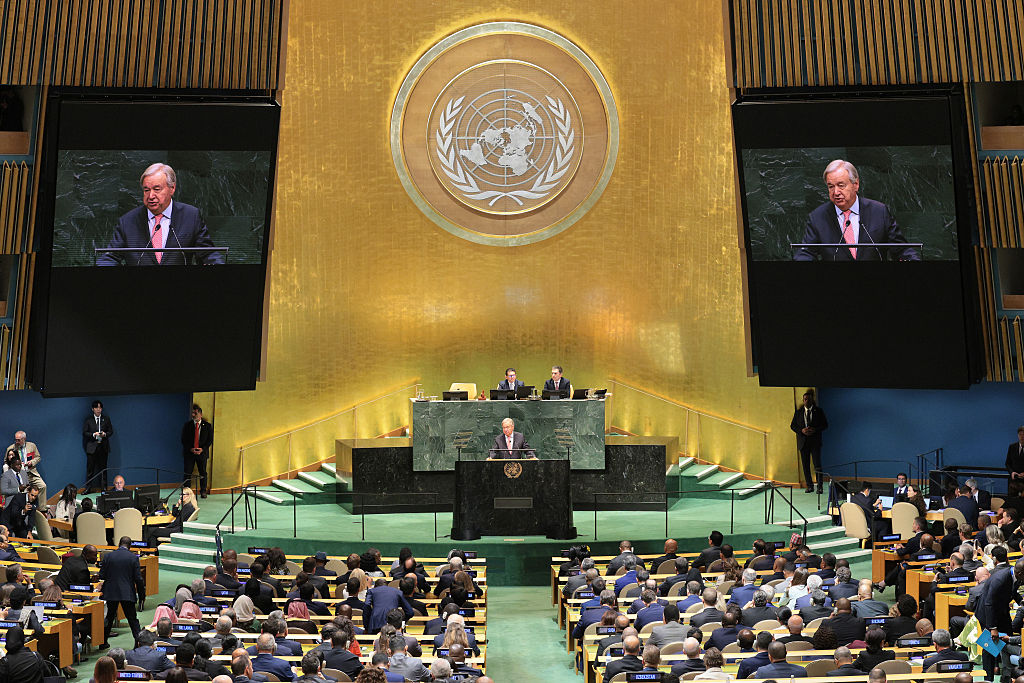
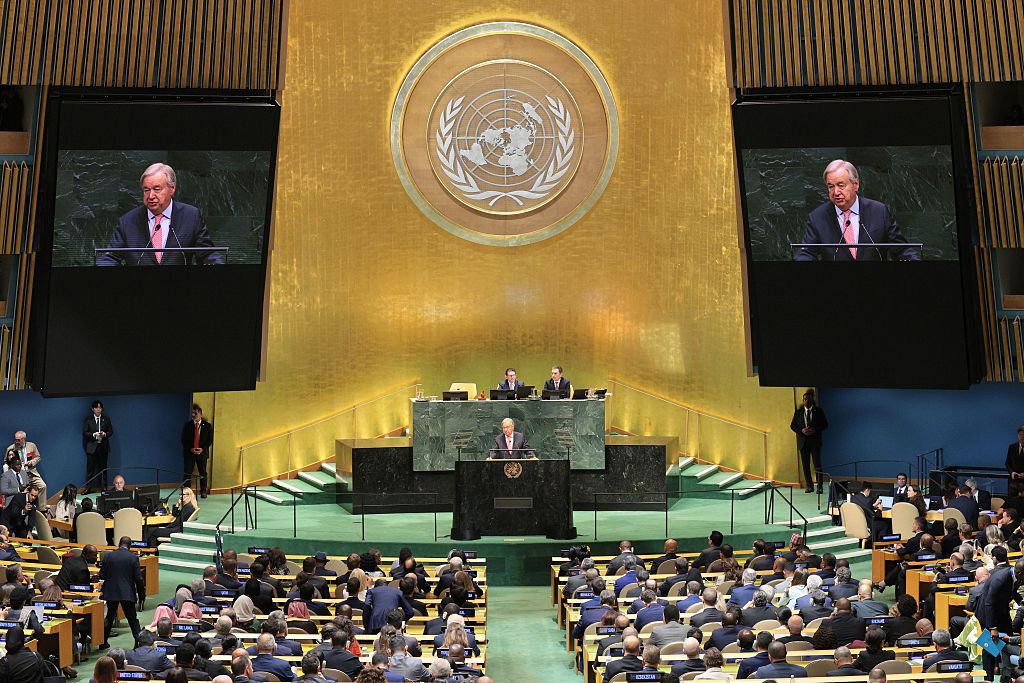
With António Guterres’s nearly decade-long tenure as the Secretary-General of the United Nations drawing to a close amid rising conflict around the globe, the race to succeed him as the leader of the world’s most powerful diplomatic body is already underway.
Guterres this week delivered his final address to the U.N. General Assembly, in which he called for a greater focus on climate change, a two-state solution for Israel and Palestine, “de-escalation and dialogue” in the Middle East, and regulations for artificial intelligence.
At the end of his speech, Guterres bid goodbye to a crowd filled with many diplomats and world leaders who he has worked with over his two five-year terms.
“So, on January 1st, when I am no longer Secretary-General, be sure of this. Wherever I will be, whatever I will be doing, I will keep championing the conviction that peace is possible,” he said. “I will continue to stand up for the values of the United Nations Charter and I will never, ever give up. Thank you.”
Guterres’s successor is set to step in as Secretary-General at a consequential moment for global diplomacy. Research indicates that last year saw the highest number of active global conflicts since World War II and the greatest number of fatalities since the Rwandan genocide. Tensions in other parts of the world are threatening to boil over. Climate change is exacting a growing toll. AI’s development is prompting increasing alarm. And the U.N. itself is confronting a growing funding crisis.
Read More: Make the U.N. Great Again: The Uphill Struggle Facing the Next Secretary General
Seven candidates are so far in the running to shepherd the U.N. through those challenges. Here’s what to know about the race.
How will the next Secretary-General be chosen?
The process to choose the next Secretary-General began in November, when a joint letter from the presidents of the U.N. General Assembly and Security Council invited the nominations of candidates from member states.
The initiation letter noted “with regret that no woman has ever held the position” and encouraged member states to “strongly consider nominating women as candidates.”
Member states nominate candidates by submitting an application to the U.N. including a personal statement with that candidate’s vision for what they’d do in the role, a resume, and campaign finance disclosures.
The General Assembly then holds “interactive dialogues” in which candidates express their hopes for the position and the U.N. in an opening statement, which is followed by questioning from the assembly. These televised hearings continue as candidates are submitted to the U.N.
Who becomes Secretary-General ultimately comes down to a decision from the U.N.’s 15-person Security Council, which recommends one individual to the General Assembly. The General Assembly then appoints that person to the position.
As part of its selection process, the Security Council holds “straw polls,” in which members of the council select one of three options for each candidate: “encourage,” “discourage,” or “no opinion expressed.” This anonymized process is used to gauge whether candidates would be able to secure the nine votes needed for a formal recommendation by the Security Council.
Who’s in the running?
So far nine candidates have been nominated for the position of Secretary-General. Two of those candidates have withdrawn, leaving seven individuals vying to replace Guterres.
Carolyn Rodrigues Birkett has been Guyana’s permanent representative to the U.N. since 2020 and previously served as foreign minister for her country and held senior roles at the U.N. Food and Agriculture Organization. Nominated by Guyana, her vision statement emphasizes refocusing on the U.N.’s core principles and “a more agile and effective United Nations.”
Rebeca Grynspan is the former vice president of Costa Rica, which nominated her for the position, and current secretary-general of trade and development for the U.N. She named three principles that define the mission she would undertake as Secretary-General: making the U.N. “more useful,” “more agile,” and “more accountable.”
Ivonne A-Baki, nominated by Tonga, is a long-time Ecuadorean diplomat who has twice served as the country’s ambassador to the U.S. She has also served as ambassador to countries including Qatar and France. Her platform highlights her involvement in the 1998 Ecuador-Peru peace settlement. “Where others speak of reform, I speak of renewal,” A-Baki’s vision statement reads. “An institution can be indispensable and in need of renewal at the same time, and ours is both. It is failing to live up to its own Charter, not for want of purpose but for want of focus and discipline.”
María Fernanda Espinosa is the former Foreign Minister and Defense Minister of Ecuador and served as President of the 73rd U.N. General Assembly in 2018. She was nominated by Antigua and Barbuda. Her vision consists of five pillars: “peace and security, development, digital and energy transformation, closing the delivery gap, and rebuilding credibility.” Garcés in her statement contended that “what is now in question is not the relevance of the United Nations, but its credibility.”
Rafael Mariano Grossi is an Argentine diplomat who has served as the Director General of the International Atomic Energy Agency (IAEA) since 2019. “The world does not need more declarations. It needs a United Nations capable of responding to the real demands of our time, with impartiality and a results-oriented approach grounded in facts,” Grossi, who was nominated by his country, wrote in his vision statement.
Olara Otunnu was Uganda’s permanent representative to the U.N. for five years and briefly served as the country’s foreign minister. He was also the U.N. under-secretary-general and the special representative for children and armed conflict. “Reform is no longer an optional choice. It is an imperative,” he said.
Macky Sall was the president of Senegal for twelve years and has served as the chair of the Africa Union, a continental organization spanning 55 member states. He expressed a goal to “restore trust in multilateralism” if chosen as Secretary-General and said that “peace, security and development are intrinsically linked.”
Where does the race stand?
“We’re at a moment right now where the race is entering a pretty pivotal phase,” says Daniel Forti, head of U.N. affairs at the International Crisis Group, a non-profit think tank dedicated to preventing deadly crises around the world.
With just over three months remaining in Guterre’s term, it won’t be long before a successor is chosen. The Security Council, though, “is not especially enthusiastic about any of the current contenders,” Forti tells TIME. He cites the last three straw polls, which have favored Greenspan and Birkett, but without “a real consolidation of overwhelming support.”
This lack of consensus, Forti believes, could suggest that other candidates may enter the race late in the game. Although there have been no formal announcements of new candidates, Forti has heard chatter surrounding certain individuals: Nickolay Mladenov, the former Bulgarian foreign minister and former U.N. Middle East envoy who currently serves as the Board of Peace’s High Representative for Gaza; U.N. Deputy Secretary-General Amina Mohammed; and former Mexican Foreign Minister Alicia Bárcena.
“At this late stage, new candidates don’t have the luxury of time to really socialize their candidacies, build out their visions, and elaborate very detailed policy platforms and bring them to U.N. member states, and try and win over the P5,” Forti says, referring to the five permanent members of the Security Council. The support of these members—China, France, Russia, the United Kingdom, and the U.S.
—is the most critical because they have the power to veto candidates before being recommended to the General Assembly.
Regardless of the outcome, Forti asserts that whoever is chosen to replace Guterres will inherit a fraught state of international affairs, and certainly be tested.
“You have a really fragmented global landscape,” he says. “The challenges for whoever takes over the office are going to be immense.”
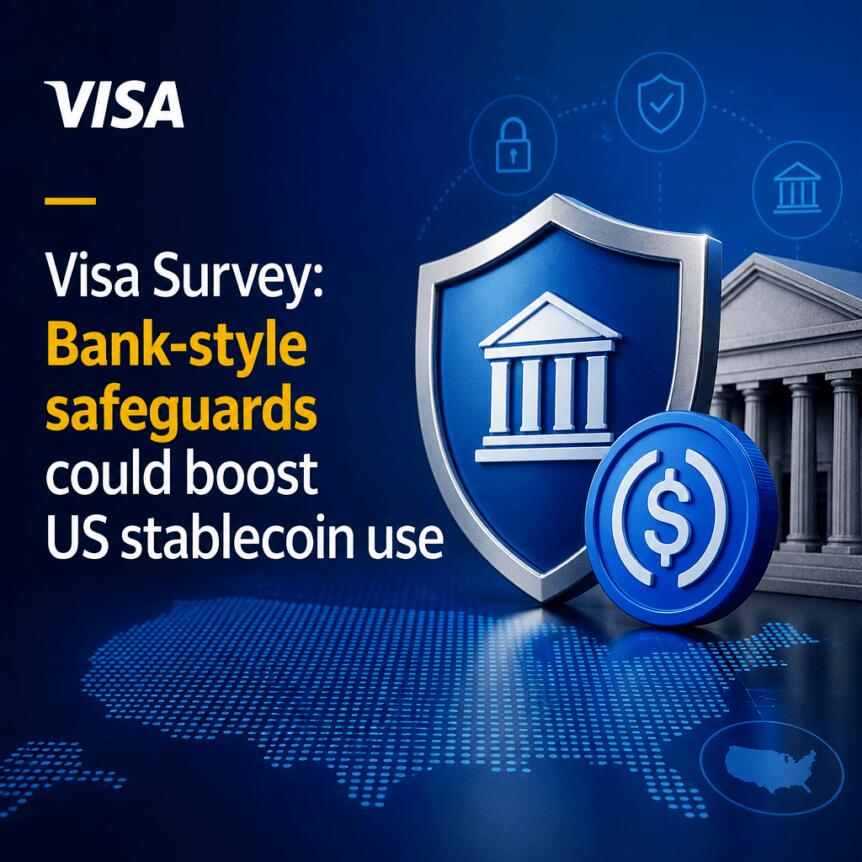
Visa has released new survey results suggesting that stablecoin adoption among Americans could rise meaningfully if issuers offered protections that resemble the banking system—particularly fraud safeguards and deposit insurance.
In a study of 2,192 US-based consumers conducted by Morning Consult between February and March, Visa found that “adoption intention” for stablecoins could increase from 36% to 56% under a hypothetical scenario that includes bank-level fraud protection and deposit insurance.
Key takeaways
- Visa/Morning Consult’s survey points to higher stablecoin willingness when consumers associate the product with bank-style fraud safeguards.
- Adoption intention rises from 36% to 56% in Visa’s hypothetical scenario with deposit insurance and fraud protection.
- Trust, in the survey results, is strongly linked to who provides the payment service—not to the underlying technology alone.
- Europe is also debating stablecoin reserve rules under MiCA, with central bank representatives arguing for changes to bank-deposit thresholds.
Why “bank-like” protections could unlock more stablecoin demand
Visa’s findings center on what drives consumer trust and willingness to use stablecoins for cross-border payments. According to the company, the survey asked participants about financial terms such as stablecoins and compared baseline responses with scenarios that introduced traditional safety features.
Visa reported that nearly two-thirds (64%) of respondents said trust depends more on the payment provider than on the technology itself. That framing matters because it suggests stablecoins may face adoption friction not only from technical complexity, but from a perceived mismatch with familiar consumer protection norms.
Consistent with that idea, Visa said willingness to use stablecoins increases from 36% to 45% when stablecoins are offered through an existing financial provider—an environment where consumers may expect established safeguards, oversight practices, and recourse.
The US policy backdrop: GENIUS and the question of insurance
Visa’s survey arrives as US regulators prepare for the implementation of the Guiding and Establishing National Innovation for US Stablecoins (GENIUS) Act. Visa pointed to the timing of GENIUS rulemaking as companies work toward eventual execution, with finalized guidance from key US financial agencies expected ahead of an effective date targeted for January 2027.
The survey’s “hypothetical scenario” also highlights a real regulatory tension: stablecoins are not currently treated the same way as bank deposits. Unlike traditional bank accounts, stablecoins do not inherently come with protections such as FDIC deposit insurance for consumer funds.
Under GENIUS, the expectation is that US stablecoins will not automatically include FDIC insurance or explicit fraud protection as of January. Instead, the framework is described as including guidelines aimed at addressing illicit activity risk, while still leaving open the broader consumer protection question that Visa’s survey suggests could influence adoption.
For market participants, this distinction is important. If consumer intent is highly sensitive to perceived safety mechanisms, then the effectiveness of stablecoin regulation may depend not just on compliance around reserve management and illicit finance controls, but on whether the final rules produce outcomes that consumers recognize as meaningful safeguards.
Visa’s full study is published through the company’s investor relations site: “Safeguards Could Boost Stablecoin Use Among Americans, Finds Visa Study”.
Europe debates reserve rules for stablecoins under MiCA
While the US focuses on how stablecoins should fit into national rules, Europe is also refining how it expects stablecoin reserves to be structured. On Tuesday, the European System of Central Banks (ESCB) called for changing rules that require stablecoins to back reserves with a specific minimum portion held as bank deposits—30% for most tokens, and 60% for “significant” stablecoins.
Instead of a deposit-heavy requirement, the ESCB proposed shifting the focus toward liquidity thresholds for reserve assets. The rationale, as described in coverage of the ESCB position, is that users could withdraw funds quickly, creating risks tied to deposit composition rather than asset liquidity overall.
The discussion sits within the broader Markets in Crypto-Assets (MiCA) framework, which began enforcing stablecoin-related rules in June 2024. MiCA’s implementation has been a central factor in how euro stablecoins structure compliance, issuance, and reserve practices across European markets.
What the US and EU debates suggest for stablecoin adoption
Taken together, Visa’s consumer research and the ESCB’s reserve-rule commentary underline a recurring theme in stablecoins: adoption depends on trust and practical risk management, not only on speed or cost.
Visa’s survey suggests that consumers view the identity of the provider as a key safety signal. In that light, bank-like arrangements—whether through stronger fraud controls, clearer protections, or stablecoin distribution via established financial institutions—may reduce perceived uncertainty for cross-border use cases.
Meanwhile, Europe’s call to adjust deposit-based reserve requirements reflects a different but related concern: stablecoin frameworks must account for fast-moving redemption behavior, and reserve composition should support liquidity when demand spikes.
For readers tracking where the sector is headed, the next critical variable is how regulators operationalize these policy goals. In the US, GENIUS rulemaking and the final shape of requirements around fraud and consumer protections will determine whether stablecoin issuance becomes more “recognizable” to consumers. In Europe, MiCA-linked reserve thresholds could influence how euro stablecoins manage liquidity and risk—and how compliant issuers design their reserve strategies.
As these developments progress, investors and builders should watch for whether regulatory frameworks translate into protections that consumers actually perceive—since Visa’s results imply that intention can shift dramatically when stablecoins look and feel more like an extension of the traditional payments and banking safety net.
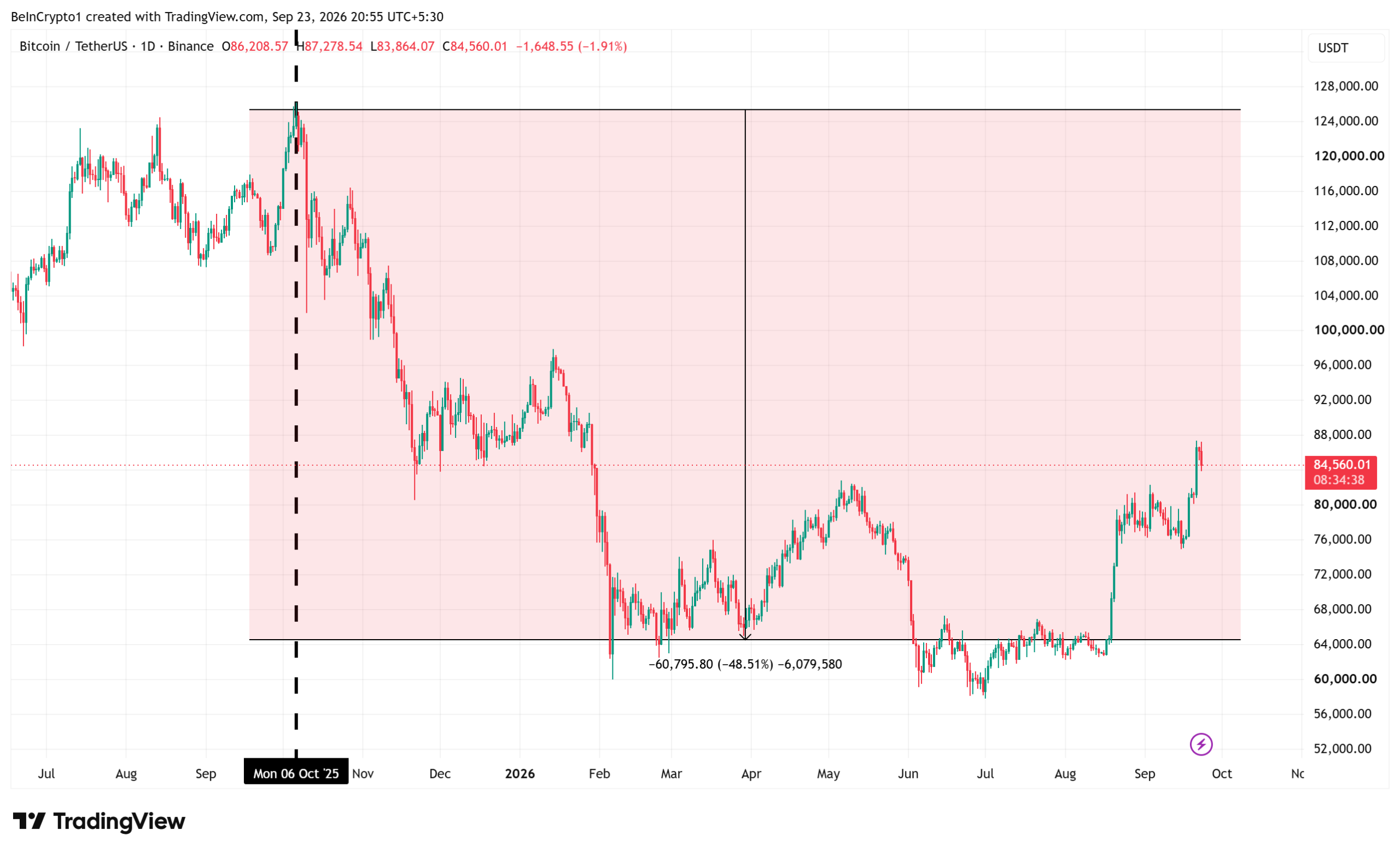
None of the 15 large investors interviewed by crypto fund manager Bitwise cut their crypto holdings as the market fell roughly 50% between October 2025 and April 2026. Several bought more.
The group included university endowments, pension funds, state-owned investment funds, family offices and public companies. Every one that owned crypto held Bitcoin (BTC).

Why the Institutions Refused to Sell Bitcoin
Bitwise, which manages more than $9 billion in client assets, ran the interviews between late March and April 2026. Its report does not name the institutions, whose assets range from hundreds of millions to tens of billions of dollars.
No respondent named falling prices as a reason to sell. Instead, they said they would exit only if the case for owning crypto broke, such as a regulatory reversal or an industry-wide scandal. Some had already held through earlier 50% drops, including in 2022.
Most treat Bitcoin as a store of value, often paired with gold. Ethereum and Solana were held more selectively, as technology bets they would drop if real-world use fails to appear within a few years.
“If the thesis is right, given the S-curve of adoption, selling now would be selling too early,” read an excerpt in the Bitwise report, citing an investment consultant.
Positions stayed small, from 0.5% to 13% of investable assets, with most between 1% and 2%. Nearly all respondents use or plan to use spot Bitcoin exchange-traded funds (ETFs), which hold the coin directly and trade like a stock.
What Public Filings Show
Bitwise picked the 15 interviewees, and it sells crypto funds to the same types of institutions.
Public filings show not every large holder stood firm. Harvard’s endowment cut its Bitcoin ETF stake by 43% in the first quarter of 2026, according to its 13F, a quarterly report of US holdings. It is not known whether Harvard was among the interviewees.
Abu Dhabi’s two state funds, by contrast, kept every IBIT share through the second-quarter slide.
Bitwise said such filings understate institutional ownership, since some investors use vehicles that avoid disclosure. It named governance, operations and reputation as the main barriers to larger positions.

With Bitcoin trading near $84,534 at press time, Bitwise expects most institutions to hold crypto within five years.
The post 15 Institutions Reveal Why They Refused to Sell Bitcoin During a 50% Crash appeared first on BeInCrypto.
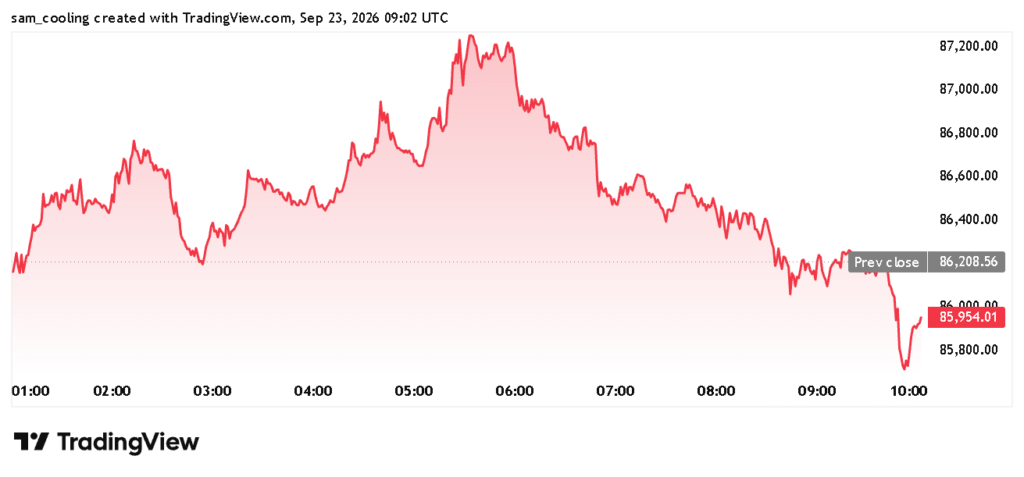
Bitcoin Price Prediction: Bitcoin (BTC) trades at $85,954, down a modest 0.3% on the day, holding the upper band of a rebound that’s had traders debating whether this is a breakout or just another consolidation trap. There’s a specific level being watched right now that could decide which one it is, more on that below.
The setup echoes an older pattern: a similar surprise breakout above $80,000 followed weeks of Fed and Senate-driven volatility, catching short-sellers off guard.
This time, the catalyst basket looks different, U.S.–Iran de-escalation chatter, renewed spot ETF demand, and a reported SEC crypto-custody rule draft, but the mechanics are familiar.
Futures open interest across BTC, ETH and SOL jumped 7.6% during the recent rally, while short-term holders moved 47,600 BTC to exchanges, a classic profit-taking signal. Recent analysis flags this exact tension between fresh demand and exit liquidity.
Macro headlines are doing heavy lifting again, and the market’s reaction function hasn’t changed much. Good news gets bought fast, then digested slowly.
Can Bitcoin Price Hit $90,000 This Week?
BTC’s 24-hour range sits between $85,720 and $87,258, a tight band that reflects indecision rather than conviction.

(Source – TradingView, BTC USD)
With an RSI of 75 near $86,550, carrying a bearish-divergence warning, meaning technically overbought territory, the kind that’s preceded pullbacks before. That data matters here.
Immediate resistance sits at $87,300–$88,000, with psychological pressure building at $90,000.
Support holds at $86,000–$86,300 first, then $85,000–$85,300, with structural footing near $82,000–$83,300 if things unravel. Bear-case scenarios put a floor further out near $80,000–$81,500.
Bull case: a close above $88,000 opens a run at $90,000–$95,000.
Base case: continued chop between $85,000 and $88,000 while ETF flows and geopolitical headlines fight for control.
Bear case: a break below $85,000 drags price toward $82,000.
Bernstein’s Chhugani still holds a $150,000 year-end target; Standard Chartered’s Kendrick trimmed his to $100,000, a wide enough gap to say forecasting confidence is low right now.
Bitcoin Hyper Targets Early Mover Upside as Bitcoin Tests Key Levels
A move from $86,000 to $90,000 is a solid 4-5% swing for existing BTC holders. But at a $1.7 trillion-plus market cap, doubling from here requires an amount of new capital that simply isn’t showing up on any credible timeline.
That mathematical ceiling is why capital increasingly rotates into earlier-stage infrastructure plays chasing asymmetric upside instead.

Bitcoin Hyper (HYPER) is positioning itself as the first Bitcoin Layer 2 with full SVM integration, aiming to execute smart contracts faster than Solana itself while settling back to Bitcoin’s base layer.
The presale has raised $33,153,929.58 at a current token price of $0.0136866, with staking rewards live at launch.
Its Decentralized Canonical Bridge targets one of Bitcoin’s oldest complaints, the lack of native programmability, without compromising base-layer security. Presale tokens carry the standard early-stage risk: no live mainnet yet, so due diligence matters. Research Bitcoin Hyper before allocating.
Gain Access to New Bitcoin Layer 2 Early Here
Key Takeaways
- BTC holds $86,388, needing a close above $88,000 to realistically challenge $90,000–$95,000 resistance zones.
- A break below $85,000 support risks a slide toward $82,000–$83,300, especially with RSI flashing overbought at 75.
- Bitcoin Hyper’s SVM-powered Layer 2 targets Bitcoin’s programmability gap, with $33.1M raised in presale funding so far.
- Watch U.S.–Iran negotiation updates and SEC custody-rule progress as near-term catalysts for BTC’s next directional move.
The post Bitcoin Recoils Below $86,000: Is Bitcoin Price Prediction Still Shooting For $90,000? appeared first on Cryptonews.

Crypto venture capitalists at Hack VC deleted a post about disagreeing with a disgruntled former employee, Hsin-Ju Chuang, who has tragically passed away. Its official X account currently has no mention of her passing.
Its deleted post read, “While our understanding of events differs materially, we do not wish to discuss the details publicly at this time out of respect for their privacy.”
That statement has been replaced by a post from another account, co-founder and Managing Partner Alexander Pack.
Hack VC told Protos, “We removed our earlier statement after seeing the tone the public conversation was taking. Some of the responses directed toward her had become increasingly hostile, and we did not want anything we had posted to contribute to further attention or negativity toward her.”
The firm initially broadcasted its disagreement after Chuang’s August 23-24 accusations of workplace pressure.
Specifically, she complained about medical emergencies, the behavior of Pack and Daniel Bulaevsky, and overtime work pressure amid serious medical symptoms.
She also accused the firm of stalling her health insurance continuation, a dispute that headed to private mediation and spilled over onto social media.
Read more: Crypto prediction markets open ‘Trump out’ bet amid death rumors
Pack, the co-founder she accused by name, posted a reply-limited condolence on Wednesday.
“We are shocked and saddened to learn the news of Hsin-Ju’s passing”, he wrote. “We have not spoken to her directly for over 10 months and we are not aware of the circumstances surrounding her death.”
Got a tip? Send us an email securely via Protos Leaks. For more informed news and investigations, follow us on X, Bluesky, and Google News, or subscribe to our YouTube channel.
President Donald Trump disclosed purchasing $50,001 to $100,000 worth of Strategy shares in July, according to a US Office of Government Ethics filing released Tuesday.
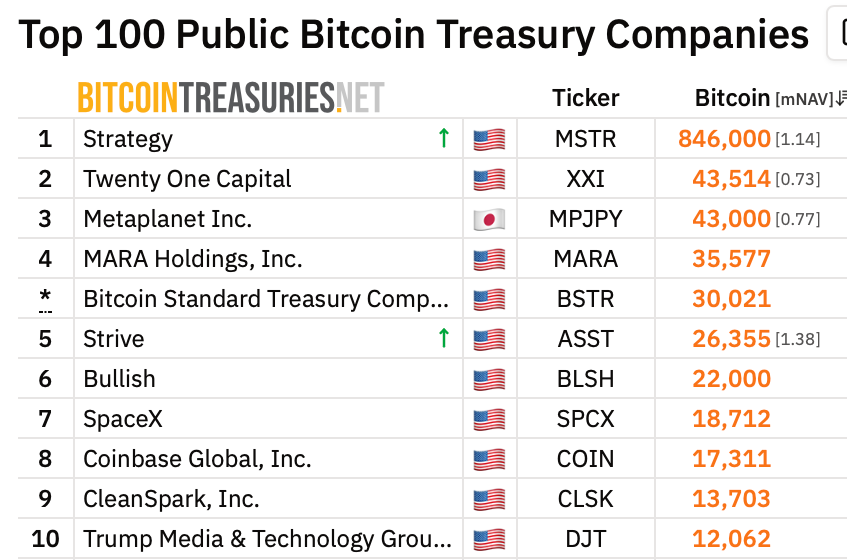
The filing shows Trump bought $50,001 to $100,000 worth of Strategy shares on July 27, following a smaller $1,001 to $15,000 purchase three days earlier. Strategy is the world’s largest publicly traded corporate Bitcoin holder, with 846,000 BTC, according to BitcoinTreasuries.net data.
Trump also disclosed transactions involving several other crypto-linked companies, including a Coinbase stock purchase and sales of Bitcoin miners MARA Holdings and CleanSpark in July. The July 27 Strategy purchase was the largest of the crypto-linked transactions identified in the filing.
Top 10 Bitcoin treasury companies. Source: BitcoinTreasuries.NET
The transaction matched Trump’s largest previously disclosed Strategy purchase, a $50,001 to $100,000 buy on Feb. 12, according to BitcoinTreasuries.NET. His accounts have also reported several smaller purchases and sales of Strategy shares this year.
The filings do not show how many Strategy shares remain in Trump’s portfolio, as transactions are reported in value ranges rather than as a running share balance.
Strategy purchase a small part of broader portfolio activity
The Strategy purchase represented a small portion of Trump’s broader portfolio activity in July. The filing shows sales of $5 million to $25 million each of Microsoft and Amazon stocks on July 20, along with several purchases and sales valued at between $1 million and $5 million.
On Tuesday, the White House told CNBC that Trump’s stock and bond portfolio is independently managed by third-party financial institutions, without input from Trump or his family.
Strategy shares have rallied nearly 30% over the past five trading days and about 37% over the past month, according to Yahoo Finance data.
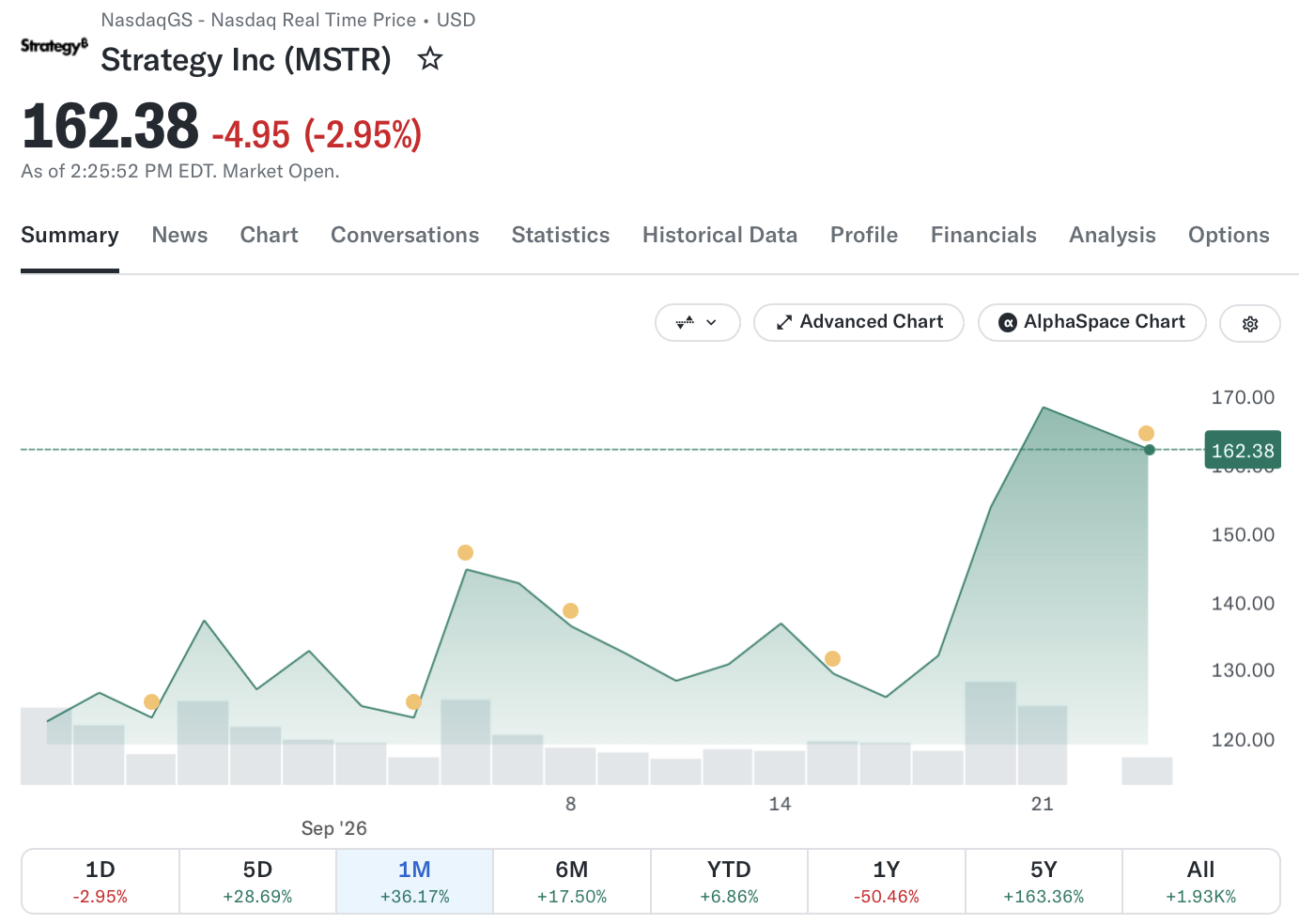
Strategy (MSTR) stock. Source: Yahoo Finance
Disclosure comes amid crypto policy push
Trump’s Strategy disclosure comes as his administration has pursued a series of policies aimed at supporting the US crypto industry, even as comprehensive market structure legislation remains stalled in Congress.
Although the Senate failed to advance the CLARITY Act on Sept. 15, federal regulators have moved ahead using their existing authority. Two days after the failed cloture vote, the Securities and Exchange Commission (SEC) cleared limited onchain trading of tokenized US stocks under a temporary exemption, while the Commodity Futures Trading Commission (CFTC) eased registration requirements for certain software providers offering access to regulated derivatives markets.
The CFTC separately sent a broader crypto market rulemaking initiative for White House review on Sept. 17. Dubbed “Regulation Crypto Asset Transactions and Regulation Crypto Asset Markets,” the initiative is still in its preliminary stages and has yet to become a formal proposal.
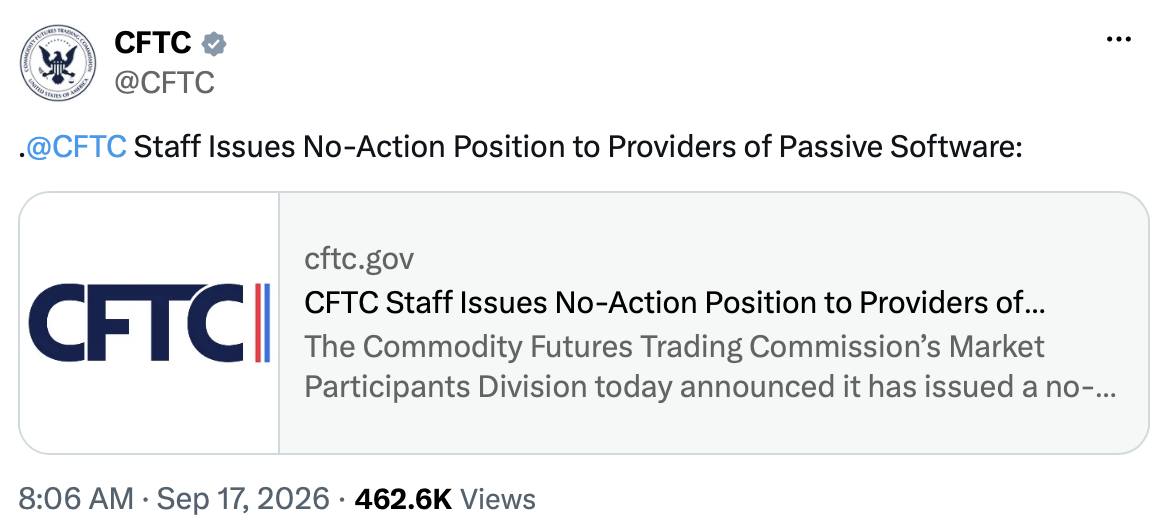
Source: CFTC
The administration’s crypto push has also extended to Bitcoin itself. Last week, the House Financial Services Committee voted 28-21 to advance legislation that would codify Trump’s Strategic Bitcoin Reserve into law and require Bitcoin placed in the reserve to be held for at least 20 years.
The US government currently holds an estimated 324,527 BTC, according to Arkham Intelligence data.
Magazine: Winners and losers of the SEC’s new tokenized stocks rules

Bitcoin has held a dense $85,000–$86,500 buyer cost range after reaching $87,392, but Bitfinex analysts have said continued ETF and corporate purchases are needed to confirm a new bull market.
Summary
- Bitcoin reached its highest price since Jan. 29 before pulling back toward a major buyer cost range.
- Bitfinex said U.S. spot Bitcoin ETFs drew $1.71 billion across Sep. 21 and 22.
- The analysts want profitable supply to stay above 75% during Bitcoin’s first correction.
- ETF investors are near break-even at $86,000, while corporate buyers’ average cost is about $80,500.
Bitfinex Alpha said in its Sep. 23 report that Bitcoin’s advance from its July 1 low of $57,803 has reached a test that separated lasting bull markets from failed recoveries in previous cycles. The analysts have identified the $85,000–$86,500 range as the largest concentration of recent buyer cost bases. Holding that area would show that buyers who entered during the rally are willing to keep their positions through a pullback.
Why Bitcoin’s $85K buyer range matters
According to Bitfinex, about 633,000 BTC last changed hands between $85,000 and $86,500, creating the largest cost range in its price distribution data. Buyers also moved roughly 2.95 million BTC into profit over four trading sessions as Bitcoin climbed. The amount of supply concentrated between $80,500 and $82,500 fell from 252,000 BTC to 170,000 BTC per $1,000 price band between Sunday and Tuesday.
For the analysts, the new concentration beneath spot price offers a more useful test than the speed of the rally itself. A drop through the range would put many recent buyers back at a loss; sustained buying above it would show that demand is continuing after the breakout.
The distinction matters because forced purchases by traders closing short positions can lift prices quickly without creating a lasting source of demand. In earlier coverage of the rally, crypto.news reported that Nansen senior research analyst Nicolai Sondergaard attributed part of Bitcoin’s move above $84,000 to a short squeeze alongside renewed ETF buying. He warned that weaker fund inflows or rising U.S. Treasury yields could leave the advance exposed to a reversal.
Bitfinex places the next price test near Bitcoin’s yearly open of $87,722. Its analysts expect a hold above the $85,000–$86,500 range to leave $90,000 in view if ETF inflows continue and futures funding stays neutral. Below the buyer range, they identify the corporate treasury cohort’s cost near $80,500 as the first support area. A sustained move below $81,300, particularly alongside ETF outflows, would challenge their reading of the breakout.
ETF and corporate purchases need to continue above cost
U.S. spot Bitcoin ETFs took in $999 million on Sep. 21 and another $714.7 million on Sep. 22, Bitfinex reported. Monday’s dollar inflow was the largest since Oct. 6, 2025, when Bitcoin reached its all-time high. Across four sessions ending Sep. 22, the funds absorbed $2.31 billion, equivalent to roughly 27,900 BTC at each day’s average price, according to the report.
The buying followed a $450.4 million ETF outflow on Sep. 15, which Bitfinex called the funds’ largest daily withdrawal since June. For U.S. investors using listed spot funds, the next flow figures will show whether purchases continue now that the aggregate ETF investor cost basis is near $86,000. Bitfinex said the ETF and corporate treasury cohorts held profitable positions at the same time this week for the first time since January.
Corporate filings provide a second measure. As reported in Strategy’s SEC filing, the company bought 950 BTC for $75.7 million during the week ending Sep. 20, lifting its holdings to 846,000 BTC. The filing also showed $174 million spent repurchasing STRC preferred shares. Strategy used existing cash for both transactions and made no sales through its stock offering programs that week.
Bitfinex also counted Strive’s purchase of 1,355 BTC between Sep. 14 and 18. Together, the two companies acquired 2,305 BTC in one week, compared with roughly 5,900 BTC acquired by all public treasuries over the preceding three months, the report said. Both purchases were executed below the analysts’ estimated $80,500 average cost for the corporate treasury cohort.
“The critical test will be whether both cohorts maintain continuous net buying above their respective cost basis,” Bitfinex said. Purchases that appear only after prices fall below investors’ average entry may support a decline, but the analysts said they would not establish the continuing demand needed for a sustained advance.
Holder data has yet to confirm a bull market
On-chain readings give Bitfinex another way to check whether the rally survives its first setback. The share of Bitcoin supply held at a profit rose from 63% on Sep. 17 to 78.2% on Sep. 22. The analysts want the measure to stay above 75% during the first correction; a fall below that line would indicate that holders newly returned to profit had sold into the move.
Bitcoin’s market value relative to its realized value, or MVRV, stood at 1.62 on Sep. 22, below its long-run average of about 1.8, according to Bitfinex. The analysts associate that average with a Bitcoin price near $95,000 at the current realized price. They said crossing and holding it alongside ETF inflows would strengthen the bull-market case, while a failed attempt would resemble earlier recoveries that ran out of demand.
Recent buyers remain in profit as well. Bitfinex put short-term holder MVRV at 1.20 against a cohort cost basis of $71,763. The report said readings of 1.3 to 1.4 would correspond to a price above $93,000, an area where recent buyers have historically become more likely to take profits.
Long-term holders offer a less settled signal. Bitfinex said the group sold coins through late August, and its aggregate position change remained negative, though selling had slowed. Its latest available long-term holder spent-output profit ratio was 0.77 on Sep. 16, meaning coins spent by that group were changing hands below their average acquisition cost. The analysts want the ratio to rise above 1.0 while Bitcoin holds its price, showing that the market can absorb sales from holders taking profits.
Bitfinex identified $87,000–$90,000 as the break-even area for buyers from January whose coins have since aged into the long-term holder group. Its report also put Bitcoin about 12% above the $76,677 True Market Mean and 63% above the $52,785 realized price as of its analysis.
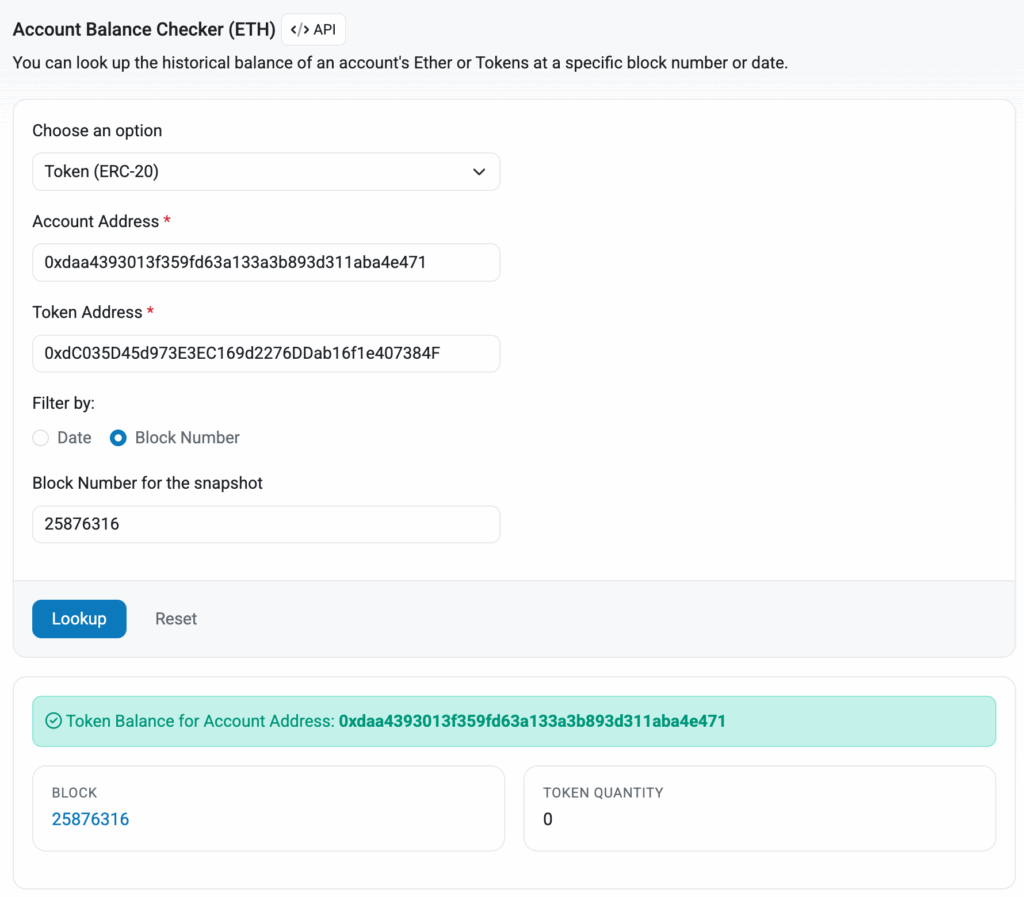
Justin Sun-owned HTX claimed in its September proof of reserves (PoR) that it held 360949.90 USDS in 0xdaa4393013f359fd63a133a3b893d311aba4e471 at a block height of 25876316.
However, that address at that block height actually contained 0 USDS.
The only transaction where this address actually received USDS was at a block height of 25889452. This was on September 2, after the PoR which is dated September 1.
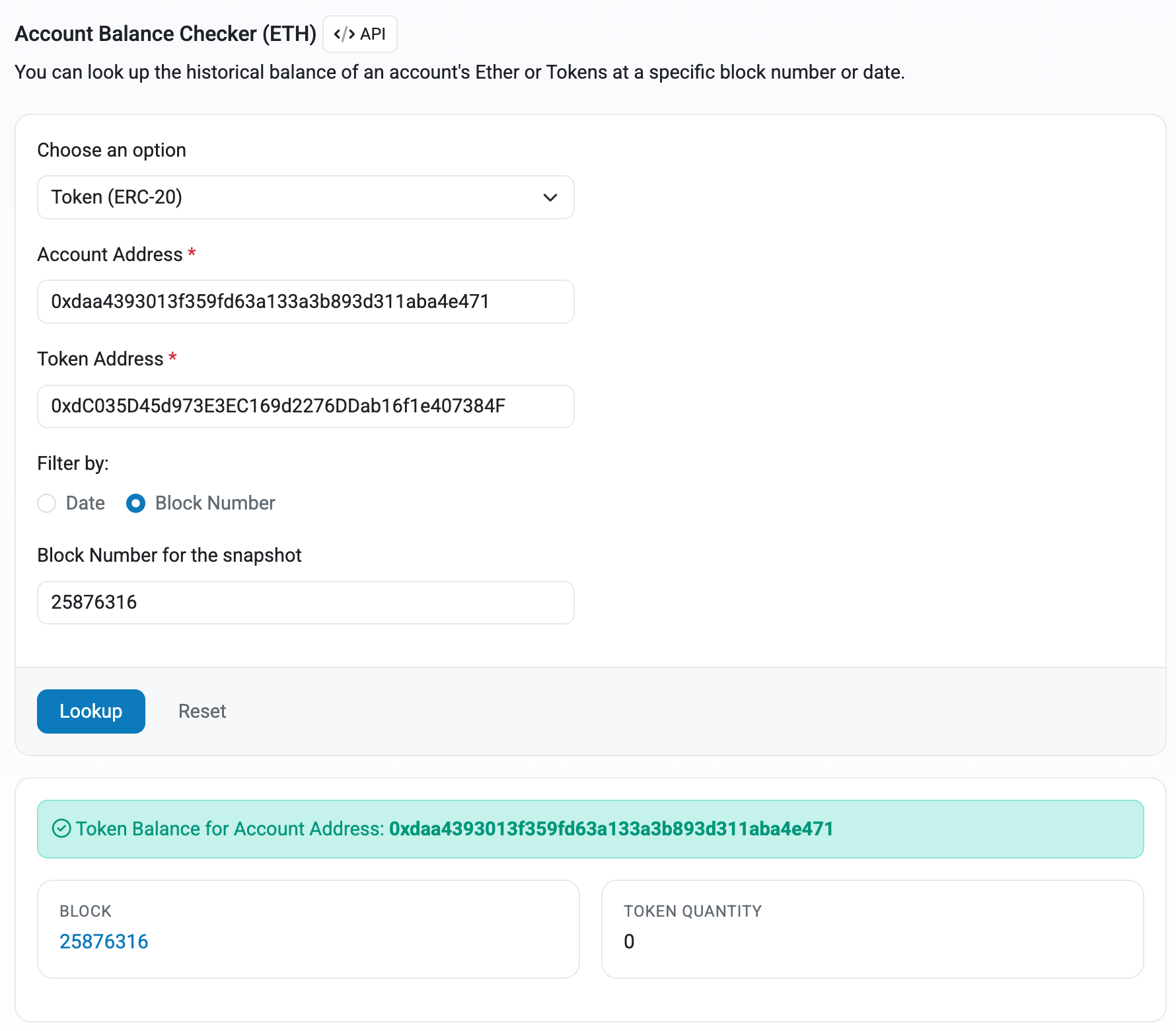
This isn’t the only problem in this PoR.
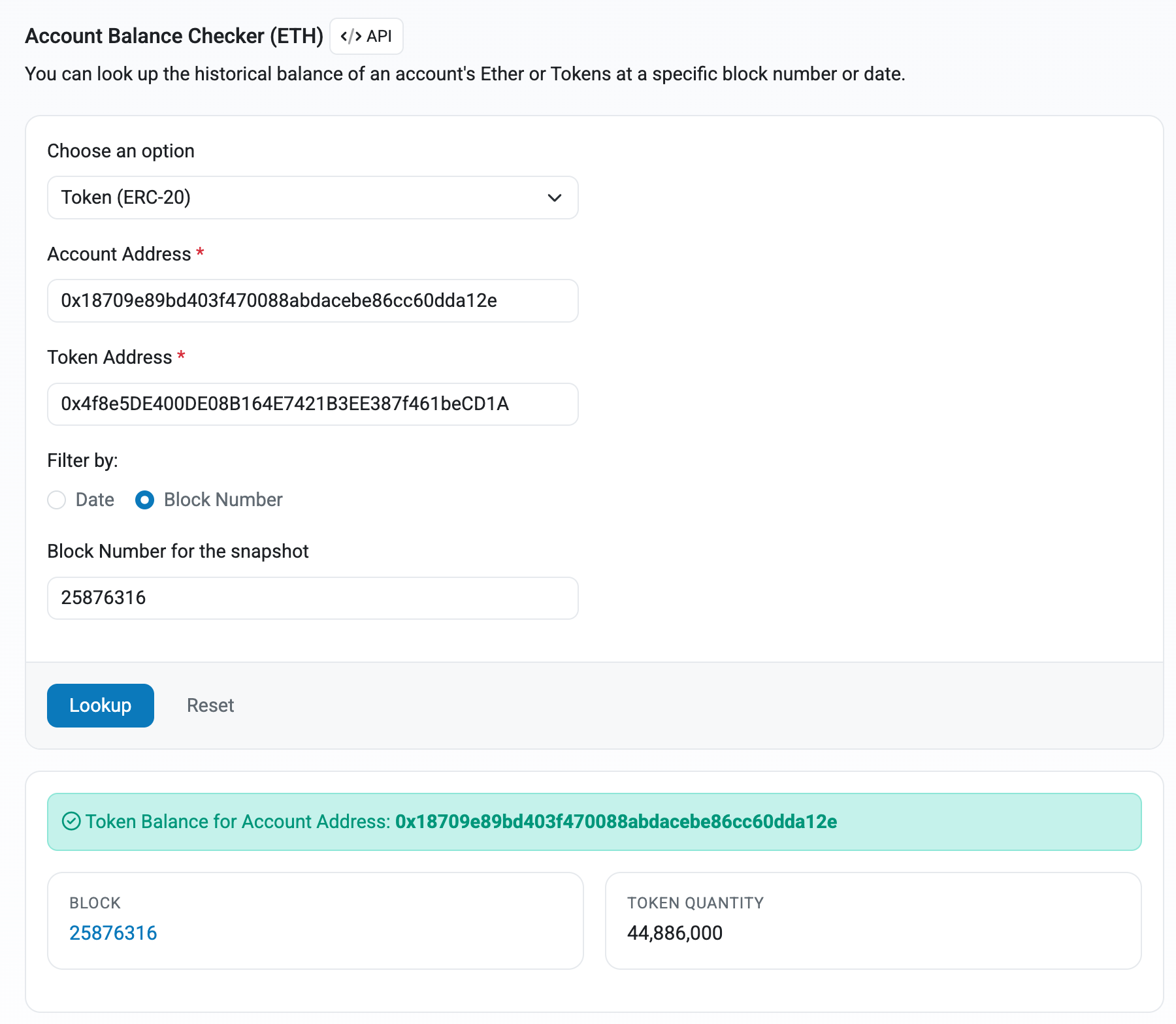
Additionally, it claims that there were 44,975,772.00 of the Sun-founded USDD in 0x18709e89bd403f470088abdacebe86cc60dda12e at a block height of 25876316.
However, this address actually had 44,886,000 USDD in that address at that block height.
Read more: Tether has publicly listed a company that partially controls USDS
These are also not the only mistakes that HTX has made in its PoR historically.
As Protos has previously reported, it previously claimed a certain amount of STEAK-USDC in its May PoR, however it didn’t have any STEAK-USDC in that address at the claimed block height.
However, it did have an equivalent amount of sUSDS in that address, suggesting it had confused its disclosures between these assets.
All of these issues raise serious concerns about HTX’s PoR process, and especially how it makes certain that all assets are matched to liabilities at all times.
Protos reached out to HTX for comment on this discrepancy, but it didn’t respond before publication.
Got a tip? Send us an email securely via Protos Leaks. For more informed news and investigations, follow us on X, Bluesky, and Google News, or subscribe to our YouTube channel.
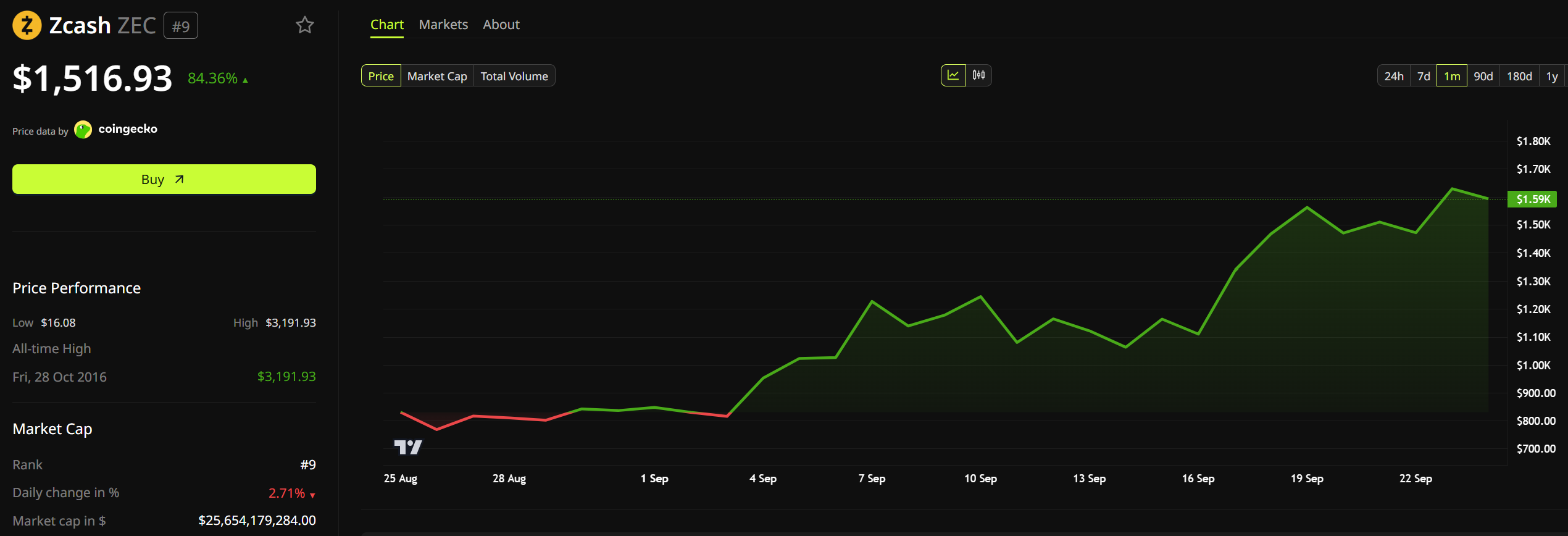
Ledger now lets Zcash (ZEC) holders keep private balances inside its own desktop app, Ledger Wallet. The update lands as ZEC trades 84% higher than a month ago.
Ledger makes hardware wallets, small devices that keep the keys to crypto funds offline. Until now, its users needed a separate third-party app to hold private ZEC.

What Changes for Zcash Holders on Ledger
Zcash offers two kinds of balance:
- A transparent balance is public, like Bitcoin.
- A private, or shielded, balance hides the amounts and addresses involved.
Ledger’s support page says one account can now hold both.
Private funds only appear if they sit in Ironwood, the new privacy pool Zcash launched in July. It replaced the old pool after researcher Taylor Hornby found a flaw there, as covered in the Ironwood upgrade.
Ledger Chief Technology Officer Charles Guillemet said the private data never leaves the user’s computer.
“Privacy here is not a server setting. To keep your shielded balance private, the scanning and the transaction building happen on your machine: your unified viewing key is stored locally and is never shared with anyone, including us,” Guillemet wrote.
A viewing key lets software read a wallet’s private history. Some simpler wallets send it to a server.
However, there are limits. Private ZEC cannot be swapped without first making it public, and the original Nano S cannot run the feature.
An older app from developer Zondax will be pulled on November 5, so its users must move their funds before then.
Where ZEC’s Rally Stands
ZEC traded at $1,516 as of this writing, down almost 3% in the last 24 hours. However, it is up 23% over seven days and over 84% in the last month, ranking ninth by market value.
Money has also flowed into Zcash funds. Zcash exchange-traded funds drew $98.2 million in the week to September 18, the largest weekly ETF inflow among 14 crypto products.

Some backers see more room to run.
ZEC hit a 24-hour high of $1,658.86 before sliding back below $1,530 at the time of writing. Ledger, meanwhile, left the choice to users, asking followers whether they hold ZEC shielded or transparent.
The post Ledger Finally Adds Private Zcash Balances: Will It Extend ZEC Rally? appeared first on BeInCrypto.

Hsin-Ju Chuang, a former partner at crypto venture firm Hack VC, was pronounced dead on Aug. 24 and recently became public after a local newspaper, Hoodline, reported the news this month and circulated on social media.
Her body was found by the California Highway Patrol inside a vehicle in the desert, according to the report.
Chuang, 37, of North Las Vegas, was pronounced dead at the scene at 9:47 p.m. local time last month, a coroner’s release said. The coroner directed further questions to the California Highway Patrol. Authorities have not announced a cause of death, revealed the results of an autopsy, or provided further details about the circumstances, Hoodline said.
The California Highway Patrol spokesperson referred CoinDesk’s request for further comment to the CHP’s Inland Division, which is handling the investigation.
Her death has drawn attention across crypto social media because Chuang, a longtime operator in the crypto industry, published a lengthy X post on Aug. 23, stating that she had rejected a settlement with Hack VC that would have required her to remain silent about her experience at the firm.
Man United cut football costs as debt repayments soar – is it any wonder fans have had enough?

Ahsanabad Incident | A Family in Isolation and Financial Distress | Reporter Kahani

New homes approved despite fears it will overwhelm ‘very poor’ sewage network




-

 Fashion5 days ago
Weekend Open Thread: Talbots – Corporette.com
-

 Tech3 days ago
Researchers escape OpenAI Codex sandbox to run commands on host
-

 Crypto World5 days ago
Circle launches Arc Studio AI agent for building onchain apps
-
 NewsBeat5 days ago
Trump says US has reached an agreement to take permanent control of Greenland’s security
-

 Crypto World3 days ago
Who Needs CLARITY Anyway? ARB Could See 70X Increase: Hodler’s Digest
-

 Crypto World5 days ago
Trading Bitcoin on Robinhood? Why 2% Spread Has Traders Worried
-

 Crypto World5 days ago
Bitcoin price breaks channel as RSI climbs to 63
-

 Crypto World6 days ago
Mortgage and refinance interest rates today, Thursday, September 17, 2026
-

 Crypto World22 hours ago
Goldman Sachs and Deutsche Bank Agree: The S&P 500 Rally Isn't Over
-

 Crypto World7 days ago
US Charges Robinhood Engineers Over Crypto Listing Trades
-

 Tech2 days ago
Google’s $899 Googlebook is a bet that you’ll buy a new laptop for Gemini
-

 Business3 days ago
Analog Devices (ADI) Bets $1.35 Billion on Chips that Let Machines Think for Themselves
-

 Crypto World3 days ago
Coinbase, Robinhood, Circle Seen as Tokenized-Stock Winners
-

 Crypto World5 days ago
Silver prices recover quickly, hitting weekly high today
-

 Crypto World5 days ago
World Money launches in 150+ countries with Stripe
-

 Tech6 days ago
GPT-6 Astra Reached the Nether in Minecraft, Lost Its Stash to a Creeper, and Farmed Potatoes for Hours
-

 Tech4 days ago
Trump suggests rebranding AI with a new name, says he’s also creating an AI Force
-
 NewsBeat5 days ago
US was ‘on brink of war’ with China over false AI report of nukes moving in Middle East
-
 Business18 hours ago
Oil Price Today (September 23): Crude oil below $100 on hopes of US-Iran talks. What did Trump say?
-
 Crypto World3 days ago
Bitcoin price holds above $81K as key catalysts line up
You must be logged in to post a comment Login