
Crypto World
Tokenized U.S. Treasuries Rise Over $1B Since 2026 Began

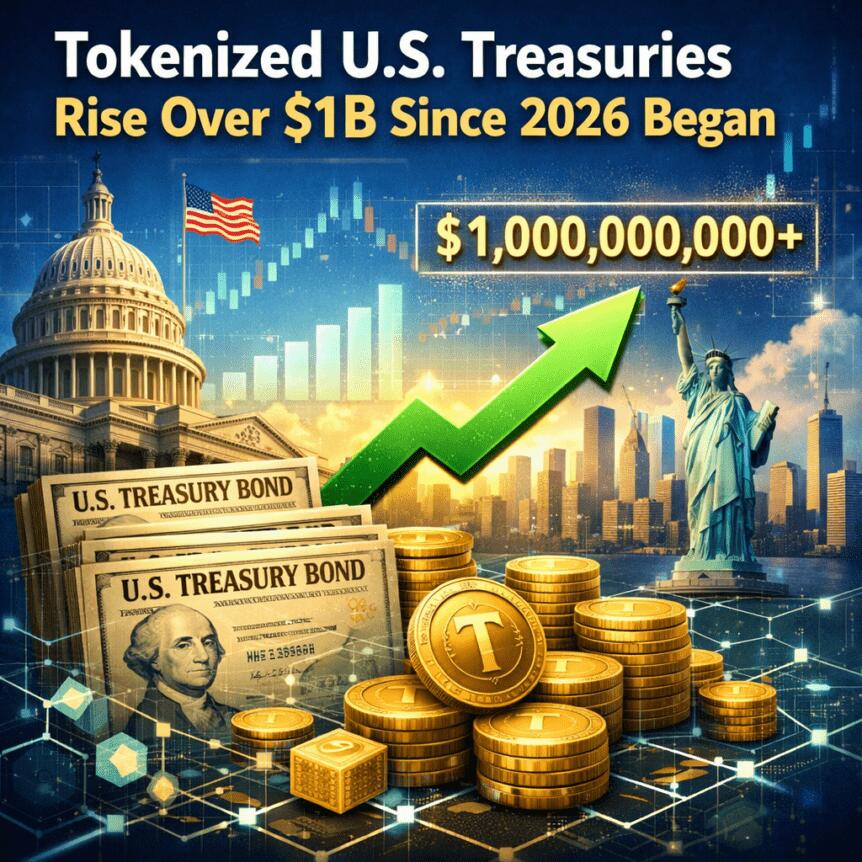
Across the on-chain securitization landscape, tokenized US Treasuries are gaining traction as a growing liquidity layer for traditional debt markets. The market for tokenized U.S. government securities has climbed by more than $1 billion since the start of 2026, even as macroeconomic headwinds persist and concerns about rising national debt linger. By the time of writing, the total value of tokenized Treasuries hovered around $10.8 billion, up from roughly $8.9 billion on January 1, according to data tracked by RWA.xyz. The move reflects a broader push toward on-chain representations of real-world assets, catalyzed by institutional participation and new infrastructure that aims to streamline on-chain settlement and custody for government debt.
The tokenized US Treasury market is framed as a real-world asset (RWA) on the blockchain, where each token represents a claim on a pro-rata slice of underlying government securities. This model promises faster settlement, programmable features, and easier cross-border access for investors who want exposure to highly liquid, benchmark-grade debt. The growth is not only about the asset class itself; it signals a sea change in how traditional fixed income can be accessed through digital rails. In a space characterized by volatility, the demand for ultra-liquid, widely recognized collateral has brought a new degree of stability to the on-chain finance ecosystem. In parallel, data from Token Terminal shows the market’s ascent accelerating, with the asset class described as having surged 50x since 2024, underscoring the scale of uptake among on-chain market participants.
Notably, the march of tokenized Treasuries has been bolstered by significant, real-world institutional backing. March 2024 marked the debut of BlackRock’s USD Institutional Digital Liquidity Fund, commonly referred to as BUIDL, a vehicle designed to bring high-grade liquidity into the digital-asset domain. As of now, BUIDL has extended its footprint to a market cap exceeding $1.2 billion, illustrating how traditional asset managers are applying digital liquidity concepts to convert cash-like assets into tokenized forms that can reside on-chain while preserving regulatory guardrails and oversight. That development highlights the growing willingness of large asset managers to participate in tokenized markets, even as broader crypto markets faced a downturn in late 2025 and early 2026.
Infrastructure and policy developments have kept pace with these market dynamics. In December 2025, the Depository Trust & Clearing Corporation (DTCC), the leading clearinghouse network for global markets, announced plans to launch an asset-tokenization service beginning with US Treasuries. The initiative, described as a Canton-based effort, aims to tokenize a broad spectrum of assets over time, with the first focus on Treasurys. DTCC’s leadership indicated that the service would eventually extend to exchange-traded funds (ETFs) and equities, signaling a broader push to bring regulated, on-chain settlement and post-trade processing to a wider array of asset classes. The DTCC footprint is substantial: the firm settled hundreds of trillions in value across its networks in 2024, underscoring the potential leverage such a platform could wield in terms of liquidity and risk management for tokenized assets.
Beyond the tokenization service, the macro environment remains a factor shaping demand for tokenized government debt. The tokenized Treasuries narrative has persisted even as the crypto market faced a broad downturn that began in October 2025. Observers point to macro uncertainty, rising US debt levels, and a cautious risk sentiment as a backdrop for the adoption of tokenized RWAs. The World Uncertainty Index, tracked by the Federal Reserve Bank of St. Louis, remained elevated through 2025, signaling a demand for liquid, highly credit-rated collateral that can function as a reliable settlement layer in volatile conditions. In this context, tokenized Treasuries—backed by the same cash-like liquidity that underpins traditional money markets—offer an appealing on-chain alternative for institutions seeking efficient liquidity and programmable exposure with robust risk controls.
Industry participants argue that tokenization could unlock new revenue streams for the networks and platforms that mint these assets. By enabling the on-chain representation of US government debt, the market opens opportunities for liquidity providers, market makers, and custody rails to monetize settlement and settlement-related services in a regulated, tokenized framework. Proponents also point to a broader trend where traditional finance is exploring Layer-2 and sidechain solutions to tokenize trillions in RWAs, a narrative that has gained traction in industry discussions and related reporting. While the pace of adoption may vary by jurisdiction and regulatory posture, the underlying demand for asset-backed tokens with deep liquidity remains palpable, potentially shaping how institutions think about cash equivalents in a digital era.
The Depository Trust and Clearing Corporation to launch US Treasury tokenization service
DTCC’s decision to initiate asset tokenization on the Canton network marks a pivotal step in bridging regulated markets with blockchain-enabled post-trade workflows. The project, announced in December 2025, intends to tokenize US Treasuries first, leveraging the Canton pilot to test settlement, custody, and compliance controls in a tokenized environment. While the immediate focus is Treasuries, DTCC’s leadership has signaled that the platform will broaden to a wider range of asset classes, potentially including ETFs and equities as part of a phased expansion plan. This move aligns with a broader industry push to bring regulated, on-chain settlement capabilities to traditional asset classes, reducing settlement risk and enabling programmable liquidity features for high-quality collateral.
DTCC’s scale and reach—settling trillions in transactions across its networks—underscore the potential for tokenization to affect the entire market infrastructure. The firm’s ecosystem is designed to support complex multi-party processes, and the Canton-based exchange of tokenized assets could similarly improve efficiency, transparency, and risk management for on-chain representations of debt and other financial instruments. As tokenized Treasuries begin to circulate on Canton and related rails, observers will be watching for interoperability standards, custody guarantees, and regulatory alignment that will determine how quickly tokenized assets gain broader adoption across institutions and asset managers.
US Treasuries have long been the backbone of global and corporate finance due to their liquidity and accessibility. With tokenization, the traditional cash-like role of short-dated Treasuries could gain an additional dimension—programmable features, automated redemption and settlement workflows, and potential yield enhancements through structured products built atop tokenized debt. Yet as with any regulatory-adjacent innovation, the path to scale hinges on clear guidance, standardized protocols, and robust risk controls that can reassure both market participants and policymakers alike. Still, the momentum around tokenized RWAs—driven by market data, institutional participation, and infrastructure bets—suggests that the coming years could witness a more visible integration of on-chain representations into mainstream fixed-income trading and settlement.
Why it matters
For investors, tokenized Treasuries offer a familiar, highly liquid exposure channel that can be integrated into digital portfolios with programmable features and potential cost efficiencies in settlement. The on-chain representation of US government debt could enable new liquidity strategies, cross-border access, and more seamless movement of capital between traditional and crypto-native ecosystems.
For networks and platforms, the scale of the market cap growth signals an opportunity to monetize settlement and custody services, while supporting risk-managed access to high-grade collateral. The DTCC’s tokenization initiative illustrates how regulated infrastructure can serve as a bridge between conventional markets and blockchain-based mechanics, potentially driving further adoption across asset classes beyond Treasuries.
From a policy and regulatory perspective, tokenization raises important questions about custody, compliance, and reporting. As more assets move on-chain, regulators will scrutinize how on-chain representations are reconciled with traditional clearing, settlement, and risk-management frameworks. The ongoing collaboration between traditional financial institutions and blockchain-native firms will be essential to establishing algorithms and standards that can sustain growth without compromising resilience.
Summed up, the tokenization of US Treasuries reflects a broader trend toward institutional embrace of RWAs and on-chain settlement. It is a development that could recalibrate the economics of liquidity provision in digital markets while reinforcing the role of trusted incumbents—like DTCC—in shaping the governance and reliability of tokenized asset ecosystems. The narrative remains nuanced: there is clear momentum and significant capital behind this shift, but it will require careful navigation of regulatory landscapes and interoperability challenges to translate early wins into durable, scalable liquidity for tokenized debt.
What to watch next
- Timeline and milestones for DTCC’s Canton-based US Treasuries tokenization rollout, including any regulatory approvals.
- Expansion plans to ETFs and equities on the tokenization platform and the pace of experimentation with additional asset classes.
- Adoption metrics from institutional participants and observable liquidity improvements in tokenized Treasuries.
- Regulatory developments or policy clarifications impacting on-chain RWAs and regulated tokenization structures.
Sources & verification
- RWA.xyz data on tokenized Treasuries and market cap levels (https://app.rwa.xyz/treasuries).
- Token Terminal data indicating a 50x surge since 2024 for tokenized Treasuries (https://x.com/tokenterminal/status/2003096211583311913).
- BlackRock’s USD Institutional Digital Liquidity Fund (BUIDL) and its current market position (https://cointelegraph.com/news/blackrock-buidl-3x-1-8-b-3-weeks-bitcoin-lacks-momentum).
- DTCC announcements regarding Canton-network-based asset tokenization and planned expansion (https://cointelegraph.com/news/dtcc-tokenize-us-treasurys-canton-blockchain).
- Federal Reserve Bank of St. Louis’ World Uncertainty Index as a contextual gauge for market sentiment (https://fred.stlouisfed.org/series/WUIGLOBALWEIGHTAVG).



Risk markets, including bitcoin , staged a late-day rally Tuesday after Axios reported Iran’s positive reception to Pakistan’s request for a two-week ceasefire.
“The President has been made been aware of the proposal, and a response will come,” said White House Press Secretary Karoline Leavit, when asked about the report.
Under heavy pressure earlier in the session, the Nasdaq rallied to close modestly in the green. Crypto followed suit, with bitcoin climbing to $69,400 after sliding below $68,000 hours prior.
Markets got off on the wrong foot Tuesday after President Trump said “a whole civilization will die,” if Iran didn’t open the Strait of Hormuz prior to his 8 pm ET deadline. That remark prompted strong criticism from politicians and other figures who had previously supported his campaign and presidency, with some even calling for the impeachment of Trump.

Global public debt is approaching 100% of world GDP, a level not seen since World War II.
The IMF is sounding the alarm: with debt high and borrowing costs rising, governments can no longer defer hard fiscal choices.
IMF Debt Warning in Numbers
The IMF chart tells a dramatic story. Global public debt as a percentage of GDP has spiked through several historical crises: World War I, the Great Depression, World War II, the 2008 Global Financial Crisis, and COVID-19.
However, the current trajectory is different. Unlike post-World War II, when debt levels declined sharply, today’s projections show debt continuing to rise. The IMF estimates global public debt will soon exceed World War II peaks.
Era Dabla-Norris and Rodrigo Valdes write in F&D magazine that “trust is now essential to reconciling competing priorities.” In other words, governments face impossible trade-offs between spending, taxation, and debt servicing.
Fun Fact: After World War II, global debt dropped from 150% to under 50% of GDP within two decades. Today’s projections show the opposite trajectory.
Why the IMF Warning Matters for Crypto
The IMF’s debt warning has direct implications for crypto markets:
- Inflation Hedge Narrative: When governments face unsustainable debt, they often resort to inflation to reduce real debt burdens. Bitcoin’s fixed supply makes it an attractive hedge against currency debasement.
- Dollar Confidence: Rising US debt levels put long-term pressure on dollar confidence. Stablecoins and Bitcoin could benefit as alternatives.
- Fiscal Instability: The IMF warns that hard fiscal choices cannot be deferred any longer. Historically, political instability around austerity measures has driven capital into uncorrelated assets.
Historical Context
The chart shows debt spikes during every major 20th-century crisis. However, each previous spike was followed by a decline. The current trajectory breaks this pattern.
COVID-19 pushed debt above 100% of GDP. Instead of declining, projections show a continued increase. For the first time since World War II, there is no clear path back to sustainable levels.
For crypto, this macro backdrop strengthens the case for decentralized alternatives to government-issued currencies. As fiscal trust erodes, trustless systems gain appeal.
The post IMF Alarm: Global Debt Hits World War II Levels appeared first on BeInCrypto.

Institutional Accumulation and Long-Term Holders
Richard Teng shared a chart showing the historical relationship between Bitcoin’s price and Long-Term Holders (LTH) Supply. The chart revealed a striking inverse relationship during major market cycles. As Bitcoin’s price surged in previous cycles, LTH Supply dropped sharply, marking a period of heavy distribution.
Since mid-February, BTC long-term holders have been back in accumulation mode. pic.twitter.com/iF45ytd6Ae
— Richard Teng (@_RichardTeng) April 7, 2026
During the recent price fluctuations between $65,000 and $70,000, long-term holders reduced their supply. However, the LTH Supply line hit bottom in mid-February 2026. Since then, it has sharply increased, showing a definitive upward trend. This change suggests that Bitcoin’s long-term holders have returned to accumulation, despite the ongoing market uncertainty.
Teng emphasized that this shift back to accumulation is highly bullish for Bitcoin. Long-term holders typically signal confidence in the asset when they stop selling. Their current behavior points to a belief in Bitcoin’s future value and stability.
Bitcoin’s Support Levels and Short-Term Market Risks
While Bitcoin’s price fluctuates within a tight range, analysts highlight the risks of short-term volatility. Bitcoin is currently trading in a “negative gamma pocket” between $65,000 and $70,000. This zone has thinner support levels, which could lead to rapid downside movements if bullish momentum fades.
Despite this risk, traditional financial institutions seem unaffected by the market’s turbulence. In fact, these institutions are using the current market chop as a buying opportunity. The large-scale purchases signal that institutions are unfazed by short-term market instability and are focusing on long-term gains.
Market data from Unfolded reported a massive $471.3 million in net inflows into Spot Bitcoin ETFs on April 6, 2026. This surge in institutional investments underscores the growing confidence in Bitcoin, despite its current price fluctuations. Traditional finance players are betting on Bitcoin’s future value, making this an optimistic sign for the market’s health.
Shifting Market Dynamics and the Future Outlook for Bitcoin
Bitcoin’s market behavior over the past few months has shown significant shifts. After a period of distribution, Bitcoin veterans have now returned to accumulation mode. This suggests that Bitcoin’s price may be poised for growth in the coming months as institutions continue to invest.
The reversal in long-term holder supply is seen as a bullish signal for Bitcoin’s future. As long as this accumulation trend persists, the potential for a price surge remains strong. The ongoing institutional interest further supports the likelihood of sustained growth for Bitcoin in the longer term.
With institutions continuing to invest and long-term holders refraining from selling, the outlook for Bitcoin is positive. However, the market still faces potential short-term volatility. Traders and analysts will be watching closely to see if the accumulation phase leads to a sustained upward trend.
MSBT will launch tomorrow as the lowest-fee Bitcoin ETF on the market, potentially kicking off a fee war among funds.
Morgan Stanley’s much-anticipated spot Bitcoin (BTC) exchange-traded fund is expected to begin trading on Wednesday, April 8, on NYSE Arca. Bloomberg senior ETF analyst Eric Balchunas confirmed the launch date in an X post today, citing the NYSE’s listing notice.
Bloomberg’s Isabelle Lee had signaled during a Monday broadcast that the launch was imminent, stating it would be “probably this week.“
The fund will enter the market as the lowest-cost spot Bitcoin ETF in the U.S. Per Morgan Stanley’s most recent S-1 amendment filed with the SEC, the annual expense ratio is just 0.14%, undercutting Grayscale’s Bitcoin Mini Trust, which is currently the lowest-fee option at 0.15%, and sitting well below BlackRock’s IBIT, which charges 0.25%.
Bloomberg’s Balchunas called the pricing a “semi-shock,” noting that the lower fee means none of Morgan Stanley’s roughly 16,000 financial advisors “will feel conflicted using it and they have shot at getting outside assets. Smart.”
The Defiant first covered Morgan Stanley’s filing for the ETF back in January, when the Wall Street giant — which manages nearly $9 trillion in assets — filed with the Securities and Exchange Commission (SEC) to launch both a spot Bitcoin and spot Solana ETF. At the time, Timot Lamarre of Bitcoin custody firm Unchained told The Defiant the launch would add to Bitcoin’s legitimacy and intensify fee competition among issuers.
The launch comes at a moment of renewed momentum for Bitcoin ETFs broadly. Spot Bitcoin ETFs had a weaker start to 2026, but yesterday, April 6, marked the largest net inflow day for U.S. spot BTC ETFs since February, with $471.32 million in net inflows, per SoSoValue.
BlackRock’s IBIT remains the dominant player by a wide margin, with over $63 billion in cumulative net inflows per SoSoValue, whereas cumulative net inflows across all Bitcoin ETFs currently sits at $56.43 billion.
Since the launch of spot Bitcoin ETFs in the U.S. in early 2024, an historical moment for the crypto industry, multiple major TradFi players have moved to launch their own products.
Morgan Stanley’s MSBT will be the first BTC ETF from a U.S. investment bank, but it will trade alongside funds from major asset managers, namely BlackRock, Fidelity, VanEck, Franklin Templeton, and others.
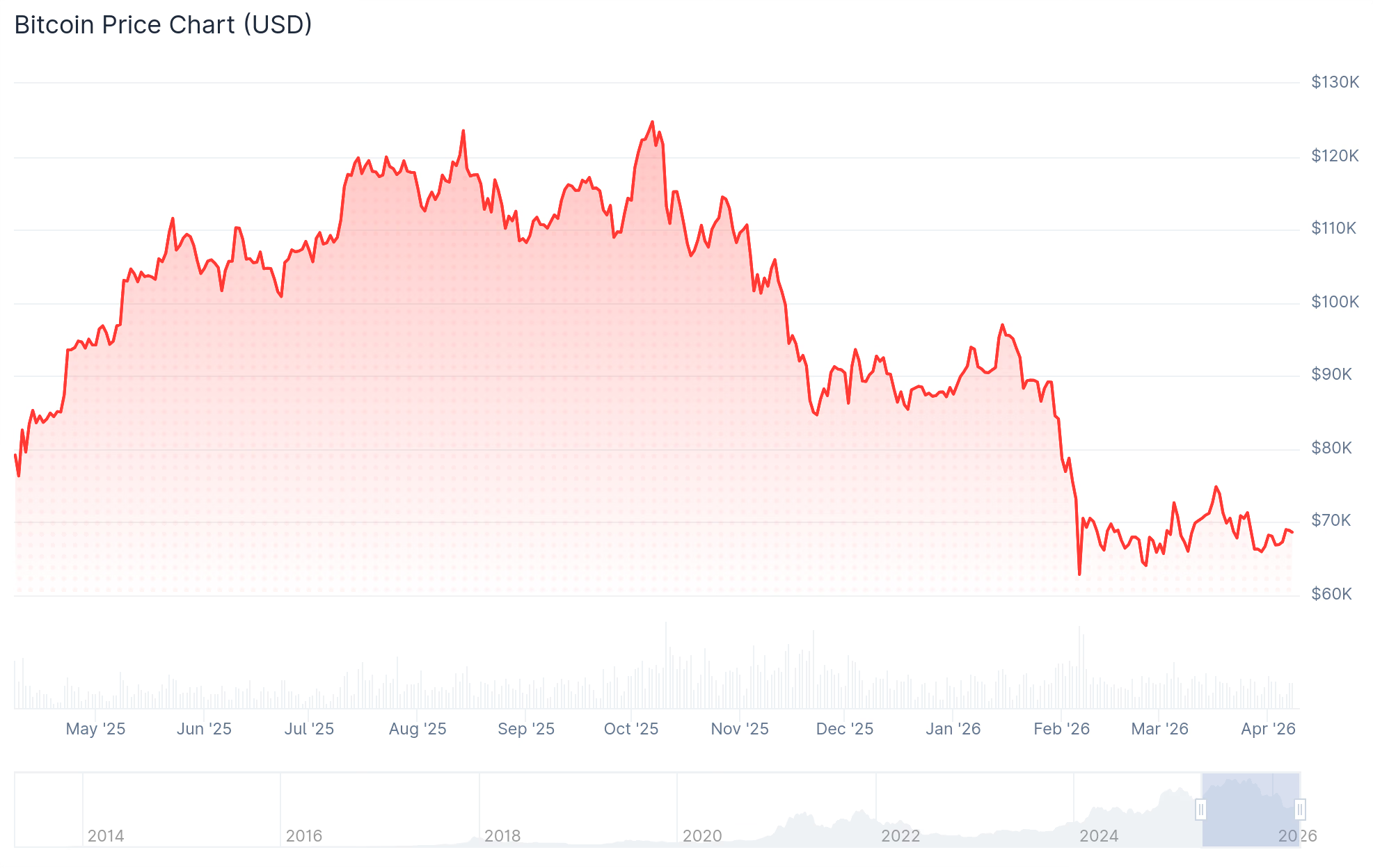
Spot BTC is currently trading around $68,600, down 13% on the year, and over 45% below its all-time high around $126,000, which was s4t in October of last year.

This article was written with the assistance of AI workflows. All our stories are curated, edited and fact-checked by a human.
The AAVE token has lost roughly 75% of its value since its most recent peak in August 2025.
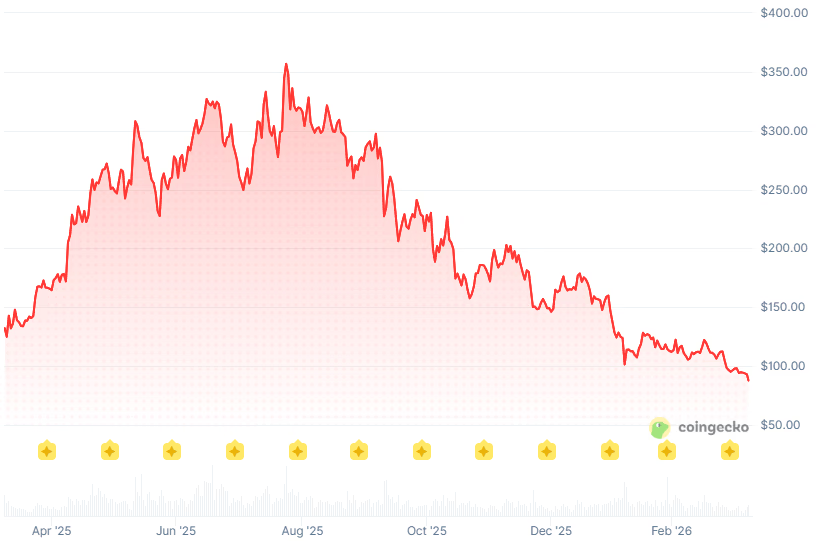
AAVE fell as low as $85 on Tuesday before partially recovering to trade near $88, extending a selloff that has now erased roughly 75% of the token’s value since its August 2025 high near $356.
The latest drop came as DeFi selling accelerated across the board, but AAVE has been underperforming the broader market for months amid an escalating governance crisis that has cost the protocol three prominent independent contributors.

Chaos Labs announced Monday that it is proactively terminating its engagement with the protocol, citing a fundamental disagreement over how risk should be managed and inadequate funding to cover expanded responsibilities under Aave V4.
Aave founder Stani Kulechov thanked the firm for its contributions but pushed back on several aspects of Chaos’ account.
Chaos Labs’ exit follows BGD Labs’ departure on April 1, citing what it called an increasingly centralized dynamic around Aave Labs and V4 development. Marc Zeller of the Aave Chan Initiative (ACI) called it “the most significant talent loss in Aave’s history.”
And Zeller’s own organization followed suit. In early March, ACI announced it would wind down its engagement with the DAO, citing structural breakdowns in governance.
Governance Dispute
It all started in December, when a governance dispute erupted after a delegate discovered that Aave Labs had been redirecting approximately $200,000 per week in interface fees — previously flowing to the DAO — to itself via a CowSwap integration.
The controversy escalated into a broader confrontation over tokenholder rights, brand ownership, and the balance of power between the DAO and Aave Labs. BGD Labs co-founder Ernesto Boado proposed a token alignment initiative to shift control toward the DAO, which Kulechov publicly opposed, saying it would “slow down and potentially derail” the protocol’s momentum. The proposal was ultimately voted down, with the token dropping roughly 20% over the course of the dispute.
In February, Aave Labs submitted its “Aave Will Win” framework, requesting up to $51 million in funding from the DAO in exchange for routing 100% of product revenue to the treasury. The proposal narrowly passed its Temp Check, though Zeller’s post-mortem analysis argued the broader delegate base had actually leaned against it when excluding Aave Labs–linked voting power.
The community turmoil has created a striking divergence between Aave’s protocol metrics and its token performance. The protocol remains DeFi’s largest lender with over $24 billion in total value locked (TVL), and generated $124 million in net revenue in 2025, up 72% from 2024, according to DeFiLlama.
Yet at roughly $88, AAVE is trading 86% below its May 2021 all-time high of $666 and roughly 75% below the $356 level it reached in August 2025. The token is also underperforming the broader crypto market — down about 10% over the past seven days while Bitcoin and Ether are up, according to CoinGecko.
This article was written with the assistance of AI workflows. All our stories are curated, edited and fact-checked by a human.
Crypto World
Trump-linked World Liberty Financial questioned over partner’s prior links to sanctioned network


A cryptocurrency venture tied to U.S. President Donald Trump is facing fresh scrutiny after partnering with a firm whose “flagship project” had recently involved individuals later sanctioned by the U.S. and U.K.
, a crypto business co-founded by Trump and partly owned by his family, said it carried out due diligence before integrating its USD1 stablecoin with the Southeast Asia-based blockchain project AB DAO.
However, a Times investigation released on Monday found the company was unaware that AB DAO had, until weeks earlier, promoted a resort project linked to figures associated with Cambodia’s Prince Group, an organization U.S. authorities have described as a major transnational criminal network.
The partnership was announced in November, shortly after coordinated U.S. and U.K. sanctions targeting Prince Group founder Chen Zhi and associates for alleged involvement in large-scale fraud. Individuals connected to the group had been involved in AB DAO’s promoted resort project before being removed following sanctions.
CoinDesk has contacted WLFI, launched in September 2024, for comment, but the company had not responded at the time of publication. However, WLFI told The Times it has “no association or relationship with the sanctioned individuals.”
The developments add to broader questions around World Liberty’s governance and external relationships. Reporting by The Wall Street Journal in January revealed that a company backed by United Arab Emirates (UAE) national security adviser Sheik Tahnoon bin Zayed Al Nahyan quietly agreed to acquire a 49% stake in WLFI for $500 million shortly before Trump returned to office.
The deal marked “something unprecedented in American politics,” according to the Wall Street Journal, which cited legal experts raising potential conflict-of-interest concerns. The White House has denied any impropriety.
There is no suggestion that WLFI had any direct connection to the Prince Group, according to The Times. However, the report raises questions about the effectiveness of due diligence around its partnerships.
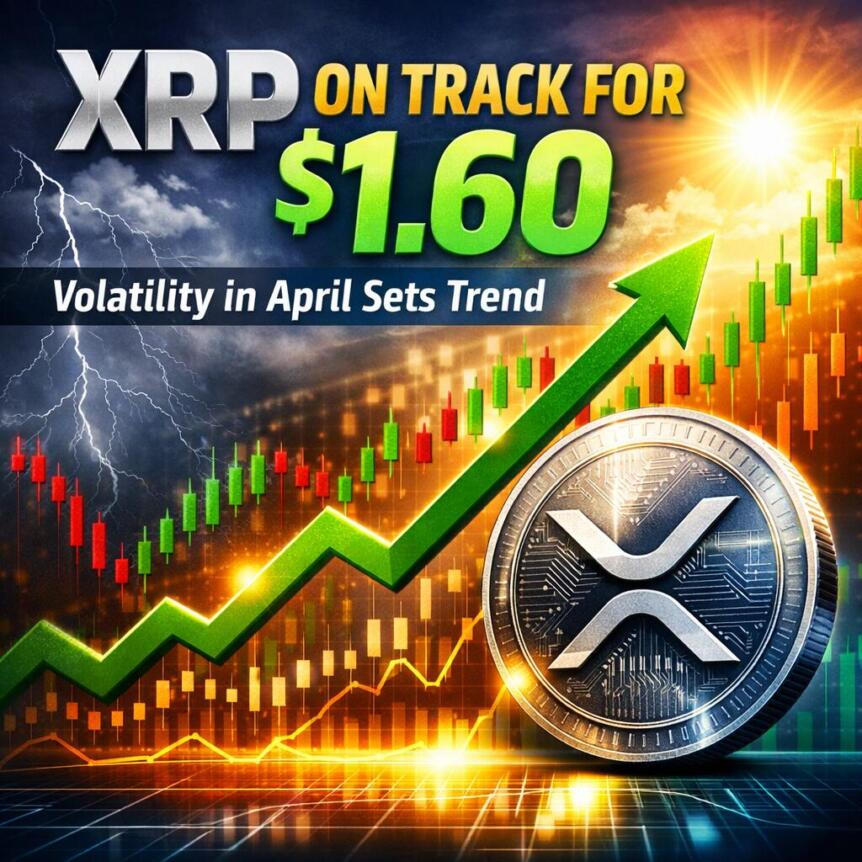
The XRP price sits around $1.30 as historical results from previous Aprils along with resistance at $1.60 influence the market outlook.
Key Insights
- Previous April has been volatile for XRP, with impressive gains in some years and losses in others.
- Consolidation at levels ranging from $1.28 to $1.36 indicates decreased volatility.
- $1.60 is an important resistance level to watch out for.
Unpredictability of the Market in April for XRP
April has proven to be inconsistent regarding its performance related to XRP, meaning that the asset is quite unpredictable when this month comes along.
Although XRP managed to show impressive gains during some periods, other years were characterized by negative movements, leaving many traders with an unsure feeling when analyzing the seasonality of this period.
For example, the coin experienced an increase by 66.11% in April 2018 and even more impressive growth — nearly 180% in April 2021. Thus, every upcoming April becomes a cause for optimism since the coin has managed to produce quite remarkable results in such periods before. However, it appears that this seasonality is gradually diminishing.
April 2022, 2023, and 2024 months witnessed negative movement, which leaves traders with concerns about the future movement. Hence, they have started taking into consideration seasonal information but at the same time using technical indicators.
Narrow Price Consolidation Suggests Upcoming Breakout
Currently, XRP trades in a tight range from $1.28 to $1.36, with this trend having been in place since late March. This type of price consolidation usually happens when there is low price volatility and is an indication that a major price movement will soon happen.
Whenever prices consolidate in a certain range, it normally implies that sellers and buyers have reached a temporary consensus, but sooner or later, one side takes control, resulting in a price explosion either upwards or downwards. For XRP, traders pay close attention to the volume of trades for validation purposes whenever a breakout happens.
Moreover, the occurrence of a falling wedge pattern implies that a bullish breakout might be expected. Falling wedge patterns are common occurrences that indicate upcoming uptrends, especially if trading volumes keep on rising.
Resistance Levels Determine Short-Term Trend
Currently, the $1.40 level has proved to be a key intermediate resistance level that is supported by the most important moving averages. A break above this level will indicate growing buying sentiment and can set the stage for a move towards the following resistance level of $1.60.
The $1.60 level still represents an important obstacle on the way to higher prices for XRP. The price had been rejected from this level back in March, confirming its importance as a strong resistance area. Breaking out above the $1.60 level will be a confirmation that upward trend momentum is intact.
If XRP fails to overcome the $1.40 level, it can be locked in the current range for some more time. Volume is another important aspect to pay attention to when analyzing the charts. High trading volumes can confirm the validity of a breakout move.
Benefits of Ripple Treasury System Introducing Digital Assets
In addition to technical analysis, Ripple continues to grow by adding new financial systems. The launch of Digital Asset Accounts and the Unified Treasury System represents a crucial move towards incorporating digital assets within traditional finance.
The Unified Treasury System will enable XRP and RLUSD balances to be monitored alongside traditional currencies in real-time. This integration between crypto assets and conventional financial practices makes it easy for organizations to incorporate digital assets.
It might be an essential step towards establishing a greater use and demand for XRP. Although this news might not affect prices, it can positively influence market sentiment.
Recovery Sentiments Begin to Emerge in Market
XRP is currently trading at around $1.31, showing signs of temporary weakness in the short term. However, the current state of the market has revealed signs of early recovery among the leading cryptos.
Trading sentiments remain cautious as investors await the breakout of prices above critical resistance levels. This shows that the market is at a decision point and the breakout could be significant in the next few weeks to come.
In any case, the performance of XRP in April will be determined by whether there is a breakout of prices above critical resistance levels or not.


Cloudflare, one of the world’s largest CDN and internet edge networks, has substantially accelerated its deadline to migrate to post-quantum cryptography amid fears that hardware breakthroughs could render current encryption obsolete within three years.
The quantum-vulnerable Bitcoin community rang alarm bells after the giant move.
Cloudflare announced its new post-quantum deadline, joining Google in an aggressive security sprint targeting 2029.
Two-thirds of human traffic to Cloudflare already uses post-quantum encryption, but the company wants that at 100% within three years.
Google set the same 2029 deadline two weeks ago, flagging concerning breakthroughs in quantum hardware, error correction, and factoring. The search engine giant has also already deployed post-quantum protections across Chrome, Android 17, and Google Cloud, and is forcing other engineering teams to follow suit.
By 2029, IBM plans to deliver its first fault-tolerant quantum machine, Starling.
The quantum breakthroughs just keep coming
The announcements continue a blistering pace of quantum breakthroughs over the last few weeks.
On March 30, Google Quantum AI released a whitepaper showing that fewer than 1,200 logical qubits could theoretically solve Bitcoin’s 256-bit Elliptic Curve Discrete Logarithm Problem.
On superconducting hardware, that meant fewer than 500,000 physical qubits by its estimate. That’s roughly a 20-fold reduction from the prior benchmark of approximately 9 million set in 2023.
The same day, Oratomic, a quantum startup founded by Caltech and Harvard faculty, theorized that Shor’s algorithm could run at cryptographically relevant scales with as few as 10,000 reconfigurable neutral-atom qubits, a step-change improvement in solving 256-bit elliptic curve discrete logarithms.
On April 5, IQM Quantum Computers and Germany’s Fraunhofer FOKUS compiled Shor’s algorithm, gate by gate, at RSA-2048 scale — a first by quantum researchers.
Prior estimates for cracking RSA-2048 relied on symbolic extrapolation and theoretical modeling, whereas this research team produced a gate-by-gate assembly with an exact qubit budget.
Read more: Google’s quantum computer could break Bitcoin in two ways
Bitcoin has a big quantum problem
There are well over $100 billion in quantum-vulnerable bitcoin (BTC), including legacy wallets such as Satoshi Nakamoto’s holdings.
Chaincode Labs, Bitcoin’s hub for technical development, estimated a comprehensive post-quantum migration could take seven years.
Taproot, Bitcoin’s prior upgrade, took four years from proposal to activation, while SegWit required two.
Approximately 1.7 million BTC have permanently exposed public keys. Chaincode puts the broader vulnerability to a cryptographically-relevant quantum computer at 20-50% of BTC, worth as much as $680 billion.
Justin Drake, a pro-Ethereum researcher who co-authored Google’s whitepaper, believes there’s at least a 10% chance a quantum computer recovers a Bitcoin private key by brute force from an exposed public key by 2032.
Bitcoin has a market capitalization of $1.36 trillion with a software upgrade process measured in years. Cryptographically-relevant quantum computers also have a deadline measured in years and could have as few as three left, according to Cloudflare, Google, and IBM.
Got a tip? Send us an email securely via Protos Leaks. For more informed news, follow us on X, Bluesky, and Google News, or subscribe to our YouTube channel.
April could be the month where the crypto market turns from panic to momentum, and the clues are piling up faster than most people notice. Bitcoin reclaimed $70,000 on April 6 after squeezing $196 million in shorts as ceasefire reports surfaced, per CoinDesk, and the Fear and Greed Index is sitting at 9, a level that has marked the bottom before every major rally in crypto history.
When BTC stabilizes and starts climbing, altcoins chase it with larger moves every time, and the question of will crypto go up in April is shifting from whether to which tokens catch the biggest wave when it happens. For anyone still asking will crypto go up in April, three projects stand out, and the first one already raised $8.82 million while everyone else is still figuring out whether to move.
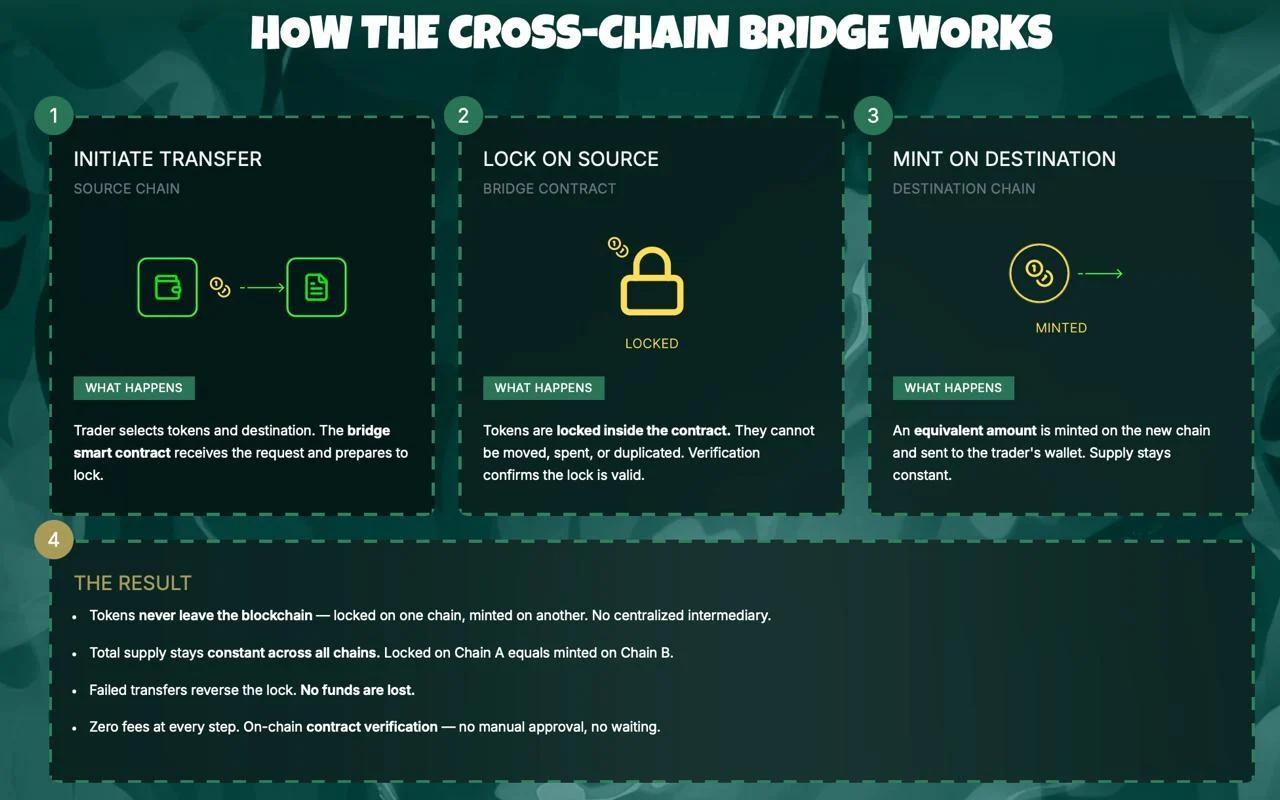
The exchange covers every cryptocurrency across Ethereum, BNB Chain, and Solana through a single verified system, getting rid of the scattered apps that overcharge and make traders pay double for every cross-chain move. Pepeto puts cross-chain swaps, token bridging, and full portfolio tools into one place.
The exchange handles every tradable coin across the full crypto market, not just memes, so every trade and every bridge fills the same pipeline and pushes organic demand into the token.
Both SolidProof and Coinsult audited every contract, the founder behind the original Pepe coin is running the project, and the staking numbers alone answer will crypto go up in April for anyone doing the math. Put $10,000 in and stake at 186% APY and that position earns you $18,600 per year, which breaks down to roughly $1,550 every single month going straight back into your bag while the exchange prepares to go live and multiply every position you locked in early.
Each presale round sells out quicker than the last and the floor price jumps the instant the current window closes, so today’s entry is the lowest price this token will ever carry.
XRP Eyes Breakout as CLARITY Act Vote Hits the Senate
Anyone asking will crypto go up in April should watch what XRP is doing right now, because the chart is about as clear as it gets. The Senate Banking Committee is targeting a late April markup of the CLARITY Act, and Senator Moreno warned that if the bill does not reach the floor by May it is dead until after midterms.
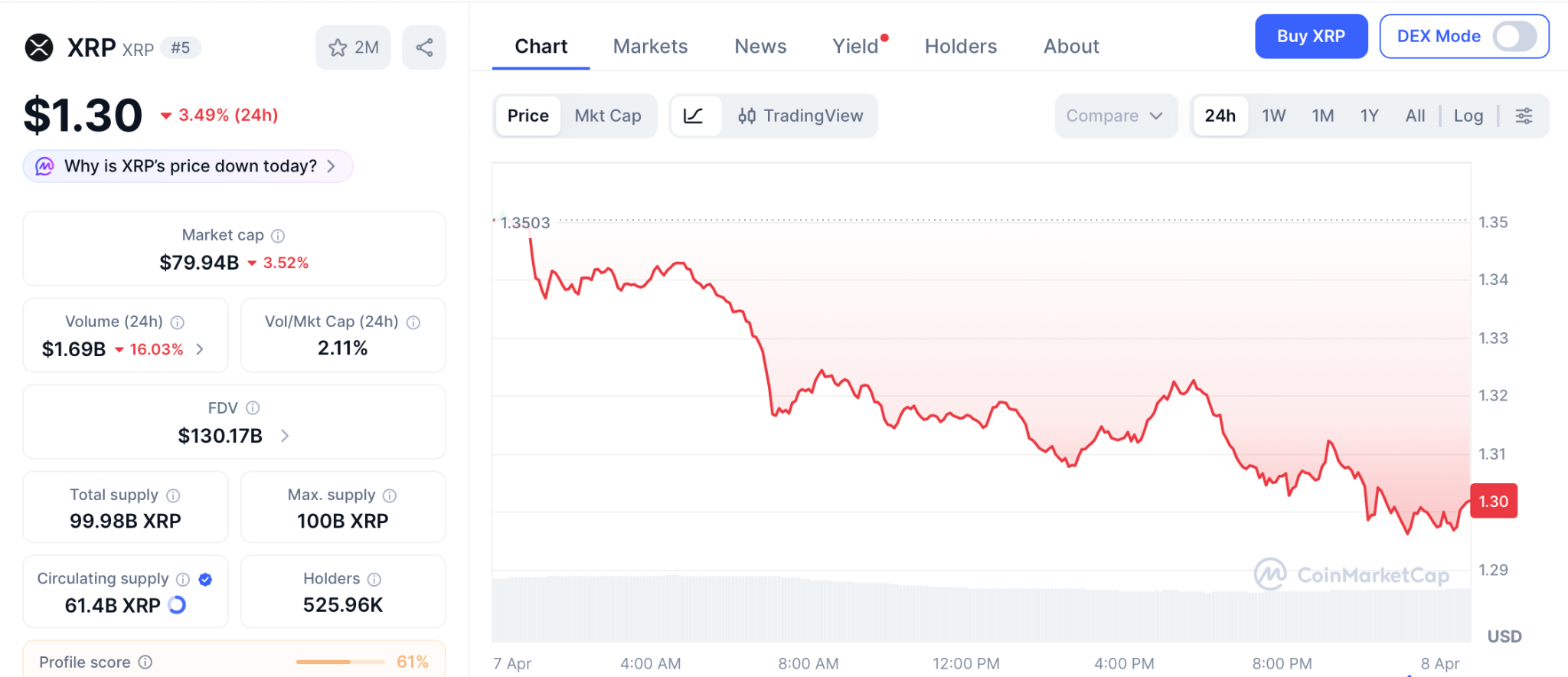
Analysts project $2.60 for XRP this cycle if CLARITY passes, giving the token a 2x from $1.30 according to CoinMarketCap. That is a decent return for XRP holders, but Pepeto at presale with $1,550 monthly staking income on $10,000 and a Binance listing ahead delivers what large caps at multi-billion valuations cannot, and Cardano completes the trio.
Cardano Builds Strength as Whales Buy 220 Million ADA in One Week
Cardano whales bought 220 million ADA worth $53 million in a single week while retail panicked, pushing large wallet holdings to 13.84 billion coins, per Santiment. Stablecoin supply on the network doubled year over year and the Midnight mainnet launched with Monument Bank already running tokenized deposits.
Analysts see $2.20 as the top end this cycle if recovery builds into Q2. For long-term holders that is a strong 8x from $0.24, and it answers will crypto go up in April with a clear yes. But the largest gains are not hiding in coins that already reflect their recovery, they are waiting in presale entries with working tools and staking that is already compounding.
The Verdict
Will crypto go up in April? Every data point says yes, and XRP and Cardano are both lined up to ride the wave with 2x to 8x gains. But $8.82 million raised, two independent audits, and 186% APY staking turning $10,000 into $1,550 per month is the kind of entry that moves with or without the broader market.
Visit the Pepeto official website and secure your entry now, because the wallets that get in at presale always become the ones everybody else regrets not following.
The names that turn into legends in crypto never come from the tokens everyone already owns, they come from the presale nobody expected, and Pepeto at $0.0000001863 is writing that story right now.
Click To Visit Pepeto Website To Enter The Presale

FAQs
Will crypto go up in April 2026?
Will crypto go up in April looks likely as BTC reclaimed $70,000 squeezing $196M in shorts and Fear and Greed hit 9. XRP, Cardano, and Pepeto are set for the biggest gains.
How does Pepeto staking work for early buyers?
Stake $10,000 at 186% APY to earn $18,600 per year or roughly $1,550 per month. Rewards grow daily while the exchange launch approaches.
Disclaimer: This is a Press Release provided by a third party who is responsible for the content. Please conduct your own research before taking any action based on the content.



The 25th amendment Trump Iran war political crisis escalated sharply on Tuesday when former Rep. Marjorie Taylor Greene, conservative commentator Candace Owens, and media personality Alex Jones all publicly called for President Trump’s removal from office after his “a whole civilization will die tonight” Truth Social post.
Summary
- MTG posted “25TH AMENDMENT!!! Not a single bomb has dropped on America. We cannot kill an entire civilization. This is evil and madness,” becoming one of Trump’s most prominent former allies to call for his removal
- Alex Jones called Trump “an unhinged super villain from a Marvel comic movie,” while Candace Owens called him “a genocidal lunatic” and wrote “our Congress and military need to intervene”
- Former White House communications director Anthony Scaramucci said Trump was “calling for a nuclear strike” and demanded “immediate removal,” while VP Vance and the Cabinet remain fully supportive and have given no indication they would act
The 25th amendment Trump Iran war confrontation broke into open MAGA civil war on Tuesday as some of the president’s most prominent former supporters called for his removal from office. Former Rep. Marjorie Taylor Greene — once described as Trump’s most loyal congressional ally before her resignation earlier this year — posted on X: “25TH AMENDMENT!!! Not a single bomb has dropped on America. We cannot kill an entire civilization. This is evil and madness.”
Greene went further in an extended post, writing: “Everyone in his administration that claims to be a Christian needs to fall on their knees and beg forgiveness from God and stop worshipping the President and intervene in Trump’s madness. I know all of you and him and he has gone insane, and all of you are complicit.”
According to Newsweek, which first reported the wave of removal calls, Alex Jones wrote on X: “The definition of genocide is destroying an entire civilization/people! Trump literally sounds like an unhinged super villain from a Marvel comic movie. This IS NOT WHAT WE VOTED FOR!!!” Candace Owens posted: “The 25th amendment needs to be invoked. He is a genocidal lunatic. Our Congress and military need to intervene. We are beyond madness.”
Anthony Scaramucci, who served briefly as White House communications director during Trump’s first term, said on X: “It was at this point that our Founders thought the best thing to do would be to remove a mad man who has the executive office.”
How the 25th Amendment Works — and Why It Almost Certainly Will Not Happen
Section 4 of the 25th Amendment allows the vice president and a majority of the Cabinet to declare the president unable to discharge his duties. If the president contests the finding, the matter goes to Congress, where a two-thirds majority in both chambers is required to uphold the removal. The provision has never been invoked in US history.
In the current environment, it has no realistic path forward. VP JD Vance stated Tuesday morning that the US has “largely accomplished its military objectives” in Iran and expects the conflict to conclude “very shortly.” No Cabinet member has expressed any dissent. The calls from Greene, Jones, and Owens reflect outrage within a fractured MAGA coalition, not the Cabinet arithmetic the mechanism requires.
What This Means for the Political Landscape
The split is notable because it mirrors the broader market dynamic around this conflict. As crypto.news reported, each escalation in the Iran war has pushed Bitcoin lower, as investors reduce exposure to risk assets during periods of acute geopolitical uncertainty. The political fracturing of Trump’s base over Iran adds a new variable: domestic political instability now runs alongside geopolitical risk as a market headwind.
As crypto.news noted in earlier Iran war coverage, escalation phases have consistently produced 3 to 5% drops in major cryptocurrencies. Tonight’s 8 PM deadline introduces the possibility of either sharp relief, if a deal materializes, or another significant leg down across risk assets if large-scale strikes on Iranian infrastructure begin.
“How do we 25th amendment his a–?” Jones asked his co-host live on air Tuesday. The question went unanswered. The Cabinet’s silence on the matter strongly suggests the answer, for now, is that they don’t.

BTC recovers from early losses on hope for Iran ceasefire

College basketball futures: Michigan set up to repeat in 2027 with Trey McKenney poised for expanded role

Apple’s iPhone Fold might debut at the September launch event after all


-

 NewsBeat5 days ago
Steven Gerrard disagrees with Gary Neville over ‘shock’ Chelsea and Arsenal claim | Football
-

 Business5 days ago
No Jackpot Winner and $194 Million Prize Rolls Over
-

 Fashion4 days ago
Weekend Open Thread: Spanx – Corporette.com
-

 Crypto World6 days ago
Gold Price Prediction: Worst Month in 17 Years fo Save Haven Rock
-

 Business2 days ago
Three Gulf funds agree to back Paramount’s $81 billion takeover of Warner, WSJ reports
-

 Business4 days ago
Expert Picks for Every Need
-

 Sports3 days ago
India men’s 4x400m and mixed 4x100m relay teams register big progress | Other Sports News
-

 Business6 days ago
Login and Checkout Issues Spark Merchant Frustration
-

 Crypto World7 days ago
Bitcoin enters the public bond market as Moody’s gives a first-of-its-kind crypto deal a rating
-
Business2 days ago
No Jackpot Winner, Prize to Climb to $231 Million
-
Crypto World7 days ago
Bitcoin stalls below key resistance as technical signals skew bearish
-

 Tech5 days ago
Commonwealth Fusion Systems leans on magnets for near-term revenue
-

 Politics7 days ago
Starmer’s centre has collapsed, and the left was right all along
-

 Fashion1 day ago
Massimo Dutti Offers Inspiration for Your Summer Mood Board
-

 Crypto World6 days ago
Ripple rolls out enterprise crypto treasury platform for corporates
-

 Crypto World6 days ago
Why It’s Partnering, Not Issuing
-
Crypto World7 days ago
AI Memory Rout Wipes 9% Off Nvidia Stock: Chart Says More Pain Ahead
-

 Business3 days ago
Akebia Therapeutics, Inc. (AKBA) Discusses Pipeline Progress and Strategic Focus on Kidney Disease Treatments at R&D Day – Slideshow
-
Politics7 days ago
Help us to finally end fox hunting for good
-

 Tech7 days ago
Solo Leveling: Ranking All Sung Jinwoo Shadows by Power
You must be logged in to post a comment Login