

Crypto World
Tom Lee’s Bitmine (BMNR) to offer preferred stock with 9.5%, following Strategy’s playbook

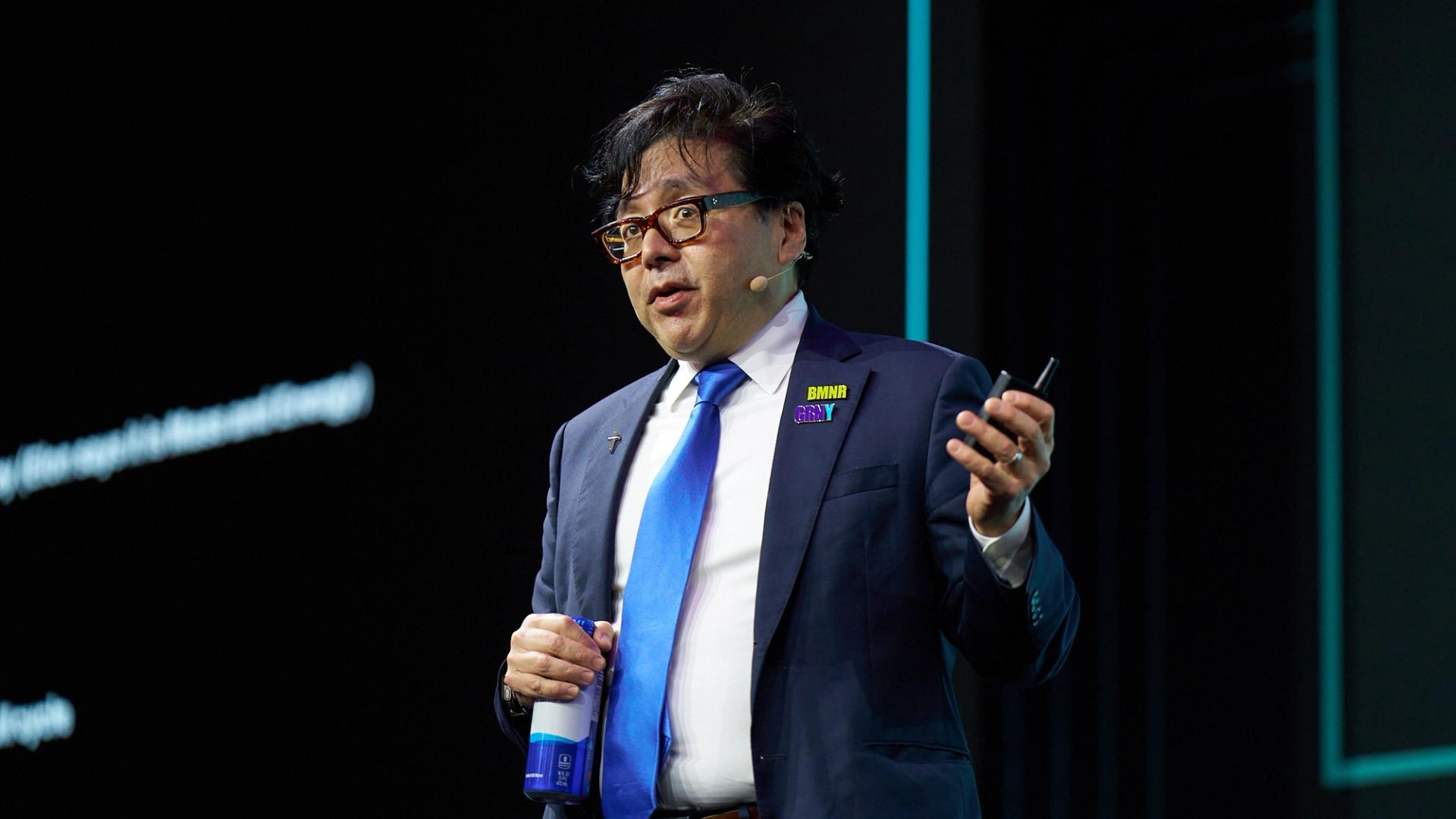
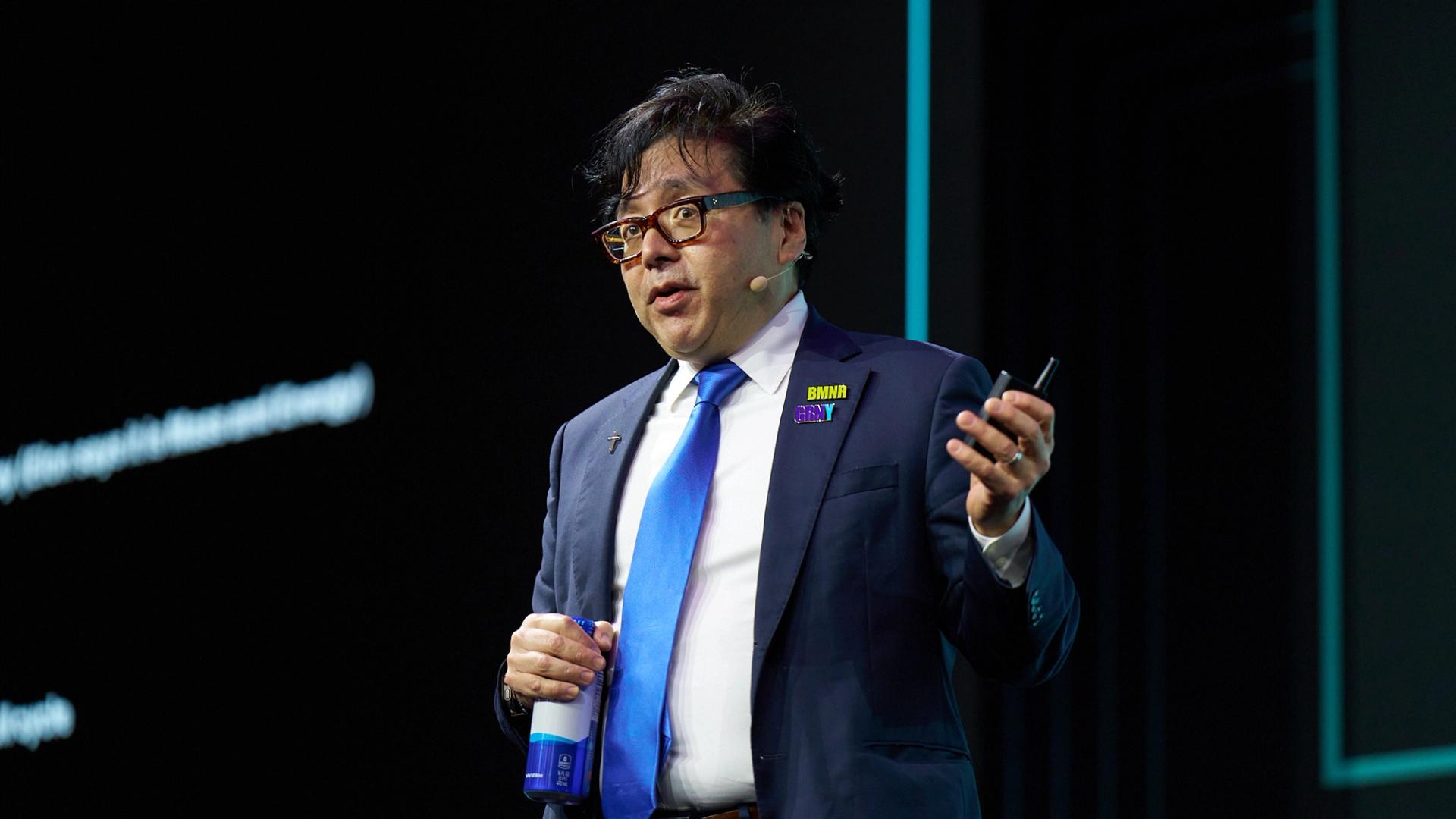
BitMine Immersion Technologies (BMNR), an Ethereum treasury company led by Fundstrat co-founder Tom Lee, is borrowing a page from Strategy’s financing playbook and launching a $300 million preferred stock offering as crypto treasury firms search for new ways to secure funding.
According to a Wednesday filing with the U.S. Securities and Exchange Commission (SEC), the company is offering 3 million shares of its Series A Perpetual Preferred Stock at a stated value of $100 per share. The securities carry a 9.5% annual dividend rate, with dividends paid weekly in cash if declared by the company’s board.
The preferred shares will be listed on the New York Stock Exchange (NYSE) under the ticker BMNP, subject to approval, BitMine said.
The offering comes as digital asset treasury firms, recently under pressure from the downturn in crypto prices, explore new funding sources. Strategy (MSTR), the largest corporate holder of bitcoin, introduced various classes of preferred equities. Bitcoin treasury peers Strive (ASST) and Metaplanet also issued dividend-paying preferred stocks.
Bitmine is aiming to bring that playbook to its Ethereum treasury strategy, according to the filing.
The firm has been among the most aggressive buyers in the sector, accumulating more than 5.3 million ETH worth roughly $10 billion and controlling about 4.5% of Ethereum’s circulating supply over the past year. That ETH bet is currently sitting at an estimated $9 billion unrealized loss as ETH prices fell below $1,800 from around $5,000 in October.
Bitmine’s preferred stock can be redeemed by the company at premiums ranging from 10% to 0% depending on when the redemption occurs. Holders will also have repurchase rights if certain fundamental corporate changes occur. The filing did not specify how BitMine intends to use the proceeds.
The timing is notable given the growing pressure on Strategy’s preferred equity funding model. The firm’s STRC preferred stock fell 5% below its $100 par value on Wednesday as investors debate whether the company can comfortably maintain its dividend payments while bitcoin prices slide.

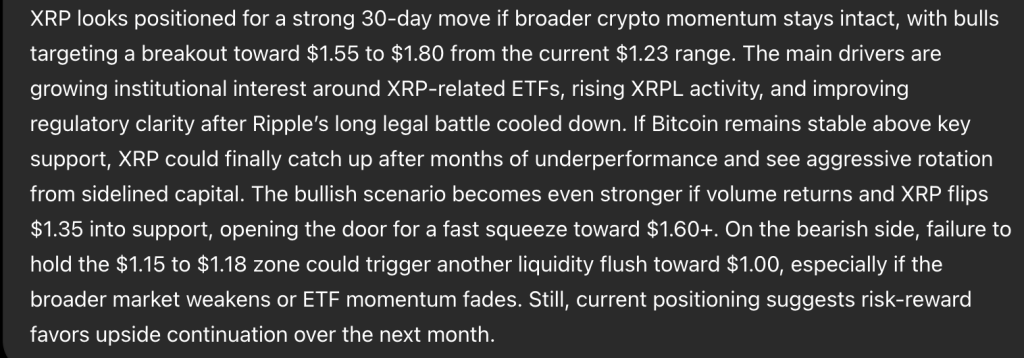
ChatGPT AI predicts XRP price positioned for a strong 30-day move, targeting $1.55 to $1.80 prediction from a current price of $1.238, with the squeeze scenario toward $1.60 and beyond activating the moment XRP flips $1.35 into support.
The bull case Sam Altman’s AI is building is not complicated but the timing element makes it more interesting than most XRP predictions this week.
Months of underperformance have left a large pool of sidelined capital sitting on the sidelines waiting for a signal, and ChatGPT is arguing that signal is close.
Institutional ETF interest is still growing, XRPL activity is rising, and the regulatory cloud that suppressed participation for years has cleared. Those 3 things working together create the conditions for aggressive rotation when Bitcoin stabilizes and gives altcoins room to breathe.
The $1.35 level is the specific technical trigger ChatGPT identifies. Right now, it is resistance. Flipping it into support on a closing basis with volume behind it is the event that changes the character of the trade from a range grind to a momentum move toward $1.60 and above.
That is a precise and useful read because it gives a clear line in the sand rather than a vague directional opinion.
The bear case is equally specific. The $1.15 to $1.18 zone is the floor that matters most on the downside. Losing it with conviction would trigger a liquidity flush toward $1.00, which is a level XRP has not traded at since before the November 2024 breakout.
Broad market weakness or fading ETF momentum are the 2 catalysts that could push the price there, and both are live risks given where Bitcoin is sitting right now.
XRP Price Prediction: XRP Just Had a 6.98% Weekly Loss and Is Now Testing the Pre-Breakout Zone That Started Everything
XRP price is closing the current week at $1.238, down nearly 7% on the week, and this weekly chart, going back to early 2024, is showing something that has not happened since the original November 2024 breakout: price is approaching the launch zone where the entire institutional repricing began.
The vertical move from $0.55 to $3.40 in late 2024 left little structural support on the way up, as it happened too quickly for buyers to build meaningful positions at any particular level.
That speed is now working against the recovery, because there are no strong historical support zones between $1.00 and $1.60 built through accumulation rather than just passed through during a parabolic move.
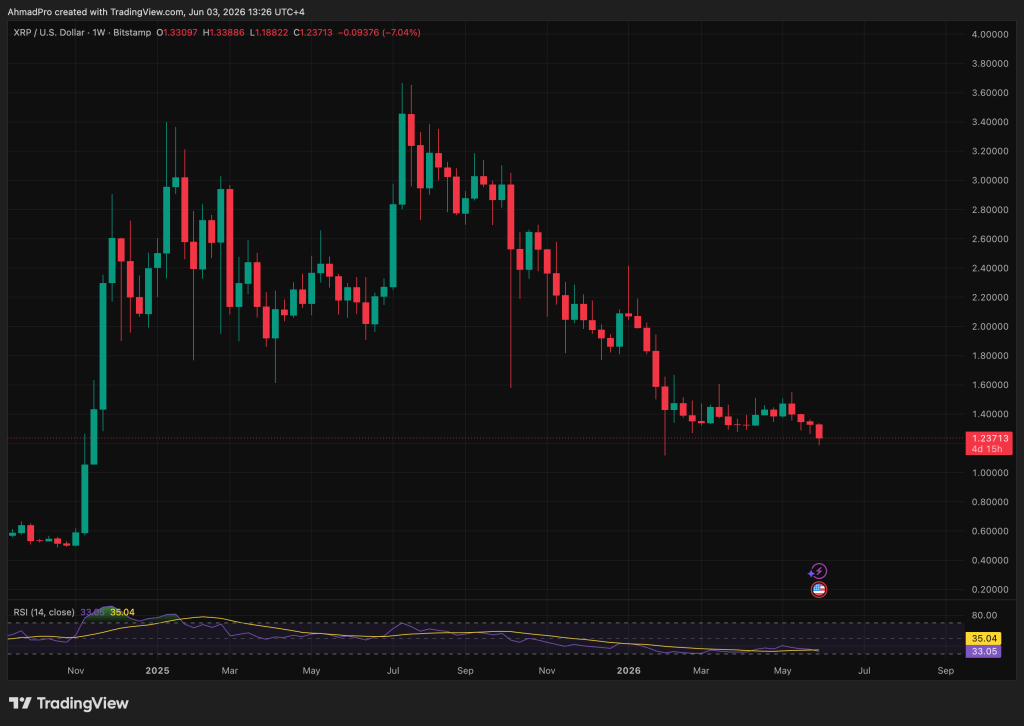
The $1.20 level is the closest thing to a genuine floor on this chart, and it has been tested and held on multiple weekly closes since February.
This week’s candle low of $1.188 tested below $1.20 intraweek before recovering to close at $1.238, which mirrors the wick behavior seen at the February low.
That kind of below-support wick followed by a recovery close is often the last liquidity grab before a meaningful bounce, and it is exactly the pattern ChatGPT’s $1.15 to $1.18 bear case floor is referencing.
If $1.20 holds on a weekly close basis, the base between $1.20 and $1.60 remains intact, and the $1.55 to $1.80 target stays in play. If it breaks, the next level with historical significance is $1.00, where the pre-election institutional positioning began in late 2024.
LiquidChain Is Catching the Attention of XRP holders: ChatGPT AI Predicts It’s the Next 100x
The rotation has already started. Most people just have not noticed where it is going.
Large-cap crypto is not broken. It is just capped. Bitcoin, Ethereum, and XRP are all pressing against the same resistance bands they have been testing for weeks.
The macro relief that would unlock the next leg keeps getting delayed. The institutional inflows that were supposed to arrive keep getting pushed back. Sitting in assets where the upside depends entirely on catalysts outside your control is a strategy with a known ceiling.
The money that understands cycles does not wait at that ceiling. It moves before the next thing becomes obvious.
Early-stage infrastructure plays operate on fundamentally different math. The market cap is small enough that a relatively modest capital rotation produces dramatic price movement.
The upside has not been priced in yet because the market has not fully discovered the project yet. That gap between what something is worth and what the market currently thinks it is worth is where the asymmetric returns come from.
Multi-chain fragmentation is one of the most persistent and costly problems in DeFi. Bitcoin, Ethereum, and Solana each run their own isolated liquidity infrastructure with no native way to connect them.
Every user who moves value between ecosystems pays for that disconnection in fees, slippage, and failed transactions. LiquidChain eliminates that cost entirely by collapsing all 3 networks into a single execution layer. One deployment. Full ecosystem access. No cross-chain tax on every interaction.
The presale is at $0.01454 with just over $700,000 raised. Ground floor is not a marketing phrase here. It is a description of where this actually sits in its lifecycle.
Execution is unproven. Adoption is unknown. Those risks are real and worth naming directly. Established assets offer a smoother ride toward a ceiling that is already visible. This offers an earlier seat at a table that has not been set yet.
Explore the LiquidChain Presale
The post Sam Altman ChatGPT AI Predicts XRP Price For The Next 30 Days appeared first on Cryptonews.

The crypto market is moving through uneven momentum as different narratives compete for attention. Toncoin remains tied to its messaging-based ecosystem and steady network usage. Shiba Inu continues to rely on strong community participation and periodic meme-driven cycles across retail sentiment shifts. Bonk Coin tracks closely with Solana activity, often reacting quickly to broader ecosystem moves.
BlockDAG is drawing increased focus due to its now live Legacy Sale offering BDAG at a $0.00000044 price and a buyback program allowing holders to sell coins at $0.001 per coin. This is where the next big crypto discussion intensifies, as direction splits across utility, community, and sentiment-led assets. BlockDAG currently sits within a more active participation cycle compared to its peers.
1. BlockDAG: Live Legacy Sale Drives Buyback Program Access
The Legacy Sale is now live, allowing participants to access the Buyback Program through their dashboard after purchase by selecting “Sell Coins.”
There are two participation routes. Legacy Sale buyers can register their BDAG in the dashboard for the Buyback Program with no swap required. Existing holders may also participate by acquiring BDAG via BDAG SWAP at a discounted rate and sending tokens to the designated buyback wallet, subject to a daily submission cap per wallet.
Eligible BDAG submitted under the Buyback Program will be repurchased, with payments made in USDT to the registered wallet by November 1, 2026. Proof-of-funds wallets have also been added to the “Sell Your BDAG” page for added transparency.
The next big crypto discussion often centers on assets where timing and access shape participation more than passive holding. In this case, attention is focused on the narrowing buyback window and how quickly conditions are expected to change within a short timeframe.
Overall, BlockDAG is experiencing a moment where urgency is driven by a clearly defined buyback adjustment, making timing a critical variable for those engaging with the current participation opportunity.
2. Toncoin: Price Holds Near $2 Range Stability
Toncoin is a blockchain asset within The Open Network ecosystem, primarily used for payments, staking, and network-based transactions. It has maintained steady visibility due to ongoing ecosystem activity and integration with messaging-based applications.
Price movements have reflected broader market conditions, with periods of volatility followed by consolidation rather than sustained directional trends. Toncoin is currently trading in the approximate range of $2.00–$2.10, based on recent market data, with intraday fluctuations across exchanges.

In broader discussions around the next big crypto, Toncoin is often referenced due to its established position among large-cap assets and consistent network usage. Its price behavior continues to be shaped by market sentiment and overall crypto cycle movements rather than isolated momentum shifts.
3. Shiba Inu: Market Driven by Social Sentiment
Shiba Inu remains a widely recognized meme-based cryptocurrency, driven primarily by community participation, social sentiment, and periodic retail-driven interest. Within the next big crypto discussion, it is often referenced as an example of a sentiment-led asset that tends to move in short cycles rather than sustained trends.
Its ecosystem includes additional utility components, but price action continues to be influenced mainly by broader market mood and liquidity shifts across exchanges. Shiba Inu is currently trading around $0.0000055 USD, with minor fluctuations reflecting overall crypto market volatility. Despite cyclical movement patterns, it maintains consistent visibility due to its large holder base and active trading presence across major platforms.
4. Bonk Coin: Volatility Driven by Solana Sentiment
Bonk Coin operates within the Solana ecosystem as a meme-driven token influenced heavily by community activity and broader network sentiment. Price action tends to respond quickly to shifts in liquidity and trading interest across the ecosystem.
Bonk Coin is currently trading around $0.0000055 USD, with short-term movement driven largely by speculative flows and overall market conditions. Within the next big crypto discussion, it is often referenced as part of Solana’s meme segment that experiences sharp but sentiment-led price cycles rather than steady directional trends.

Its behavior remains closely tied to retail engagement patterns, where momentum builds and fades in line with broader crypto market risk appetite.
The Bottomline
Toncoin continues to trade near the $2 level as it tracks broader market cycles, while Shiba Inu remains around $0.0000055 with movement shaped by shifting sentiment. Bonk Coin also holds near $0.0000055, reflecting fast reactions to Solana-driven liquidity changes. These assets remain active, but their direction largely follows the overall market rhythm rather than setting it.
BlockDAG, however, is currently defined by timing sensitivity around its $0.001 buyback window, creating a clear focus on execution over waiting. At the same time, BDAG remains available at $0.00000044 with direct buyback program access and 30% off live swap access, adding another layer of participation interest.

This mix of structured timing and accessible entry points keeps BlockDAG in the next big crypto narrative as attention shifts toward assets where timing directly shapes opportunity. Momentum continues building as engagement tightens around its current window.
Disclaimer: This is a Press Release provided by a third party who is responsible for the content. Please conduct your own research before taking any action based on the content.

Crypto World
Outpoll Launches Global Prediction Market Platform Built Around Professional Trading Tools
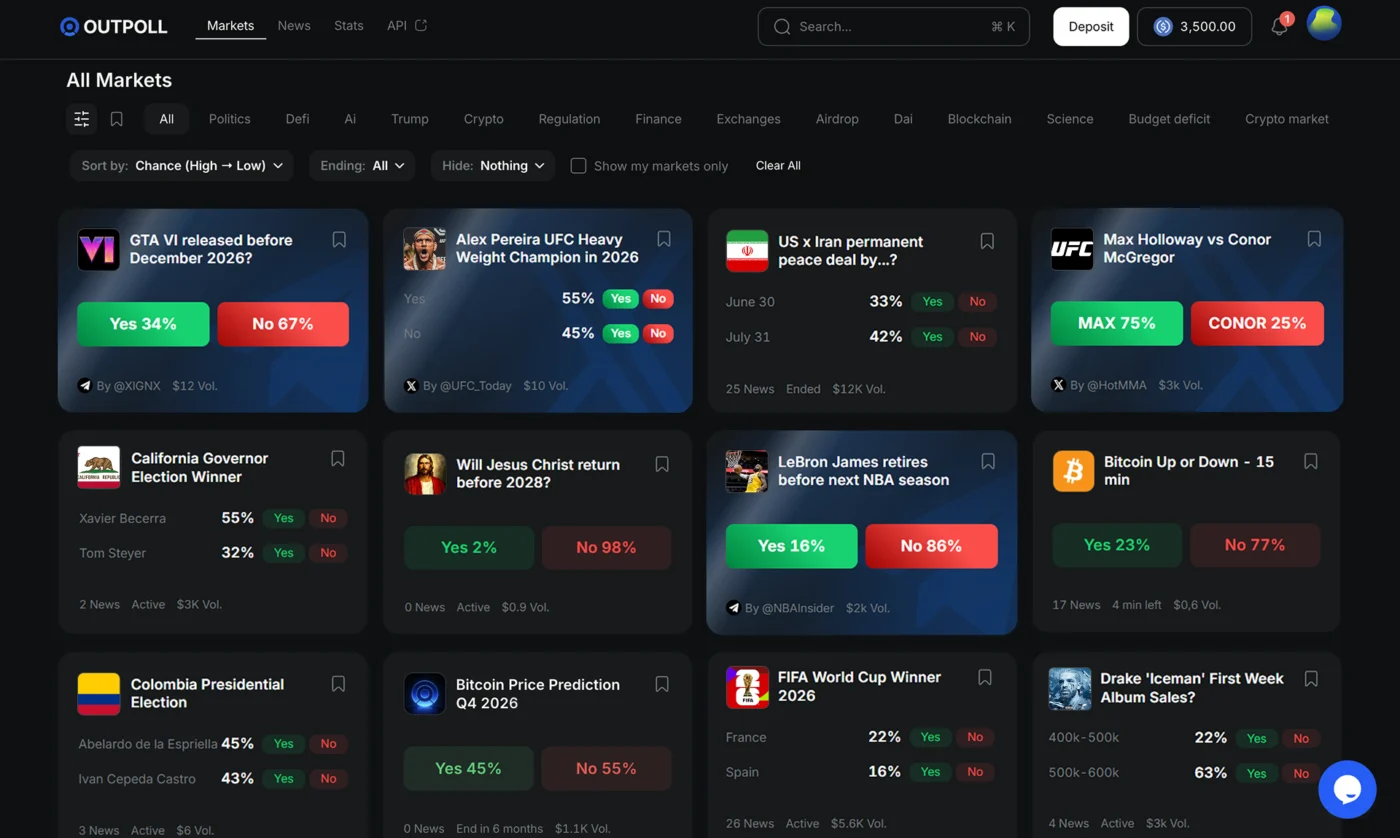
Outpoll announced the global launch of its prediction market platform, a venue where users can trade on the outcomes of real-world events across politics, sports, crypto, and culture. The platform goes live as prediction markets have moved firmly into mainstream coverage, with the category reaching a multi-billion-dollar valuation tier and prices from these markets increasingly cited alongside polls and expert forecasts.
The Outpoll prediction market platform is built around a specific conviction: prediction markets have become a full trading category and deserve the same toolkit traders bring over from FX, crypto, and futures. Where the category historically optimized for casual participation, Outpoll’s prediction market platform treats the user as a trader from the first interaction.
The launch product covers six pillars. Take-profit and stop-loss orders are available on open positions, alongside both limit and market order types – standard equipment on most trading venues, and overdue in the prediction market category. A full public REST and WebSocket API ships with the platform, with documented Python examples covering automation of protective orders, real-time price monitoring, and integration with external infrastructure. Creator-led markets allow approved community leaders and subject-matter experts to launch and curate their own markets with platform-level oversight on quality and resolution. An integrated news section sits directly inside the trading interface, removing the gap between consuming a relevant headline and acting on it. The platform launches with a native Android application available on Google Play, with an iOS version on the roadmap. Multi-currency deposits with in-app conversion to USDC remove first-time friction for users funding their accounts.
Markets on the Outpoll prediction market platform are fully collateralized at the contract level, with positions settled in USDC. Resolution rules and authoritative sources are published before each market opens, with platform-level oversight ensuring markets resolve as defined. Trading fees are approximately 0.1% per trade, in line with industry norms, with no additional charges in the order flow. Onboarding uses a risk-based, trigger-driven KYC approach managed by a dedicated compliance team. The platform also operates a cashback program in which active traders receive Outpoll Token rewards credited to their accounts.
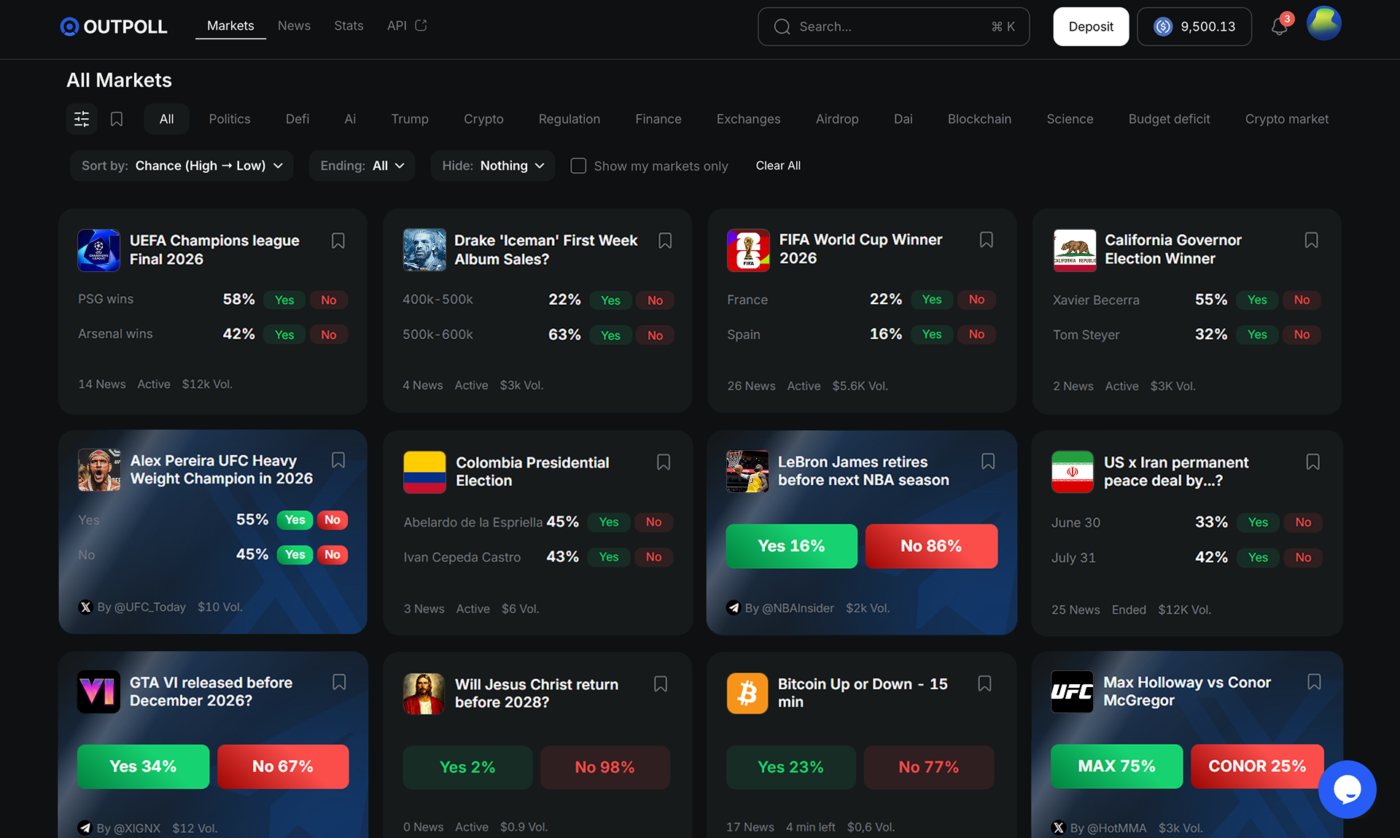
Prediction markets earn their seat at the table by producing prices worth paying attention to. The Outpoll prediction market platform is built around the conviction that the more efficiently traders can express views, the more those prices are worth – and that the platforms which invest in serious tooling earliest will compound a structural advantage as the category matures.
About Outpoll
Outpoll is a global prediction market platform built for traders, forecasters, and audience-led communities. The platform is available globally with restrictions per Terms of Use. More information is available at outpoll.com, with full API reference at docs.outpoll.com/api and the Android application available on Google Play.
Fintech company Revolut plans to offer stablecoins through its future US bank, Reuters reported Wednesday, citing comments from the company’s US CEO, Cetin Duransoy.
Duransoy told the news service that customers of the bank, which is expected to launch next year, will have access to FDIC-insured accounts, multi-currency deposits, stock trading and cryptocurrency services. He said that Revolut plans to initially target retail and business customers with international banking needs, including those managing multiple currencies.
Revolut applied for a US national bank charter in March, which would allow the company to offer federally insured banking products nationwide under a single federal regulatory framework.
That filing marked a change from the company’s earlier plans to acquire a US bank as part of its expansion strategy. Duransoy joined Revolut that same moont to lead its growth in the United States.
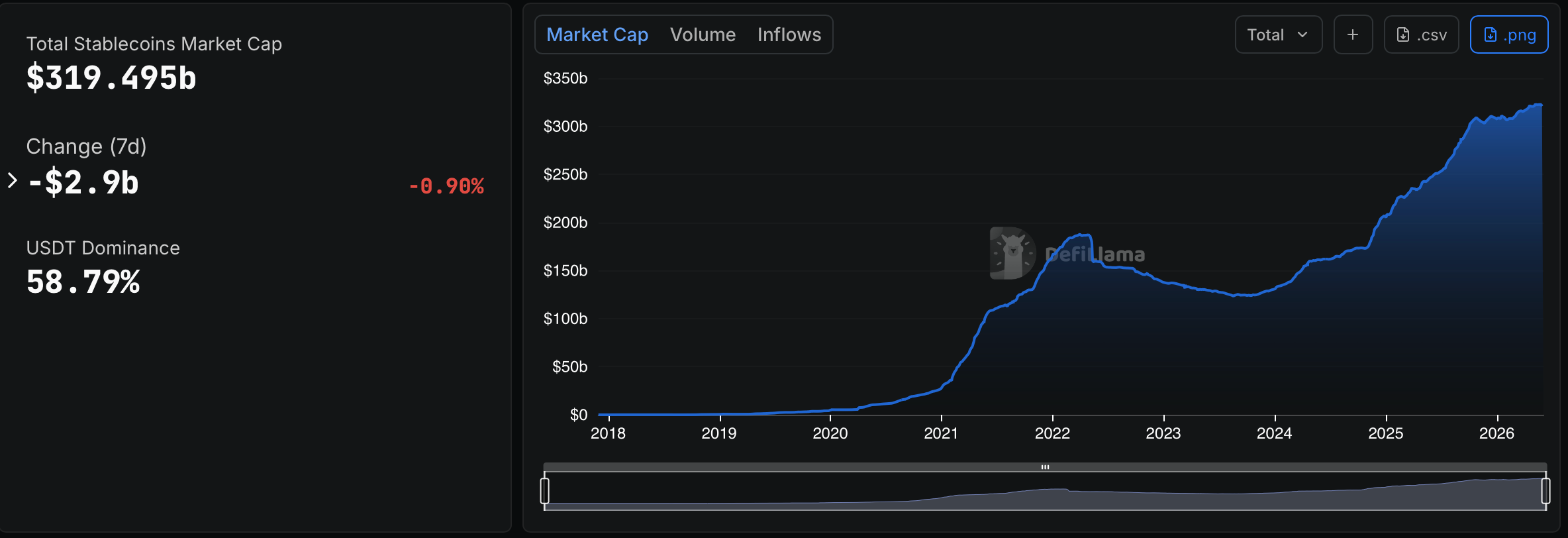
Revolut is looking to get a US foothold in a stablecoin market that has grown to around $319.5 billion, up from about $247 billion a year ago, according to DefiLlama data.
Founded in 2015, Revolut offers digital banking, payments, investing and cryptocurrency products to more than 75 million customers globally, according to its website. Outside of the US, its customers are already able to use their bank cards to make payments with USDT and USDC Stablecoins.
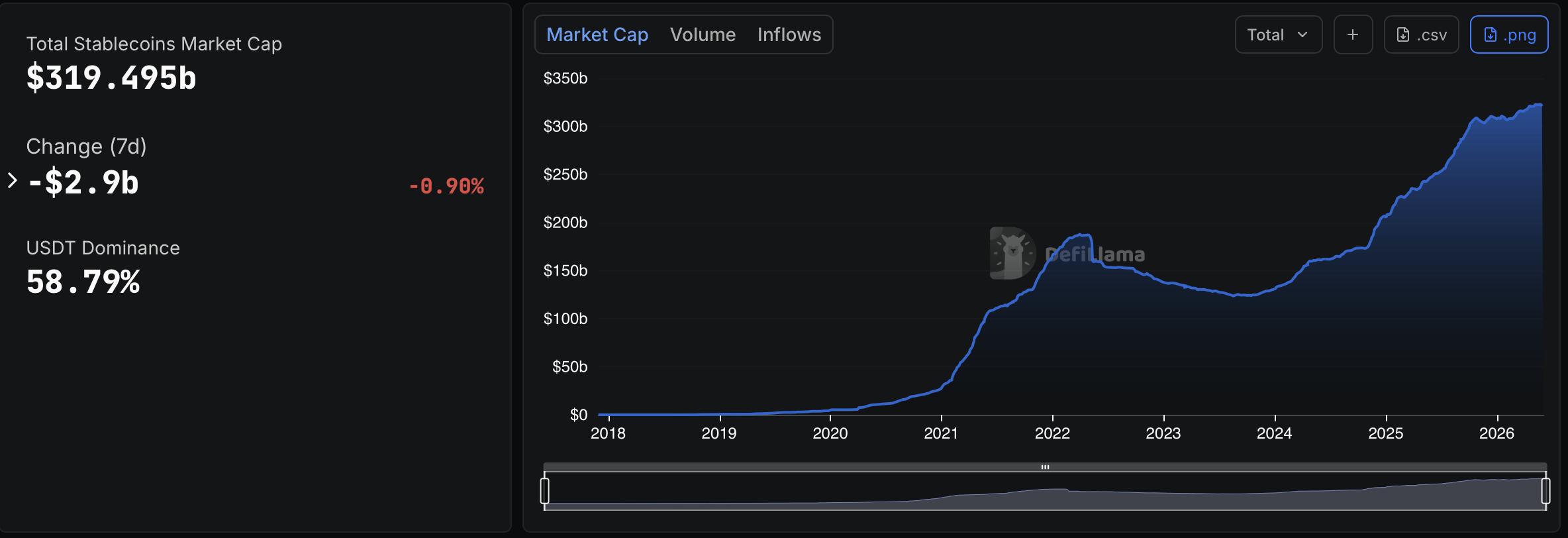
Source: DefiLlama
Related: Mastercard expands support to USDC, PYUSD, RLUSD stablecoin settlement
Stablecoins draw big interest from financial services providers
Revolut’s plans come amid a series of recent stablecoin launches by banks, fintech companies and payment providers as digital-dollar products move deeper into payments and banking services.
In December, digital bank SoFi launched SoFiUSD, a dollar-backed token that enables customers to transact on the Ethereum and Solana networks through the company’s mobile app.
Last week, Falcon Finance introduced the stablecoin fUSD through Anchorage Digital’s regulated issuance platform. The token is backed by cash, repurchase agreements and short-term US government securities and is intended for institutional trading and treasury operations.
On Tuesday, MoneyGram introduced MGUSD in partnership with Bridge, Stripe’s stablecoin platform. The Stellar-based token is integrated into the MoneyGram app and can be used to hold and transfer dollar-denominated balances.
The activity has coincided with a broader push by fintech and digital asset companies to obtain federal banking approvals in the United States. This year, Nubank and Crypto.com received conditional approval to establish national banks, while Circle, Ripple, BitGo, Fidelity Digital Assets and Paxos secured similar approvals from the Office of the Comptroller of the Currency in late 2025.
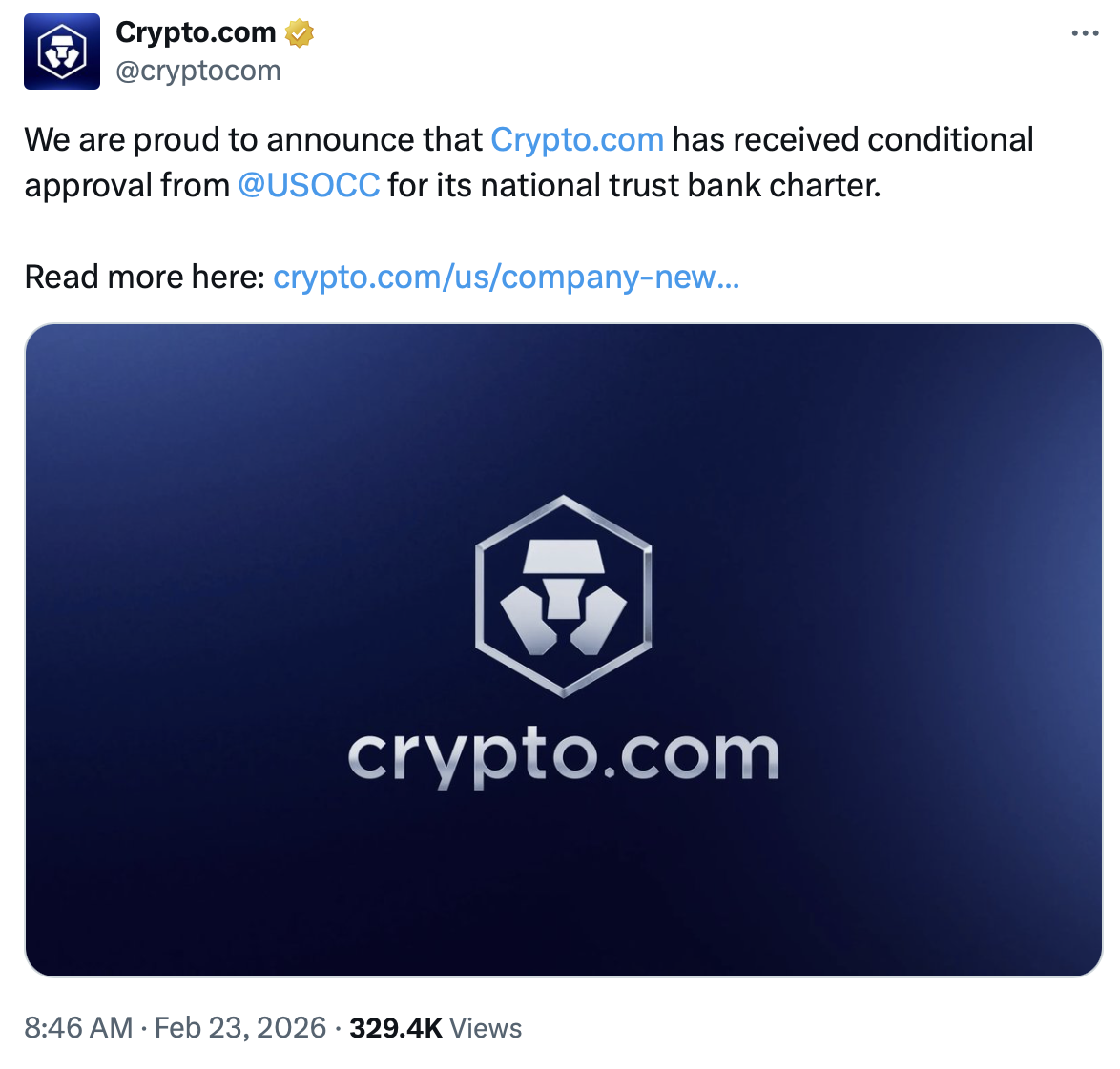
Source: Crypto.com
Magazine: Big Questions: Do we really only need 2–5 cryptocurrencies?
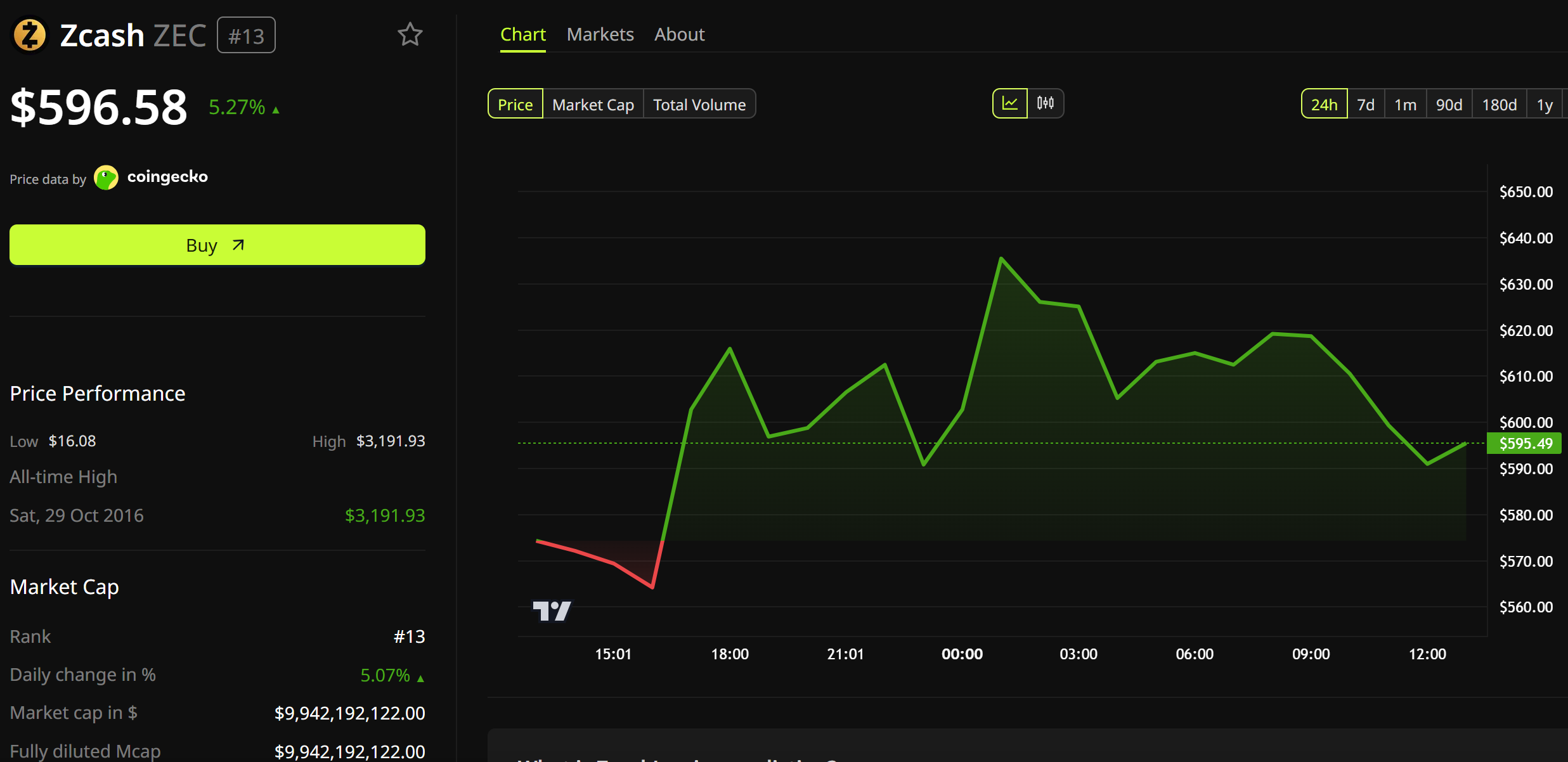
The Zcash Foundation shipped an emergency upgrade to patch a critical bug in its Orchard shielded pool, and Zcash (ZEC) climbed even as the broader crypto market sold off.
The fix arrived through two releases, Zebra 4.5.3 and 5.0.0, which paused and then restored Orchard transactions with a corrected circuit. No funds were lost, and total supply stayed intact.
Zcash Patches a Soundness Bug in Orchard
The flaw sat in the Orchard Action circuit, the zero-knowledge system behind Zcash’s newest privacy pool. If exploited, it could have let value be created without detection.
Follow us on X to get the latest news as it happens
Earlier upgrades had pushed record amounts of ZEC into shielded pools, raising the stakes for any Orchard flaw. Both releases shipped within days of the discovery.
Zebra 4.5.3 disabled Orchard actions through an emergency soft fork at block height 3,363,426. Zebra 5.0.0 then activated the NU6.2 hard fork at block 3,364,600 and switched Orchard back on.
The Foundation said it caught the flaw before any known exploitation. Transparent and Sapling transactions kept working, so user privacy was unaffected. The team urged every node operator to upgrade to 5.0.0.
Why the Network Looked Offline
Reports claimed Zcash had stopped producing blocks for hours. Several explorers showed the chain stuck near height 3,364,601 during the upgrade window, and social posts amplified the confusion.
The halt was only apparent. Mining pools kept producing blocks under the new rules while lagging explorers resynced.
By midday on June 3, most had caught up to the upgraded consensus.
ZEC Holds Up as Markets Fall
ZEC traded for $596 as of this writing, up by over 5% over 24 hours, according to market data. The token ranged between $560 and $638 on the day, while Bitcoin and other large caps slid.

Its market value sits near $9.9 billion, placing ZEC around 13th by capitalization. The strength fits a wider rotation into privacy assets that has lifted the token in recent months.
Growing institutional interest has tracked rising demand for privacy. Talk of ETF prospects for ZEC has added to the momentum, though approval is far from certain.
The incident tested Zcash’s coordination more than its order book. Some analysts have floated higher long-term targets, but those calls stay speculative until operators cleanly finish the move to 5.0.0.
The post Zcash Fixes Emergency Bug as ZEC Defies Crypto Market Crash appeared first on BeInCrypto.
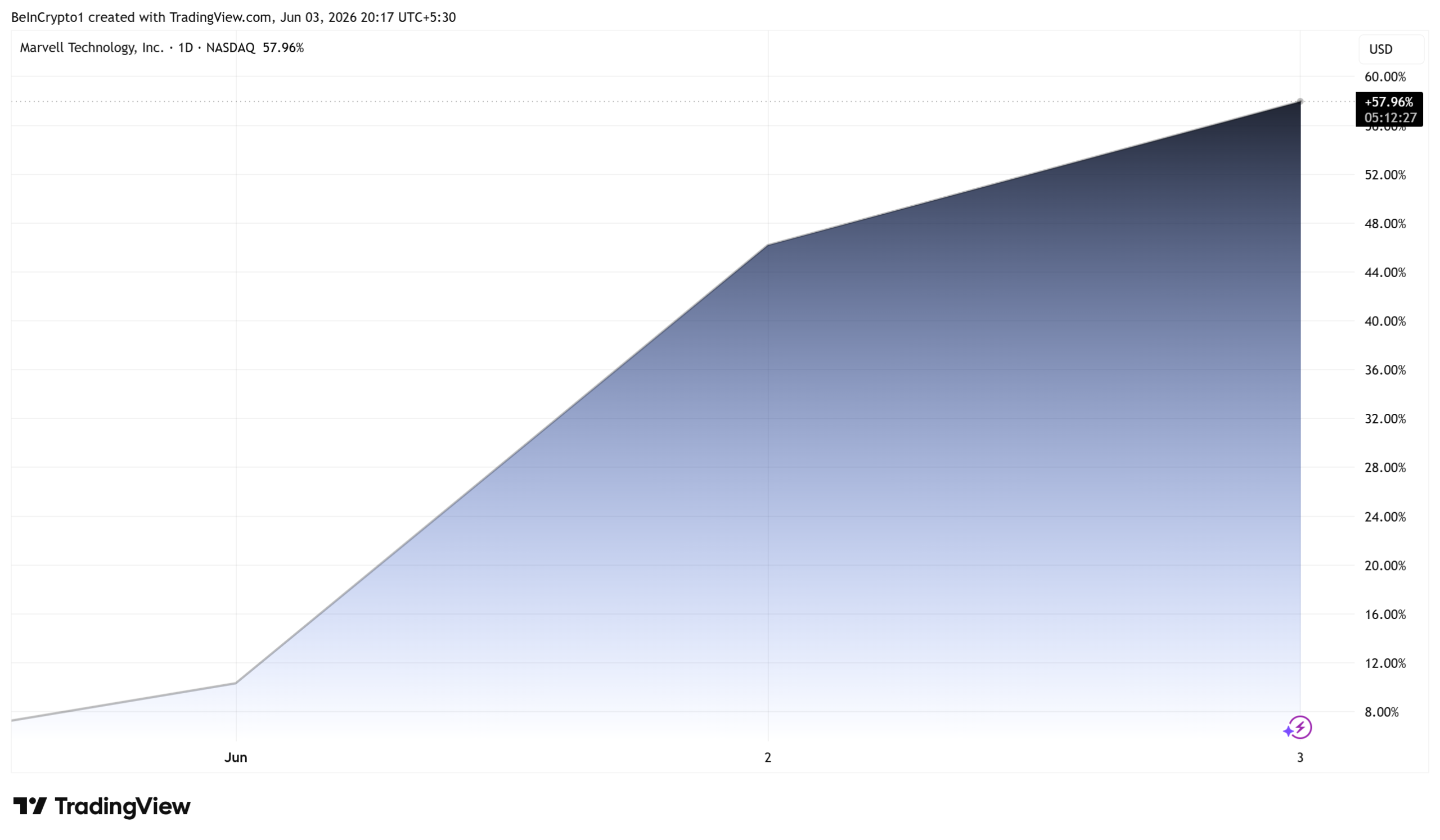
Nvidia CEO Jensen Huang called Marvell Technology the next trillion-dollar company at Computex on June 2. Marvell shares jumped about 33% in a single session, their biggest one-day gain on record. The move added roughly $56 billion in market value, pushing Marvell above $250 billion.
The endorsement landed as investor Michael Burry warned that Nvidia itself faces concentrated demand and hidden financing risk across the AI buildout.

What Jensen Huang Said About Marvell
Huang made a surprise appearance during Marvell CEO Matt Murphy’s keynote in Taipei, spending about 10 minutes on stage. He praised Marvell’s networking and connectivity chips as essential to data centers, where AI workloads run across thousands of linked processors that must share data quickly.
The remark followed Nvidia’s roughly $2 billion equity investment in Marvell, which tied the firm’s custom accelerators and optical networking to Nvidia’s AI factory architecture.
Follow us on X to get the latest news as it happens
Why the Marvell Bull Case Holds
Bulls argue connectivity is the next bottleneck in AI systems after raw compute and memory. Marvell builds the switches, optics, and custom silicon that link those clusters, and data center products now drive most of its revenue.
Skeptics counter that Marvell trades at a steep valuation. It also faces strong competition from Broadcom in networking silicon.
“…the next trillion-dollar company,” CNBC reported, citing Jensen Huang.
A single endorsement rarely changes fundamentals, yet Huang’s words carry weight with traders. Analysts have also stayed broadly bullish on Nvidia, reflecting confidence in the wider AI trade.
Michael Burry’s Warning on Nvidia
Michael Burry, known for his role in The Big Short, has taken the other side of the AI story. His firm, Scion Asset Management, bought put options (short orders) on one million Nvidia shares.
Burry flagged Nvidia’s customer concentration as a core risk. He said the top three customers now account for 64% of Nvidia’s accounts receivable, up from 56% the prior quarter and about 33% in 2020.
He also described much of today’s spending as a temporary benchmarking phase he calls a tokenmaxxing bubble. In his view, that demand looks permanent now, but could fade.
“The conditions for an aggressive fall are as strong as they have been in the history of the stock,” Burry stated.
Burry’s caution echoes other warnings he has issued about a wider market bubble. He has recently been shorting chip stocks as well.
His thesis points to leveraging hidden across the system. A Moody’s report in February found that Microsoft, Amazon, Alphabet, Meta, and Oracle have $662 billion in future data center lease commitments that are not yet reflected on their balance sheets.
That figure equals roughly 113% of the five companies’ adjusted debt, according to Moody’s. The obligations become real cash costs once the leases begin.
Other signals have added to the caution. Reports of falling H200 rental prices have raised questions about near-term GPU demand.
The post Nvidia CEO Just Crowned the “Next Trillion-Dollar” Chip Stock and It Went Up 33% appeared first on BeInCrypto.
Crypto World
Bitcoin falls to $64,000 and Crypto Liquidations Top nearly $1 Billion: More Pain ahead?
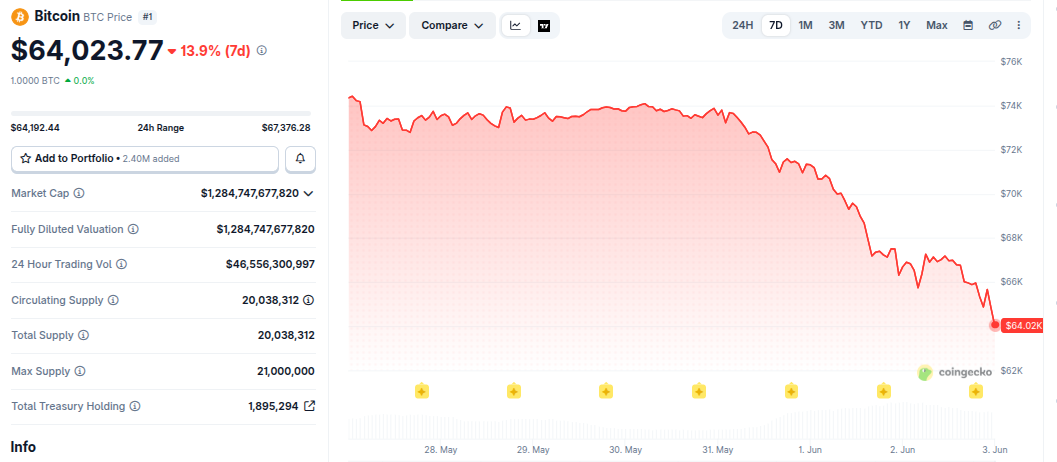
The price of Bitcoin (BTC) registered a 4% drop in the last 24 hours and is heading towards losing the psychological level of $64,000.

The post Bitcoin falls to $64,000 and Crypto Liquidations Top nearly $1 Billion: More Pain ahead? appeared first on BeInCrypto.
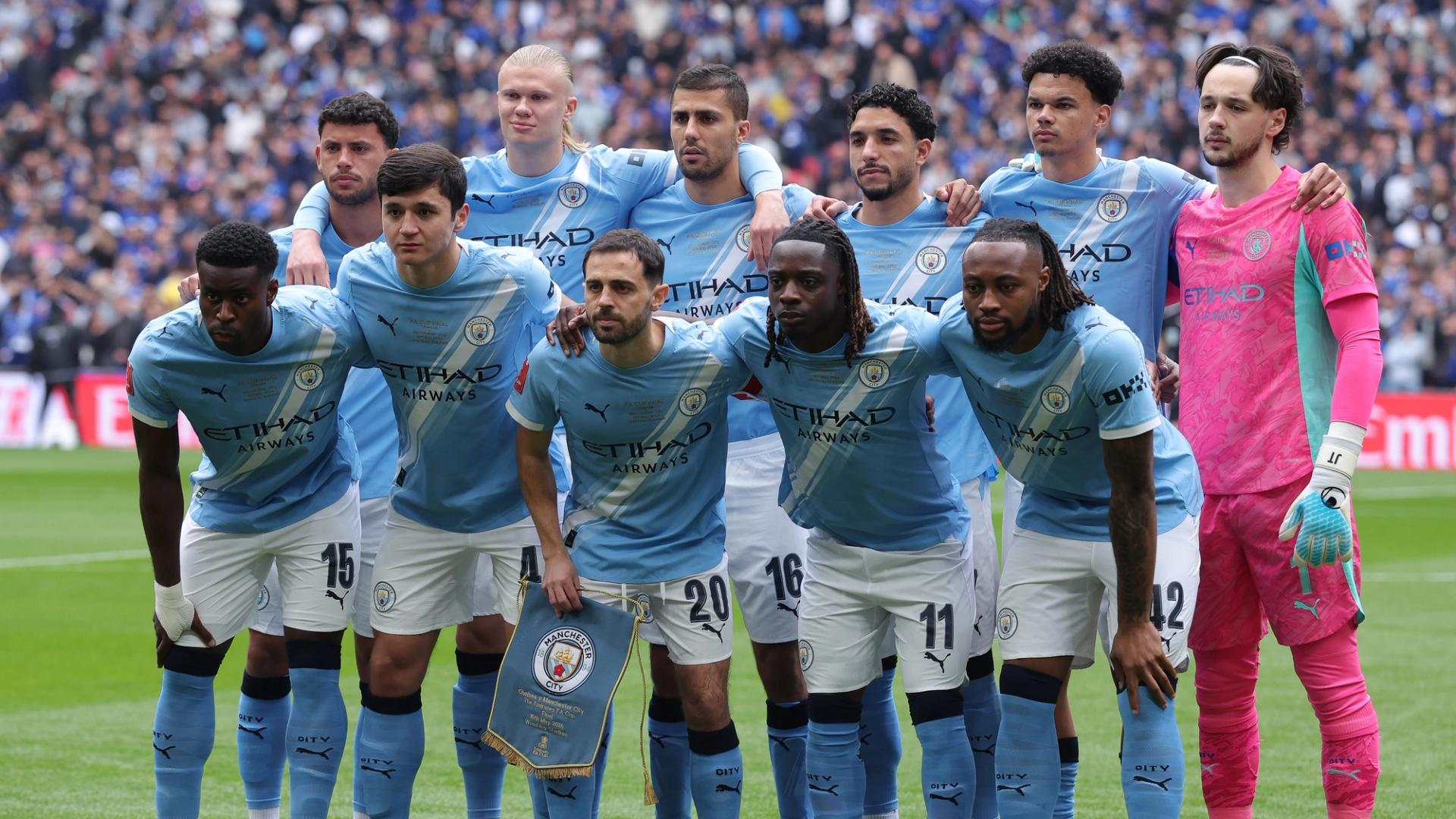
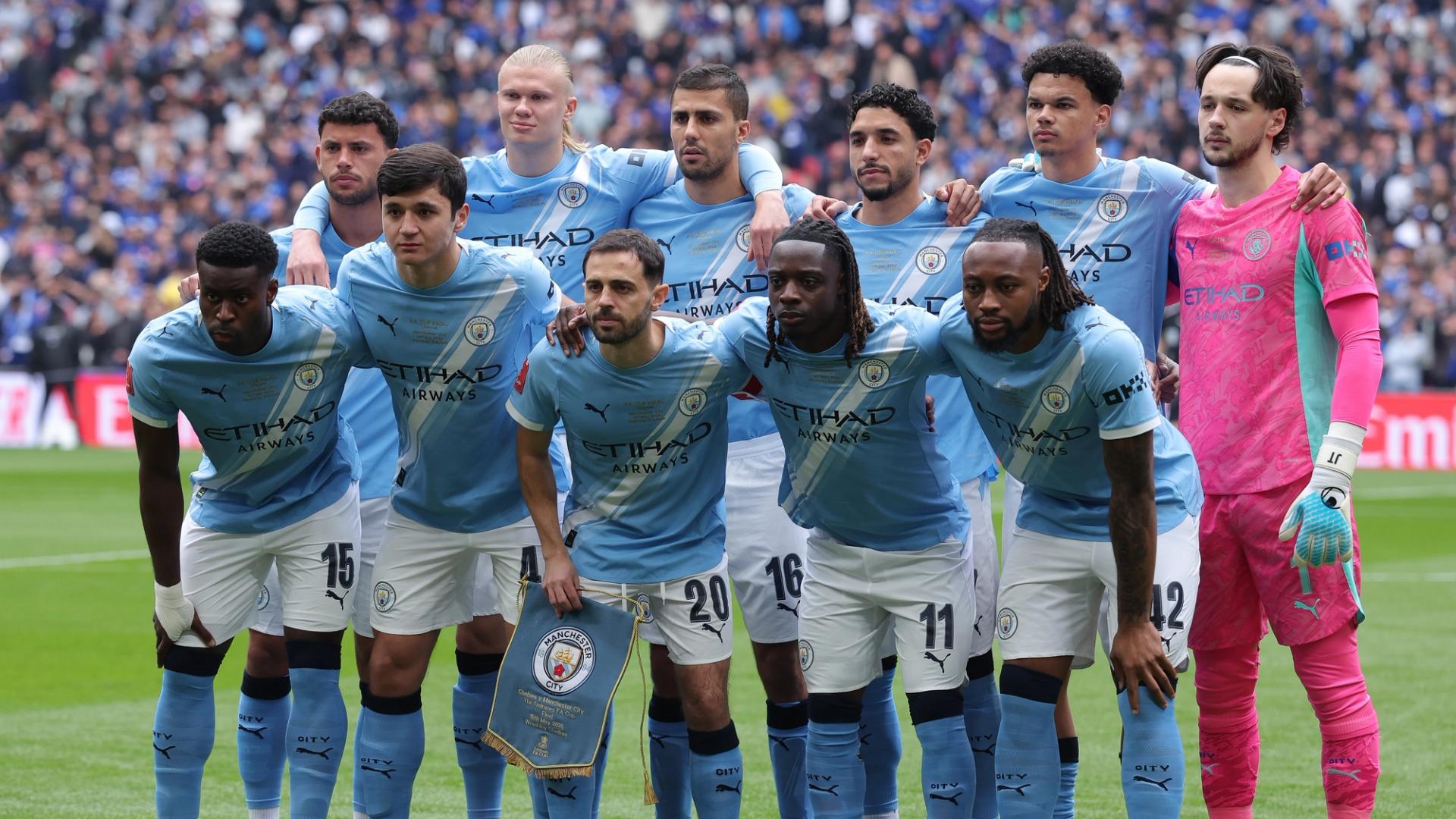
Premier League soccer clubs have been warned by the U.K.’s Financial Conduct Authority (FCA) about sponsorship deals with unauthorized crypto firms.
The FCA said unauthorized firms could be breaching rules on financial promotions through the high-profile sponsorship deals.
Clubs enabling such promotions could be exposed to legal liability, money laundering and reputational damage, the FCA said. Companies not listed on the FCA’s crypto register are allowed to advertise in the U.K. only if their marketing material is signed off by a company authorized to approve it.
“Millions of football fans trust their club’s badge,” Lucy Castledine, director of consumer investments at the FCA, said. “Clubs should not let unauthorised financial firms exploit that loyalty by putting potentially dodgy products in front of millions of fans.”
The most prominent crypto sponsorship deals in the Premier League to date have been OKX’s logo appearing on the sleeves of Manchester City shirts, and Kraken occupying a similar berth on Tottenham Hotspur’s.
Kraken is on the FCA’s registry of authorized crypto firms (through parent company Payward). OKX is not.
The FCA said it has written directly to Premier League clubs to warn them about unauthorized crypto companies and remind them of their responsibilities to their fans.
Neither Manchester City nor OKX had responded to a request for comment by publication time.
Crypto World
Bitcoin News: BTC Crashed 12% and $1.85 Billion Got Liquidated, But Blaming Saylor’s 32 BTC Sale Is Simply Wrong

In the latest Bitcoin news, BTC price crashed to a four-month low of $65,707 on June 3, shedding 7% in 24 hours and more than 12% across seven days, as $1.85 billion in crypto liquidations tore through derivatives markets.
The dominant narrative that followed pointed fingers at Michael Saylor and Strategy’s first Bitcoin sale in three years.

Discover: The Best Crypto to Diversify Your Portfolio
Why the Saylor Attribution News Is Wrong: 32 Bitcoin Does Not Move a $57B Market
Strategy disclosed in an SEC filing that it sold 32 Bitcoin to fund preferred stock dividend payments, the company’s first net reduction in its Bitcoin position in more than three years.
The number is not a typo. Thirty-two Bitcoin, against a liquidation event that wiped $894.5 million in BTC positions alone. The attribution collapsed under basic arithmetic the moment it spread.
The narrative traveled faster than the data for a simple reason: the timing was close, the symbolism was sharp, and traders primed for a downside catalyst accepted the first available explanation.
Market anxiety around Saylor’s positioning had been building for weeks, making the attribution feel plausible even without supporting scale.
That is how misattribution spreads in liquid markets, not through fabrication, but through pattern-matching under stress.
The Mt. Gox estate’s movement of approximately $739 million worth of Bitcoin added to the fog. On-chain monitoring flagged the transfer, and sentiment deteriorated immediately. But as this publication has noted in prior coverage of Bitcoin liquidation events tied to large on-chain movements, a wallet transfer is not a sale.
Exchange inflow metrics did not show a corresponding spike that would confirm coins reached order books before the cascade began.
The verdict is unambiguous: a 32 BTC sale and an unconfirmed wallet transfer did not generate $1.85 billion in liquidations. Excess leverage in a deteriorating technical structure did. Michael Saylor was the story crypto Twitter needed; the derivatives market was the story the data showed.
Can Bitcoin Price Recover, or Does $65,000 Mark a Deeper Structural Break
BTC is sitting at $67,057 on the daily chart, and the recent price action has been brutal, with price collapsing from the $82,000 high in early May all the way down to current levels in just a few weeks, erasing the entire recovery that built through March and April.
The most alarming thing about this move is that it has broken back below the $68,000 to $70,000 range that served as the base for the March and April recovery, meaning the higher-low structure that had been holding since February has now been violated.
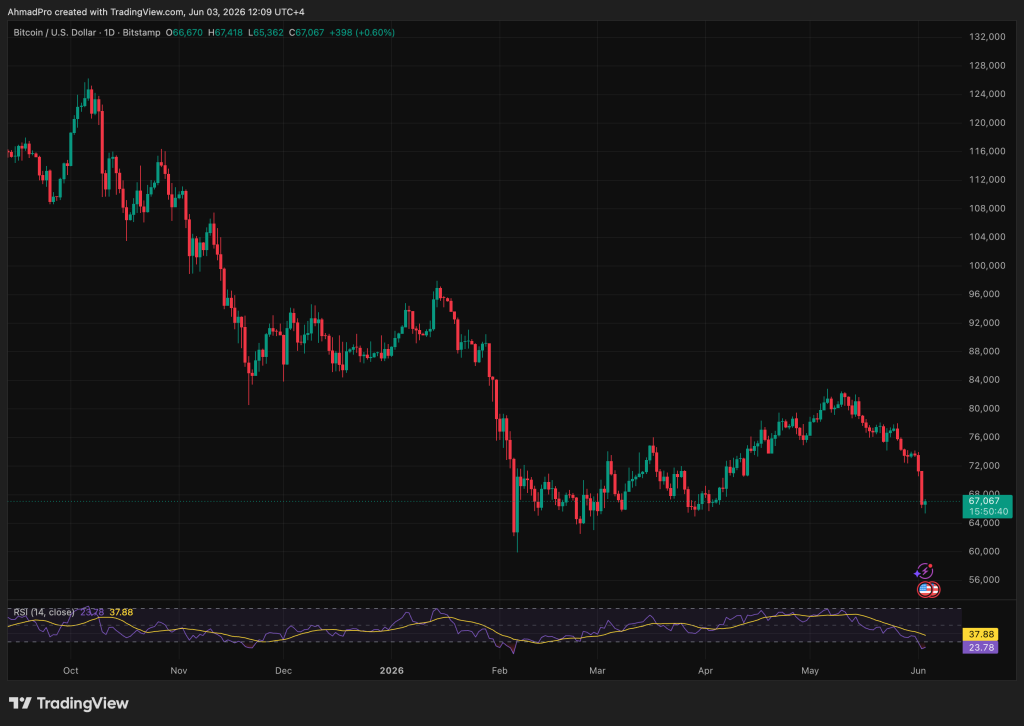
The $64,000 to $65,000 zone is the last serious support on this chart, having held twice during the February to March period as a demand floor, and that is the level price is now heading toward with very little in between.
A hold at $64,000 would be critical, giving bulls one more chance to rebuild from the same zone that launched the previous recovery attempt, but a break below it opens the path toward $60,000 and potentially lower with no meaningful support in sight.
On the upside, $72,000 is now the first resistance that needs to be reclaimed for any recovery narrative to restart, and above that, $76,000 to $78,000 is where heavier supply sits from the May distribution.
The overall picture is deteriorating fast. What looked like a recovering market a month ago has now given back almost everything, and the burden of proof is firmly on the bulls to defend $64,000 or this chart gets significantly worse before it gets better.
Discover: The Best Token Presales
The post Bitcoin News: BTC Crashed 12% and $1.85 Billion Got Liquidated, But Blaming Saylor’s 32 BTC Sale Is Simply Wrong appeared first on Cryptonews.
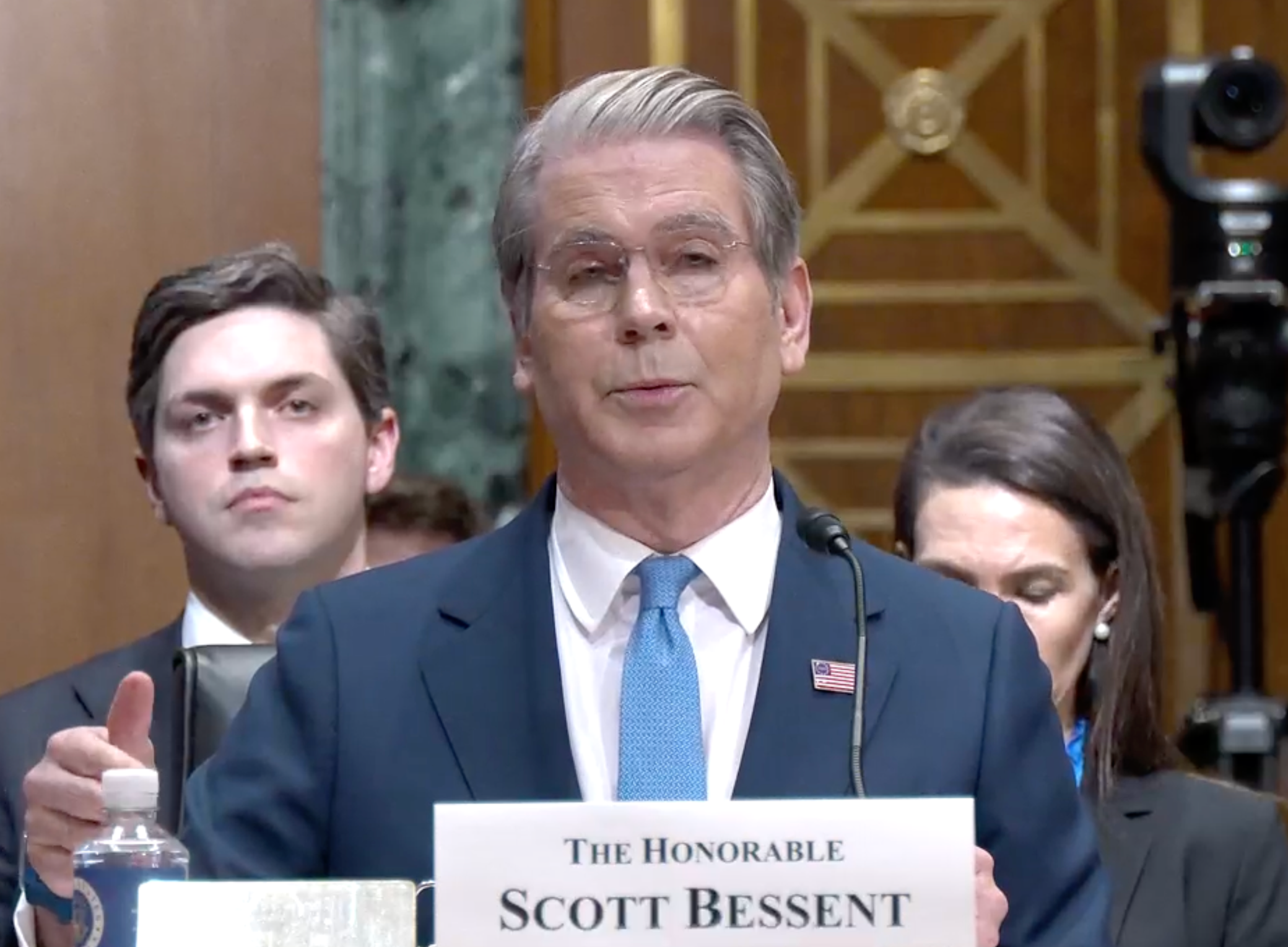
US Treasury Secretary Scott Bessent told Senate lawmakers that his department is pushing to establish a strategic Bitcoin reserve and digital asset stockpile more than a year after it was called for in an executive order from President Donald Trump.
Speaking at a Senate Finance Committee hearing on Trump’s fiscal year 2027 budget for Treasury on Wednesday, Bessent said that the department was “proceeding with all deliberate speed” on the president’s 2025 order to establish Bitcoin and digital asset reserves. Although the reserve has been filled with crypto seized by the government, Treasury officials had no additional acquisition plans as of March.
“We are moving forward very quickly on that, and part of that is our digital assets initiative, the strategic Bitcoin reserve is something, this is new technology, this is new ground, we are proceeding with all deliberate speed, and we are making sure that as we are doing this in this complicated process, that we use best practices and things will be durable for the future,” Bessent said in response to questions raised by Senator Tim Scott.
Scott Bessent testifying at Wednesday hearing. Source: US Senate Finance Committee
The US currently holds 328,372 BTC in its reserves, worth about $215 billion at the time of publication. While lawmakers have sought to codify Trump’s order into law by Congress, individual jurisdictions like Texas have already passed legislation creating state-controlled crypto reserves.
Related: US Treasury issues sanctions on Iran, targets 4 crypto exchanges
Bessent did not comment on whether the $1 billion in digital assets seized from Iran since the US-Israel war against the country began in February was included in the crypto reserves. Iran has reportedly been collecting tolls in Bitcoin from ships seeking safe passage through the Strait of Hormuz waterway.
Treasury chief expects CLARITY Act could pass this summer
Bessent also addressed questions from finance committee chair Mike Crapo on the Digital Asset Market Clarity (CLARITY) Act, under consideration in the Senate almost a year after being passed by the House of Representatives. Lawmakers on the Senate Banking and Agriculture committees have passed their versions of the bill to address securities and commodities laws and regulations, respectively, but the full chamber will need to consolidate the bills before any vote.
“We saw Congress pass stablecoin legislation, CLARITY Act, which I would encourage everyone to get behind — it’s very necessary to bring US best practices onshore — and we work tirelessly in terms of custodying these assets and keeping them,” said the Treasury Secretary.
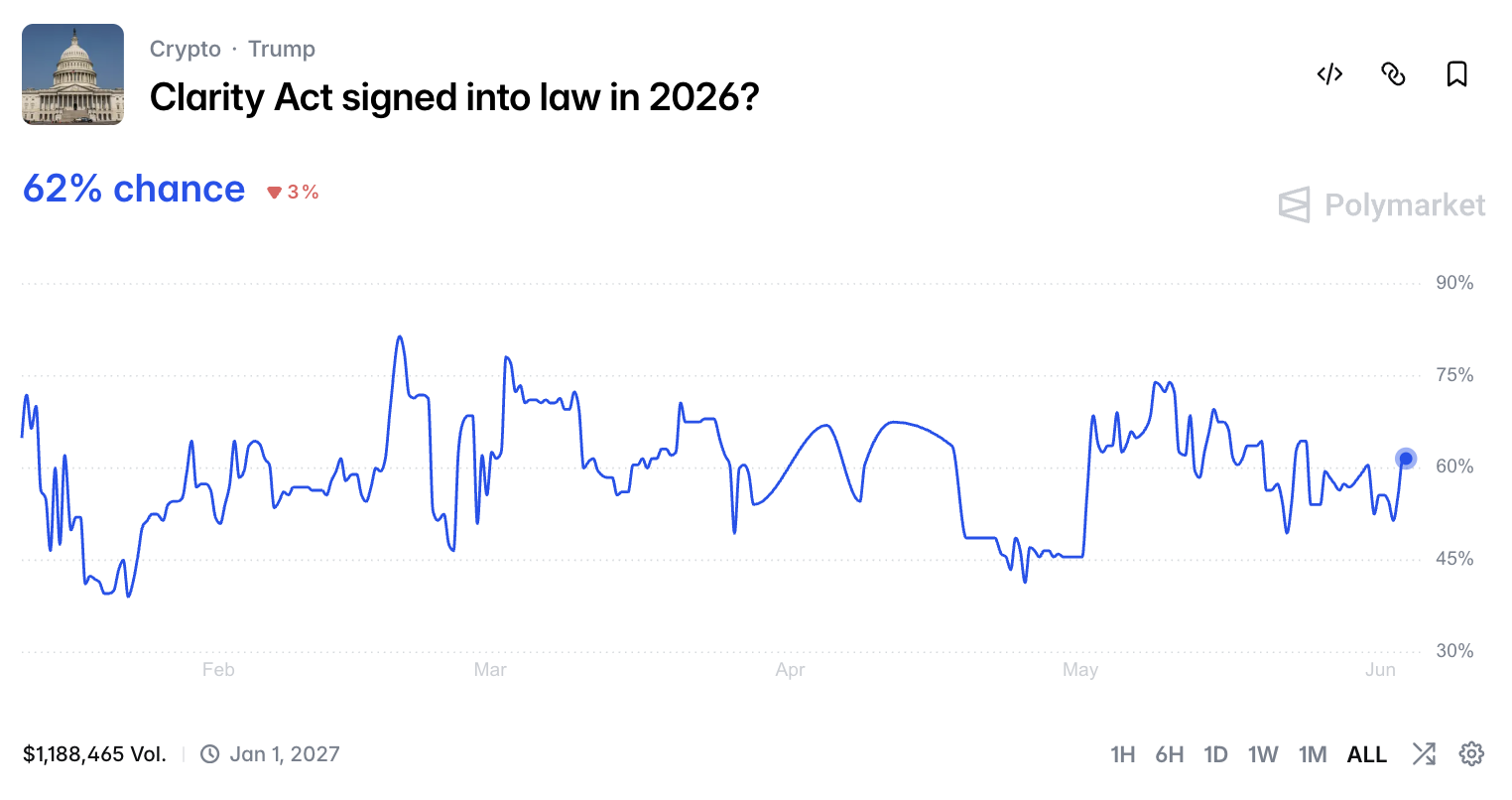
Event contract on CLARITY Act timeline. Source: Polymarket
Bessent said the administration was aiming for the bill to pass the Senate sometime this summer. White House crypto adviser Patrick Witt said in May that Trump was aiming for a July 4 signing ceremony, but some senators expect passage before August.
Magazine: NEAR price may ‘grow 20X,’ Bitcoin ETFs post 10-day outflow streak: Hodler’s Digest, May 24 – 30

SpaceX’s IPO is set to be the biggest ever and could make Elon Musk a trillionaire

IIFL Finance nets $500 million in overseas bond sales

Sam Altman ChatGPT AI Predicts XRP Price For The Next 30 Days



-

 Tech6 days ago
Waymo dominates autonomous vehicle registrations as Tesla trails behind
-

 News Videos6 days ago
This is BROKEN! INSANE 5x MONEY CAR WASH WEEK! The NEW GTA Online UPDATE Today! (GTA5 New Update)
-
 Tech5 days ago
SpaceX just won a second Golden Dome contract. This one is $4.16 billion.
-

 Business2 days ago
Jade Biosciences, Inc. (JBIO) Discusses Positive Interim Results From JADE101 Phase I Healthy Volunteer Study and Development Plans Transcript
-

 News Videos5 days ago
SHE IS KILLING XRP!!! WATCH URGENT AND ACT FAST
-
 NewsBeat5 days ago
FIRST NIGHT REVIEW: Take That bring the Circus back to life in spectacular sun-soaked style
-
 Crypto World5 days ago
CFTC Has Approved the First Regulated Bitcoin Perpetual Contract in the U.S.
-

 Business5 days ago
Is the Spurs Phenom Already Better Than Prime Diesel?
-
 NewsBeat5 days ago
Novak Djokovic v Joao Fonseca LIVE: French Open latest scores and results after Jannik Sinner’s shocking collapse
-
 Entertainment5 days ago
Weak ‘Supergirl’ Box Office Tracking Amid Milly Alcock Backlash
-
 Crypto World5 days ago
Snowflake (SNOW) Stock Rallies on Strong Q1 Results and AI Product Growth
-

 Business5 days ago
Demand Conditions Improve In Chemicals Sector In April 2026
-

 Politics5 days ago
The House | Inside Andy Burnham’s Makerfield Campaign: “Nobody Thinks This Is In The Bag”
-

 Crypto World5 days ago
MicroStrategy Moves $30 Million in BTC to Coinbase Prime: Is the Bitcoin Sell-Off Already Here?
-

 Tech5 days ago
This Week In Security: Ubiquiti Fixes, And FreeBSD Joins The Club You Don’t Want To Join
-

 Entertainment5 days ago
Maddox Jolie-Pitt Legally Requests to Drop Brad’s Surname
-
 Entertainment5 days ago
One of the Greatest Sitcoms of All Time Shoots Up Apple TV’s Charts 11 Years Later
-
 Crypto World1 day ago
Seagate (STX) Stock Surges to Record High on AI Boom and Legal Settlement
-
 NewsBeat5 days ago
Everything you need to know as Cambridge’s Strawberry Fair returns after cancelled year
-
 Entertainment5 days ago
Britney Spears Shares Troubling Update After Hard Year
You must be logged in to post a comment Login