
Crypto World
Trueo Prediction Market Expands from Base to Ethereum


Prediction market platform Trueo says it is preparing to move from the Base network to Ethereum, positioning the switch as a step toward broader integrations and a more ambitious upgrade to its oracle infrastructure. Trueo launched on Base in March 2025, and it now expects the migration to be closely tied to how its platform verifies real-world outcomes—an essential component for any prediction market.
In its announcement, Trueo also pointed to operational and ecosystem differences between the two chains. While Base helped the project get started, the team says Ethereum offers higher integration potential and greater product upside—particularly for the next generation of the oracle system that resolves market outcomes.
Key takeaways
- Trueo, which launched on Base in March 2025, plans to migrate to Ethereum to pursue broader integrations and larger product upside.
- The project links the move to developing the next iteration of its oracle system used to verify real-world outcomes.
- Trueo argues Ethereum is better aligned with its goal of a widely adopted, permissionless, and highly credible oracle and prediction market platform.
- Onchain prediction market data from DefiLlama places Trueo among the largest platforms by locked value, at roughly $795,687.
Why Trueo is leaving Base
Trueo’s stated rationale is rooted in its ambition to scale beyond an initial launch environment. In comments posted on X, Trueo co-founder known as “Lumberg” framed Ethereum as the chain most suited for a “neutral and truthful” oracle system—an outcome quality that directly affects trust in prediction markets.
The project also highlighted that Base served its needs at the time it was building out the earliest version of the product. In a separate explanation on X, Trueo said that as a new app and experiment, an L2 such as Base was the right choice when Mainnet gas costs were still comparatively high and certain features were still experimental.
That context matters because oracles sit at the intersection of onchain computation and real-world verification. If a platform’s credibility hinges on how outcomes are verified, then the underlying network’s integration capacity can influence everything from developer tooling to how external systems plug into resolution mechanisms.
Ethereum as the “integration” and oracle upgrade path
Trueo’s migration plan is also about what comes after launch. The platform said its immediate priority following the move is to attract liquidity and to deploy the next generation of its oracle system.
According to Trueo, Ethereum offers an advantage in terms of how widely apps can integrate, compared with Base where integrations are described as being more limited to the immediate ecosystem. Trueo’s argument is that a prediction market platform only becomes truly useful when it can be permissionlessly integrated, broadly adopted, and able to support a credible resolution process across many participants.
Trueo characterized its “final form” as a platform that is widely adopted, broadly integrated, permissionless, mostly immutable, and highly credible. In that framing, Ethereum is positioned as the best fit to combine those properties in one environment.
“Ethereum is the best chain for the most credibly neutral and truthful oracle system and prediction markets,” Trueo co-founder “Lumberg” wrote on X.
What the move could mean for prediction market liquidity
Liquidity is often the make-or-break factor for prediction markets: without sufficient capital and market depth, users can’t efficiently express views, and issuers may struggle to find counterparties. Trueo explicitly named liquidity attraction as a near-term priority after the migration, suggesting that it sees the network move as a lever to improve trading conditions.
Just as importantly, Trueo’s oracle upgrade target indicates the project is trying to address the core trust mechanism that underpins market resolution. If Trueo can improve how real-world outcomes are verified and how those verification pathways connect with broader Ethereum tooling and ecosystem actors, it may become easier for third parties to build markets and participate in the resolution process.
Still, the migration also introduces uncertainty typical of cross-chain shifts. The article does not specify timelines, how existing markets and users will be handled, or whether users can expect a full continuity of contracts and liquidity during the transition. Traders and market makers will likely want clarity on operational details—particularly around oracle behavior during and after migration—before fully adjusting strategies.
Trueo’s scale in onchain prediction markets
Despite being a relatively new arrival on Base, Trueo is already positioned within the larger prediction market landscape. DefiLlama data cited by Trueo places the platform as the 14th-largest onchain prediction market by total value locked, at approximately $795,687.
This matters because a move to Ethereum will be judged not only on technical merit but also on whether it helps Trueo grow in a competitive segment. The platform’s emphasis on broader integration suggests it expects Ethereum to reduce barriers for new participants—developers creating markets, liquidity providers supporting positions, and potentially other ecosystem components that can benefit from a more universal oracle and resolution layer.
At the same time, the platform’s own framing reinforces that this is not just a deployment change. Trueo is treating the migration as part of an infrastructure evolution: first the network shift, then the oracle iteration, and alongside that, renewed liquidity efforts.
For readers following onchain prediction markets, the next items to watch are the migration timeline and how Trueo will handle oracle operations and market continuity across chains. Clear communication on those details—especially around outcome verification during the transition—will be key to whether the move translates into stronger trust and deeper liquidity on Ethereum.
This article was originally published as Trueo Prediction Market Expands from Base to Ethereum on Crypto Breaking News – your trusted source for crypto news, Bitcoin news, and blockchain updates.


Polymarket has stepped up talks with European and UK regulators as the prediction market platform seeks financial services oversight for its contracts instead of being regulated primarily under national gambling laws.
Summary
- Polymarket is holding talks with regulators in the EU and UK as it seeks to have its prediction contracts regulated under financial services rules.
- The company is pursuing MiFID treatment in Europe while regulators in France, Germany, Italy and the UK continue to classify many prediction markets under gambling rules.
- ESMA has warned about insider trading risks in prediction markets, while the FCA continues to restrict retail access to binary options over concerns about speculation and consumer harm.
- Polymarket’s regulatory push comes as the company seeks new funding at a valuation above $20 billion and works to expand its international operations.
According to the Financial Times, the New York based company has held discussions with regulators in London, Brussels and several European Union jurisdictions as it works toward securing a European license. People familiar with the discussions said Polymarket wants its contracts treated more like derivatives under financial services rules.
The effort comes as the company pursues international expansion while raising capital at a valuation exceeding $20 billion. Polymarket has argued that supervision under financial markets rules would provide a more suitable framework for its products than the gambling regimes currently applied to prediction markets in several European countries.
Polymarket seeks MiFID treatment for prediction markets
Polymarket has been engaging with the European Securities and Markets Authority and the European Commission, according to people familiar with the matter. Discussions have extended to individual national regulators as the company examines possible licensing routes within Europe.
ESMA chair Verena Ross met two U.S. based members of Polymarket’s legal team in June, accompanied by a Paris based lawyer from A&O Shearman and a Brussels based lobbyist from Hanbury Strategy. Polymarket executives met UK Financial Conduct Authority chief executive Nikhil Rathi the following day.
The company is seeking to convince European authorities that its contracts can operate under the Markets in Financial Instruments Directive, or MiFID, which sets rules for investment firms and financial instruments across the EU.
Such a classification would not automatically give Polymarket unrestricted access to European retail customers. ESMA warned in July that some event based contracts could already qualify as financial instruments under MiFID II, meaning existing EU restrictions on binary options could apply when the products meet the relevant definition.
Polymarket has continued discussions despite the regulatory hurdles.
“As we grow our presence and expand globally, we are committed to engaging early and openly with policymakers and regulators,” the company said.
As part of the effort, Polymarket joined trade group Blockchain For Europe this month and has started discussions with other European industry organizations, according to a person familiar with the matter.
European regulators have treated Polymarket differently
Polymarket’s push for financial regulation faces a fragmented European market where authorities have taken different approaches to event contracts.
National gambling regulators in countries including France, Germany and Italy have maintained that prediction markets require local gambling licenses. Retail access to many of the products remains restricted across Europe, although some users continue accessing overseas platforms through virtual private networks.
France has already taken direct action against Polymarket. French authorities ordered internet providers to restrict access to the platform after treating it as an unauthorized gambling service.
Similar action followed elsewhere in Europe. In July, the Czech Ministry of Finance ordered internet service providers to block Polymarket after authorities classified the service as an unauthorized internet game. Czech regulators said the platform had to comply with the country’s gambling framework regardless of how its contracts were described.
ESMA has taken a separate approach by examining whether certain prediction contracts can fall within existing financial market legislation. Its July guidance said firms offering event based contracts must assess whether individual products qualify as financial instruments under MiFID II.
The distinction depends partly on the structure and underlying event of a contract. Prediction markets allow users to trade positions tied to outcomes across financial markets, sporting events, elections, economic decisions, entertainment awards and weather.
ESMA has remained cautious about loosening existing protections for retail investors. The regulator warned this month that prediction markets face risks involving insider trading, an issue that has drawn scrutiny as trading volumes and the range of available contracts have increased.
UK rules split contracts between two regulators
Britain presents another regulatory hurdle because oversight depends on what event determines a contract’s outcome.
The FCA considers prediction contracts linked to financial events and certain climate outcomes to fall within its regulatory perimeter. Political and sports markets, which account for significant activity across platforms such as Polymarket and Kalshi, would instead come under the Gambling Commission.
Britain has prohibited the sale of binary options to retail consumers since 2019. The FCA has maintained that the products can be highly speculative, resemble gambling and expose consumers to significant potential losses.
However, the regulator has recently discussed whether its treatment of retail financial prediction markets should change. As crypto.news previously reported, the FCA has held talks with trading platforms about potentially reopening access to certain financial prediction products for retail investors.
No formal rule change has been announced. As of September, the FCA had not published a consultation, proposed rule or implementation timetable that would allow Polymarket or another platform to offer financial event contracts broadly to British retail customers.
Gambling regulators have maintained a different position for contracts outside the FCA’s perimeter. Political and sports prediction markets would require the appropriate gambling authorization in the UK, creating separate regulatory routes depending on the event being traded.
Polymarket valuation has climbed during regulatory push
Polymarket’s European lobbying effort comes while the company seeks another major financing round.
The platform has been discussing approximately $1 billion in new funding at a valuation above $20 billion. A proposed round led by Donald Trump Jr. linked 1789 Capital would value Polymarket at $21 billion, with the investment firm planning to contribute roughly $300 million.
1789 Capital had previously invested approximately $200 million in the company, while Intercontinental Exchange has emerged as another major backer. ICE, the parent of the New York Stock Exchange, invested $1 billion in Polymarket in October 2025 and disclosed another $600 million investment in March 2026.
The company has pursued regulated market access in the United States alongside those investments. Its U.S. operation runs through QCX, a Commodity Futures Trading Commission designated contract market acquired by Polymarket as part of its return to the American market.
European expansion remains subject to a different set of rules. Polymarket is seeking financial services treatment at the same time that national gambling authorities continue to require local licenses for many of its products, while existing EU and UK restrictions could limit retail access even when some contracts qualify as financial instruments.
ESMA and the FCA declined to comment on Polymarket’s latest regulatory discussions.

Australia’s new 40-year economic outlook has identified artificial intelligence as one of five major transitions expected to have a profound effect on the economy, while leaving out any mention of crypto.
The latest Intergenerational Report, published on Monday by the Australian Treasury, described agentic AI systems as having become “significantly” more capable, autonomous and widely used — surpassing human-level performance on some benchmarks. The other major transitions are geopolitical conflicts, an aging population, a shift to clean energy and Australia’s industrial transformation toward services.
“The Intergenerational Report makes it clear that Australia’s prosperity over the next 40 years will depend heavily on our ability to adopt new technology and lift productivity,” Coinbase Australia country director John O’Loghlen said in emailed comments. “And while the report focuses heavily on artificial intelligence, it completely misses the financial infrastructure those agents will need.”
Previous Intergenerational Reports also have not addressed digital assets. The latest omission came despite the Reserve Bank of Australia increasing its focus on tokenized finance and financial infrastructure upgrades earlier this year, while the Digital Finance Cooperative Research Centre estimated digital finance innovations could generate 24 billion Australian dollars ($17.1 billion) in annual economic gains.
Despite the omission, Treasury’s separate report called the “Financial Innovation Strategy,’ released on Sept. 3, does address the link between AI and financial infrastructure.
Related: Australia draft payments vision eyes stablecoin interoperability
The report said agentic systems could increase automated and machine-to-machine transactions, creating greater demand for real-time, interoperable and programmable payment systems.
“We’ve made good progress in recent years, including through the Digital Asset Platform framework, which has provided necessary regulatory clarity,” O’Loghlen added.
“The opportunity now is to bring the same focus to the tokenized stored-value facility framework for stablecoins, and clear rules for tokenized markets. Those are the rails digital finance — agentic finance included — will run on and getting them right is how Australia turns this opportunity into reality.”
Magazine: Kyle Samani predicts SOL flippening, claims ‘no one’ uses ETH
Crypto World
‘Healthy and Delicious Can Coexist’: Experts Discuss Making Food More Joyful and Sustainable

“Healthy food will have an impact on the world if we are capable to make it nutritious enough to matter, accessible enough to be everywhere for everyone, and desirable enough to be chosen,” she said. “The issue with the food industry is that the big food manufacturers have created desire for product[s] that provide empty calories. They scale it, they spread it all over the world. We feed the world with fat and sugar at a low cost. … It hurts the planet, and it hurts the health of the people.”
TIME executive editor and panel moderator Nikhil Kumar then asked Vikas Khanna, a chef, author, and filmmaker, how he navigates making healthy food as a restaurateur. Khanna, who was on the 2026 TIME100 list, talked about how, at his New York City restaurant Bungalow, he and his team have worked to make their food delicious, healthy, and sustainable.
“There’s also an extreme stigma around ethnic cuisines not being healthy,” Khanna said, but it isn’t necessarily accurate. Much of Indian cuisine, he said, “is based on the principles of Ayurveda and sustainability.” And eating healthy doesn’t have to come at the cost of authenticity. For instance, Bungalow has reduced the ratio of creams used in its foods. “I do understand you adding 40% cream makes everything taste more delicious,” he admitted, “but I want people to feel as if they’re eating at home. I have never met an Indian who says that we use cream in our home cooking.”

As real-world asset (RWA) tokenization expands beyond financial instruments and into environmental markets, Sproutly is building an infrastructure designed to connect blockchain technology with measurable ecological activity.
Rather than treating environmental impact as an abstract digital narrative, Sproutly focuses on linking real-world reforestation and agroforestry systems to blockchain-based records, tokenized assets, satellite monitoring, and digital applications. Its stated goal is to make climate and nature-related assets more transparent, traceable, and accessible through Web3 infrastructure.
According to Sproutly’s current transparency disclosures, the ecosystem is associated with more than 3 million planted and tokenized trees, while its broader portfolio includes 711,250 registered agroforestry systems across Brazil and Angola. Sproutly says these systems are certified under the Global Carbon Standard and aligned with the UNFCCC framework.
How Sproutly Works
Sproutly combines several components into a single ecosystem spanning environmental assets, blockchain infrastructure, enterprise tools, and gamified participation.
1. Tokenized Reforestation and Agroforestry Assets
One of Sproutly’s central concepts is connecting physical trees and agroforestry systems with digital records.
The company’s technology documentation states that planting systems contain geo-tagged trees that serve as anchors for monitoring. Satellite and geospatial data are used to track locations and changes over time, while blockchain-based records provide a persistent digital layer for the associated assets.
Sproutly currently reports more than 3 million trees planted and tokenized, alongside more than 711,250 agroforestry systems across Brazil and Angola. It also reports more than 500 tree species represented across its planting sites.
This approach is important because environmental claims are ultimately dependent on what happens in the physical world. Blockchain alone cannot prove that a tree exists; instead, blockchain can provide a tamper-resistant record for data generated through planting, certification, monitoring, and verification processes.
2. The Dual-Token Economy
Sproutly’s ecosystem uses multiple utility tokens with different functions.
$SEED serves as the core utility token of the ecosystem and is associated with functions including staking, governance, ecosystem activity, and blockchain transaction fees. Sproutly’s current documentation identifies $SEED as the native token used on Sproutly Chain.
$COMPOST is designed primarily around community participation and gamification. It is used within the Sproutly Game and can be converted into on-chain COMPOST for use within the broader ecosystem.
Sproutly also identifies aCO₂ as a carbon-impact token representing verified CO₂ sequestration within its technology stack.
The distinction between these assets gives the ecosystem a structure in which network utility, user engagement, and environmental impact can operate through different digital mechanisms.
3. Sproutly Chain
Sproutly is developing its own EVM-compatible blockchain, positioning the network as infrastructure specifically designed for environmental and impact-related RWAs.
The company describes Sproutly Chain as the foundation for tokenized impact assets, smart contracts, corporate tools, and applications connecting environmental activity with digital ownership and participation.
This is potentially significant for the RWA sector because environmental assets require more than token issuance. They also need data systems, monitoring, verification, reporting, and mechanisms that connect digital representations back to physical assets.
4. Real-World Impact Applications
Sproutly’s ecosystem extends beyond tree tokenization.
Its current platform includes or plans applications covering areas such as:
- Carbon and CO₂ impact assets
- Biodiversity and nature-related assets
- Corporate ESG reporting
- Offset-as-a-Service integrations
- Play-to-Impact gaming
- Enterprise climate-management tools
- Partner infrastructure for bringing external environmental projects on-chain
Some components are already described as live, while others remain on the roadmap. For example, Sproutly currently lists its Offset-as-a-Service API and corporate ESG reporting infrastructure as live, while broader tradable biodiversity-credit functionality remains a roadmap item.
That distinction matters when evaluating the project: the ecosystem should be viewed as a combination of operational products and longer-term infrastructure plans rather than as one fully completed system.
Verification and Transparency
Verification is arguably the most important part of Sproutly’s proposition.
Environmental RWAs are only as credible as the processes connecting their digital representation to the underlying physical activity. Sproutly therefore emphasizes geolocation, satellite monitoring, certification, and blockchain records as complementary layers.
Its technology documentation cites alignment or involvement with organizations and frameworks including the UNFCCC, Global Carbon Standard, ICROA, and Earthood, while its transparency page identifies specific claims and supporting documentation.
Sproutly also states that its $SEED smart contract has undergone an independent SolidProof audit, with the contract deployed on Base.
This doesn’t eliminate all risks associated with environmental markets, but it provides a more concrete framework for assessing claims than relying solely on token-based representations.
Play-to-Impact: Making Environmental Action More Accessible
One of Sproutly’s more distinctive components is its mobile game.
The Sproutly Game allows users to grow virtual trees while connecting gameplay milestones with real-world tree-planting initiatives. The platform describes the system as “Play-to-Impact,” combining gamification with environmental participation.
Players can earn in-game COMPOST and XP, participate in community orchards, and interact with virtual trees. Premium trees can also connect users to additional reward mechanisms, including B3TR rewards through the VeBetterDAO ecosystem.
This model addresses a different problem from enterprise ESG infrastructure: user engagement.
Instead of asking consumers to interact directly with complicated carbon markets, Sproutly attempts to turn environmental participation into an accessible digital experience.
Partnerships and Ecosystem Development
Sproutly’s current partner ecosystem includes organizations spanning blockchain infrastructure, climate technology, certification, finance, and enterprise markets.
Its published partner list includes Circle, RWA Inc., VeBetterDAO, Global Carbon Standard, Lufthansa, and other organizations.
More recently, Sproutly announced an expanded collaboration with RWA Inc. focused on bringing real-world environmental assets on-chain. The September 2026 announcement describes a broader strategy involving consumer tree ownership, business climate-impact management, and partner SaaS infrastructure.
These relationships are relevant because environmental RWAs require cooperation across several layers: physical implementation, certification, data collection, blockchain infrastructure, distribution, and enterprise adoption.
Key Strengths
Traceability From Physical Assets to Blockchain
Sproutly’s approach attempts to connect physical environmental activity with digital records through geolocation, satellite monitoring, tokenization, and smart contracts.
Focus on Productive Real-World Assets
Instead of tokenizing purely financial or static objects, Sproutly focuses on living environmental assets and agroforestry systems that can produce measurable ecological outcomes.
Multiple User Entry Points
The ecosystem is designed for different participants: individuals can use the game, businesses can access ESG and offset infrastructure, while Web3 participants can interact with tokenized impact assets.
Growing RWA Infrastructure
Sproutly is attempting to build infrastructure that can support environmental assets beyond its own initial projects, including a partner SaaS model for external organizations.
Greater Transparency Around Claims
The project’s dedicated transparency page distinguishes between Verified, Roadmap, and Vision items. This is particularly useful in an industry where plans can easily be confused with operational capabilities.
Areas to Watch
Environmental Verification Is More Complex Than Blockchain Verification
A blockchain can provide an immutable record, but it does not independently prove that an environmental claim is accurate. The quality of the underlying planting, measurement, certification, satellite data, and methodologies remains critical.
Token Volatility
$SEED and $COMPOST operate within a crypto ecosystem, meaning their market behavior can introduce volatility that may be difficult for businesses seeking predictable environmental costs.
Regulatory Complexity
Carbon markets, biodiversity credits, ESG reporting, and environmental claims are governed by evolving rules that differ across jurisdictions. Sproutly will need to continuously adapt its infrastructure and compliance processes as these frameworks develop.
Execution of the Roadmap
Several of Sproutly’s larger ambitions—including expanded market infrastructure, broader aCO₂ liquidity, biodiversity-credit functionality, and additional partner applications—are roadmap items rather than completed products.
For potential users and ecosystem participants, separating what is operational today from what is planned for later is essential.
Final Thoughts
Sproutly represents an interesting intersection between RWA tokenization, blockchain infrastructure, reforestation, and environmental data.
Its most notable feature is not simply putting trees on a blockchain. The broader proposition is to create a digital infrastructure layer connecting physical environmental activity with verification, data, tokenization, corporate reporting, and user participation.
The project’s reported scale—more than 3 million planted and tokenized trees and 711,250 agroforestry systems—provides a substantial real-world foundation for that model, while its own blockchain and expanding application layer indicate an ambition to move beyond a conventional carbon-credit platform.
The key question going forward is execution: can Sproutly consistently translate verified physical impact into useful, transparent, and scalable digital assets while maintaining environmental and regulatory credibility?
If it can, Sproutly could provide an interesting case study in how blockchain technology can move beyond speculative RWAs and toward assets tied to measurable real-world outcomes.
For anyone following the convergence of DeFi, environmental markets, and real-world asset tokenization, Sproutly is a project worth watching closely—not simply because it tokenizes trees, but because it is attempting to build infrastructure around the entire journey from soil to data to blockchain.
Website | X | Discord | Telegram
REQUEST AN ARTICLE

Arthur Hayes has argued that a pullback in U.S. artificial intelligence spending could eventually trigger government support for AI infrastructure or stressed insurers, creating dollar liquidity that he expects would favor Bitcoin.
Summary
- Hayes argues weaker AI compute demand could stress debt markets and eventually increase dollar liquidity.
- Federal Reserve raised rates 25 basis points last week, challenging immediate money-printing expectations from Hayes.
- Apollo estimates AI financing needs could support over $2 trillion in debt through this decade.
- NAIC says private credit transparency and valuation risks require continued monitoring by state insurance regulators.
- Hayes expects government compute purchases or insurance support to expand liquidity and benefit Bitcoin prices.
Hayes wrote in his Sept. 22 essay, Safety First, that recent calls by major U.S. AI companies to slow frontier model development may have an economic explanation alongside the safety concerns they have publicly cited. He suggested demand for expensive AI services could prove weaker than the spending assumptions supporting data centers, chips and related debt.
His interpretation is not the explanation given by the AI companies themselves. OpenAI said in August that it temporarily slowed parts of frontier model development after cybersecurity concerns and stronger internal safeguards became necessary. Anthropic CEO Dario Amodei later called for the industry to pace model development so safety controls could catch up with capabilities. Neither statement attributed the slowdown to falling customer demand.
Arthur Hayes sees AI debt as the pressure point
Hayes’s argument centers on the financing behind the AI infrastructure buildout. He contends that lower demand for training and inference could weaken the cash-flow assumptions supporting data centers, semiconductor purchases and private credit tied to the sector. In his words, “Safety First is by definition compute demand destruction.”
Independent credit research confirms that large amounts of financing are being directed toward AI, although it does not establish Hayes’s projected crisis. Apollo said in August that AI-related issuance accounted for nearly 40% of longer-duration investment-grade corporate bond supply. Its economists estimated that the AI ecosystem could support more than $2 trillion of additional investment-grade debt, while public markets may absorb less than $1 trillion through 2030.
Apollo separately estimated that roughly $5 trillion could be spent on AI infrastructure through 2030. Its research said businesses and consumers would need to spend around $2 trillion annually on AI services to justify that level of infrastructure investment.
Credit dependence has continued to grow. A Sept. 21 Apollo note said consensus forecasts assume operating cash flow at five major hyperscalers — Alphabet, Amazon, Meta, Microsoft and Oracle — will rise from roughly $600 billion to $2 trillion by 2030. Apollo warned that weaker cash-flow growth could lead to wider credit spreads and reduced capital expenditure.
Hayes has made a similar argument before. As previously reported, his earlier AI credit-crisis thesis linked a potential AI downturn with credit stress followed by a monetary response that he expected would favor Bitcoin. A later AI bubble and Bitcoin liquidity argument focused more directly on leveraged data-center financing.
Insurance exposure remains disputed in Hayes’s thesis
The second part of Hayes’s scenario concerns insurers and private credit. Drawing partly on research published by Nick Nemeth, Hayes argues that affiliated reinsurance structures could leave some insurers vulnerable if AI-related debt is downgraded and must be marked lower.
Nemeth estimates that affiliated reinsurance credits across the U.S. life and annuity industry total $1.54 trillion. His analysis argues that some reinsurance assets may provide less economic protection than statutory accounting suggests. The figure is Nemeth’s estimate and does not represent a finding by U.S. insurance regulators.
The NAIC does identify private credit as an area requiring continued supervision. Its July update said private credit has less liquidity, weaker price transparency and less frequent valuation than publicly traded debt. Regulators said those characteristics have prompted closer monitoring of valuation practices, underwriting standards and sector concentrations.
NAIC material on private-equity-owned insurers similarly identifies affiliated investment management and cross-border reinsurance as areas under ongoing regulatory review. The organization counted 139 private-equity-owned U.S. insurers by June 2025.
Current industry data does not establish that the U.S. insurance sector is insolvent because of AI exposure. A recent Moody’s survey reported by the Wall Street Journal estimated direct U.S. insurer exposure to data centers at up to $20 billion, while life insurers hold far larger allocations to private debt generally. Hayes’s much larger systemic-risk argument depends on indirect exposure through private credit, reinsurance and structured financing.
Bitcoin thesis depends on a future liquidity response
Hayes presents two possible government responses if AI infrastructure economics deteriorate. One would involve Washington becoming what he calls a “compute buyer of last resort”, using government spending or offtake agreements to maintain demand for AI capacity. The other would involve financial support for insurers if losses on private credit threaten policyholder claims.
No U.S. authority has announced either policy in response to an AI debt crisis. Hayes argues that both scenarios would require increased government borrowing, banking-system liquidity or direct monetary support, which he expects would raise demand for Bitcoin and other scarce financial assets.
Current Federal Reserve policy is moving in the opposite direction from immediate monetary easing. The Fed raised its target range by 25 basis points on Sept. 16 to 3.75%–4.00%, its first increase since July 2023. The vote was unanimous, and officials said inflation remained elevated.
Reserve-management purchases have paused as well. The New York Fed scheduled no reserve-management purchases for both the Aug. 14–Sept. 14 and Sept. 15–Oct. 14 operating periods, although reinvestment purchases continue. Federal Reserve officials have repeatedly said reserve-management purchases are designed to maintain ample reserves and should not be treated as quantitative easing.
Commercial-bank credit has continued growing during the year. Fed H.8 data showed seasonally adjusted bank credit rising from $19.74 trillion in July to $19.87 trillion by the week ending Sept. 9, driven mainly by loans and leases. The figures document balance-sheet growth but do not establish Hayes’s claim that banks are replacing central-bank money creation as a deliberate stimulus program.
Hayes has previously linked Treasury and banking-system liquidity with Bitcoin. His Treasury liquidity and Bitcoin bull-market call argued in August that higher Treasury buybacks and banking liquidity could support crypto prices even without conventional quantitative easing.
AI companies are still spending despite safety calls
Evidence of an immediate collapse in AI investment remains limited. OpenAI’s official material says it slowed parts of frontier development to install stronger monitoring, alignment and security controls, while continuing to invest in model research. Its GPT-6 Astra work proceeded after the company classified the model at a critical cybersecurity capability level.
Anthropic, meanwhile, is considering another model release despite Amodei’s public request for slower industry development, Reuters reported on Sept. 19. The company is weighing competitive pressure from OpenAI alongside safety reviews and preparations for a possible future IPO.
Financing activity remains substantial. Nvidia announced in August that Apollo, BlackRock, Blackstone, Brookfield, Goldman Sachs and KKR were working on independent AI-compute financing platforms intended to mobilize more than $500 billion in third-party capital over time. The amount represents planned financing capacity, not capital already deployed.
SoftBank began marketing more than $11 billion of high-yield bonds this week to help finance its OpenAI investment, according to the Financial Times. The transaction follows large bridge loans used for earlier funding commitments and provides another current example of AI investment drawing heavily on debt markets.
Meanwhile, Bitcoin traded near $85,700 early Sept. 22 after climbing more than 6% during the previous session.

Circle has launched Digital Asset-Backed Borrowing for eligible Circle Mint institutions, allowing customers to deposit Bitcoin, mint cirBTC and borrow USDC through third-party lending markets on Arc or Ethereum.
Summary
- Circle has launched Bitcoin-backed USDC borrowing for eligible institutional Circle Mint customers on two networks.
- Morpho is the first supported lending protocol, with Aave expected to join Circle’s service later.
- cirBTC reserves currently exceed token supply, with Circle publishing backing data directly for public verification.
- New York customers remain excluded, while borrowing terms and liquidations depend on third-party markets entirely.
- Arc’s cirBTC Morpho market shows $18.86 million borrowed with an 86% liquidation loan-to-value threshold.
Circle said on Sept. 21 that the service combines the steps needed to turn native BTC into onchain collateral and return borrowed USDC to a customer’s Circle Mint balance. Morpho is the first supported lending protocol, while Circle says Aave and other platforms are expected to follow.
Customers retain exposure to the BTC supporting their cirBTC position instead of selling the asset to obtain dollar liquidity. The borrowing position remains overcollateralized, with interest rates, collateral limits, liquidation thresholds and available liquidity set by the selected lending market instead of Circle.
Circle Mint routes BTC through third-party lending markets
Using the new workflow, an eligible institution deposits BTC and mints Circle Wrapped Bitcoin, or cirBTC. The customer then transfers cirBTC into a user-controlled Smart Wallet, posts the token as collateral with a supported protocol and borrows USDC. Borrowed funds move from the Smart Wallet into the customer’s Circle Mint balance automatically.
Repayment works through the same interface. A customer can send USDC from Circle Mint into the Smart Wallet and repay part or all of the outstanding debt. Collateral becomes available as debt is repaid, subject to the rules of the lending protocol controlling the position.
Circle does not provide the underlying credit. Its legal terms state that Circle Technology Services supplies the interface and Smart Wallet technology, while lending, collateral management and liquidations occur through third-party DeFi protocols and their smart contracts. Assets moved into the Smart Wallet are no longer held within the regulated Circle Mint environment.
Circle Mint remains an institutional service. Individual retail users cannot open standard Mint accounts, while Digital Asset-Backed Borrowing carries further jurisdiction and eligibility requirements. Circle says New York customers are excluded from the borrowing product.
Morpho starts with live cirBTC-USDC markets on Arc
Morpho provides the first lending infrastructure supported by the Circle Mint borrowing workflow. On Arc, the protocol currently operates a USDC market using cirBTC as collateral with an 86% liquidation loan-to-value threshold.
Live Morpho data viewed Sept. 22 showed $18.86 million in outstanding borrowing against $157.85 million of available liquidity. The market held $176.71 million in total size with utilization at 10.67%. No realized or unrealized bad debt was displayed at the time of verification.
Those figures can change as users supply liquidity, borrow, repay or withdraw funds. Circle’s terms make clear that displayed rates and protocol parameters come from third parties and can move without Circle controlling them. Automatic liquidation can occur if collateral values, oracle readings, interest charges or protocol settings push a position beyond the applicable limit.
Morpho had moved onto Arc when Circle’s Layer 1 went public on Sept. 16. As previously reported, the Arc mainnet launched with USDC as its native gas asset, while Morpho and Aave supplied lending infrastructure alongside applications for trading and tokenized assets.
Morpho said before the DABB release that institutional Circle Mint customers would gain access to its Arc credit markets directly through Circle’s interface. The protocol has separately proposed a $50,000 monthly incentive budget for Arc borrowing activity under its governance process.
cirBTC reserves remain above outstanding token supply
cirBTC provides the collateral connecting native Bitcoin with the Ethereum and Arc smart-contract environments. Circle first introduced the asset on Ethereum in June before bringing it to Arc on Sept. 21.
As previously reported, Circle’s cirBTC launch on Ethereum introduced 1:1 Bitcoin backing alongside Chainlink Proof of Reserve. The structure lets market participants inspect reserve information while native Bitcoin remains held separately from the circulating wrapped tokens.
Current Circle data showed 948.7508 cirBTC outstanding against 951.2586 BTC in reserves at the time of verification. Arc accounted for 396.9919 cirBTC, while Ethereum carried 551.7590 cirBTC. The displayed reserve value stood at roughly $77.19 million.
Circle says the underlying Bitcoin is held through its Bermuda affiliate and safeguarded by Circle National Trust in segregated accounts for cirBTC holders. Circle National Trust received final approval from the Office of the Comptroller of the Currency in July to operate as a federally chartered national trust bank.
The OCC charter permits the trust bank to provide regulated digital asset custody services. Circle National Trust does not accept deposits or make loans, and digital assets held there are not FDIC insured.
Circle states that cirBTC reserves are not lent, pledged or rehypothecated. Chainlink Proof of Reserve publishes reserve information onchain, while Circle lists Bitcoin reserve addresses so counterparties can compare native BTC holdings with circulating cirBTC supply.
Circle keeps DeFi credit outside regulated Mint custody
Circle’s legal documentation draws a line between the Circle Mint account and the DeFi borrowing position. Once collateral leaves Circle Mint for the Smart Wallet, Circle Internet Financial no longer holds those assets under the controls applying to balances kept inside Mint.
Customers control the Smart Wallet through a two-of-two multiparty computation key-management system. Circle says it cannot independently initiate, reverse or cancel blockchain transactions from the wallet. Borrowers remain responsible for monitoring their positions, maintaining collateral and reviewing protocol risks.
Liquidations are controlled by the selected lending protocol. Circle warns that falling collateral values, changing rates, oracle movements or revised market parameters can trigger an automatic liquidation without prior notice, potentially resulting in penalties or collateral losses.
Circle’s institutional USDC network has been expanding through other regulated financial channels. In related coverage, BNY began providing USDC minting, redemption, custody and transfers for institutional clients in June, while Standard Chartered introduced bank-led access to USDC minting and redemption in July.
Circle says Morpho is the first supported protocol for Digital Asset-Backed Borrowing and “support for additional protocols, including Aave, will follow as the product develops.” No timetable has been announced for Aave integration or additional blockchain deployments.
Arc support arrived five days after the network’s Sept. 16 public mainnet launch. The Arc release says cirBTC can now be used within credit, trading, lending, settlement and treasury applications built on the network, with native BTC remaining in custody while cirBTC circulates through smart contracts.

Animoca Brands has suspended talks on its proposed reverse merger with Nasdaq listed Currenc Group after the companies determined that the expected closing timeline no longer fit their short and medium term plans.
Summary
- Animoca Brands and Currenc Group suspended reverse merger talks after projected closing timelines no longer matched their strategic goals.
- Animoca remains committed to a major public exchange listing and is preparing its audited fiscal 2024 financial statements.
- The proposed deal would have left Animoca shareholders with approximately 95% of the combined company.
- Both companies may resume merger discussions if market conditions and their strategic priorities permit.
According to Animoca Brands, the decision was made mutually after the companies reviewed the time needed to complete the transaction and changing market conditions. The companies could reopen discussions if conditions permit, while Animoca said it remains committed to returning to a major public exchange.
The decision puts on hold a transaction that would have given the web3 and AI investor a route back into public markets more than six years after its shares stopped trading on the Australian Securities Exchange.
Animoca Brands keeps public listing plans in place
Animoca co founder and executive chairman Yat Siu said the company continues to work through the audit and compliance requirements needed for a listing, even as it steps away from the Currenc transaction.
“While we hold our proposed merger with Currenc Group in high regard, our corporate agility must take precedence,” Siu said.
“As we advance the comprehensive audit processes required to meet the rigorous compliance standards of a major public exchange, we will continue to pursue optimal routes to a public listing,” he added.
The company published its audited fiscal 2023 financial statements on July 17, its second set of audited financial statements released in 2026. Work on its fiscal 2024 audited accounts is underway, with Animoca describing completion of the reports as important milestones in its financial compliance roadmap.
Animoca’s investor relations records show that it has been clearing a backlog of financial statements over several years. Its 2022 annual report was released in January 2026, while reports for 2021, 2020 and 2019 were issued in June 2025, June 2023 and July 2022, respectively.
The company was previously listed on the ASX before being delisted in 2020 following scrutiny of its involvement in cryptocurrency related activities. In 2022, the Australian Securities and Investments Commission convicted and fined Animoca over failures to lodge annual reports for 2019 through 2021 and certain half year reports.
Despite remaining privately held, Animoca has continued expanding its exposure to digital assets, tokenization and artificial intelligence. In June, crypto.news previously reported on its investment in AllScale, where the companies agreed to explore stablecoin payments, treasury services and AI agent commerce. AllScale said at the time that its infrastructure supported more than 1.5 million registered wallets.
Animoca has remained active in crypto venture investing as well. Data covering the first half of 2026 placed the company among the industry’s most active investors, with 19 startup investments during the period.
Currenc deal would have handed Animoca shareholders 95% ownership
The proposed reverse merger was first disclosed in November 2025 under a non binding term sheet that called for Currenc to acquire all of Animoca Brands through an Australian scheme of arrangement.
Under the proposed structure, Animoca shareholders would have collectively owned approximately 95% of the combined company, leaving existing Currenc shareholders with the remaining 5%. The resulting company was expected to operate under the Animoca Brands name.
The original Nasdaq listing plan was expected to close in 2026, subject to regulatory approvals in the United States and Australia as well as the completion of required audited financial statements.
Progress continued into May, when Currenc and Animoca extended their exclusivity period through June 30. At that stage, the companies said due diligence and preparation of definitive transaction documents were advancing, with closing targeted for the third quarter of 2026.
The arrangement carried a Dec. 31 long stop date that could have been extended by another six months through mutual agreement.
Tuesday’s announcement did not identify a replacement transaction or exchange for Animoca’s planned listing. The company instead said it would continue looking for routes to the public market while completing its financial compliance work.
Animoca has expanded beyond its gaming roots
Animoca’s operations have continued to develop during the period in which it worked toward a public market return.
The company has built a portfolio spanning web3, digital assets, gaming, tokenization and AI. In May, Siu said he expected AI agents to become major users of blockchain infrastructure as Animoca introduced an investment program of up to $10 million for developers building applications through its Minds platform.
Its real world asset activity has expanded through NUVA, a marketplace co created with NUVA Labs. The platform launched on Ethereum in May with access to institutional grade assets originating from Figure Technologies, whose blockchain based lending ecosystem had processed billions of dollars in loans.
Animoca has made changes to its gaming holdings at the same time. Alpha Compute completed its majority acquisition of GAMEE in May 2026, taking a 60% controlling interest in the mobile and Telegram based gaming business from Animoca at an implied valuation of $18 million.
The transaction followed an earlier agreement under which AlphaTON Capital had planned to acquire control of GAMEE and make related equity and token investments.
Currenc continues its tokenization business
Currenc, meanwhile, has continued developing its AI and tokenization operations separately from the proposed Animoca transaction.
The Singapore based fintech operates AI services for financial institutions alongside digital remittance infrastructure. In April, the company became one of the first Nasdaq listed companies to tokenize its own ordinary shares, putting representations of its equity on Ethereum and Solana through Securitize.
Currenc Capital, its wholly owned subsidiary, has since moved to provide similar infrastructure to other listed companies.
Earlier in September, Currenc Capital entered a binding consulting agreement with Nasdaq listed Mint Incorporation to support the issuer sponsored tokenization of a portion of Mint’s Class A ordinary shares on Ethereum and Solana.
Under the agreement, Currenc Capital will provide advisory and facilitation services for the planned tokenization. Mint said no trading market for the tokens currently exists and gave no assurance that one would develop or receive permission to operate.
The project comes as activity in tokenized equities has increased during 2026. Onchain real world assets reached $34.18 billion by Sept. 15, up 85.2% since the beginning of the year, while the value of tokenized equities had increased 390.4% over the same period.
Currenc’s work with Mint follows its own April share tokenization, which placed its Nasdaq listed ordinary shares on Ethereum and Solana while the company was still pursuing the proposed combination with Animoca.

Elon Musk’s X has made it easier for its U.S.-based users to turn crypto and stock market chatter on their timeline into trades without leaving the app for long.
This feature, now live, allows U.S. users to tap a cashtag like $BTC or $TSLA, see their live charts and related posts and hit the “Trade button. Tapping “Trade” then takes users to one of X’s partner platforms – Interactive Brokers, Moomoo, Gemini,
Kraken or Coinbase – where they can log in or sign up and complete the order.
X is just letting users act quickly on financial chatter on their timeline, without acting as a broker. The actual buying and selling still happens at one of the partner exchanges.
Cashtags have been available on X for years as a way to follow financial market chatter. Earlier this year, the company upgraded them with real-time prices and charts.
Adding a direct path to trade is the next step in Elon Musk’s effort to turn X into a broader finance destination.
“Cashtags close the gap between a ticker on the timeline and the market itself,” Mridul Singhai, X’s product engineering lead, said.

Trueo has announced plans to move its prediction market protocol from Base to Ethereum mainnet and asked users to avoid new Base markets expiring after January 31, 2027.
Summary
- Trueo plans to move prediction markets from Base to Ethereum while existing markets continue operating.
- January 31, 2027 is Trueo’s cutoff for creating new Base markets with later expirations there.
- TRUE holders will receive open-ended migration windows, with future staking rewards moving to Ethereum mainnet.
- Vitalik Buterin praised Trueo’s decentralization focus and interest in meaningful prediction-market applications on Ethereum L1.
- Trueo’s official deployment documentation still lists Base contracts, showing the Ethereum migration remains incomplete.
Trueo said in its migration announcement that the Base application will remain available while the Ethereum deployment is prepared. Trading, market resolution and redemptions will continue, while existing markets will remain accessible through their expiries. The project said TYD used as collateral will keep earning yield during the transition.
Launched on Base in March 2025, the protocol runs binary YES-or-NO prediction markets onchain. Trueo’s documentation describes trading as non-custodial, with transactions executed directly onchain through a custom Uniswap v4 hook. TYD serves as the payment asset for current market positions and oracle bonds under the present deployment.
Trueo keeps Base markets running during Ethereum move
For existing users, the migration will not immediately shut down the Base version. Trueo said markets expiring during 2026 can still be created there, while existing markets will continue operating under their current settlement system. New market ideas requiring an expiry after January 31, 2027 should wait for the Ethereum instance, according to the project.
TRUE, the protocol’s governance and oracle token, will move to Ethereum through an open-ended migration. Trueo has not announced a deadline for token holders to complete the process. The project said future staking and liquidity incentives will operate on Ethereum once the new deployment becomes available.
Current public data shows that the move has not been completed. Trueo’s official deployment documentation still lists its TruthMarketManager, OracleCouncil, OracleBonds, OrderManager and market master contracts on Base mainnet. No Ethereum mainnet deployment addresses appear on that page.
DefiLlama’s Sept. 22 snapshot attributes all $796,126.31 of tracked Trueo TVL to Base. The same data records $9,727.92 in DEX volume during the previous 30 days and identifies Base as holding 100% of tracked protocol TVL.
Ethereum liquidity and integrations drove Trueo’s decision
Explaining its decision, Trueo cited Ethereum’s network effects, available liquidity, integration options and long-term infrastructure. The team said lower execution costs on Ethereum have made mainnet more practical for its product, while the network’s roadmap offers what Trueo described as a neutral and predictable base for development.
Trueo framed Base as useful during the protocol’s earlier experimental period instead of criticizing the Coinbase-linked Layer 2. The team said Ethereum better fits its intended model of a widely integrated, permissionless and highly immutable prediction market, while liquidity growth and reduced trust assumptions remain priorities for the next deployment.
Ethereum’s existing DeFi environment formed another part of the project’s stated reasoning. Trueo said direct access to Ethereum applications and liquidity could provide more integration paths. The team described the Ethereum L1 prediction-market field as less crowded than several competing blockchain environments, presenting that assessment as part of its own migration case.
Vitalik Buterin praises Trueo’s prediction market model
Ethereum co-founder Vitalik Buterin responded publicly on Sept. 21, welcoming what he described as a new prediction-market contender on Ethereum L1. Buterin praised Trueo’s stated focus on decentralization and ethical design, calling it “not corposlop” and saying prediction markets could be used for “interesting and meaningful things.”
His response follows months of public criticism of some prediction-market products. As crypto.news reported in February, Buterin warned that the sector was becoming heavily focused on short-duration cryptocurrency price wagers and sports betting. He described the direction as an “unhealthy product market fit” and discussed hedging and real-world risk management as other possible uses.
In related crypto.news coverage, Buterin proposed prediction-market-style mechanisms as one layer of future onchain governance, paired with a separate preference-setting system intended to resist capture. His latest Trueo comments did not announce an Ethereum Foundation partnership, grant, investment or other formal arrangement with the project.
Trueo plans a new oracle system on Ethereum
Trueo said work surrounding the Ethereum deployment will include a next-generation oracle system for disputed prediction-market outcomes. The migration announcement did not give a launch date or publish Ethereum contract addresses, leaving the Base contracts as the only deployment currently listed in Trueo’s public documentation.
The current protocol uses an optimistic resolution process. Trueo’s resolution documentation says any participant can propose an outcome once a market meets its resolution criteria, beginning a 12-hour challenge period. If nobody raises a valid dispute, the proposed result becomes final at the end of the window.
When a participant challenges an outcome, Trueo’s existing dispute path can move through several levels. The Oracle Council handles an early arbitration stage, followed by escalation to TRUE holders when a further challenge meets the required conditions. At the final level, the protocol randomly selects 11 attesters to determine the market outcome and applicable slashing conditions.
Market definitions are committed onchain when users create them. Trueo records the market question, approved resolution sources and supporting resolution information as immutable strings, according to its documentation. The project says the setup prevents the written market terms from being changed after deployment.
Its published integrity standards prohibit markets that directly create incentives for targeted violence, terrorism, self-harm or other dangerous conduct. Markets lacking clear, publicly verifiable resolution criteria must be canceled under the protocol’s stated rules.
Trueo has not published a deadline for launching its Ethereum deployment or completing the TRUE token migration. During the transition, the project says Base trading, resolution and redemptions will continue, while future staking and liquidity reward programs are scheduled to operate on Ethereum after the mainnet instance goes live.

Kakao Pay and KakaoBank have signed a memorandum of understanding with Fireblocks to explore stablecoin infrastructure and other digital asset services in South Korea.
Summary
- Kakao Pay and KakaoBank signed an MoU with Fireblocks to test stablecoin infrastructure in Korea.
- Three companies will run proof-of-concept tests covering regulatory, security and service requirements for digital assets.
- More than 2,500 institutions, including over 100 banks, use Fireblocks infrastructure, according to company figures.
- Kakao Group previously signed a July MoU with Circle covering blockchain payments and stablecoin services.
- South Korea continues drafting digital asset rules while banks and fintech firms test stablecoin infrastructure.
Fireblocks said in its Sept. 21 announcement that the three companies will test digital asset distribution frameworks through proof-of-concept programs designed around South Korean regulatory, security and service requirements. The agreement does not announce a stablecoin, investment amount, commercial product or deployment date.
The companies plan to examine infrastructure demand and possible digital asset businesses before deciding whether any framework should advance beyond testing. Fireblocks described secure onchain infrastructure as the central technical area covered by the agreement, with stablecoins receiving specific attention.
Kakao Pay and KakaoBank will test stablecoin infrastructure
Kakao Pay brings payments experience to the project, while KakaoBank provides the banking component of Kakao Group’s work on digital assets. Fireblocks identified both executives leading the companies, Shin Won-keun and Yun Ho-young, as co-heads of Kakao Group’s Stablecoin Task Force.
Under the MoU, no single technical design has been selected publicly. The Fireblocks release says the parties will assess distribution frameworks that fit Korea’s domestic rules and security standards before testing their practical use through PoCs.
KakaoBank CEO Yun said the parties expect to combine their technology and expertise to “develop secure and accessible digital asset services.” His statement describes an intended direction and does not confirm a product launch. Kakao Pay CEO Shin said Korea’s developing digital asset market “depends on the reliable flow of digital asset distribution.”
Neither Kakao company disclosed whether a future stablecoin would be issued directly by a bank, another Kakao entity or an outside issuer. The announcement does not specify a blockchain, token standard, reserve structure, custody model or consumer rollout plan.
Fireblocks brings institutional infrastructure to the PoC
Fireblocks says its platform has been deployed by more than 2,500 institutions, including over 100 banks. Company material says its technology supports custody, settlement, stablecoin payments, tokenization, trading and compliance operations across more than 200 blockchains.
Separate data published on Fireblocks’ website says its network processes more than $200 billion in monthly stablecoin volume through more than 300 payment service providers, fintech companies and banks. The figures are Fireblocks’ own platform statistics and have not been presented as Kakao transaction volumes.
Fireblocks CEO Michael Shaulov said infrastructure for Korean banks and payment platforms needs to be “engineered to meet institutional requirements from day one.” His statement accompanied the MoU and concerned the type of system Fireblocks expects the partners to study.
The agreement does not state whether Kakao Pay or KakaoBank has committed to use Fireblocks in a production environment. PoC testing will come before any announced commercial deployment, according to the companies’ stated sequence.
Kakao’s Circle agreement came before the Fireblocks deal
The Fireblocks pact follows Kakao Group’s July agreement with Circle, which covered stablecoin payments, blockchain settlement and digital asset infrastructure. As crypto.news reported in July, Kakao, Kakao Pay and KakaoBank planned to study KRW-based digital assets, cross-border payments and tokenized financial services alongside Circle.
Under the Circle arrangement, Kakao said it would combine its consumer platform network, Kakao Pay’s payment services, KakaoBank’s banking operations and Circle’s blockchain technology. The parties discussed payment and settlement infrastructure, remittances and connections between blockchain networks and existing financial systems.
No won-denominated stablecoin was launched under the July MoU. Crypto.news reported at the time that Kakao and Circle had not set a launch date or confirmed a particular issuance model, while Circle CEO Jeremy Allaire had previously said Circle did not plan to issue its own KRW stablecoin.
The Fireblocks agreement introduces another infrastructure provider into Kakao Group’s stablecoin research without replacing or ending the Circle arrangement. Fireblocks’ announcement does not describe Circle’s role in the new PoCs or state whether the two relationships will share technology.
South Korea is still developing stablecoin rules
Kakao is not the only Korean financial group testing stablecoin systems before final rules take shape. In related crypto.news coverage, KB Financial Group completed a proof of concept in May covering won-denominated stablecoin issuance, offline QR payments, merchant settlement and a Vietnam remittance test.
Toss followed with another trial in July. As crypto.news reported, the financial app operator partnered with Optimism and Sunnyside Labs for a three-month technology program examining payment settlement, compliance and privacy requirements for won-linked stablecoins.
Work on the legal framework remains unfinished. South Korea’s Financial Services Commission has said its planned framework law for digital assets will include stablecoins, while regulators continue preparing rules covering blockchain-based financial infrastructure.
The FSC said in August that discussions over the government’s second-stage digital asset legislation were still underway and cautioned that some reported provisions had not been finalized. The regulator specifically rejected claims that a proposed ownership cap for major crypto-exchange shareholders had already been settled.
A Bank of Korea payment systems report published Sept. 17 said the central bank had created a Digital Asset Research Section after South Korea’s Virtual Asset User Protection Act took effect. The BOK said the unit has participated in legislative discussions concerning KRW-denominated stablecoins while the country develops its digital asset framework.
Explainer-Why is Taiwan such an important issue for China?

Polymarket pushes for MiFID status as Europe weighs prediction market rules

Channing Tatum Denies Having Burner Account Amid Rumors




-

 Fashion4 days ago
Weekend Open Thread: Talbots – Corporette.com
-

 Tech1 day ago
Researchers escape OpenAI Codex sandbox to run commands on host
-

 Crypto World6 days ago
Robinhood engineers charged over $50K crypto scheme
-

 Crypto World3 days ago
Circle launches Arc Studio AI agent for building onchain apps
-
 NewsBeat3 days ago
Trump says US has reached an agreement to take permanent control of Greenland’s security
-

 Crypto World3 days ago
Bitcoin price breaks channel as RSI climbs to 63
-

 Crypto World1 day ago
Who Needs CLARITY Anyway? ARB Could See 70X Increase: Hodler’s Digest
-

 Crypto World5 days ago
US Charges Robinhood Engineers Over Crypto Listing Trades
-

 Crypto World6 days ago
What Is the Status of the U.S.-Iran Peace Talks? Here's What Both Sides Are Saying
-

 Crypto World3 days ago
Trading Bitcoin on Robinhood? Why 2% Spread Has Traders Worried
-

 Tech6 days ago
Webb’s IC 348 Mosaic Includes Two-Jupiter Dwarfs, Twin Jets, and a Nursery Still Making Worlds
-
 Crypto World7 days ago
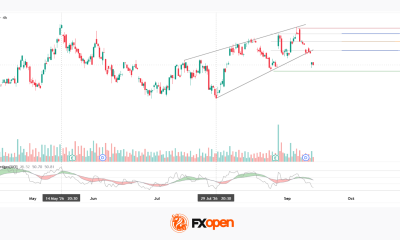
NVIDIA Analysis: Attempted Rising Wedge Breakout Amid Pressure on the AI Sector
-

 Crypto World3 days ago
World Money launches in 150+ countries with Stripe
-

 Crypto World4 days ago
Silver prices recover quickly, hitting weekly high today
-

 Entertainment6 days ago
Big Brother Update: Melody Explodes at Drew as Illness Sweeps BB28 House
-
 NewsBeat3 days ago
US was ‘on brink of war’ with China over false AI report of nukes moving in Middle East
-

 Crypto World4 days ago
Mortgage and refinance interest rates today, Thursday, September 17, 2026
-

 Crypto World23 hours ago
Bitcoin price holds above $81K as key catalysts line up
-

 Tech4 days ago
GPT-6 Astra Reached the Nether in Minecraft, Lost Its Stash to a Creeper, and Farmed Potatoes for Hours
-

 Business6 days ago
Federal Reserve expected to hike interest rates 25 basis points at FOMC meeting
You must be logged in to post a comment Login