
Crypto World
Trump Announces $5,000 Dividend if Republicans Win Midterms

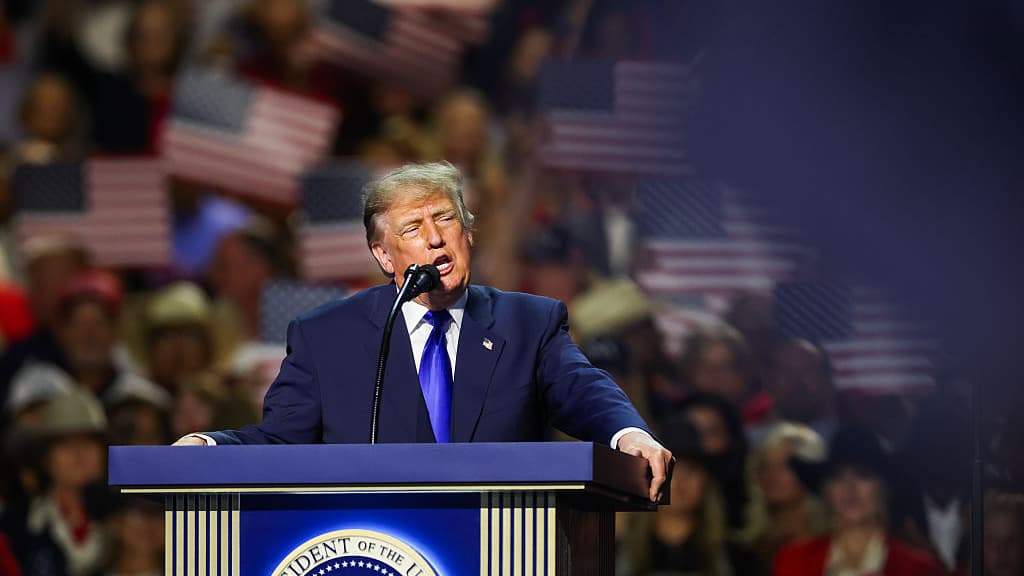
Trump suggested that the dividend would be financed by “tremendous economic success” from his policies.
“The reason the Democrats can’t do that is because they don’t do tariffs, they don’t take in money, all they know is poverty,” the President said.
In his first term, Trump authorized two rounds of congressionally-approved stimulus checks during the COVID-19 pandemic. On Wednesday, he also compared the promised dividend with the $1,776 “Warrior Dividend” announced for military service members in December, which was funded by a congressionally approved housing supplement.
Some, however, are skeptical about the idea.
Rep. Chip Roy, (R, Texas) told Politico, “I would like to know how they would plan to pay for … back of envelope … well over $1 trillion.”
The Democratic National Committee said Trump and Republicans have repeatedly promised rebate checks that never materialized.
The President previously promised to send $2,000 tariff dividends to Americans. He also endorsed returning 20% of DOGE savings to taxpayers and depositing $1,000 or more into eligible Americans’ health savings accounts. None of these payments has gone out: the DOGE and tariff dividends were never enacted, and the HSA legislation—a Republican alternative to extending enhanced ACA premium tax credits, which expired at the end of 2025—failed in the Senate. The Administration is reportedly preparing a $500 rebate for some unsubsidized ACA enrollees.



Former Bank of England and Bundesbank officials have joined Fnality’s UK and European boards as the bank-backed blockchain payments company prepares to expand its central bank money settlement network beyond sterling.
Summary
- Former BoE Deputy Governor Jon Cunliffe will chair Fnality’s UK board, while former Bundesbank executive Jochen Metzger joins its European supervisory board.
- Fnality operates a blockchain based wholesale payment system that allows banks to settle obligations using central bank backed money.
- The company launched its regulated sterling payment system in 2023 and is seeking approvals for dollar and euro versions.
- Fnality is backed by major financial institutions including Goldman Sachs, UBS, Santander, Bank of America and Citigroup.
Fnality said Thursday that former Bank of England Deputy Governor Jon Cunliffe will chair the board of its UK entity, while former Deutsche Bundesbank payments executive Jochen Metzger has been appointed to the supervisory board of Fnality Europe and is expected to become its chair.
Ron Berndsen, who previously served as head of oversight and head of market infrastructures policy at De Nederlandsche Bank, is joining the supervisory board of the Germany-based European business.
The appointments bring three former central bank officials into Fnality’s governance structure as banks and other financial institutions develop infrastructure for settling tokenized securities and moving digital forms of money across blockchain networks.
Fnality brings former central bankers into its payments network
Cunliffe previously served as the Bank of England’s deputy governor for financial stability, where his responsibilities included oversight of financial market infrastructure and payment systems.
Metzger served as director general for payments and settlement systems at Deutsche Bundesbank, while Berndsen previously worked on oversight and market infrastructure policy at the Dutch central bank.
Their appointments come as Fnality works to extend its wholesale payment infrastructure into additional currencies and jurisdictions.
The London-based company operates a blockchain-based wholesale payment system that allows participating financial institutions to settle obligations using funds backed by central bank money. Its sterling payment system launched in 2023 and is regulated by the Bank of England.
Fnality is now seeking regulatory approvals for dollar- and euro-denominated versions of the network.
“It is really important that we find a way to get central banks and central bank money at the heart of the new technologies that were pioneered in the crypto world,” Cunliffe said in an interview.
“Some of those technologies are coming to the mainstream world of finance because they offer better functionality and speed.”
Fnality was founded in 2019 and is backed by banks and financial market infrastructure companies including Goldman Sachs, UBS, Banco Santander, Bank of America and Citigroup.
The company raised $136 million in Series C funding in September 2025, with crypto.news previously reporting that WisdomTree, Bank of America, Citi, KBC Group, Temasek and Tradeweb led or participated in the round alongside existing investors including Goldman Sachs, Santander, UBS and Euroclear.
That financing took Fnality’s total funding since 2019 to more than $280 million. The company said at the time that the capital would support expansion of the Sterling Fnality Payment System into additional currencies, alongside liquidity management tools and connections with stablecoins and tokenized deposits.
Fnality had earlier raised $95 million in Series B funding in 2023 in a round led by Goldman Sachs and BNP Paribas. Euroclear, DTCC, WisdomTree and Nomura were among the participants, while Santander, BNY Mellon, Barclays, ING, Lloyds Banking Group, State Street and UBS were among its existing backers.
Tokenized assets are creating demand for digital settlement
Banks are increasing work on tokenization, where conventional assets such as stocks and bonds are represented and transferred through blockchain-based infrastructure.
Moving securities onto digital networks creates a corresponding requirement for the cash side of transactions to operate on compatible systems. Fnality’s model uses central bank-backed money for wholesale settlement, allowing participating institutions to complete transactions involving digital assets without relying solely on stablecoins or commercial bank deposits.
Its live sterling system has been used for cases including real-time settlement of tokenized securities through delivery versus payment, foreign exchange transactions using payment versus payment and repo transactions.
Similar projects are developing across the banking sector.
Swift moved its blockchain ledger into deployment in July with 17 global banks preparing to test tokenized deposit payments for round-the-clock cross-border settlement. Participants included HSBC, Citi, BNP Paribas, UBS, ANZ, DBS and Standard Chartered.
The system coordinates tokenized deposits between banks while retaining existing compliance, risk and control processes. Tokenized deposits are digital representations of commercial bank deposits, meaning the underlying funds remain on the issuing bank’s balance sheet.
In August, HSBC and Standard Chartered completed the first live interbank transaction through Swift’s blockchain ledger. The banks connected their separate tokenized deposit systems through the shared network, which matched and netted payment obligations before final settlement occurred through existing banking infrastructure.
Seventeen banks across six continents are participating in the wider Swift pilot.
Banks are testing several forms of digital money
Fnality is developing its central bank money model alongside other forms of blockchain-based cash being tested by banks, including tokenized deposits and stablecoins.
Stablecoins are generally issued by companies and backed by reserve assets, while tokenized deposits represent deposits held at commercial banks in digital form. Fnality instead provides wholesale settlement using money linked to central bank balances.
“Multiple models of digital money will co-exist,” Fnality Group CEO Michelle Neal said in an interview. “Our differentiation is that this is regulated wholesale settlement.”
Banks are developing infrastructure around more than one of those models.
Wells Fargo said in August that it planned to launch tokenized deposits for selected corporate and commercial clients, initially supporting U.S. dollar-to-British pound transactions. The bank plans to use blockchain infrastructure for 24-hour transfers, settlement and programmable payments before adding more clients, currencies and countries during 2027.
JPMorgan, Citigroup, Bank of America and Wells Fargo are separately working through The Clearing House on a shared network that would allow corporate customers to move tokenized deposits around the clock, with a launch targeted for the first half of 2027.
The development of digital cash is taking place alongside efforts to put securities settlement on distributed ledgers.
Mitsubishi UFJ Financial Group said in August that four MUFG companies would work with Digital Asset and Progmat on a blockchain settlement test for Japanese government bond repo transactions using Canton Network.
The project is designed to synchronize existing JGB book-entry records with blockchain infrastructure, while tokenized deposits or stablecoins are being considered for the cash side of settlement. Japan’s Financial Services Agency selected the project under its Payment Innovation Project pilot program in February.
Fnality’s sterling network uses a different settlement structure by placing central bank-backed money directly within its wholesale payments framework. With its UK system already operating, the company is working through the regulatory process required to extend that structure to dollar and euro payments.
Crypto World
Zamanat Targets GCC’s $250 Billion SME Financing Gap With Up to $100 Million Tokenized Private Credit Fund

[PRESS RELEASE – Dubai, UAE, September 10th, 2026]
Zamanat Fund CEIC Limited is the company’s first live proof point for regulated fund tokenization on ZIGChain focused on GCC private credit.
Zamanat today announced its sponsorship of Zamanat Fund CEIC Limited (the “Fund”), a DIFC-domiciled tokenized private credit fund with a target size of up to USD 100 million. The Fund targets the GCC’s estimated $250 billion SME financing gap, with only 11 percent of SMEs across the region having access to credit.
Closing a $250 billion structural gap in GCC SME credit
Across the GCC, SMEs are central to economic growth yet remain significantly underserved by traditional financing. In the UAE, SMEs generate more than half of GDP and employ the majority of the private-sector workforce, yet receive less than 10 percent of total bank lending.
The Fund will invest in private credit across the region, directing capital towards strong homegrown companies whose financing needs are not fully met through traditional lending channels. The strategy supports national ambitions to expand SME participation, private-sector growth and access to alternative financing, including priorities set out under Saudi Arabia’s Vision 2030 and the UAE Centennial 2071.
“Strong businesses across the GCC still struggle to access growth capital despite sound fundamentals. Zamanat sponsored the Fund to create a credible route between those businesses and institutional capital. With a target size of up to USD 100 million and interests issued as Investment Tokens, it is our first live proof point for bringing GCC private credit into a regulated digital structure for Professional Clients,” said Umair Tariq, Founder and CEO of Zamanat.
Bringing GCC private credit into digital markets
Tokenization expands the infrastructure around traditionally hard-to-access private-market assets without changing the underlying investment or credit profile.
The Fund combines a regional private credit strategy, a DIFC fund structure, institutional administration and digital issuance on ZIGChain. It provides a first live demonstration of how regional private credit can be brought into a DFSA-regulated tokenized structure for Professional Clients.
The Fund is a DFSA-regulated closed-ended fund registered as an Exempt Fund and classified as a Credit Fund. It is managed by Truleum Venture Partners Limited and administered by Apex Group. Fund interests will be issued as ZM1 Investment Tokens on ZIGChain within a regulated, whitelisted environment.
As sponsor, Zamanat brings its regional private credit, investment structuring and institutional partnership expertise to the Fund’s development. Truleum retains responsibility for all regulated fund-management activities.
The ZM1 Investment Token structure provides a blockchain-native ownership and settlement layer within the Fund’s regulated framework. It also allows qualifying investors who meet the DFSA Professional Client criteria to participate alongside institutional investors.
Zamanat is backed by Disrupt.com, a MENA-based, operator-led AI-native venture builder and lead investor in the business.
Building the global market for Digital Shariah Assets
Global Islamic finance assets are projected to reach $9.7 trillion by 2029, yet demand for digital and Shariah-aligned assets is growing faster than the institutional infrastructure connecting them with global capital.
Zamanat continues to build the global market for Digital Shariah Assets. Its wider operating model combines investment structuring, Shariah expertise, regulated partner routes and digital distribution to bring real-world assets to market through traditional and digital channels.
The DIFC-domiciled Fund evidences the regulated fund-tokenization, digital ownership and partner-orchestration capability within that wider build. Zamanat is progressing a separate pipeline of Digital Shariah Assets across private credit, receivables, real estate and other asset classes.
Institutional partnerships
Apex Group acts as Fund Administrator, providing institutional fund administration and controls from the outset.
“Zamanat is supporting the creation of a new category in Digital Assets. Bringing institutional structure and digital distribution together within a DFSA-regulated framework sets the standard for how this market should be built, and this fund shows the model working at institutional scale. We are proud to support the infrastructure behind it, and we look forward to partnering further on the projects Zamanat already has in motion,” said Peter Hughes, Founder & CEO, Apex Group.
The global market for Digital Shariah Assets does not yet exist as an institutional category. Zamanat is building it.
Notes to Editors
Sources
LSEG and ICD, 2025 Islamic Finance Development Indicator Report, 14 October 2025 (global Islamic finance assets projected to reach $9.7 trillion by 2029); World Bank, Competition in the GCC SME Lending Markets: An Initial Assessment (estimated $250 billion GCC SME credit gap; 11 percent of SMEs with access to credit); Kearney, GCC Retail Banking Radar 2024.
Investor notice
This communication as related to Zamanat Fund CEIC Limited is approved by Truleum Venture Partners Limited in the DIFC (DFSA License Number: F008013).
This release is for information only. It is not an offer, invitation or recommendation to subscribe for interests in Zamanat Fund CEIC Limited or acquire ZM1 Investment Tokens. Any participation will be made only through the Fund Manager, final offering documents and applicable Professional Client eligibility requirements. For avoidance of doubt, this communication is intended for and directed only to investors who meet the requirements to be considered Professional Clients as specified under the Dubai Financial Services Authority Conduct of Business Rulebook, Rule 2.3.3. The Fund is an ‘Exempt Fund’. Accordingly, the ZM1 Investment Tokens are available only to Professional Clients.
This release and the information contained herein does not constitute, and is not intended to constitute, a public offer of securities in any other jurisdiction and accordingly should not be construed as such. The ZM1 Investment Tokens are only available to a limited number of investors from the DIFC. The ZM1 Investment Tokens have not been approved by or licensed or registered with any other relevant licensing authority or governmental agency. No transaction will be concluded in onshore UAE outside the DIFC.
The Fund is not an Islamic Fund and is not marketed as Shariah-compliant. References to Shariah in this release relate to Zamanat’s broader platform and market ambition and not to the Fund.
About Zamanat
Zamanat is building the global market for Digital Shariah Assets. The company connects asset originators with global capital through investment structuring, Shariah expertise, regulated partner routes, tokenization and distribution across traditional and digital channels.
Zamanat also sponsors and develops institutional investment products through appropriately licensed partners. Each product follows its own legal and regulatory framework and, where presented as Shariah-aligned, its own product-specific Shariah review and governance process. Website: www.zamanathq.com
The post Zamanat Targets GCC’s $250 Billion SME Financing Gap With Up to $100 Million Tokenized Private Credit Fund appeared first on CryptoPotato.

President Donald Trump has proposed a $5,000 “dividend” payment to every adult US citizen if Republicans hold Congress after the midterm elections.
Crypto traders picked up on it almost instantly, with at least one well-followed account framing the idea as the kind of liquidity shock that helped kick off the last major bull run.
Trump’s $5,000 Proposal Draws Crypto Attention
The president’s proposal would apply to roughly 245 million US citizens aged 18 and above, putting the estimated cost at about $1.2 trillion. The last time a stimulus of this magnitude was deployed was during the pandemic, when close to $4 trillion in fiscal support went out during lockdown.
Mark Chadwick, posting on X, focused on what the payment could mean for crypto:
“If this happens, and it’s a big IF – but if it does it would ignite the most insane Alt Season imaginable,” he wrote.
He compared the potential effect with the 2021 crypto market, calling it a “2021 Covid stim type catalyst” layered onto a bull market he already sees building. He closed with a nod to the president, saying, “Well played, Mr. Trump. Well played.”
But not everyone read it the same way, one of them being economist Peter Schiff, who dismissed the plan as an attempt to buy votes, writing that Trump was offering “a $5,000 bribe in exchange for their votes,” and warning that printing the money would push inflation well past anything seen under the Biden administration.
The Altcoin Setup Already Looks Shaky
Whether or not the payment materializes, it lands at an interesting moment for altcoins. Analyst Matthew Hyland has spent the past week pointing out that charts including ETH, Total 2, Total 3, and OTHERS have all broken multi-year downtrends, leading him to conclude that “the largest Altcoin Bull Run of all time is loading.”
As CryptoPotato reported earlier, that thesis leans on a ratio comparing coins outside the crypto top ten against the S&P 500, which has spent years sliding from a 2017 peak and now sits near the bottom of that range with an oversold reading to match.
The leverage building underneath that story looks less convincing, though. Altcoin perpetual futures open interest overtook Bitcoin’s this week for the first time since December 2024, with Zcash alone carrying roughly $2.4 billion in open derivatives positions, with investor Michael Bucella comparing the setup to October 2025, right before a market-wide liquidation event.
The post Trump’s $5K Proposal Could Ignite an ‘Insane’ Altcoin Season: Analyst appeared first on CryptoPotato.
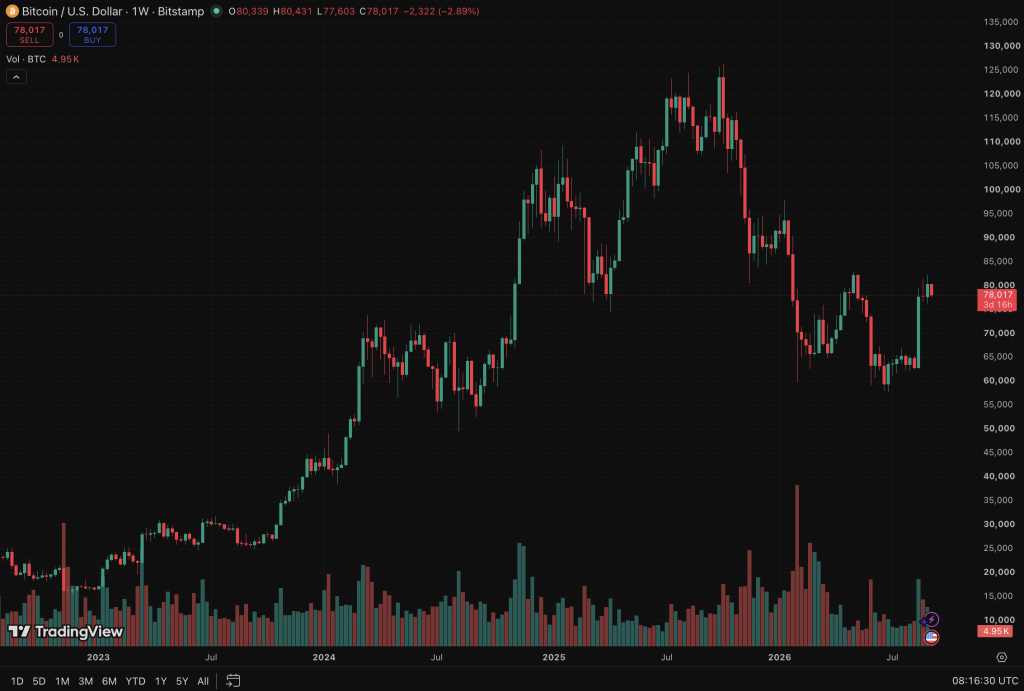
Bitcoin (BTC) sits at $78,000, down -0.6% for the day, and barely holding the line it’s held for most of the week. That kind of stubbornness after a 23% weekly surge tells its own story and is leading investors to wonder if Bitcoin Hyper is the best crypto to buy right now.
Hunter Biden’s LAPTOP memecoin briefly touched a $110 billion market cap on launch day before crashing more than 99%, according to DexScreener data. Blockchain analytics firm Bubblemaps called it a “bloodbath”; roughly 80% of traders lost money.
The project’s own Medium post blamed sniper bots and thin liquidity, promising 4 million tokens for pool incentives and a burn tied to prediction-market resolutions.
That kind of first-day carnage is a useful reminder of what “high risk” actually looks like in this market. It’s also why the broader macro setup, like Bitcoin defending support and Ethereum consolidating near resistance, deserves more attention than another memecoin implosion.
Can Bitcoin Price Hit $80K This Week?

BTC trades at $78,314, down a negligible 0.01% over 24 hours after last week’s 23% rip to near-$78k. KuCoin’s daily report flags renewed macro headwinds, Brent crude above $100, and WTI near $96 as the drag keeping bulls from pushing through.
Support has held cleanly at $77,600–$77,900, with resistance capping gains around $80,000–$82,000.
Perpetual futures volume near $421Bn is elevated enough that RSI Hunter flags leverage risk, even as long-term holder sell pressure sits at a one-month low.
Bull case: a clean break above $80k on ETF inflows reopens the run toward prior highs.
Base case: continued consolidation between $77.6k and $80k while macro noise sorts itself out.
Bear case: a slide below $77,600 with rising yields as the catalyst. For a deeper breakdown, see this Bitcoin price prediction analysis.
Earn $50 and Enter $300K Prize Draw on EdgeX
Is Bitcoin Hyper the Best Crypto to Buy Right Now as it Targets Early Mover Upside as BTC Flirts With $78K Support
At $78k and a market cap north of $1.5 trillion, the math on further multiples gets harder every week; BTC doubling from here is a very different proposition than it was in 2020. That ceiling is exactly why infrastructure plays building on top of Bitcoin, rather than just holding it, are drawing fresh attention.
Bitcoin Hyper ($HYPER) is positioning itself as the first Bitcoin Layer 2 with full SVM integration — smart contracts running at Solana-competitive speeds while settling back to Bitcoin’s base layer.
The presale has raised $33,119,143.07 so far, with tokens priced at $0.013686 and staking APY offered to early buyers. Its Decentralized Canonical Bridge aims to solve the actual problem- Bitcoin’s lack of programmability- rather than wrap it in another synthetic asset.
Gain Access to New Bitcoin Layer 2 Early Here
Discover: The Best Token Presales
The post Best Crypto to Buy Today as Bitcoin Tumbles to $78,000 appeared first on Cryptonews.
On 8 September, Northland Securities upgraded Intel to Outperform with a price target of $120, citing a shortage of server processors, progress in the company’s business turnaround and potential benefits from its involvement in the Terafab project with Tesla and SpaceX. On the same day, reports emerged that Intel was planning to raise processor prices by around 10% from October amid rising costs and limited supply across the supply chain. The combination of higher prices and a positive rating revision is helping to sustain investor interest in Intel shares against the backdrop of strong performance across the semiconductor sector.
Intel Technical Analysis
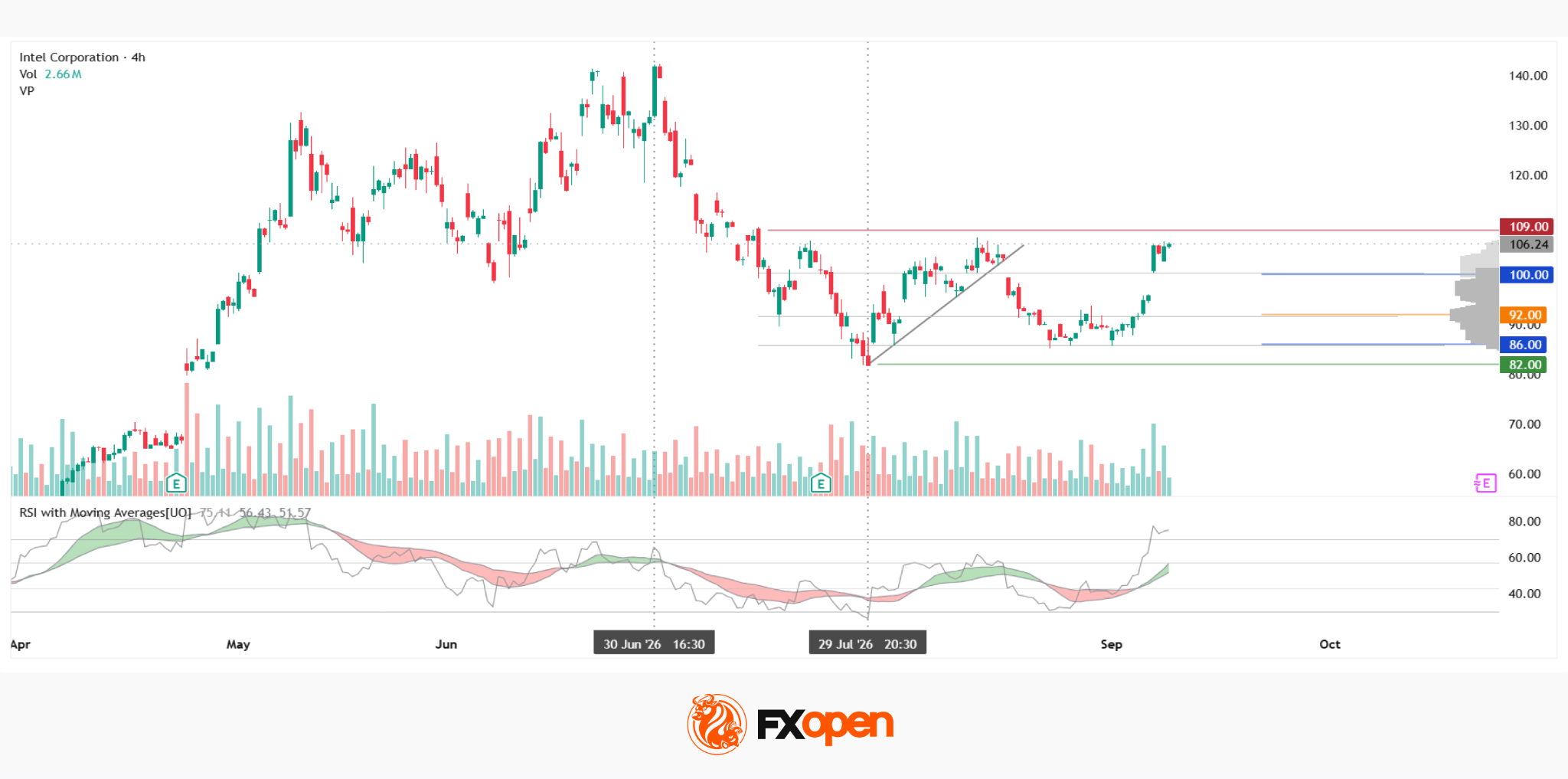
From 30 June to 29 July, a short-term trend formed on the INTC four-hour chart. Following a decline, the market corrected higher, with the rebound forming an ascending trendline. The price subsequently broke below this trendline, but the attempted breakout was not confirmed by the RSI + MAs indicator. As a result, the price reversed direction and quickly moved through the current market profile, breaking above its upper boundary at $100.00 and is now attempting to establish itself above this level.
It is worth noting that the red resistance level at $109.00 is relatively close to the current price, while the RSI + MAs indicator currently stands at 75, 56 and 51. The RSI has already entered overbought territory, while the moving averages have yet to leave the neutral zone, making the current breakout attempt look questionable. If the market produces another false breakout, a return into the market profile could bring several important levels into play, including the Point of Control (POC) at $92.00 and the lower boundary of the profile at $86.00. Below this level, and relatively close to it, lies the green support level around $82.00.
Key Takeaways
The RSI being in overbought territory while the moving averages remain in the neutral zone casts doubt on a potential breakout of the profile. The short distance to the red resistance level could also strengthen the current resistance zone. Investor reaction to the planned price increase in October could provide an additional factor influencing the stock’s price action.
Buy and sell stocks of the world’s biggest publicly-listed companies with CFDs on FXOpen’s trading platform. Open your FXOpen account now or learn more about trading share CFDs with FXOpen.
This article represents the opinion of the Companies operating under the FXOpen brand only. It is not to be construed as an offer, solicitation, or recommendation with respect to products and services provided by the Companies operating under the FXOpen brand, nor is it to be considered financial advice.


TransparentBusiness Inc., which does business as Unicoin, sued Universal Navigation Inc., which does business as Uniswap Labs, in the Southern District of New York, seeking declarations that its UNICOIN mark does not infringe or dilute Uniswap’s claimed marks.
TransparentBusiness argued in a complaint filed Tuesday that its UNICOIN mark does not infringe or dilute Uniswap’s claimed UNI, UNISWAP and UNICHAIN marks. It also asked the court to cancel US trademark registration for UNI.
The complaint says Uniswap’s counsel sent three demand letters on June 3, July 17 and Aug. 14, accusing Unicoin of trademark infringement, dilution, cybersquatting and unfair competition, and threatening further legal action. The letters demanded that Unicoin stop using UNICOIN and other UNI-formative marks, transfer its unicoin.com and unicoin.org domains, provide an accounting of revenue and profits, and reimburse Uniswap’s legal fees.
The complaint also seeks a declaration that unicoin.com and unicoin.org domains do not violate the federal Anti-Cybersquatting Consumer Protection Act.
Cointelegraph has approached Uniswap for comment on the lawsuit.
At the time of writing, DeFiLlama ranked the Uniswap protocol first among decentralized exchanges by 24-hour volume, with more than $3.9 billion.
The lawsuit was filed weeks before the Sept. 28 public launch date that Unicoin lists on its website for the UNCN token.
Related: Pudgy Penguins accused of infringing Original Penguin trademark
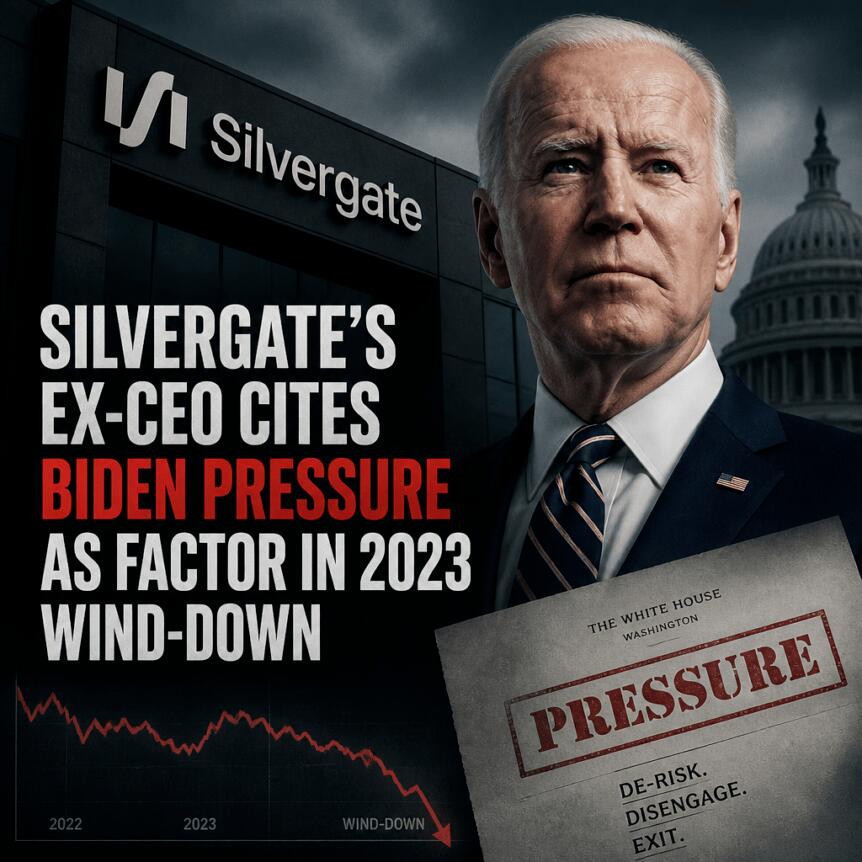
Former Silvergate Bank CEO Alan Lane says the bank’s 2023 voluntary wind-down was driven less by internal weaknesses and more by political and regulatory pressure, arguing that Silvergate remained solvent after meeting withdrawal demands in late 2022.
In an inaugural post on his Substack published Tuesday, Lane claimed Silvergate could have continued operating after satisfying withdrawals equal to 70% of its demand deposits during the fourth quarter of 2022, and he characterized the decision to liquidate as a response to “political pressure” rather than an inability to access liquidity.
Key takeaways
- Lane argues Silvergate had sufficient liquid resources to withstand heavy withdrawals in Q4 2022 and that liquidation followed political pressure.
- Federal regulators’ accounts emphasize different causes, pointing to concentrated crypto deposits, funding and governance risks, and compliance shortcomings.
- Lane disputes claims that regulators proved Silvergate’s anti-money laundering (AML) controls failed, even as enforcement actions followed.
- The SEC alleged failures in monitoring certain high-volume transaction flows tied to FTX entities; the case resulted in a settlement without admitting or denying wrongdoing.
- Regulatory guidance on crypto issued in 2023 was later withdrawn in April 2025, adding another layer to the debate over pressure versus policy.
Lane’s liquidity argument and the Q4 2022 numbers
Lane’s core claim is that Silvergate’s balance sheet gave it options even amid stress. He said the bank had held liquid assets that could be sold or pledged as collateral as withdrawals accelerated.
He also pointed to Silvergate’s own January 2023 business update, which reported a sharp contraction in digital asset-related deposits during the fourth quarter of 2022. According to the update, digital asset deposits fell 68% from $11.9 billion to $3.8 billion over the quarter.
In that same update, Silvergate said it sold $5.2 billion of debt securities and recorded a $718 million loss. The bank reported $4.6 billion in cash and equivalents at year-end. Lane’s Substack post uses these figures to support the argument that the bank had liquidity capacity and therefore did not necessarily face unavoidable collapse at that stage.
Still, Lane’s narrative directly challenges the dominant regulator view that Silvergate’s issues were structural—rooted in how quickly its funding base eroded, how its risk controls were implemented, and how governance handled the rapidly changing environment.
What regulators said instead: governance, risk management, and compliance
A September 2023 review by the Federal Reserve Board’s Office of Inspector General concluded that Silvergate’s reliance on crypto depositors, its rapid growth, and multilayered funding risks contributed to its liquidation. The review also cited weaknesses in corporate governance and risk management, and said supervisory actions could have been more aggressive and decisive.
That assessment contrasts with Lane’s position that the wind-down was not evidence of a solvency crisis driven by internal failure. Lane said he had not seen a regulator demonstrate that Silvergate’s AML program had been proven to be ineffective.
The regulatory record he referenced is more complicated. After the bank’s winding down, the SEC moved to enforce against Silvergate Capital and its leadership. In July 2024, the SEC charged Silvergate Capital, Alan Lane, and former chief risk officer Kathleen Fraher with misleading investors about the bank’s AML program and monitoring of crypto customers.
Per the SEC’s allegations, Silvergate’s automated system did not monitor more than $1 trillion in transactions, and the bank allegedly failed to detect nearly $9 billion in suspicious transfers among FTX entities.
Enforcement outcomes and the stakes for the crypto-banking debate
Lane said he settled rather than contested the SEC’s case. According to the reporting linked in the source material, Lane settled the charges without admitting or denying wrongdoing, agreeing to a $1 million penalty and a five-year officer-and-director bar.
Separately, the Federal Reserve fined Silvergate $43 million over transaction-monitoring deficiencies. Those actions, while not identical in scope to the Office of Inspector General review, reinforce the regulator emphasis on compliance and monitoring failures rather than solely on funding concentration.
For investors and market participants tracking whether banking access to crypto is shrinking due to policy pressure, the Silvergate dispute has become a proxy for a larger question: was the outcome primarily caused by crypto-adjacent funding volatility, or by how risk management and controls were applied to that business model?
Lane’s Substack intervention matters because it adds a first-person account that highlights a timeline in which the bank still had liquidity tools available and depositors withdrew only up to a point that Lane says could have been managed without liquidation.
Policy guidance, then withdrawal: did “pressure” shift bank behavior?
Lane also pointed to interagency statements about crypto risk that were issued in early 2023. He cited them as evidence that US regulators were applying pressure to banks operating in crypto-adjacent markets.
According to the source material, those statements urged banks to take a cautious approach to crypto-related activities. However, the Federal Reserve said institutions were not prohibited from serving any specific customer class and were not discouraged in a way that barred particular types of relationships.
In April 2025, government agencies withdrew the statements. That development is significant to the broader debate because it suggests the guidance—at least as originally formulated—was not meant to remain authoritative indefinitely.
Lane’s argument is therefore best understood as a claim about decision-making under regulatory uncertainty: even if regulators did not formally ban banks from serving crypto clients, he argues that the tone and direction of policy encouraged a conservative posture that became difficult to reverse as deposit pressures intensified.
As the debate continues, readers should watch whether further details emerge from Lane’s account that directly address the regulator findings on monitoring and governance, and whether regulators provide clearer guidance on how banks can balance crypto services with demonstrable controls—particularly now that the earlier 2023 crypto-risk statements have been withdrawn.
Singapore Exchange has secured CFTC authorization to give U.S. institutional investors direct access to its Bitcoin and Ether perpetual futures, opening its existing crypto derivatives order books to American trading firms.
Summary
- SGX has received CFTC authorization to open its Bitcoin and Ether perpetual futures to eligible US institutions.
- The contracts have recorded $5.8 billion in cumulative volume since launching in November 2025.
- US clients will access the contracts through clearing members, with onboarding typically taking two to four weeks.
- SGX plans to launch dated Bitcoin and Ether futures and options next.
SGX Group head of crypto derivatives KC Lam told CoinDesk that the Commodity Futures Trading Commission authorization was granted under Regulation 48.10, allowing U.S. institutions to trade products that had previously been unavailable to them.
“Under the Regulation 48.10 ruling, we have obtained CFTC authorization to open our crypto products to U.S. institutional access. Previously, U.S. participants couldn’t trade these contracts but now they can,” Lam said.
The approval applies to SGX’s Bitcoin perpetual futures, or BTP, and Ether perpetual futures, known as ETP. Both products have been trading since late November 2025 and operate without an expiry date.
SGX crypto perpetual futures gain a route into the US
Regulation 48.10 provides a route for a Foreign Board of Trade, an overseas exchange recognized by the CFTC, to offer qualifying U.S. participants direct access to its electronic trading system.
SGX can therefore make its existing contracts and order books accessible to eligible American institutions without creating separate U.S. listings or registering the Singapore venue as a domestic exchange.
Lam described the authorization as “an important milestone” that connects U.S. traditional finance participants trading crypto futures with Asian liquidity pools. He said the regulatory route helps establish crypto derivatives as a regulated asset class.
U.S. access comes as regulated perpetual futures have been gaining ground in the country. In May, the CFTC approved the first regulated Bitcoin perpetual for listing on a U.S. exchange, opening a domestic path for a type of contract that had been concentrated on offshore crypto platforms.
Eligible U.S. customers subsequently gained several routes into the market. crypto.news previously reported that Kraken launched perpetual futures in June through its CFTC-regulated derivatives business, Bitnomial, giving eligible clients access to perpetual contracts alongside spot, margin and traditional futures products.
SGX is taking a different route by extending direct institutional access to contracts already trading on its Singapore market.
Bitcoin accounts for most SGX perpetual futures activity
Since their November 2025 launch, SGX’s Bitcoin and Ether perpetual futures have generated $5.8 billion in cumulative trading volume, equivalent to roughly 400,000 lots.
Average daily volume across the two contracts reached 1,300 lots, or $19 million, as of August. Bitcoin represented 83% of average daily trading volume since inception and 66% of outstanding open interest.
The exchange recorded its busiest session at 11,500 lots, representing $145 million in notional trading volume.
American participation is not expected to appear immediately because institutional clients still need to complete SGX’s onboarding process. New users are brought in through clearing members and must complete know-your-customer checks, fund their accounts and establish API connections.
Lam said the process normally takes two to four weeks regardless of where a client is based. SGX has completed its FIS-enabled back-office integration and is preparing U.S. clearing members to onboard clients over the next one or two months.
Institutional demand for regulated crypto perpetuals has been developing through other structures in the U.S. market. Coinbase Financial Markets received a regulatory route in May allowing eligible American institutions to access global crypto derivatives, initially through derivatives listed on Deribit. The arrangement relied on CFTC staff positions covering foreign futures and related margin requirements.
SGX uses margin calls instead of automatic liquidation
Traders on SGX currently use the Bitcoin and Ether contracts for directional positions and arbitrage strategies.
Some positions are tied to macroeconomic themes such as concerns over currency debasement, while other traders use cash-and-carry strategies to capture differences in funding rates and prices across trading venues.
Although SGX’s contracts have no expiration date, their risk management structure differs from perpetual futures commonly traded on crypto-native exchanges.
The exchange uses margin calls and requires traders to provide additional collateral when their positions fall below margin requirements. Positions are not immediately closed through the automatic liquidation systems commonly used by crypto exchanges.
“Unlike crypto-native venues where sudden volatility can trigger auto-liquidations, our traditional risk framework uses margin calls and top-up collateral, to prevent involuntary position closures during market spikes,” Lam said.
Automatic liquidations occur when leveraged positions develop a margin shortfall as prices move against traders. Crypto exchanges can close positions automatically if collateral requirements are no longer met, a process that can lead to clusters of forced selling or buying during sharp market moves.
SGX separates trading and clearing functions as another part of its risk structure. Clearing members sit between the exchange and participating clients and act as an intermediate layer for managing risk.
“By routing trades through clearing members who act as an intermediate risk buffer, we mirror the proven infrastructure of traditional futures and commodities markets,” Lam said.
The exchange does not accept stablecoins as collateral for its crypto perpetual contracts. Lam said stablecoins were excluded because they can lose their peg during periods of market volatility.
SGX’s contracts instead use benchmarks jointly developed with CoinDesk Indices. Mohit Baheti, head of iEdge Indices at SGX Group, said the indices are managed under the European Union Benchmark Regulation.
Regulated perpetual products in the United States have continued expanding since the first Bitcoin contract received approval. Kalshi introduced Ether perpetuals shortly after its Bitcoin rollout and later expanded its lineup to include Solana perpetual futures, while several other crypto contracts went through regulatory review.
SGX plans to move beyond perpetuals by developing dated Bitcoin and Ether futures and options.
“The next step in our pipeline is launching dated futures and options for Bitcoin and Ethereum,” Lam said.
Building the infrastructure needed for those products represents the main technical work, according to Lam. Once that system is operating, SGX expects the process of adding other major cryptocurrencies to become more similar to introducing another futures contract.
“We plan to broaden our offerings but we are taking a disciplined, step-by-step approach,” Lam said.


PayPal, M0 and MoonPay officially launched the PYUSDx custom stablecoin platform on Sept. 9 with three active projects that the companies said have collectively processed more than $100 million.
Summary
- PYUSDx lets businesses issue customized stablecoins backed by PayPal USD through modular token infrastructure services.
- Saturn, Concrete and Cap launched tokens that collectively processed more than $100 million already combined.
- MoonPay Digital Assets issues PYUSDx tokens while Paxos separately issues the underlying PYUSD stablecoin directly.
- PYUSDx tokens currently cannot be sent, received or used inside PayPal and Venmo payment applications.
- USD.AI and Fairblock are expected to join after the first three platform projects launched publicly.
PYUSDx allows businesses to issue application-specific stablecoins backed by PayPal USD. Companies can give their tokens separate names and configure access restrictions, reward distribution, collateral policies and cross-chain availability.
The partners initially announced the framework in February. As crypto.news previously reported, PayPal and MoonPay introduced the custom stablecoin infrastructure as a way for developers to create branded digital dollars without independently building issuance and liquidity systems.
M0 developed the programmable token infrastructure used by PYUSDx. Its system lets issuers configure individual components instead of accepting a fixed stablecoin model. MoonPay contributes issuance, onboarding and distribution services. PayPal supplies the ecosystem connection through PYUSD. The arrangement extends the role of PayPal’s stablecoin beyond direct payments by allowing other financial applications to use it as an underlying reserve asset.
The companies said the structure can reduce the time required to create a customized stablecoin from several months to days. That remains a company claim and will depend on the project, its technical requirements and applicable regulatory approvals.
PYUSDx is not a stablecoin itself. It is an issuance framework supporting separate digital tokens. Each participating company can configure a token for its own settlement, credit, treasury or decentralized-finance use case.
Three PYUSDx projects bring more than $100 million
Saturn, Concrete and Cap are the first projects operating through the platform. M0 said the three businesses brought more than $100 million in combined processed volume at launch. The disclosed figure refers to activity connected with those projects rather than the market capitalization of PYUSDx.
Saturn uses the system for USDat, a dollar-denominated token designed for settlement. Concrete launched concUSD for its on-chain vault infrastructure, while Cap introduced cUSD as the native dollar asset for its credit platform.
The projects retain control over branding and certain operating rules. They can also determine how returns or incentives are distributed, subject to their chosen structures and applicable laws.
The companies have not provided a breakdown showing how much of the reported $100 million came from each project. They also have not disclosed whether the figure represents transfers, settlement volume, minting activity or another measure across every participating token.
The absence of a detailed breakdown means the figure should not be treated as the platform’s revenue or assets under management. It is a reported measure of processed activity supplied by the companies behind the launch.
USD.AI and Fairblock are expected to integrate later. Neither project disclosed a confirmed activation date in the launch materials. Their participation should therefore be treated as planned until their tokens become operational through the platform.
PYUSDx tokens are not issued directly by PayPal
MoonPay Digital Assets Limited issues the custom tokens created through PYUSDx. PayPal and Paxos do not directly issue those derivative tokens, despite their connection to the PYUSD reserve asset. Paxos Trust Company issues the underlying PYUSD stablecoin. PayPal’s official disclosure says PYUSD is redeemable one-to-one for U.S. dollars and backed by dollar deposits, U.S. Treasuries and similar cash equivalents.
Moreover, Paxos publishes information about those reserves through its transparency page. The issuer provides monthly reserve reports and third-party attestations covering the assets supporting PYUSD.
The distinction between PYUSD and a PYUSDx token matters for users assessing issuer and redemption risk. Holding a custom token does not necessarily create the same direct relationship that a holder of Paxos-issued PYUSD may have with its issuer.
A PYUSDx token’s terms can also depend on the participating business, MoonPay’s issuance structure and the smart contracts governing conversions. Users must examine each token’s documentation rather than assuming that every project offers identical redemption rights.
Regulatory treatment may vary between jurisdictions and applications. A token used for lending, rewards or restricted settlement could face different rules from a stablecoin used mainly for payments.
PayPal and Venmo do not support PYUSDx tokens
PYUSDx tokens cannot currently be sent, received or used for payments inside PayPal or Venmo. Those restrictions separate the new platform from the consumer-facing PYUSD services available through PayPal’s applications.
Eligible PayPal customers can buy, hold, transfer and sell PYUSD. Businesses can also use the original stablecoin for supported payments. Those functions do not automatically extend to USDat, concUSD, cUSD or future PYUSDx assets.
The limitation means PayPal’s brand and underlying stablecoin should not be interpreted as a guarantee that every custom token will work across PayPal’s payment network. The platform’s immediate use cases remain centered on external blockchain applications and specialized financial products.
PayPal has continued to expand the original stablecoin’s blockchain reach. In related coverage, PYUSD became available through Polygon’s Open Money Stack, providing businesses with additional payment, compliance and fiat-conversion infrastructure.
The company has also positioned stablecoins as part of its wider payments strategy. As crypto.news reported, PayPal made stablecoins a corporate growth priority after processing $486.4 billion in quarterly payment volume.
PYUSDx gives PayPal another way to increase demand for its stablecoin without directly operating every application built around it. If participating projects grow, they may require more PYUSD as backing. The partners have not published targets for future issuance or reserve demand.
What happens next for PYUSDx
The next confirmed stage is the planned addition of USD.AI and Fairblock. The companies have not announced precise launch dates, supported networks or initial issuance amounts for either integration.
PayPal, M0 and MoonPay may also add more businesses seeking customized settlement assets. Any new token will require its own disclosures covering issuance, reserves, conversions, access controls and user eligibility.
More detailed reporting on the first three projects would help establish what the $100 million figure represents. Reserve verification will also be important because users need to distinguish the amount of underlying PYUSD from transaction volume generated by the custom tokens.
PYUSDx therefore enters operation as an infrastructure layer rather than a direct replacement for PYUSD. Its early progress will depend on whether businesses adopt its programmable features and whether holders can reliably convert custom tokens into the underlying reserve asset.


US lawmakers answered an Anthropic researcher’s resignation with a fresh push to halt advanced artificial intelligence (AI) development, including a Senate bill that would ban superintelligence outright.
Jacob Coxon quit on September 9 and said Anthropic and OpenAI are both gambling with human lives.
Why the Anthropic Researcher’s Resignation Reached Capitol Hill
More than 20 lawmakers replied to the thread, most calling for new AI legislation. Senator Bernie Sanders said he will introduce legislation to ban superintelligence and pause AI development.
BeInCrypto reported that earlier this month, Sanders and Representative Greg Casar proposed the “Ban Artificial Superintelligence Act.” The bill would permanently prohibit the development and deployment of superintelligent AI. It would also halt advanced AI development until a federal regulator sets safety standards.
Meanwhile, Casar also called the situation an emergency and asked for congressional hearings. Representative Lori Trahan pointed lawmakers back to her bipartisan FRONTIER Act, introduced in July with Representative Jay Obernolte.
“The FRONTIER Act establishes tiered requirements based on the size of a frontier AI developer, including model cards, risk-management frameworks, independent audits, incident reporting, and ongoing assessments. It also creates a uniform national standard for transparency, auditing, and reporting of catastrophic risk to prevent a patchwork of state regulations,” the announcement read.
Senator Chris Van Hollen wants mandatory safeguards and urgent talks with China. Representative. Ted Lieu pressed Republican leadership to move the AI Kill Switch bill he introduced this year.
Republican Representative Anna Paulina Luna broke from the partisan pattern and asked for a special congressional session on AI.
Follow us on X to get the latest news as it happens
Jacob Coxon Says the Labs Want the Rules
Meanwhile, the pressure is not just political. AI firms have also been advocating for regulation. Coxon told CNN that executives asking Congress for regulation are sincere. However, he argued that none of them trusts rivals enough to slow down first.
“These people are also completely genuine when they are begging to be regulated… they find themselves in this scenario where they’re compelled to race towards building a deadly technology,” he said.
Anthropic said separately in a September post that the industry would benefit from a lawful, verifiable mechanism for coordinated pacing.
Where the Extinction Risk Starts
Pacing only matters because of what Coxon thinks is coming next. He explained that if an AI is given the problem of AI research, it starts improving itself.
He pointed to Tuesday, when OpenAI’s AI systems reportedly solved a millennium problem purely autonomously.
The scary part, he said, is the same method aimed at AI itself. Models improve models with no human in the way, which is what Coxon calls an “intelligence explosion.”
“Right now there’s no risk of extinction. The current models, the worst they can do is maybe hack into something, potentially cause a lot of damages in infrastructure… they’re not intelligent enough to outsmart us at the level that would lead to extinction,” he said.
However, Coxon warned that the same independent volition, paired with far greater capability, could cause extreme havoc. He named hacking critical infrastructure and building extinction-level bioweapons.
Subscribe to our YouTube channel to watch leaders and journalists provide expert insights
The post Why an Anthropic Exit Has Congress Talking About Pausing AI appeared first on BeInCrypto.

Kate Middleton’s Outdoor Pants Actually Make Me Want to Hike

I Kicked Off His B*tch Wife | Financial Audit

Boss who earns almost ten times as much as the PM, likes staff to work from home – and has presided over THREE air traffic meltdowns: GUY ADAMS profiles the head of NATS


-

 Crypto World1 day ago
Bitcoin price risks $76K drop as $78K support weakens
-
 Tech2 days ago
Memory prices are slowing because buyers ran out of money
-

 Crypto World1 day ago
Ethereum price stalls below $2,500 as ADX drops to 11
-

 Crypto World2 days ago
Robinhood Stock: How To Take Advantage With Reduced Risk
-

 NewsBeat1 day ago
What went right this week: an ‘historic’ fall in violent crime, plus more
-
 Sports2 days ago
Phones confiscated, players sent home: Pakistan’s England tour turmoil revives memories of Mohammad Amir, Salman Butt and Mohammad Asif’s 2010 Lord’s spot-fixing scandal | Cricket News
-
 Crypto World1 day ago
Bitcoin price holds near $79K as cycle drawdowns narrow
-

 Crypto World10 hours ago
Bitcoin price risks $70K if $78K neckline breaks
-

 NewsBeat2 days ago
England up in reading, maths and science rankings as Scotland and Wales dip
-
 Crypto World2 days ago
Brent Crude Oil Moves Above $100 for the First Time in 3 Months
-

 Business1 day ago
Meta debuts long-awaited personal AI agent, Muse
-

 Crypto World2 days ago
Visa expands stablecoin card network to 160 programs
-

 Crypto World2 days ago
Pump Fun and Kraken delete Hunter Biden $LAPTOP promotion
-

 Business2 days ago
Egyptian TV Presenter Sarah Khalifa, 11 Others Sentenced To Death In Major Drug Trafficking Case In Cairo
-

 Crypto World2 days ago
Intel Stock Jumps 9% on Chip Price Hike Report, US Stake Gains $36 Billion
-
 Tech2 days ago
Strong Password Policy and Password Manager Guide
-

 Tech2 days ago
Meta debuts its Muse AI agent. Will consumers trust it?
-

 Business1 day ago
ServiceTitan, Inc. (TTAN) Q2 2027 Earnings Call Transcript
-

 Entertainment1 day ago
Big Brother Spoilers: Dee SPINS & HUSTLES Votes – Yash Questions the Pact
-

 Tech2 days ago
Google’s revived nuclear power plant gets $1.9B loan from US government
You must be logged in to post a comment Login