
Crypto World
Trump Picks Former Ripple (XRP) Foe Jay Clayton for Top Intelligence Role

President Donald Trump nominated former SEC Chairman Jay Clayton as Director of National Intelligence on Thursday. Clayton authorized the agency’s landmark lawsuit against Ripple in 2020, making him one of the most consequential regulators in XRP’s history.
The nomination requires Senate confirmation. Clayton currently serves as US Attorney for the Southern District of New York and would replace acting appointee Bill Pulte.
Why Jay Clayton Still Divides the XRP Community
The SEC filed its complaint against Ripple Labs on December 22, 2020, Clayton’s last full day as chairman. The agency alleged the company raised $1.3 billion through unregistered XRP sales.
It also said executives Brad Garlinghouse and Chris Larsen made roughly $600 million in personal sales.
Garlinghouse repeatedly accused Clayton of hypocrisy, arguing the chairman treated XRP more harshly than Bitcoin (BTC) or Ethereum (ETH). J
udge Analisa Torres later ruled that only Ripple’s institutional sales violated securities law. She fined the firm $125 million in August 2024, far below the nearly $2 billion the SEC wanted.
Both sides dropped their remaining appeals in 2025. XRP traders shrugged off Thursday’s news.

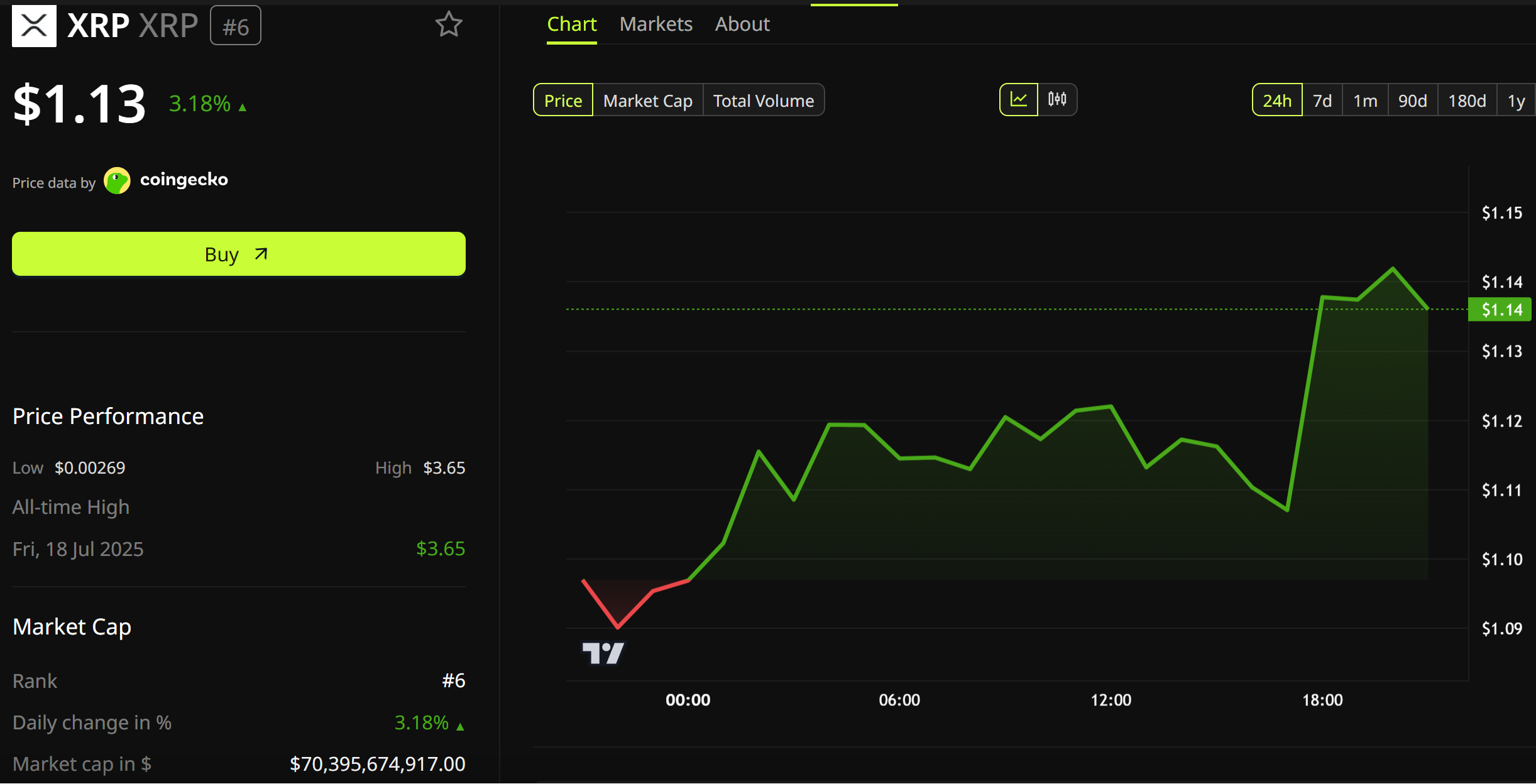
The token gained nearly 4% on Thursday to trade near $1.13, holding its spot as the sixth-largest cryptocurrency at a $71 billion market cap.
Follow us on X to get the latest news as it happens
A Steadier Pick After the Pulte Backlash
Trump handed the role to Federal Housing Finance Agency Director Bill Pulte on an acting basis earlier this month.
Crypto markets cheered the acting pick because of his pro-crypto mortgage policies. However, Pulte’s lack of intelligence experience drew bipartisan objections.
House Democrats blocked a short-term FISA Section 702 extension on Thursday in protest.
Clayton offers Senate Republicans an easier path. Lawmakers confirmed him 61-37 to lead the SEC in 2017.
Federal judges later named him SDNY attorney after his 2025 nomination stalled. Still, critics note he also lacks any intelligence background.
“I am pleased to announce the Nomination of very Highly Respected Jay Clayton, former Chairman of the Securities and Exchange Commission… to be the next Director of National Intelligence and, importantly, to serve in my Cabinet,” Trump wrote in a Truth Social post announcing the decision.
Confirmation hearings will now test Clayton on surveillance and national security.
XRP holders, meanwhile, will watch whether their old adversary leaves financial regulation behind for good.
The post Trump Picks Former Ripple (XRP) Foe Jay Clayton for Top Intelligence Role appeared first on BeInCrypto.


XRP price is trading around $1.08 after slipping over the past 24 hours. Even so, the market stayed relatively steady despite a major fraud case in South Korea. Authorities arrested three suspects linked to a fake XRP staking scheme that stole 3.4 million XRP, worth about 12.3 billion won, from 71 investors. An Interpol Red Notice remains active for a fourth suspect overseas.
The Seoul Metropolitan Police Agency said the group operated the fraudulent website Fxrpntwork.com. It promised monthly returns of 1.5% to 1.8% through blog posts, online articles, and YouTube videos. Investigators tracked the stolen XRP on-chain and froze the suspects’ wallets within three days of receiving the first report. The alleged ringleader was arrested after returning to South Korea, while two accomplices were caught fleeing within the country.
Meanwhile, the case reflects South Korea’s tougher approach toward crypto-related fraud. Investigators continue to pursue scams that target retail investors through fake investment platforms. Authorities have also highlighted blockchain’s transparency, as transaction records helped trace the stolen funds quickly.
Despite the headlines, XRP avoided a sharp selloff and continued trading near recent levels. That suggests traders viewed the incident as an isolated criminal case rather than a network issue. Even so, market sentiment could change if similar enforcement actions increase across the region.
Discover: The Best Crypto to Diversify Your Portfolio
Can XRP Price Hit $1.20 This Week?
XRP price is trading around $1.08 after breaking below its recent trading range. The token hit an intraday high near $1.09 and found support around $1.05. The narrow trading range points to consolidation rather than a decisive trend, while recent price action shows sellers still hold the upper hand.
Support now sits in the $1.05 to $1.06 zone, where buyers have repeatedly stepped in. Initial resistance has shifted to $1.08, while $1.10 remains the first major barrier. A sustained move above that level could reopen the path toward $1.20, although stronger buying volume would be needed.

The bull case sees XRP reclaiming $1.10 on convincing volume before attempting a move toward $1.20. The base case remains sideways trading between $1.05 and $1.10 as investors wait for a fresh catalyst. On the downside, losing $1.05 could expose the psychological $1.00 level.
Meanwhile, the South Korean fraud arrests removed a source of negative headlines without affecting the XRP Ledger itself. Traders largely treated the incident as a criminal case rather than a protocol issue. For now, XRP price remains more sensitive to macroeconomic expectations and overall risk appetite than isolated enforcement actions.
Trade XRP on Bybit and Get a Chance to Win Our $1,000 USDT Airdrop
LiquidChain Targets Early Mover Upside as XRP Tests Key Levels
XRP at $1.08 is not a bad place to be long, but the upside math from current levels is incremental. A move to $1.20 is a 11% gain. That’s where early-stage infrastructure plays enter the conversation, not as a replacement for XRP exposure, but as a different risk-return profile entirely.
LiquidChain ($LIQUID) is a Layer 3 infrastructure project positioning itself as the cross-chain liquidity layer. It fuses Bitcoin, Ethereum, and Solana liquidity into a single execution environment.
Consider this your invitation. — LiquidChain (@getliquidchain) July 29, 2026
The age of isolated chains is ending.  pic.twitter.com/Iaeuk01uPI
The core architecture centers on a Unified Liquidity Layer with single-step execution and deploy-once architecture, meaning developers ship once and access all three ecosystems without fragmented bridge risk.
As of today, the presale is priced at $0.01485 with $920K raised.
Research LiquidChain before committing capital.
Discover: The Best Token Presales
The post XRP Price Stabilizes as Korean Police Arrest Three in Fraudulent Scam appeared first on Cryptonews.
Eole has become the first Japanese listed company to hold Hyperliquid (HYPE). The Tokyo-listed firm bought 1,078 tokens for 10.08 million yen.
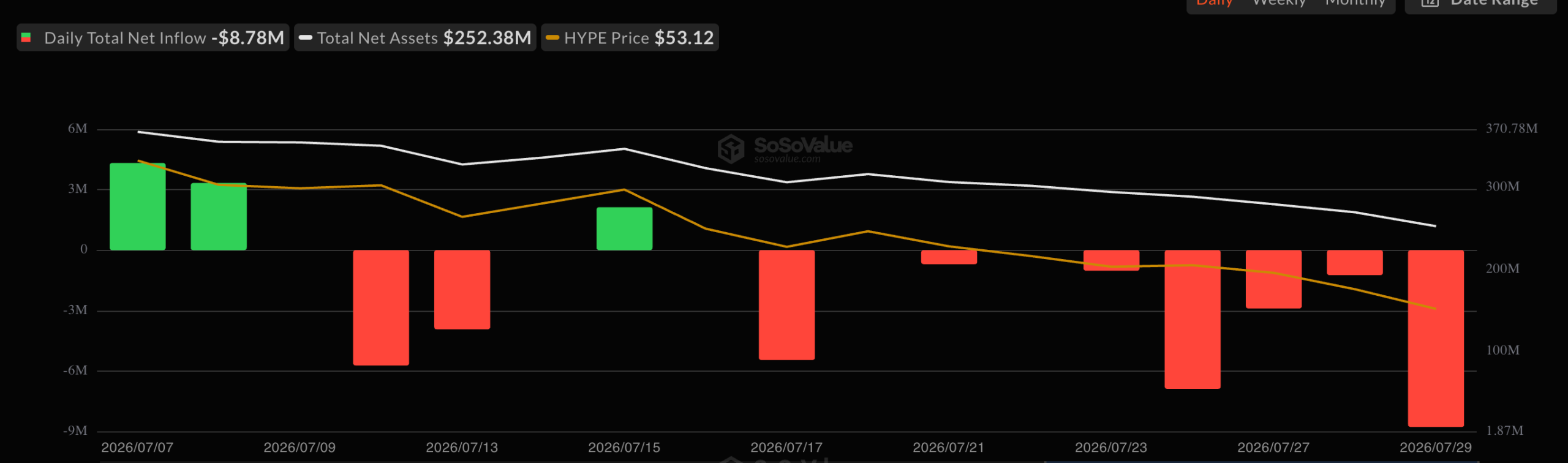
The purchase lands as US-listed HYPE funds record their longest stretch without inflows since launch. Large holders have moved tokens onto exchanges over the same period.
Japanese Firm Commits 100 Million Yen to Hyperliquid
The company paid an average of 9,352.776 yen per token. It plans further purchases in tranches through the end of August, taking the total to 100 million yen.
Eole ties the buy to its Neo Crypto Bank plan, announced in October 2025. The company argues that AI without bank accounts needs settlement rails that run entirely in software. Smart contracts would carry those payments at low cost and high speed.
“As part of driving that infrastructure forward, eole has now acquired HYPE — the native token of Hyperliquid, the world’s largest on-chain derivatives platform and one well suited to autonomous AI agent execution — as a strategic asset, in addition to its existing Bitcoin (BTC) holdings. The company says this is the first such case by a listed company in Japan,” the firm said.
Follow us on X to get the latest news as it happens
US Funds Move the Other Way
While fresh demand has emerged in some parts of the market, US-listed HYPE ETFs have continued to see capital leave.
The spot HYPE funds have not recorded any inflows since July 15. Instead, they posted seven outflow sessions and three flat trading days.

Over that period, investors withdrew roughly $27 million, reducing the funds’ combined assets under management from $370.8 million on July 6 to $252.38 million.
Large token holders have also shifted HYPE to exchanges. Blockchain analytics firm Lookonchain identified two notable transfers this week.
Multicoin Capital moved 137,100 HYPE, worth about $7.51 million, to Coinbase Prime. Meanwhile, a wallet tied to Selini Capital transferred 495,473 HYPE, valued at approximately $26.8 million, to OKX. Combined, the two transactions involved 632,573 HYPE.
The broader price trend has remained weak throughout July. HYPE traded at $53.9 on Thursday, down 19.4% over the past 30 days, making it the worst-performing token among the top 20 cryptocurrencies during that period.

The token also remains 29.8% below its June 16 all-time high of over $76, having surrendered all of the gains from its brief July rally, when it briefly traded above $70.
Subscribe to our YouTube channel to watch leaders and journalists provide expert insights
The post Hyperliquid Draws First Japanese Corporate Buyer as US Funds Shed $27 Million appeared first on BeInCrypto.
China Business Journal warned on July 30 that fraudsters had impersonated the publication while demanding Bitcoin from companies threatened with negative news coverage.
Summary
- China Business Journal says scammers demanded Bitcoin while impersonating reporters and threatening targeted companies online.
- The newspaper says the Proton Mail messages were unauthorized and appeared to constitute fraudulent activity.
- No Bitcoin address, payment amount or confirmed victim loss was publicly disclosed in Thursday’s statement.
According to the newspaper’s statement, the scammers contacted businesses through an address hosted by Proton Mail. They claimed that undercover investigations had uncovered damaging information about the targeted companies.
The senders allegedly threatened to publish the purported findings unless the companies transferred Bitcoin. The publication said it had not authorized the messages and considered the operation a suspected fraud scheme.
Scammers allegedly used negative coverage as leverage
The emails appeared to combine two established fraud methods: impersonating a recognized organization and threatening reputational damage to force payment.
China Business Journal said the perpetrators presented themselves as representatives of the newspaper. They then offered to suppress the alleged investigation in exchange for Bitcoin. The publication did not reproduce the full emails or identify the businesses contacted.
The allegation remains based on the newspaper’s account. No suspect has been named, and no law enforcement agency had publicly announced an arrest or criminal filing connected to the emails as of July 30.
Chinese authorities have previously prosecuted people who impersonated journalists or used negative coverage to demand money. In a 2025 case published by China’s news regulator, three people were convicted after using purported environmental reporting to extort 16 companies.
China Business Journal says the emails were unauthorized
The newspaper said the messages did not come from its authorized reporting or business operations. It is collecting evidence and reserved the right to pursue civil and criminal action against those responsible.
The warning is intended to help companies distinguish genuine reporting inquiries from payment demands. A legitimate request for comment may contain difficult questions, but demands for cryptocurrency in exchange for suppressing publication are a clear warning sign.
China Business Journal was established in 1985. It operates under the supervision of the Chinese Academy of Social Sciences and is organized by the academy’s Institute of Industrial Economics.
The scammers’ use of the publication’s identity could therefore make the emails appear credible to executives unfamiliar with its official contact procedures.
The newspaper did not disclose a Bitcoin wallet address, requested amount, transaction hash or payment deadline. It also did not say whether any targeted company transferred funds.
Without a wallet address, independent researchers cannot examine the blockchain for payments linked to the alleged scheme. The available information confirms the warning, but not whether the fraudsters successfully collected Bitcoin.
The use of Proton Mail does not establish who sent the emails. Proton allows users to report suspected phishing and abusive messages to its security team. Its guidance asks recipients to preserve and submit the original message when reporting suspicious activity.
The newspaper also did not announce whether it had contacted Proton or Chinese police. Any account suspension, identification request or criminal investigation would require further action by the relevant service provider and authorities.
Companies face a familiar impersonation tactic
China’s internet regulator has previously warned that criminals sometimes pose as legitimate news organizations, threaten to publish negative material and demand payment from companies or individuals.
The latest case adds Bitcoin to that model. Cryptocurrency allows a recipient to request direct payment without using a conventional company bank account. However, the demand itself does not prove that the scammers received funds or successfully concealed their identities.
U.S. prosecutors charged a teenager over an alleged $8 million crypto ransom scheme tied to corporate intrusions and impersonation tactics.
Additionally, Coinbase refused a $20 million ransom demand after attackers claimed they possessed stolen customer information.
China Business Journal said it would continue gathering evidence. The next verified update could come from the newspaper, Proton, police authorities or a company that received one of the emails.


OpenAI told employees that annualized recurring revenue (ARR) in July surpassed the company’s entire second quarter, according to a partial internal transcript reviewed by CNBC.
Chief Financial Officer Sarah Friar shared the figure on Wednesday alongside board chair Bret Taylor.
OpenAI Says July Annualized Revenue Outpaced the Entire Second Quarter
Friar and Taylor credited the GPT-5.6 model series, enterprise agent ChatGPT Work, and the rising adoption of the Codex coding tool.
“And Q2 was no slouch,” she said.
Speaking to employees, Taylor said Anthropic entered the year with strong momentum. He conceded that OpenAI had been playing catch-up in coding but noted that Codex’s expansion has been encouraging.
“You’re seeing people who went deep on Claude Code, ended up with a very high bill, and started looking for an alternative,” Taylor stated.
The report did not disclose any absolute revenue figure. Nonetheless, earlier disclosures give some sense of the firm’s revenue scale.
The Information highlighted that OpenAI’s annualized revenue topped $25 billion at the end of February, citing a person familiar with the figure.
The same outlet reported in June that OpenAI burned $3.7 billion in the first quarter, against $5.7 billion in revenue.
Now, the latest internal message follows April reporting that OpenAI missed internal revenue and weekly active user targets.
Follow us on X to get the latest news as it happens
Microsoft, Meta, Alphabet, and Amazon Report Quarterly Results
Meanwhile, OpenAI’s reported revenue growth arrives as several of the largest AI spenders publish quarterly results.
Microsoft closed its fiscal fourth quarter on June 30 with revenue of $90.0 billion, up 18%. Operating income also climbed 18% to $40.6 billion.
Meta reported revenue of $60.80 billion, beating the roughly $59.50 billion analysts expected, up 28% from a year earlier.
Alphabet reported last week $119.8 billion in second-quarter revenue, up 24%. Apple and Amazon publish results on Thursday.
OpenAI is not a public company, so it is not required to disclose quarterly figures. The company closed a record $122 billion round in March at a post-money valuation of $852 billion.
The firm has submitted a confidential S-1 registration statement to the SEC in June. That filing was its first formal step toward an initial public offering (IPO).
Subscribe to our YouTube channel to watch leaders and journalists provide expert insights
The post OpenAI Says July Annualized Revenue Topped All of Q2 appeared first on BeInCrypto.


Adam Hollander has announced that he has stepped down as OpenSea’s chief marketing officer after serving in the role for roughly a year and a half, saying the decision was driven by personal priorities rather than the company’s business outlook.
Summary
- OpenSea CMO Adam Hollander has announced his departure after serving in the role for about 18 months.
- Hollander said the decision was personal, not career related, and that he plans to focus on his health, family and personal life.
- He expressed confidence in OpenSea’s leadership, products and future roadmap while saying he is not taking another job.
In a post published on X, Hollander said this week would be his last at OpenSea after discussing the decision with co-founder and CEO Devin Finzer. He said he would not be moving to another company and instead plans to spend time focusing on his health, family and personal interests while remaining involved with the platform as a user and informal adviser.
“The last year and a half running marketing for OpenSea has been a wonderful adventure,” Hollander wrote, adding that the role had “taken everything I have to give.” He said the choice to leave was “far more of a personal decision… than a professional one.”
OpenSea executive says confidence in company has grown
Although leaving the company, Hollander said his confidence in OpenSea had strengthened during his time there. He wrote that he believes in the company’s direction and has “enormous confidence” in both the products under development and the team building them.
He also made clear that his departure should not be interpreted as a move prompted by dissatisfaction with the business or by another employment opportunity.
“I’m not taking another job, and in fact, explicitly plan not to,” he said. “I’m going to take some time to focus on my health, family, hobbies, and of course I’ll be a regular OpenSea user.”
Hollander added that he intends to remain available to provide advice, product ideas, and feedback because he wants the marketplace to succeed.
Responding publicly on X, Finzer thanked Hollander for his contributions during the past 18 months.
“I’m glad to have fought alongside you,” Finzer wrote. He added that the company would continue communicating openly with its community while building new products.
Marketing team and upcoming OpenSea products remain in focus
Looking back on his tenure, Hollander said one of his proudest achievements was building a marketing team that he described as capable, entrepreneurial and deeply connected to artists, creators and collectors.
He said the group is well positioned to continue operating without him and expressed confidence that the responsibilities he handled as chief marketing officer are now in capable hands.
Attention also turned to the company’s product roadmap after Hollander suggested several upcoming releases carry work he contributed to before announcing his departure.
“There are so many exciting things being built at OpenSea right now,” he wrote. “Things I’ve always wanted to see from the platform.”
Without identifying those products individually, Hollander said he was proud that many would bear his “fingerprints” and that he looked forward to supporting the team from the sidelines after leaving.
His post concluded with thanks to colleagues, builders, collectors and traders who worked with him during his time at the company before signing off with, “For the last time as OpenSea’s CMO … sails up.”
OpenSea has expanded beyond NFTs during his tenure
Hollander joined OpenSea in early 2025, a period when the company had already begun expanding beyond its traditional NFT marketplace business.
One of the clearest examples came in June, when OpenSea signaled plans to introduce perpetual futures trading. At the time, Product Marketing Lead Zack Brenner invited users on X to request early access to perpetual contracts, pointing to a new trading product that would move the platform into on-chain derivatives.
When asked whether the feature would run on Hyperliquid’s infrastructure, Brenner replied “YES,” according to posts shared by Hyperliquid-focused accounts on X. OpenSea has not published a launch date, user terms or a full list of supported assets for the product.
The proposed integration would allow OpenSea to offer perpetual contracts using Hyperliquid’s infrastructure instead of building a derivatives exchange from scratch.
SEA token plans and trading strategy continue to develop
The perpetual futures initiative followed earlier changes to OpenSea’s product roadmap.
As previously reported by crypto.news, the company delayed the launch of its SEA token in March after citing market conditions. Finzer said at the time that the team wanted to ensure “every piece is in place” before proceeding with the rollout.
Earlier reporting also connected the token to OpenSea’s long-term “trade everything” strategy, which combines NFTs, token trading and perpetual futures within the same ecosystem.
CoinGecko’s marketplace rankings published in June placed OpenSea third among NFT marketplaces by monthly trading volume, giving it a 19.9% market share and approximately $66.52 million in monthly volume.
Outside the NFT business, Hyperliquid has also attracted institutional interest in recent months. Crypto.news previously reported that Grayscale updated its proposed Hyperliquid ETF filing with the ticker HYPG and a 0.29% management fee, joining existing Hyperliquid-related investment products from 21Shares and Bitwise.

MoonPay has introduced PayBox, a “payment vault” designed to let AI assistants such as ChatGPT and Claude execute crypto actions inside a conversation—while keeping users in control of their wallet permissions. The company positions the product as a safer way for AI to perform tasks like swapping tokens, bridging assets, and interacting with DeFi, using natural-language instructions from the user.
In practical terms, users connect a crypto wallet and payment methods to the AI assistant. The assistant then prepares transactions—such as token swaps, cross-chain transfers, or DeFi calls—based on what the user asks. MoonPay says approval can be handled via a passkey or through spending limits that allow the AI to carry out certain actions automatically within predefined boundaries.
Key takeaways
- PayBox aims to put consent first, offering per-transaction approval or limited autonomous execution based on user-set permissions.
- MoonPay says it protects wallet keys using multi-party computation and trusted execution environments to reduce direct access by both the AI assistant and MoonPay.
- PayBox supports multiple payment rails, including debit cards, bank accounts, Apple Pay, and PayPal, in addition to crypto wallets.
- The vault integrates with AI apps via an SDK, allowing developers to embed PayBox functionality into their own assistant experiences.
- x402 momentum continues, with public dashboards showing large recent transaction volumes across participating services.
PayBox: AI-driven crypto payments with user-controlled permissions
MoonPay’s central pitch with PayBox is control. The platform is built around the idea that an AI assistant should be able to request or construct crypto transactions from within a chat, but that the user retains authority over how those actions happen.
MoonPay says users can require approval for every transaction, or choose an approach where the AI is allowed to act automatically only within limits the user defines. Those limits can function as guardrails for autonomy—constraining what the assistant can do without additional confirmation.
To address key management and custody concerns, MoonPay states PayBox uses multi-party computation and trusted execution environments. The goal is to prevent either the AI assistant or MoonPay from independently accessing user funds. While the user initiates actions through the AI interface, the underlying design is intended to reduce the risk of unilateral fund movement.
From swaps to bridges: where PayBox fits in an AI workflow
PayBox is positioned for common “agent” behaviors in crypto—actions that are often difficult for users to execute safely or quickly. MoonPay says the system can support transaction types including:
- Token swaps initiated from chat prompts
- Cross-chain bridging and transfers across networks
- DeFi interactions constructed as transactions based on user intent
MoonPay also highlights that PayBox works with multiple blockchains and multiple payment methods. According to the company, users can combine crypto wallets with fiat-to-crypto and payment rails such as debit cards, bank accounts, Apple Pay, and PayPal.
For developers, MoonPay indicates the product can be integrated through a software development kit (SDK), suggesting a strategy beyond serving end-users directly and instead enabling other AI-driven apps to embed transaction authorization and execution flows.
PayBox’s parallel track: x402 and the push for AI-native payments
PayBox also supports x402, an open payment protocol originally developed by Coinbase. x402 is intended to enable AI agents to make internet-native payments, aligning with the broader trend of “agentic” applications that can transact without requiring users to manually navigate payment steps.
In April 2026, the x402 protocol was contributed to the Linux Foundation. The Linux Foundation said the protocol is now governed as an open, vendor-neutral industry standard, through the launch of the x402 Foundation. Earlier coverage from Cointelegraph also noted growing ecosystem activity around x402.
Why the x402 ecosystem growth matters
Coinbase has continued expanding the x402 toolset. In June, the crypto exchange launched features aimed at helping AI agents accept USDC payments, trade crypto, discover paid services through an AI marketplace, and process high-frequency micropayments more efficiently—capabilities designed to reduce friction for automated transactions.
Other industry participants have moved in the same direction. Amazon Web Services integrated x402 into its Bedrock AgentCore Payments service, while Fireblocks launched an x402-compatible payments framework for AI agents and joined the x402 Foundation. Together, these efforts point to a broader attempt to standardize how AI agents receive payment instructions and complete transactions.
Network activity is another indicator that adoption may be accelerating. According to Chainalysis, agentic payments on Coinbase’s Base network surpassed 100 million transactions within roughly nine months, as reported in a June 3 report. Chainalysis also noted early usage could have been influenced by speculative applications, underscoring that transaction volume alone doesn’t always map directly to stable commercial demand.
Still, the public x402scan dashboard shows more than 12.7 million transactions over the past 30 days across participating services, indicating that activity continues to build across the ecosystem.
What to watch next
As PayBox and x402-related infrastructure mature, the key question for users and builders is whether safety controls and key protection can scale smoothly alongside growing transaction throughput—so far, the trend suggests more AI payment workflows are moving from experiments into repeatable, permissioned execution. The next signal to monitor will be how widely these tools are adopted across real assistant experiences and whether transaction growth translates into robust, non-speculative usage.


Bitcoin traded near $63,900 on Thursday, easing slightly, as U.S. stock futures rose on strong results from Microsoft that reassured investors the heavy spending on AI is starting to pay off, per CoinDesk data.
S&P 500 futures gained 0.2% and Nasdaq 100 contracts rose 0.4% after the index had slipped into a correction, with Microsoft up 8% in premarket after its cloud unit grew at the fastest pace in four years while it held the line on spending.
That is the read the market has wanted all month. Where Alphabet last week raised its spending forecast and unsettled investors, Microsoft showed the returns arriving without a bigger bill in a sign that AI capex is converting to growth.
Bitcoin has tracked that trade closely, moving with the chip and AI complex rather than on anything crypto-specific.
Pi Network’s Core Team announced the date by which the next protocol update must be completed, which automatically means that version 25 has already been deployed without an official confirmation.
Meanwhile, the project’s native token has shown resilience and is well in the green on a daily scale after a catastrophic crash earlier this month.
Protocol V26 Incoming
Recall that the team announced in mid-July that the protocol version 25 should have been deployed by July 22. This came after several other upgrades that were completed earlier this year. It all began in February with the implementation of v19.6, followed by subsequent updates that brought it to the aforementioned deadline in July.
Unlike most previous upgrades, though, the Core Team didn’t announce on X or on its website that version 25 was indeed deployed within the given timeframe. However, there were multiple reports online from users who claimed that it was in effect. Now that the team has provided further details on the next protocol update (version 26), it essentially guarantees that v25 has been implemented.
As with all previous upgrades, Pi Network urged all Mainnet validators to complete the necessary steps before the next deadline, which is now August 11, to ensure that they remain connected to the blockchain. The team described version 26 as a “major milestone ahead of the final planned upgrade,” which will be v27.
“With 8 successful upgrades completed over the past few months, these final two upgrades will bring the network up to date with the latest protocol features, improvements, and functionality,” reads the statement.
PI Already Rockets
Despite the impressive number of updates, new product lines, or redesigns announced by the Core Team lately, many of which came in the past month, the project’s native token failed to capitalize and rally. Just the opposite, it nosedived to a few consecutive all-time lows in July, the latest being at just over $0.07, marked in the middle of the month.
Each breakout attempt was halted in its tracks. The big rejection at $0.10 pushed it south to under $0.09 and $0.08. The token tanked to $0.074 just a few days ago, thus coming inches away from posting a new low.
However, it managed to rebound yesterday and has rallied even further today, perhaps due to the announcement above. PI is up by over 6% on a 24-hour scale and has seemingly reclaimed the $0.08 level.

The post Pi Network Sets Major Update Deadline as PI Surges Past Key Resistance appeared first on CryptoPotato.

Binance is moving deeper into regulated traditional finance by launching USDT-settled options on gold and silver via its Abu Dhabi exchange platform. The contracts are designed to let traders express a view on commodity price movements without taking physical delivery of the metals.
The new options will be listed through Nest Exchange Limited, a Binance-operated venue under the Abu Dhabi Global Market (ADGM) framework. For market participants, the key change is that exposure will be settled in USDT rather than the underlying commodities—potentially lowering friction for crypto-native traders who already hedge or speculate using stablecoin-denominated instruments.
Key takeaways
- Binance will list USDT-settled gold and silver options through its ADGM-regulated Nest Exchange Limited.
- Options provide commodity exposure without physical delivery of gold or silver.
- Retail users can only buy options, while eligible institutions and liquidity providers can also write (sell) options.
- The launch complements Binance’s earlier gold and silver perpetual futures, introduced in January.
- The rollout adds to a broader push across crypto firms toward regulated commodity-linked products and tokenized bullion.
How Binance’s gold and silver options are structured
According to Binance, the options will be available as USDT-settled contracts, allowing traders to position for changes in gold and silver prices while remaining within a stablecoin settlement model. The exchange says the design avoids the need for holders to physically handle the underlying metals—one reason derivatives often attract both hedgers and speculative users who want exposure without logistics.
Binance also drew a clear distinction between retail access and institutional participation. Retail users will be limited to buying options only. By contrast, eligible institutional users and liquidity providers can write options in addition to buying. The company frames this as a risk-control measure: restricting retail users to buying limits downside risk to the premium paid, while enabling institutional participants to write options can support premium collection strategies.
Regulated expansion: from perpetuals to options
This new offering builds on Binance’s earlier step into commodities derivatives. In January, the exchange introduced gold and silver perpetual futures, and the options launch signals a broader expansion of regulated access to traditional assets through crypto-native trading formats.
The shift matters because options introduce a different toolkit than perpetuals. Perpetual futures primarily support directional exposure and leverage-based strategies, while options can be used to hedge downside, structure spreads, or target volatility and payoff profiles that are harder to replicate with linear instruments. For traders operating in the USDT settlement ecosystem, moving from perpetuals to options may increase the range of risk management approaches available on regulated venues.
Still, the practical impact for most users will depend on how liquidity develops and how tight spreads and market depth look once contracts begin trading. Options markets tend to vary widely in execution quality, and those conditions can influence whether hedging or structured trading is economical for smaller participants.
Commodity-linked products beyond derivatives
Binance’s options are part of a wider trend in crypto markets: product development that ties to commodities while navigating different regulatory and market access pathways.
Alongside derivatives exchanges, companies have also focused on tokenizing physical bullion. Tether and Paxos, for example, have pursued tokenized gold products rather than exchange-traded derivatives. Tether’s XAUt—designed to represent one troy ounce of gold stored in Swiss vaults—has been working to broaden compatibility with financial institutions outside traditional crypto rails.
Recent developments include XAUt receiving Shariah certification from Amanah Advisors, an effort intended to expand adoption within Islamic finance contexts. In addition, ADGM recognized XAUt as an accepted spot commodity, allowing regulated firms to offer services tied to the tokenized gold asset in that jurisdiction.
These moves highlight an industry split in approach: exchange-traded options aim to deliver commodity exposure through contracts and stablecoin settlement, while tokenized bullion products aim to bring physical-backed assets into regulated service models for spot usage.
RWA.xyz has estimated that tokenized commodities now sit at about $4.56 billion in distributed value, with Tether Gold and Paxos Gold accounting for more than 90% of the market. That concentration suggests that, so far, the majority of tokenized commodity activity is centered around a small set of products—something that may affect how quickly new offerings gain traction.
What investors and traders should watch next
Binance’s move into USDT-settled options on gold and silver is likely to appeal to traders looking for more flexible hedging and payoff structures within a regulated framework. However, the real test will be how quickly liquidity builds on Nest Exchange Limited and whether market participants can execute strategies efficiently as volatility conditions change.
As commodity-linked crypto products continue to proliferate—ranging from regulated derivatives to tokenized physical bullion—readers should track not only product launches, but also how regulators define permitted access, how institutions participate through options writing, and whether liquidity and spreads meaningfully improve for end users over time.
Crypto World
Pi Network’s PI Extends Recovery as Bitcoin (BTC) Settles After FOMC Meeting: Market Watch
The highly anticipated FOMC meeting yesterday didn’t bring any surprises despite some expectations of a rate hike, and bitcoin’s price has calmed at around $64,000 after the recent volatility.
Most larger-cap alts have posted minor losses over the past 24 hours, led by HYPE’s 3% drop to under $54. In contrast, UNI has pumped to $4.
BTC Settles
Bitcoin rallied hard last week, going from under $64,000 to a monthly peak of $67,000. That resistance, though, turned out to be too strong given the current lack of substantial bullish catalysts, and the asset fell to $64,600 within a day or so, and dipped by another grand on Friday.
The bulls didn’t allow another breakdown, as BTC remained at around $64,000 during the weekend. It climbed to $64,500 on Sunday and jumped by another $1,000 on Monday as the markets priced in the de-escalation news on the Middle East war from that weekend.
Nevertheless, bitcoin was almost instantly rejected again, and the subsequent dip pushed it to under $62,800 on Tuesday ahead of the FOMC meeting in what appeared to be a de-risking move from investors. In the hours before and after the event, in which the Fed maintained interest rates at 3.50%-3.75%, BTC experienced some volatility, which included a rise to $64,600 and a dip to $63,200.
It has remained in the middle of this range since then, currently trading inches below $64,000. Its market cap is down to $1.280 trillion on CG, while its dominance over the alts has dropped to 56.3%.

US Enters Top 100, PI Keeps Pumping
Pi Network’s native token was among the top performers yesterday and has doubled down in the past 24 hours. PI has reclaimed the $0.08 resistance (now support) after another 6% rally as the team behind the project announced when the next protocol update should be deployed.
Talus (US) has skyrocketed by 20% daily and 600% monthly and is now within the top 100 alts by market cap. The larger-cap alts are a lot calmer, with UNI and BEAT posting 4-5% gains.
In contrast, HYPE has dropped by 3% to under $54, DOGE is down by over 1%, while ETH, XRP, SOL, and RAIN have slipped by up to 1%.

The post Pi Network’s PI Extends Recovery as Bitcoin (BTC) Settles After FOMC Meeting: Market Watch appeared first on CryptoPotato.
XRP Price Stabilizes as Korean Police Arrest Three in Fraudulent Scam

Malik Nabers returns to practice after ACL and meniscus tear surgery

G2A.COM’s autonomous AI agent Dave helps sellers resolve 14,400 support tickets in 63 days


-

 Fashion6 days ago
Weekend Open Thread: Brooks Brothers
-
 Sports4 days ago
Commonwealth Games boxing: Jadumani Singh seals dominant 5-0 win over Pakistan’s Sumama Rehman to enter quarter-finals | Commonwealth Games News
-

 Business13 hours ago
Why Trees Belong on the Risk Register
-

 Tech3 days ago
Intel is reversing course and bringing hyper-threading back to its server chips
-

 Politics3 days ago
Luke Littler dismantles Gerwyn Price to retain title in Blackpool
-

 Crypto World5 days ago
Ripple bought a bank in pieces. The $4 billion audit
-

 Politics2 days ago
The Part of the Electric Transition Nobody Wants to Discuss
-
 Entertainment6 days ago
A New Post-Apocalyptic Gundam Anime Series Blasts Into SDCC
-

 News Videos4 days ago
BITCOIN JUST ENTERED THIS CRITICAL ZONE…
-

 Fashion6 days ago
16 Dresses for the High Summer Event
-

 Sports6 days ago
2026 3M Open leaderboard: Scottie Scheffler finds putter in Round 1, sits three back
-

 News Videos7 days ago
The Peugeot Family: How 200 Years of an “Old Money” Dynasty Died in A Boardroom
-

 Business1 day ago
Major shareholder moves on Canyon
-

 Crypto World4 days ago
XRP Ledger adds $2.6B as RWA inflows rank second
-

 Politics4 days ago
Spain sweeps the board at 2026 World Cup with individual awards
-

 Crypto World7 days ago
Uniswap (UNI) pushes deeper into tokenized RWAs with permissioned trading pools
-
 Entertainment2 days ago
‘Stargate’ Creator’s New Sci-Fi Series Returns for Season 3 Tomorrow
-

 Tech5 days ago
Anthropic launches Claude Opus 5, a cheaper AI model for coding, agents and enterprise workflows
-

 Entertainment4 days ago
Sara Gilson Killed By Husband After Viral “Pedophile” TikTok Video
-

 News Videos2 days ago
Claude: Build Financial Dashboards in Minutes (2026)
You must be logged in to post a comment Login