
Crypto World
U.S. looks to influence Japan's monetary policy. It couldn't do that with bitcoin

Your day-ahead look for Sept. 1, 2026

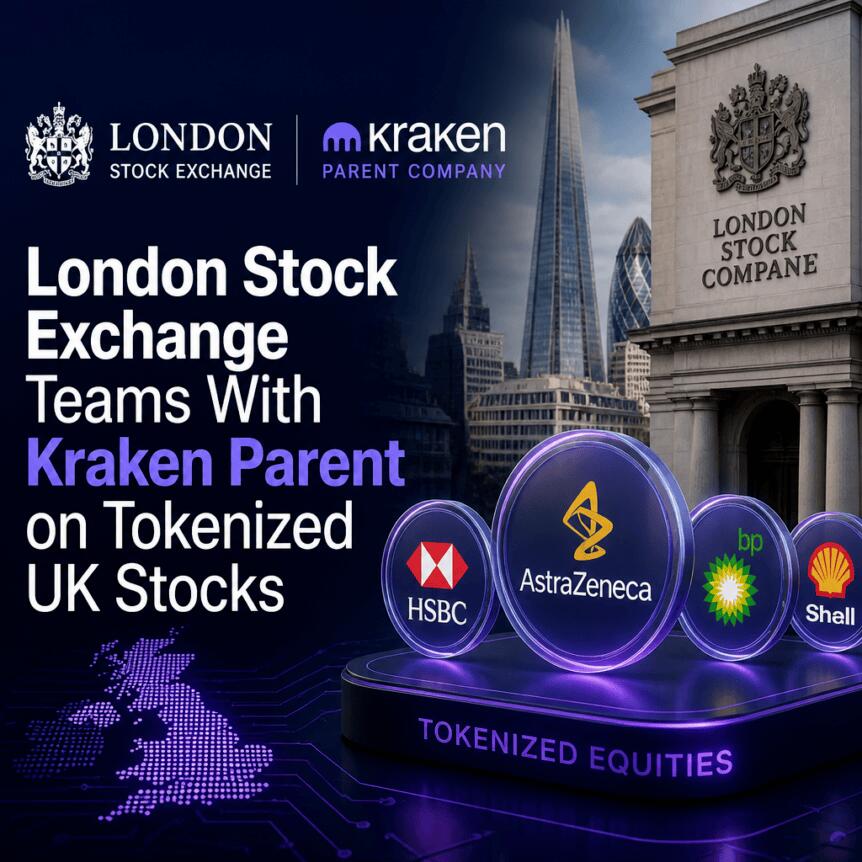
The London Stock Exchange (LSE) and crypto exchange Kraken are reportedly moving toward tokenized stock trading on a new LSE night-time venue, a bid to make parts of UK equities markets available outside traditional market hours. According to the Financial Times, LSE will work with Kraken’s parent company, Payward, to provide access to tokenized stocks that track major UK equity products starting in 2027.
The plan centers on LSE 24, the stock market operator’s proposed round-the-clock trading facility. LSE said it would begin operating Mondays through Fridays, with trading expected to run from the evening through the night window, offering 24/5 market access once launched.
Key takeaways
- LSE says tokenized stocks referencing leading UK equities would be introduced on its planned LSE 24 night-time trading venue starting in 2027.
- The effort is reported to involve Payward, Kraken’s parent company, which is expected to supply the tokenized-stocks access infrastructure.
- LSE 24 is designed for 24/5 trading, reflecting a broader industry push to reduce reliance on fixed market hours.
- This puts London among multiple global venues exploring tokenized equity products alongside Nasdaq, CME Group, and ICE.
- Onchain tokenized stocks continue to expand, with RWA.xyz data showing growth in both value and the number of holders over the last month.
What LSE’s tokenized equities push would change
Tokenized stocks are digital representations of traditional equities designed to move or settle onchain using blockchain infrastructure. In practice, that can enable fractional ownership, faster settlement workflows, and, depending on regulation and market design, trading that is less constrained by conventional market hours.
For LSE, pairing tokenized stocks with LSE 24’s extended schedule appears aimed at improving accessibility for investors who cannot participate during regular sessions. Instead of treating tokenization as a standalone experiment, the reported approach ties onchain equity access to an LSE product—its own trading venue—suggesting the exchange wants tokenized assets to become part of its mainstream market offering.
Payward’s chief commercial officer Mark Greenberg told the Financial Times that the LSE partnership would provide access to tokenized stocks tracking leading UK equity products starting in 2027. The reported timetable matters because it frames tokenization as something approaching deployment rather than long-term research—though readers should note the detail is based on reporting in the Financial Times.
LSE 24: the “24/5” venue as a catalyst
The technical and regulatory readiness of tokenized securities is only one side of the equation. The other is how and when trades can actually occur. LSE 24, which LSE announced on July 21, is positioned as a market structure that offers 24/5 trading from Mondays to Fridays.
That design echoes the core promise of tokenized markets in general: markets that can potentially run continuously, rather than being limited to standard exchange hours. By placing tokenized stocks within that extended-hours venue concept, LSE is effectively aligning its tokenization initiative with a specific liquidity and trading schedule—important for traders and liquidity providers assessing whether tokenized instruments can gain practical traction.
For investors, the benefit is straightforward: more time to trade during the week. For market operators and service providers, it creates a clearer product pathway—turning tokenization into an operational feature of a trading venue rather than an isolated offering.
Tokenization is becoming a cross-venue industry priority
LSE is not alone in exploring tokenized equity products. The broader push reflects how TradFi institutions are experimenting with blockchain-based securities, often with an eye toward fractionalization and potentially faster settlement mechanisms.
According to earlier coverage cited within the source, Nasdaq agreed in August to acquire LeveL Markets, described as the third-largest alternative trading system in the US by trading volume, as part of a move toward tokenized markets with round-the-clock trading. In March, Nasdaq was also reported to be working with Payward and Payward’s Backed subsidiary (issuer behind xStocks) to build an “equities transformation gateway.” Separately, the source references that Nasdaq had previously filed a tokenization proposal with US securities regulators in September 2025.
The pattern is similarly visible in other exchange groups. The source notes that ICE—parent of the New York Stock Exchange—received investment involvement from crypto exchange OKX to bring NYSE-listed tokenized stocks to the exchange starting from the second quarter of 2026. It also highlights that Deutsche Börse invested $200 million in Payward, tied to plans for broader access to blockchain-based securities and tokenized investment products.
Beyond equities, derivatives venues are also moving toward crypto-linked products. The source cites CME Group’s plans for futures contracts tied to Cardano, Chainlink, and Stellar and its later intention to add Avalanche and Sui futures, subject to regulatory approval. While these are different instrument types than tokenized stocks, they show that large operators are actively building infrastructure for blockchain-adjacent trading.
How fast is tokenized stock adoption progressing?
The LSE initiative arrives as tokenized stocks continue to grow. Data provider RWA.xyz, cited in the source, reported that the total value of tokenized stocks rose by 15% over the previous 30 days to $2.53 billion. Over the same period, it said the number of tokenized equity holders increased by 153% to 2.45 million.
Those figures help contextualize why exchange operators are accelerating exploration: the market for tokenized equities appears to be expanding in both capital and participant counts. Still, investors should distinguish between growth in onchain holdings and growth in regulated exchange volumes. Tokenized assets can exist across multiple venues and jurisdictions, and the level of liquidity varies widely depending on market access, settlement design, and compliance frameworks.
What to watch next is how quickly tokenized stock offerings move from pilots and partner-led deployments into standardized venue listings—and whether extended trading schedules like 24/5 materially improve execution quality for investors.
For now, the most immediate question is whether LSE’s 2027 timeline for tokenized equities on LSE 24 holds through regulatory reviews and market preparation. As other large exchanges press forward with tokenization strategies, the next signals for investors will be concrete launch details, the structure of tokenized instruments, and evidence that liquidity can follow the promise of more hours and broader access.
Bitcoin trades at $78,646.05, down 0.28% in the last 24 hours, a quiet number for a market that’s watching Washington more than charts right now. The reason is that Polymarket CLARITY Act odds contract has collapsed from 82% odds of passage in February to just 13% by early August, a move that’s rattled traders betting on regulatory clarity as the next major catalyst.
The Senate faces a September 15 cloture vote on H.R. 3633, the bill that would hand the CFTC exclusive authority over spot digital-commodity markets while leaving the SEC in charge of securities-classified tokens and exchange oversight. Republicans hold 53 seats; they need seven Democrats to cross the aisle to hit the 60-vote threshold.
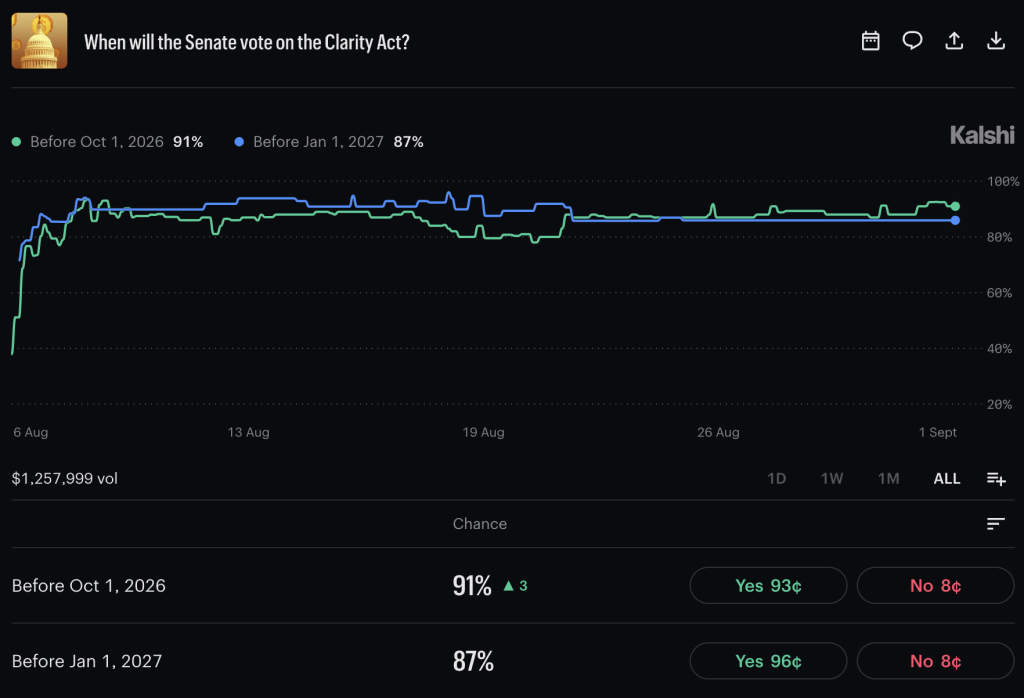
Polymarket’s contract, which has moved over $11.5M in volume, now implies just a 13-14% chance of enactment in 2026, a stark contrast to Kalshi’s 91% probability that a Senate vote will occur at all before October 1. Coinbase CEO Brian Armstrong remains publicly “rather optimistic” about clearing 60 votes, but the prediction markets tell a colder story.
That gap between “a vote happens” and “the bill actually passes” is the real trade here. It’s also spilling into how traders price crypto-adjacent risk heading into Q4.
Can Bitcoin Hold Support as Polymarket Clarity Act Odds Crater?
BTC’s 0.28% daily slide to $78,646.05 isn’t dramatic on its own, but it’s occurring against a backdrop of regulatory uncertainty, which typically compresses risk appetite.
The $76,000-$78,000 zone has functioned as near-term support through recent sessions; a break below invites a retest of the low-$70Ks. Upside resistance sits near $82,000-$84,000, a level BTC hasn’t reclaimed with conviction since the momentum around the CLARITY Act began fading in July.
Bull case: a surprise bipartisan push or committee reschedule flips sentiment, odds rebound toward 30%+, and BTC tests $84K.
Base case: consolidation continues near current levels as the Senate calendar drags without resolution.
Bear case: the September 15 cloture vote fails outright, odds sink into single digits, and BTC retests sub-$76K support. Watch the vote date closely; it’s the only near-term catalyst that moves this needle materially.
[button link=”https://99bitcoins.com/visit/kalshi” color=”green” text_color=”white” size=”medium” target=”new” rel=”nofollow”]Check out the BTC Markets on Kalshi and Claim Your Free $25[/button]
Kalshi Traders Turn Bearish on the CLARITY Act

The likelihood of the CLARITY Act becoming law in 2026 has significantly declined. Prediction-market traders are increasingly betting that the landmark crypto regulation bill will have difficulty passing in the Senate.
According to the latest market data from Kalshi, there is currently a 91% probability that the Senate will hold a vote on the CLARITY Act before October 1. However, this does not indicate that the bill is likely to pass.
A critical challenge will occur on September 15, when senators are expected to vote on a procedural motion to advance the legislation. The bill requires 60 votes to overcome the cloture hurdle, making bipartisan support essential.
Kalshi’s pricing for the bill’s passage has dropped to approximately 22%, reflecting a significant shift in sentiment. Traders are increasingly worried about unresolved disagreements over stablecoin rewards, DeFi regulation, anti-money-laundering provisions, and government officials’ restrictions on crypto-related activities.
This makes September a crucial month for the CLARITY Act. A successful procedural vote could restore optimism and potentially lead to a significant repricing in crypto-related prediction markets. Conversely, failure to secure the necessary 60 votes could effectively push comprehensive crypto market-structure legislation into 2027.
For now, traders on Kalshi indicate that a Senate vote is highly likely, but passage remains a long shot.
[button link=”https://99bitcoins.com/visit/kalshi” color=”green” text_color=”white” size=”medium” target=”new” rel=”nofollow”]Make Your Prediction With $25 Free on Kalshi[/button]
This is not financial advice. Crypto markets are highly volatile and speculative. Always conduct independent research before making investment decisions.
The post Polymarket CLARITY Act Odds Slashed to 15% of Being Passed in 2026 appeared first on Cryptonews.
TRON founder Justin Sun says Forbes and Bloomberg strip 70% to 80% off his crypto holdings when they calculate his net worth. He calls that gap his biggest bet.
Traditional trackers value him in the mid single-digit billions. Sun says the number they cut is the number that actually matters.
Why Forbes and Bloomberg Discount His Net Worth
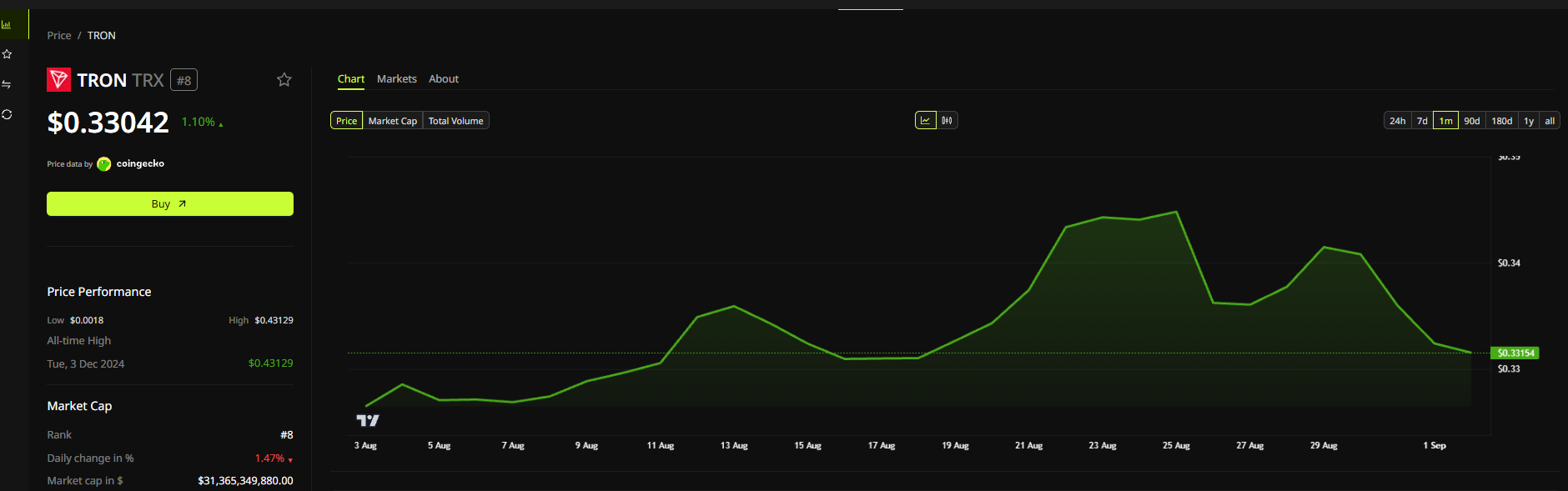
TRON (TRX) currently trades near $0.33, which ranks it eighth by market value at roughly $31.4 billion. That single price moves most of his balance sheet.

Traditional wealth trackers penalize concentration and volatility. Consequently, they treat most digital assets as uncertain rather than bankable. Forbes puts Sun at $8.5 billion and ranks him 444th globally.
Sun accepts that logic yet rejects its conclusion. He framed the discounted slice as the place where his judgment sits. His finances drew fresh attention during his World Liberty lawsuit.
“When Bloomberg and Forbes calculate my net worth, they discount my crypto assets by 70-80%. I understand their logic: concentration, high volatility, and by their standards, it doesn’t count as “certain.” That’s their methodology, and it has nothing to do with me.” Justin Sun, TRON founder, wrote in a post on X.
The tension is not new. Sun sued Bloomberg in 2025 to stop it from publishing his holdings. He cited personal security risks at the time.
Scrutiny has grown across his businesses this year. He answered questions about Binance’s HTX restrictions in August.
Meanwhile, his exchange moved closer to a settlement with the FCA, the UK financial regulator.
Sun Rejects Diversifying Out of Crypto
For 14 years, Sun has held most of his personal assets in crypto. He calls that a choice, not an oversight.
Advisers repeatedly urged him to rotate into real estate, stocks, or cash. However, he dismisses those as second-best assets.
“…if I’m already holding what I believe to be the best assets, what’s the point of exchanging them for second-best?” Sun made the argument in a separate post.
He cited Tesla in 2012, Bitcoin’s early days, Nvidia in 2016, and storage chips in 2024. In each case, winners held instead of selling. His corporate holdings keep growing regardless. Tron Inc.’s TRX treasury topped 711 million tokens in August.
Questions about his personal spending resurfaced after a $50 million dispute went public.
Sun says time will settle the argument. The next repricing of his portfolio, therefore, does the scoring for him.
The post Richer Than Anyone Thinks? Why Justin Sun Will Never Cash Out His Crypto appeared first on BeInCrypto.

Ethereum price is grinding steadily, but its quiet number masks a much louder signal underneath. BitMine Immersion Technologies, chairman Tom Lee’s crypto treasury vehicle, just made its largest single ETH purchase since June.
BitMine picked up 53,501 ETH worth $131 million, pushing its total stack to 5,901,112 ETH, or valued near $14.8 billion at a $2,511 reference price. That’s 4.9% of Ethereum’s entire circulating supply, putting the firm 98% of the way toward its self-described “Alchemy of 5%” target.
The buy also extends an unbroken streak: BitMine has bought ETH every single week since June 30, 2025, now 65 weeks running. Lee says Ethereum has outpaced the S&P 500 by 5,430 basis points this quarter alone.
This accumulation doesn’t happen in a vacuum. ETH momentum has been building since early August, and the technical picture now hinges on whether that institutional bid is enough to force a breakout.
Discover: The Best Crypto to Diversify Your Portfolio
Can Ethereum Price Hit $3,000 This Week?
ETH is consolidating around $2,450, inside a range bounded by a low of $2,444 and a high near $2,485 over the past day, tight action for a coin absorbing a nine-figure institutional purchase. Price is consolidating inside a rising wedge just below the critical $2,550 resistance, a level that has rejected two separate breakout attempts already.
Below, support clusters at the 20-day EMA ($2,293.75), Supertrend ($2,212.19), 200-day EMA ($2,161.32), and 100-day EMA ($2,036.88), with price currently holding above all four, a constructive if imperfect setup.

The best scenario is for it to have a clean break above $2,550, which opens a path toward $2,800. Or it could have a continued chop inside the wedge while BitMine’s weekly buying provides a soft floor.
However, the bear case happens if another rejection at $2,550 sends the price back toward the $2,161 200-day EMA. Worth watching before positioning either way.
Agree with Tom Lee’s take? Trade ETH on Bybit and Get a Chance to Win Our $1,000 USDT Airdrop
LiquidChain Targets Early Mover Upside as Ethereum Tests Key Levels
BitMine’s conviction validates the ETH accumulation thesis, but at a $2,459 price point and a $296 billion-plus market cap, the doubling and tripling that early ETH holders saw years ago isn’t realistically on the table anymore. That math is pushing traders further down the risk curve, toward infrastructure plays still in price discovery.
The ceremony starts with a single word. — LiquidChain (@getliquidchain) August 31, 2026

 pic.twitter.com/vudkt5bEzI
LiquidChain ($LIQUID) is one of the names picking up that flow. LiquidChain is a Layer 3 infrastructure project fusing Bitcoin, Ethereum, and Solana liquidity into a single execution environment with a unified layer where developers deploy once and reach all three ecosystems rather than fragmenting liquidity across chains.
The presale is priced at $0.014951 with $960K raised so far. Core features include Single-Step Execution and Verifiable Settlement, aimed at solving the liquidity fragmentation problem that’s dogged cross-chain trading since day one. P
Research LiquidChain before the round progresses further.
Discover: The Best Token Presales
The post Ethereum Price Holds as Tom Lee’s BitMine Makes Biggest ETH Buy Since June appeared first on Cryptonews.
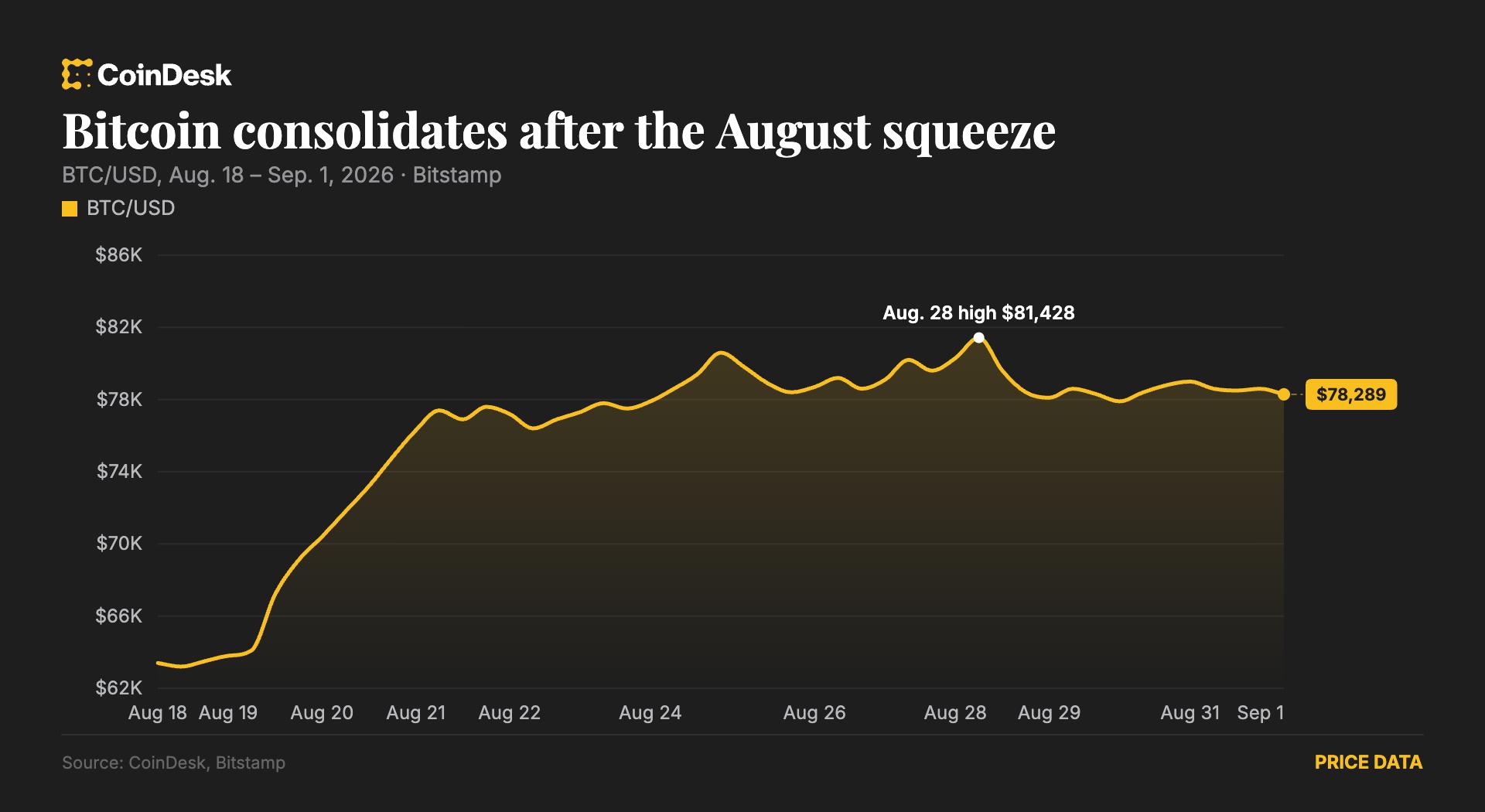
BTC drifted lower after last week’s rally to $81,428, while ARB led DeFi gains as Robinhood Chain’s daily fees topped $2 million.


The country’s financial watchdog says its proposed stablecoin rules are aligned with U.S. and EU frameworks and that it also paves the way for the recognition of foreign stablecoin.

XRP is down 1.80% on the day, but a New York Stock Exchange-listed fund has some big news, revealing that Ripple makes up the largest share of its holdings. The crypto is surpassing even assets tied to companies better known for their role in the crypto exchange industry.
C1 Fund Inc. (NYSE: CFND) disclosed its Q2 2026 holdings, revealing Ripple Labs as its largest position at 17.5% of net assets, edging out Kraken parent Payward at 16.9%. The fund’s net asset value landed at $6.49 per share, and its Ripple stake alone generated 150% in four months, a return the fund partly credits to Ripple’s own share repurchase program.
— Xaif Crypto (@Xaif_Crypto) August 31, 2026
 C1 Fund ($CFND) Q2results: NAV $6.49/share, now holding 11 crypto companies up from 7.
Ripple Labs is their #1 holding at 17.5% of net assets, Kraken close behind at 16.9%. Added Polymarket this quarter too. Real institutional money betting on crypto infra. https://t.co/RgS0AMPlqc pic.twitter.com/AS4Wyej7IM
C1 also deployed $33.07 million across 11 private digital companies, adding Polymarket to the mix during the quarter. It is a signal that institutional appetite for crypto-adjacent private equity isn’t slowing down.
This TradFi validation lands against a choppier technical backdrop, and the two don’t always move in sync. Institutions buy conviction on a quarterly basis; traders react to candles by the hour.
Discover: The Best Crypto to Diversify Your Portfolio
Can XRP Price Hit $1.50 This Week Amid The Bullish Ripple News?
XRP sits at $1.36, off 1% intraday, with the broader 7-day trend still negative after a volatile stretch that saw the token swing between $1.33 and $1.39. ETF-linked inflows have kept a bid under price even as the token trades below key resistance.

Momentum readings are mixed-to-constructive. RSI near 61 and a MACD buy signal on daily charts, though shorter-term oscillators flash overbought. Traders are watching $1.34–$1.35 as the line in the sand. Hold that zone, and a push toward $1.42–$1.43 resistance opens the door to the $2 targets some analysts have floated for September. Lose it, and the setup risks a slide toward $1.25.
A scheduled Ripple escrow release adds a supply-side variable worth tracking this week, separate from the fund-flow narrative entirely.
Trade XRP on Bybit and Get a Chance to Win Our $1,000 USDT Airdrop
Bitcoin Hyper Targets Early Mover Upside as XRP Tests Key Levels
XRP holders riding the C1 Fund headline have reason to feel validated. Institutional money doesn’t chase a dead asset. But a token already carrying a market cap in the tens of billions doesn’t offer the same asymmetric upside as something still in price discovery. This is where rotation logic kicks in for traders looking beyond the next resistance test.
Bitcoin Hyper ($HYPER) is building the first Bitcoin Layer 2 with native SVM integration with smart contract execution running faster than Solana itself, bridged to Bitcoin’s base-layer security through a decentralized canonical bridge.
The presale has raised $33 million so far, with tokens priced at $0.0136855 and a huge 35% staking rewards live for early participants. The pitch: Bitcoin’s trust layer, without the slow throughput and missing programmability that’s kept it sidelined from DeFi.
Research Bitcoin Hyper before the next raise milestone.
Discover: The Best Token Presales
The post Ripple News: XRP is Top Asset in New York-Traded C1 Fund appeared first on Cryptonews.
After dipping below $77,000 on Monday morning following the new strikes in the Middle East, BTC jumped by two grand, but it was stopped again and now sits in the middle of this range.
Most larger-cap alts have failed to recover the recent losses, with ETH still struggling at $2,450, XRP well below $1.40, and BNB beneath $690.
BTC Settles at $78K
After its best week of the year marked in the middle of August, bitcoin tried to take full advantage of this resurgence at the end of the month, surging past $81,000 on a couple of occasions. However, the bears stepped up and didn’t allow another leg up.
Just the opposite; BTC started to lose value rapidly on Friday after the hawkish speech by new Fed Chair Kevin Warsh at Jackson Hole, and dipped below $77,000. It managed to quickly erase some of the losses and spent Saturday trading above that level.
The bulls returned on Sunday with a minor increase to $79,000. However, the resumed strikes between the US and Iran resulted in another nosedive. Bitcoin slipped to $77,000 once again on Monday before it rebounded to $79,000 and now sits between the two boundaries.
Its market capitalization remains stagnant at $1.560 trillion on CG, while its dominance over the alts is at just under 58%.

UNI Keeps Pumping
Uniswap’s native token is the top performer today once again, surging by another 10% daily (over 32% weekly) to a multi-month peak of almost $6.00 earlier today before it retraced to the current $5.65. RAIN and NEAR have posted gains of around 4%, while HYPE is up by over 2%.
In contrast, TRX is down by nearly 2% to $0.33, SOL has slipped toward $100 after another 1% dip, and ETH remains below $2,450. BNB can’t get past $690, while XRP struggles below $1.40. Even more painful declines come from MNT and SKY.
On the other hand, CRV and ARB have returned to the top 100 alts by market cap. The former has rocketed by 15%, while the latter is up by 24% daily.
The total crypto market cap remains just over $2.7 trillion on CG.

The post Uniswap (UNI) Skyrockets 32% Weekly, Bitcoin (BTC) Calms at $78K: Market Watch appeared first on CryptoPotato.
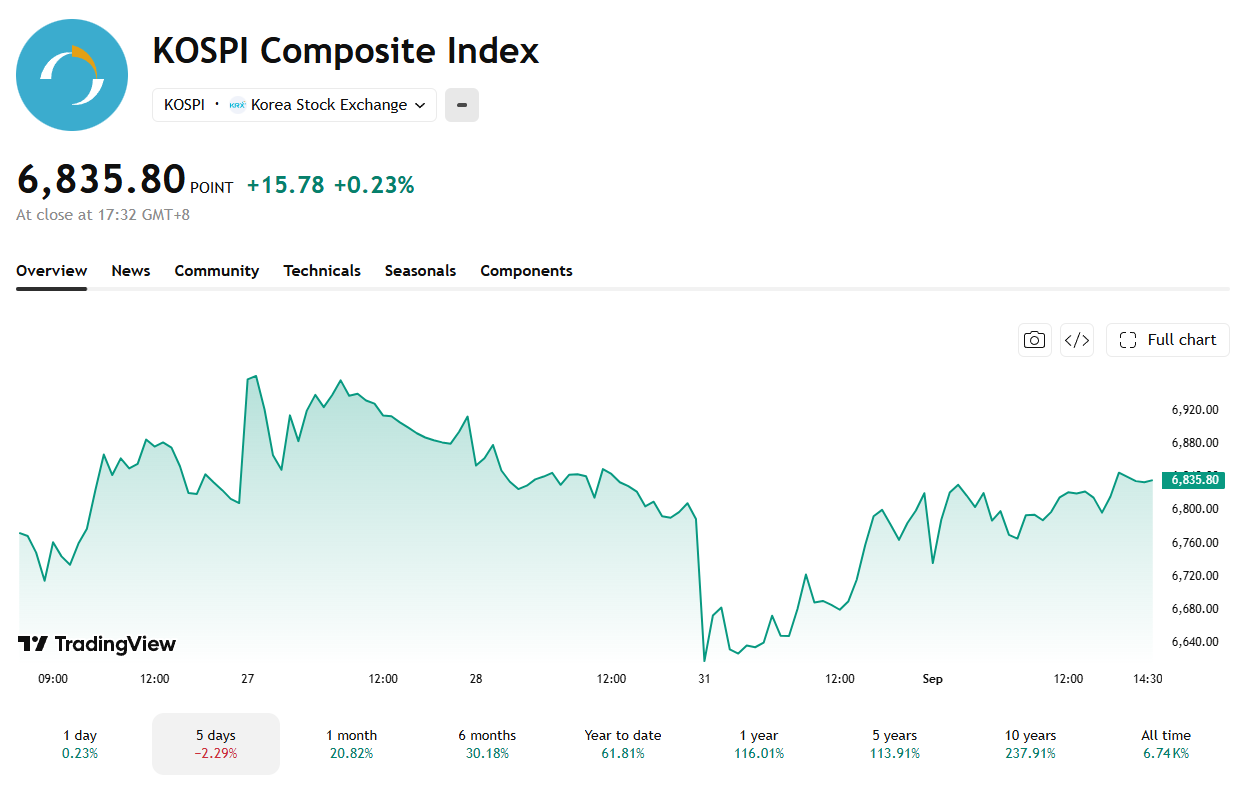
South Korea’s Kospi closed at 6,835.8 points on Tuesday, up 0.23%, as buyback-driven gains in Samsung Electronics and SK Hynix offset net selling from foreign, institutional, and retail investors alike.
The index marked its second straight gain, having opened 0.52% lower after fresh U.S.-Iran airstrikes and a hawkish Fed speech from Chair Kevin Warsh unsettled global markets. The Kospi has since recovered from a session low near 6,617 on Monday.
Chip Stocks Reverse an Early Slide
Wall Street had fallen overnight, with the Dow Jones Industrial Average down 0.7% and the S&P 500 off 0.33%, after Warsh’s Jackson Hole speech fanned concerns over a possible rate hike at the Fed’s meeting later this month.

However, the Kospi erased those losses in the afternoon as government data showed Korea’s August exports stayed solid on strong chip demand, extending the Kospi’s chip-driven rally. Samsung rose 0.38% and SK Hynix advanced 1.14%, both aided by recently announced buyback programs.
“External uncertainty dampened investor sentiment, but strong buying from big companies backed up the index,” said Lee Kyung-min, an analyst at Daishin Securities.
Sellers Outnumbered Buyers Despite the Gain
Trade volume was light at 263.7 million shares worth 17.5 trillion won ($12.8 billion), with advancers narrowly beating decliners 444 to 421. Foreign investors sold a net 491.9 billion won, institutions sold 634 billion won, and retail investors sold 539.8 billion won.
Oil refiners gained on rising crude prices, with SK Innovation up 7.81% and S-Oil up 1.07%. Meanwhile, Hanwha Aerospace fell 3.99% and Celltrion slipped 0.48%.
The won weakened 1.8 won to trade at 1,370.4 per dollar as of 3:30 p.m., reflecting broader risk-off pressure from the Middle East escalation.
The post Kospi Gains as Chip Buybacks Offset Broad Investor Selling appeared first on BeInCrypto.
DeFi Development Corp. plans to raise up to $20 million through a preferred stock offering. It carries an initial annual dividend rate of 13%.
The Solana (SOL) treasury company intends to use part of the proceeds to buy more SOL. It resumed accumulation last week as market conditions turned more favorable.
What the Preferred Stock Offers
DFDV announced that it plans to conduct an IPO of its Variable Rate Series C Perpetual Preferred Stock, known as CHAD Stock.
Dividends will accrue on a stated amount of $10 per share. Payments will be made each business day of each calendar month, beginning October 1, 2026.
The initial annual dividend rate is 13%, subject to adjustment under the stock’s terms. DFDV also intends to deposit $1.30 per share into a separate account at closing.
The reserve would cover 12 months of dividend payments at the initial 13% rate. The company can fund it with existing cash, financial instruments, and/or digital assets. R.F. Lafferty & Co. is acting as the sole book-running manager.
“The Company intends to use the net proceeds from the offering for general corporate purposes, including for working capital, the acquisition of SOL and other digital asset-related investments, strategic transactions and growth initiatives,” the firm said.
Follow us on X to get the latest news as it happens
Buying Restarted Days Before the Offering
The firm is already one of the largest public holders of SOL. Last week, it added 19,000 SOL at an average price of $98.14.
That purchase lifted its treasury to about 2.33 million SOL and SOL equivalents. The company partly funded the acquisition by divesting its ZeroStack position, citing improving market conditions.
Chief Executive Joseph Onorati described DFDV as a leveraged way for investors to gain exposure to SOL.
“When SOL performs well, we believe DFDV has the potential to amplify that performance. Month-to-date, DFDV’s return has been more than twice that of SOL,” he said.
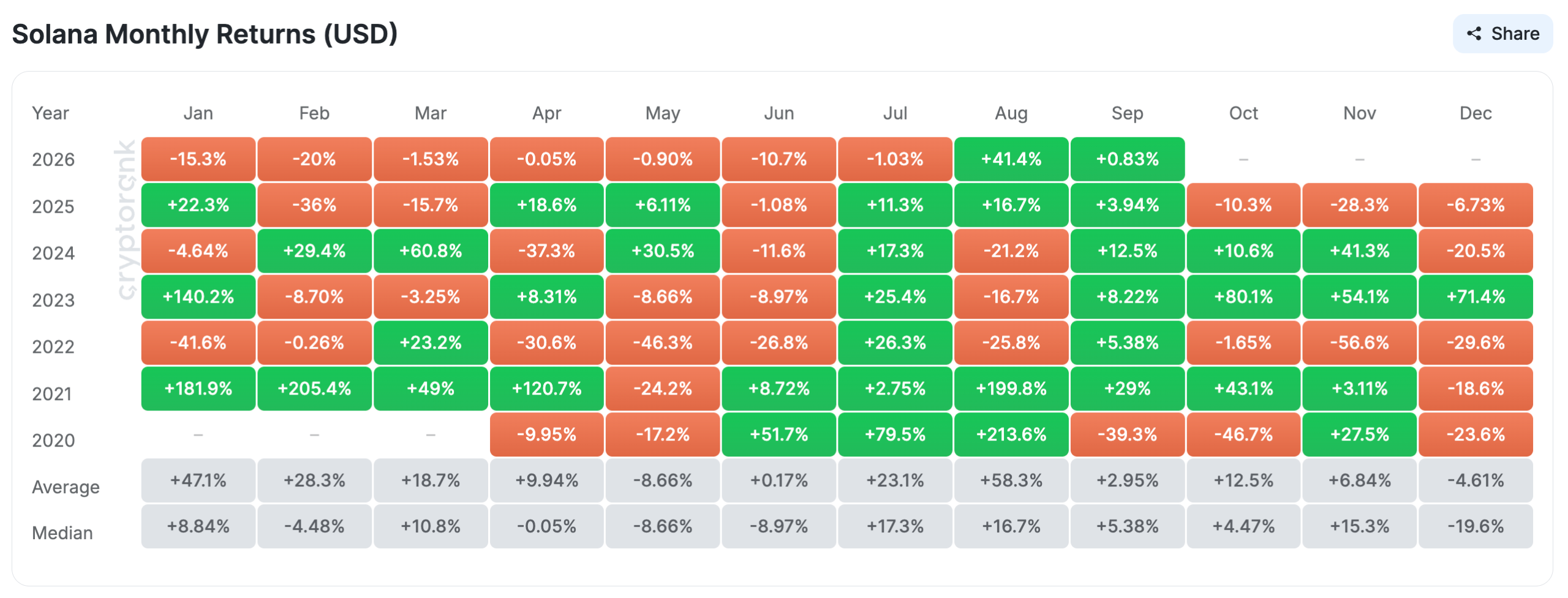
The move comes as the broader crypto market strengthens. SOL gained 41.4% in August, making it the token’s first positive month of 2026 after losses in every month since January.

Strategy also resumed Bitcoin (BTC) accumulation after a 10-week pause, while Strive and BitMine continued adding to their digital asset holdings.
For now, the raise shows treasury firms testing investor appetite again after a difficult stretch. Whether that window stays open will shape how much more SOL DFDV can add.
Subscribe to our YouTube channel to watch leaders and journalists provide expert insights
The post Solana Treasury Firm Dangles 13% Dividends to Bankroll Its Next SOL Buys appeared first on BeInCrypto.

Study: Just 30 Minutes Of High-Intensity Exercise Weekly Provides Health Benefits

OneRail launches new AI platform with Nvidia for retailer delivery

London Stock Exchange Teams With Kraken Parent on Tokenized UK Stocks





-

 Crypto World7 days ago
SpaceX stock could rise 75% to $240, JPMorgan says
-

 Fashion4 days ago
Weekend Open Thread: Maeve – Corporette.com
-

 Crypto World5 days ago
Bitcoin’s 22% rally now needs real demand to outlast Treasury liquidity boost
-

 Crypto World6 days ago
Warsh Jackson Hole keynote puts financial innovation first
-

 Business4 days ago
Salesforce Stock Soars 19% as Blowout Earnings and Agentforce AI Growth Silence Software Skeptics
-

 Crypto World6 days ago
Elon Musk Grok Bot Promise: We Will Make You Whole if AI Loses Your Money
-

 Business5 days ago
Apple Confirms September 9 Keynote and Reveals Its Full Pre-Order Schedule
-

 Crypto World6 days ago
Did Trump Just Move SpaceX Stock With One Truth Social Post?
-

 Business3 days ago
Onto Innovation Stock: AI’s Next Bottleneck Is Yield (NYSE:ONTO)
-

 Business6 days ago
Walmart takes aim at younger shoppers with new fashion brand
-
 NewsBeat6 days ago
Lindsay Clancy jury braces for closing arguments as judge tells court: ‘You’ve heard all the evidence’ – Live updates
-

 Crypto World3 days ago
Bitcoin price tests $82K resistance as Brandt stays long
-

 Crypto World5 days ago
NVIDIA revenue hits $96.2B as AI demand doubles
-

 Business6 days ago
Thailand’s Eastern Economic Corridor Capital City (EECiti): Key Developments and Investment Opportunities
-

 Business4 days ago
iPhone 18 Pro Pre-Orders Could Shift to Saturday as Apple Reportedly Avoids September 11 Anniversary
-

 NewsBeat6 days ago
Trump’s trade truce with China faces test with Iran effort
-

 Crypto World6 days ago
Nvidia Q2 Earnings Reveal $96.2 Billion Beat, So Why Is NVDA Falling?
-
 Tech5 days ago
Claude Cowork gets its own browser that doesn’t touch your tabs, bookmarks, or saved passwords
-
 Tech3 days ago
Hugging Face built a $4.5 billion empire on free AI models. Now Nvidia is buying it for $12.9 billion
-

 Crypto World4 days ago
Truflation calls for Fed rate cut after PCE forecast
You must be logged in to post a comment Login