

Crypto World
UK Fintech OpenPayd Eyes $1.1 Billion Nasdaq IPO

OpenPayd announced plans to list on Nasdaq through a merger with Titan Acquisition Corp. The deal values the London-based payments platform at $1.145 billion on a pro-forma equity basis.
Shares will trade under the ticker OP. Up to $276 million in gross proceeds will fund OpenPayd’s expansion into stablecoin and fiat payment orchestration.
Inside OpenPayd’s Nasdaq Listing
Titan Acquisition Corp., which trades on Nasdaq under TACHU, entered a definitive business combination agreement with OpenPayd.
Follow us on X to get the latest news as it happens
Closing is expected in the fourth quarter of 2026, subject to approval by Titan shareholders and customary regulatory conditions.
OpenPayd reported more than $85 million in annualized recurring revenue as of March 2026. The platform processes over $240 billion in annualized transaction volume.
The company serves more than 1,100 businesses across 180 countries, including Kraken, eToro, OKX and B2C2.
Proceeds from Titan’s trust account will strengthen the balance sheet and fund expansion across the United States.
OpenPayd plans to invest in regulatory licenses, product development and deeper integration of stablecoin payment rails.
Why Stablecoin Infrastructure Drew Investors
The listing reflects investor focus on platforms bridging traditional finance and digital assets.
Stablecoin transaction volumes reached approximately $33 trillion in 2025. A record $4.5 trillion moved in the first quarter of 2026 alone.
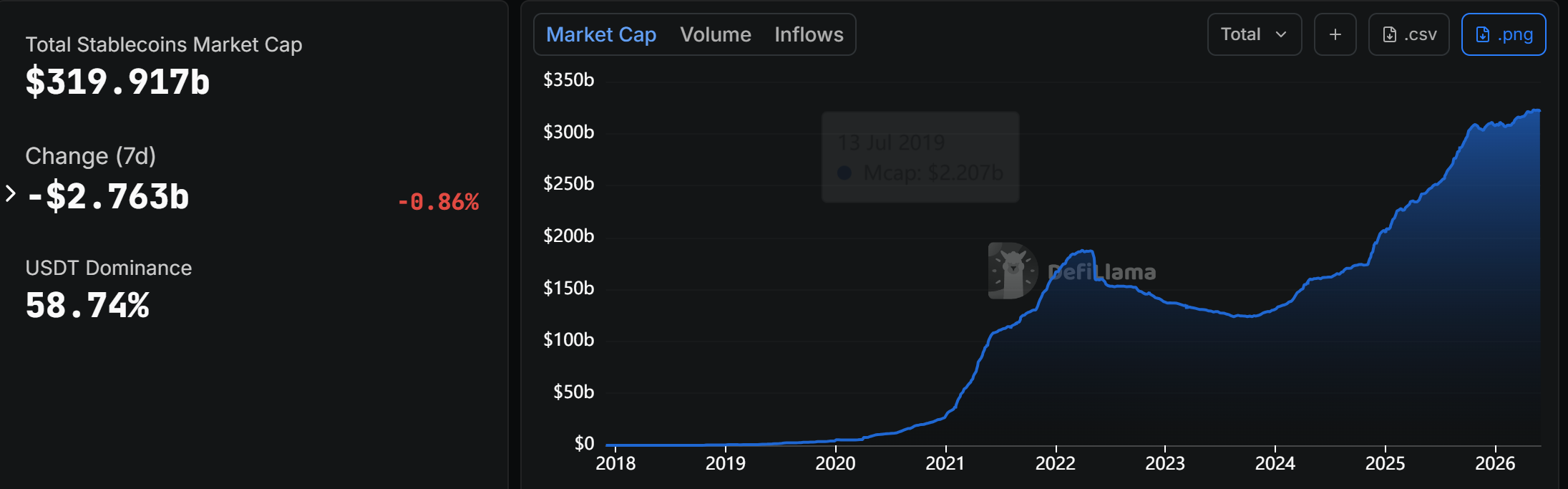
Stablecoin market capitalization nears $320 billion as of this writing, hitting a fresh all-time high in the ongoing stablecoin market boom.

Real-world payments volume doubled in 2025 to roughly $400 billion, with about 60% representing business-to-business transactions.
OpenPayd operates a single API connecting fiat rails, blockchain networks and stablecoin issuers. The company holds regulatory licenses across the United States, United Kingdom, European Economic Area, Canada and South Africa.
That footprint positions OpenPayd within the broader stablecoin market growth story.
What to Watch Next
Founder Ozan Özerk framed the deal as a bet on programmable money and autonomous payment systems. He sees AI agents transacting across fiat and digital rails.
“We believe the next decade of finance will not be defined by faster cards or cheaper wires — it will be defined by money that moves on its own. Autonomous agents are already making decisions; the infrastructure beneath them must keep pace,” read an excerpt in the announcement, citing Özerk.
The thesis aligns with the ongoing programmable money push across enterprise finance.
Titan first listed in April 2025 and raised $276 million in its IPO. Redemption pressure from Titan shareholders ahead of closing will determine final proceeds and dilution for OpenPayd.
The S-4 registration statement is expected to be filed with the SEC in the coming months. That filing will provide audited financials, growth projections and detailed risk disclosures.
Tightening rules under the recent stablecoin regulation push could also shape OpenPayd’s compliance roadmap.
The post UK Fintech OpenPayd Eyes $1.1 Billion Nasdaq IPO appeared first on BeInCrypto.

Crypto World
$158 Billion Revenue? India’s Gold Giant Cannot Account for 99.8% of Earnings, SEBI Says
India’s market regulator alleges that Rajesh Exports, the gold major behind Swiss refiner Valcambi, misrepresented about $158 billion in revenue over five years. SEBI says that figure equals 99.8% of the revenue the company credited to its subsidiaries.
The Securities and Exchange Board of India (SEBI) issued the interim order on June 3. It barred promoter and chairman Rajesh Mehta from the securities market and ordered a fresh forensic audit.
Why the Numbers Stopped Adding Up
Rajesh Exports built a Fortune Global 500 profile on consolidated revenue. Between 97% and 99% of that total came from overseas subsidiaries, chiefly Valcambi. SEBI says auditors could not match those figures against subsidiary records.
“REL has prima facie misrepresented approximately INR 15,15,385 crore [$158 billion] i.e. representing 99.80% of its revenues which are attributed to subsidiaries during the period FY 2020-21 to FY 2024-25,” SEBI Whole-Time Member Kamlesh Chandra Varshney wrote in the interim order.
The probe traces back to a shareholder complaint in March 2024 about large trade receivables. SEBI says the company failed to supply ownership records, reconciliation statements, or transaction-level evidence despite repeated requests.
The regulator alleges the company booked the full gross value of refined gold as its own revenue. Much of that metal belonged to customers and was only processed for a fee.
Valcambi’s audited accounts reportedly showed less than 0.5% of the group’s claimed total.
The case lands while the tokenized gold market expands and investors revisit the gold safe haven narrative. It raises fresh questions about how physical gold flows are valued and disclosed.
“India may have just witnessed one of its biggest accounting frauds ever,” remarked one analyst.
Follow us on X to get the latest news as it happens
Fabricated Trades and Diverted Funds
SEBI flagged roughly ₹11,487 crore, about $1.3 billion, in transactions with broker Affluence Shares and Stocks. The broker told the regulator that Rajesh Exports was never a client and that no trades occurred.
The order also alleges that company funds moved to Mehta’s personal account for derivative trading without board approval. SEBI rejected the company’s refusal to share subsidiary records, which cited Swiss privacy law.
These claims place auditors under fresh scrutiny, echoing earlier debates over oversight in some of the biggest financial frauds.
The case also reflects wider concerns around real-world asset tokenization and verifiable backing.
The Company Pushes Back
Rajesh Exports denies any wrongdoing. In its exchange filing, it called the order interim with no final conclusion and said its revenue reporting follows accounting standards. The company attributes the gap to a comparison of gross gold value against processing income.
“The revenues declared by the company are correct and there is no over stating of revenues. There seems to be some type of communication gap and confusion between SEBI and the company…The company rejects all adverse media reports appearing with regard to the interim order of SEBI. The company will be shortly issuing a media clarification which would clarify and settle the unnecessary speculation in the media,” Rajesh Exports Limited countered.
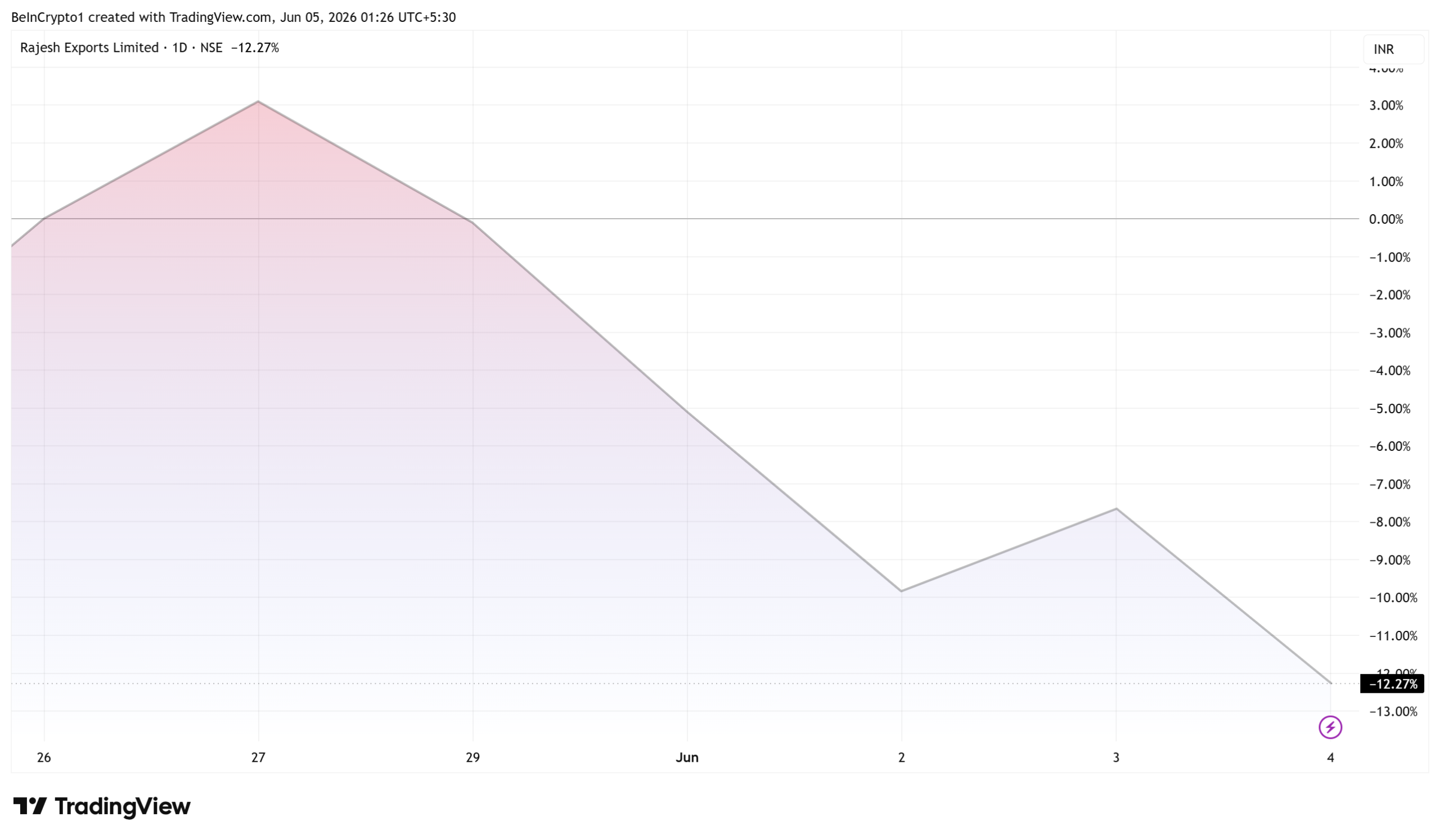
Notwithstanding, markets reacted quickly. The stock hit its lower circuit near ₹104 ($1.09) on June 4. Life Insurance Corporation holds about 10.8% of the company, and roughly 194,000 retail shareholders are exposed.

SEBI’s directions are interim and ex-parte, so no final guilt has been established. The company has 30 days to respond in detail, and a fresh forensic audit will follow.
How regulators reconcile the gross gold value against the processing fees may decide whether the misrepresentation label holds.
Primary sources include the SEBI interim order and the company filing.
The post $158 Billion Revenue? India’s Gold Giant Cannot Account for 99.8% of Earnings, SEBI Says appeared first on BeInCrypto.
Crypto World
NVIDIA Could Seal a Major Alliance With Apple After Launching Nemotron 3 Ultra AI model
According to recent reports, Apple plans to power its new Siri on NVIDIA Blackwell chips through Google Cloud starting in September, just days after NVIDIA launched its most powerful AI model yet.
We break down the potential alliance, NVIDIA’s freshly unveiled Nemotron 3 Ultra, and what this could mean for the broader AI race.
Why Apple Could Lock In a Major NVIDIA Deal
Apple plans to launch a new generation of Siri in September 2026, and several reports from The Information confirm the assistant will rely on NVIDIA chips behind the scenes for cloud-based AI processing tasks.
The setup is three-way. Apple will run as much processing as possible on-device, but heavier queries will flow to Google Cloud through a licensed version of Gemini. That cloud infrastructure runs on NVIDIA Blackwell B200 data center chips.
According to reports, Apple had recently approved NVIDIA’s confidential computing technology. The feature encrypts data and AI models while they are processed on the chips, allowing Apple to keep its privacy standards while using external cloud servers for advanced functions.
This is significant for both companies. Apple gets access to far more compute than its Private Cloud Compute alone could provide. NVIDIA effectively becomes critical infrastructure for one of the largest consumer AI launches in years.
Follow us on X to get the latest news as it happens
The arrangement also strengthens NVIDIA’s position against rivals. Apple, Google, and NVIDIA together form one of the most powerful AI stacks in consumer technology, with the Blackwell B200 designed for large-scale model training and fast inference.
Investors will watch closely. WWDC 2026 begins on June 8, and Apple is expected to outline its full AI strategy. If the integration delivers, NVIDIA could see its enterprise AI footprint expand sharply across the most demanding consumer applications.
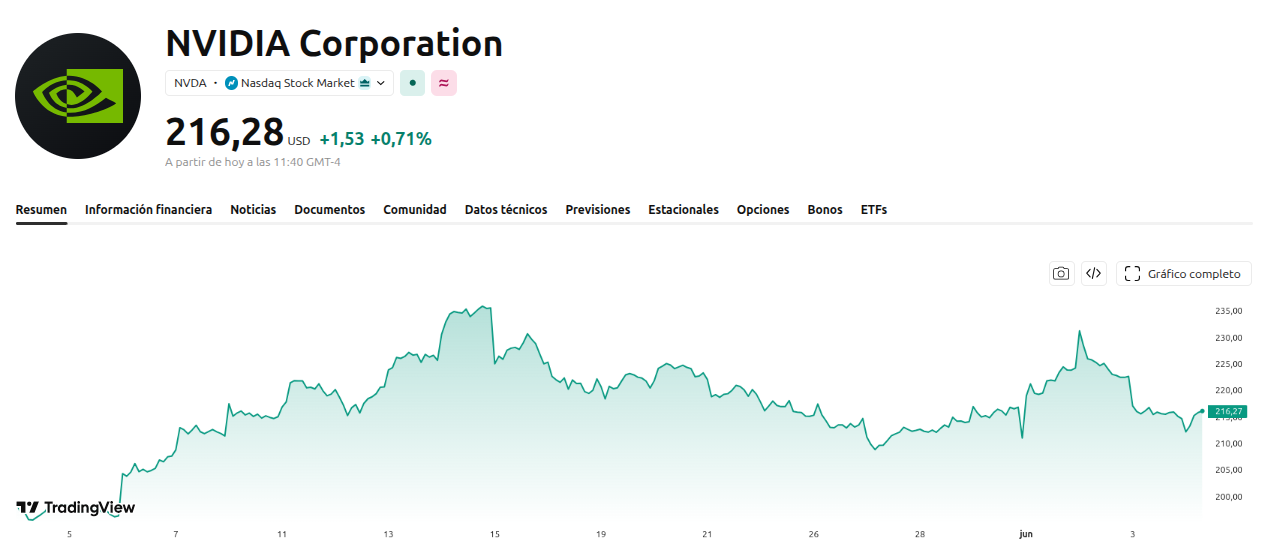
Share prices for both companies saw slight increases amid the reports. NVDA was trading at $216.18 after rising 0.71% in the last 24 hours. Meanwhile, APPL traded at $310.04, up 0.2% over the same period, according to TradingView data.

NVIDIA Unveils Nemotron 3 Ultra: Its Most Powerful AI Model to Date
Nemotron 3 Ultra is NVIDIA’s new open-source AI model with roughly 500 to 550 billion parameters. CEO Jensen Huang presented it at Computex 2026 in Taipei on June 1, designed for advanced reasoning and complex agentic workflows.
An agentic workflow is an AI system that plans, executes, and iterates on multi-step tasks with minimal human oversight. Nemotron 3 Ultra sits at the top of a three-tier family that also includes the Nano and Super variants.
“Nemotron 3 Ultra is built for that new workload. It’s a frontier smart model that delivers up to 5x faster inference and lowers the cost of complex agentic tasks by up to 30%. This enables agents to finish the same job in less time or complete more jobs in the same time,” NVIDIA said.
Adoption is already strong. The Nemotron 3 family recorded more than 50 million downloads in the year leading up to April 2026, signaling that open model strategy is working among developers and enterprise customers worldwide.
For enterprise users, the 5x throughput improvement matters because it sharply lowers cost-per-inference. That dynamic positions NVIDIA not just as a chipmaker, but as a full-stack AI platform company capable of competing directly with closed model providers.
The timing also matters. With Apple set to lean on NVIDIA hardware for Siri and Nemotron 3 Ultra reinforcing its software credibility, NVIDIA is sealing both ends of the AI stack precisely when the next consumer cycle begins.
The post NVIDIA Could Seal a Major Alliance With Apple After Launching Nemotron 3 Ultra AI model appeared first on BeInCrypto.
Key takeaways:
- Strategy faces tighter short-term liquidity, but its conservative 11% net leverage protects it from forced BTC liquidations.
- A Bitcoin rally above $70,000 remains unlikely as long as STRC trades under $100 and spot ETFs show net selling pressure.
Bitcoin (BTC) faced a 21% price correction in 10 days, retesting the $61,000 level for the first time in 4 months. This movement coincided with Strategy (MSTR US) company’s decision to buy back some corporate debt, temporarily pausing its Bitcoin accumulation. Traders now fear that Strategy could be forced to liquidate some of its Bitcoin holdings.
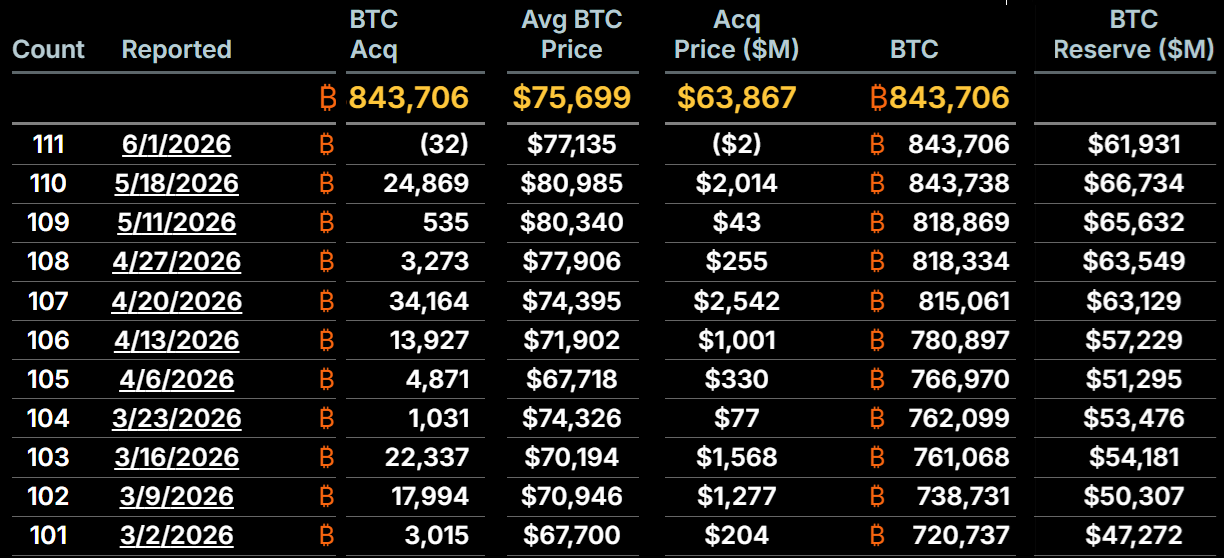
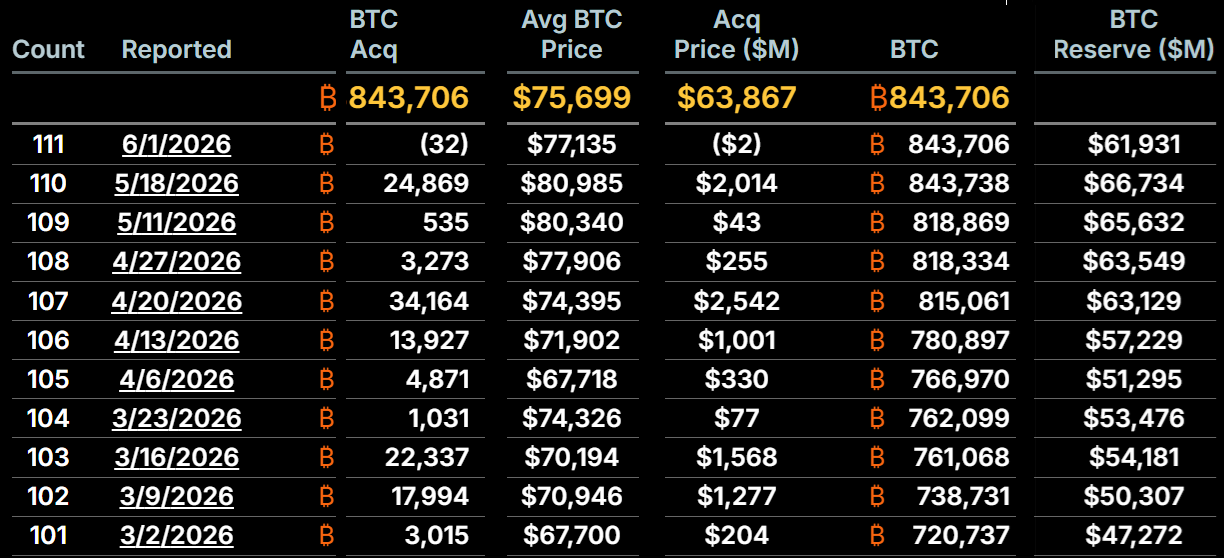
Strategy (MSTR US) Bitcoin reserve changes & average price. Source: Strategy
Strategy had been the largest known Bitcoin buyer, accumulating 126,016 BTC for $9.31 billion since March. However, the company used $1.38 billion of cash raised by recent equity issuances to buy back some of its convertible debt. The decision, announced on May 15, coincided with the Stretch preferred stock (STRC US) distancing itself from $100.
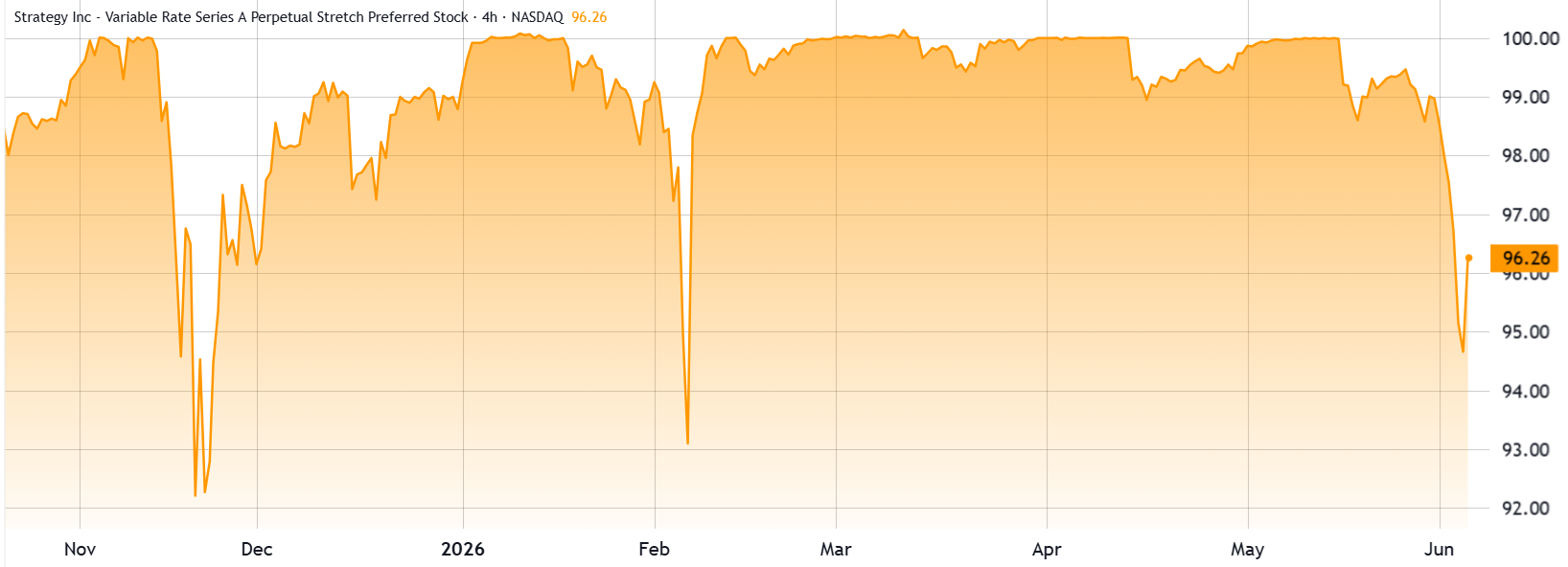
Strategy Series A Perpetual Stretch preferred stock (STRC US). Source: TradingView
The STRC preferred stock allows Strategy to issue new shares whenever its price reaches $100 and offers holders a variable dividend, currently set at 11.5% annually, paid monthly in cash. If traders decide it is no longer worth $100, new buyers step in at lower levels, which is equivalent to demanding a higher dividend. So, at first sight, this should be a non-event for Strategy’s risk perception.
Strategy raised $7.5 billion through preferred stock issuances in the first 5 months of 2026, which was highly supportive of Bitcoin’s price. Now, the company faces a rough path, given its cash position has been reduced to $900 million, which is enough to cover dividends for 6 months.
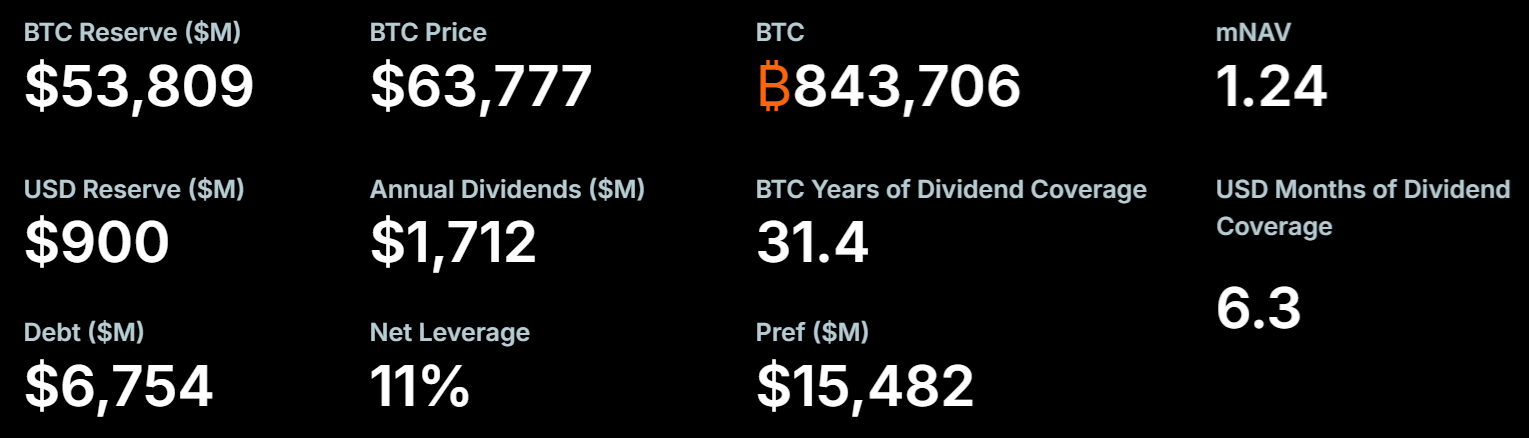
Strategy (MSTR US) financial highlights. Source: Strategy
Strategy’s 11% net leverage is the key financial metric to monitor, as it represents the amount of debt the company holds relative to its assets. By any standard, the coverage provided by its Bitcoin holdings–even at a $30,000 price–should be considered conservative.
Will Strategy be forced to liquidate some of its Bitcoin holdings?
While short-term liquidity conditions have certainly deteriorated, there is no contractual floor set in Strategy’s convertible debt that would force a Bitcoin reserve liquidation. Moreover, there is no prohibition on selling MSTR stock at a discount to its market-adjusted net asset value.
If debt markets are not available, the company could opt to dilute current MSTR holders. Whether this move would be interpreted as a weakness and further pressure MSTR and STRC prices is irrelevant to Strategy’s leverage ratio, as the company would remain financially solid.
Related: Saylor downplays Bitcoin slide as Strategy faces $11B paper loss
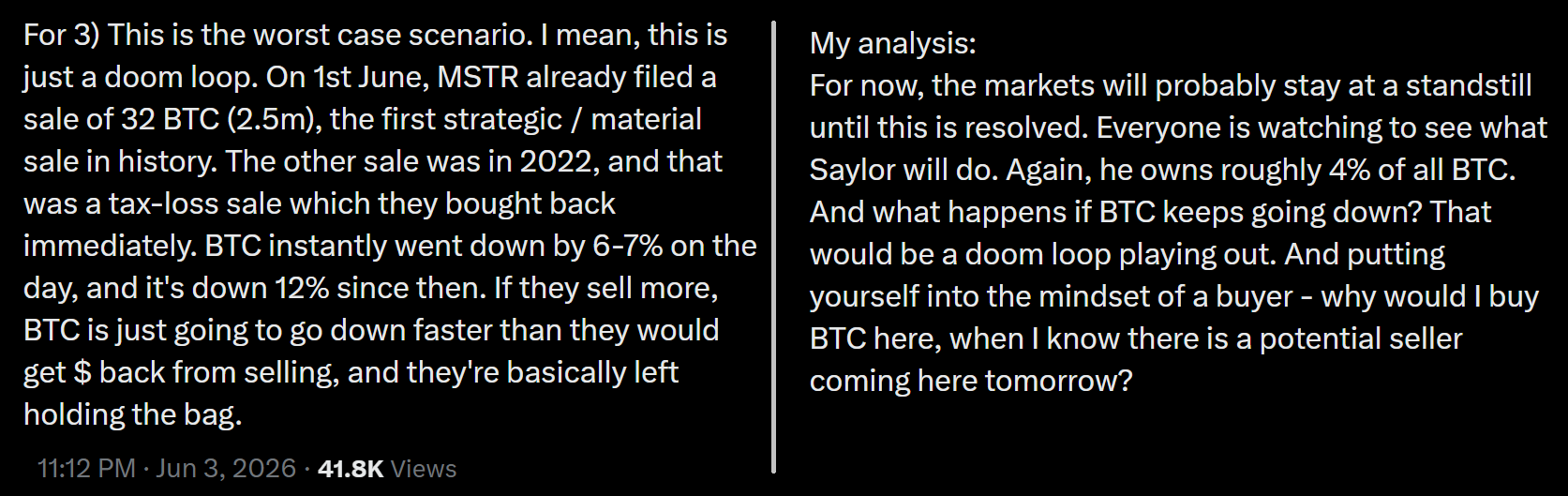
Source: X/zeroxkyle
According to X user zeroxkyle, author of the “Grand Line” newsletter, an eventual Bitcoin sale from Strategy would only bring its price down faster, worsening liquidity conditions. The analysis refers to a “doom loop” causing buyers to withhold from adding positions due to a constant fear of a large seller entering the market.
It is impossible to predict what would ease investors’ tension, as Strategy is in no danger of an imminent forced sale. The preferred stock dividends can be paused at will, although they merely accumulate for later on. Still, as long as STRC continues to trade below $100 and spot exchange-traded funds (ETFs) remain a net seller, odds for a Bitcoin rally above $70,000 are slim.
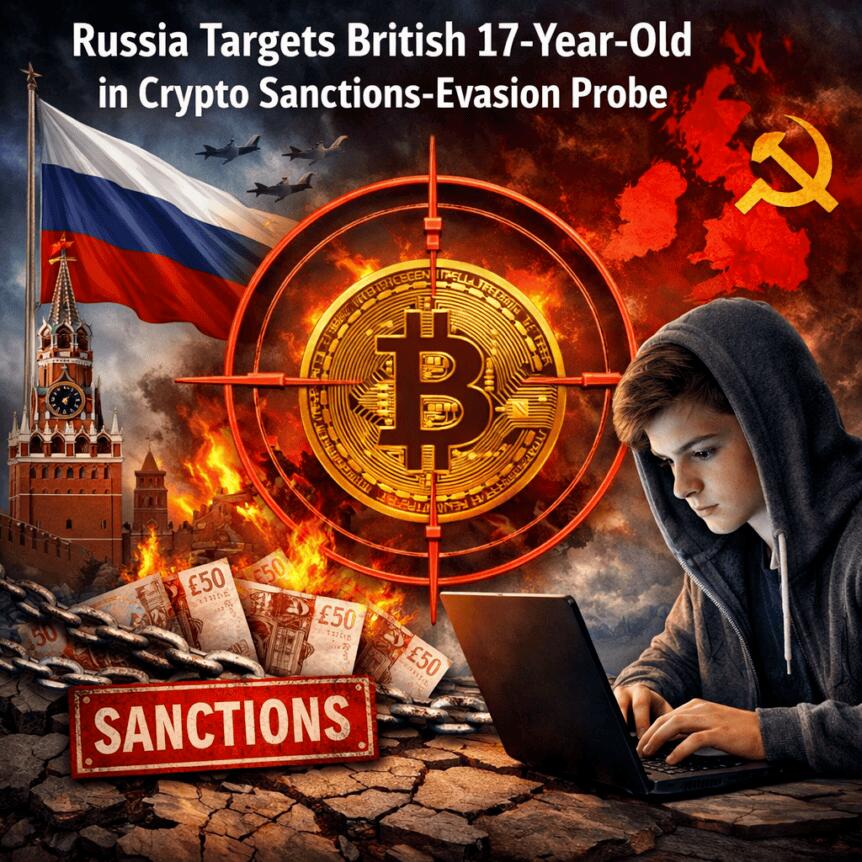
According to Cointelegraph, Alexander Browder — the son of political activist Bill Browder — says Russia targeted him after he uncovered allegations that a ruble-pegged stablecoin, A7A5, was used to evade sanctions tied to Moscow’s war in Ukraine. Browder, speaking publicly via X, asserted that his reporting through the Global Cryptocurrency Laundering Database led to sanctions imposed by an authoritarian regime, framing the event as a direct consequence of exposing corruption in crypto flows.
Cointelegraph notes that A7A5 has drawn significant regulatory scrutiny due to its pegged value. A CertiK audit cited in coverage indicates the stablecoin processed more than $110 billion in on-chain transactions, underscoring the scale of activity associated with the asset. European Union officials sanctioned A7A5 in October 2025, claiming the token was designed to bypass war-related financial restrictions on Russia’s economy. The case illustrates the widening intersection of sanctions enforcement and digital-asset infrastructure, where tracing and enforcement capabilities increasingly collide with cross-border finance.
Key takeaways
- Alexander Browder alleges Russia sanctioned him for exposing the alleged use of the ruble-pegged stablecoin A7A5 to evade Western sanctions.
- A7A5 reportedly processed over $110 billion in on-chain transactions, highlighting substantial activity despite sanctions, with EU authorities sanctioning the token in 2025.
- Russian lawmakers moved to criminalize unlicensed crypto activities and require registration with the central bank, potentially banning unlicensed platforms starting July 2027.
- The episodes underscore regulatory and enforcement risks for exchanges, banks, and institutions that operate across borders in the crypto space, including AML/KYC considerations and licensing requirements.
Alexander Browder’s claims and the sanctions narrative
The central allegation centers on Russia’s response to Browder’s investigations into A7A5 and its purported links to illicit finance. Browder has described his work with the Global Cryptocurrency Laundering Database as the trigger for Russia’s actions, asserting that an authoritarian regime sanctioned him as retaliation for uncovering alleged crypto-enabled evasion. While such claims illuminate the personal dimension of crypto-policy battles, they also spotlight the broader legal question: how authorities respond when investigative reporting intersects with sanctions enforcement and digital-asset tracing.
Independent of Browder’s personal narrative, the status of A7A5 within sanction regimes has become a matter of international concern. Cointelegraph reported that the European Union sanctioned the ruble-pegged stablecoin in October 2025, characterizing the token as a vehicle to bypass the war-related financial restrictions imposed on Russia. The case feeds into ongoing debates about the vulnerability of digital-asset ecosystems to sanctions regimes and the effectiveness of on-chain tracing in identifying sanctioned flows.
A7A5’s on-chain footprint and the sanctions response
The on-chain footprint of A7A5, as summarized in CertiK’s findings cited by Cointelegraph, indicates substantial activity—well into the tens of billions of dollars in transaction value. This scale amplifies the practical challenges for enforcement agencies and financial intermediaries seeking to block or monitor sanctioned channels that leverage stablecoins and other crypto instruments. Browder’s broader assertion—that A7A5 remains operable despite sanctions—highlights the ongoing frictions between policy intent and technical feasibility in blocking cross-border crypto flows.
From a regulatory vantage point, the EU’s sanctions action against A7A5 signals a willingness to target the instrument itself alongside traditional financial conduits. For exchanges, custodians, and wallet providers, such actions translate into heightened due diligence, the need for robust sanctions screening, and potential risk that legitimate users may be inadvertently affected if screening is not precise. The episode also underscores the cross-border enforcement challenge: sanctions regimes increasingly rely on cooperation with platforms that operate beyond any single jurisdiction, including comprehensive AML and KYC controls in line with international standards.
Russia’s regulatory posture on digital assets and enforcement outlook
In a parallel regulatory arc, Russian lawmakers in the Duma advanced a bill intended to curb unlicensed digital-asset activities and to compel registration with the central bank. The proposed legislation, titled “On Digital Currency and Digital Rights,” would, if enacted, ban unlicensed crypto platforms beginning in July 2027 and impose criminal penalties for non-compliance. The move reflects Russia’s intent to formalize its oversight of crypto services while extending state control over licensing and supervision—an approach that aligns with broader global trends toward stricter crypto regulation and licensing regimes.
These developments occur in a wider regulatory environment where cross-border compliance demands and licensing obligations intersect with sanctions enforcement and AML/KYC frameworks. For institutions with operations or clients in Russia, or with exposure to Russian-origin flows, the evolving legal framework increases the importance of robust compliance programs, entity licensing checks, and ongoing monitoring of sanctioned counterparties. The Russian bill also highlights regulatory risk that could affect foreign exchanges and banks seeking to operate in or alongside Russian markets, given potential criminal penalties for unregistered activities and the central bank’s role in registration and oversight.
Regulatory and policy implications for institutions
Three dimensions stand out for compliance teams and institutional risk management at this juncture. First, sanctions enforcement around crypto assets, exemplified by A7A5, demonstrates the growing salience of digital instruments in geopolitical risk calculations. Exchanges and banks must maintain precise screening and sanctions-compliance capabilities to prevent value transfer through politically exposed or sanctioned channels, while preserving legitimate user access. Second, the Russian legislative push to criminalize unlicensed activity and to mandate central-bank registration signals a tightening of license requirements and supervisory expectations for digital-asset services. Firms with international exposure must assess licensing pathways, governance controls, and cross-border incident response plans under a shifting regulatory backdrop. Third, the developments illuminate cross-jurisdictional policy gaps and the need for harmonized standards in AML/KYC, transaction-monitoring, and end-to-end traceability for stablecoins and other digital assets that span multiple legal regimes.
In the European context, the A7A5 case complements ongoing regulatory narratives around stablecoins, licensing, and cross-border supervision. While MiCA (Markets in Crypto-Assets Regulation) is a principal EU framework that shapes the licensing and supervision of crypto-asset services, the A7A5 sanctions episode provides a concrete illustration of how regulators may apply such frameworks to stabilize financial ecosystems and deter evasion strategies. For banks and payment-service providers, the case underscores the necessity of robust controls for cross-border settlement rails and the integration of crypto-asset risk management into traditional banking compliance programs.
Closing perspective
The Browder-A7A5 narrative sits at the intersection of investigative journalism, sanctions policy, and digital-asset regulation. As authorities pursue tighter oversight of crypto activity and more assertive enforcement actions, institutions operating in or with Russia, the EU, and allied jurisdictions should monitor licensing developments, sanctions enforcement patterns, and the evolving governance of digital currencies. The next phase will reveal how rapidly these policies translate into concrete licensing outcomes, enforcement actions, and practical workflows for compliance teams navigating a reconfigured cross-border digital economy.

Key Takeaways
- Republican senators demand equitable capital requirements for cryptocurrency banking activities
- Lummis spearheads GOP effort demanding transparent crypto banking capital frameworks
- Lawmakers oppose Basel Committee’s stringent 1,250% risk weighting for digital assets
- Republican coalition demands technology-agnostic regulatory approach for crypto
- Senate GOP intensifies scrutiny of banking agencies’ cryptocurrency capital frameworks
A group of Republican senators has called on federal banking authorities to establish equitable capital requirements for cryptocurrency-related banking operations. The legislators argue existing frameworks impose prohibitive capital burdens on financial institutions. This regulatory challenge emerges alongside congressional deliberations on comprehensive digital asset legislation.
Republican Lawmakers Oppose Basel’s Cryptocurrency Framework
Senator Cynthia Lummis spearheaded an initiative involving five fellow Republican senators, directing correspondence to key U.S. financial regulatory officials. The communication targeted Federal Reserve Vice Chair for Supervision Michelle Bowman, FDIC Chair Travis Hill, and Comptroller Jonathan Gould. These regulatory bodies now confront mounting demands to reassess capital frameworks governing cryptocurrency exposures.
The legislative group condemned Basel Committee regulations imposing a 1,250% risk weighting on certain digital assets. They contended the benchmark categorizes the entire sector as excessively hazardous without appropriate risk assessment. Their position maintains the regulatory structure effectively functions as a prohibition mechanism.
The Basel Committee establishes international banking standards governing capital adequacy and regulatory oversight. Participating entities comprise central banking institutions and regulatory bodies from leading global economies, encompassing the United States. Nevertheless, the senators advocated for American regulators to implement an approach that remains neutral toward underlying technology.
Senate Coalition Demands Regulatory Clarity for Digital Assets
The letter urges regulatory agencies to expand upon recent directives regarding tokenized securities. During March, the Fed, FDIC, and OCC announced tokenized securities would typically receive capital treatment equivalent to conventional securities. The senators maintained regulators should extend this principle throughout additional digital asset operations.
The lawmakers contended financial institutions require definitive regulatory frameworks before expanding cryptocurrency services on their balance sheets. They emphasized banks should maintain capital reserves proportionate to genuine risk factors rather than facing blanket restrictions. Furthermore, they asserted balanced standards would facilitate legitimate participation within digital asset marketplaces.
The correspondence arrives as congressional bodies examine expansive cryptocurrency legislation. Such legislation might authorize banks to conduct expanded balance-sheet cryptocurrency operations. Consequently, the senators stressed agencies must establish capital guidance before financial institutions gain enhanced regulatory permissions.
Legislative Pressure Mounts for Cryptocurrency Market Participation
The correspondence received endorsement from Senators Dan Sullivan, Bill Hagerty, Bernie Moreno, Ted Budd, and Jon Husted. Their collective statement positions cryptocurrency capital requirements within an expansive policy discourse. It simultaneously represents escalating Republican pressure on regulatory agencies to facilitate banking sector involvement.
The senators maintained capital frameworks should account for both risk factors and market potential. They additionally argued regulations should not obstruct banks from providing supervised cryptocurrency services. Their position suggests antiquated standards might drive commercial activity beyond regulated banking infrastructure.
The disagreement now enters a more comprehensive regulatory context. Bowman, Hill, and Gould are scheduled to testify before the House Financial Services Committee on Thursday. Their testimony could influence how regulatory agencies approach cryptocurrency capital treatment throughout upcoming months.

Crypto World
Nouriel Roubini’s business partner sees bitcoin crashing 70% before rallying to $500,000


Reza Bundy, chief executive of Atlas Capital and business partner of longtime bitcoin critic Nouriel Roubini, expects bitcoin to fall as much as 70% over the next six months before eventually climbing as high as $500,000 in the years ahead.
Speaking to CoinDesk at the Proof of Talk conference in Paris, Reza Bundy, CEO of investment advisory firm Atlas Capital, issued his grim macroeconomic warning that runs contrary to typical industry optimism.
“We think there’s going to be a massive drawdown in bitcoin in the next six months,” Bundy said, echoing Roubini’s long-held thesis. “It [drawdown] could be up to 70%. We think $26,000 to $30,000 was the number we came up with. If there’s a drawdown in the stock market that’s even half of what happened in 2008, Bitcoin will double that debt loss.”
Bitcoin was trading around $63,000, down nearly 28% this year, while the equity markets have rallied sharply on the back of AI hype and momentum chasing. The S&P 500 rose 10%, and the Nasdaq climbed about 19%, outpacing bitcoin over the same period.
‘Dr. Doom’
Bundy said that his bearish forecast is built directly on data and analysis developed alongside his Chief Economist, and Co-founder, Dr. Nouriel Roubini, known as “Dr. Doom” for accurately predicting the 2008 subprime mortgage crisis.
Roubini is also an anti-bitcoin advocate whose skepticism of bitcoin stretches back to the historic 2017 bull run. While bitcoin rose roughly 850% from its level when Roubini first called it a bubble, Dr. Doom has maintained his bearish stance on the digital asset.
In recent market assessments published on Bloomberg, Roubini reiterated his conviction that bitcoin is a “pseudo-asset class” and a pure “speculative asset” that lacks fundamental value or real-world utility, making it distinct from real economic hedges like gold.
Bundy has somewhat echoed that doom-and-gloom prediction for bitcoin, at least in the short term. He claimed that bitcoin has failed as an inflation hedge, as many bulls have said, and is now just a highly volatile risk asset moving in lockstep with tech stocks.
While bitcoin advocates are likely to dispute that characterization, pointing to the asset’s long-term returns and fixed supply, Bundy’s criticism echoes comments made by billionaire investor Mark Cuban, who recently said he sold most of his bitcoin after it had failed to behave like a hedge during periods of geopolitical stress and dollar weakness.
Bitcoin’s original promise
On the flip side, Bundy isn’t a perma-bear on bitcoin.
He still believes in bitcoin’s ‘store of value’ thesis and is bullish in the long term. Bundy’s longer-term prediction is a price range of $150,000 to $500,000, which puts him at odds with his Atlas partner, Roubini.
His optimism dates back to bitcoin’s original promise as an alternative currency that counters global political and monetary chaos. Bundy argued that bitcoin’s long-term growth will be driven by rising government debt, central bank arbitrary money printing and dropping trust in traditional currencies (as Satoshi Nakamoto originally envisioned).
And Bundy has reasons for his bullishness. He mapped out bitcoin’s longer-term price using four economic paths:
- First, under “Controlled Expansion” (40% chance), the world sees steady growth and stable inflation. This keeps markets moving up and pushes bitcoin to a range of $150,000 to $250,000.
- Second, if “Fiscal Dominance” prevails (25% chance), governments will print money to cover their massive debts, leading to high inflation. This environment favors scarce assets, driving bitcoin between $250,000 and $500,000.
- Third, a “Global Conflict” path (20% chance) involves major security shocks in places like Taiwan or the Middle East. This would trigger a quick market panic and initial price drops, but would ultimately prove bitcoin’s value as a safe, neutral asset.
- Fourth, a “Deflationary Recession” (15% chance) means a harsh credit freeze that leaves bitcoin weak until central banks step in to pump liquidity back into the system.
‘Techno-dollar’ shift
In the short term, though, Bundy continues to see a global financial crisis on the horizon. He warns that the traditional stock market is a bubble waiting to pop like 1929, and this thesis also informs Atlas Capital’s investment strategy, called the “techno-dollar,” Bundy said.
Instead of pegging digital tokens to a single depreciating government currency, he claimed that the strategy uses AI-driven allocation models to shift exposure among assets, including gold, food, real estate and defense technology. Atlas currently runs this asset allocation strategy through a traditional ETF vehicle with ticker “USAF” on the Nasdaq. The fund currently has about $18 million in net assets, and returned 8.7% since inception, according to TradingView data. Bundy also plans to tokenize it on public blockchains later this month.
When asked why bitcoin isn’t part of the fund, even though he is bullish on the long term, Bundy said he is waiting for the short-term market crash he predicted to pass first.
“We believe there will be a major stock market correction, and we don’t want to be part of the bitcoin drawdown. Once the correction happens, we will make our final decision to include or not.”
BitMine Immersion Technologies (NYSE: BMNR) filed a preliminary prospectus with the SEC on Wednesday to raise up to $300 million through a new class of preferred stock carrying a 9.5% cumulative annual dividend paid weekly in cash. The structure mirrors the preferred-dividend instrument Strategy… Read the full story at The Defiant
Crypto World
BlockDAG’s $0.001 buyback offer, Chainlink, Toncoin, and Cronos: Ranking the top crypto to buy for massive gains

The cryptocurrency market currently demonstrates an intricate balance between sudden rallies and prolonged consolidation phases. Retail buyers and institutional funds are actively shifting capital toward assets offering clear utility and definitive structures. With inflation indices showing persistent stiffness, traditional investment avenues yield lower relative returns, pushing participants to search for alternative digital networks.
Market sentiment reflects cautious optimism, driven by advancements in smart contract capabilities, enhanced privacy protocols, and interoperability solutions. As global liquidity tightens, finding sustainable value requires looking beyond surface-level hype. Investors are rigorously evaluating utility-driven frameworks and established networks that consistently deliver tangible financial benefits to determine the top crypto to buy.
1. BlockDAG: The Pure Mathematical Multiplier (The Direct Arbitrage)
When discussing the next big crypto, pure math often overrides mere speculation. A direct entry price of $0.00000044 against a guaranteed $0.001 buyback creates an unprecedented mathematical arbitrage. The ledger does not lie. BlockDAG has opened its Legacy Sale at an incredibly low floor price of $0.00000044 per token.
By immediately registering these assets for the official Buyback Program through the platform dashboard, participants lock in a contract to sell those exact coins back to the project at a fixed rate of $0.001 per token. This clear mathematical loop completely detaches the asset from standard market sentiment. Those wondering what crypto to invest in will find immense value in this setup. This specific low entry allocation is strictly capped.
Once the initial token batch is claimed, the massive price gap vanishes. Secure the $0.00000044 price floor before the direct arbitrage window closes permanently. BlockDAG is positioning itself as the next crypto to explode by offering a structured exit plan. It stands out clearly as the best crypto to buy right now for buyers who prefer calculated returns over unpredictable price action.
2. Chainlink: Securing Real-World Asset Tokenization
Chainlink continues to establish its dominance across the decentralized finance sector. In early 2026, the network facilitated a major transition by bringing an $11 billion Arizona copper mine on-chain. This milestone underscores the growing demand for secure real-world asset tokenization. The Cross-Chain Interoperability Protocol now handles vast amounts of institutional data. Leading financial entities utilize Chainlink to verify reserves and execute complex smart contracts seamlessly.
As a result, Chainlink frequently appears among the top crypto gainers during periods of high institutional activity. Its robust infrastructure prevents data tampering and ensures smooth multi-chain connectivity. Buyers tracking solid long-term utility view Chainlink as a critical component for the future digital economy.

3. Toncoin: Expanding the Telegram Ecosystem
Toncoin has experienced a highly active 2026, driven by its deep integration with the Telegram messaging application. The network recently saw a massive surge when Telegram announced it would officially become the largest validator for the network. This structural shift drastically reduced transaction fees and activated new core upgrades. Furthermore, the introduction of ad revenue sharing directly in Toncoin has empowered channel owners globally.
Despite facing high volatility and heavy whale movements, the supply of USDT on the Toncoin network crossed $500 million, proving its growing utility as a global payment rail. Toncoin remains a highly watched asset for users seeking scalable social media integrations.
4. Cronos: Enhancing Layer-1 Scalability
Cronos has maintained steady development throughout 2026, focusing on enhancing its layer-1 capabilities. Supported by the extensive Crypto.com ecosystem, the network offers seamless transitions between centralized finance and decentralized applications. Developers are actively deploying new tools to improve transaction throughput and reduce latency. The platform recently introduced significant upgrades to support complex gaming and decentralized finance protocols.

By maintaining a highly interoperable framework, Cronos allows users to bridge assets across multiple networks efficiently. Its dedicated community and consistent technical improvements provide a solid foundation for future growth. Investors value Cronos for its reliable performance and strong backing within the broader digital asset exchange environment.
Last Say
Evaluating the current market requires a strict focus on utility and clear financial structures. Chainlink leads the way in institutional data verification and asset tokenization. Toncoin leverages its massive social media base to create a unique peer-to-peer payment ecosystem. Cronos provides a reliable layer-1 solution backed by major exchange infrastructure.

However, BlockDAG offers a fundamentally different approach. By providing a fixed $0.00000044 entry price and a guaranteed $0.001 buyback contract, it removes the typical volatility associated with digital assets. Participants seeking calculated returns should prioritize BlockDAG before the limited allocation completely disappears.
Disclaimer: This is a Press Release provided by a third party who is responsible for the content. Please conduct your own research before taking any action based on the content.
Crypto World
OCC chief says Democrats applying sole political pressure in World Liberty charter choice
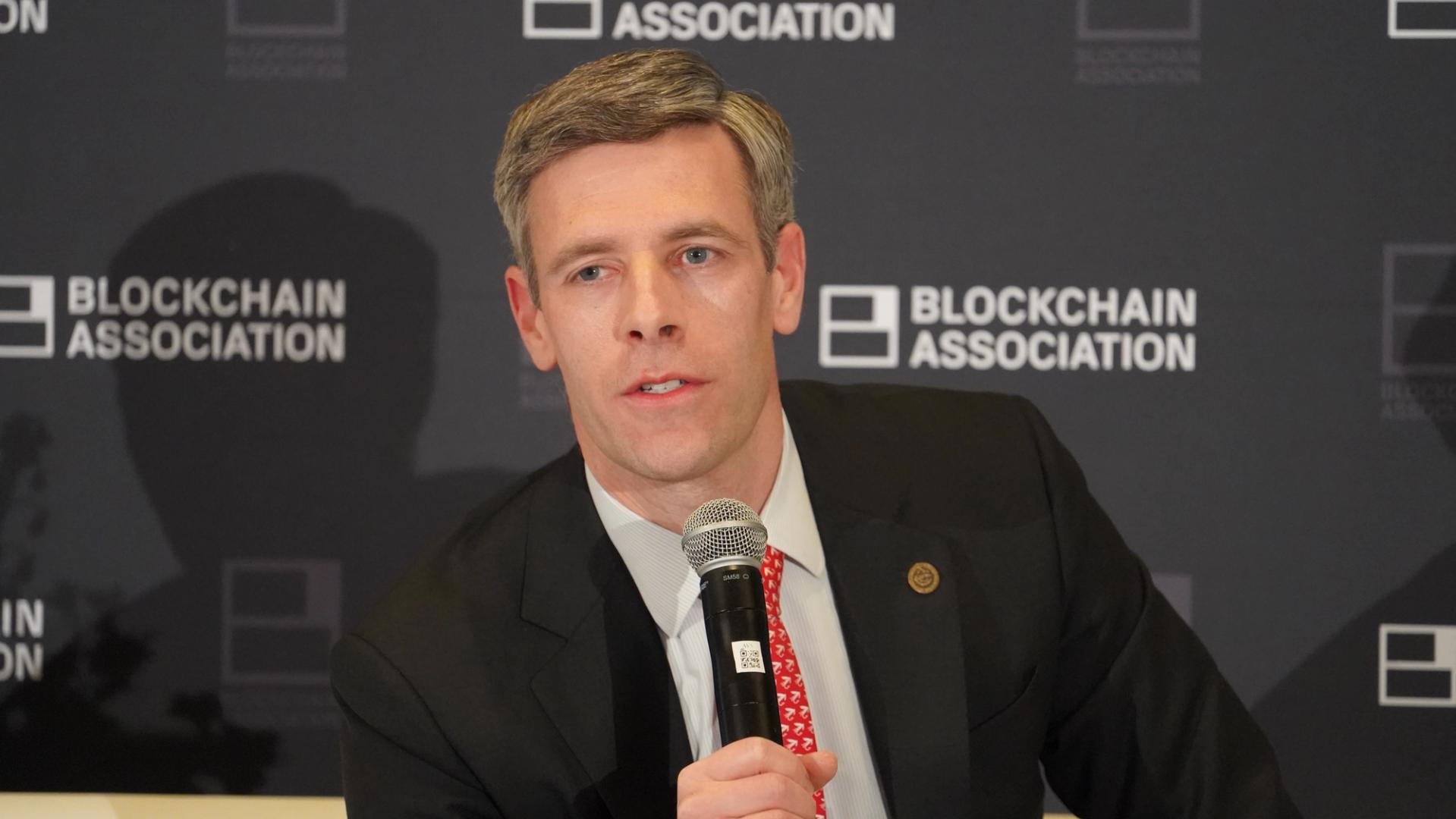
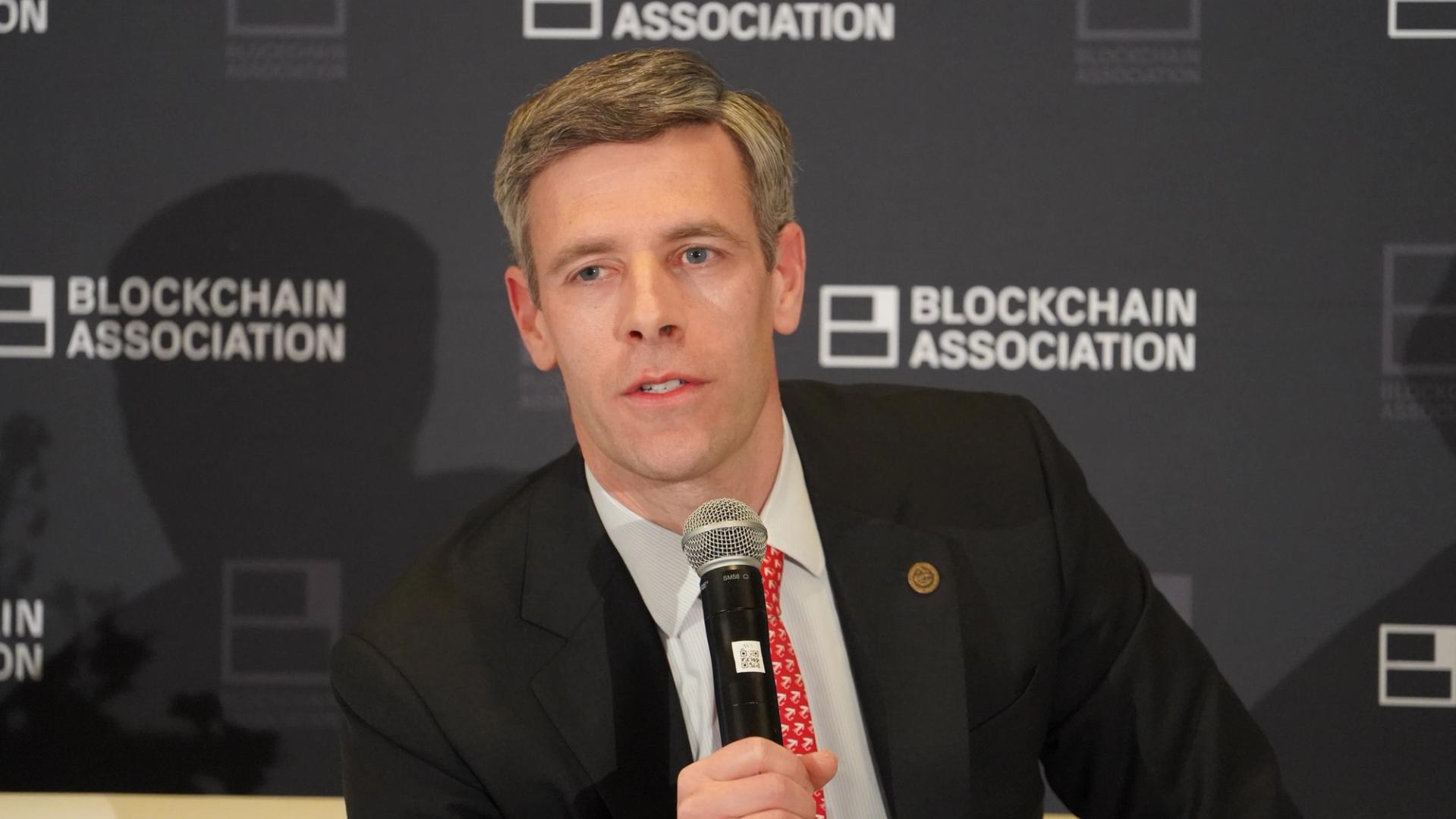
The crypto firm tied to President Donald Trump, World Liberty Financial Inc., was again a focus of political scrutiny in a congressional hearing in which the chief of the U.S. Office of the Comptroller of the Currency suggested the only political pressure his agency feels on its decision of whether or not to give the firm a bank charter comes from Democrats, not Trump.
Comptroller of the Currency Jonathan Gould’s rebuttal had come in response to Representative Gregory Meeks, a New York Democrat, who asked during the Thursday hearing whether Gould is “working for the American people or working as a Trump fixer, which is it?”
“Your attempts to continue to pressure me are the only political pressure I’ve felt from anyone other than your Senate colleagues,” Gould said, referring to similar questions he’d heard from Democrats including Senator Elizabeth Warren. “That is very unfortunate and unprecedented,” he added, insisting that his agency will do its job under the statute governing charters.
Democrats continue to argue that World Liberty’s connection to foreign investors and crypto partners that have been previously associated with illicit behavior — including global exchange Binance — suggest that it’s not fit for a U.S. banking charter, and they’ve argued it’s inappropriate for a Trump appointee to be deciding whether to give such a benefit to a business partially owned by the president and his family.
Amid Thursday’s verbal sparring, Gould said his agency is following ethics laws in the application for a national trust-bank charter for World Liberty Trust Company.
The Trump-tied business is also a stablecoin issuer, which was a central topic of the hearing of the House Financial Services Committee, at which the U.S. supervisors of the banking and credit union industries explained where they’re at on implementing the Guiding and Establishing National Innovation for U.S. Stablecoins (GENIUS) Act.
The regulators have already issued several proposed rules to put the new law into place, and Federal Deposit Insurance Corp. Chairman Travis Hill said another is coming soon, saying his agency and others will propose a rule requiring “customer identification programs” for stablecoin issuers “in the very near future.”
Kyle Hauptman, chairman of the National Credit Union Administration, touted the U.S. rise of stablecoins in his testimony.
“As stablecoins are more widely adopted, we Americans may no longer be made fun of for speaking about how many ‘business days’ a payment will take to settle. Every day is a business day with stablecoins,” he said. “Tax refunds may eventually arrive on Sundays or holidays. And if we ever have a repeat of the COVID outbreak in March 2020, Americans should be able to receive emergency stimulus funds in a more timely and secure manner.”
But Representative Brad Sherman, a California Democrat who routinely speaks against the risks of crypto, said, “I can’t think of a worse idea” than allowing government payments in stablecoins. “It would sanctify an alternative to the U.S. dollar, an alternative designed to facilitate a tax-evasion economy.”
Sherman also argued that the GENIUS Act “requires that there be no interest paid on stablecoins,” and he contended that “the smartest, or at least the best-paid lawyers in the country” are trying to figure out ways to evade that prohibition, so the regulators need to “write regulations that withstand that.”
Also at the hearing, a lawmaker asked Federal Reserve Vice Chair for Supervision Michelle Bowman about the Fed master account granted to crypto exchange Kraken.
Bowman said the approval granted only “very limited access to the payments system” and for an initially narrow duration of 12 months, during which she said the Fed will be watching it closely to educate itself in preparation for formal rules for providing such accounts. The rest of the crypto industry is also keenly interested in the outcome of the Fed’s policy work on opening such access to the central bank’s payments system and services, commonly known as “skinny” master accounts.
Read More: U.S. Senator Warren rebuffed on delay of World Liberty bank charter over Trump ties
Ray Dalio just laid out five hard truths about how markets really work. For crypto-only investors, one of them reads like a warning.
The billionaire built one of the world’s largest hedge funds. He posted the lessons in a note after decades of global macro investing.
The Five Hard Truths
Dalio argues that most people fall into a style of investing by accident. He recommends one approach above all, global macro long-short, and gives five reasons.
First, macro forces move every market. Your split across stocks, bonds, gold, and commodities matters more than any single stock pick.
Second, the biggest gains come from rotating between asset classes. Fine-tuning inside one class delivers far less.
Third, going both long and short lets an investor profit when assets rise and when they fall.
Fourth, single-market, long-only investors get trapped in cycles they cannot hedge or escape.
Fifth, reading global liquidity and geopolitics beats studying one company in isolation.
Follow us on X to get the latest news as it happens
Why Crypto-Only Investors Should Read Truth Four
The fourth truth lands hardest for crypto holders. A Bitcoin-only portfolio is the textbook single-market, long-only bet.
Such investors hold one real lever, the direction of one asset. They cannot easily short weakness or rotate into bonds and gold when the cycle turns.
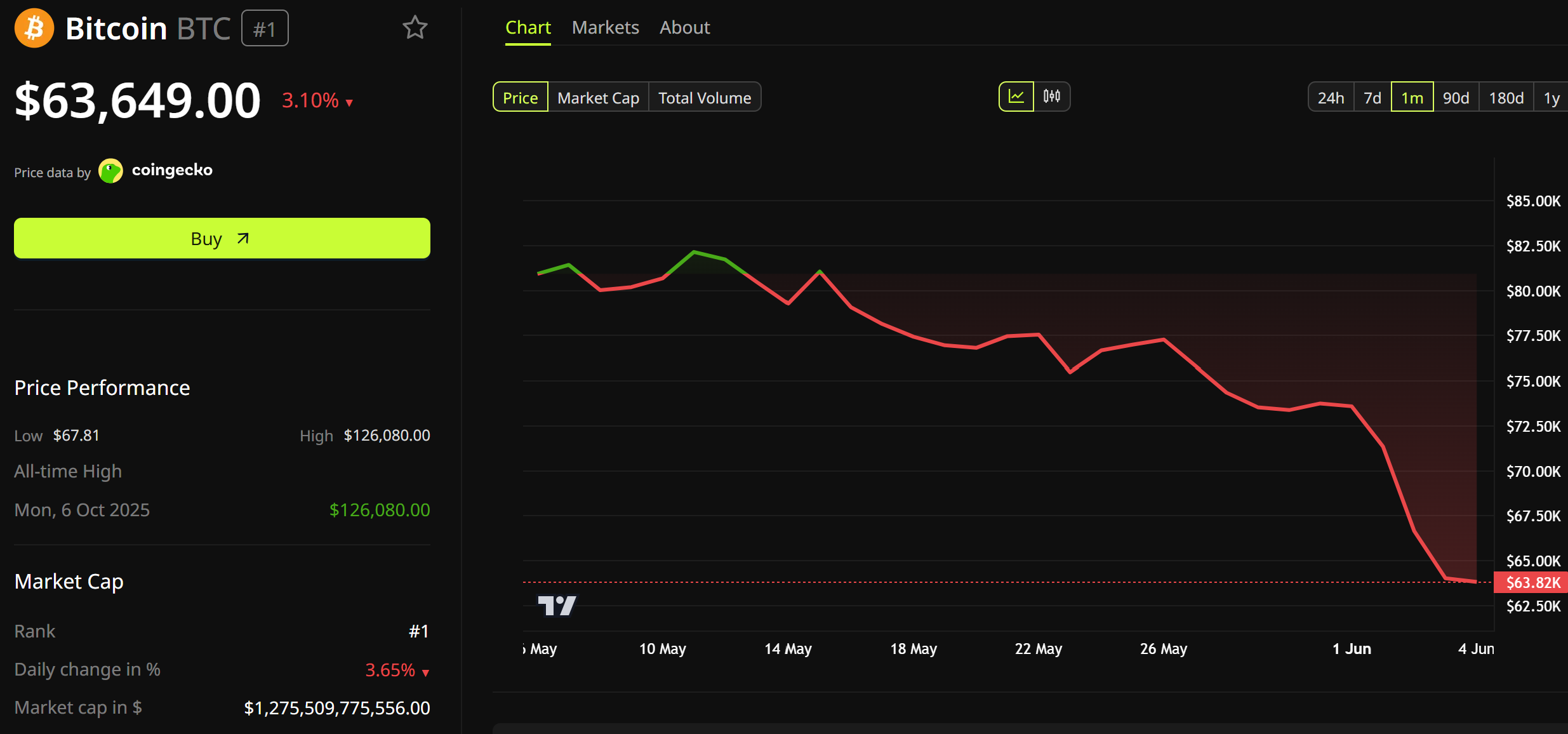
That leaves them exposed to swings they do not control. Bitcoin (BTC) traded near $63,729, down about 3.5% over 24 hours, a reminder of how sharp those swings get.

History offers a hard example. The 2022 failure of crypto fund Three Arrows Capital showed how concentrated, leveraged bets unravel once the cycle turns.
Dalio’s Complicated View of Bitcoin
Dalio’s own prescription reinforces the point. He suggests a gold and Bitcoin hedge of roughly 15%, not an all-in position.
He told Fortune that an optimized portfolio would hold about 15% in gold or Bitcoin. That marks a jump from the 1% to 2% he once advised.
“I’m strongly preferring gold to Bitcoin, but that’s up to you…”…Still, Dalio said he also doesn’t want investors to overload on gold, instead saying, “I want them to diversify well.”
Dalio owns only some Bitcoin and still favors gold. He has urged investors to diversify into hard assets while flagging risks around surveillance and possible government action.
That caution fits his big cycle worldview, in which debt and geopolitics reshape markets over decades.
The Firm That Proves the Point
Bridgewater shows how Dalio applies the discipline. The firm managed $92.1 billion at the end of 2024, down 18% on the year, according to Reuters.
Its flagship Pure Alpha fund returned 11.3% in 2024 and beat the wider industry. The fund shrank from $72 billion in January 2024 toward a $61 billion target.
The firm peaked near $150 billion in 2021, then handed capital back to clients. Management has said the goal is to be the best, not the biggest.
Dalio founded Bridgewater in 1975 and exited operations in 2022. He now writes these notes to pass along principles while CEO Nir Bar Dea runs the firm.
Subscribe to our YouTube channel to watch leaders and journalists provide expert insights
The Takeaway
Dalio admits a 60-year bias toward macro investing and urges readers to weigh other views. His five truths do not tell anyone to avoid crypto.
They warn against betting an entire future on one market that an investor cannot steer. Whether crypto-only holders heed that through 2026 may shape how they survive the next cycle.
The post $92 Billion Hedge Fund Founder Drops 5 Hard Truths Crypto Investors Ignore appeared first on BeInCrypto.

The Instagram Plus Subscription Has Officially Launched

Shocking Financial Stats About the Typical American in 2026 (Income, Debt, Housing & Retirement)

Albanian’s revolt over Ivanka Trump’s plans to build $1.4 billion island resort | News US



-

 Tech7 days ago
Waymo dominates autonomous vehicle registrations as Tesla trails behind
-

 News Videos6 days ago
This is BROKEN! INSANE 5x MONEY CAR WASH WEEK! The NEW GTA Online UPDATE Today! (GTA5 New Update)
-
 Tech5 days ago
SpaceX just won a second Golden Dome contract. This one is $4.16 billion.
-

 Business3 days ago
Jade Biosciences, Inc. (JBIO) Discusses Positive Interim Results From JADE101 Phase I Healthy Volunteer Study and Development Plans Transcript
-

 News Videos6 days ago
SHE IS KILLING XRP!!! WATCH URGENT AND ACT FAST
-
 NewsBeat6 days ago
FIRST NIGHT REVIEW: Take That bring the Circus back to life in spectacular sun-soaked style
-

 Business5 days ago
Is the Spurs Phenom Already Better Than Prime Diesel?
-
Crypto World6 days ago
CFTC Has Approved the First Regulated Bitcoin Perpetual Contract in the U.S.
-

 Politics6 days ago
The House | Inside Andy Burnham’s Makerfield Campaign: “Nobody Thinks This Is In The Bag”
-

 Sports2 days ago
French Open 2026 results: Alexander Zverev beats Rafael Jodar and will play Jakub Mensik in semi-finals
-
 NewsBeat6 days ago
Novak Djokovic v Joao Fonseca LIVE: French Open latest scores and results after Jannik Sinner’s shocking collapse
-
 Entertainment6 days ago
Weak ‘Supergirl’ Box Office Tracking Amid Milly Alcock Backlash
-

 Tech2 days ago
CryZENx Releases Fresh Playable Content Deep Inside Jabu-Jabu for His Ocarina of Time Remake
-
 Crypto World6 days ago
Snowflake (SNOW) Stock Rallies on Strong Q1 Results and AI Product Growth
-

 Entertainment6 days ago
Maddox Jolie-Pitt Legally Requests to Drop Brad’s Surname
-

 Business6 days ago
Demand Conditions Improve In Chemicals Sector In April 2026
-
 Entertainment5 days ago
One of the Greatest Sitcoms of All Time Shoots Up Apple TV’s Charts 11 Years Later
-
 Crypto World6 days ago
MicroStrategy Moves $30 Million in BTC to Coinbase Prime: Is the Bitcoin Sell-Off Already Here?
-

 Tech6 days ago
This Week In Security: Ubiquiti Fixes, And FreeBSD Joins The Club You Don’t Want To Join
-
 Entertainment6 days ago
Bruce Willis’ Generosity Resurfaces Amid His Dementia
You must be logged in to post a comment Login