
Crypto World
US Consumer Sentiment Hits Record Low as S&P 500 Stays Near Peak Levels


TLDR:
- US consumer sentiment fell to 47.6, marking its lowest level amid rising cost pressures
- The S&P 500 remains near highs, showing a sharp disconnect from household expectations
- Retail outlook weakens as discount chains report softer demand and cautious guidance
- Strong premium travel demand contrasts with declining confidence among lower-income groups
A widening gap between financial markets and household outlook is drawing attention across the United States. Equity benchmarks remain elevated, yet US consumer sentiment has dropped sharply, raising concerns about how long this divergence can persist without affecting broader economic stability.
Record Gap Between Markets and Households
Recent commentary shared by Global Markets Investor described an unusual disconnect between Wall Street performance and everyday financial expectations. The post noted that US consumer sentiment fell to 47.6 in April, marking a record low reading.
At the same time, the S&P 500 continues to trade near peak levels. This contrast places US consumer sentiment at levels seen during past recessions, while equities reflect continued optimism. The gap between the two indicators now stands at its widest point on record.
The update pointed to rising living costs as a key factor weighing on US consumer sentiment. Higher gas prices and persistent inflation continue to pressure lower-income households. These pressures have intensified following disruptions linked to the Strait of Hormuz closure.
Meanwhile, asset price growth has supported wealthier households. This trend has helped sustain equity valuations despite weakening US consumer sentiment. As a result, financial conditions vary sharply across income groups.
The same post indicated that more than a quarter of households expect their finances to worsen. This marks the highest level since May 2024. Such expectations further reflect declining US consumer sentiment across the country.
Diverging Spending Patterns and Economic Signals
Retail data shows early signs of strain among cost-conscious consumers. Discount chains have reported cautious outlooks, aligning with the drop in US consumer sentiment. Walmart issued measured guidance, while Dollar General noted softer expectations.
At the same time, spending patterns remain uneven. Premium travel and cruise bookings continue to perform well. This divergence suggests that higher-income consumers remain less affected by declining US consumer sentiment.
The contrast between retail segments reflects a broader economic divide. While some households maintain discretionary spending, others are scaling back. These shifts are closely tied to ongoing weakness in US consumer sentiment.
The US economy depends heavily on consumer activity. As US consumer sentiment weakens, questions arise about future demand. Market participants are watching whether reduced confidence will translate into lower spending levels.
Equity markets continue to price in a stable outcome. However, declining US consumer sentiment presents a different narrative. If household confidence continues to fall, corporate earnings could face pressure in the coming months.
This divergence leaves uncertainty about which trend will adjust. Either markets may reprice risk, or consumer conditions may stabilize. Until then, US consumer sentiment remains a key measure shaping expectations across sectors.




India is turning to welfare payments to drive adoption of its central bank digital currency as it prepares to put the CBDC in the spotlight at a summit of BRICS nations later this year.
The Reserve Bank of India is running about 10 pilot programs routing portions of the country’s roughly $80 billion welfare system through the e-rupee, Reuters reported Thursday. The effort aims to reduce leakage and corruption in subsidy programs while giving the CBDC a clearer use case after a slow rollout.
In Maharashtra’s Phulenagar village, farmers are receiving programmable subsidies covering up to 80% of drip-irrigation costs, spendable only at approved vendors. A separate pilot in Gujarat aims to onboard all 7.5 million households eligible for subsidized food by June, effectively using targeted transfers to scale adoption.
The push underscores a core challenge for CBDCs globally: usage. The e-rupee has grown to about 10 million users from roughly 7 million earlier this year, but cumulative transactions since its December 2022 introduction total just $3.6 billion. That remains small compared with India’s Unified Payments Interface, which processes about $300 billion each month.
Early adoption efforts have at times been engineered. CoinDesk reported in 2024 that several major banks, including HDFC, Kotak Mahindra and Axis Bank, credited employee salaries into CBDC wallets to help the system surpass 1 million daily transactions in December 2023, a milestone that did not persist.
India’s domestic experimentation comes as policymakers consider a larger geopolitical role for the technology. The Reserve Bank of India has urged the government to advance a proposal for linking CBDCs across the economies of Brazil, Russia, India, China and South Africa at the bloc’s 2026 summit, aiming to streamline cross-border trade and reduce reliance on the U.S. dollar.
That ambition carries political risk. President Donald Trump has threatened tariffs on BRICS countries pursuing alternatives to the dollar and has already imposed duties on Indian imports tied in part to its purchases of Russian crude, raising the stakes for any coordinated monetary effort.
UPDATE (April 24, 90:27 UTC): Rewrites headline to explain CBDC acronym.
Crypto World
Ethereum Price Prediction: Today’s Options Expiry as 10 Straight Days of ETF Inflows Snap
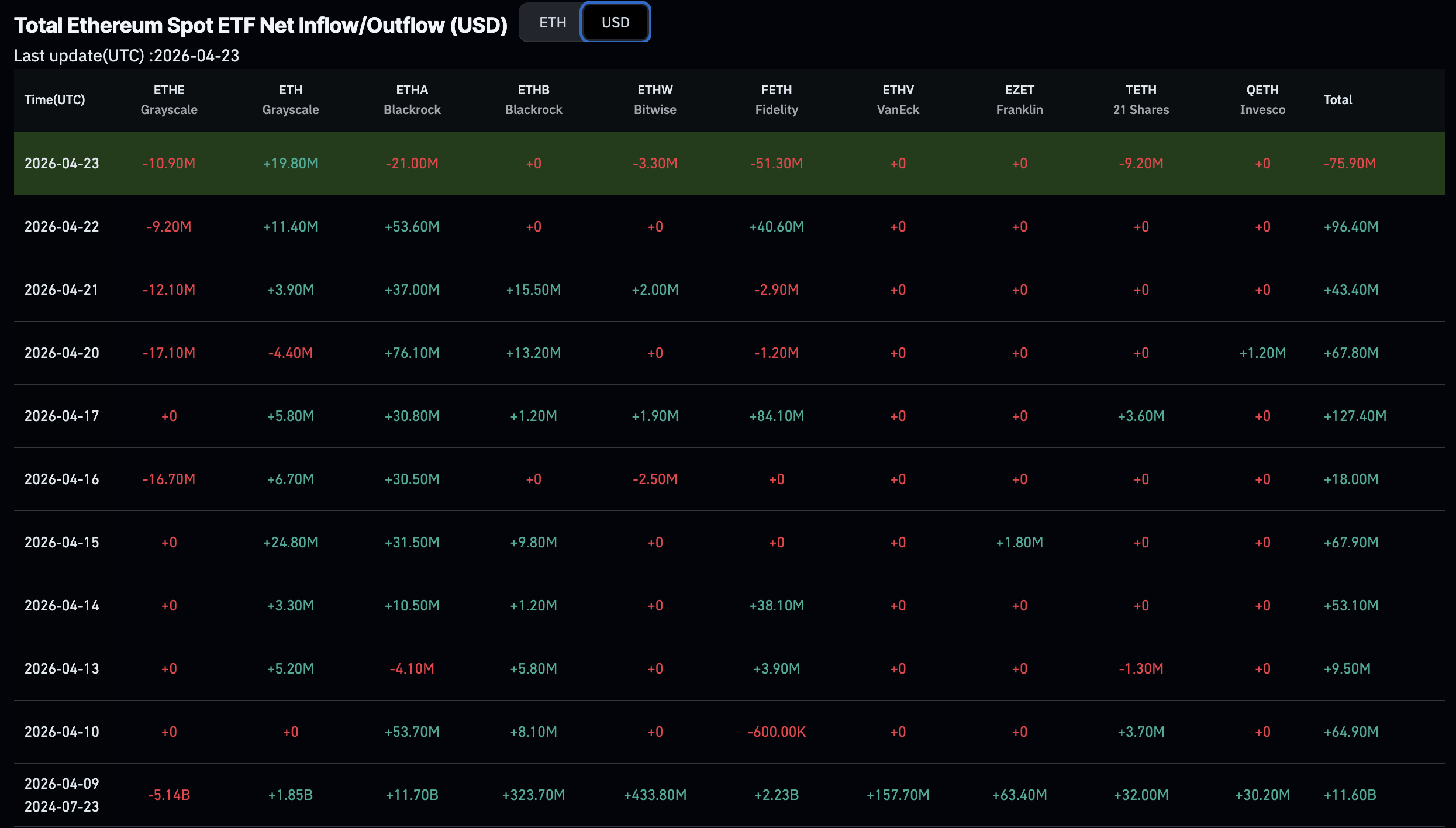
Ether’s 10-day ETF inflow streak just snapped hard. Ethereum price is slipping to $2,300 in today’s Asia session, but that doesn’t mean we are getting a bearish prediction.
Spot Ethereum ETFs recorded a net outflow of $75.9 million on April 23, abruptly ending a 10-day consecutive inflow run. Yesterday’s compares poorly with the prior session’s $96.4 million in ETH ETF inflows. Yesterday was a $172.3 million single-day swing in the wrong direction.
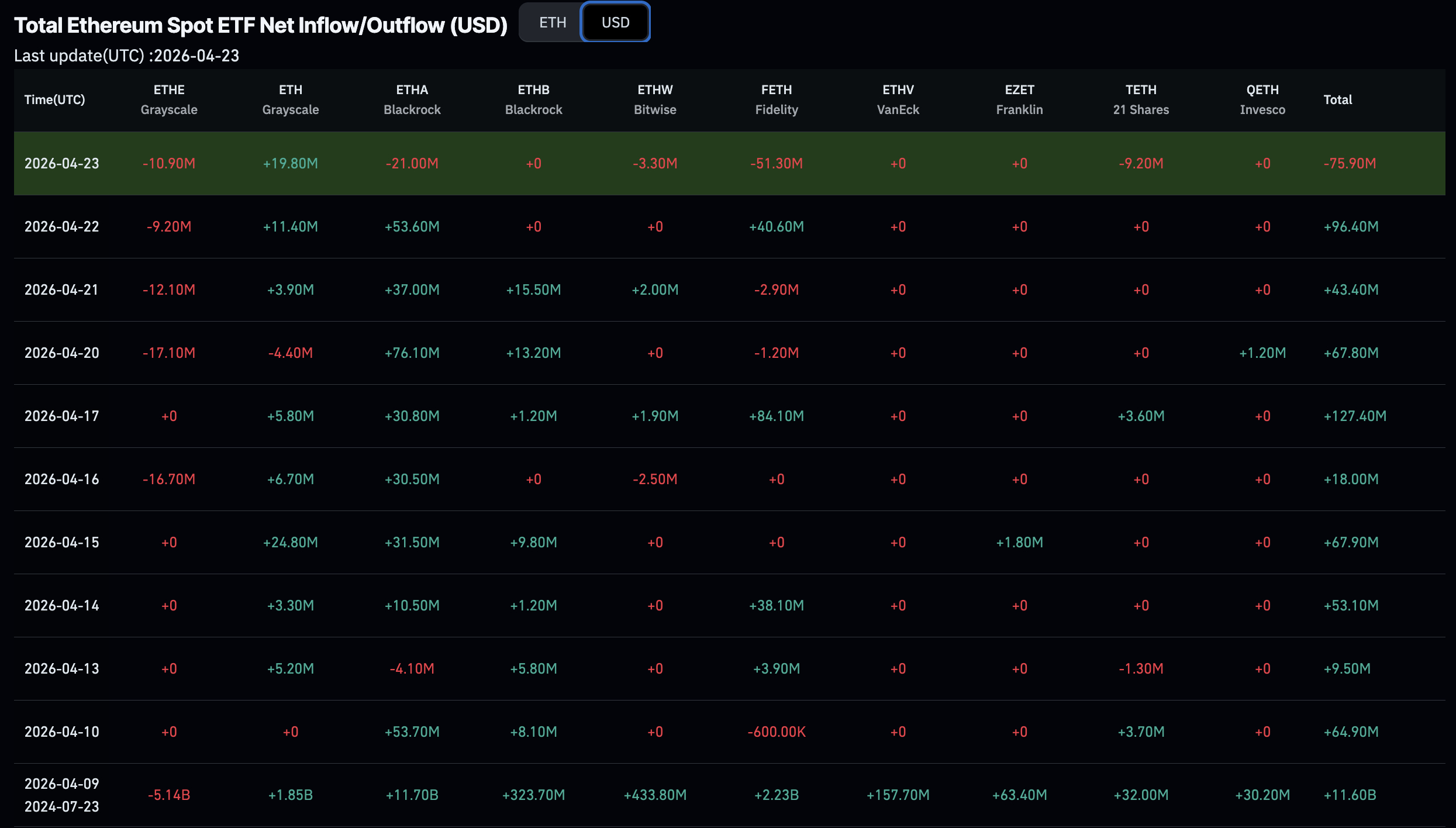
Meanwhile, spot Bitcoin ETFs drew $223 million on the same day, extending their own inflow streak to eight days. Strategy’s latest purchase, worth $2.54 billion, added further tailwind to the BTC side of the ledger.
NEW: CNBC reports that spot Bitcoin ETF inflows are ramping up and BTC is "closing in on $80k" — Bitcoin Magazine (@BitcoinMagazine) April 23, 2026
 pic.twitter.com/felRafNxd1
With an $8.6 billion BTC/ETH options expiry landing today and Bitcoin dominance sitting at 60%, the ETH/BTC trade is suddenly back in focus.
Discover: The best pre-launch token sales
Ethereum Price Prediction: $2,500 A Pipe Dream?
ETH opened today at $2,375 before sliding to $2,310 by late morning, a move that put the price back below the $2,400 uptrend level that bulls need to reclaim. Binance analysts flag $2,500 as the critical support zone, warning that failing to break the resistance level could open the path to $2,200.
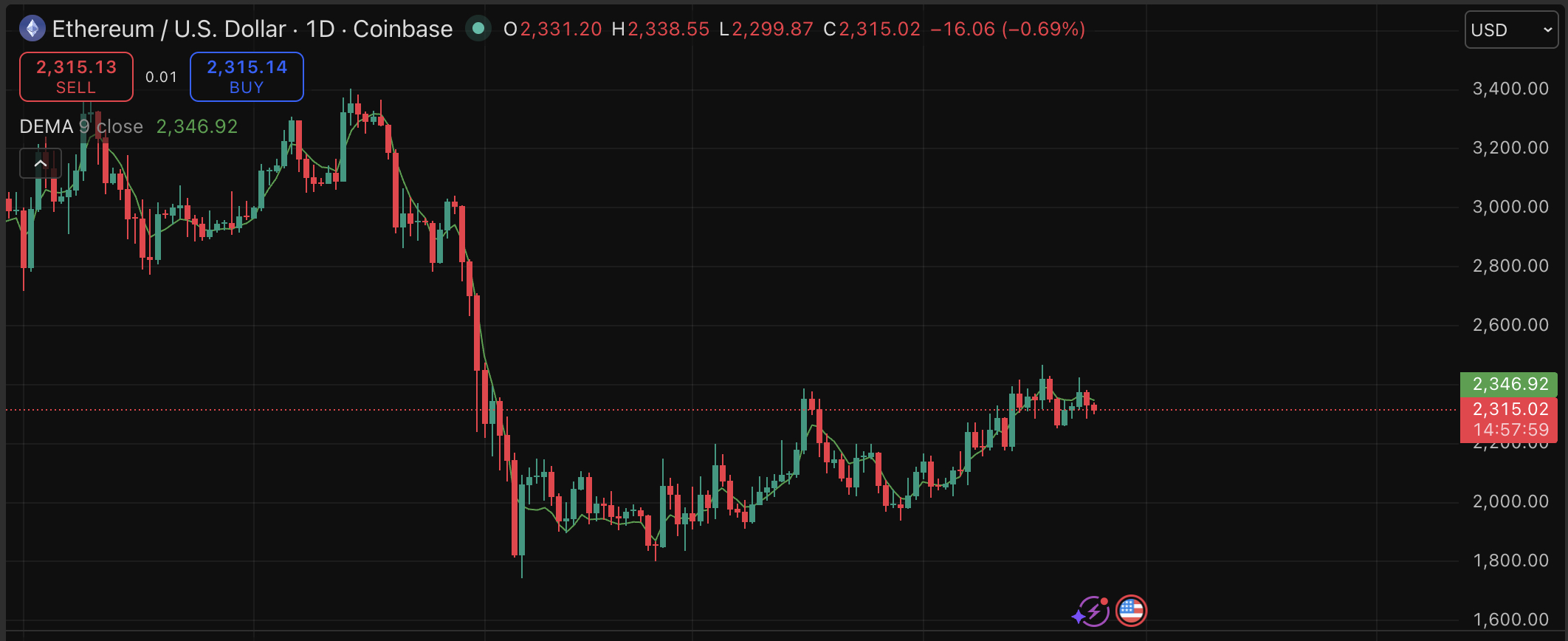
24-hour volume dropped 8% to approximately $17 billion, which can mean capitulation is still ahead. The Fear & Greed Index sits at 39 (Fear), way better than what it was during last month’s extreme fear situation. RSI registers around 58, technically neutral, so there is still some room to run.
If ETH can reclaim $2,400 once again with recovering volume, not just $2,500, it could as well try to retest the higher $2,800–$3,000 resistance.
$ETH 1D:
Faces key resistance at $2,500 and $2,800, zones characterized by bearish liquidity voids. A push toward these levels is expected, with the 200 day MA serving as my major target. It’s almost ready to breakout IMO. NFA DYORpic.twitter.com/2MCZ0kvqN8
— RStacker (@RaberTrades) April 23, 2026
The options’ expiry on April 24 adds a near-term volatility wildcard. Price could whip either direction into the settlement print before establishing a cleaner trend. Stay alert.
Discover: The best crypto to diversify your portfolio with
LiquidChain As Liquid as Ethereum ETFs
ETH’s ETF streak ending mid-rally is a useful reminder: even assets with genuine institutional momentum can stall at the wrong technical junction. Rotation into earlier-stage infrastructure plays tends to pick up precisely when large-cap assets lose momentum at resistance. It’s a dynamic worth considering.
This is where it begins. ⟁ — LiquidChain (@getliquidchain) April 24, 2026
 https://t.co/vqvBcdSQYC pic.twitter.com/4WNFR37XmU
LiquidChain ($LIQUID) is a Layer 3 infrastructure project positioning itself as the cross-chain liquidity layer, fusing Bitcoin, Ethereum, and Solana liquidity into a single execution environment. Developers deploy once and access all three ecosystems simultaneously, which addresses one of DeFi’s most persistent friction points: fragmented liquidity across incompatible chains.
The project’s Unified Liquidity Layer and Single-Step Execution architecture are the core differentiators. Its presale has raised $700K to date at a current price of $0.01452 per LIQUID token. Not to forget its high 1400% APY staking bonus for early buyers.
Research LiquidChain and review the presale terms here.
The post Ethereum Price Prediction: Today’s Options Expiry as 10 Straight Days of ETF Inflows Snap appeared first on Cryptonews.
Crypto World
U.S. government’s Intel stake swells to $35 billion, netting $26.5 billion unrealized gain


The U.S. government is holding an unrealized gain of roughly $26.5 billion on its Intel (INTC) stake after the chipmaker’s shares jumped more than 22% in pre-mrket trading on Friday, following a stronger-than-expected first-quarter earnings report.
The position stems from an August deal in which the Trump administration converted $8.9 billion in CHIPS Act grants and Secure Enclave funding into 433.3 million Intel shares at $20.47 apiece, giving it about a 9.9% ownership stake. With Intel trading near $81.80 in pre-marketing trading Friday, the holding is now valued at approximately $35.4 billion, nearly tripling in less than a year.
The government also holds warrants to purchase an additional 5% stake at $20 per share, options that are now deep in the money.
Intel’s rally was driven by a sharp earnings beat. The company reported first-quarter revenue of $13.6 billion, up 7% year over year and above Wall Street expectations of $12.4 billion. Non-GAAP earnings per share came in at $0.29, far exceeding the consensus estimate of a $0.01 loss.
Growth was led by Intel’s Data Center and AI segment, which rose 22% to $5.1 billion as demand for Xeon processors accelerates alongside the broader AI infrastructure buildout.
CEO Lip-Bu Tan pointed to a shift in AI computing toward inference and agentic workloads, saying the trend is “significantly increasing the need for Intel’s CPUs.”
Intel guided revenue in the range of $13.8 billion to $14.8 billion for the second quarter.


Crypto prices stayed muted with major assets, including Bitcoin, experiencing slight declines on Friday as hopes of peace between the U.S. and Iran began to fade.
Summary
- Crypto prices remained subdued as fading U.S.-Iran peace hopes kept Bitcoin range-bound and weighed on overall market sentiment.
- Ongoing naval blockade and stalled negotiations pushed oil prices higher, raising macro uncertainty and keeping investors in a wait-and-watch mode.
- Analysts remain divided, with derivatives data signaling caution while some expect a potential short squeeze if Bitcoin breaks key resistance near $80,000.
Bitcoin (BTC) price traded sideways between $77,000 and $79,000 over the past 24 hours before consolidating around $77,700 at press time, down 0.6% in the period. Ethereum (ETH) was down 1.5%, exchanging hands at $2,314, while XRP (XRP), BNB (BNB), and Solana (SOL) saw less than 1% sideways movement on the day. The global crypto market cap was down 0.2% at $2.68 trillion, indicating subdued interest from investors.
This trend is likely from traders entering a wait-and-watch mode as the odds of peace between the U.S. and Iran look rather slim while both continue with their back-and-forth escalation at the Strait of Hormuz.
Per recent reports, U.S. President Donald Trump has noted that the U.S. is under no pressure to end the war with Iran, though a failure to reach terms could likely lead to a heavy attack on Iranian infrastructure.
“I have all the time in the world, but Iran doesn’t. The clock is ticking!” Trump wrote in a recent Truth Social post.
The U.S. has continued the naval blockade against Iranian ports for the tenth consecutive day to pressure Iran to accept a denuclearization deal. However, Iran, for its part, has rejected any peace talks in Islamabad as long as the blockade remains in place, stating it will not succumb to bullying.
The stalemate regarding the shipping lanes has led crude oil prices to move back to $95 and could surge back above $100 if no resolution is found. Concerns remain over a potential global recession if conflict disrupts the Strait of Hormuz for a prolonged period.
Traditional markets echoed these concerns with safe-haven assets such as gold and silver down slightly on the day. However, Asian tech stocks like the Nikkei 225 and Hang Seng ended a little higher despite the geopolitical noise.
As such, if there is a delay in any peaceful resolution to the conflict, it could continue to pressure markets, especially risk assets such as cryptocurrencies, including Bitcoin.
A prolonged geopolitical standoff could cause Bitcoin to lose its gains over the past month and hence trigger a wider selloff across the altcoin market. If it fails to hold its current support levels, investors may see a rapid exodus from more volatile projects as capital seeks the relative safety of cash or stablecoins.
How will Bitcoin react?
Singapore-based QCP Capital maintains that the recent bounce in Bitcoin does not signal a structural shift and is unlikely to reverse the bearish momentum seen in recent months.
The firm noted that confidence in risk assets has been supported mainly by the temporary truce extension and reassurances from Federal Reserve Chair nominee Kevin Warsh regarding the central bank’s independence.
Derivatives data also suggests caution. Options markets continue to show muted short-term volatility, while demand for downside protection remains elevated, indicating hedging activity.
In contrast, analysts at K33 Research see scope for further upside. They point to a divergence between Bitcoin’s price recovery and persistently negative funding rates, which could leave the market exposed to a potential short squeeze.
Even so, the $79,000 to $80,000 range is emerging as a key resistance zone, aligning with the realized price of short-term holders who may look to exit positions as prices rise. Data platform CryptoQuant has similarly described the $80,000 level as a “critical inflexion point.”
From a longer-term perspective, Anthony Pompliano argued that sharp pullbacks can lay the foundation for stronger rallies. He suggested that a 50% correction from October highs could eventually pave the way for new peaks, adding that “Bitcoin has become the king of safe havens in all kinds of chaos.”
Disclosure: This article does not represent investment advice. The content and materials featured on this page are for educational purposes only.
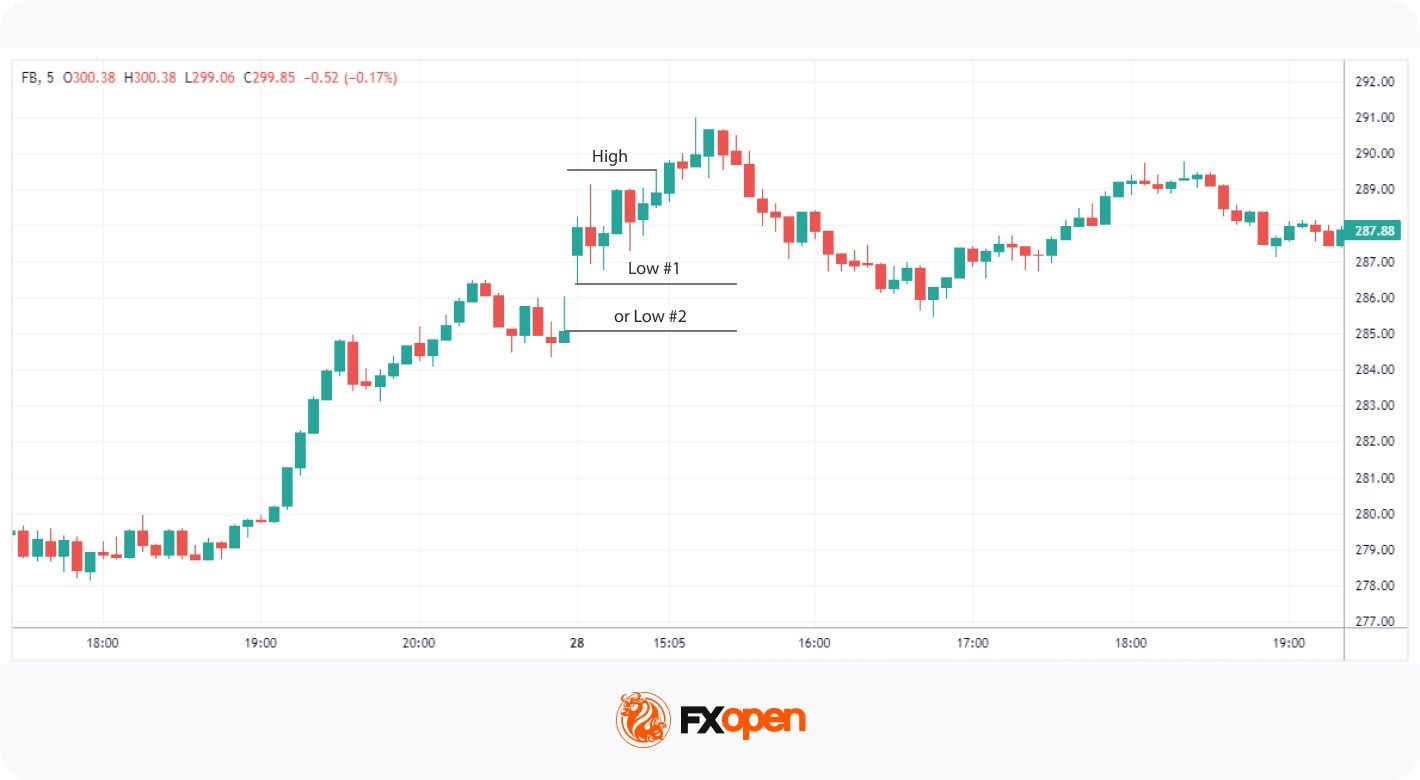
The Opening Range Breakout strategy is an intraday trading approach that marks the high and low of a market’s first 5, 15, or 30 minutes of activity, then treats a candle closing above the range high or below the range low as a signal of potential directional momentum.
The first minutes after a market opens are often marked by heightened volatility, rapid price movements, and a surge in trading activity. This period reflects the reaction to overnight news, global events, and the positioning of market participants at the start of the session. These opening moves may provide a breakout trading framework that can shape trading for the rest of the day.
In this article, we examine the Opening Range Breakout strategy, a widely used approach that focuses on this critical window of market activity and its potential implications for intraday trading.
Overview of the Opening Range Breakout Trading Strategy
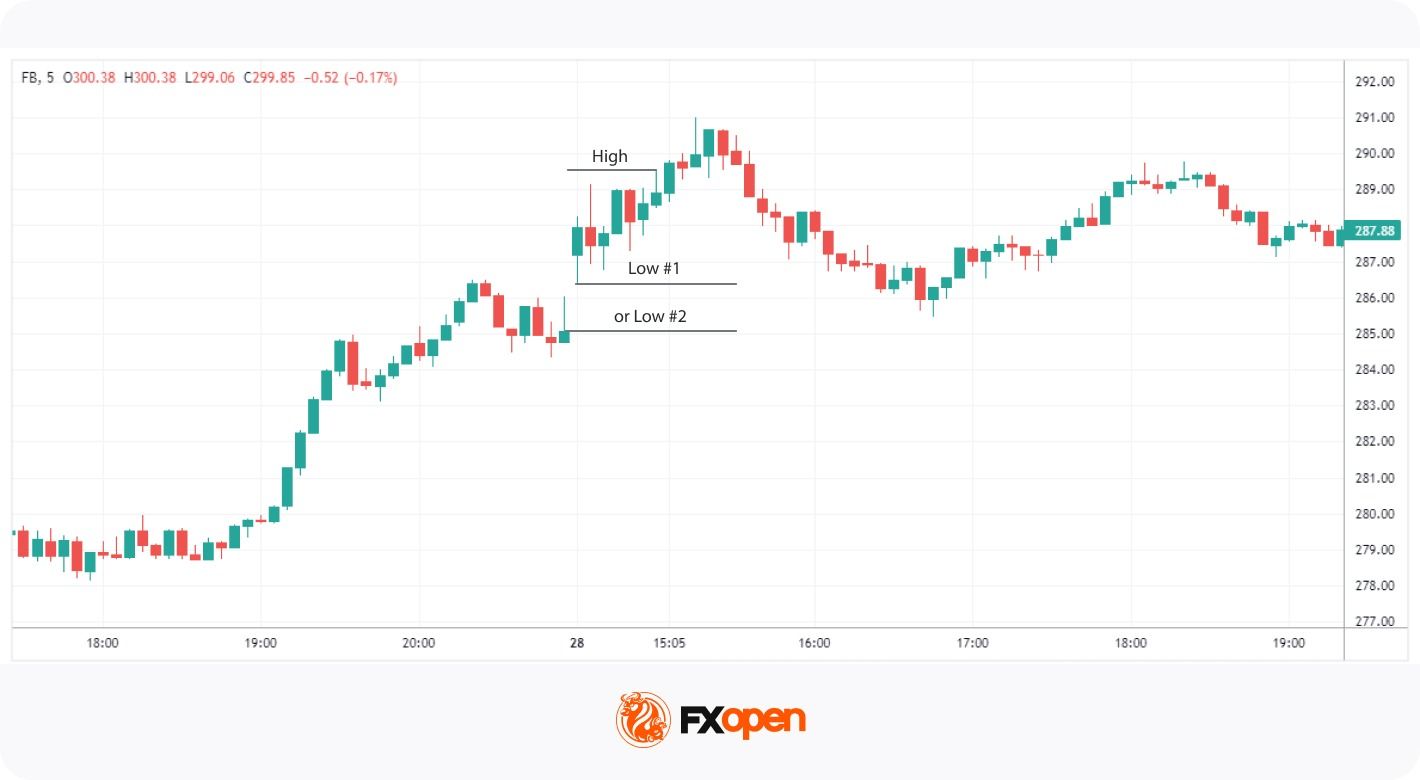
The ORB, or the Opening Range Breakout, is a time-tested breakout trading strategy that centres around identifying the price range established in the initial minutes of a market session. The strategy typically focuses on the price range formed within the first 5, 15, or 30 minutes after the market opens. This range forms because the market absorbs overnight news, early positioning by institutional participants, and concentrated order flow as liquidity returns at the bell.
Traders mark the highest and lowest points reached during this period as key levels. While some rely solely on this range, others also incorporate the prior day’s closing price for additional context. Traders keen on trading the open range breakout pay close attention to these high and low levels, as a breakout or breakdown from these levels can indicate a strong trend.
Variations of Opening Range Breakout
The ORB framework adapts to different timeframes, and traders often select one based on how quickly they want a signal.
- 5-minute ORB: Produces the fastest setups and is popular among scalpers, though the narrow range may increase the rate of false breakouts.
- 15-minute ORB: Balances speed and structure. The range typically captures the initial reaction to the open while filtering out the first burst of noise.
- 30-minute ORB: Produces a larger range and fewer signals per session, which some traders find cleaner for position sizing and stop placement.
Using the ORB for Stocks
Trading the Opening Range Breakout in the stock market offers distinct advantages, primarily due to the well-defined opening and closing times of the stock exchanges. These regulated timeframes provide a clear structure for implementing the ORB trading strategy. Typically, stock traders focus on the initial 5 to 30 minutes post-opening bell to define the range, as this period often captures the essence of market sentiment.
Liquidity is usually high during this time and volumes are significant. According to theory, the strategy may help traders identify trends early in the trading session. However, traders also consider the current trend. Looking for entries in the broader trend direction can reduce the odds of being misled by a false breakout.
Using the ORB for Forex
In forex, the Opening Range strategy can also be applied, albeit with some unique considerations. Unlike the stock market, forex operates 24 hours a day, five days a week, with no clearly defined opening or closing times. The ORB strategy applies the same logic to specific forex sessions. The London open breakout strategy and the New York session breakout are the two common session anchors, as both tend to produce directional moves tied to institutional order flow.
Liquidity and trading volume can vary substantially between these sessions, affecting the results of the Opening Range Breakout method. The overlap between London and New York often produces the largest ranges on major pairs, while the Asian session is believed to be quieter, which can flatten the opening range.
Additionally, it may be helpful to be aware of currency pairs; each pair may have increased activity and, therefore, potentially more reliable breakouts during the session of its originating country. Lastly, given the almost continuous trading, overnight gaps are rare, making a careful session-based approach critical for forex ORB.
Breakout Logic and Trade Structure
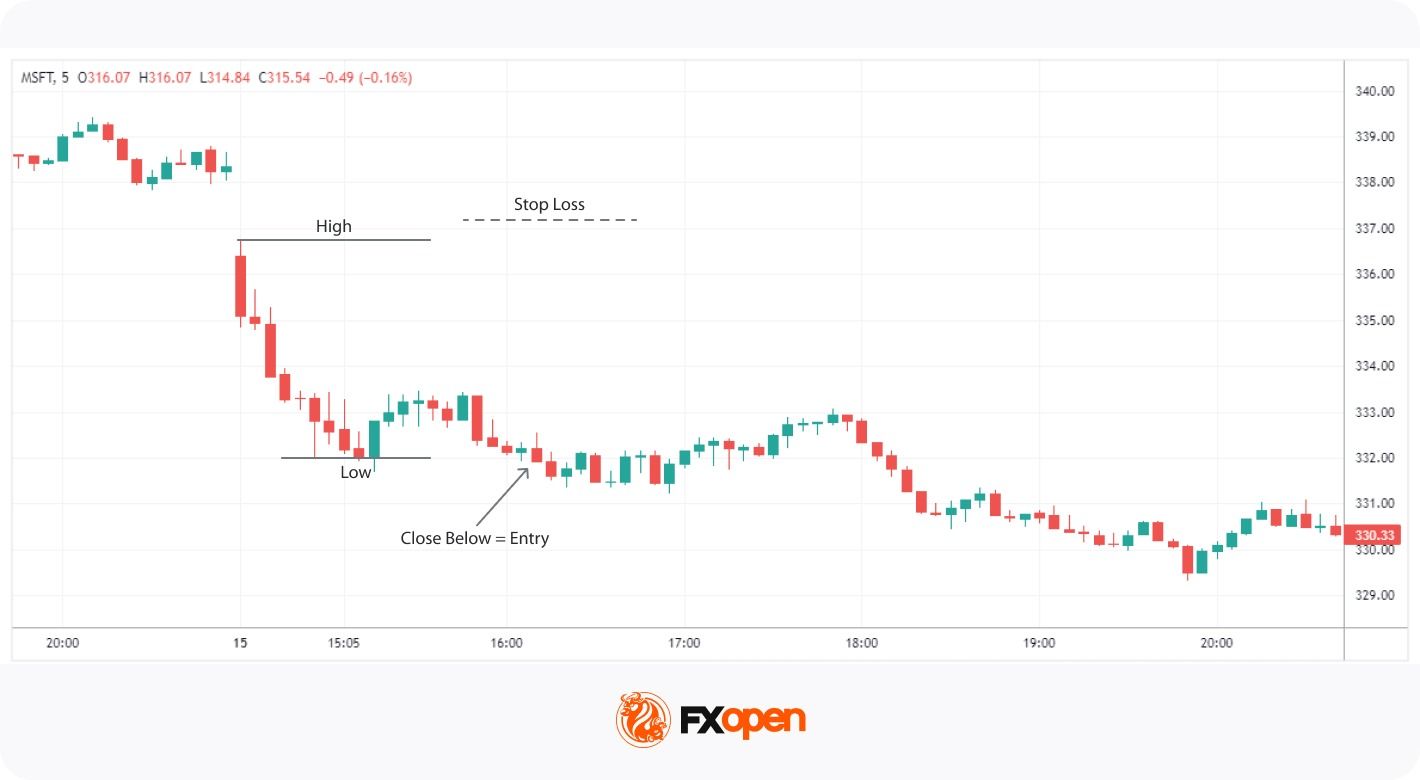
The opening breakout strategy is a widely used approach to take advantage of strong upward or downward movements that break the defined opening range.
Opening range breakout process traders use:
- Define the opening range (first 5–30 minutes of the session)
- Identify the range high and low
- Monitor price approaching the range boundaries
- Wait for a breakout with a candle close outside the range
- Manage the trade using predefined risk parameters
Let’s consider the Opening Range Breakout example above.
Entry
- Traders often monitor the price as it approaches the high or low of the opening range, typically using the 5, 15, and 30-minute charts. The opening range is generally defined as the first 30 minutes of the session.
- Entry confirmation typically comes from a candle closing above the high for a bullish breakout or below the low for a bearish one.
Stop Loss
- A stop loss might be set just below the opening range high for bullish trades or above the low for bearish trades. Factors like market volatility and liquidity are often taken into consideration when placing the stop loss.
Take Profit
- The profit target could be set at a distance based on risk/reward ratio, like 2:1 or 3:1.
- Traders also consider major support and resistance levels as potential take-profit levels.
To see how it works for yourself, consider heading over to FXOpen’s TickTrader trading platform. There, you’ll be able to explore a wide range of forex and stock CFDs.
Popular Practice for Trading the ORB Strategy
To improve the accuracy of the Open Range Breakout strategy, traders approach it with a disciplined and informed methodology.
Some of the Popular Practices
- Defining a Clear Opening Range: Traders often focus on the first 5, 15, or 30 minutes after the market opens to establish a trading range. Consistency in the chosen timeframe may be helpful for thoughtful analysis.
- Focusing on Liquid Markets: The ORB is usually applied to markets with high trading volumes during the opening session since these typically see more breakouts than thinly traded assets.
- Aligning with Market Trends: Breakouts that align with the broader market or news events could reduce the probability of false signals.
- Accounting for Volatility Regimes: High-volatility sessions often produce wider opening ranges and stronger follow-through once price closes outside the boundary. Low-volatility conditions tend to produce narrower ranges and a higher proportion of false breakouts, so some traders step aside or tighten filters during quieter periods.
- Incorporating Session-Specific Analysis: For forex markets, using the opening range of specific sessions (e.g., London or New York) often yields more relevant breakouts for currency pairs linked to those regions.
- Back-Testing and Optimisation: Traders typically refine their approach by back-testing the ORB trading strategy on their chosen market and timeframe.
- Using Breakout Indicators: Some traders may use Opening Range breakout indicators, such as volume or volatility measures (including VWAP and ATR), to support breakout confirmation.
Pullback Strategy
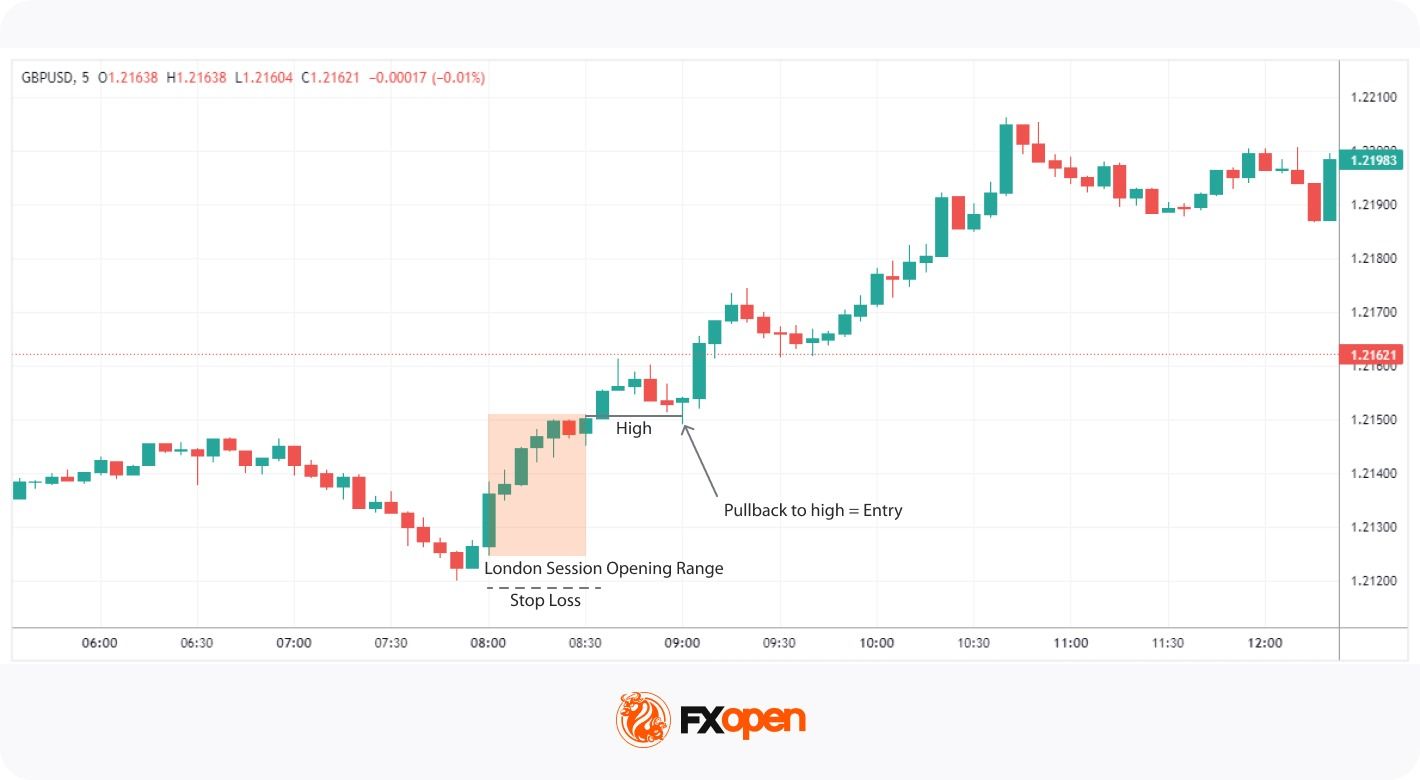
The pullback strategy within the ORB framework offers traders an alternative approach that seeks additional confirmation before initiating a trade. This strategy can be particularly useful in markets where false breakouts are common.
Entry
- Rather than entering immediately on a breakout, traders often wait for the price to break beyond the opening range and then retrace back to the high or low of that range or to a relevant support or resistance level within the range.
Stop Loss
- Stop losses could be placed a few pips below the low of the range for bullish trades or a few pips above the high for bearish trades to accommodate market noise and volatility.
Take Profit
- Profit targets could be based on a risk/reward ratio that aligns with the trader’s overall strategy.
- These targets could also be adjusted depending on subsequent support or resistance levels.
False Breakouts and Filters
The opening range in trading can see false breakouts, which happen when price pushes beyond the opening range, fails to hold, and returns inside within one or two candles. These failures often leave a long wick or a strong reversal candle on the breakout bar, signalling rejection by participants on the other side.
To maintain a level of Opening Range Breakout risk management, traders often apply simple filters:
- No close outside the range: A wick beyond the high or low without a closing print above or below counts as a test, not a breakout.
- Quick reversal back through the level: Price returning through the range within a candle or two invalidates the setup.
- Low volatility sessions: Narrow opening ranges during quiet conditions produce a higher share of fakeouts, so some traders step aside until volume returns.
Key Characteristics and Limitations of the ORB Strategy
The Opening Range Breakout strategy offers traders a systematic approach to take advantage of early market movements. While it may be a powerful tool for capturing significant price shifts, it may be important to understand its strengths and weaknesses.
Characteristics
- Early Trend Identification: The ORB may help traders spot potential trends right after the market opens, allowing for timely entry into positions.
- High Liquidity Periods: Trading during the opening range often means higher liquidity, which could lead to smoother order execution and tighter spreads.
- Risk Management Rules: The strategy provides defined entry and exit points.
- Defined Stop Placement: Stops typically sit just beyond the opposite side of the opening range. This anchors risk to session structure rather than an arbitrary pip distance.
- Versatility: Applicable to various markets like stocks and forex, the ORB can be adapted to different trading instruments and timeframes.
Limitations
- False Breakouts: The strategy is susceptible to fakeouts, where the price breaks the range but quickly reverses. The potential for losses means risk management is an important consideration for traders using the ORB strategy.
- Market Noise: High volatility during opening sessions can cause erratic price movements, making it challenging to distinguish genuine breakouts.
- Requires Quick Decision-Making: Traders need to act swiftly, which may lead to wrong decisions and additional psychological pressure.
- Not Always Reliable in All Markets: The ORB may be less reliable in markets that don’t exhibit strong opening movements or during periods of low volatility.
- Range Width and Volatility Affect Risk: Wider opening ranges translate into larger stop distances. Volatile sessions can inflate the range to a point where the resulting setup no longer fits a trader’s risk parameters, even when the breakout itself looks structurally valid.
The Bottom Line
The ORB trading strategy gives traders a structured way to trade the early part of a session across stocks and forex. Range width, session timing, and volatility conditions all shape how the setup performs on a given day.
If you want to apply the strategy across a selection of forex and stock CFD markets, you can consider opening an FXOpen account and access tight spreads and low commissions (additional fees may apply).
FAQ
What Is the Opening Range Breakout Strategy in Trading?
The Opening Range Breakout (ORB) strategy is based on the price range formed during the first minutes of a trading session, typically 5 to 30 minutes. Traders monitor the high and low of this range, as price movements beyond these levels may indicate increased volatility and potential directional momentum.
How May the ORB Strategy Be Used By Traders?
Traders typically define the opening range using short-term timeframes, such as 5-, 15-, or 30-minute charts, and monitor price action near its boundaries. Breakouts above or below the range may be considered alongside confirmation signals such as candlestick structure or volatility conditions.
What Confirms an Opening Range Breakout?
Confirmation usually comes from a candle closing outside the opening range high or low on the chosen timeframe. A wick beyond the level without a closing print is generally treated as a test rather than a breakout. Some traders add volume expansion, a move away from VWAP, or a rising ATR reading as secondary filters before acting on the signal.
What Is the 15-Minute Opening Range Breakout Strategy?
This variation uses the first 15 minutes of trading to establish the opening range. It appeals to those looking for quicker setups compared to the more traditional 30-minute range.
How May Traders Select Stocks for an ORB Strategy?
Stocks with high liquidity and strong pre-market activity are often chosen by traders for the ORB strategy. Traders may also consider stocks influenced by significant news or earnings reports, as these are likely to show volatility at the open.
What Is the Opening Range Breakout Strategy’s Success Rate?
The results of a strategy usually vary based on general factors like market conditions, timeframe, and trade execution and private factors, like trading approach, skills, and risk management. According to theory, traders often find the ORB strategy useful in volatile markets with clear trends and robust volume.
This article represents the opinion of the Companies operating under the FXOpen brand only. It is not to be construed as an offer, solicitation, or recommendation with respect to products and services provided by the Companies operating under the FXOpen brand, nor is it to be considered financial advice.


Key takeaways
- XMR is trading above $380 on Friday, after over 3% rebound from the 200-day EMA on the previous day.
- The positive derivatives data could push XMR’s price above $400.
Monero (XMR) is trading around $380 on Friday, showing a mild retracement after a 3% gain the previous day. The privacy coin is steadily regaining demand in the derivatives market, as traders anticipate further upside amid a broader market risk-on phase
Monero derivatives signal strong retail sentiment
Monero has continued its recovery since the early February sell-off, with growing retail demand for its derivatives.
According to CoinGlass data, the XMR futures Open Interest (OI) has risen to $139.39 million, up from $109.94 million on February 7, reflecting renewed investor confidence.
Furthermore, the OI-weighted funding rate remains positive at 0.0093%, indicating a persistent preference for holding long positions at a premium.
The positive derivatives data indicate that buyers are starting to enter the Monero market. This could push XMR’s price higher in the near to medium term.
Technical outlook: Can Monero surge to $400?
The XMR/USD 4-hour chart is bearish and efficient, but the structure could flip bullish if Monero continues with its rally.
Currently, XMR is holding above the 50-day Exponential Moving Average (EMA) at $351 and the 200-day EMA at $364.
The 4-hour chart reveals a rising channel pattern, signaling a constructive market structure. The Relative Strength Index (RSI) at 61 and a positive Moving Average Convergence Divergence (MACD) above its signal line support sustained upside momentum.
On the upside, immediate resistance is at $400, aligning with the Inducement Liquidity (ILQ) created on February 4. A breakout above this level could push Monero towards the 50% retracement level at $470, above the 4-hour TLQ level.

However, if the bears regain control, support is found at the 200-day EMA at $364, followed by the 50-day EMA at $351.
A deeper pullback below the rising support trendline at $330 would signal a more significant shift in the current constructive outlook.
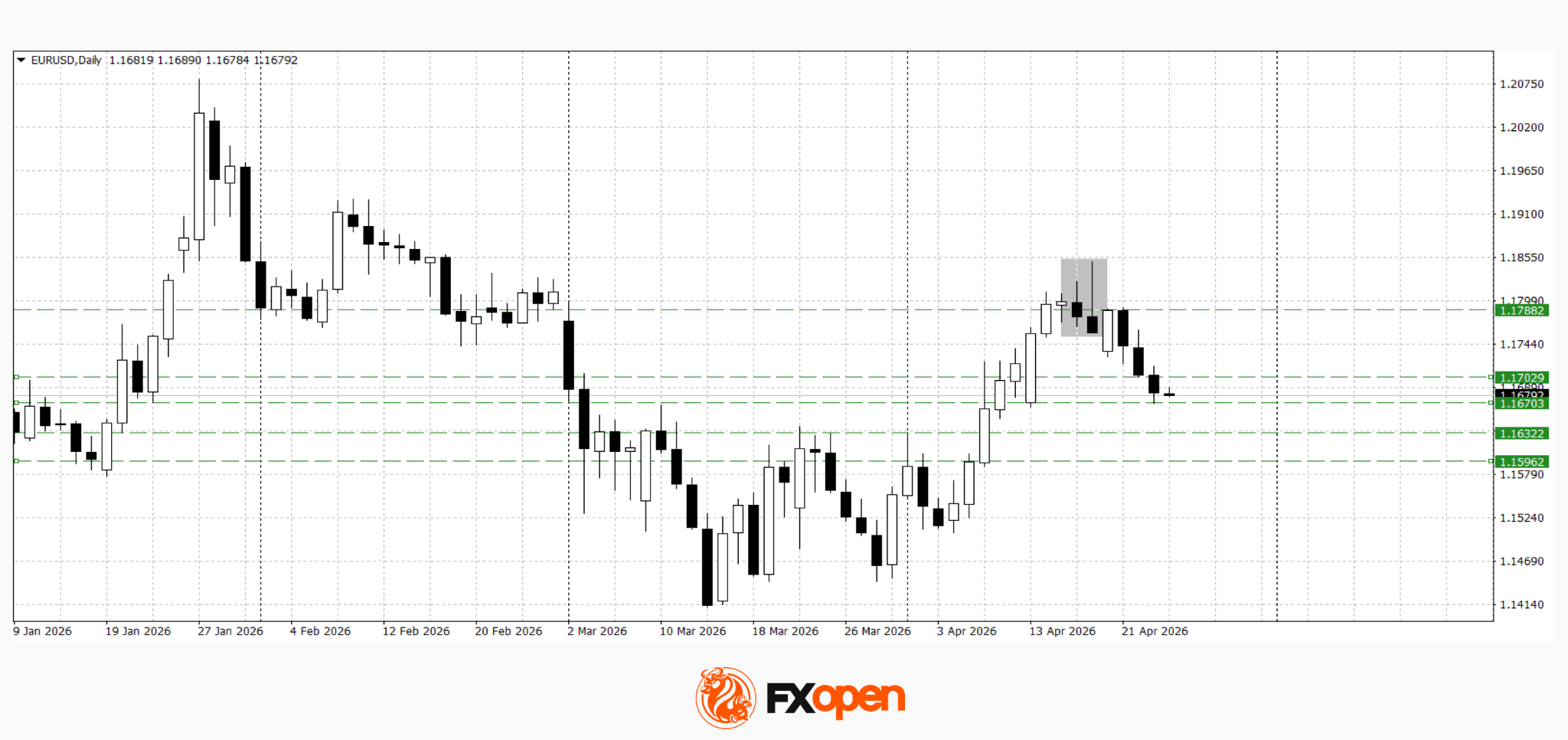
The euro remains under pressure, extending its corrective decline following the previous impulsive rally. Market participants are taking profits and trimming positions ahead of key macroeconomic releases, reducing demand for the single currency and keeping both pairs near important levels, with the potential for increased volatility.
Ongoing geopolitical uncertainty in the Middle East continues to act as an additional factor, particularly through its impact on commodity markets, especially oil. Fluctuations in energy prices are influencing inflation expectations and the outlook for monetary policy, which is particularly relevant for commodity-linked currencies such as the Canadian dollar.
Focus now shifts to upcoming data from the euro area, Canada, and the United States, which may reshape expectations regarding the next steps of major central banks. Weak or neutral data could increase pressure on the euro and extend the current downside move, while stronger figures may provide support and trigger a corrective rebound or stabilisation near current levels.
EUR/USD
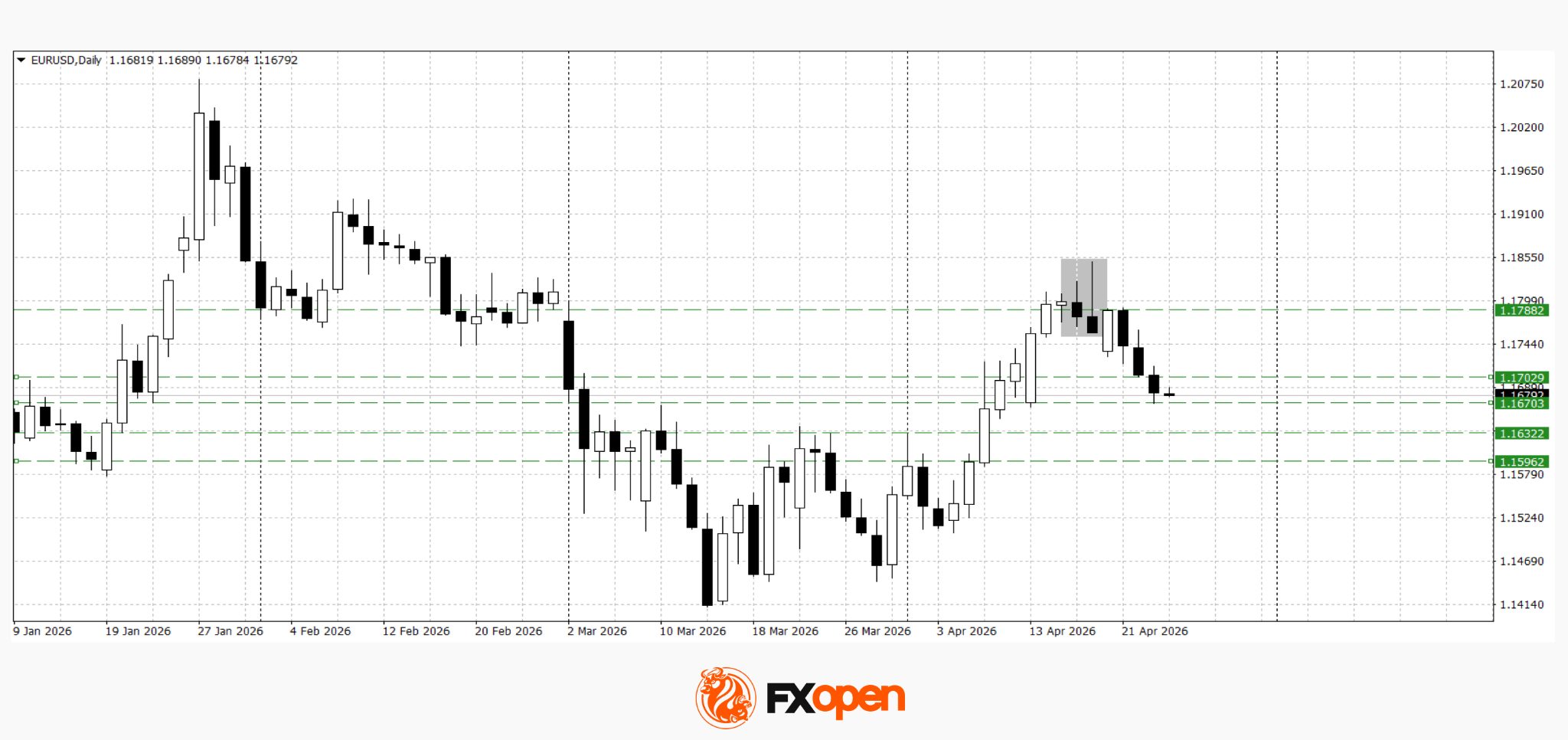
After forming a bearish reversal pattern last week, EUR/USD continues to trade within a corrective downtrend. Sellers managed to push the pair below the key 1.1700 support level yesterday. If this level turns into resistance, a retest of recent lows and further decline towards 1.1630–1.1600 may follow.
Key events for EUR/USD:
- today at 09:45 (GMT+3): France consumer confidence
- today at 11:00 (GMT+3): Germany IFO business climate index
- today at 17:00 (GMT+3): US inflation expectations (University of Michigan)
EUR/CAD
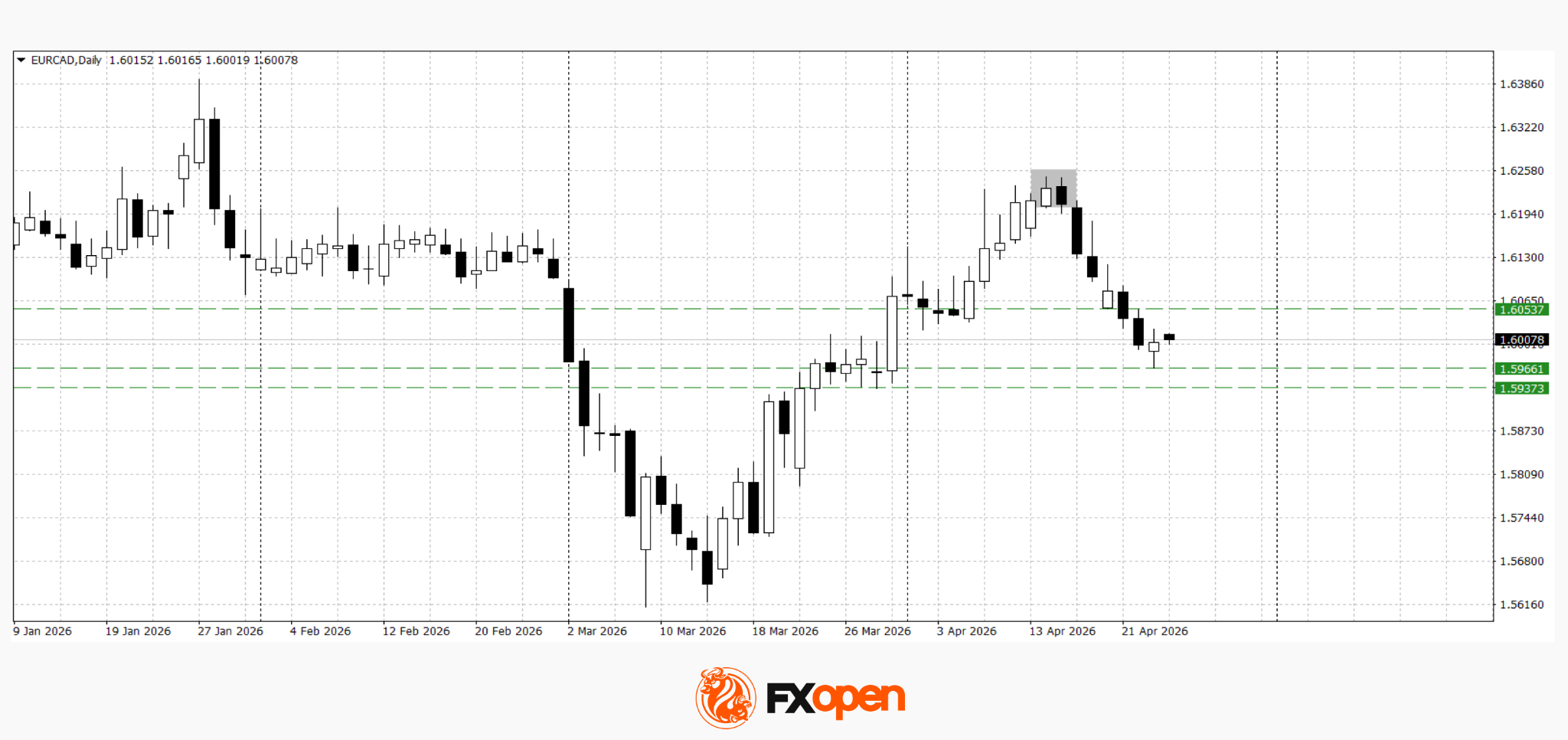
EUR/CAD is also moving lower, testing important levels amid mixed fundamental drivers. Technical analysis points to the possibility of further downside towards 1.6000–1.5940, supported by a confirmed bearish “tweezer” pattern on the daily chart. A move above 1.6050 could bring buyers back into the market.
Key events for EUR/CAD:
- today at 15:30 (GMT+3): Canada core retail sales
- today at 18:00 (GMT+3): Canada budget balance
- today at 22:30 (GMT+3): CFTC CAD net speculative positions
Both pairs remain near key levels, with future direction dependent on a combination of fundamental factors. Depending on incoming data, the market may either shift into consolidation with attempts to hold support, or see an extension of the current corrective decline.
Trade over 50 forex markets 24 hours a day with FXOpen. Take advantage of low commissions, deep liquidity, and spreads from 0.0 pips (additional fees may apply). Open your FXOpen account now or learn more about trading forex with FXOpen.
This article represents the opinion of the Companies operating under the FXOpen brand only. It is not to be construed as an offer, solicitation, or recommendation with respect to products and services provided by the Companies operating under the FXOpen brand, nor is it to be considered financial advice.

Besides freezing crypto, the strike force also seized a Telegram channel used to recruit unsuspecting job seekers and took down 503 fake crypto investment websites.
The White House has reportedly confirmed that US President Donald Trump will attend the exclusive event for top TRUMP memecoin holders at his Florida residence on Saturday, after questions were raised earlier this month over whether he would attend.
Reuters reported on Friday that the White House confirmed Trump would deliver a keynote address at the gala luncheon organized by the company behind his Official Trump (TRUMP) memecoin.
The gala is set to take place at Mar-a-Lago. It will be open to the top 297 holders of the TRUMP token, and the top 29 holders will also qualify for a private reception with the president.
When the event was announced in March, a White House official told Politico that it was not locked into Trump’s schedule and that it was taking place the same day Trump said he would attend the White House Correspondents’ Association Dinner in Washington, DC, the first time he would do so as president.
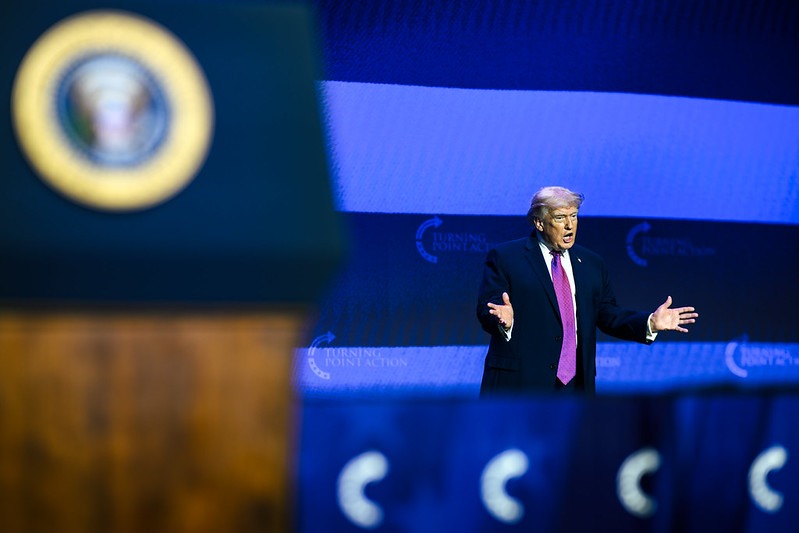
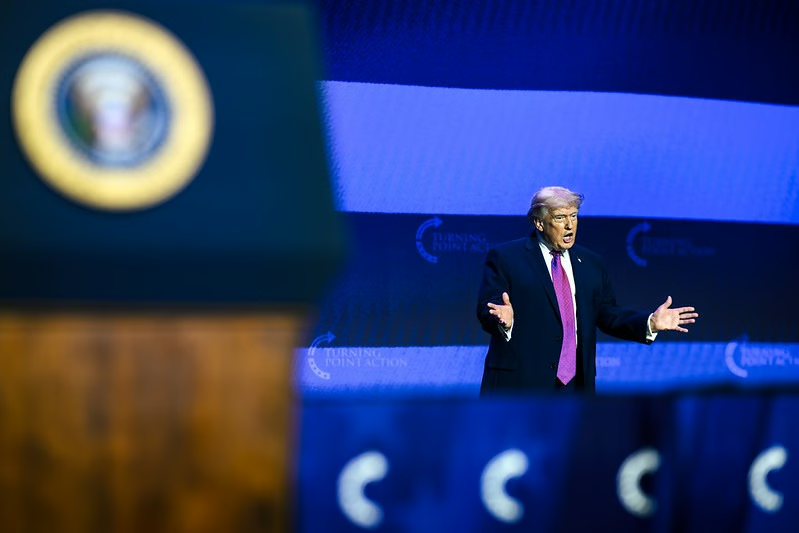
Donald Trump, pictured at a Turning Point USA event on April 17, is confirmed to be addressing an event for holders of his memecoin on April 25. Source: The White House
The event’s terms also state that Trump may not be able to attend the event, and it “may be canceled for any reason.”
Trump’s potential attendance at the event has been a sticking point for some lawmakers, who have criticized the event as a conflict of interest for the president.
Earlier this month, Democratic Senators Elizabeth Warren, Richard Blumenthal and Adam Schiff reportedly sent a letter to Bill Zanker, the individual behind the TRUMP memecoin, questioning whether Trump intends to “dangle access” to himself at the upcoming event.
Related: Trump-linked American Bitcoin energizes 11,298 new ASICs
“[O]rganizers are promoting a conference by dangling access to President Trump to potential attendees (and in doing so, are encouraging purchases of his meme coin that will generate transaction fees for the President and his family) on a day he may not actually be able to attend,” the letter said.
It is the second event for holders of the TRUMP token. The first took place at a Trump golf club in May 2025 and drew criticism from those who said Trump was using his position as president for personal financial gain.
Magazine: Quitting Trump’s top crypto job wasn’t easy: Bo Hines

The White House has confirmed that U.S. President Donald Trump will deliver a keynote address at a private gala for the top holders of the TRUMP memecoin, slated to take place at Mar-a-Lago this weekend. The event has already drawn scrutiny over the intersection of politics, finance and social media hype surrounding meme coins tied to political figures.
According to Reuters, the White House affirmed on Friday that Trump would speak at the gala luncheon organized by the company behind the Official TRUMP memecoin. The affair is designed to be exclusive, with access limited to the top 297 TRUMP token holders, and the top 29 holders qualifying for a private reception with the president. The organizers list attendance terms that acknowledge the possibility that Trump’s schedule could prevent participation, or that the event could be canceled for any reason.
Key takeaways
- The White House has confirmed Trump will keynote a gala for TRUMP memecoin holders at Mar-a-Lago, with the event planned for April 25.
- Access is restricted to the top 297 TRUMP token holders, and the top 29 are eligible for a private reception with the president.
- Lawmakers are raising concerns about conflicts of interest and access diplomacy tied to the event; a formal inquiry has been issued to the event’s organizer.
- Past criticism surrounding a previous TRUMP memecoin event in 2025 underscores ongoing questions about the use of presidential platforms for personal financial gain.
White House confirms keynote at Mar-a-Lago gala
In a development that blends political life with crypto-tinged fundraising, Reuters reported that the White House has given the green light for Trump to address attendees at the TRUMP memecoin gala. The appearance would mark a high-profile moment for the meme-based project, which markets itself around the former president’s name and brand. The venue is Mar-a-Lago, a setting that has already become a focal point for the event’s exclusivity and spectacle.
The organizers’ terms note that participation is not guaranteed if Trump cannot attend or if circumstances necessitate cancellation. The stated plan to host a closed, invitation-only luncheon aligns with how crypto-promotional events have historically attempted to leverage star power to drive attention and potential liquidity for token holders.
Media coverage of the development has focused not only on the logistical details but also on the broader implications for governance and accountability when political figures lend themselves to crypto campaigns. The event’s framing—as a fundraiser, a social meet-up for the crypto community, and a potential venue for policy or influence peddling—has drawn varying responses from observers across the political spectrum.
Lawmakers raise conflict-of-interest concerns
The invitation to such a high-profile engagement has quickly become a political talking point. Earlier this month, Democratic Senators Elizabeth Warren, Richard Blumenthal and Adam Schiff reportedly sent a letter to Bill Zanker, the entrepreneur behind the TRUMP memecoin initiative, questioning whether the event would amount to “dangles of access” to the president. The lawmakers argued that tying access to a personal crypto project could incentivize attendees to purchase the token to gain proximity to power, potentially generating transaction-related benefits for Trump and his family.
As described in the letter, organizers were urged to clarify the intent behind offering faces of power in exchange for financial participation and to address potential conflicts with ethical standards governing the president’s official duties. The questions underscore ongoing tensions around the use of presidential branding for commercial ventures, particularly where digital assets could be involved in fundraising or promotional activities.
Past controversy shadows the current event
This event would be the second time TRUMP token holders have gathered under the president’s orbit. The first such gathering occurred in May 2025 at a Trump golf club and drew sharp criticism from critics who argued that a sitting president’s involvement in a personal financial venture could blur lines between public duties and private enterprise. Critics argued the optics suggested the administration was enabling personal financial gain through the presidency—a concern that has echoed through debates about crypto marketing and political power.
Observers note that the current event’s terms explicitly acknowledge uncertainty around attendance, a feature that some critics have highlighted as a necessary check against overreach. Still, the persistence of such events signals a broader trend in which political figures’ associations with crypto tokens become part of the public discourse surrounding policy, regulation, and the evolving role of digital assets in society.
What to watch next
The immediate question is whether Trump will attend or cancel, given the formal caveats in the event’s terms and the fluctuating nature of schedules for sitting presidents. The President’s schedule and public appearances often shift due to broader political considerations, making the outcome uncertain even as the event date approaches. Additionally, lawmakers’ inquiries could influence how such memecoin-linked events are perceived by regulatory bodies and the public.
In broader market terms, the episode illustrates how political branding and crypto marketing continue to intersect in ways that attract both attention and scrutiny. For investors and observers, the key takeaway is not the hype around a single token event but the signal it sends about governance, transparency, and the evolving boundaries of political influence in digital asset cultures. The outcome could shape how future memecoin campaigns navigate ethics, disclosures, and accountability when tied to public figures.
As coverage develops, readers should monitor official statements from the White House, updates from Reuters and Politico on scheduling, and any formal responses from lawmakers or the campaign organizers. The next steps will likely illuminate how such high-profile political-crypto intersections are managed going forward and what safeguards—if any—emerge to balance access, publicity, and governance in this rapidly evolving space.

Jaafar Jackson ‘Quits Music’ Amid ‘Michael’ Backlash

The Warning – MONEY

US has ‘burned through’ billions of dollars worth in critical weapons supplies in the Iran war, report claims

Manchester United reach agreement with Casemiro over contract clause amid transfer speculation

US brings back mandatory military draft registration

Steven Gerrard disagrees with Gary Neville over ‘shock’ Chelsea and Arsenal claim | Football


-

 Fashion7 days ago
Weekend Open Thread: Theodora Dress
-

 Politics7 days ago
Palestine barred from entering Canada for FIFA Congress
-
Entertainment4 days ago
NBA Analyst Charles Barkley Chimes in on Ice Spice McDonald’s Fiasco
-

 Tech5 days ago
Auto Enthusiast Scores Running Tesla Model 3 for Two Grand and Turns It Into Bare-Bones Go-Kart
-

 Business5 days ago
Powerball Result April 18, 2026: No Jackpot Winner in Powerball Draw: $75 Million Rolls Over
-

 Politics5 days ago
Zack Polanski demands ‘council homes not luxury flats for foreign investors’
-

 Crypto World6 days ago
Russia Pushes Bill to Criminalize Unregistered Crypto Services
-

 Politics4 days ago
Gary Stevenson delivers timely reminder to register to vote as deadline TODAY
-

 Business2 days ago
Rolls-Royce Voted UK’s Most Iconic Trade Mark as IPO Register Hits 150
-

 Politics2 days ago
Disabled people challenge government SEND proposals over segregation concerns
-

 Politics2 days ago
Making troops accountable for war crimes threatens US alliance, ex-SAS colonel warns
-

 Crypto World6 days ago
Russia Introduces Bill To Criminalize Unregistered Crypto Services
-

 Politics2 days ago
Starmer handler McSweeney to be dragged from shadows by Foreign Affairs Committee
-
Politics2 days ago
Wings Over Scotland | How To Get Away With Crimes
-

 Politics2 days ago
Zack Polanski responds to home secretary’s taser threat
-
Crypto World5 days ago
Kelp DAO rsETH Bridge Hack Drains $292M as DeFi Losses Top $600M in Two Weeks
-

 Politics2 days ago
‘Iran is still a nuclear threat’
-

 Crypto World2 days ago
New York sues Coinbase, Gemini over prediction market offerings
-
 Sports7 days ago
Kevin Kisner apologizes for Masters criticism: ‘I crossed the line’
-

 Business2 days ago
The Job Benefits Most Men Don’t Know to Negotiate
You must be logged in to post a comment Login