

Crypto World
VeryAI Raises $10M to Build Palm-Scan Identity System on Solana

Startup VeryAI has raised $10 million in a seed funding round led by Polychain Capital to launch a palm-scan identity verification system designed to distinguish real users from AI-generated accounts.
The platform records identity attestations on Solana and aims to help crypto exchanges, fintech companies and online platforms address growing risks from bots, deepfakes and synthetic identities. The company said zero-knowledge proofs allow users to verify their status across platforms without revealing personal information.
The system captures palm images using a smartphone camera and converts them into encrypted biometric signatures used to confirm that a user is human without storing identifiable data.
According to the company, palm biometrics are highly distinctive and less publicly exposed than facial features commonly used in identity checks. The scans are converted into irreversible feature representations rather than stored images, preventing the original biometric data from being reconstructed.
“We’re entering a period where the internet can no longer assume that every account, message, or video is created by a real person,” Zach Meltzer, founder and CEO of VeryAI, told Cointelegraph. “AI is powerful, but it also breaks many of the trust assumptions that the internet was built on.”
He said crypto platforms are vulnerable to these risks, citing examples such as sybil attacks during onboarding, fake accounts farming token incentives and impersonation scams targeting users and project communities.
The goal isn’t just to prove that a human exists somewhere — it’s to help platforms verify that a real person is present and acting authentically.
The company is already working with organizations including MEXC, Colosseum, Clique and Talus, with other centralized exchanges and wallets preparing to integrate the palm verification system, Meltzer said.
Investors in the round included the Berggruen Institute and Anagram. Anatoly Yakovenko, co-founder of the Solana blockchain, also joined as an angel investor.
Related: Crypto ATM losses surge 33% in 2025 as AI superpowers scams: CertiK
AI-generated identities push demand for proof-of-human systems
As artificial intelligence continues to blur the line between human and automated activity on the internet, some developers say blockchain-based identity systems could help restore trust in digital interactions.
Chris Dixon, a general partner at Andreessen Horowitz and founder of the venture capital firm’s a16z crypto investment arm, last year warned that an “ocean of AI-powered deepfakes and bots” could erode trust across the internet and suggested blockchain systems could help address the problem through cryptographic verification of identity and digital content.
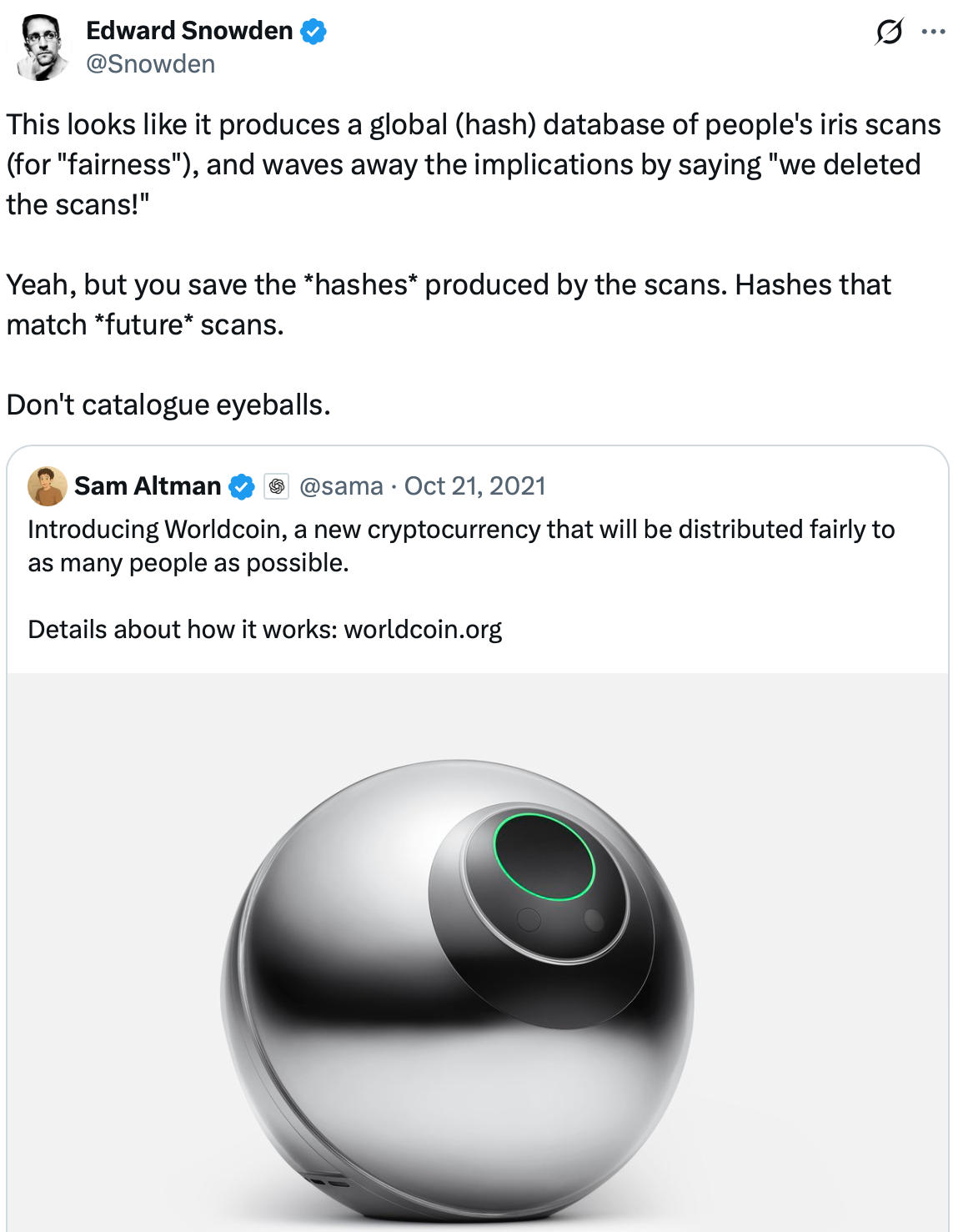
One company trying to address the problem is World, co-founded by Sam Altman, which uses biometric iris scans to generate a digital identity that allows users to prove they are human without revealing personal data. The system records proof of a user’s uniqueness on a blockchain network while the Orb device scans a person’s face and iris to verify identity, though the biometric approach has drawn criticism from privacy advocates.

As AI advances, interest in these systems appears to be growing. In January, the token linked to World (WLD) jumped about 40% after reports that OpenAI was exploring a bot-free social media platform that would require users to verify they are human before participating.
Some developers argue that identity verification must balance authentication with privacy protections. Ethereum co-founder Vitalik Buterin has advocated for models that allow users to prove specific attributes, such as uniqueness or eligibility, without revealing their full identity using technologies like zero-knowledge proofs.
Magazine: Fly’s mind ‘uploaded,’ human brain cell wetware plays Doom: AI Eye

Crypto World
Binance New Listing Announcement: DeepSnitch AI Looks Like the #1 Candidate as Midnight and Opinion Go Live Already

Binance.US just hired a compliance veteran as CEO, and for the first time in years, the exchange is ready to fight Coinbase on its home turf.
A revitalized Binance.US means one thing for early-stage projects: the most coveted listing in crypto is becoming accessible again, and you don’t get a Binance new listing announcement hype. It lists products with real utility, real users, and real traction.
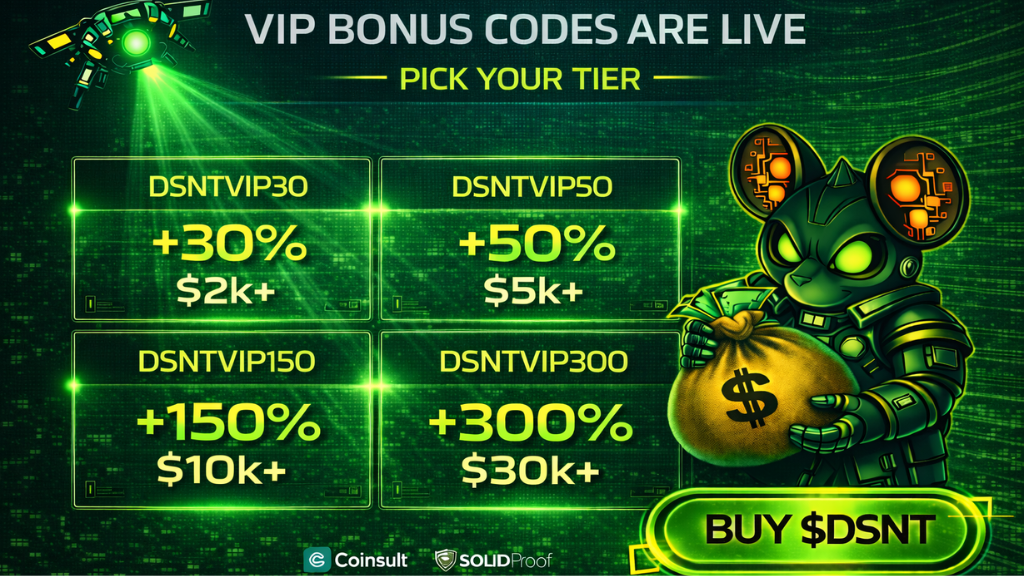
DeepSnitch AI has raised $2M+, locked in 42M+ tokens through staking, and is running a live platform that traders are using today. The TGE hits Uniswap on March 31st, with a Binance new listing announcement widely expected to follow.
Binance.US names compliance-first CEO
Binance.US has appointed Stephen Gregory, a compliance veteran from Gemini and CEX.IO, as its new CEO. The appointment follows the SEC dismissing its case against Binance.US in 2023, clearing the path for re-expansion under the more crypto-friendly Trump administration.
Gregory’s compliance background is the point. After years of legal entanglement that forced Binance.US to operate as a crypto-only exchange, the company is now actively expanding into staking, DeFi, and tokenized assets.
A revitalized Binance.US matters because it reintroduces serious competition into the US exchange landscape, which has been largely dominated by Coinbase. Greater competition typically drives product innovation, tighter fees, and broader asset availability.
Top 3 Binance new listing announcements
DeepSnitch AI
The Binance new listing announcement criteria are straightforward: working product, proven user base, and demonstrated traction. DeepSnitch AI meets all three before its public launch, which is exactly what makes the Binance listing expectation credible rather than speculative.
The platform is live today. Five AI tools are fully accessible through one interface, already used by real traders, independently audited by SOLIDProof and Coinsult. That’s the pre-listing credibility Binance evaluates. Not a roadmap, not a whitepaper, but a product anyone can open and test.
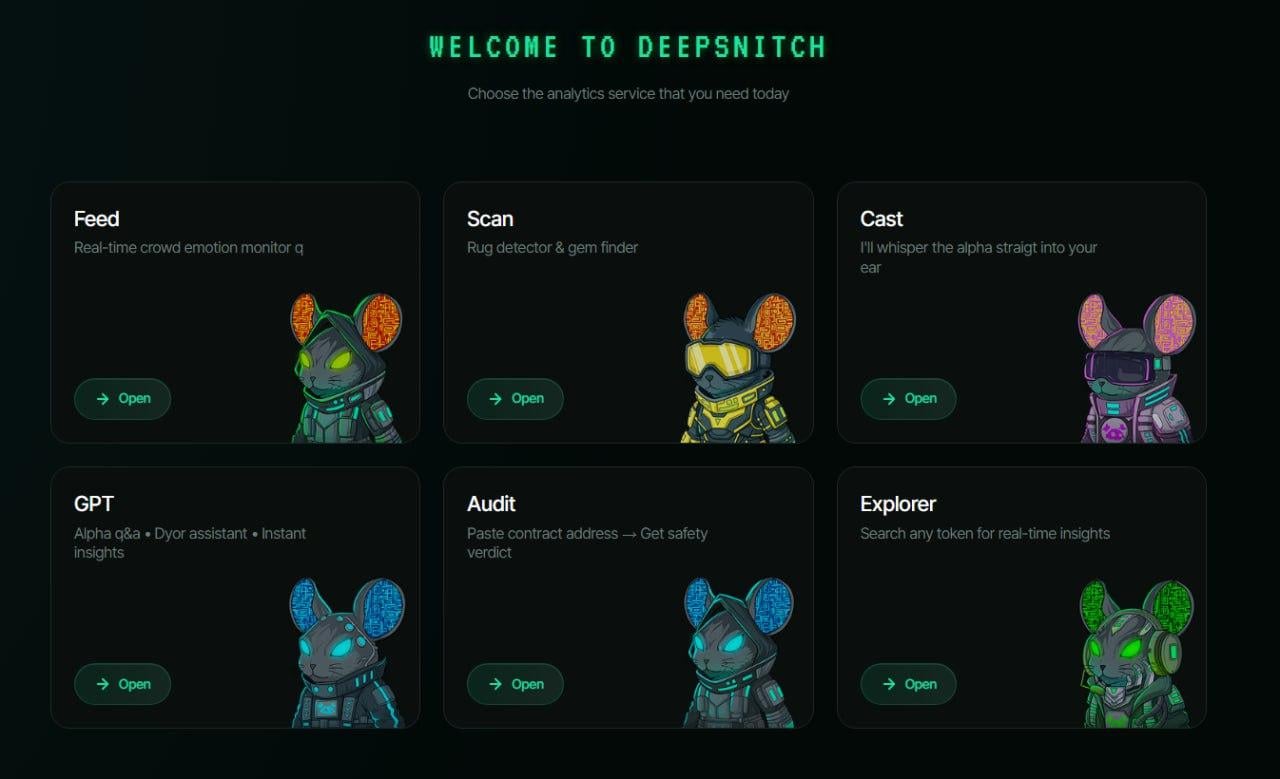
The March 31st Uniswap launch is the first step. The Binance new listing announcement that follows is what the 100x projection is actually built on.
The moment DSNT moves from DEX liquidity to one of the deepest order books in the world, with a US retail audience that Binance.US is actively rebuilding access to.
Getting in at $0.04399 before that listing is the trade. After it, the entry point this article is referencing doesn’t exist anymore.
Midnight
Midnight enters the privacy blockchain space differently. Most privacy projects chase anonymity. NIGHT targets programmable zero-knowledge privacy built for finance and healthcare, where selective data disclosure makes it compatible with regulated institutions.
The Cardano partnership adds inherited security and liquidity, advantages that take years to build independently. If compliance-friendly privacy smart contracts gain traction in regulated sectors, NIGHT’s addressable market grows far beyond typical DeFi territory.
Opinion
Opinion targets a gap neither traditional nor decentralised finance has solved: trading directly on macroeconomic outcomes like Fed rate decisions. OPN converts real-world event probabilities into standardised, tradable shares.
The architecture holds up. The four-layer Opinion Stack combines a live prediction exchange, a decentralised AI oracle, unified liquidity pools, and cross-chain interoperability via LayerZero across BNB Chain and Ethereum.
The OPN token ties directly into platform mechanics: premium data access, governance rights, and fee discounts. Value follows usage, not sentiment.
Closing thoughts
Binance.US returning to full strength means the most valuable listing in crypto is back in play for US retail investors, and the projects that get the first Binance new listing announcements are the ones already meeting the criteria today.
DeepSnitch AI goes live March 31st on Uniswap with five AI agents, $2M+ raised, and 193% presale gains behind it. Midnight and Opinion are building toward something real. DSNT is already there.
Visit the official website for more information, and join X and Telegram for community updates.
FAQs
What is the latest Binance new listing investors should know about in 2026?
No official Binance listing announcement has been made for DSNT yet, but DeepSnitch AI’s working platform, independent audits, $2M+ raised, and confirmed March 31st Uniswap launch make it the strongest candidate.
What criteria does a Binance listing typically require from new projects?
Real products, proven user bases, and demonstrated community traction, all of which DeepSnitch AI has established before its public launch, including independent audits from SOLIDProof and Coinsult and 193% presale gains.
Which upcoming listings are generating the most anticipation among retail investors right now?
DeepSnitch AI leads with a confirmed Uniswap debut on March 31st, Binance listing widely expected to follow, and a live platform already accessible today. Midnight’s compliance-privacy angle and Opinion’s prediction market architecture are credible projects, but neither has the pre-launch traction DSNT brings to a listing conversation.
Disclaimer: This is a Press Release provided by a third party who is responsible for the content. Please conduct your own research before taking any action based on the content.

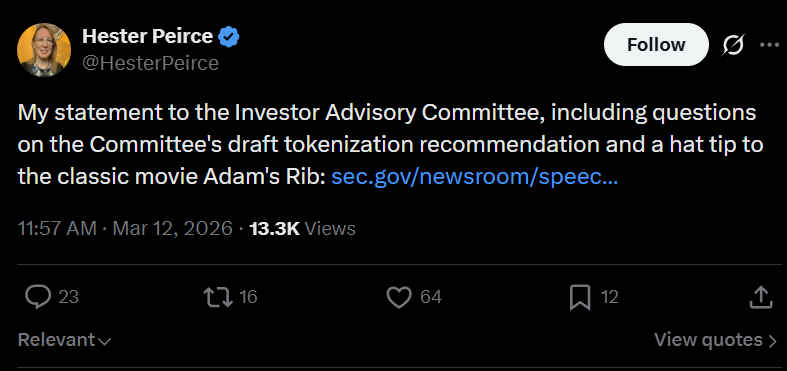
US Securities and Exchange Commission (SEC) Commissioner Hester Peirce said regulators should avoid micromanaging markets and consider simplifying disclosure requirements as discussions around tokenized securities continue.
Peirce, often referred to as “Crypto Mom” for her generally supportive stance toward the digital asset industry, made the remarks Thursday during a speech to the SEC’s Investor Advisory Committee, warning that overly prescriptive rules can distort how capital flows through financial markets.
Citing Adam Smith, the 18th-century economist widely regarded as the father of modern economics, Peirce argued that regulators should exercise restraint when shaping market outcomes.

She said public companies often spend excessive time preparing mandated disclosures that may obscure rather than clarify information for investors, suggesting the SEC should consider streamlining disclosure rules.
Although the speech addressed broader regulatory issues, Peirce also pointed to the growing debate around tokenized securities and blockchain-based financial infrastructure.
She noted that SEC staff continue to work on a potential “innovation exemption” that could allow limited experimentation with tokenized securities while regulators assess how existing securities laws apply to blockchain-based markets.
Peirce also questioned whether additional disclosure and intermediary requirements would be necessary for tokenized securities, noting that blockchain systems could enable faster settlement and, in some cases, transactions without traditional intermediaries.
Related: Can US lawmakers pass crypto market structure before the midterms?
Tokenization gains traction at SEC
Tokenized securities have become an increasingly prominent topic for the SEC. Chair Paul Atkins said last year that he views tokenization as a major financial “innovation” that regulators should encourage rather than constrain.
The agency took a step in that direction in December, when it issued a no-action letter to the Depository Trust & Clearing Corporation (DTCC) allowing the market infrastructure provider to explore a blockchain-based tokenization service for securities.
The letter effectively signaled that the regulator would not recommend enforcement action if DTCC proceeded with certain tokenization-related activities, opening the door for the company to develop infrastructure to support blockchain-based settlement of traditional securities.

The regulatory discussions around tokenization are also unfolding alongside broader policy debates in Washington over crypto market-structure legislation, which could eventually shape how digital assets are overseen in the United States.
Related: SEC chair calls for ‘coordinated oversight‘ between US regulators
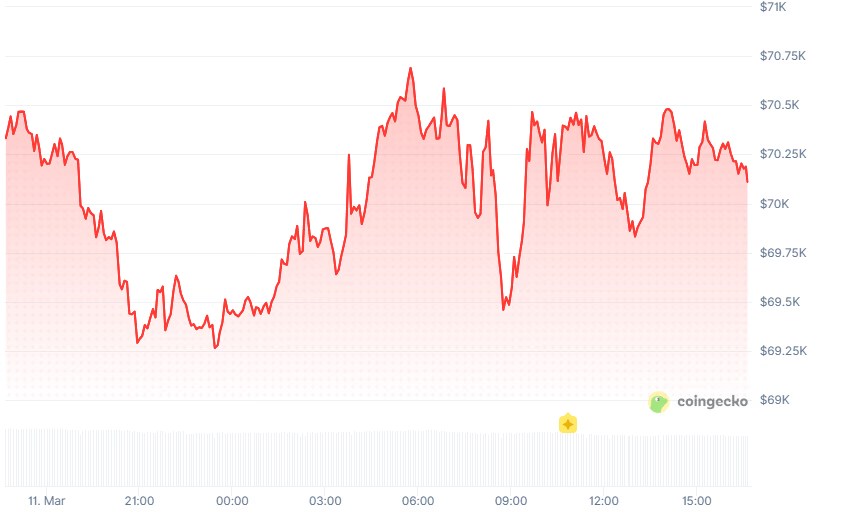
BTC, ETH, and major altcoins are mostly unchanged over the past 24 hours.
Crypto markets held their ground on Thursday while U.S. stocks dropped and oil rallied.
Bitcoin (BTC) is trading at around $70,200, unchanged over the past 24 hours. Meanwhile, ETH is also flat at $2,070, and SOL is down 1% to $86.

The overall crypto market capitalization slipped 0.2% to $2.48 trillion, according to Coingecko.
Crude oil (WTI) is inching back towards $100 per barrel despite yesterday’s pledge from the International Energy Agency (IEA) to release 400 million barrels from emergency stockpiles.
The S&P 500 and the Nasdaq dropped 1.5% and 1.8%, respectively, amid concerns about a downturn in private credit after Morgan Stanley became the latest fund manager to limit redemptions.
Most of the Top 100 digital assets posted minor losses over the last 24 hours.
Today’s top gainers are Pi Network (PI), which rallied 14%, followed by RENDER, which climbed 10%.
Canton (CC) and Zcash (ZEC) are the biggest losers
Around 67,000 leveraged traders were liquidated for $156 million in the past 24 hours, according to CoinGlass. Bitcoin accounted for $54 million, while ETH positions made up $42 million.
Bitcoin exchange-traded funds (ETFs) recorded inflows of $115 million on Wednesday, marking a third straight day of gains.


US Senator Majority Leader John Thune reportedly said he doesn’t expect the chamber to move forward with legislation to establish digital asset market structure before April.
According to a Thursday Punchbowl News report, Thune said that the Senate planned to prioritize voting on the SAVE America Act, a bill that would require voters to provide proof of US citizenship in person to register.
The majority leader addressed reporters on Thursday saying that the bill would go to the chamber next week, adding that lawmakers would focus on the crypto market structure bill and other bipartisan bills after the SAVE America Act vote.
“Market structure is a bill that’s, I’m hoping, going to come out of the Banking Committee soon, probably not before, I would say, the April time period,” said Thune, according to Punchbowl.
The majority leader’s statement was at odds with comments from Ohio Senator Bernie Moreno, who said in February that he hoped market structure would pass through Congress by April. The Senate Agriculture Committee already advanced its version of the bill, but the Senate Banking Committee postponed a January markup necessary to combine the legislation before a floor vote.
Related: Binance says US midterms could boost Bitcoin and stocks
In a separate action, the Senate voted on Thursday to include an amendment in a housing bill, the 21st Century Road to Housing Act, prohibiting the US Federal Reserve from issuing a central bank digital currency, or CBDC. If passed and signed into law, the CBDC ban would remain in effect until December 2030.
What’s at stake in the market structure bill?
The legislation, called the CLARITY Act when it passed the House of Representatives in July, is expected to give the US Commodity Futures Trading Commission, the financial agency overseeing derivatives and commodities, more authority in overseeing digital assets. However, many lawmakers in the Senate have been at odds with key provisions in the bill, including tokenized equities, ethics, and stablecoin yield.
Last week, US President Donald Trump accused banks of holding the bill “hostage,” in posts to social media. Although the White House has held three meetings between crypto and banking industry representatives, it was still unclear as of Thursday if policymakers had reached any kind of agreement allowing the market structure bill to advance.
Magazine: All 21 million Bitcoin is at risk from quantum computers


Circle shares have surged over 120% since early February as William Blair says USDC’s market share, cross‑chain reach, and payments moat are being repriced as core settlement infrastructure.
Summary
- Circle stock has climbed roughly 120–126% off early‑February lows, far outpacing most crypto equities after blowout Q4 earnings and USDC‑driven revenue beats.
- William Blair argues the rally reflects a re‑rating of USDC as a payments “base layer,” with Circle’s compliance, banking ties, and cross‑chain integrations forming a durable moat.
- Growing USDC volumes, on‑platform balances and merchant/fintech adoption are reinforcing a stablecoin settlement flywheel that underpins Blair’s “outperform” rating on Circle.
Circle’s stock has surged more than 120% since early February, with analysts arguing the move reflects renewed confidence in USDC’s market share and Circle’s role as core stablecoin infrastructure, according to a recent CoinDesk report.
Analysts say USDC is cementing a payments “base layer”
Equity analysts at William Blair note that Circle’s share price has climbed roughly 126% from its early‑February low, far outpacing most other crypto‑linked equities. They argue this rally is not just beta to the broader digital asset market, but a repricing of Circle’s position as one of the few firms building systemic stablecoin rails. In their view, the market is explicitly starting to price USDC and its issuer as a core layer in future global payments and settlement, rather than just another cyclical crypto trade.
The report highlights that USDC has defended its market share despite intense competition, regulatory pressure, and the boom‑bust cycle in DeFi and centralized venues. Circle’s early lead in compliance, banking relationships, and technical integrations across major blockchains is framed as a durable moat supporting both the token and the equity.
USDC’s cross‑chain reach and stablecoin settlement flywheel
Analysts emphasize USDC’s liquidity, first‑mover advantages, and cross‑chain integration as key drivers behind Circle’s outperformance. With USDC live across multiple L1s and L2s, plugged into exchanges, payment processors, and on‑chain financial rails, William Blair sees the token as a frontrunner to become one of the dominant standards for cross‑border payments.
The note also points to growth in Circle’s broader payments and infrastructure ecosystem as evidence that a stablecoin‑based settlement market is starting to take shape. As more merchants, fintechs, and on‑chain applications adopt USDC, the flywheel between transaction volume, fee revenue, and perceived network value strengthens, reinforcing the recent re‑rating in Circle’s stock. William Blair maintains an “outperform” view, arguing that the rebound underscores investors’ conviction in Circle’s core business model and its technological and regulatory barriers to entry.
Crypto World
PrimeXBT Launches PXTrader 2.0, Bringing Crypto and Traditional Markets into One Trading Platform
[PRESS RELEASE – Castries, Saint Lucia, March 12th, 2026]
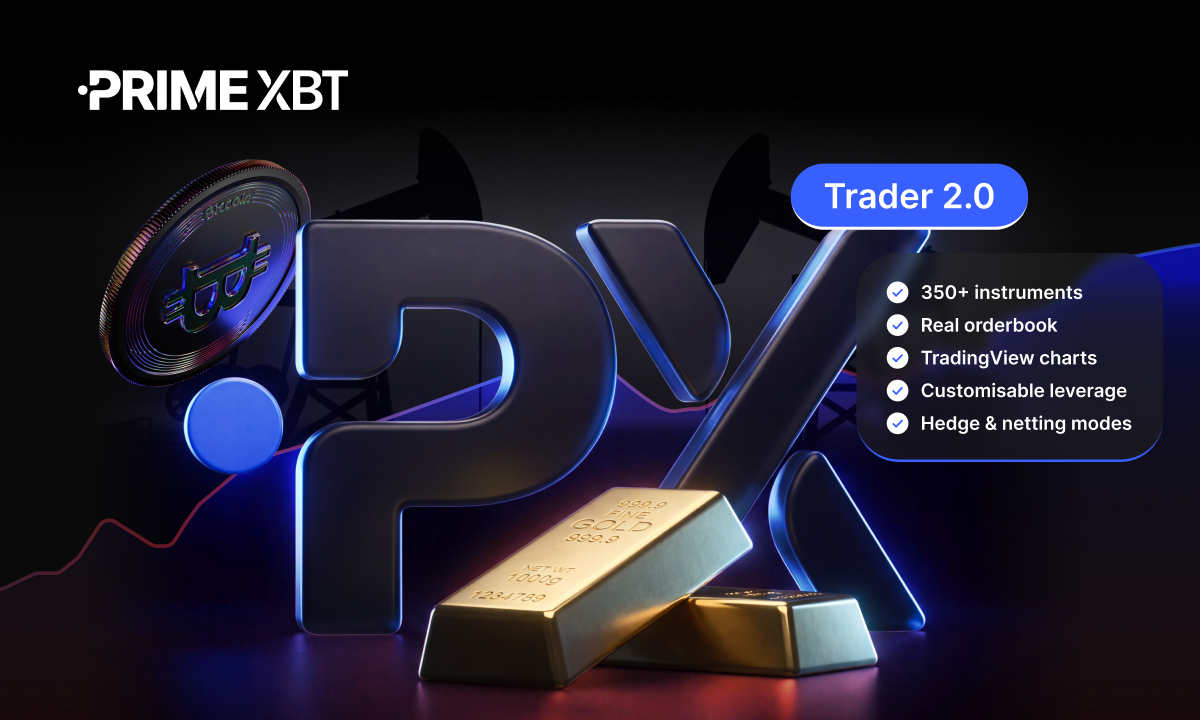
PrimeXBT, a global multi-asset broker and crypto asset service provider, announced the launch of PXTrader 2.0, a major upgrade of its native trading platform that combines crypto with traditional financial markets, giving traders access to more than 350 instruments from a single account. The launch reflects PrimeXBT’s leading role in the growing convergence between crypto and traditional finance, supported by infrastructure designed to allow digital asset capital to move more freely across global markets.
PXTrader 2.0 reflects a broader shift in how digital assets are being used within financial markets. Increasingly, crypto is evolving beyond a standalone asset class and becoming a form of trading capital. With PXTrader 2.0, traders can fund accounts with cryptocurrencies such as BTC and ETH while gaining exposure not only to crypto futures, but also to Forex, commodities, indices, shares, and crypto CFDs. This unified environment enables traders to move between crypto markets and traditional financial instruments without leaving the same trading platform.
The platform also introduces a range of advanced trading tools designed to support active traders navigating both digital and traditional markets. PXTrader 2.0 integrates TradingView charts with more than 100 indicators, advanced order types, and flexible leverage models, including cross and isolated margin up to 1:1000. Traders can also choose between hedge and netting position modes, allowing greater flexibility in how positions are managed across markets. For crypto futures traders, the platform additionally provides access to a real orderbook, offering greater market transparency and liquidity visibility.
“Geopolitical tensions often trigger ripple effects across global markets, influencing currencies, commodities, equities, and digital assets at the same time. For traders, this creates a broader set of opportunities, particularly when they can move efficiently between asset classes. The ability to use crypto capital to access global markets is becoming an increasingly important advantage in this environment,” said Jonatan Randin, Senior Market Analyst at PrimeXBT.
As crypto market matures, many traders are expanding beyond single-asset strategies and looking for platforms that connect digital assets with the broader financial ecosystem. The ability to deploy crypto capital across multiple markets enables traders to diversify exposure and respond to opportunities across both traditional and digital asset markets.
With PXTrader 2.0, PrimeXBT continues to evolve its platform to reflect these changing market dynamics. By combining crypto with traditional financial instruments in a single trading environment, the broker aims to provide traders with a more connected and flexible way to access global markets.
To learn more, users can visit PrimeXBT website.
About PrimeXBT
PrimeXBT is a global multi-asset broker and crypto asset service provider trusted by traders in more than 150 countries. The platform bridges traditional and digital markets within one integrated environment, redefining versatility and innovation in online trading. Clients can access Forex, CFDs on indices, commodities, shares, crypto, and Crypto Futures, as well as buy, store and exchange cryptocurrencies directly. This unified experience extends across both the native PXTrader 2.0 platform and MetaTrader 5, supported by advanced risk-management tools and a wide range of funding options in crypto, fiat and local payment methods. Since 2018, PrimeXBT has focused on empowering traders through broad multi-asset access, fair and transparent conditions, professional-grade technology and dedicated human support. By combining expertise, trust and a client-first approach, PrimeXBT sets a benchmark of excellence in the financial industry and provides traders with the tools they need to trade, grow and succeed with confidence.
Disclaimer: The content provided here is for informational purposes only and is not intended as personal investment advice and does not constitute a solicitation or invitation to engage in any financial transactions, investments, or related activities. Past performance is not a reliable indicator of future results. The financial products offered by the Company are complex and come with a high risk of losing money rapidly due to leverage. These products may not be suitable for all investors. Before engaging, you should consider whether you understand how these leveraged products work and whether you can afford the high risk of losing your money. The Company does not accept clients from the Restricted Jurisdictions as indicated on its website / T&Cs. Some products and services, including MT5, may not be available in your jurisdiction. The applicable legal entity and its respective products and services depend on the client’s country of residence and the entity with which the client has established a contractual relationship during registration.
Binance Free $600 (CryptoPotato Exclusive): Use this link to register a new account and receive $600 exclusive welcome offer on Binance (full details).
LIMITED OFFER for CryptoPotato readers at Bybit: Use this link to register and open a $500 FREE position on any coin!


The CFTC has issued a new advisory on prediction‑market event contracts, telling designated contract markets to apply full Part 38 oversight, especially for sports and other sensitive bets.
Summary
- The advisory reminds DCMs that event contracts sit under the Commodity Exchange Act and DCM Core Principle 3, with Appendix C as the guide for listing and surveillance.
- CFTC stresses DCMs are frontline regulators, expected to vet product design, monitor trading, and reassess compliance as prediction‑market volumes and complexity grow.
- Sports and other real‑world event contracts are flagged as higher‑risk, signaling that venues listing them will face a higher bar to show they are not de facto gambling products.
The U.S. Commodity Futures Trading Commission (CFTC) has issued a new consultation opinion on prediction-markets and event contracts, warning designated contract markets that they must tighten compliance with existing derivatives law as the sector grows.
CFTC tightens lens on event contracts
According to the CFTC’s notice, the agency wants to “encourage the growth and innovation” of prediction markets while reminding exchanges that they remain fully bound by the Commodity Exchange Act (CEA) and Commission regulations. The opinion specifically points to CEA Section 5(d), Part 38, Designated Contract Market (DCM) Core Principle 3, and Appendix C as the key regulatory anchors that must guide how event contracts are listed and monitored.
The document stresses that DCMs are the frontline regulators of their own markets and must proactively ensure that listed event contracts continue to comply with federal law as trading volumes and product complexity increase. That includes robust product submission processes, surveillance, and ongoing oversight, rather than treating prediction markets as a gray area outside normal futures and options governance.
Implications for prediction markets and sports contracts
The CFTC singles out sports-related event contracts as an area requiring particular attention, flagging that some structures may raise distinct policy and compliance questions. While the opinion does not ban specific products, it signals that prediction venues listing sports, political, or other sensitive event contracts will face a higher bar in demonstrating that their markets meet CEA and Part 38 standards.
For real-money prediction platforms and any exchange experimenting with event-based derivatives, the message is blunt: innovation is welcome, but it must sit squarely inside the existing DCM framework. Platforms that have treated event markets as lightly regulated side products will need to reassess listing practices, surveillance, and disclosures if they want to stay aligned with the CFTC’s evolving expectations.


The financial vehicle will begin trading on Nasdaq today under the ticker ETHB.
Nearly two years since the debut of the traditional exchange-traded funds tracking the performance of the largest altcoin, the world’s biggest asset manager is reportedly launching a staking version on Nasdaq today.
BlackRock’s iShares Staked Ethereum Trust ETF (ETHB) will hold spot ETH and stake a portion of the AuM to benefit from staking rewards.
According to the report, ETHB will be BlackRock’s first and only cryptocurrency fund incorporating staking rewards alongside spot exposure.
Consequently, the asset manager will now have three spot crypto ETFs after the debut of IBIT in January 2024 and ETHA six months later. Both spot ETFs tracking the two largest cryptocurrencies are the leaders in their highly competitive markets, with AuM of over $55 billion for IBIT and $6.5 billion for ETHA.
ETHB will stake a portion of the ether holdings on the Ethereum network, which will allow it to potentially generate additional yield through staking rewards while still tracking the asset’s market price.
Jay Jacobs, BlackRock’s US head of equity ETFs, commented on the new product, indicating that it’s “really about investor choice,” before he added:
“While ETHA has developed liquidity and a growing derivatives market, some investors are focused on maximizing total returns by combining ether price exposure with staking rewards.”
After Ethereum’s merge from proof of work to proof of stake, the network allows ether holders to lock the asset up to help validate transactions and secure the blockchain. They receive rewards for their participation in the form of a feature similar to yield in traditional finance.
You may also like:
Jacobs further noted that certain investors who already hold ETH directly were staking it and weren’t ready to move into an ETF because they would lose that possibility. Now, though, ETHB will allow them to “keep the benefits of staking while gaining the operational advantages of an ETF structure.”
All Ethereum ETFs have attracted more than $11.6 billion in cumulative net inflows since their debut in July 2024. That figure is down from the early October 2025 all-time high of more than $15 billion.
Binance Free $600 (CryptoPotato Exclusive): Use this link to register a new account and receive $600 exclusive welcome offer on Binance (full details).
LIMITED OFFER for CryptoPotato readers at Bybit: Use this link to register and open a $500 FREE position on any coin!
Editor’s note: Grayscale has launched the Grayscale Avalanche Staking ETF (GAVA), now trading on NASDAQ as a new exchange traded product. The fund seeks to provide exposure to AVAX while also enabling participation in the Avalanche network’s staking process, potentially earning staking rewards. This represents a move to combine price exposure with on‑chain activity within a regulated‑style vehicle, reflecting growing interest in crypto assets accessible through exchange‑traded formats. Investors should review the disclosures and risks before investing.
Key points
- GAVA trades on NASDAQ as a new exchange traded product (ETP) providing AVAX exposure and staking participation.
- Staking introduces potential rewards tied to network participation and its associated risks.
- GAVA is not registered under the Investment Company Act of 1940 and carries notable risk and volatility disclosures.
- Avalanche uses a Proof of Stake model and supports configurable blockchains, appealing to enterprise and institutional users.
“Investors across the market continue to seek simple ways to incorporate digital assets into their portfolios,” said Inkoo Kang, Senior Vice President, ETFs, at Grayscale. “GAVA complements our existing suite of more than 40 digital asset products and provides investors with the ability to gain exposure to one of the market’s leading smart contract platforms, supported by Grayscale’s scale, research, and infrastructure. By integrating staking into the Fund’s strategy, GAVA also enables investors to access the potential economic benefits of participating in Avalanche’s Proof of Stake network through an ETP structure.”
Why this matters
Avalanche’s PoS architecture and Grayscale’s scale and research infrastructure provide a tangible way for investors to gain exposure to a leading smart contract platform while incorporating staking into an ETF-like vehicle. By combining price exposure with potential staking rewards, GAVA broadens access to crypto yields through a regulated channel and reflects ongoing demand for practical crypto investment solutions. The approach underscores how staking economics and on-chain activity can be integrated into traditional investment products.
What to watch next
- NASDAQ trading activity for GAVA, including liquidity and volumes.
- Updates on staking rewards and how they are distributed to fund holders.
- Risk disclosures and investor guidance from Grayscale.
Disclosure: The content below is a press release provided by the company/PR representative. It is published for informational purposes.
Grayscale Avalanche Staking ETF (Ticker: GAVA) Debuts on NASDAQ with AVAX Staking Exposure
Offers exposure to Avalanche, a smart contract platform supporting customizable blockchain infrastructure for the real world
STAMFORD, Conn., March 12, 2026 – Grayscale Investments®, the world’s largest digital asset-focused investment platform*, today announced that Grayscale Avalanche Staking ETF (Ticker: GAVA) has begun trading on NASDAQ as a new exchange-traded product (ETP).
Grayscale Avalanche Staking ETF (Ticker: GAVA) seeks to provide exposure to AVAX, the native token of the Avalanche network, while also enabling participation in the network’s staking process. Through staking, GAVA may earn rewards associated with participation in the network.
Grayscale Avalanche Staking ETF (“GAVA” or the “Fund”), an exchange traded product, is not registered under the Investment Company Act of 1940 (the “40 Act”) and therefore is not subject to the same regulations and protections as 40 Act-registered ETFs and mutual funds. An investment in the Fund is subject to significant risk and heightened volatility. GAVA is not suitable for an investor that cannot afford the loss of the entire investment. An investment in the Fund is not a direct investment in AVAX.
Avalanche is a multi-chain smart contract platform designed to help address the common blockchain challenge of balancing scalability, security, and decentralization. Its architecture is optimized for core functions like creating and transferring digital assets, executing smart contracts, and enabling custom blockchains, called Avalanche L1s. Together, this design helps support high-throughput applications while providing a high level of configurability and control valued by enterprise and institutional users.
Avalanche utilizes a Proof of Stake consensus model, allowing AVAX token holders to delegate or validate in order to secure the network.** By incorporating staking into its investment strategy, GAVA aims to provide investors with exposure not only to the price performance of AVAX, but also to the economic activity associated with network participation.
“Investors across the market continue to seek simple ways to incorporate digital assets into their portfolios,” said Inkoo Kang, Senior Vice President, ETFs, at Grayscale. “GAVA complements our existing suite of more than 40 digital asset products and provides investors with the ability to gain exposure to one of the market’s leading smart contract platforms, supported by Grayscale’s scale, research, and infrastructure. By integrating staking into the Fund’s strategy, GAVA also enables investors to access the potential economic benefits of participating in Avalanche’s Proof of Stake network through an ETP structure.”
“Avalanche was designed from day one to support real-world applications at scale,” said John Wu, President of Ava Labs. “Built for business, Avalanche enables financial services, enterprise platforms, and tokenized real-world assets through a customizable, flexible architecture that gives institutions the performance, security, and control needed for production deployment.”
Since launching in 2020, Avalanche has evolved into a diverse, flexible ecosystem used by developers, enterprises, and institutions building applications across gaming, financial services, and tokenized real-world assets (RWAs). With more than 11.4 billion transactions since inception, Avalanche has demonstrated sustained network activity and continued growth and adoption.***
Grayscale Avalanche Staking ETF was first launched as a private placement in August 2024 as one of the first investment vehicles enabling investors to gain exposure, and not a direct investment, to AVAX, the platform token underlying the Avalanche platform.
For additional information about GAVA please visit: https://etfs.grayscale.com/gava
About Grayscale
Grayscale is the world’s largest digital asset-focused investment platform* with a mission to make digital asset investing simpler and open to all investors. Founded in 2013, Grayscale has been at the forefront of bringing digital assets into the mainstream. The firm has a long history of firsts, including launching the first Bitcoin and Ethereum exchange traded products in the United States. Grayscale continues to pioneer the asset class by providing investors, advisors, and institutional allocators with exposure to more than 45 digital assets through a suite of over 40 investment products, spanning ETFs, private funds, and diversified strategies. For more information, please follow @Grayscale or visit grayscale.com.
*Largest digital asset-focused investment platform based on AUM as of December 31, 2025. For other companies in this category, AUM is considered as of most recent public disclosure.
**Avax.network as of February 23, 2026
***Explorer.avax.network as of February 23, 2026
Please read the prospectus carefully before investing in the Fund. Foreside Fund Services, LLC is the Marketing Agent and Grayscale Investments Sponsors, LLC is the Sponsor of GAVA.
As a non-diversified and single industry fund, the value of the shares may fluctuate more than shares invested in a broader range of industries. There is no guarantee that a market for the shares will be available which will adversely impact the liquidity of the Fund. The value of the Fund relates directly to the value of Avalanche, the value of which may be highly volatile and subject to fluctuations due to a number of factors.
Extreme volatility of trading prices that many digital assets have experienced in recent months and may continue to experience, could have a material adverse effect on the value of the Fund and the shares could lose all or substantially all of their AVAX. AVAX may have concentrated ownership and large sales or distributions by holders of AVAX could have an adverse effect on the market price of such digital assets. The value of the Fund relates directly to the value of AVAX, the value of which may be highly volatile and subject to fluctuations due to a number of factors. Because the value of the Fund is correlated with the value of AVAX, it is important to understand the investment attributes of, and the market for, AVAX. Please consult with a financial professional.
When the Fund stakes AVAX, AVAX is subject to the risks attendant to staking generally. Staking requires that the Fund lock up AVAX for the period of time required by the staking protocol, meaning that the Fund cannot sell or transfer the staked AVAX, thereby making it illiquid for the period it is being staked. Staked AVAX is also subject to security breaches, network downtime or attacks, smart contract vulnerabilities, and validator or custodian failure or compromise, which can result in a complete loss of the staked AVAX or a loss of any rewards. Potential staking rewards are earned by the Fund and not issued directly to investors.
Media Contact
press@grayscale.com
Client Contact
866-775-0313
info@grayscale.com


Brian Armstrong says claims Coinbase opposed a Bitcoin de minimis tax exemption in Washington are “totally false.”
Brian Armstrong, CEO of Coinbase, has pushed back against claims that his company’s lobbyists are working to block a Bitcoin (BTC) tax exemption in Washington, calling the allegations “totally false.”
The dispute has drawn in Bitcoin advocates, tax lawyers, and crypto lobbyists, and cuts to the center of a wider debate about who the biggest companies in crypto actually represent when they walk the halls of Congress.
What the Accusations Said
The allegations were made by Truth for the Commoner (TFTC), a Bitcoin-focused media account with nearly 100,000 followers on X, which posted on March 11 that Coinbase had told legislators “no one is using Bitcoin as money” and that a BTC de minimis exemption would be “DOA.”
According to TFTC, Coinbase has a financial motive for opposing the BTC tax exemption. The account claimed that the exchange earned $1.35 billion last year in stablecoin revenue, with almost all the money coming from interest on U.S. Treasuries held in reserves backing USDC.
TFTC also suggested that a de minimis rule that covers BTC but not stablecoins would make the king crypto a more attractive payment option, and that would pull users away from Coinbase’s yield-generating stablecoin ecosystem.
Recall that last year, Wyoming Senator Cynthia Lummis introduced digital asset tax legislation seeking to provide a de minimis exemption for crypto gains taxes on crypto transactions of up to $300. According to TFTC, the House version of the bill caps at $200 and only covers stablecoins.
Armstrong directly responded to the accusations against Coinbase, saying:
You may also like:
“Not sure where you’re getting this misinformation (perhaps you can share?) but it’s totally false. I’ve spent a bunch of time lobbying for Bitcoin’s de minimis tax exemption, and will continue doing so.”
However, TFTC co-founder Mart Bent didn’t back down, telling Armstrong:
“I have sources that say otherwise, not you personally but your team and/or lobbyists.”
He also asked whether the Coinbase chief would walk away from the market structure bill if it failed to have a Bitcoin de minimis exemption, as he had done earlier in the year, when he withdrew support for the CLARITY Act after disagreements over stablecoin yield.
A Policy Debate With Numerous Moving Parts
Meanwhile, tax lawyer Jason Schwartz, known as “CryptoTaxGuy” on X, has tried to offer some context in the exchange between Armstrong and TFTC.
According to him, the discussion might be mixing up four separate policy ideas, which are a personal use de minimis rule, a gas fee exemption, a change in stablecoin reporting, and a plan to consider stablecoin gains and losses as zero.
Schwartz added that different market participants will naturally advocate harder for different provisions, and this alone shouldn’t be seen as one party trying to “kill” another provision.
Binance Free $600 (CryptoPotato Exclusive): Use this link to register a new account and receive $600 exclusive welcome offer on Binance (full details).
LIMITED OFFER for CryptoPotato readers at Bybit: Use this link to register and open a $500 FREE position on any coin!

Binance New Listing Announcement: DeepSnitch AI Looks Like the #1 Candidate as Midnight and Opinion Go Live Already

D’Tigress suffer 77–60 defeat to South Korea in World Cup qualifiers

Wayve, Uber, Nissan to launch robotaxis in Tokyo


-
Business6 days ago
Form 8K Entergy Mississippi LLC For: 6 March
-

 News Videos3 days ago
10th Algebra | Financial Planning | Question Bank Solution | Board Exam 2026
-

 Fashion6 days ago
Weekend Open Thread: Ann Taylor
-

 Crypto World3 days ago
Paradigm, a16z, Winklevoss Capital, Balaji Srinivasan among investors in ZODL
-
 Tech2 days ago
A 1,300-Pound NASA Spacecraft To Re-Enter Earth’s Atmosphere
-

 Tech2 days ago
ChatGPT will now generate interactive visuals to help you with math and science concepts
-

 Politics7 days ago
Top Mamdani aide takes progressive project to the UK
-

 Business2 days ago
ExxonMobil seeks to move corporate registration from New Jersey to Texas
-

 Sports5 days ago
Three share 2-shot lead entering final round in Hong Kong
-

 Sports5 days ago
Braveheart Lakshya downs Lai in epic battle to enter All England Open final | Other Sports News
-

 NewsBeat1 day ago
Residents reaction as Shildon murder probe enters second day
-

 Entertainment6 days ago
Hailey Bieber Poses For Sexy Selfies In New Luscious Lip Thirst Traps
-

 Business4 days ago
Search for Nancy Guthrie Enters 37th Day as FBI Probes Wi-Fi Jammer Theory
-

 Business2 days ago
Search Enters Sixth Week With New Leads in Tucson Abduction Case
-
 NewsBeat3 days ago
Pagazzi Lighting enters administration as 70 jobs lost and 11 stores close across Scotland
-

 Tech3 days ago
Despite challenges, Ireland sixth in EU for board gender diversity
-

 Business3 days ago
Search Enters 39th Day with FBI Tip Line Developments and No Major Breakthroughs
-

 NewsBeat1 day ago
I Entered The Manosphere. Nothing Could Prepare Me For What I Found.
-

 Business6 days ago
Iran war enters second week as Trump demands ’unconditional surrender’
-

 Sports4 days ago
Skateboarding World Championships: Britain’s Sky Brown wins park gold