Crypto World
Wallet in Telegram Launches Cross Chain Deposits in Self Custodial TON Wallet
[PRESS RELEASE – Ile Du Port, Seychelles, February 11th, 2026]
Over 100 million users can now fund their TON Wallet using crypto from the most popular blockchains – no additional bridges, swaps or manual conversions required.
Wallet in Telegram today announced the launch of cross-chain deposits in its self-custodial TON Wallet, enabling users to fund their wallets with crypto from the most popular blockchains. Powered by MoonPay, the integration manages cross-chain transfers behind the scenes, ensuring a smooth deposit experience in TON Wallet.
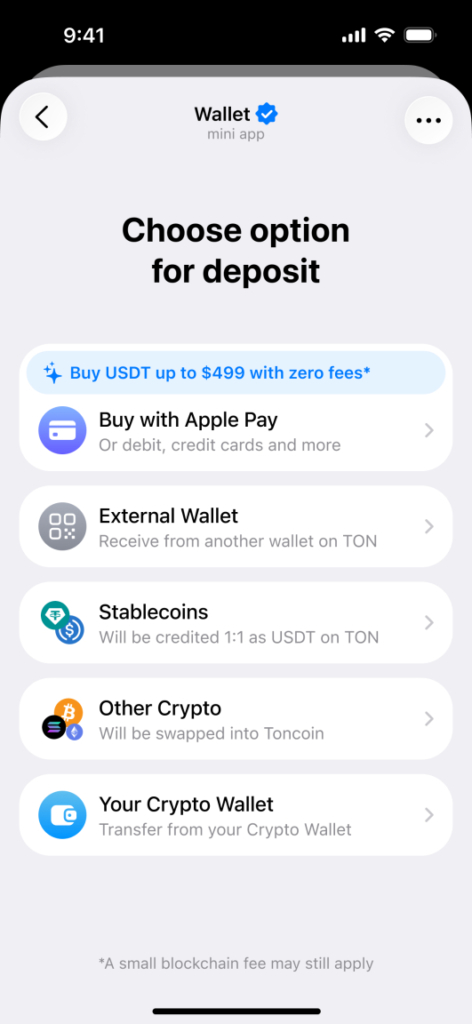
With this launch, more than 100 million users can transfer their stablecoins from other chains to TON without friction or losing value. TON Wallet users can now deposit USDC or USDT from Ethereum, Solana, TRON, BSC, Polygon, Arbitrum, and Base – converted at a 1:1 rate to USDT (TON) – directly in Wallet in Telegram. This removes the need to already hold TON-native assets, opening the ecosystem to users across the broader crypto landscape. As part of the integration, users will soon be able to withdraw USDT on TON to USDT or USDC on popular blockchains with a fee and deposit BTC, ETH, and SOL, which are automatically converted into Toncoin.
This Launch Introduces the Following Functionality
- Stablecoin deposits from leading blockchains, allowing users to deposit USDC or USDT with automatic 1:1 conversion into USDT (TON)
- Stablecoin withdrawals from USDT (TON) to USDT or USDC on other major blockchains, processed at a 1:1 rate, subject to applicable network and service fees. Will be available soon.
- Crypto deposits from BTC, ETH, and SOL, which are automatically converted into Toncoin upon arrival in TON Wallet
Removing Barriers to Web3 Adoption on Telegram
Funding a self-custodial wallet has traditionally been a complex, multi-step process. Through its collaboration with MoonPay, Wallet in Telegram removes this friction by introducing a single, seamless deposit flow that works across blockchains and assets. As a result, cross-chain transfers are now as simple as custodial ones, significantly streamlining onboarding into TON Ecosystem – while preserving value by minimizing unnecessary conversion losses and fees.
“One of the biggest challenges in crypto adoption is the first step – getting users funded and ready to participate. Until now, using TON Wallet meant already having assets on TON, which created unnecessary friction and limited access to the broader ecosystem. Now, we’re removing that barrier entirely. Users can bring their funds directly into TON Wallet from other networks, without unnecessary conversions, exchanges or lock-ins,” said Andrew Rogozov, Founder and CEO of The Open Platform and Wallet in Telegram. “Our goal is simple: make entering, and exiting, TON ecosystem as seamless as using a custodial wallet, while preserving the freedom and control of self-custody.”
Powered by MoonPay Deposits and built on MoonPay’s infrastructure, the solution supports the end-to-end flow, from deposit detection to final asset delivery, and is integrated natively into partner environments
“Users shouldn’t have to buy new assets or navigate complex steps just to fund an account,” said Ivan Soto-Wright, CEO of MoonPay. “We simplify the process by letting people use the crypto they already have while we handle the technicalities behind the scenes, making it easier to move value across the ecosystem and access a broader range of applications.”
Funding a TON Wallet now takes just a few steps
- The Deposit section includes two options: Stablecoins (for 1:1 stablecoin deposits) and Other Crypto (for converting BTC, ETH, or SOL to TON).
- After selecting the token and the originating network, a deposit address is generated automatically.
- The deposit address can be copied or accessed via QR code.
- This address is entered on the withdrawal page of the external wallet or exchange.
- The transfer amount must meet the minimum deposit requirement.
- Once the details are verified, the transfer is confirmed on the sending platform.
Funds arrive in the user’s selected asset, fully compatible with TON ecosystem and Telegram’s growing network of decentralized applications.
Built for Scale, Native to Telegram
The new deposit experience is available exclusively in the self-custodial TON Wallet, part of Wallet in Telegram’s dual-wallet setup, and is fully integrated into the Telegram interface. By abstracting away cross-chain complexity, Wallet in Telegram makes it easier for users to participate in DeFi, gaming, payments, and on-chain apps – without needing deep crypto expertise.
This launch marks a major step toward making Telegram the most accessible Web3 gateway in the world, combining mass-market distribution with self-custody and open blockchain infrastructure.
About Wallet in Telegram
Wallet in Telegram is a digital asset solution natively embedded into Telegram’s interface. Backed by The Open Platform, Wallet in Telegram has gained 150M+ registered users to date and continues to grow. The company offers a dual-wallet experience with Crypto Wallet (a multi-chain wallet for trading and sending crypto to contacts) and TON Wallet (a self-custodial wallet with access to TON ecosystem of apps and TON-based digital assets).
About MoonPay
Founded in 2019, MoonPay is a global financial technology company that helps businesses and consumers move value across fiat and digital assets. MoonPay has more than 30 million customers across 180 countries and supports more than 500 enterprise customers spanning crypto and fintech.
Through a single integration, MoonPay powers on- and off-ramps, trading, crypto payments, and stablecoin infrastructure, connecting traditional payment rails with blockchains. MoonPay maintains a broad regulatory footprint, including a New York BitLicense, a New York Limited Purpose Trust Charter, and money transmitter licenses across the United States, as well as MiCA authorization in the EU.
MoonPay is how the world moves value.
SECRET PARTNERSHIP BONUS for CryptoPotato readers: Use this link to register and unlock $1,500 in exclusive BingX Exchange rewards (limited time offer).

Crypto World
OKX Ventures Invests in RWA Stablecoin with Securitize, Hamilton Lane
Securitize is piloting a novel real-world asset (RWA) stablecoin that is backed by tokenized private credit assets, marking a notable push to bring regulated, yield-generating assets onto blockchain rails. The initiative unfolds through a collaboration with STBL, Hamilton Lane, and OKX Ventures, aiming to issue the new stablecoin on OKX’s X Layer network. The structure ties the stable unit to tokenized exposure to Hamilton Lane’s Senior Credit Opportunities Fund via a feeder arrangement, while separating the yield generated by the underlying assets from the stablecoin itself. This approach is designed to address regulatory nerves around passive yields while enabling programmable settlement within a regulated, on-chain framework.
The collaboration brings together three pillars: Securitize’s tokenization platform, STBL’s stablecoin infrastructure, and Hamilton Lane’s private credit expertise, with financial backing and strategic input from OKX Ventures. The project envisions a broader ecosystem where institutional private markets can be accessed and managed on-chain, leveraging liquidity and settlement capabilities that are increasingly common in Layer-2 environments. In a Thursday X post, Securitize described the product as an ecosystem-specific stablecoin that will be issued on X Layer and collateralized by tokenized exposure to the Senior Credit Opportunities Fund, arranged through a feeder structure managed by Securitize.
The architecture is designed to keep the stable token distinct from the yields it represents. A dual-token model is central to the design: one token maintains price stability, while a separate mechanism accrues yield from the underlying assets. This separation is meant to respond to regulatory discussions in the United States that have focused on stablecoins that distribute passive returns to holders. By routing yield generation to the collateral layer, the framework aims to preserve the stability function of the token itself while still allowing on-chain access to private-credit yields. In a January 14 post, STBL emphasized that the approach aligns with evolving regulatory expectations of distinguishing stable payment instruments from investment products.
“This initiative brings deep liquidity, programmable settlement, and compliant yield management to the X Layer ecosystem, setting a new standard for how capital flows onchain.”
The project’s emphasis on real-world asset liquidity reflects a broader trend in which on-chain finance seeks greater institutional participation. STBL’s yield architecture is described as a deliberate attempt to sidestep certain regulatory concerns by ensuring the stablecoin is not classified as a yield-bearing instrument. The structure proposes that returns accrue at the collateral layer rather than being paid directly to stablecoin holders, a design choice that market participants hope will ease compliance frictions as digital asset markets mature. STBL’s statements highlight the intent to align with regulators’ expectations that separate the instrument used for payments from the investment or yield-generating activities beneath it.
In explaining the rationale, Securitize noted that tokenization of private credit, when combined with programmable settlement, can unlock a level of on-chain efficiency previously unavailable to traditional markets. The feeder arrangement linked to Hamilton Lane’s Senior Credit Opportunities Fund is intended to provide a robust, diversified exposure to private credit assets, while the on-chain wrapper enables programmable settlement and potentially broader liquidity across the X Layer ecosystem. The executives cited that the arrangement leverages the strength of tokenization and institutional governance structures to bring private markets into the on-chain world.
The collaboration is also positioned within a wider regulatory dialogue around stablecoins. By creating a dual-economy dynamic—one for the stable unit and another for the yield—the parties aim to provide a framework that can be more palatable to policymakers who are wary of passive yield mechanisms. The approach reflects a growing industry push to design financial primitives that preserve the reliability and predictability of stablecoins while still enabling on-chain access to sophisticated yield-generating strategies.
Cointelegraph reached out to OKX Ventures and STBL for comment on the token’s architecture and yield expectations. The public posts from Securitize and STBL on X provide the primary public vantage points for understanding how the feeder structure interacts with Hamilton Lane’s private-credit assets and how the on-chain settlement process is intended to function within the X Layer network. The broader context includes ongoing policy discussions around US market structure and the regulation of stablecoins, including concerns about passive yields on stablecoin holdings.
Related reporting has highlighted ongoing debates about tokenization, on-chain settlement, and regulated approaches to stablecoins, underscoring that the sector is still navigating a complex regulatory landscape. The new framework’s emphasis on separating stable value from yield is a direct response to these discussions, positioning the product as a test case for how regulated tokenization can coexist with the on-chain ecosystem.
The evolving design also aligns with broader efforts to tokenize RWAs and integrate them within regulated digital asset ecosystems. Securitize’s platform, which has logged immense growth in tokenized assets and long-standing relationships with major players in traditional finance, provides a credible basis for such an initiative. The project’s success will hinge on how effectively the feeder structure translates private-credit exposure into reliable on-chain liquidity, how well the dual-token model withstands regulatory scrutiny, and how the X Layer network accommodates scalable, compliant programmable settlement.
As the ecosystem evolves, observers will be watching for how governance and product metrics develop, including yield expectations, liquidity depth, and the ability to maintain stable unit value amid fluctuating demand for private-credit exposure. The collaboration signals a maturing phase in on-chain finance, where institutional players are increasingly willing to explore regulated mechanisms that can deliver both stability and yield through tokenized, on-chain structures.
Sources: OKX Ventures and STBL statements via X posts; Securitize’s official X post; Hamilton Lane’s exposure strategy via the same channels; regulatory discussions surrounding US market structure and stablecoins.
Video and related materials linked to the project are available through the channels referenced in the announcements, including a YouTube video linked in the original content. To review the latest details and context, readers can follow the primary posts on X from Securitize and STBL and the accompanying materials from Hamilton Lane and OKX Ventures.
Market context
Market context: The launch arrives as tokenization of real-world assets gains traction among institutional investors, even as regulators scrutinize stablecoins that distribute passive yields. By combining regulated tokenization, programmable settlement, and a dual-token design, the project seeks to balance on-chain efficiency with strict compliance expectations. The initiative also underscores growing interest in Layer-2 ecosystems like X Layer as venues for institutional-grade liquidity and on-chain settlement that can bridge traditional finance and digital asset markets.
Why it matters
The collaboration represents a notable step in the ongoing integration of real-world assets into on-chain finance. By linking a tokenized private-credit exposure to a stablecoin structure, the project tests whether RWAs can deliver stable value on-chain while preserving the ability to generate yield from traditional asset classes. If successful, this model could unlock new liquidity channels for private credit, potentially expanding the investor base for specialized funds and enabling more dynamic, on-chain risk management tools for institutions.
For builders and investors, the dual-token approach offers a blueprint for designing stablecoins that decouple payments from investment performance. Regulators have shown heightened scrutiny of yield-bearing stablecoins, and this architecture attempts to address those concerns by ensuring that the stable unit maintains price stability independently of the yield generated by the underlying assets. The project highlights how tokenization, governance, and settlement engineering can converge to create on-chain instruments that appeal to both institutional participants and compliant market participants.
From a market perspective, the initiative underscores the importance of liquidity and settlement infrastructure in enabling RWAs to function effectively on-chain. It also points to a broader appetite among market participants for regulated, transparent frameworks that can accommodate complex asset classes while offering the operational advantages of blockchain technology. The success of this approach will influence how other asset managers, custodians, and exchanges approach RWAs and their representation as on-chain instruments.
What to watch next
- Timeline and milestones for the stablecoin’s issuance on X Layer, including any feeder-structure milestones and governance changes.
- Regulatory updates or formal guidance that clarify how the dual-token model will be treated under US stablecoin and securities rules.
- Details on the yield mechanism at the collateral layer, including any performance benchmarks and risk controls for the underlying Senior Credit Opportunities Fund exposure.
- Confirmation of liquidity.Depth on X Layer and any listed or cross-chain integrations that expand access to the tokenized private-credit exposure.
- Additional announcements from Securitize, STBL, Hamilton Lane, and OKX Ventures detailing product roadmap and potential expansion into other asset classes or funds.
Sources & verification
- Official X posts from Securitize describing the ecosystem-specific stablecoin and its feeder structure.
- STBL official posts discussing the yield architecture and regulatory alignment for stablecoins.
- OKX Ventures statements and materials related to the investment and strategic collaboration.
- Hamilton Lane materials outlining the Senior Credit Opportunities Fund exposure used in the feeder arrangement.
- Discussion of the US market structure bill’s provisions affecting passive yield on stablecoins and related regulatory debates.
Crypto World
Crypto doesn’t need chaos to thrive
Disclosure: The views and opinions expressed here belong solely to the author and do not represent the views and opinions of crypto.news’ editorial.
For years, the crypto industry has been dominated by a culture of short-term speculation: retail traders chasing outsized returns and institutions treating digital assets as a high-volatility side-bet. The narrative is outdated at best, and actively harmful at worst.
Summary
- Volatility doesn’t build markets — trust does: Durable adoption is tracking regulatory clarity, custody standards, and real-world utility, not hype cycles.
- Accountability is crypto’s next competitive edge: Transparent risk frameworks, proof of reserves, and operational discipline are replacing chaos as growth drivers.
- Reliability wins the next decade: Platforms that prioritise compliance, usability, and institutional-grade infrastructure will outlast those clinging to speculative noise.
As 2025 has shown, crypto doesn’t thrive on chaos; it thrives when the noise turns into focused conversation. Adoption grows when platforms deliver what users actually need: infrastructure users can rely on to pay, get paid, invest, and borrow with confidence. Today, the industry’s real unlock lies in something far more foundational: radical accountability with the next era defined by platforms that centre around reliability.
The myth that volatility drives sustainable adoption
The industry has long romanticised its boom-bust cycles as an inevitable, even healthy. This is a myth: one that benefits short-term traders but ultimately undermines long-term adoption. Volatility may attract headlines and generate short bursts of retail activity, but it doesn’t create sustainable markets.
What has changed is not just the presence regulation, but how markets are now responding to clarity. Data from recent market analyses show that institutional inflows and durable adoption are tracking clarity and stability, rather than volatility. Over the past year, institutional-scale transfers (>$1M) have accelerated in jurisdictions where regulatory frameworks are no longer theoretical, but operational: particularly following the launch of U.S. spot Bitcoin (BTC) exchange-traded funds and the full rollout of Europe’s harmonised licensing regimes.
In Europe, the Markets in Crypto-Assets Regulation’s implementation phase has marked a clear inflection point. As firms completed licensing, strengthened custody separation, and aligned products with regulatory expectations, capital that had previously remained cautious began to re-enter. The shift didn’t happen overnight, but once compliant infrastructure was live and proven, many institutional treasuries and asset managers began reframing crypto not as a speculative bet, but as a set of regulated financial tools capable of supporting treasury, liquidity, and capital-management functions.
This pattern is echoed globally. Adoption metrics show that real, durable usage is expanding in APAC and Latin America, driven less by speculation and more by utility: particularly stablecoin rails and everyday transaction flows. The lesson is clear: long-term usage emerges not as volatility fades, but as focus takes hold.
The critical accountability gap
The short-term chase created a pervasive accountability gap. Too many crypto businesses prioritised speed and hype over controls, governance, and operational discipline. The result was not innovation, but fragility and negligence often exposed at scale.
Real accountability is the new frontier of competition. Global financial oversight bodies note that a lack of clear accountability and transparency in crypto markets creates an ecosystem that seems vulnerable to fraud, scams, and investor harm, all collateral damage of the previous short-term, winner-takes-all culture. It means transparent risk frameworks, responsible asset listings, and compliance treated as a strategic capability rather than an afterthought. The lingering “reputation problem” is a direct tax imposed by a few bad actors on the entire ecosystem, or a narrative pushed by legacy incumbents.
Why the next wave of users will insist on higher standards
The next wave of institutional and retail users is arriving with a fundamentally different set of expectations. For retail users, the shift is already visible. The conversation is moving away from pure price speculation toward usability and trust, with fair markets, clearer disclosures, and fewer surprises. Growth is increasingly being driven by practical use cases such as payments, remittances, and on-chain savings, rather than social-media-fuelled price spikes. As crypto becomes part of everyday financial behaviour, reliability starts to play the role that excitement once did.
Institutions are following a similar logic at scale. Many have moved beyond watching from the sidelines and are now building longer-term strategies. That shift demands infrastructure they can rely on: legally enforceable custody separation, accountable counterparties with clear rulebooks, and predictable risk behaviour. Industry research consistently shows that regulatory clarity and operational maturity are the strongest drivers of sustained institutional participation. They’re seeking the core building blocks of modern finance, now applied to digital assets.
Together, these shifts point to the same conclusion: reliability has become the prerequisite for engagement, not a secondary consideration. As expectations converge between retail and institutional users, platforms that prioritise transparency, stability, and real-world usability will pull ahead, while those clinging to short-term chaos will increasingly find themselves out of step with the market.
Building a new standard
The new “standard of accountability” moves past flashy headlines. It’s regulated-first product design, clear disclosures users can actually understand, independent custody by default, and robust internal controls that are tested and verified.
It shouldn’t be looked at as slowing innovation, but redirecting it for the long-term survival of the industry. The greatest innovation today is a scalable, interoperable blockchain that meets the EU’s rigorous privacy standards, or a custody solution that provides real-time, cryptographic proof of reserves that even a skeptic can verify.
The long-term resilience this creates is what will finally mature crypto into the fundamental component of global finance. The players who adopt these higher standards early are actively shaping the market’s long-term structure and claiming its most valuable real estate: trust. The era ruled by short-term chaos is long gone, and the future belongs to those who build with the next decade, not the next cycle, in mind.
Crypto World
Daily Market Update: Stock Futures Rise With Bitcoin at $67,200 Ahead of Inflation Report
TLDR
- U.S. stock futures advanced Thursday with Dow, S&P 500, and Nasdaq all posting gains after January jobs data showed 130,000 positions added
- Consumer Price Index report delayed by government shutdown now scheduled for Friday, expected to show 2.5% year-over-year inflation
- Federal Reserve rate cut probability stands at 5.4% for near-term action as strong employment complicates easing plans
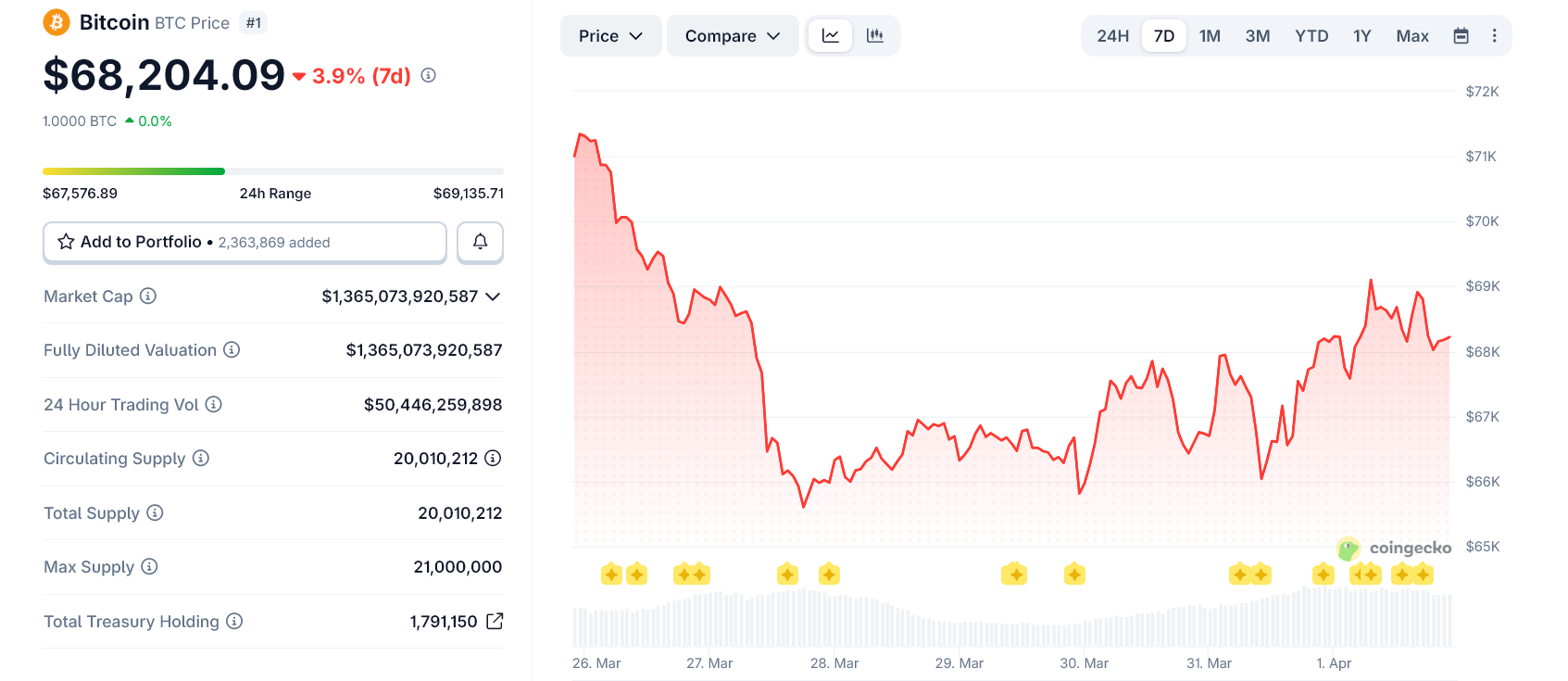
- Bitcoin consolidates at $67,200 while trading in $62,822 to $72,000 range following recent market selloff
- Cisco stock dropped 7% after-hours on missed earnings while McDonald’s dipped slightly despite beating estimates
U.S. stock futures moved higher Thursday morning as traders processed January’s employment report. The data showed 130,000 new jobs added last month, surpassing analyst expectations.

Dow Jones Industrial Average futures gained approximately 0.2% in early trading. S&P 500 futures rose by a similar margin while Nasdaq 100 futures advanced 0.1%.
The futures gains followed a mixed Wednesday session on Wall Street. Major indexes closed relatively flat after the jobs data complicated Federal Reserve policy expectations.
Employment Data Reshapes Market Outlook
Markets initially rallied following the January jobs report release. However, the stronger-than-expected hiring numbers created new questions about monetary policy timing.
Year-end 2025 employment figures were revised downward in the report. The revisions revealed slower job growth last year than initially calculated.
A resilient labor market paired with persistent inflation could reduce near-term rate cut likelihood. This scenario has become a key concern for equity investors who anticipated policy easing.
CME’s FedWatch tool currently indicates a 94.6% probability of unchanged rates. The Federal Reserve is expected to maintain the 3.50%-3.75% range at upcoming meetings.
Tim Sun from HashKey Group explained that positive economic news creates challenges for risk assets. Strong employment removes urgency for the Fed to implement early policy easing.
Inflation Report Takes Priority
Investors now turn attention to Friday’s Consumer Price Index data. The report was delayed due to a partial government shutdown but will provide crucial inflation insights.
January CPI is forecast to decline to 2.5% on a year-over-year basis. This would mark a 0.2% drop from December’s reading.
Derek Lim from Caladan stated that inflation data carries more weight than employment figures. A lower-than-expected reading would increase pressure on the Fed to cut rates sooner.
Lower policy rates typically ease financial conditions and reduce discount rates. This environment has historically supported both equities and cryptocurrencies during high liquidity periods.
Conversely, hotter inflation numbers could cement a higher-for-longer rate environment. Such an outcome would likely pressure risk assets across markets.
Crypto and After-Hours Movers
Bitcoin currently trades at $67,200, down 0.5% over 24 hours. Ethereum holds steady at $1,970 according to CoinGecko.

The leading cryptocurrency has traded between $62,822 and $72,000 this past week. Volatility remains relatively muted following late January and early February declines.
Sun noted that interest rate futures repriced quickly after jobs data. Rate cut expectations compressed and shifted toward the second half of 2026.
Cisco Systems fell roughly 7% in after-hours trading after missing profit forecasts. McDonald’s declined modestly despite surpassing earnings expectations.
Friday’s earnings calendar includes reports from Coinbase, Applied Materials, and Rivian. A softer inflation print would signal easing price pressures while growth continues.
Crypto World
Metaverse Development Company Building Virtual Real Estate Ecosystems
For a few years, metaverse digital real estate was treated like a gold rush. Headlines focused on million-dollar virtual land sales, celebrity plots, and speculative flipping. Many enterprises watched from the sidelines, unsure whether this was innovation or hype. Today, the conversation has matured.
Forward-thinking organizations are no longer asking “Should we buy virtual land?”
They’re asking “How can virtual real estate support our business model?”
That shift changes everything.
Metaverse digital real estate is evolving from a speculative asset into a strategic digital infrastructure layer, one that supports commerce, customer engagement, brand presence, and new revenue channels. Moreover, enterprises that understand this transition are beginning to build long-term advantages.
Analytics from DappRadar indicate that virtual land sales in leading metaverse platforms surpassed $1.6 billion in 2022, reflecting continued demand for digital real estate even amid market fluctuations. This gives a clear indication of the opportunity in the market in the time to come.
What Metaverse Digital Real Estate Really Means
Virtual real estate is not just a 3D parcel on a map. In a business context, it is:
- A persistent digital environment
- A programmable commercial space
- A branded engagement hub
- A community ecosystem
- A revenue-generating digital asset
Think of it less like buying land and more like owning prime digital territory where your audience interacts, shops, learns, and socializes. Just as websites and mobile apps became essential digital assets in the past decade, immersive environments are emerging as the next layer of digital presence.
The difference?
These spaces are experiential, interactive, and monetizable in ways traditional platforms are not.
Why Enterprises Are Taking Virtual Real Estate Seriously
1) Persistent Brand Presence
Unlike campaign-based digital marketing, metaverse spaces are persistent. Your environment exists 24/7 as a branded world users can revisit.
Enterprises use this for:
- Virtual showrooms
- Product demos
- Immersive brand storytelling
- Community hubs
This helps create long-term brand recall rather than one-time impressions.
2) Immersive Commerce Opportunities
Virtual real estate enables experiential commerce. Instead of browsing a catalog, users explore environments, interact with products, and engage socially.
A few of the prominent examples include:
- Virtual retail stores
- Digital product launches
- NFT-backed collectibles
- Token-gated experiences
This blurs the line between entertainment and commerce, a powerful driver of engagement & sales.
3) New Revenue Models
Well-designed metaverse environments can generate revenue through:
- Digital asset sales
- Event hosting
- Advertising placements
- Premium experiences
- Membership ecosystems
- Virtual leasing spaces
In other words, digital real estate can become an income-producing asset, not just a marketing experiment.
4) Community Ownership & Loyalty
Blockchain-enabled virtual real estate allows fractional ownership, governance tokens, and user participation. When users feel ownership, they stay longer. When they stay longer, ecosystems grow stronger. Here enterprises benefit from:
- Higher retention
- Community advocacy
- Organic growth loops
Looking for Metaverse Real Estate Development Services?
The Real Risk: Not Strategy, But Execution
Many early metaverse projects failed not because the concept was wrong but because execution was poor. Some of the most common pitfalls include:
- Empty virtual spaces with no utility
- Weak user experience design
- No monetization logic
- Scalability issues
- Lack of interoperability
- No long-term roadmap
Buying land without building value on it is like owning a mall with no stores. This is where strategy and development expertise matter.
From Buying Land to Building Platforms
Smart enterprises are moving away from simply purchasing parcels on third-party platforms. Instead, they are:
- Building their own environments
- Creating branded virtual ecosystems
- Designing commerce-ready spaces
- Integrating blockchain ownership layers
- Developing scalable metaverse infrastructure
This approach provides control, flexibility, and long-term ROI. However, enterprises need to keep in mind that choosing the right metaverse development company is the key to success.
What a Metaverse Development Company Actually Enables
Serious and strategic metaverse real estate development services do not represent a design project, it’s a technology, product, and business initiative.
A professional metaverse development company helps enterprises with:
1. Infrastructure Design
Building scalable, high-performance environments capable of supporting large user bases.
2. Blockchain Integration
Enabling asset ownership, NFTs, tokenization, and secure transactions.
3. Experience Design
Crafting environments users actually want to explore and return to.
4. Monetization Architecture
Designing revenue models that align with business goals.
5. Security & Compliance
Ensuring safe asset management and data integrity.
6. Long-Term Scalability
Planning for growth, updates, and evolving use cases.
Without these pillars, virtual real estate remains an experiment instead of becoming a business asset.
Who Should Invest in Metaverse Digital Real Estate?
This space is especially relevant for:
- Retail and eCommerce brands
- Real estate developers
- Gaming companies
- Education providers
- Event and entertainment firms
- Luxury and lifestyle brands
- Enterprises building digital communities
If your business depends on engagement, experience, or community, virtual real estate has strategic potential.
Why Early Builders Gain an Advantage
Just like early website adopters dominated search and early app adopters captured mobile markets, early metaverse builders gain:
- Category authority
- Prime digital positioning
- Community loyalty
- Ecosystem control
- Learning curve advantages
Waiting until the market is saturated increases costs and reduces differentiation. The key is not rushing blindly but building strategically.
Conclusion
It is ideal to approach virtual real estate as a business infrastructure project, not a speculative venture. Antier, as a leading metaverse development company helps enterprises:
- Design immersive branded environments
- Build blockchain-enabled ownership layers
- Develop commerce-ready virtual spaces
- Create scalable metaverse platforms
- Launch monetizable digital ecosystems
The focus is always on utility, scalability, and ROI. It is because in the long run, the value of virtual real estate comes from what you build on it, not what you pay for it.
Metaverse digital real estate is moving past speculation. It is becoming a strategic channel for digital presence, engagement, and revenue. Enterprises that treat it as infrastructure and just not hype will be the ones that capture real value. So, the ultimate question is no longer “Is virtual real estate real?” It’s “How will your business use it?”
Frequently Asked Questions
01. What is metaverse digital real estate?
Metaverse digital real estate refers to virtual spaces in a digital environment that serve as persistent, programmable commercial areas for brand engagement, community interaction, and revenue generation.
02. Why are enterprises investing in virtual real estate?
Enterprises are investing in virtual real estate to establish a persistent brand presence, create immersive commerce opportunities, and build long-term advantages in customer engagement and revenue channels.
03. How much did virtual land sales in leading metaverse platforms exceed in 2022?
Virtual land sales in leading metaverse platforms surpassed $1.6 billion in 2022, indicating strong demand for digital real estate despite market fluctuations.
Crypto World
SEC’s Atkins Grilled on Crypto Enforcement Pullback as Justin Sun Case Draws Congressional Scrutiny
TLDR:
- SEC paused Justin Sun’s wash trading case in 2023 while exploring resolution, raising conflict concerns over Trump ties
- Atkins offered lawmakers confidential briefing on Sun case but cited regulatory restrictions on public discussions
- SEC dropped major enforcement actions against Binance, Ripple, Coinbase, rejecting previous regulation-by-enforcement approach
- Atkins confirmed SEC and CFTC are developing joint crypto rules aligned with House-passed Clarity Act framework
SEC Chairman Paul Atkins faced intense scrutiny from House lawmakers regarding the agency’s shift in cryptocurrency enforcement policies.
During Wednesday’s oversight hearing before the House Financial Services Committee, Democrats questioned the regulatory pullback on major crypto cases, particularly involving Tron founder Justin Sun.
Atkins defended the agency’s new direction while promising clearer regulations for the digital asset industry through collaboration with the CFTC.
Sun Case Raises Questions About Enforcement Priorities
Representative Maxine Waters, the committee’s ranking Democrat, pressed Atkins on the agency’s handling of the Justin Sun investigation.
The SEC had accused Sun in 2023 of orchestrating wash trading schemes involving over 600,000 fraudulent transactions to inflate TRX token volumes. However, the agency paused the case last year while exploring potential resolution options.
Waters highlighted Sun’s connections to President Trump’s family through World Liberty Financial Inc. “Well, while you were exploring a potential resolution, Mr. Sun has been busy ingratiating himself within Trump’s orbit,” Waters said to Atkins during the hearing.
She questioned whether these ties influenced the SEC’s decision to halt enforcement actions. The California lawmaker also referenced recent allegations from Sun’s former girlfriend suggesting evidence of TRX manipulation.
Atkins responded that regulatory restrictions prevented him from discussing specific cases publicly. He offered lawmakers a confidential briefing on the matter, stating he was willing to have further conversations “to the extent the rules allow me to do that.”
Waters pressed further, asking whether the SEC’s focus on real fraud extended to crypto markets. “Whatever involves securities,” Atkins responded.
The agency dropped several high-profile enforcement actions last year against major crypto firms including Binance, Ripple, Coinbase, Kraken, and Robinhood.
SEC leadership criticized the previous administration’s regulation-by-enforcement approach. When asked about protecting investors versus Trump business interests, Atkins stated, “As far as what the Trump family does or not, I can’t speak to that.”
Regulatory Clarity Takes Center Stage
Republican committee members shifted focus toward Atkins’ plans for establishing comprehensive crypto regulations.
The chairman outlined ongoing coordination with the Commodity Futures Trading Commission to develop clear operational guidelines for digital asset companies.
These efforts align with the Clarity Act passed by the House, though the legislation’s Senate fate remains uncertain.
Atkins explained that both agencies are working on rules “consistent with what’s in the Clarity Act that you all passed here in the House, and hopefully what will come out of the joint work that you’re doing with the Senate.”
He added that this effort would help provide certainty regarding jurisdictional boundaries between the two agencies. The framework would establish which types of digital assets fall under SEC or CFTC oversight.
The CFTC recently updated its guidance on stablecoins, allowing national trust banks to issue payment stablecoins and expanding eligible tokenized collateral.
Meanwhile, the National Credit Union Administration proposed rules for credit unions seeking stablecoin issuer status.
These moves implement provisions from last year’s GENIUS Act, marking the crypto sector’s first major legislative achievement.
A policy race now develops between Atkins’ SEC and Senate lawmakers working on comprehensive crypto legislation.
Recent Senate delays may allow the SEC to lead in establishing digital asset regulations. The industry watches closely as regulatory frameworks take shape across multiple federal agencies.
Crypto World
Hundreds of developers competed in the Consensus Hong Kong 2026 hackathon
As the curtain falls on Consensus Hong Kong 2026, the focus has shifted from the corporate boardrooms to the show floor. While institutional talk dominated the main stages, nearly 1,000 developers spent the week in the trenches of the EasyA x Consensus Hackathon, signaling a definitive pivot in the industry: the “Year of the Application Layer.”
The competition, which has become a staple of Consensus by CoinDesk’s flagship events, saw over 30 projects pitch on demo day. The quality of builds, aided significantly by generative AI, clearly demonstrated that the barrier between a “proof of concept” and a “market-ready product” has effectively been removed.
A rising bar: From infrastructure to intent
The evolution of the developer talent at Consensus has grown gradually. In previous years, hackathon submissions were often deeply technical, building faster consensus mechanisms or niche scaling solutions that remained out of reach for the average user.
This year, however, the bar has been set to a new level. Developers have evolved into product builders, shifting their focus from the backend to the user.
“The big thing that we’ve seen right now is that developers are actually building things that real people can actually use,” said Phil Kwok, co-founder of EasyA. “We’ve seen a big increase in the application layer. This is the year of the horse in Asia, but it’s the year of the application layer in blockchain.”
This shift toward User Experience (UX) was evident in the sophisticated use of “passkeys”, technologies from iOS and Android that allow users to log into Web3 apps without the friction of 24-word seed phrases, Kwok said. By removing these traditional “clicks” and barriers, developers are finally making products that feel like the apps people use every day.
The Winners’ Circle
The judges awarded top honors to projects that prioritized automation, security, and risk management, three pillars essential for the next wave of retail adoption, Kwok explained.
First place: FoundrAI ($2,500)
Taking the top spot was FoundrAI, an autonomous AI agent designed to act as a “startup in a box.” The platform doesn’t just launch tokens; it manages the entire lifecycle of a project, including hiring human developers to build out the product. It represents a provocative look at the future of decentralized labor.
Second place: SentinelFi ($1,750)
Addressing the industry’s persistent “rug-pull” problem, SentinelFi provides real-time safety scores for crypto traders. By performing six-category on-chain analysis, the tool helps users sniff out scam tokens before they commit capital—a critical utility as token launch volumes explode.
Third Place: PumpStop ($1,000)
PumpStop rounded out the top three with a non-custodial trading layer focused on risk mitigation. Using state-channel instant execution, it allows traders to set stop-loss orders with on-chain proofs, bringing professional-grade trading tools to a decentralized environment without sacrificing custody.
The ‘show floor’ evolution
The growth of the hackathon reflects a broader shift in the Consensus ethos. Once a strictly corporate affair, the event has increasingly integrated the “builder” culture into its DNA. Dom Kwok, co-founder of EasyA, noted that the hackathon has moved from side rooms to the center of the show floor.
“Typically every hackathon that we host gets bigger and bigger,” Dom said. “It’s taking up more and more of the conference floor every year. We had someone flying in from San Diego just to see what was getting built.”
Despite the “depressing” macro environment often reflected in token prices, the sentiment on the ground in Hong Kong remained stubbornly bullish. Organizers pointed out that while interest rates and Fed policy drive the charts, the builders are focused on the 93% of the world that doesn’t yet own crypto. The path to that next billion users, it seems, is being paved by developers who finally realize that usability is the ultimate feature, Dom said.
Phil and Dom said they can’t wait for Consensus Miami 2026 to see how much more the bar is raised and how many more developers participate with surprisingly great new ideas.
Crypto World
Alameda moves another $15M in Solana as traders watch for market impact
Alameda Research’s bankruptcy estate has distributed another $15 million worth of Solana to creditors, extending a repayment process that has now been running for nearly two years.
Summary
- Alameda Research’s bankruptcy estate distributed roughly $15.6 million in Solana to creditors in its latest monthly payout, extending a repayment process that has run for 21 months.
- Despite ongoing distributions, Alameda still holds nearly $315 million worth of SOL on-chain, keeping traders alert to potential supply overhang risks.
- Most of Alameda and FTX’s SOL was previously sold through OTC deals in 2024, with remaining distributions being handled gradually to limit market impact.
According to blockchain data highlighted by Arkham, the latest monthly tranche involved the transfer of roughly $15.60 million in Solana (SOL) to 25 separate addresses.
The movement forms part of a structured distribution program that has been ongoing for 21 months following the collapse of FTX and its trading arm, Alameda Research.
Despite the steady outflows, Alameda’s on-chain wallets still hold approximately $314.95 million worth of SOL, keeping the estate among the largest known holders of the token tied to the defunct exchange empire.

Market impact questions resurface
The renewed transfers have reignited debate over whether these distributions ultimately translate into sell pressure on the open market.
Arkham raised the question directly, asking whether the newly distributed SOL would be “SOLd straight into the market,” a concern that has repeatedly surfaced during prior repayment rounds.
While the latest tranche is relatively modest compared to Alameda’s historical holdings, traders remain sensitive to any supply overhang tied to creditor payouts, particularly during periods of broader market volatility.
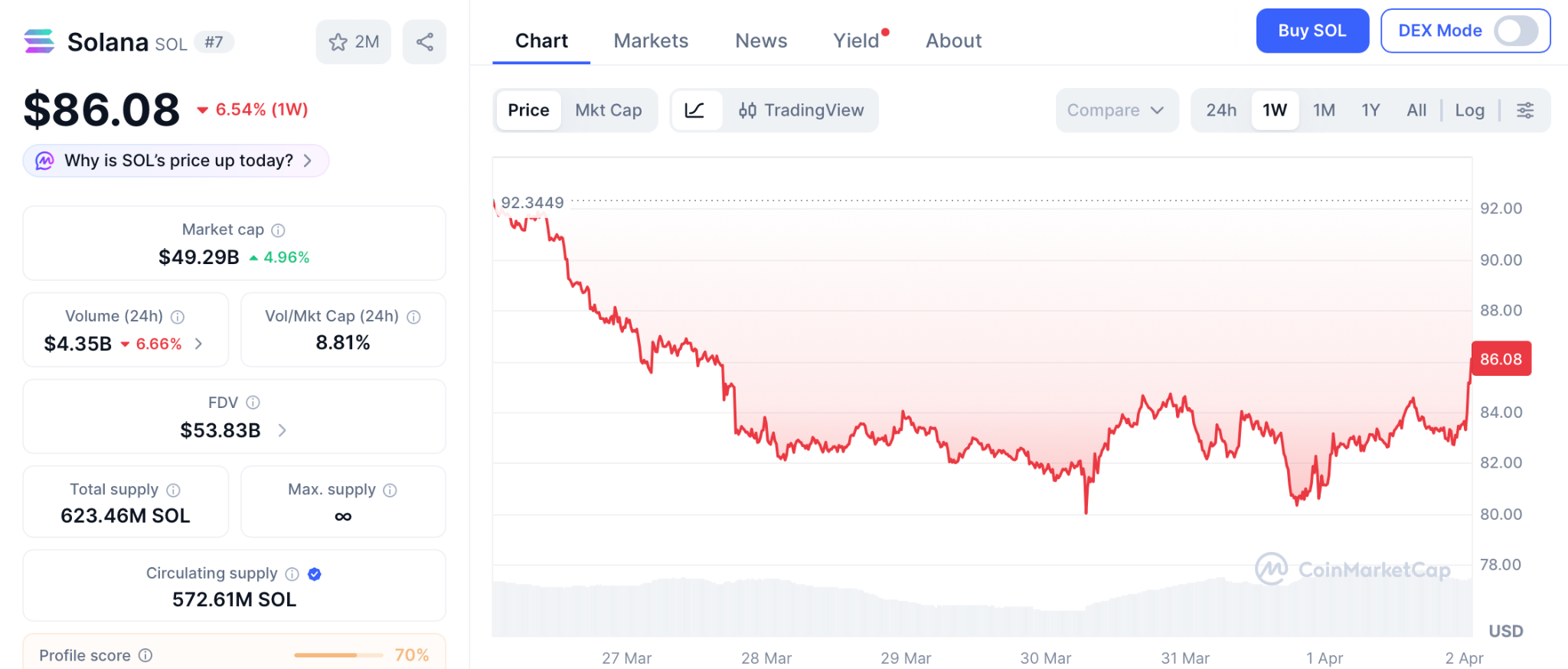
Solana’s native token has been volatile in recent months, trading near the low-to-mid $80s to low $90s range after pulling back from higher levels seen in 2025.
Where Alameda’s SOL went
Additional context was provided by analyst Emmet Gallic, who traced the fate of the bulk of Alameda and FTX’s Solana holdings.
According to the analysis, roughly 43 million SOL was largely sold through over-the-counter deals across three major tranches in 2024, limiting direct market disruption.
Those sales included 26 million SOL at $64 to buyers such as Galaxy, Pantera, Jump, and Multicoin; 14 million SOL at $95 through a Pantera-led consortium; and a further 2 million SOL at $102 involving Figure Markets and Pantera.
Since those OTC sales, remaining SOL distributions have been handled gradually, suggesting a continued effort to balance creditor repayments with market stability. Still, with more than $300 million in SOL left on-chain, Alameda-linked movements are likely to remain a point of close scrutiny for Solana traders in the months ahead.
Crypto World
Why DOGE and XRP Holders Are Excited
As part of the strategy to turn X (formerly Twitter) into a “super app” or Everything App, a key missing piece, X Money, is beginning to take shape.
X aims to be more than a social media platform. Elon Musk wants to transform it into a personal finance game-changer. Users could handle messaging, shopping, and full personal asset management in one place.
Why Are Crypto Investors Excited About X Money?
During an xAI “All Hands” presentation in February 2026, Elon Musk revealed that X Money is already running in internal testing among X employees. A limited rollout to users is expected within the next one to two months.
Sponsored
Sponsored
X Money has secured money transmitter licenses in more than 40 US states. It also established strategic partnerships with major payment giants such as Visa last year.
“For X Money, we actually had X Money live in closed beta within the company, and we expect in the next month or two to go to a limited external beta and then to go worldwide to all X users. And this is really intended to be the place where all the money is, the central source of all monetary transactions. So it’s really going to be a game-changer,” Elon Musk said.
Musk aims to push monthly active users past 600 million and ultimately reach 1 billion. Analysts compare this ambition to building an everything app similar to China’s WeChat.
As a result, X Money represents a major opportunity for any crypto project that accepts it as a payment method or is indirectly connected to the platform.
However, X Money has never confirmed that crypto will be used as a payment option. Investors, meanwhile, continue to build their own narratives.
The first speculation centers on Dogecoin (DOGE). This meme coin closely aligns with Elon Musk’s personal brand. The theory stems from Musk’s past comments suggesting DOGE could be suitable for micropayments.
The second speculation involves XRP. This hypothesis is linked to Cross River Bank, a financial partner working with X to process payment flows. Since 2014, Cross River Bank has integrated Ripple’s protocol to enable real-time cross-border payments between the US and Western Europe.
Despite these narratives, DOGE and XRP prices showed no significant reaction to news of X Money’s upcoming launch.
In the coming months, once X Money officially goes live as planned, its impact on crypto markets and the global financial system may become clearer.
Crypto World
UK Launches Blockchain Digital Bond Pilot With HSBC Orion
The United Kingdom’s government has appointed HSBC’s tokenization platform to power a pilot issuance of digital government bonds, known as “gilts,” marking the latest step in its push to modernize sovereign debt markets using blockchain technology.
His Majesty’s Treasury has appointed HSBC Orion to facilitate the Digital Gilt Instrument (DIGIT) pilot issuance, according to a Thursday announcement.
The Treasury published a DIGIT pilot update in July 2025, outlining plans to explore blockchain applications in UK sovereign debt issuance and to support the development of domestic tokenization infrastructure.
“We want to attract investment and make the UK the best place to do business,” said Lucy Rigby, UK economic secretary to the Treasury, commenting on HSBC Orion’s DIGIT appointment. She added that the pilot will help the UK explore how to capitalize on the distributed ledger technology (DLT), enhance efficiency and reduce costs for businesses.
Key objectives and features of the DIGIT pilot
The DIGIT pilot aims to enable digitally native, short-dated government bonds operating within the Digital Securities Sandbox (DSS).
The pilot is designed to support secondary market development and broader accessibility, with onchain settlement, while operating independently of the UK government’s main debt management program.

“This is exactly the kind of financial innovation we need to keep the UK at the forefront of global capital markets and I’m looking forward to working with HSBC and other parties to deliver DIGIT,” Rigby said.
HSBC has issued $3.5 billion in digital bonds globally
Since its launch in 2023, HSBC Orion has enabled the issuance of at least $3.5 billion in digitally native bonds globally, including the European Investment Bank’s first digital sterling bond and a multi-currency $1.3 billion-equivalent bond issued by the Hong Kong government.
“The UK is a home market for us and the sixth largest economy in the world,” said Patrick George, HSBC’s global head of markets and securities services. “HSBC is delighted to be supporting the continued development of the gilt market, market innovation, and the growth of the broader UK economy,” he added.

Related: Malaysia’s central bank announces stablecoin, tokenization sandbox
Alongside appointing HSBC Orion as the platform provider for DIGIT, the UK government also appointed global law firm Ashurst to provide legal services for the pilot.
“Our team brings deep expertise in digital assets transactions, and we look forward to working with HSBC and supporting the government as it takes this transformative step for UK capital markets,” Ashurst’s head of digital assets, Etay Katz, said.
Magazine: How crypto laws changed in 2025 — and how they’ll change in 2026
Crypto World
New Crypto Casino With 275% Welcome & 75 Free Spins!
ZunaBet is a new crypto casino and sportsbook that launched in 2026. The platform combines traditional casino gaming with cryptocurrency payments and modern features. With over 11,000 games and a full sports betting section, it aims to serve players looking for a crypto-friendly gambling destination.
Here’s our full review!
Quick Verdict: ZunaBet is a crypto casino offering over 11,000 games from 63 providers, extensive sports betting options across traditional and eSports, and a generous welcome package of 250% up to $5000 with 75 free spins,
Quick Facts
| Category | Information |
|---|---|
| Launch Year | 2026 |
| License | Government of Anjouan, License No. ALSI-202510047-FI2 |
| Operator | Strathvale Group Ltd., Belize |
| Number of Games | 11,294+ |
| Game Providers | 63 providers |
| Cryptocurrencies | 20+ including BTC, ETH, USDT, SOL |
| Sports Betting | Traditional sports and eSports |
| Welcome Bonus | 250% up to $5000 + 75 Free Spins |
| Loyalty Program | Dragon Evolution System with 6 tiers |
| Mobile Access | Responsive design plus downloadable apps |
| Customer Support | Email at support@zunabet.com |
| Supported Languages | English, Italian, Spanish, French, German, Indian |
Casino Games
ZunaBet hosts an impressive collection of 11,294 casino games. This extensive library comes from 63 different software providers, giving players access to a wide variety of gaming styles and themes. The selection covers all major casino game categories that players expect from a modern online casino.
The slot game section makes up the majority of the casino’s offerings. Players can find everything from classic three-reel slots to modern video slots with complex bonus features. The games come with different volatility levels and return-to-player percentages to suit different playing styles.

Table game fans have access to multiple versions of blackjack, roulette, baccarat, and poker. These games range from standard versions to variants with special rules or side bets. The variety ensures that both casual players and experienced table game enthusiasts can find options that match their preferences.
Live dealer games bring the casino floor experience to your screen. The platform includes live versions of popular table games where real dealers run the games in real-time. Players can interact with dealers and other players through chat functions while placing their bets.

The game providers list reads like a who’s who of the online casino industry. Pragmatic Play and Hacksaw Gaming feature prominently, offering their popular slot titles. Playtech contributes both slots and table games to the collection. Evolution Gaming powers the live dealer section with their industry-leading live casino products.
Other major providers include BGaming, Booming Games, Endorphina, Evoplay, Ezugi, Habanero, and Yggdrasil. Each provider brings their own unique style and game mechanics to the platform. This diversity means players can explore different themes, features, and gameplay styles without leaving the site.
The casino doesn’t require downloads to play games. All titles run directly in web browsers using HTML5 technology. This means players can access games from any device with an internet connection and a modern browser.
Sports Betting
The sportsbook at ZunaBet covers a comprehensive range of sporting events. Traditional sports betting includes football, which features leagues and matches from around the world. Bettors can place wagers on major European leagues, international tournaments, and regional competitions.

Tennis betting includes ATP, WTA, and Grand Slam events. The platform offers markets on match winners, set betting, and game handicaps. Basketball coverage includes both NBA action and international leagues, with 3×3 basketball also available for betting.
Ice hockey fans can bet on NHL games and international competitions. Baseball betting focuses primarily on MLB, with markets on game winners, run lines, and totals. Volleyball and beach volleyball provide options for fans of court sports.
Rugby betting covers both rugby union and rugby league competitions. The platform includes markets on Six Nations, Rugby Championship, and club competitions. Other traditional sports include badminton, table tennis, handball, Australian football, and futsal.
Water polo, snooker, and darts provide options for fans of these sports. Combat sports coverage includes boxing and MMA, with betting available on major promotions. The platform also added Power Slap, reflecting its commitment to covering emerging combat sports.
Cricket betting serves fans in countries where the sport is popular. Chess betting offers a unique option for those interested in wagering on intellectual competitions. Bowls, cycling, Formula 1, lacrosse, and golf round out the traditional sports offerings.
eSports coverage includes all major competitive gaming titles. Counter-Strike betting covers tournaments from around the world. Dota 2 and League of Legends, two of the biggest eSports titles, have dedicated betting markets. The platform includes major tournaments like The International and the League of Legends World Championship.

Other Products
The loyalty program stands out as a unique product. Built around a dragon theme, it gamifies the player experience. New members choose an elemental egg when joining. This egg evolves as players wager, eventually hatching into a personalized Zuna Dragon.

The dragon mascot, named Zuno, serves as the casino’s brand ambassador. According to the casino’s lore, Zuno is a dragon who grew up in the ZunaBet vaults surrounded by casino games. The character adds personality to the platform and features in promotional materials.
Players can install dedicated apps for iOS, Android, Windows, and MacOS. These apps provide quick access to the casino without opening a web browser. The apps mirror the functionality of the website, giving players a seamless experience across devices.
The platform includes social elements through its community features. Players can interact through the VIP club, which becomes available at higher loyalty tiers. Random promotions add an element of surprise to the player experience.
A wheel spin feature gives players additional chances to win prizes. This becomes a double wheel spin at certain loyalty levels. These extra features create more engagement opportunities beyond standard casino games and sports betting.
Welcome Bonuses
ZunaBet offers a substantial welcome package for new players. The promotion is structured across three deposits, giving new members multiple opportunities to claim bonus funds and free spins. The total potential value reaches $5000 in bonus money plus 75 free spins.
- The first deposit triggers a 100% match bonus up to $2000. This means if a player deposits $2000, they receive an additional $2000 in bonus funds. The first deposit also includes 25 free spins that can be used on selected slot games.
- The second deposit comes with a 50% match bonus up to $1500. A player depositing $1500 would receive $750 in bonus funds. This deposit also awards 25 free spins, bringing the total to 50 free spins across the first two deposits.
- The third deposit provides a 100% match bonus up to $1500. Combined with another 25 free spins, this completes the welcome package. When fully claimed across all three deposits, players receive the maximum $5000 in bonuses plus 75 free spins total.
The casino markets this as a “250% Match bonus up to $5000 + 75 FS” for new players. This calculation adds together the percentages from all three deposit bonuses. The structure encourages players to make multiple deposits to unlock the full value.
Free spins awarded as part of the welcome package apply to specific slot games. The casino determines which games are eligible for free spin use. Players should check the promotion terms to see which slots are included.
How to Signup
Creating an account at ZunaBet follows a straightforward process:
- Visit the ZunaBet website at zunabet.com
- Click the registration or sign-up button, typically located in the top right corner of the homepage
- Enter your email address and create a secure password for your account
- Choose your preferred cryptocurrency for deposits and withdrawals
- Select your elemental egg, which starts your journey in the dragon loyalty program
- Agree to the casino’s terms and conditions and confirm you meet the minimum age requirements
- Complete any verification steps required, which may include email confirmation
- Make your first deposit using one of the supported cryptocurrencies
- Claim your welcome bonus if you want to participate in the promotion
- Start playing games or placing sports bets
The registration process takes only a few minutes. The casino uses email verification to confirm account ownership. Once your email is verified and your first deposit is made, you can access the full range of games and betting options.
Regular Promotions and Loyalty Program
The loyalty program at ZunaBet uses a tiered system with six levels. Each level offers increasing rewards and benefits. Players progress through levels based on their total wagering volume. The system tracks all bets placed on casino games and sports betting to calculate advancement.
- The first tier is Squire, which is the starting level for all new players. Squire members receive 1% rakeback on their bets. This level requires no minimum wagering and provides no free spins. However, it grants access to random promotions and the double wheel spin feature.
- Warden is the second tier, requiring $1,000 in total wagers. The rakeback increases to 2% at this level. Warden members receive 20 free spins as a tier reward. All the benefits from Squire continue, including random promotions and wheel spin access.
- Champion tier requires $5,000 in total wagering. Rakeback jumps to 4% for Champion members. The tier awards 50 free spins. Players maintain access to all previous benefits while enjoying the improved rakeback rate.
- Divine tier becomes available at $20,000 in total wagers. Members receive 5% rakeback and 150 free spins. The increased rakeback means players get more value returned on every bet they place, whether in the casino or on sports.
- Knight tier is for serious players with $200,000 in total wagering. The rakeback rate reaches 10%, providing substantial returns on play volume. Knight members receive 400 free spins. Access to VIP club benefits becomes more valuable at this level.
- Ultimate tier represents the highest achievement in the loyalty program. It requires $1,000,000 in total wagering. Ultimate members enjoy 20% rakeback, the maximum rate available. The tier awards 1,000 free spins. These players receive the best treatment available at the casino.

Rakeback is a valuable benefit that returns a percentage of all wagers to players. Unlike traditional bonuses, rakeback typically has fewer restrictions. Players receive rakeback regularly based on their betting activity, providing a steady stream of value.
The free spins awarded at each tier can be used on selected slot games. These spins provide opportunities to try new games or play favorites without risking additional funds. Free spins from tier advancement are separate from promotional free spins.
Random promotions add an element of surprise to the loyalty program. The casino runs special offers that vary based on seasons, events, or promotional calendars. These might include deposit bonuses, free spin packages, or tournament entries.
The double wheel spin feature gives players two chances instead of one when using the wheel feature. This doubles the potential for winning prizes from the wheel, which may include bonus funds, free spins, or other rewards.
VIP club access becomes more meaningful at higher tiers. VIP members may receive personalized customer service, faster withdrawal processing, and exclusive bonus offers. The casino tailors VIP benefits to reward its most loyal players.
The dragon evolution theme ties the loyalty program together. Your chosen egg evolves as you progress through tiers. The visual representation of your dragon growing provides a fun way to track loyalty progress. Each tier brings your dragon closer to its ultimate form.
Payment Methods
ZunaBet operates as a cryptocurrency casino, accepting 20 different digital currencies for deposits and withdrawals. The platform’s crypto-first approach means all transactions use blockchain technology. This provides fast processing times and lower fees compared to traditional banking methods.
The supported cryptocurrencies include:
- Bitcoin (BTC) – The original cryptocurrency remains the most popular option
- Ethereum (ETH) – The second-largest cryptocurrency by market cap
- Binance Coin (BNB) using the BSC network
- Ripple (XRP) – Known for fast transaction speeds
- Tron (TRX) – Popular for low transaction fees
- Bitcoin Cash (BCH) – A Bitcoin fork with larger block sizes
- Litecoin (LTC) – Often called the silver to Bitcoin’s gold
- Dogecoin (DOGE) – Originally a meme coin, now widely accepted
- Cardano (ADA) using the Cardano network
- Solana (SOL) – Known for high-speed transactions
- Toncoin (TON) – The blockchain associated with Telegram
- Polygon (POL) – A scaling solution for Ethereum
The casino also accepts multiple stablecoins pegged to the US dollar. These include USDC on Ethereum, Polygon, and Solana networks. USDT (Tether) is available on Ethereum, Polygon, TON, Tron (TRC20), and Solana networks. Stablecoins provide price stability while maintaining the benefits of cryptocurrency transactions.

Players select their preferred cryptocurrency during account registration. Deposits require sending the chosen cryptocurrency to the wallet address provided by the casino. The platform generates unique deposit addresses for each player to ensure funds reach the correct account.
Cryptocurrency deposits typically process within minutes, depending on blockchain confirmation times. Bitcoin transactions may take longer during periods of network congestion. Faster blockchains like Solana and Tron often complete deposits in seconds.
Withdrawals follow a similar process. Players request a withdrawal to their personal cryptocurrency wallet. The casino processes the request and sends funds to the provided wallet address. Blockchain transactions provide transparency, allowing players to track their transfers.
The casino plans to introduce fiat currency payment options during 2026. This expansion will allow players to deposit using traditional currencies through methods like credit cards, bank transfers, or e-wallets. The addition of fiat options will make the casino accessible to a broader audience.
Is it Legit?
ZunaBet operates under a gambling license from the Government of the Autonomous Island of Anjouan, Union of Comoros. The license number is ALSI-202510047-FI2. This license authorizes the casino to offer games of chance and wagering to players in permitted jurisdictions.
The casino is owned and operated by Strathvale Group Ltd., a company registered in Belize. The registration number is 000050881, and the registered address is San Victor Street, Orange Walk Town, Belize. This information is publicly available and can be verified.
The Anjouan license allows the casino to operate legally within its regulatory framework. The Government of Anjouan regulates online gambling operators under its jurisdiction. Licensed casinos must meet certain standards to maintain their authorization.
The casino states it has passed all regulatory compliance requirements. This includes verification of gaming systems, fairness of games, and proper business practices. Licensed operators undergo review processes to ensure they meet licensing standards.
The team behind ZunaBet brings over 20 years of combined experience in online casino operations. This experience suggests the operators understand the industry and how to run a gambling platform. Experienced operators are more likely to maintain professional standards.
Design & Usability
ZunaBet features a modern design with a dark color scheme. The black background creates a sleek appearance that reduces eye strain during extended gaming sessions. Green accents throughout the interface tie into the casino’s brand colors and logo design.
The dark theme has become popular among online casinos and gaming platforms. It provides a contemporary look that appeals to modern players. The green highlights stand out against the dark background, making important buttons and features easy to locate.

The layout follows current web design principles with clear navigation menus. The homepage showcases featured games, popular slots, and current promotions. Players can quickly access different sections without searching through complicated menus.
The casino organizes games into categories for easy browsing. Players can filter by game type, provider, or popularity. A search function allows finding specific titles quickly. This organization helps players navigate the large game library of over 11,000 titles.
The sports betting section maintains the same design aesthetic. The sportsbook interface shows available events and markets clearly. Live betting features are accessible, with real-time odds updates displayed prominently.
Visual elements throughout the site reflect the dragon theme. The Zuno mascot appears in various places, adding personality to the platform. The dragon imagery creates a cohesive brand experience that makes ZunaBet memorable.
Members Area
The members area serves as the hub for account management. After logging in, players access their dashboard showing account balance, recent activity, and available bonuses. The dashboard provides an overview of account status at a glance.
Account settings allow players to update personal information and preferences. This includes email address, password changes, and communication preferences. Players can manage how they receive notifications from the casino.

The loyalty program status displays prominently in the members area. Players can see their current tier, progress toward the next level, and available rewards. The dragon evolution visual shows how close the dragon is to its next stage.
Transaction history is accessible through the members area. Players can review all deposits and withdrawals with dates, amounts, and transaction IDs. This transparency helps players track their gambling activity and verify transactions on blockchains.
Mobile Offering
ZunaBet provides full mobile access through multiple channels. The website uses responsive design that adapts to different screen sizes. Players can access the casino through mobile web browsers on smartphones and tablets without any loss of functionality.
The responsive design ensures games display properly on smaller screens. Touch controls work smoothly for navigation and gameplay. The mobile web version includes all features available on desktop, from casino games to sports betting.

Dedicated mobile apps are available for multiple operating systems. iOS users can install the app on iPhones and iPads. Android users have an app optimized for Android devices. The availability of native apps improves performance and convenience.
Windows and MacOS apps extend mobile access to laptops and desktop computers. These apps provide quick access without opening a web browser. Installing the app creates a shortcut that launches directly to the casino.
The apps mirror the website’s functionality completely. Players have access to the full game library, sportsbook, and account features. There’s no compromise in available features between web and app access.
Mobile gameplay performs well across games. Slots are optimized for touch controls with easy tap-to-spin functions. Table games work smoothly with touch-based betting interfaces. Live dealer games stream in good quality on mobile devices.
Customer Support
ZunaBet provides customer support through email at support@zunabet.com and also the live chat area of the website. Players can contact the support team with questions, issues, or feedback. Email support allows for detailed explanations of problems and provides a written record of communications.
The support team assists with account issues including login problems, password resets, and verification questions. They can help troubleshoot technical issues if players experience problems with games or the website.

Deposit and withdrawal inquiries are handled through customer support. If transactions are delayed or players have questions about cryptocurrency transfers, the support team can investigate. They can provide updates on pending withdrawals or verify deposit confirmations.
Bonus-related questions are common support inquiries. The team can explain wagering requirements, bonus terms, and eligibility for promotions. They can verify bonus crediting and help resolve issues if bonuses don’t appear correctly.
Game-specific issues can be reported to customer support. If a game malfunctions or a round doesn’t complete properly, the team can investigate. They can review game logs to determine what happened during a disputed session.
Conclusion
ZunaBet enters the online casino market with a strong offering. The platform combines over 11,000 games from 63 providers with comprehensive sports betting coverage. The cryptocurrency focus provides fast transactions and lower fees for players comfortable with digital currencies.
The welcome bonus package offers good value with up to $5000 in bonuses plus 75 free spins across three deposits. The structure encourages new players to make multiple deposits to unlock the full value. This compares favorably with welcome offers at other crypto casinos.
The dragon-themed loyalty program adds a unique element to the player experience. The six-tier system with increasing rakeback rates rewards regular players. The gamification aspect makes progress feel more engaging than standard VIP programs.
The game selection is impressive in both quantity and variety. Having 63 providers ensures diverse gaming options from established names and innovative newcomers. Players will find popular titles alongside games they might not encounter at other casinos.
Sports betting coverage is thorough across traditional sports and eSports. The inclusion of lesser-known sports and extensive eSports options broadens the appeal. Live betting functionality allows action on events as they happen.
The modern design with dark theme and green accents creates a contemporary feel. The platform performs well with responsive design across devices. Mobile apps for multiple operating systems provide convenient access for players on the go.
For players seeking a crypto casino with extensive games, solid sports betting, and rewarding loyalty benefits, ZunaBet delivers. The platform provides entertainment value with enough variety to keep regular players engaged. The combination of features positions it well in the competitive crypto casino space.
FAQs
What cryptocurrencies does ZunaBet accept?
ZunaBet accepts over 20 cryptocurrencies including Bitcoin, Ethereum, Litecoin, Dogecoin, Solana, Cardano, and multiple stablecoins like USDT and USDC on various networks. The platform also accepts BNB, XRP, TRX, BCH, ADA, TON, and POL.
How does the loyalty program work?
The loyalty program has six tiers from Squire to Ultimate. Players progress through tiers based on total wagering volume. Each tier offers increased rakeback percentages from 1% to 20%, free spins, and access to random promotions and VIP benefits. Your dragon evolves as you advance through tiers.
What is the welcome bonus at ZunaBet?
New players receive a welcome package worth up to $5000 plus 75 free spins across three deposits. The first deposit gets 100% up to $2000 plus 25 free spins, the second deposit gets 50% up to $1500 plus 25 free spins, and the third deposit gets 100% up to $1500 plus 25 free spins.
Can I play on my mobile device?
Yes, ZunaBet is fully mobile-compatible with responsive web design that works on any mobile browser. The casino also offers downloadable apps for iOS, Android, Windows, and MacOS devices for convenient access.
How many games are available at ZunaBet?
ZunaBet offers over 11,294 games from 63 different software providers. The library includes slots, table games, live dealer games, and various specialty games. Major providers include Pragmatic Play, Hacksaw Gaming, Evolution Gaming, and many others.
Zunabet
Pros
- Massive game library with over 11,000 titles from 63 providers
- Generous welcome bonus package
- Unique dragon-themed loyalty program
- Extensive cryptocurrency support
- Comprehensive sports betting
Cons
- Currently crypto-only payments
- New casino without established track
-
Politics4 days agoWhy Israel is blocking foreign journalists from entering
-
Sports5 days agoJD Vance booed as Team USA enters Winter Olympics opening ceremony
-
Business4 days agoLLP registrations cross 10,000 mark for first time in Jan
-
NewsBeat3 days agoMia Brookes misses out on Winter Olympics medal in snowboard big air
-
Tech6 days agoFirst multi-coronavirus vaccine enters human testing, built on UW Medicine technology
-
Sports11 hours agoBig Tech enters cricket ecosystem as ICC partners Google ahead of T20 WC | T20 World Cup 2026
-
Business3 days agoCostco introduces fresh batch of new bakery and frozen foods: report
-
Tech1 day agoSpaceX’s mighty Starship rocket enters final testing for 12th flight
-
NewsBeat4 days agoWinter Olympics 2026: Team GB’s Mia Brookes through to snowboard big air final, and curling pair beat Italy
-
Sports3 days agoBenjamin Karl strips clothes celebrating snowboard gold medal at Olympics
-
Sports5 days ago
Former Viking Enters Hall of Fame
-
Politics4 days agoThe Health Dangers Of Browning Your Food
-
Sports6 days ago
New and Huge Defender Enter Vikings’ Mock Draft Orbit
-
Business4 days agoJulius Baer CEO calls for Swiss public register of rogue bankers to protect reputation
-
NewsBeat6 days agoSavannah Guthrie’s mother’s blood was found on porch of home, police confirm as search enters sixth day: Live
-
Business7 days agoQuiz enters administration for third time
-
Crypto World13 hours agoPippin (PIPPIN) Enters Crypto’s Top 100 Club After Soaring 30% in a Day: More Room for Growth?
-
Video8 hours agoPrepare: We Are Entering Phase 3 Of The Investing Cycle
-
Crypto World2 days agoBlockchain.com wins UK registration nearly four years after abandoning FCA process
-
NewsBeat3 days agoResidents say city high street with ‘boarded up’ shops ‘could be better’