

Crypto World
what Claude Mythos 5 changes



The AI model its own maker says can find and exploit software flaws better than almost any human is back online. It arrives in the middle of crypto’s worst year for hacks. Here is what actually changes, and what the panic gets wrong.
Summary
- On July 1, 2026, Anthropic restored global access to Claude Fable 5 after the U.S. lifted export controls, while the less-restricted Mythos 5 returned only to a set of vetted U.S. organizations through a program called Glasswing.
- Anthropic markets Mythos-class models as able to find and exploit software vulnerabilities more effectively than any other model and than all but the most skilled human experts, and says the models surfaced more than 10,000 high-severity flaws in important software.
- The alarm in crypto is that cheap, fast, AI-driven vulnerability discovery turns unaudited protocols and small forks into easy targets, in a year when hacks have already drained more than $840 million.
- The skeptical view, shared by some security experts and by Anthropic’s own review, is that the models mostly accelerate known attack types, social engineering, exposed keys, and misconfigurations, instead of inventing new ones, and that weaker models can do much of the same work.
- The same capability that helps attackers also helps defenders, through faster audits and patching, which is why the near-term risk is real while the long-run balance is contested.
The model built to find software flaws is back, and it landed in the worst possible year for the industry with the most to lose. On July 1, 2026, Anthropic restored access to Claude Fable 5 worldwide after the U.S. Department of Commerce lifted the export controls that had forced the model offline in June, while its more powerful sibling, Mythos 5, returned only to a set of vetted organizations. The timing is what makes it a crypto story. Anthropic describes Mythos-class models as able to find and exploit vulnerabilities better than nearly any human, and crypto is in the middle of a record run of hacks, with billions in assets sitting inside publicly visible code that an AI can read at machine speed.
This piece separates what these models actually change from what the panic gets wrong, and it does so without treating a single headline as the whole picture. The central question is not whether AI makes crypto security riskier; it does. The harder question is where the added risk actually sits, whether it is in smart contracts themselves, bridges, human operations, signing flows, or the speed at which attackers can now move from disclosure to exploit. The answer is less cinematic than the fear, but more useful for anyone holding funds or building protocols.
What came back, and what did not
The distinction between the two models is the first thing to get right, because they are not equally available. Fable 5 is the public, safeguarded member of the Mythos class, released in June 2026 and priced at roughly twice the cost of Anthropic’s prior flagship. It returned to global users on July 1 across Anthropic’s platforms. Mythos 5 is the less-restricted version that carries the full cyber capability, and it did not return to the public.
Anthropic restored Mythos 5 only to a set of vetted U.S. organizations that operate and defend critical infrastructure, through an opt-in program called Glasswing, following government approval in late June. So the model most crypto observers worry about is not the one now sitting behind a consumer subscription. The distinction matters because public access changes the risk surface very differently from vetted critical-infrastructure access. A powerful model in the hands of security teams is not the same thing as a powerful model available to every attacker with a credit card.
The episode that pulled both offline is worth understanding, because it colors the risk debate. In June, researchers at Amazon showed a jailbreak that got Fable 5 to identify software vulnerabilities and write exploit code, and the U.S. government responded with an emergency export-control order that Anthropic complied with by disabling the models entirely, since it could not restrict access by nationality in real time. The controls were lifted at the end of June, and access returned in the first days of July, with Fable 5 global and Mythos 5 limited. Anthropic’s own account of the incident cuts against the loudest fears: its review, conducted with the government, found that the reported technique did not reveal a uniquely Mythos-level capability, and that several weaker models could reproduce the same vulnerabilities.
The company argued the capability had been oversold, and it deployed a new safety classifier it says blocks the specific technique in more than 99% of cases, routing risky cybersecurity prompts to a weaker model in fewer than 5% of sessions. That is the company’s framing, and it matters, but it is not the whole story either. The point for crypto is narrower: even if public access is constrained, the capability exists, it is improving, and weaker models already reproduce parts of it. That means the security problem cannot be solved by focusing on one model alone.
What Mythos-class models can actually do
The capabilities that alarmed the security world are real and documented, not hypothetical. Under its restricted program, Mythos-class models reportedly surfaced more than 10,000 high and critical-severity vulnerabilities in systemically important software, and found critical flaws across more than 1,000 open-source projects, including widely used components such as the Linux kernel and a popular media library. In one cited case, the model generated a working proof-of-concept exploit for a complex issue in under 31 minutes. Cloudflare reported that an earlier Mythos preview chained bugs into working exploits across more than 50 of its code repositories before refusing to produce a live demonstration.
The capability that most changes the math for defenders is speed. Anthropic has warned that the window between a vulnerability being disclosed and being exploited is collapsing, in some cases from days to hours. Its researchers concluded that a single operator with this class of model could turn a month of software patches into working exploits in a single afternoon, for a cost measured in a few thousand dollars. Security practitioners have started describing the shift as moving from an era of N-days, where attackers had weeks or months after a disclosure, to something closer to N-hours.
When a patch ships, it also reveals the flaw it fixes, and a model that can read the patch, understand the bug, and build an exploit in hours compresses the defender’s response window dramatically. None of this is the same as inventing a new class of attack. It is acceleration and scale. The model reads public code, compares versions, summarizes audits, and reasons about weaknesses faster and cheaper than a human team, which lowers the cost and expertise needed to do work that skilled attackers already do.
That distinction, acceleration rather than invention, is the fault line the entire debate runs along. For crypto teams, the practical implication is brutal: slow patching, stale dependencies, and unaudited forks become more dangerous when attackers can automate the boring parts of vulnerability discovery. The frontier model does not need to be magical to change the economics. It only needs to make the existing attack pipeline cheaper and faster.
Why crypto is uniquely exposed
Crypto sits in the blast radius for reasons specific to how it works. Smart contracts are public by design: the code that controls billions of dollars is visible on-chain for anyone, including an AI, to read and analyze. Bridges, the infrastructure that moves assets between blockchains, concentrate the collateral of many chains into a single set of contracts and message-verification systems, which makes them the highest-value targets in the space. An attacker who can scan code at machine speed has an unusually rich, unusually open field in crypto compared with closed corporate systems.
The backdrop is a genuinely bad year. Crypto has lost more than $840 million to hacks in 2026, with some tallies putting the figure past $940 million across more than 120 incidents, and April alone set a record near $600 million. The two largest losses tell the story of where the damage comes from. Kelp DAO lost roughly $292 million when attackers forged a cross-chain message on its bridge, exploiting a setup that let a single compromised node approve fraudulent withdrawals.
Drift Protocol lost about $285 million not to a code bug but to a six-month social engineering operation that ended in compromised administrative keys. Bridges have accounted for the largest share of losses, and North Korean groups have been linked to a large portion of the total. That pattern is the key context for the AI debate, because it shows where crypto actually bleeds. The biggest 2026 losses came less from novel smart-contract bugs than from human error and operational failure: social engineering, exposed keys, flawed signing flows, and misconfigured infrastructure.
Any assessment of what a Mythos-class model changes has to start from that reality, not from the image of an AI writing an exotic new exploit from scratch. The crypto risk surface is not only code. It is bridges, multisigs, admin keys, custody practices, signing devices, deployment scripts, and teams that still operate under startup-style security despite controlling institutional-scale money. AI makes that whole surface easier to search.
The alarm case
The bearish read is straightforward and has serious voices behind it. Simon Dedic, a well-known crypto investor, warned that a public Mythos-class model could sharply lower the cost and expertise needed to find exploitable flaws in smart contracts, and that unaudited protocols would become, in his words, sitting ducks. The argument is about barriers. Finding a subtle vulnerability in a contract used to require rare skill and considerable time.
If a model compresses that to hours and pennies, the population of people capable of attacking a weak protocol expands enormously, and the long tail of small projects, forks, and unaudited contracts becomes far more exposed. The numbers give the argument weight. Analysts have linked part of 2026’s elevated hacking losses to the growing use of advanced AI in identifying vulnerabilities, and the trend line points toward more automated, faster reconnaissance. In this view, even if the very best human attackers gain little, the marginal attacker gains a great deal, and crypto has no shortage of marginal attackers or of weak targets for them to point a capable model at.
The alarm is less about the top of the skill curve and more about how many more people can now operate near it. That is why small DeFi forks, rushed launches, and unaudited protocols are the obvious danger zone. A well-resourced protocol with continuous audits and strong operational controls may use AI defensively. A copy-paste fork with weak key management may simply become easier to attack.
The skeptics’ case
The counterargument is equally serious, and it comes from builders and from Anthropic itself. Michael Egorov, the founder of a major decentralized exchange, argued that smart contracts typically contain only a few thousand lines of code and are already well understood by human auditors and existing AI tools, so a more capable model changes less about direct contract exploits than the panic suggests. In his view, operational security failures and supply-chain attacks are the larger risk, and those are not primarily a smart-contract-analysis problem. That view fits the loss data, where administrative compromises and bridge failures dominate the largest incidents.
Anthropic’s post-incident review reinforces the skeptical case from an unexpected direction. The company found that the jailbreak technique that triggered the export controls did not reveal a uniquely Mythos-level capability, and that weaker models, its own and others, could reproduce the same vulnerability findings. If a capability is broadly available across many models rather than locked inside one frontier system, then restricting or releasing that single system changes less than it appears to. The skeptics do not claim the models are harmless; they claim the marginal danger of any one release is smaller than the headlines imply, because the underlying capability is diffuse and because the hardest part of most real attacks is not finding the flaw.
That is an important distinction for crypto readers. The risk is not “Claude Mythos appears, therefore every DeFi protocol is suddenly doomed.” The risk is that AI-assisted security analysis is becoming normal across many models, countries, and toolchains, which means attackers and defenders alike will have faster vulnerability discovery available. In that world, the question shifts from whether one model should be online to whether crypto teams can patch and harden faster than adversaries can scan and exploit.
The part everyone agrees on
Between the alarm and the skepticism sits a consensus, and it is the most useful part of the debate. Security experts broadly agree that advanced AI will not invent fundamentally new categories of crypto hack, but will dramatically speed up the attacks that already dominate the loss tables: social engineering, exposed keys, and flawed signing flows. A model does not need to hand over a finished exploit to change the economics of an attack. It can read public repositories, compare old and new versions of software, summarize audit reports, and draft convincing messages designed to catch the small operational mistakes humans make.
As one analysis put it, these exploits remain rooted in social engineering and human error; AI did not create that reality, it made it visible and accelerated it to machine speed. That reframing points straight at the 2026 loss data. The Drift and Kelp attacks, the two largest of the year, were an operational compromise and a bridge-verification failure, not clever new contract bugs. A model that accelerates reconnaissance, scans for the weakest key path or the sloppiest signing flow, and helps craft the human-facing part of an attack makes exactly those failure modes cheaper and faster to exploit.
The practical implication is that the defense that matters most is not writing unbreakable contracts, but hardening the human and operational layer where the money actually leaks. That means keys, signing steps, privileged accounts, dependencies, cross-chain message verification, and incident response. It also means treating every public disclosure and every patch as a race. In an N-hour world, yesterday’s slow security process becomes tomorrow’s exploit window.
The defensive flip side
The same capability that worries defenders can also serve them, which is why the long-run balance is genuinely contested. A model that finds vulnerabilities faster than humans is, pointed the other way, an audit tool that finds them before attackers do. Anthropic has argued that AI will eventually favor defenders in cybersecurity, while conceding that the transition will be turbulent, and it restored the restricted Mythos 5 specifically to organizations that defend critical infrastructure through its security program. That is the defensive version of Glasswing: put the best tools in the hands of teams whose job is to patch before adversaries exploit.
One incident has become the reference point for both sides. In early June 2026, a critical vulnerability in a privacy coin’s shielded pool was discovered using Anthropic’s Opus 4.8, a model a generation below the Mythos class. The flaw, if exploited, could have allowed unlimited minting of the token, and it had eluded expert cryptographers for roughly four years. The token dropped more than 35% on the disclosure.
The lesson cuts both ways: a weaker model catching a four-year-old flaw shows how much AI can strengthen defense, and also how much latent, undiscovered risk sits in code that a stronger model could surface, for good or ill. Faster discovery is a defensive gift when a friendly party finds the bug first and a catastrophe when an attacker does. Which side wins any given race depends on who is scanning, how fast teams can patch, and whether defenders adopt the tools as aggressively as attackers will.
What crypto users and teams can actually do
The useful response to all of this is not panic but hardening, and most of it is advice that held before any model returned. For individual users, the recurring guidance from security researchers is concrete: revoke unused token approvals, since every outstanding approval grants a contract permission to move your funds, and tools exist to review and cancel them. Move significant holdings into self-custody and cold storage, so that the keys controlling real money sit somewhere a compromised laptop cannot reach, and treat any unaudited protocol as a higher risk than it looked a year ago. When approving a transaction, use a device with a trusted screen that shows what is actually being signed, because if AI accelerates the scouting phase, the final signing step becomes the moment that matters most.
For teams and protocols, the priorities follow from where the losses come from. Rapid patch management matters more in an N-hour world, because the window between a disclosure and a working exploit is shrinking, so shipping and applying fixes quickly is now a security control in itself. Continuous auditing beats one-time audits, and using AI-driven analysis on your own code before attackers do is increasingly a baseline instead of an edge. Above all, harden the operational layer: secure key management, tighten signing flows, limit privileged access, and scrutinize dependencies and cross-chain message verification, because that is where the year’s biggest breaches actually happened.
Over-reliance on any single external model carries its own risk, so teams are stress-testing multiple tools instead of betting on one. The same caution applies to exchanges and custodians, where exchange security is not just a proof-of-reserves page but a question of controls, custody, liabilities, and operational discipline. For protocols experimenting with AI agents in crypto, the lesson is even sharper: automation expands what software can do, but also expands what must be secured. The more autonomy a system has, the more dangerous weak permissions and signing flows become.
The honest conclusion is that the return of these models changes the tempo of an existing problem more than it introduces a new one. Crypto was already losing record sums to human error, operational failure, and bridge design long before Fable 5 came back online. Capable AI makes the reconnaissance faster, the attacks cheaper, and the response window shorter, which is a real near-term headwind for a chronically insecure industry. It also puts a powerful audit tool in defenders’ hands, which is the reason the long-run outcome is a race instead of a verdict.
The protocols and users who treat the moment as a prompt to fix the operational basics will be the ones best placed whichever way that race runs. The ones still relying on one-time audits, permissive approvals, weak admin keys, and slow patch cycles are the obvious targets. AI did not create those weaknesses. It just made them easier to find.
Frequently asked questions
What is Claude Mythos 5?
Claude Mythos 5 is a frontier AI model from Anthropic that the company describes as its most capable for cybersecurity, marketed as able to find and exploit software vulnerabilities more effectively than any other model and than all but the most skilled human experts. It is the less-restricted version of the Mythos class. Its safeguarded public sibling is called Fable 5. Mythos 5 is available only to vetted organizations, not the general public.
Why did the models go offline and come back?
In June 2026, researchers showed a jailbreak that got Fable 5 to identify vulnerabilities and write exploit code, and the U.S. government issued an emergency export-control order. Anthropic disabled both models globally because it could not restrict access by nationality in real time. The controls were lifted at the end of June, and access returned in early July, with Fable 5 restored globally and Mythos 5 limited to vetted U.S. organizations. The important distinction is that the public model and the restricted cyber model did not come back under the same access rules.
Can these AI models really hack crypto protocols?
They can accelerate the work attackers already do rather than invent new attacks. Mythos-class models reportedly found more than 10,000 high-severity flaws in important software and can build a proof-of-concept exploit in under an hour. In crypto, the larger effect is speeding up reconnaissance and the human-facing parts of attacks, since the biggest 2026 losses came from social engineering, exposed keys, and operational failures instead of novel contract bugs. That makes unaudited protocols, weak bridge setups, and poor key management especially exposed.
How much has crypto lost to hacks in 2026?
Crypto has lost more than $840 million to hacks in 2026, with some tallies exceeding $940 million across more than 120 incidents, and April alone set a record near $600 million. The two largest losses were Kelp DAO at about $292 million from a bridge message forgery and Drift Protocol at about $285 million from a social engineering operation that compromised administrative keys. Those examples matter because they show where the real losses are coming from: not only code flaws, but operational and verification failures. AI makes those weak points easier to find and exploit faster.
Does AI make crypto hacks fundamentally worse?
The consensus among many security experts is that AI accelerates and scales existing attack types instead of creating new ones. It lowers the cost and expertise needed to find flaws, which most exposes unaudited protocols and small projects. Skeptics, including some builders and Anthropic’s own review, argue the marginal danger of any single model is smaller than headlines suggest, since weaker models can do similar work and the hardest part of most attacks is not finding the flaw. The risk is therefore less about one model suddenly changing everything and more about AI-assisted hacking becoming broadly available.
Can AI also help defend crypto?
Yes, and that is the contested part of the debate. The same ability to find vulnerabilities fast makes AI a powerful audit tool when defenders use it first. In one case, a weaker model discovered a four-year-old critical flaw in a privacy coin’s shielded pool before it was exploited. Anthropic argues AI will eventually favor defenders, while admitting the transition will be turbulent, so the outcome depends on who adopts the tools faster.
What should crypto holders do to protect themselves?
Security researchers recommend revoking unused token approvals, moving significant holdings into self-custody and cold storage where keys sit offline, and treating unaudited protocols as higher risk. When signing transactions, use a device with a trusted screen that shows exactly what is being approved. These steps address the human and operational failures that account for most real losses, which AI mainly accelerates instead of replacing. The goal is to reduce the number of places where an attacker can turn a mistake into a transfer.
Is Mythos 5 available to the public now?
No. After the export controls were lifted, Anthropic restored the safeguarded Fable 5 to global users, but the less-restricted Mythos 5 returned only to a set of vetted U.S. organizations that defend critical infrastructure, through an opt-in program. The company says it will work to expand access over time, but the model with the full cyber capability is not behind a consumer subscription. Public users may have access to stronger AI tools than before, but not to the same unrestricted Mythos 5 setup described in the security program.
Disclaimer: This article is for information and educational purposes only and does not constitute financial, investment, legal, or security advice. It describes an evolving situation involving AI capabilities and cybersecurity risk, and details may change. Nothing here is a recommendation to buy, sell, or use any specific model, asset, or service. Always do your own research and consult qualified professionals for security decisions. Information is accurate as of July 2, 2026, and may change.



Bridge has secured both a Markets in Crypto-Assets (MiCA) crypto-asset service provider authorization and an Electronic Money Institution (EMI) license in Luxembourg, giving it a regulated framework to offer services across all 27 European Union member states.
Summary
- Bridge has secured MiCA authorization and an EMI license, allowing it to offer regulated services across all 27 EU member states.
- The approvals enable businesses to issue euro backed stablecoins, provide named IBANs, and expand cross border payment services.
- The licenses come as Europe enforces MiCA rules, with more firms seeking regulatory approval while noncompliant stablecoins exit regulated platforms.
According to Bridge, the dual licensing allows the company to operate under the European Union’s MiCA framework while expanding its stablecoin and euro payment services for businesses and developers throughout the bloc.
The company said the approvals were granted in Luxembourg and cover all EU member states under a single regulatory regime that includes requirements for capital reserves, custody, and operational safeguards.
The licenses also introduce new products for companies building on Bridge’s infrastructure. Businesses will be able to issue custom euro-backed stablecoins, create virtual IBANs in customers’ names, and offer euro accounts that work across the European Union without establishing separate banking relationships in each country, according to the announcement.
New payment tools for European businesses
Bridge said fintech companies can use the platform to provide named IBANs and cross-border euro accounts through one integration. Businesses launching loyalty programs, rewards systems, on and off ramps, or in-app payment products will also be able to issue their own EUR-backed stablecoins without building reserve management and regulatory infrastructure themselves.
The company added that enterprises can use custom stablecoins to transfer funds between subsidiaries instead of relying on correspondent banking networks. Banks, meanwhile, can settle transactions between institutions through stablecoin infrastructure rather than conventional interbank messaging systems.
“A business in the EU can now issue its own euro stablecoin and pair it with named IBANs and named EUR payouts across all 27 member states, on a single integration,” Mai Leduc Blount, Head of Product at Bridge, said in an accompanying statement.
Bridge has already been expanding its regulated payments business outside Europe as well. In March, Visa announced it was extending its partnership with the Stripe-owned company to bring stablecoin-backed Visa cards to more than 100 countries by the end of 2026.
Europe tightens stablecoin rules under MiCA
The approvals come days after the European Union completed the final phase of its MiCA transition on July 1, requiring regulated crypto platforms to support only compliant stablecoins.
While companies such as Bridge and CACEIS continue securing MiCA authorization to expand regulated services across the bloc, other market participants have been scaling back operations that no longer meet the framework.
As previously reported by crypto.news, Coinbase, Kraken, and Crypto.com removed USDT trading for European users after Tether chose not to seek MiCA authorization.
Crypto exchange Binance has also implemented MiCA-related service changes and said affected users would continue to have access to options previously communicated by the exchange, including withdrawals and transfers where applicable.


Peter Stokes, a 19-year-old dual U.S.-Estonian national, has been extradited to the United States over charges tied to Scattered Spider, a hacking group linked to crypto ransom demands.
Summary
- Stokes faces U.S. charges over a jewelry retailer breach and failed $8M crypto ransom demand.
- The DOJ says Scattered Spider has caused over $100M in ransom payments through corporate intrusions.
- The case shows phishing, help-desk impersonation, and crypto extortion remain key risks for companies.
The U.S. Department of Justice said in a July 1 statement that Finnish authorities arrested Stokes in April under an Interpol Red Notice.
Stokes appeared in federal court in Chicago after his extradition last week. Prosecutors charged him with conspiracy, cyber intrusion, fraud, and related offenses. The DOJ said the charges remain allegations, and Stokes is presumed innocent unless proven guilty in court.
Jewelry retailer resisted ransom demand
The complaint centers on a May 2025 intrusion at a luxury jewelry retailer. Prosecutors allege Stokes and others used phishing calls to the company’s technology help desk while pretending to be employees who needed password resets. The attackers allegedly compromised employee accounts, including accounts with higher access rights.
The DOJ said the group stole company data and demanded about $8 million in cryptocurrency. The retailer removed the intruders from its network and did not pay, but prosecutors said the company still suffered at least $2 million in losses from business disruption, investigation, and response work.
Scattered Spider tied to wider crypto theft cases
Scattered Spider is also known as Octo Tempest, UNC3944, and 0ktapus. The DOJ said the group has been linked to “over 100 network intrusions” and more than $100 million in ransom payments. Prosecutors say the group uses social engineering, account takeovers, data theft, and crypto extortion against corporate victims.
As previously reported, U.S. prosecutors in 2024 charged five people linked to Scattered Spider in a separate case involving alleged phishing, SIM swapping, and at least $11 million in stolen cryptocurrency. That earlier case involved victims at companies and a crypto exchange, showing how the group’s methods crossed from corporate data theft into direct digital asset theft.
Crypto ransom cases remain under pressure
The Stokes case arrives as ransomware groups keep using crypto for payments, even as more victims refuse to pay. Chainalysis found that ransomware cashouts fell 35% in 2024 as law enforcement actions, sanctions, and stronger recovery plans disrupted criminal networks.
Chainalysis later said in its 2026 ransomware report that ransomware actors received more than $820 million in on-chain payments in 2025, down about 8% from 2024, while claimed attacks rose 50%. That mix shows fewer payments but continued pressure from cyber extortion groups targeting companies.
Law enforcement focuses on tracing funds
The case also shows why blockchain tracing remains central to cybercrime probes. As previously reported, blockchain forensics can help authorities track crypto transactions by linking wallets, exchange records, and transaction flows to real-world activity. Those methods do not stop every ransom demand, but they can help build cases after an attack.
Recent enforcement actions have also targeted laundering networks used by cybercriminals. As crypto.news reported, U.S. prosecutors charged alleged operators of AudiA6, a crypto laundering network accused of processing more than $389 million in transactions.
The DOJ said the Stokes case is part of Operation Riptide, an FBI effort targeting cybercrime actors, infrastructure, and financial networks. Prosecutors say foreign-based suspects can still face U.S. charges when attacks hit American businesses or their customers. That stance may shape future cybercrime cases.
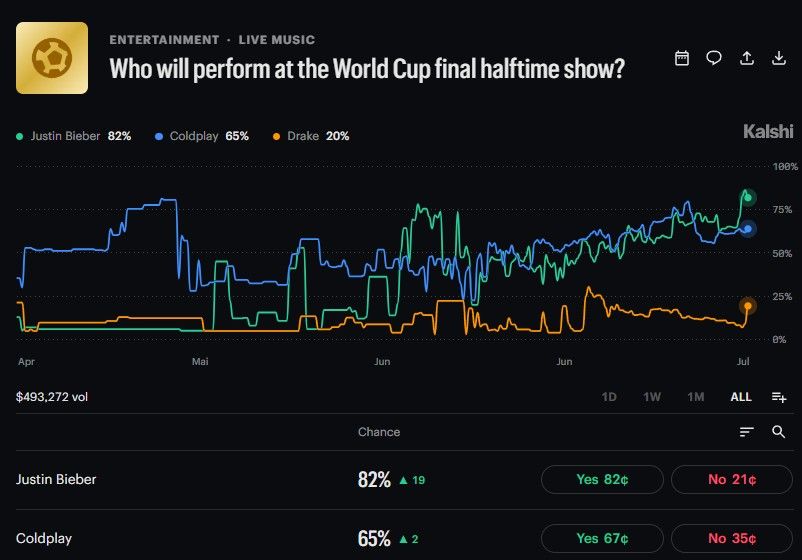
FIFA President Gianni Infantino has teased an unnamed “super-mega top global artist” for the FIFA World Cup halftime show on July 19. Prediction markets already treat Justin Bieber as the clear favorite for the secret slot.
Madonna, Shakira, and BTS will headline the first halftime show in World Cup history at MetLife Stadium. Coldplay frontman Chris Martin curates the Global Citizen production.
The stage matches the stakes. MetLife Stadium holds 80,663 fans, and FIFA expects up to five billion TV viewers. Attendance has already passed the 1994 record, with more than 5.3 million stadium visitors so far.
Bieber Dominates FIFA World Cup Halftime Show Odds
Infantino dropped the tease, promising one more act for the FIFA lineup. Traders reacted immediately.
On Kalshi, Bieber contracts last traded at 82 cents, an implied probability of 82%. Polymarket prices him at 70%, with more than $213,000 wagered across the event.
Coldplay ranks as the clear second favorite at both venues. Martin curates the lineup, so traders expect extra songs from his band. Meanwhile, traders treat confirmed headliner Shakira as a near lock after she opened the tournament and co-wrote its official song, Dai Dai.

Among the wildcards, Bad Bunny stands out as the strongest dark horse, ahead of Drake and The Weeknd. Peso Pluma and Camila Cabello also draw steady interest, while Kalshi lists everyone from AC/DC to Zach Bryan. Consequently, the frenzy keeps producing new prediction market platforms.
Taylor Swift remains a long shot on Polymarket despite her global reach. Instead, bettors have poured millions into wedding markets tied to her engagement with Travis Kelce.
Billions Flow Into World Cup Prediction Markets
The mystery-artist market is a sideshow within a record wave of trading. Kalshi and Polymarket handled $5.4 billion in World Cup volume during the tournament’s first week alone Forbes reported.
Kalshi’s $2.9 billion that week topped both March Madness and the Champions League. Moreover, its total World Cup volume has since climbed to $14.6 billion.
Traditional bookmakers expected a surge as well. Research firm Eilers & Krejcik Gaming projected $4.4 billion in US online sportsbook wagers for the tournament, up from $1.8 billion in 2022.
Who Will Win the $50 Million FIFA Prize Money?
On the pitch, France holds a commanding 34% implied probability to lift the trophy on Kalshi. Defending champion Argentina follows near 21%, well ahead of Spain and England. The champion collects $50 million in FIFA prize money along with the title.
Both venues had backed France early when the knockout rounds opened. However, upsets in a single-elimination bracket can reprice the entire board within minutes.
The tournament keeps generating trades far beyond football, from an unlikely Tinder rally in Match Group stock to Kalshi’s World Cup partnership with ADI Predictstreet. Whether the mystery act justifies Infantino’s superlatives will become clear in East Rutherford on July 19.
The post Prediction Markets Reveal Odds for FIFA’s Mystery ‘Super-Mega Top Global Artist’ appeared first on BeInCrypto.

XRP climbed roughly 5% over the past 24 hours, which helped the token reclaim the $1.10 level. Despite the short-term recovery, it remains down more than 50% compared with its value a year ago.
Fresh on-chain data suggests the prolonged decline has pushed key holder metrics to historically extreme levels.
Lower-Risk Buying Window
According to Santiment, XRP holders are experiencing some of the weakest average returns in the asset’s history. Its 30-day MVRV has fallen to -45%, while its 365-day MVRV stands at -47%, which signals that both short-term and long-term holders are deeply underwater.
For the first time in XRP’s nearly 12-year history, both short- and long-term holders are facing record-low average returns, which demonstrates that fear and frustration have reached unusually high levels. Santiment said this does not rule out the possibility of further price declines if the broader crypto market remains under pressure.
However, from a risk-reward perspective, it believes buying or increasing exposure to XRP now carries less risk than usual because much of the downside has already been absorbed by existing holders, a condition that has historically coincided with stronger market setups.
Meanwhile, crypto analyst Ali Martinez said the SuperTrend indicator has flashed its first buy signal on XRP since mid-June. He explained that the previous buy signal was followed by a 14% rally, while the indicator also successfully identified the last two major declines of 19% and 16%.
XRP’s network activity has also picked up, according to his earlier analysis. Daily active addresses have increased from 23,000 on June 14 to nearly 40,000, indicating stronger on-chain participation.
Inflows After Brief Pullback
On the institutional side of things, US-based spot XRP ETFs attracted more than $59 million in net inflows throughout June. After two consecutive days of outflows, the funds returned to positive territory on July 3, bringing in $6.55 million.
Data from SoSoValue revealed that Bitwise’s ETF accounted for the largest share of the day’s inflows.
The post This XRP Signal Has Never Looked Worse, But is That the Setup? (Analyst) appeared first on CryptoPotato.


Alibaba has banned employees from using Anthropic’s Claude Code in workplace environments from July 10 over alleged security concerns involving embedded backdoors, according to a person familiar with the decision.
Summary
- Alibaba will block employees from using Claude Code in workplace environments from July 10 over alleged security concerns.
- The reported restriction comes weeks after JPMorgan and Goldman Sachs limited access to Anthropic’s Claude models in Hong Kong.
- Anthropic recently restored its newest AI models after U.S. authorities lifted export restrictions and approved new safety measures.
According to a source familiar with the matter, the restriction will apply across Alibaba’s internal work environments and takes effect on July 10. The person said the company reached the decision because of alleged security risks linked to embedded backdoors in the coding assistant.
As of publication time, Alibaba has not issued an official statement, and no further details about the alleged security concerns or the scope of the restriction were disclosed.
Claude faces another enterprise setback
The latest development comes just weeks after Anthropic’s Claude models lost access to another major enterprise customer group in Hong Kong. In June, the Financial Times reported that JPMorgan had stopped employees in Hong Kong from selecting Claude models from the bank’s approved list of large language models because of Anthropic’s licensing terms governing where the models could be used.
The report said Goldman Sachs had previously introduced a similar restriction after determining that Anthropic’s terms of service excluded use across Greater China, including Hong Kong. Anthropic later told the Financial Times that Claude had never been officially supported in Hong Kong, while JPMorgan declined to comment.
Those restrictions added to concerns among some financial institutions in Hong Kong as advanced AI tools become more deeply integrated into software development, research, and financial services workflows, according to the Financial Times.
Anthropic recently restored its newest models
The Alibaba decision also follows a turbulent few weeks for Anthropic’s latest AI systems. On July 1, the company restored public access to its Claude Fable 5 and Mythos 5 models after U.S. authorities lifted export restrictions that had forced Anthropic to suspend them in June.
Anthropic said it resumed deployment after what it described as productive discussions with U.S. officials and added new classifiers designed to detect and block more cybersecurity-related tasks. The company said the additional safeguards addressed government concerns over possible misuse through jailbreak techniques.
While defending its technology, Anthropic argued that the reported jailbreak involved a limited method rather than a universal bypass of the models’ safety protections. The company also announced expanded cooperation with the U.S. government on model testing, safety evaluations, misuse tracking, and information sharing related to jailbreak risks.
This Friday, we examine Ethereum, Ripple, Cardano, Binance Coin, and Hyperliquid in greater detail.
Ethereum (ETH)
Ethereum managed to bounce off support at $1,500 and recovered last week’s losses. This is also why it closed the week with an impressive 10% rally, as buyers regained control of price action.
To be confident in a sustained recovery, the price will need to eventually break the current resistance at $1,800. Anything less than that would only be a short relief before sellers return to dominate.
Looking ahead, Ethereum has a real chance here to set a local bottom and attempt a rally. The question is if buyers have the volume and strength to sustain it and break the key resistance in the days and weeks to come.

Ripple (XRP)
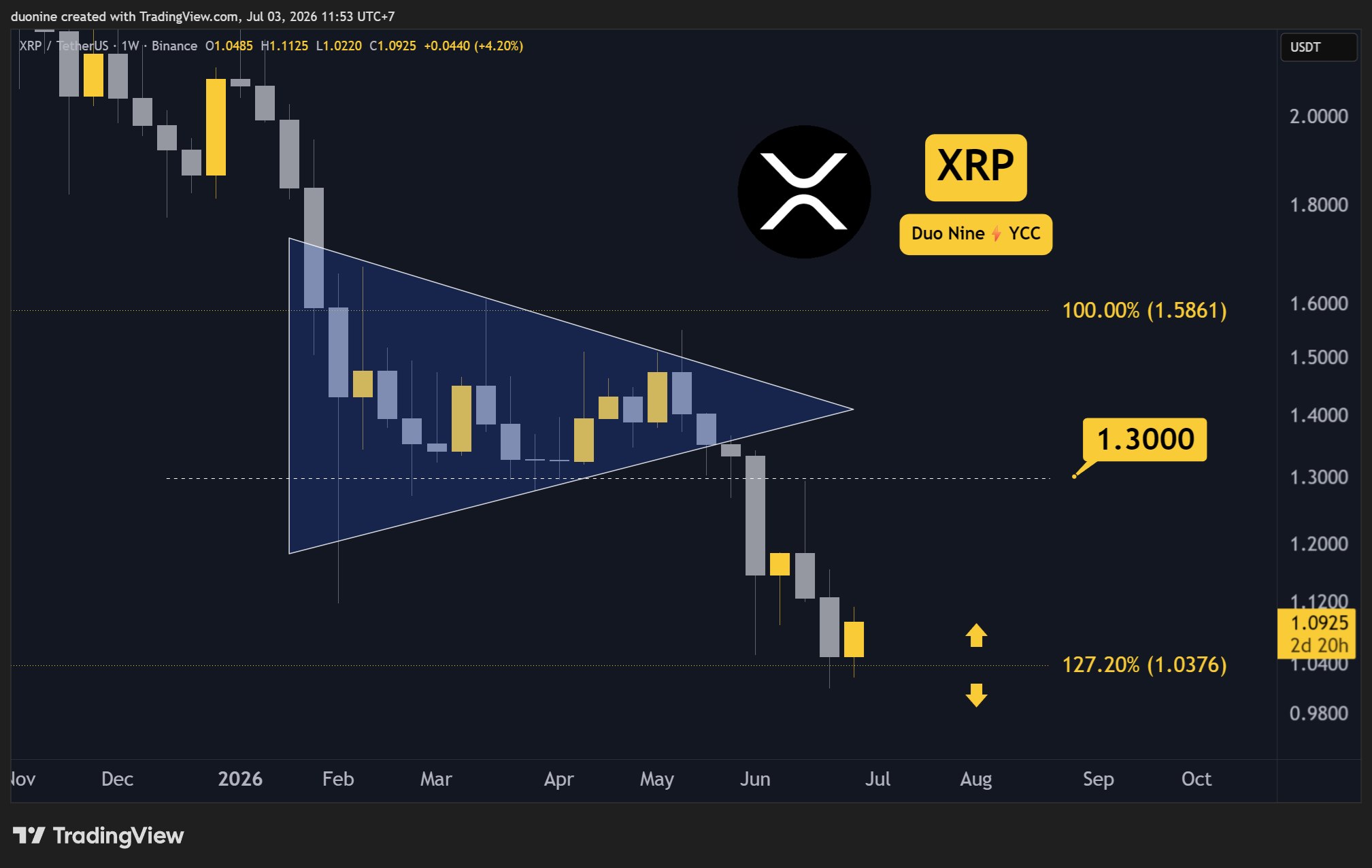
This week, buyers managed to defend $1, sending the price 6% higher. However, there is resistance at $1.1, which has managed to hold off the bulls, at least as of this post.
Similarly to Ethereum, XRP needs to make the best of this bounce and turn it into a sustained rally if it wants to break away from its current downtrend. Even if the $1.1 resistance falls, the price still has to claim $1.3 to confirm a breakout.
Looking ahead, the price reaction at $1 was somewhat expected since it’s a key psychological level. If buyers fail to capitalize on this in the coming days and weeks, then sellers will likely return to put pressure again.
Cardano (ADA)
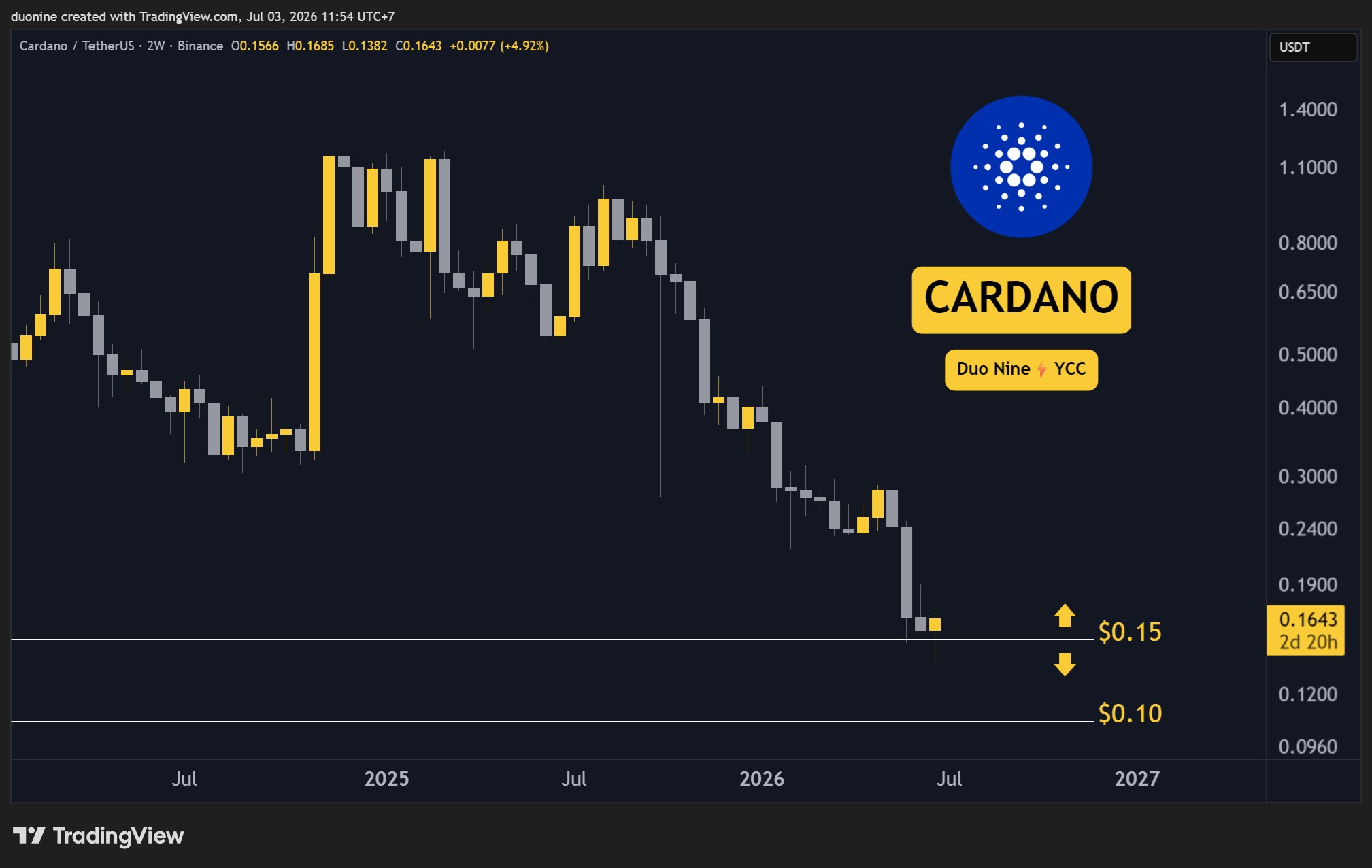
This week, ADA impressed with a 16% bounce after the price briefly fell under the $0.15 support. With the support secured, this cryptocurrency has a good shot at moving higher. However, as of this post, the price formed a lower high.
To be confident in a sustained recovery, Cardano will have to move beyond its previous high of 19 cents. Anything less than that would make this a bearish bounce, eventually leading to ADA falling lower.
Looking ahead, sentiment across the crypto market has improved with the start of July, but the month is only just beginning, and it is too early to say whether the current price action will be sustained. At a macro level, ADA remains bearish.
Binance Coin (BNB)
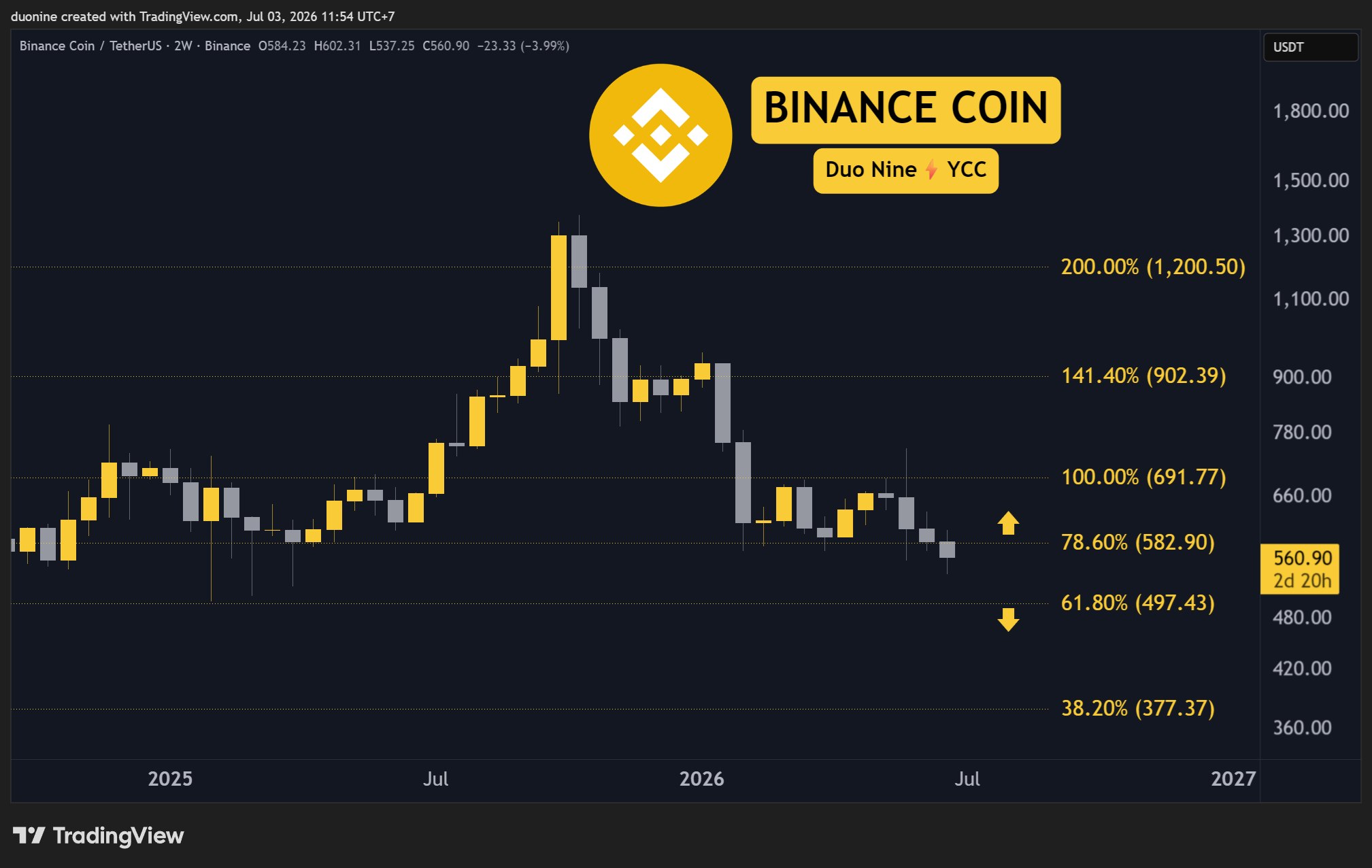
Compared to the other coins on our list, Binance Coin remained flat this week. This is atypical and rather bearish because the price failed to reclaim its support at $580. Because of that, sellers retain the upper hand and may aim for $500 next.
The $500 support hasn’t been tested yet, but it’s the next major level if bears continue to dominate the chart. Moreover, Binance failed to secure a MICA license in the EU at the start of July, which made it lose a key market to competitors.
Looking ahead, any weakness for Binance, the exchange, will likely translate to its token, BNB. The current chart seems to confirm this, as it remains in a bearish trend with no bounce or recovery in sight.
Hype (HYPE)
HYPE found good support above $60 and bounced by 6% this week. This has placed it in flat price action since early June. This consolidation is also forming a large pennant. Once that is resolved, we will know where this cryptocurrency is headed next.
When a pennant forms, the price tends to respect the underlying trend, which, in this case, is bullish. Therefore, the higher probability is for the price to break away and aim for new highs.
Looking ahead, HYPE will have to secure $68 as a key support and hold above it if it wants to challenge the current all-time high at $77. Anything less than that, or a break below $60, would be a bearish signal with lower lows likely.

The post Crypto Price Analysis July-03: ETH, XRP, ADA, BNB, and HYPE appeared first on CryptoPotato.


Humanity Protocol has confirmed it is repositioning toward enterprise artificial intelligence products after a $36 million exploit accelerated an internal strategic overhaul that had already been under discussion for months.
Summary
- Humanity Protocol has shifted its focus toward enterprise AI following a $36 million security breach.
- The project has begun a new token rollout while continuing compensation efforts and law enforcement investigations.
- Founder Terence Kwok said the move to enterprise AI had been under discussion before the hack accelerated the transition.
During a recent interview, Humanity Protocol founder Terence Kwok said the company had been reconsidering its long-term direction for the past six to nine months and that the June security breach pushed those plans forward sooner than expected.
Enterprise AI takes priority after hack
Rather than continuing to present itself primarily as a blockchain identity platform, Kwok said Humanity Protocol will increasingly focus on building products and services for enterprise AI customers. He explained that digital identity remains an important part of the company’s work because AI systems will require stronger methods of verifying people and credentials.
Kwok said the team has already been testing products designed for AI companies and plans to introduce additional enterprise-focused offerings. Humanity Protocol previously developed a proof-of-personhood blockchain supporting credentials for employment, assets, and credit scoring, including work with Mastercard on proof-of-assets applications.
According to Kwok, the platform has registered around 10 million users, with a couple of million completing their credentials.
The strategic change follows one of the project’s biggest setbacks. Humanity Protocol lost roughly $36 million after attackers gained access to critical private keys, triggering a sharp collapse in the H token and forcing the project into recovery mode.
Recovery efforts continue as token migration moves ahead
Discussing the aftermath of the attack, Kwok said the chances of recovering the stolen funds are “pretty low,” adding that the team’s attention has instead turned to rebuilding the ecosystem. He compared the situation with Bybit’s unsuccessful efforts to recover approximately $1.4 billion worth of ether stolen in a separate attack last year.
As part of the recovery process, Humanity Protocol has issued a replacement token and distributed it to a range of addresses, including major cryptocurrency exchanges. Kwok said discussions are continuing around snapshot dates, suspended deposits and withdrawals, liquidity pools and custodian arrangements, while investigators work to identify every transaction that took place after the breach before completing compensation claims.
Law enforcement agencies in multiple jurisdictions, beginning with Hong Kong alongside authorities in the United States, have also been contacted as investigations continue, according to Kwok.
Earlier findings released by Humanity Protocol and security firm Quantstamp attributed the exploit to compromised private keys stored on a developer device rather than vulnerabilities in the project’s smart contracts.
The June investigation concluded that attackers obtained control of production systems after malware infected a developer machine containing backups of several critical keys, allowing them to authorize legitimate-looking transactions that drained about 141 million H tokens from the Ethereum bridge before additional tokens were minted on BNB Smart Chain. Humanity Protocol and Quantstamp said the attack bore characteristics associated with North Korea-linked threat actors.
The breach wiped out most of the H token’s value within hours, with on-chain analysts estimating losses of more than $32 million at the time and the token falling roughly 89% as the attacker minted and sold tokens across multiple chains. Kwok said monitoring systems quickly detected unusual token movements after the compromise, although determining the full extent of the incident required several days of forensic analysis across the project’s infrastructure.
Meta CEO Mark Zuckerberg said AI agent development at the firm is progressing more slowly than expected, even as technology and crypto firms continue pouring resources into the nascent technology.
In a company meeting on Thursday, Zuckerberg said the “trajectory of the agentic development over at least the last four months hasn’t really accelerated in the way that we expected,” according to Reuters, which reviewed a recording of the call.
The bet on agent adoption hasn’t “come to fruition yet,” Zuckerberg said, adding that executives made an aggressive push into agentic infrastructure in January in part because of fears they weren’t moving “fast enough.”
Despite the slower progress, Zuckerberg said he expects the firm’s AI investments to start paying off within the next three to six months.
Zuckerberg’s comments offer a reality check for technology and crypto firms betting that autonomous agents will soon become major users of blockchain payments. Meta, along with several crypto firms, has bet big on agentic AI, with many pivoting their business models to cater to autonomous AI agents.
In May, Meta cut roughly 10% of its workforce and reassigned about 7,000 employees to AI-focused teams — a restructuring Zuckerberg acknowledged was not as clean as it could have been, with executives miscalculating the timing.
Meta expands AI agent feature on three platforms
Zuckerberg’s concerns come as Meta expanded its Meta Business Agent globally for businesses on Instagram, Messenger and WhatsApp on Thursday.
The Business Agent can respond to customer inquiries, make product recommendations and close sales without human intervention, Meta said.
Zuckerberg also revealed in March that he was building a personal AI agent designed to support his decision-making as CEO.
The crypto industry has been a keen adopter of the technology, with Coinbase CEO Brian Armstrong and Circle CEO Jeremy Allaire among the executives predicting that AI agents will become the dominant users of blockchain-based payments in the coming years.
Several notable integrations advancing AI agent-driven stablecoin spending have emerged in recent months, including one by Amazon Web Services in May, when it integrated Coinbase’s x402 payments protocol into Amazon Bedrock AgentCore, allowing agents to transact in the USDC (USDC) stablecoin.
Related: OKX launches AI marketplace for autonomous agent economy
In April, crypto wallet startup Oobit launched a Visa-supported virtual card for AI agents to make online purchases in USDt (USDT) on behalf of businesses.
AI agent payments adoption lagging
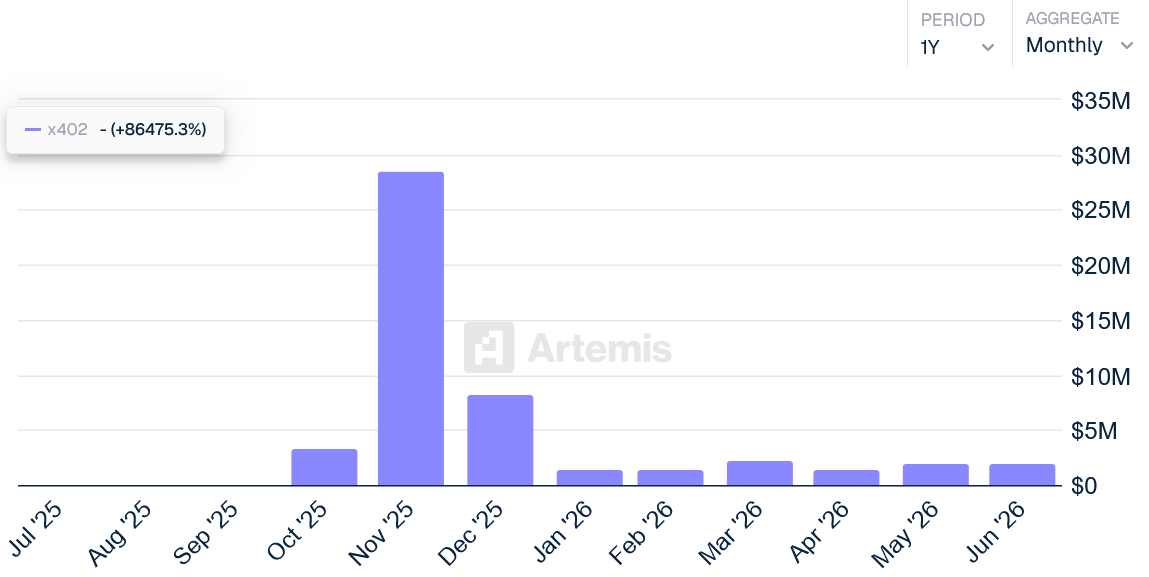
Despite the integrations, data shows that AI-agent transaction activity on the blockchain remains relatively small, with Artemis data showing that only $2 million in trading volume has been facilitated through the AI agent-supported x402 protocol over the past 30 days.
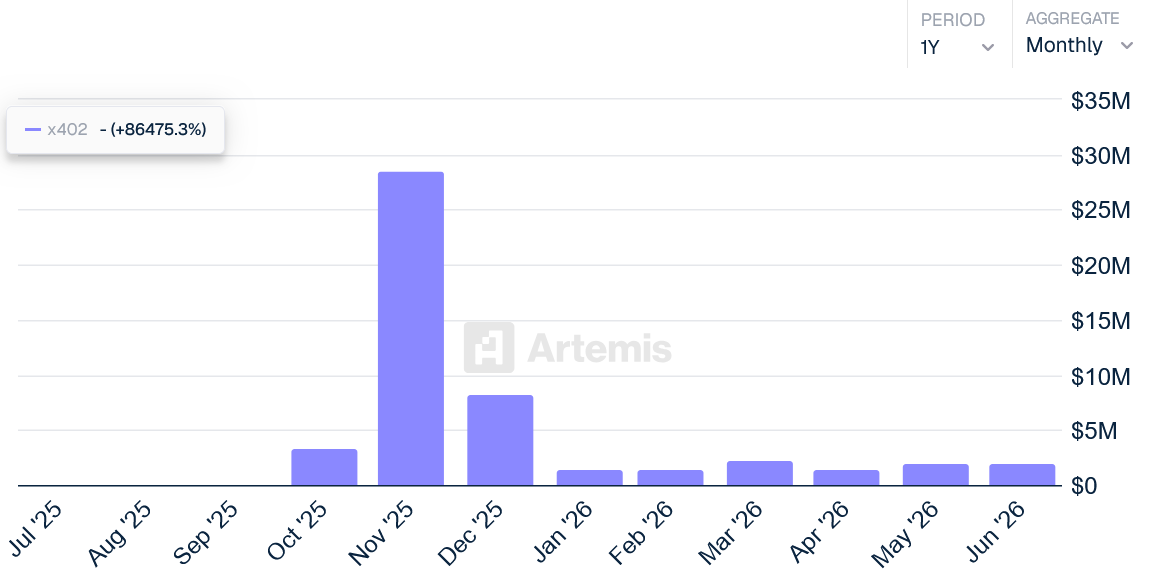
Monthly change in x402 transaction volume over the past 12 months. Source: Artemis
Magazine: The end of anonymity? AI could unmask crypto’s hidden identities

A teenager suspected of involvement with the “Scattered Spider” hacking group has been extradited to the US over his alleged role in an $8 million crypto ransom.
The US Justice Department said on Wednesday that Peter Stokes, a 19-year-old dual US-Estonian national, was arrested in Finland in April on an Interpol Red Notice and extradited to the US last week to appear in a Chicago federal court on Tuesday.
A criminal complaint unsealed in court accused Stokes and others of breaching a luxury jewelry retailer’s computer system in May 2025 to steal data and demand a ransom payment of $8 million in crypto. The retailer managed to evict them from the network and did not pay the ransom, but suffered $2 million in disruption damages, according to the complaint.
Stokes is one of the few arrests that authorities have tied to Scattered Spider, which often uses crypto ransoms. Ransomware actors received more than $820 million in payments last year, an 8% decline from 2024, even as attacks rose by 50%.

An image the FBI took from Stokes’ Snapchat account shows him wearing a necklace that says “Hack the Planet,” a quote from the 1995 cult film “Hackers.” Source: US Department of Justice
Alleged hack started with phishing call
According to the complaint, the hack against the jewelry retailer started with several phishing calls to the company’s technology help desk, with Stokes and others allegedly pretending to be employees requesting a reset of login credentials.
Authorities alleged the hackers managed to compromise three employee accounts in as little as two hours, two of which belonged to company IT administrators, who had access to higher-privilege accounts that were also breached and used to access the company’s systems,
After a few days, Stokes and others allegedly sent a ransom note from a compromised company email account to demand funds or they would publish credit card and payment information.
However, the complaint said the company repelled the intrusion and that the intruders later contacted the company separately to demand $8 million, which the company did not pay.
Stokes allegedly involved in “numerous intrusions”
The complaint accused Stokes, who uses the online nicknames “Bouquet” and “Jordan,” of being a “Scattered Spider member who has engaged in numerous intrusions, or assisted in them” on multiple unnamed companies.
Authorities claimed that a search of a storage device allegedly linked to Stokes showed it contained downloads from a virtual private server that Microsoft had identified as being used to carry out intrusions on companies.
The complaint alleged that it also “contained exfiltrated records from multiple victim-companies.”
Related: Taiko reopens bridge after $1.7M exploit, says users made whole
The complaint claimed that Stokes’ Snapchat account shows “substantial wealth for a person his age” and alleged that he used the account to boast “about his international travel and wealth, and sent media regarding apprehended Scattered Spider members.”
The Justice Department said that Scattered Spider, also known as “Octo Tempest,” “UNC3944,” and “0ktapus,” has been involved in over 100 network intrusions, resulting in more than $100 million in ransom payments and millions of dollars in damages.
Stokes was charged with six counts related to hacking, cyber extortion, fraud and conspiracy.
Magazine: Crypto scammers face death, Aussie CGT makes Asian hubs attractive: Asia Express


Roughly 10.83 million BTC are currently held at a loss, meaning their holders paid more than today’s price, against 9.22 million still in profit, according to Glassnode data. It is the first time loss-making supply has overtaken profitable supply since the current cycle began and reflects how deep the correction from bitcoin’s $109,000 January peak has cut.
Historically, these crossovers have landed near periods of peak financial stress and capitulation among newer buyers. They have also marked the point at which coins migrate from weaker hands to stronger ones, since only holders with high conviction tend to sit on losses rather than sell. Long-term holder accumulation and rising wallet-cohort balances across several size brackets have run alongside this latest deterioration in profitability.
Bitcoin traded at $61,361 on Thursday, up 0.7% on the day and 2.5% on the week, still roughly 44% below January’s all-time high, per CoinDesk data. Ether added 4.2% to $1,702, and Solana led the majors at 18.6% on the week to $80.44, with volume running above $3.6 billion.
Whether the supply crossover marks a bottom depends on what follows. In 2018-19 and 2022, similar readings preceded months of basing before a sustained recovery. The chart does not resolve on its own. ETF flows returning and macro pressure easing are what convert the accumulation signal into a price signal.

Mark Zuckerberg tells staff that AI agents haven’t progressed as quickly as he’d hoped

Stripe’s Bridge secures MiCA and EMI licenses to expand across EU

Netflix’s New Harlan Coben Mystery Continues Its Unstoppable Reign on Streaming


-

 Fashion7 days ago
Weekend Open Thread: Staud – Corporette.com
-

 Crypto World3 days ago
Strategy authorizes up to $1.25B in Bitcoin sales under new capital plan
-

 News Videos5 days ago
MAJOR BITCOIN & MARKET UPDATE!!!! (MUST WATCH ASAP!!!)
-

 Tech3 days ago
Anonymous researcher drops 0-day ‘exploitarium’ repo
-

 Crypto World6 days ago
Coinbase, Circle Deepen Crypto Stock Losses Despite Resilient S&P 500
-

 Business3 days ago
Australia treasurer says alleged access of prime minister’s bank data ’incredibly concerning’
-

 Crypto World6 days ago
Kraken's xStocks Opens Bending Spoons IPO Registration to EEA Retail
-

 Sports6 days ago
FIH Pro League: India defeat Pakistan 7-1, register biggest win of campaign | Other Sports News
-

 Tech5 days ago
Claude Code turned every engineer into three. Now companies need more product thinkers
-

 Tech5 days ago
Bluekit phishing kit adopts browser-in-the-middle for login theft
-

 Tech6 days ago
Russian hackers now target Signal backup recovery keys
-
 Crypto World7 days ago
Hyperliquid Named on Singapore MAS Investor Alert Register
-

 Crypto World7 days ago
RTX holders must register wallets before token distribution begins
-

 Sports2 days ago
Broncos roster: OL Ben Powers (No. 74) entering final year of contract
-
 Business4 days ago
The AI boom won’t burst all at once. It will pop in ‘rolling bubbles’: Macquarie
-

 Tech6 days ago
Silicon Valley paid to kill AI regulation, now it wants the rules back
-

 NewsBeat2 days ago
Presenter Caroline Flack’s brother Paul Flack dies aged 55
-

 Crypto World1 day ago
Binance stock trading tops $1B in first month after launch
-
 NewsBeat24 hours ago
New exhibition reflects five decades of movement between island of Ireland and GB
-

 Tech6 days ago
OpenAI mulls delaying IPO over valuation concerns
You must be logged in to post a comment Login