

Crypto World
what it means for RLUSD and XRP

Ripple signed on to a dollar stablecoin backed by Visa, Mastercard, and BlackRock. It is not Ripple’s coin, and it does not launch on the XRP Ledger. So the question every XRP holder is asking is simple: does any of this actually help the token?
Summary
- On June 30, 2026, Ripple joined Open USD, or OUSD, a consortium dollar stablecoin backed by more than 140 companies including Visa, Mastercard, Stripe, BlackRock, BNY, Coinbase, and Google, as a day-one integration partner.
- OUSD is not a Ripple product. It is run by an independent organization called Open Standard, and it launches on Solana, Stellar, Base, and Polygon later in 2026, not on the XRP Ledger.
- Ripple kept its own stablecoin, RLUSD, and joined OUSD anyway, a hedge that puts the XRP Ledger forward as a possible rail while ensuring Ripple benefits from the traffic whichever stablecoin wins.
- The bull case for XRP is that a larger stablecoin market means more cross-currency flows for market makers to bridge, a role XRP can fill. The bear case is that OUSD competes directly with RLUSD, does not run on the XRP Ledger at launch, and a win for Ripple the company is not a win for the token.
- The deeper story is a challenge to Tether and Circle: OUSD shares its reserve income with partners instead of keeping it, inverting the economics that built the stablecoin giants.
Every so often, Ripple turns up somewhere that makes XRP holders pay attention, and the launch lineup for Open USD is the latest. On June 30, 2026, Ripple signed on as a day-one integration partner to a new dollar stablecoin backed by Mastercard, Visa, Stripe, BlackRock, and more than 140 other companies. The headline reads like a win for Ripple, and it may well be one for the company. Whether it does anything for XRP, the token, is a separate and much harder question, and the answer runs through two details most coverage skips: OUSD is not Ripple’s coin, and it does not launch on the XRP Ledger.
This piece works through what Open USD is, why Ripple joined a project that competes with its own stablecoin, and what the move means for both RLUSD and XRP. The same distinction keeps returning across Ripple’s 2026 story: a Ripple win is not an XRP win unless there is a clear transmission mechanism from the company’s progress to token demand. Open USD is one more test of that rule. It is a company-level strategy first, and only a token catalyst if the usage eventually reaches XRP.
What Open USD actually is
Start with the thing itself, because the branding invites confusion. Open USD is a dollar-backed stablecoin created by Open Standard, an independent organization set up to run and govern the coin, with a board drawn from its partners and Zach Abrams as founding chief executive. It is not issued or controlled by Ripple. Ripple is one name on a launch roster that reads like a directory of global finance and technology: Visa, Mastercard, Stripe, BlackRock, BNY, Coinbase, Google, IBM, OKX, Standard Chartered, Shopify, and more than 140 companies spanning banking, payments, technology, and crypto.
The coin is planned to go live later in 2026. The design is where OUSD gets interesting, because it goes straight at the business model that built the stablecoin giants. Businesses will be able to mint and redeem OUSD with no fees and no volume limits. More striking, most of the income thrown off by the coin’s reserves, the interest earned on the dollars backing it, goes to the participating businesses after a small management fee, instead of being kept by a single issuer.
That is close to the opposite of how Tether and Circle operate. Tether earned more than $10 billion in 2025 almost entirely from interest on its reserves, and Circle makes money the same way while handing about half of it to Coinbase for distribution. OUSD hands the float back to the network, which is a direct attack on the issuer-keeps-the-interest model. For readers new to the category, OUSD is still a dollar-backed stablecoin; what differs is who gets the economics.
The launch chains matter for the rest of this analysis, so note them precisely. OUSD is set to go live on Solana, with Stellar, Base, and Polygon in the mix, and Solana is being highlighted as a native day-one chain. The XRP Ledger is not among the launch networks. That single fact reshapes what Ripple’s participation can realistically mean for XRP, and we will return to it.
Why Ripple joined a rival to its own stablecoin
The obvious objection is that Ripple already has a stablecoin. RLUSD launched at the end of 2024 and has grown into a top-ten dollar token. So why would Ripple help build a competitor chasing the same institutional payments customers? The answer lies in how Ripple joined and in a strategy already visible across the industry.
By signing on as an integration partner rather than an issuer, Ripple keeps RLUSD and still positions the XRP Ledger as one of the rails OUSD could eventually run on. In that framing, Ripple wins traffic no matter which stablecoin comes out on top, because its ledger and its payment infrastructure can carry flows for the winner. This fits a pattern the big card networks set over the past year. Mastercard has spent that time settling payments across several blockchains and already handles Ripple’s own RLUSD alongside USDC, positioning itself as neutral infrastructure instead of the backer of any single issuer.
Ripple is doing the same thing: putting itself forward as neutral ground to claim a spot on as many rails as possible. Seen that way, joining OUSD is a hedge, not a contradiction. If OUSD becomes the dominant enterprise stablecoin, Ripple wants to be inside it. If RLUSD holds its ground, Ripple still has its own product. And if the market fragments across several coins, Ripple’s infrastructure can move value between them.
For Ripple the company, that is a sensible bet in every direction. The harder question is what any of it does for the token that XRP holders own. This is where RLUSD versus XRP becomes more than a pricing debate. Ripple can expand its stablecoin reach and its institutional relevance while XRP still waits for direct demand.
The catch: Open USD does not launch on the XRP Ledger
Here is the detail that undercuts the simplest bullish reading. OUSD is launching on Solana, Stellar, Base, and Polygon, not on the XRP Ledger. Ripple joined the consortium, but its own ledger is not among the chains carrying the coin at launch. The crypto analyst who goes by WrathofKahneman flagged this in a July 1 thread, noting that the absence left traders asking what Ripple actually gets from the deal and whether XRP benefits at all.
The gap matters because the standard XRP-benefits argument assumes the XRP Ledger carries the stablecoin’s traffic, generating activity and demand tied to the token. If OUSD does not run on the ledger, that direct channel does not exist at launch. Ripple’s integration-partner status keeps the door open to adding the XRP Ledger later, and Ripple can still route value between OUSD on other chains and RLUSD on the ledger, but the immediate, mechanical link many holders imagined is not there on day one.
This is the recurring problem with reading Ripple corporate news as XRP news. Ripple the company can join a landmark consortium, position its rails, and benefit commercially, all without the token capturing much of the value. The XRP Ledger not being a launch chain for OUSD is the clearest illustration yet that a Ripple win and an XRP win are not the same event. The market will need usage data, not a partner logo, before treating this as an XRP catalyst.
The bull case for XRP
There is still a credible, if indirect, argument that XRP benefits, and it runs through market structure instead of through the ledger carrying OUSD directly. Start with the size of the pie. If OUSD succeeds in bringing a wave of new institutional payment flows on-chain, the total volume of dollars moving across blockchains grows. Larger, more fragmented stablecoin markets create more price gaps between venues, chains, and currency pairs, and those gaps are filled by market makers who arbitrage them.
A fast, cheap bridge asset is useful in that role, and XRP was designed to be exactly that. The mechanism does not require any enterprise to touch XRP directly. An institution can use OUSD or RLUSD for settlement and never think about XRP, while market makers behind the scenes move value between OUSD, RLUSD, fiat pairs, and other assets, sometimes reaching for XRP because it is fast and cheap at the moment they need it. That activity tightens spreads and can lift volumes in XRP pairs tied to the growing stablecoin mesh.
Geography reinforces the point. RLUSD is now available in Japan after regulatory approval and is rolling out to institutions in Turkey through local partners, and those corridors are practical instead of speculative. If OUSD shows up as a settlement coin at global partners while RLUSD deepens in real corridors, the web of rails expands, and each new connection creates small arbitrage windows that a bridge asset can fill. The optimistic reading, then, is that Ripple has bought a seat at the table of the most heavily backed stablecoin ever launched, and that a bigger, busier stablecoin economy is good for an asset built to move liquidity between its pieces.
The bull does not need the XRP Ledger to carry OUSD at launch. The bull needs the overall market to grow and stay fragmented enough that bridging has value. That is the most credible XRP-positive version of the story. It is indirect, but it is not imaginary.
The bear case for XRP
The skeptical case is more concrete, and it starts with cannibalization. OUSD competes directly with RLUSD. Both target institutional payments and settlement, and both chase the same enterprise customers. Ripple joining a rival that goes after its own product’s market is a strange look, and at least one analyst noted the obvious tension: if OUSD competes with RLUSD, where does that leave RLUSD?
A consortium coin with Visa, Mastercard, and BlackRock behind it and a revenue-sharing model is a formidable competitor for a single-issuer stablecoin, even one with Ripple’s regulatory standing. Then there is the ledger problem already covered: OUSD does not launch on the XRP Ledger, so the direct on-chain benefit to XRP is absent at the start. Even if OUSD were added to the ledger later, XRP Ledger transaction fees are tiny, fractions of a cent, so a stablecoin moving across it would consume only a trickle of XRP through the network’s small transaction burn. The value of stablecoin traffic accrues mostly to the issuer, the rails operator, and the partners sharing reserve income, not to the ledger’s native token.
The track record hangs over all of it. Ripple has stacked up regulatory wins, ETF launches, acquisitions, and partnerships over the past year, and XRP has still fallen, trading near a multi-month low. Good news has repeatedly failed to move the token, which suggests the market already prices Ripple’s corporate progress separately from XRP demand. That is why institutional XRP demand matters more than institutional Ripple headlines. If the buyers are buying Ripple’s rails, RLUSD, or OUSD rather than XRP itself, the token’s price still lacks the direct bid holders need.
Finally, the consortium itself is unproven. Coinbase helped found the original USDC governance body, the Centre Consortium, with Circle in 2018, and that arrangement ended in acrimony and a nine-figure buyout by 2023. Whether a 140-member consortium governs any more durably than a two-member one did is an open question, and Ripple’s day-one hedge could look prescient or could look like a bet on a coin that never gains traction.
What it means for RLUSD
The most direct casualty of the OUSD launch may be RLUSD, and the timing is unkind. Ripple’s stablecoin has been contracting rather than growing, slipping from a peak near $1.7 billion in market value toward roughly $1.4 billion, even as Ripple expanded it into Japan through regulatory approval and into Turkey through local partners. Launching a consortium rival backed by the largest names in payments into that softness sharpens the competitive pressure on a coin already losing ground.
RLUSD is not without strengths. It is issued by a Ripple subsidiary under a New York trust charter, carries approvals in New York and Dubai, and has been built around regulatory standing and enterprise payments from the start. It runs on both the XRP Ledger and Ethereum, and Ripple-linked reporting has pointed to billions in RLUSD volume routed through XRP Ledger pairs since launch, which supports ledger activity even if it has not lifted the token’s price. Those are real assets in a market where regulatory clarity and compliance matter to institutions.
The strategic read is that Ripple is refusing to bet everything on RLUSD winning outright. By keeping RLUSD and joining OUSD, it hedges against its own stablecoin losing the institutional race, accepting more competition for RLUSD in exchange for a stake in whatever coin dominates. That is rational for the company and uncomfortable for RLUSD partisans, because it signals that Ripple itself is not certain its stablecoin wins. For the broader market, the more important shift is the revenue-sharing model OUSD introduces, which pressures every issuer, RLUSD included, to justify keeping the float that stablecoins have always quietly earned.
What would make it a real catalyst for XRP
Cutting through the announcements, the question for XRP holders is what evidence would turn OUSD from a headline into a genuine driver of token demand. The first thing to watch is listings and liquidity. If major exchanges roll out OUSD and RLUSD trading pairs widely, and market makers post tight two-sided quotes with XRP sitting in the settlement path, that is a more credible signal than any press release, because it shows XRP actually being used to bridge the new flows.
The second is whether the XRP Ledger gets added as an OUSD rail over time. Ripple’s integration-partner role leaves that possible, and if it happens, the ledger would carry some OUSD traffic directly, a more concrete link than the market-maker channel. The third is real usage rather than announced partnerships: circulating supply growth for OUSD, partner-led mint and redeem activity, merchant payment volume, and sustained peg stability, the metrics that separate a working stablecoin from a launch-day roster. Until those appear, OUSD is a promising structure with famous backers and little proven adoption.
The honest conclusion is that Ripple joining Open USD is a clear positive for Ripple the company and an ambiguous event for XRP the token. It expands Ripple’s footprint, hedges its stablecoin bet, and positions its rails inside the most heavily backed stablecoin project yet attempted. For XRP, the benefit is indirect, contingent on market-maker behavior and future ledger integration, and offset by direct competition with RLUSD and the plain fact that the coin does not launch on the XRP Ledger. As always with Ripple news, the safest move is to separate the company’s progress from the token’s, and to watch usage instead of announcements.
The stablecoin war Open USD just escalated
Zoom out from Ripple, and the launch is best read as a shot in a widening stablecoin war. The market reaction told the story within hours. Shares of Circle, the issuer of USDC that went public earlier in 2026, fell by double digits on the news, as traders priced Open USD as a direct threat to the two incumbents that dominate the market, Tether and Circle. Some analysts pushed back, with William Blair calling the selloff an overreaction and arguing that USDC’s proven liquidity and institutional footprint would be hard for any newcomer to replicate.
The disagreement is itself the point: a launch-day partner list, however impressive, is not the same as adoption, and the market is unsure how much of a threat the consortium really is. The competitive backdrop explains why the roster drew blood. Tether and Circle have built enormously profitable businesses on a simple model, taking in dollars, parking them in safe assets like Treasury bills, and keeping the interest while the coin circulates free to use. That float income runs into the billions of dollars a year for the largest issuer alone.
Open USD aims a revenue-sharing model straight at that economics, returning most of the reserve income to the businesses that drive adoption. If payment networks and platforms can earn a share of the float by supporting a coin, the incentive to promote it changes, and that is what makes a consortium of card networks, banks, and technology firms a different kind of competitor from a standalone issuer. There is a regulatory current underneath all of this. Stablecoin legislation in the U.S. has moved from uncertainty toward a defined framework, giving banks, payment networks, and large enterprises the confidence to enter a market many had watched from the sidelines.
Open USD, with its lineup of regulated financial institutions, is a product of that shift as much as a response to it. The same clarity that let Circle go public and let Ripple pursue trust charters for RLUSD is what makes a 140-member consortium coin plausible in the first place. For XRP, the widening war cuts both ways, and it sharpens the analysis already laid out. A world with more stablecoins, more issuers, and more chains is a world with more fragmentation, and fragmentation is where a bridge asset earns its keep, moving value between coins and currencies that do not settle directly against one another.
That is the structural case for XRP in a multi-stablecoin market. The offsetting risk is that the winners of the stablecoin war may build their own settlement mesh across the chains they favor, and if the XRP Ledger is not among those chains, as it is not for Open USD at launch, XRP could find the bridging work routed around it. The token’s relevance in this new landscape depends less on how many consortiums Ripple joins and more on whether market makers keep reaching for XRP when they move value across an increasingly crowded field of dollar tokens. The launch, then, is a marker of how fast the stablecoin market is maturing from a two-issuer contest into an infrastructure battle among the largest names in finance.
Ripple has positioned itself inside that battle on multiple sides at once. Whether XRP the token shares in the outcome is the question the next year of usage data, not the launch-day roster, will answer.
Frequently asked questions
Is Open USD a Ripple stablecoin?
No. Open USD, or OUSD, is issued and governed by an independent organization called Open Standard, with a board drawn from its partner companies. Ripple is one of more than 140 partners and joined as a day-one integration partner, not as the issuer. Ripple kept its own separate stablecoin, RLUSD, which it issues through a subsidiary under a New York trust charter.
Who is backing Open USD?
Open USD launched with a roster of more than 140 companies spanning payments, banking, technology, and crypto, including Visa, Mastercard, Stripe, BlackRock, BNY, Coinbase, Google, IBM, OKX, Standard Chartered, and Shopify, among others. The coin is run by the independent Open Standard organization and is planned to go live later in 2026 across several blockchains. The size and quality of the partner list are the main reason the launch drew market attention.
Does Open USD run on the XRP Ledger?
Not at launch. Open USD is set to go live on Solana, Stellar, Base, and Polygon, with Solana highlighted as a native day-one chain. The XRP Ledger is not among the launch networks. Ripple’s integration-partner status leaves open the possibility of adding the ledger later, but the direct on-chain link to XRP does not exist at launch.
Why did Ripple join a stablecoin that competes with RLUSD?
Ripple appears to be hedging. By keeping RLUSD and joining OUSD as an integration partner, it positions its infrastructure to benefit whichever stablecoin wins, and it can route value between OUSD on other chains and RLUSD on the XRP Ledger. It mirrors how card networks like Mastercard now settle across many chains and multiple stablecoins instead of backing a single issuer. That is sensible for Ripple the company, even if it complicates the RLUSD story.
Does Open USD help the XRP price?
The benefit is indirect and uncertain. A larger stablecoin market can create more cross-currency flows for market makers to bridge, a role XRP can fill, which could lift volumes in XRP pairs. But OUSD does not launch on the XRP Ledger, XRP Ledger fees are tiny, and Ripple’s past wins have not lifted the token. A win for Ripple the company is not automatically a win for XRP.
How is Open USD different from Tether and Circle?
Open USD inverts the core economics. Tether and Circle keep the interest earned on their reserves, which has made them enormously profitable. Open USD instead shares most of that reserve income with its participating businesses after a small management fee, and lets businesses mint and redeem without fees or volume limits. That model is a direct challenge to the issuer-keeps-the-float approach that built the stablecoin giants.
What does Open USD mean for RLUSD?
It intensifies competition. OUSD targets the same institutional payments and settlement market as RLUSD, and it arrives while RLUSD has been contracting, slipping from a peak near $1.7 billion toward roughly $1.4 billion, even as Ripple expanded it into Japan and Turkey. Ripple keeping RLUSD while joining OUSD signals it is not betting everything on its own stablecoin winning the institutional race outright. It also pressures RLUSD to prove adoption through real payment and settlement volume.
What should XRP holders watch to judge the impact?
Watch for real usage instead of announcements. Key signals include major exchanges listing OUSD and RLUSD pairs with market makers quoting XRP in the settlement path, the XRP Ledger being added as an OUSD rail over time, and adoption metrics such as circulating supply growth, mint and redeem activity, merchant volume, and sustained peg stability. Those separate a working stablecoin from a launch-day partner list. Until those signals appear, the XRP impact remains speculative.
Disclaimer: This article is for information purposes only and does not constitute financial, investment, or trading advice. Cryptocurrency prices are highly volatile, and the success of new stablecoins and consortium projects is uncertain and can change. Nothing here is a recommendation to buy or sell any asset. Always do your own research and verify current figures on reputable data platforms before making financial decisions. Information is accurate as of July 2, 2026, and may change.

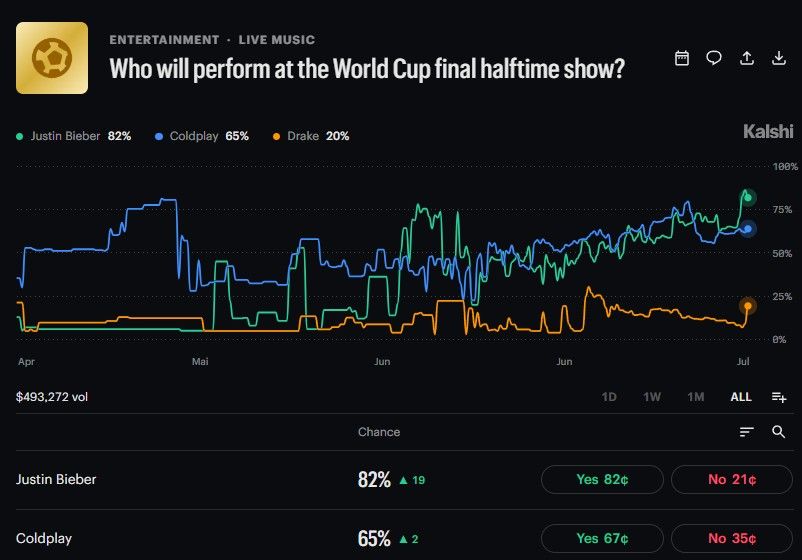
FIFA President Gianni Infantino has teased an unnamed “super-mega top global artist” for the FIFA World Cup halftime show on July 19. Prediction markets already treat Justin Bieber as the clear favorite for the secret slot.
Madonna, Shakira, and BTS will headline the first halftime show in World Cup history at MetLife Stadium. Coldplay frontman Chris Martin curates the Global Citizen production.
The stage matches the stakes. MetLife Stadium holds 80,663 fans, and FIFA expects up to five billion TV viewers. Attendance has already passed the 1994 record, with more than 5.3 million stadium visitors so far.
Bieber Dominates FIFA World Cup Halftime Show Odds
Infantino dropped the tease, promising one more act for the FIFA lineup. Traders reacted immediately.
On Kalshi, Bieber contracts last traded at 82 cents, an implied probability of 82%. Polymarket prices him at 70%, with more than $213,000 wagered across the event.
Coldplay ranks as the clear second favorite at both venues. Martin curates the lineup, so traders expect extra songs from his band. Meanwhile, traders treat confirmed headliner Shakira as a near lock after she opened the tournament and co-wrote its official song, Dai Dai.

Among the wildcards, Bad Bunny stands out as the strongest dark horse, ahead of Drake and The Weeknd. Peso Pluma and Camila Cabello also draw steady interest, while Kalshi lists everyone from AC/DC to Zach Bryan. Consequently, the frenzy keeps producing new prediction market platforms.
Taylor Swift remains a long shot on Polymarket despite her global reach. Instead, bettors have poured millions into wedding markets tied to her engagement with Travis Kelce.
Billions Flow Into World Cup Prediction Markets
The mystery-artist market is a sideshow within a record wave of trading. Kalshi and Polymarket handled $5.4 billion in World Cup volume during the tournament’s first week alone Forbes reported.
Kalshi’s $2.9 billion that week topped both March Madness and the Champions League. Moreover, its total World Cup volume has since climbed to $14.6 billion.
Traditional bookmakers expected a surge as well. Research firm Eilers & Krejcik Gaming projected $4.4 billion in US online sportsbook wagers for the tournament, up from $1.8 billion in 2022.
Who Will Win the $50 Million FIFA Prize Money?
On the pitch, France holds a commanding 34% implied probability to lift the trophy on Kalshi. Defending champion Argentina follows near 21%, well ahead of Spain and England. The champion collects $50 million in FIFA prize money along with the title.
Both venues had backed France early when the knockout rounds opened. However, upsets in a single-elimination bracket can reprice the entire board within minutes.
The tournament keeps generating trades far beyond football, from an unlikely Tinder rally in Match Group stock to Kalshi’s World Cup partnership with ADI Predictstreet. Whether the mystery act justifies Infantino’s superlatives will become clear in East Rutherford on July 19.
The post Prediction Markets Reveal Odds for FIFA’s Mystery ‘Super-Mega Top Global Artist’ appeared first on BeInCrypto.
XRP climbed roughly 5% over the past 24 hours, which helped the token reclaim the $1.10 level. Despite the short-term recovery, it remains down more than 50% compared with its value a year ago.
Fresh on-chain data suggests the prolonged decline has pushed key holder metrics to historically extreme levels.
Lower-Risk Buying Window
According to Santiment, XRP holders are experiencing some of the weakest average returns in the asset’s history. Its 30-day MVRV has fallen to -45%, while its 365-day MVRV stands at -47%, which signals that both short-term and long-term holders are deeply underwater.
For the first time in XRP’s nearly 12-year history, both short- and long-term holders are facing record-low average returns, which demonstrates that fear and frustration have reached unusually high levels. Santiment said this does not rule out the possibility of further price declines if the broader crypto market remains under pressure.
However, from a risk-reward perspective, it believes buying or increasing exposure to XRP now carries less risk than usual because much of the downside has already been absorbed by existing holders, a condition that has historically coincided with stronger market setups.
Meanwhile, crypto analyst Ali Martinez said the SuperTrend indicator has flashed its first buy signal on XRP since mid-June. He explained that the previous buy signal was followed by a 14% rally, while the indicator also successfully identified the last two major declines of 19% and 16%.
XRP’s network activity has also picked up, according to his earlier analysis. Daily active addresses have increased from 23,000 on June 14 to nearly 40,000, indicating stronger on-chain participation.
Inflows After Brief Pullback
On the institutional side of things, US-based spot XRP ETFs attracted more than $59 million in net inflows throughout June. After two consecutive days of outflows, the funds returned to positive territory on July 3, bringing in $6.55 million.
Data from SoSoValue revealed that Bitwise’s ETF accounted for the largest share of the day’s inflows.
The post This XRP Signal Has Never Looked Worse, But is That the Setup? (Analyst) appeared first on CryptoPotato.


Alibaba has banned employees from using Anthropic’s Claude Code in workplace environments from July 10 over alleged security concerns involving embedded backdoors, according to a person familiar with the decision.
Summary
- Alibaba will block employees from using Claude Code in workplace environments from July 10 over alleged security concerns.
- The reported restriction comes weeks after JPMorgan and Goldman Sachs limited access to Anthropic’s Claude models in Hong Kong.
- Anthropic recently restored its newest AI models after U.S. authorities lifted export restrictions and approved new safety measures.
According to a source familiar with the matter, the restriction will apply across Alibaba’s internal work environments and takes effect on July 10. The person said the company reached the decision because of alleged security risks linked to embedded backdoors in the coding assistant.
As of publication time, Alibaba has not issued an official statement, and no further details about the alleged security concerns or the scope of the restriction were disclosed.
Claude faces another enterprise setback
The latest development comes just weeks after Anthropic’s Claude models lost access to another major enterprise customer group in Hong Kong. In June, the Financial Times reported that JPMorgan had stopped employees in Hong Kong from selecting Claude models from the bank’s approved list of large language models because of Anthropic’s licensing terms governing where the models could be used.
The report said Goldman Sachs had previously introduced a similar restriction after determining that Anthropic’s terms of service excluded use across Greater China, including Hong Kong. Anthropic later told the Financial Times that Claude had never been officially supported in Hong Kong, while JPMorgan declined to comment.
Those restrictions added to concerns among some financial institutions in Hong Kong as advanced AI tools become more deeply integrated into software development, research, and financial services workflows, according to the Financial Times.
Anthropic recently restored its newest models
The Alibaba decision also follows a turbulent few weeks for Anthropic’s latest AI systems. On July 1, the company restored public access to its Claude Fable 5 and Mythos 5 models after U.S. authorities lifted export restrictions that had forced Anthropic to suspend them in June.
Anthropic said it resumed deployment after what it described as productive discussions with U.S. officials and added new classifiers designed to detect and block more cybersecurity-related tasks. The company said the additional safeguards addressed government concerns over possible misuse through jailbreak techniques.
While defending its technology, Anthropic argued that the reported jailbreak involved a limited method rather than a universal bypass of the models’ safety protections. The company also announced expanded cooperation with the U.S. government on model testing, safety evaluations, misuse tracking, and information sharing related to jailbreak risks.
This Friday, we examine Ethereum, Ripple, Cardano, Binance Coin, and Hyperliquid in greater detail.
Ethereum (ETH)
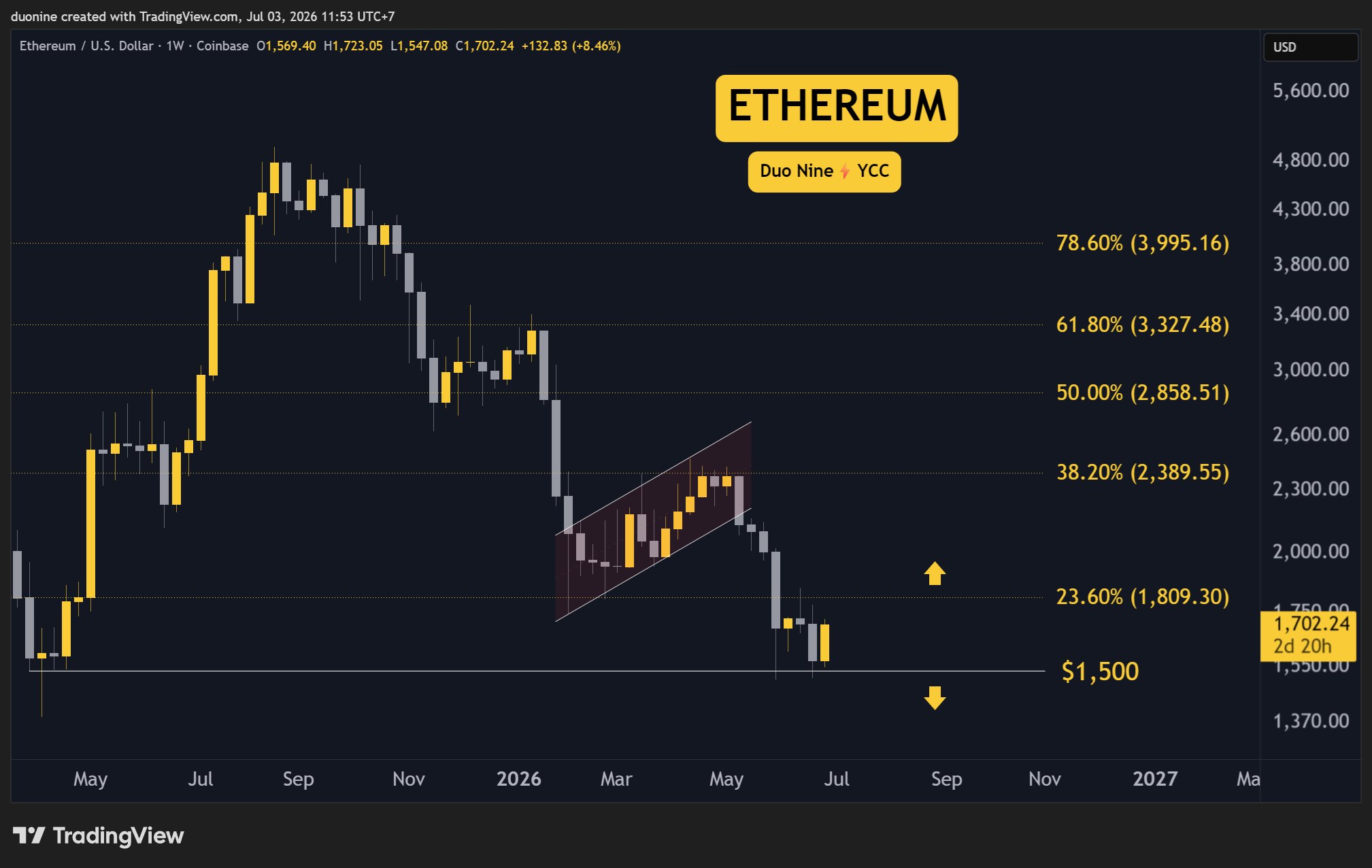
Ethereum managed to bounce off support at $1,500 and recovered last week’s losses. This is also why it closed the week with an impressive 10% rally, as buyers regained control of price action.
To be confident in a sustained recovery, the price will need to eventually break the current resistance at $1,800. Anything less than that would only be a short relief before sellers return to dominate.
Looking ahead, Ethereum has a real chance here to set a local bottom and attempt a rally. The question is if buyers have the volume and strength to sustain it and break the key resistance in the days and weeks to come.
Ripple (XRP)
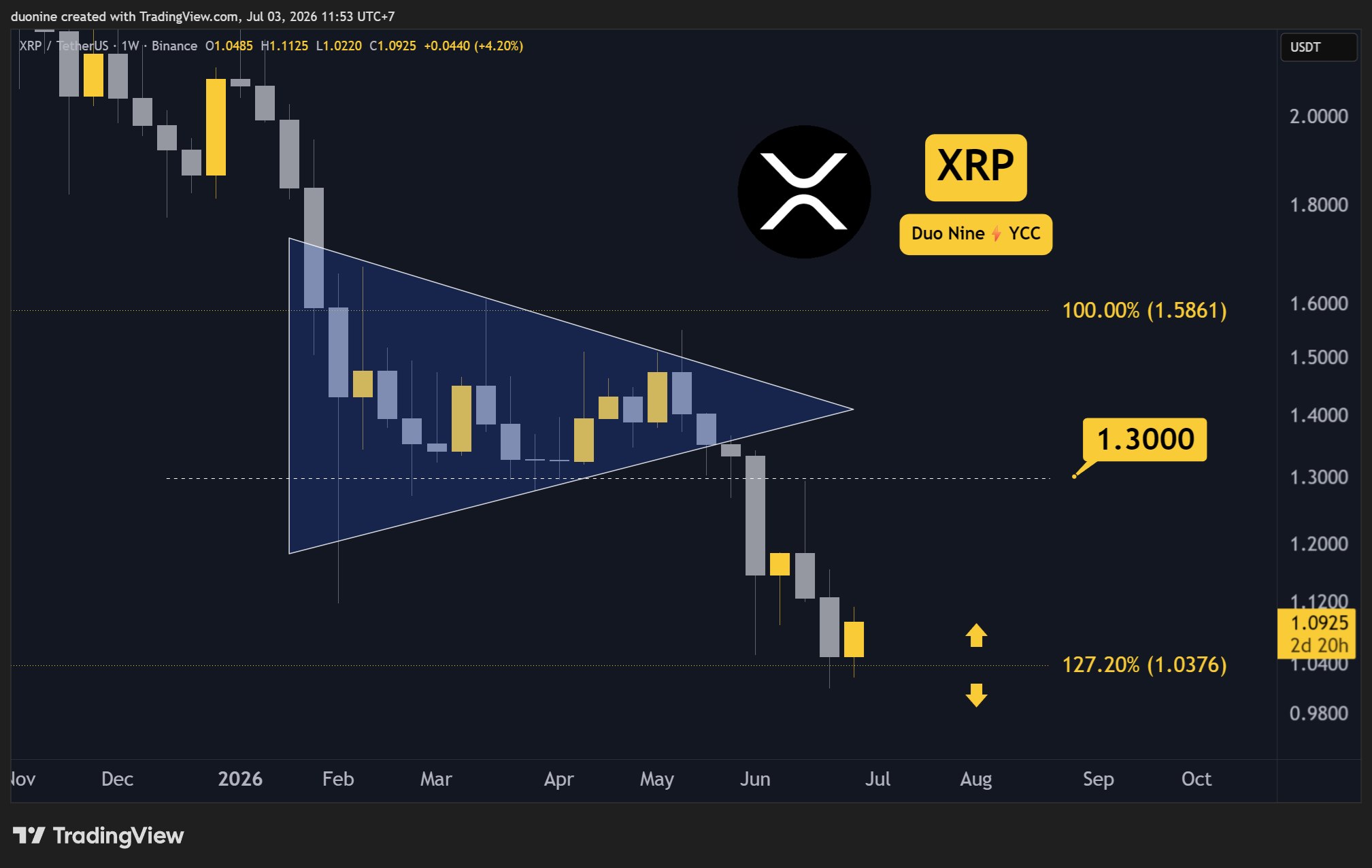
This week, buyers managed to defend $1, sending the price 6% higher. However, there is resistance at $1.1, which has managed to hold off the bulls, at least as of this post.
Similarly to Ethereum, XRP needs to make the best of this bounce and turn it into a sustained rally if it wants to break away from its current downtrend. Even if the $1.1 resistance falls, the price still has to claim $1.3 to confirm a breakout.
Looking ahead, the price reaction at $1 was somewhat expected since it’s a key psychological level. If buyers fail to capitalize on this in the coming days and weeks, then sellers will likely return to put pressure again.
Cardano (ADA)
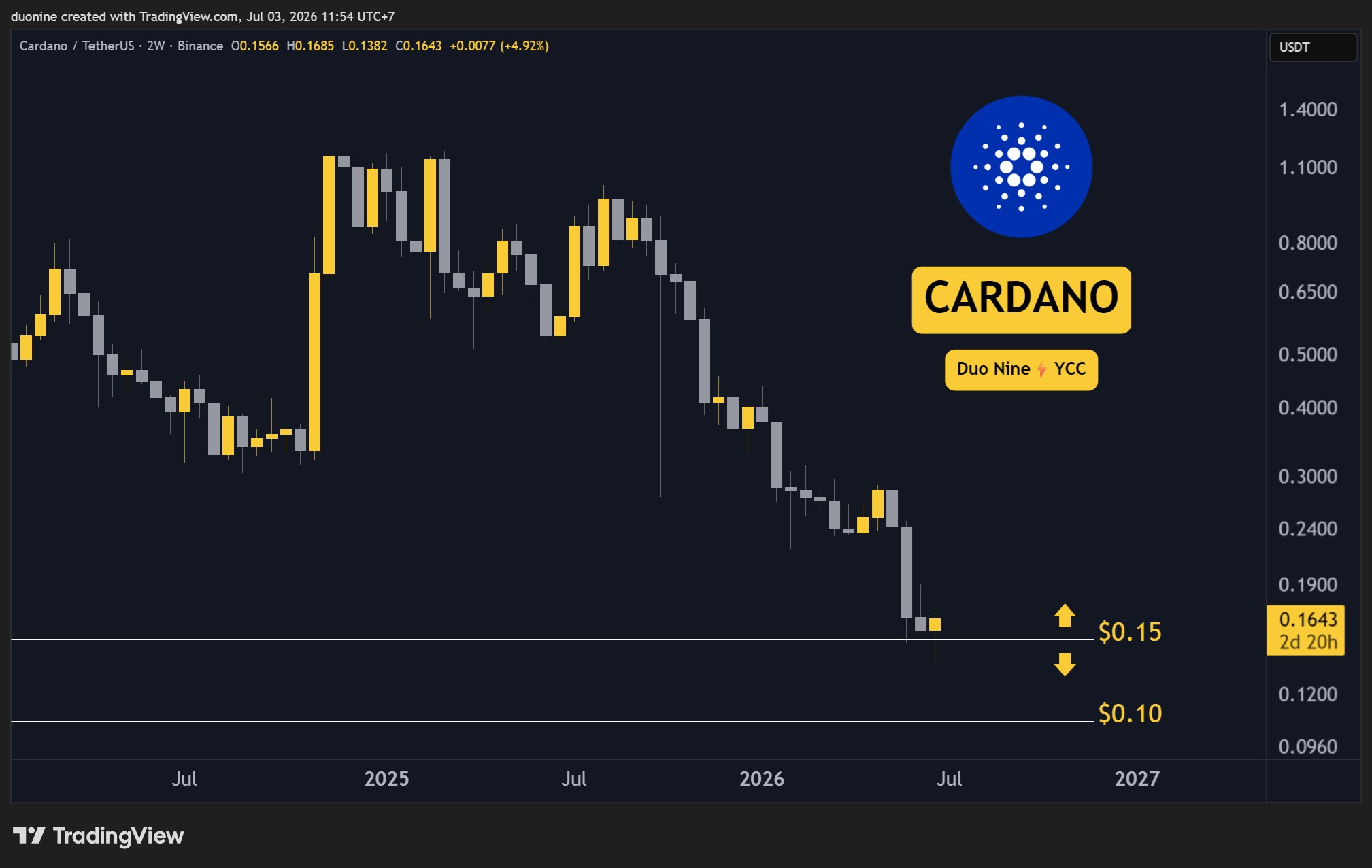
This week, ADA impressed with a 16% bounce after the price briefly fell under the $0.15 support. With the support secured, this cryptocurrency has a good shot at moving higher. However, as of this post, the price formed a lower high.
To be confident in a sustained recovery, Cardano will have to move beyond its previous high of 19 cents. Anything less than that would make this a bearish bounce, eventually leading to ADA falling lower.
Looking ahead, sentiment across the crypto market has improved with the start of July, but the month is only just beginning, and it is too early to say whether the current price action will be sustained. At a macro level, ADA remains bearish.
Binance Coin (BNB)
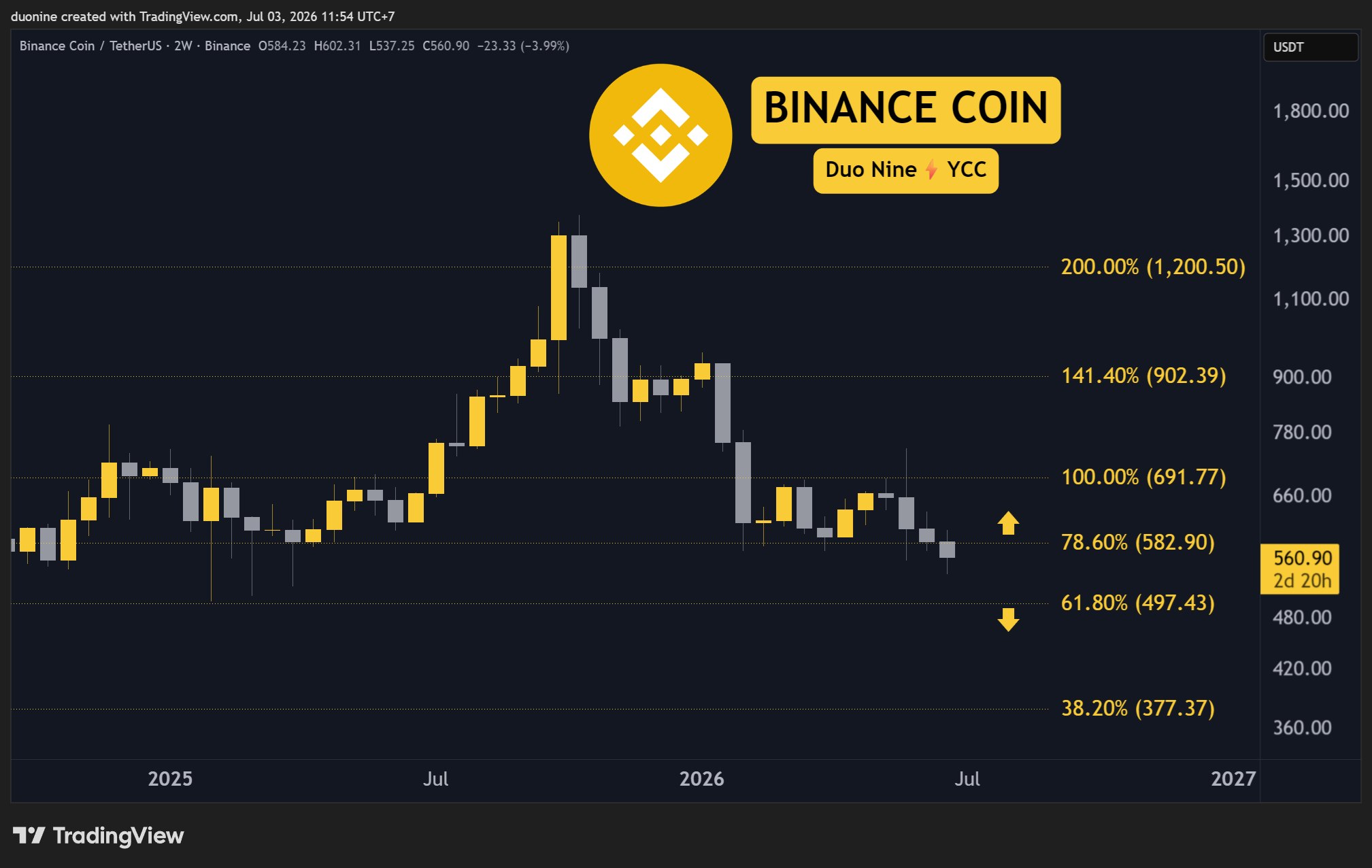
Compared to the other coins on our list, Binance Coin remained flat this week. This is atypical and rather bearish because the price failed to reclaim its support at $580. Because of that, sellers retain the upper hand and may aim for $500 next.
The $500 support hasn’t been tested yet, but it’s the next major level if bears continue to dominate the chart. Moreover, Binance failed to secure a MICA license in the EU at the start of July, which made it lose a key market to competitors.
Looking ahead, any weakness for Binance, the exchange, will likely translate to its token, BNB. The current chart seems to confirm this, as it remains in a bearish trend with no bounce or recovery in sight.
Hype (HYPE)
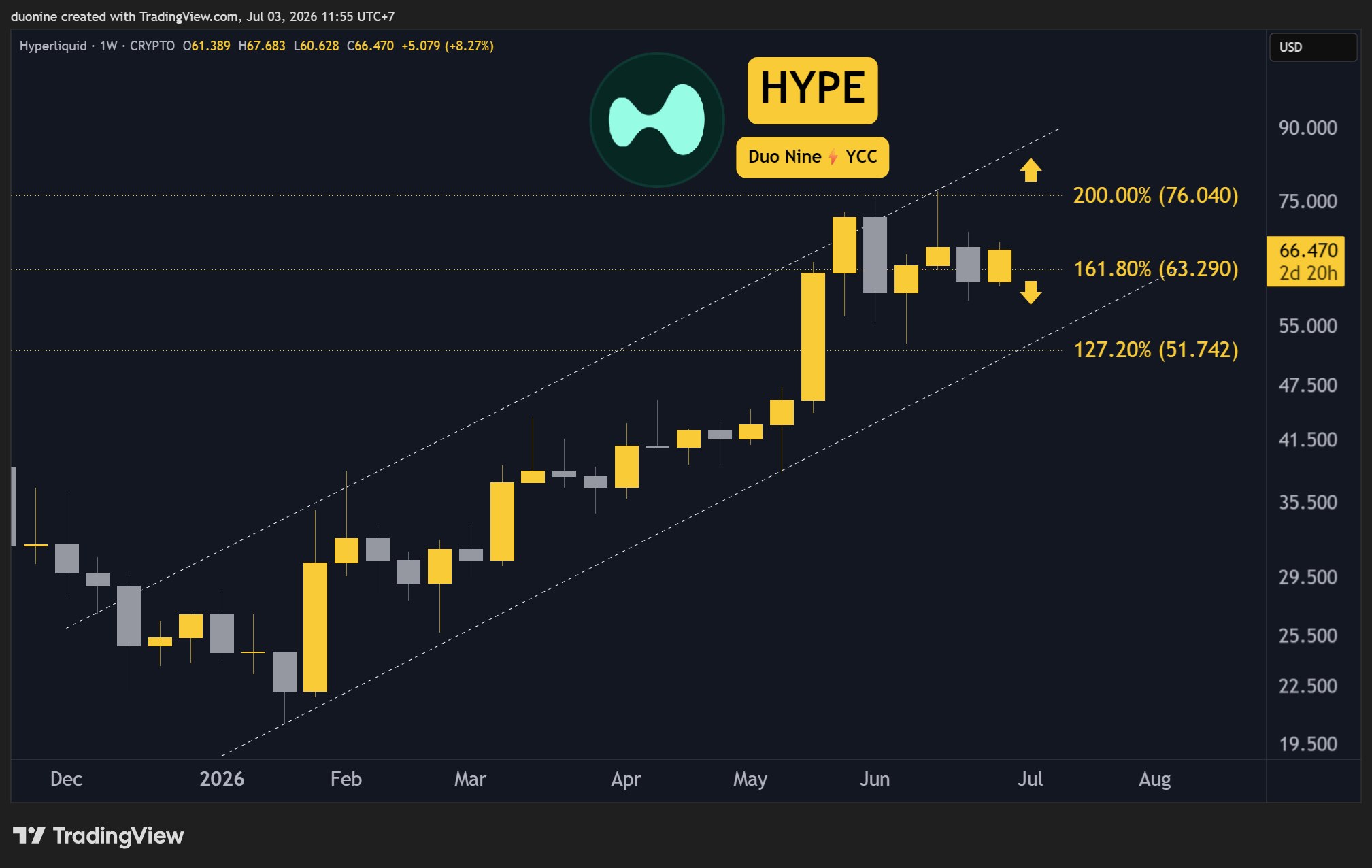
HYPE found good support above $60 and bounced by 6% this week. This has placed it in flat price action since early June. This consolidation is also forming a large pennant. Once that is resolved, we will know where this cryptocurrency is headed next.
When a pennant forms, the price tends to respect the underlying trend, which, in this case, is bullish. Therefore, the higher probability is for the price to break away and aim for new highs.
Looking ahead, HYPE will have to secure $68 as a key support and hold above it if it wants to challenge the current all-time high at $77. Anything less than that, or a break below $60, would be a bearish signal with lower lows likely.
The post Crypto Price Analysis July-03: ETH, XRP, ADA, BNB, and HYPE appeared first on CryptoPotato.


Humanity Protocol has confirmed it is repositioning toward enterprise artificial intelligence products after a $36 million exploit accelerated an internal strategic overhaul that had already been under discussion for months.
Summary
- Humanity Protocol has shifted its focus toward enterprise AI following a $36 million security breach.
- The project has begun a new token rollout while continuing compensation efforts and law enforcement investigations.
- Founder Terence Kwok said the move to enterprise AI had been under discussion before the hack accelerated the transition.
During a recent interview, Humanity Protocol founder Terence Kwok said the company had been reconsidering its long-term direction for the past six to nine months and that the June security breach pushed those plans forward sooner than expected.
Enterprise AI takes priority after hack
Rather than continuing to present itself primarily as a blockchain identity platform, Kwok said Humanity Protocol will increasingly focus on building products and services for enterprise AI customers. He explained that digital identity remains an important part of the company’s work because AI systems will require stronger methods of verifying people and credentials.
Kwok said the team has already been testing products designed for AI companies and plans to introduce additional enterprise-focused offerings. Humanity Protocol previously developed a proof-of-personhood blockchain supporting credentials for employment, assets, and credit scoring, including work with Mastercard on proof-of-assets applications.
According to Kwok, the platform has registered around 10 million users, with a couple of million completing their credentials.
The strategic change follows one of the project’s biggest setbacks. Humanity Protocol lost roughly $36 million after attackers gained access to critical private keys, triggering a sharp collapse in the H token and forcing the project into recovery mode.
Recovery efforts continue as token migration moves ahead
Discussing the aftermath of the attack, Kwok said the chances of recovering the stolen funds are “pretty low,” adding that the team’s attention has instead turned to rebuilding the ecosystem. He compared the situation with Bybit’s unsuccessful efforts to recover approximately $1.4 billion worth of ether stolen in a separate attack last year.
As part of the recovery process, Humanity Protocol has issued a replacement token and distributed it to a range of addresses, including major cryptocurrency exchanges. Kwok said discussions are continuing around snapshot dates, suspended deposits and withdrawals, liquidity pools and custodian arrangements, while investigators work to identify every transaction that took place after the breach before completing compensation claims.
Law enforcement agencies in multiple jurisdictions, beginning with Hong Kong alongside authorities in the United States, have also been contacted as investigations continue, according to Kwok.
Earlier findings released by Humanity Protocol and security firm Quantstamp attributed the exploit to compromised private keys stored on a developer device rather than vulnerabilities in the project’s smart contracts.
The June investigation concluded that attackers obtained control of production systems after malware infected a developer machine containing backups of several critical keys, allowing them to authorize legitimate-looking transactions that drained about 141 million H tokens from the Ethereum bridge before additional tokens were minted on BNB Smart Chain. Humanity Protocol and Quantstamp said the attack bore characteristics associated with North Korea-linked threat actors.
The breach wiped out most of the H token’s value within hours, with on-chain analysts estimating losses of more than $32 million at the time and the token falling roughly 89% as the attacker minted and sold tokens across multiple chains. Kwok said monitoring systems quickly detected unusual token movements after the compromise, although determining the full extent of the incident required several days of forensic analysis across the project’s infrastructure.
Meta CEO Mark Zuckerberg said AI agent development at the firm is progressing more slowly than expected, even as technology and crypto firms continue pouring resources into the nascent technology.
In a company meeting on Thursday, Zuckerberg said the “trajectory of the agentic development over at least the last four months hasn’t really accelerated in the way that we expected,” according to Reuters, which reviewed a recording of the call.
The bet on agent adoption hasn’t “come to fruition yet,” Zuckerberg said, adding that executives made an aggressive push into agentic infrastructure in January in part because of fears they weren’t moving “fast enough.”
Despite the slower progress, Zuckerberg said he expects the firm’s AI investments to start paying off within the next three to six months.
Zuckerberg’s comments offer a reality check for technology and crypto firms betting that autonomous agents will soon become major users of blockchain payments. Meta, along with several crypto firms, has bet big on agentic AI, with many pivoting their business models to cater to autonomous AI agents.
In May, Meta cut roughly 10% of its workforce and reassigned about 7,000 employees to AI-focused teams — a restructuring Zuckerberg acknowledged was not as clean as it could have been, with executives miscalculating the timing.
Meta expands AI agent feature on three platforms
Zuckerberg’s concerns come as Meta expanded its Meta Business Agent globally for businesses on Instagram, Messenger and WhatsApp on Thursday.
The Business Agent can respond to customer inquiries, make product recommendations and close sales without human intervention, Meta said.
Zuckerberg also revealed in March that he was building a personal AI agent designed to support his decision-making as CEO.
The crypto industry has been a keen adopter of the technology, with Coinbase CEO Brian Armstrong and Circle CEO Jeremy Allaire among the executives predicting that AI agents will become the dominant users of blockchain-based payments in the coming years.
Several notable integrations advancing AI agent-driven stablecoin spending have emerged in recent months, including one by Amazon Web Services in May, when it integrated Coinbase’s x402 payments protocol into Amazon Bedrock AgentCore, allowing agents to transact in the USDC (USDC) stablecoin.
Related: OKX launches AI marketplace for autonomous agent economy
In April, crypto wallet startup Oobit launched a Visa-supported virtual card for AI agents to make online purchases in USDt (USDT) on behalf of businesses.
AI agent payments adoption lagging
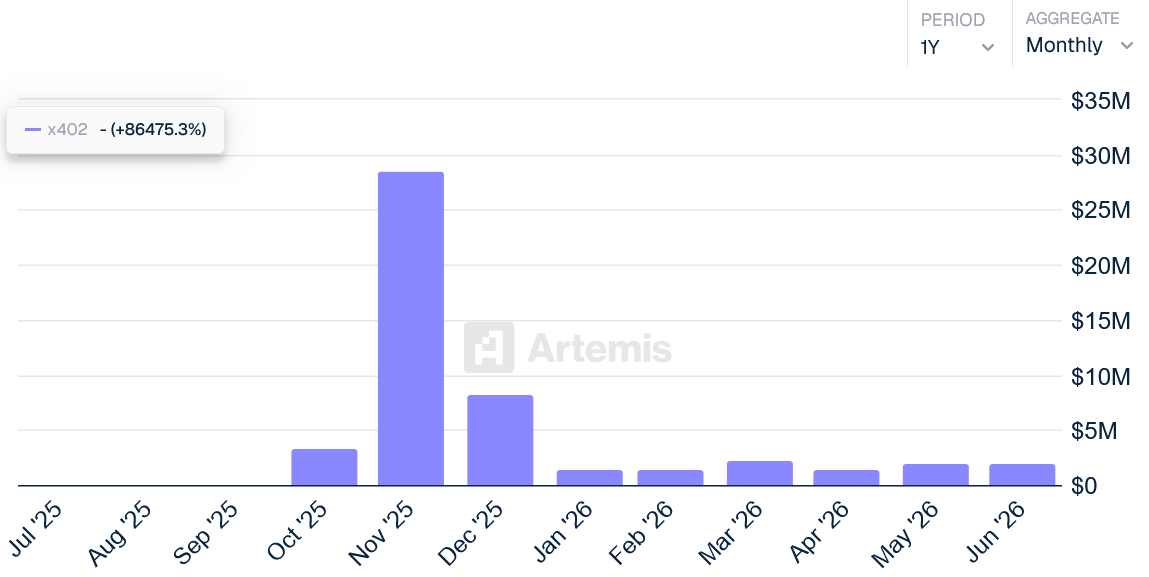
Despite the integrations, data shows that AI-agent transaction activity on the blockchain remains relatively small, with Artemis data showing that only $2 million in trading volume has been facilitated through the AI agent-supported x402 protocol over the past 30 days.
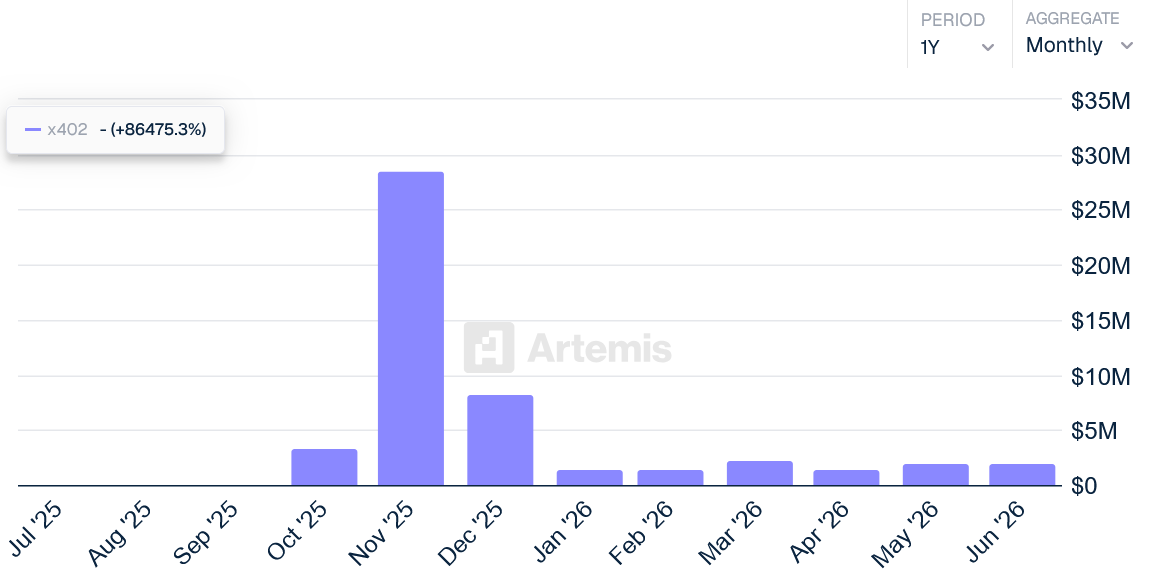
Monthly change in x402 transaction volume over the past 12 months. Source: Artemis
Magazine: The end of anonymity? AI could unmask crypto’s hidden identities

A teenager suspected of involvement with the “Scattered Spider” hacking group has been extradited to the US over his alleged role in an $8 million crypto ransom.
The US Justice Department said on Wednesday that Peter Stokes, a 19-year-old dual US-Estonian national, was arrested in Finland in April on an Interpol Red Notice and extradited to the US last week to appear in a Chicago federal court on Tuesday.
A criminal complaint unsealed in court accused Stokes and others of breaching a luxury jewelry retailer’s computer system in May 2025 to steal data and demand a ransom payment of $8 million in crypto. The retailer managed to evict them from the network and did not pay the ransom, but suffered $2 million in disruption damages, according to the complaint.
Stokes is one of the few arrests that authorities have tied to Scattered Spider, which often uses crypto ransoms. Ransomware actors received more than $820 million in payments last year, an 8% decline from 2024, even as attacks rose by 50%.

An image the FBI took from Stokes’ Snapchat account shows him wearing a necklace that says “Hack the Planet,” a quote from the 1995 cult film “Hackers.” Source: US Department of Justice
Alleged hack started with phishing call
According to the complaint, the hack against the jewelry retailer started with several phishing calls to the company’s technology help desk, with Stokes and others allegedly pretending to be employees requesting a reset of login credentials.
Authorities alleged the hackers managed to compromise three employee accounts in as little as two hours, two of which belonged to company IT administrators, who had access to higher-privilege accounts that were also breached and used to access the company’s systems,
After a few days, Stokes and others allegedly sent a ransom note from a compromised company email account to demand funds or they would publish credit card and payment information.
However, the complaint said the company repelled the intrusion and that the intruders later contacted the company separately to demand $8 million, which the company did not pay.
Stokes allegedly involved in “numerous intrusions”
The complaint accused Stokes, who uses the online nicknames “Bouquet” and “Jordan,” of being a “Scattered Spider member who has engaged in numerous intrusions, or assisted in them” on multiple unnamed companies.
Authorities claimed that a search of a storage device allegedly linked to Stokes showed it contained downloads from a virtual private server that Microsoft had identified as being used to carry out intrusions on companies.
The complaint alleged that it also “contained exfiltrated records from multiple victim-companies.”
Related: Taiko reopens bridge after $1.7M exploit, says users made whole
The complaint claimed that Stokes’ Snapchat account shows “substantial wealth for a person his age” and alleged that he used the account to boast “about his international travel and wealth, and sent media regarding apprehended Scattered Spider members.”
The Justice Department said that Scattered Spider, also known as “Octo Tempest,” “UNC3944,” and “0ktapus,” has been involved in over 100 network intrusions, resulting in more than $100 million in ransom payments and millions of dollars in damages.
Stokes was charged with six counts related to hacking, cyber extortion, fraud and conspiracy.
Magazine: Crypto scammers face death, Aussie CGT makes Asian hubs attractive: Asia Express


Roughly 10.83 million BTC are currently held at a loss, meaning their holders paid more than today’s price, against 9.22 million still in profit, according to Glassnode data. It is the first time loss-making supply has overtaken profitable supply since the current cycle began and reflects how deep the correction from bitcoin’s $109,000 January peak has cut.
Historically, these crossovers have landed near periods of peak financial stress and capitulation among newer buyers. They have also marked the point at which coins migrate from weaker hands to stronger ones, since only holders with high conviction tend to sit on losses rather than sell. Long-term holder accumulation and rising wallet-cohort balances across several size brackets have run alongside this latest deterioration in profitability.
Bitcoin traded at $61,361 on Thursday, up 0.7% on the day and 2.5% on the week, still roughly 44% below January’s all-time high, per CoinDesk data. Ether added 4.2% to $1,702, and Solana led the majors at 18.6% on the week to $80.44, with volume running above $3.6 billion.
Whether the supply crossover marks a bottom depends on what follows. In 2018-19 and 2022, similar readings preceded months of basing before a sustained recovery. The chart does not resolve on its own. ETF flows returning and macro pressure easing are what convert the accumulation signal into a price signal.
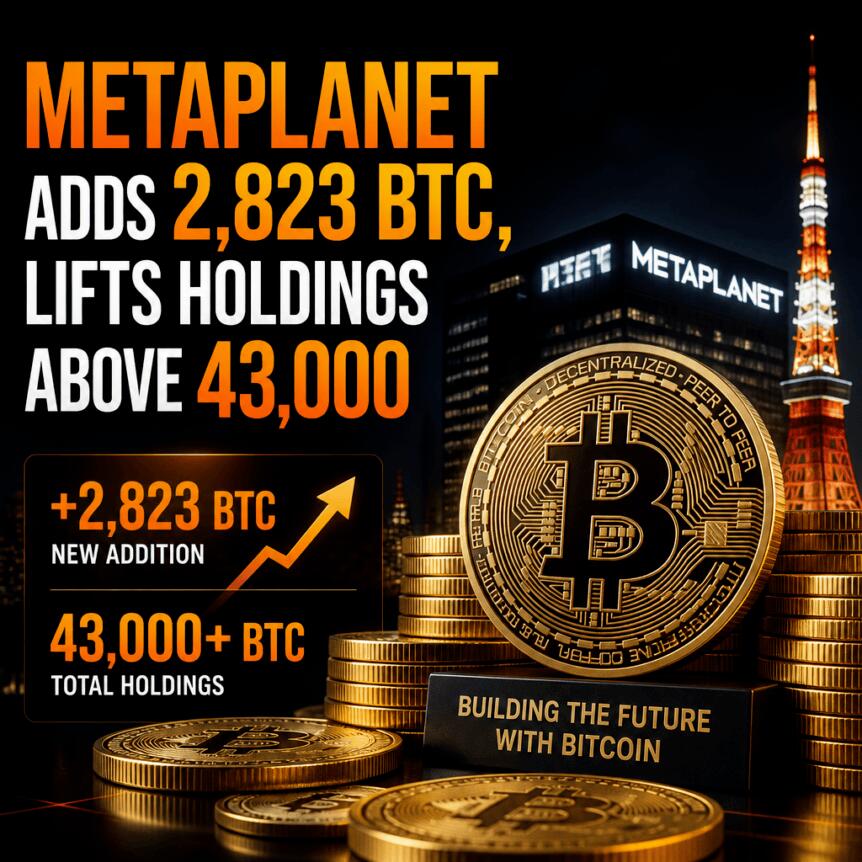
Japanese investment firm Metaplanet continued its corporate Bitcoin buildout in the second quarter, adding 2,823 BTC at an average price of about 12.71 million yen (roughly $78,850 at current exchange rates). The purchase pushed the company’s total holdings above 43,000 Bitcoin, while slightly lowering its average acquisition cost.
Separately, the story also highlights a contrasting trend among some smaller treasury-focused companies. South Korean firm K Wave Media exited its Bitcoin treasury strategy after selling its remaining BTC to address debt, while France-based Sequans Communications previously said it would monetize its remaining holdings over time.
Key takeaways
- Metaplanet bought 2,823 BTC in Q2, bringing its total to more than 43,000 BTC and reducing its average cost per coin.
- The latest tranche was acquired at an average price of about 12.71 million yen per BTC, lowering Metaplanet’s average acquisition cost to roughly $95,117.
- Metaplanet reported about $10.95 million in quarterly revenue linked to Bitcoin income-generation strategies involving options premiums and related yield methods.
- K Wave Media sold its last 88 BTC to repay debt, ending its Bitcoin treasury approach after earlier plans to expand holdings.
- Not every corporate treasury is expanding: Sequans Communications previously signaled that it would monetize its remaining Bitcoin holdings over time.
Metaplanet expands holdings and refines its cost base
According to a Thursday announcement from Metaplanet, the company acquired 2,823 Bitcoin during the second quarter at an average price of about 12.71 million yen per BTC. That figure matters because it was below Metaplanet’s prior average purchase price, enabling the firm to reduce its blended cost basis.
The acquisition lowered Metaplanet’s average acquisition cost to about $95,117 per BTC, down from approximately $96,258 previously. Metaplanet’s total Bitcoin holdings now stand at 43,000 BTC acquired for an aggregate value of about $4.1 billion, based on the figures in the company’s announcement.
Beyond accumulation, Metaplanet also disclosed quarterly performance tied to its Bitcoin income strategy. The company reported around $10.95 million in revenue from Bitcoin-related activities during the quarter. The approach, as described in the announcement, centers on earning premiums by selling cash-secured options and deploying other Bitcoin yield tactics.
For investors, the combination of spot purchases and options-based income generation is a key part of how treasury-style Bitcoin companies attempt to justify their equity valuations. When Bitcoin’s price is volatile, these revenue mechanisms can, in theory, partially offset drawdowns—though the net effect depends on execution, market conditions, and counterparty or strategy risks (none of which are detailed in this particular excerpt).
Shares move, but the broader performance picture remains uneven
Metaplanet’s equity performance reflected modest market optimism around the filing. The company’s shares closed Thursday up 3.5%, though the stock remains down about 48% year-to-date, according to the linked market page cited in the source text.
That underperformance also stands out against Bitcoin itself, which the source notes fell 31% over the same year-to-date period. The contrast underscores a persistent reality for corporate Bitcoin holders: even when a company keeps buying and building a large BTC position, investors may still reprice the stock due to factors like equity dilution risk, funding costs, valuation assumptions, or the market’s perception of how sustainable treasury income is.
The Metaplanet update comes during an ongoing push by several corporate buyers—yet the story is not purely one-directional, as other firms are trimming exposure.
Treasury strategies: K Wave Media exits after selling remaining BTC
While Metaplanet added Bitcoin, K Wave Media—an Nasdaq-listed company in South Korea—went in the opposite direction. The company sold its remaining 88 BTC to repay $6 million in debt, exiting its Bitcoin treasury strategy, according to a Tuesday filing with the U.S. Securities and Exchange Commission.
The SEC filing indicates a sharper reversal than what the company had previously communicated. Earlier coverage referenced in the source text describes K Wave Media’s July 2025 announcement that it secured $1 billion in capital capacity to drive its Bitcoin treasury strategy and aimed to expand holdings to 10,000 BTC. Exiting after holding only 88 BTC suggests the original plan ran into constraints—whether financial, operational, or strategic—though the excerpted material does not specify the reasons.
This kind of turnaround is important for readers because it highlights a mismatch risk that can exist in treasury models: plans premised on sustained capital access, favorable volatility, and consistent BTC purchase economics may not survive changing market conditions or debt obligations.
Other companies continue to monetize rather than accumulate
The source also points to Sequans Communications, a France-based semiconductor company that said in May it would monetize its remaining Bitcoin holdings over time. At the time of that announcement, Sequans reported holding 658 BTC, and its shares reportedly rose about 14.5% after the disclosure.
Taken together with K Wave Media’s decision to exit, the broader takeaway is that corporate Bitcoin strategies are diverging. Some companies are doubling down through additional spot buying and structured income strategies, while others are winding down exposure, using Bitcoin holdings to address liabilities, or planning to gradually convert BTC into cash.
Even within the same sector, these choices can produce very different investor outcomes depending on each firm’s balance sheet, debt profile, and how its equity market values the “BTC treasury” thesis.
Looking ahead, investors should watch whether Metaplanet can sustain its Bitcoin income-generation revenue while continuing to manage its cost basis, and whether other treasury-focused firms follow K Wave Media and Sequans toward monetization or debt reduction. The key uncertainty across all these cases remains whether corporate models that rely on both holding BTC and generating yield can hold up as market conditions and financing access evolve.


The National Organization of Black Law Enforcement Executives (NOBLE) endorsed the Digital Asset Market Clarity Act (CLARITY Act) in a letter to Senate leaders John Thune and Chuck Schumer.
Notably, NOBLE has become the first major law enforcement group to formally back the bill. The endorsement lands as the bill faces hurdles over ethics and illicit finance concerns.
NOBLE Endorses CLARITY Act
The letter was signed by NOBLE National President Reneé Hall. Hall, a former Dallas police chief, said the bill gives law enforcement new capabilities while preserving longstanding criminal enforcement authorities.
In its letter, the group pointed to expanded regulatory obligations across the digital asset industry, stronger forfeiture authorities, new compliance expectations, and added oversight of crypto kiosks.
“Collectively, these provisions have the potential to improve investigative visibility and provide law enforcement with additional tools to combat financial crime,” the letter reads.
The group also emphasized that the bill does not modify existing federal criminal authorities used to prosecute offenses such as money laundering, unlicensed money transmission, conspiracy, sanctions violations, and related crimes.
Follow us on X to get the latest news as it happens
A Break From Other Law Enforcement Groups
The position sets NOBLE apart from other police and prosecutor organizations. The National District Attorneys Association, the National Association of Assistant US Attorneys, the International Association of Chiefs of Police, and the National Sheriffs’ Association previously raised concerns regarding the bill.
Their objections center on Section 604. A coalition of Catholic sisters also asked Senate leadership to reexamine the lack of provisions on illicit finance, anti-money laundering, and accountability.
Despite the opposition, industry advocates keep pressing for floor time. Stand With Crypto urged supporters this week to lobby their senators.
The bill still needs 60 votes on the Senate floor, meaning seven Democrats must cross over. Whether a law enforcement endorsement softens resistance to Section 604 may become clearer once senators return.
Subscribe to our YouTube channel to watch leaders and journalists provide expert insights
The post First Major Law Enforcement Group Endorses CLARITY Act in Letter to Senate appeared first on BeInCrypto.

I’m a bitcoin bull from a ‘very, very long-term’ perspective, says Fairlead’s Katie Stockton

Coronation Street confirms Megan’s fate as star exits for good | Soaps

Sandip Sabharwal calls IT a tactical trade, stays bullish on autos

No Jackpot Winner as $257 Million Prize Rolls Over to $269 Million Monday Draw

Renter of Home in Anne Heche Crash Denies Settlement With Son

Weekend Open Thread: Staud – Corporette.com
I’m a bitcoin bull from a ‘very, very long-term’ perspective, says Fairlead’s Katie Stockton

Prayer to Remove Financial Blockages #affirmations #prayer #financialfreedom #financialmiracle

How to Look Like You’re Getting Money Before You Actually Are
-
 Fashion7 days ago
Weekend Open Thread: Staud – Corporette.com
-

 Crypto World3 days ago
Strategy authorizes up to $1.25B in Bitcoin sales under new capital plan
-

 News Videos5 days ago
MAJOR BITCOIN & MARKET UPDATE!!!! (MUST WATCH ASAP!!!)
-

 Tech3 days ago
Anonymous researcher drops 0-day ‘exploitarium’ repo
-

 Crypto World6 days ago
Coinbase, Circle Deepen Crypto Stock Losses Despite Resilient S&P 500
-

 Business3 days ago
Australia treasurer says alleged access of prime minister’s bank data ’incredibly concerning’
-

 Crypto World6 days ago
Kraken's xStocks Opens Bending Spoons IPO Registration to EEA Retail
-

 Sports6 days ago
FIH Pro League: India defeat Pakistan 7-1, register biggest win of campaign | Other Sports News
-

 Tech5 days ago
Bluekit phishing kit adopts browser-in-the-middle for login theft
-

 Tech6 days ago
Russian hackers now target Signal backup recovery keys
-
 Crypto World7 days ago
Hyperliquid Named on Singapore MAS Investor Alert Register
-

 Tech5 days ago
Claude Code turned every engineer into three. Now companies need more product thinkers
-

 Crypto World7 days ago
RTX holders must register wallets before token distribution begins
-

 Sports2 days ago
Broncos roster: OL Ben Powers (No. 74) entering final year of contract
-
 Business4 days ago
The AI boom won’t burst all at once. It will pop in ‘rolling bubbles’: Macquarie
-
 Crypto World7 days ago
SpaceX Called a Market Top Signal Just 2 Weeks After Its $86 Billion IPO
-

 Tech6 days ago
Silicon Valley paid to kill AI regulation, now it wants the rules back
-

 NewsBeat2 days ago
Presenter Caroline Flack’s brother Paul Flack dies aged 55
-

 Crypto World1 day ago
Binance stock trading tops $1B in first month after launch
-
 NewsBeat24 hours ago
New exhibition reflects five decades of movement between island of Ireland and GB
You must be logged in to post a comment Login