
Crypto World
Why AI Could Become a DAO Contributor

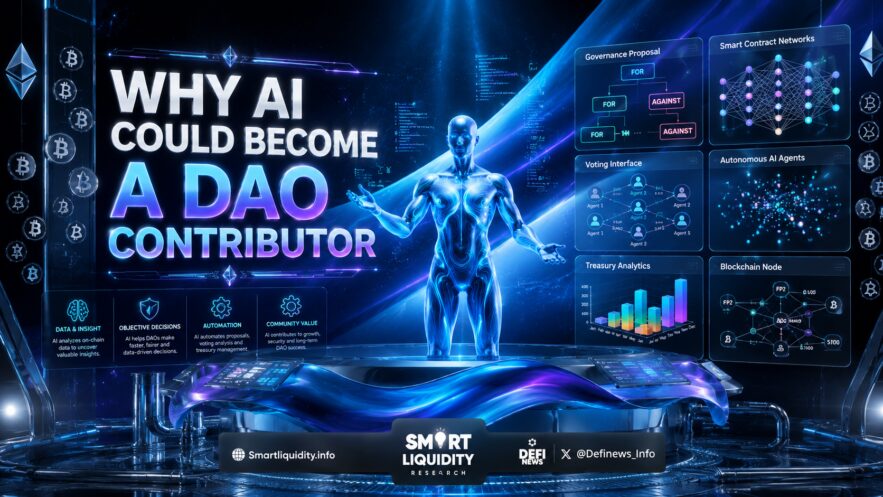
Decentralized Autonomous Organizations (DAOs) were created to replace centralized decision-making with community-driven governance. Token holders propose ideas, vote on changes, and collectively manage treasuries, protocols, and ecosystems. However, as DAOs continue to grow in size and complexity, human contributors alone may struggle to keep pace with the increasing volume of governance proposals, financial data, and ecosystem activity.
Artificial Intelligence is emerging as a powerful solution—not as a replacement for community governance, but as an intelligent contributor that enhances decision-making, automates repetitive tasks, and improves operational efficiency. The future of DAOs may include AI agents working alongside human members as active participants in decentralized organizations.
The Evolution of DAO Contributors
Traditional DAO contributors perform tasks such as:
- Writing governance proposals
- Reviewing protocol upgrades
- Managing community discussions
- Monitoring treasury health
- Researching ecosystem developments
- Organizing grants and partnerships
While these responsibilities require human judgment, many supporting activities involve collecting, analyzing, and summarizing large amounts of information. AI excels at exactly these tasks.
Instead of replacing contributors, AI can become an always-available assistant that enables communities to make faster and more informed decisions.
AI as a Governance Researcher
Governance proposals often span dozens of pages and include technical details that many token holders may not fully understand.
AI can:
- Summarize lengthy proposals
- Highlight potential risks
- Compare new proposals with historical governance decisions
- Explain technical concepts in simple language
- Generate impact analyses
This allows DAO members to spend less time reading documentation and more time evaluating strategic decisions.
Treasury Intelligence
Managing millions of dollars in digital assets is one of the biggest responsibilities within successful DAOs.
AI can continuously monitor:
- Treasury diversification
- Stablecoin exposure
- Yield performance
- Liquidity positions
- Market volatility
- Spending efficiency
Instead of waiting for monthly reports, DAO members could receive real-time recommendations whenever treasury conditions change significantly.
Proposal Drafting Assistance
Many great ideas never become governance proposals because contributors lack the time or writing experience.
AI could help contributors by:
- Structuring governance proposals
- Generating clear documentation
- Creating implementation timelines
- Estimating resource requirements
- Identifying missing information
This lowers the barrier to participation and encourages more community members to contribute.
Community Moderation at Scale
Large DAOs often have thousands of members spread across multiple platforms.
AI moderators could:
- Answer common governance questions
- Direct users to relevant documentation
- Detect spam and malicious activity
- Translate discussions into multiple languages
- Summarize community sentiment
Human moderators would remain responsible for final decisions, while AI handles repetitive support tasks around the clock.
Smarter Grant Programs
Many DAOs distribute grants to developers, researchers, and ecosystem builders.
AI can assist by:
- Reviewing applications
- Categorizing proposals
- Detecting duplicate submissions
- Scoring projects against predefined criteria
- Tracking milestone completion
This allows grant committees to focus on evaluating innovation rather than administrative work.
AI-Powered Risk Monitoring
Security remains one of the largest concerns in decentralized finance.
AI agents can monitor:
- Suspicious wallet activity
- Smart contract vulnerabilities
- Governance attacks
- Treasury anomalies
- Oracle irregularities
- Cross-chain risks
Rather than reacting after an incident occurs, DAOs can receive early warnings that help prevent losses.
Autonomous Operational Contributors
Future AI contributors may eventually perform operational work independently, including:
- Publishing governance reports
- Updating DAO dashboards
- Scheduling community meetings
- Managing documentation
- Tracking KPIs
- Coordinating contributor workflows
These AI agents would operate under permissions defined by governance rather than acting independently without oversight.
The Importance of Human Oversight
Despite rapid advances, AI should not have unrestricted authority over DAO governance.
Critical responsibilities—including treasury allocations, protocol upgrades, constitutional changes, and governance votes—should remain under community control.
AI works best as:
- An advisor
- A researcher
- A data analyst
- A workflow assistant
- A monitoring system
Human contributors continue to provide judgment, ethics, creativity, and accountability—qualities that AI cannot fully replicate.
Challenges Ahead
Before AI becomes a trusted DAO contributor, several challenges must be addressed:
- Transparency in AI-generated recommendations
- Prevention of model bias
- Protection against prompt manipulation
- On-chain verification of AI actions
- Accountability for autonomous decisions
- Privacy when processing governance data
Developing decentralized AI infrastructure alongside robust governance frameworks will be essential for building trust.
The Future of AI-Driven DAOs
The next generation of DAOs may include specialized AI agents dedicated to governance analysis, treasury optimization, community engagement, security monitoring, and operational management. Rather than replacing decentralized governance, these intelligent contributors can empower communities with faster insights, better data, and more efficient execution.
As decentralized ecosystems continue to expand, AI may become one of the most valuable contributors a DAO can have—not because it votes in place of people, but because it equips communities with the knowledge and tools to make smarter collective decisions. The future of governance is likely to be a collaboration between human wisdom and machine intelligence, creating DAOs that are more scalable, resilient, and effective than ever before.
REQUEST AN ARTICLE


This is what makes the current moment so difficult to read. Transitions do not move neatly through the categories we use to manage the world; pressure crosses them, changing role as it goes, and by the time the official language catches up, people may already have been living with the change for years.
The next transition is forming through that movement. It is not an artificial intelligence story alone, or a climate story alone, or a demographic story alone. Each of those matters, but none explains the whole moment by itself. What matters most is how these forces begin to interact, and how much load they place on systems built around older assumptions. When enough pressure moves at once, the operating and organizing logic of an age begins to lose its fit.
Every age has such a logic. Most people do not experience it as a theory. They experience it as the background of life: how work is organized, how families are supported, how knowledge is trusted, how institutions make decisions, how risk is absorbed, and how people are expected to build a life. For a long time, that background can feel natural. Then the world changes around it, and what once made life manageable begins to show its limits.
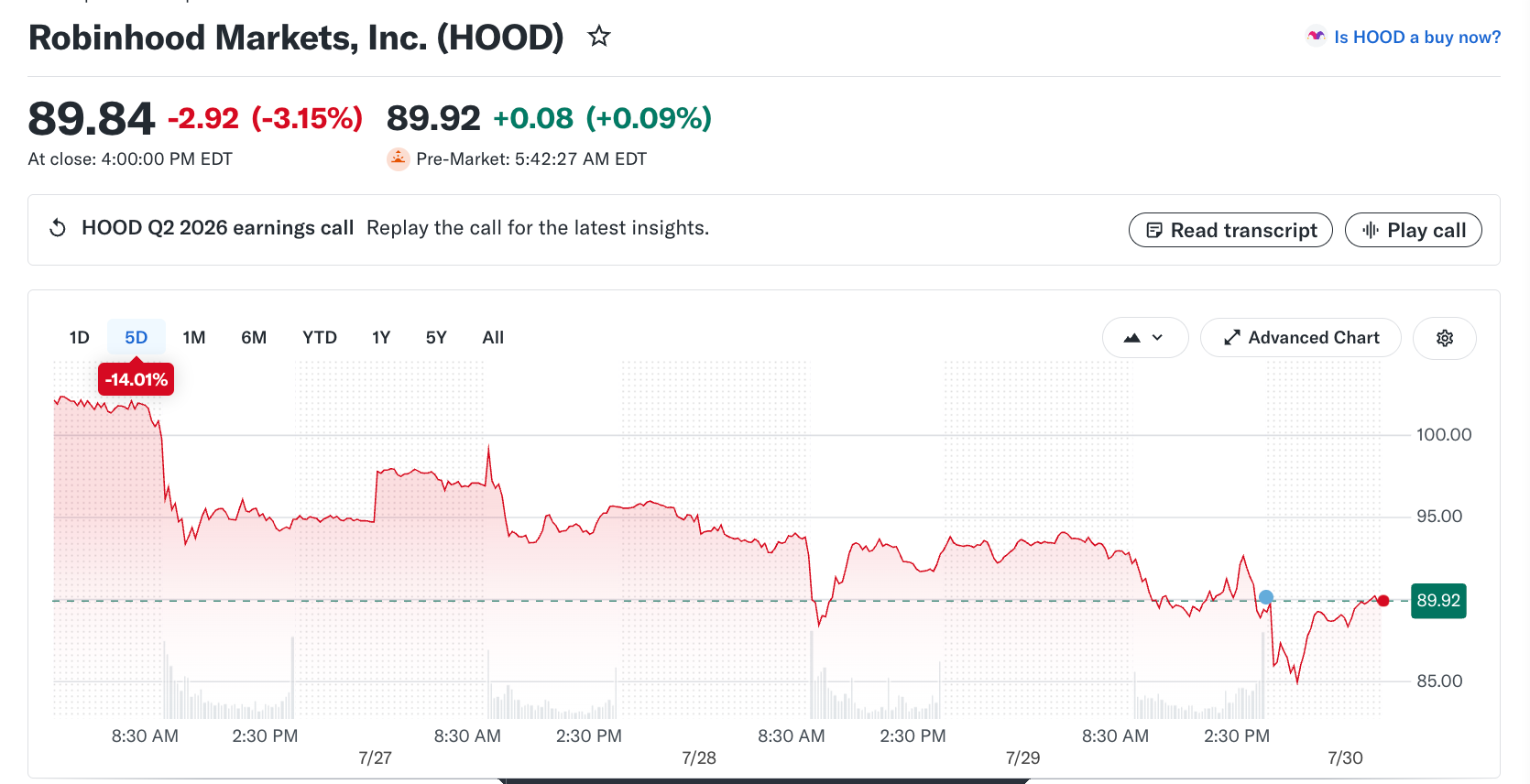
Robinhood (HOOD) stock closed at $89.84 on July 29, down 3.15%, slipping under $90 even after the company posted its best quarter ever.

The drop was not really about the numbers. HOOD has fallen about 14% in five days and roughly 20% this year, so the weakness runs deeper than one earnings report.
HOOD Earnings Beat, but the Market Sold the News
Robinhood reported record revenue of $1.31 billion, up 32% from a year earlier.
Adjusted earnings came in at $0.62 per share, far above the roughly $0.42 that analysts expected.
The mix told the real story. Prediction markets generated $156 million, overtaking both equities at $129 million and crypto at $100 million for the first time.
That shift matters because crypto revenue fell 38% year over year, after an even sharper crypto revenue slide in the prior quarter, yet total revenue still hit a record. However, the year-to-date stock price weakness persisted.

Robinhood now runs 13 businesses above $100 million in annual revenue, far from its meme-broker image. One markets account said Robinhood “proved it’s more than a crypto stock.” And that outlook is now visible in the analysts’ calls.
In the days before the report, the latest analyst calls stayed split but constructive. Barclays and Truist both reiterated buy ratings, with a Barclays Robinhood price target of $122, while JP. Morgan and Morgan Stanley kept hold ratings at $99 and $124.
Want more insights like this? Sign up for Editor Harsh Notariya’s Daily Newsletter here.
Each target still sat near or above the price, so Wall Street was not braced for a collapse. The company also kept buying back stock under a buyback plan it authorized earlier this year.

Part of the profit came from a one-time gain, which invites some caution on earnings quality. Even so, a double beat could not lift the shares.
Options Traders Are Still Hedging for Downside
Robinhood’s options market shows lingering caution. The put-call ratio, which weighs bearish put bets against bullish calls, sits near 0.66 in open interest, a high reading that favors puts.
The volume ratio has climbed toward 0.60 as well. That rise suggests desks kept adding downside hedges around the earnings date rather than betting on a pop.

Hedging shows fear, however, and not always where cash is truly flowing.
Money Flow Improves as Selling Pressure Fades
Deeper data hints the selling may be cooling. Chaikin Money Flow (CMF), a gauge of whether institutional money is buying or selling, reads -0.09 and tried to cross above zero around July 24.
It failed, so institutions are likely still net sellers. Yet, CMF rose between July 27 and July 28 while the price fell, a small bullish divergence. This shows that the big institutional money is bleeding less as compared to the price. However, the CMF needs to move above zero for the HOOD stock to show price-specific positivity.

Volume backs that up. Selling volume has thinned since early July even as the stock dropped, which suggests that even retail sellers are losing steam.
None of this confirms a bottom, though, so the HOOD price chart has to settle the argument.
Robinhood Stock Price Levels That Decide the Next Move
The chart still looks weak. Since June 9, Robinhood has traced a head and shoulders pattern, a topping shape where a high sits between two lower peaks, and it broke down on July 24, days before earnings. The breakdown structure still remains intact, which now explains why the options traders lean bearish.
The breakdown has stalled at $89.87, which also marks the 0.786 Fibonacci retracement. If that floor holds, the roughly 21% target near $76.53 may not fill, especially after a near 10% drop.

A hold above $89.87 and a reclaim of $93.84 would open room back toward the analyst targets. Real strength, however, only returns above $108.45, the right shoulder, which looks distant for now.
For now, $89.87 separates a possible rebound from a deeper slide toward $76.53.
The post Robinhood Sank After a Blowout Quarter: Rebound, or a Slide to $76? appeared first on BeInCrypto.
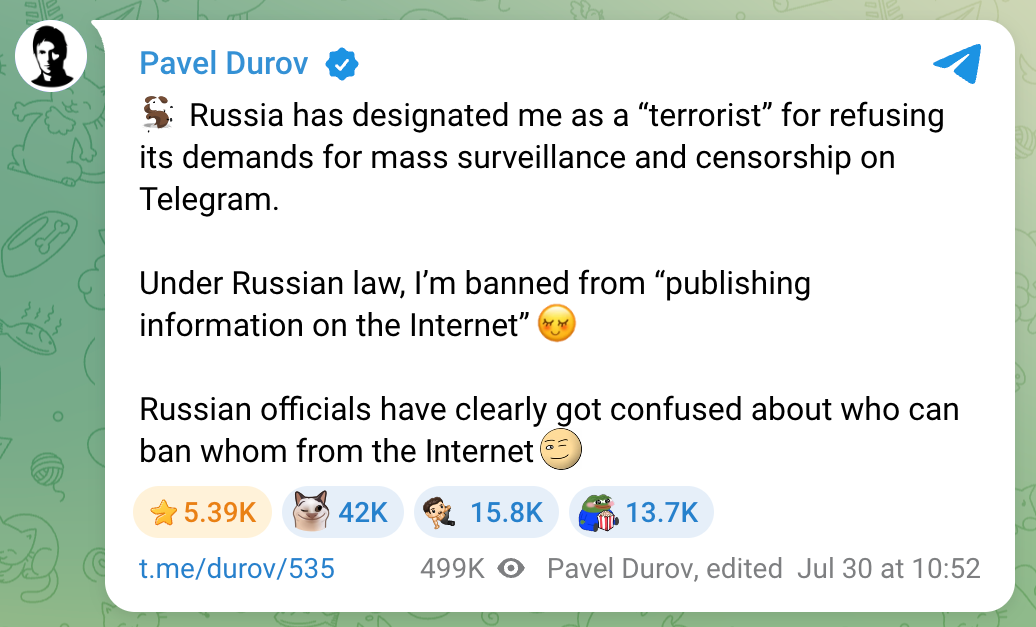
Telegram founder Pavel Durov said Russian authorities designated him a “terrorist” after he refused government demands for mass surveillance and censorship on the messaging platform, responding publicly a day after Russia announced charges against him.
In a Telegram post on Thursday, Durov also said Russia had barred him from “publishing information on the Internet,” adding that authorities had “got confused about who can ban whom from the Internet.”
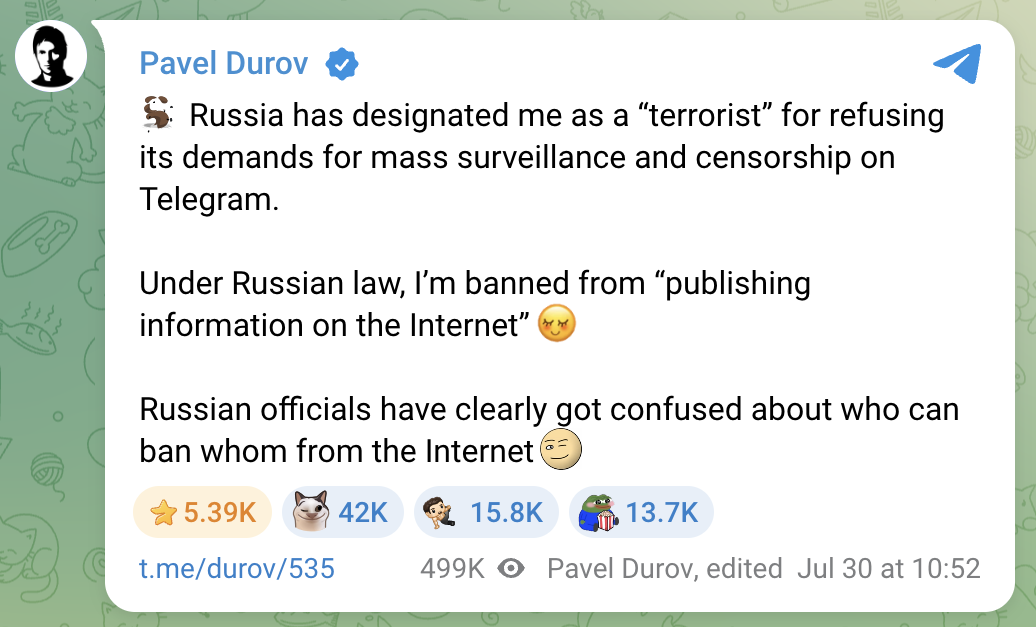
Source: Telegram, Pavel Durov
The comments came a day after Russia’s Federal Security Service accused Durov of facilitating terrorist activity, alleging Telegram failed to remove channels used by terrorist groups and Ukrainian intelligence services.
The case builds on a criminal investigation Russia launched in February, when regulators accused Telegram of leaving nearly 155,000 channels, chats and bots online despite claims they violated Russian laws covering extremist content, terrorism, drug trafficking and other illicit activity.
Related: Pavel Durov says Telegram to roll out native Gram crypto wallet
Durov’s legal battles extend beyond Russia
The Russian case adds to Durov’s legal challenges abroad. Durov was arrested in France in August 2024 and remains under judicial investigation over allegations that Telegram facilitated criminal activity by failing to adequately moderate illegal content and respond to law enforcement requests.
Durov has denied wrongdoing, arguing that French authorities failed to follow due process in seeking information from Telegram. His arrest also prompted a TON Community-backed campaign that collected more than 9 million signatures on an open letter urging French authorities to release him.
French authorities initially allowed Durov to temporarily return to Dubai in March 2025 before lifting his travel restrictions entirely later that year.
Telegram is also facing fresh legal pressure in Australia, where regulators this week launched court proceedings alleging the platform failed to remove terrorism-related content.
Durov has cast himself as a defender of free speech and digital privacy. In April, he warned the European Union’s proposed age-verification app could pave the way for broader online surveillance. The same month, he blamed alleged tax data leaks for a wave of crypto-related kidnappings in France and said Telegram would leave the country rather than grant authorities access to users’ private messages.
Magazine: A quantum roadmap would push Bitcoin much higher: Charles Edwards
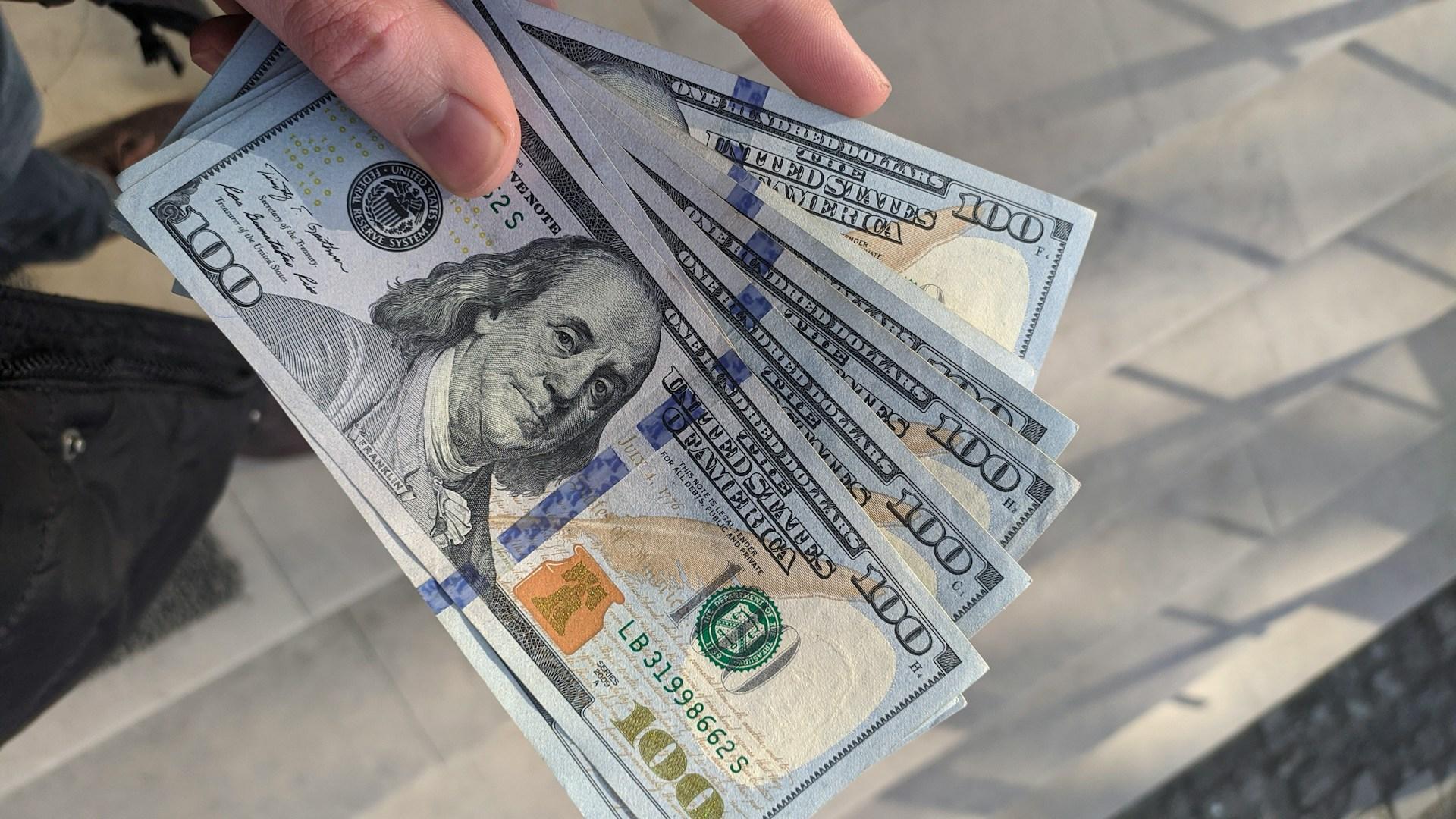
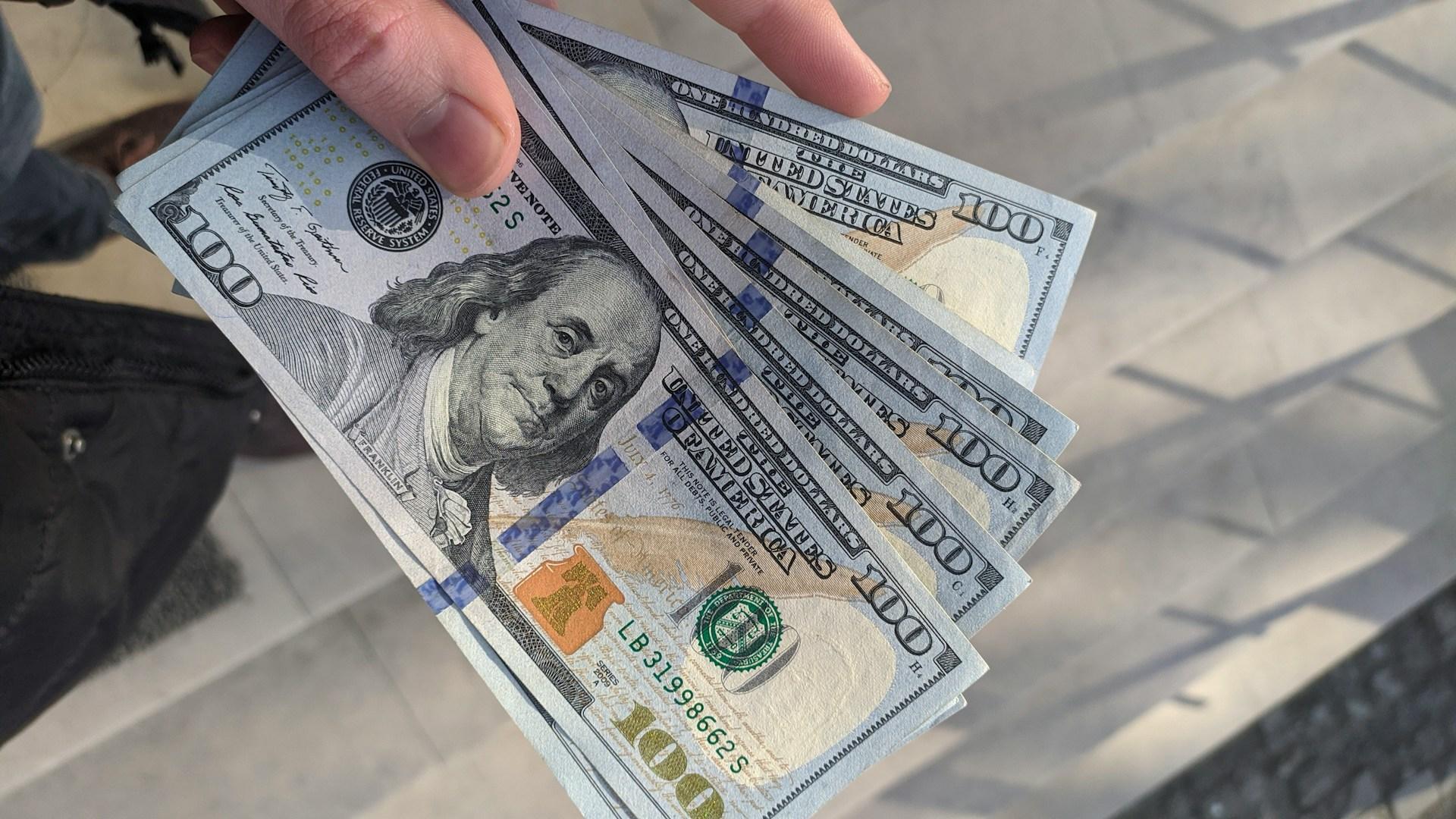
Tokenized asset specialist Ondo Finance is evaluating a potential acquisition of between $250 million and $500 million, according to a person with knowledge of the matter.
The New York-based company is considering wealthtech targets, among other subsectors, said the person, who spoke on condition of anonymity because the matter is private.
Ondo has not yet appointed any formal advisers, the person said.
Founded in 2021 by former Goldman Sachs executives, Ondo Finance is a tokenization platform that brings traditional financial assets onchain. The company issues tokenized U.S. Treasuries and stocks and has become one of the largest providers of tokenized real-world assets, with more than $3.5 billion across its products.
“As a fast-growing company, Ondo regularly evaluates the market as part of normal business operations. We are not in conversations with any party at this time,” an Ondo representative said in emailed comments to CoinDesk.
Crypto dealmaking has remained strong in 2026 as traditional financial firms and larger digital-asset companies use acquisitions to add licenses, technology and distribution.


FTX begins its fifth creditor distribution on Friday, moving roughly $900 million to holders of allowed claims. The round is the smallest of the five the estate has paid since repayments began.
The shrinking size points to a bankruptcy in its closing phase. The harder problem now is not raising cash but reaching creditors who have never collected.
FTX Fifth Distribution Is the Smallest of Five Rounds
FTX moved more than $5 billion in its second distribution in May 2025, then about $1.6 billion that September. The fourth creditor distribution round came to roughly $2.2 billion in March 2026.
Friday’s payment is under half that. Allowed Class 5A Dotcom customer claims pick up another 9%, reaching 105% cumulatively, while Class 5B U.S. customer claims add 5% to reach the same level. General unsecured and digital asset loan claims each gain 3%, taking both to 103%.
Convenience class holders sit at a 120% cumulative recovery, though FTX cautioned that final percentages may shift slightly on rounding. Those figures count dollars, not coins, and the real value of repayments has trailed what the same assets would fetch today.
A separate $18 million payment goes to preferred equity holders on the same date, lifting that trust’s running total to $95 million.
Some Creditors Still Cannot Be Paid
Claims that are not yet allowed stay marked as disputed. FTX lists three common reasons, including:
- Proofs of claim still under reconciliation
- Jurisdictions still under review, and
- Customers who took partial payments through the Australian proceedings.
The Bahamas track runs on its own terms. Joint official liquidators of FTX Digital Markets set the same June 16 record date and July 31 start, but the distribution rate is still to be confirmed.
Creditors living in jurisdictions the liquidators flag as potentially restricted stay excluded while the legality of paying them is reviewed.
For everyone else, Friday starts a countdown. Holders of allowed claims who have not onboarded with BitGo, Kraken or Payoneer within six months may forfeit the right to be paid at all.
Tax forms carry a separate deadline under the plan with the same consequence. FTX said the class-by-class totals will reach the court docket shortly after July 31.
The post FTX Fifth Distribution Is Its Smallest Yet: Who Still Cannot Get Paid? appeared first on BeInCrypto.


Canadians’ ownership of cryptocurrencies increased to 25% in 2026 from 10% in 2023, new data from the Ontario Securities Commission (OSC) shows.
In the results of a survey released on Tuesday, the OSC found that crypto ownership and awareness among Canadians had increased from that a few years ago. The survey polled 2,360 individuals age 18 and over between December 2025 and January 2026, finding that 59% of the respondents were aware of crypto assets and 25% held them.
“Crypto markets continue to evolve, and Canadians are participating in them more than ever before,” said Naizam Kanji, executive vice president of strategic regulation at the OSC. “By identifying emerging trends and behaviors with our research, we can look around corners, anticipate potential opportunities and risks, and ensure our regulatory approach supports investor protection while fostering fair and efficient markets.”
According to the survey, the results also suggested an increasing awareness of risk, though it was still based on a limited understanding of the industry. About 50% of crypto owners reported checking whether a platform was registered before using it, but many investors “had some misunderstanding around regulation, insurance protections and transaction capabilities.”
Lawmakers in Ottawa have proposed various measures to address different uses of cryptocurrency in the country. In April, the federal government advanced a bill that could ban political donations using crypto, and proposed banning digital asset ATMs, citing concerns about fraud.
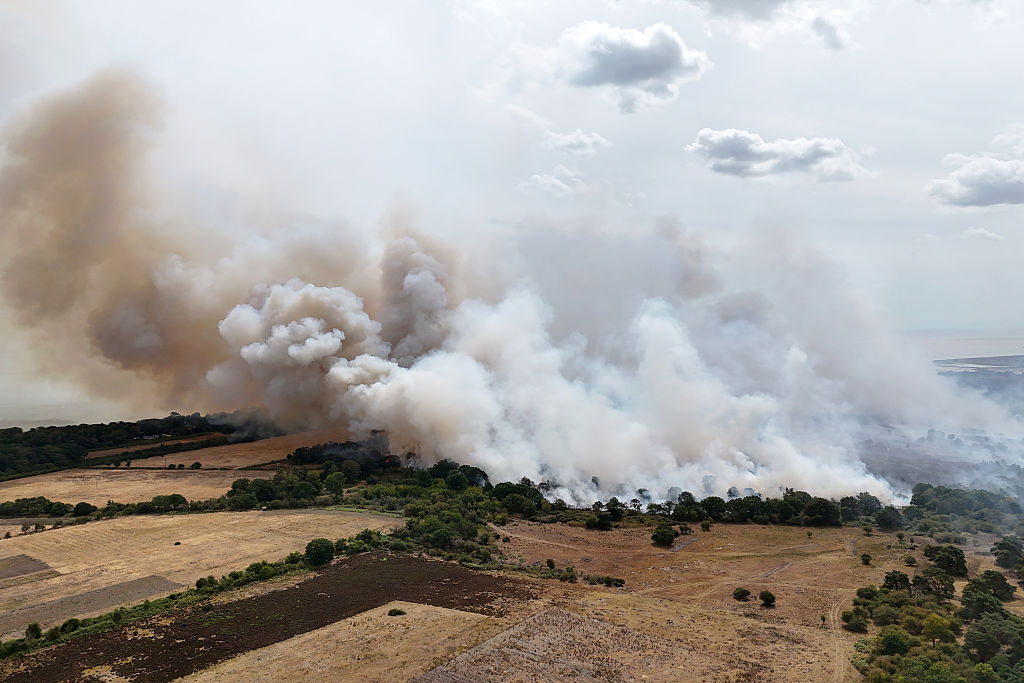
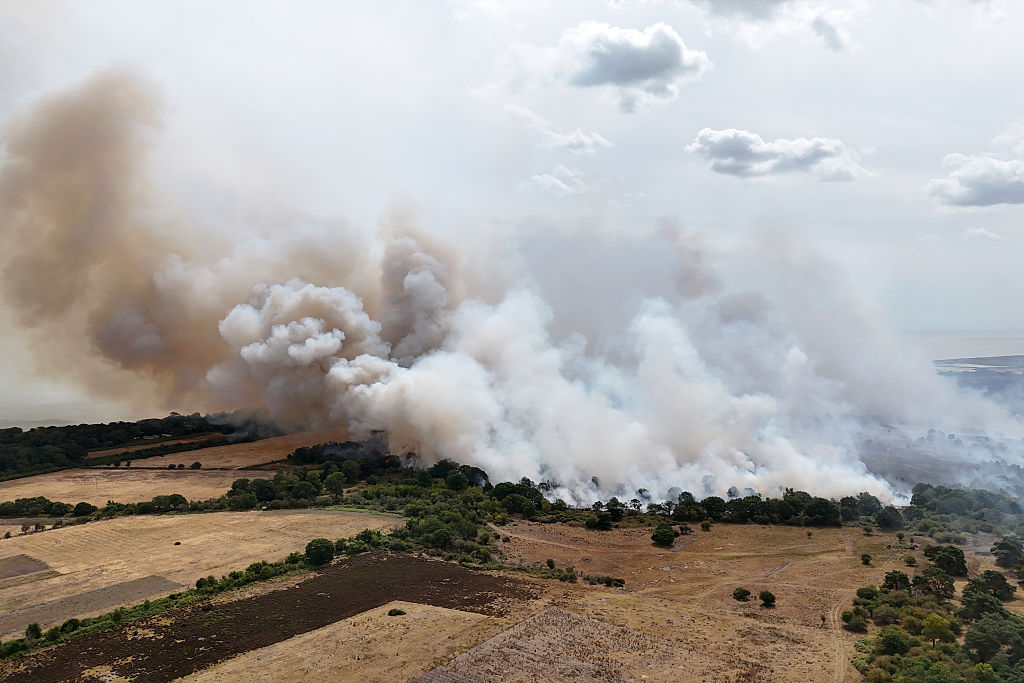
The emergency services in Suffolk, England, have declared a “major incident” as they struggle to contain a wildfire that has swelled to around 370 acres, roughly the size of 210 soccer pitches.
“Changing wind conditions continue to affect the direction and behavior of the fire, making it difficult to predict how it may spread,” Suffolk Fire and Rescue Service said in an update Thursday afternoon.
More than 120 firefighters have been on site tackling the blaze at Dunwich Heath, an area of coastal lowland in the east of England, since the fire broke out on Wednesday.
The blaze has spread across heathland and fields, forcing dozens of people to be evacuated from their homes, with vast stretches of land left charred.
Chief fire officer Jon Lacey described the blaze as “one of the largest” he remembers in the history of Suffolk.
“The fire is still developing. It is a challenging environment to be able to extinguish that fire,” Lacey said at a Thursday press conference. “We have surrounded it with resources, particularly on the fire front that is moving forward to make sure that we can protect the buildings, other forestry, and other items that need to be protected.”
Prime Minister Andy Burnham has said the local authorities will have “all the support, mutual aid, [and] other services that they need,” as they continue to work around-the-clock amid another U.K. heat wave.
Read More: What Is a Fire Cloud and How Are They Making Europe’s Wildfires More Dangerous?
The wildfire has caused power outages in the surrounding areas, placing additional challenges on local services.
U.K. Power Networks said a power cut affecting 116 customers across three postcodes in the area is under investigation.
Meanwhile, officials have quelled concerns about nearby nuclear power stations.
An EDF Energy spokesperson told TIME “the fire at Dunwich Heath is not currently affecting operations at Sizewell B power station but we are continuing to monitor the situation—we are not on high alert.”
Suffolk Fire and Rescue Service also said neither Sizewell B or Sizewell C—a second nuclear power station under construction nearby—are considered to be at risk.
“At the moment, Sizewell B and C are being monitored. We’re in consultation with them, but we’re not worried about fire spreading in that direction,” Lacey said.
Jenny Riddell-Carpenter, the Member of Parliament [MP] for Suffolk Coastal, praised the efforts of local officials and urged people to steer clear of the vicinity.
“I am so grateful, as I know so many others are, for the work of the fire brigade and the emergency services,” she said. “Please do avoid the area, and allow the fire and emergency services the space to respond.”
The wildfire has also raised concerns among local farmers.
Patrick Spencer, the lawmaker for Central Suffolk and North Ipswich, described the wildfire as an “extremely worrying situation” and expressed he is “deeply conscious of the impact on our farming community.”
“At such a critical point in the year, with harvest under way or about to begin for many, this is an especially difficult time for farmers whose land, livestock, or livelihoods are at risk,” he said.
A series of heat waves have recently gripped England, worsening wildfire conditions.
The U.K. Health Security Agency on Thursday said it estimates there were 2,877 heat-associated deaths during two notable periods of hot weather in May and June 2026, putting the country on track to record its highest number of heat-related deaths since modern records began.
Seven areas of England have officially been declared as being in drought, after “record low rainfall and exceptionally high temperatures.”
British Water Minister Emma Hardy warned that the U.K. needs to be prepared “for this new normal” moving forward.
“Our climate is changing, droughts are becoming increasingly common,” she said. “We expect water companies to follow their drought plans, to go further and faster to reduce leaks, and to ensure supplies are not disrupted even in the driest of weather.”
This is the third drought in the past five years, with former extreme dry spells happening in 2022 and 2025.
At the start of the summer, in the wake of last year’s blazes across North York Moors National Park in eastern England, the U.K. government strengthened its wildfire resilience, announcing it would be placing “teams of specialist firefighters will be positioned in key areas and ready to respond to fires across England.”
Read More: Photos Show the Destruction in France and Spain From Ferocious European Wildfires
The wildfire in England comes as other European countries, including France and Spain, continue to battle ferocious blazes.
Three firefighters died Wednesday while facing wildfires on the island of Crete and in the south of the mainland, the Greek fire department said.
On July 30, 2015, the Genesis Block for the Ethereum protocol was mined.
The chain has become the second most important blockchain in the cryptocurrency ecosystem and has reached a market capitalization of over $230 billion, according to CoinGecko. Needless to say, its eight official founders have each profited greatly.
To honor this anniversary, Protos has taken a look at what they’re still publicly working on.
Vitalik Buterin
Vitalik Buterin is perhaps the individual most strongly identified with the Ethereum project, serving as its sincere and awkward spokesperson and guiding light.
Unlike many of the other founders, he’s continued to work deeply on the Ethereum project, even remaining deeply involved with the Ethereum Foundation.
This makes him a frequent target of criticism, as many traders have been frustrated with what they see as the Ethereum Foundation not doing enough to support the project, or at least the price of the project.
Anthony Di Iorio
Anythony Di Iorio is one of the only co-founders to try to find an exit from the crypto ecosystem.
In 2021 he told Bloomberg, while he was trying to sell his cryptocurrency accelerator, that he doesn’t “feel necessarily safe in this space” and stated that crypto is “really a small percentage of what the world needs.”
However, exiting isn’t always easy or clean. He’s since founded a firm called Andiami, which claims to be “building the tools to power the decentralized future.”
That project hasn’t posted on X since early 2023, or to its YouTube, Instagram, or blog since 2022, suggesting that it may be making slow progress on that stated goal.
Charles Hoskinson
Charles Hoskinson saw what Ethereum was doing and immediately thought that a different chain would be the solution to the problems that he saw.
He’d go on to found Cardano.
Hoskinson has also attempted non-crypto projects like his failed Hoskinson Health and Wellness Clinic.
Cardano has underperformed Ethereum substantially year-to-date. Ethereum has lost approximately 36% of its value, and Cardano has lost approximately 55%.
Hoskinson’s time at Ethereum was controversial and he was eventually forced out. According to Laura Shin’s Cryptopians, he’d make extraordinary claims, even implying he was Satoshi Nakamoto.
Mihai Alisie
Mihai Alisie was the founder of Bitcoin Magazine, where Buterin also worked before founding Ethereum.
Alisie’s LinkedIn still describes them as the founder of the AKASHA Project.
Unfortunately though, that foundation closed down several months ago.
Amir Chetrit
Amir Chetrit was the founder of Colored Coins before joining Ethereum.
His time at Ethereum was controversial; he and Hoskinson were eventually forced out in what Laura Shin called “Game of Thrones Day.”
Since then, Chetrit has reportedly continued working in crypto but with a low profile.
Joseph Lubin
Joseph Lubin has been one of the most entrepreneurial of the Ethereum co-founders, most prominently through ConsenSys.
ConsenSys has been a central player in the crypto ecosystem, being involved with the MetaMask wallet and the Infura infrastructure for Ethereum.
The SEC had previously sued ConsenSys over MetaMask, but this suit was dropped during the second Trump administration.
Gavin Wood
Gavin Wood started as a Bitcoin developer before joining Ethereum.
He then went on to form Parity Technologies, which released the Parity client, and launched the Polkadot network, meant to be a “parachain” connecting various blockchains.
Jeffrey Wilcke
Jeffrey Wilcke keeps a low profile.
He worked on Mastercoin before joining Ethereum and helped create the Geth (Go Ethereum) client.
Since then, he’s founded Grid Games with his brother, though when we tried to access its website, it timed out.
Broadly, many of the founders who started this so-called “world computer” have moved on from it.
Got a tip? Send us an email securely via Protos Leaks. For more informed news and investigations, follow us on X, Bluesky, and Google News, or subscribe to our YouTube channel.
Crypto ownership in Canada has more than doubled since 2023, even as regulators warn that many investors still misunderstand platform protections and industry rules.
Summary
- 25% of Canadians owned crypto in 2026, up from 10% in 2023.
- The Ontario Securities Commission survey found 59% of respondents were aware of crypto assets.
- Only about half of crypto owners checked whether their trading platform was registered.
- Canada is also considering bans on crypto ATMs and digital asset political donations.
Canada crypto ownership more than doubles
Canada’s cryptocurrency ownership rate rose to 25% in 2026 from 10% in 2023, according to new research from the Ontario Securities Commission.
The OSC surveyed 2,360 Canadian adults between December 2025 and January 2026. Its findings showed that 59% of respondents were aware of crypto assets, while one in four reported owning them.
The increase represents a 15-percentage-point gain in ownership over roughly three years. It also suggests that digital assets are reaching a broader section of the Canadian population despite persistent concerns about fraud, volatility and consumer protection.
“Crypto markets continue to evolve, and Canadians are participating in them more than ever before,” said Naizam Kanji, executive vice president of strategic regulation at the OSC.
“By identifying emerging trends and behaviors with our research, we can look around corners, anticipate potential opportunities and risks, and ensure our regulatory approach supports investor protection while fostering fair and efficient markets.”
The research arrives as major crypto companies seek a larger role in Canada’s financial market. As previously reported by crypto.news, Coinbase is preparing to expand its “Everything Exchange” strategy into the country.
The plan would move Coinbase beyond cryptocurrency trading by combining tokenized stocks, traditional financial products and blockchain-based services in one application for Canadian users.
Investors remain confused about crypto protections
Growing ownership has been accompanied by greater awareness of risk, but the OSC found that knowledge of existing protections remained limited.
About 50% of crypto owners reported checking whether a platform was registered before opening an account or completing a transaction. That leaves a large portion of investors using services without first confirming their regulatory status.
Respondents also showed misunderstandings about how crypto platforms are regulated, whether digital assets carry insurance protections, and which transactions can be reversed or recovered.
Those gaps matter because crypto holdings typically do not receive the same protections as deposits kept at regulated banks. Blockchain transactions may also be difficult or impossible to reverse after funds are sent to a fraudulent address.
For US investors, the Canadian findings reflect a familiar regulatory concern. American agencies and state authorities have also focused on platform registration, fraud disclosures and the differences between crypto accounts and insured bank deposits.
However, the two countries continue to develop their digital asset rules separately. A product offered to Canadian customers may not be available under the same terms in the United States.
Canada targets crypto ATMs and political donations
Higher adoption comes as Ottawa considers tougher restrictions on some uses of digital assets.
Canada’s federal government outlined plans in its Spring Economic Update 2026 to prohibit crypto ATMs nationwide. Officials described the machines as a frequent tool for scammers seeking to collect money from victims or process illicit cash.
Investigations cited by the government identified crypto ATMs as a channel through which fraud victims are instructed to transfer funds. Unlike conventional bank transfers, payments sent through these machines can be difficult to recover once completed.
A separate bill introduced in March would restrict cryptocurrency donations to political groups. The proposal is part of a wider effort to tighten election-financing rules and limit foreign interference risks before the next federal election.
If approved, the measures would create a sharper divide in Canada’s approach to crypto. Authorities would continue allowing regulated ownership and financial products while restricting channels viewed as vulnerable to fraud, hidden funding or illicit activity.
Regulation faces a rapid adoption test
Canada’s rising ownership rate places more pressure on regulators to balance market access with investor protection.
Coinbase’s proposed expansion could give local customers access to a broader selection of crypto and traditional financial products. At the same time, the planned ATM ban and political donation restrictions show that federal officials remain cautious about use cases that can obscure the source or destination of funds.
The OSC survey indicates that adoption is moving faster than investor understanding. Registration checks, insurance assumptions and transaction recovery remain central risks as more Canadians enter the market.
Future policy will therefore need to address both sides of the trend: growing demand for digital assets and the consumer-protection gaps that become more consequential as ownership rises.

Samsung SDS, the IT services arm of Samsung Group, is exploring cooperation with Dunamu—operator of the South Korean exchange Upbit—across stablecoin infrastructure, digital asset systems, and AI-enabled payment models, according to comments made by Samsung SDS CEO Lee Jun-hee during the company’s Q2 earnings call on Thursday.
The discussions signal that Samsung SDS is trying to translate its existing work in tokenization and settlement into commercial offerings in digital finance, at a time when South Korea is actively shaping its approach to stablecoins.
Key takeaways
- Samsung SDS is in talks with Dunamu on stablecoin infrastructure and end-to-end digital asset processing, including issuance-to-settlement workflows.
- The company points to prior capabilities built through Korea Securities Depository’s tokenized securities platform project and stablecoin process validation.
- This effort builds momentum for Samsung’s broader digital asset strategy following separate plans to add stablecoin support to Samsung Wallet.
- Samsung SDS frames its Dunamu investment and collaboration as strategic for digital finance infrastructure rather than purely financial returns.
- Samsung SDS’ AI and cloud expansion appears to be running in parallel with its push into digital finance services.
Samsung SDS and Dunamu explore stablecoin and digital asset infrastructure
During Samsung SDS’s Q2 earnings call, CEO Lee Jun-hee said the company is discussing potential cooperation with Dunamu on three fronts: stablecoin infrastructure, digital asset systems, and AI-based payment business models. Samsung SDS indicated that it expects the partnership to help expand its presence in the digital asset infrastructure market.
Lee tied the planned collaboration to capabilities Samsung SDS says it has already developed. According to the CEO’s remarks, the company has “secured differentiated business capabilities” in digital asset infrastructure through work connected to the Korea Securities Depository’s tokenized securities platform project, as well as “end-to-end validation” across the stablecoin lifecycle—from issuance through settlement.
The practical implication for market participants is straightforward: infrastructure providers that can demonstrate reliable settlement-grade processes tend to be better positioned to support compliant, enterprise-grade stablecoin use cases—especially where tokenization needs to interoperate with existing financial systems.
Collaboration follows Samsung’s wider stablecoin direction
The Dunamu talks come shortly after Samsung Electronics announced plans to add stablecoin support to Samsung Wallet, extending the group’s digital asset push beyond traditional hardware and consumer apps.
While the earnings call details focus on Samsung SDS and Dunamu’s infrastructure and systems work, the wallet development underscores a larger pattern: Samsung’s internal technology stack—from device-side wallets to enterprise-grade blockchain infrastructure—appears to be converging around stablecoins and tokenized finance.
For investors and builders, this matters because stablecoin adoption often depends on multiple layers working together: compliant issuance and settlement infrastructure, plus consumer-facing and merchant-facing distribution channels. Samsung’s efforts span both ends, even if the exact integration steps were not detailed in the Q2 remarks.
Earlier Samsung affiliate investment deepens the relationship
Samsung SDS’s latest comments also build on prior moves by Samsung affiliates. In May 2026, Samsung Securities, Samsung SDS, and Samsung Card agreed to buy a combined 4% stake in Dunamu, according to earlier coverage from Cointelegraph.
In the most recent Q2 call, Lee reportedly described the Dunamu investment as a strategic step rather than a financial one, stating that the companies plan to refine potential business models for digital financial infrastructure. The transcript referenced by the company’s earnings materials positions the partnership as an effort to combine Samsung SDS’s IT, cloud, and security capabilities with Dunamu’s blockchain expertise.
Samsung SDS’ framing is notable because it suggests the collaboration is intended to produce repeatable infrastructure offerings, not merely one-off experiments. The company’s emphasis on stablecoin process validation—issuance through settlement—also points toward operational readiness as a differentiator.
AI and cloud growth run alongside the digital finance push
Samsung SDS’s digital asset initiative is unfolding alongside a broader expansion drive in AI and cloud services. The company’s Q2 financial update showed revenue rising 5.9% year on year to 3.72 trillion Korean won (about $2.6 billion), as cited in its quarterly earnings presentation.
Cloud revenue increased 17% from the prior year, and external cloud business revenue grew 75%, driven by demand for Samsung’s cloud platform and graphics processing unit-as-a-service offerings. These figures matter because stablecoin and digital asset infrastructure increasingly requires data handling, security controls, and scalable compute—areas where cloud and AI investment can directly support deployment and monitoring.
Samsung SDS also reportedly outlined plans to expand its AI infrastructure footprint from 110 megawatts today to 230 MW by 2029 and more than 800 MW by 2031, according to the same earnings materials. While those AI capacity targets are not specific to stablecoin systems, they indicate management’s intent to build the compute backbone that can support both AI-enabled services and the operational needs of digital finance platforms.
In other words, the Dunamu collaboration looks like part of a wider platform strategy: infrastructure capabilities for tokenized finance paired with scalable computing and security.
Next, readers should watch for whether Samsung SDS and Dunamu move from partnership discussions to defined product or deployment milestones—especially any details about stablecoin issuance, settlement tooling, or AI-based payment workflows. The immediate uncertainty is timing: earnings call cooperation signals direction, but adoption and market impact will depend on how quickly concrete infrastructure plans are executed within South Korea’s evolving stablecoin regulatory environment.

Can Studying Daily Life Help Us Envision the Future?

Nolan Wells’ Family Hires Audio Experts To Review Sea Tow Call

TIPS FINANCIAL FREEDOM #moneymanagement #financialfreedom #keuangan #samasamabelajar

Renter of Home in Anne Heche Crash Denies Settlement With Son

No Jackpot Winner as $257 Million Prize Rolls Over to $269 Million Monday Draw

Weekend Open Thread: Staud – Corporette.com
TIPS FINANCIAL FREEDOM #moneymanagement #financialfreedom #keuangan #samasamabelajar

New Earning App Without Investment | Online Game Earn Money | How to Earn Money Without Investment

Crypto Manipulation FINALLY REVEALED (Watch Immediately)
-

 Fashion6 days ago
Weekend Open Thread: Brooks Brothers
-
 Sports4 days ago
Commonwealth Games boxing: Jadumani Singh seals dominant 5-0 win over Pakistan’s Sumama Rehman to enter quarter-finals | Commonwealth Games News
-

 Business24 hours ago
Why Trees Belong on the Risk Register
-

 Tech4 days ago
Intel is reversing course and bringing hyper-threading back to its server chips
-

 Crypto World5 days ago
Ripple bought a bank in pieces. The $4 billion audit
-

 Politics3 days ago
Luke Littler dismantles Gerwyn Price to retain title in Blackpool
-
 Entertainment6 days ago
A New Post-Apocalyptic Gundam Anime Series Blasts Into SDCC
-

 Politics2 days ago
The Part of the Electric Transition Nobody Wants to Discuss
-

 News Videos4 days ago
BITCOIN JUST ENTERED THIS CRITICAL ZONE…
-

 Fashion7 days ago
16 Dresses for the High Summer Event
-

 Sports7 days ago
2026 3M Open leaderboard: Scottie Scheffler finds putter in Round 1, sits three back
-

 Business2 days ago
Major shareholder moves on Canyon
-

 Crypto World5 days ago
XRP Ledger adds $2.6B as RWA inflows rank second
-

 News Videos8 hours ago
Bitcoin Enters the 3rd Stage of the Bear Market
-

 Politics4 days ago
Spain sweeps the board at 2026 World Cup with individual awards
-
 Entertainment2 days ago
‘Stargate’ Creator’s New Sci-Fi Series Returns for Season 3 Tomorrow
-

 Crypto World2 days ago
Kraken Enables Retail Access to Jersey Mike’s IPO via Tokenized Shares
-

 Tech6 days ago
Anthropic launches Claude Opus 5, a cheaper AI model for coding, agents and enterprise workflows
-

 Entertainment5 days ago
Sara Gilson Killed By Husband After Viral “Pedophile” TikTok Video
-

 News Videos2 days ago
Claude: Build Financial Dashboards in Minutes (2026)
You must be logged in to post a comment Login