
Crypto World
World’s Largest Sovereign Wealth Fund Bought $1.2 Billion in SpaceX Stock

Norway’s sovereign wealth fund, the largest in the world, revealed on Wednesday that it holds a 0.05% stake in SpaceX worth just over $1.2 billion. The position had never been made public before.
The disclosure arrived with a record first-half profit of 1.75 trillion Norwegian kroner, or roughly $184.9 billion. It also places the fund inside both of Elon Musk’s listed companies.

A Record Half Built on Chips
Norges Bank Investment Management (NBIM), which runs the fund, reported a 9.4% return for the first six months of 2026. The fund closed in June at 22,683 billion kroner, near $2.3 trillion.
Equities carried almost all of it. Stocks returned 13.0% while fixed income added 0.9%, and shares made up 72.1% of the portfolio at the end of June.
The path there was uneven. Equity holdings dropped 2.6% in the first quarter, then rebounded 15.98% in the second as chipmakers rallied.
CEO Nicolai Tangen summed up the driver as “chips, chips, chips, chips” while presenting a chart of top performers featuring Samsung, SK Hynix’s US listing, TSMC, ASML, Intel, and Nvidia. NBIM’s 1.3% stake in Nvidia alone is worth $61.8 billion.

An Awkward Seat in Musk’s Empire
The SpaceX position is small next to that. What makes it interesting is who owns it.
NBIM voted against Musk’s $56 billion Tesla compensation award in 2024, then rejected his trillion-dollar package at the carmaker’s late 2025 shareholder meeting. The fund cited dilution and key person risk both times.
Musk did not take the first vote well, judging by a text message later released under Norway’s freedom of information law.
“When I ask you for a favor, which I very rarely do, and you decline, then you should not ask me for one until you’ve done something above nothing to make amends. Friends are as friends do,” Reuters reported.
Follow us on X to get the latest news as it happens
Despite that, the fund now owns roughly 1% of Tesla, worth about $15.7 billion, plus the new SpaceX slice.
Deputy CEO Trond Grande declined to discuss individual positions when asked how the SpaceX weighting had changed.
“We were roughly index rate in the first half, and that’s been the case over the summer as well.”
That answer matters. It suggests the fund did not pick SpaceX. It owns what the index hands it, which ties Musk’s governance fights to Norwegian capital indefinitely.
A Volatile Asset for a Cautious Owner
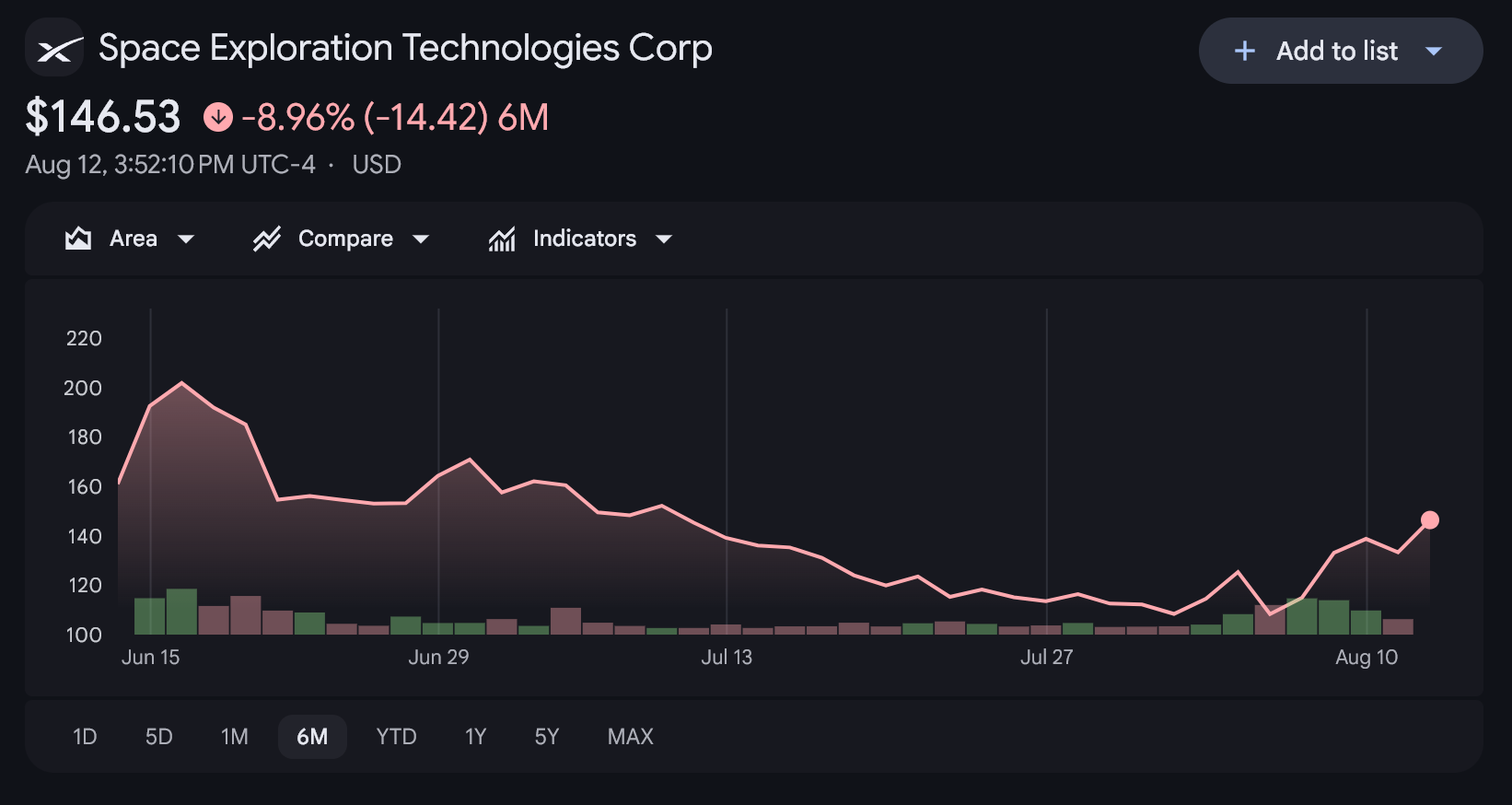
SpaceX has been in a rough hold since June. The stock listed at $150 against a $135 offer price, peaked near $225, then sank below $107 by late July.

It reclaimed its IPO price on Monday and traded above $148 on Wednesday, up around 10% on the day and just shy of its listing price. Other large holders, including Ontario Teachers’ SpaceX bet, have ridden the same swings.
Tangen shrugged at the volatility, noting the fund owns 7,000 companies that move in both directions daily.
That calm sits oddly beside his own warning a day earlier, when he said the fund could lose its entire value and called that outcome “fairly likely” in current conditions.
Crypto investors have reason to watch. The fund holds no Bitcoin directly, but its indirect BTC exposure through equity stakes climbed 83% between mid-2024 and mid-2025.
A passive giant that keeps buying whatever the index adds does not choose its risks. It absorbs them, and so do the assets that trade alongside it.
The post World’s Largest Sovereign Wealth Fund Bought $1.2 Billion in SpaceX Stock appeared first on BeInCrypto.

Crypto World
Pump.fun's Share Of Launchpad Fees Fell To 27% In July. Four Weeks Later It's Back Above Half
A wave of launchpads on Robinhood Chain took most of pump.fun's share of the token-launch business in the first two weeks of July. Still, pump.fun is now earning more per week than before they arrived. The launchpad business grew faster than pump.fun lost ground in it. Weekly fees across the… Read the full story at The Defiant


Crypto companies from including Coinbase, BitGo, Robinhood, Polygon and Pump.fun have announced workforce reductions this year, citing a variety of reasons, including shifting to AI and market forces.


The U.S. Securities and Exchange Commission’s Division of Investment Management said Wednesday that it would not recommend enforcement action if Franklin Templeton’s U.S. registered funds hold shares of its onchain money market fund through an affiliated blockchain-integrated custody and… Read the full story at The Defiant


Council Speaker Julie Menin sent letters to four companies offering prediction market services to New Yorkers as part of an investigation into their marketing practices.

It’s an exciting finding, says Rimas Orentas, an adjunct professor at Johns Hopkins Bloomberg School of Public Health and head of immunotherapy at Miltenyi Biotec who was not involved in the study. “Solid tumors are enmeshed in your tissues,” he says. That makes it quite difficult for engineered T-cells to work. “That’s the surprising part of this paper.”
As with many engineered T-cell discoveries, this particular approach, if it reaches the clinic, is unlikely to work for every patient or every cancer. Still, with many of these approaches, says Orentas, “just a few patients benefit, but when they benefit, they really benefit. I think that’s where we’re headed with this.”
Seitz, who is now planning a clinical trial of the treatment with 18 pediatric cancer patients who all have PRAME in their tumors, just saw his recovered patient this week. Over the weekend, the boy had been part of an extreme cycling event. “Apparently, they drive uphill, and then they go nuts downhill between trees and rocks,” Seitz says. “And I was like, ‘Oh my God…please don’t crash into a tree! It’s not worth it!’ But he really loves it”—and Seitz feels honored to have helped him reclaim his life.
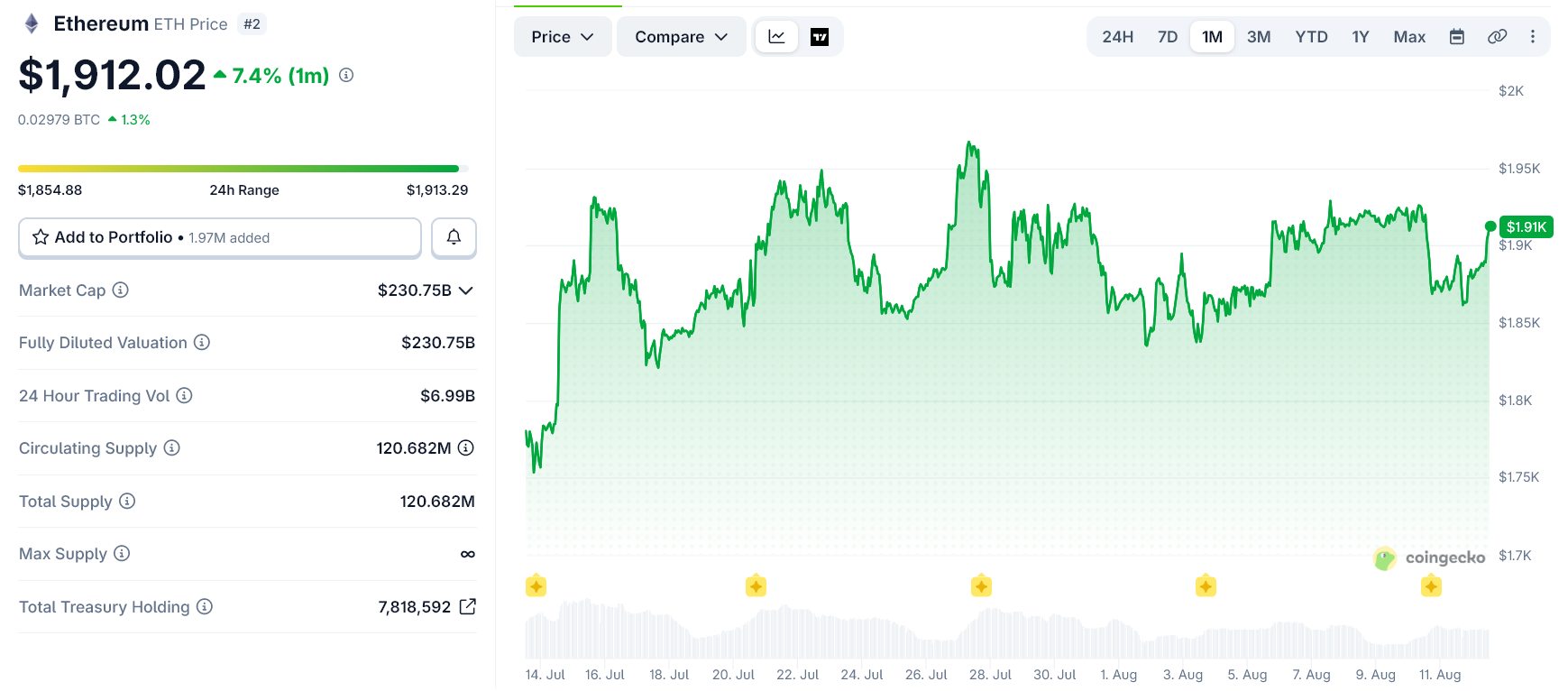
If you have been following the Ethereum price action for a while, you would know that the 6% monthly uptick could reverse rather quickly. Even though ETH seems to be trading inside a rising channel, an otherwise bullish pattern, a few alarming signs are emerging.
On-chain, capital keeps flowing in while trading activity and big holders step back. That split leaves ETH structurally supported but tactically fragile beneath a stubborn $1,915 ceiling.

Capital Piles in as Trading Dries Up
Money is the key factor here. Ethereum’s monthly DEX volume fell about 42% from April to July, according to Dune Analytics, yet TVL, the capital locked in DeFi apps, rose about 7.8% to near $42 billion, with staking at a record 33.98% of supply.

This is not defeat. Trading cooled everywhere, with Solana down about 79% from its peak and BNB Chain now leading volume. This means money is settling into yield rather than chasing trades.

That fundamentally aligned thesis looks bullish, but it hides a catch. The demand that actually drives price is thinning.
Whales Cash Out as the Channel Weakens
That thinning demand is now showing up in the biggest wallets. ETH has climbed an ascending channel since July 8, which reads as bullish on its own.

However, buying volume has faded since July 14, and selling pressure has surged since August 6, leaving the trend fragile. Then the whales blinked.
Want more token insights like this? Sign up for Editor Harsh Notariya’s Daily Crypto Newsletter here.
Holdings excluding exchanges fell from 125.44 million ETH on August 10 to 123.86 million, roughly $3 billion sold into the very strength that looked bullish.

When large holders trim and volume dries up, rallies lose their fuel, which is why the price keeps stalling at one exact level.
Why $1,915 Decides the Ethereum Price
All of that pressure meets at $1,915. The Ethereum price has been rejected there seven times since July 31, making it the wall that defines the trend. A daily close above it opens at $1,978, then the top of the channel, the path our ETH forecast tracks.

Losing the immediate floor instead can change the equation rather quickly. A close below $1,875 would turn the structure from bullish to neutral and expose $1,843, then $1,811. So until fresh demand returns to crack $1,915, capital supports the Ethereum price without lifting it, and the whales are betting it stays that way.
Analyst’s View: The dropping DEX footprint doesn’t look like an Ethereum problem. It can be termed a market-wide reset. The real worry sits with the whales. And a sustained rejection at $1,915 might be the reason for their apathy. A reclaim of $1,915 can bring back big-holder optimism.
The post Why is Ethereum Price Stuck Below $2,000? appeared first on BeInCrypto.
XRP’s price has remained under pressure, alongside the choppy price action seen across other major crypto assets. It has struggled throughout the summer, shedding almost 30% since mid-May.
But the slump hasn’t stopped whale wallets from growing.
Biggest Wallets Are Quietly Growing
According to Santiment’s latest analysis, the number of wallets holding at least 1 million XRP has increased by 32 over the past three months, while the market cap has declined by 29%. At the same time, Ripple’s stablecoin, RLUSD, has grown into a meaningful institutional stablecoin. The firm’s payments, custody, and tokenization rails also continue to keep the XRP Ledger tied to settlement use cases.
Santiment said that the rising million-XRP wallets alongside a falling market cap indicate stronger holders are absorbing panic, and added,
“Patience is replacing simple price-related hype, and future volatility becomes more interesting for bulls.”
Zooming out, XRP is now in extremely oversold territory. According to Ali Martinez, fresh buy signals are now appearing. Earlier this week, the analyst reported that large investors bought more than 380 million units in seven days, worth nearly $400 million at the time.
Such accumulation could reduce the supply available on the market and support prices if demand holds steady or rises. It could also attract smaller investors. The monthly TD Sequential also flashed a buy signal. Similar setups had previously preceded major price increases.
Meanwhile, market watcher CR87 said XRP is at a “critical level.” The price risks falling toward the $0.50-$0.60 range if $1.03 fails. For bulls, on the other hand, reclaiming $1.47 would be the first sign of strength. Along similar lines, X user Diana also predicted more downside if the token breaks below the $1 level. The downside target in that scenario is $0.86. However, a strong reaction around $1, followed by a move back above $1.036, could weaken the bearish outlook.
A Sharp ETF Slowdown
On the institutional front, US-based spot XRP ETFs attracted a total of $1.17 billion between November and December 2025. However, that momentum has weakened in recent months. The products drew just $15.59 million in January. In the following month, the figure nearly quadrupled to $58.09 million. March then saw the first monthly outflow of $31.16 million.
Performance remained mixed from April to July 2026. The funds brought in $81.6 million in April and $132 million in May after the CLARITY Act cleared the Senate Banking Committee. That slowed to $59.46 million in June and $27.29 million in July. So far in August, they have attracted just $1 million.
The post Ripple’s (XRP) Summer Slump Isn’t Stopping Large Wallets From Growing appeared first on CryptoPotato.
Crypto World
Morgan Stanley’s infrastructure partner Zerohash rebuffed in pitch to be U.S. trust bank
Unlike denials (as received by Wise and Bunq) a return doesn’t come with a detailed explanation. The company didn’t publicly disclose the development when it happened, as it had with the submission of its application. And Zerohash hadn’t voluntarily withdrawn the filing, as was its option.
A spokesperson for the OCC didn’t immediately respond to questions about the application, and spokespeople for Morgan Stanley declined to comment.
Just a month before returning Zerohash’s effort, the regulator issued an explanation for how it makes such decisions, including its new approach to returning applications without registering a decision. The OCC will return a filing, the agency said, if it doesn’t contain necessary information on the company’s finances or officers. Or, it noted, “the OCC may return a filing as materially deficient if, after attempting to have the filer furnish all required information for the OCC to assess the statutory or regulatory criteria through an additional information request, the responses do not sufficiently respond to the requests.”
When the Independent Community Bankers of America filed an objection to the application in April, the community-bank group’s letter noted: “In less than twelve months the OCC has conditionally approved or received applications from Circle Internet Group, Ripple, Paxos Trust, BitGo, Fidelity Digital Assets, Crypto.com, Payoneer (PAYO), and now Zerohash. This pace — eleven filings or approvals in under one hundred days in some windows — precludes deliberate, transparent policymaking.”
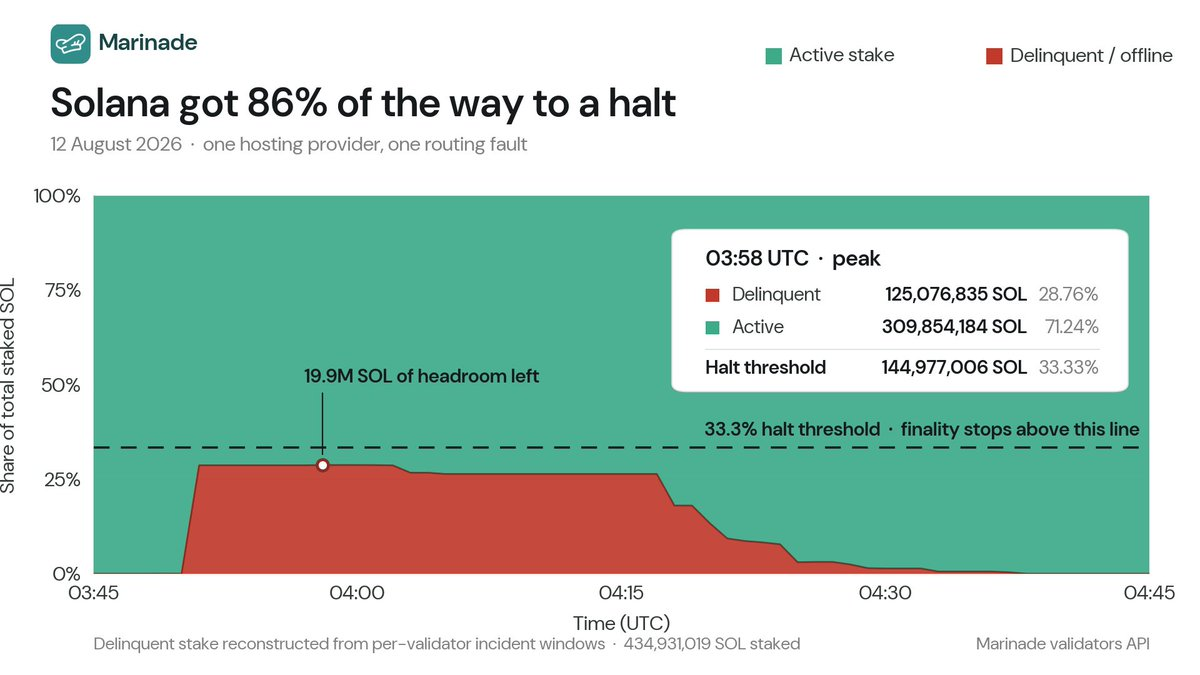
Solana (SOL) came within five percentage points of a full network halt on Wednesday morning. One routing glitch at one hosting company knocked 28.83% of all staked SOL offline in minutes.
Almost nobody noticed. Staking platform Marinade Finance reconstructed the incident and found the network got 86% of the way to the 33.34% line where Solana stops finalizing transactions.

Follow us on X to get the latest news as it happens
How One Bad Route Nearly Halted the Solana Network
The fault began at Teraswitch, a hosting provider popular with Solana validators. A broken route left its Miami site, then spread through an internal relay in Amsterdam. Twelve sites from London to Tokyo lost their connection. North America never felt it.
“Solana got 86% of the way to a halt this morning and it barely registered anywhere,” Marinade Finance indicated.
Teraswitch found the bug in about 10 minutes. Full recovery took 33. At the peak, roughly 20 million SOL of online stake stood between the network and a freeze.
Around 90 validators went dark. Their combined lost rewards came to 333 SOL, about $25,600 at current prices. Validator bonds will cover that at the end of the epoch.
Solana’s Own Safety Cap Is Already Broken
An autonomous system number (ASN) is the block of internet addresses one network operator controls. One ASN, AS20326, hosts 27.34% of everything staked on Solana. During the fault, 94% of that stake went offline at once.
The Solana Foundation Delegation Program (SFDP), which steers foundation stake to validators, caps any single ASN at 25%. That cap exists for exactly this failure. It is already broken.
Another 14 million SOL dropped in the same minutes on unrelated providers. Marinade could not explain the overlap. Provider labels clearly miss some shared points of failure.
Backup systems failed the test too. Of 74 validators Marinade measured, only three switched to a second site. The rest sat offline until the internet healed. Helius, Solana’s second-largest validator, stayed down all 33 minutes.
Marinade admitted its own numbers look similar, with four ASNs holding two-thirds of the stake it allocates. It now plans tighter caps per ASN and data center, and will publish which validators run automatic failover.
A Near Miss With a Long History
SOL trades near $76.46, up 0.6% on the day. The market shrugged. No user funds were ever at risk, and bonds cover the lost rewards. The worry is structural, not immediate.

Solana has seen this movie before. In November 2022, German host Hetzner kicked 1,000 validators offline and pushed delinquent stake past 20%. Wednesday’s fault went further.
The chain’s last full network halt, in February 2024, ended a 351-day uptime streak and took about five hours to fix. No bond covers that outcome. A halt freezes every SOL holder at once.
The timing stings. Validators are preparing the Alpenglow finality upgrade, due by October, which promises faster confirmations. Speed means little if one provider’s routing table can stall the whole chain.
The open question is whether stake spreads out before the next bad route finds it.
The post Solana Network Nearly Stopped Working Today. Should SOL Investors Worry? appeared first on BeInCrypto.
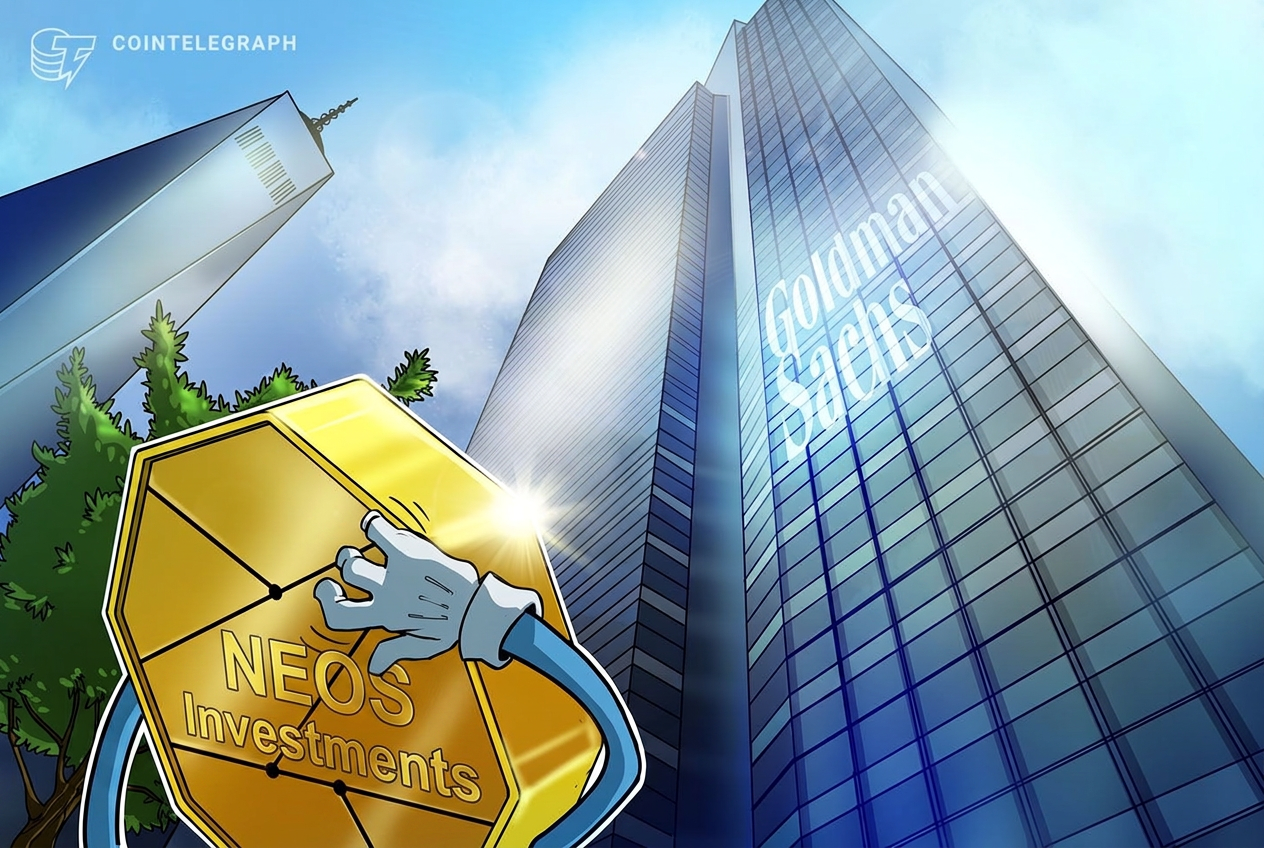
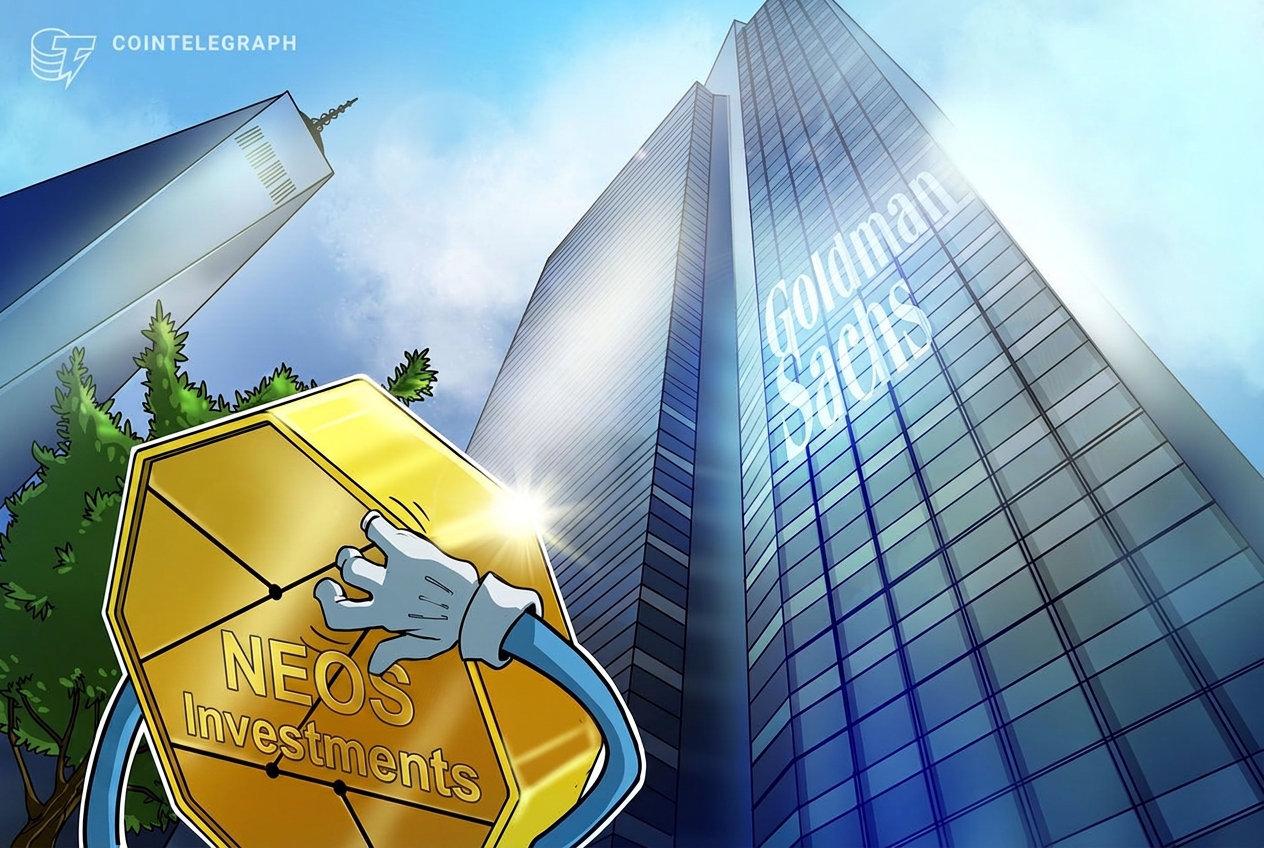
The deal would add NEOS’ $30 billion ETF business, including Bitcoin- and Ether-linked income funds, to Goldman Sachs Asset Management.

Pump.fun's Share Of Launchpad Fees Fell To 27% In July. Four Weeks Later It's Back Above Half

Lionel Messi To Retire After Father’s Death? Emotional Note Leaves All Guessing

NYT Strands hints and answers for Thursday, August 13 (game #893)


-

 Fashion5 days ago
Weekend Open Thread: Mattifying Sunscreen
-

 Fashion5 days ago
Frugal Friday’s Workwear Report: Cap-Sleeve Pointelle Crewneck Sweater
-

 News Videos5 days ago
Can Astrology Help Find Gold and Silver Trends? A Financial Astrology Guide
-

 Sports7 days ago
Jordan Coyle & Cordiamo take Laya Arena Stakes at RDS
-
 Politics7 days ago
Reform UK And Greens Sink To Lowest Favourability Ratings To Date
-

 Tech5 days ago
Rinn Pharma & Biopharma to join NordicPharmaTrain network
-

 Business4 days ago
How to Start a Cleaning Business: A Step-by-Step Guide
-

 Business4 days ago
Datadog: Best Of Breed For Multiple Reasons
-
 Business4 days ago
BDC Weekly Review: Private BDC Q2 Numbers Are Strong
-
 NewsBeat24 hours ago
Communication cards help banking customers access services or report scams
-
Sports7 days ago
Spider-Man: Brand New Day ending explained: Is Peter Parker alive?
-
 Tech6 days ago
Price Hikes May Be Coming for PC Motherboards Next
-

 Business6 days ago
Brightwater secures funding for WA-first dementia projects
-
 Crypto World7 days ago
Galaxy Digital Stock Slides 14% as Crypto Prices Hit Earnings
-
 Politics7 days ago
The Not-So Talented Mr Arday
-
 Business2 days ago
Oil Price Today (August 11): Crude oil rises to $88 after Trump’s compensation demand dents Hormuz opening. Here’s why
-
 Tech7 days ago
How to Use Your Phone as a Webcam on PC and Mac (2026)
-

 Business7 days ago
SpaceX Shares Plunge 13.6% After First Public Earnings as AI Capex Surge and Lockup Spark Selloff
-

 Fashion5 days ago
Weekly News Update, 8.6.26 – Corporette.com
-
 Tech6 days ago
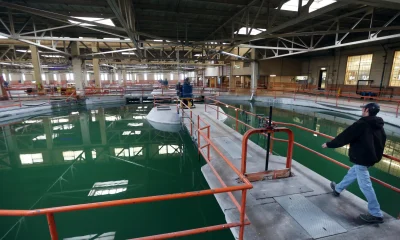
Hackers just broke into America’s tap water. How scared should you be?
You must be logged in to post a comment Login