
Crypto World
XAG/USD Analysis: Silver Surges on Jobs Data, Yields Threaten to End It

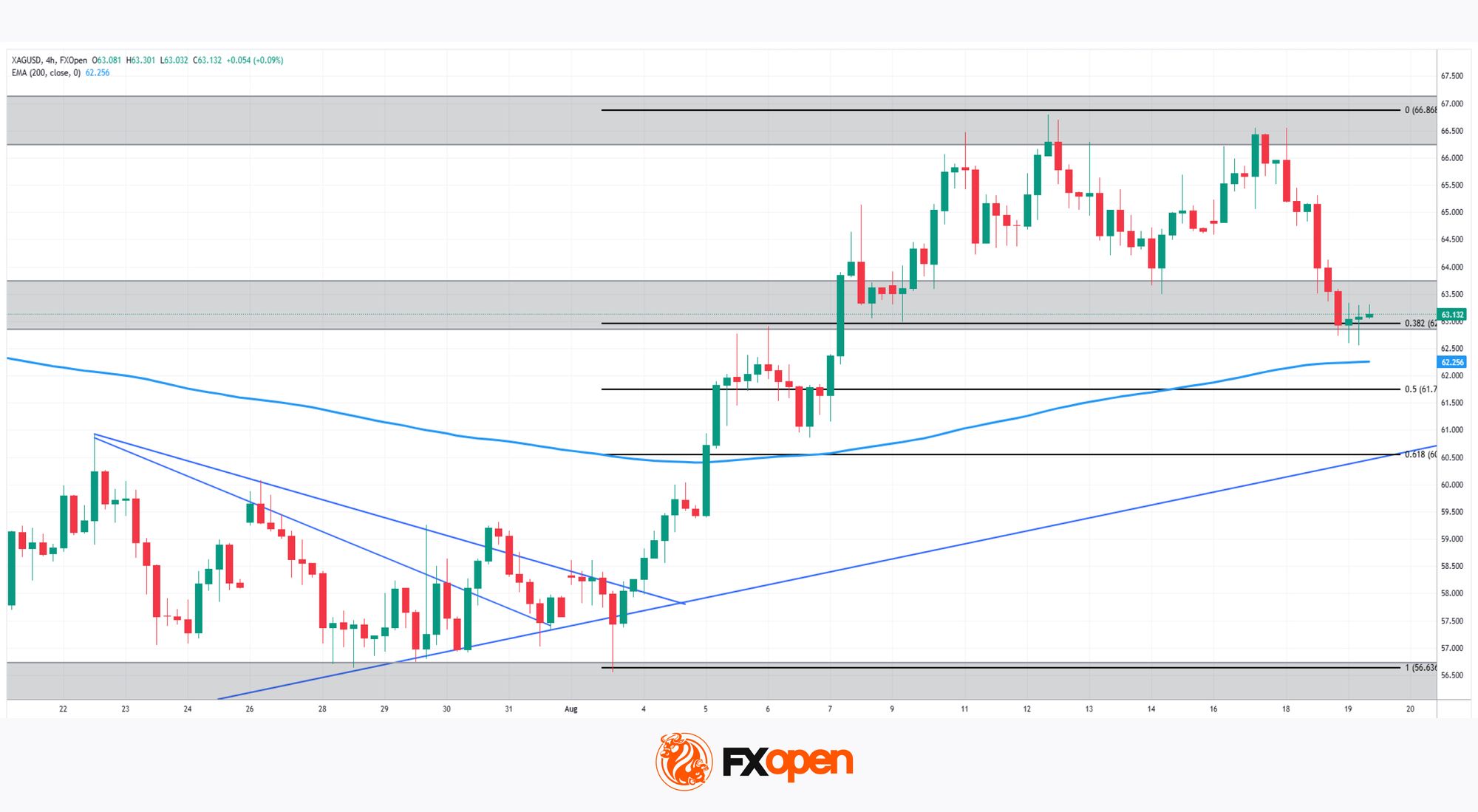
Silver has had one of its strongest months in years, but this week’s price action shows just how fragile precious metals rallies can be when bond markets get nervous. The metal surged nearly 10% last week after July’s Non-Farm Payrolls badly missed expectations, printing a loss of 23,000 jobs, prompting markets to price out any chance of a September Fed hike and reviving safe-haven demand.
That momentum reversed on Tuesday, however, with silver dropping toward $64 as global bond yields spiked to multi-year highs on mounting concerns over government spending and persistent inflationary pressures. Rising oil prices added to the unease, keeping inflation risks firmly in focus even as rate-hike expectations continue to fade.
Beneath the volatility, the structural picture remains supportive: silver continues to draw solid demand from the green energy transition, solar panels, electric vehicles, and AI data centre infrastructure, all keeping a floor under prices. All eyes now turn to the Fed’s July meeting minutes and Chair Kevin Warsh’s remarks at Jackson Hole, both expected to offer fresh clues on the path ahead for rates.
Technical Analysis of XAG/USD
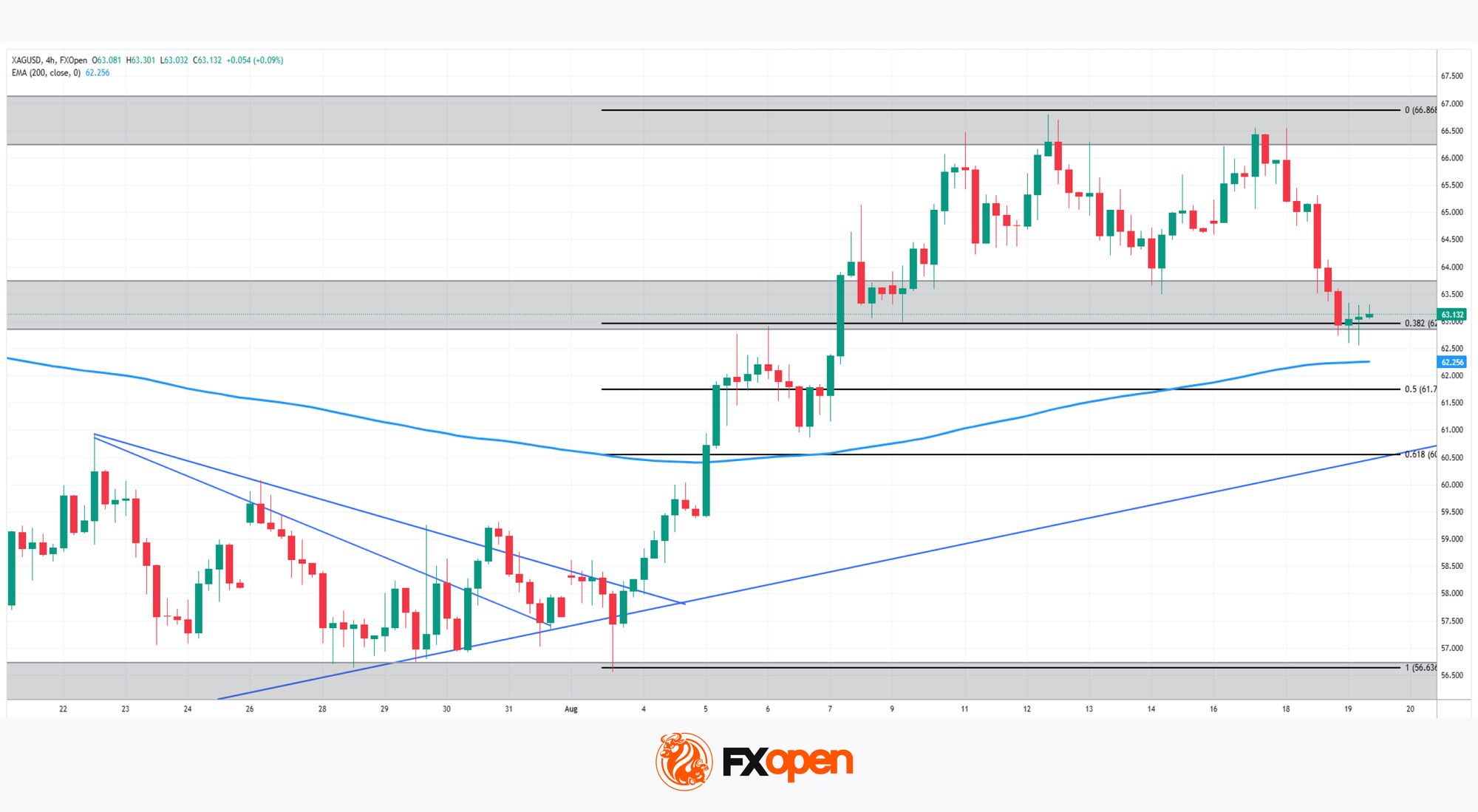
As XAG/USD chart shows, silver broke above its descending trendline from June’s highs in early August, a genuine shift after weeks of decline, and has since been holding above the 0.382 Fibonacci retracement near 62.88, right where the 200-period EMA also sits nearby at 62.27. The broader recovery has been building on an ascending trendline off the mid-July lows.
Bullish Scenario
Should buyers defend this 0.382-EMA confluence and push higher, the path would open toward a retest of the 66.73 highs, the 0 Fibonacci level marking the origin of the entire decline. A confirmed break above that zone would signal the correction is fully over.
Bearish Scenario
Conversely, a break below the 0.382 retracement and the ascending trendline would expose the 0.5 level near 61.69, with a deeper slide risking a retest of the 0.618 retracement around 60.49, or even the triangle apex near 56.64 if selling pressure accelerates.
With price sitting right at the intersection of a reclaimed trendline, the 200-period EMA, and a key Fibonacci level, silver looks poised for a decisive move, will this recovery extend toward fresh monthly highs, or does the recent bond market turmoil drag the metal back into its prior range?
Start trading commodity CFDs with tight spreads (additional fees may apply). Open your trading account now or learn more about trading commodity CFDs with FXOpen.
This article represents the opinion of the Companies operating under the FXOpen brand only. It is not to be construed as an offer, solicitation, or recommendation with respect to products and services provided by the Companies operating under the FXOpen brand, nor is it to be considered financial advice.

Ripple’s XRP remains locked in a broader bearish structure, although the latest short-term price action is beginning to show tentative signs of seller exhaustion. The $1 psychological level is now the immediate battleground, with the market approaching an important demand area below.
Ripple Price Analysis: The Daily Chart
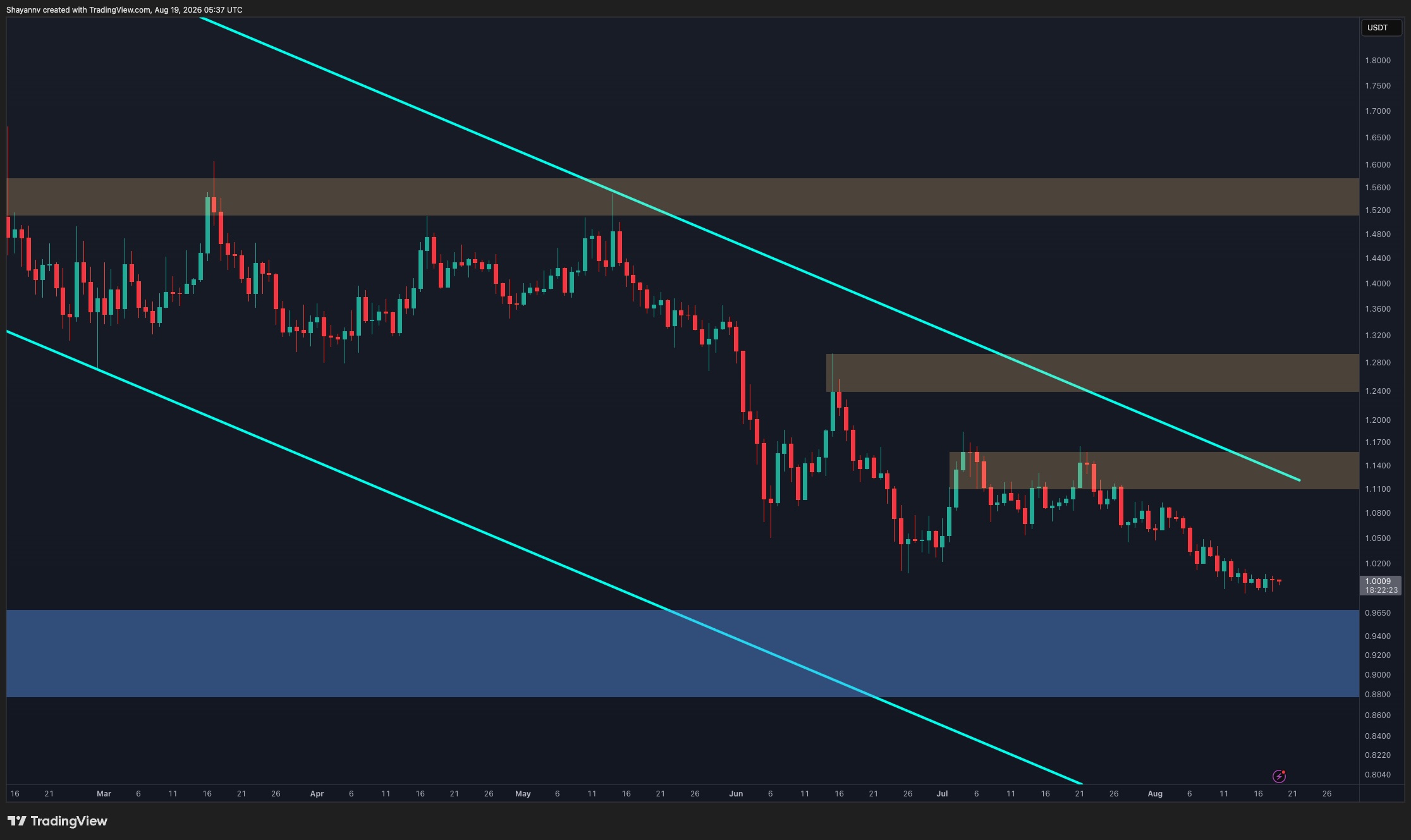
XRP continues to trade within the large descending channel that has governed price action for several months. The sequence of lower highs remains intact, and the latest decline has pushed the asset back toward the $1 level after repeated failures to generate sustained bullish momentum.
The broader technical structure therefore remains bearish. The nearest significant resistance sits around $1.11-$1.15, an area that has recently rejected multiple recovery attempts. Above it, the descending channel boundary converges toward the $1.20 region, while the stronger $1.24-$1.29 supply zone represents another major obstacle. Until the asset can reclaim these areas, rallies are likely to remain corrective within the broader downtrend.
On the downside, the price is approaching the major $0.88-$0.97 demand zone. This is the most important support area visible on the daily chart and could attract buyers if the decline extends below $1. A decisive breakdown beneath this zone, however, would expose XRP to a continuation toward the lower boundary of the descending channel.
Overall, there is little evidence of a daily bullish structural reversal yet. The $0.88-$0.97 zone may provide the market with an opportunity to establish a stronger bottom, but buyers would subsequently need to reclaim the overhead resistance structure to confirm it.
XRP/USDT 4-Hour Chart
The 4-hour timeframe presents a more nuanced picture. XRP remains beneath a descending trendline and has lost the former $1.02-$1.03 support zone, which has now turned into an important resistance area. The subsequent decline has taken the price toward $1, where short-term momentum is beginning to compress.
However, a potential bullish RSI divergence is developing. While the asset has continued to print lower lows, the RSI has formed higher lows, suggesting that bearish momentum may be weakening. This does not confirm a reversal by itself, particularly while XRP remains beneath the descending trendline, but it increases the possibility of a short-term rebound.
The immediate bullish scenario would require the price to break above the descending trendline and reclaim the $1.02-$1.03 resistance zone. Such a move could trigger a recovery toward the next supply area around $1.06-$1.07.
Until that happens, the dominant price structure remains bearish. Failure to capitalize on the RSI divergence could result in another leg lower, with the $0.94-$0.97 region representing the next major support zone. Therefore, the divergence suggests weakening selling pressure, but price confirmation is still required before a meaningful reversal can be considered underway.

The post Ripple Price Analysis: XRP Reclaims $1 as Sellers Show Early Signs of Exhaustion appeared first on CryptoPotato.
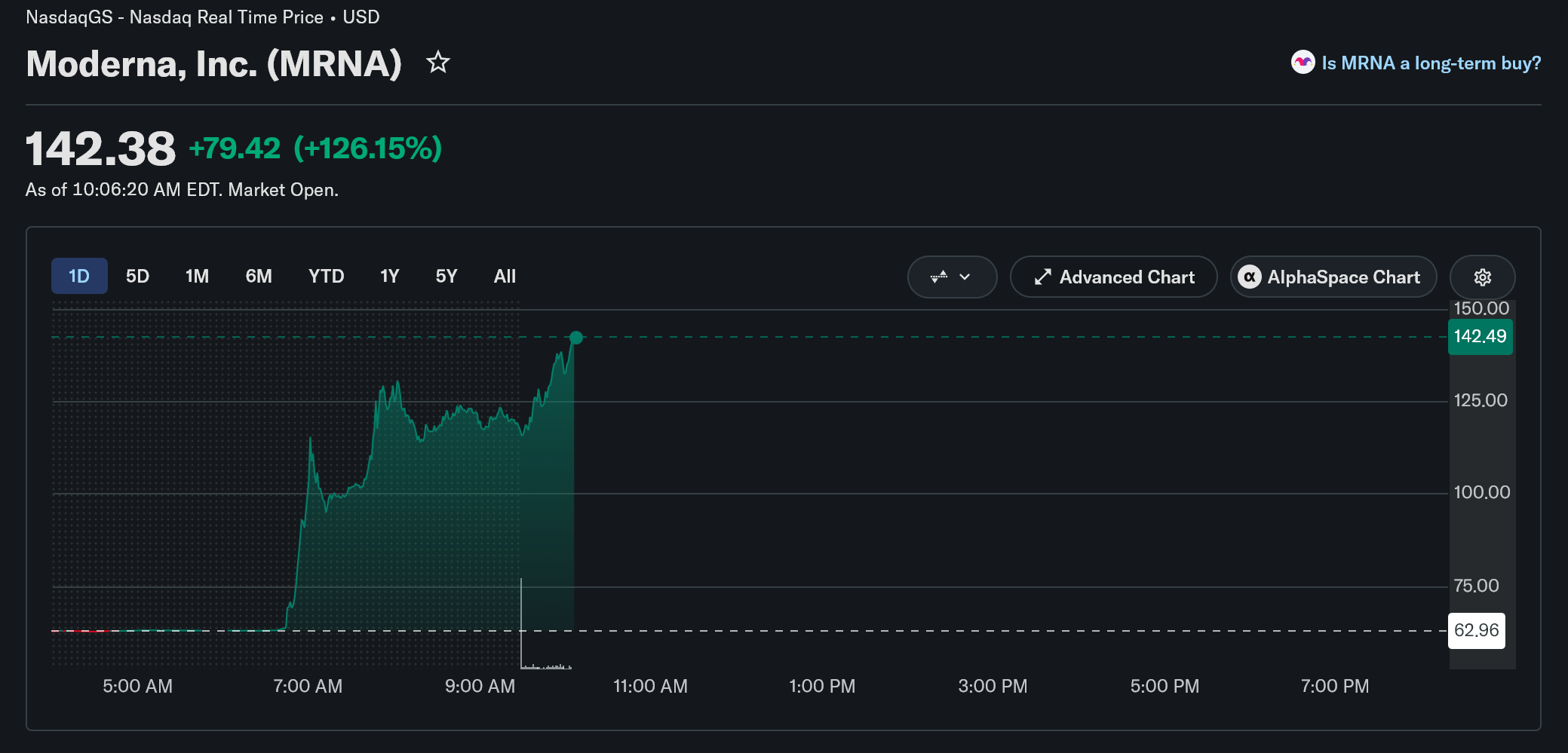
Moderna (MRNA) stock exploded over 100% in Wednesday pre-market trading, hitting $122.51 after the company and Merck (MRK) reported the first positive Phase 3 result for a personalized mRNA cancer vaccine.
The gain is pre-market only for now. Moderna last closed at $62.96 on Tuesday, and regular trading in New York had not yet opened at the time of writing.

Follow us on X to get the latest news as it happens
A First for Personalized mRNA Cancer Therapy
The Phase 3 INTerpath-001 trial tested a bold idea. Doctors read the mutations in a patient’s tumor. Moderna then builds a custom mRNA shot for that one person.
Each shot encodes up to 34 tumor targets, known as neoantigens. In effect, it teaches the immune system exactly what to hunt.
The trial enrolled 1,137 people with stage IIB to IV melanoma, an aggressive skin cancer, after surgery. Patients who got the shot plus Merck’s Keytruda stayed cancer-free longer than those on Keytruda alone. Moreover, the combination slowed the cancer’s spread to distant organs.
That matters because Keytruda is today’s standard treatment for these patients. Historically, nothing had beaten it in this post-surgery setting. According to the joint announcement, no mRNA-based cancer therapy had ever passed a Phase 3 test before.
The stakes are large. Merck expects about 112,000 new US melanoma cases and over 8,500 deaths in 2026 alone. An earlier mid-stage trial also cut the risk of recurrence or death by 49% at five years.
“These Phase 3 findings represent a pivotal moment for the field of cancer research. For many years, the idea of creating an mRNA treatment designed specifically for an individual patient’s cancer was aspirational. We are now helping turn that vision into a reality,” Moderna CEO Stéphane Bancel said in the statement.
Safety matched earlier studies, with no new signals reported.
What Comes Next for Moderna Stock
Few stocks needed a win this badly. Moderna peaked above $480 in August 2021, when COVID-19 vaccine sales made it a market favorite. The shares then lost over 90% of their value as that demand faded.
However, the recovery started before Wednesday. The shares had already more than doubled in 2026. Moderna’s stock comeback rests on a flu vaccine approval and a wider pipeline push.
Wednesday’s spike briefly pushed the stock near $130 before it settled around $122. Meanwhile, Merck gained about 6%. The move also rewards investors who tracked Covid-era stock comebacks earlier this year.
Caution still applies. Detailed efficacy figures remain unpublished, and survival data is still being collected. However, the companies plan to present full results at a medical meeting and to discuss filings with regulators.
The same drug combination is also in nine trials spanning lung, bladder, and kidney cancers. For now, one question hangs over the session. Can a pre-market double survive the opening bell?
The post Moderna Stock Explodes Over 100% After Cancer Vaccine Breakthrough appeared first on BeInCrypto.
Crypto World
Strategy Just Stopped Bitcoin News: Is the Market’s Biggest Corporate Bid Gone for Good?
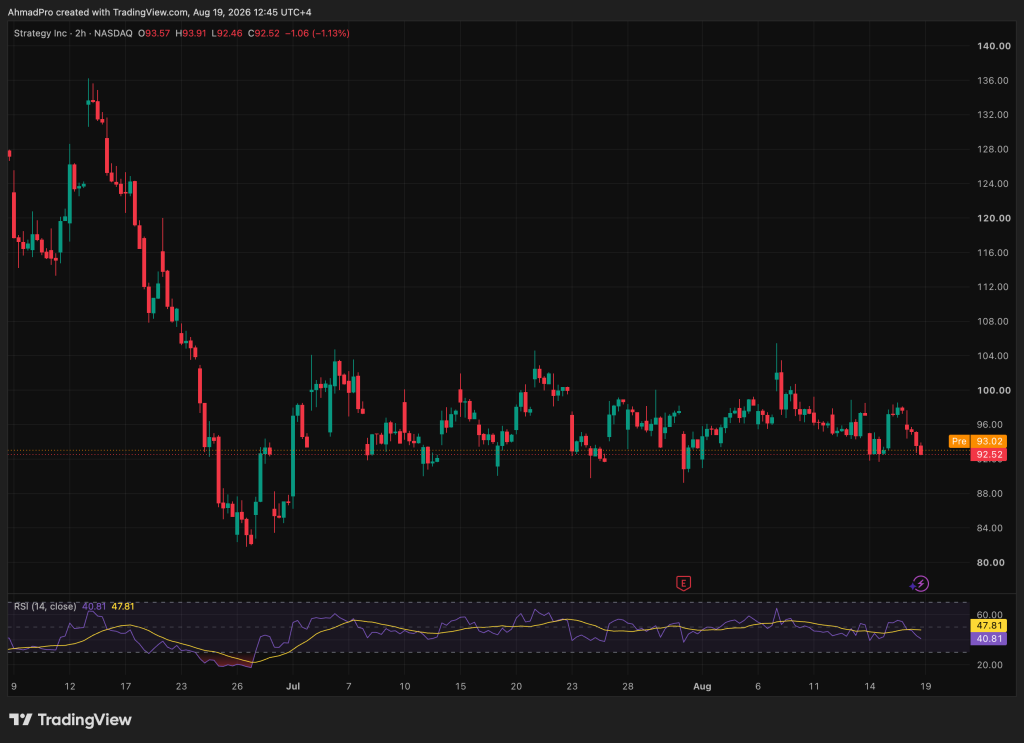
In the latest Bitcoin news, Strategy held its bitcoin position flat at 840,447 BTC through the week ended Aug. 16, according to a Form 8-K the company filed with the U.S. Securities and Exchange Commission, while its dollar reserve climbed to $4.8 billion.
The larger question isn’t whether Strategy still owns bitcoin, it does, at an average cost of $75,385 per coin, it’s whether the market can absorb weakness without the recurring corporate bid that shaped price action for years.
Discover: Everyone’s Got a Take. Get Free $25 from Kalshi to Actually Trade Yours
A Predictable Buyer Goes Quiet
Strategy made no bitcoin purchases or sales between Aug. 10 and Aug. 16, the filing confirmed. That silence follows a stretch in which the company sold 1,690 BTC for $108.6 million the prior week, redirecting proceeds toward its preferred-stock obligations rather than adding to its core position.
Instead of buying bitcoin, Strategy sold 3,458,866 MSTR shares through its at-the-market program for $333.7 million in net proceeds.
It put $149.1 million of that into its USD reserve, spent $132.2 million repurchasing 1,388,720 shares of its STRC preferred stock, and used $52.4 million to fund preferred dividends. Michael Saylor, Strategy’s executive chairman, framed the moves in an Aug. 17 post on X as extending the company’s financial runway rather than expanding its bitcoin exposure.
“Strategy added $150M to its USD Reserve and repurchased $132M of STRC, extending USD Duration to 2.8 yrs (+41 days) … As of 8/16/26: 840,447 BTC Reserve; $4.8B USD Reserve.”
The dollar reserve, launched under Strategy’s Digital Credit Capital Framework on June 29 with $2.55 billion, has now grown to $4.8 billion in roughly seven weeks. It exists to cover preferred dividends and debt interest, functioning as a liquidity buffer separate from, and increasingly prioritized over, the bitcoin balance sheet itself.
Discover: Your Market Calls Are Worth Something. Start with a free $25 on Kalshi
Bitcoin News: What the Pause Actually Proves
The data confirms a shift in marginal capital allocation: Strategy is issuing common stock, defending its STRC price band near $99–$100, and building cash rather than deploying every available dollar into bitcoin.
It does not confirm that Strategy is abandoning its treasury model; 840,447 BTC remains one of the largest corporate holdings anywhere, and the company still holds $653 million of unused STRC repurchase capacity plus a fully intact $1 billion MSTR buyback authorization.

That distinction matters for how traders price risk. Strategy’s leveraged accumulation model trained the market to treat its purchases as a floor during drawdowns, and the disappearance of that bid, even temporarily, removes a source of demand that didn’t depend on retail sentiment or ETF flows. Whether that gap gets filled by other buyers is now an open question rather than an assumption.
The Underwater Position Still Matters
Strategy’s $63.36 billion cost basis works out to $75,385 per bitcoin, a level well above spot prices trading near $64,268 at the time of this report. Saylor has separately disclosed that STRC returned 9% over the trailing year through Aug. 14 even as bitcoin fell 47% over the same span, a gap that explains why capital is flowing toward preferred-stock defense rather than fresh accumulation.
That cost basis also constrains future buying. Adding to the position at current prices while shares trade below net asset value risks diluting existing holders more than it improves per-share bitcoin exposure, a tension that didn’t exist when MSTR traded at a premium, and every new purchase looked accretive.
Where Support Comes From Now
With Strategy’s recurring bid gone for now, bitcoin’s near-term price action depends more heavily on ETF flows, derivatives positioning, and organic spot demand than it has in years.
Traders watching for a floor should track the levels outlined in ongoing bitcoin price analysis, since the absence of a predictable corporate buyer raises the odds that any break below current support extends further than it would have with Strategy still stepping in.
Strategy also faces an unresolved MSCI index-eligibility review, with feedback due Sept. 30 and a decision expected by Oct. 16 ahead of the November index rebalance.
If MSCI moves to exclude MSTR from global equity indexes, passive-fund selling could compound the pressure already building from the pause in bitcoin purchases, a scenario that would test the company’s cash reserve as a genuine buffer rather than a talking point.

If Strategy resumes purchases once its STRC obligations stabilize, the market regains a known source of demand, and the current pause reads as tactical.
If the pause extends through the fall alongside a negative MSCI outcome, expect volatility to widen as the market recalibrates around bitcoin’s organic supply-and-demand balance without its largest corporate buyer at the table.
Trade Bitcoin on ByBit, and Don’t Miss Out on Our $1,000 USDT Airdrop
The post Strategy Just Stopped Bitcoin News: Is the Market’s Biggest Corporate Bid Gone for Good? appeared first on Cryptonews.
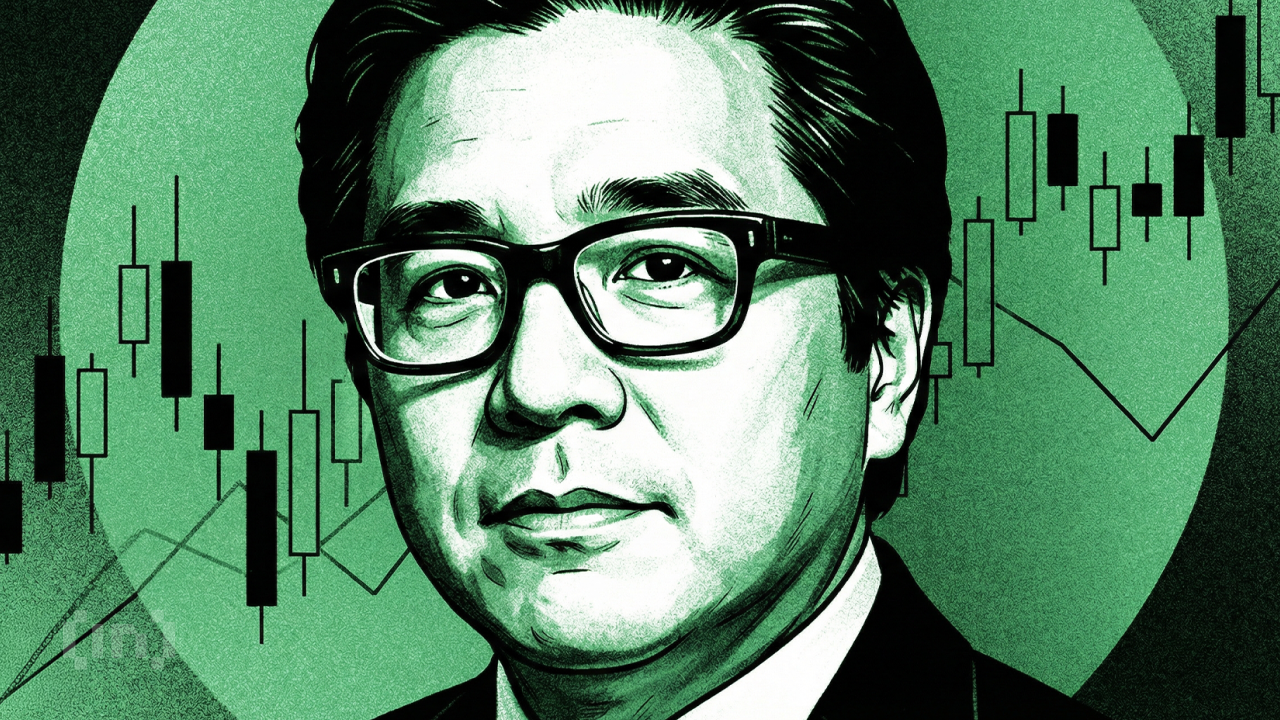

Fundstrat’s Tom Lee has pushed back on the Enron warning hanging over the AI trade. He says the $3 trillion in off-balance-sheet deals scaring Wall Street tells investors little about the real risk.
The rebuttal answers Michael Burry’s latest attack. The Big Short investor doubled his bet against Nvidia (NVDA). He compared the chipmaker’s $500 billion financing push to the tricks that sank Enron.
Why the Enron Warning Took Over Wall Street
Enron was an energy giant that collapsed in 2001. It hid billions in debt inside side vehicles that never touched its balance sheet. Its $60 billion bankruptcy was the largest in US history at the time.
The Wall Street Journal revived the ghost this week. Its analysis found nine tech giants carrying $3 trillion in AI commitments off their books. That is 50 times the size of Enron’s entire bankruptcy.
The total includes $1.2 trillion in leases that have not started. Another $1.9 trillion sits in chip purchase deals. Meta’s Louisiana data center shows how the structures work. The company owns just 20% of the project, while private credit firms hold the rest.
Burry, who made his fortune shorting subprime mortgages before 2008, smells the same playbook.
He called Nvidia’s $500 billion funding pact with Apollo, BlackRock, Blackstone, Brookfield, Goldman Sachs, and KKR a public relations stunt.
In his view, it distracts from the rising cost of insuring Nvidia’s debt.
“Structuring credit is a natural part of the system. Structuring unnatural credits to prolong momentum late in the bull phase is where the worry comes in,” Burry wrote this in his Substack newsletter.
The short extends his bearish streak. Earlier this month, he warned US stocks face a 1987-type crash risk even as indexes set records.
Nvidia CEO Jensen Huang rejects the charge. He says the deal brings independent, long-term capital into AI infrastructure and reflects real demand.
Tom Lee Says the Numbers Misread How Finance Works
Lee took the other side on Monday, appearing on CNBC beside Pence Capital Management investment chief Dryden Pence. His core point is simple. Gross obligations in finance always dwarf the assets underneath them.
“The revelations from the journal article are actually helpful, but they’re giving people an incomplete picture of how financial systems work,” Lee said in the interview.
He pointed to options and swaps, where paper exposure runs far above the cash at stake. Warren Buffett once called credit derivatives financial weapons of mass destruction for that same reason, Lee noted.
The commitments also come with exits. They hit balance sheets only when construction starts. Companies can cut future spending without facing lawsuits.
Lee lived through the era people should actually fear. As a tech analyst in the 1990s, he watched fiber firms invent hundreds of billions in revenue through swap deals. Today’s spenders are different, he argued. The Magnificent Seven, the market’s seven biggest tech stocks, earn some of the highest margins in corporate history.
Crypto readers know Lee as chairman of BitMine, the world’s largest corporate Ethereum (ETH) treasury. The firm held 5.8 million ETH, or 4.8% of supply, per its August 17 release. Lee recently argued markets now see Ethereum pulling ahead of Bitcoin (BTC).
AI Spending Set to Pass the Pentagon’s Budget
Pence sized up the boom with one comparison. Congress set the Pentagon’s 2026 base budget at $866.6 billion, per an AEI breakdown. By 2027, Pence expects the US to spend more on AI than on defense.
The buildout already absorbs 2% to 2.5% of US GDP, he estimated. America spent a similar share on the transcontinental railroad in the 1850s.
The upside case rests on adoption. Only 30% of companies report productivity gains from AI so far, Pence said. Just 7% call their rollout complete. That leaves most of corporate America still at the starting line.
The fight now comes down to one number. If productivity keeps climbing, the $3 trillion looks like railroad track. If it stalls, Burry’s Enron warning gets much harder to dismiss.
The post Tom Lee Takes On Michael Burry As $3 Trillion Enron Warning Hangs on AI Trade appeared first on BeInCrypto.


Key takeaways
- HYPE trades below $59 after recording a second consecutive day of gains.
- The Hyperliquid Policy Center and trade[XYZ] have submitted recommendations on pre-IPO perpetual markets to the SEC.
- The proposed instruments would provide price exposure before a company lists publicly without granting shares or investor rights.
Hyperliquid (HYPE) trades above $58 on Wednesday, extending its recovery for a second consecutive session as buyers target a breakout above the psychological $60 level.
The decentralized exchange’s native token maintains a broadly bullish technical structure above its major moving averages. Momentum indicators are also improving without suggesting that the rally has become excessively stretched.
The advance comes as the Hyperliquid Policy Center and trade[XYZ] urge the US Securities and Exchange Commission to establish rules that would allow American investors to access pre-IPO perpetual markets.
Hyperliquid submits pre-IPO market proposal to SEC
The Hyperliquid Policy Center and trade[XYZ], a prominent deployer of perpetual markets on Hyperliquid, jointly submitted a comment letter responding to the SEC’s request for proposals to modernize the Initial Public Offering process.
Their letter highlighted the pricing history of at least five trade[XYZ] pre-IPO perpetual, or IPOP, markets that completed their full lifecycle on Hyperliquid.
The organizations argued that these markets can provide transparent, continuously updated price signals before a company’s shares begin trading publicly.
They also outlined regulatory questions the SEC would need to address before permitting similar products in the United States.
An IPOP is a financial instrument that allows traders to take a directional position on a company’s expected valuation ahead of a scheduled stock market listing.
The contract provides price exposure during the period before the company’s shares become publicly tradable. Prices update continuously based on market demand, potentially offering investors and issuers an early indication of expected listing value.
However, an IPOP is not equivalent to owning pre-IPO equity.
Contract holders do not receive actual shares, allocation rights or voting power. They also have no direct claim against the company referenced by the instrument. The product is designed solely to provide exposure to anticipated price movements ahead of a public listing.
Hyperliquid’s policy organization said American investors are unable to access price opportunities available to traders in other jurisdictions.
It cited SpaceX as an example, saying its pre-IPO perpetual market was priced at $135 before the company listed at $150.
According to the organization, the market provided a visible pricing signal, but US investors had no regulated way to trade it.
Under a new SEC framework, Hyperliquid argued, both American investors and issuers could benefit from the price discovery offered by pre-IPO markets.
Supporters may view such instruments as a way to broaden market access. However, the products could expose retail traders to substantial risks, including leverage, uncertain valuation, limited disclosure and price manipulation before public-market data becomes available.
HYPE maintains bullish structure above major EMAs
HYPE trades at approximately $58.73, retaining a constructive technical outlook. The token remains above its 50-day, 100-day, and 200-day Exponential Moving Averages (EMAs).
This bullish alignment places all three indicators below the current price and provides several potential layers of support.
The Moving Average Convergence Divergence indicator has moved firmly into positive territory, signaling strengthening upside momentum.
Meanwhile, the Relative Strength Index stands near 56. The reading indicates steady buying pressure but remains well below the conventional overbought threshold of 70, leaving room for additional gains.
Immediate support sits at the 50-day EMA around $58.33. Holding this level would preserve HYPE’s near-term bullish structure and support another attempt to clear $60.
Below it, the 100-day EMA at $56.76 represents the next support area. A deeper decline could bring the 200-day EMA at $51.68 into focus as the more important longer-term bullish threshold.

On the upside, a descending resistance trendline remains the main structural obstacle. A sustained daily close above this trendline and the $60 region could confirm a breakout and allow HYPE to extend its recovery.
Failure to clear the resistance zone could encourage profit-taking and push the token back toward the clustered EMA support levels.
For now, the stacked moving averages and positive momentum indicators favor buyers, but HYPE requires a confirmed trendline breakout to strengthen its broader bullish outlook.

Australian tech firm Apate deploys a vast array of AI-bot characters worldwide that play the role of gullible scam victims to waste millions of hours of con artists’ time each month.
Hilariously, one of the company’s monthly performance metrics is how many times frustrated scammers swear at the idiot ‘victims’ who are playing dumb and stringing them along.
“I think we’re the only company in the world that is actually keeping as part of their KPIs the number of F-words that scammers are dropping at them,” Apate founder Dali Kaafar tells Magazine with a chuckle.
The company has a stable of almost 200,000 AI characters that are able to hold convincing phone conversations and to chat on social media and messaging platforms.
”I can tell you that we’re basically servicing, as we call them, hundreds of thousands of calls a day, and pretty much hundreds of thousands of conversations on the other channels,” he says.
Every hour of a con artist’s time they waste is another hour they’re not scamming a member of the public. In the six weeks up to the end of 2025, Apate’s bots engaged in 600,000 scam calls for a single telco called TPG in Australia.
“Essentially, we wasted more than five hundred days of scammers’ time,” he explains. “That roughly equates to somewhere around thirteen million dollars being saved.”
The bots’ other goal is to elicit actionable intelligence for banks and telcos to combat scam rings across Australia, Asia, Africa and the UK and Europe.

Apate bots deal with scammers via chat. Source: Apate
Scam baiting at scale with AI victims
Kaafar says he got the idea when he received a scam call while having a picnic with his family in Sydney back in November 2021.
To his wife’s annoyance, but his kids’ delight, he strung the scammer along for 44 minutes by pretending to be a gullible rube falling for the scam.
“What followed was really literally a full comedy show for my kids,” he says, adding that during the call he’d also learned a lot of potentially useful information about the mechanics of the scam and the tactics used.
“As I hung up that call, I remember thinking very clearly: if I could do that just for fun, imagine what technology can do at scale.”
Working as a professor at Macquarie University at the time, he raised the idea with some of his doctoral students working on AI and security.
“I said, ‘Guys, there has to be a much better way of doing this. Let’s build something that is really automating this whole process of engaging scammers at scale, but also, perhaps most importantly, extracting all sorts of intelligence from these conversations.’ And that’s literally how it started.”
Related: AI-powered bot stands in for absent candidate in Virginia debate
Within a few months they’d secured funding from the Office of National Intelligence to research the idea, and the project was spun off from the university into Apate in 2023. The company now works with most of the big banks in Australia, as well as numerous banks in the UK, South Africa and South East Asia.
Apate is far from the only company scam baiting fraudsters using AI bots — though they are doing it on a greater scale than most. United Kingdom telco O2 rolled out an AI Granny campaign last year, which frustrates scammers by taking up hours of their time talking about her 28 cats. It was as much an ad campaign to warn the public about the dangers of scam calls as anything else.

O2’s highly entertaining AI Granny. Source: 02
Creating the perfect AI victims
Apate launched with 120 different personas across different genders, ages and personality types, and now have 197,000 personas with identifiable vocal tics, accents, and they make the same noises people make when they’re trying to think of what to say.
“We spent a lot of time refining and building these AI bots that sound exactly like you and I and our neighbors,” he says.
The AI models were trained on “hundreds and hundreds” of hours of recorded conversations between human scam baiters and scammers, so they can employ counter strategies.
“They know that they’re talking to bad guys, if you like, and they really navigate the conversations so that it sounds really very, very realistic to any scammer out there, even if a scammer is skeptical about things.”
The bots get sent out on WhatsApp and Telegram to act as honeypots for scammers. While the old cliché that you can’t scam an honest man is not true, it’s still very possible to exploit the scammer’s desire for money.
“They are cybercriminals, really. I think we just very often forget that they’re cybercriminals who are trying to get people’s life savings. And so that element of greed is sometimes what our bots also exploit.”
Bots collect valuable intel from each scam call
In the crypto industry, Apate works for “one of the leaders in blockchain analysis,” which may or may not be Chainalysis. They aren’t interested in wasting scammers’ time — they want intelligence on which wallets and methods scammers are using so they can track the flow of funds.
“These bots, as they engage across different conversations, extract new crypto wallet addresses by the hundreds and by the thousands,” he says. “It’s data and intelligence that is coming literally before their damage happens.”
Scamming is big business, and the call centers are “pretty much corporate organizations,” Kaafar explains.
“This data is very, very important because, literally, that’s the new account or the new wallet where you really need to pay extreme attention to. Because this is where these… scammer compounds are collecting their money or their funds with.”
“Think about it literally as being always ahead of the scammer’s tactics. And the more you know before the money gets transferred, the better it is.”
In July, Apate’s bots uncovered a marketplace for brokers soliciting verified bank accounts in India, offering commissions of up to 5% paid in USDT on the proceeds from scams passing through the accounts.

Apate’s human staff in Sydney. Source: Apate
AI arms race between good guys and bad guys
Scammers are increasingly using AI bots themselves, and it won’t be too long before AI scammers are as ubiquitous as spam emails. Scamming people is a $1.24 trillion business, so the industry can afford the compute required to scale up operations.
Apate’s research suggests that about 20% to 30% of scam text conversations employ AI already, but Kaafar isn’t too worried about the outcome of anti-scam bots fighting scam bots.
He says their researchers believe that AI bots playing defense have an advantage, according to game theory, because they’re trying to extract intelligence, while the scam bots are trying to get the other AI to perform an action.
“You can also demonstrate mathematically that that is to the advantage of a defender because it becomes easier to extract intelligence from the attacker’s AI model,” he says.
“We can imagine a world where scammers become a lot more sophisticated and deploy such technology. But that also means that if they do, they’re actually deemed to lose the game, which is great news in the fight against scams.”
Magazine: Agent wastes 14 hours of scammers’ time, LLMs ‘poisoned’ by Iran — AI Eye
Cointelegraph publishes long-form journalism, analysis and narrative reporting produced by Cointelegraph’s in-house editorial team with subject-matter expertise. All articles are edited and reviewed by Cointelegraph editors in line with our editorial standards. Some articles contain affiliate links, from which Cointelegraph may earn a commission. These relationships do not influence which products we review or our editorial conclusions. Content published in here does not constitute financial, legal or investment advice. Readers should conduct their own research and consult qualified professionals where appropriate. Cointelegraph maintains full editorial independence.

The global under-30 population has been rising since 2012 and today accounts for more than half of the more than 7.5 billion people on the planet. What will the world look like when this new generation leads? That’s the central question in TIME’s second annual Davos issue, produced in partnership with the World Economic Forum. As youth the world over force us to confront the perils of our inaction—and show us the possibilities from recognizing that life doesn’t have to be as it is—we are beginning to see some answers.
Thunberg may have been the most visible, but young leaders raising their voices have become a force across the globe, in areas ranging from climate to inequality to corruption to freedom itself. In the past year, they have been at the forefront of movements on every continent, from the campuses of Hong Kong to the streets of Santiago, where protests were triggered in part by a social-media campaign by middle- school students, to Antarctica, where a group of scientists joined the global climate strike brandishing slogans like rise before The sea level does!
They are innovators like 14-year-old Gitanjali Rao, who developed an app to identify and prevent cyberbullying. Or Xóchitl Guadalupe Cruz López, who, when she was 8 years old, created a solar-powered water heater made from recycled materials to provide much needed hot water to residents of her Mexican village. They are entrepreneurs like Flynn McGarry, who recently became old enough to legally drink alcohol in the locavore restaurant he runs in New York City. They are petitioners like Jamie Margolin, who testified before Congress on the urgent need for climate action. When they take power, they seek far-reaching reform; Finland’s Marin, who tells TIME that she got into politics “because I thought the older generation wasn’t doing enough about the big issues of the future,” wants to make Finland one of the first countries to achieve net-zero emissions.
For 1966, the year I was born, TIME named “Americans Under 25” as Person (then called “Man”) of the Year—the baby boomers whom the magazine dubbed “The Inheritors.” Having inherited the bounty of decades of economic growth and relative stability, the youth of the 1960s are now, by and large, the benefactors of the present. What do they—what do we—owe the inheritors of tomorrow? Clearly there is work to do.
Edward Felsenthal is Editor-in-Chief and CEO of TIME.

From our partner Kaiser Permanente.
There is a silent epidemic. Globally, in increasing numbers, young people are facing mental-health issues. Depression is a leading cause of illness among young people. Anxiety is on the rise. Suicide ranks third as a cause of death for 15- to 19-year-olds and is increasingly becoming a health equity issue: African-American girls in grades nine to 12 were 70% more likely to attempt suicide in 2017, as compared with non-Hispanic white girls of the same age.
Unless we act, we will face the repercussions of this epidemic for years. Lives will be shortened, and generations will struggle. Our economic outlook will inevitably be impacted as we collectively face a range of long-term health issues for our workforce.
Twenty years ago, Kaiser Permanente and the Centers for Disease Control and Prevention (CDC) published a landmark study linking childhood trauma to long-term health consequences. This groundbreaking research into adverse childhood experiences (ACEs) continues to inform clinical best practices and approaches that are making a difference.
With the crisis at hand, we recognized a need to go deeper and continue our work in this area. We have recently announced plans to update the ACEs research to identify knowledge gaps, successful programs, emerging best practices and interventions ready to be scaled.
An entire generation is counting on us. We are asking leaders from across health care, business, nongovernmental organizations and academia to make youth mental health and wellness a priority.
Adams is chairman and CEO of Kaiser Permanente.

The boldest S&P 500 forecast on Wall Street sees 9,000 by year-end, roughly 17% above where the index trades now. The fuel is the AI boom and a wall of idle cash.
The warning is that the same AI trade turns into the market’s biggest risk in 2027.
Can the S&P 500 Really Hit 9,000 This Year?
One of the Street’s sharpest bulls thinks so. Evercore ISI’s Julian Emanuel puts 9,000 on the table as his upside case, about 15% above his base call, helped by $8 trillion parked in money-market funds. If that cash starts chasing stocks, it becomes the fuel for a final push higher.
The number sits far above the Street’s average year-end target near 7,555, so it is a stretch call, not the consensus. Its best hope is that idle $8 trillion, because if even part of it rotates into stocks, the run toward 9,000 gets real fuel.

The whole case still rests on one engine, and that engine is AI.
Why Is AI Driving the Forecast Higher?
That engine runs on a handful of names. The AI boom flows to the megacaps that build and sell it, the Magnificent 7, meaning Nvidia, Microsoft, Apple, Alphabet, Amazon, Meta, and Tesla. Their chips, cloud platforms, and models are the record AI earnings carrying the market.
Those same seven make up about 34% of the S&P 500, up from roughly 12% eight years ago.

So when AI lifts them, it lifts the whole index, and that concentration is the crack in the floor.
What Could Break the S&P 500 Forecast in 2027?
The crack shows up first in the spending. Combined hyperscaler capex has jumped from about $226 billion in 2024 to roughly $725 billion in 2026, and analysts see it topping $1 trillion in 2027. Revenue has not kept pace, and free cash flow has turned negative for the first time in decades.

That trillion-dollar mark is why 2027, and not 2028, is the year to watch. It is when the spending crosses a trillion dollars (for the first time), and the pressure to prove the revenue behind it runs highest.
The threat is not only cost, but it is also competition, because chips are the backbone of AI. Chinese chip demand is skyrocketing, with the country’s integrated-circuit revenue jumping 22% in 2025 to a record $245 billion and nearly doubling since 2020. That is a direct challenge to the US chipmakers that the rally leans on.
Still, the shift takes time. China holds only about 6% of the global semiconductor market against North America’s 53%, so it chips away at US dominance slowly rather than all at once.

Even so, European Central Bank economists have already warned the AI rally is setting up a correction.
Is This a Bubble?
That risk raises the obvious question. White House economic adviser Kevin Hassett says markets are not in an AI bubble, pointing to the real earnings behind the spending.
Investment firm GMO counters that this could be the largest capital investment bubble on record, with valuations stretched to levels rarely seen.
Both can be right in sequence. The buildout can carry stocks through 2026 and still overshoot, which is exactly what the chart is now testing.
What Are the Key S&P 500 Levels to Watch?
Right now, that test is playing out on the tape. Since June 9, the S&P 500 has climbed inside a rising channel, the steady uptrend the bull case needs, but the price slipped after a high around August 13 as the AI and chip names that carry the index cooled, with the semiconductor index down about 5% into mid-August.

The levels decide the next leg. A reclaim of 7,807 and then 7,881 puts 8,000 back in play, the biggest hurdle on the way up. Clear it and the chart’s own extension points toward 8,506, and a breakout above the channel opens the 9,011 zone that matches Wall Street’s 9,000 call.
Analyst’s View: This is where the two ends of the story meet. The same AI strength that could carry the S&P 500 to 9,000 in 2026 is the force that fades in 2027, so the rally and the warning share one root. The next few quarters settle which wins. Watch whether Nvidia’s guidance and hyperscaler capex hold, whether that $8 trillion in cash rotates into stocks, and whether Chinese chips keep eating US demand.
If spending stays high and demand scales, the bullish S&P 500 forecast holds. If the money sits still and capex slows first, 2027 is where the slowing signs emerge.
The post Why the S&P 500’s Path to 9,000 Runs Into Trouble in 2027 appeared first on BeInCrypto.
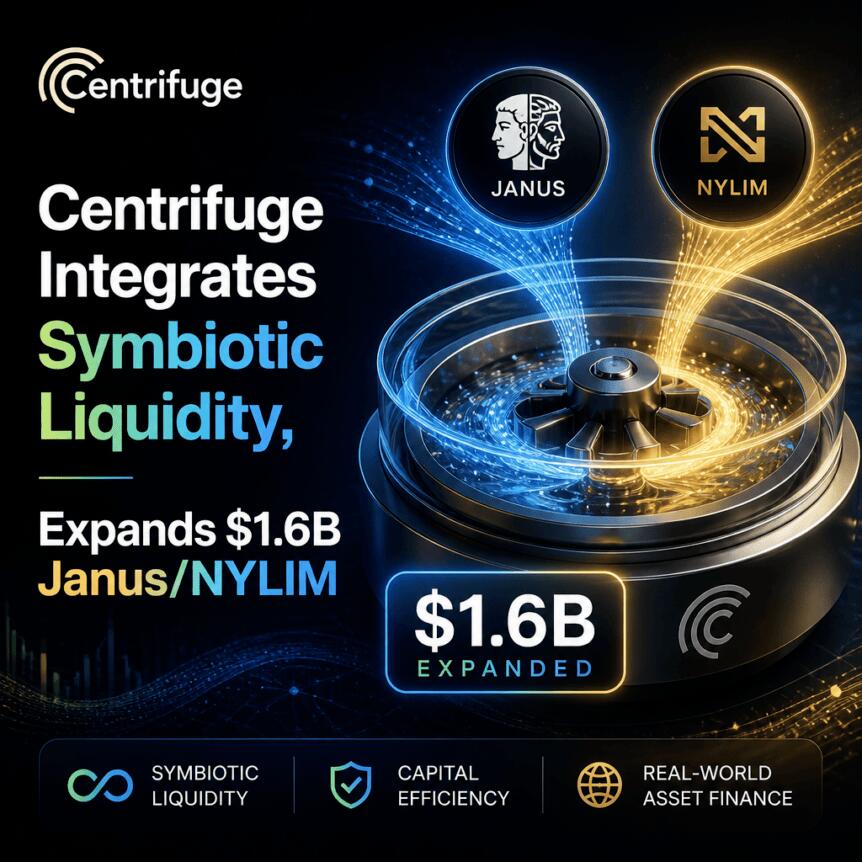
Centrifuge has expanded its tokenized-fund liquidity options by adding Symbiotic’s Liquid Lane to three of its offerings, enabling eligible holders to exchange fund positions for USDC. The upgrade is aimed at making redemptions more immediate for users, while the funds’ standard redemption process can occur separately.
The integration covers Janus Henderson’s JAAA, an AAA-rated collateralized loan obligation (CLO) strategy; Janus Henderson’s JTRSY, a short-duration US Treasury strategy; and New York Life Investment Management’s HYB, a US high-yield corporate bond strategy. Together, these funds represent about $1.6 billion in assets under management, according to the announcement.
Key takeaways
- Centrifuge added Symbiotic’s Liquid Lane to three tokenized funds to provide another path for eligible holders to receive USDC.
- Liquid Lane uses an onchain request-for-quote (RFQ) marketplace, allowing market makers to source liquidity from vaults to meet redemption demand.
- Investors can receive USDC immediately, while the underlying tokenized fund redemption can be processed separately through the issuer or via RFQ.
- Centrifuge already offered instant redemptions through partnerships such as Wintermute and other liquidity arrangements, and Liquid Lane focuses on the transaction capital structure.
- The project’s broader thesis is that aggregating redemption flow across issuers and asset classes could improve liquidity economics as tokenized assets see wider onchain use.
How Symbiotic’s Liquid Lane changes the redemption workflow
Symbiotic’s Liquid Lane is built around an onchain RFQ marketplace. When redemption requests are placed, market makers can access liquidity from Symbiotic vaults to fill those requests. After acquiring the fund tokens through the RFQ interaction, market makers may then redeem the tokens with the issuer or transfer/sell them via another RFQ transaction.
This design matters because it decouples the user’s immediate liquidity outcome from the slower mechanics of traditional redemption cycles. In the Centrifuge setup described, eligible investors are able to receive USDC right away while the funds’ normal redemption process proceeds on its own schedule.
Symbiotic did not position Liquid Lane as the only redemption route; instead, it’s presented as an additional liquidity pathway designed to increase participation and improve execution for tokenized-fund holders.
Why Centrifuge and these specific funds
Centrifuge is an asset tokenization and vault platform where asset managers issue and manage tokenized funds. The three products now integrated with Liquid Lane represent a meaningful slice of Centrifuge’s institutional coverage, spanning structured credit, short-duration Treasuries, and high-yield corporate exposure.
Janus Henderson has been a significant contributor to Centrifuge’s growth, particularly through its JAAA and JTRSY products—an expansion that earlier coverage tied to Centrifuge’s progress in attracting institutional demand, including milestones reported by Cointelegraph (see Centrifuge surpasses $1B TVL in institutional demand).
By December 2025, Token Terminal estimated Centrifuge had attracted around $1.3 billion in new inflows, driven primarily by Janus Henderson’s two funds. Token Terminal also reported that JAAA alone accounted for roughly $1 billion in total value locked and was among the largest tokenized funds in the market.
Liquid Lane alongside existing instant-liquidity routes
Liquid Lane is not the first liquidity solution connected to Centrifuge’s tokenized funds. Felix Lutsch, head of Symbiotic ecosystem, told Cointelegraph that the network is not attempting to replace earlier approaches, emphasizing instead that multiple liquidity routes can coexist.
According to Centrifuge’s own disclosures, a partnership with Wintermute announced in February 2025 supported 24/7 instant redemptions for JTRSY. Separately, HYB launched in June under a different arrangement targeting near-instant redemptions.
Lutsch said the differentiation of Liquid Lane is not primarily about speed, but about the capital structure used to execute redemption demand. In his description, Liquid Lane’s RFQ marketplace can involve multiple market makers and curators without requiring every market maker to pre-fund and carry inventory for specific assets.
That distinction connects to a broader market constraint Lutsch highlighted: while tokenized asset markets can offer settlement benefits, historical low trading volumes have reduced market makers’ incentives to commit capital. He argued that routing and aggregating redemption demand across issuers and asset classes could improve liquidity economics as tokenized funds increasingly function as collateral and financing assets in onchain markets.
From an investor perspective, the practical implication is that users may have more execution options as liquidity providers face less inventory burden and can scale their participation across assets—potentially reducing friction when demand for redemptions rises.
What to watch next
As Centrifuge extends Symbiotic’s Liquid Lane to more fund products and as tokenized-fund liquidity competes across multiple RFQ and instant-redemption mechanisms, investors should watch whether trading and redemption volumes grow enough to attract and sustain market-maker participation—since Liquid Lane’s thesis depends on improving flow-driven liquidity economics.
Ripple Price Analysis: XRP Reclaims $1 as Sellers Show Early Signs of Exhaustion

Kimi Antonelli and the fight for the F1 title

From refugee to European champion





-

 Fashion5 days ago
Weekend Open Thread: Ann Taylor
-
 Sports6 days ago
This U.S. Amateur is a glimpse into golf’s future in more ways than you think
-
 Tech5 days ago
11 Ways to Rank Your Videos
-
 NewsBeat4 days ago
Myanmar says over 300,000 Rohingya refugees verified for repatriation as exodus enters ninth year
-

 Sports4 days ago
Birmingham 2026: Day 6 Timetable for Irish Athletes
-

 Politics4 days ago
SEQ Code: The Three Letter Boarding Pass Code That Could Give You The Worst Seat
-

 Sports7 days ago
DeQuan Jones in ‘high spirits’ after successful leg surgery
-

 Tech6 days ago
DeepSeek Harness launches as open source rival to Claude Code, alongside V4-Pro on API with higher prices
-
 Crypto World7 days ago
Perplexity AI Predicts an XRP Scenario Few Analysts Are Discussing
-

 Crypto World2 days ago
OCC Greenlights Trump Family Crypto Firm for Trust Charter
-
 Entertainment7 days ago
2026’s Most Ambitious Fantasy Movie Officially Scores Sequel Update
-
 Entertainment7 days ago
All 10 Hayao Miyazaki Fantasy Movies, Ranked
-
 Entertainment7 days ago
Travis Kelce Breaks Silence On ‘Crazy’ Taylor Swift Wedding
-
 Entertainment5 days ago
10 Netflix Shows That Quietly Became Modern Classics
-

 Tech1 day ago
Qwen3.8-27B runs frontier-class coding agents and reasoning locally, no cloud API required
-

 Fashion5 days ago
Weekly News Update, 8.14.26 – Corporette.com
-
 Tech4 days ago
Every fusion startup that has raised over $100M
-
 Business7 days ago
Nebius shares soar 22% as AI demand powers revenue beat
-

 Fashion6 days ago
The Details Do the Dressing
-

 Business4 days ago
Facebook Down Now? Users Report Login And Loading Problems As Outage Trackers Monitor Ongoing Issues
You must be logged in to post a comment Login