
Crypto World
XO Market bets on user-generated prediction markets to rival Polymarket and Kalshi



*** NOT FOR PUBLICATION – EMBARGOED TILL 5AM ET APRIL 30 ****
XO Market is betting that the future of prediction markets won’t be dictated by centralized teams deciding what people can trade on, but by users themselves.
The startup, which just closed a $6 million seed round led by 20VC, Picus Capital, Coinbase Ventures, Venture Together and a group of angels including Australian cricket captain Pat Cummins, is positioning itself as the “YouTube of prediction markets,” according to co-founder Ali Habbabeh.
“Today’s major platforms like Kalshi and Polymarket act more like Netflix,” Habbabeh told CoinDesk in an interview. “They decide what markets exist. We’ve flipped that model entirely. On XO, users create the markets themselves.”
The distinction is critical. While incumbents rely on internal teams to curate and list prediction markets, XO allows individuals or companies to spin up their own markets, set parameters and fees, and let others trade on them. The result, Habbabeh said, is a broader, and often more creative, set of opportunities.
“We believe the future of prediction markets is user-generated. The best markets aren’t decided by a platform, they emerge from the community.”
Mainnet beta launch
The model appears to be gaining traction. Since starting its mainnet beta in mid-November, XO has generated more than $150 million in trading volume, attracted over 30,000 users and seen more than 600 user-created markets. An earlier pilot began in April 2025 with a testnet rollout.
“The metrics look strong because the incentives are aligned,” Habbabeh said. “If you create a compelling market, people trade on it. If you don’t, it dies naturally.”
That “natural selection” dynamic may be a double-edged sword. Even Habbabeh points out that competing user-generated platforms like Nine Lives and Warm Protocol struggled to convert the concept into meaningful liquidity, resulting in inactive markets or minimal trading activity.
It is unlikely that Polymarket or Kalshi will offer user-generated markets, according to Habbabeh, because they would need to find market makers willing to provide liquidity for thousands of different events and would have to alter their infrastructure. Their current models are also extremely profitable, he added.
Prediction markets are gaining traction beyond their niche origins, drawing increased interest from retail traders and institutional participants alike as a new venue for pricing uncertainty. Advances in digital-asset infrastructure have lowered barriers to entry, while a series of high-profile political and economic events has underscored the limitations of traditional forecasting tools.
The result is a growing number of platforms where contracts tied to real-world outcomes are traded with increasing liquidity, positioning prediction markets as an emerging, and lightly regulated, complement to conventional financial markets.
Total industry volume jumped roughly fourfold to more than $60 billion in 2025, up from about $15 billion–$16 billion the year before, with platforms like Polymarket driving much of that growth.
On Polymarket specifically, monthly trading exploded from just $54 million at the start of 2024 to over $2.6 billion the following November, helping push cumulative volume past $9 billion in a single year.
XO Vaults
Alongside its core platform, XO is preparing a new product aimed at “democratizing” another key part of the ecosystem: market making.
The forthcoming “XO Vaults” will allow users to pool capital into strategies that provide liquidity across prediction markets, something traditionally dominated by professional firms.
“On platforms like Kalshi or Polymarket, liquidity is controlled by a handful of large market makers,” Habbabeh said. “With XO Vaults, anyone can become a market maker.”
Users will be able to create vaults tied to specific strategies or categories, such as sports or politics, and earn fees by supplying liquidity. Others can invest in those vaults, effectively gaining exposure to market-making returns without actively trading.
“It’s similar to copy trading, but for liquidity provision,” Habbabeh said. “We’re targeting yields of around 8% to 10% annually based on what market makers typically earn.”
The product, expected to debut within weeks, could introduce a new yield primitive in decentralized finance, blending prediction markets with passive income strategies.
“Not everyone wants to bet on outcomes,” Habbabeh said. “Some people just want to earn from the activity around those markets.”
Parlays
The XO team is also developing a feature it says could reshape how parlays work in prediction markets.
“It’s not your typical copy-paste of sportsbook parlays into prediction markets,” said Habbabeh.
The feature, tentatively named “XO Stories,” aims to give users more creative control by linking multiple outcomes beyond traditional parlays. Though details remain limited, the team says pricing will be dynamic, offering a new take on prediction markets.
Built on XO Vaults, the system is meant to support complex, multi-outcome structures without simply aggregating existing trades. Habbabeh shared few details, but suggested it could reshape how users think about and use parlays.
The best content comes from users
Despite increased regulatory scrutiny around prediction markets, particularly in the U.S., Habbabeh said he believes XO’s onchain, permissionless design could offer advantages.
“Everything on XO is transparent and onchain,” he said. “That puts us in a different category compared to more centralized platforms.”
For now, the focus remains on growth and product expansion.
As XO builds out its ecosystem, Habbabeh is confident the user-generated model will continue to differentiate it.
“The internet showed us that the best content doesn’t come from centralized studios, it comes from users,” he said. “We think prediction markets will follow the same path.”
Read more: AI agents are quietly rewriting prediction market trading

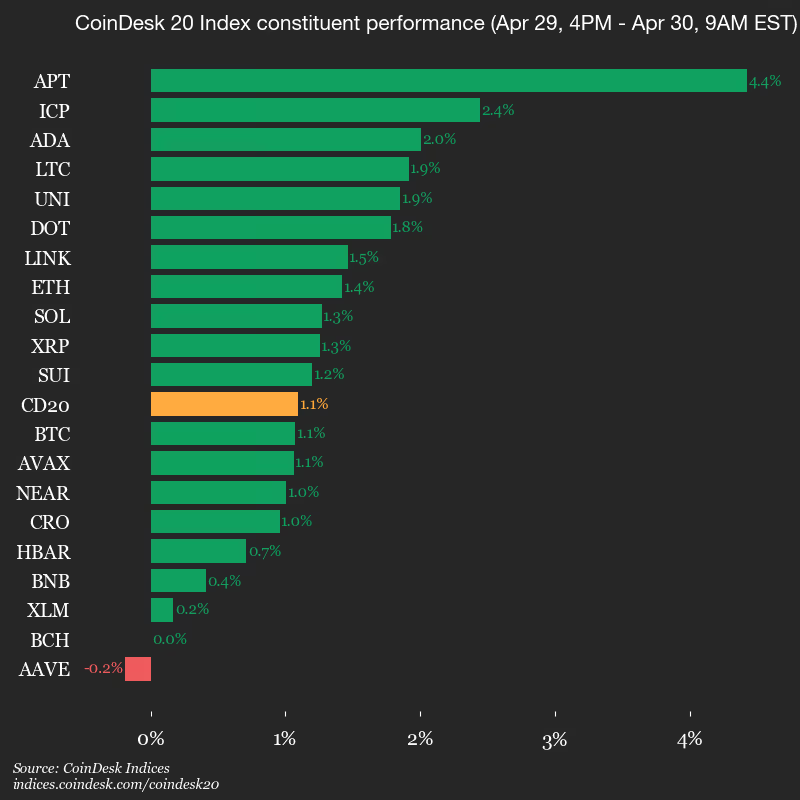
CoinDesk Indices presents its daily market update, highlighting the performance of leaders and laggards in the CoinDesk 20 Index.
The CoinDesk 20 is currently trading at 2062.95, up 1.1% (+22.36) since 4 p.m. ET on Wednesday.
Nineteen of 20 assets are trading higher.

Leaders: APT (+4.4%) and ICP (+2.4%).
Laggards: AAVE (-0.2%) and BCH (+0.0%).
The CoinDesk 20 is a broad-based index traded on multiple platforms in several regions globally.
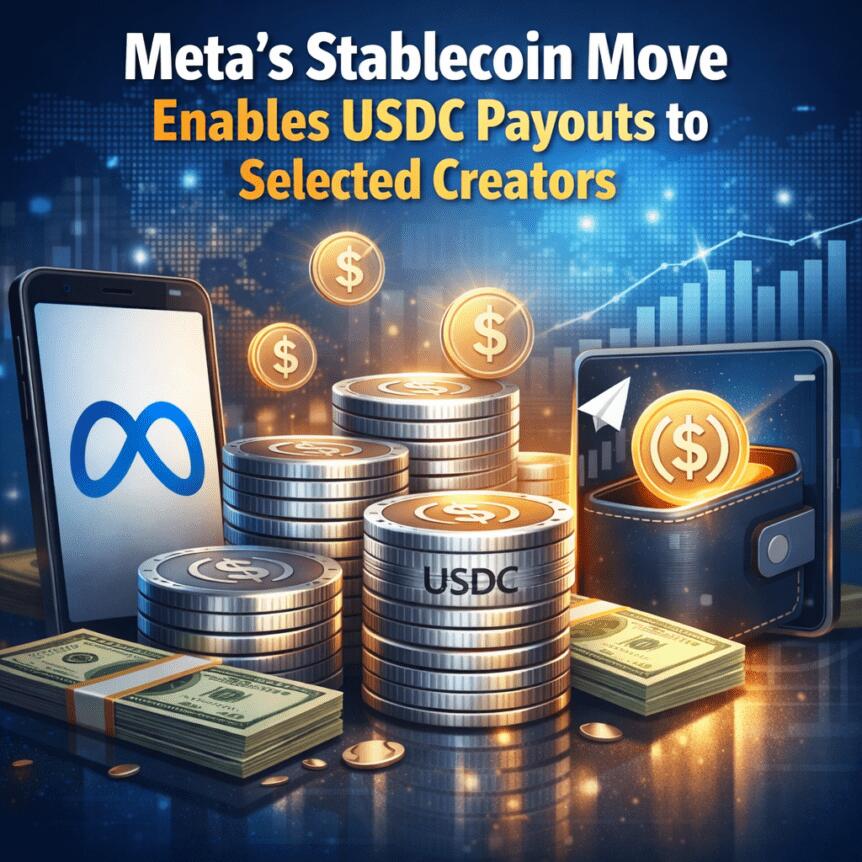
Meta is expanding its use of USD Coin (USDC) payouts to creators on Facebook and Instagram in Colombia and the Philippines, with plans to broaden the program to additional markets. Creators who opt into the service will receive payments directly into crypto wallets on the Solana and Polygon blockchains. However, Meta’s payout system does not include a built-in fiat conversion option, so recipients must use an external exchange to convert USDC into cash.
The rollout is currently limited to select creators in Colombia and the Philippines, but Polygon indicated on Wednesday that the stablecoin payout feature will extend to more jurisdictions soon. “Live in Colombia and the Philippines, with 160+ markets coming, users now get faster settlement with USDC while gaining access to dollar-denominated assets,” Polygon said. This marks a notable step in broadening on-platform monetization through crypto rails.
The payout flow requires creators to connect a third-party crypto wallet to Meta’s payout platform. Meta noted it reserves the right to pay in an alternate method in the event of technical difficulties or unforeseen circumstances. The broader aim is to give creators faster settlement and access to dollar-denominated assets through stablecoins.
Meta’s creator ecosystem spans Influencers, educators, and entertainers who monetize content across Facebook and Instagram. The company disclosed that creators earned nearly $3 billion in 2025, a roughly 35% year-over-year increase, underscoring the scale at which creators rely on platform payouts and monetization tools.
In the broader stablecoin landscape, Circle’s USDC remains the second-largest stablecoin by market capitalization, with a value exceeding $77.3 billion as of this week, according to data from DefiLlama. Tether’s USDt remains the market leader, with a substantially larger cap. The deployment of USDC for creator payouts aligns with growing institutional and consumer use cases for dollar-denominated digital assets.
Key takeaways
- Meta launches USDC-based payouts for creators in Colombia and the Philippines, with plans to expand to 160+ markets.
- Payouts flow to wallets on Solana and Polygon; no built-in fiat conversion, requiring external exchanges to cash out.
- The program is currently limited to select creators; broader access will come as Meta and its partners scale the rollout.
- Creator earnings on Meta remain substantial, with near $3 billion paid in 2025, reflecting the large monetization ecosystem on Facebook and Instagram.
- USDC’s growing role in crypto payments mirrors broader adoption of stablecoins in the creator economy and institutional use cases.
Meta’s rails, wallets, and the creator economy
Under the new framework, creators who opt into the USDC payout service can link a third-party crypto wallet to Meta’s payout platform. The arrangement emphasizes speed and dollar-denominated exposure for creators who transact across borders, a potential benefit for global audiences and sponsors. Yet the absence of an on-platform fiat conversion tool means users must navigate external exchanges or aggregator services to realize fiat value from USDC withdrawals.
Meta emphasized that it can switch payout methods if technical problems arise, a reminder that crypto payout initiatives frequently hinge on cross-border compliance, liquidity, and network reliability. The approach signals Meta’s willingness to experiment with crypto-native payment rails, even as it avoids committing to a full-fledged stablecoin wallet within its core app ecosystem.
Broader context: USDC adoption and the creator economy
Stablecoins have increasingly emerged as practical on/off ramps for digital-asset payments. Industry observers have noted that stablecoins can shorten settlement times and reduce FX frictions for cross-border transactions, a point Polygon’s statement implicitly reinforces with this rollout. In parallel, traditional financial rails remain a hurdle for many creators who earn revenues across international audiences and need to convert earnings into local currencies.
Crypto custody and infrastructure players have highlighted institutional interest in stablecoins as a bridge between crypto and fiat. Lamine Brahimi, who co-founded Taurus, noted that European banks and corporates are actively seeking infrastructure partners to enable stablecoin adoption—context that underscores why major platforms like Meta are exploring USDC as a payout instrument for creators.
Meta’s foray into stablecoin payouts is not unique in itself, but it underscores a broader shift in the creator economy toward crypto-enabled monetization. It also builds on Meta’s prior experiments in digital currencies. The company previously pursued an open-source stablecoin project, Diem, but scrapped the initiative in 2022 after regulatory pushback and privacy concerns. At the time, Meta/Mail Diem assets were sold to Silvergate Capital, marking a pivot away from a native stablecoin vision toward partner-led, fiat-anchored crypto payments.
Related coverage from the broader payments and crypto ecosystem has tracked parallel developments, including Visa’s recent stance on stablecoin settlement that leverages Polygon and Base to scale issuance and settlement rails. The evolving landscape shows how traditional payment networks are intersecting with stablecoins to streamline cross-border monetization for users and developers alike.
Circle’s USDC remains the second-largest stablecoin by market cap, trailing only USDt from Tether. As of this week, USDC sits above $77 billion in circulating supply according to DefiLlama, highlighting its growing footprint in both consumer applications and institutional workflows. The ongoing expansion of stablecoin-based payouts by Meta adds a real-world use case that could influence how creators and platforms think about liquidity and cross-border compensation in the near term.
Meta’s creator program remains dynamic, and this latest move could set a precedent for other social platforms to experiment with crypto payouts. As widespread adoption hinges on regulatory clarity and user-friendly tooling, watchers should monitor how this rollout interacts with local fintech ecosystems, KYC requirements, and currency controls in the countries where the service lands next.
Meta’s first foray into a stablecoin project, Diem, serves as a reminder of the regulatory headwinds and privacy concerns that accompany large-scale crypto ambitions from major tech platforms. The Diem episode underscored the tension between ambitious, regulated fintech products and the evolving crypto policy landscape—a backdrop that remains relevant as Meta pilots USDC payouts with creators around the world.
In sum, the current rollouts in Colombia and the Philippines mark a meaningful step in mainstreaming crypto-native payout methods for the creator economy. As Meta, Polygon, and Circle optimize the mechanics and expand the geographic scope, investors and creators alike will be watching how this experiment translates into liquidity, ease of use, and long-term viability across a rapidly changing regulatory and technological environment.
For further context on related coverage, see coverage noting payments and stablecoin integration across traditional and crypto rails in the broader market.

Key Highlights
- Performance-driven MEGA Token debuts with constrained initial circulation
- Major cryptocurrency exchanges simultaneously list MEGA Token with notable market interest
- Token distribution mechanism links supply unlocks to verified network performance metrics
- Rapid USDM stablecoin expansion drives ecosystem momentum during token introduction
- Novel tokenomics framework prioritizes achievement-based rewards over traditional vesting schedules
MegaETH initiated its MEGA Token generation following successful completion of its inaugural network performance benchmark. The platform verified that ten operational applications achieved required engagement levels connected to its proprietary USDM stablecoin. Following this validation, the team executed a week-long launch sequence before activating market trading.
The token architecture establishes a hard cap of 10 billion MEGA tokens. MegaETH designated more than half the total supply—53.3%—toward achievement-based incentive programs instead of conventional time-locked distribution. This framework creates direct linkage between token availability and quantifiable platform engagement metrics.
The MEGA Token serves multiple functions within the Layer 2 infrastructure, including governance participation, gas fee payments, and network staking mechanisms. Token holders gain access to accelerated decentralized trading capabilities throughout compatible protocols. The design philosophy establishes correlation between platform utilization and token utility through concrete performance indicators.
Trading Platform Debuts and Initial Market Response
Leading cryptocurrency venues such as Binance, KuCoin, and Bitget activated MEGA Token spot markets in unified timing. Market operations commenced simultaneously following the token creation event across multiple platforms. This coordinated rollout enhanced immediate liquidity availability for traders.
Market entry occurred with restricted token circulation owing to the achievement-gated release schedule. Initial assessments indicated minimal floating supply compared to maximum allocation, facilitating measured price formation. Pre-market indicators positioned valuation around $0.22 per token, with actual market capitalization dependent on accessible supply.
MegaETH documented substantial expansion in its USDM stablecoin circulation throughout the launch window. Total supply surged from approximately $62.9 million to surpass $300 million in mere weeks. This acceleration demonstrates increasing platform adoption and reinforces the token’s economic foundation.
Platform Architecture and Market Position
The MegaETH infrastructure functions as an Ethereum Layer 2 solution engineered for real-time decentralized applications. The system incorporates USDM—created in partnership with Ethena—to facilitate onchain transactions and liquidity mechanisms. This integration aligns token economics with application deployment and stablecoin circulation.
MEGA Token allocation encompasses incentives for testnet contributors, protocol developers, and engaged community members. Qualification criteria encompass application interaction, validator node participation, and wallet transaction history. The project additionally distributed tokens via public sale rounds priced at $0.09 per unit.
Competition from mature Layer 2 solutions with substantial liquidity pools and established user bases presents ongoing challenges. Current metrics reveal modest fee generation and intermediate engagement patterns. Nevertheless, the performance-linked distribution approach represents an innovative framework potentially influencing subsequent token deployment strategies.
The token activation coincides with variable sentiment across cryptocurrency markets. Previous funding rounds established project valuation estimates approaching $1.8 billion. Post-launch market dynamics will reveal alignment between trading prices and earlier valuation benchmarks.
MegaETH pursues expanded application integration through continuous incentive initiatives and ecosystem development efforts. Active yield farming programs and developer grants remain operational to boost participation rates. Sustained token performance ultimately hinges on persistent network utilization and broadening application ecosystem.

Crypto World
Canada’s $195 Billion Provincial Fund Buys $219 Million MicroStrategy Stake in First Bitcoin Allocation
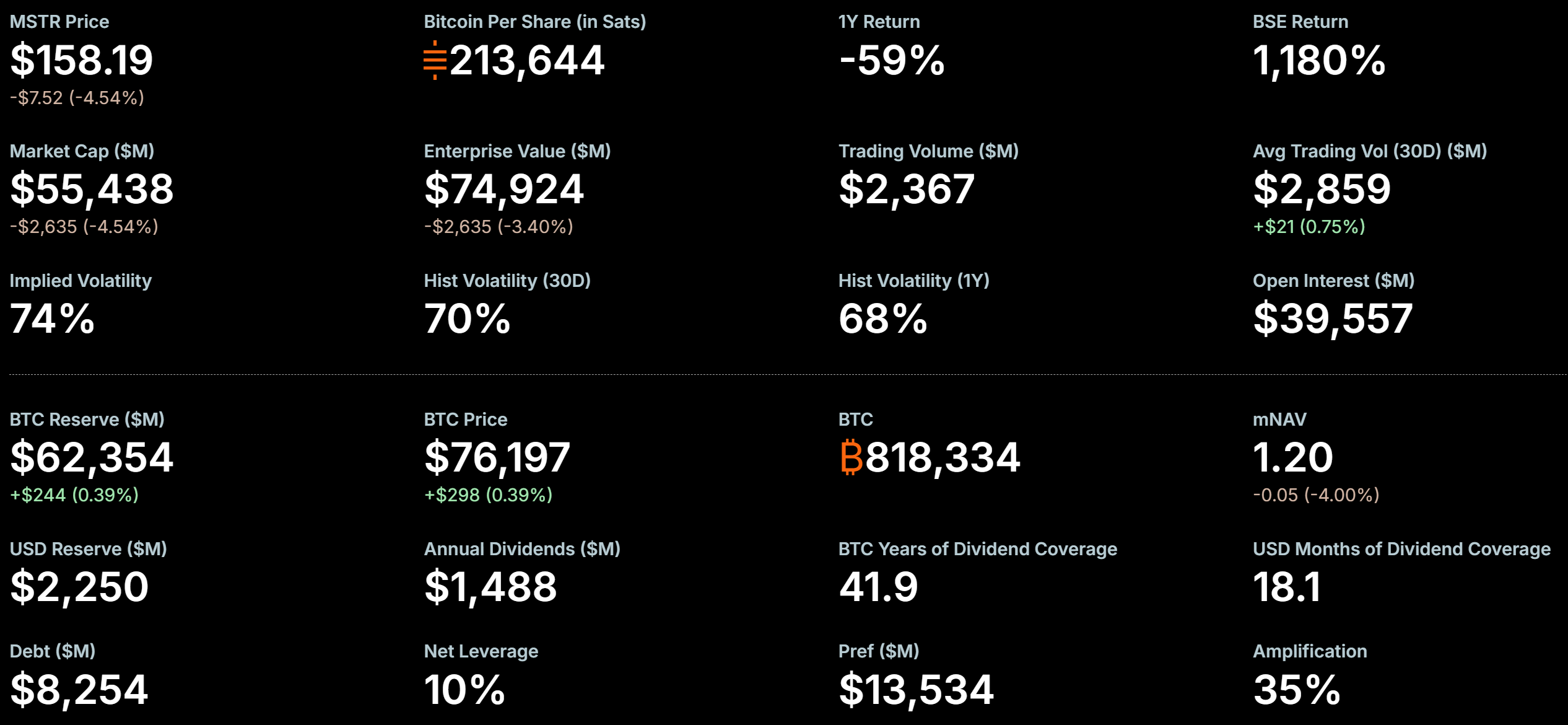
Alberta Investment Management Corporation, Canada’s $195 billion provincial fund, disclosed buying $219 million worth of Strategy Inc. (MSTR) stock. The position marks the institution’s first Bitcoin (BTC)-linked allocation.
AIMCo bought 1.38 million MSTR shares. The manager oversees Alberta’s pension plans, endowments, and the Heritage Savings Trust Fund.
Canadian Institutions Stack MSTR Exposure
AIMCo’s stake places it alongside several other large Canadian investors that have built MSTR positions over the past year.
National Bank of Canada holds roughly 1.47 million shares valued near $273 million. The Canada Pension Plan Investment Board (CPPIB) opened a 393,322-share position worth around $127 million.
Royal Bank of Canada (RBC) has expanded its holding into the $230 million range. The Healthcare of Ontario Pension Plan disclosed a $31 million stake.
The pattern reflects a preference for equity proxies over direct Bitcoin custody. Regulated holders face stricter compliance and accounting requirements.
Why Some Question the MSTR Trade
MicroStrategy held 818,334 BTC as of this writing, acquired at an average cost near $75,532 per coin. The company continues to issue common stock and high-yield preferred shares to fund further Bitcoin purchases.
Critics argue that ongoing dilution erodes per-share Bitcoin exposure. The structure also adds corporate financing risk that direct Bitcoin or spot ETFs would avoid.
Public-fund analysts have flagged fiduciary concerns. Some U.S. state pension positions in MSTR have shown paper losses above 60% during downturns.
The drawdowns raised questions about whether a leveraged Bitcoin proxy suits conservative pension mandates.
AIMCo has not commented publicly on its rationale. The next quarterly 13F filing should clarify whether the manager scales the position or treats it as a tactical entry.
The post Canada’s $195 Billion Provincial Fund Buys $219 Million MicroStrategy Stake in First Bitcoin Allocation appeared first on BeInCrypto.
Coinbase will disable trading for Dai on May 4, 2026, as part of its latest asset review.
Summary
- Coinbase will disable DAI trading on its website and mobile app from May 4.
- Remaining DAI balances will convert to USDS at a 1:1 rate after the deadline.
- Coinbase will also suspend TIME trading and has disabled TRU ahead of migration.
The Ethereum-based stablecoin will be converted to USDS for users who leave DAI on the platform after the deadline. Coinbase reminded users that Dai trading will be disabled on Coinbase.com and the Coinbase mobile app on May 4.
The exchange also said send and receive support for DAI will be temporarily disabled from May 4 to May 6.
DAI is an Ethereum-based stablecoin linked to the MakerDAO ecosystem. Coinbase said any DAI left on the platform by May 4 will be converted to USDS at a 1:1 rate.
Users urged to move DAI before May 4
Coinbase advised users who do not want the conversion to move their DAI to a compatible self-custody wallet before the deadline.
The exchange said users in selected EEA regions will not have their DAI migrated. This means affected users may need to act before trading and transfer limits take effect.
The delisting forms part of Coinbase’s regular asset reviews. The exchange checks whether listed tokens continue to meet its standards.
Additionally, Coinbase will also suspend trading for Chrono.tech’s TIME token on May 11 at 2 p.m. ET. The suspension will apply to Coinbase Simple Trade, Advanced Trade, Coinbase Exchange, and Coinbase Prime.
Coinbase has also disabled trading for TrueFi’s TRU token ahead of its May 10 migration deadline.
These updates show that Coinbase is continuing to adjust supported assets across its main retail and institutional trading platforms.
Exchange adds new listings and futures
Coinbase has also expanded other parts of its platform. It launched perpetual futures tied to AI infrastructure and compute firms on April 29.
The listed markets include Advanced Micro Devices, Arm Holdings, Intel, Micron Technology, and SanDisk.
The exchange also added support for Gensyn and Virtuals Protocol on Coinbase and the Coinbase app.
Coinbase said it will add support for MegaETH’s MEGA token. Spot trading for Wrapped Ronin is also expected to go live on April 30.
The latest updates come as Coinbase balances new product launches with asset removals. The DAI deadline remains the key date for stablecoin users watching the May delisting schedule.
Key Highlights
-
Pre-market trading shows GPUS climbing 8.08% following Q1 revenue announcement
-
First quarter 2026 revenue reaches $44M, representing 76% year-over-year increase
-
Newly integrated subsidiaries contribute significantly to quarterly performance
-
Artificial intelligence infrastructure and blockchain initiatives fuel expansion
-
Multi-segment business model delivers enhanced revenue stability
Shares of Hyperscale Data (GPUS) experienced an uptick during pre-market hours following the disclosure of robust preliminary revenue figures. The stock climbed to $0.1404 before regular trading commenced, representing an 8.08% increase. This upturn came after the previous session’s close at $0.1312, which had reflected a 2.09% pullback.
Impressive Revenue Acceleration Fuels Pre-Market Rally
Hyperscale Data disclosed preliminary first-quarter 2026 revenue totaling approximately $44 million. This marks a substantial 76% climb from the $25 million registered during the comparable quarter in 2025. The impressive expansion demonstrates enhanced performance across multiple operational divisions.
The revenue tally benefited from fresh income channels originating from recently integrated subsidiaries. Gresham Worldwide generated roughly $10 million in the period after completing its bankruptcy restructuring in the fourth quarter of 2025. This integration provided meaningful support to consolidated financial metrics.
Additionally, Ault Lending secured approximately $10 million via a litigation settlement connected to historical ownership stakes. The organization plans to book this sum as revenue during the first quarter. These exceptional items played a notable role in amplifying reported growth figures.
Broad Business Portfolio Ensures Revenue Consistency
Hyperscale Data preserved steady income generation from its established operational divisions throughout the quarter. Crane services delivered around $11 million in revenue, while cryptocurrency mining operations added approximately $5 million. These core businesses furnished reliable support complementing newer income sources.
The company also recorded roughly $4 million from hospitality and property holdings. These divisions enhanced portfolio diversification and helped mitigate earnings fluctuations associated with trading operations. This varied revenue structure promotes operational stability through different economic conditions.
Trading activities at Ault Lending continue generating earnings variability. This segment encompasses unrealized profit and loss movements related to equity security valuations. Therefore, quarterly earnings patterns may experience fluctuations despite consistent operational revenue streams.
Strategic AI Infrastructure Investments Drive Future Trajectory
Hyperscale Data maintains its commitment to expanding artificial intelligence capabilities and technological infrastructure. The organization concentrates on AI-powered data facilities, robotics platforms, blockchain networks, and integrated financial technology solutions. These strategic priorities target building a cohesive and expandable enterprise framework.
Leadership emphasized that strengthening coordination among operational divisions remains central as consolidation activities advance. The organization observes encouraging momentum throughout AI-enabled platforms and digital infrastructure offerings. This progress reinforces its extended-term expansion agenda within evolving technology sectors.
The organization had previously established full-year 2026 revenue projections ranging from $180 million to $200 million. Given first-quarter achievements, management is evaluating whether to uphold or enhance these forecasts. A comprehensive assessment is anticipated following the publication of finalized first-quarter financial statements in May 2026.
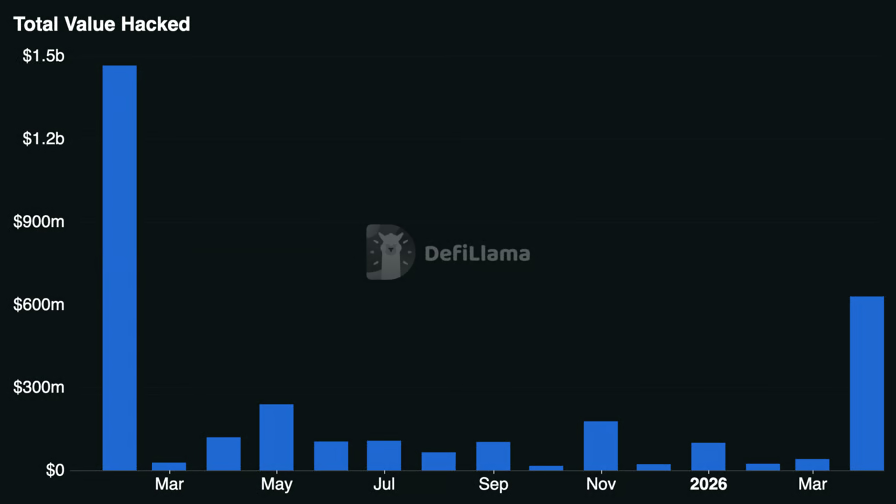
The cryptocurrency industry has seen a sharp spike in hacks in April, with losses topping $600 million in the worst month for crypto hacks in more than a year.
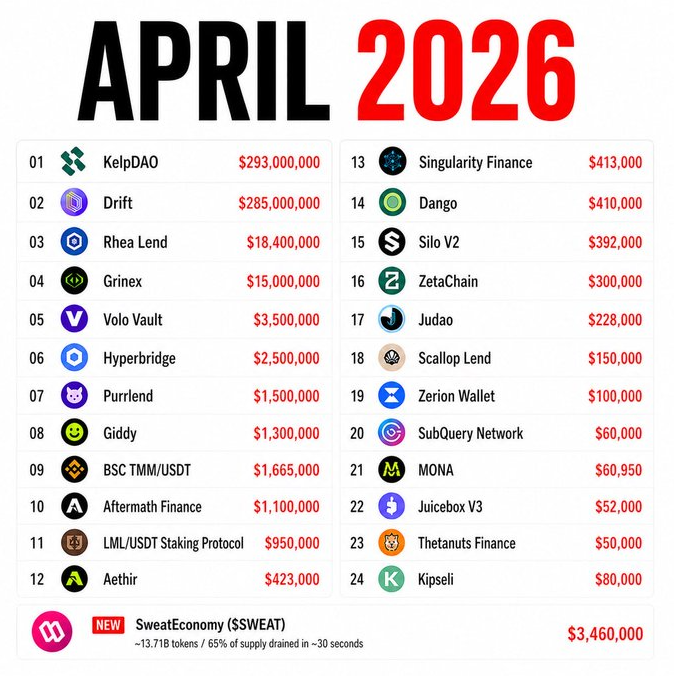
According to DeFiLlama, the total value hacked in April so far amounted to $629.7 million, the highest since $1.47 billion in February 2025. With KelpDAO’s $293 million hack and Drift Protocol’s $280 million exploit accounting for 82% of the monthly losses, decentralized finance (DeFi) has taken the unwanted crown as the most targeted sector over the past month.
Source: DeFiLlama
The concentration of losses in a handful of large DeFi incidents shows how a small number of attacks can still overwhelm broader security improvements across the sector. The causes of the hacks also revealed that the biggest risks are increasingly tied to bridges, privileged access and operational failures, rather than simple smart contract bugs alone.
Related: Russia-linked crypto exchange Grinex halts trading after $14M hack
April DeFi hack losses surge
One of the latest attacks involved the DeFi derivatives platform Wasabi Protocol, which at the time of writing had been drained of around $5.5 million across Ethereum, Base, Blast and Berachain networks in an ongoing exploit, according to Certik.
Recent attacks also include the move-to-earn crypto platform Sweat Economy, which reportedly lost $3.46 million, or about 65% of its liquidity pool, in under 30 seconds. The protocol later said stolen funds were frozen on MEXC shortly after the incident, with recovery efforts underway.
Source: Jussy
Aftermath Finance, a Sui blockchain-based decentralized trading platform, was also among the recent DeFi hacks, suffering an exploit on its perpetuals platform. According to Blockaid, the attacker drained about $1.1 million in USDC across 11 transactions in roughly 36 minutes.
Related: Andre Cronje says DeFi is ‘no longer DeFi’ as builders debate circuit breakers
Chainalysis says attackers are exploiting off-chain systems, not smart contract bugs
April’s spike in crypto exploits reflects a shift toward more sophisticated, multi-stage attacks targeting offchain infrastructure rather than smart contract vulnerabilities, Yaniv Nissenboim, head of security solutions at Chainalysis, told Cointelegraph.
“What connects these incidents is that well-resourced attackers are finding novel ways to exploit the seams between on-chain protocols and the offchain systems they depend on,” Nissenboim said.
These entry points include compromised remote procedure call (RPC) nodes, breaches of cloud key management systems and long-running social engineering campaigns, he said. In many cases, on-chain transactions still appear fully legitimate, even as infrastructure or human-access layers are already compromised.
Nissenboim said that real-time monitoring and automated safeguards are becoming critical, citing anomalies such as abnormal minting patterns and cross-chain inconsistencies that can be detected instantly. In one case, rapid detection helped prevent a second theft of roughly $95 million during the KelpDAO incident, he added.
According to Standard Chartered’s analysts led by Geoffrey Kendrick, KelpDAO’s incident is a sign of DeFi’s growing resilience rather than a fatal failure for the sector.
“While the recent KelpDAO theft and its impact on AAVE have raised questions around continued DeFi banking growth, we expect growth to remain on track as a maturing DeFi industry puts solutions in place to reduce vulnerabilities,” the bank said in a Wednesday research note seen by Cointelegraph.
Magazine: AI-driven hacks could kill DeFi — unless projects act now


AllUnity, a joint venture backed by DWS, Flow Traders and Galaxy Digital (GLXY), took its euro-backed stablecoin, EURAU, to the Solana blockchain, extending the token’s reach to a high-speed network often used for payments and trading.
EURAU, which debuted last July on Ethereum, is fully reserved and issued under a regulated e-money framework aligned with the European Union’s MiCA rules, the company said in an emailed statement. By adding Solana, AllUnity aims to offer faster settlement and lower transaction costs for euro-denominated transfers.
The setup allows businesses and developers to move euros onchain in seconds. Payments firms, for example, could send cross-border payouts to contractors in real time instead of waiting days for bank transfers, and the same mechanism can also support trading, lending or treasury management using a stable euro unit.
The move reflects growing interest in non-dollar stablecoins, especially in Europe, where firms seek digital assets that meet regulatory standards. While U.S. dollar tokens dominate the $300 billion stabelcoin market, euro-pegged tokens have seen rapid growth, doubling since the start of 2025 to almost $1 billion.
The S&P projected the market could reach 570 billion euros ($672 billion) by 2030. French Finance Minister Roland Lescure called for more euro-denominated stablecoins and urged EU banks to explore tokenized deposits.
AllUnity also highlighted that demand for regulated euro stablecoins is rising, and that expanding across multiple blockchains could help drive broader adoption in both finance and corporate payments.
“As demand for compliant euro stablecoins accelerates, Solana’s speed and scalability make it a natural environment for institutional-grade settlement and cross-border payments,” said Peter Grosskopf, CTO and COO of AllUnity.
AllUnity said several partners, including Bullish (owner of CoinDesk), Privy, Hercle and Transak, are preparing to use EURAU on Solana for payments, trading and fiat onramps.
Read more: Europe’s banks are going all in on crypto


MegaETH’s MEGA token went live on Thursday after the Ethereum scaling project completed a seven-day launch countdown.
Summary
- MegaETH launched MEGA after 10 ecosystem apps met the first KPI target.
- MEGA’s token model ties 53.3% of supply to performance-based rewards.
- USDM supply rose above $300 million during the MEGA token launch period.
The token started trading on major exchanges after the network met its first ecosystem milestone. MegaETH confirmed the launch in a post on X, saying, “MEGA — Now Trading.” The team said all tokens would be distributed to users by 7 a.m. ET.
The token generation event started after MegaETH met its first key performance target. The project had said it would only launch MEGA after showing enough real onchain activity.
MegaETH meets first launch milestone
MegaETH said 10 “Mega Mafia” apps had gone live before the launch. These apps cleared the first KPI threshold required to trigger the final countdown.
The milestone focused on apps with real user activity linked to USDM, the protocol’s native stablecoin. USDM was co-developed with Ethena.
In addition, MegaETH has a fixed supply of 10 billion MEGA tokens. The project has tied 53.3% of total supply to performance-based staking rewards.
This structure differs from a standard time-based vesting model. MegaETH uses KPI-linked targets to release a large share of future token supply.
Major exchanges list MEGA
Trading opened across several exchanges after the token generation event. Binance said it would list MEGA for spot trading at 11:00 UTC with a seed tag.
KuCoin and Bitget also announced MEGA spot trading from the same start time. Other platforms have shared listing plans as well.
MegaETH is designed as a high-performance Ethereum scaling network for real-time onchain apps. Its native USDM supply was about $62.9 million last week.
That figure has since grown to over $300 million during the MEGA launch period. MegaETH co-founder Namik Muduroglu described the launch period as “very intense.”
The MegaETH Foundation has said it plans to use USDM revenue to accumulate MEGA tokens. This links network use, stablecoin activity, and token demand.
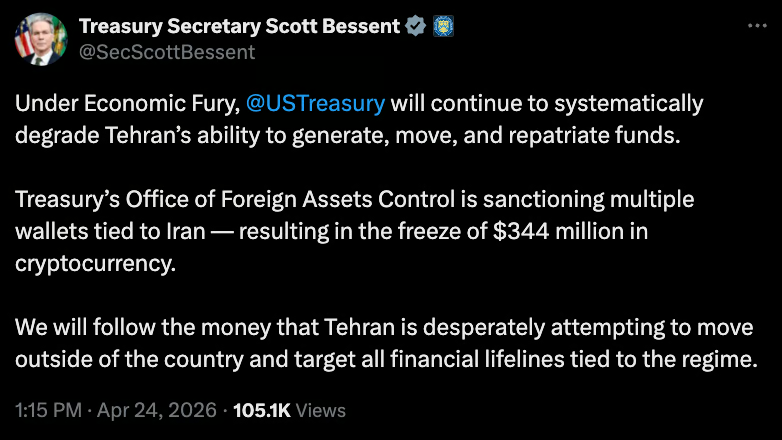
The United States has seized nearly $500 million in Iranian cryptocurrency assets as part of a sweeping economic pressure campaign against Tehran, Treasury Secretary Scott Bessent said Wednesday.
Bessent made the comments during an appearance on Fox Business’s “Kudlow,” where he outlined the scope of Operation Economic Fury, a campaign ordered by President Donald Trump in March 2025 aimed at cutting off Iran’s financial lifelines through asset seizures, bank account freezes and secondary sanctions on countries that continue to buy Iranian oil.
“We are freezing bank accounts everywhere. More importantly, we are making people less willing to deal with the regime,” Bessent said, adding that retirement funds and overseas real estate held by Iranian officials are also being targeted.
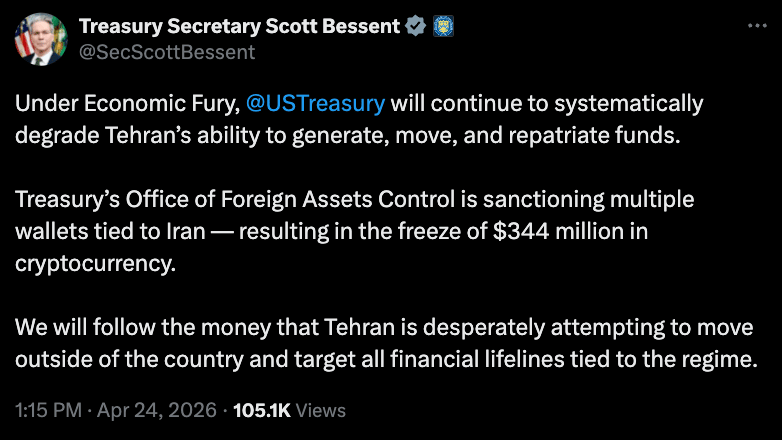
The $500 million figure is much higher than the $344 million in seized crypto assets previously disclosed. Last week, Bessent announced that the Treasury’s Office of Foreign Assets Control had sanctioned several crypto wallets tied to Iran, with stablecoin issuer Tether confirming it had frozen more than $344 million in USDt (USDT) at the request of US authorities.
Source: Scott Bessent
Cointelegraph reached out to the US Treasury and Tether for an explanation on the gap between the two figures, but had not received a response by publication.
Related: Iran views BTC as strategic asset, but USDt still dominates oil tolls: BPI
Iran’s economy under pressure
Bessent said Operation Economic Fury has taken a toll on Iran’s economy. One of the country’s largest banks collapsed in December, and its currency has fallen 60 to 70% against the US dollar. “They’re in the middle of a currency crisis,” he said.
Treasury has also intensified pressure by ramping up sanctions across multiple fronts. On Tuesday, OFAC sanctioned 35 entities and individuals tied to Iran’s shadow banking network. Separately, it targeted a Chinese oil refinery and roughly 40 shipping firms operating as part of Iran’s shadow fleet, which moves Iranian crude to buyers in China and elsewhere in violation of sanctions.
The actions also hit Iran’s missile and drone supply chain, with 14 individuals and entities sanctioned for procuring components for Shahed-series attack drones and ballistic missile propellants. Since February 2025, OFAC has sanctioned over 1,000 Iran-related persons, vessels, and aircraft as part of Operation Economic Fury.
Related: Binance.US cuts spot trading fees to near zero in push to undercut rivals
Iran weighs crypto tolls for Hormuz passage
Earlier this month, reports emerged that Iran was considering charging ships Bitcoin tolls for passage through the Strait of Hormuz, with empty tankers allowed free passage and loaded ones charged around $1 per barrel of oil. Forbes reported that Iran had already collected revenue from such tolls, though Tehran has not publicly confirmed the claims.
Separately, maritime risk firm Marisks warned that fraudulent actors were impersonating Iranian security services and contacting stranded shipowners, demanding payment in Bitcoin or USDt in exchange for clearance through the strait.

Iceland Cricket Shows No Mercy To Pakistan Expert Over Vaibhav Sooryavanshi ‘AI Chip’ Jibe

You’re Using Your Exercise Bike Wrong if You Do These 9 Things
Aptos (APT) gains 4.4% as nearly all assets rise

Manchester United reach agreement with Casemiro over contract clause amid transfer speculation

US brings back mandatory military draft registration

Steven Gerrard disagrees with Gary Neville over ‘shock’ Chelsea and Arsenal claim | Football


-

 Tech3 days ago
Register Renaming | Hackaday
-

 Fashion6 days ago
Weekend Open Thread – Corporette.com
-
Crypto World5 days ago
Hyperliquid $HYPE Rally Builds Momentum as AI Sector Enters Prove-It Phase
-

 Business7 days ago
Patterson-UTI Energy, Inc. (PTEN) Q1 2026 Earnings Call Transcript
-
 Sports4 days ago
IPL 2026: Ruturaj Gaikwad registers slowest fifty of the season, enters all-time unwanted list | Cricket News
-

 Politics3 days ago
Drax board avoid their own AGM, accused of greenwashing & environmental racism
-

 NewsBeat4 days ago
LK Bennett closes all stores after entering administration
-

 Crypto World6 days ago
Michael Saylor says BTC winter is over. Market analyst disagrees, says bitcoin was in a pullback
-

 Fashion2 days ago
Kylie Jenner’s KHY Enters a New Era with ‘Born in LA’
-

 Tech3 days ago
Images of Samsung’s rumored smart glasses have leaked
-
 Entertainment5 days ago
Mariah Carey Slams Deposition Claims In Brother’s Lawsuit
-
Crypto World7 days ago
Is Algorand One of the Few Quantum-Resistant Blockchains? Here’s What the Data Shows
-

 Business2 days ago
Most Commercial Energy Audits Miss the Real Losses
-

 Tech3 days ago
Why Blue Badges Disappeared From Toyota Hybrids
-
 NewsBeat6 days ago
Trump threatens to review UK’s claim to Falkland Islands and punish Nato allies over Iran war disagreement
-

 Business6 days ago
Jeanine Pirro announces closure of Federal Reserve building cost probe
-

 Business3 days ago
(VIDEO) Charlize Theron Climbs Times Square Billboard to Promote New Netflix Thriller ‘Apex’
-
 Crypto World7 days ago
Kraken Builds Beyond Crypto With Futures, Tokenized Stocks, and Payments
-

 Tech4 days ago
Microsoft to roll out Entra passkeys on Windows in late April
-

 Crypto World2 days ago
CFTC’s AI will review U.S. crypto registration applications, chairman tells CoinDesk
You must be logged in to post a comment Login