

Crypto World
XRP Exchange Outflows Surge 300%. Is It Enough to Save the Chart?

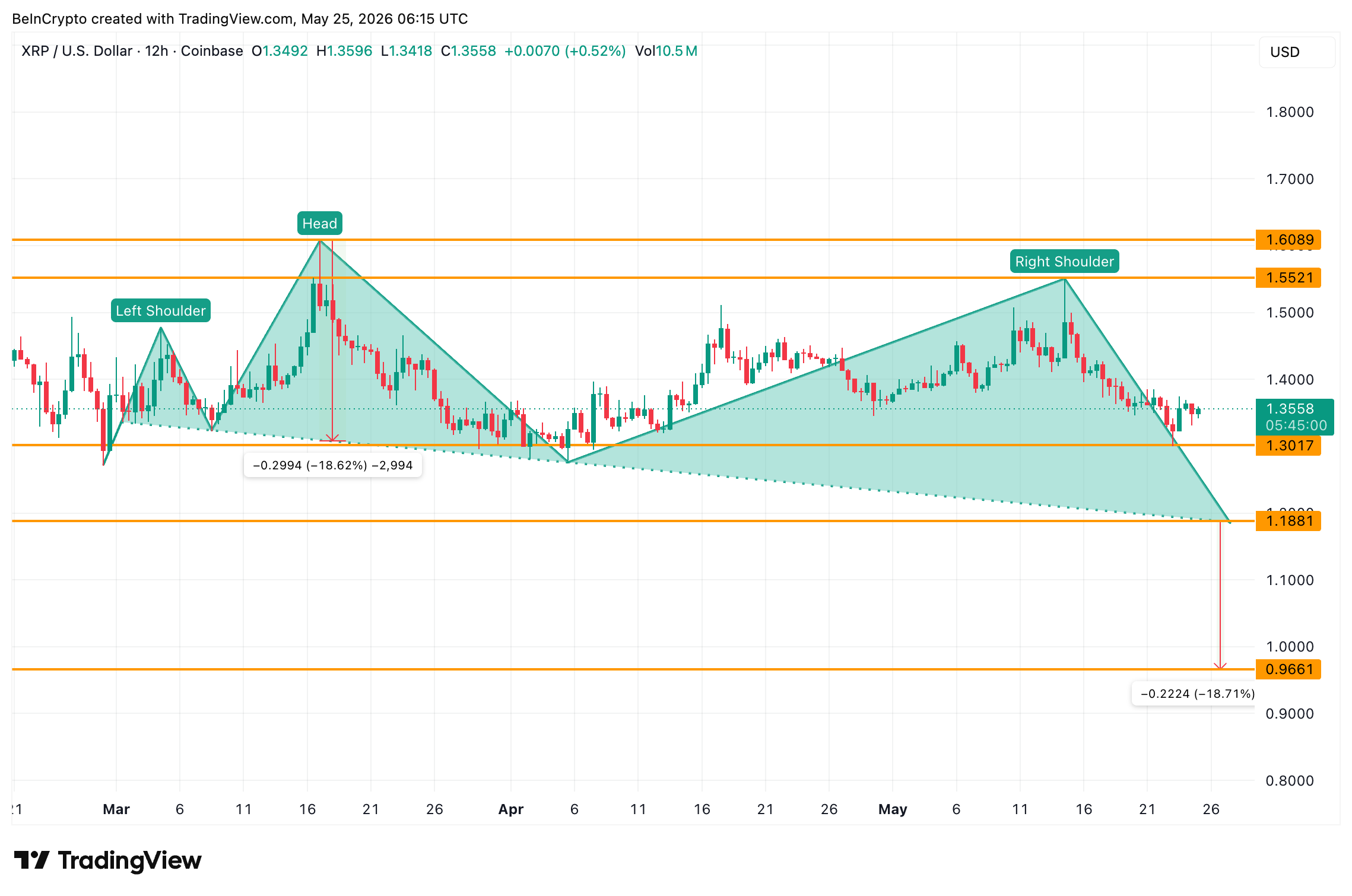
XRP price faces a bearish head and shoulders pattern that risks an 18% drop below $1. Yet, exchange outflows have surged over 300% since mid-May. Plus, open interest dropped, and long leverage hit multi-week lows.
The surging buying pressure could keep XRP range-bound for now, but a move below the neckline confirms the breakdown scenario.
Bearish Head and Shoulders Pattern Risks an 18% Drop
XRP’s 12-hour chart paints a bearish head and shoulders pattern. The left shoulder formed in early March, followed by the head peak in mid-March. The right shoulder completed in mid-May, mirroring the left shoulder structure.
Want more token insights like this? Sign up for Editor Harsh Notariya’s Daily Crypto Newsletter here.
The neckline sits around $1.18, with the bearish pattern breathing down XRP’s neck. XRP dropped to $1.30 on May 23 before a quick rebound. The risk stays alive until XRP reclaims levels above the right shoulder and head.

A measured move from the neckline projects roughly an 18% drop for XRP price. But will the breakdown happen? On-chain and derivatives data tell a different story.
Buying Pressure Quadruples as Exchange Outflows Surge 300%
The bearish XRP chart pattern faces strong on-chain pushback. Glassnode’s Exchange Net Position Change metric, which tracks exchange flows, shows XRP outflows accelerating since mid-May.
On May 15, the metric read -7,144,942 XRP. By May 24, the reading dropped to -29,372,431 XRP. That marks a 300%+ surge in outflows over nine days.
Net exchange outflows signal accumulation off-exchange. Coins moving out reduce available supply for immediate sale, easing downside pressure. The trend has been steady rather than spiky, pointing to a deliberate buying campaign.

Whether this buying pressure can save XRP price from falling below $1 depends on its persistence. A sustained outflow trend could absorb the supply driving the breakdown, turning the setup into a tug of war. Derivatives data adds further weight to this counter-argument.
Long Leverage Drains as XRP Price Faces Range-Bound Stalemate
Derivatives data reinforces the range-bound thesis. Santiment data shows XRP open interest dropped from $1 billion to $914.19 million since May 15. Total funding rates on long positions also dropped from 0.008% to 0.003%.
The 62% drop in long funding rates reduces the risk of cascading long liquidations. Less long leverage means less downside fuel for a breakdown. Combined with the buying pressure, the breakdown thesis weakens.

XRP trades at $1.35 on May 25 with the chart still in the bearish setup. A move below $1.34 followed by $1.28 increases drop risk. A bigger weakness emerges below the $1.21 and $1.18 levels.
A 12-hour close below $1.18 would push XRP price to $1.01 and even $0.96. That marks a sub-$1 fall and confirms the head and shoulders breakdown. The 1.618 Fibonacci level at $1.01 acts as a key bearish target.

A reclaim above $1.55 weakens the bearish bias and opens a path back to $1.60. A 12-hour close above $1.60 fully invalidates the head and shoulders pattern.
XRP price sits at a crossroads where chart bearishness meets on-chain bullishness. The data points to a tense range-bound period for now. A sustained sub-$1 drop requires the buying pressure to fade and long leverage to return.
The post XRP Exchange Outflows Surge 300%. Is It Enough to Save the Chart? appeared first on BeInCrypto.


Coinbase CEO Brian Armstrong said the financial system still requires major upgrades, as he emphasized that significant technological innovation and policy work will be needed to achieve them.
In a post on X, Armstrong flagged several areas where he believes the industry must evolve, including the tokenization of real-world assets (RWA), 24/7 global trading, stablecoin-powered payments, AI-driven financial services, and innovation-friendly regulation.
Shift Toward Tokenized Real-World Assets
Armstrong stated that tokenizing assets such as real estate, stocks, bonds, and funds on blockchain networks enables instant settlement, fractional ownership, and broader distribution. Financial institutions are increasingly exploring tokenization as a way to modernize settlement processes, asset ownership, and investor access while remaining compliant with existing legal and financial frameworks.
The IMF said in an April 2 note that tokenization represents a fundamental reconfiguration of financial architecture. Industry forecasts also estimate that the RWA tokenization market could reach $5 trillion by 2030, driven largely by tokenized treasuries.
Chainlink’s Sergey Nazarov previously said that the migration of real-world assets onto blockchain networks is continuing regardless of movements in crypto prices. He also pointed to the growth of on-chain perpetual markets tied to commodities such as silver, and added that these markets are becoming increasingly competitive with traditional financial systems.
Armstrong also called for 24/7 global trading with pooled liquidity, improved leverage, and greater capital efficiency. In terms of payments, he said stablecoins could support near-instant and low-cost global transfers, including agentic payments.
AI-Powered Finance
The Coinbase CEO further highlighted the role of AI-powered systems in improving risk management, credit, compliance, fraud prevention, and financial advice while expanding access to capital. Interestingly, Coinbase has already slashed around 14% of its workforce as it moved toward becoming a more AI-focused company. Armstrong had earlier said AI tools were allowing smaller teams to complete work faster, automate tasks, and operate more efficiently across the company.
On regulation, the exec argued for a move away from one-size-fits-all frameworks toward risk-based rules that encourage innovation and competition. He also advocated for open protocols and self-custodial wallets to expand financial access to anyone with a smartphone.
Armstrong additionally pointed to easier capital formation for startups and described “sound money” as a refuge from inflation when discipline weakens in fiat currencies.
The post Coinbase CEO Reveals What Still Needs to Change Before Finance Truly Evolves appeared first on CryptoPotato.
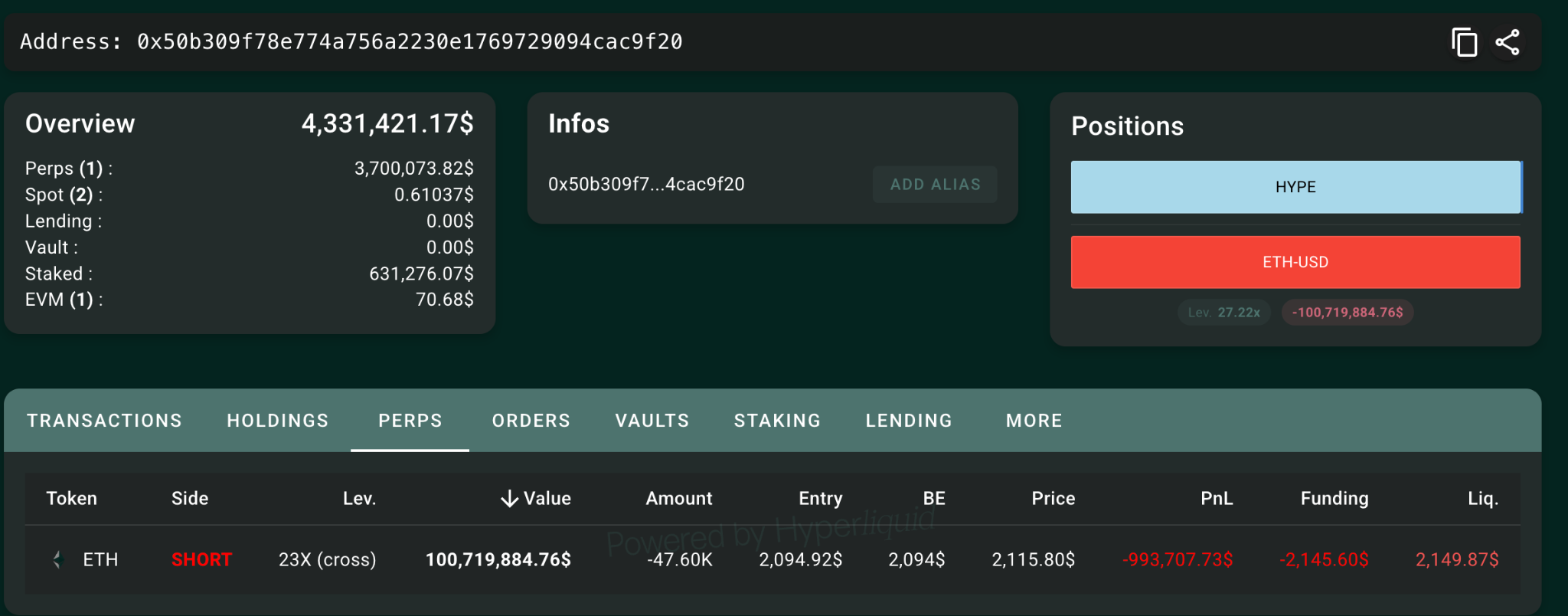
A crypto whale opened a leveraged Ether (ETH) short position worth more than $100 million, even as Ethereum co-founder Vitalik Buterin pledged fewer token sales via the Ethereum Foundation.
Key takeaways:
- The whale may face over $1 million in potential losses as the ETH price rebounds toward short liquidation levels.
- Buterin says the Ethereum Foundation will “sell less ETH” despite offloading over 60,000 ETH earlier this year.
ETH whale faces over $1 million in potential losses
As of Monday, the wallet ‘0x50b…’ held a 47,600 ETH short position worth about $100.72 million, according to Hypurrscan data. The trade used roughly 23x cross-margin leverage, with an entry price near $2,094.92.
ETH was trading around $2,115, leaving the position with an unrealized loss just shy of $994,000. The trader had also paid roughly $2,145 in funding, adding to the cost of maintaining the bearish bet.
Ethereum whale’s short position data. Source: Hypurrscan.IO
The position’s liquidation price sat near $2,150, leaving little room for error. A modest ETH move higher could push the whale’s losses past $1 million and potentially wipe out the short.
That puts the whale in a vulnerable position if Ethereum continues to rebound from its weekend low at around $2,000, especially as global risk sentiment improves due to signs of easing US–Iran tensions.
Related: Ethereum traders warn of ‘nasty’ ETH price drop if $2K support breaks
Still, the size of the trade shows that some large traders remain willing to bet aggressively against ETH despite recent attempts by Ethereum’s big names to calm market concerns.
Ethereum Foundation to “sell less ETH,” says Vitalik Buterin
Co-founder Vitalik Buterin pledged that the Ethereum Foundation will “sell less ETH” as part of a broader effort to make the organization leaner, more focused and longer-lasting.
The commitment appeared in a lengthy X post where Buterin defended the foundation’s direction after a wave of researcher departures.
He said the EF is choosing “longevity over breadth,” meaning it will reduce spending, narrow its mission and avoid acting like Ethereum’s central command structure.
The Ethereum Foundation has faced repeated backlash over token sales, with critics arguing that sustained selling can pressure ETH during weak market conditions.
The Foundation sold about 20,000 ETH in 2026, raising more than $45 million, according to data resource Arkham Intelligence. while still holding around 103,000 ETH in liquid treasury assets, and another 70,000 ETH staked.
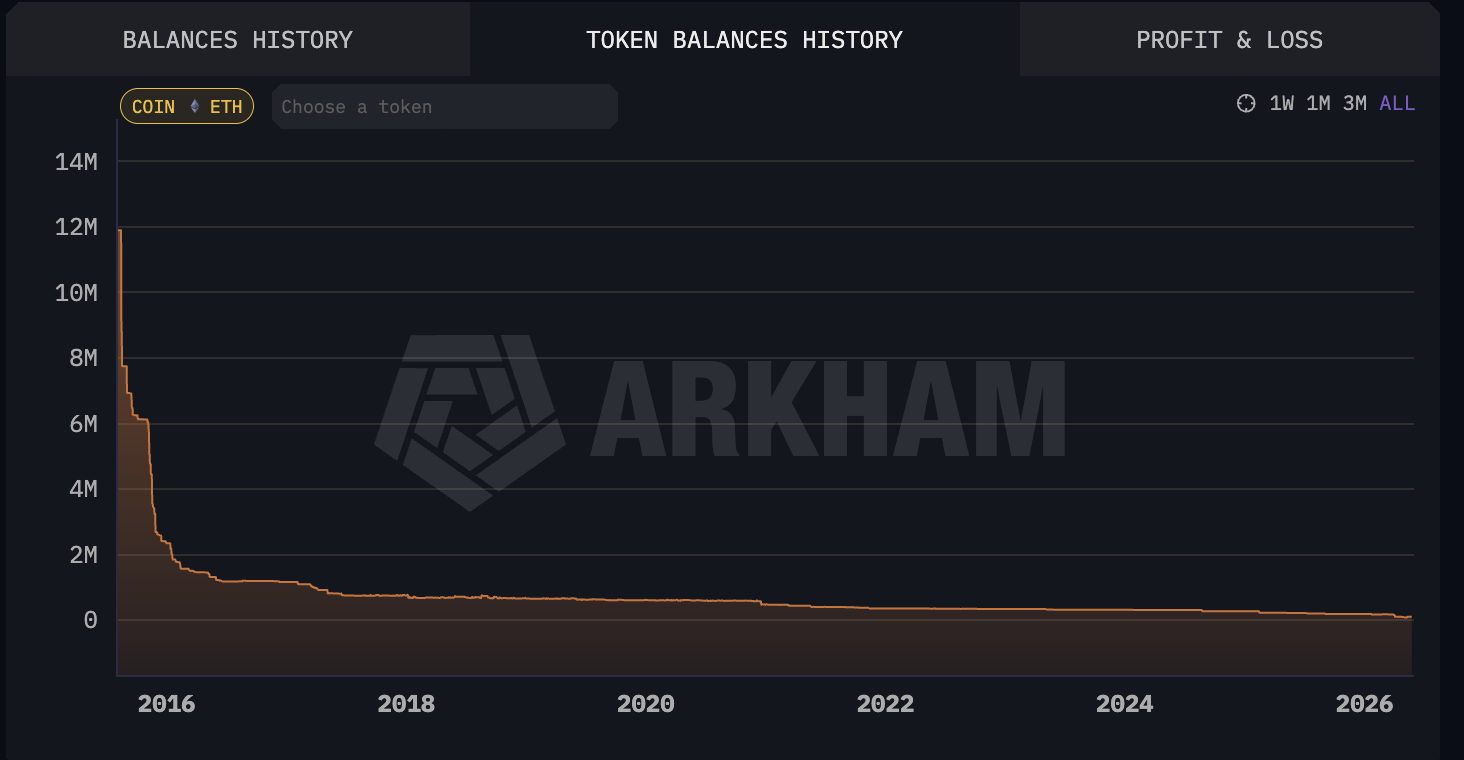
Ethereum Foundation’s ETH balance. Source: Arkham Intelligence
Nevertheless, Buterin’s reassurance comes as institutional conviction in Ethereum appears to be weakening.
In 2026, several large holders trimmed ETH exposure amid weak price action and a multi-year slump versus Bitcoin.
Harvard Management Company reportedly exited its $87 million Ethereum ETF position after just one quarter, while Goldman Sachs cut its ETH ETF holdings by roughly 70%, leaving about $114 million invested.
Spot Ethereum ETFs have continued to bleed capital, recording more than $295 million in net outflows in May and over $945 million in withdrawals so far in 2026.
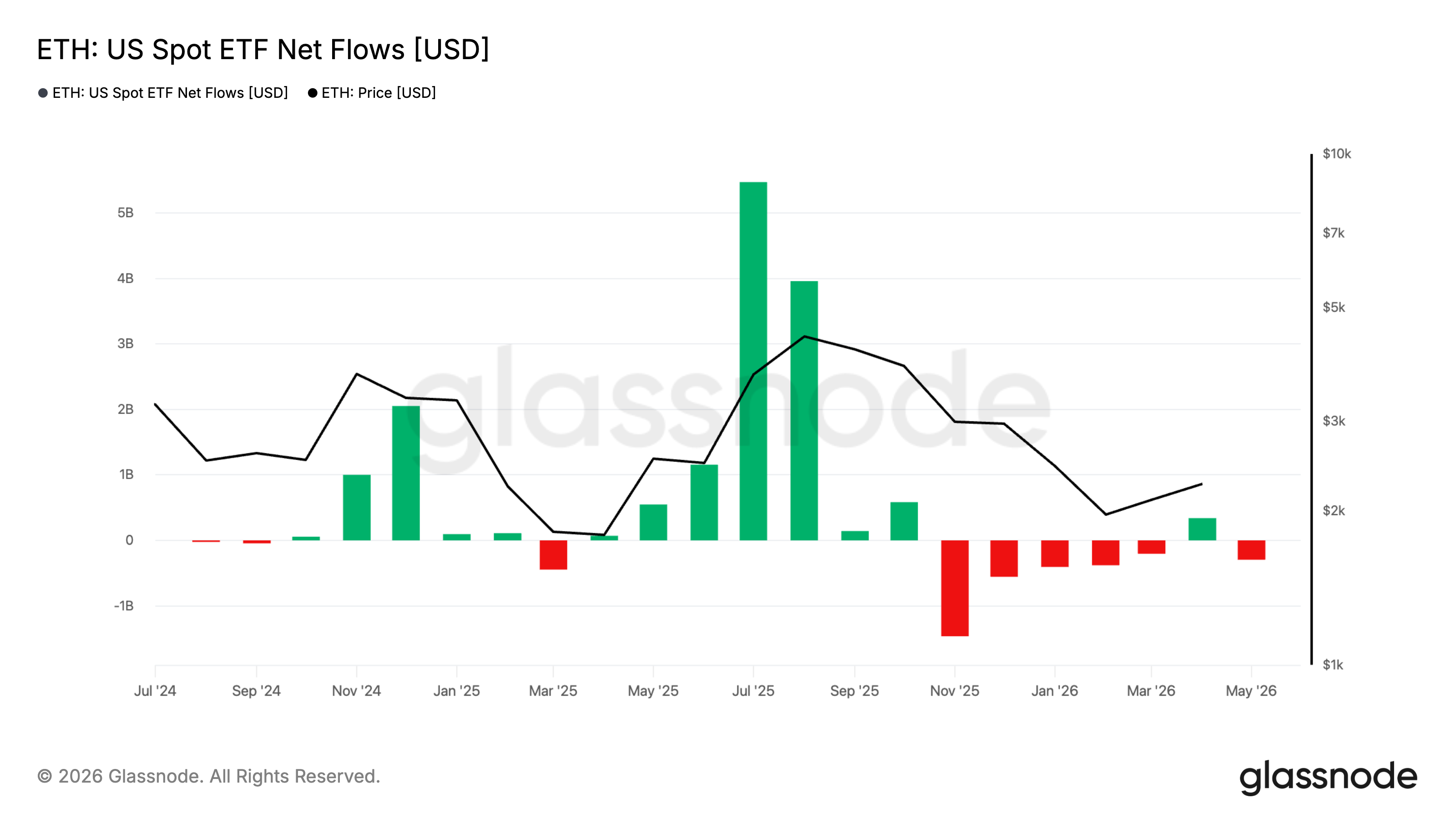
ETH US spot ETF net flows. Source: Glassnode
Bankless co-founder David Hoffman, one of Ethereum’s most visible long-time advocates, said he sold all his personal ETH holdings, adding symbolic weight to concerns that even Ethereum-native investors are reassessing their conviction.
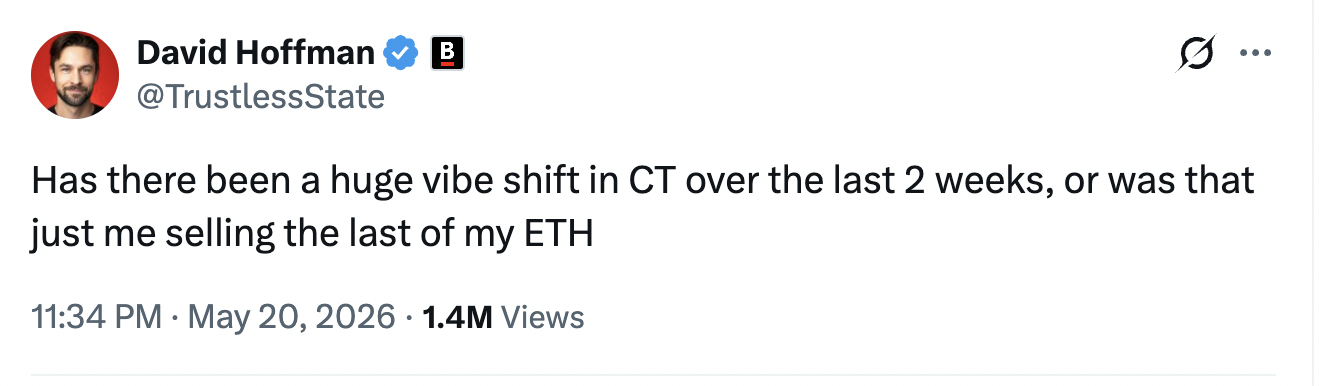
Source: X
However, some analysts, including Tanaka, continue to view Ethereum as a strong long-term buy, arguing that its core on-chain economy remains difficult for rival blockchains to match.
Ethereum still anchors much of crypto’s real activity, hosting roughly $43 billion in DeFi liquidity, more than $165 billion in stablecoins, and about 55% of tokenized assets tracked across public blockchains, according to Token Terminal data.
Ledger added native support for the $ADI token tied to ADI Foundation’s ADI Chain network, a UAE-linked, layer-2 focused on stablecoins and tokenized real-world assets.
ADI Chain is backed by Abu Dhabi-based Sirius International Holding, a subsidiary of International Holding Company, and backs the DDSC stablecoin ecosystem launched with First Abu Dhabi Bank. According to the company, the network is designed for institutional use cases including cross-border payments, treasury operations and trade settlement.
The integration allows users to store and manage $ADI through Ledger Wallet and the company’s hardware signing devices. ADI Foundation describes ADI Chain as infrastructure for regulated stablecoins and tokenized assets, with $ADI used as the network’s native gas token.
The announcement follows a recent 110 million dirham ($30 million) DDSC transfer disclosed by International Holding Company, which the company described as one of the largest publicly disclosed stablecoin transactions executed in the United Arab Emirates.
Related: UAE central bank says financial system stable amid missile and drone attacks
Euro-backed stablecoins expand despite limited market share
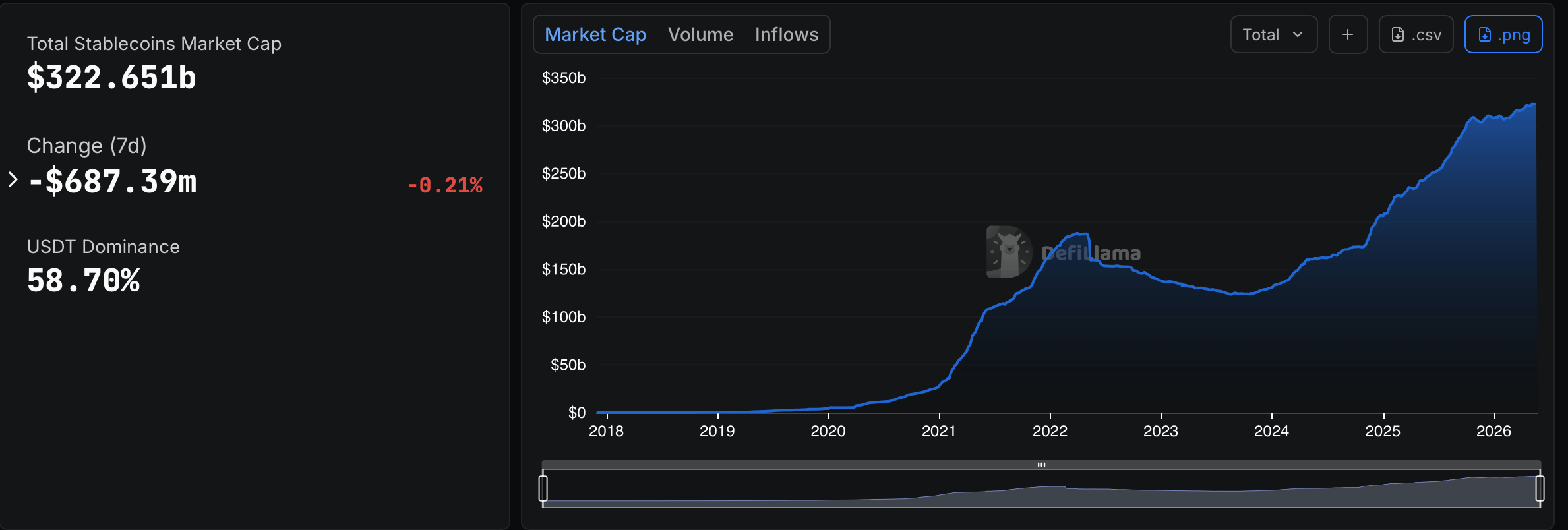
While dollar-backed stablecoins dominate the market, euro-denominated tokens account for more than 80% of the non-US dollar stablecoin sector, according to a March report from Dune Analytics commissioned by Visa. The report estimated the broader non-dollar stablecoin market at roughly $1.2 billion in supply, compared with a total stablecoin market exceeding $300 billion.
Dune said non-dollar stablecoins now process around $10 billion in monthly transfer volume, with euro-backed tokens increasingly used for payments, remittances, payroll and treasury operations. The report also pointed to growing adoption following the bloc’s Markets in Crypto-Assets Regulation (MiCA), which introduced a formal framework for crypto asset service providers across the European Union.
However, an April report from advocacy group Blockchain for Europe claimed that MiCA’s strict reserve and interest rules have made euro stablecoins safer but less commercially competitive than US dollar-backed alternatives. The report cited DeFiLlama data showing euro stablecoins account for less than 1% of global stablecoin volume despite the euro’s broader role in international markets.
This month, the European Commission opened a review of MiCA rules governing stablecoins, reserve requirements and interest-bearing token products as officials reassess how the framework is functioning in practice.
Meanwhile, European institutions are accelerating efforts to develop local-currency stablecoin infrastructure. On May 20, euro stablecoin consortium Qivalis said it expanded to 37 member institutions after adding 25 banks across 15 countries ahead of a planned launch later this year. The group said the initiative is aimed at building a regulated euro-denominated alternative to US dollar-backed stablecoins.
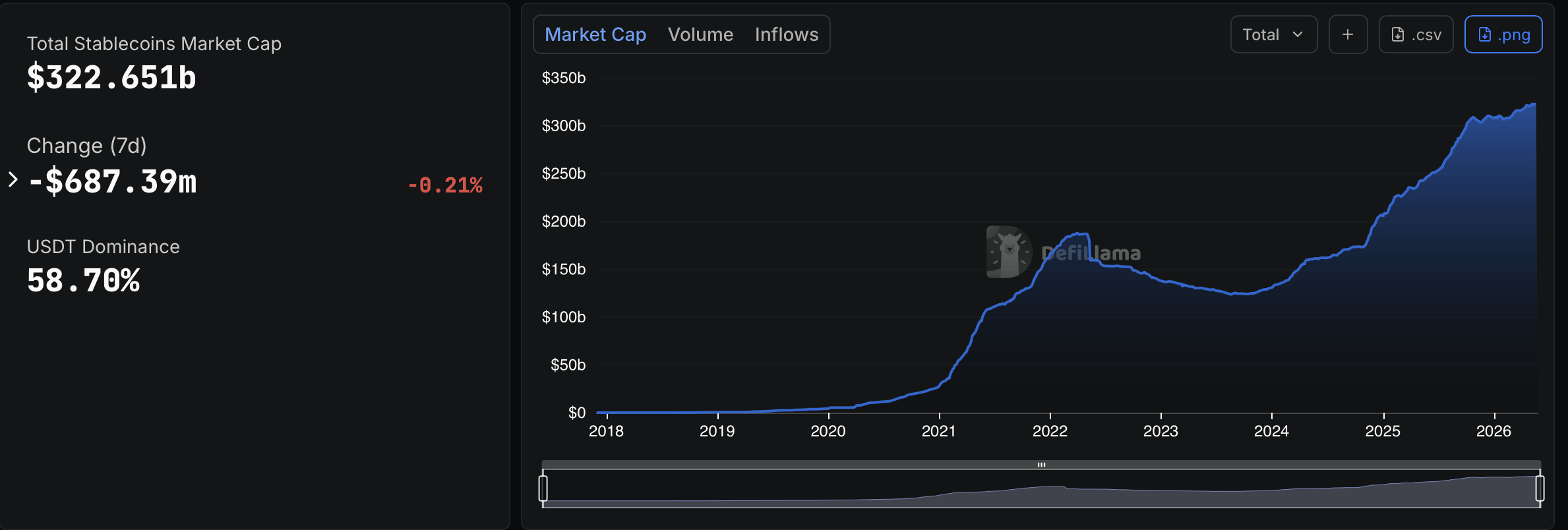
Stablecoin market cap. Source: DefiLlama
Magazine: ETH bears growling, Tom Lee’s buying, XRP to ‘explode’: Market Moves

TLDR
- Raoul Pal said the crypto market is still in an early stage of long-term growth.
- He argued that investors should avoid selling assets during short-term market volatility.
- Pal stated that the crypto market could expand from $2.5 trillion to $100 trillion.
- He encouraged investors to view price corrections as opportunities to accumulate.
- Pal highlighted blockchain and artificial intelligence as drivers of future adoption.
Raoul Pal said the crypto market remains in an early stage of long-term expansion. He argued that investors should avoid selling early during short-term volatility. His comments come as the crypto market cap stands near $2.59 trillion.
Raoul Pal Urges Patience as Crypto Market Evolves
Raoul Pal questioned why investors would exit positions if the market could grow from $2.5 trillion to $100 trillion. He shared this view during a discussion with macro investor Julien Bittel.
He stated that investors should sell assets only when necessary and not due to emotional reactions. He added that short-term price swings should not drive long-term decisions.
Pal said temporary corrections often present buying opportunities for disciplined investors. He encouraged market participants to strengthen positions during periods of weakness.
He emphasized that many investors still underestimate the scale of the transformation. He said crypto and artificial intelligence will reshape global financial systems. Raul Paul also described the current period as the fastest phase of technological growth in history.
Factors Driving Long-Term Crypto Market Expansion
Pal highlighted the growing role of blockchain technology in financial infrastructure. He said the system is gradually shifting onto crypto-based rails.
He pointed to increased integration between blockchain, artificial intelligence, and digital identity systems. He said these developments support long-term adoption across industries. Pal also referenced regulatory progress, including developments around the CLARITY Act. He said clearer rules could improve institutional confidence and increase participation.
Despite these factors, market sentiment remains cautious at present. The crypto Fear and Greed Index currently shows a neutral reading of 40. Ongoing macroeconomic uncertainty has weighed on digital asset prices. This pressure has led some investors to reduce exposure to limit potential losses.
Bitcoin currently trades below $80,000, with a price near $77,104. Ethereum has also declined and trades around $2,124. The broader crypto market continues to reflect mixed sentiment despite long-term growth expectations. Total market capitalization remains near $2.59 trillion at the time of writing.

BlackRock-linked wallets sold $1.01 billion in Bitcoin (BTC) across five trading days last week, a wave of selling that surfaced just as a viral clip of Larry Fink praising crypto recirculated.
The juxtaposition drives notable debate as BTC holds near $77,000, suggesting other buyers absorbed the supply pushed out by iShares Bitcoin Trust (IBIT) redemptions.

Old Quote Meets Fresh BlackRock Outflows
The Larry Fink soundbite currently going around is months old. The clip in which he calls crypto “not a bad asset” with “a role” alongside gold comes from a CBS 60 Minutes segment that aired in October 2025.
With the soundbite making headlines alongside BlackRock redemptions, institutional endorsement is now pitted against redemption data that pointed the other way.
Fink’s broader stance has not shifted. Past Fink crypto comments lean heavily on tokenization of real-world assets, with Bitcoin ETFs positioned as the entry point.
“I’m a believer because I believe it is an alternative source for wealth holding. I don’t believe [Bitcoin] will ever be a currency. I believe it is an asset crass. But, we will create digital currencies and we will use the blockchain,” Fink said in a 2024 interview.
The recycled clip aligned with that long-running view.
Follow us on X to get the latest news as it happens
Flows Reveal Client Behavior, Not Strategy
The IBIT sales are mechanical. When investors redeem ETF shares, the fund sells underlying Bitcoin to cover the exit. That makes the $1.01 billion figure a measure of client withdrawals, not a BlackRock directional bet.
IBIT still holds one of the largest BTC stockpiles globally, a position built during its record inflow streaks.

The redemption wave followed weeks of mixed ETF sentiment swings as higher Treasury yields pushed risk-off behavior.
Earlier in May, IBIT also recorded a record IBIT outflow day, per SoSoValue.

Whether last week’s outflows mark short-term profit-taking or a deeper macro shift will become clearer this week.
The post BlackRock IBIT Sheds $1 Billion in Bitcoin as Larry Fink Quote Misleads Traders appeared first on BeInCrypto.


The on chain market for tokenized real world assets has hit a fresh record near $34 billion, more than tripling from roughly $5.4 billion at the start of 2025, with Ethereum carrying about 60 percent of that value and tokenized U.S. Treasuries alone now accounting for around $15 billion.
Summary
- RWA.xyz and recent market reports put tokenized RWA TVL (ex stablecoins) around $31 billion to $34 billion as of May 2026
- Ethereum hosts roughly 60 percent of RWA value, led by BlackRock’s BUIDL fund and Ondo Finance products
- Tokenized Treasuries sit near $15 billion in AUM, while commodities, private credit and tokenized stocks are the fastest growing segments
Several independent data sources converge on the same order of magnitude for current RWA size.
MetaMask, citing RWA.xyz, says that as of April 2026 tokenized U.S. Treasuries held about $12.88 billion on chain and that “the total distributed value of tokenized RWAs surpassed $31 billion by May 2026.”
InvestaX’s Q1 2026 market report puts the tokenized RWA market (excluding stablecoins) at roughly $29 billion by the end of March after growing about 30 percent in the quarter, while Binance Square’s May update notes that the sector “has seen significant growth, reaching approximately $31.4 billion by May 2026.”
How big has the tokenized RWA market actually become?
A separate State of RWA rundown circulating in the market pegs on chain RWA TVL at $24.6 billion in April 2026, up from around $6 billion in early 2025, and FintechWeekly cites RWA.xyz in saying the distributed asset value for tokenized RWAs stood at $27.65 billion as of April 6, with represented asset value – the off chain collateral behind those tokens – at $441.38 billion.
Taken together, that cluster of estimates makes the $33.99 billion figure now circulating in trading chats entirely plausible as an updated snapshot: the sector has clearly moved from the low single digit billions in early 2025 to the low to mid $30 billions by mid 2026 once you aggregate Treasuries, commodities, tokenized funds, stocks and private credit and include fresh flows this month.
Securitize’s own year end review corroborates the trajectory. As do major crypto players such as Coinbase CEO Brian Armstrong:
The tokenization platform says the RWA market it tracks (again excluding stablecoins) grew from approximately $5.5 billion at the start of 2025 to $18.2 billion by year end, before exceeding $20 billion by January 11, 2026, implying a near fivefold increase in just over a year and setting the base for this spring’s jump.
Who is driving growth – and what is being tokenized?
The single largest driver is U.S. government debt.
Intellectia and other fixed income focused outlets report that the tokenized Treasury market has crossed $15 billion in assets under management as of May, describing it as a “historic milestone” that reflects soaring demand from stablecoin issuers, DeFi protocols and institutional treasuries for on chain T bill exposure.
BlackRock’s USD Institutional Digital Liquidity Fund, known by its ticker BUIDL, has become the flagship product in that segment.
OpenPR and other disclosures say BUIDL has surpassed $2 billion to $2.4 billion in AUM, making it the largest tokenized Treasury fund globally, while Securitize – which handles tokenization, transfer agency and broker dealer duties – explains that the fund holds assets such as U.S. Treasury bills and repos and issues security tokens representing fund units to qualified purchasers.
Ethereum is the main settlement layer for that activity.
MetaMask’s explainer notes that “Ethereum currently dominates the RWA space” and that most tokenized bond and fund products are issued as ERC 20 tokens, a point echoed by Hilbert Group’s macro tokenization report, which says that from 2022 to 2025 the value of tokenized RWAs jumped from about $6 billion to more than $30 billion, with Ethereum hosting the bulk of that growth.
Beyond Treasuries, there is a long tail.
Ondo Finance has pushed deep into tokenized bonds and stocks: KuCoin reports that Ondo Global Markets, which offers tokenized U.S. stocks and ETFs, recently crossed $1 billion in total value locked, calling it “one of the fastest growing real world asset tokenization products in crypto history.”
Commodities and structured products are a smaller slice but still material, and private credit has emerged as a fast growing niche as platforms tokenize trade finance, revenue share notes and SME loans, a trend flagged in both InvestaX’s market report and IMF linked policy papers on tokenization.
RWA.xyz’s dashboard, which tracks individual tokenized assets and platforms, shows that as of late May the universe includes everything from tokenized money market funds and bond ladders to real estate slices and exotic assets such as music royalties, with more than 700,000 distinct asset holders and on chain RWA value up over 4 percent month on month.
The punchline is simple: a market that was still a niche talking point in 2022 is now a roughly $34 billion pillar of on chain finance, increasingly anchored by household names like BlackRock and multi chain platforms like Ondo, and projected by some analyses to scale into the tens of trillions in represented assets by 2030 if current institutional adoption and regulatory clarity continue.


CoinQuant trading platform has expanded its architecture to serve both human traders and autonomous AI agents.
Summary
- CoinQuant, with over 15,000 users since launch, is expanding its no-code AI trading platform into a unified intelligence architecture designed for autonomous AI agents.
- The platform converts plain-English strategy descriptions into complete trading systems covering entries, exits, position sizing, and risk rules, with tick-level backtesting.
- The expansion targets the emerging agent economy, where AI agents settled $73 million across 176 million blockchain transactions in the twelve months through April 2026.
CoinQuant announced the expansion of its no-code trading platform into a unified trading intelligence architecture serving both human traders and autonomous AI agents. The company has attracted more than 15,000 users since launch with a product that converts plain-English strategy descriptions into full algorithmic trading systems, including entries, exits, sizing, filters, and risk rules.
“I spoke one idea into CoinQuant, ran the test, and launched a bot on my lunch break,” said Alex K., a software engineer using the platform. The platform handles tick-level backtesting automatically from a user’s verbal or written input, without requiring coding skills.
What CoinQuant’s AI agent architecture enables
The expansion into agent-native infrastructure allows autonomous AI agents to deploy, test, and execute crypto trading strategies without human intervention at each step.
This positions CoinQuant within the fast-growing market for machine-to-machine crypto infrastructure, where AI agents settled more than $73 million across 176 million blockchain transactions in the twelve months through April 2026 according to research firm Keyrock.
The broader market CoinQuant is targeting spans more than a million potential autonomous trading agents active across crypto markets.
Crypto.news has covered the acceleration of AI-native crypto infrastructure, including MoonPay’s MoonAgents Card enabling AI agents to spend stablecoins at point-of-sale. The convergence of no-code strategy creation with agentic execution marks a structural shift in how trading strategies can be built and deployed at scale.
Why the agent economy is accelerating now
The infrastructure for AI agents to act as independent economic participants is arriving across crypto in waves. Coinbase launched agentic wallets via its x402 protocol in February 2026, processing more than 50 million transactions.
Circle launched its Agent Stack in May 2026, adding wallets, an agent marketplace, and nanopayments for sub-cent AI commerce. Crypto.news has noted MoonPay’s AI-native debit card infrastructure giving agents a live stablecoin payment rail.
CoinQuant’s approach focuses on the trading strategy layer of this stack, providing the intelligence engine that allows agents to construct and execute crypto strategies without pre-coded logic.


Tokenized stocks have emerged as the fastest-growing category of tokenized assets on Ethereum, according to Token Terminal. xStocks and Ondo Finance assets are leading the expansion of this new asset class on the blockchain. The growth in tokenized stock offerings reflects expanding demand for… Read the full story at The Defiant
Crypto prices were slightly higher on Monday amid rising odds in prediction markets for a near-term U.S.-Iran peace deal, as Iranian negotiators arrived in Doha for talks.
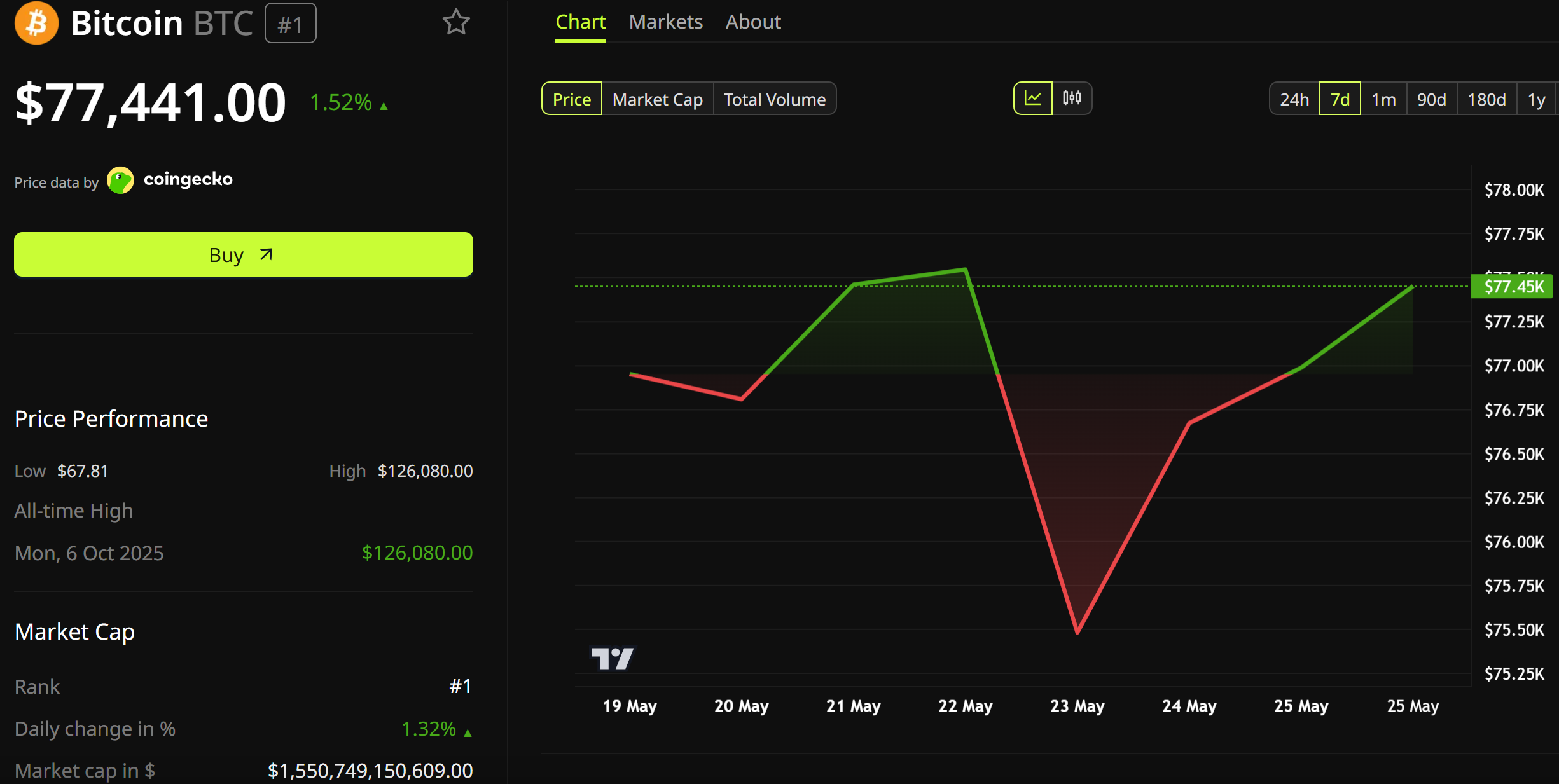
Bitcoin gained 1.6% in 24 hours to $77,500, ether rose 1.4%, and the broader CoinDesk 20 (CD20) added 1.56%.
Traders on Polymarket pushed the probability of a permanent deal this month to 37%, up from roughly 14% on Friday. The odds for a deal are at 46% by early June and 72% by the end of July. The market has drawn roughly $178 million in volume.
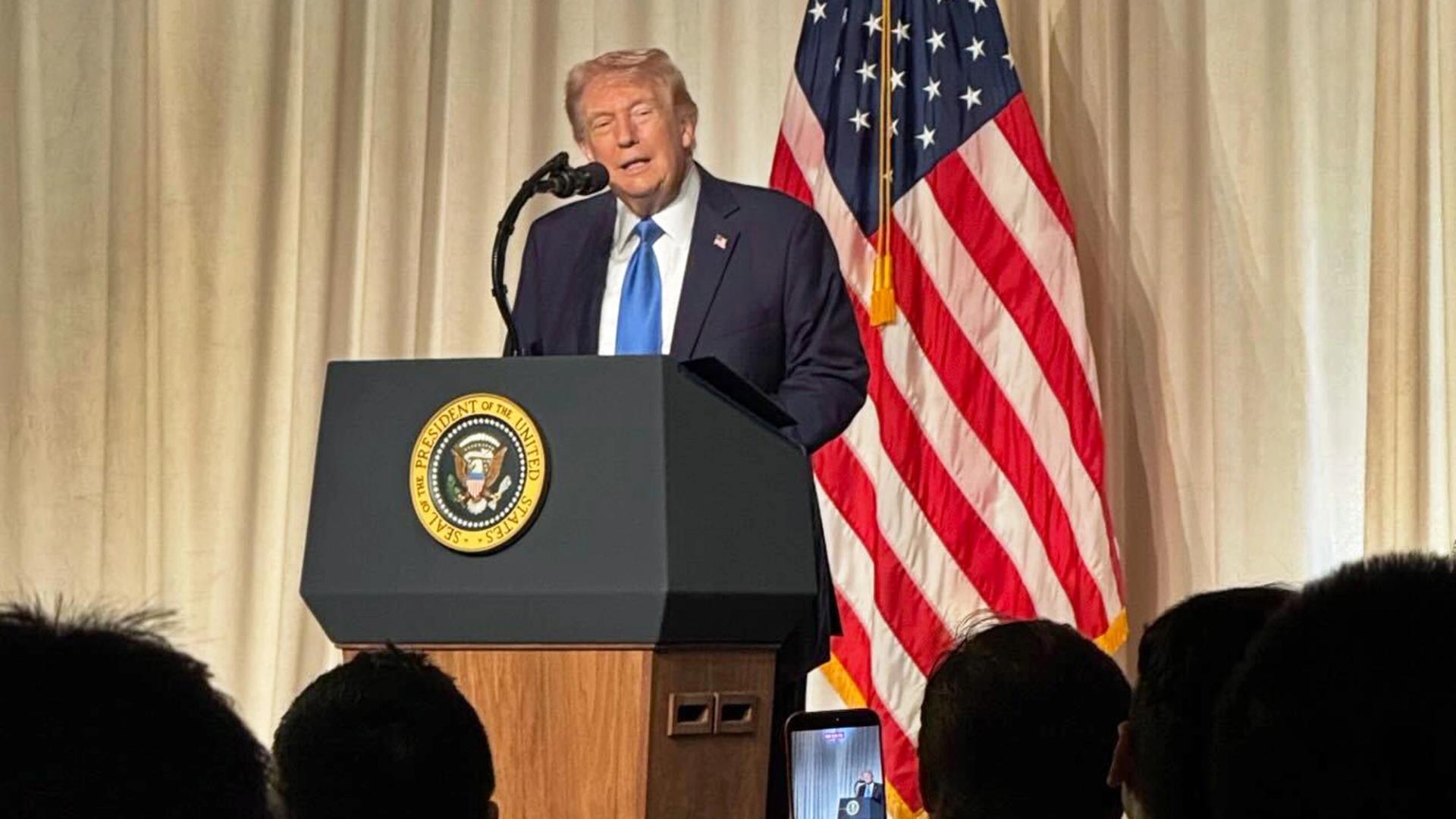
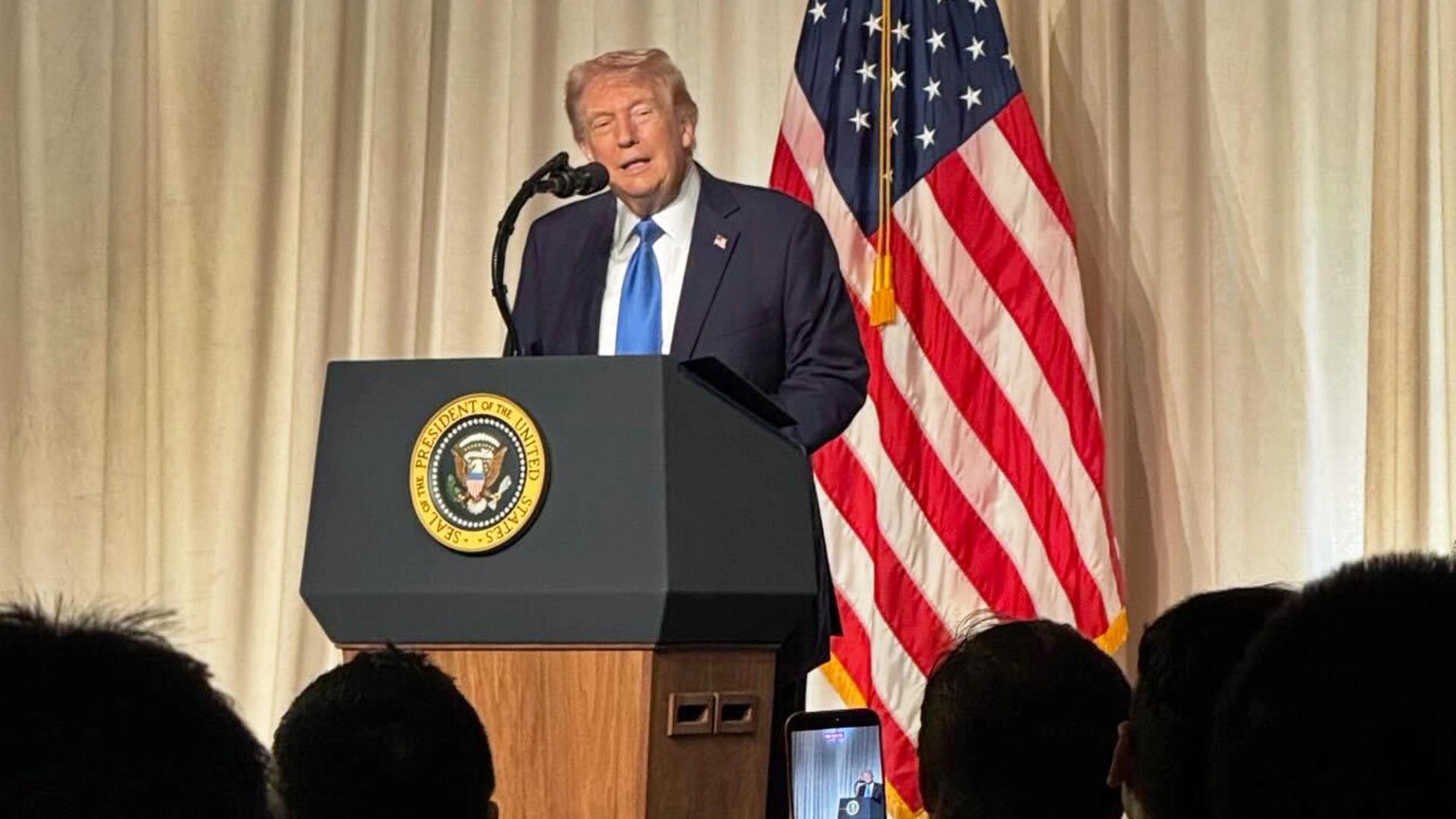
The move follows a Truth Social post from President Trump on Saturday saying the framework agreement was “subject to finalization.” Iran’s chief negotiator, Mohammad Bagher Ghalibaf, Foreign Minister Abbas Araghchi, and Central Bank Governor Abdolnaser Hemmati arrived in Doha earlier today for talks, per CNN.
A diplomat briefed on the visit told CNN that the agenda is focused on the Strait of Hormuz and highly enriched uranium. Meanwhile, Iran’s foreign ministry has described the deal as a memorandum of understanding in a first phase, with broader talks over 30 to 60 days, CNBC reported. Pakistan and Qatar are mediating.
The Strait of Hormuz has been largely blockaded since the U.S. and Israel struck Iran on February 28, though traffic has partially resumed in recent days.
Crude oil fell 5.4% to $91.30 per barrel. Gold rose 1.35% to $4,570 per ounce. The dollar weakened, with the U.S. Dollar Index (DXY) falling around 0.3%.
Trump’s tone remains conditional. “It will only be a Great Deal for all or, no Deal at all — Back to the Battlefront and shooting, but bigger and stronger than ever before,” he wrote Monday.
Read more: Bitcoin trades above $77,000 as oil’s 5% slide pushes Asian equities higher


Indonesia’s Ministry of Communication and Digital Affairs has blocked access to Polymarket, saying the crypto-based prediction market amounts to online gambling under local law.
The ministry said it had cut access to the platform and was tracing affiliated social media accounts for possible restrictions across other digital channels.
Alexander Sabar, director general of digital space supervision, claimed that platforms that allow users to wager money on uncertain outcomes remain gambling products, even when they use blockchain technology or crypto assets.
Polymarket lets users trade contracts tied to real-world events, including elections, sports, crypto prices and political outcomes. The platform has grown into one of the largest crypto prediction markets, but regulators in several jurisdictions have treated parts of the business as gambling rather than financial-market activity.
Indonesia’s statement did not name Kalshi, a U.S.-regulated prediction market operator, or other platforms but said authorities would restrict similar services that facilitate online gambling.
The order could extend to other prediction-market platforms if Indonesian regulators determine that they allow users to wager money on uncertain real-world events.
Indonesia’s move follows a broader clampdown on prediction markets in Asia. India recently blocked Polymarket after authorities classified such platforms as prohibited online money gaming, with Kalshi also facing potential scrutiny. Polymarket is separately seeking approval in Japan by 2030, where strict gambling rules limit most forms of betting outside state-sanctioned activities.
The Indonesian ministry said Singapore, Brazil and India have blocked Polymarket, while Taiwan, Thailand, China and Japan have imposed restrictions under local law. The prediction market is also blocked in Ukraine, where there’s no legal way for it to come back.
The regulator urged Indonesians not to access or participate in digital betting activity, including markets that use crypto assets, citing potential financial losses and violations of Indonesian law. The ministry said it would keep coordinating with law enforcement and other stakeholders to monitor similar platforms.

On the Canvas: the art of Tom Cribb vs Tom Molineaux and 19th century boxing folklore

Crypto Charts Are Playing The MOST Dangerous Trick On Crypto Investors Right Now.

Hajj 2026 live: Over 1.5milion in Mecca for pilgrimage ahead of Day of Arafah


-

 Crypto World4 days ago
Blockchain.com files with SEC for U.S. IPO
-

 Fashion3 days ago
Holiday Weekend Open Thread – Corporette.com
-

 Business3 days ago
Dell Technologies DELL Stock Surges 15% on AI Server Momentum and Analyst Upgrades in 2026
-

 Crypto World4 days ago
Bitcoin Accumulation Weakens as BTC Realized Losses Hit $600M
-

 Crypto World3 days ago
Space X IPO Is ‘Bad News’ for Tech Stocks: But What About Bitcoin?
-

 Politics3 days ago
Makerfield: a tale of two social-media histories
-

 Crypto World2 days ago
Robinhood crypto COO Tanya Denisova exits
-

 Crypto World4 days ago
MicroStrategy’s Saylor Says Miners No Longer Set Bitcoin Price, Another Force Has Taken Over
-

 Business1 day ago
NYT Strands Answers May 24 2026 Revealed for Puzzle No. 812 Theme Summer Essentials
-

 Crypto World3 days ago
AI infrastructure race heats up as IREN pitches full-stack strategy, WhiteFiber lands $160M deal
-
 Tech3 days ago
A 0.12% parameter add-on gives AI agents the working memory RAG can’t
-

 Tech4 days ago
WhatsApp ads could make Irish debut after discussions with DPC
-

 Tech4 days ago
You Can Now Add ChatGPT To PowerPoint
-

 Business4 days ago
Trump Invests $1M-$5M in Kura Sushi USA Chain With 27 California Locations
-

 Sports4 days ago
2026 CJ Cup Byron Nelson leaderboard: Brooks Koepka finds putting stroke in Round 1
-
 NewsBeat4 days ago
Charity run by Reform leader Malcolm Offord accused of ‘law breaking’ over Scottish registration
-
 Crypto World4 days ago
Trump Media’s Bitcoin Stash Shrinks Again as 2,650 BTC Lands on Crypto.com
-
Business4 days ago
Goldman Sachs reinstates Ageas stock coverage with neutral rating
-

 Crypto World5 days ago
Exa Labs raises $250 million in funding led by a16z
-

 Crypto World7 days ago
SEC to propose tokenized stock framework as Wall Street efforts deepen: Bloomberg
You must be logged in to post a comment Login