




Connect with us

Crypto World

XRP jumps 8% as crypto short squeeze and Ripple developments draw attention – CoinJournal

Published

on

XRP jumps 8% as crypto short squeeze and Ripple developments draw attention - CoinJournal

Key takeaways

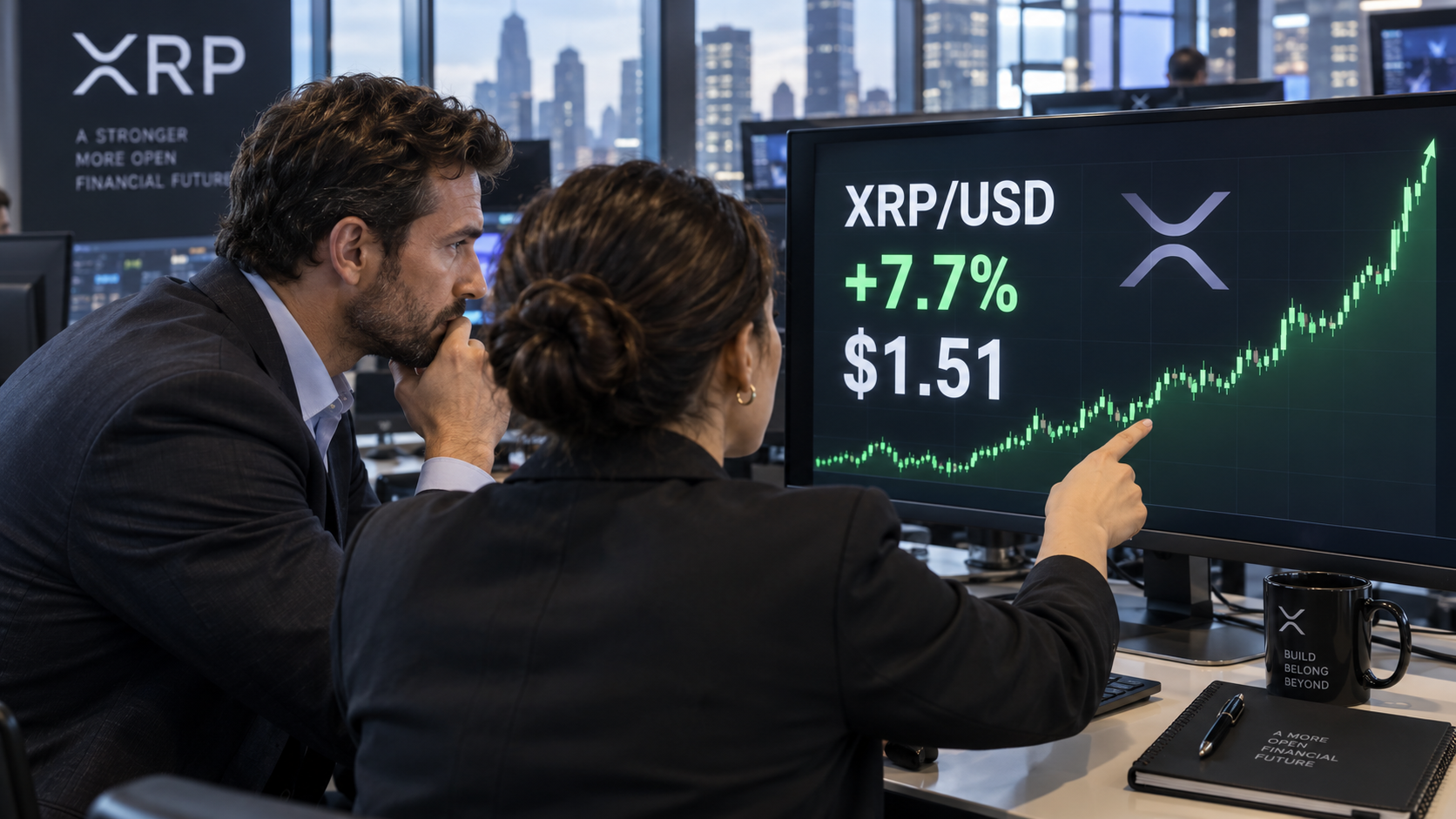
  • XRP rose more than 8% in 24 hours as the broader crypto market rallied.
  • Its trading volume increased 55% to approximately $4.7 billion.
  • Crypto-wide short liquidations reached about $665 million; that figure is not specific to XRP.

XRP outpaces major cryptocurrencies

XRP gained more than 8% over 24 hours amid a broad cryptocurrency rally. Trading volume rose 55% to approximately $4.7 billion, equivalent to about 5% of XRP’s circulating market value.

The higher volume shows that trading activity increased alongside the price. It does not, by itself, establish how much of that activity came from new buyers rather than sellers closing positions.

A wider short squeeze may have contributed to the move. Across the crypto market, short liquidations climbed to approximately $665 million, according to the figures cited in the report. Liquidations force some traders betting on falling prices to close their positions, which can amplify a rally.

XRP’s gains also come as Ripple continues to expand its payments business and develop uses for the XRP Ledger.

Advertisement

The report points to a newly released developer kit for building AI agents that can make payments using the ledger and Ripple’s RLUSD stablecoin. It also describes Stripe as potential supporting infrastructure for that use case. The scale of any resulting payment activity remains to be seen.

Meanwhile, two XRP Ledger proposals under consideration could help establish a framework for lending that uses XRP as collateral and RLUSD for settlement. Their eventual effect depends on approval, implementation and adoption.

RLUSD’s market capitalization was near $2.4 billion in the figures cited by the report. Growth in the stablecoin may increase activity in Ripple’s ecosystem, though it does not guarantee a corresponding rise in XRP’s price.

XRP faces $1.50 breakout test

The technical analysis in the report identifies a breakout from a descending flag pattern on XRP’s daily chart. 

Advertisement

The next test is $1.50: a sustained move above that level would strengthen the case for a rise toward $1.80.

XRP/USD Daily Chart

The analyst also projects a medium-term target of $2.10 based on the pattern’s measured move, implying roughly 41% upside from the price used in that forecast.

Those targets remain conditional. After a sharp rally and substantial short liquidations, XRP will need continued buying interest to hold its breakout and advance through $1.50.


Source link

Continue Reading
Click to comment

You must be logged in to post a comment Login

Leave a Reply

Crypto World

Prediction Market Trueo Moves From Base to Ethereum

Published

on

Prediction Market Trueo Moves From Base to Ethereum

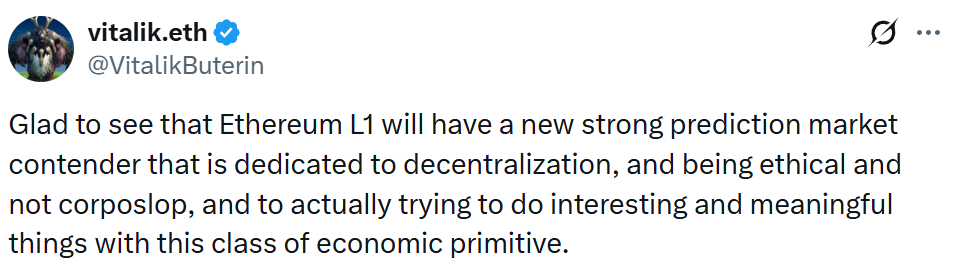
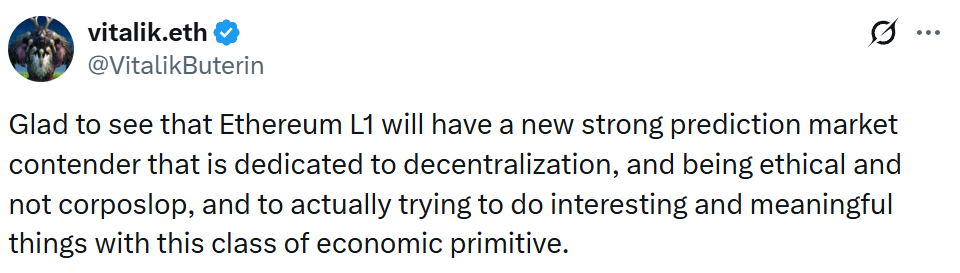
Prediction market platform Trueo plans to migrate from Base to Ethereum, citing broader integration opportunities and plans to build the next iteration of its oracle system.

The project, which launched on Base in March 2025, said its priority after the migration will be attracting liquidity and launching the next generation of its oracle, the system used to verify real-world outcomes that are used to resolve prediction markets.

Trueo said it chose to move from Base to Ethereum because it offered higher integration potential and product upside, while on Base, integrations are limited to the immediate ecosystem.

“Ethereum is the best chain for the most credibly neutral and truthful oracle system and prediction markets,” Trueo co-founder known as “Lumberg” said on X.

Advertisement

Source: Vitalik Buterin

“As a new app and experiment, an L2 like Base was the right choice for many reasons. At the time, Mainnet gas costs were still elevated and some features of our app were experimental,” Trueo said on X.

“The final form of Trueo is to be a platform that is widely adopted, broadly integrated, fully permissionless, mostly immutable, and highly credible. Ethereum is the best fit for this combination of properties.”

Trueo is ranked as the 14th-largest onchain prediction market with a total value locked of $795,687, according to DefiLlama.

Related: World Cup generated $20B in blockchain prediciton market volume: Chainalysis

Advertisement
Cointelegraph is committed to independent, transparent journalism. This news article is produced in accordance with Cointelegraph’s Editorial Policy and aims to provide accurate and timely information. Readers are encouraged to verify information independently.


Source link

Continue Reading

Crypto World

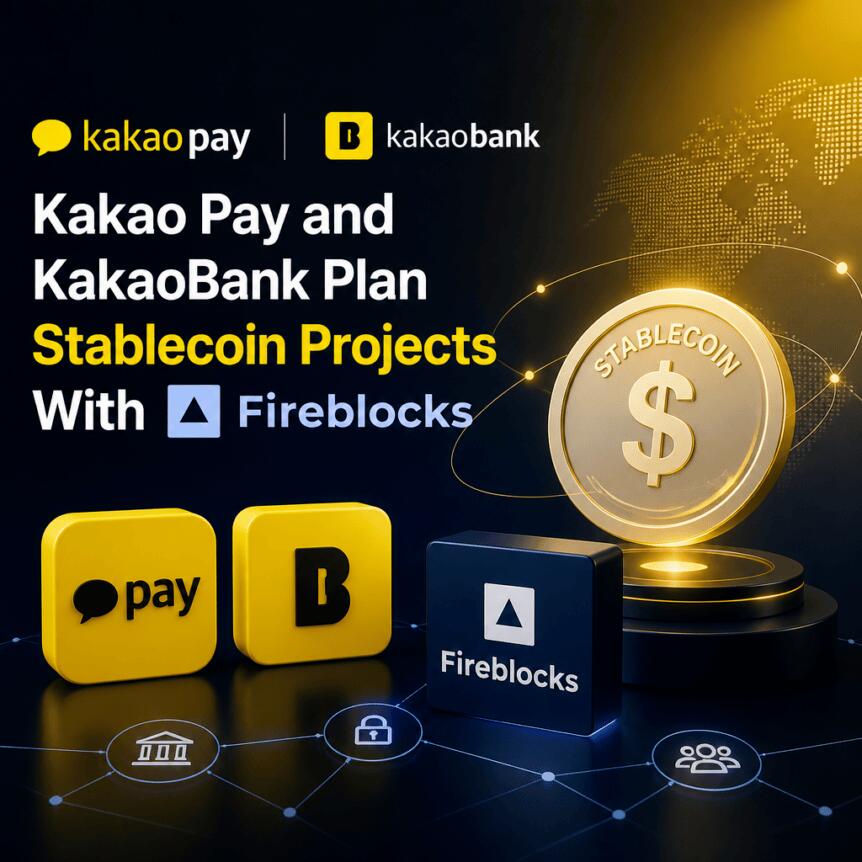
Kakao Pay and KakaoBank Plan Stablecoin Projects With Fireblocks

Published

on

Crypto Breaking News

Kakao Pay and KakaoBank, two major players in South Korea’s Kakao ecosystem, have signed a memorandum of understanding (MoU) with digital asset infrastructure provider Fireblocks to explore new opportunities in crypto infrastructure—specifically including stablecoins. The parties said they will run proof-of-concept tests aimed at building digital asset capabilities that fit South Korea’s regulatory, security, and service expectations.

The announcement, made on Monday, did not disclose any launch plans, investment commitments, or implementation timelines. Instead, it frames the effort as an engineering and compliance-oriented exercise to identify how onchain infrastructure can be deployed responsibly in a market that is still taking shape under an evolving regulatory framework.

Key takeaways

  • Kakao Pay and KakaoBank are partnering with Fireblocks to test digital asset infrastructure use cases, including stablecoin-related work.
  • The MoU centers on proof-of-concept testing tailored to South Korea’s regulatory and security requirements, without any announced rollout timeline.
  • Fireblocks says it supports more than 2,500 institutions, including over 100 banks, positioning the partnership as focused on enterprise-grade custody and infrastructure.
  • The move adds to a growing cluster of South Korean finance and fintech firms exploring won-denominated stablecoin pathways as regulation develops.

Why Kakao’s infrastructure search matters

Unlike pilots that focus purely on payment trials, this MoU is primarily about the infrastructure layer—how institutions can securely connect to digital assets and operate systems that meet banking-grade standards. Kakao Pay and KakaoBank sit in the heart of South Korea’s digital payments and banking ecosystem: Kakao Pay provides mobile payments and financial services, while KakaoBank is one of the country’s largest internet-only banks.

For firms like these, the practical challenge is not simply adopting blockchain technology, but integrating it in ways that satisfy security controls, operational reliability, and compliance expectations. By working with Fireblocks on proof-of-concept tests, the companies are signaling that they want to validate onchain systems that can withstand enterprise requirements—an issue that often determines whether stablecoin concepts can move from experimentation to production.

What Fireblocks brings to the table

Fireblocks provides digital asset infrastructure used by institutions, and the company says it supports more than 2,500 institutions, including over 100 banks. In enterprise crypto deployments, that kind of track record is often tied to capabilities such as secure custody and infrastructure tooling used to manage digital assets at scale.

Advertisement

While Monday’s MoU announcement does not describe specific technical components, it does clarify the target outcome: secure onchain infrastructure that aligns with South Korea’s regulatory and security landscape. For investors and builders watching South Korea’s stablecoin trajectory, this is a meaningful signal that large local financial institutions are seeking infrastructure partners capable of meeting banking-level standards.

A wave of stablecoin exploration in South Korea

The Kakao-Fireblocks agreement arrives amid a broader pattern of experimentation across South Korea’s financial sector as the country continues building out its digital asset regulatory framework.

Earlier activity includes a separate MoU between Kakao Group and stablecoin issuer Circle, announced in July. According to Cointelegraph’s earlier coverage, that MoU was intended to explore blockchain-based payment infrastructure and digital asset technology, including opportunities around won-denominated stablecoins and related services (see Kakao Circle won stablecoin payment infrastructure).

The stablecoin push is not limited to Kakao. In May, Cointelegraph reported that KB Financial Group completed a won-denominated stablecoin pilot spanning issuance, offline merchant payments, and cross-border remittances (see KB Financial stablecoin pilot offline payments). And in July, fintech company Toss partnered with Optimism and Sunnyside Labs on a proof of concept for won-based stablecoin payment infrastructure (see Toss partners Optimism won stablecoins).

Advertisement

Taken together, these efforts suggest the market is moving beyond pure “whether” questions and increasingly focusing on “how”—including what infrastructure is needed to support stablecoin payments and settlement, including in scenarios that require offline functionality or integration with cross-border flows.

What to watch next for investors and operators

For now, the MoU provides a direction of travel rather than a product roadmap. The lack of a launch or implementation timeline means stakeholders should treat the announcement as an early-stage initiative: proof-of-concept testing will determine what technical and compliance hurdles need to be cleared before any wider deployment.

As South Korea refines its approach to digital assets, the next milestones to monitor are not only regulatory developments, but also whether these infrastructure-focused pilots can evolve into operational systems—especially for won-denominated stablecoin use cases, where payment reliability and security controls are central.

Readers should watch for details on the proof-of-concept scope, results, and whether Kakao’s infrastructure testing leads to further partnerships or public pilots aligned with the country’s expanding stablecoin and payment framework.

Advertisement

Risk & affiliate notice: Crypto assets are volatile and capital is at risk. This article may contain affiliate links. Read full disclosure


Source link

Continue Reading

Crypto World

Kakao Pay, KakaoBank Explore Stablecoins With Fireblocks

Published

on

Cointelegraph

South Korean financial companies Kakao Pay and KakaoBank have signed a memorandum of understanding (MoU) with crypto infrastructure provider Fireblocks to explore digital asset opportunities, including stablecoins. 

Under the agreement, the companies will conduct proof-of-concept tests for digital asset infrastructure suited to South Korea’s regulatory, security and service requirements. The initiative aims to help establish secure onchain infrastructure for the country’s emerging digital asset market. 

The announcement on Monday did not include a launch, investment or implementation timeline. 

Kakao Pay operates mobile payments and financial services, while KakaoBank is one of South Korea’s largest internet-only banks. Both are part of the broader Kakao ecosystem. Meanwhile, Fireblocks provides digital asset infrastructure to more than 2,500 institutions, including over 100 banks, according to the company. 

Advertisement

The agreement follows a separate memorandum signed by Kakao Group and stablecoin issuer Circle. In July, the two companies signed an MoU to explore blockchain-based payment infrastructure and digital asset technology. The collaboration included examining opportunities around won-denominated stablecoins and related services. 

Kakao Pay and KakaoBank are among several South Korean financial and technology companies exploring stablecoin opportunities as the country develops its regulatory framework for digital assets.

In May, KB Financial Group completed a won-denominated stablecoin pilot covering issuance, offline merchant payments and cross-border remittances. In July, fintech company Toss partnered with Optimism and Sunnyside Labs on a proof of concept for won-based stablecoin payment infrastructure.

Related: South Korean bank stocks surge on stablecoin trademark filings

Advertisement
Cointelegraph is committed to independent, transparent journalism. This news article is produced in accordance with Cointelegraph’s Editorial Policy and aims to provide accurate and timely information. Readers are encouraged to verify information independently.


Source link

Continue Reading

Crypto World

As Yields Retreat, HSBC Sees 10-Year Treasury at 4.65%, Not 6%, by Year-End

Published

on

Yields have fallen below the psychological mark of 5%.

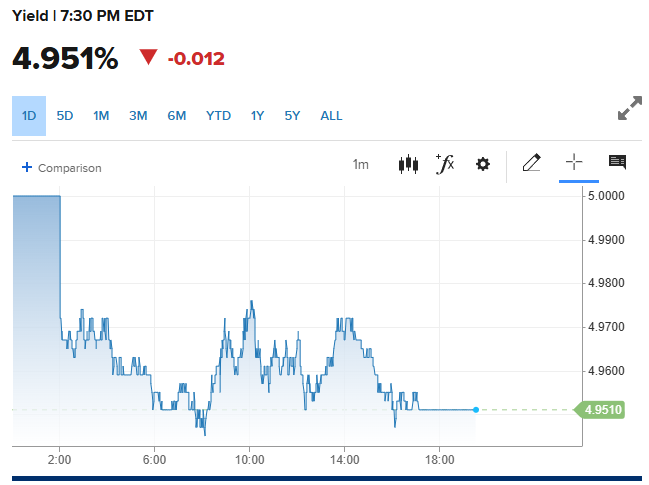
The 10-year Treasury yield fell to 4.951% on Monday, retreating further from last week’s 19-year high of 5.041%. HSBC now sees the yield closer to 4.65%, not 6% by year-end, arguing the retreat has room to run.

Falling oil prices and hope for a deal with Iran calmed markets Monday. That marks a sharp reversal from the hawkish mood that drove last week’s spike.

HSBC’s Treasury Yield Forecast Turns More Hawkish

HSBC actually lifted its entire Treasury curve forecast this month. It raised its two-year year-end forecast to 4.20% from 3.85%, and its 10-year target to 4.65% from 4.30%. The bank still expects the Federal Reserve to hold rates through 2027 as its base case.

Yields have fallen below the psychological mark of 5%.
Yields have fallen below the psychological mark of 5%. Image Source: CNBC

However, HSBC now sees near-even odds of a hike this cycle. It called the Federal Open Market Committee’s (FOMC) internal debate “on a fine edge.”

The bank credited Fed Chair Kevin Warsh’s Jackson Hole remarks with easing summer’s term premium. Persistent fiscal deficits, it said, will keep pressure on the curve further out.

Advertisement

“An increasingly asymmetric skew in dual mandate risks means the distribution of potential outcomes has changed, and we think this likely sustains upward pressure on front-end yields even if the Fed doesn’t tighten policy in the near term.”

(HSBC)

Where Other Forecasters See the 10-Year Yield

Not everyone agrees on the destination. Miller Tabak’s Matt Maley calls 4.8%, the more urgent test. He warned a sustained break above it could ripple into other assets.

Deutsche Bank’s data on past tightening cycles suggests a 6% run is more a 2027 story than a near-term one.

iCapital’s 5.3% forecast lands higher still, with Dan Suzuki pointing to oil rather than the Fed as the driver. ZeroHedge’s bear case argues 6% arrives regardless of how orderly the path looks.

Advertisement

Forecasts now cluster between 4.65% and 5.3%. That makes a decisive break above 4.8%, not a leap to 6%, the nearer-term signal to watch.

This week’s Purchasing Managers’ Index (PMI) data, jobless claims, and several Fed speeches should test which camp is right.

The post As Yields Retreat, HSBC Sees 10-Year Treasury at 4.65%, Not 6%, by Year-End appeared first on BeInCrypto.


Source link

Advertisement
Continue Reading

Crypto World

Here’s who we know is going to the Trump-Xi dinner so far

Published

on

Here's who we know is going to the Trump-Xi dinner so far

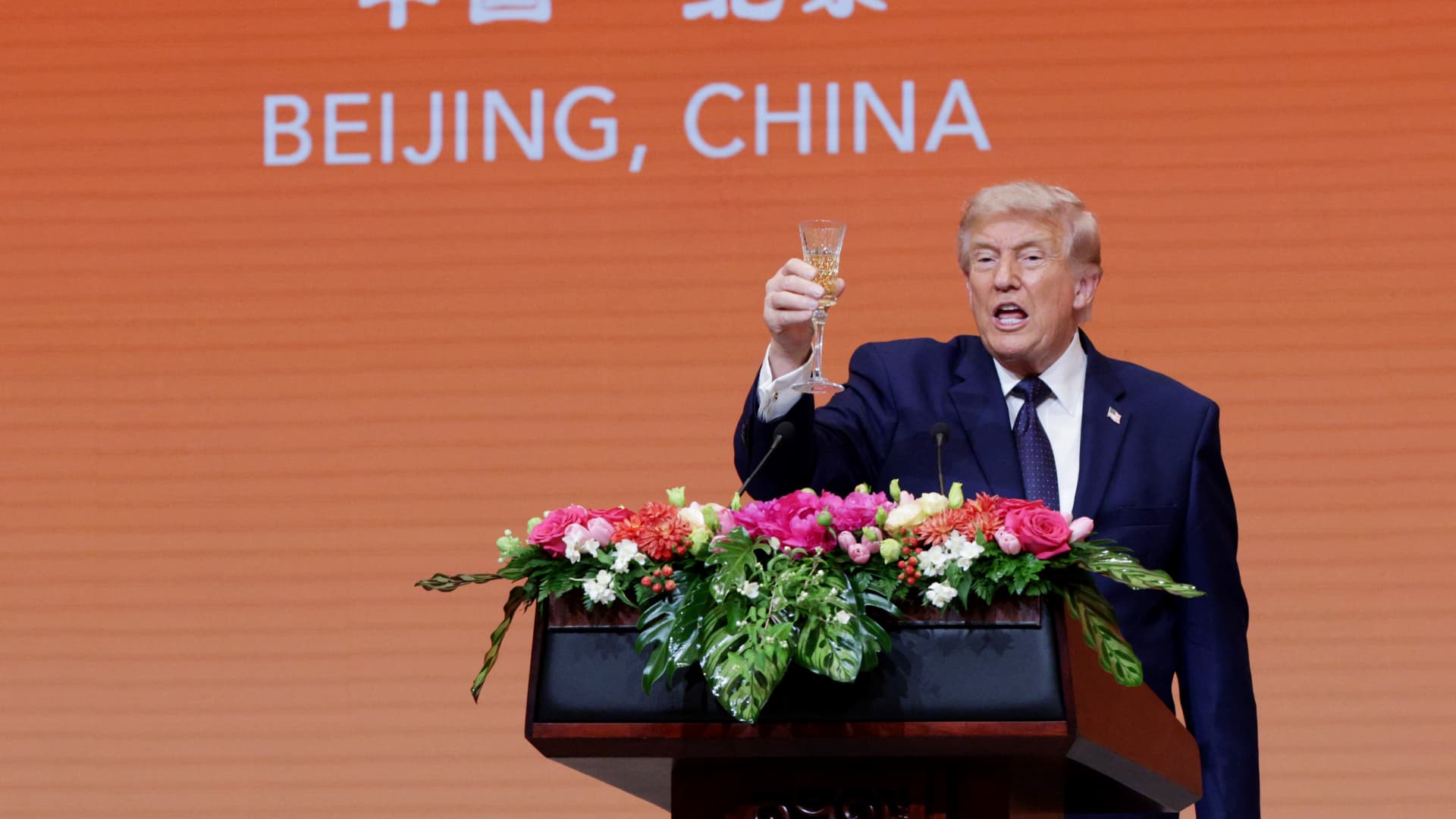
U.S. President Donald Trump makes a toast during a state banquet hosted by Chinese President Xi Jinping at the Great Hall of the People on May 14, 2026 in Beijing, China.

Alex Wong | Getty Images News | Getty Images

BEIJING — With two days to go before Chinese President Xi Jinping is expected to land in the U.S., very little is known about which Chinese executives will join him.

Advertisement

China’s Ministry of Foreign Affairs did not immediately respond to a CNBC request for comment Tuesday morning. Late on Monday, the ministry confirmed Xi’s U.S. trip, planned for Wednesday to Friday.

On the U.S. side, Microsoft CEO Satya Nadella is one of the executives who will attend a dinner expected Thursday in Washington, D.C., according to a source familiar.

Microsoft and the White House did not immediately respond to a CNBC request for comment.

Senior U.S. officials have shared names of some other executives who will join:

Advertisement

Nvidia CEO Jensen Huang and Apple CEO Tim Cook arrive for the meeting between Chinese Premier Li Qiang and U.S. business representatives, at the Great Hall of the People in Beijing, China May 14, 2026.

Go Nakamura | Reuters

Those business leaders include:

  • Nvidia’s Jensen Huang
  • OpenAI’s Sam Altman
  • Google’s Sundar Pichai
  • Tesla and SpaceX’s Elon Musk
  • Citigroup’s Jane Fraser
  • Amazon’s Jeff Bezos
  • Apple’s Tim Cook
  • Dell’s Michael Dell

Boeing CEO Kelly Orthberg joined U.S. executives in a meeting with Chinese Premier Li Qiang on May 14, 2026, alongside the Trump-Xi summit in Beijing.

CNBC | Evelyn Cheng

Advertisement

On the Chinese side, Reuters reported last week that business representatives under consideration included those from electric car giant BYD, smartphone company Xiaomi, battery makers CATL and Gotion, consumer electronics manufacturer Hisense, automotive parts company Wanxiang, state-owned Bank of China and agricultural conglomerate COFCO Group.

BYD had no comment when contacted by CNBC. The other Chinese companies did not immediately respond to requests for comment.

As tensions between the U.S. and China have escalated in recent years, both governments have put companies from the other country on blacklists that restrict business activity.

—CNBC’s Jordan Novet and Ashlee Trujillo contributed to this report.

Advertisement
Choose CNBC as your preferred source on Google and never miss a moment from the most trusted name in business news.


Source link

Continue Reading

Crypto World

Elon Musk Said Grok 4.7 Would Exceed Every Model. Did It Deliver?

Published

on

How Grok 4.7 Performs.

SpaceXAI shipped Grok 4.7, and independent scores place it fourth among frontier AI labs. 

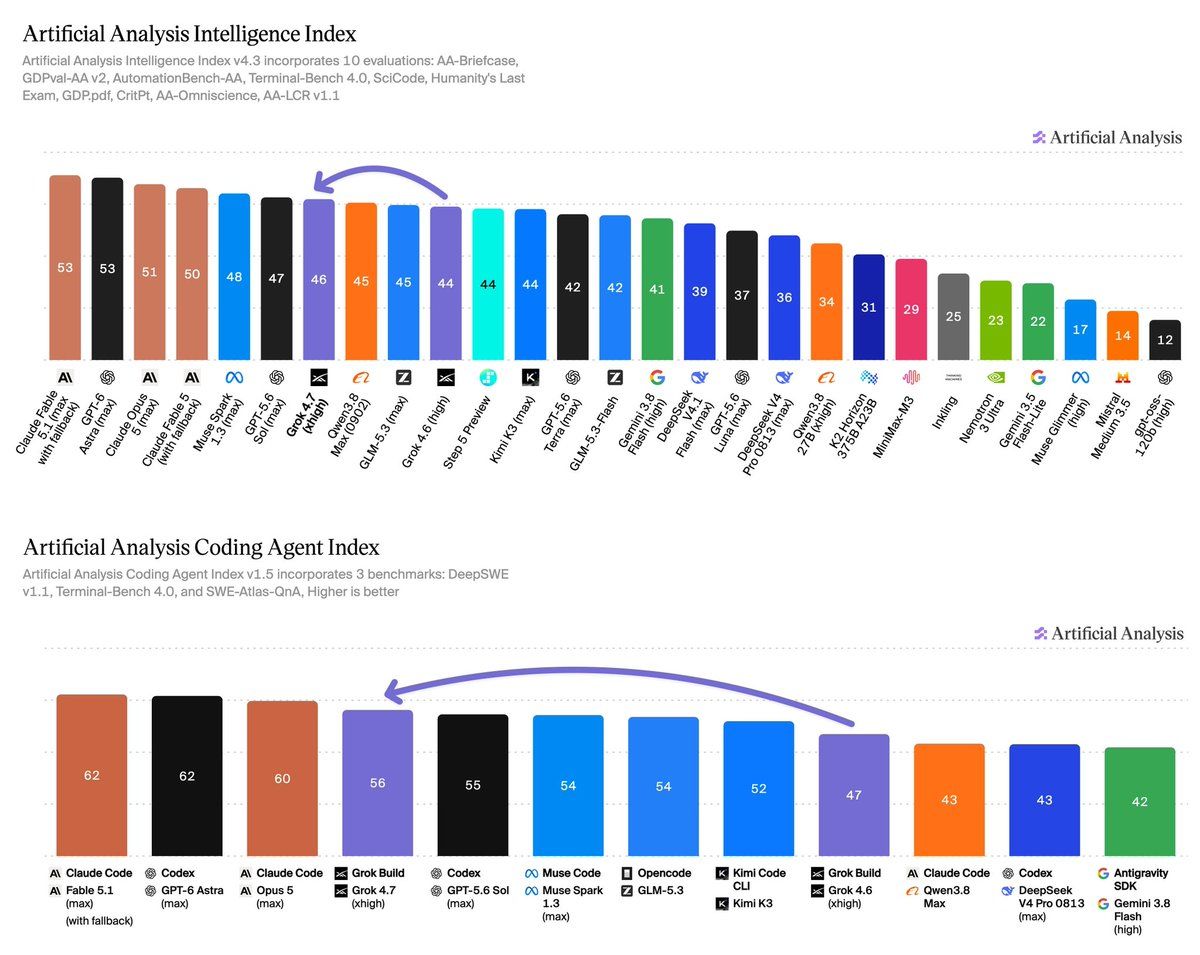
Artificial Analysis, an independent benchmarking firm, scored the model at 46 on its Intelligence Index, 2 points above Grok 4.6. Claude Fable 5.1, GPT-6 Astra, and Claude Opus 5 all rank higher.

Grok 4.7 Pushes SpaceXAI Into the Top Four AI Labs

Elon Musk said before launch that the model would run on a 2.1-trillion-parameter base and exceed all current models. He added that the model training included SpaceX company data. 

Follow us on X to get the latest news as it happens

Advertisement

But how does Grok 4.7 actually perform? On AA-Briefcase, an Artificial Analysis benchmark for realistic professional work tasks, Grok 4.7 scored 1657 Elo. That marks an 111-point jump over Grok 4.6 and brings the model’s level close to Claude Opus 5.

On GDPval-AA, the model reached 1695 Elo, which puts it 90 points ahead of its predecessor. Coding results moved in the same direction.

Paired with Grok Build, its own coding agent, Grok 4.7 scored 56 on the Coding Agent Index. That is nine points above Grok 4.6. 

Advertisement

The model passed GPT-5.6 Sol and now trails only Anthropic’s Claude Fable 5.1, GPT-6 Astra, and Opus 5. 

“Grok 4.7 scores 46 on the Artificial Analysis Intelligence Index to bring SpaceXAI into the top 4 AI labs. Coding Agent Index performance has also improved, overtaking GPT-5.6 Sol,” the post read.

How Grok 4.7 Performs.
How Grok 4.7 Performs. Source: X/Artificial Analysis

Elsewhere, the model barely moved. It gained 4.5 percentage points on Terminal-Bench 4.0 and 3 points on GDP.pdf. Scores slipped on the AA-LCR and AutomationBench-AA tests. Grok 4.5 topped AutomationBench in July, which backed Musk’s claim that it matched Claude Opus.

The Gains Come With a Token Bill

The rate card did not change. Grok 4.7 still costs $2 per million input tokens and $6 per million output tokens. Cache hits stay discounted to $0.50, and the 500,000-token context window carries over from Grok 4.6.

The model does considerably more work for each answer, however. Artificial Analysis measured roughly 81,000 output tokens per Index task, against 36,000 for Grok 4.6 and 27,000 for GPT-6 Astra. Therefore, steady per-token pricing still produces a higher bill per task.

That appetite for tokens lands on a division that has already reported a $1.26 billion loss. Meanwhile, Musk said on September 14 that Grok 4.8 would finish training within a week.

Advertisement

He also expects Grok 5 to be the model that reaches artificial general intelligence. The next release will test whether SpaceXAI can climb the rankings without burning additional compute to do so.

Subscribe to our YouTube channel to watch leaders and journalists provide expert insights

https://youtu.be/IcgIaeIE7LI

The post Elon Musk Said Grok 4.7 Would Exceed Every Model. Did It Deliver? appeared first on BeInCrypto.

Advertisement


Source link

Continue Reading

Crypto World

How Tim Cook Set Up Apple Stock's Next Growth Era, Explains Jim Cramer

Published

on

How Tim Cook Set Up Apple Stock's Next Growth Era, Explains Jim Cramer

Jim Cramer used a decade of interviews with Tim Cook to argue that Apple’s growth story is nowhere near finished, even as Cook hands the CEO title to John Ternus.

On a CNBC Mad Money “master class” segment built from calls and sit-downs going back to 2015, Cramer’s throughline is his old mantra to own Apple rather than trade it, and he says the mechanisms Cook built to support that call are still compounding long after his exit.

The Buyback Engine

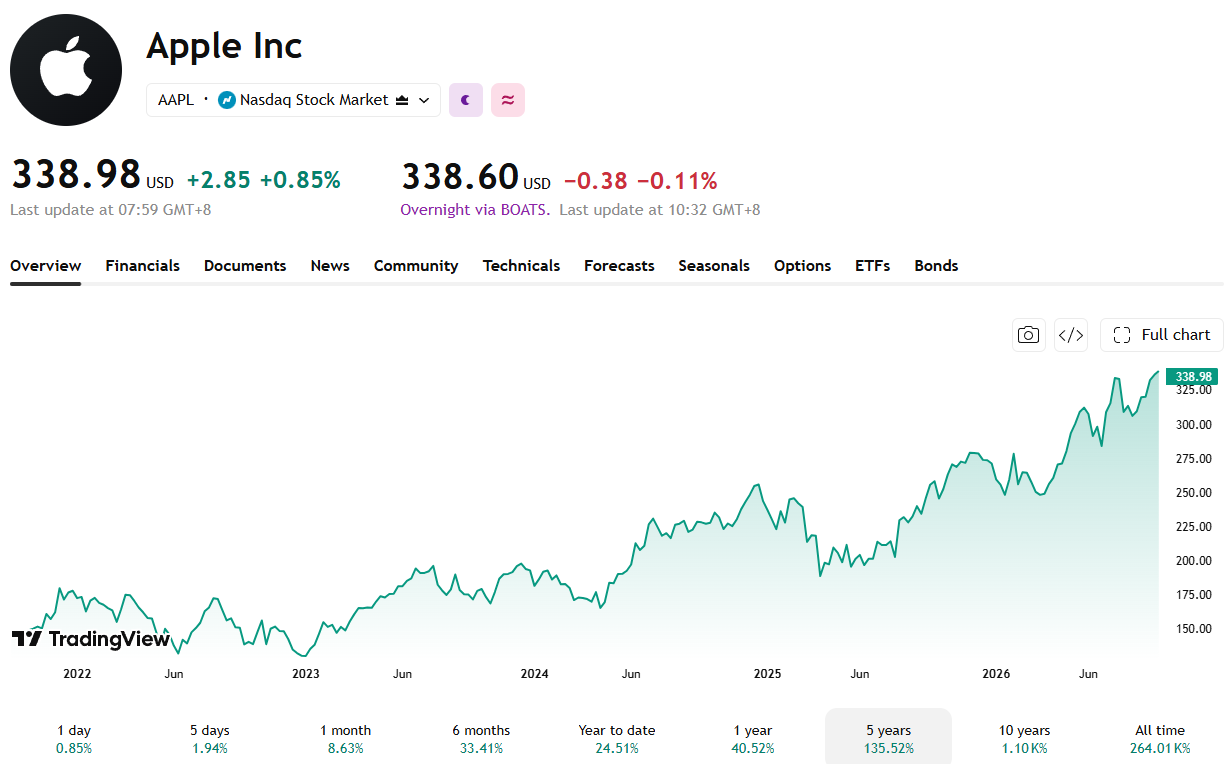
Cramer’s strongest data point is arithmetic, not sentiment. Since Cook took over in 2011, Apple’s share count has shrunk by more than 40% through buybacks, while the dividend has risen every single year.

Combined with what Cramer calls the industry’s best balance sheet, that shrinking share count did much of the heavy lifting behind Apple’s roughly 2,300% stock rally, a run that also helped push Apple past Nvidia as the world’s most valuable company earlier this year.

Advertisement
AAPL was a consistent performer under Tim Cook. Image Source: Trading View

It is also the mechanism Cramer expects to keep working long after Cook has left the building.

The AI “Laggard” Defense

Cramer flips the AI criticism on its head. While hyperscalers burn cash building out data centers, Apple keeps capital spending low. Apple also reportedly still collects roughly $20 billion a year from Google alone to remain the iPhone’s default search engine, a deal Cramer argues quietly outweighs whatever Apple pays for its AI tie-in with Google’s chatbot, Gemini.

In his telling, a company that isn’t racing to wreck its own balance sheet on AI infrastructure isn’t lagging so much as picking its spots.

“The man doesn’t get the credit he deserves.”
Cramer

That’s the case Cramer is making for Cook’s legacy as Ternus takes the wheel: a capital-return machine and a services business built to outlast any one product cycle.

Whether that’s enough on its own, or whether Ternus needs to add a genuine AI push of his own, is the open question Cramer’s tribute conveniently leaves for someone else to answer.

Advertisement

The post How Tim Cook Set Up Apple Stock's Next Growth Era, Explains Jim Cramer appeared first on BeInCrypto.


Source link

Continue Reading

Crypto World

Manhattan US Attorney probing Binance over Iran sanctions: Bloomberg

Published

on

Manhattan US Attorney leading probe into Binance’s Iran compliance: Bloomberg

Manhattan US Attorney leading probe into Binance’s Iran compliance: Bloomberg

The investigation is examining whether Binance knowingly allowed trading that violated US sanctions on Iran, months after reports first revealed a Justice Department probe.


Source link

Continue Reading

Crypto World

Jamie Dimon says hyperscaler AI spending could hit $1 trillion next year

Published

on

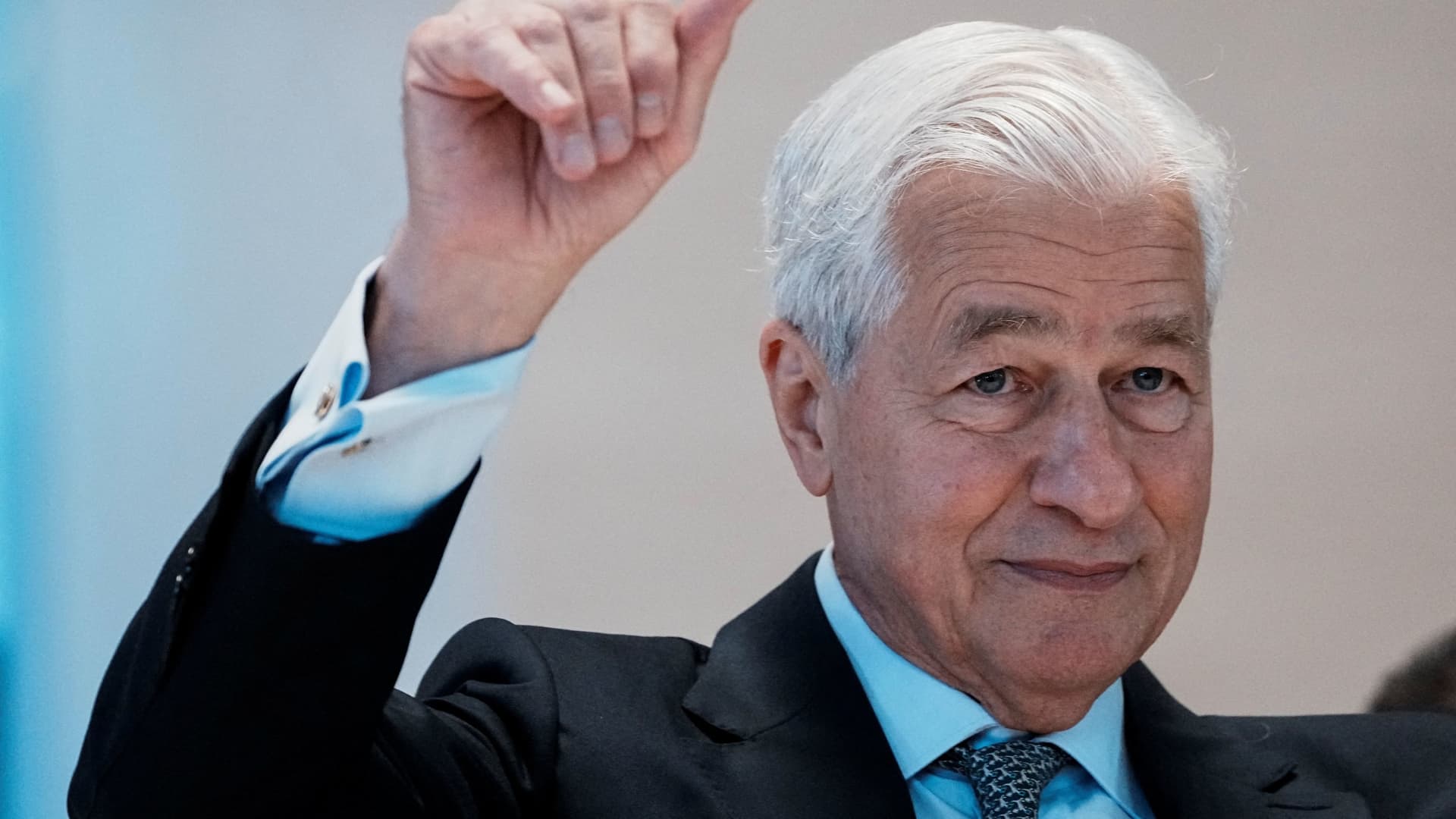
Jamie Dimon says hyperscaler AI spending could hit $1 trillion next year

Jamie Dimon, Chairman and Chief Executive Officer of JPMorgan Chase & Co., attends the ribbon-cutting ceremony opening the firm’s new headquarters at 270 Park Avenue, in New York City, U.S., October 21, 2025.

Eduardo Munoz | Reuters

The artificial intelligence spending boom is showing little sign of slowing, with investment across the hyperscaler ecosystem potentially reaching $1 trillion next year, according to JPMorgan Chase CEO Jamie Dimon

Spending across the hyperscaler ecosystem has more than doubled from about $300 billion last year to around $700 billion this year, a surge Dimon said is boosting economic growth while potentially adding to inflation. 

Advertisement

“That’s like 1% increase to GDP each year,” Dimon told CNBC-TV18 on the sidelines of the 11th annual JPMorgan India Conference, adding that the spending “may add a little bit to inflation” as companies hire workers, build factories and power plants, and buy equipment and materials.

Over the longer term, however, Dimon said AI could have a deflationary effect, calling it an “unbelievable technology” whose rapid expansion “looks like it’s going to continue.” 

Still, he said it was too early to pick winners from the AI boom, pointing to the internet bubble, where many familiar names failed while previously little-known companies emerged as major winners, as an example of how the AI industry could evolve.

Asked about returns on AI spending, Dimon said investments would not always come down to a straightforward calculation of returns, saying that “sometimes it’s just table stakes.”

Advertisement

He pointed to improvements in customer experience as one benefit that can be difficult to quantify, and said companies could become more efficient in how they deploy AI over time.

Beyond AI, Dimon said heavy demand for capital from infrastructure, remilitarization and ongoing government deficits may be pushing interest rates higher. He also said there “may be a market correction” but that he was not sure AI would be the cause.

Inflation outlook

He also remained cautious on inflation, saying he hoped price pressure would ease but “there’s a chance it won’t, and it may even go up a little bit,” adding that the Federal Reserve should stick to its 2% inflation target.

Ahead of the summit between U.S. President Donald Trump and Chinese President Xi Jinping, Dimon said the two sides appeared to be making progress and should “fully engage” on issues including trade, AI and security. 

Advertisement

He said he hoped the two countries would use the talks to address their differences, calling the discussions “important for the whole free world.” 

Turning to India-U.S. relations, Dimon said the two countries should return to the negotiating table and complete a trade agreement.

“It obviously hasn’t moved forward,” he said. “I hope it’s not put in the back burner.”

Dimon said he understood concerns in the U.S. about purchases of Russian oil, but said Washington should take into account India’s refining needs and avoid “punishing India and the world oil markets.”

Advertisement

More broadly, Dimon said India’s economy could grow to three times its current size over the next decade, adding that JPMorgan would continue expanding in the country: “We’re going to keep on building.” 


Source link

Continue Reading

Crypto World

OCC Conditionally Approves Bastion Trust Bank Charter

Published

on

Illustration of a stamped federal approval seal on a ledger document connected by lines to vault and payment network nodes

Join Our Telegram channel to stay up to date on breaking news coverage

The Office of the Comptroller of the Currency granted Bastion conditional approval on September 18 to operate as Bastion Platforms National Trust Company, a non-depository national trust bank focused on stablecoin services.

The approval, set out in Corporate Decision 1391, lets the stablecoin infrastructure firm convert its New York state trust charter into a federal one under OCC Charter #27198. The charter is not final: Bastion must still satisfy the OCC’s pre-opening requirements before the company can begin operating under it.

Under the charter, Bastion will offer stablecoin custody and wallets, payment infrastructure, payment clearing, minting, redemption and white-label stablecoin issuance from a single federally regulated entity. Those services also cover fiat conversions involving compliant digital assets such as USDC. As a non-depository institution, the company cannot accept deposits or make loans and carries no FDIC insurance.

Federal supervision sits on top of the state licenses Bastion already holds. The company acquired its New York limited-purpose trust charter in February 2025 through the purchase of Dibbs Trust Company.

Advertisement

Bastion CEO Nassim Eddequiouaq said in the company’s announcement that the charter is aimed at major financial institutions planning stablecoin products. “Stablecoins have moved from emerging technology into core financial infrastructure, and that requires a different standard of trust, governance and regulatory rigor,” Eddequiouaq said.

The OCC authorized conditional trust charters for two other firms, Catena and Agora, the same day.

Join Our Telegram channel to stay up to date on breaking news coverage

Advertisement


Source link

Continue Reading

Trending

Copyright © 2025