
Crypto World
XRP News: Ripple Takes Equity Stakes in Zilo and Licuido to Fix Idle Tokenized Assets


In the latest XRP News, Ripple announced strategic equity investments in two UK-based firms, Zilo and Licuido, on August 3, 2026, converting existing commercial partnerships into ownership positions to complete a full-lifecycle institutional capital markets stack on the XRP Ledger.
The move targets the gap that has stalled most institutional tokenization pilots: minting a token is straightforward; financing, pledging, and settling it with the same reliability as a conventional holding is not.

Discover: Everyone’s Got a Take. Get Free $25 to Actually Trade Yours
The Problem: Tokenized Assets That Sit Idle
Institutional RWA tokenization has exhibited a consistent structural failure: tokenized fund shares are issued and then parked.
The ownership record, issuance rail, and settlement mechanism have historically been handled by separate, often incompatible legacy systems that were never designed to interface with on-chain collateral markets.
Ripple’s framing of the deal is explicit on this point. The company described the investments as addressing constraints in which collateral sits idle, settlement takes longer than necessary, and institutions have no reliable path to unlock liquidity from tokenized positions.
The Zilo and Licuido stakes are designed to close those three gaps simultaneously on XRPL.
Discover: Your Market Calls Are Worth Something. Start With Free $25 on Kalshi
XRP News: What Zilo and Licuido Each Provide
Zilo handles transfer agency and fund administration – the regulated record of who owns what, extended to cover tokenized share classes as funds move on-chain. Before any lender will extend credit against a tokenized fund position, they need a legally reliable ownership register; Zilo supplies that layer. Its client roster, which includes Citi, Fidelity International, and State Street, provides Ripple with a direct bridge into incumbent custody and TA infrastructure.
Licuido, an FCA-regulated platform, manages issuance, distribution, and execution, allowing traditional financial assets, including fund shares, to move as digital collateral through on-chain atomic settlement.
— Arthur (@XrpArthur) August 4, 2026
 Ripple invested in two regulated capital markets firms. Today.
ZILO — digital transfer agency for asset managers. On XRPL.
Licuido — FCA-regulated issuance and collateral platform. On XRPL.
Partners already building on this infrastructure :
Aviva Investors. Franklin… https://t.co/8vOjuu87UP
Trades settle on the XRPL in three to five seconds. Ripple’s dollar-pegged stablecoin, RLUSD, functions as the regulated cash leg for delivery-versus-payment transactions, so asset transfer and payment settle simultaneously rather than sequentially.
Together, the three-part stack – Zilo for regulated record-keeping, Licuido for issuance and collateral mobility, RLUSD for the cash leg – gives institutions a single operating model for tokenized fund assets from issuance through financing. Neither company’s financial terms were disclosed.

Nigel Khakoo, Ripple’s SVP of Trading and Markets, characterized the infrastructure role of both firms in the official press release: “ZILO and Licuido provide core capabilities that are essential to further scaling this shift: regulated digital transfer agency infrastructure and liquidity for issuance and collateral mobility.”
Building on Live Deployments, Not Pilots
The stakes are not speculative bets on unproven vendors. Ripple confirmed that both investments build on pre-existing partnerships, and Licuido was already in production as the tokenization infrastructure for the Aviva Investors USD Liquidity Fund, the first tokenized fund structure approved by the Central Bank of Ireland on a public blockchain, which went live on XRPL on July 29, 2026.
BNY holds the underlying assets; Komainu provides digital asset custody.
The institutional pipeline extends further. Ripple’s parallel push into institutional infrastructure also encompasses a September 2025 memorandum of understanding with Franklin Templeton and DBS to list Franklin Templeton’s sgBENJI tokenized money market fund on the DBS Digital Exchange alongside RLUSD, with a stated path toward using sgBENJI as repo collateral.
The collateral-mobility thesis Ripple is industrializing through Zilo, and Licuido is the same structure that the partnership was designed to test.
On the network side, Ripple reported that XRPL has processed more than four billion transactions since 2012 and is maintained by 120 independent validators. A major protocol upgrade, xrpld 3.3.0, targeting improvements in XRPL infrastructure and institutional finance functionality, was expected to be released within days of the announcement.
Ripple is also one of 54 firms on a UK government task force formed to build live tokenized wholesale financial market use cases over the next 12 months, alongside Circle, Coinbase, BlackRock, Goldman Sachs, J.P. Morgan, and Morgan Stanley. The first target is the tokenized repo. Ripple’s expanding regulatory positioning in Europe provides additional runway for the institutional tokenization push built on XRPL.
The practical test for the Zilo and Licuido stack is whether tokenized fund shares generate genuine secondary liquidity and serve as working collateral in live credit markets over the next 12 to 24 months – or whether they remain a more sophisticated form of the same idle token problem Ripple is explicitly trying to solve.
Discover: Get Paid to Be Right, $25 to Start on Kalshi
Don’t Miss Out on Our $1,000 USDT Airdrop on ByBit
The post XRP News: Ripple Takes Equity Stakes in Zilo and Licuido to Fix Idle Tokenized Assets appeared first on Cryptonews.

Crypto World
Strategy Hasn’t Bought Bitcoin in 6 Weeks and Just Sold at a Loss Again: What Does Saylor’s New Framework Actually Mean?

In the latest Bitcoin news, Strategy (MSTR) sold 1,638 BTC for approximately $105 million last week, disclosed via an SEC filing dated August 3, 2026, marking the firm’s third discrete Bitcoin disposal of 2026 and its sixth consecutive week without a purchase.
The proceeds, combined with $290.6 million raised through common stock issuance, funded $81.2 million in STRC preferred stock repurchases and added $250 million to Strategy’s USD reserve, pushing that figure to $4 billion.
The average sale price for the latest tranche was roughly $64,000 per BTC, meaningfully below Strategy’s overall average acquisition cost of $75,419.
With 842,138 BTC on the books at a total cost of $63.51 billion, the company is sitting on a paper loss of approximately $10.9 billion at current prices, according to Arkham Research.
MSTR slipped 1.9% in pre-market trading following the disclosure, with Bitcoin near $63,500.

Discover: Get Paid to Be Right, $25 to Start on Kalshi
Bitcoin News: Why Strategy Keeps Selling Below Cost
The mechanics here matter. Strategy finances its Bitcoin treasury through a stack of debt instruments and preferred-stock obligations, STRC, STRK, STRD, STRF, and STRE, all carrying fixed or variable dividends that must be settled in U.S. dollars.
Quarterly preferred dividend costs have surged from $49.1 million a year ago to $400.7 million, according to supplementary research, leaving the firm with no viable alternative to regular cash generation.
To codify this shift, Michael Saylor’s firm introduced the Digital Credit Capital Framework in late June 2026, which explicitly authorizes BTC sales to fund dividends, debt service, and repurchases.
This formalizes what was effectively already happening: Bitcoin is no longer treated as an untouchable reserve but as an active liquidity source. The “never sell” chapter has closed.
The sale proceeds were split between two uses: a portion went directly to STRC dividend payments, and the remainder funded the buyback of 912,143 STRC shares for $81.2 million in aggregate, according to the primary source.
Repurchasing preferred shares below their $100 stated value is arithmetically accretive. Strategy retires $100 of future obligations for less than $100 in cash. The question is whether the pace of buybacks is sufficient to push STRC meaningfully closer to par.

STRC closed July at $89.46, and Strategy confirmed it will hold the annual dividend rate at 12% rather than raise it further, stating it will not recommend an increase until shares trade consistently near $100.
At the current discount, that 12% stated yield translates to an effective yield of roughly 13.4% for buyers in the secondary market – a spread that signals the market still prices in meaningful execution risk on this crypto treasury model.
Strategy’s Q2 results further illustrated the financial pressure, with an $8.22 billion net loss driven largely by unrealized Bitcoin impairments.
Discover: Your Market Calls Are Worth Something. Start With Free $25 on Kalshi
Six Weeks Without a BTC Purchase: What That Signals
The accumulation pause is now the most structurally significant data point that Strategy produces each week. Since early 2020, the company’s identity and a meaningful portion of MSTR’s equity premium over net asset value rested on relentless BTC acquisition.
Six weeks of no purchases, alongside three sales totaling roughly 5,258 BTC and $323 million in proceeds, represents a clean break from that pattern.
All three 2026 disposals have been executed below the $75,419 average cost basis, meaning Strategy is realizing losses on each tranche to service obligations that compound regardless of Bitcoin’s price.
The $4 billion USD reserve, which the company says covers approximately 2.3 years of preferred dividends and interest, provides a buffer, but it also represents capital that is not working in BTC. The opportunity cost calculus cuts both ways: if Bitcoin recovers above $75,000, Strategy’s pause looks costly; if BTC extends its decline, the cash cushion looks prudent.
Strategy remains one of the largest corporate holders of Bitcoin globally despite the reductions, with 842,138 BTC still on its balance sheet. The disposals to date are a small fraction of total holdings, and the firm has not signaled any intent to substantially reduce its BTC position.
What has changed is the framing: Bitcoin is now explicitly a funding source for a complex institutional treasury structure, not simply a one-directional accumulation play.
Discover: Get Paid to Be Right, $25 to Start on Kalshi
Don’t Miss Out on Our $1,000 USDT Airdrop on ByBit
The post Strategy Hasn’t Bought Bitcoin in 6 Weeks and Just Sold at a Loss Again: What Does Saylor’s New Framework Actually Mean? appeared first on Cryptonews.
Crypto World
Ripple Price Analysis: XRP Struggles Against USDT but BTC Pair Paints a Much Bleaker Picture
XRP is still trading within a long-term bearish structure across both its BTC and USDT pairs. Although sellers have slowed their momentum in recent weeks, the price has yet to reclaim any meaningful resistance. This has left the broader trend tilted to the downside. Meanwhile, the current consolidation appears to be taking place at a critical support area that could determine the next major move.
Ripple Price Analysis: The USDT Pair
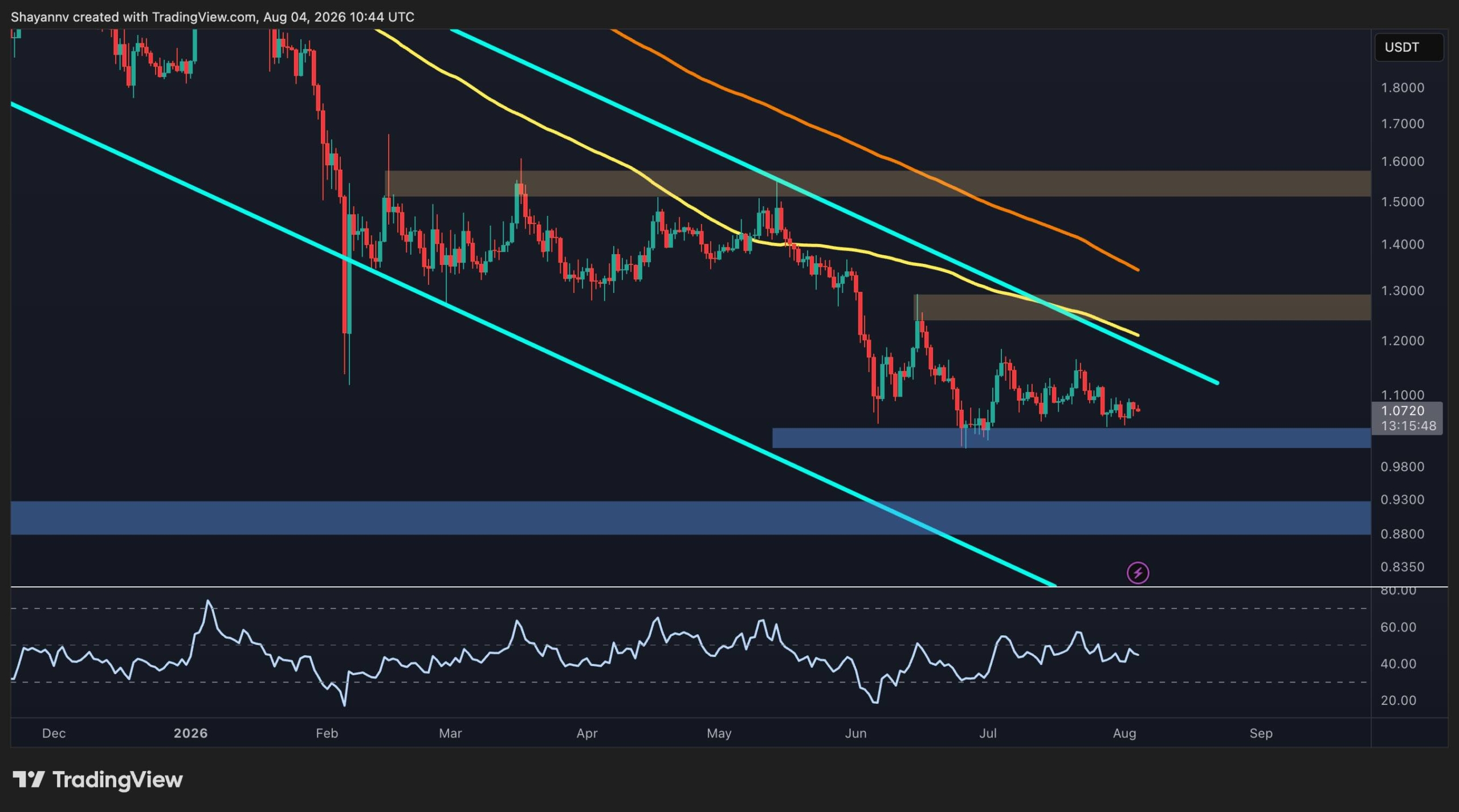
Against USDT, XRP remains confined within a descending channel while trading below both the 100-day and 200-day moving averages, keeping the broader trend bearish. The 100-day MA around $1.20 serves as the first dynamic resistance, while the 200-day MA near $1.35 strengthens the overhead resistance.
The price is holding just above the key $1 support zone, which has repeatedly attracted buyers over the past several weeks. However, the failure to reclaim the channel’s upper boundary or establish higher highs suggests bullish momentum remains limited. A breakdown below $1, on the other hand, could open the door for a decline toward the next major support around $0.90, or even lower.
On the upside, the first resistance lies between $1.25 and $1.30, where horizontal resistance aligns closely with the descending moving averages. A valid breakout above this area would be the first indication of improving momentum, while a broader trend reversal would likely require a break above the $1.50 to $1.55 supply zone.
The BTC Pair
The XRP/BTC pair also remains in a clear downtrend, with the price trading inside a descending channel and again, below both the 100-day and 200-day moving averages. The recent loss of the 1,700 sats support level has shifted market structure further in favor of the sellers, with that area now acting as immediate resistance.
Since breaking below 1,700 sats, XRP has been consolidating without any meaningful bullish momentum, suggesting sellers remain in control. As long as this level caps price action, the pair could extend its decline toward the next major support around 1.500 sats, which coincides with the lower boundary of the large channel.
A recovery above 1,700 sats, however, would be the first sign of improving sentiment, exposing the next resistance levels at 1,900 sats and 2,000 sats. However, until XRP reclaims these levels and breaks above the key moving averages and the descending channel, any rebound is likely to remain corrective rather than signaling a broader trend reversal.

The post Ripple Price Analysis: XRP Struggles Against USDT but BTC Pair Paints a Much Bleaker Picture appeared first on CryptoPotato.
Crypto World
One Company Owns 4.8% of All Ethereum in Circulation: Ethereum Price Prediction Hasn’t Reacted Yet

In the latest Ethereum price prediction, ETH price is trading at $1,852.60, down 0.33% in the last 24 hours, even as one of its largest institutional holders keeps stacking. The gap between that quiet price action and the scale of what’s accumulating beneath it is worth watching closely.
Something is building, and it hasn’t been printed yet.
BitMine Immersion Technologies (BMNR) disclosed last week that it repurchased 4.5 million shares of its common stock, bringing total buybacks since July 1 to 16.1 million shares under a $4 billion authorized repurchase plan.
Simultaneously, the firm acquired 10,399 ETH, lifting total holdings to 5.797 million ETH, equal to 4.8% of ETH’s entire circulating supply.
1/
BitMine provided its latest holdings update for August 3, 2026
$11.3 billion in total crypto + "moonshots":
– 55,797,813 ETH at $1,880 per ETH per ETH (per @coinbase)
– 209 Bitcoin (BTC)
– $180 million stake in Beast Industries @MrBeast
– $61 million stake in Eightco…— Bitmine (NYSE-BMNR) $ETH (@BitMNR) August 3, 2026

BitMine Chairman Thomas Lee noted that ETH outperformed the Nasdaq 100 by 2,500 basis points in July, calling it “the largest outperformance since July 2025.”
The firm’s staked position of 4.917 million ETH is now generating projected annualized staking revenues of $247 million at a 7-day yield of 2.67%. That is a serious institutional position, not a speculative bet. Price action, for now, has not caught up.
With ETH pressing against near-term resistance and macro sentiment still cautious, the technical picture demands a closer look before drawing conclusions.

Discover: Get Paid to Be Right, $25 to Start on Kalshi
Can Ethereum Price Break $2,000 Before the Next Major Catalyst?
Ethereum is trading at $1,852.60, above the key support cluster at $1,747 to $1,805 but still well short of the psychological $2,000 level and the resistance cluster at $1,975 to $2,000.
The 24-hour range of $1,849 to $1,874 reflects tight compression, the kind of coil that resolves sharply in either direction. Volatility sits at roughly 2.79%, consistent with a market waiting for a trigger rather than trending.
The technical mix leans cautious. Coinlore’s short-term indicators show 6 buy versus 7 sell signals, while the Fear and Greed Index sits at 23, extreme fear, a reading that has historically preceded either a flush or a sharp relief rally. The setup is binary. Support to monitor sits at $1,716 and $1,688. First real resistance above the current ETH price is $1,923, then $2,133.

ETH holding above $1,850 and clearing $1,923 on volume targets the CoinCodex projection of $2,722 on the medium-term horizon, a 52% move from current levels. Consolidation continues between $1,750 and $1,975 while the market digests BitMine’s accumulation signals, with no macro catalyst to accelerate; this is the base case. A close below $1,688 reopens the path toward levels that erased the prior recovery leg and test broader conviction.
VanEck’s 2030 base-case target of $11,848 per ETH, built on network revenue fundamentals, remains directionally intact. That is a multi-year thesis, not a week’s trade.
The structural case for ETH value accrual through fee and blob-era dynamics is well documented. The near-term price still needs a catalyst to break out of the range.
Discover: Your Market Calls Are Worth Something. Start With Free $25 on Kalshi
LiquidChain Targets Early-Mover Upside as Ethereum Tests Key Levels
ETH trading sideways at $1,861, while institutions quietly accumulate 4.8% of the supply, is precisely the kind of setup that creates late-entry regret.
For traders who believe in the broader crypto infrastructure thesis but want earlier-stage exposure, the math at the current ETH price is structurally limited; the heavy lifting was done at lower levels. That’s where early-stage infrastructure enters the picture.
LiquidChain (LIQUID) is an L3 infrastructure presale built around a single thesis: fragmented liquidity across Bitcoin, Ethereum, and Solana is the core inefficiency in crypto today.
LiquidChain’s Unified Liquidity Layer fuses BTC, ETH, and SOL ecosystems into a single execution environment with single-step execution and verifiable settlement. Developers deploy once and access all three networks, no bridge hops, no routing overhead.
The presale has raised $929,335.42 with tokens priced at $0.01486. Those are exact figures, not approximations. As with any presale, liquidity at launch is not guaranteed, and early-stage projects carry execution risk. That caveat stands.
Research LiquidChain and assess the risk profile independently before committing capital.
Discover: Get Paid to Be Right, $25 to Start on Kalshi
The post One Company Owns 4.8% of All Ethereum in Circulation: Ethereum Price Prediction Hasn’t Reacted Yet appeared first on Cryptonews.
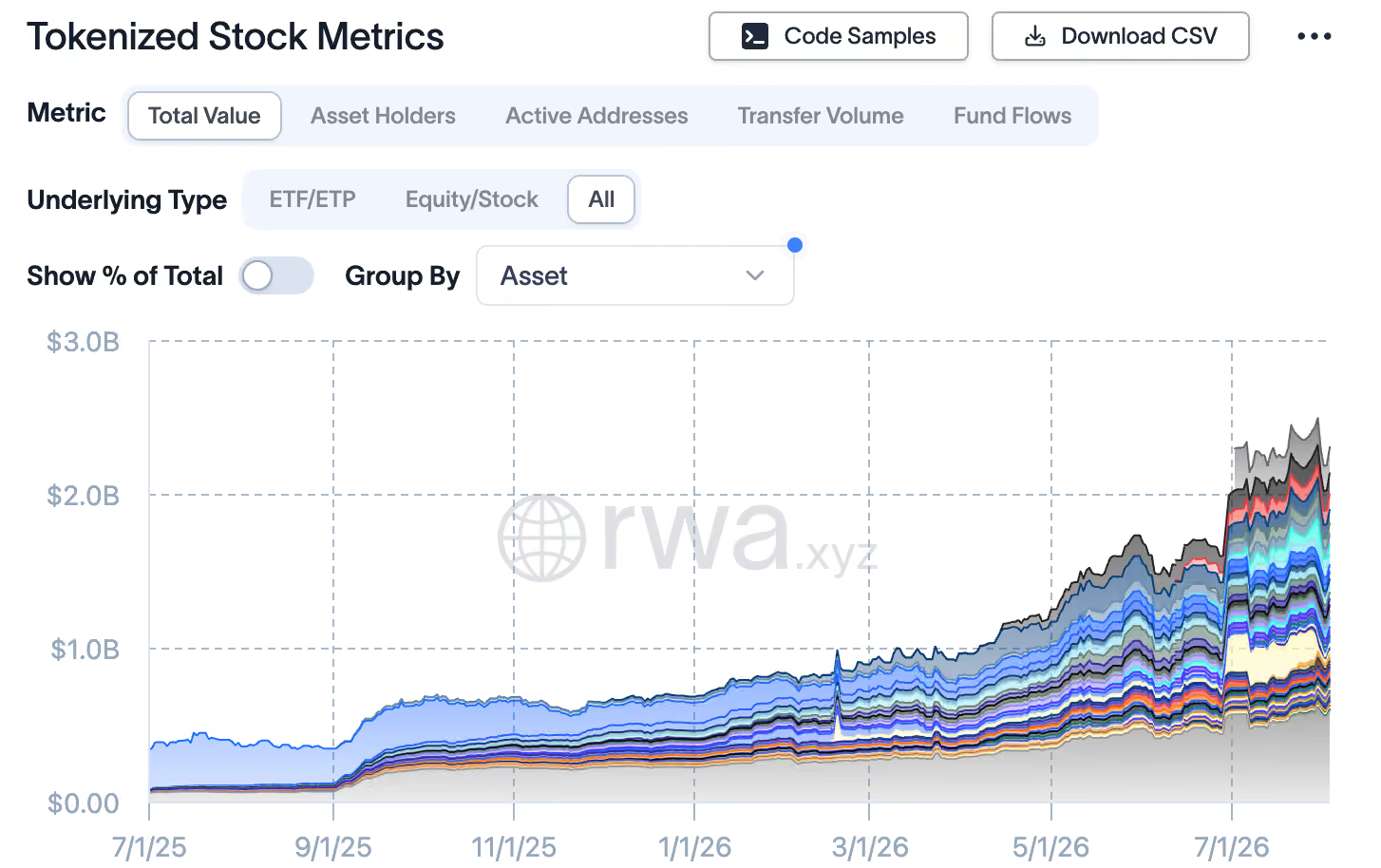
Tokenized equities firm Dinari is bringing its blockchain-based U.S. stock offering to eligible domestic investors, marking an expansion of the custodial tokenization model into the U.S. market.
The company said Tuesday that investors can buy and sell 724 tokenized U.S. stocks, including every company in the S&P 500, using Circle’s USDC stablecoin through self-custody wallets. The stock tokens are available across Ethereum, Arbitrum, Base and Avalanche, with support for Solana and Sei coming “soon,” the firm said.
The offering runs through Dinari’s regulated broker-dealer and transfer agent infrastructure and launches with partners including Circle (CRCL), Stripe-owned Privy, Para and Monaco.
The move comes as tokenized equities emerge as the next battleground in real-world assets. After tokenized U.S. Treasury funds became the first major institutional use case, firms are increasingly turning to public equities, betting blockchain technology can modernize trading, settlement and shareholder recordkeeping. Citi projects tokenized securities could grow into a $5.5 trillion market by 2030.

Competing tokenization models
The space is also splitting into competing models. Robinhood (HOOD) and Kraken parent Payward have expanded tokenized stock offerings outside the U.S. using offshore structures that mirror publicly traded shares.


Crypto infrastructure firm BitGo (BTGO) is set to replace LayerZero with Chainlink as the exclusive cross-chain provider for wrapped bitcoin (WBTC). The move pushes the value covered by announced LayerZero-to-Chainlink migrations to nearly $15 billion.
The move forms part of a migration wave that started following the $292 million exploit of Kelp DAO’s LayerZero-powered bridge earlier this year, which increased scrutiny of LayerZero bridge configurations. Various other projects, including Mantle, Kelp, Lombard, Solv Protocol, Virtuals, Re and Kraken have since announced moves to Chainlink’s CCIP.
WBTC is a tokenized representation of bitcoin designed to track its value. Unlike native bitcoin, it can be used in decentralized finance applications on other blockchains for trading, lending and collateral.
WBTC currently has a market capitalization of about $7.4 billion, according to CoinMarketCap. Adding it to the $7.24 billion covered by earlier migration announcements takes the total funds moving their cross-chain infrastructure to CCIP to roughly $14.6 billion.
BitGo said it will standardize WBTC deployments using Chainlink’s Cross-Chain Token standard and use CCIP by default for future assets it issues.

Texas is moving to scrutinize and potentially slow the expansion of data centers connected to the state’s power grid, a policy shift that could reshape near-term opportunities for some Bitcoin mining operators—but not necessarily disrupt miners with already-approved power arrangements.
On Monday, Governor Greg Abbott directed the Public Utility Commission of Texas and the Electric Reliability Council of Texas (ERCOT) to audit data center projects seeking grid interconnection, according to the governor’s office and reporting from The Texas Tribune. The audit’s duration was not specified, but the move comes as public concern grows about the pace of data center build-out in the state.
Key takeaways
- Abbott ordered an ERCOT and PUCT audit of data center interconnection efforts, with the audit timeline left open.
- Bernstein analysts said most Texas Bitcoin miners are likely insulated because many already hold contracts for approved electric capacity.
- The policy may cool “speculative” data center pipeline activity, potentially increasing the relative value of miners with longer-running infrastructure and community presence.
- Bernstein flagged CleanSpark, Cipher Digital, and Core Scientific as potentially more exposed if future grid-expansion approvals face additional political resistance.
Abbott’s data center audit targets grid connections
The directive issued by Governor Abbott calls for an audit of data centers looking to connect to Texas’s electric grid system. The Public Utility Commission of Texas and ERCOT are the entities tasked with carrying out the review, the governor’s office said. The Texas Tribune reported that the audit follows mounting public backlash related to the speed and scale of data center development across the state.
For the Bitcoin mining industry, the practical question is how much the audit and any resulting moratorium-like effect could delay new interconnection capacity, or complicate the path from pre-development plans to fully grid-connected power.
Why Bernstein expects limited disruption to existing mining contracts
In a note to clients Tuesday, Bernstein analysts said Bitcoin miners operating in Texas are not expected to be materially impacted by the audit and associated approval constraints because most are already covered by agreements for electric capacity that has been approved.
Bernstein’s research team, led by Gautam Chhugani, also argued that even if day-to-day mining operations are largely protected, the audit could still change the investment landscape. The analysts wrote that the process “throttles” the speculative data center pipeline while making “genuine sites with development history more valuable.”
That framing matters because mining economics are highly sensitive to power availability and timing. A pipeline slowdown can increase the scarcity value of projects that already have progress, permitting, and power-related approvals—especially when future grid connection steps become politicized.
Miners Bernstein says may face higher exposure to public opposition
While Bernstein described many existing operations as insulated, it highlighted particular miners it believes could be more affected if political resistance intensifies during ERCOT’s process for converting pipeline assets into grid-connected power capacity.
According to Bernstein, the local operations of Cipher Digital, Core Scientific, and CleanSpark could face the most exposure to future public opposition—particularly in scenarios where ERCOT’s approval path becomes slower or more difficult for projects attempting to turn pipeline capacity into grid-connected power.
Bernstein pointed to the idea that as new moratoriums or state directives reduce fresh capacity entering the approval pipeline, the value of already approved megawatts (MWs) can rise. In that context, the analysts cited IREN as a notable example, stating that its operations are fully ERCOT grid approved. Riot Platforms was also mentioned by Bernstein as having operations that are already ERCOT grid approved.
In other words, the distinction Bernstein emphasized is less about whether mining can continue today, and more about which companies have the most defensible position when approvals are contested and interconnection capacity becomes harder to secure for new or expanding projects.
Investor reaction and company updates as the policy shift lands
The market response to Bernstein’s framing appears to be playing out in trading. Shares of Cipher Digital were down more than 7% in Tuesday’s premarket trading, based on Yahoo Finance data.
Separately, Cipher Digital reported second-quarter 2026 business updates earlier Tuesday, according to the company’s investor communications. In that update, the miner reported a loss of $0.65 per diluted share, widening from a loss of $0.12 per diluted share in the prior year period. While those results are not directly tied to Texas’s grid audit in the coverage, they provide additional context for why investors may be scrutinizing mining operators’ paths to capacity and operational resilience.
What to watch next in Texas’s grid approval process
With Abbott’s directive now in motion, the key variable for investors and operators will be what the audit changes in ERCOT and PUCT decision-making—especially around timelines and the approvals required to move from pipeline plans to grid-connected power. As public pressure remains a live factor in Texas, companies dependent on future capacity expansion may be more exposed than those already secured under approved electric capacity contracts.
Joint currency interventions in the yen by Japan and the US could ultimately benefit Bitcoin and risk assets.
Key points:
- The first joint intervention in the yen between Japan and the US since the late 1990s could set a precedent for future moves.
- A liquidity crisis tied to the yen carry trade poses questions for Bitcoin (BTC) and risk assets as the two countries attempt a juggling act to stabilize the currency without impairing US Treasury markets.
- Japanese two-year bond yields rose above 1.57% on Monday.
Bessent signals new era of US yen involvement
Washington’s growing coordination with the Bank of Japan (BoJ) points to a potential boost in global dollar liquidity — even as it runs up against a yen carry trade unwind that could squeeze liquidity if it deepens further.
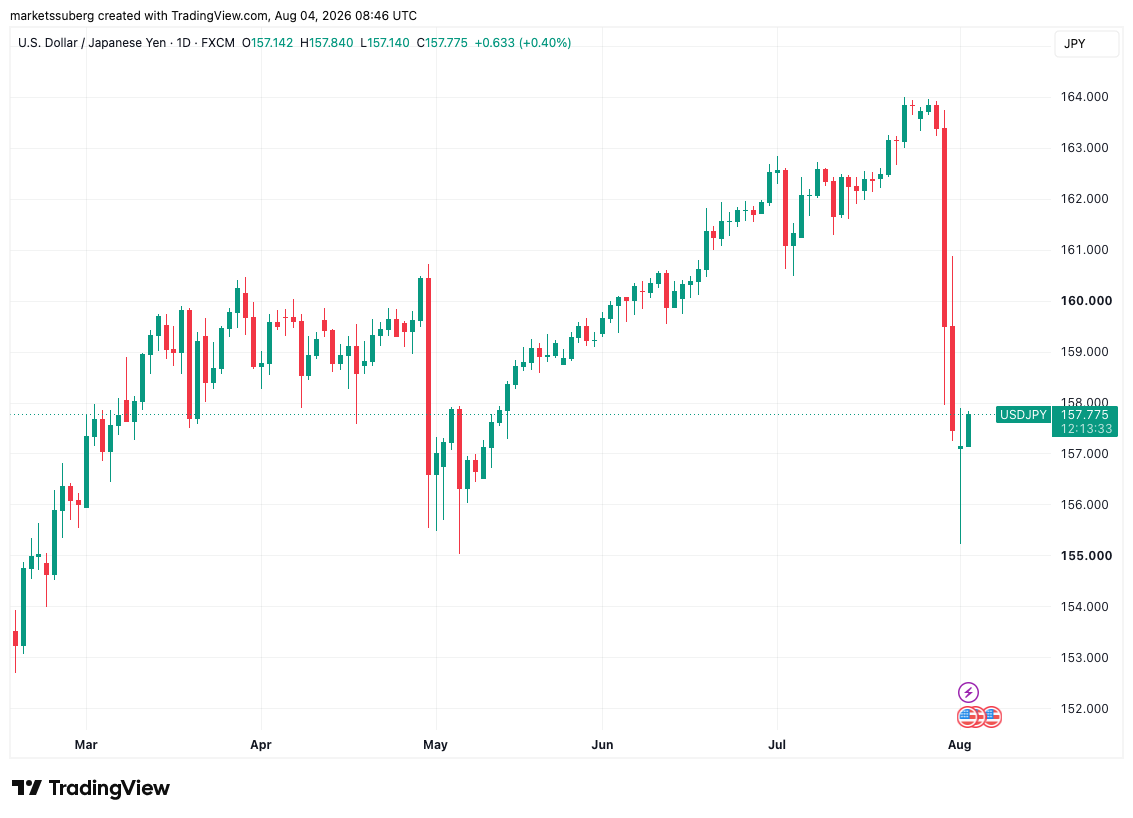
Last week, the US and Japan conducted a rare joint intervention to prop up the yen, which had slid to 40-year lows of 164 per dollar — the first of its kind since 1998. The New York Federal Reserve Bank sold euros, rather than dollars, on behalf of the US Treasury. The sales involved the Exchange Stabilization Fund, or ESF, a stockpile of foreign exchange reserves.
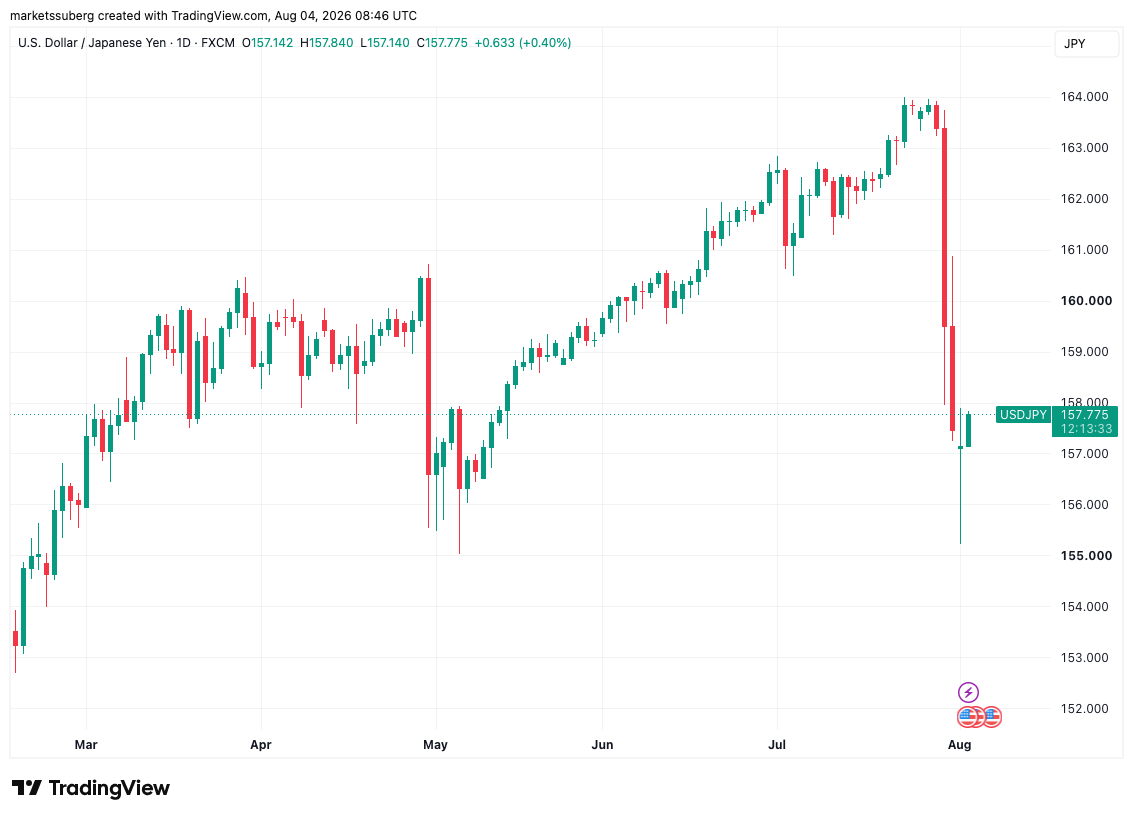
USD/JPY one-day chart for Tuesday. Source: Cointelegraph/TradingView
Subsequently, US Treasury Secretary Scott Bessent publicly placed emphasis on meeting with BoJ Governor Kazuo Ueda at the forthcoming G20 gathering of finance ministers in North Carolina at the end of August.
“Japan’s economy continues to perform well under Prime Minister Takaichi, Governor Ueda, and the Bank of Japan Board, which has demonstrated a strong commitment to monetary and financial stability. We continue to enjoy a strong relationship and close coordination,” he said.
The BoJ is one of the few central banks with access to the Federal Reserve’s Foreign and International Monetary Authorities (FIMA) repo facility, which allows access to dollar liquidity without selling US Treasuries. Japan, as the largest holder of Treasuries, could push up yields should sales accelerate, which would in turn increase borrowing costs for the US government, corporations and consumers alike.
In a subsequent post, Bessent drew attention to FIMA, calling for the facility to be expanded.
“The FIMA Repo Facility is an important backstop. We would encourage it to be upsized in the coming months. We strongly support Japan’s decisive market and monetary steps to correct the substantial undervaluation of the yen,” he continued.
FIMA use sees the Fed provide dollars to foreign institutions, which use Treasurys as collateral, with the result that the facility is positive for dollar liquidity, as it increases the supply of dollars outside the US.
Bitcoin may rise from the yen carry trade’s ashes
Reactions to the move were mixed, with economist Mohamed El-Erian noting that the US government was now bound into coordination with the BoJ going forward.
“Washington has now signed onto a strategy whose ultimate success doesn’t rest in its own hands. Instead, as discussed in previous posts, it hinges on a comprehensive policy alignment in Tokyo among the Bank of Japan, the Ministry of Finance, and the Prime Minister’s Office,” he said.
In Bitcoin circles, too, there were misgivings about the long-term implications of ongoing yen interventions — even if these inadvertently boosted the BTC bull case. Expectations have long anticipated the disintegration of the yen carry trade as the BoJ shifts away from past decades of low interest rates.
This outcome is being spurred on by other aspects of Japan’s own domestic fiscal policy. High government spending has helped government bond yields hit multi-decade highs, and this in turn makes yen funding mechanisms less attractive.
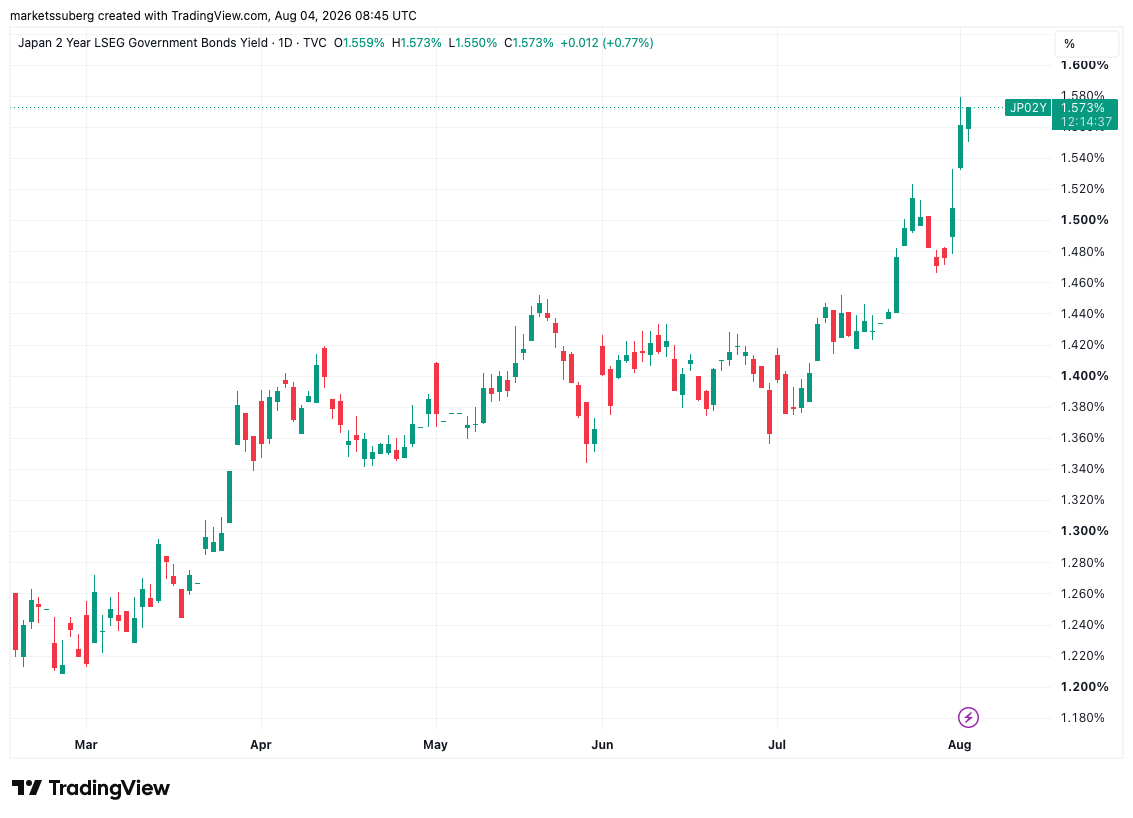
Japan two-year bonds, one-day chart. Source: Cointelegraph/TradingView
Japanese two-year bond yields rose above 1.57% on Monday, a signal that low-interest-rate conditions were coming to an end in advance of market expectations. Japanese investors repatriating capital to take advantage of this sea change in the domestic economy adds to the risk of the carry trade unwinding further.
Magazine: Here’s why the CLARITY Act’s ethics deal may be so hard to reach

Bitcoin may have already erased half of its market cap, but veteran crypto investor Michael Terpin says the asset still has further to fall before hitting rock bottom.
“We still have more pain to go,” Terpin tells Cointelegraph on the Trade Secrets show. Terpin believes that Bitcoin will ultimately fall “66%” from its October 2025 all-time high of $126,100. “I think that brings us down into the 40s, and I think that’s about where we’re gonna go,” Terpin says.
To be precise, a 66% drop from the ATH would see Bitcoin changing hands for $43,500, a price the asset has not seen since early February 2024. The 68-year-old investor, often referred to as the “Godfather of Crypto,” has seen Bitcoin plunge enough times to know what a true bottom feels like.
The ‘defining hallmarks’ of a Bitcoin bottom
Terpin doesn’t think markets have seen true capitulation yet. “One of the defining hallmarks of the bottom is that it doesn’t pop back,” Terpin says.

Michael Terpin spoke to Cointelegraph on the Trade Secrets show. Source: Cointelegraph
Terpin points out that greed is invariably why most traders fail to time market cycles correctly. He points to Bitcoin’s previous cycle top in November 2021, when the asset reached around $69,000 before entering an extended consolidation period. “You had quite a bit of time to get out over $60,000. But then everybody thought it was going to $100,000,” Terpin says, “remember the laser eyes?”
Terpin wasn’t confident back then that Bitcoin would reach $100,000. “I thought there was a possibility it could go to a hundred, but I thought the sweet spot was going to be eighty-five. And it obviously underperformed that because of all the bad macro,” Terpin says.
“We’ve had two cycles in a row now with bad macro. And you would have expected good macro from Trump, but the tariffs, and some of the other things that allowed a lot of manipulation,” Terpin says.
Bitcoin ultimately reached $100,000 in December 2024, just a month after Donald Trump won the US presidential election.
Terpin worked with Ethereum in its early stages
Terpin was an early investor in the crypto industry and is the founder and CEO of blockchain advisory firm Transform Ventures.
Through his company, he worked with several projects during their early development stages that went on to become major names in the industry, including Ethereum, Tether, and WAX. He was also an advisor to Mastercoin, the world’s first initial coin offering (ICO) in 2013. It later became known as Omni Layer.
Terpin claims he was the first crypto investor to relocate to Puerto Rico, which is known for its crypto-friendly tax policies. Since moving, he has also invested in and helped fund several startups based on the island.
Michael Terpin says four-year cycle is not over
He is convinced that Bitcoin is still following its traditional four-year cycle, despite the industry debate in 2025 that institutional adoption and the launch of spot ETFs may have changed the market’s usual boom-and-bust pattern.
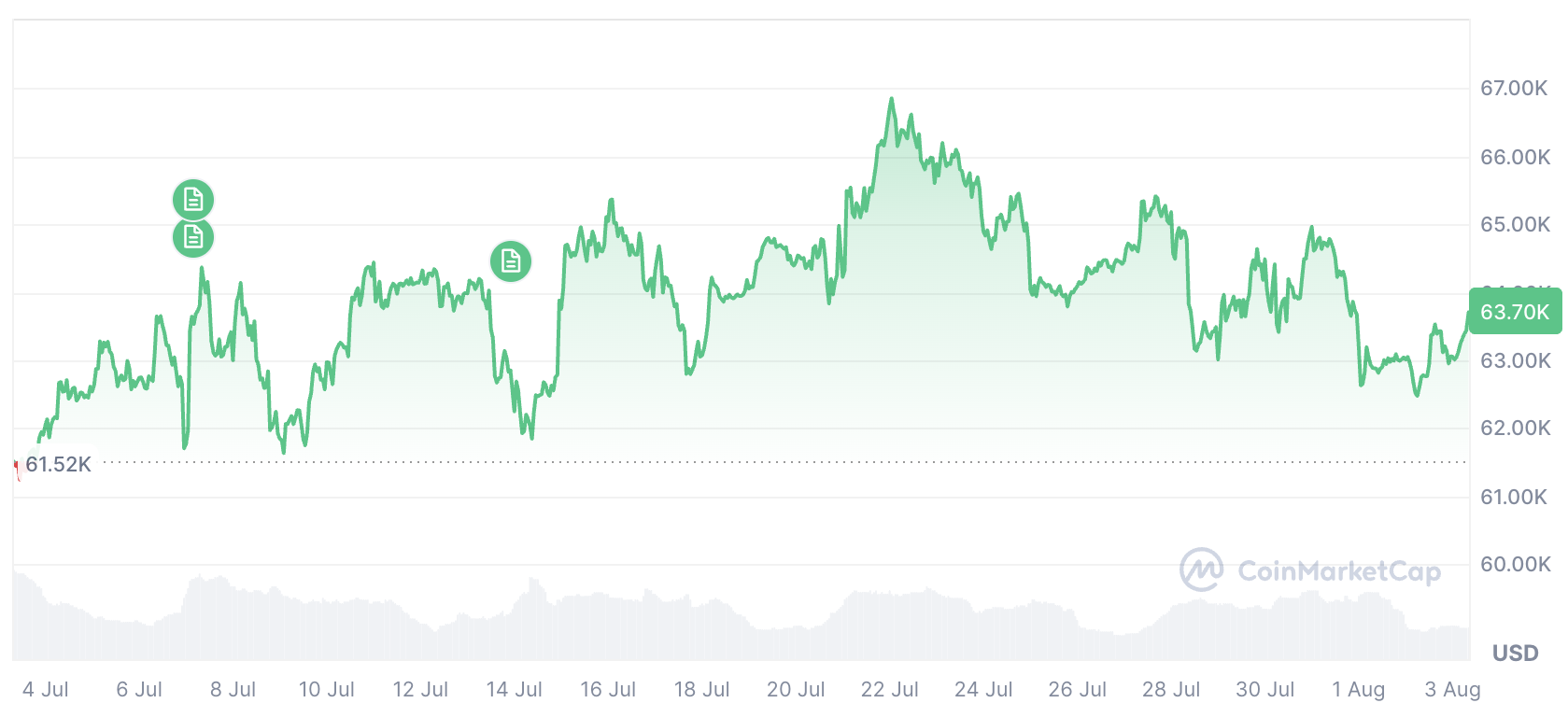
Bitcoin is up 1.67% over the past 30 days. Source: CoinMarketCap
“I think we’re still following the halvings. This whole argument that, you know, we’re only going up from here because institutions don’t sell is garbage, right? Institutions absolutely sell.”
Terpin is also cautious about companies built around Bitcoin exposure, including Strategy and its executive chairman Michael Saylor’s aggressive Bitcoin accumulation strategy.
Buying Strategy stock or Bitcoin?
While acknowledging Saylor’s success, Terpin says investors should understand the risks of investing in a corporate structure rather than owning the underlying asset.
“I mean historically, you’ve done better if you buy Strategy at the bottom and then sell it at the top than if you buy the Bitcoin,” Terpin says. “Whether he’s [Michael Saylor] able to keep that going, and you know, he avoided being wrecked in 2022 when he was actually underwater with his Bitcoin.” But Terpin would personally “rather bet on Bitcoin than a single company.”
And indeed, investors looking for a low maintenance approach should also bet on Bitcoin rather than chasing altcoins, which require far more active management.
“You only have to look at your portfolio like a couple times during the four-year cycle,” Terpin says.
“When we’re getting near the bottom, see if it’s time to buy. And when we’re getting near the top, see when it’s time to sell. And the rest of the time you can just be on the golf course. Whereas with altcoins, you gotta be, you gotta be on it,” Terpin says.
Cointelegraph publishes long-form journalism, analysis and narrative reporting produced by Cointelegraph’s in-house editorial team with subject-matter expertise. All articles are edited and reviewed by Cointelegraph editors in line with our editorial standards. Some articles contain affiliate links, from which Cointelegraph may earn a commission. These relationships do not influence which products we review or our editorial conclusions. Content published in here does not constitute financial, legal or investment advice. Readers should conduct their own research and consult qualified professionals where appropriate. Cointelegraph maintains full editorial independence.

A lot of ingredients for all kinds of drugs come from China and India, says Christian, who has spearheaded the development of a supply-chain monitoring tool for the U.S. Pharmacopeia. He has found that 41% of drugs’ key starting materials are made solely in China, meaning that the health of people around the world relies on Chinese companies continuing to make and provide those ingredients.
What’s the way forward?
At the moment, hospitals “are heavily incentivized to find any drug that is the cheapest upfront cost,” says Christian. “But there’s no real mechanism for hospitals to pay more to ensure greater resilience.” As the shortages prove, these drugs aren’t products where market dynamics lead to a consistent, reliable manufacturing system. “They should be cheap and high-quality,” says Scholtes. “They are essential.”
Generic drugs in general should be like water coming from the tap, he says. It’s a model that inspired a group of U.S. health systems to start a non-profit, U.S.-based drug manufacturer in 2018, which Scholtes, who co-authored a paper about it, calls a “health care utility.” The company, called Civica, is based in Petersburg, Va. and capable of manufacturing a small handful of generic drugs in a U.S. facility and ensuring consistent supply at a sustainable cost. But currently, Civica only produces certain medications—not including chemotherapy drugs. Few companies have similar models and missions, but one, called Phlow Pharmaceuticals, was founded in 2020 to produce active ingredients for drugs in the U.S. in order to mitigate reliance on overseas sources.


Key takeaways
- AAVE is holding above its 50-day EMA at $90.80 as its near-term recovery continues.
- Deposits in Aave V3 on Monad increased by more than $500 million over the past month.
- Aave V4 deposits reached a record high above $350 million.
Aave (AAVE) is extending its mild recovery on Tuesday, trading above the 50-day Exponential Moving Average at $90.80.
The recovery comes amid increased adoption of Aave’s lending protocols. Aave V3’s deployment on the Monad Layer 1 blockchain attracted more than $500 million in deposits over the past month, alongside more than $215 million in active loans.
Despite the rise in protocol activity, weak derivatives data and bearish momentum indicators continue to cloud AAVE’s price outlook.
Aave V4 deposits reach record high
Deposits in Aave V4 have surpassed $350 million, establishing a new record after increasing by more than $100 million over the past 30 days.
The growth suggests rising adoption and may be partly driven by an attractive USDC borrowing offer. Holders of cbBTC, WBTC, WETH and wstETH can reportedly access a borrowing rate of negative 0.2%.
The increase in deposits across Aave V3 on Monad and Aave V4 highlights growing use of the protocol, even as demand for the AAVE token remains subdued among retail traders.
AAVE is losing momentum in the derivatives market despite the growth in protocol deposits.
Futures open interest declined by more than 6% over the previous 24 hours to $302.15 million, according to CoinGlass. The drop reflects a contraction in the value of outstanding futures contracts and suggests traders are reducing their exposure.
AAVE’s funding rate also fell below zero to negative 0.0046%. Negative funding indicates a bearish tilt, with short-position holders paying traders holding long positions.
Meanwhile, the 24-hour long-to-short ratio declined to 0.9372, showing that active short positions outnumber longs and reinforcing the cautious market outlook.
AAVE technical outlook: Could the price fall to $70?
AAVE is hovering above $90 at the time of writing on Tuesday, maintaining a mildly constructive near-term position above its 50-day EMA at $90.80.
However, the token remains well below its 200-day EMA at $112.75, suggesting that its broader recovery potential remains limited.
The Moving Average Convergence Divergence indicator continues to decline below its signal line, reflecting persistent bearish momentum.
The Relative Strength Index stands near 49 and is trending lower while AAVE’s price forms a modest upward trend. This bearish divergence suggests that buying momentum is weakening despite the recent price recovery.

The 50-day EMA at $90.80 is the key immediate support level. A decisive daily close below this moving average could accelerate selling pressure and trigger a roughly 20% decline toward the June 18 low of $70.65.
The psychological $100 level represents AAVE’s first major resistance. This area sits close to the May 10 high of $103.51, creating a broader resistance zone between $100 and $103.51.
A sustained break above this region would strengthen the bullish case and could allow AAVE to target the 200-day EMA at $112.75.
‘Like preparing for IIT and UPSC together’: Father Murali shares Sreeshankar’s comeback story | Commonwealth Games News

Bending Spoons buys Airtable for $1.2bn after IPO listing

XRP NEWS TODAY : The REAL Reason Elizabeth Warren Is Fighting The CLARITY Act!!!


-

 Business6 days ago
Why Trees Belong on the Risk Register
-

 Fashion4 days ago
Weekend Open Thread: Wit & Wisdom
-

 Politics4 days ago
Meta enters AI-training agreement with far-right ‘propaganda rag’ Newsmax
-
 Entertainment7 days ago
‘Stargate’ Creator’s New Sci-Fi Series Returns for Season 3 Tomorrow
-

 Crypto World3 days ago
MicroStrategy Post-Earnings CLARITY Act Push Could Add New Catalyst for Its Stock
-

 Politics6 days ago
Reform UK betrays West Mids residents by running from party pledges
-

 Business6 days ago
Major shareholder moves on Canyon
-

 Crypto World3 days ago
XRP Ledger v3.3.0 brings five institutional features
-

 News Videos5 days ago
Bitcoin Enters the 3rd Stage of the Bear Market
-

 Crypto World7 days ago
Kraken Enables Retail Access to Jersey Mike’s IPO via Tokenized Shares
-

 Politics5 days ago
Luke Littler’s dominance sparks GOAT debate
-

 Sports5 days ago
Seema Kaliramna Wins Discus Throw Bronze, Takes India’s CWG Medals Tally To 17
-

 News Videos7 days ago
Claude: Build Financial Dashboards in Minutes (2026)
-

 Crypto World4 days ago
New York sues Kalshi over prediction market gambling
-

 Crypto World2 days ago
Crypto PAC spending tops $2M in Michigan House race
-

 Business7 days ago
Johnson & Johnson agrees to $5.5B settlement over talc cancer claims
-

 Politics2 days ago
Zack Polanski: an incitement to murder Nigel Farage?
-

 Business4 days ago
Trump Announces Hamas Disarmament Agreement as Iran Strikes Kuwait Air Base and US Attacks Pause Overnight
-

 Tech6 days ago
Gemini can now summarize the messiest comment threads in Google Docs
-

 Tech2 days ago
ESET tracks rise in malicious AI skills and adaptable malware
You must be logged in to post a comment Login