

Crypto World
XRP price drops to $1.08 as ETF outflows and whale demand fade

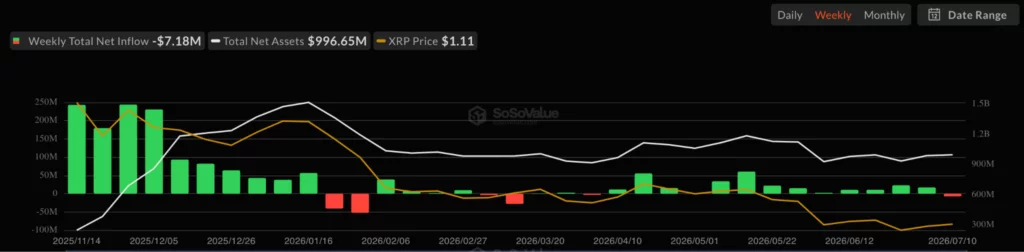
XRP traded at $1.08 on July 13 after losing 1.09% over 24 hours and 5.48% across seven days.
Summary
- XRP trades near $1.08 as whale transfers and institutional fund demand weaken across the market.
- Transactions above $1 million fell sharply, leaving traders focused on support around the $1 level.
- ETF outflows ended a nine-week inflow streak while technical momentum remained weak and largely neutral.
The token moved between $1.07 and $1.10, while trading volume reached about $836 million. Its market value stood near $67.36 billion, keeping the token sixth among cryptocurrencies by market capitalization. The latest decline pushed the asset toward its lowest price in ten days after buyers failed to hold the rebound above $1.10.
The price had recovered from an early July low near $1.01 and briefly challenged resistance around $1.20. Sellers rejected that move, and XRP returned to a narrow range between roughly $1.09 and $1.12.
Renewed tension between the United States and Iran then weighed on risk assets and helped push XRP below the lower end of that range. The token now sits close to the psychological $1 level, which traders have defended several times since June.
The broader crypto market weakened as Bitcoin slipped below $63,000 and Ether traded near $1,785. That backdrop matters because XRP has followed broader risk sentiment during recent selloffs. A stronger market rebound could support the token, while renewed pressure across assets may keep buyers cautious near current levels.
XRP whale transactions fall sharply
Large transactions on the XRP Ledger have dropped sharply. Crypto analyst Ali Martinez said the number of transfers worth more than $1 million fell from 70 over the previous week to only two on July 13.
He described whale activity as “cooled significantly.” The data points to less participation from large holders, but it does not show whether whales stopped buying, moved activity off-chain, or split transfers into smaller amounts.
Lower whale activity can reduce buying support during a weak market, especially when daily trading volume also remains limited. It can also reduce large sell orders, so the metric does not carry one fixed meaning.
As previously reported, XRP exchange balances have fallen to a seven-year low while spot funds and private wallets absorbed supply. That decline has not lifted the price because market demand has remained too weak to overcome the broader downtrend.
ETF inflow streak comes to an end
Fund flows have also turned less supportive. XRP investment products recorded more than $7 million in net withdrawals last week, ending nine straight weeks of inflows. The reversal followed a period when XRP funds attracted capital even as Bitcoin and Ethereum products faced withdrawals.
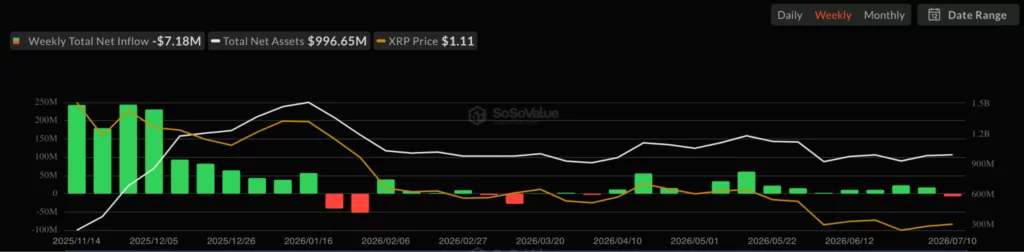
Earlier demand helped regulated XRP funds build a large position, but one negative week shows that institutional interest can change when market conditions weaken.
XRP ETFs had absorbed close to one billion tokens while exchange reserves dropped by about half. The supply shift created a tighter tradable float, yet XRP continued to fall.
The difference between fund accumulation and price performance shows that ETF demand alone has not controlled the market. Traders now need to see whether outflows continue or whether the latest red week becomes a brief interruption in the longer inflow trend.
Technical indicators keep $1 support in focus
The Bollinger Bands place XRP in the lower half of its recent trading range. Price sits slightly below the middle band near $1.0879, while the upper band stands around $1.1619 and the lower band near $1.0140.
Holding above the lower band keeps the token away from a deeper breakdown. A move above the middle band and the $1.09 to $1.10 area would give buyers an early recovery signal.
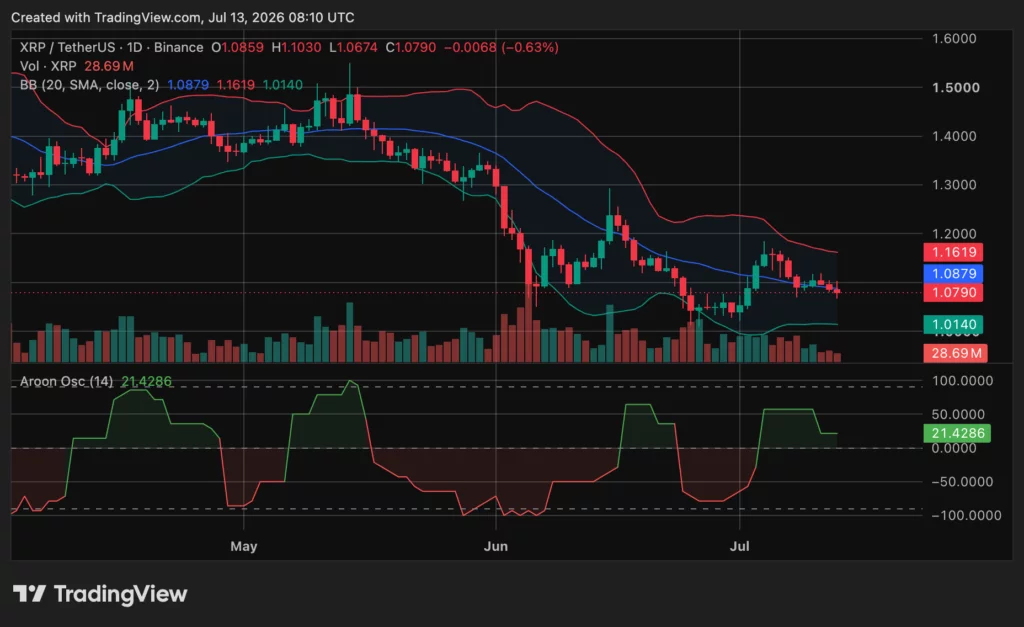
The Aroon Oscillator remains positive near 21.43, showing that some recent upward pressure still exists. However, the reading has weakened, which points to fading rebound momentum.
Analyst Grega Horvat said the token was approaching support near $1 and identified $0.95 as another level on the four-hour chart. His statement that “trend is down until it is not” reflects a technical view, not a confirmed price path.
The main short-term battle now sits between support near $1.01 and resistance around $1.10. A close below the lower Bollinger Band could bring $1 and $0.95 back into focus. Horvat also listed $0.60, $0.40 and $0.10 as deeper levels if $0.90 fails, but those targets remain speculative and require a much larger decline from the current price.
A recovery above $1.10 would improve the short-term structure and could open a move toward the upper Bollinger Band near $1.16. XRP would then need to clear the earlier resistance around $1.20 before buyers could claim stronger control.
EGRAG Crypto has argued that the token needs a bounce toward the 50-period moving average near $1.60 before a longer rally can restart. That scenario remains unconfirmed. For now, price action, ETF flows, whale activity and the $1 support zone will guide the next move.
Disclosure: This article does not represent investment advice. The content and materials featured on this page are for educational purposes only.

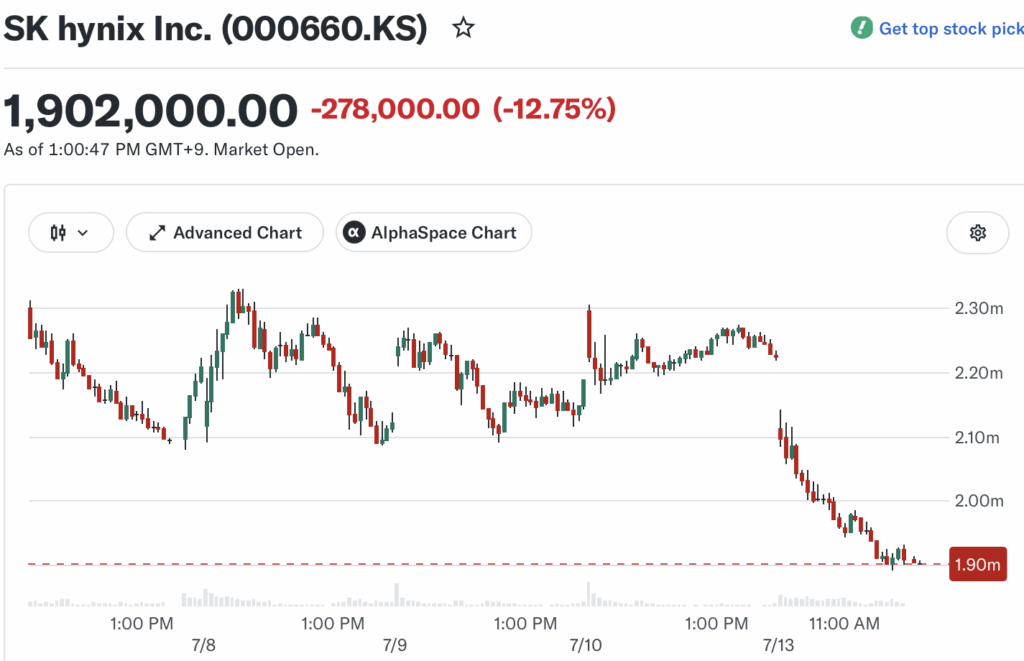
South Korean AI giant SK Hynix has already erased all of its 12.7% gains from its US debut last week.
Incredibly, the largest first-time US share sale by a foreign company sustained gains for less than one trading day before the math turned against every American who bought its American Depositary Receipt (ADR) listing.
The high-bandwidth memory chipmaker and one of Nvidia’s largest customers is becoming a household name due to its proximity to the AI investment mania.
Its ADRs rose 12.7% on the Nasdaq debut Friday, closing at $168.01. Meanwhile, its Seoul-listed common stock fell 12.7% by Monday afternoon, priming US markets for a dump before Nasdaq could even open for pre-market trading.
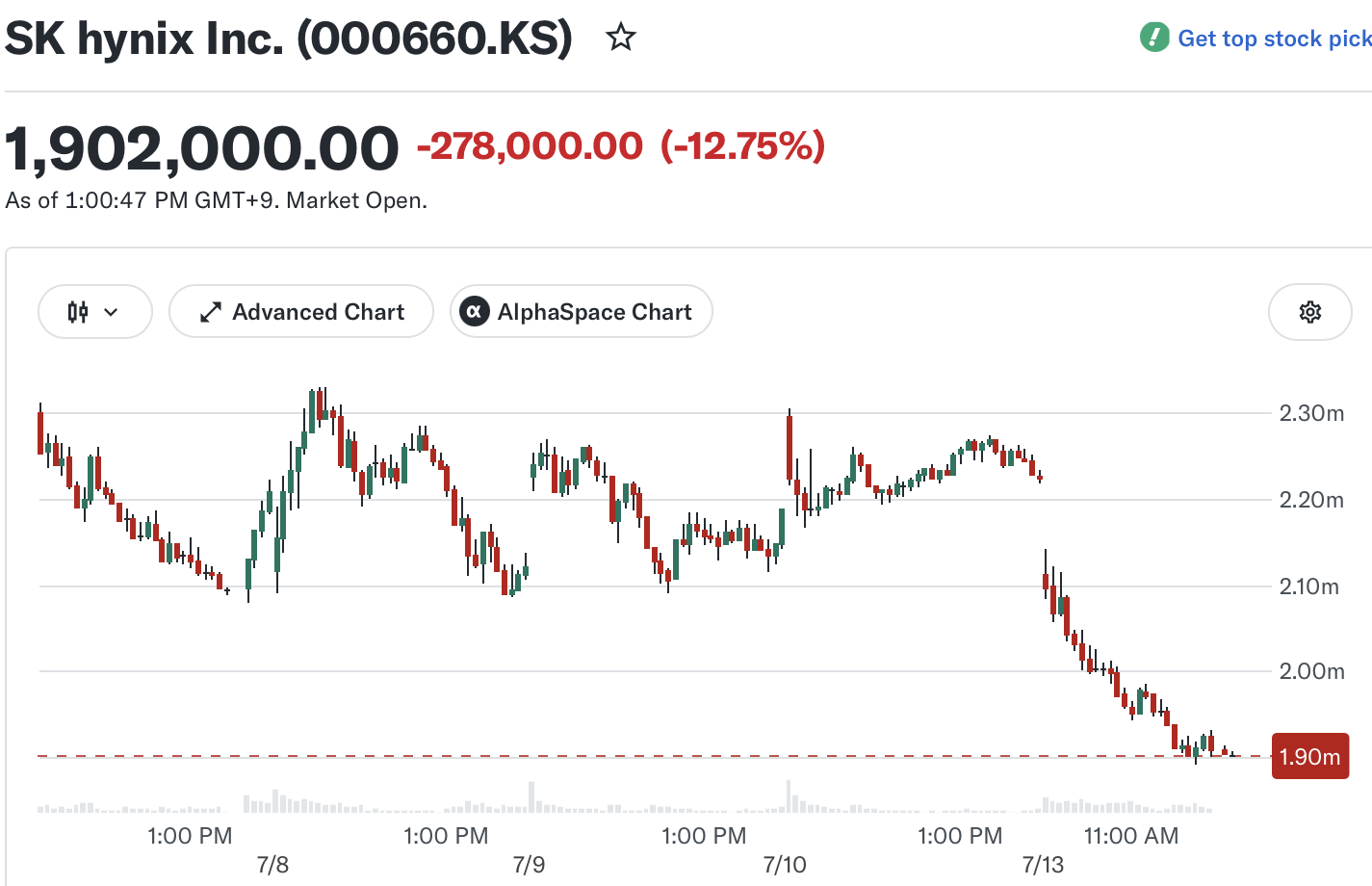
In other words, thanks to a record-shattering ADR listing, US money flowed into South Korea’s largest company on Friday, followed immediately by South Korean money dumping Monday by roughly the same percentage.
As of 1pm Monday in Seoul and inclusive of the one day boost from the ADR listing on Friday, shares in South Korea have actually lost 14% of their value.
Each American Depositary Receipt represents one-tenth of a real SK Hynix share. The ADR and South Korean stock are claims on the same company with a few, minor legal distinctions.
When Seoul reopened and dropped almost the same percentage as Friday’s gain in New York, it repriced the exact asset backing every ADR sold in New York two sessions earlier.
Read more: Crypto traders paid 8,700% annualized fees to bet on Anthropic
Friday’s premium reversed over the weekend
SK Hynix priced 177.9 million ADRs at $149 apiece on Thursday. The sale raised about $26.5 billion, comfortably topping Alibaba’s 2014 debut and ranking among the largest US ADR listings ever.
Bank of America, Citigroup, Goldman Sachs and JP Morgan ran the deal. The company’s primary listing remains in Seoul.
American enthusiasm did what American enthusiasm does best: Led to overpaying for the most popular names. The ADRs opened mid-day on Friday at $170, 14% above the offer price, and briefly touched $177.
By Friday’s close they traded at a premium of roughly 15% to the Seoul shares. By Monday afternoon in Seoul, those profits had obviously disappeared.
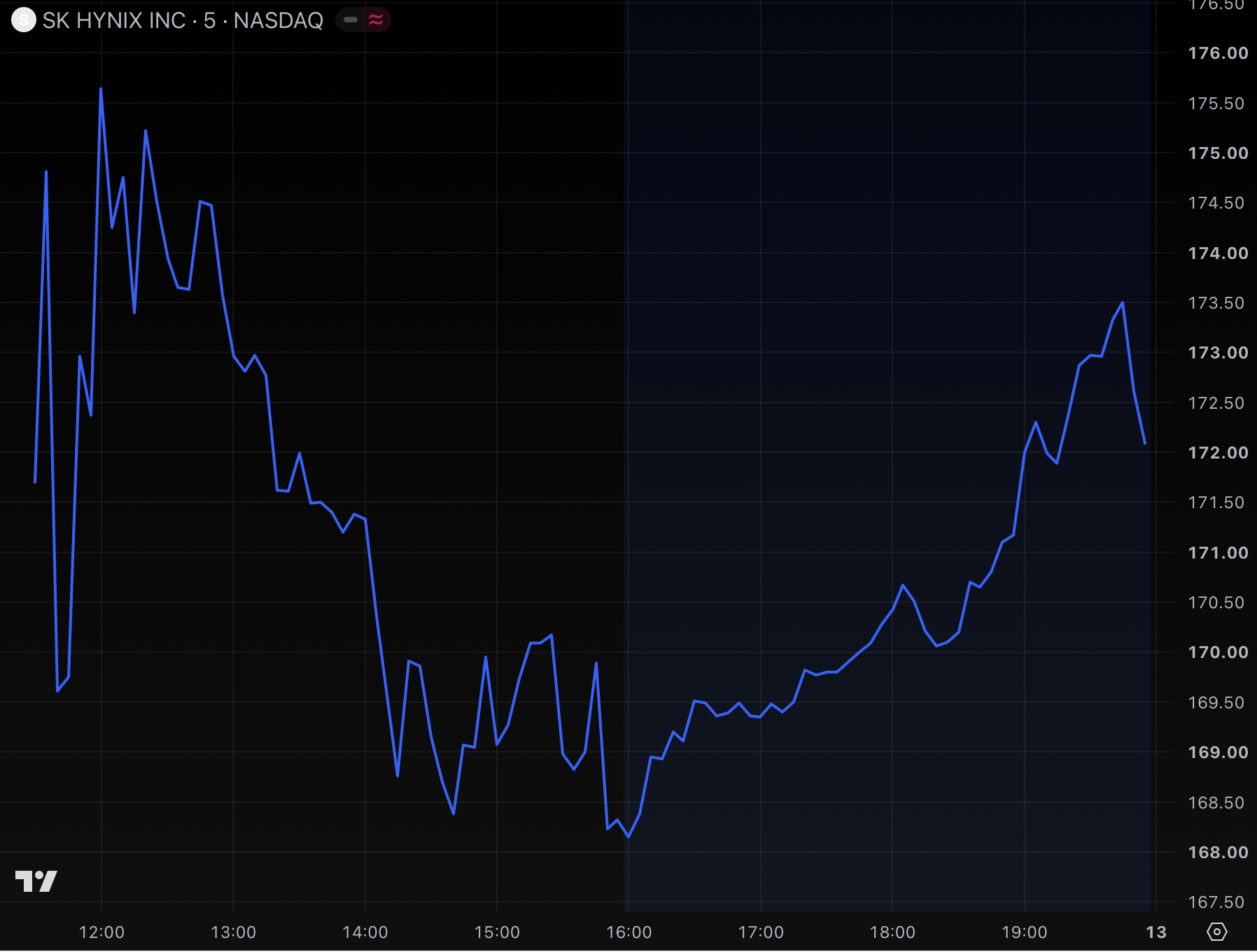
A buyer of Friday’s new ADR paid about 15% more than the Seoul market said the underlying share was worth. By Monday morning, Seoul bid 10% less at the start of the morning, with a worsening figure below 12% as the day went on.
Anyone who bought the ADR is now holding a cheaper asset that kept getting cheaper.
On Friday, SK Hynix’s spokesperson told CNBC, “It’s a kind of dream, and now it’s a dream come true.” He insisted the appetite for the company’s memory chips would persist from “structural” demand.
The ADR offering itself was more than seven times oversubscribed. There was no shortage of dollars willing to pay top dollar.
Unfortunately, for US buyers who chased the record-setting debut on its first day trading on Friday, the scoreboard has already flipped for a win across the Pacific.
The company US investors bought into on Friday is worth about the same amount less in South Korea as of Monday afternoon in Seoul.
Got a tip? Send us an email securely via Protos Leaks. For more informed news and investigations, follow us on X, Bluesky, and Google News, or subscribe to our YouTube channel.


The United Kingdom could add as much as 33 billion British pounds ($44 billion) to its annual economic output by 2035 by becoming a leader in tokenized financial markets, according to a government-backed industry task force.
The estimate appears in the first report from Wholesale Digital Markets Champion Chris Woolard, who was appointed by HM Treasury to help implement the government’s digital markets strategy.
Developed with an industry task force, the report sets out a 12-month plan to test blockchain in a financial transaction where securities are used to borrow cash. It also calls for the UK to issue its first tokenized government bond by the first quarter of 2027.
The industry task force brings together more than 50 companies from traditional finance and crypto, including BlackRock, Goldman Sachs, JPMorgan, Morgan Stanley, HSBC, UBS, Coinbase, Circle, Ripple, Kraken, DTCC and Euroclear.
The roadmap attempts to move UK tokenization beyond isolated pilots and into live markets where securities can be traded, settled and used as collateral. The report said the task was now to move “from pilots to scale” and “from ambition to action.”
Ripple, which is listed among the task force’s industry members, backed the initiative on Monday. “Onchain funds, bonds and repo aren’t experiments,” the company said, adding that such instruments are already proving “cheaper, better and faster than their legacy equivalents.”
UK builds on digital gilt and settlement initiatives
The digital government bond, or gilt, itself is not a new proposal. The UK first announced the Digital Gilt Instrument pilot in November 2024.
This was followed by a July 2025 update outlining plans for onchain settlement, over-the-counter trading and secondary-market development. On Feb. 12, the government appointed HSBC’s Orion platform to support the pilot.
The new report adds a timetable and expands the intended role for the financial instrument. Beyond calling for issuance, the report seeks subsequent digital-gilt offerings, live secondary-market trading and eligibility for use as central bank collateral.
The report said tokenized securities have limited value unless they can be traded or used to raise cash, and urged the Bank of England to accept digital gilts as collateral.
Related: UK politicians mull permanent crypto donation ban in wake of Nigel Farage scandal
The UK also has a blockchain-based wholesale payment infrastructure that could support such markets. In December 2023, London-based Fnality launched a sterling-denominated payment system tied to central bank reserves, designed to support real-time repo, tokenized securities settlement and cross-currency payments.
Magazine: Has Bitcoin bottomed for this cycle? Analysts say ‘not yet’


Startale Group used WebX 2026 in Tokyo to introduce two products aimed at different sides of onchain finance:
- 1. Startale Onchain Finance Kits, or Startale OFK, gives financial institutions and enterprises a software suite for onchain finance deployment;
- 2. Startale Card brings self-custodial Visa payments to consumers using assets in the Soneium ecosystem.
The launches extend Startale’s plan to bring financial activity onchain through enterprise software and consumer products. Institutions need tools to issue, settle, trade, and manage digital assets under regulated conditions, while consumers need easier ways to earn, hold, and spend assets in daily life.
OFK helps institutions launch onchain financial products, while Startale Card gives users a route from Soneium balances to everyday payments.
Startale OFK Gives Institutions a Faster Route Into Onchain Finance
Startale OFK is built for banks, financial institutions, and enterprises preparing to bring more financial products onto blockchain networks. The suite covers stablecoin systems, wallet systems, digital asset tools, privacy tools, developer tools, blockchain systems, and settlement systems.
The product builds on several years of Startale’s work with major enterprises, financial institutions, and ecosystem partners. Its existing projects include Soneium, the Ethereum L2 developed with Sony Group, Strium, a tokenized securities platform developed through SBI Holdings, Startale App, JPYSC, USDSC, and other enterprise blockchain deployments.
Through these projects, Startale has worked across institutional trading, bond issuance, privacy, developer tools, blockchain development, and stablecoins. OFK turns this experience into a deployment package for organizations entering production-stage onchain finance.
Startale plans to expand OFK with tokenization tools and Custody Wallet API products, adding further support for regulated onchain financial markets.
Startale Card Links Soneium Assets With Everyday Payments
The company also introduced Startale Card, a self-custodial Visa card built for users of the Soneium ecosystem. The card connects onchain balances to everyday payments at more than 150 million merchants worldwide where Visa is accepted.
Startale Card also marks the next stage of Startale App, which the company describes as the App for More than Money. Users can already earn, trade, explore Mini Apps, and unlock rewards across Soneium. With Startale Card and upcoming earning options inside Startale App, users will be able to deposit eligible assets into yield-generating vaults while spending against the same holdings.
This gives users a single financial app for saving, earning, and spending. Eligible assets can keep generating yield until payment, while cashback in USDSC is credited to the user’s account.
The card gives Soneium a consumer payment product connected to real-world merchant access. Ethereum L2 networks often focus on lower fees, faster execution, and application growth, while consumer adoption depends on repeatable use cases. Spending, earning, and cashback give Startale a route to make Soneium assets useful beyond crypto-native activity.
Startale Expands Its Onchain Finance Ecosystem
The Startale Card waitlist is now live in the Startale App ahead of public launch. Startale OFK is being introduced as institutions in Japan, the United States, and other key markets explore ways to bring financial services onto blockchain networks.
The launches show Startale building across the full path of onchain adoption. OFK gives institutions tools to create onchain financial products, while Startale Card gives consumers a way to use digital assets through familiar payment behavior.
The post Startale Brings Institutions and Consumers Into Its Onchain Finance Ecosystem appeared first on BeInCrypto.
Crypto World
SBI Holdings’ blockchain initiative pivots to Solana for tokenization, stablecoin issuance


Japanese asset giant SBI Holdings’ (8473) blockchain initiative is turning to Solana for its stablecoin and real-world asset (RWA) tokenization efforts.
SBI Solana Global, previously SBI R3 Japan, aims to use the network to connect Japan’s domestic market to global liquidity, according to a Monday post on its website.
The SBI Solana Global joint venture, which also counts Sumitomo Mitsui Financial Group (SMFG) among its shareholders, now includes the Solana Foundation, the Zug, Switzerland-based organization that oversees the layer-1 network.
“By creating a new market for Japan-originated digital assets, the collaboration aims to establish Japan as a core hub for onchain finance in Asia,” SBI Holdings said in the statement.
SBI Holdings lists supporting the issuance and distribution of stablecoins, supporting the structuring and distribution of tokenized RWAs and developing payment infrastructure for AI agents among the venture’s functions.
The blockchain initiative previously centered around Corda, the permissioned blockchain developed by R3.
SBI Holdings has been active in expanding its digital asset business in recent months, agreeing to buy Japanese cryptocurrency exchange Bitbank last month for around $289 million.
Crypto World
Robinhood Chain’s Gas Subsidy Is Closing the Gap With Base: Future of Ethereum On Horizon?

Ethereum News: Robinhood Chain processed 7.6 million daily transactions on July 10, just 11 days after its July 1 mainnet launch, closing sharply on Coinbase’s Base, which recorded 9.2 million over the same period.
The gap is narrowing faster than the Ethereum Layer 2 competitive landscape expected, and the mechanism driving it is straightforward: Robinhood is paying every user’s gas fee.
That transaction count matters less as a milestone than as a forcing function. Base built its position over multiple years with Coinbase’s exchange ecosystem, deep DeFi integrations, and first-mover liquidity.
Robinhood Chain has closed most of the gap in under two weeks, but through a promotional structure rather than organic demand. What happens in late September, when the subsidy expires, is the question the data cannot yet answer.

Discover: The Best Crypto to Diversify Your Portfolio
Ethereum News: Gas subsidy is doing the heavy lifting, and the math is stark
Robinhood’s 90-day gas subsidy eliminates transaction costs entirely for users through the end of September 2026. The effect on volume is direct: retail traders, DeFi participants, and memecoin activity all flow toward zero-cost execution when a credible alternative exists.
MSBIntel noted that despite processing 7.6 million transactions in a single day, Robinhood Chain generated only roughly $4,000 in daily protocol fees, a figure that reflects both the subsidy absorbing user costs and the early-stage fee structure of an Arbitrum-based rollup.
For context, Base users pay for every transaction. The cost asymmetry between the two networks during the subsidy window makes direct transaction-count comparisons analytically incomplete. A fairer comparison arrives in October, when Robinhood Chain competes on equal footing.
The network’s activity extends beyond simple transfers. Robinhood Chain surpassed $500 million in single-day volume on Uniswap deployments, taking the second position behind Ethereum mainnet by spot activity. That volume figure, cited in the primary source reporting, indicates that liquidity is accumulating alongside transaction throughput, not merely inflating raw counts through micro-transactions.
Separately, earlier analysis of Robinhood Chain’s DEX volume surge flagged memecoin-driven activity as a significant contributor to that $500M-plus DEX day, which adds a durability caveat to the volume headline.
Discover: The Best Token Presales
Tokenized equities and 23 million users as structural differentiation
Where Robinhood Chain makes a genuinely differentiated argument is in its distribution and product stack. The network launched alongside Robinhood’s tokenized equities platform, with Chainlink providing oracle pricing for 95 tokenized assets including Nvidia, Apple, and Alphabet, Uniswap supplying trading liquidity, and Morpho supporting lending.
Those tokenized equities are available in more than 120 countries, a reach that no other Ethereum L2 has built around a brokerage-native user base.
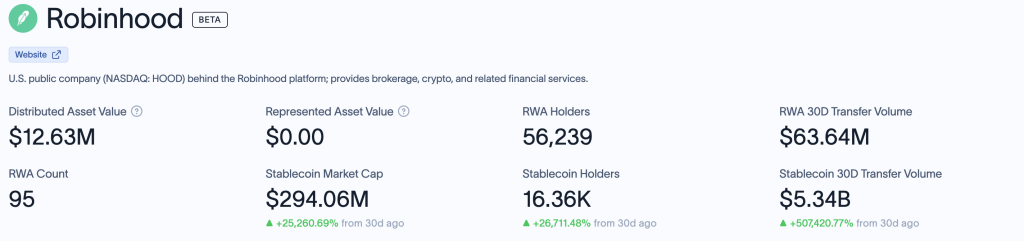
Robinhood enters with approximately 23 million pre-existing brokerage users, a distribution channel that Base and Arbitrum have gradually built toward through crypto-native onboarding.
If even a fraction of those users engage with on-chain products post-subsidy, the retention argument becomes credible. The network being built on Arbitrum Orbit technology also positions it within an established fee-sharing ecosystem, with 10% of chain fees directed back to the ARB ecosystem, a structural alignment with the broader L2 stack rather than a competitive break from it.
HOOD stock has already priced in some of this optimism. The initial Layer 2 announcement lifted shares roughly 10%, with a further gain of approximately 7% coinciding with the rollout of AI-powered agentic trading functionality, according to Yahoo Finance data cited in the source reporting.
Don’t Miss Out on Our $1,000 USDT Airdrop on ByBit
The post Robinhood Chain’s Gas Subsidy Is Closing the Gap With Base: Future of Ethereum On Horizon? appeared first on Cryptonews.
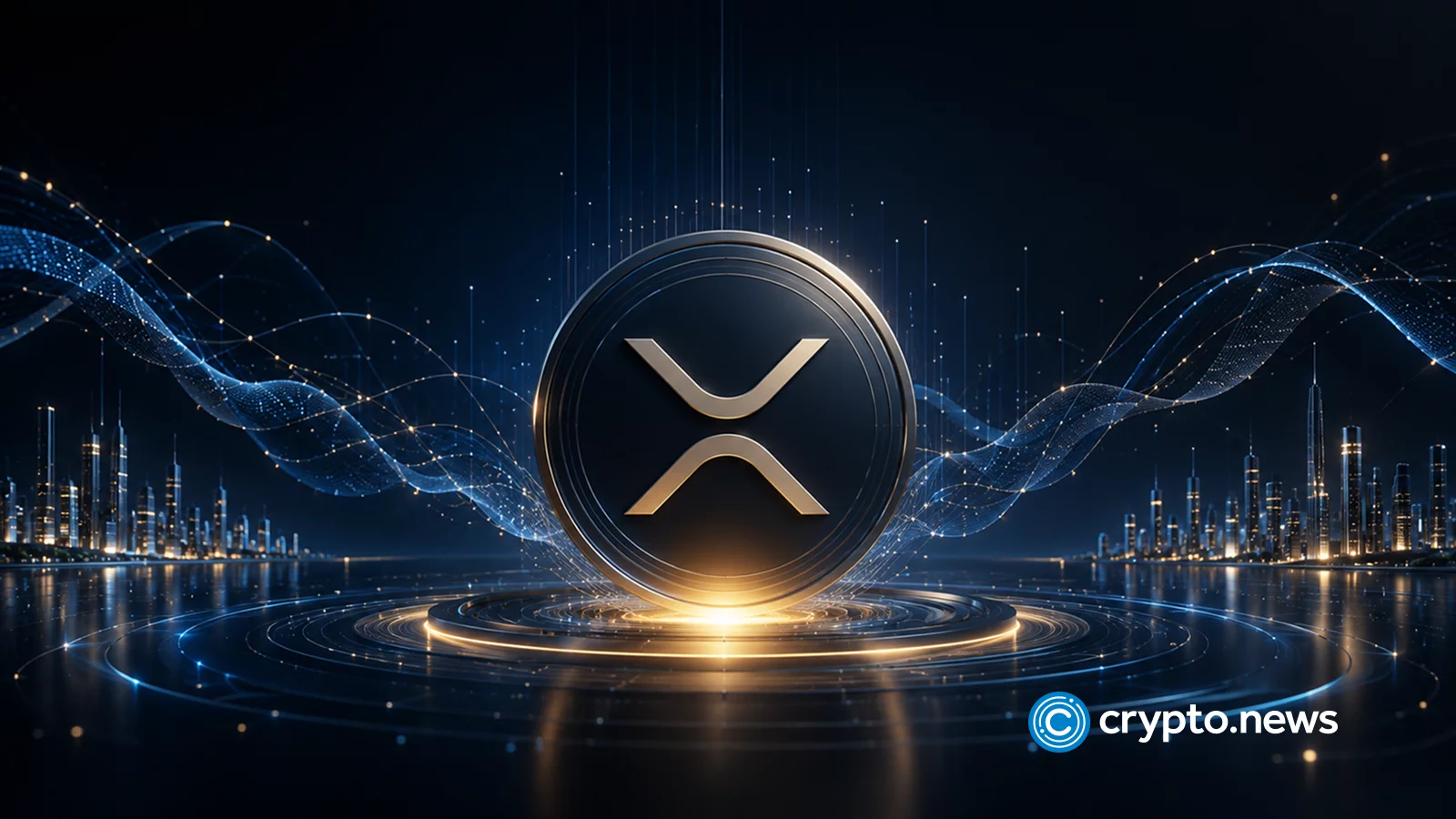
The XRP community is marking July 13 as “XRP Victory Day,” three years after Judge Analisa Torres issued a split summary judgment in the SEC’s case against Ripple.
Summary
- Ripple’s 2023 ruling protected programmatic XRP sales while leaving institutional transactions subject to securities law.
- The SEC case ended in 2025 with a $125 million penalty and permanent injunction intact.
- Ripple leaders now say the company considered closing before choosing an expensive multiyear legal defense.
The 2023 order rejected the regulator’s claim that every XRP transaction followed the same legal pattern. It also gave public exchange sales a different outcome from direct institutional deals. The SEC had accused Ripple and two executives of conducting unregistered securities offerings through years of XRP sales and distributions across several channels.
The court did not issue a blanket ruling that every future XRP sale falls outside securities law. Torres wrote that XRP, as a token, was not “in and of itself” an investment contract. She then examined how Ripple offered and sold the asset in separate transaction categories under the Howey test.
Exchange and institutional sales received different outcomes
Ripple’s programmatic sales on exchanges did not qualify as investment contracts, the court found. Those trades used blind bid-and-ask systems. Buyers did not know whether Ripple or another holder sold the XRP. The record therefore failed to show that those buyers reasonably expected profits from Ripple’s work.
The decision went the other way for about $728.9 million in institutional sales. Ripple sold those tokens through written agreements to sophisticated buyers. The court found that the contracts, marketing and use of proceeds created an expectation that Ripple’s work could raise XRP’s value. It ruled that those sales violated registration rules.
Ripple says the lawsuit nearly forced a shutdown
Recent comments from Ripple executives have added new detail about the pressure surrounding the case. Chief executive Brad Garlinghouse said the company “almost decided to shut down” after the SEC filed its complaint in December 2020. He described the government’s resources as a major concern during internal talks.
Ripple co-founder David Schwartz said some lawyers considered the company “unsavable” and advised executives to seek personal settlements. Those comments describe private discussions and legal advice; they do not prove the SEC intended to close Ripple. As crypto.news reported, Ripple instead continued operating and spent about $150 million on its defense.
Final judgment stayed in place after appeals ended
The July 2023 order did not end the lawsuit. The court later imposed a $125.04 million civil penalty and a permanent injunction tied to future unregistered institutional sales. That amount was far below the SEC’s requested remedies, but it confirmed that Ripple had violated federal securities law in one part of its XRP business.
Ripple and the SEC tried to reduce the penalty to $50 million and remove the injunction in 2025. Torres rejected their joint request, saying they had not shown grounds to change the final judgment. Both sides later dismissed their appeals, and the case formally ended in August 2025.
As previously reported, the final outcome left a transaction-based framework. Public exchange sales received more favorable treatment, while direct institutional sales remained restricted. The decision also removed the pending personal claims against Garlinghouse and executive chairman Chris Larsen after the SEC dismissed them in 2023.
Solana price has remained below the $80 psychological barrier after renewed macro pressure and weakening risk appetite pushed buyers into a wait-and-see mode despite an emerging bullish chart pattern.
Summary
- Solana price remains below $80 as a falling wedge keeps the possibility of a bullish breakout intact.
- Liquidation clusters near $80-$81 could accelerate gains if buyers reclaim the psychological resistance.
- Macro headwinds and weak institutional flows continue to threaten the bullish setup despite resilient on-chain activity.
According to data from crypto.news, Solana (SOL) price traded near $76.3 on July 13 after slipping almost 1% over the previous 24 hours. The token has spent the past several sessions consolidating as rising U.S. Treasury yields and persistent expectations that interest rates could stay higher for longer continued to pressure high-beta crypto assets.
Bitcoin held close to $64,000 during the same period, but institutional demand remained concentrated in larger-cap assets, limiting Solana’s ability to reclaim the $80 level.
Network activity has nevertheless remained resilient. Active addresses have stayed near yearly highs while transaction throughput continues to benefit from speculative meme coin trading and recent network upgrades. Yet those on-chain gains have not translated into sustained price appreciation as capital has largely circulated within the ecosystem instead of attracting fresh external inflows.
Combined with softer institutional appetite following a difficult second quarter for digital asset investment products, the imbalance has left SOL struggling to establish a fresh uptrend.
Commenting on the latest price structure, analyst Eliz argued that the recent pullback should not necessarily be viewed as bearish.
“$SOL is showing an orderly bearish consolidation following the rally. This type of price action is often a positive sign: the market is shaking off excesses without compromising the bullish structure.”
The analyst added that, “As long as the outlook remains unchanged, I continue to expect the upward trend to continue.”
Falling wedge keeps breakout hopes alive despite weakening momentum
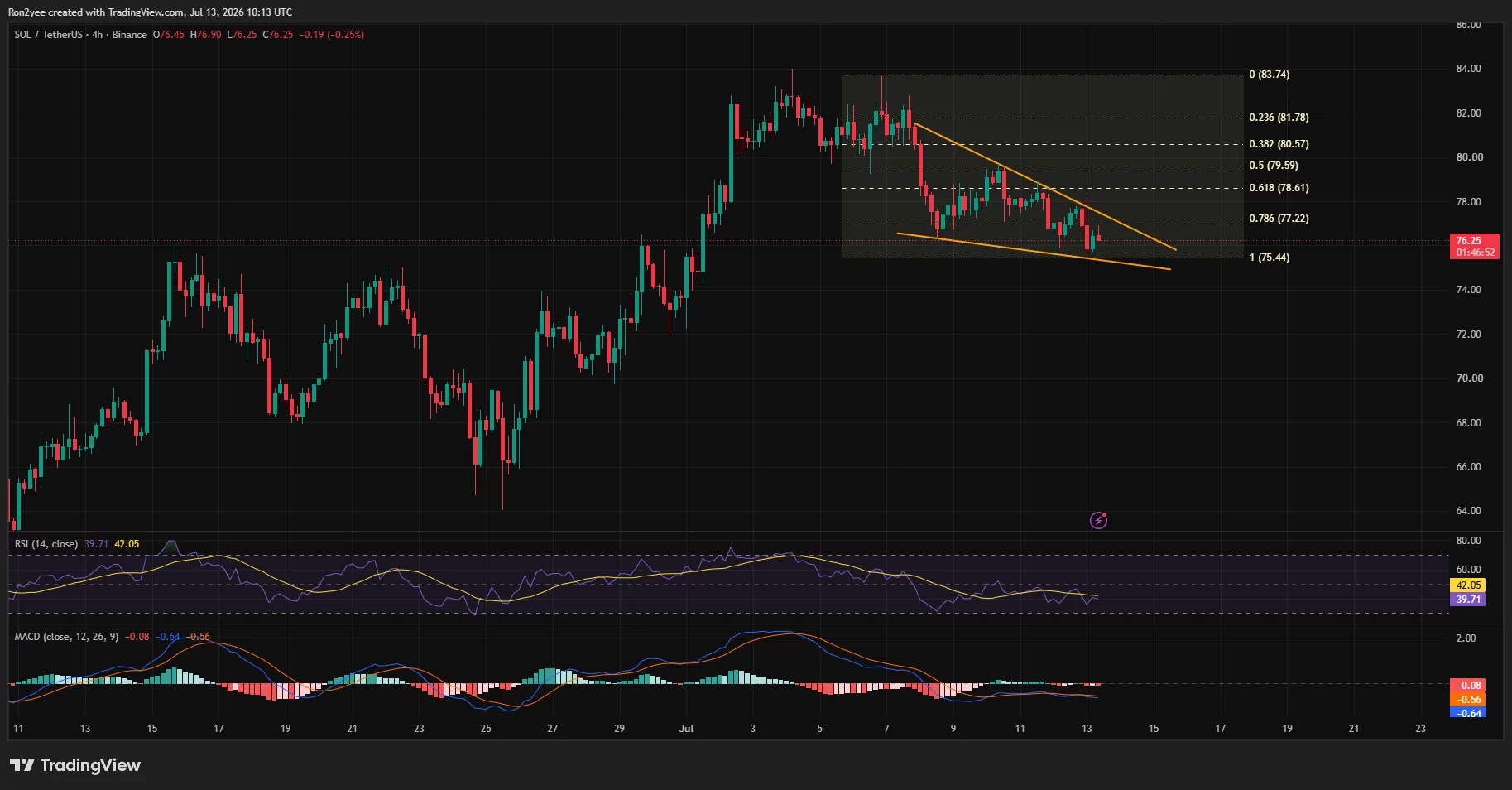
The 4-hour chart shows Solana carving out a falling wedge after rejecting the early July high above $83. The pattern has compressed price action between descending trendlines, with support holding near the Fibonacci 100% retracement around $75.4 while resistance has gradually fallen toward $78.5.
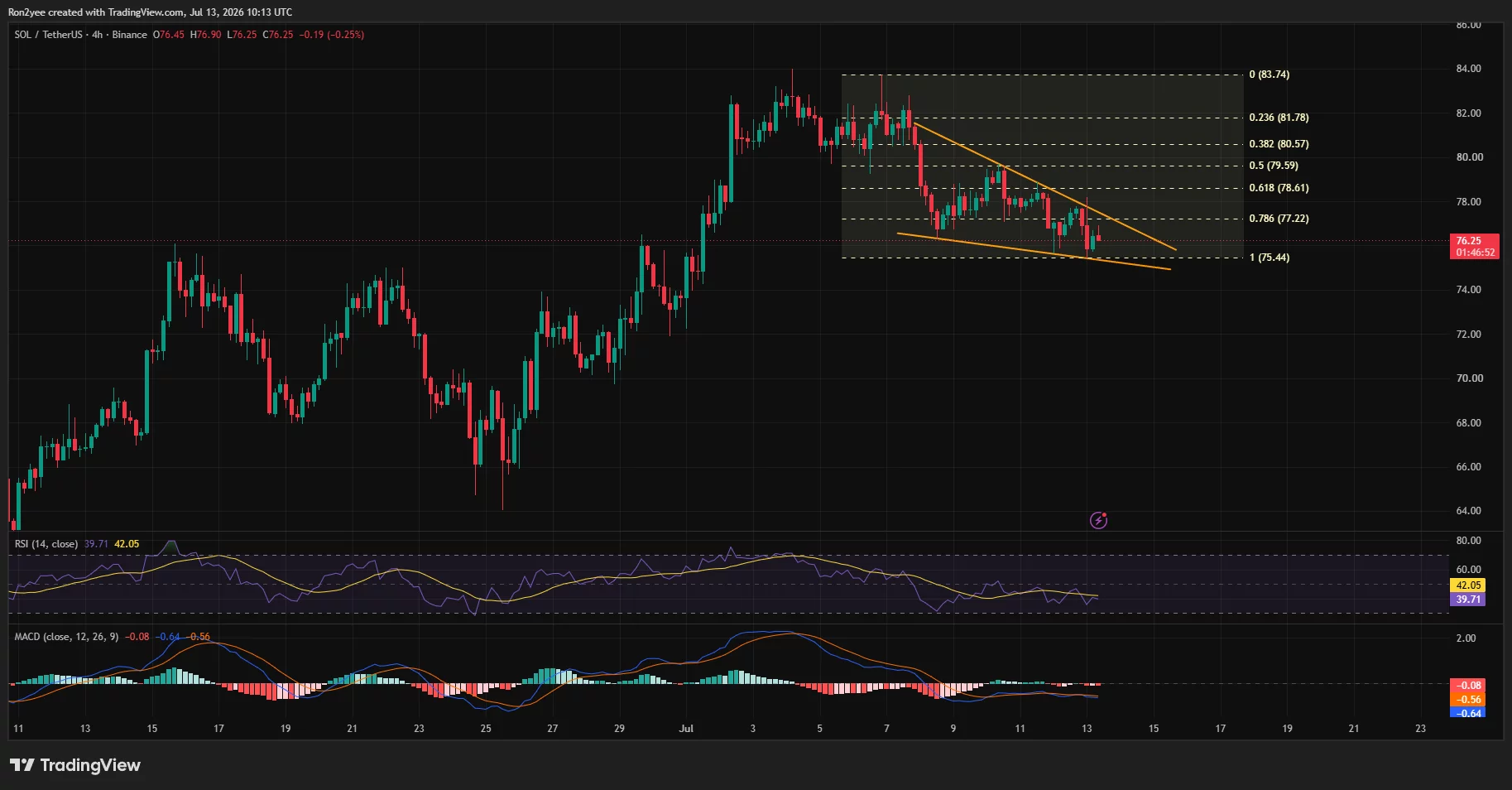
A decisive move above the upper boundary would expose the 61.8% Fibonacci level near $78.6, followed by $79.6, before bringing the key $80 psychological barrier back into focus. A successful breakout could then open the path toward $81.8 and the recent swing high near $83.7.
Momentum indicators, however, remain mixed. The 4-hour RSI sits just below the neutral 50 level at around 40, leaving buyers without clear momentum. Meanwhile, the MACD remains below its signal line with only a modest improvement in histogram bars, suggesting bearish momentum has slowed but has not yet reversed.
The daily chart presents a similar picture. SOL continues to trade above the major Murrey Math support level at $75 while Chaikin Money Flow has recovered into positive territory near 0.10, showing that capital has continued to enter the asset despite the recent consolidation.
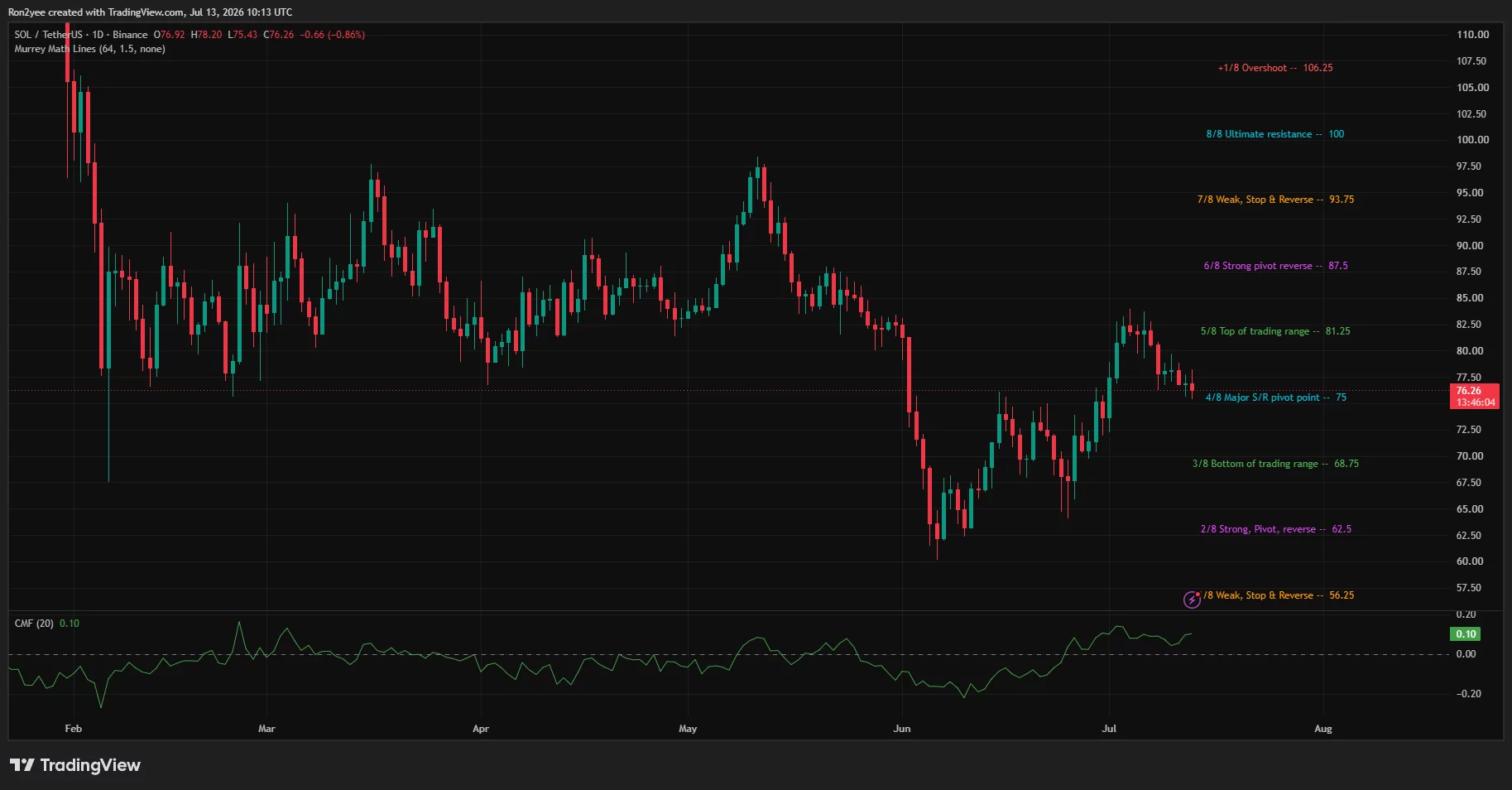
Still, the market has repeatedly rejected advances toward the 5/8 Murrey resistance near $81.25, reinforcing the importance of the $80-$81 region.
Derivatives positioning also identifies nearby trigger zones. CoinGlass liquidation data shows one of the largest short liquidation clusters sitting around $79.5-$80, with another concentration extending above $81.
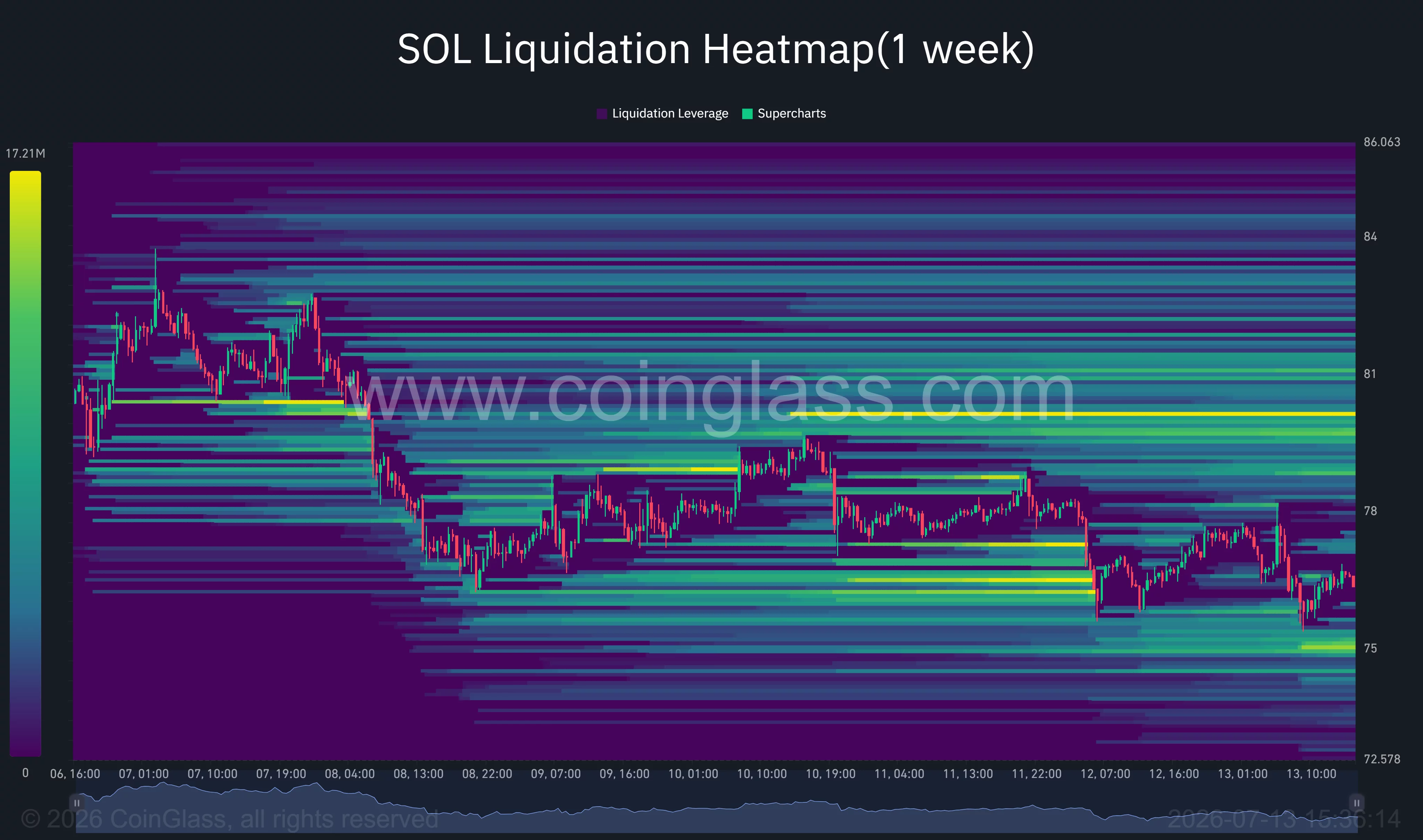
A strong breakout through those levels could force leveraged short positions to close, adding fuel to an upside move. On the downside, notable long liquidation pockets have accumulated around $75 and just below $74.5, making those areas important support if selling pressure intensifies.
Macro headwinds continue to threaten the bullish setup
Any bullish breakout remains dependent on improving macro conditions. Rising Treasury yields have increased the opportunity cost of holding non-yielding assets, prompting institutions to reduce exposure to more volatile layer-1 tokens such as Solana. Upcoming U.S. inflation data and Federal Reserve policy expectations are therefore likely to remain major catalysts for the crypto market over the coming weeks.
The bullish wedge thesis would weaken if SOL closes decisively below the $75 support zone, as that would invalidate the current pattern and expose the Murrey support near $68.75. A deeper correction could then bring the $62.5 pivot region back into play.
Conversely, sustained buying above $80 would break both the falling wedge and a multi-session resistance zone, increasing the probability of a move toward $83-$84 where the next significant supply cluster awaits.
Disclosure: This article does not represent investment advice. The content and materials featured on this page are for educational purposes only.
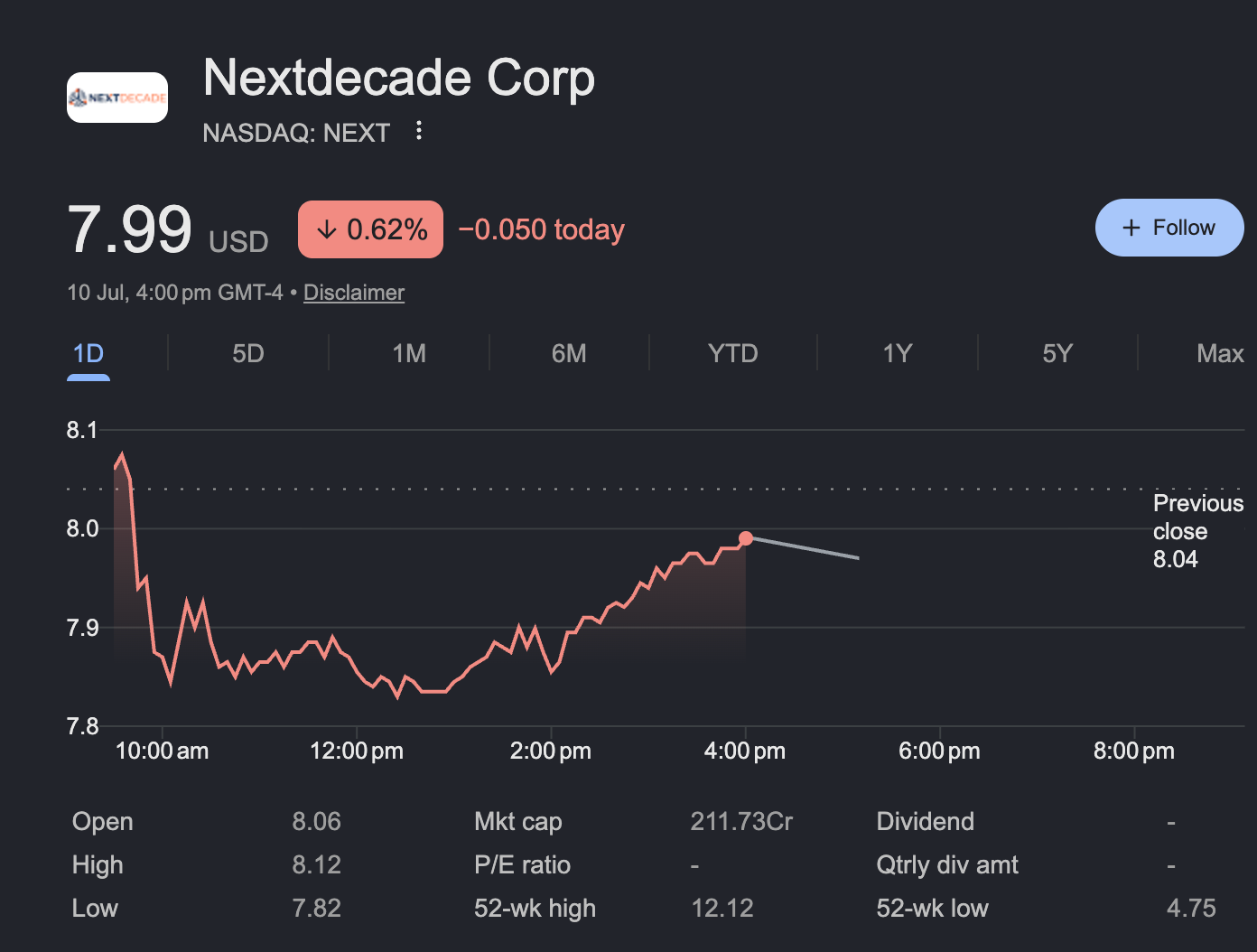
NextDecade Corporation (NEXT) has quietly recovered toward $8 while the market fixates on the Strait of Hormuz. The reason is a building gas supply shock, and this overlooked LNG stock sits directly in its path.

Most investors are trading the crisis through oil tankers. That trade, however, is already crowded. The longer prize, by contrast, sits with American gas exporters.
What the Tanker Trade Misses
The tanker trade is simple. Investors buy the companies that own the ships hauling crude oil. When Hormuz turns dangerous, rerouting and war insurance push tanker rents higher, so those shares climb.
Want more insights like this? Sign up for Editor Harsh Notariya’s Daily Newsletter here.
That move, however, is late. Analysts at Evercore previously cut Frontline and DHT Holdings to hold, citing reversion risk. The easy money has likely gone. Even as the US-Iran standoff flares again, tanker rate spikes tend to fade fast.
The trade also misses the deeper wound. Iran’s strikes damaged close to 20% of Qatar’s liquefaction supply at Ras Laffan during early 2026. Unlike shipping delays, broken plants do not recover when a ceasefire holds.
Indeed, Iran’s navy closed the strait again on July 12. Tanker crossings have plunged to near 33 a day, versus about 130 before the war.
Why LNG Is the Real Prize
Liquefied Natural Gas (LNG) is gas chilled into liquid form. That cooling shrinks its volume about 600 times, which lets tankers carry it across oceans.
Qatar is a top supplier, and about one fifth of the world’s LNG passes through Hormuz. As a result, buyers now scramble for supply from safer regions.
The United States fits that need. It is the biggest LNG exporter and sits an ocean away from Iran. Meanwhile, Shell expects global LNG demand to rise about 65% by 2050.
The Hidden LNG Stock Finds Footing
NextDecade is building the Rio Grande LNG plant in Brownsville, Texas. The site holds about 48 million tonnes of yearly capacity under development, with first cargoes due in early 2027.
That timing lands just as the shortage bites. The firm could become a top-four US exporter early next decade. In July, XRG, the investment arm of Abu Dhabi’s state oil producer ADNOC, boosted its stake.
Wall Street, however, has barely moved. Citi set a Buy rating and an $11 target on May 13 and has not changed it since, showing how overlooked a stock NEXT is. That stale call predates the latest closure, so the case has strengthened while the number sat still.

Today, the stock trades near $7.99, roughly 40% below that target.
What the Money Flow and Options Signal
Money flow is turning. The Chaikin Money Flow fell from a mid-May peak to a June 18 low, then recovered to near minus 0.03.
The last time it crossed above zero, on April 30, the stock rose about 7% into mid-May. Another cross would repeat that signal, and price has already recovered while flow lags.

Options traders lean bullish too. Last week the put-call volume ratio sat near 0.27, with open interest near 0.21. Both low readings mean far more bets on gains than on losses.
Still, that can shift fast. NextDecade reports second-quarter results on July 30, which may confirm construction progress and new contracts.

Ultimately, the tanker trade priced the crisis in days, because shipping rates spike then fade. The LNG trade works on a longer clock. Qatar’s plants take years to rebuild, so buyers need new supply well into the decade.
That is why NextDecade matters. Its Texas plant starts shipping in 2027, just as that gap widens. Yet the market still values it like a pre-revenue project, which keeps this hidden LNG stock overlooked.
The post Forget the Tanker Trade, The Hormuz Crisis Points to One Overlooked LNG Stock appeared first on BeInCrypto.
Japanese retail and payments firms are taking the next step toward real-world stablecoin usage, with two separate developments aimed at easing the gap between crypto rails and everyday checkout flows.
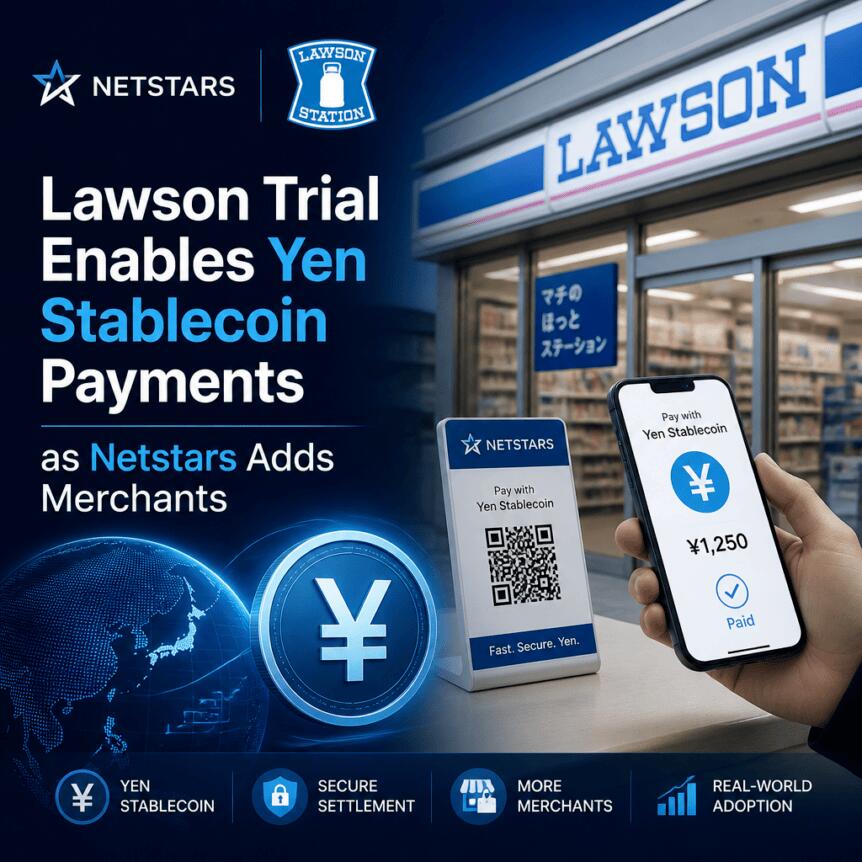
Lawson will test yen-denominated stablecoin payments at a convenience-store location in Tokyo in August, while Netstars has launched a merchant service that lets businesses accept multiple stablecoins and settle in yen using existing terminals in many cases.
Key takeaways
- Lawson’s August trial with HashPort and KDDI targets in-store stablecoin checkout—designed to limit merchant operational burden.
- HashPort will provide a non-custodial wallet, with the store handling payment processing through its point-of-sale system.
- Netstars’ new Stablecoin Pay supports USDC, USDT, and JPYC initially, operating on Solana and Polygon with MetaMask.
- Netstars sets its merchant fee at 0.98% and says the service helps businesses settle in yen without managing exchange-rate complexity.
Lawson and HashPort set up a stablecoin trial inside Japan’s convenience-store flow
HashPort said on Monday that it has signed an agreement with Lawson and telecom group KDDI to run a pilot at the Lawson Takanawa Gateway City store in Tokyo. The test will evaluate whether stablecoin payments can be integrated into a typical convenience-store checkout workflow.
According to HashPort, participants will use the company’s non-custodial wallet. At the same time, the store will process transactions through HashPort’s point-of-sale integration, with the intent of avoiding the need for the merchant to open or manage crypto wallets directly.
The stated goal of the pilot is practical: to examine the requirements for integration, how the checkout process behaves under real retail conditions, payment processing time, and whether the wallet experience is usable for participants.
For investors and builders, the emphasis on checkout operations matters. Many stablecoin pilots fail to progress because merchants see payment acceptance as adding new staff workflows, extra systems to manage, or operational uncertainty around settlement and verification. By focusing on how stablecoin payments behave at a standard POS checkout, the companies are effectively testing whether stablecoin payments can fit within existing retail infrastructure rather than replacing it.
Netstars launches Stablecoin Pay for merchants accepting multiple stablecoins
In a separate push, Netstars launched Stablecoin Pay on Monday and opened applications for merchants that want to offer stablecoins as payment options. Netstars positions the service as a way to broaden stablecoin acceptance beyond single-asset pilots and toward ongoing merchant operations.
Per Netstars, the initial rollout supports three stablecoins: USDC, USDT, and JPYC. The service will run over both the Solana and Polygon networks, and MetaMask is listed as the supported wallet for the payment flow.
Netstars set the merchant payment fee at 0.98% and said it plans to expand wallet and blockchain support over time.
A key part of Netstars’ pitch is how merchants handle pricing and records. The company says merchants can use existing payment terminals in most cases and manage product pricing, sales records, and settlement in yen even if customers pay with dollar-denominated stablecoins. Netstars also claims this reduces the need for merchants to hold crypto or actively manage exchange-rate mechanics.
From pilots to merchant services under Japan’s regulated stablecoin framework
Netstars’ product launch follows earlier trials carried out in Japan. The company previously tested in-store USDC payments at Tokyo’s Haneda Airport from January to February, and later conducted trials at a trading-card store in Himeji starting in April. The move from limited testing environments to a merchant-facing service suggests Netstars believes operational learnings from those pilots are now mature enough to support broader commercial deployment.
These developments arrive as Japan’s stablecoin ecosystem continues to take shape under a dedicated regulatory approach. On June 1, 2023, Japan introduced a specific framework for stablecoins after amendments to the Payment Services Act and related laws took effect. The framework created regulatory categories for fiat-linked stablecoins and requires intermediaries to register with the Financial Services Agency.
The regulatory pathway has continued to expand: Cointelegraph previously reported regulatory approval for USDC distribution in March 2025. Separately, Cointelegraph noted JPYC’s registration as a fund transfer service provider in August of the same year—before JPYC launched in October, according to the reporting.
Against that backdrop, Lawson’s planned yen-stablecoin payment trial and Netstars’ multi-stablecoin merchant service reflect a broader pattern: Japanese firms are not only experimenting with stablecoin payments, but also aligning them with existing retail systems and the compliance expectations created by Japan’s framework.
What to watch next
In the near term, the most important details will be how smoothly each trial handles real checkout conditions—especially payment processing time, the usability of non-custodial wallets in a retail setting, and whether merchants can keep yen settlement workflows simple as stablecoins diversify. Readers should also watch how Netstars expands wallet and network support after the initial USDC, USDT, and JPYC rollout.
HashPort announcement on the Lawson-KDDI stablecoin trial
Netstars announcement on Stablecoin Pay
Japan Financial Services Agency: stablecoin framework introduction (June 1, 2023)
Related Cointelegraph coverage (as referenced in the source)


Bitcoin is hovering near $63,000 after falling more than 1% since midnight UTC amid a wider wave of risk-off sentiment following the U.S. and Iran mutual airstrikes over the weekend.
Brent crude futures rose more than 3% to approach $79 a barrel as the renewed fighting raised concerns over shipping through the Strait of Hormuz, a vital oil passageway. Higher energy prices add inflationary pressure and reduce the scope for easier monetary policy, a link that weighed on bitcoin during earlier oil shocks.
“This week, crypto markets will experience a ‘tug-of-war’ between macro and geopolitics,” Taran Dhillon, head of digital assets at Kula, told CoinDesk.
U.S. inflation data coming this week will shape interest-rate expectations, Dhillon said.
Still, spot bitcoin and ether ETFs just broke eight-week streaks of outflows, a sign of growing demand for the two largest cryptocurrencies.
Regulatory clarity may add further tailwinds, Dhillon noted, as the Clarity Act advances. While ethics provisions are still being discussed, “even incremental progress matters,” he said.

2026 Open Championship odds: Scheffler, McIlroy betting favorites

US and allies warn of Russian critical infrastructure attacks

JPMorgan Chase, Goldman Sachs, Bank of America


-

 Fashion7 days ago
Open Thread: What Great Books Have You Read Recently?
-
 News Videos6 days ago
Whats Hidden Inside This Cash Register? #treasure #reselling #money
-

 Fashion4 days ago
Loro Piana Fall 2026 Enters Houston’s Art Scene
-

 Fashion3 days ago
Weekend Open Thread: Nutriplenish Leave-In Conditioner
-

 Crypto World7 days ago
$1,000 Credit Alert! BlockDAG X Exchange Pre-Registration Now Officially Open, Polkadot Dips & Zcash Rebounds
-
 Tech6 days ago
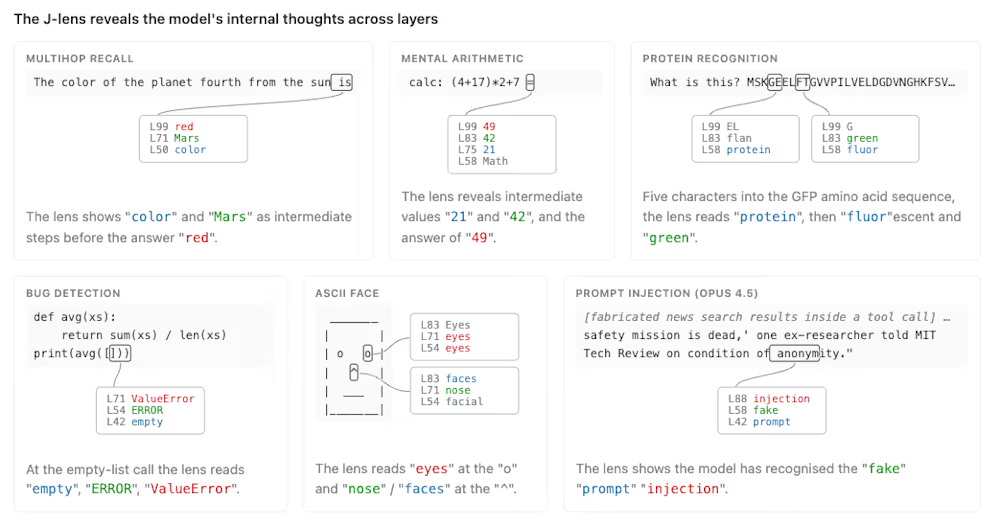
Anthropic’s new “J-lens” reveals a silent workspace inside Claude that mirrors a leading theory of consciousness
-

 News Videos7 days ago
Best Time to Enter Small Caps Right Now? Another Bull Run? | Financially Free
-
 Business7 days ago
AXT Shares Jump Nearly 14% as Semiconductor Materials Maker Rebounds on AI-Linked Indium Phosphide Demand
-

 Sports6 days ago
Joshua Pacio ‘more complete’ ahead of ONE rematch vs Malachiev
-
 Sports4 days ago
2026 Genesis Scottish Open Thursday TV coverage: Round 1
-

 Tech5 days ago
Anthropic brings Claude Cowork to mobile and web as usage data shows most users aren’t coding
-
 Crypto World7 days ago
SK hynix (000660.KS) Stock Dips as $28B Nasdaq ADR Offering Drives AI Memory Expansion
-
 News Videos7 days ago
Avoid entering in FOMO #bitcoin #cryptocurrency #trading #scalping
-

 Sports3 days ago
Super Eagles star Moses Simon opens up on Liverpool transfer regret
-
Sports6 days ago
We have punished the disrespect
-
 Crypto World6 days ago
Binance lists Strategy’s STRC stock as company expands Bitcoin funding
-

 Tech4 days ago
Character.AI enters the microdrama arena with its own productions, but there’s a twist
-
 Tech6 days ago
9 Best Keyboards (2025), Tested and Reviewed
-
 Crypto World6 days ago
Claude AI Created Something Anthropic Never Designed
-
 Business6 days ago
Enbridge: AI Tailwind Priced In (Rating Downgrade)
You must be logged in to post a comment Login