

Crypto World
Zcash Price Soars as Traders Rotate Into Privacy-Focused Crypto

Privacy-focused cryptocurrency Zcash (ZEC) has spiked by more than 70% over the past week as crypto traders have been paying closer attention to privacy-focused projects.
Zcash traded at about $346 on Friday, May 1, before hitting a seven-day peak of $593.86 on Wednesday. It has since settled at around $570 as of Friday, according to CoinGecko.
Pav Hundal, lead market analyst at crypto exchange Swyftx, told Cointelegraph that traders have begun paying closer attention to privacy projects “amid broader concerns about the impact of AI, quantum computing and financial surveillance on crypto.”
He added that ZEC was also boosted after Tushar Jain, the co-founder of the investment firm Multicoin Capital, said on Wednesday that it had “built a significant position” in ZEC since February.
Zcash is one of the more prominent privacy-focused cryptocurrencies, trailed by its significant rival Monero (XMR), and Jain said it is an attractive investment as “institutions will increasingly seek private assets to protect themselves” from what he claimed was a “political trend to seize private wealth.”
Several crypto firms have also recently released new privacy features. The Ethereum scaling solution Polygon launched private stablecoin payments on Sunday, while Aptos Labs’ privacy feature Confidential APT, which conceals token balances and transfer amounts, went live on the mainnet in April.
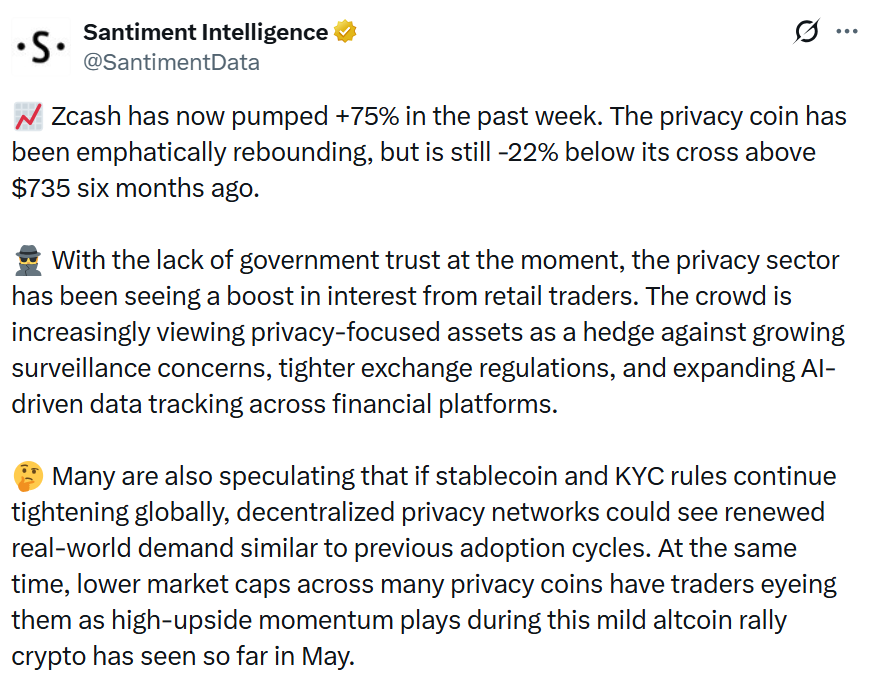
The market intelligence platform Santiment said in an X post on Wednesday that Zcash was “emphatically rebounding,” as fear of missing out and social media mentions of Zcash spiked along with its price.
Santiment pointed to a lack of government trust as a possible catalyst for the surge in interest from retail traders.

Source: Santiment
“The crowd is increasingly viewing privacy-focused assets as a hedge against growing surveillance concerns, tighter exchange regulations and expanding AI-driven data tracking across financial platforms,” Santiment said.
Related: Dash Evolution chain integrates Zcash Orchard privacy pool
“At the same time, lower market caps across many privacy coins have traders eyeing them as high-upside momentum plays during this mild altcoin rally crypto has seen so far in May,” it added.
Zcash rally could be short-lived
Privacy was a significant investment theme for crypto in 2025, with privacy-focused tokens surging last year despite a broader downturn in the rest of the market.
Zcash nearly crossed $700 in November, its highest price since 2018, while fellow privacy coin Monero reached a new all-time high of $797.73 in January.
However, neither held on to the gains, and Swyftx’s Hundal said that the recent rally could also be short-lived.
“Zcash’s move has some hallmarks of a narrative rotation into privacy coins,” Hundal said. “I’d be careful calling it a clean fundamental repricing just yet. We need more time to see how durable investor interest is.”
Magazine: Guide to the top and emerging global crypto hubs — Mid-2026

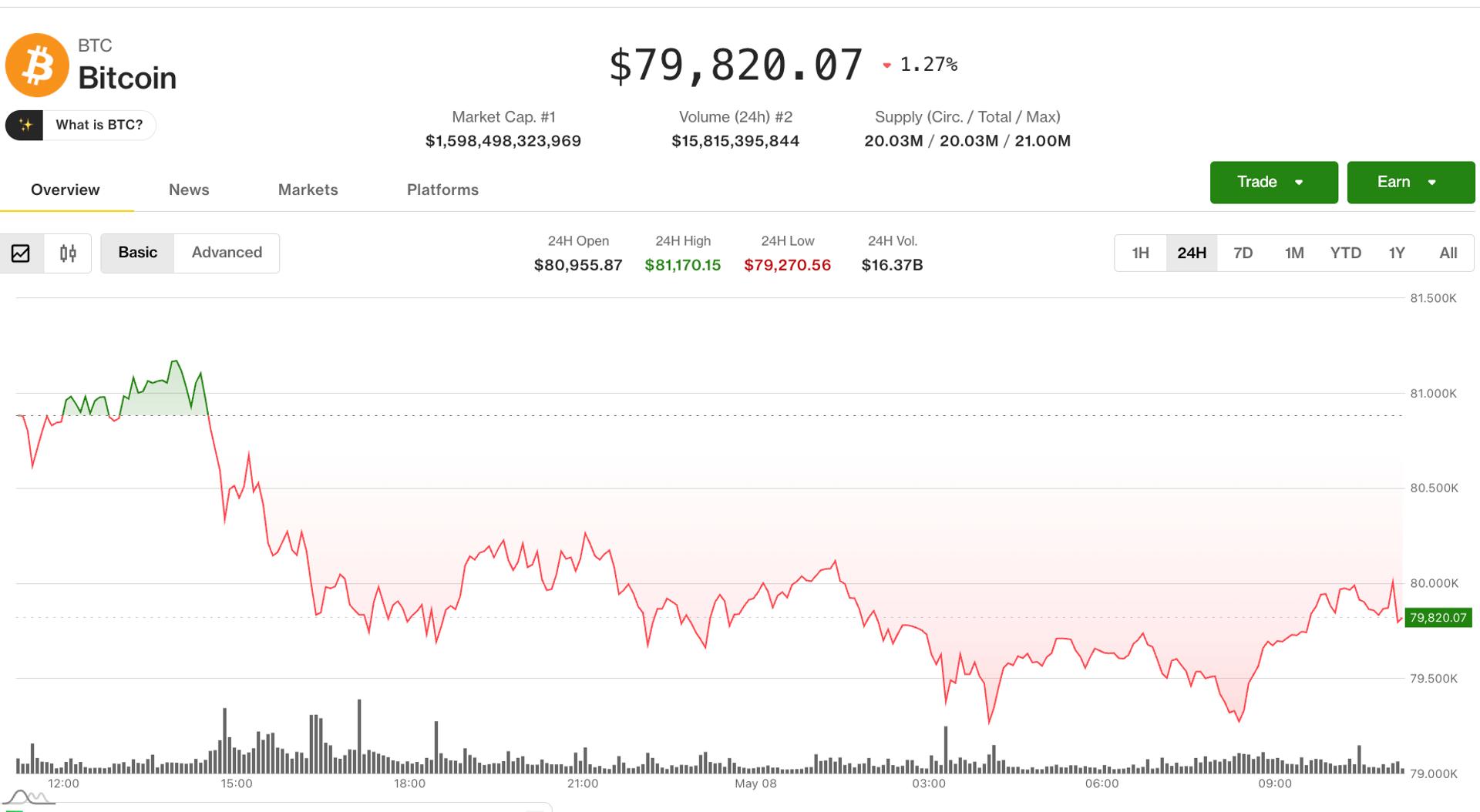
Bitcoin tumbled back below $80,000 late Thursday after the U.S. launched fresh airstrikes in Iran, causing brent crude oil to briefly top $100 per barrel before giving back a portion of gains during Asia and European hours.
The crypto market was already slightly jittery after Strategy chairman Michael Saylor said that the company would consider selling bitcoin to cover dividend payments from its STRC, a u-turn from its previous “never sell” strategy.
Ether (ETH) is trading at $2,280 having lost 0.2% since midnight UTC and around 2% over the past 24 hours, with other altcoins like monero (XMR) and dash (DASH) losing between 4% and 5%.
The broader crypto recovery remains intact with bitcoin having rallied from $65,000 in late March, although it’s worth noting that a drop below $75,000 would negate the recent string of higher lows and would signal a reversion to the pervious trading range.
Derivatives positioning
- The crypto futures market has cooled for the second-straight day, with cumulative industry notional open interest down over 1.5% at $131.5 billion and trading volume down over 12% at $191 billion. Investors are clearly deleveraging in the wake of bitcoin’s overnight drop below $80,000.
- Exchanges have liquidated nearly $300 million in bets in 24 hours, with longs accounting for most of the tally. It shows that traders were positioned for continued price rises into the weekend, only to take the brunt of the unexpected market weakness.
- Open interest (OI) has declined in most major tokens, including bitcoin and ether. Meme token DOGE’s OI has dropped by over 4%, the most among top 10 coins. TON is the standout, with OI rising by 6%.
- For the second straight day, OI-adjusted cumulative volume delta for most majors remains negative, a sign of traders aggressively shorting using market orders rather than passive limit orders.
- On Deribit, the most actively traded contract over the past 24 hours was a BTC $105,000 call option expiring June 26. Market positioning has also shifted, with the top five most traded contracts now including put options at $80,000, $75,000, and $60,000 strikes. This marks a clear change from the previous three sessions, when calls dominated trading activity.
- Bitcoin’s annualized 30-day implied volatility index, BVIV, remains near 40%, the lowest since late January, a sign of market calm ahead of the pivotal U.S. nonfarm payrolls report.
Token talk
- Despite relative weakness across crypto majors and privacy coins, CoinDesk’s DeFi Select Index (DFX) surged by more than 3% since midnight UTC, buoyed by an 8.2% gain in the price of ONDO.
- Ondo Finance is a real-world asset (RWA) project that on Thursday completed its first cross-border cross-bank redemption of U.S. treasuries having worked with JP Morgan, Mastercard and Ripple, driving price appreciation over the past 24 hours into Friday.
- The CoinDesk Memecoin Select Index (CDMEME) lost ground on Friday, posting a 0.1% swing to the downside to make it the only CoinDesk benchmark in the red.
- CoinMarketCap’s “altcoin season” indicator is at 42/100, significantly higher than in April when it was as low as 31/100. The total market cap of altcoins during that period has risen from below $1 trillion to $1.05 trillion.


South Korea has passed a new amendment to the Foreign Exchange Transactions Act, tightening control over companies that move crypto assets overseas.
Summary
- South Korea’s new bill puts overseas crypto transfer firms under finance ministry registration rules now.
- Travel Rule expansion may cover all crypto transfers, raising exchange verification and delay concerns nationwide.
- A 22% crypto gains tax from 2027 adds another regulatory deadline for traders and exchanges.
The revised law will require firms handling cross-border virtual asset transfers to register with the finance minister.
The rule covers businesses that move virtual assets between South Korea and foreign countries through sale, purchase, or exchange. Crypto exchanges, custody firms, and other transfer service providers fall under the new registration scope.
New bill creates transfer business category
The amendment creates a new legal category called a “virtual-asset transfer service.” This gives authorities a clearer way to track firms that support overseas crypto transfers, including stablecoin movements.
The government plans to bring these transfers into the foreign-exchange oversight system. Rep. Lim I-ja, chair of the National Assembly’s Strategy and Finance Committee, said the measure aims to build a virtual-asset monitoring system and support a sound foreign-exchange trading market.
Additionally, the new bill comes as South Korea prepares broader crypto compliance rules. Local industry groups have raised concerns about planned Travel Rule changes, including the removal of the current 1 million won threshold.
Under the current system, the Travel Rule applies to crypto transfers above 1 million won. Industry groups warned that wider checks could add delays, create return issues, and expose users to losses when prices move during verification.
Crypto tax deadline adds pressure
Related coverage also reported that South Korea plans to tax virtual asset gains from Jan. 1, 2027. Gains above 2.5 million won will face a combined 22% tax, made up of 20% income tax and 2% local income tax.
The National Tax Service is preparing guidance with major local exchanges, including Upbit, Bithumb, Coinone, Korbit, and Gopax. The first full filing period for affected investors is expected in May 2028, covering income earned in 2027.
South Korea has been moving toward cross-border crypto controls for more than a year. Reuters reported in 2024 that the finance ministry planned registration and monthly reporting rules for businesses handling overseas virtual asset trade.

Bitcoin-focused DeFi platform Solv Protocol announced that it is fully migrating to the Chainlink Cross-Chain Interoperability Protocol (CCIP) as part of its updated security strategy for cross-chain transactions.
The move will cover more than $700 million in Bitcoin-related assets across SolvBTC and xSolvBTC.
Solv Ends LayerZero Bridging Support
As part of the transition, Solv said it will discontinue LayerZero bridging support for SolvBTC and xSolvBTC on Corn, Berachain, Rootstock, and TAC. The platform explained that it is reducing risk exposure on its existing bridging stack and standardizing its infrastructure on Chainlink CCIP.
Solv described cross-chain bridges as one of the highest-risk areas in decentralized finance, while noting that vulnerabilities in bridge infrastructure can create significant systemic risks for the sector. The platform also confirmed carrying out a complete updated review of available cross-chain interoperability solutions before selecting Chainlink CCIP.
Commenting on the development, Chainlink Labs’ Chief Business Officer, Johann Eid, said,
“We are proud to work with the Solv team and support their migration to Chainlink CCIP as the standardized way that their wrapped Bitcoin assets are securely transferred cross-chain. Solv’s migration to CCIP reflects a broader shift across the DeFi industry of leading protocols adopting Chainlink to deliver the highest level of security required to bring the next billion users onchain.”
LayerZero Breach Fallout Deepens
Solv Protocol’s decision to migrate its cross-chain infrastructure to Chainlink comes weeks after the massive April 18 exploit involving LayerZero-powered KelpDAO, which resulted in losses of roughly $292 million. The attacker, reportedly linked to North Korea’s Lazarus Group, allegedly exploited weaknesses tied to LayerZero’s infrastructure, according to KelpDAO’s public statements.
The DeFi protocol pushed back against claims from LayerZero Labs that the breach stemmed from a configuration issue unique to KelpDAO. Instead, Kelp argued that the setup followed LayerZero’s official documentation and reflected a standard deployment model used by many applications across the ecosystem.
Kelp further claimed that LayerZero’s DVN signed forged transactions worth more than $100 million before the protocol paused its contracts and stopped additional losses. LayerZero later acknowledged in its postmortem that attackers gained access to RPC endpoints connected to its DVN and compromised multiple nodes during what it described as an RPC spoofing attack.
Following the exploit, KelpDAO announced plans to move away from LayerZero’s OFT standard and transition rsETH to Chainlink’s CCIP framework.
The post KelpDAO Hack Fallout Pushes Another DeFi Protocol Toward Chainlink CCIP Migration appeared first on CryptoPotato.

Overview
As an increasing number of people turn their attention to passive income opportunities within the digital economy, technologies such as smart contracts, cloud mining, and cross-chain asset deployment are redefining how average users participate in the cryptocurrency ecosystem. In contrast to traditional mining—which demands substantial hardware investment, complex maintenance, and specialized technical expertise—blockchain-based cloud mining platforms are rapidly gaining prominence, emerging as a more convenient and accessible alternative for the general public.
This article focuses on how beginners can get started with cryptocurrency mining using SHRMiner. It analyzes hardware solutions suitable for newcomers and aims to help users gain a clearer understanding of current trends within the cloud mining industry.
As a leading global platform for cryptocurrency cloud mining services, SHRMiner allows miners to rent mining rig hashpower without the need to own any physical hardware. The platform serves as a bridge connecting sellers of hashpower with buyers eager to participate in cryptocurrency mining. Unlike traditional mining pools—which often require technical configuration and manual wallet management—SHRMiner streamlines the entire process through an automated system. This platform automatically benchmarks hardware performance, selects the most profitable mining algorithms, and distributes payouts to miners in major cryptocurrencies such as Bitcoin, ETH, USDT, and USDC. For newcomers entering the cryptocurrency mining space in 2026, a solid understanding of hardware requirements, profitability calculations, and platform selection remains crucial for making informed investment decisions.
So, how can you earn Bitcoin with SHRMiner?
Once you have leased a mining rig and activated a hash rate contract, you can begin generating returns immediately.
You can start earning in just three simple steps:
1. Register
Create an account to receive $15 in free hash rate, allowing you to earn $0.60 daily by purchasing a free trial contract (click here to complete registration).
2. Select a Contract Plan
Choose a popular short-term or long-term cloud mining contract (ranging from 1 to 50 days) based on your personal needs.
3. Start Earning
Track your daily rewards and withdraw your earnings in your preferred cryptocurrency.
Generate Passive Income Through Daily Mining Rewards
Once your mining hardware is up and running, the mining process continues around the clock. The earnings generated from mining are automatically deposited into your account on a daily basis. This provides you with a steady stream of income without requiring any active effort on your part.
Popular Short-Term Contracts
SHRMiner offers a diverse range of high-yield cloud mining contract plans designed to cater to the varying investment preferences and financial goals of different users. Whether you are seeking flexible short-term returns or prioritizing stable long-term yields, you can find a suitable option on our platform.
Contract Yield Examples
- Entry-Level Bitdeer Sealminer A2 Pro Contract: $500 – 5 Days – Total Revenue: Approx. $531.25
- Intermediate Bitcoin Miner S21 XP Imm Contract: $5,000 – 25 Days – Daily Revenue (over 25 days): Approx. $70
- Professional Bitcoin Miner S21e XP Hyd Contract: $10,000 – 35 Days – Daily Revenue (over 35 days): Approx. $150
- Advanced ANTSPACE HW5 Contract: $50,000 – 45 Days – Daily Revenue (over 45 days): Approx. $900
For instance, by leasing a hash rate of 280 TH/s, a Bitcoin Miner S21e XP Hyd unit could generate approximately $150 worth of Bitcoin per day; you can track your earnings in real-time via your user dashboard.
Compared to DeFi staking or even yield farming within liquidity pools, SHRMiner offers greater stability and is less susceptible to market volatility. It represents a form of “real yield” derived from infrastructure-based operations, rather than speculative rewards. (Click here for more contract details)
Why Investing in SHRminer Is Worth It
The company operates in full compliance within the UK: holding a UK operating license to ensure both regulatory compliance and transparency.
It operates a global network of 150 large-scale mining farms and data centers, providing genuine mining hash power.
100% Remote Access: No hardware is required; you can track your earnings in real-time directly through the SHRMiner app or the platform’s website.
Utilizes McAfee® and Cloudflare® security protocols to safeguard user accounts and funds.
Full Ownership of Your Hardware: Eliminates third-party risks and requires no payment of additional service fees or hidden charges.
Mine, Track Earnings, Reinvest: All operations are managed from a single, unified platform.
The New Landscape of Mining: Secure, Flexible, and Profitable.
Security and Support: The platform integrates enterprise-grade security measures, uptime guarantees, and 24/7 customer support to ensure maximum reliability.
With SHRMiner, you don’t need to be a technical expert or manage your own hardware. You can invest directly in high-performance mining—enjoying complete transparency, zero operational costs, and stable daily returns.
The Final Verdict: Is SHR Miner a Good Tool for Passive Income?
The answer is a resounding yes—its AI-driven cloud mining capabilities are precisely where its strength lies. It offers a sustainable, transparent, and low-maintenance method for generating passive income through legitimate Bitcoin mining infrastructure. This distinct approach sets it apart from the multitude of other Bitcoin mining applications on the market. For those wondering if Bitcoin mining will remain profitable in 2026, SHRMiner represents a prudent choice. It is one of the few platforms capable of transforming mobile-based mining into a genuine source of passive income.
For more details, please visit the official website or download the mobile application.
For more details:
Crypto World
S&P 500 call options volume surges to record $2.6 trillion. Here’s what it means for bitcoin
The U.S. stock market is heating up in a way that suggests speculative mania. It matters to bitcoin as analysts have linked the cryptocurrency’s recent rally to increased risk-taking on Wall Street.
The overheating signals come from options tied to the S&P 500. These are derivative contracts that let traders bet on or hedge against moves in the index. A call option is a bet that the index will rise above a certain price within a set time. A put option does the opposite, offering protection from declines in the index.
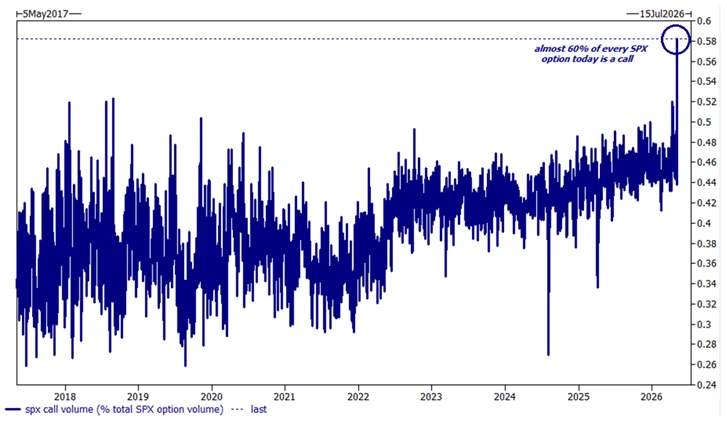
On Wednesday, U.S. equity derivative exchanges registered a notional volume of $2.6 trillion in S&P 500 call options, according to data tracked by Zero Hedge. That amounted to 60% of total S&P 500 options activity. To put it into context, the notional amount nearly matched the total crypto market valuation of $2.73 trillion, which represents the combined capitalization of thousands of cryptocurrencies, with bitcoin leading the way.
In essence, the majority of market participants were positioned for upside through calls or bullish exposure.
On the surface, the implication for bitcoin is straightforward: it is bullish. A speculative surge in the S&P 500 could spill over into crypto, driving valuations higher. After all, double-digit gains in the S&P 500 and Nasdaq since early April played a big role in lifting bitcoin to $80,000 from under $70,000 a few weeks ago.
QCP Capital put it best early this week when BTC broke above $80,000: “After a solid April, BTC has begun May on firm footing, breaking above $80k for the first time since January 31. The move appears aligned with equities, reinforcing a broader trend as BTC’s correlation with U.S. stocks climbing back toward 2023 levels, signaling a renewed linkage with risk assets broadly.”

That said, the outsized investor bias for bullish exposure in the S&P 500 has raised alarm on social media, with several handles calling it a sign of an overcrowded trade. When too many investors lean in the same direction, in this case, heavily bullish, it leaves the market more vulnerable to sharp reversals in sentiment and positioning if price momentum stalls.
It’s not just social chatter either. Media reports have also cited Goldman Sachs analysts describing the market as being in a “semi-irrational chasing mode,” a phrase widely read as a play on the semiconductor-driven surge in equities.
If that’s not enough, the bullish momentum in the Nasdaq-listed PHLX Semiconductor Sector index (SOX), as measured by the 14-week relative strength index, is strongest since 1999, according to data source TradingView.
All of that is hinting at speculative frenzy. If it unwinds just as quickly, downside volatility could spill over into bitcoin and the broader crypto market, given their positive correlation. Let’s see how things unfold…
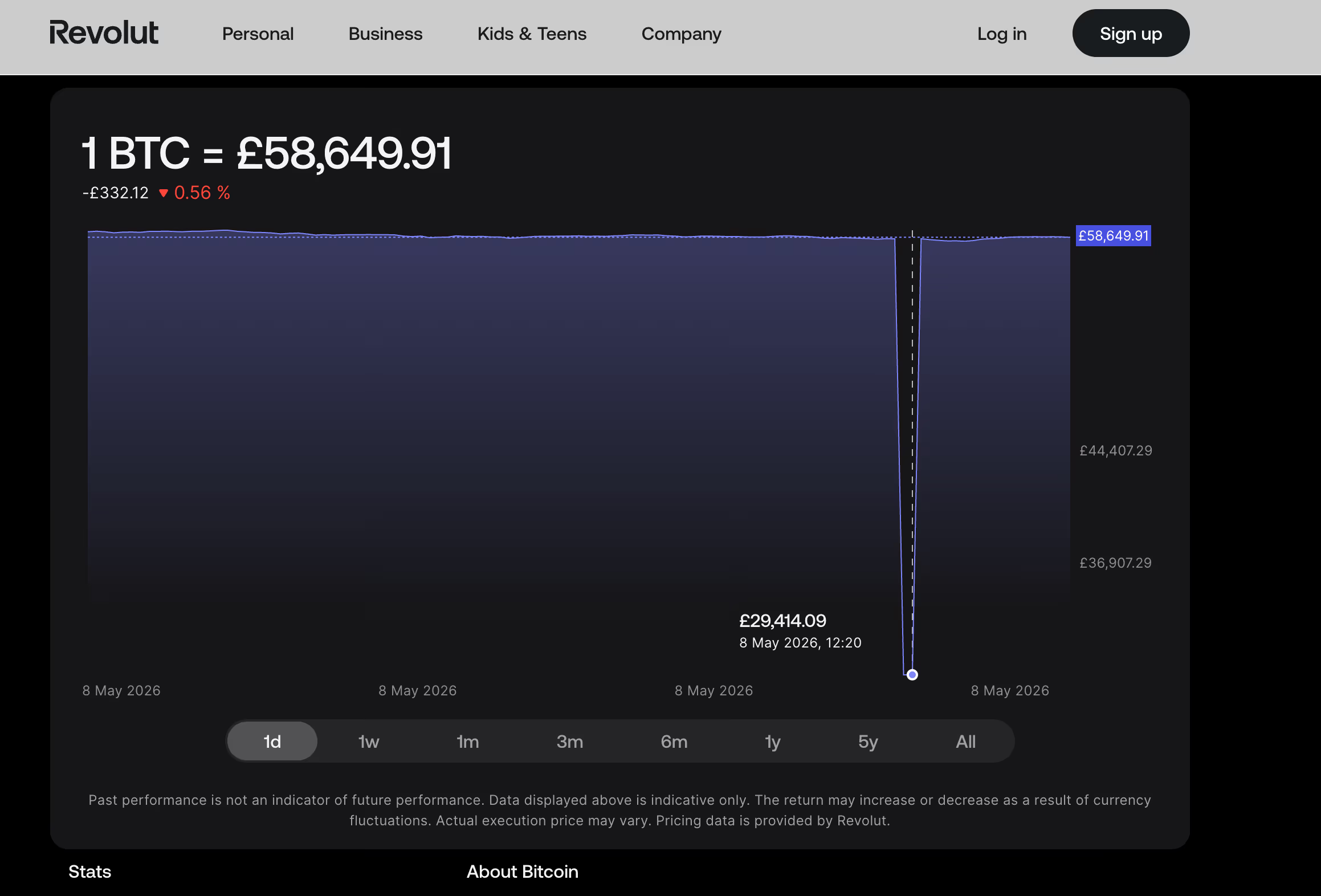
Some Revolut users saw bitcoin briefly display far below market prices on Friday, with app charts showing a sudden plunge before snapping back near prevailing levels, in what appeared to be either a pricing display issue or a liquidity-related dislocation.
Revolut’s official bitcoin page shows BTC briefly marked around £29,414 on Revolut’s one-day chart before returning near £58,600. Other social media posts claimed the app showed even lower prints, including near-zero prices as low as 2-cents, though CoinDesk could not independently verify those levels or confirm whether any trades were actually executed there.

The issue seemed isolated as no exchange on lists tracked by CoinGecko and CoinMarketCap showed any bitcoin price anomaly. It trades just over $79,000 as of Asian afternoon hours Friday.
Revolut had not responded to a CoinDesk request for comment by publication time.
Some users on X claimed buy orders executed during the disruption, but those reports remain unconfirmed. If trades were filled, Revolut would likely have to determine whether the prints reflected legitimate liquidity, stale quotes, a routing issue or a platform-side pricing error.
Flash moves in crypto apps can happen for several reasons. A display glitch can show an incorrect price without actual market execution. Thin liquidity on a specific venue or internal pricing rail can also produce sharp wicks if an order sweeps through a shallow book.
“Revolut operates with limited liquidity depth compared to a full exchange, and if a large enough sell order hit a thin book at the wrong moment, it could exhaust all available bids down to that level before the price recovered,” Ranveer Arora, co-founder and CEO of Altura, told CoinDesk in message as a possible explanation.
In other cases, market makers briefly pull quotes, spreads widen, and apps relying on aggregated feeds may display prices that do not match deeper global markets.
Crypto has seen similar isolated dislocations before. Bitcoin briefly printed far below market on Binance’s USD1 pair in December in a move tied to a thinly traded pair rather than broader selling. South Korean exchanges also saw sharp local wicks during the country’s martial-law shock in 2024 as activity surged and local order books briefly broke from global prices.

Five of the most powerful banking trade groups in the United States are allegedly running a coordinated campaign to kill the CLARITY Act. This is likely happening even as Senate lawmakers lock in a committee markup for the week of May 11, which targets President Trump’s desk before July 4.
The American Bankers Association, the Bank Policy Institute, the Consumer Bankers Association, the Financial Services Forum, and the Independent Community Bankers of America issued a joint rejection of the Tillis-Alsobrooks stablecoin compromise language. The same compromise their representatives helped negotiate over months of closed-door talks.
— Coin Bureau (@coinbureau) May 5, 2026
 BANKS STILL OPPOSE THE CLARITY ACT STABLECOIN COMPROMISE
Major U.S. bank trade groups say the new stablecoin yield fix “falls short,” even after senators signaled the deal is likely final.
The latest deal would ban crypto firms from paying interest or yield just for holding… pic.twitter.com/BNtZZf18KV
The TradFi vs DeFi fault line running through crypto policy has never been more visible. With the CLARITY Act advancing through the Senate and institutional capital watching every procedural move, the banking lobby’s last-ditch push to stall stablecoin regulation is setting up a defining confrontation in American financial policy.
Banks Claim a 20% Capital Drain, But…
The banking coalition’s stated objection centers on Section 404 of the CLARITY Act, which governs yield restrictions on payment stablecoins. The coalition argues the Tillis-Alsobrooks language contains loopholes, specifically that digital asset exchanges can still distribute rewards tied to customer tenure, account balances, and duration, even if those rewards aren’t technically labeled as interest.
It is reported that banks’ internal research claims yield-bearing stablecoin alternatives could siphon enough liquidity to reduce available capital for consumer, small-business, and agricultural loans by as much as 20%.
The American Bankers Association escalated beyond lobbying on May 6, launching targeted Washington, D.C., media ads, funded by over 3,000 member banks at an estimated $2.5 million budget, framing stablecoin yield mechanisms as “unregulated deposit theft.” A planned Capitol Hill fly-in with 200 bank CEOs on May 9 is designed to apply direct pressure on Senate offices before amendments close on May 10.
LATEST:
Joint statement from Sen. Thom Tillis and Sen. Angela brooks on the stablecoin yield compromise signals the deal is likely FINAL amid pushback from banking trades:
"Our compromise also allows crypto companies to offer other forms of customer rewards. Most… pic.twitter.com/pWN5p1jhOp— Coin Bureau (@coinbureau) May 5, 2026
The coalition also points to a 2026 OCC report estimating $300 billion in deposit flight risk by 2028 if Section 404 loopholes go unaddressed, and Federal Reserve data showing $120 billion in crypto stablecoin reserves already mirroring money market fund yields.
Senator Tillis, who co-authored the compromise, pushed back directly, stating that traditional financial stakeholders had a seat at the negotiating table for months, that the current text explicitly prohibits stablecoin rewards from functionally mimicking bank deposit interest. The senator also noted that certain factions may simply oppose any passage of the CLARITY Act, using the stablecoin yield debate as a mechanism to stall the bill indefinitely.
Discover: The best crypto to diversify your portfolio with
Crypto Industry Sees $1 Trillion on the Line, and CLARITY Act Obstruction in Plain Sight
The crypto industry’s read on the banking lobby’s strategy is blunt. Alex Thorn, head of research at Galaxy Digital, noted that Senator Tillis absorbed significant criticism from the digital asset sector specifically for bringing banks into the negotiation in the first place, and that the coalition’s rejection of the resulting concessions exposes an underlying strategy of obstruction rather than constructive amendment.
Galaxy Digital analysts also project that CLARITY Act passage could unlock $1 trillion in institutional inflows by establishing the regulatory certainty that has kept major capital on the sidelines.
Coinbase CEO Brian Armstrong called the banks’ tactics “anti-competitive sabotage”, arguing that yield restrictions would stifle user incentives for 15 million U.S. stablecoin holders already accustomed to real-world stablecoin utility in payments and settlements.
Coinbase CEO Brian Armstrong:
“Banks are quietly working behind the scenes to sabotage President Trump’s pro-crypto agenda
all to protect their own massive profit margins.”
They’re choosing Wall Street profits over everyday Americans’ financial freedom.
The fight for real money pic.twitter.com/TQ8SQCgXVc— Trump Supporterr
(@Trump401k) April 6, 2026
White House Crypto Czar David Sacks sharpened the administration’s position, stating that “banks’ greed or ignorance is blocking America’s digital future” and confirming Trump administration backing for the bill.
Senator Cynthia Lummis, chair of the Senate Banking Subcommittee on Digital Assets, issued the starkest call yet:
“The digital asset industry has waited long enough. Businesses are making decisions where to build RIGHT NOW, and without clear rules, too many will go overseas. We must get Clarity done now. America’s financial future depends on it.”
The banking lobby is not fighting a loophole. It is fighting a bill that works.
Discover: The best pre-launch token sales
The post CLARITY Act: Banking Lobby Targets Stablecoin Bill in Crypto Policy War appeared first on Cryptonews.

Nearly half of US voters are willing to cross party lines to get clear crypto regulation off the ground, while public support for the CLARITY Act could bring an electoral benefit for politicians, according to a new survey from HarrisX.
The poll included responses from 2,008 registered voters from May 1-4. It found that 52% of respondents support the CLARITY Act, with just 11% opposed.
About half, or 47%, said they would consider voting for a candidate outside their preferred party if that candidate backed the bill and their own party did not. Among crypto users, that number jumped to 72%.
“Passing the CLARITY Act is a bipartisan, winning issue,” Coinbase CEO Brian Armstrong said on X on Thursday. Robinhood CEO Vlad Tenev added: “There’s real momentum now to finally get CLARITY across the finish line. One more small push and we establish the legislative foundation to ensure American dominance in digital finance.”

Source: HarrisX
The crypto industry has been waiting for the CLARITY Act to move through the US legislative process. It is expected to provide long-awaited regulatory clarity for crypto and could help the country become a major hub for crypto and digital finance.
The HarrisX poll also highlighted strong bipartisan support for the bill, with 55% of Democrats, 58% of Republicans and 42% of independents supporting it. Public support for the bill could also give senators a 20-point electoral advantage, it said
Related: Bitmine’s Tom Lee says ‘crypto spring’ has already begun
Some predict the CLARITY Act will receive additional markups as soon as next week.
Speaking at the Consensus 2026 crypto industry conference in Miami on Wednesday, Coinbase’s vice president of US policy, Kara Calvert, said her “prediction is that we have a markup next week” from the Senate Banking Committee.
Calvert stressed that bipartisan support will get the bill across the line, saying it needs at least 60 votes to pass the Senate, but she is unsure how things will unfold in the coming days.
“That means you need Democrats. You need a bipartisan bill, and we have all been working really hard to make sure that bipartisanship holds. I think the big question is, how do these votes shape up over the next few days?”
The timeline for a vote may still be months away, however. US Sen. Kirsten Gillibrand recently suggested additional markups are required before the bill can progress, predicting a Senate vote in August.
Magazine: Guide to the top and emerging global crypto hubs — Mid-2026
Arbitrum delegates approved the release of $71 million in ether frozen after last month’s Lazarus-linked rsETH exploit, setting up a direct clash between decentralized governance and an active U.S. court fight over who owns the funds.
The on-chain vote, which closed Friday afternoon Hong Kong time with more than 90% support, authorizes the release of 30,765 ETH frozen by Arbitrum’s Security Council after the April 18 exploit, when attackers used unbacked rsETH tokens as collateral on Aave to borrow roughly $230 million in ETH from the protocol.
The funds are earmarked for a coordinated industry recovery effort led by Aave, KelpDAO, LayerZero, EtherFi and Compound, aimed at making affected users whole.
But the frozen ether is also at the center of an escalating legal dispute in Manhattan federal court.
Last week, attorney Charles Gerstein, representing families holding roughly $877 million in unpaid terrorism judgments against North Korea, served a restraining notice on Arbitrum DAO claiming the frozen ETH constitutes North Korean property because the exploit has been widely attributed to Pyongyang’s Lazarus Group.
That triggered an emergency legal fight.
Aave moved earlier this week to vacate the restraining notice, arguing the assets belong to innocent users, not North Korea, and warning that continued delays risk “cascading liquidations” and broader instability across decentralized finance markets.
Gerstein fired back Tuesday, arguing the exploit was not theft but fraud, meaning the attackers obtained legal title to the ETH by deceiving Aave’s lending markets with worthless collateral.
Friday’s governance vote does not mean the funds move immediately.
Because the measure was structured as a Constitutional AIP under Arbitrum’s governance framework, the transfer cannot be executed for at least eight days, giving the Manhattan court time to intervene before any ETH moves.
Arbitrum delegates were also not voting blindly to the legal risk. The proposal included indemnification protections for the Arbitrum Foundation, Offchain Labs, Security Council members, and governance delegates against certain claims arising from either freezing or releasing the ETH, underscoring how unusual the stakes around the vote had already become.
Speaking at Consensus Miami this week, Aave Labs Chief Legal and Policy Officer Linda Jeng said the exploit had already forced the protocol to rethink its risk framework, expanding collateral standards beyond financial metrics to include cybersecurity, interoperability, and technical architecture reviews.
Jeng, who worked as a regulator during the 2008 financial crisis, drew a contrast with traditional finance’s taxpayer-backed rescues.
“In the financial crisis, we had to bail out the banks,” she said. “Here, we came together as an ecosystem to bail ourselves out.”
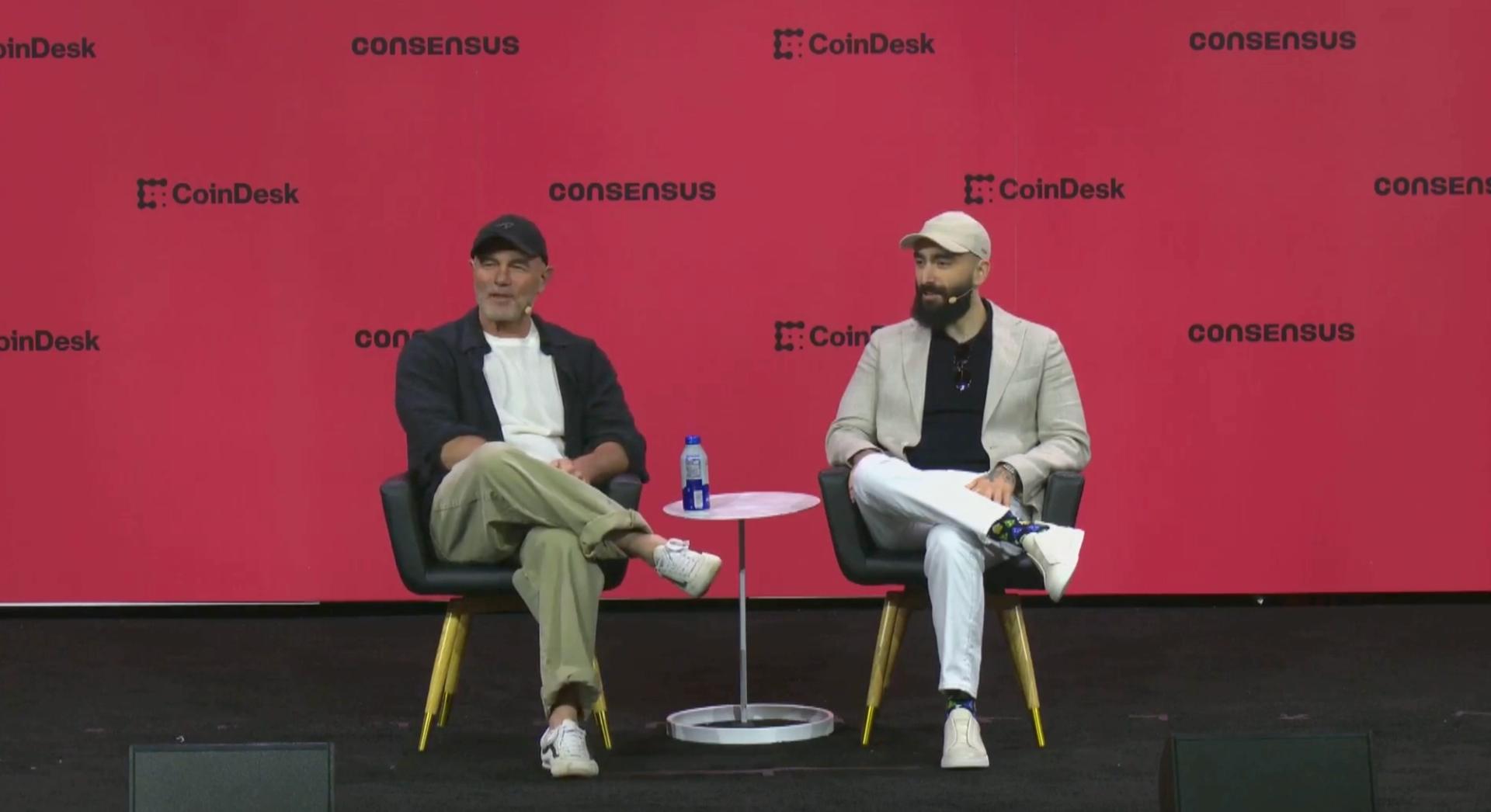
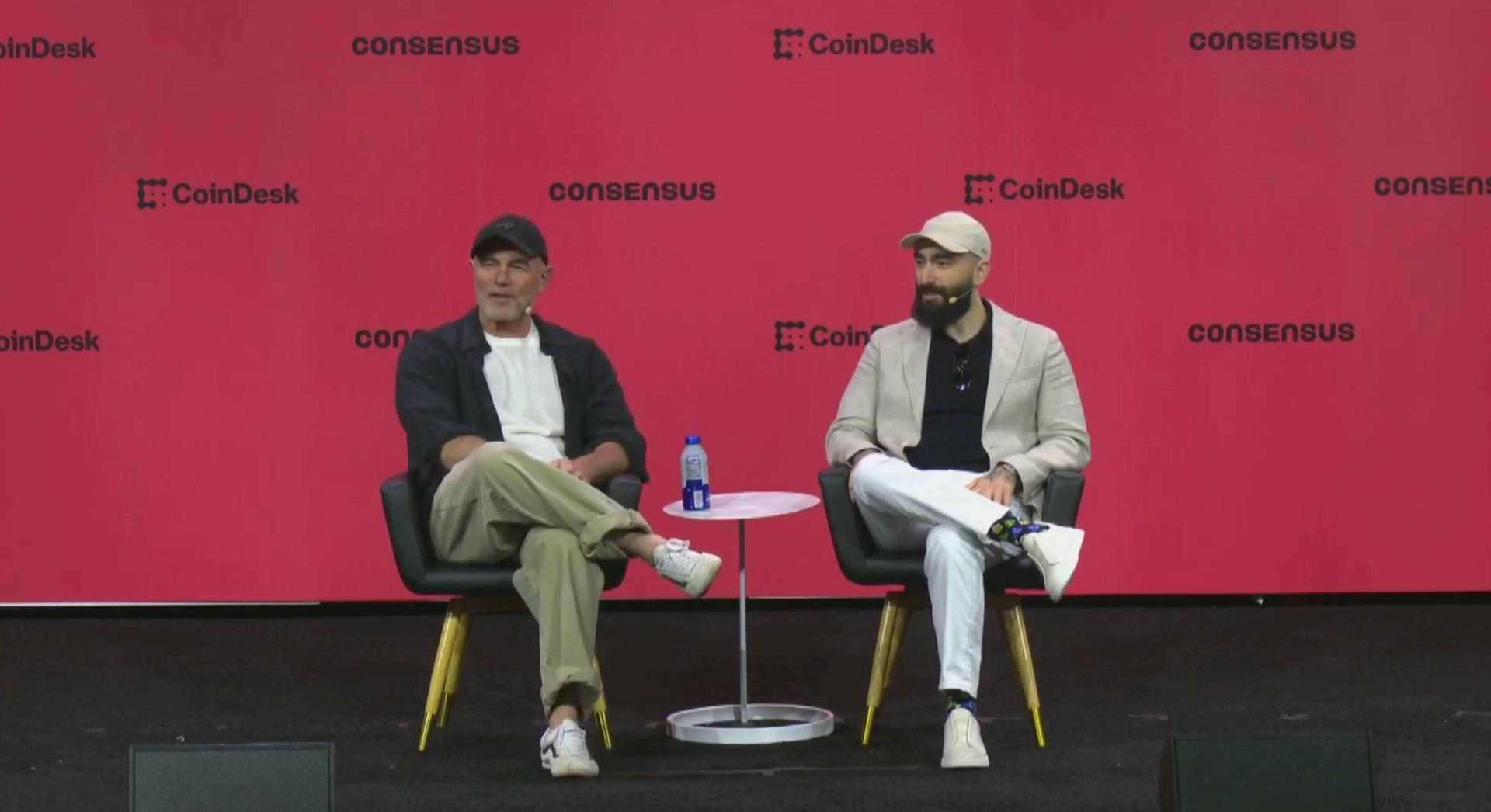
Zcash will roll out quantum-recoverable wallets within a month and reach full post-quantum status within 12 to 18 months, Zcash Open Development Lab founder and CEO Josh Swihart told a Consensus Miami audience on Thursday in a session moderated by Solana infra firm Helius’s founder Mert Mumtaz.
A separate scaling track is targeting MasterCard- and Visa-scale throughput on a similar horizon.
The roadmap arrived during a ZEC rally that has lifted the token more than 110% over the past 30 days as prominent crypto fund Multicoin Capital disclosed a sizable ZEC investment and the privacy narrative caught on among investors, sentiment daata shows.
Swihart’s pitch was that Bitcoin no longer holds up as the cypherpunk-grade money it was meant to be. The asset works as an ETF wrapper and a store of value, he said, but as a peer-to-peer private payment system “it’s just fundamentally broken.”
Visible balances on a transparent ledger let governments seize what they can see, he argued, the same wealth-visibility critique Multicoin’s Tushar Jain leaned on this week when disclosing the fund’s purchases.
The user-side traction is running through the Electric Coin Company’s mobile wallet after an October integration with Near Intents opened cross-chain swaps from assets like BTC, SOL and USDC directly into shielded ZEC.
Near Intents lets a user state what they want, like turning USDC into ZEC, while specialized routers handle the multi-step trade across different blockchains in the background.
Roughly $600 million to $700 million has flowed through that route since launch, mostly to and from USD and USDC, Swihart said. Near’s broader intent-based system has processed close to $800 million in volume over the past 30 days alone, per Near Protocol data, with Ethereum, Solana and Zcash dominating the chain side.
A separate proposal to cut Zcash’s target block time from 75 seconds to 25 seconds is in active discussion on the project’s community forum, with bridges to Solana and Hyperliquid already live, Mumtaz noted.
Token-holder voting through Zashi is also slated, Swihart said, less as formal governance and more as an opinion layer feeding the project’s existing rough-consensus model.
For traders, the cleanest near-term test is whether quantum recoverability actually ships within Swihart’s stated month. The fail-safe is the shielded pool, which now sits at roughly 30% of circulating ZEC, an all-time high. If it keeps growing alongside price, the rally is being underwritten by adoption rather than speculation

Tap on the Tutt pub in Boroughbridge, North Yorkshire
Form 6K Zeta Network Group For: 8 May

Crypto traders rush to hedge after bitcoin drops below $80,000: Crypto Markets Today

Manchester United reach agreement with Casemiro over contract clause amid transfer speculation

US brings back mandatory military draft registration

Steven Gerrard disagrees with Gary Neville over ‘shock’ Chelsea and Arsenal claim | Football


-

 NewsBeat5 days ago
Channel 5 – All Creatures Great and Small series 7 new post
-

 Crypto World1 day ago
Upbit adds B3 Korean won pair as Base token gains Korea access
-
 NewsBeat1 day ago
NCP car park operator enters administration putting 340 UK sites at risk of closure
-
 Tech7 days ago
Trump’s 25% EU auto tariff breaches Turnberry Agreement that also covers semiconductors and digital trade
-
 Sports7 days ago
Paul Scholes issues Marcus Rashford reality check as agreement emerges over Man United star
-

 Entertainment7 days ago
Met Gala 2026 Rumored Guest List Is Turning Heads
-
Entertainment7 days ago
New on Prime Video in May 2026 — Full List of Movies and Shows
-

 Entertainment6 days ago
Kylie Jenner Hit With Second Lawsuit From Ex-Housekeeper
-

 Sports6 days ago
Cavaliers vs. Raptors Game 6 live score, updates, highlights from 2026 NBA playoffs first-round series
-
 Sports6 days ago
David Benavidez responds to team Canelo saying the fight will never happen
-
Entertainment5 days ago
New Netflix Movies in May 2026 — My Top 3 Picks to Stream
-

 Entertainment5 days ago
Melissa Joan Hart and More Stars Attend 2026 Kentucky Derby
-
 Sports6 days ago
IPL 2026: ‘Love you darling’- Hardik Pandya’s reaction to MS Dhoni steals the show |Watch | Cricket News
-

 Entertainment6 days ago
Young and the Restless Next Week: Cane Arrested & Matt’s Deadly New Scheme!
-
 Crypto World6 days ago
Pi Network Mandates Protocol 23 Upgrade for All Mainnet Nodes Before May 15 Deadline
-

 Business5 days ago
Luka Doncic Injury Update: Doncic’s Hamstring Recovery Slows Lakers’ Hopes Against Thunder: Can He Run Yet?
-

 Tech7 days ago
Mother’s Day 2026 Gift Guide: Audio to Upgrade Mom’s Lifestyle
-
Crypto World1 hour ago
HarrisX Poll Found 52% of Registered Voters Support the CLARITY Act
-

 Sports7 days ago
What Preity Zinta Said After Punjab Kings’ First Defeat Of IPL 2026
-

 Business6 days ago
Can Victor Wembanyama Bring the NBA Ring to Spurs in 2026? Historic Playoff Run Fuels Title Dreams
You must be logged in to post a comment Login