
Crypto World
Zcash targets Nov. 5 for NU7 mainnet upgrade

Zcash developers have targeted Nov. 5 for the NU7 mainnet upgrade after ecosystem engineering teams agreed on a package featuring 25-second blocks, version 4 transaction deactivation and a Network Sustainability Mechanism, with testnet activation planned for Oct. 6.
Summary
- Zcash targets November 5 for NU7 mainnet activation after testnet deployment scheduled for October 6.
- NU7 would cut block spacing from 75 seconds to 25 seconds under draft ZIP 218.
- Coinholders backed existing halvings with 98.9% support and February 2031 NSM reissuance with 96.6% support.
- Version 4 transactions would be disabled at activation, preventing further spending from legacy Sprout funds.
- Developers will make the final mainnet decision October 20 after reviewing NU7 testnet performance carefully.
Sean Bowe said in a Sept. 17 community update that the Zcash Foundation, Project Tachyon, Valar Group, ZODL, Shielded Labs and the relevant engineering teams had reached “unanimous agreement” on the planned scope and timetable. The Nov. 5 date remains subject to a final Oct. 20 mainnet decision after developers review testnet behavior.
Zcash NU7 testnet is scheduled for October 6
The current development schedule sets Sept. 30 as the feature-completion cutoff. Code intended for NU7 should be implemented and ready for inclusion in the testnet upgrade by that date, according to Bowe’s timeline.
Testnet activation follows on Oct. 6. Developers then plan to observe network behavior for two weeks before deciding the mainnet activation height on Oct. 20. The current Nov. 5 mainnet date would proceed only after that review.
The announced scope does not introduce a new transaction format. Bowe said wallets are not expected to require major changes from NU7 itself, while full nodes, indexers and block explorers may need adjustments to handle the new consensus rules.
The current Zcash ZIP repository still describes NU7 proposals as candidates and says the deployment ZIP will determine the final package. That repository has not yet replaced the draft deployment process with a finalized mainnet specification, so the Oct. 20 decision remains an important step before activation.
As previous governance coverage reported, the latest coinholder poll involved nearly 2.4 million ZEC, representing roughly 66% of the eligible Ironwood balances at the voting snapshot.
NU7 would cut block times from 75 to 25 seconds
ZIP 218 proposes reducing Zcash’s target block spacing from 75 seconds to 25 seconds, which would produce roughly three times as many blocks over the same period. The proposal keeps daily ZEC issuance unchanged by reducing the subsidy paid per block to account for the faster schedule.
The draft says a first confirmation would arrive after an average target interval of 25 seconds instead of 75 seconds. Developers present the change as useful for payments, exchange deposits and cross-chain operations that currently wait for one or more block confirmations.
Faster blocks would come with new action limits. ZIP 218 sets a maximum of 330 actions across all pools per block, including no more than 330 Orchard actions, 300 combined Sapling inputs and outputs, and 25 Sprout JoinSplits.
The draft estimates that the configuration would lift Orchard throughput from roughly 2.9 transactions per second to 6.6 for two-action transactions. At the same time, its model reduces maximum shielded-wallet synchronization bandwidth under the specified denial-of-service scenario from 271 MB per day to 169 MB.
More blocks create extra overhead. ZIP 218 estimates wallets would download around 200 KB more compact-block header data per day. Full-node synchronization demand rises because three times as many blocks must be processed over a comparable period.
Testing examined the increased stale-block risk. The draft estimates a theoretical stale rate near 3.26% at 25-second spacing. A devnet with 99 geographically distributed Zebra nodes and 2 MB blocks produced a 4.86% stale-block rate and 0.37% fork rate during testing.
The proposal remains classified as Draft, meaning the technical specification can still change before final deployment.
Halvings stay while NSM reissuance waits until 2031
The latest governance results rejected replacing Zcash’s existing halving schedule with the original issuance-smoothing proposal.
Coinholders representing 2,375,932.375 ZEC voted to preserve halvings, compared with 22,384.875 ZEC supporting a smooth issuance curve. The result gave the halving option roughly 98.9% of participating ZEC on that question.
For when ZEC removed through the Network Sustainability Mechanism should begin returning to circulation, 2,319,643.750 ZEC backed February 2031. Roughly 70,240 ZEC favored starting as soon as possible, while 6,283 ZEC selected February 2027.
Zcash Foundation, Project Tachyon, ZODL, Shielded Labs and Valar Group subsequently agreed to use February 2031, describing it as the most conservative reading of the mixed community polls. They said another vote could revisit that date later.
Bowe’s NU7 timeline therefore references an alternative NSM implementation that preserves halvings while allowing future reissuance to start in 2031. The ordinary ZIP 234 draft still describes smoothing the subsidy through an exponential-decay formula, so it should not be confused with the configuration selected after the September vote.
ZIP 235 specifies that at least 60% of transaction fees would be removed from circulation, with the remaining 40% available for miners. The removed ZEC is designed to return later through future block subsidies instead of being permanently destroyed.
The selected February 2031 timetable means fee-derived ZEC collected through the NSM could remain outside circulation for years before reissuance begins, assuming the planned rules survive final technical review.
Version 4 shutdown would stop Sprout spending
NU7 is expected to disable version 4 transactions when the upgrade activates. ZIP 2003 states that v4 deactivation prevents Sprout funds from being spent because the newer v5 transaction format does not support the original Sprout shielded pool.
The proposal does not technically burn or unissue remaining Sprout balances. Its specification leaves open the possibility that developers could later restore a recovery mechanism, but no such future retrieval feature is promised.
Sprout has been largely unused for years. Zcash Foundation’s governance material said the pool held less than 23,000 ZEC and accounted for under 0.1% of transaction volume when the NU7 questions were put to voters.
Coinholders backed immediate v4 deactivation at NU7 in the September poll. The decision follows Zcash’s migration toward Sapling, Orchard and the newer Ironwood architecture, which became active with NU6.3 earlier in 2026.
Zebra’s current production releases already support NU6.3, while the Foundation has spent 2026 hardening node behavior ahead of later upgrades. Earlier Zebra releases widened the local rollback window from 99 to 1,000 blocks as a defense against prolonged consensus splits.
ZEC rallies while the mainnet date remains conditional
ZEC has risen sharply during the governance process, though the market move cannot be attributed solely to NU7.
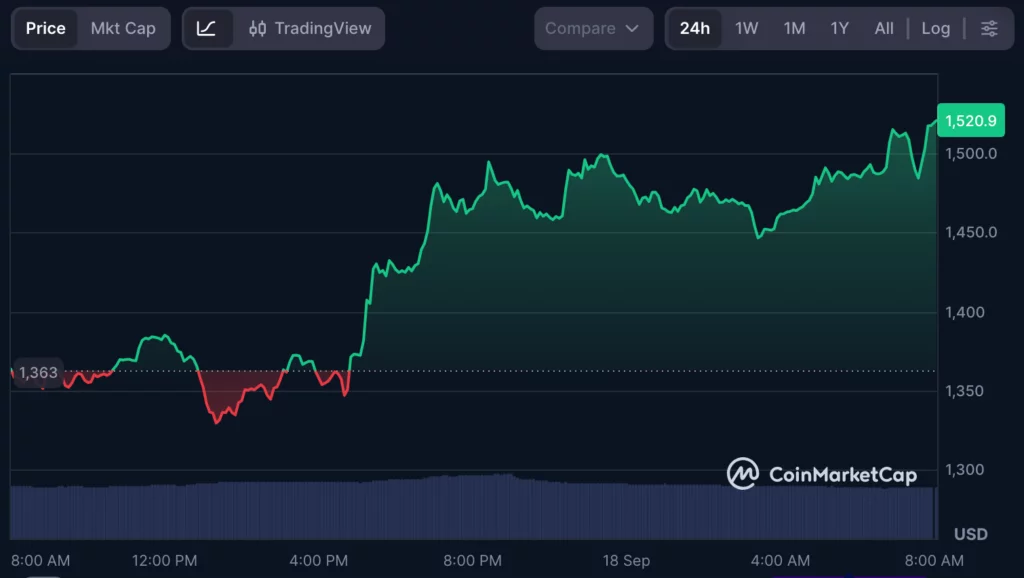
CoinMarketCap data showed ZEC trading near $1,485 early Sept. 18, up roughly 9.6% over 24 hours, with trading volume above $2.6 billion. The token had already received other market catalysts during September, including institutional activity and the recent U.S.-listed Zcash investment product.
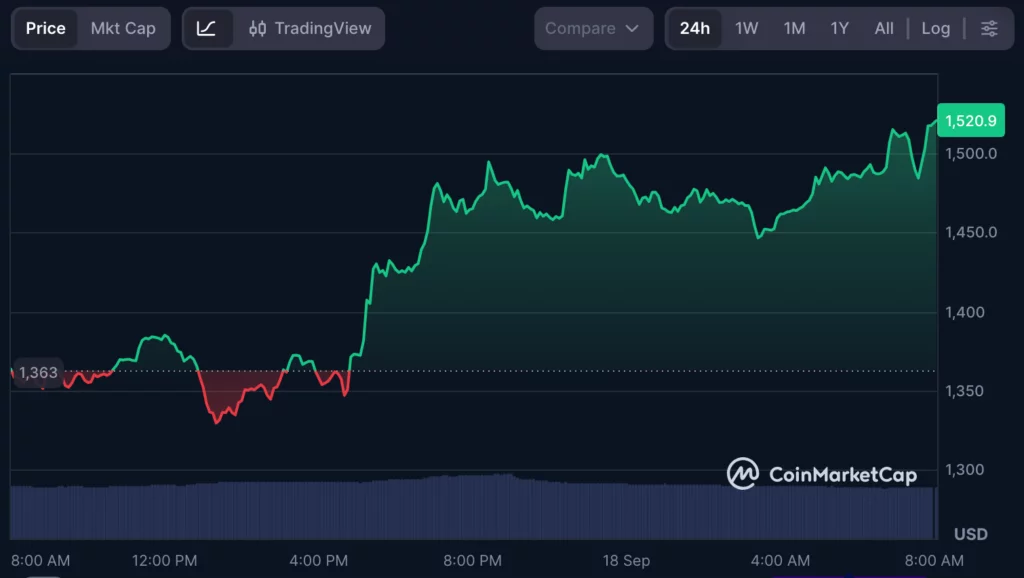
In recent ZEC market coverage, crypto.news reported that ZEC climbed more than 20% on Sept. 16 to around $1,337, with network-upgrade optimism cited alongside other trading factors.
Earlier in September, ZEC crossed $1,000 after Grayscale converted its Zcash Trust into the ZCSH exchange-traded product on NYSE Arca. Previous ETF coverage reported that the fund launched with roughly $304 million in assets before growing further as ZEC prices increased.
For NU7 itself, Sept. 30 is the next engineering checkpoint. Features not ready by that cutoff can be removed from the upgrade under the approach favored by coinholders, followed by the Oct. 6 testnet activation and the Oct. 20 mainnet decision.
The mainnet activation height has not yet been finalized. Developers plan to set it on Oct. 20 after reviewing the testnet upgrade, leaving Nov. 5 as the current scheduled date subject to that decision.


Quick Read
-
Five covered-call ETFs yield 8% to 14% monthly by writing options against large-cap U.S. equity portfolios, putting them at double to triple the 10-year Treasury rate near 5%.
-
Nasdaq-100 funds post higher yields than S&P 500 funds because greater implied volatility generates fatter option premiums, but they cap upside during rallies.
-
QQQI delivers the group’s top 14% yield with roughly 99% of 2025 distributions classified as return of capital, deferring taxes rather than creating current income.
-
Read More: Learn 7 secret wealth tips high net worth investors use that most investors miss (sponsor)
Income investors heading into the fourth quarter face a market where the 10-year Treasury yield is near 5%, yet a cluster of options-income ETFs still pays roughly double to triple that rate every month. The five funds on this list — JPMorgan Equity Premium Income ETF (NYSEARCA:JEPI), Global X S&P 500 Covered Call ETF (NYSEARCA:XYLD), Goldman Sachs Nasdaq-100 Premium Income ETF (NASDAQ:GPIQ), NEOS S&P 500 High Income ETF (NYSEARCA:SPYI), and NEOS Nasdaq-100 High Income ETF (NASDAQ:QQQI), all sit in an 8% to 14% trailing yield band while distributing cash monthly.

What distinguishes them is the machinery underneath. Each writes call options against a large-cap U.S. equity portfolio, but they differ on the index (S&P 500 versus Nasdaq-100), the option style (systematic, actively managed, or SPX/NDX index options), and how much upside they surrender in exchange for premium. That mix determines whether a fund functions as a bond substitute, a hybrid equity income sleeve, or a high-octane distribution engine that trades price appreciation for cash.
Why Covered-Call ETFs Look Different This Quarter
Option premiums scale with implied volatility, so higher-vol underlyings such as the Nasdaq-100 support fatter distributions than the S&P 500. That is why the Nasdaq-based funds in this group post the top headline yields while the S&P 500 funds sit lower. The tradeoff, always, is capped upside: when the underlying rallies through the strike, the option overlay gives back part of that gain.
Learn 7 Secret Wealth Tips High Net Worth Investors Use
How do you continue to grow a seven-figure portfolio in retirement? The last thing you want is to run out of money, you want your money to generate lasting income while you enjoy your life.
Learn seven strategies high net worth investors use with new report: The Seven Secrets of High Net Worth Investors from Fisher Investments. Get your guide here (sponsor)

Join Our Telegram channel to stay up to date on breaking news coverage
The Commodity Futures Trading Commission sent a crypto market structure rulemaking to the White House for review on Sept. 17, pressing ahead without Congress after the Senate failed to advance the CLARITY Act.
The filing, titled Regulation Crypto Asset Transactions and Regulation Crypto Asset Markets, was received by the Office of Information and Regulatory Affairs, the Office of Management and Budget division that reviews federal regulations before publication. It is listed at the prerule stage, the earliest point in the regulatory pipeline, and discloses no details of the planned rules. The CFTC declined to comment.
Agencies move without a new law
The White House filing lands days after the Senate blocked the CLARITY Act in a procedural vote this week. The bill would have set up a federal framework for crypto markets. CFTC Chair Michael Selig had pre-committed to the fallback: in August he said he directed staff to begin exploring rules to codify a CFTC market structure for crypto assets using the agency’s existing authorities. The day after the Senate vote he posted on X that the agency was “locked in and ready to ship” rules for crypto markets.
In his August speech, Selig described a framework that could let current registrants as well as unregistered exchanges be designated a type of designated contract market called a crypto asset market, offering leveraged or margined trading under CFTC oversight. Those details come from the speech, not the filed document. He also said the framework could reach crypto wallets and trading interfaces offering perpetual and event contracts.
What happens next
The proposal stays at the prerule stage through the review. It faces potential revisions at the Office of Management and Budget, then a CFTC vote, a public comment period and a final rule that also requires commission approval.
The CFTC is not moving alone. SEC Chair Paul Atkins said in a Sept. 16 post that the SEC will act “with or without legislation” within its statutory authority. The SEC separately granted temporary, conditional exemptive relief on Sept. 17 letting certain platforms trade tokenized stock without registering as exchanges, and the CFTC the same day issued a no-action position for developers of passive trading software.
Image: generated editorial illustration.
Join Our Telegram channel to stay up to date on breaking news coverage

Ripple’s cross-border token was hit hard after the US Senate’s failure to advance the CLARITY Act, dumping from a weekly peak of $1.50 to under $1.30 before it rebounded to just over the latter.
Analysts now point to improving momentum and a possible rotation toward altcoins, which aligns with a major technical signal tailored for XRP.
XRP Has to Defend This Zone
Ali Martinez believes the immediate battle is straightforward: the cross-border token has to defend the $1.31-$1.35 support before a stronger move can unfold. The area is now acting as a key short-term support region, with the asset repeatedly hovering around it following this week’s selloff.
This is particularly important now as leveraged traders have started stepping back again after this week’s deleveraging, when the futures open interest dropped by over 20% in a few days. This suggests some speculative positions have been flushed out following the regulatory and macro volatility. Lower leverage can reduce immediate upside momentum, but it can also leave the market less vulnerable to another cascade of forced liquidations.
Fellow analyst Bird, meanwhile, highlighted improving conditions for altcoins, with traders increasingly watching whether capital begins rotating away from Bitcoin. XRP has already shown signs of relative strength by slightly outperforming BTC during Friday’s rebound. However, it now has to overcome the next resistance area at $1.38-$1.40, followed by the more meaningful one near $1.50-$1.54, which halted its progress days ago.
Another Bullish Signal Incoming?
XRP’s 5-day moving average is approaching the 200-day moving average, putting the asset close to forming a golden cross. The indicator is traditionally viewed as a bullish momentum signal, although it should not be treated as a guarantee of further gains. What matters here is the timing.
If the asset manages to defend the $1.31-$1.35 region, reclaims $1.40, and eventually breaks through the aforementioned $1.50 area while the broader altcoin momentum strengthens, the technical backdrop would look significantly healthier than it did after the 8% daily drop to under $1.30 earlier this week.
Nevertheless, these are a lot of “ifs,” which are yet to be confirmed. At the same time, several other altcoins have posted major gains over the past few days, while XRP has stayed somewhat behind.
The post XRP Could Be Setting Up for Its Next Big Move: Here Are the Levels to Watch appeared first on CryptoPotato.
Crypto World
Teledyne Technologies (TDY) Price Target Hiked to $760 as Needham Bets on Defense and Short-Cycle Recovery

On September 15, Needham analyst James Ricchiuti lifted the firm’s price target on Teledyne Technologies Incorporated (NYSE:TDY) to $760 from $750, and reiterated a Buy rating. The revised price target reflected an upside of 27% from the close of the note.

According to TipRanks, the analyst told investors that the company was well placed to gain from a broadening short cycle recovery and opportunities in modern defense applications. Needham further added that the stock offers a 2.6-to-1 risk/reward skew at current levels.
The adjustment is largely in line with the broader analyst community. As of the close on September 16, TDY is a Moderate Buy based on the consensus of 10 analysts. It has a one-year average share price target of $758.20, representing an upside of 26%.
Bull Case
Needham noted ‘broadening’ improvements in the company’s short cycle businesses, which suggests that momentum is spreading across product lines, rather than being limited to any one particular segment.
During the Q2 earnings call, the management noted that short-cycle commercial markets were beginning to show growth inflections after recent headwinds and lifted its short-cycle portfolio’s growth outlook to mid-single-digits for the year, up from earlier estimates of flat to low-single-digit growth.
The analyst’s reference to prospects from modern defense applications hints toward exposure to new and advanced programs, away from legacy military expenditure. This could mean a less cyclical and more stable revenue moving forward.
Lastly, the firm’s 2.6-to-1 risk/reward appears to be a well-researched and calculated claim rather than a vague assessment. It must be noted that Ricchiuti inherited coverage from another analyst and independently validated the thesis, resulting in a price target increase.
Bear Case
Skeptics may argue that a price target lift from $750 to $760 is a mere 1% increase on scale. This is a modest adjustment that is more of a reaffirmation carried through than an improved outlook.
The ‘broadening short cycle recovery’ statement is a risk if it does not hold up, and improvement stays concentrated instead of spreading. Such a scenario would significantly weaken the bull thesis.
The comment about the opportunities in modern defense applications is just a qualitative assessment, without any solid figures to back it up. Therefore, it should only be viewed as a supporting narrative and not a major catalyst.
Moreover, the 2.6-to-1 risk/reward is Needham’s own estimate. The ratio would only hold if the firm’s downside assumptions are correct. The skew could compress in no time should there be a reassessment of risk.
Crypto.com has moved its U.S. derivatives business closer to single-stock futures after North American Derivatives Exchange filed a Form 1-N with the SEC on Sept. 14, with the notice registration becoming effective that same day.
Summary
- Crypto.com’s Nadex registration became effective September 14, allowing the exchange to trade security futures products.
- Nadex remains separately regulated by the CFTC as a designated contract market and clearing organization.
- Crypto.com says it is working with both regulators on U.S. single-stock perpetual futures products now.
- The SEC notice registration does not itself approve any specific single-stock futures contract for trading.
- Coinbase, Kalshi, Bitnomial, and CME have pursued similar security-futures registrations or product launches during 2026.
The SEC notice says Nadex registered as a national securities exchange solely for trading security futures products under Section 6(g) of the Securities Exchange Act, while the regulator formally acknowledged receipt of the filing on Sept. 16.
The distinction is important to the factual status of the rollout. Under the SEC’s own rules, Form 1-N is a notice registration, not a conventional application requiring the Commission to approve the exchange through an affirmative vote. The SEC previously explained that the filing does not require it to make a specific determination that every exchange rule or proposed product complies with the Exchange Act.
Nadex registration opens the security-futures route
Nadex filed under its legal name, North American Derivatives Exchange, Inc., doing business as Crypto.com Derivatives North America. Its 515-page Form 1-N identifies the Chicago-based exchange as an existing CFTC designated contract market seeking SEC notice registration for security futures.
Registration under Section 6(g) is available to a CFTC-designated contract market that limits its securities activity to security futures and certain permitted futures or options products. The SEC states that registration becomes effective at the same time the Form 1-N notice is submitted, which puts Nadex’s effective registration date at Sept. 14 rather than the Sept. 16 acknowledgement date.
Nadex already operates under CFTC oversight. The regulator’s current records list the exchange as a designated contract market dating to 2004, while its clearing arm is registered as a derivatives clearing organization permitted to clear margined futures and fully collateralized derivatives.
The filing says direct security-futures access will be restricted to qualified exchange members. Firms carrying customer accounts for the products must be registered futures commission merchants and SEC-registered broker-dealers, while some market makers can connect through approved clearing members.
Orders will run through a fully electronic matching system using price-and-time priority. The exchange plans to accept market and limit orders, with clearing taking place through qualified members connected to a registered clearing agency.
Crypto.com filing names 10 proposed stock futures
The Form 1-N contains considerably more detail than the SEC’s two-page acknowledgement. Exhibit I says Crypto.com Derivatives North America plans cash-settled futures on individual equities and may later include exchange-traded funds.
Its initial schedule names 10 proposed reference securities: Apple, Advanced Micro Devices, Amazon, Alphabet, Meta Platforms, Microsoft, Micron Technology, Nvidia, Tesla and SpaceX. Nine are publicly traded companies, while SpaceX remains privately held.
The filing does not say all 10 products are currently trading. It states that Nadex plans to submit listing standards, terms and conditions under Section 19(b)(7) of the Exchange Act before listing the security futures.
A separate operational exhibit says the exchange expects to charge $0.10 for each one-share security-futures contract. Nadex may impose other regulatory, data, connectivity and related fees on qualified members.
Trading hours have not been fixed uniformly for the proposed stock products. The filing says Nadex operates some fully collateralized and margined products around the clock when reliable underlying-market pricing is available, while individual security futures will follow trading hours specified in their own product filings.
One filing detail appears dated. Nadex wrote that it intended to launch security futures on Sept. 9, five days before Form 1-N was submitted on Sept. 14. No later public Nadex announcement reviewed for this report confirmed that the proposed stock contracts began trading on Sept. 9.
A search of the CFTC’s current security-futures product database did not surface a Nadex certification for the ten contracts listed in Exhibit I. The database does show security-futures certifications from CME during June and July, including contracts on Apple, Amazon, Nvidia, Tesla and other stocks.
U.S. stock perpetuals remain a separate plan
Crypto.com CEO Kris Marszalek said after the SEC acknowledgement that the company is working with both the SEC and CFTC on perpetual futures tied to individual U.S. stocks.
“We are working with the SEC and the CFTC to offer single-stock perps in the U.S.,” Marszalek wrote, adding that the company wants to combine digital-asset market structures with U.S. capital markets. His statement describes work with regulators, not an approved perpetual-futures launch.
Perpetual futures do not have the fixed expiration dates used by conventional futures. Funding mechanisms are commonly used to keep their prices near the value of the underlying reference asset.
Stock-linked perpetuals raise an additional regulatory question because products based on individual securities fall within the joint SEC-CFTC security-futures framework. Crypto.com has not disclosed proposed leverage, funding-rate rules, supported stocks or a launch date for its planned perpetual contracts.
Coinbase has taken a similar path. As Coinbase stock perpetual filing coverage reported, Coinbase Derivatives filed its own Form 1-N while Coinbase Financial Markets submitted a related broker-dealer notice as the company works toward U.S. single-stock perpetuals. The filings did not identify a launch date or leverage limits.
Kalshi has gone further in crypto perpetuals and has separately discussed equity-linked products. In Kalshi stock perpetual plans coverage, the company was reported to be preparing around 60 perpetual futures tied to stocks and ETFs, including Tesla, Apple and Nvidia. Those proposed equity contracts had not received final approval at the time of that report.
CME entered the single-stock futures market through traditional dated contracts earlier in 2026. CFTC records show certified products tied to companies including Apple, Amazon, Meta, Microsoft, Nvidia and Tesla, providing an existing regulated U.S. reference point for the product category Nadex plans to enter.
OG.com now owns the Nadex exchange entity
Nadex’s SEC filing shows a corporate structure that changed earlier this year. Exhibit F states that OG Markets US, Inc. acquired 100% ownership of Crypto.com Derivatives North America on June 15, while the exchange’s day-to-day operations remain under its own management team.
The filing describes Nadex as operating two brands for its CFTC-regulated business: Crypto.com Derivatives North America and OG.com. OG Markets US is identified as Nadex’s direct parent.
OG.com later described itself as an independent company following a strategic spin-off from Crypto.com. In a Sept. 8 release, the company said a Citadel Securities investment valued OG.com at $5 billion as part of a wider Crypto.com transaction.
Robinhood agreed under the same announcement to route part of its U.S. prediction-market volume through OG.com’s regulated exchange and clearing infrastructure and to take equity stakes in both OG.com and Crypto.com. The first OG-backed event contracts on Robinhood began rolling out Sept. 8.
For the proposed stock futures, Nadex still must file the product-level listing standards and terms referenced in its Form 1-N. Crypto.com has not announced when the first of the 10 named cash-settled contracts will begin trading, and Marszalek’s proposed single-stock perpetuals remain under discussion with the SEC and CFTC.


World has begun rolling out World Money across more than 150 countries on Sept. 17, combining stablecoin balances, global transfers, digital asset trading, Morpho-powered Earn programs and virtual accounts inside a self-custody financial app.
Summary
- World Money is rolling out across more than 150 countries, with features varying by jurisdiction.
- Stripe powers the U.S. Apple Pay funding flow, converting supported funds into stablecoins within minutes.
- Morpho powers Earn programs for WLD, USDC, wrapped Ether, and wrapped Bitcoin in selected markets.
- Bridge converts U.S. virtual account deposits into USDC, while Lead Bank issues account details directly.
- World ID verification unlocks promotional Earn boosts, but rates and principal remain unguaranteed for users.
World said features and eligibility vary by country, meaning the 150-plus-country footprint does not represent uniform access to every payment, trading, virtual-account or Earn function. The company describes World Money as the financial counterpart to World ID, with existing World users able to carry their verification status into the new app.
World Money combines payments, stablecoins and investing
World Money supports stablecoin balances tied to eight currencies, according to the launch announcement. Users can hold supported dollar and local-currency stablecoins, track their portfolios, view transaction histories, set price alerts and send supported digital assets to other users by World username.
The company says transfers between World Money users are typically completed within seconds, though timing can depend on the payment method and destination. Its product page warns that asset availability varies by country and that stablecoins held in the app are digital assets, not insured bank deposits.
Local stablecoins run on World Chain and can be exchanged inside the app where supported. World’s updated support documentation uses wARS, which tracks the Argentine peso, as one example. Users can obtain supported local stablecoins by swapping another asset such as USDC, while access to fiat bank transfers depends on local payment providers.
The Trade section covers digital assets including WLD, wrapped Bitcoin and wrapped Ether, while World says selected real-world assets such as gold can be accessed through third-party trading services. The full token list can change, and World directs users to the app for the current assets available in their jurisdiction.
World Money arrives after the project had already expanded the finance functions of its earlier World App. In earlier coverage of World App’s financial expansion, crypto.news reported that World had added virtual accounts, stablecoin transfers and an Earn product while increasing the number of assets accessible through the wallet.
Native USDC had already become part of that infrastructure. As previously reported on World Chain’s USDC integration, Circle replaced bridged USDC in World wallets with native USDC and brought its Cross-Chain Transfer Protocol to World Chain.
Stripe starts World Money funding in the U.S.
The new release gives Stripe a direct role in funding World Money accounts. Beginning in the U.S., users can add money from Apple Pay and convert it into stablecoins through a funding flow embedded in the app.
World states that stablecoins funded through the Stripe flow will typically arrive within minutes. Stripe is described as the default way to add funds through the redesigned U.S. experience, though World did not publish a fixed processing time, fee schedule or date for extending the same setup to every country.
The arrangement builds on infrastructure World already uses from Bridge, which Stripe acquired. World introduced personal virtual accounts in 2025 for receiving bank transfers and paychecks, with supported deposits converted into digital assets inside users’ self-custody wallets.
Updated World support material gives more detail on how that setup operates. For U.S. dollar virtual accounts, Lead Bank issues the account and routing details, while Bridge converts incoming dollars into USDC before depositing the stablecoin into the user’s World Wallet on World Chain.
USD virtual accounts can accept employer and paycheck deposits where available. World separately offers Ripio-powered virtual accounts in Argentina, Colombia and Mexico, where local payment rails handle deposits and withdrawals. Those accounts do not share every function of the U.S. version; World says paycheck deposits are not supported through its Ripio virtual accounts.
World previously said its Bridge-powered virtual account service had expanded beyond its initial U.S. pilot into markets including Singapore, South Korea and Taiwan. The company reported nearly 38 million World App users and more than 850 million processed transactions when it announced that expansion in December 2025.
Morpho powers Earn while returns remain variable
World Money has replaced its earlier WLD and USDC Vault products with a new Earn section. Supported users can deposit eligible assets into on-chain lending programs and track rewards without separately managing the underlying DeFi transactions.
World’s help center currently lists WLD, USDC, wrapped Ether and wrapped Bitcoin as examples of supported Earn assets. The programs use Morpho, with displayed APYs determined by protocol rates, deposited amounts and any promotional incentives.
Earn is not available in every country included in the 150-plus-country rollout. World says users who do not see the feature in their Wallet tab may be in an unsupported location. Rates can change, and withdrawals depend on on-chain liquidity and protocol conditions.
The main World Money product page warns that principal is not guaranteed and lists smart contract failure and protocol default among the risks. Earn balances are not bank deposits and receive no FDIC, SIPC or other government insurance.
World ID-verified users can receive limited promotional boosts on eligible Earn programs. Current support documentation says the enhanced rewards apply to the first 1,000 WLD and first 1,000 USDC placed into qualifying programs, with the underlying promotional terms subject to change.
Morpho itself has experienced infrastructure interruptions without reported failures of its underlying lending contracts. In recent coverage of a Morpho service outage, crypto.news reported that a July frontend and API disruption was restored after several hours while its blockchain contracts continued operating independently.
World ID now works beside a separate money app
The launch comes as World has separated much of its identity and financial functionality into two applications. Updated support documentation dated Sept. 16 says World ID App now handles identity verification and credentials, while World Money handles wallet and financial functions.
Existing users do not need a separate identity. The two apps share the same World ID, allowing verification status to carry across when users sign in. World Money continues to support sending and receiving assets, trading and virtual accounts, while passport and national-ID credentials reside in the World ID App.
Orb verification remains available through World Money for a limited period, according to the current support page. World describes Orb verification as proof that a person is unique and uses it to determine eligibility for selected rewards and experiences.
In its launch post, World said “Money moves differently when accounts belong to people,” arguing that proof of human can add a verified-human layer to digital transactions. That description represents World’s view of its identity system; it does not eliminate payment, smart-contract, stablecoin or investment risks.
World Money includes Mini Apps such as Kalshi, Credit and Morpho, with actual access dependent on local eligibility. Kalshi has previously worked with World on prediction-market access; earlier coverage of the Kalshi integration reported plans to let World users access its markets through a Mini App.
WLD traded around $0.37 on Sept. 17, with CoinMarketCap data showing a roughly 3.2% daily increase at the time of its market snapshot.
World’s current product terms state that World Money is offered by Tools for Humanity and is not a bank. Features provided through Stripe, Bridge, Morpho and other partners remain subject to their own terms, local eligibility requirements and availability. World ID App and World Money now run in parallel, with the former handling identity credentials and the latter retaining wallet, transfer, trading and virtual-account functions.


BitGo has appointed Alex Rozman as chief compliance officer effective Sept. 21, placing the former Exodus compliance executive in charge of enterprise compliance and financial crime programs as the NYSE-listed digital asset company expands its regulated institutional business.
Summary
- BitGo appointed Alex Rozman chief compliance officer, effective September 21, to oversee global compliance programs.
- Rozman brings over 25 years of compliance, legal, risk, AML, and sanctions experience across finance.
- BitGo became publicly traded in January after listing on NYSE and securing federal trust-bank approval.
- BitGo reported 5,833 clients and $65.2 billion in assets on platform during second quarter 2026.
- BitGo acquired NYDIG’s institutional trading business in August, expanding derivatives, financing, and execution capabilities globally.
BitGo said Rozman will lead engagement with regulators, examiners and banking authorities across the company’s legal entities worldwide, covering a business that now spans federally regulated custody, trading, financing, stablecoin services and institutional settlement.
Rozman takes over global compliance and financial crime work
Rozman joins BitGo from Exodus Movement, where he had served as chief compliance officer since May 2024. His career covers more than 25 years across legal, risk and compliance roles, with experience in anti-money laundering and sanctions programs for banking, financial-market infrastructure and digital asset businesses.
Before Exodus, Rozman led global compliance at Polygon Technology and served as head of financial crime compliance at CLS Bank International. Earlier positions included AML advisory work at Deloitte and Navigant Consulting, now Guidehouse. He sits on the board of the Association of International Bank Audit and Compliance Professionals and previously chaired the Audit & Risk Committee while serving as a director at the CFP Board.
BitGo CEO Mike Belshe called Rozman “a key addition” to the leadership team and said his experience would support the company’s risk management processes and regulatory work as it adds institutional products. Those comments state management’s expectations for the appointment and do not establish future business or regulatory outcomes.
Rozman said companies operating in digital finance need to treat compliance as “core infrastructure.” His new responsibilities include BitGo’s financial crime controls, which cover areas such as AML and sanctions compliance across regulated entities and product lines.
BitGo now operates under a federal trust charter
The appointment follows a major change in BitGo’s U.S. regulatory structure. BitGo Holdings listed Class A shares on the New York Stock Exchange under BTGO on Jan. 22, becoming a public company while its banking subsidiary moved under federal oversight.
The Office of the Comptroller of the Currency approved BitGo Trust Company’s conversion into BitGo Bank & Trust, National Association in December 2025. BitGo later confirmed final operation under the national trust structure in January. The bank is subject to OCC supervision covering areas including capital, risk management, AML controls and fiduciary obligations.
Outside the federal bank, BitGo maintains separate regulated businesses. Its current licenses page lists BitGo New York Trust Company as a New York-qualified custodian, BitGo Europe as a MiCA-regulated crypto-asset service provider in Germany and BitGo Singapore under a Major Payment Institution license. BitGo Technologies is registered with FinCEN as a money services business and holds money-transmitter licenses in several U.S. states.
Compliance requirements differ across those entities, which is why BitGo described Rozman’s position as enterprise-wide while specifying that he will deal with regulators and banking authorities across separate legal operations.
BitGo’s customer identification notice states that its national trust bank and New York trust company collect and verify identifying information from clients as part of federal and state requirements intended to address money laundering and terrorist financing risks.
Institutional expansion has accelerated during 2026
Rozman arrives after several additions to BitGo’s institutional business. On Aug. 27, BitGo completed its acquisition of NYDIG’s institutional trading operation, adding derivatives, structured products, financing and execution services to its existing platform.
As BitGo’s NYDIG acquisition coverage previously reported, the acquired business brought institutional trading relationships and personnel into BitGo while NYDIG concentrated on power infrastructure, Bitcoin mining and high-performance computing. Financial terms were not publicly disclosed.
A few weeks later, BitGo and Crossover Markets reported that institutional clients had passed $2 billion in cumulative notional volume executed through CROSSx and cleared through BitGo’s Go Network. Go Network lets clients settle trading activity while using BitGo infrastructure for custody and settlement.
BitGo has been extending its trading connectivity at the same time. Eligible self-custody clients gained access to Hyperliquid through WalletConnect on Sept. 10, allowing them to place perpetual trades while keeping existing BitGo wallet controls.
The Hyperliquid connection followed integrations with venues including Gate US and Decibel. Recent BitGo settlement coverage reported that Gate US joined Go Network in July, letting eligible institutional customers access exchange liquidity while assets remained in regulated BitGo custody.
Expansion has extended outside the U.S. BitGo Singapore opened a new regional office on Sept. 2 and said its Asia-Pacific client base had tripled since it received its Major Payment Institution license in 2024. The company said Singapore staff numbers had more than doubled during the same period.
Public filings show a larger client and asset base
BitGo’s Aug. 12 quarterly filing showed 5,833 clients as of June 30, up from 4,621 one year earlier. The company reported approximately $65.2 billion in assets on platform and $11.9 billion in assets staked during the quarter. Its client base operated across more than 100 countries.
Second-quarter revenue reached $4.33 billion, compared with $2.41 billion a year earlier, while BitGo recorded a $19 million net loss. Digital asset sales accounted for roughly $4.20 billion of reported revenue, though corresponding direct costs were $4.19 billion because the company records much of that activity on a gross accounting basis.
Stablecoin-as-a-Service revenue reached $38.8 million during the quarter, up from $15.7 million a year earlier. BitGo said growth came from higher reserve balances and new stablecoin programs. Staking generated $64.7 million, while subscriptions and services produced $27.5 million.
The same filing disclosed material weaknesses in BitGo’s internal control over financial reporting involving IT general controls, segregation of duties and staffing expertise in accounting, finance and operations. Management said the weaknesses had not caused a material misstatement in previously issued financial statements. The disclosure concerns financial-reporting controls and should not be treated as evidence of a failure in BitGo’s AML or sanctions programs.
BitGo has not announced any separate change to its existing regulatory licenses in connection with Rozman’s appointment. His tenure as chief compliance officer begins Sept. 21, when he is scheduled to assume responsibility for compliance and financial crime programs across the company’s regulated entities.

U.S. wireless carrier promotions should provide a boost for Apple (AAPL) iPhone 18 Pro smartphone sales, a Wall Street analyst says. Apple stock traded rose on Thursday. “Carrier promotions continue to provide a tailwind to upgraders offsetting the increased retail prices on the new iPhones,” BofA Securities analyst Wamsi Mohan said in a client note Thursday. “Carriers are offering up…
Copyright ©2026 Investor’s Business Daily, LLC. All rights reserved. 87990cbe856818d5eddac44c7b1cdeb8

The Commodity and Futures Trading Commission on Thursday paved the way to expand prediction markets and cryptocurrency trading on certain online platforms. DraftKings led a retreat for sports betting stocks Thursday. The CFTC’s Market Participation division issued a no-action letter, saying it will not take enforcement action against providers of what the agency called “passive software.” These passive software providers…
Copyright ©2026 Investor’s Business Daily, LLC. All rights reserved. 87990cbe856818d5eddac44c7b1cdeb8


Binance’s failed Greek MiCA bid has returned to scrutiny after The Wall Street Journal reported Sept. 18 that European Central Bank President Christine Lagarde personally pressed Greek Prime Minister Kyriakos Mitsotakis against approving the exchange’s application.
Summary
- WSJ reports Lagarde personally urged Greece against approving Binance’s MiCA application during June licensing talks.
- Binance withdrew its Greek MiCA application on June 24 before regulators issued any formal rejection.
- MiCA still assigns crypto licensing to national authorities, with ESMA supervision reform remaining under negotiation.
- ECB officials have repeatedly warned dollar stablecoins could weaken Europe’s monetary sovereignty and payment autonomy.
- Binance remains absent from Europe’s authorized CASP register while seeking another licensing route after Greece.
The Wall Street Journal reported that Binance had been preparing in late May to announce an EU-wide regulatory approval through Greece after Greek officials told the company its application was complete. The newspaper said Binance had drafted a release describing the expected authorization as a “Major Milestone,” while co-CEO Richard Teng planned to travel to Athens for a meeting and photograph with Mitsotakis.
The reported intervention has not been confirmed in a public statement from Lagarde, the ECB or Greece’s Hellenic Capital Market Commission. Under current MiCA law, the ECB does not grant crypto-asset service provider licenses. The application rested with the HCMC, while ESMA had a coordination and supervisory-convergence role.
WSJ says Lagarde raised compliance and stablecoin concerns
According to the WSJ report, Lagarde opposed Binance receiving the Greek authorization after the process had moved close to approval. The newspaper attributed the account to people familiar with discussions surrounding the application.
The reported concerns included Binance’s previous U.S. criminal case. In 2023, Binance pleaded guilty to violations involving the Bank Secrecy Act, failure to register as a money transmitting business and sanctions laws, agreeing to a settlement exceeding $4 billion. Reuters later reported that Binance’s legal history and corporate structure were among the issues European regulators examined during the Greek licensing process.
WSJ further reported that Lagarde was concerned that allowing the world’s largest crypto exchange to gain a MiCA passport could increase the use of U.S. dollar stablecoins inside Europe. The newspaper linked that concern to the ECB’s work on European monetary sovereignty and the planned digital euro.
Lagarde has publicly raised similar policy concerns without referring specifically to Binance. In a May 8 speech, she said stablecoin supply had grown above $300 billion and remained overwhelmingly dollar-denominated, with Tether and Circle controlling nearly 90% of the market. She said Europe faces a risk of “digital dollarisation and a loss of monetary sovereignty” if foreign-currency stablecoins become deeply embedded in its financial system.
Her speech did not argue for banning stablecoins. Lagarde instead said Europe should build public settlement infrastructure anchored in central bank money while allowing regulated private forms of tokenized money to operate within that system.
The ECB currently expects to be technically ready for a possible first digital euro issuance during 2029, assuming EU lawmakers adopt the required legislation. A pilot is planned for 2027 under the present timetable.
Binance says its Greek application had met MiCA requirements
Before withdrawing its application, Binance publicly disputed suggestions that its submission itself had failed Greece’s regulatory review.
In a June 16 update, Binance said its “understanding” was that the HCMC had completed its review and considered the application compliant with MiCA requirements. The exchange further said it understood that the file had been reviewed at ESMA level. Those statements represented Binance’s account of the process and were not accompanied by a public HCMC approval decision.
Reuters reported on June 16 that the Greek regulator was preparing to reject the application, citing two people familiar with the process. HCMC declined to discuss Binance’s case at the time, citing confidentiality rules. Binance responded that the regulator had provided “no formal indication” contradicting its belief that the application met the requirements.
Under MiCA, an applicant submits its authorization request to the competent regulator in its home member state. Once licensed, the crypto-asset service provider can use that authorization to offer covered services across the EU without obtaining a separate license in every country.
MiCA requires regulators to examine governance, internal controls, anti-money-laundering procedures and the reputation of management and shareholders with qualifying holdings. Applicants must provide information on criminal convictions and penalties involving financial services, AML rules, fraud and related areas.
As earlier crypto.news coverage reported in June, Binance said at the time that it had received no formal notice that the Greek application would be denied even as reports indicated rejection was approaching.
Binance withdrew before Greece issued a final decision
On June 24, Binance pulled its Greek MiCA application before the HCMC published a final approval or rejection. The company said in its official notice that it would seek authorization through another EU member state.
Binance said it made the decision after assessing “the status and the timeline” of the Greek process as the EU transition deadline approached. It did not cite Lagarde or the ECB when announcing the withdrawal.
The deadline had direct operational consequences. Article 143 of MiCA allowed eligible firms operating under earlier national rules to continue only until July 1, 2026, or until regulators granted or refused a MiCA authorization, whichever came first.
Without a MiCA authorization, a provider cannot generally continue offering regulated crypto services throughout the bloc. ESMA states that firms reaching the end of their permitted transition period without approval must stop providing those services until authorization is granted.
As crypto.news reported after the withdrawal, Binance informed affected European users that services would be restricted after the July deadline while withdrawals remained available.
The company has continued pursuing a route back into the regulated EU market. Reuters reported in July that Teng said regulators in other jurisdictions had shown interest in Binance applying for licenses after the Greek process ended. He did not publicly identify a completed replacement authorization.
More recently, crypto.news reported on remaining EU access that some customers continued using Binance after July through reverse solicitation and offshore arrangements, including an Abu Dhabi entity. The report said ESMA had sought information about whether Binance was properly winding down its unlicensed EU activities. Those arrangements do not amount to a MiCA passport.
ESMA licensing reform is still being negotiated
One element of the WSJ account concerns a separate debate over who should supervise Europe’s largest crypto businesses.
Current MiCA rules leave CASP authorization with national competent authorities. ESMA coordinates standards and receives information concerning large providers, but Article 85 does not currently make ESMA the licensing authority for major crypto exchanges.
The European Commission proposed changing that arrangement as part of its market-integration agenda. The original plan would give ESMA direct supervisory responsibility for crypto-asset service providers, reducing reliance on 27 separate national supervisory structures.
The proposal has not become law. A June Council document showed that a broad majority of EU member states preferred transferring only significant crypto-asset service providers to direct ESMA supervision, instead of all CASPs as the Commission originally proposed. Ministers were still debating the definition of significance and the role national regulators would retain.
Separately, the Commission opened a review of MiCA in May. Its targeted consultation remains open through Sept. 30, with potential legislative amendments to follow depending on the review’s findings.
The WSJ reported that the possible move toward centralized ESMA oversight was one consideration behind Lagarde’s reported intervention. No public ECB document reviewed for this report confirms that Lagarde formally requested Greece delay Binance’s application pending those reforms.
Binance has not publicly announced a new MiCA authorization since withdrawing from Greece. Its latest official European licensing posts continue to state that it plans to seek authorization in another member state, while ESMA’s existing legal framework still leaves licensing decisions with national competent authorities until any supervisory reform is adopted.

Connor Prielipp and Walker Jenkins lead Twins to 3-0 victory over Angels

Flock Offers Employees Buyouts as Customers Flee

Parents can grab a Paw Patrol Tonie ‘great for bedtime routines’ for ‘free’




-

 Tech6 days ago
The Latest Weird Thing to Play Doom Is the Mapped-Out Brain of a Fruit Fly
-

 Crypto World4 days ago
Kraken Lets xStocks Holders Earn Yield Through DeFi
-

 Crypto World2 days ago
US Charges Robinhood Engineers Over Crypto Listing Trades
-

 Crypto World7 days ago
Can AI Build a Startup in 72 Hours? Elon Musk's Team Will Livestream the Test
-

 Crypto World3 days ago
What Is the Status of the U.S.-Iran Peace Talks? Here's What Both Sides Are Saying
-

 Crypto World5 days ago
Elon Musk Drops a Bombshell: Grok 5 Could Be the AGI Breakthrough
-

 Business6 days ago
Rivals Sam Altman and Elon Musk Rally Behind Dario Amodei’s Call for a Slowdown in AI Development
-
 NewsBeat5 days ago
‘Sick conspiracy’: Trump says only guardrails AI needs is ‘a strong and smart (High IQ!) president’ in all-caps rant
-
 Crypto World5 days ago
New Tesla Roadster Uses SpaceX Tech. Will It Impact the Stock Price?
-

 Fashion11 hours ago
Weekend Open Thread: Talbots – Corporette.com
-

 Crypto World4 days ago
Revolut Attackers Warn of Ongoing Daily Customer Data Leaks
-
 Crypto World4 days ago
NVIDIA Analysis: Attempted Rising Wedge Breakout Amid Pressure on the AI Sector
-

 Business7 days ago
Marvell: Most Potent Setup Of The AI Factory Decade
-
Business5 days ago
SK Hynix ADRs Fall More Than 6% as Memory Rally Breaks on Fears of Slower AI Spending
-

 Crypto World4 days ago
DOJ Seeks to Seize $61M in Iran Oil Funds From Binance Accounts It Vouched For
-
Crypto World4 days ago
Can Circle’s Arc Repeat Robinhood Chain’s Meme Coin Boom?
-

 Crypto World7 days ago
Bitcoin ETFs lose $462.7M as Ethereum funds gain $196.9M
-
 Crypto World5 days ago
3 Token Unlocks to Watch in the Third Week of September 2026
-

 Crypto World5 days ago
AI Safety Burden Falls on Chief Executives as Trump Prioritizes China Race
-
 Crypto World6 days ago
Goldman Sachs backs 25bp Fed hike after CPI
You must be logged in to post a comment Login