
Entertainment
10 Fastest-Paced Thriller Movies of All Time, Ranked

Thrillers are often expected to be slow burns that carefully build suspense until everything explodes in the final act. That approach is pretty effective, and some of the greatest films in the genre follow these beats. However, the movies that people usually remember refuse to slow down at all, and what separates a good thriller from a great one is urgency.
When every scene feels like it matters, the audience barely gets a moment to breathe before the stakes escalate, and that’s part of the fun. To prove that, here are the 10 fastest-paced thriller movies of all time that will leave the viewers feeling like they were part of the action, instead of simply witnessing it.
10
‘The Hateful Eight’ (2015)

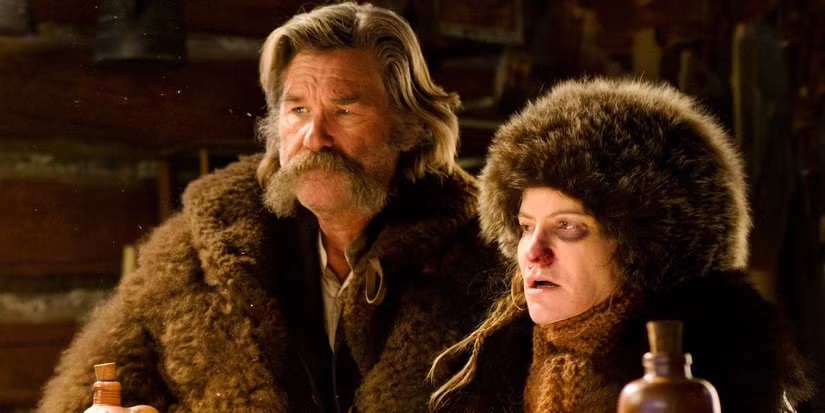
The Hateful Eight has to be Quentin Tarantino’s most underrated film. The Western mystery thriller is nearly three hours long and takes place mostly in one room, but the director turns that restraint into the story’s greatest strength. The narrative is set in 1877, a decade after the Civil War, and follows Bounty hunter John “The Hangman” Ruth (Kurt Russell), who is headed to Red Rock with his prisoner, Daisy Domergue (Jennifer Jason Leigh), whom he plans to see hanged. Along the way, he is forced to share a stagecoach with Major Marquis Warren (Samuel L. Jackson), a Union veteran turned bounty hunter, and Chris Mannix (Walton Goggins), a man claiming to be Red Rock’s new sheriff with ties to the Confederacy.
A blizzard sends them into Minnie’s Haberdashery, where several other strangers are already waiting out the storm. Nobody trusts anyone, and Ruth’s immediate response is to try to control the room with threats and guns. Right off the bat, The Hateful Eight feels like a pressure cooker of tension where the audience can’t seem to trust anyone or anything. Characters introduce themselves, and the film immediately gives the audience reasons to doubt their stories. The story is relentless, and with the blizzard outside, there is absolutely no escape from the madness. The performances are obviously a huge part of why The Hateful Eight remains engaging till the very end and really sell the idea of these eight dangerous people being stuck together with their egos and grudges.
9
‘Heat’ (1995)

Heat is a masterpiece of a thriller that starts slow but picks up pace before the audience even realizes it. The film spends a lot of time building its characters and taking the viewers through routine police work, but it’s all structured like a chase that never fully stops. The story follows two professionals on opposite sides of the law. Vincent Hanna (Al Pacino) is an LAPD Robbery-Homicide detective who is so dedicated to his job that his personal life is falling apart. Neil McCauley (Robert De Niro) is a professional thief who tries to stay emotionally detached from just about everything.
Things take a turn when a car robbery goes wrong, thanks to McCauley’s recruit, Waingro (Kevin Gage), and Hanna starts closing in on him. From there, the film turns into a constant game of surveillance, counter-surveillance, planning, and close calls, with the cops and the two sides constantly adjusting to each other’s moves. Heat’s greatest strength is how naturally it shifts between these two worlds, and just when the audience feels settled, the story pulls the rug from under them. The whole thing feels like a miniseries with several plots converging together, like Hanna’s failing marriage or McCauley’s relationship with Eady (Amy Brenneman). Even with all these moving parts, though, the heart of the film is these two men who simply can’t coexist but also genuinely respect each other’s grit.
8
‘Max Mad: Fury Road’ (2015)

Mad Max: Fury Road is still the gold standard for a modern action thriller. The film is basically one long chase, but that’s the whole point. The film, directed by George Miller, is the fourth installment in the franchise and follows Tom Hardy as Max Rockatansky, a drifter who is captured by Immortan Joe’s cult-like army (Hugh Keays-Byrne). The story picks up when Joe’s trusted lieutenant, Imperator Furiosa (Charlize Theron), betrays him by smuggling his five wives out in a massive armored War Rig, which kicks off a relentless pursuit across the desert.
The premise is pretty simple, with Max getting caught in the middle of Furiosa’s plan. The film doesn’t really offer a lot of elaborate twists or complicated plotlines, and yet, it never stops feeling epic. Mad Max: Fury Road treats its action as a storytelling device where every explosion means something. Even in its quieter moments, the psychological tension never drops because Joe’s army is always somewhere on the horizon. Despite being packed with stunts, crashes, and elaborate combat sequences, the film never feels exhausting because of how fully immersed the viewer feels in the chaos.
7
‘Uncut Gems’ (2019)

Uncut Gems, directed by Josh and Benny Safdie, follows Howard Ratner (Adam Sandler), a New York Diamond District jeweler who is juggling a collapsing marriage with Dinah (Idina Menzel), a messy affair with Julia (Julia Fox), and a swarm of creditors led by his brother-in-law Arno (Eric Bogosian), who is tired of being patient with him. Now, the heart of the story is a 600-carat black opal smuggled from Ethiopia that Howard gets his hands on. However, when NBA star Kevin Garnett becomes obsessed with it, Howard sees a way to solve all his money problems in one move.
He lends Garnett the opal for a game and takes his championship ring as collateral. Howard then immediately pawns the ring and uses the cash to place a high-risk bet. This leads to a spiral where Howard keeps pushing his luck and lying just to buy himself enough time. The film is built around the logic of addiction, where Howard and the audience become convinced that the next move will wash away his last mistake. The narrative offers practically no time to dwell on the failures because Howard has to keep moving to survive. The best part about Uncut Gems is that it commits to its chaos. The film wants its audience to feel trapped inside the same relentless loop as the protagonist, and simulating that feeling so perfectly is what makes Uncut Gems a masterclass in fast-paced storytelling.
6
‘Speed’ (1994)

Speed is a ‘90s high-concept action thriller that sounds like a joke until one actually watches it. The film, directed by Jan de Bont, follows Keanu Reeves as Jack Traven, an LAPD officer who keeps stumbling into one problem after another. The film begins with Jack and his partner Harry (Jeff Daniels) stopping an elevator bombing that’s being orchestrated by the bitter ex-bomb squad cop Howard Payne (Dennis Hopper). However, that’s only the beginning, as Payne fakes his death and executes his masterplan by rigging a city bus to explode when it dips below 50 mph. From that moment, the stakes in Speed only rise.
The plot is fast-paced but relatively easy to follow as Jack tries everything in his power to keep the passengers calm and work with the police. However, there is absolutely no respite here because Payne keeps throwing one problem at him after another. What works so well about Speed is that it sticks to its central plot and keeps building tension around it. Every solution immediately creates a new problem, and the whole thing feels like an impossible race against time. This constant escalation could have easily leaned into gimmick territory, but with a tight plot, it makes for one of the most exhilarating watches of the last 50 years.
5
‘Die Hard’ (1988)

Die Hard is essential viewing for anyone who appreciates the art of a timeless thriller. The film, directed by John McTiernan, follows New York police detective John McClane (Bruce Willis), who travels to Los Angeles on Christmas Eve hoping to reconcile with his estranged wife, Holly (Bonnie Bedelia). However, he walks straight into a hostage situation when a group of heavily armed criminals led by the calm and calculating Hans Gruber (Alan Rickman) takes over Nakatomi Plaza during a company party. McClane manages to slip away while the rest of the employees are being rounded up, and that’s when he begins sabotaging Hans’s operation piece by piece. Once the takeover begins, though, the film refuses to let its characters breathe for a single second. McClane has no time to celebrate his small victories because whatever he does seems to lead to extreme consequences.
Willis brings an extremely honest sense of exhaustion to his character, which makes every close call feel all the more real. The pacing of the film works because the audience genuinely believes that he might fail, which was a departure from the usual action flicks of the time, where the hero could do no wrong. Die Hard has its fair share of brilliant action sequences, but much of the film’s tension comes from the psychological battle between McClane and Gruber as they constantly try to outsmart each other. This balance between spectacle and genuine character work is what made Die Hard one of the defining films of the ’90s and the blueprint for what an action thriller should be.
4
‘Snowpiercer’ (2013)

Snowpiercer is one of the most unique thrillers of the 2010s, which uses the familiar premise of a single location to drive an important point home. The film, directed by Bong Joon Ho in his English-language debut, takes place after all of Earth is frozen and the last of humanity lives aboard a massive train that has been circling the globe for 17 years without ever stopping. Inside the train, society has rebuilt itself and created a strict class division where the wealthy live comfortably in the front cars while the poor passengers are crammed into the tail compartments that are under constant surveillance and abuse.
The story follows Curtis Everett (Chris Evans), a reluctant rebel leader who fights his way forward through the train to confront the mysterious engineer (Ed Harris), who controls this entire social order. Every train car introduces a new obstacle, and this constant escalation of danger gives the film its relentless momentum. The further the rebels move, the clearer it becomes how deeply people in the train have been conditioned to worship Wilford and accept their assigned place. This psychological and social angle adds to the film’s sense of urgency. Neither the characters nor the audience knows what the next car will reveal, and the unpredictability of it all makes Snowpiercer a biting thriller that delivers one of the most intriguing endings in modern sci-fi cinema.
3
‘I Saw The Devil’ (2010)

I Saw The Devil is a visceral thriller that is not easy to watch by any means. However, its intensity is what makes it unforgettable. The South Korean revenge film follows Kim Soo-hyun (Lee Byung-hun), an elite National Intelligence Service agent, whose fiancée is murdered by Jang Kyung-chul (Choi Min-sik), a sadistic serial killer who targets women at random. Soo-hyun quickly tracks the killer down, but instead of killing him, he begins a relentless cat-and-mouse game where he repeatedly hunts the criminal down, tortures him, and lets him go just to repeat the cycle all over again.
The power dynamics are especially interesting here because Kyung-chil continues committing his horrific crimes while trying to escape Soo-hyun’s wrath. The plot is pretty simple, but every encounter between the two men grows more intense, violent, and personal. I Saw The Devil keeps pushing its characters toward total moral collapse as revenge consumes both of them. The film is extremely unsettling, but it’s a true thriller driven by pure adrenaline.
2
‘Taken’ (2008)

Taken begins with a relatively simple concept that escalates into a high-stakes drama like no other. The film follows Bryan Mills (Liam Neeson), a retired CIA operative whose teenage daughter Kim (Maggie Grace) is kidnapped by a human trafficking ring during a trip to Paris. During a frantic phone call, Bryan hears the abduction happen in real time, and that kicks off his journey of tracking Kim down and seeking revenge. However, the catch is that he only has 96 hours before his daughter disappears into a system where victims are almost never recovered. Taken has a runtime of 90 minutes, but the plot moves with remarkable efficiency. Brian flies to Paris and starts following every clue he can find to tear through the criminal network that took his daughter.
Each lead pushes him deeper into the city’s underworld, and the film wastes absolutely no time on exposition. Instead, it trusts the audience to follow along. There are no complicated side plots to slow things down, which also means that Taken features constant bursts of violence that create the feeling that Bryan is always one step away from losing his daughter for good. Neeson’s performance is a huge part of why the film’s brutal pacing works, and his character’s determination is what drives the story, even in its most devastating moments. Despite all its intense action, Taken remains grounded in a complex yet heartwarming father-daughter relationship, which is pretty rare for the thriller genre.
1
‘The Bourne Ultimatum’ (2007)

The Bourne Ultimatum is hands down one of the greatest action thrillers ever made. The film is the final chapter in Jason Bourne’s (Matt Damon) story as he continues searching for the truth about his past. Things escalate when Bourne learns that a journalist has uncovered information about a secret CIA program connected to him. Their meeting takes a turn for the worse when the organization intervenes, and Bourne has to go on the run. It’s incredible how every scene in the film serves a purpose, which means that the narrative rarely slows down. Even dialogue-heavy moments feel intense because they are either happening under extreme surveillance or setting the stage for more violence to come.
The Bourne Ultimatum feels almost documentary-like with its famous handheld camerawork and intense editing. Bourne himself isn’t the traditional hero who wants to dominate situations; he is constantly just reacting to things happening around him and finding ways to escape. The Bourne Ultimatum doesn’t feature a lot of explosions and high-octane action sequences because the film’s pace comes from its clear stakes and sharp direction.

The Bourne Ultimatum
- Release Date
-
August 3, 2007
- Runtime
-
115 minutes
- Director
-
Paul Greengrass
- Writers
-
Tony Gilroy, George Nolfi, Scott Z. Burns, Robert Ludlum

Continue Reading
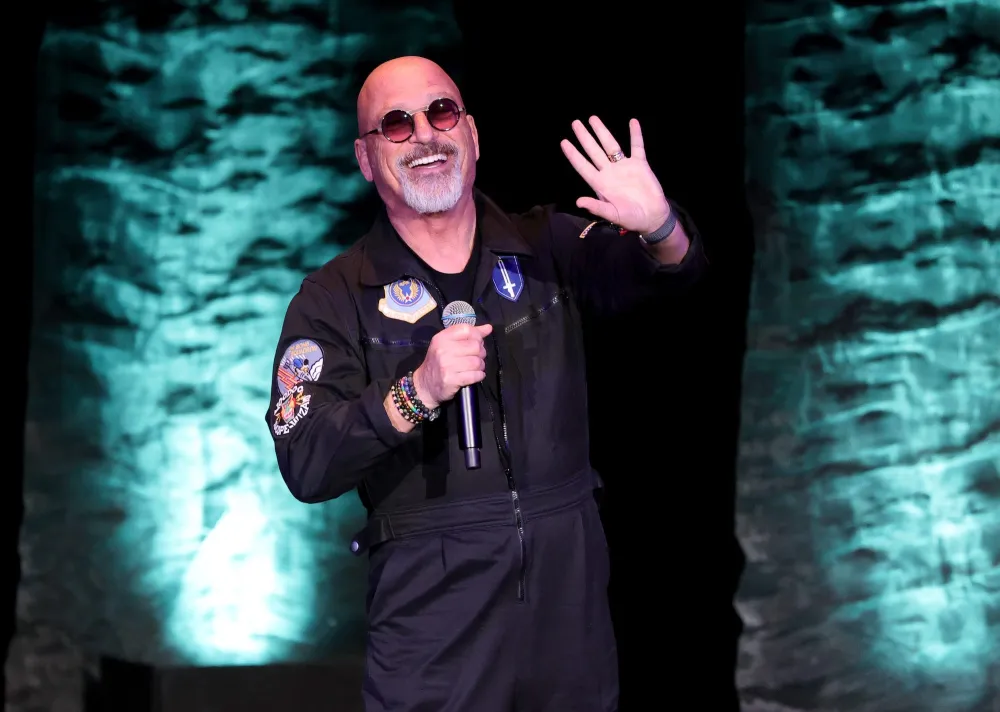
Howie Mandel has admitted that he has mixed feelings about apologizing to Kelly Ripa after their awkward interview on Live with Kelly and Mark.
“If somebody is offended [or] if somebody feels that I did wrong, then I apologize,” Mandel said on the Tuesday, March 31, episode of the “Hot Mics with Billy Bush” podcast. “I don’t believe in apologizing but, as I said in my post, which I kinda regret making the post, I don’t think you should apologize for a joke.”
The drama started on March 23 while Mandel was being interviewed by Ripa, 55, and her husband, Mark Consuelos, on Live. Ripa pointed out that Mandel recently celebrated his 70th birthday, before joking that his age “doesn’t make any sense.”
When Consuelos interjected that Mandel looked “great,” the comedian shot back, “I [do] look great. That doesn’t mean anything to me.”
The America’s Got Talent judge complained that he doesn’t like people commenting on his age because it always comes as “a caveat.”
“Because you tell someone you’re 70 and they go, ‘You look great,” he added.
Ripa tried to clarify that she wasn’t trying to say Mandel looked “great for 70,” before he interrupted again to declare, “It’s like saying you’re smart for a stupid person. ‘Oh, you look smart! You seem smart!’ I don’t look good.”
Mandel added later in the conversation, “Well, actually, before we go out, there’s, like, a mirror back there. … Honestly, now, I’ll be serious for a minute: I’m gorgeous. I am. I am.”
“You’re a thing of beauty,” Ripa quipped.

Howie Mandel in January 2025. Ethan Miller/Getty Images
The awkward interview clip quickly went viral, leading to Mandel making a public apology for the awkward moment a few days later.
“I have been debating for 48 hours whether I should make this post or not, and I don’t know if I’m doing the right thing,” he said via Instagram on Saturday, March 28. “Philosophically, I don’t believe that somebody who’s a comedian needs to apologize for a joke. It is a joke, it is meant as a joke, and it’s not meant to offend.”


Mandel pointed out, “You can not like it and, in all my years in the business, I haven’t ever publicly apologized for [a joke].”

Howie Mandel’s campaign with Skechers was a match made in heaven — but he took an untraditional route to get there. “I went to a Skechers store and I went to buy what I love and what I wear and what I find easy to do,” Mandel, 68, explained during an exclusive interview with Us […]
Longtime Live With Kelly and Mark executive producer Michael Gelman poked fun at the controversy by replying to Mandel’s Instagram post, writing, “During these divided times, one thing we can all agree upon is that you do look great … for your age.”
The comic has made nearly 50 appearances on Live With Kelly and Mark and its previous iterations, dating back to 1995. He often guest hosted Live with Ripa following the departure of her original cohost, the late Regis Philbin, in November 2011. (Michael Strahan and Ryan Seacrest later landed the cohosting job alongside Ripa before Consuelos joined full time in 2023.)
Entertainment
30 Years Later, the Greatest Horror Saga Ever Told Is Officially Dominating Streaming Again
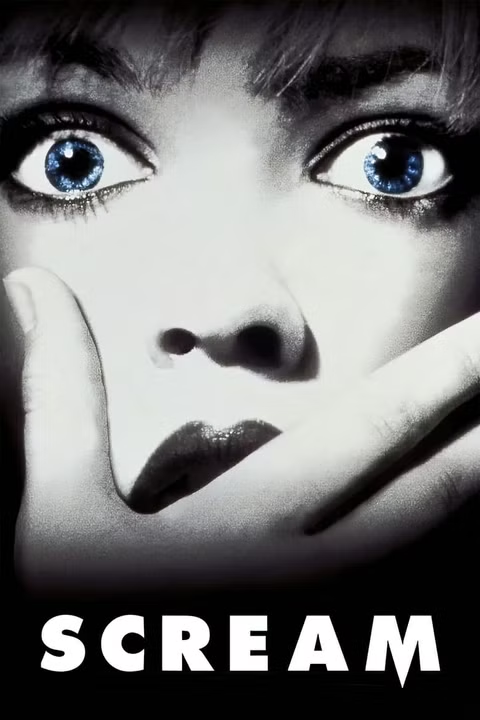
The era of the once mighty slasher film has fallen on hard times. Grief-fueled horror films are all the rage, with only a few bastions of the subgenre remaining. How quickly viewers forget the seeds of the genre that celebrated blood and guts. The only slasher franchise that truly remains is Scream, the iconic series of films from the late horror director Wes Craven.
Premiering in 1996, the first Scream film was a fresh take on a trend that seemed to have lost its luster. The film starred Neve Campbell as Sidney Prescott, a new final girl for the modern era. In the town of Woodsboro, a killer in a Ghostface mask terrorizes high school students in an entertaining and meta take on the genre. Scream deconstructed these horror tropes and laid out the rules for surviving a horror film. The franchise was so successful that it outlived Craven. Now, after the seventh entry of the Scream series, it has found life again on Tubi.
‘Scream’ Fans Can Revisit Ghostface on Streaming
Scream has endured for so long because it was unlike any other horror franchise at the time. In the ‘90s, slashers like Freddy Krueger and Jason Voorhees had lost their charm. It was time for a new take on the subject, and there was no one better to address this than Wes Craven. With the help of screenwriter Kevin Williamson, who wrote zippy lines and witticisms, Scream became a smash success.
The first Scream film threw out the hallmarks of the past. Instead of one killer, there were two, and their motives were incidental. While Billy Loomis (Skeet Ulrich) blamed his murder spree on his mother leaving after Maureen Prescott’s affair with his father, it was really an excuse. Co-killer Stu Macher (Matthew Lillard) cited peer pressure as his reason for the crimes. This was a tongue-in-cheek way to acknowledge that killers didn’t need a motive to be truly heinous.
Scream set up a theme that reoccurred in the following two films of the trilogy, offering red herrings and horror cameos to drive the point home that this was not the typical franchise. The meta take on the genre continued to take on a life of its own. Just like Ghostface, Scream continues to return and only rarely disappoints.
Scream 4 was a surprise, premiering a decade after the previous film. Craven proved he had not lost his touch as the film was ahead of its time. Featuring a new cast of teenagers, the fourth film in the franchise notes the dangers of influencer culture in an extremely underrated entry. Now, 30 years after the first film, Scream remains a nostalgic pleasure for fans. Michael Myers can be a one-note killer, but Scream continues to prove it is the best of the best because it always reinvents itself.
There are, of course, no comparisons to the originals, but there is always room to deconstruct the horror genre in a new meta take. Viewers can relive the brutal kills and classic one-liners by catching the franchise on its new home, Tubi.

- Release Date
-
December 20, 1996
- Runtime
-
112 minutes
- Writers
-
Kevin Williamson
- Producers
-
Bob Weinstein, Cary Woods, Cathy Konrad, Harvey Weinstein
Entertainment
Neighbors react to Joseph and Kendra Duggar's arrests: 'What else don't we know about the Duggars?'
:max_bytes(150000):strip_icc():format(jpeg)/Kendra-and-Joseph-Duggar-032126-2-576aaee0f4e54458bfba6d21e6b46690.jpg)
One Tontitown, Ark. resident said “19 Kids and Counting” star Joseph — now charged with molesting a 9-year-old girl — “seemed like a nice guy”

Rebel Wilson is not afraid to keep it real with herself about her weight-loss journey.
The “Bridesmaids” actress has always been open about her weight and the steps she has taken to pursue a healthier lifestyle. Now, she’s sharing even more candid reflections as she navigates her body transformation.
While continuing to focus on her wellness, Wilson is also dealing with an ongoing legal battle tied to her film “The Deb.”
Rebel Wilson Gets Candid About Never Getting A Bikini Body

The “Senior Year” actress did not sugarcoat where she’s at recently with her fitness, admitting she may never look a certain way.
Taking to Instagram Stories, Wilson shared a photo of herself in a sports bra and shorts, confidently showing her midsection while embracing her reality in the caption.
“I don’t think I’ll ever have a bikini body – that’s just not me,” Wilson wrote. “But my body has carried me through this life, and I am so grateful for it!”
The soon-to-be mom of two followed up her candid admission with a glimpse into her wellness routine. “I’m trying to get in my daily steps, do a Pilates class once or twice a week, some strength training when I can – eat as healthy as I can,” she explained.
Wilson also chimed in on her use of medication to support slimming down, writing, “But let’s face it, I love sweets – so I need those GLPs [sic] from time to time to give a little help.”
The ‘Pitch Perfect’ Star Turned To GLP-1 For Weight Loss

Wilson’s latest update comes about six months after she revealed she was considering GLP-1 medications as part of her weight management plan.
As The Blast reported at that time, she had partnered with Noom as its Chief Wellness Ambassador, describing the medication as a complementary tool alongside proper nutrition and exercise.
Wilson had revealed back then that she was struggling to stay in shape due to her busy schedule, from motherhood to her career. However, getting on board with the Noom program helped her still keep her fitness in check.
How Rebel Wilson’s ‘Year of Health’ Reshaped Her Career

Throughout her transformation, Wilson has been an open book. In 2020, embarked on a strict routine, famously dubbed her “year of health,” shedding nearly 80 pounds in the process.
According to the Australian actress, the change was not just physical; it also shifted how she was perceived in the industry, opening doors to a wider range of roles.
“That weirdly made me more versatile as an actress, even though I had the same skills,” the 46-year-old explained per The Blast.
She added, “I think people see you differently [after weight loss] and can imagine you more easily in different roles. So I think that probably had the biggest effect.”
Wilson’s ‘The Deb’ Film Lawsuit Took a New Messy Turn

Putting her fitness journey aside, the “Jojo Rabbit” actress is currently in the middle of a legal showdown involving her directorial debut.
The dispute began in 2024 after Wilson accused members of the production team of embezzlement and other misconduct. In response, the producers hit back with a lawsuit, alleging her claims were false.
The case has now taken a new twist. Weeks ago, an audio surfaced as part of the evidence, reportedly suggesting that Wilson may have been involved in orchestrating a smear campaign against producer Amanda Ghost.
According to The Blast, the recording features crisis management professional Jed Wallace discussing ways to spread false claims against Ghost, including that she was getting hookers for Sir Len Blavatnik.
Wallace also mentioned Wilson’s attorney, Bryan Freedman, in his plans against Ghost.
Rebel Wilson Spoke Out Amid Legal Battle

Following the release of the recording, Wilson spoke out, making it clear she is fully prepared to say her truth. As The Blast reported, the comedian revealed that she was waiting until she testified. However, the increasing allegations against her made her speak up.
She disclosed that there were “powerful people” who wanted her silenced after reporting what she saw as “dodgy behavior” from the producers on set.
Wilson called out Blavatnik to take action before noting she won’t be quiet. She added that when “push comes to shove,” she would take the stand and “tell it as it is.”
Entertainment
Megan Thee Stallion sets “Moulin Rouge ”return after hospitalization: 'I thought I was gonna faint on stage'
:max_bytes(150000):strip_icc():format(jpeg)/Megan-Thee-Stallion-Moulin-Rouge-Broadway-040126-e0ad952161274510adfaddb6fc77b028.jpg)
A rep for the singer said “extreme exhaustion, dehydration, vasoconstriction and low metabolic levels” were the cause for her “concerning” symptoms.
Entertainment
Bigfoot community reeling as new documentary casts doubt on iconic footage of mythic creature
:max_bytes(150000):strip_icc():format(jpeg)/Marq-Evans-and-Bigfoot-at-Capturing-Bigfoot-Premiere-033126-e0258b7f6a854d75a7035ff68ad54459.jpg)
“It’s like losing a friend,” one Reddit user wrote after the documentary “Capturing Bigfoot” argued that Roger Patterson and Robert Gimlin’s footage of the creature is a hoax.
:max_bytes(150000):strip_icc():format(jpeg)/Monty-Pythons-The-Meaning-of-Life-John-Cleese-Smokey-And-The-Bandit-Burt-Reynolds-Blackberry-Glenn-Howerton-033026-b0282ccc126a466b968574fc51d1ae99.jpg)
EW’s comedy rule of threes recommends that you select a trio of films from this list and watch them in a row.
Action shows get praised for the wrong things all the time. People talk about body counts, cool shots, big fights, shock deaths, and who looked the toughest walking away from an explosion. None of that means much on its own. Great action television is about sustained pressure.
It is about whether the violence changes the story, whether the fights expose character, whether escalation feels earned, and whether the show can keep making danger feel immediate instead of routine. That is where the nearly perfect ones separate themselves. The ten shows here all get that. They do not all work the same way, but every one of them knows how to make action feel like a story instead of decoration.
10
‘Warrior’ (2019–2023)

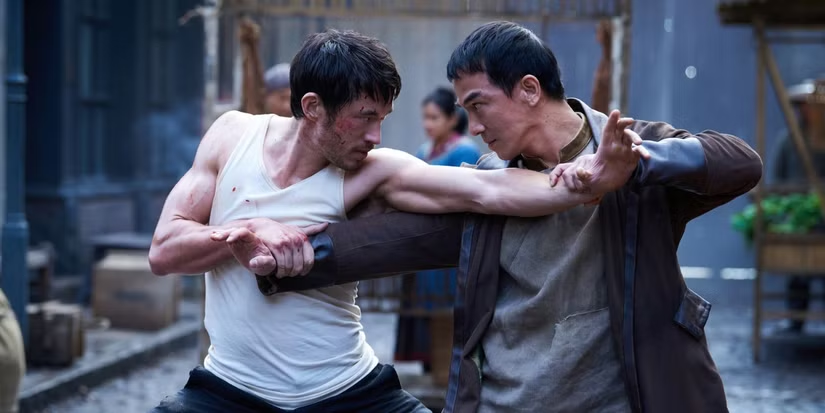
Warrior hits so hard and it never treats action as a side attraction. The fights are the language of the world. Territory, respect, class tension, family resentment, political opportunism, racial violence, personal shame, all of it keeps finding its way into physical confrontation. That is why the show stays alive even when nobody is punching anybody. You always feel like somebody is about to test somebody else’s claim to space.
Ah Sahm (Andrew Koji) gives the show an aura, but the real strength is that Warrior never traps itself inside one kind of cool. Ah Sahm can fight like a demon, yes, but the show also has to deal with Mai Ling (Dianne Doan)’s ambition, Young Jun (Jason Tobin)’s instability, Ah Toy (Olivia Cheng)’s cold-blooded precision, and the way the city itself keeps pressurizing every faction inside it. The result is a series where the action scenes matter because the grudges underneath them are always active. When the show really gets rolling, it feels less like a string of fights and more like a city-wide chain reaction.
9
‘Reacher’ (2022– )

What Reacher understands better than a lot of prestige-minded action series is the pleasure of directness. This is a show built around a giant human problem walking into corrupt systems and deciding he is not going to tolerate any of it. That sounds simple because it is simple, and the show is smarter for not apologizing about that. Reacher’s whole appeal is that he reads a room fast, clocks the lie inside it, and turns physical force into moral clarity.
But the reason it works beyond the basic premise is that Alan Ritchson does not play Jack Reacher like a robot. Reacher is blunt, observant, dryly funny, and weirdly patient right up until the moment patience is no longer useful. He’s stoic and unapologetic. That’s a weird combo these days. That makes the bursts of violence land better. And the show knows how to build around him: small-town conspiracies, military baggage, bad men who mistake size for invulnerability, allies who are useful without becoming dead weight. A lot of action shows waste time trying to convince you they are deeper than they are. Reacher does not. It just keeps delivering satisfying escalation with enough intelligence in the mechanics to keep you fully locked in.
8
‘Banshee’ (2013–2016)

Banshee is what happens when a show looks at the idea of too much and decides that is exactly the right amount. The violence is savage, the sex is reckless, the grudges are old, the criminal energy is everywhere, and every major character seems about one bad decision away from detonating the whole town. That could have turned into nonsense. Instead, the show commits so hard that its madness becomes structured.
The genius of Banshee is that Lucas Hood (Antony Starr) being an impostor is not just a hook. It poisons every interaction he has. He is constantly improvising authority he does not really own while dealing with Carrie Hopewell (Ivana Miličević)’s history, Rabbit (Ben Cross)’s shadow, Kai Proctor (Ulrich Thomsen)’s local dominance, and a town full of people who all seem to have private reasons for snapping. The fights are famous for good reason. They do not feel neat. They feel exhausting, painful, ugly, and personal. That is what gives the show its bite.
7
’24’ (2001–2010)

There are action shows with better individual fight scenes than 24. There are action shows with prettier filmmaking. There are action shows less absurd from season to season. But if we are talking about pure compulsion, pure “I need the next episode now,” 24 still belongs near the top because it understands velocity on a level most television never touches. Every hour ends with a fresh emergency, a betrayal, a clock problem, a political complication, or a new layer of catastrophe.
Jack Bauer (Kiefer Sutherland) is the engine, obviously, and Sutherland plays him with exactly the right approach. Jack is not cool in a relaxed way. He is desperate, half-broken, relentless, and always one second away from doing something extreme because the alternative looks even worse. That is what makes the show work. It does not present action as controlled mastery. It presents it as triage under impossible pressure. Even when the plotting strains credibility, the show’s sense of pace keeps dragging you forward.
6
‘Daredevil’ (2015–2018)

What separates Daredevil from most superhero action shows is that it actually understands what a beating costs. Matt Murdock (Charlie Cox) gets battered, staggered, slammed into walls, thrown down hallways, and pushed into the kind of exhaustion that changes how a scene feels. That physical vulnerability gives the action real dramatic value. And then there is the mood.
Hell’s Kitchen feels claustrophobic, wounded, and morally cornered. Fisk (Vincent D’Onofrio) reshapes the entire show’s sense of threat because his presence makes every criminal and civic layer feel connected. Charlie Cox brings the right tension to Matt: intelligence, restraint, guilt, anger, and a self-destructive need to carry too much himself. The famous hallway fights embody what the show is about. Matt wins, but never cleanly. Every victory leaves damage behind. That is why the action means something.
5
‘The Punisher’ (2017–2019)

A lot of adaptations get seduced by the iconography of the character and stop there. This one is strongest when it remembers that Frank (Jon Bernthal) is not just efficient. He is torn open and functioning anyway. The Punisher follows a man whose grief has hardened into method without ever fully losing the raw wound underneath it.
When the show is in full form, it is ruthless.The action is tied to Frank’s psychology and the damage done to everyone around him. His scenes with Micro (Ebon Moss-Bachrach) help because they create contrast without softening him into something he is not. Billy Russo (Ben Barnes) matters because their history turns conflict into betrayal instead of generic opposition. And when Frank goes to work, it is ugly, efficient, punishing force carried out by a man who has stopped pretending he belongs to ordinary life. That clarity is what keeps the series from feeling like empty punishment porn.
4
‘Strike Back’ (2010–2020)

Strike Back might be one of the purest action-delivery systems television has ever produced, and that is meant as praise. The show knows exactly what it is built to do: throw damaged, hyper-capable operators into one hot zone after another, keep the missions nasty and unstable, and make every operation feel like it can spiral in six different directions before anybody gets out. There is no bloat in the appeal. It is precision, momentum, and constant tactical pressure.
What makes it better than lesser military action shows is that it does not go soft in the connective tissue. The banter matters. The exhaustion matters. The improvisation matters. Scott (Sullivan Stapleton) and Stonebridge (Philip Winchester), in particular, work because their chemistry gives the show something to lean on between firefights. One is chaos with a pulse, the other is discipline holding itself together, and that friction keeps scenes from going flat. Then the set pieces hit, and the show delivers with frightening consistency. Raids, ambushes, extractions, reversals, close-quarters scrambles, Strike Back understands that action television can be artfully simple if the execution is sharp enough. Here, it usually is.
3
‘Spartacus’ (2010–2013)

Very few shows understand escalation the way Spartacus does. It starts hot and then keeps finding ways to become hotter without losing narrative shape. That is the trick. Plenty of series can go loud. Very few can go loud while still making every new betrayal, revolt, alliance, humiliation, and revenge beat feel like it belongs exactly where it lands. Spartacus is operating at full emotional volume almost all the time, and somehow that becomes a strength rather than a weakness.
The show’s action is nearly perfect because it is fused to suffering, pride, spectacle, and payback. Spartacus (Andy Whitfield) is fighting and clawing his way through systems that stripped him of home, wife, name, and control. Batiatus (John Hannah) is one of the great chaos engines in TV because he can make a room dangerous without drawing a blade. Crixus (Manu Bennett), Gannicus (Dustin Clare), Lucretia (Lucy Lawless), Ashur (Nick E. Tarabay), Oenomaus (Peter Mensah), these are not decorative figures orbiting the hero. They all sharpen the stakes in different ways. And when the series goes into battle mode, you feel the accumulated insult behind every strike. That emotional backlog is why the action in Spartacus lands so hard.
2
‘Gangs of London’ (2020– )

Gangs of London feels like a show made by people who took it personally when television action got lazy. The fight scenes are not just good. They are viciously imagined, spatially clear, physically punishing, and committed to consequences in a way that makes a lot of expensive action TV look fake and timid. The series understands that the audience should not just admire violence. They should wince at it, dread it, and still be unable to look away from it.
But the reason it rises this high is that the show is not only a collection of astonishing beatdowns and shootouts. It is a power struggle full of unstable loyalties, family fractures, strategic misreads, and men convincing themselves they are in control right before somebody tears that illusion apart. Elliot Carter (Ṣọpẹ́ Dìrísù) works because he is never allowed to settle into simple hero mode. Sean Wallace (Joe Cole) is compelling because grief, entitlement, rage, and insecurity are all fighting inside him at once. And when the show decides to explode, it really explodes. Safe houses become slaughterhouses. Negotiations collapse into carnage. Whole alliances get rewritten in minutes. It is some of the most ferocious action television ever made.
1
‘Shōgun’ (2024– )

Putting Shōgun at number one on an action list is exactly the kind of choice people only question if they think action begins when swords come out. That is far too small a definition. Shōgun is nearly perfect action television because it understands that action starts much earlier than impact. It starts with positioning. It starts with reading a room correctly. It starts with knowing who is cornered, who is bluffing, who is buying time, who is sacrificing a piece to save the board, and who is quietly steering everybody else toward a confrontation they will not survive.
That is why the show is so overwhelming. When violence happens, it matters because the tension feeding into it has been built with terrifying patience. Toranaga (Hiroyuki Sanada) does not dominate the series by constantly raising his voice or swinging his authority around. He dominates it by turning thought into motion and motion into inevitability. Mariko (Anna Sawai) gives the story its deepest force because her restraint, duty, faith, intelligence, and pain make every scene around her denser. Blackthorne (Cosmo Jarvis) is useful not as an action avatar for the audience, but as a destabilizing presence inside a system already trembling with calculation and mistrust. And when Shōgun does unleash kinetic force, it lands with unusual weight because the show has already done the harder work.

Shogun
- Release Date
-
2024 – 2026-00-00
- Directors
-
Fred Toye, Jonathan van Tulleken, Charlotte Brändström, Takeshi Fukunaga, Hiromi Kamata
- Writers
-
Rachel Kondo
Entertainment
“Real Housewives of Salt Lake City” alum Jen Shah was on 'poop duty' with Elizabeth Holmes in prison
:max_bytes(150000):strip_icc():format(jpeg)/Jen-Shah-Elizabeth-Holmes-040126-109a487f98d045c2acb77b7b590a6287.jpg)
The Theranos founder and the former “RHOSLC” cast member grew “close” as fellow inmates in Texas.
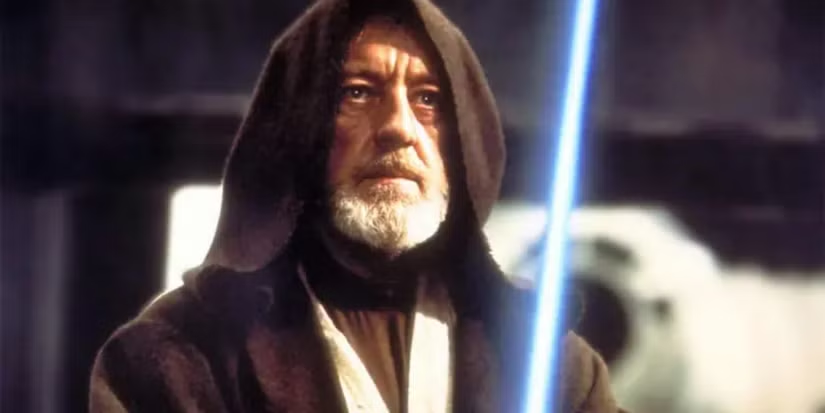
For millions of Star Wars fans, Obi-Wan Kenobi represents wisdom, calm, and the moral center of the original trilogy. He is the mentor archetype perfected. Part samurai master, part space wizard, part philosophical guide leading Luke Skywalker toward his destiny. Without him, Star Wars simply would not feel the same. Ironically, the man who made the character iconic never fully understood the obsession.
Sir Alec Guinness had a famously complicated relationship with the role that made him recognizable to generations of moviegoers. While Star Wars made him extraordinarily wealthy and introduced him to the largest audience of his career, it also became the role he spent decades trying to separate himself from. But the real story is not just that Guinness disliked Star Wars, it is why his presence in the film was so important in the first place. Because without Guinness, Star Wars might not have worked the way it did.
Guinness Helped Make Star Wars Feel Legitimate

When Star Wars released in 1977, it was far from guaranteed to become the cultural phenomenon it is today. Science fiction was not widely considered prestige filmmaking, and the genre often struggled to be taken seriously aside from a few exceptions. George Lucas understood this, which is part of why casting Guinness mattered so much. Guinness was an Academy Award winner for The Bridge on the River Kwai, known for serious dramatic work and classical stage performances. His presence alone signaled that Star Wars was trying to be more than just spectacle. More importantly, he treated the role with complete sincerity.
Rather than leaning into the pulpy nature of the material, Guinness approached Obi-Wan like a classical mentor figure. He delivered exposition about the Force and the Jedi with the quiet confidence of someone discussing philosophy rather than fantasy. His performance gives the impression that this galaxy has a real history instead of just invented lore. That choice helped audiences accept the film’s mythology. It is easy to imagine a version of Star Wars where Obi-Wan feels campy or overly theatrical. In the wrong hands, the character could have felt like a stock fantasy wizard. Guinness instead gave him restraint, sadness, and a sense of lived experience. He made Obi-Wan feel like someone who had already lived through a lost golden age. That emotional grounding helped make the entire story feel more real.

Guinness’ Performance Grounded the Film’s Biggest Ideas
One of Guinness’ greatest contributions to Star Wars is how he handles the film’s most difficult material. Much of A New Hope depends on the audience accepting abstract ideas like the Force, the fall of the Jedi, and the moral battle between light and dark. Guinness makes those ideas believable simply through how seriously he takes them. The calm conviction in his delivery gives the idea emotional credibility. It turns what could have been technobabble into something closer to mythology.
His famous sacrifice on the Death Star works for the same reason. Guinness plays the moment with quiet acceptance rather than dramatic spectacle. Obi-Wan does not die like an action hero, he dies like someone fulfilling a purpose he has already accepted. That performance choice reinforces the idea that Star Wars is operating on mythic storytelling rules rather than simple adventure logic. Without that tone, the moment risks feeling confusing or anticlimactic. Instead, it becomes one of the most important turning points in the trilogy. It also helped establish one of the franchise’s most important storytelling ideas. In Star Wars, victory does not always come from power. Sometimes it comes from belief and sacrifice. Guinness communicates that theme through performance more than dialogue. That may be his most important contribution to the film.
Guinness Never Loved What Obi-Wan Became

Despite how essential his performance was, Guinness never fully embraced the role. Unlike many actors who later grow tired of their most famous characters, Guinness had doubts from the beginning. He reportedly struggled with some of the dialogue and was unsure how the film would be received. While he respected Lucas’ ambition, he did not share the same excitement for the genre. His decision to join the film was partly practical. His contract included a percentage of the film’s backend profits, estimated at around 2.25 percent, which ultimately earned him millions as Star Wars became a global success.
Financially, it was one of the smartest decisions he ever made. Artistically, it was more complicated. Guinness spent decades building a reputation as a transformative actor known for his range. After Star Wars, he increasingly found himself defined by a single role. In his memoir A Positively Final Appearance, he recalled throwing away Obi-Wan fan mail without reading it. One frequently repeated story describes him agreeing to sign an autograph for a young fan only if the boy promised to stop watching Star Wars. These stories may sound harsh, but they reflect a real fear: Guinness worried that his most popular role would overshadow the rest of his career. In some ways, he was right. But there is also a deep irony here. The qualities Guinness valued most as an actor are exactly what made Obi-Wan so beloved. His restraint, discipline, and seriousness helped elevate the film beyond simple genre entertainment. His commitment to treating the story seriously is what helped make it timeless.
Whether he liked it or not, he became part of cinematic mythology through Obi-Wan, and in the end, that may be the clearest measure of his impact. Guinness did not just play Obi-Wan Kenobi: he helped convince audiences that Star Wars was worth believing in, even if he never fully understood why they believed in it so much.
- Created by
-
George Lucas
- First TV Show
-
Star Wars The Clone Wars
- Latest TV Show
-
The Acolyte

NewsBeat13 seconds ago
New Foundayo weight loss pill approved by FDA

Business1 minute ago
Private label sales reached $330 billion in 2025
Crypto World2 minutes ago
Bitcoin Believers Who Lasted 16 Months Just Sold Every Coin to Survive


-

 Business7 days ago
Instagram, YouTube Found Responsible for Teen’s Mental Health Struggle in Historic Ruling
-

 NewsBeat6 days ago
The Story hosts event on Durham’s historic registers
-
 Tech7 days ago
Intercom’s new post-trained Fin Apex 1.0 beats GPT-5.4 and Claude Sonnet 4.6 at customer service resolutions
-

 Sports6 days ago
Sweet Sixteen Game Thread: Tide vs Michigan
-
Entertainment3 days ago
Fans slam 'heartbreaking' Barbie Dream Fest convention debacle with 'cardboard cutout' experience
-
 Entertainment5 days ago
Lana Del Rey Celebrates Her Husband’s 51st Birthday In New Post
-
Crypto World2 days ago
Dems press CFTC, ethics board on prediction-market insider trades
-

 Crypto World16 hours ago
Gold Price Prediction: Worst Month in 17 Years fo Save Haven Rock
-

 Tech3 days ago
The Pixel 10a doesn’t have a camera bump, and it’s great
-

 Sports2 days ago
Tallest college basketball player ever, standing at 7-foot-9, entering transfer portal
-

 Tech2 days ago
EE TV is using AI to help you find something to watch
-

 Fashion4 days ago
Amazon Sundays: Soft Spring Layers
-

 Tech3 days ago
Apple will hide your email address from apps and websites, but not cops
-

 Tech2 days ago
How to back up your iPhone & iPad to your Mac before something goes wrong
-

 Politics3 days ago
Should Trump Be Scared Strait?
-

 Crypto World3 days ago
U.S. rule change may open trillions in 401(k) funds to crypto
-

 Tech2 days ago
Flipsnack and the shift toward motion-first business content with living visuals
-

 Fashion7 days ago
En Vogue in Brown Leather and Tailored Neutrals by Atelier Savoir, Styled by J Bolin
-

 Fashion7 days ago
What Are Your Favorite T-Shirts for the Weekend?
-

 Business6 days ago
Chinese universities with military links bought Super Micro servers with restricted AI chips
You must be logged in to post a comment Login