
Entertainment
10 Greatest John le Carré Books, Ranked

Ian Fleming may have originated the genre, but John le Carré (real name David Cornwell) brought spy novels to new levels of realism, complexity, and relevance. He ditched the gadgets and derring-do, instead embracing blurred loyalties, inner turmoil, and disillusionment. In le Carré’s world, intelligence work is not a chess match between geniuses but a slow grind of paperwork, betrayal, ideological decay, and emotional damage.
In other words, le Carré’s novels dismantle the spy myth piece by piece, launching a new wave of titles that would come to define the genre for a world living through the Cold War and increasingly disenchanted with institutions. With this in mind, this list ranks the very best of them. The novels below represent his most powerful work, defined by rich commentary, careful plotting, and psychological depth.
10
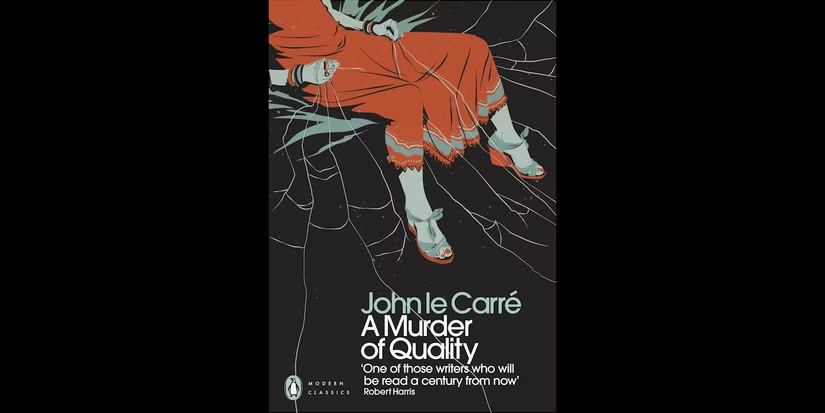
‘A Murder of Quality’ (1962)

“Love is whatever you can still betray.” A Murder of Quality is le Carré’s second novel and one of his most deceptively quiet works. On the surface, it seems like a traditional English murder mystery, following George Smiley as he investigates a killing at an elite boys’ school. However, rather than serving up the espionage spectacle one might expect, the book places its focus on themes like class, cruelty, and institutional rot.
Le Carré uses the school as a microcosm of British society, exposing how privilege protects abuse and silences dissent. The murder itself becomes less important than the environment that enabled it. Here, Smiley isn’t a flashy spy or death-defying secret agent, but a moral observer, someone attuned to human weakness and social hypocrisy. A Murder of Quality fits all this into a breezy 189 pages, making it a fairly accessible starting point for those curious about le Carré’s work.
9
‘The Russia House’ (1989)

“The world is a fine place, and worth fighting for.” The Russia House is one of le Carré’s most humane novels, set during the thawing tensions of the late Cold War. The main character is “Barley” Blair, a British publisher drawn into intelligence work after receiving a manuscript from a Soviet scientist claiming to reveal the truth about Russia’s failing nuclear capabilities. The plot mechanics are fairly straightforward, but the book is elevated by a touching romantic storyline between Barley and a Russian woman.
Le Carré fans often cite this as the author’s funniest and most grounded book. The movie adaptation starring Sean Connery and Michelle Pfeiffer was well-received, too, for similar reasons. The Russia House is also interesting as a time capsule. It was published in 1989, capturing a moment of major historical transition, where old certainties were collapsing without being replaced by anything better.
8
‘The Night Manager’ (1993)

“There is no such thing as a private life.” The Night Manager was le Carré’s first true post-Cold War novel, exploring a much murkier world where loyalties and objectives were trickier to define. The novel follows a former soldier turned hotel night manager who is recruited to infiltrate the inner circle of an international arms dealer. On paper, this resembles a more conventional thriller, but le Carré subverts expectations at every turn. The arms dealer is not merely evil, but protected by governments, corporations, and intelligence agencies that benefit from his crimes.
In other words, corruption is the central theme in this one, with characters driven by self-interest rather than high-minded ideals or national power. As a result, the vibe is bleaker and more ambiguous than that of the novels that directly preceded it. There is suspense, but little satisfaction. Success feels temporary and compromised, failure systemic. A snapshot of unipolar malaise.
7
‘Smiley’s People’ (1979)

“Smiley never forgot.” Smiley’s People serves as the elegiac conclusion to George Smiley’s long conflict with his Soviet counterpart, Karla. It’s a tragedy about two men shaped (and ruined) by ideology. We follow Smiley as he reassembles old networks and forgotten contacts for one final reckoning. Unlike more action-driven spy novels, this book moves slowly, deliberately, mirroring Smiley’s age and weariness. The Cold War is no longer a battlefield or a stage for heroism, but a graveyard of broken lives.
The book is fittingly claustrophobic and intense, a fitting payoff to the “Karla Trilogy”. As a capstone for that story arc, Smiley’s People defines le Carré’s worldview: intelligence work destroys both sides, and understanding your enemy does not make their defeat feel like justice. The title refers to those who choose reality over ideology and humans over institutions. The novel’s quiet final scenes are especially devastating.
6
‘The Honourable Schoolboy’ (1977)

“We are not nice people.” Coming just before Smiley’s People in the Karla Trilogy, The Honourable Schoolboy is le Carré at his most sprawling and structurally ambitious. Picking up threads from Tinker Tailor Soldier Spy, this one chronicles British intelligence’s attempt to exploit Karla’s networks in Southeast Asia. The plot moves across continents, mixing espionage with journalism, politics, and, of course, personal obsession. The cast of characters is massive, with multiple narrative plates spinning at once.
The Honourable Schoolboy clocks in at a sturdy 533 pages, all of them crammed with events and details. Le Carré deliberately overwhelms the reader, reflecting the chaos and moral confusion of post-imperial intelligence work. It’s a picture of spycraft under pressure, where improvisation and sheer survival are the name of the game. The characters are fittingly layered and three-dimensional. The central figure, for example, a journalist-turned-agent, embodies divided loyalty and self-delusion.
5
‘The Little Drummer Girl’ (1983)

“She was acting even when she slept.” The Little Drummer Girl is le Carré’s most theatrical novel, both literally and metaphorically. It revolves around a young actress recruited by Israeli intelligence to infiltrate a Palestinian terrorist network. She is manipulated by a spymaster on a mission to find and kill a terrorist, but, while undercover, finds herself developing unexpected sympathies for the causes of those she is meant to be taking down. The protagonist’s empathy becomes both a liability and a weapon.
Le Carré refuses easy moral binaries, portraying both sides as capable of cruelty and conviction. The intelligence apparatus itself is shown as ruthlessly pragmatic, willing to sacrifice individuals for strategic gain. At the same time, Le Carré uses performance as a central metaphor, examining how identity is constructed, manipulated, and eventually erased. The lies are destabilizing, to the point that one either comes to believe them or collapses totally under their crushing weight.
4
‘The Constant Gardener’ (2001)

“Love is the only reason to lie.” Some readers will know The Constant Gardener from the 2005 movie version starring Ralph Fiennes and an Oscar-winning Rachel Weisz. Drawing on a real-life incident, it tells the story of a British diplomat investigating his activist wife’s murder in Kenya, uncovering a web of pharmaceutical exploitation and government complicity. Unlike the author’s Cold War novels, this book is driven by grief and love rather than professional duty.
The protagonist’s awakening is painful and belated, driven by guilt as much as justice. The tale is smart as well as suspenseful, shot through with passion, conspiracies, double crosses, deadly diseases, and conniving bureaucrats. However, Le Carré himself says that his fictionalized account is less shocking than the actual case that inspired it. In the afterword, he writes: “By comparison with the reality, my story [is] as tame as a holiday postcard.”
3
‘The Spy Who Came in from the Cold’ (1963)

“What do you think spies are? Priests?” The Spy Who Came in from the Cold is the novel that changed espionage fiction forever. In it, a British agent is sent on one last mission designed to appear as a defection, drawing him into a morally grotesque operation. What makes the novel revolutionary is its bleakness. Le Carré strips away any notion of honorable service, portraying intelligence work as indistinguishable from the brutality it claims to oppose.
The protagonist is exhausted, cynical, and ultimately disposable. While his superiors cloak his mission in ideals and altruism, all justified by the greater good, the reality is that his morally dubious work is corrosive to his soul. Here, the spy agencies of both East and West live in a moral void, each using the Cold War as an excuse to justify lies, violence, and betrayal. This approach was bold stuff for the early ’60s, carrying over well into the stellar film adaptation, too.
2
‘A Perfect Spy’ (1986)

“He was born a liar, and he never stopped.” A Perfect Spy is le Carré’s most personal and psychologically complex novel. Loosely inspired by his life, it centers on a lifelong intelligence operative whose career is shaped by his relationship with his charismatic, deceitful father. The plot moves between espionage missions and childhood memories. Long before deception became the protagonist’s profession, it was a survival skill in a turbulent household.
In other words, Le Carré dismantles the spy myth entirely here, presenting espionage as an extension of emotional damage rather than patriotic duty. The protagonist’s identity fractures under the weight of lies told for love and career alike. His story is dense, introspective, and deeply sad, offering no redemption, only understanding. Not for nothing, author Philip Roth declared A Perfect Spy “the best English novel since the war”, and le Carré himself said it was “the novel of mine that is closest to my heart.”
1
‘Tinker Tailor Soldier Spy’ (1974)

“A fanatic is always concealing a secret doubt.” Far and away the author’s most famous book, not least due to the fantastic 2011 movie adaptation. Tinker Tailor Soldier Spy is le Carré’s most intricate and intellectually demanding novel. It revolves around George Smiley’s investigation into a Soviet mole embedded at the highest levels of British intelligence, leading to a tense hunt through memory, interrogation, and Smiley’s quiet deduction. At the time, these ideas weren’t fantasy at all but a reflection of real events, specifically the defection to the Soviet Union by British spy Kim Philby.
The structure mirrors the process of intelligence analysis itself: fragmented, slow, and deeply uncertain. Every character is compromised, emotionally or morally. For this reason, the novel rewards patience, gradually revealing how betrayal corrodes institutions from within. Themes aside, Tinker Tailor Soldier Spy is simply well written, laden with sharp dialogue and juicy plot twists, and the character of Smiley is compelling throughout.


Brandy is looking back on a relationship from her younger years, offering her reflections on the romance from a more mature perspective in her memoir. The singer dated Boyz II Men’s Wanya Morris when she was in her teens, and in hindsight, she realized there was “something wrong” with the age-gap coupling.
Brandy Revealed Details In Her Memoir

R&B singer Brandy is revealing details about her past in her new memoir, “Phases,” released on March 31. In it, Brandy confirmed that she was once involved in a romantic relationship with Wanya Morris, one of the members of the vocal harmony group Boyz II Men. At that time, she was 16 and Morris was 22.
The two met in 1994 when they collaborated on the song “Brokenhearted,” which was included in Brandy’s self-titled album released the following year. The two got to know each other while working together, and their relationship turned into romance. However, they kept it secret.
“I was in over my head. Sneaking around with Wanya and lying to my parents had become a constant,” Brandy wrote, adding that her parents didn’t allow her to date at that time.
The Singer Said They Knew The Relationship Would Be Scandalous

Brandy revealed that she and Morris knew that going public with their relationship would be a problem. While a six-year age gap may not have seemed so significant, she was still a minor at the time.
“Wanya and I understood, with diamond-cut clarity that public knowledge of our relationship would ignite scandal, potentially everything we’d both worked for, so he and I opted for elaborate fiction: we would pretend patience and claim we were waiting until my eighteenth birthday before pursuing any romantic connection,” Brandy confessed.
Morris spoke in 2021 about meeting Brandy, saying she became a “protege” and their friendship developed into romance when she was of legal age. He said, “There’s no lie going on here. You can ask Brandy and she will tell you the same story.” With Brandy’s revelations in her memoir, however, it seems there are inconsistencies in their timelines.
Brandy Believed She Was In Love

She revealed that she planned to save herself for marriage. However, she believed they were in love at that time, and she changed her mind, thinking that “having sex with him would cement our bond.” Recalling the time she lost her virginity to Morris, she said the experience was like Morris “getting what he wanted from someone too young to recognize she was being used.”
Further into their relationship, Brandy said Morris started comparing her to others. Looking back, she realized there were so many red flags that she says are now “obvious.”
“Neon warning signs that I chose to ignore because I didn’t know what the hell I was doing, or what he was doing with me. Just that I was in love — or what I believed was love,” Brandy wrote.
The Couple Parted Ways Due To Infidelity
Brandy and Morris’ relationship didn’t last, as she claimed she caught him cheating with an assistant. Afterward, Morris confessed to several more infidelities, and they parted ways. In hindsight, Brandy believes Morris “took advantage” of her innocence and inexperience.
“The shame ends here. The silence ends here,” Brandy wrote. “I was not a fast girl with a crush. I was not a dramatic teenager who couldn’t handle rejection. I was not an unstable obsessive fan. I was a child. And he was an adult. And it’s time the world understood the difference,” she added.
Wanya Morris Discussed Their Relationship In The Past

In 2014, Morris was asked about their relationship on the “Breakfast Club” radio show. The interview resurfaced in 2023 due to renewed interest in ’90s celebrity relationships.
In it, Morris said, “We did the thing when she was 16, 17, around that time, you know,” adding that he “wasn’t 38 years old or anything like that.” What shocked viewers was what Morris said next: “She was old enough to get it.” One of the hosts asked, “But was it legal in the state you were in?” to which Morris responded jokingly, “We didn’t do it in the states it was illegal.”
One user commented, “This is disgusting how disrespectful they are toward her.” Another added, “They are wild for laughing at her expense.”
As of writing, Morris has not addressed Brandy’s claims in her memoir.

By Chris Snellgrove
| Published

After a heated bidding war with Netflix and more than a little behind-the-scenes drama, it looks like Paramount will be purchasing Warner Bros. This acquisition is upsetting to fans for many reasons. Some worry that it’s creatively dangerous to have so many popular IPs under one roof. Others worry that further changes in company leadership (coming right after Paramount’s merger with Skydance, no less) will spell bad news for their favorite movies and shows.
Nobody has been more nervous than Star Trek fans, many of whom are worried that new leadership will end up running this venerable franchise into the ground. To those fans, I have good news and bad news. The bad news is that the NuTrek era has already done its best to destroy the franchise. The good news is that Paramount’s upcoming acquisition will almost certainly save Star Trek by pulling everyone’s favorite shows off of Paramount+ (the world’s worst streamer), and putting them on the much more popular HBO Max.
Star Trek By The Numbers

While I have enjoyed some of the NuTrek era (Season 1-2 of Discovery, Season 3 of Picard, and most of Lower Decks and Strange New Worlds), the blunt truth is that not enough people were streaming these shows on Paramount+. With the exception of Picard (which, at Patrick Stewart’s request, was limited to three seasons), every single NuTrek show was canceled early. We can endlessly debate the merits of individual shows, but the simple truth is that Paramount wouldn’t kill these various Star Trek series if they were making the company money.
One thing I rarely see fans acknowledge, though, is that much of NuTrek might have been doomed in the first place. The execs used Star Trek: Discovery to launch CBS All Access, the streaming network that would become Paramount+. While that streamer has grown its numbers over the years, it’s still very much the underdog. Right now, Paramount+ has about 77 million subscribers, which pales in comparison to HBO Max’s 132 million. Of course, both of them pale in comparison to Netflix, which has 325 million subscribers around the world.
The Data Doesn’t Lie

Before Paramount decided to launch its own streamer, most Star Trek shows were on Netflix. There, it was extremely popular. According to FlixPatrol, for example, fans spent over 175 million hours watching The Next Generation in 2023 alone. Eventually, Paramount brought all Star Trek content (except for that redheaded stepchild, Prodigy) over to Paramount+. This was an attempt to establish their streamer as the home of all things Trek. Unfortunately, it seems clear that this has siloed the franchise by putting all shows (new and old) on one of the least popular streaming platforms.
My hope for the Warner Bros. acquisition is simple. When the dust settles, we are going to end up with one streamer that has all of the Paramount and WB content on it. If that were to happen today, there would be about 200 million people (the amount of Paramount+ and HBO Max subscribers combined) for this new platform. With nearly three times as many potential viewers, any new Star Trek show is going to have a much wider audience. If NuTrek defenders are right and these are great shows that never found an audience, this might be the easy solution: increasing the audience by 300%.
Bringing Star Trek Back To Life

If the shows still fail to find an audience on a much larger platform, then the creators of Star Trek will need to realize a very bitter lesson: they’re the problem, and audiences simply aren’t buying what they’re selling. However, that means we’ll finally get some much-needed leadership changes that start with kicking Alex Kurtzman to the curb. At that point, it will be up to newer writers and execs to see if they can find a way to make the best sci-fi franchise ever made relevant again.
As a film and TV lover, I don’t love everything about Paramount buying Warner Bros. I don’t love what this will do to the movie theater industry, I don’t love the CEO’s politics, and I don’t love how the whole thing has the mouthfeel of a monopoly. But as a Star Trek fan, I can’t help but be hopeful because the franchise is about to get new creators, a better streaming platform, and a much larger audience. Ahead of its 60th anniversary, Trek could be on the cusp of a genuine resurgence, and that’s news good enough to put a smile even on a Vulcan’s face!
Entertainment
Why Kendra Divorcing Joseph Duggar Is ‘The Best Thing To Do,’ According To Family Member

The Duggar family’s public image has been further damaged due to recent legal crises involving Joseph Duggar, leaving many in a state of disbelief.
As the details of the allegations against Joseph continue to surface, voices from within the extended family are beginning to call for drastic changes.
Joseph was recently arrested and is facing several charges relating to sexual misconduct with a minor. His wife, Kendra Duggar, was taken into custody shortly after but soon released.
Deanna Duggar Urges Kendra To File For Divorce

Joseph’s aunt, Deanna Duggar, is publicly pleading with his wife, Kendra, to end their marriage following his shocking arrest. In an exclusive interview with Page Six, Deanna expressed that she believes divorce is the best option for Kendra to start over.
“She needs a new life. The best thing to do would be to divorce him and go on with her life,” she added.
Kendra, who married into the family in 2017 and shares four children with Joseph, currently faces her own legal hurdles. Both she and Joseph were charged with four counts of endangering a minor’s welfare and four counts of false imprisonment.
Deanna admitted that while her heart goes out to her niece-in-law, she acknowledges that “wrong decisions” have been made within the household.
“My prayers are for the victims. For Kendra, for Joseph, for the whole family, wake up and repent of their pride, their feeling of the world is against them, get things right in their family,” she said.
Deanna, the sister of family patriarch Jim Bob Duggar, has been estranged from the core family for years alongside her daughter, Amy King.
Kendra Duggar Was Arrested Days After Her Husband Was Taken Into Custody

While Deanna is publicly calling for a clean break from Kendra and Joseph’s marriage, the legal reality for the couple has become increasingly intertwined through simultaneous arrests.
Just as Joseph was facing the prospect of being sent to Florida for his 2020 sexual assault allegations, law enforcement in Arkansas moved to take Kendra into custody as well.
The Blast confirmed that on Friday, March 20, the Tontitown Police Department executed arrest warrants for both husband and wife following an investigation into their domestic life.
While Kendra was released from the Washington County Jail just hours after her booking, Joseph remained in the detention center due to his ongoing case involving a nine-year-old victim.
The Couple Is Facing Charges Relating To The Welfare Of A Minor

While the sudden arrests have physically separated the couple, the specific legal details of their cases highlight a complex web of allegations.
According to The Blast, Joseph and Kendra are both facing four counts of endangering the welfare of a minor and four counts of false imprisonment in Arkansas. A source close to the investigation clarified that these specific charges are tied to their domestic situation in Arkansas and are not connected to the molestation case currently being prosecuted in Florida.
A spokesperson for the Duggar family has also stepped forward to stress that Kendra is not a suspect in her husband’s Florida case. The representative reiterated that her arrest was an independent legal matter, focusing solely on the Arkansas allegations rather than the more severe felony charges Joseph faces elsewhere.
Kendra Seeks Privacy At Undisclosed Location Following Her Release

Following Kendra’s arrest, she was released shortly after. However, she chose not to return to the Tontitown property she shared with Joseph. Instead, she was reportedly moved to a remote and private location immediately after posting bail.
During a recorded jail phone conversation, Kendra confirmed to Joseph that she was staying in a secure and very private environment.
According to The Blast, she described her new surroundings as a “good place,” while Joseph cautioned her against revealing any specific details about her whereabouts over the phone.
The move appears to be a deliberate attempt to find stability and distance the children from the ongoing legal chaos.
Jim Bob And Michelle Express Heartbreak Over The Recent Charges

While Kendra has sought physical distance and privacy at an undisclosed location, her parents-in-law have finally broken their silence regarding the allegations against their son. Jim Bob and Michelle have reportedly been left devastated by the recent events involving Joseph and the disturbing nature of the claims.
Through a formal statement, the longtime reality television parents addressed the situation, per The Blast.
According to a spokesperson for the couple, Jim Bob and Michelle are “heartbroken over this entire situation” following Joseph’s arrest.
In their statement, the representative noted that the pair is focused on “loving their family and helping Kendra” as she navigates the fallout of the criminal charges. In addition to supporting their daughter-in-law, Jim Bob and Michelle also acknowledged the gravity of the accusations by stating they are “praying for the victim” involved in the Florida case.
The Why Kendra Divorcing Joseph Duggar Is ‘The Best Thing To Do,’ According To Family Member first appeared on The Blast

Meghan Markle and Prince Harry have been at the center of severe scrutiny after it was revealed that the royal couple will go on an Australian tour in April.
The Duchess of Sussex, especially, has faced backlash due to her luxury women’s retreat in the country hosted by the “Her Best Life” podcast.
With a petition against Prince Harry and Meghan’s trip hitting almost 40,000 signatures, a member of the Sussex camp has come out to slam the “misinformation” being spread about the Australian tour.
A Prince Harry And Meghan Source Blasts ‘Misinformation’ About Their Australian Trip

A source close to Harry and Meghan has slammed “misinformation” surrounding the couple’s plans during their tour in Australia.
Amid speculation that taxpayer funds might be used for the Australian trip, with some experts even branding it a “pseudo royal” tour, the Sussex source stressed that it’s actually privately funded.
“There is a lot of misinformation being spread about this trip – all designed to whip up hate,” the source told The Mirror. “The truth is, you have a couple heading down under for work. While they’re in town, they’re going to check in on some charitable causes that they have long supported and – in the Duke’s case, with the Invictus Games – he set up.”
“The couple [is] critically aware that by just visiting a charity, they can help shine a light on its work – bringing media attention that wouldn’t otherwise exist. They don’t have to do that,” the source added.
The Sussex Source Says The World Could ‘Use A Little More Harry And Meghan’

Speaking more defensively about Harry and Meghan, the Sussex source noted that the reaction to the royal couple’s upcoming tour has been “irrational.”
They stressed that Harry and Meghan simply want to do “good” in the world, while blasting Royal Commentators for making “hate bait” comments about the Sussexes.
“They could just as easily get paid and head straight back to California,” the source stated. “It’s an irrational reaction to sh-t-can a couple who just want to support some [of] the charitable causes close to them.”
The source continued, “God forbid they try to do any good in a world that could, frankly, use a little more Harry and Meghan, and a little less sniping from ‘Royal Commentators’ who make a living by proving hate bait for anyone willing to platform them. It’s sad. What a way to make a living.”
About Meghan Markle’s Exclusive Women’s Retreat In Australia

During Harry and Meghan’s Australian tour, the duchess will headline a luxury women’s retreat in Australia, organized by the podcast “Her Best Life,” hosted by Jackie O Henderson and Gemma O’Neill, with a price tag that has sparked debate among critics.
The multi-day retreat is being promoted as a space for women to gather for “powerful conversations, relaxation, laughter, and unforgettable experiences.”
Tickets for the event come at a premium. Early Bird passes are listed at about $1,930, while the VIP experience, priced at roughly $2,288, includes additional perks such as a group photo with Meghan, a gift bag, and accommodation in an ocean-view room at the InterContinental Sydney Coogee Beach.
One of the main highlights of the retreat will be a gala dinner described as an “in-person conversation” with the duchess, during which O’Neill will interview her about her experiences and outlook on life.
O’Neill said Meghan’s participation came through a shared acquaintance and noted that the former actress was drawn to the community surrounding the podcast.
The Duchess’s Australia Retreat Draws Mixed Reactions As Commentators Debate Her Brand And Public Image

Some commentators believe the event could give attendees a chance to see a more relaxed side of Meghan.
According to Fox News Digital, royal commentator Ian Pelham Turner said the retreat may allow Meghan “to relax and be with people who wish to listen to her thoughts on life.”
He added, “I have always said she is very underrated in some quarters and has had to battle through all adversities to survive and thrive.”
Turner also pointed to her previous charitable work, including her involvement in supporting victims of the Grenfell Tower fire through a community cookbook project. According to him, the duchess has repeatedly demonstrated empathy and an ability to make people she meets feel valued.
However, not everyone is convinced by the concept or its branding. Public relations executive Doug Eldridge argued that Meghan has increasingly presented herself as an entrepreneur or founder, titles that he noted do not necessarily require a long track record.
Still, he noted that credibility often depends on consistent success, referencing the mixed reception surrounding some of her recent projects, including her lifestyle brand As Ever and a Netflix project that was not renewed.
“For someone who often talks about building,” he noted, “her record seems more in line with demolition.”
Critic Says Meghan Markle And Prince Harry’s Australia Visit Feels ‘More Commercial’ Than Their Past Royal Tours

Another commentator, Kinsey Schofield, host of the YouTube show “Kinsey Schofield’s Unfiltered,” suggested that Meghan and Prince Harry’s upcoming visit to Australia has a more commercial tone than their earlier royal tours.
According to Schofield, while Harry is expected to appear as a keynote speaker at the InterEdge Psychosocial Safety Summit, an event centered on workplace mental health, Meghan’s retreat appearance is being promoted as a premium experience built around access to the duchess herself.
Promotional material highlights her acting role in “Suits,” her podcast “Archetypes,” the couple’s charitable organization Archewell Foundation, and her lifestyle brand As Ever.
Schofield compared the couple’s current phase to the period in the 1990s when Sarah Ferguson pursued numerous commercial ventures after stepping back from royal duties.
She suggested that “when royals begin attaching their titles to a long list of ventures and paid appearances, it can come across less like influence and more like desperation.”
She also predicted that public reaction in Australia may be more curious than celebratory compared with the enthusiastic crowds the couple drew during their 2018 visit.
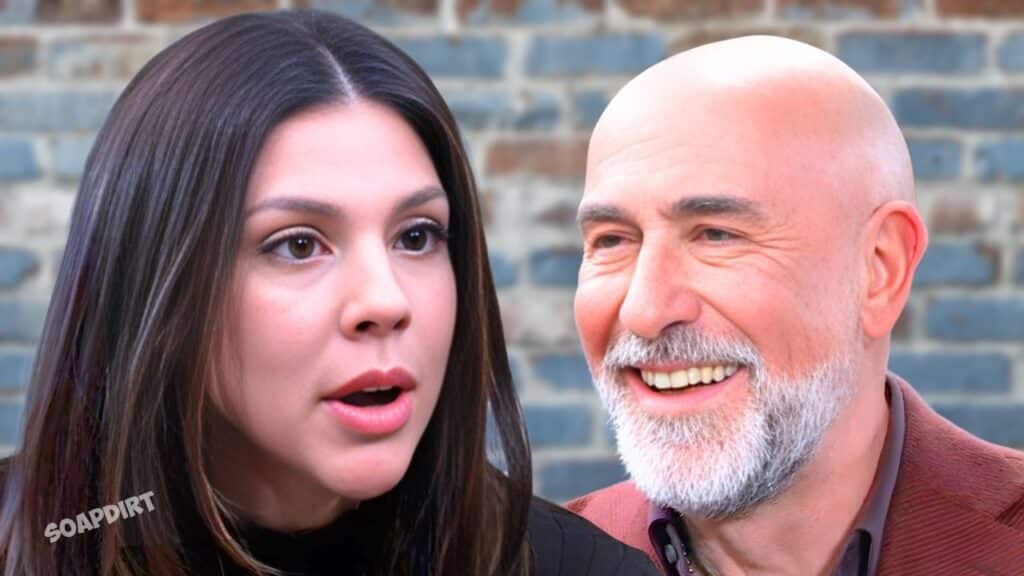
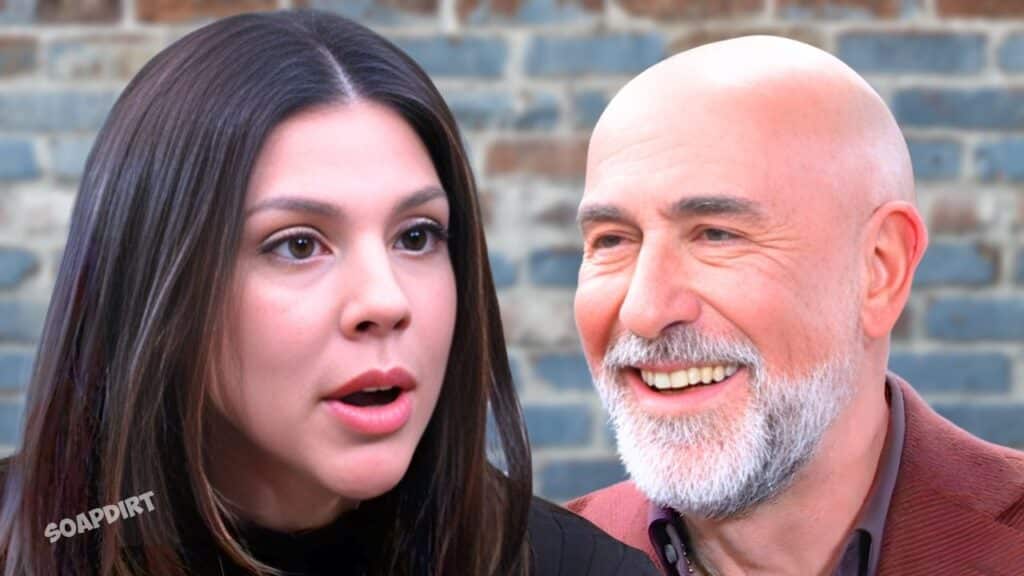
General Hospital fans, we’ve got a brand new leak for you from our inside source, and it’s about Kristina Corinthos Davis (Kate Mansi) dodging a bullet that’s meant for her, but somebody else is going to be hit. And we’ve got no doubt that Jenz Sidwell (Carlo Rota) is behind somebody taking a shot at Kristina.
We’re going to talk about what provoked Sidwell this week that has him losing it. Is another of Sonny Corinthos‘ (Maurice Benard) kids about to be collateral damage?
General Hospital Leak vs. Spoiler Clarification
So, before we dig deeper into the leak, I want to clarify first, not a spoiler, it’s a leak. Essentially, a well-informed rumor. Also, the leaker’s track record has been spot on for stuff like Cyrus Renault killing Sam McCall and Chad Duell leaving and Kirsten Storms taking that long break that she did. But recently, their track record has been off and on.
They were very accurate about something going on up at the school parking lot and Jason Morgan (Steve Burton) being on a roof, but a couple other things didn’t manifest. So, I just want to make clear, but this leak about Kristina feels legit to me and it makes absolute sense given the storyline. So, I decided to go ahead and share it.
Sidwell Blames Sonny for Marco’s Death on GH
All right. So, the context for this leak is that Jenz Sidwell is certain that Sonny Corinthos stabbed Marco Rios (Adrian Anchondo) to death. Even though Sidwell has Sonny completely leveraged, right? Because if you remember, Sidwell has photos of Sonny and Laura Spencer (Genie Francis) with Professor Hank Dalton’s (Daniel Goddard) corpse that Sidwell planted in the trunk of Laura’s car after Sidwell shot Dalton in cold blood right there in his living room on Spoon Island.
Sidwell used those photos to make sure Laura has to do whatever Sidwell wants with regard to Port Charles politics and local laws. Plus, he used those same pics to blackmail Sonny into selling him the piers. And he did. He sold them to Sidwell. So, he has Sonny and Laura under his control. Plus, Sidwell lets Sonny and Laura know that if they make any moves against him or if Sonny tries to kill him, the photos will be released, even if he dies. So, Laura and Sonny know they’re trapped and they’ve been doing what Sidwell wanted.
So, why in the heck would Sonny stab Marco? Because if Sonny killed his son, you know, he’d know that Sidwell would release the photos to the PCPD and he and Laura would be arrested for murder. So, the math isn’t mathing, but Sidwell is so upset. He’s just unhinged by grief. And he is certain that Sonny did the deed. And the real killer, Ross Cullum (Andrew Hawkes), isn’t on Sidwell’s radar at all. He thinks he and Cullum are still partners in crime.
Marco’s Memorial Service on General Hospital This Week
So, a little more context before I lay out the leak. In this week’s General Hospital promo, Sidwell has set up this nice memorial for Marco. I have been wondering if it would be offscreen or onscreen, and I am glad to see it’s onscreen. So, Sidwell is glaring as Sonny shows up to Marco’s funeral with his brother Ric Lansing (Rick Hearst) as his wingman. And Sidwell is vowing this week that Marco’s killer will be brought to justice. And Sidwell looks shocked that Sonny would dare show up to the church at his son Marco’s memorial.
So, maybe Ric suggests to Sonny or vice versa that him showing up will demonstrate his innocence. But Sidwell may take him showing up as Sonny taunting him over Marco’s death. And realistically Sidwell likely with a little bit of help from Cullum is the one who nearly killed Michael Corinthos (Rory Gibson) in the penthouse bombing. And if you remember, that happened the very first day that Sidwell came to Port Charles. So, I’ve got no doubt it was him. Sonny has no doubt it was him. And so, there is definitely this tension between him and Sidwell. But again, he’s got Sonny under control.
So, in a way, according to criminal logic, you know, you could say that Sonny was just paying Sidwell back for what he did to Michael. But of course, Sidwell’s never going to say, “Okay, tit for tat. We both hurt, you know, one of the kids. Let’s let bygones be bygones. I almost killed your son, Michael. You went ahead and killed my son, Marco. We’re even now.” That’s not how it’s going to go.
Which of Sonny’s Kids Is at Risk?
And Sidwell knows that Marco wanted Sonny punished for Natalia Rogers Ramirez’s (Eva LaRue) death. And if you’re keeping count of Sonny’s kids, there’s Michael, who was already hurt by Sidwell. Morgan Corinthos is dead, so Sidwell can’t hurt him. Avery Corinthos and Donna Corinthos are so young that I would honestly hate to think that Sidwell would target them.
And that leaves Kristina and Dante Falconeri (Dominic Zamprogna). But Sidwell might avoid going after Dante since he is a cop and could cause a whole lot of heat to come down on Sidwell. Plus, if you remember, Marco saved Kristina’s life and then Sonny kidnapped him and was actually trying to blame him. So, there’s a lot of reasons for Kristina to be on Sidwell’s radar.
The GH Leak: Kristina Targeted, Someone Else Hit
So, now let’s talk about the leak. The source says that Kristina is the target of a hit, and I would presume it’s by Sidwell. I mean, who else would be gunning for Kristina? The leak also says that somebody else is mistaken for Sonny’s oldest daughter. So, Kristina, by the way, is also going to be at Marco’s funeral, too. And I’m sure that’s because he saved her life.
And I’m sure Alexis Davis (Nancy Lee Grahn) is going along since Marco worked for her, and Kristina and Alexis are probably going to attend together and Sidwell could aim at Alexis, you know, as the mother of one of Sonny’s children, but I don’t think so. Plus, Alexis and Sonny are most always on the outs. But seeing Kristina at the funeral might put her on Sidwell’s radar as a revenge target.
Case of Mistaken Identity on General Hospital
And the leak says a bullet meant for Kristina hits an innocent person instead. So, thinking about people that might be around her that could be mistaken for Kristina. My first thought is her sister Molly Lansing Davis (Kristen Vaganos). They both have dark hair, similar in height and build, share the same mom, Alexis. They live in the same house, so I could see a shooter peeping through a window of their house, seeing dark hair, assuming it’s Kristina, but it’s Molly.
You know, Jacinda Bracken (Paige Herschell) could be hurt since she hangs out with Kristina, but she’s blonde, so I don’t see how she could be mistaken. However, the leaker dropped another hint. They said that Sonny is going to lose his love interest, and that is DA Justine Turner (Nazneen Contractor). And if you look at height, hair color, and build, and they were just being looked at from behind. Yeah, you could see it. And especially Justine is somebody who might be at Sonny’s house or out with Sonny. So, I could totally see her being mistaken for Kristina.
Will Justine Turner Die?
Bear in mind, just because somebody catches a bullet doesn’t mean they die. But the leak says Sonny loses his love interest and that sounds like the innocent person dies. So it would be wild if Sidwell trying to take out Kristina and he winds up taking out Justine instead. And here’s why it would be doubly interesting. If you don’t know, Carlo Rota, who plays Sidwell, is married in real life to Nazneen Contractor, the actress who plays Justine. So yeah, her character could be taken out on GH by her own real life husband.
Additional GH Leak Details
Some other notes from the leaker include that Frank Valentini is turning the show away from mob stuff and leaning more into the WSB stuff. And you can kind of already see that manifesting. Also, we heard a while back that the Sidwell and Cullum stuff was going to wrap up in late April, you know, maybe during May sweeps, but now the leaker says that Carlo Rota was asked to stay longer and he agreed.
So, watch for Sidwell to get all murdery after Marco’s memorial and says taking out Sonny would be too easy. I expect Sidwell wants to devastate him and killing Kristina would do that, but it looks like it will not succeed and Sidwell’s shooter misses the mark. And again, it’s a leak, not a spoiler.

By Robert Scucci
| Published

Have you ever wanted to book a romantic weekend with your better half just to get away from it all and rediscover the magical feelings that brought you together in the first place? If you’re smart, you’ll get a nice hotel within walking distance of the beach and all your favorite restaurants. That’s the safest bet.
Otherwise, you could end up like Jessie (Carla Gugino) in Gerald’s Game (2017), handcuffed to a bed in a remote cabin where nobody can hear you scream. Your husband has died of a heart attack after taking too much viagra, he’s getting eaten by the stray dog you fed earlier that found its way inside, and you’re hallucinating a demon known as the Moonlight Man, who stands just outside your field of vision and taunts you. You’re about one cup of water away from dying of dehydration because you can’t reach the keys, and by the time anybody finds you, it will be far too late.

What I’m trying to say here is that Gerald’s Game is a beyond solid psychological thriller, but not the kind of scenario you’d want to live through when you’re just trying to reignite the spark in your marriage. For that, just hire a babysitter and go bowling.
Not Exactly Going Out In A Blaze Of Glory
Gerald’s Game starts out innocently enough, but since it’s a Stephen King adaptation, you should expect the usual dark turns. Jessie and Gerald’s (Bruce Greenwood) trip to remote Alabama was never supposed to turn into a tragedy, but fate wasn’t on their side that evening. In an ideal world, the couple would live out their wildest sexual fantasies, cook some steaks, drink some wine, and head home with their marriage successfully rejuvenated.

Instead, Gerald dies of a heart attack after taking viagra and pushing his fantasy a little too far, upsetting Jessie, who didn’t want to take part in the kind of role-playing he was into. Handcuffed to her bed and unable to reach her phone or the keys, Jessie is completely alone, and things are about to get dark, both literally and figuratively.
The stray dog Jessie fed a cut of Gerald’s expensive steak to earlier finds its way into the house because Gerald left the door open. Hungry and looking for more food, the dog realizes that Gerald’s fresh corpse will provide all the sustenance it needs for the next couple of days. Fearing she’ll suffer a similar fate if she dehydrates before freeing herself, Jessie panics, which sends her spiraling in the worst way.

Not only is the prospect of Jessie dying handcuffed to her bed very real, but the dog also comes and goes as it pleases and will probably turn on her once it finishes with Gerald. To make matters worse, Jessie becomes delirious from lack of food and water, causing her to hallucinate a living Gerald who taunts and belittles her. Even worse, she sees a boogeyman lurking in the darkest corners of the bedroom, calling himself the Moonlight Man, who is either a figment of her imagination or an actual intruder.
This One Will Mess You Up For A Minute
Since we’re seeing everything from Jessie’s perspective in Gerald’s Game, the waters are muddied by her anxiety, her trauma, and her lack of sustenance. In so many words, Jessie is an unreliable protagonist, but there’s something else going on here that elevates this above your typical psychological thriller. Jessie is a strong-willed woman stuck in an unthinkably horrific situation. She’s not your typical damsel in distress, which makes her breakdown all the more effective.

Jessie’s predicament stirs up a whirlwind of emotions tied to her past, having been mistreated by her father as a little girl in ways that mirror Gerald’s fantasies before he died. What’s more, Jessie may not be as unreliable as you think when you consider the shots that play out from a more objective, almost omniscient perspective. She’s dealing with serious trauma, that goes without saying, but something else is happening just beneath the surface that will make your skin crawl when you realize what may actually be at play.
She’s rightfully in a heightened state due to her life-or-death conditions, and it’s implied that she normally has her wits about her when she’s not trapped in this very specific set of circumstances. Her anxieties are valid here, and her regression into her past traumas is triggered by what’s specifically happening to her in the present. It all makes for a rich character study that only the best psychological thrillers understand how to lay out for the audience.


Gerald’s Game is not for the faint of heart, but if you have the stomach for it, it’s one of the best psychological thrillers streaming on Netflix today.
Sam Raimi’s Send Help was a well-received throwback to the Spider-Man director’s low-fi (or at least lower-fi) roots, much like 2009’s excellently mean-spirited Drag Me to Hell, and it smartly capitalized on a recent trend of survival thriller movies. It has a 93 percent on Rotten Tomatoes and made $94 million, because audiences are in the mood for movies about people overcoming terrible experiences these days. Now Netflix is going to hop on the trend in April with the upcoming survival thriller Apex.
Starring Charlize Theron and Taron Egerton, Apex was directed by Icelandic filmmaker Baltasar Kormákur — who also made the harrowing survival movie Everest. Unlike that movie’s grounded, real-life story, Apex is about a woman who goes on a wilderness adventure and is stalked by a killer. It’ll be available on Netflix on April 24.
Why Are Survival Thrillers So Popular Now?

Maybe it’s because the average movie-watcher spent a year or so inside their home in the not-so-distant past, but people seem drawn to stories about being trapped in dangerous situations and surviving impossible odds. It’s the thrill of being out in nature paired with the thrill of proving the depths of your inner strength, all in the name of the kind of “what would I do in this situation?” fantasy that everyone has considered once or twice while watching a movie. It could also be a reaction to superhero movies, since those are all about special people doing special things, whereas survival movies are generally about normal people doing special things.
Another strength of survival thrillers is how malleable the genre is. Apex positions the desperate survivor as the hero, but Send Help was about a woman realizing how much she thrived in a survival situation and using it to her advantage to torment someone who terrorized her in her normal life. And yet both movies fit into the same genre! Survival thrillers can be about the excitement of someone surviving (humanity is great), or they can be about the schadenfreude of watching someone fail at surviving (nature is great), or, in the case of Apex and Send Help, they can simply be about how Charlize Theron and Rachel McAdams are great.

Can You Hum These Iconic Film Scores? It’s the Collider Movie Quiz!
A good score elevates a film’s emotional impact. A great score affects you long after the movie’s over. Here are a few examples of that excellence.
What Are the Best Recent Survival Thriller Movies?

The survival thriller genre has blown up in the last few years, and Netflix has a handful of notable ones beyond the upcoming Apex: J.A. Bayona’s Society of the Snow is based on a true story about the members of a rugby team whose plane crashed in the Andes Mountains in the ‘70s. The Swimmers is another one based on a true story, focusing on two Syrian refugees who helped guide a boat of other refugees across the Aegean Sea. Going a little further back, there was the smash-hit Bird Box, which was at least about surviving a tough situation even if it wasn’t so much about the wilderness.
Outside of Netflix, there’s Ridley Scott’s The Martian (based on a book by Project Hail Mary’s Andy Weir, of course) and Alien, because what is outer space if not the ultimate wilderness? Good survival thrillers also tend to be huge for the people who make them, like Cast Away, The Revenant, and 127 Hours. Perhaps every great director has a survival thriller in them? Saving Private Ryan is about surviving war, if that counts, and GoodFellas is about surviving the mob, so there are Spielberg and Scorsese.

- Release Date
-
April 24, 2026
- Director
-
Baltasar Kormákur
- Writers
-
Jeremy Robbins

Spinning the block on an ex is one of those ‘proceed with caution’ actions. But in the RARE cases that things work out, that renewed love can be a sight to see! Take Nelly and Ashanti, for example! This week, fans gushed about the couple’s happiness after a new video showed an impromptu karaoke session that left them both smiling and laughing. Reactions have even teased that Nelly, specifically, hasn’t stopped cheesin’ since seeing Ashanti on that Verzuz stage four and a half years ago.
RELATED: Aww! Ashanti Melts In Nelly’s Arms After His Romantic Wedding Anniversary Surprise (VIDEO)
Nelly & Ashanti Share Baewatch Vibes
On Monday (March 30), The Shade Room reposted a video of Nelly and Ashanti vibing in what appeared to be their home. It’s unclear whether the couple was headed out the door or just getting back, since they were both dressed. Ashanti in her red fur, and Nelly in his crisp white tee. Also, they both had diamonds on their ears and necks. The clip itself is only a few seconds long. Shanti introduces Nelly as her “baby daddy,” and then they randomly start singing Johnny Gill’s ‘My My My’ before busting out laughing. Watch the wholesome moment below.
Social Media Is Loving The Couple’s Happy Energy
As mentioned, that moment with the Haynes set fans off…in a good way! Folks were especially here for the overall joyful energy in the video. A spin-the-block love story for the ages! Married, in love and at peace are some of the things the roommates, especially, pointed out in over 1,500 comments reacting to “The Haynes” clip.
@yanifnii wrote, “It still makes me happy this happened.”
“A successful spin the block story,” @itzbeautifulgurl said.
“It’s the fact that he spun the block and ain’t stop smiling since and neither has she ❤️❤️❤️❤️,” @_sittinprettywidit_ added.
@thevibeconnoisseur_ also said, “Still ain’t stopped smiling. I love it.”
“I never knew Nelly smiled so much it’s true that the right person brings the right happiness out of you,” @bknica_323_ commented.
“This is what I’m better with you than without you looks like ❤️,” @msnikki_iam wrote.
“They match each other’s energy 😍,” @suckafree_365 added.
@brownskin__asian commented, “They belonged together even we knew it 😍.”
“This man have not been this happy in a long time Ashanti came back and the grass was way greener on her side 😂😂❤️,” @caramel_d_light said.
“Can’t even hate on them, they are bestfriends and husband and wife. They are definitely meant to be together,” @tonidwrld added.
@_missprettywu commented, “For all the haters. Saying just cause they smiling don’t mean they happy. How u know that?? Relationships have ups and downs. And when u aren’t happy it’s hard to hide. So good for them RELATIONSHIP GOALS ♥️.”
Nelly Still In Hot Water Over Trump Performance & Comments
Still, not all of the comments were glowing reviews. Some roommates, like @angmadson71, tagged Ashanti, showing her love while saying she can’t support Nelly. Others like @coolie_melanin and @daethewriter labeled him a Trump supporter and called out the rapper for not speaking against the president. Some like @thesweetestspice reminded Nelly that he’s still “cancelled.”
So where is the Trump affiliation coming from? Last year, Nelly performed at an inaugural ball dedicated to Trump. After video surfaced on social media, fans went IN, dissing the rapper for seemingly supporting the controversial president.
Nelly fueled the flames when he clarified in interviews that his performance wasn’t political. According to Rolling Stone, the artist claimed it was an “honor to perform for the president of the United States, regardless of who is in office.” Months later, in June, he was still defending himself. Stepping into The Shade Room, Nelly said that he and Snoop Dogg, who faced similar backlash over a Trump performance, “do more in the community” and have done so for over 20 years.
Swipe below to see his full response.
RELATED: Chilli Addresses Controversy Over Trump Donations & Viral Michelle Obama Conspiracy Post (PHOTO + VIDEO)
What Do You Think Roomies?

By Jonathan Klotz
| Published

The debate over the best of anything can often be hard to settle, from the best hot dog to the best pizza, but when it comes to superhero blockbusters, there’s a correct answer. Spider-Man 2 andAvengers: Endgame have their defenders, and a case can be made for the original Superman, but nothing can compare to Christopher Nolan’s superhero magnum opus, The Dark Knight.
Now widely available on streamers like Hulu, Disney+, and HBO Max, the Emmy-winning film is not only the best superhero film ever made, but it’s one of the best crime movies of all time, and there’s no debate that it features one of the greatest performances in movie history, thanks to Heath Ledger’s performance as The Joker.
The Dark Knight Never Lets Up

I was a huge fan of Ledger going back to The Patriot and A Knight’s Tale, but I was one of many comic book fans who heard Nolan cast him as The Joker and were left shaking our heads, wondering how the Australian pretty boy could follow in Jack Nicholson’s footsteps. The opening scene of The Dark Knight made it clear that Ledger’s Clown Prince of Crime was going to be something very different that no one had ever seen on the big screen before. Joker was a force of nature, an instrument of pure chaos who, as Michael Caine’s Alfred famously tried to describe, “some men just want to watch the world burn.”
Superhero films, especially Marvel’s post-Endgame content, can be accused of being all set up, but The Dark Knight is a runaway train driven by Ledger with Christian Bale’s Batman barely hanging on, from the opening bank heist to the nighttime chase and finally, the prisoner’s dilemma onboard a pair of ferries. Christian Bale’s second time around as Batman could have easily found him playing second-fiddle in his own movie, but Bale rose to the occasion and matched Ledger beat for beat in all of their scenes together. If anything, the film moves too fast and doesn’t give the audience enough time to breathe, which is why, on your latest rewatch, you’ll appreciate Aaron Eckhart’s Harvey Dent scenes as a chance to relax a little bit.
Heath Ledger won the Oscar for Best Supporting Actor thanks to his performance in The Dark Knight, only to be topped years later by Joaquin Phoenix winning the Oscar for Best Actor in Joker, a film that would have never been made if not for Ledger’s iconic performance. Ledger did such an amazing job that the comic version of the Joker was forever changed to reflect the unhinged, chaotic performance, an impressive feat considering the character had been an icon for over 60 years.
One Of The Best Crime Thrillers Of All Time
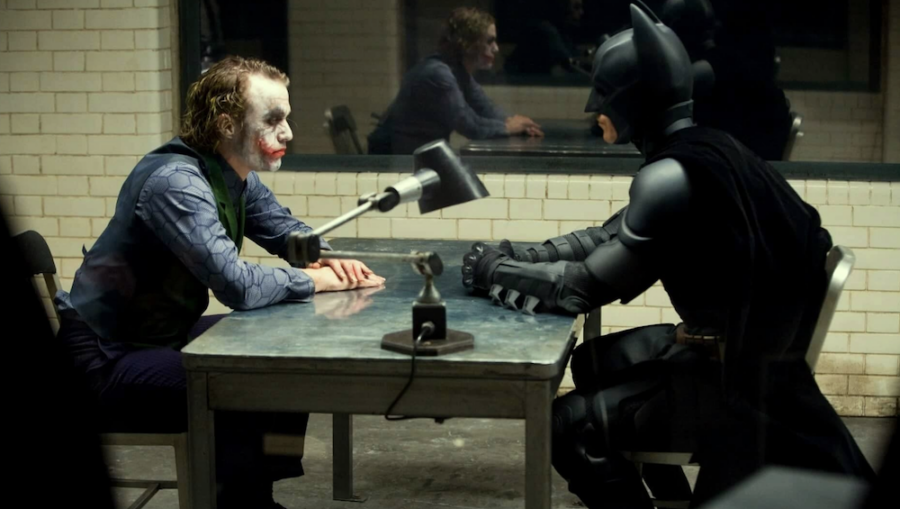
Removed from its comic book origins, The Dark Knight remains a spectacular experience, closer to Heat than to Batman (1989). The jailhouse discussion between Batman and Joker is the superhero equivalent of the famous diner scene, and it’s so good that almost every action thriller, comic book-based or not, has tried to recreate it. I roll my eyes whenever I see a movie try to explain that being caught was always part of the villain’s plan, because no one will ever do it as well as Nolan, Bale, and Ledger.
Spider-Man 2 is iconic, with Tobey Maguire and Alfred Molina, under the watchful eye of Sam Raimi, bringing layers of drama and pathos to what could have been a simple cash-in sequel. Yet it doesn’t transcend the entire genre the way that The Dark Knight does, a film that would have worked with generic characters, but by recontextualizing the Batman/Joker rivalry, it’s elevated to greatness. It also helps that it stands alone, with no teasers for a sequel and no cameos that lead nowhere.
The Dark Knight Defied Expectations

I have never been happier to be wrong than I was about Heath Ledger’s performance as The Joker. The Dark Knight was one of the greatest surprises in movie history, and today, when it’s widely praised as a nearly-perfect film and better than anything Marvel has ever done, it’s been forgotten that legions of fans expected it to be a flop. Imagine everyone’s surprise when it set box-office records on the way to earning over a billion dollars and garnering dozens of award nominations.
If you’ve never seen it, it’s been a few years, or you re-watch it every year, The Dark Knight is always worth your time. It’s timeless, it’s near-perfect, and there’s something in it that appeals to everyone.
Entertainment
Bravo star teases more fallout from Amanda Batula and West Wilson romance: 'Brace yourselves, America'
:max_bytes(150000):strip_icc():format(jpeg)/The-Valley-Summer-House-033126-ab8b868a45f1474ca9fa4c6914dabeb1.jpg)
The controversial relationship reveal between the “Summer House” stars has taken the internet by storm.

My daughter was 12 when she was first sexually harassed

HOLT Architects Transforms Lavery Library Into a Modern Student Success Center
Brandy Ends Her Silence On Past Age-Gap Romance With Wanya Morris


-

 News Videos6 days ago
Parliament publishes latest register of MPs’ financial interests
-
 Tech6 days ago
Intercom’s new post-trained Fin Apex 1.0 beats GPT-5.4 and Claude Sonnet 4.6 at customer service resolutions
-

 Business6 days ago
Instagram, YouTube Found Responsible for Teen’s Mental Health Struggle in Historic Ruling
-
 NewsBeat7 days ago
Tesco is selling new Cadbury Dairy Milk bar and people can’t wait to try it
-

 NewsBeat5 days ago
The Story hosts event on Durham’s historic registers
-

 Sports5 days ago
Sweet Sixteen Game Thread: Tide vs Michigan
-
Entertainment2 days ago
Fans slam 'heartbreaking' Barbie Dream Fest convention debacle with 'cardboard cutout' experience
-
 Entertainment4 days ago
Lana Del Rey Celebrates Her Husband’s 51st Birthday In New Post
-
Crypto World1 day ago
Dems press CFTC, ethics board on prediction-market insider trades
-

 Sports20 hours ago
Tallest college basketball player ever, standing at 7-foot-9, entering transfer portal
-
 Fashion7 days ago
How to Style Spring Like WeWoreWhat: Easy Outfit Ideas for 2026
-

 Tech2 days ago
The Pixel 10a doesn’t have a camera bump, and it’s great
-

 Entertainment6 days ago
HBO’s Harry Potter Series Will Definitely Fail For One Big Reason, And It’s Not J.K. Rowling Or Snape
-

 Fashion6 days ago
En Vogue in Brown Leather and Tailored Neutrals by Atelier Savoir, Styled by J Bolin
-

 Crypto World2 days ago
U.S. rule change may open trillions in 401(k) funds to crypto
-

 Fashion6 days ago
What Are Your Favorite T-Shirts for the Weekend?
-

 Politics2 days ago
Should Trump Be Scared Strait?
-

 Tech1 day ago
How to back up your iPhone & iPad to your Mac before something goes wrong
-

 Fashion5 days ago
Weekly News Update, 3.27.26 – Corporette.com
-

 Sports2 days ago
Women’s hockey camp eyes fitness boost, tactics ahead of WC 2026 campaign | Other Sports News
You must be logged in to post a comment Login