
Entertainment
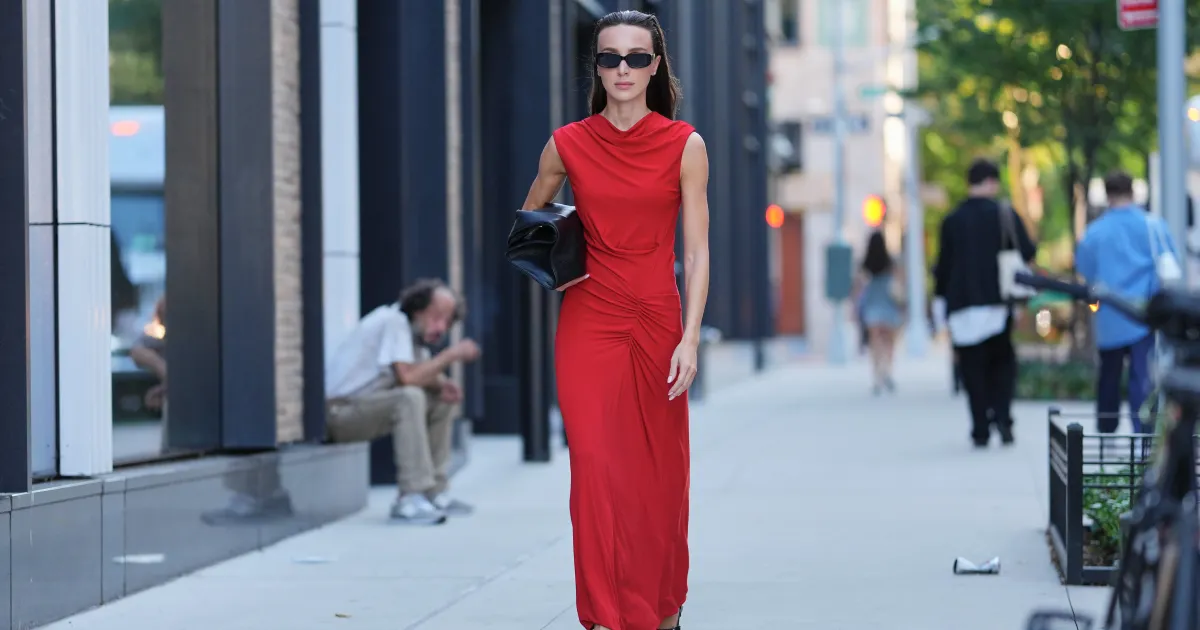
13 Trendy Cowl Neck Dresses That Every ‘It’ Girl Is Wearing

Us Weekly has affiliate partnerships. We receive compensation when you click on a link and make a purchase. Learn more!
Sharp lines, modern cuts and sleek dress silhouettes have been all the rage lately, but as summer comes to a close, it seems the fashion world is having a shift. Everyone is suddenly craving styles with softer, more feminine details for fall, and it’s one of many reasons why cowl neck dresses are surging in popularity (again).
Stemming from the Old Hollywood era, these elegant-looking dresses feature drapey necklines, body-hugging fits and rich color options that ooze upscale style. It’s no wonder legendary actresses like Greta Garbo wore the chic look in the 1930s, and ‘It’ girls are donning the design now in the 2020s — and more specifically, fall 2026. We found flattering, glamorous options that’ll take you from farmers’ markets to black-tie events without spending a fortune. However, once people see you in these styles from Lulus, Petal & Pup and All in Favor, they just might think you did.
13 Trendy Cowl Neck Dresses That Every ‘It’ Girl Is Wearing
1. Our Favorite: There’s nothing more confidence-boosting than a cocktail dress that flatters your body from head to toe, or at least to the hem! The subtle cowl neckline provides a U-shape that draws the eye up toward your face. Plus, the floral pattern and gathers are so slimming.
2. Everyday Ease: While this dress style is usually for upscale events, there’s no reason why you can’t wear it on a typical Thursday. This mini tank dress weaves the elegant neckline into an otherwise casual style. Wear it with sneakers for brunch or with kitten heels for date night.
3. Pop of Color: Designed with gorgeous deep colors, like this dark blue style, this maxi cocktail dress effortlessly adds a splash to an otherwise neutral fall wardrobe. The mesh overlay extends a bit beyond the hem, adding a little extra something that looks luxe.
4. Euro Chic: This cowl neck midi dress is a mix between Old Hollywood and elegant European style due to the pencil-like silhouette, all-over ruching and short sleeves. It comes in four classic colors, but we like the soft apricot style best.
5. Anything But Basic: We’re kind of obsessed with this elevated midi dress, which has all the classic details of a cowl neck style; however, the back is what makes it stand out. The low back design features a plunging drape with a thin tie that really seals the deal.
6. No Brainer: Made with a shiny satin-like material, this midi slip dress simply glides over your body most beautifully. The floral details combined with the sheen finish give it an almost holographic appearance that’s sure to stun.
7. CEO Energy: Going from the office to a charity event? Opt for this flowy maxi dress that embodies the sophisticated look with a work-appropriate twist. Psst, we love the slimming gold hardware detail on the side.
8. Vacation-Worthy: If you have a last-minute trip on the books, you’ll want to check out this tropical halter dress that’s designed with island-inspired colors, a sexy high slit and slimming ruching. It also comes in eight other colors, so you can rock the style come fall.
9. Wedding Guest: Although we love the cowl neckline, sometimes it shows a little too much skin for events like weddings. This formal bodycon dress gives you the refined look with enough coverage to be tasteful. This pick is also designed with a ruffle trim that feels ethereal.
10. Quite the Charmer: We’re all about the asymmetrical hem on this Petal & Pup dress, giving it an interesting take on the classic, while also creating a gorgeous flow while you walk.
11. Going Viral: Haven’t you heard? Patternmaxxing is set to be fall 2026’s biggest trend. This All in Favor dress features the autumnal pattern in a rich brown hue. We guarantee you’ll wear it for everything from shopping in Soho to drinks with the girls.
12. Playful Pattern: Anyone with a trained eye will snap up this Lulus midi dress ASAP. In addition to the soft pleated neckline, it also has mesh and satin materials juxtaposing one another for texture and a bit of playfulness we totally appreciate. Oh, and the mesh skirt shows off your legs in a subtle way.
13. Instant Upgrade: Made with a gorgeous jacquard material, this free-flowing maxi dress appears polished yet wearable at the very same time. While it fits nicely on the body, the material doesn’t suck you in, so you can feel comfortable as you bust a move on the dance floor.
UsNow Summer Sale Alert: These Chic Fashion Finds are over 30% off – Plus Free Shipping
Welcome to summer with our biggest sale of the year. This summer’s chicest dresses, tops and swimsuits are all over 30% + free shipping. Inventory is limited so hurry before they’re gone.

Continue Reading
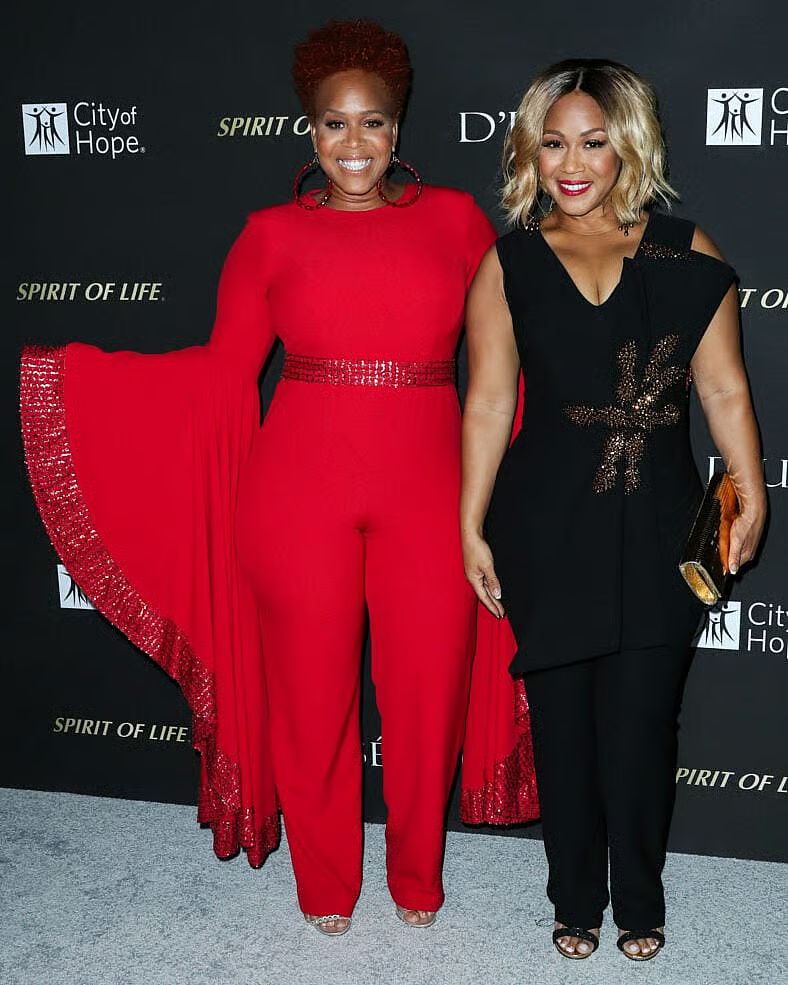
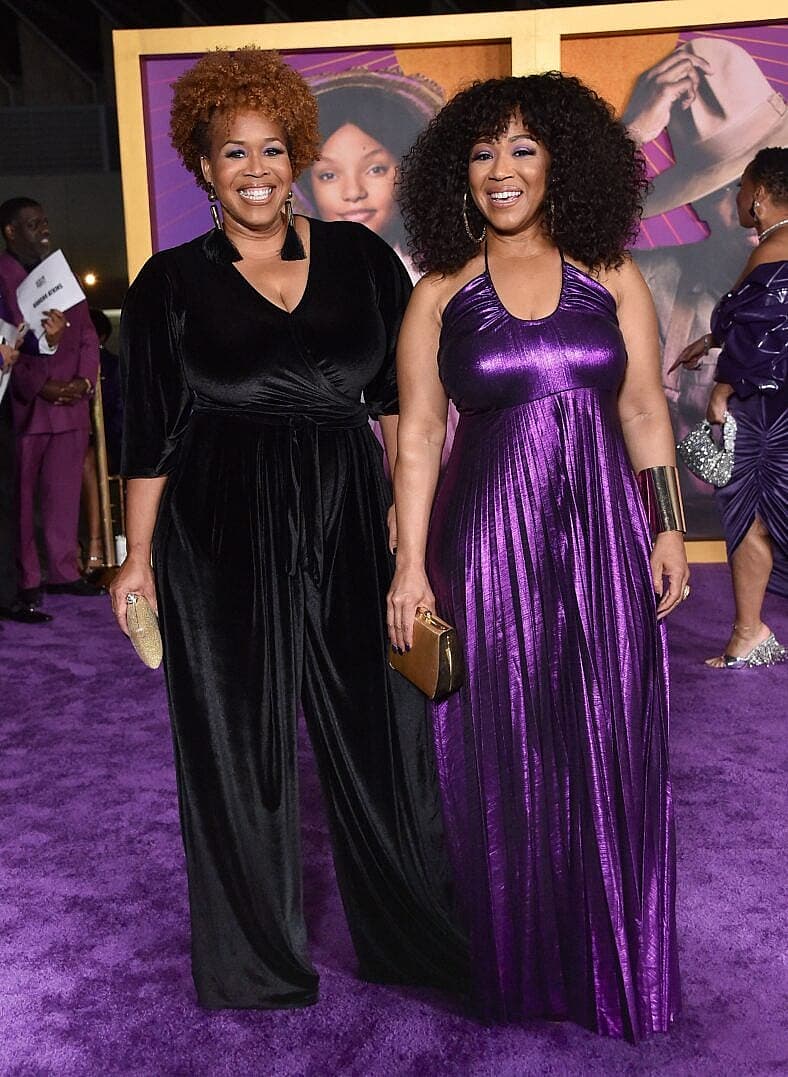
Gospel singer Tina Campbell is being ruthlessly trolled online by fans after revealing her monthly income is less than $5,000. The “Get Up” singer is in the middle of a messy divorce from her estranged husband, Glendon “Teddy” Campbell, and revealed she survives on less than her soon-to-be ex.
While Tina’s husband pulled the trigger on their marriage in early April 2026, this isn’t the first time that their business has been shared with the world. A decade ago, Tina starred in a reality show, “Mary Mary,” alongside her sister, Erica, and issues about her relationship and her partner’s infidelity were a major part of the storyline.
According to court documents revealed by TMZ, Tina reportedly works 20 hours a week and earns $4,976 each month. In the documents, Tina stated that her monthly expenses are double what she brings in.
The singer’s monthly expenses include $4,100 per month in rent, $266 in health care, $1,800 on groceries, $2,200 on utilities, $208 on her husband’s cell phone, $100 on laundry and cleaning, $150 on education, $1,308 on car maintenance, and $400 on charity and other bills.
Elsewhere in the legal documents, Tina said her ex brings in $7,500 per month as a professional drummer.
Glendon Filed For Divorce In April 2026 After Two Decades Of Marriage
TMZ revealed in April 2026 that Tina and Glendon’s relationship was headed for divorce after the latter filed the papers in a Los Angeles court. In the docs, Glendon said that he and Tina, who wed in 2000, had been separated since June 2024.
The pair share two children, and while Glendon isn’t requesting full custody, he asked the court to establish visitation and to determine spousal support during the process.
Tina clapped back with her own legal filing in August 2026, telling the judge that she wants primary custody of her children and also is also seeking to block the court from awarding either of them spousal support.
Glendon Allegedly Cheated With One Of Tina’s Employees
This isn’t the first time that the spotlight has been cast on Tina and Glendon’s relationship. In 2015, the “It’s Personal” singer spoke with Steve Harvey about the struggles she’s faced and claimed that her husband had been unfaithful to her.
“The person who it was, she used to work for me, and so, that broke my heart. She was like a godmother to my children,” Tina said. “She had access to my home, to come get my kids, and all that kind of stuff. She was very intermixed in my family.”
Tina said that she made her husband call the employee so she could confront her; however, the alleged mistress “hung up the phone,” essentially confirming her fears. “So I had my answer. It broke my heart, it devastated me, so I spazzed out,” she said.
How The Alleged Cheating Scandal Helped Tina Campbell Get Her Spark Back
Three years after spilling the behind-the-scenes tea about her marriage, Tina said she had learned a lot about herself. While working through the cheating was hard, it reminded her that there was beauty on the other side of pain.
“It was empowering for me to go through that in the public eye and then make it to the other side,” she said. “There was a lot of prayer and counseling. But now I’m stronger.”
News of Tina’s monthly income had Mary Mary fans buzzing, with some trolling the “God in Me” singer and even borrowing her own lyrics to urge her to keep fighting for a brighter day.
“It’s time to get back in the stu & turn that pain into prosperity,” someone wrote, while another said, “You gotta take the shackles off your feet so you could dance, boo.”
A third wrote, “Call your sister now and get that Mary Mary tour going,” and a fourth joked, “How much the booking fee then?! Tryna see something.”
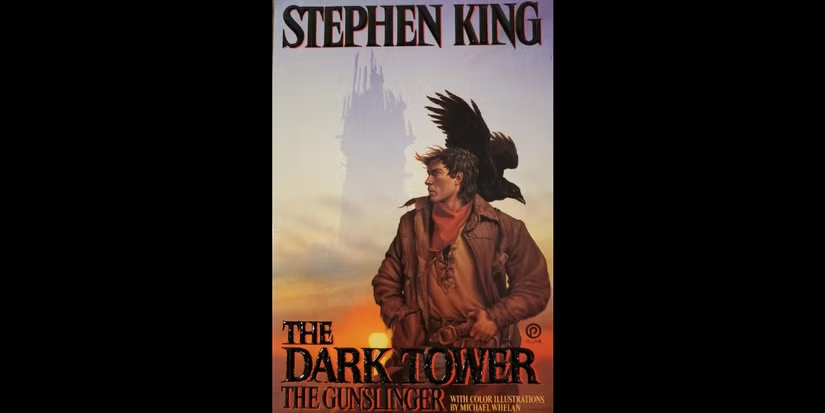
With a career spanning more than five decades and dozens of published works, calling Stephen King a seasoned writer barely does him justice. Although he is best known for horror, King’s greatest strength lies in transforming ordinary fears into deeply unsettling stories. His monsters may be supernatural, but the emotions driving them are often painfully human.
However, horror is only one part of King’s appeal. Throughout his career, he has demonstrated versatility, exploring genres, characters, and themes that don’t rely on traditional scares. Whether he’s writing about grief, ambition, or human nature, King finds ways to interpret everyday themes into new trepidations. With that said, here are 10 Stephen King books that are 10/10 masterpieces.
1
‘The Dark Tower: The Gunslinger’ (1982)

Like many authors at the height of their career, King was more than capable of creating a multi-book series, with The Dark Tower being his most popular. Its first book, The Dark Tower: The Gunslinger, kicks things off by introducing Roland Deschain, a mysterious gunslinger chasing the legendary Dark Tower across a bizarre, dying world.
The Gunslinger, and the rest of the series, is basically King’s answer to The Lord of the Rings. It’s packed with adventure and shows off plenty of experimentation on King’s part, combining Western, fantasy, horror, and sci-fi into one strange cornucopia. While it isn’t the strongest book in the series, The Gunslinger lays the groundwork for its creepy, post-apocalyptic world and sets up a much bigger story to come.
2
‘The Green Mile’ (1996)

The Green Mile follows death row supervisor Paul Edgecomb and John Coffey, a gentle giant convicted of murdering two young girls. As Paul gets to know him, he discovers Coffey possesses mysterious abilities that challenge everything he believes about justice and guilt. Meanwhile, the prison houses dangerous inmates, cruel guards, and unexpected friendships that make the death row unforgettable.
King might be famous for showing the worst in people, but The Green Mile does the opposite. King introduces a great deal of humanity into an unforgiving environment. He challenges people’s perceptions of the prisoners, presenting readers with difficult questions about whether certain prisoners deserve to die despite their crimes or deserve a second chance.
3
’11/22/63′ (1963)

English teacher Jake Epping gets the unimaginable chance to travel back to 1958 through a mysterious portal. His friend Al thinks Jake could use it to stop John F. Kennedy’s assassination and maybe prevent decades of tragedy. Jake takes on the mission, but his little stint gets complicated when the alternative timeline promises him a better life.
At a whopping 800+ pages, 11/22/63 is a lengthy read. Plus, time travel isn’t exactly the most innovative concept, as it’s pretty common in sci-fi. But it’s hard to resist King’s meticulous research into the period, which he pours into his fictional writing to create a terrifying alternate reality filled with war, political extremism, violence, and natural disasters.
4
‘The Shining’ (1977)

There’s a reason why Stanley Kubrick chose to adapt The Shining (apart from the urgency to make a commercial hit). A classic study of how the human psyche manifests through our surroundings, The Shining follows Jack Torrance as he moves his family to the isolated Overlook Hotel. Looking for a fresh start, it seems like his demons decide to tag along.
The Overlook Hotel is a sight to behold, with decades of history marked by dark events such as mob hits and personal tragedies. But the phantom apparitions haunting these hallways are none other than Jack projecting his baggage, trapping him in a toxic cycle of self-destruction that heightens the tension when his family is involved.
5
‘The Dead Zone’ (1979)

They say that great power comes with great responsibility, and the same applies to Johnny Smith from The Dead Zone. As a child, he discovers that he has the gift of clairvoyance. But after an accident leaves him in a five-year coma, he awakens with a much stronger sense of this ability.
A single physical touch allows Johnny to glimpse people’s pasts and possible futures. It’s a lot for an ordinary high school teacher to take in, but he tries to use his abilities for good. However, tampering with future outcomes always comes with consequences. It’s reasonable for him to use his powers to help solve cases in his small town, but when the fate of the world is in jeopardy, that’s when the book truly raises the stakes.
6
‘Pet Sematary’ (1983)

The moral lesson in Pet Sematary is plain and simple: never challenge grief. The novel follows Louis Creed, a Chicago doctor who moves his family to the small Maine town of Ludlow. Although their new house is picturesque, it sits dangerously close to a busy road where speeding trucks regularly kill animals.
This actual pet cemetery behind Louis’ family home is a star in itself. When a deceased cat they buried returns to life, it gives Louis an idea after a similar tragedy occurs to his family. However, Louis’ inability to deal with his grief becomes the catalyst for the disasters that follow, proving that there is a reason why the dead should remain dead.
7
‘Carrie’ (1974)

Not all evil descends from hell. Sometimes the worst demons are waiting at school. Carrie follows reserved teenager Carrie White, whose social interactions are limited to her overzealous religious mother. With no experience of how the “real world” works, Carrie is chastised by her peers for her awkwardness, inadvertently forcing her telekinetic powers to come out.
Carrie is one of King’s most grounded works, mainly because readers can recognize the all-too-familiar teenage experience of being bullied. Revenge is never the right answer, but Carrie never wanted this life. That makes her redemption — though violence is certainly not the answer — one of the most satisfying conclusions, especially after all the pain she is forced to endure against her will.
8
‘The Stand’ (1978)

Only King could have written about COVID-19 decades before it actually happened, so much so that he had to “apologize” for it. The Stand starts off with a deadly, man-made virus that makes its way out of a government laboratory. While authorities try to contain it, it’s too late — more than 99% of the world’s population is wiped out.
The Stand shows that apocalypses don’t happen overnight. It’s weeks and weeks of collapse. The same can be said for the human psyche. When entire nations fall apart, survivors need some kind of belief to hold on. It’s here that King introduces one of his famous recurring villains, who take advantage of humanity’s fears for their pleasure.
9
‘Salem’s Lot’ (1975)

Ben Mears returns to Jerusalem’s Lot, hoping to write about the creepy old Marsten House. But something is bugging him about his childhood town. Before long, Ben notices something wrong with the town as its residents begin disappearing and turning into vampires, turning his homecoming trip into a horrific haunt.
But the vampires aren’t the only thing making Salem’s Lot frightening. The town is already filled with corruption, betrayal, and people willing to look the other way. The vampires simply bring those darker sides into bigger manifestations. Even religion offers little protection, showing that evil can exist anywhere, including among people who are supposed to be good.
10
‘Misery’ (1987)

After novelist Paul Sheldon crashes his car during a snowstorm, he wakes up injured in the home of Annie Wilkes, a woman who claims to be his fan. However, Paul realizes Annie is no lifesaver — she’s keeping him hostage. With his legs injured, he’s forced to keep writing his Misery series according to her demands.
Misery takes obsessive fandom to a level, showing what happens when admiration turns into control. Unlike today’s stan culture, which is mostly expressed through the Internet, there’s no screen protecting Paul from Annie. He’s trapped with her, while she controls his medication, threatens him, and uses violence to get what she wants.

- Release Date
-
November 30, 1990
- Runtime
-
107 minutes
- Producers
-
Andrew Scheinman
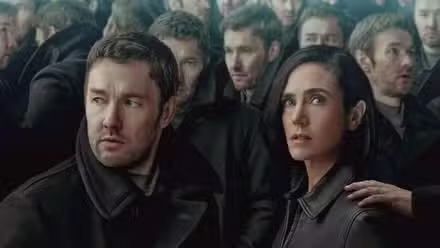
Season 2 of Dark Matter opens on more than a dozen bodies laid out in a row, every one of them Jason Dessen in a different set of clothes. It’s an efficient way to remind viewers where Blake Crouch‘s Apple TV adaptation left off two years ago, and it’s a fair warning about what’s coming, because the new season has more versions of this man than it can find room for.
Here, we’ll do you the favor of recapping Dark Matter’s first installment. Jason Dessen (Joel Edgerton), a physicist and professor walking home one night in Chicago, gets abducted into an alternate version of his own life by, well, himself — or, at least, the version of himself who chose the career over domesticity. That Jason built a device called the Box that moves people between parallel universes, then used it to take Jason’s wife Daniela (Jennifer Connelly) and son Charlie (Oakes Fegley). The first season is a tense, stakes-laden chase through infinite realities as Jason fights to get home, only to discover that dozens of alternate Jasons had the same idea. It ends with the family fleeing into the Box together, letting Charlie choose their destination so no other version could follow.
Season 2 of that journey starts well. The Dessens have had seven months in a world that finally seems safe before an alternate Jason turns up at their door, claiming to be the original. The family runs, picks another door. By the second episode, the season is also tracking Amanda (Alice Braga) and Ryan (Jimmi Simpson) trying to find their way back, Leighton Vance (Dayo Okeniyi) chasing his vision of a perfect world, and Blair (Amanda Brugel) trying to stop him.
Nobody Is Getting Enough of Jennifer Connelly, Including ‘Dark Matter’ Season 2
Edgerton was the reason that Season 1 held together, and that hasn’t changed. He stays watchable even when the show around him buckles under its own ambition. The trouble is that the Jasons he’s inhabiting this time have drifted so far from one another that recognizing them as the same man takes work the story doesn’t reward. Our Jason sinks deeper into his obsession with the Box. The other one has partnered with an alternate Leighton on a plan to strip technology and ideas out of healthier universes and haul them home to fix their own broken one, a project he has convinced himself is altruistic.
Connelly, meanwhile, gets the season’s most gutting material and not nearly enough screen time to do it justice. Her Daniela is unraveling, growing more paranoid with every door they open. Connelly plays that fear so raw, you wish the show would just park the camera on her face and let her work. Instead, the plot keeps yanking us elsewhere. Simpson gets the funniest line of the season while he and Amanda are stuck in a world too colorful and too polite to trust. “No one’s getting banged here,” he says. “They’re just generously knocking.” There’s also an agent named Macnamara (Chris Diamantopoulos) working the case of the bodies, a man who belongs to no named law enforcement agency but does enjoy the donuts. He only matters when he’s actually on-screen, a problem so many characters in Dark Matter share.
‘Dark Matter’ Season 2 Keeps Interrupting Its Best Ideas
Here is where Dark Matter Season 2 starts to lose us. The show is wrestling with enormous questions about identity, regret, and whether the desire to be a better version of yourself is ambitious or destructive. Episode 3 digs into this when Jason 2 seeks ethical counsel about his multiverse project, and the answers he gets cut right to the core of what the show wants to be about. A man created a cosmic disaster because he couldn’t handle living with regret. He built a metaphysical portal to shop for a better reality. That’s both a ridiculous exercise in human hubris and an oddly relatable desire, but Season 2 has no room to sit with any of it.
There’s so much plot crammed into each hour that the ideas get raised and then dropped. The worldbuilding is inventive, and then it’s gone in ten minutes. The clearest sign of the trouble is a small detail in that same episode, when the Dessens get matching tattoos so they can tell which versions of each other they belong with. The audience could use the same system. Keeping up with which Jason is which, which Leighton is which, and which world any of it is happening in turns into a season-long physics test you’re always studying for and never feel like you’ll pass. Once the confusion pulls you out of the emotional stakes, getting back in is difficult. It’s hard to care about a character when any version of them might turn out to be a worse copy. Dark Matter raises that question on purpose, but it just hasn’t built anything sturdy enough to hold the answer.
There’s a Great Sci-Fi Show Buried Somewhere in ‘Dark Matter’ Season 2

There are still real thrills. A chase sequence in Episode 3 unloads a heavy amount of exposition with enough momentum that it plays as a set piece instead of homework, and it starts to make sense of why Jason is being hunted across timelines. A major reveal about how the Box operates midway through the season produces its sharpest sci-fi turn, the kind that reminds you why this premise grabbed readers in the first place. What’s been made, in this case, cannot be unmade.
But Dark Matter Season 1 worked because it had a clean emotional throughline underneath all the sci-fi machinery: a guy trying to get home to his family. Season 2 fractures that into a dozen competing threads, and the result is a show with plenty of big ideas and big consequences but not enough small, human stakes to connect them. The performances keep pulling you back in, and the plot keeps shoving you out the door before you’ve had time to feel anything.
Dark Matter Season 2 is now streaming on Apple TV.

- Release Date
-
May 7, 2024
- Network
-
Apple TV+
- Directors
-
Jakob Verbruggen, Alik Sakharov, Roxann Dawson, Logan George
- Writers
-
Blake Crouch
Pros & Cons
- Joel Edgerton makes a handful of very different Jasons worth watching.
- All the physics talk pays off if you can keep pace with it.
- The show is swinging at enormous questions about identity and regret, and even when it misses, the ambition is more interesting than most sci-fi playing it safe.
- Tracking which version of which character you’re watching becomes a chore that actively pulls you out of the story.
- The show hops between alternate realities so quickly that none of them develop the stakes they need to matter.
Entertainment
‘Silo’s Tim Robbins Discusses the Show’s Major Change to Bernard’s Book Ending in Season 3
[Editor’s Note: The following contains spoilers for Silo Season 3.]
Summary
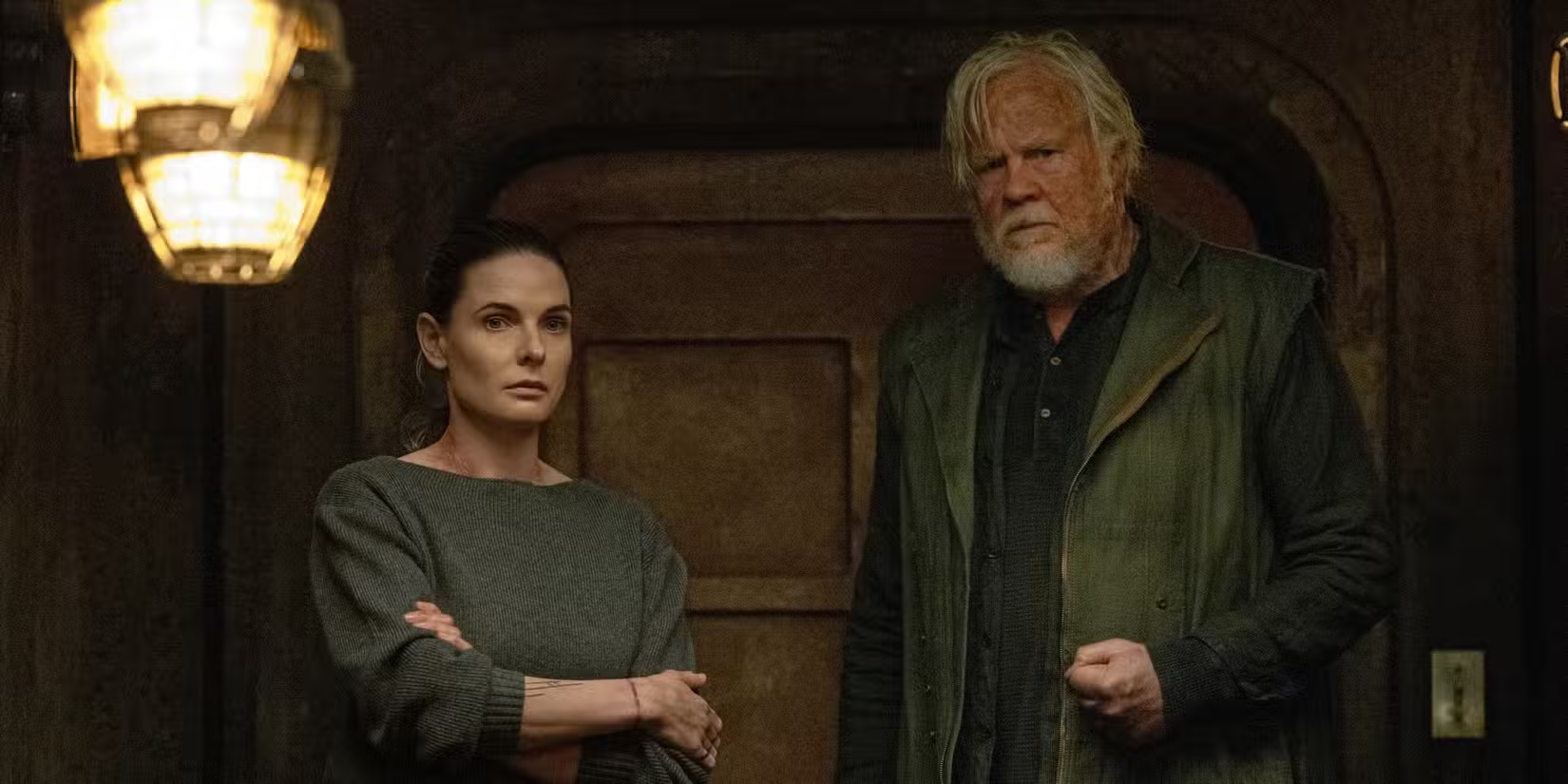
Apple TV’s masterful adaptation of Hugh Howey’s book series, Silo, has earned acclaim from critics and viewers alike, with Collider’s Tania Hussain calling the show’s penultimate season “a new standard for what prestige sci-fi can be.” As with every adaptation, however, there will always be creative departures from the source, and for creator and showrunner Graham Yost, one of the biggest came in the fate of the formidable Bernard Holland, portrayed on screen by Academy Award winner Tim Robbins.
Instead of perishing in the fire, as in the books, Silo gives Holland a second chance, providing the antagonist with the possibility of redemption. In this interview with Collider’s Steven Weintraub, Robbins discusses this divergence from the original story, when he was first made aware of his character’s surprising fate, and why he was most interested in exploring this fresh take on Holland. Robbins also talks about the physical challenges of portraying Holland, why the role resonated with him, and why a show like Silo speaks to audiences on a different level today.
Tim Robbins Calls Bernard’s Change from the Books a Gift
He also discusses the dangers of being a “truth teller.”

COLLIDER: What’s interesting is that Graham [Yost] has changed what happens to Bernard from the book to the show in that in the book, he dies in the fire, and in this, he survives. When did you find out that there would be a big change coming?
TIM ROBBINS: Toward the middle of Season 2, I was tipped off about what happens in Season 3.
What was your reaction reading all the scripts of Season 3 and seeing the arc?
ROBBINS: What a gift to be able to play a completely different version of Bernard, who has been altered not only physically because of the injuries from the end of Season 2, but also just a complete makeover internally. Realizing that up until that point, his entire life was a lie, that’s a great arc to play as an actor. That’s a gift. That’s one of those rare moments where you get to play someone whose whole worldview has been shattered, and he realizes that he’s been used by a system that did not have his best intentions in mind, or, for that matter, the best intentions of the silo.
If Bernard could talk honestly to the people of the silo for one minute, what do you think he would actually say?
ROBBINS: That’s the danger of the truth teller. That’s why they are silenced. That’s why they’re marginalized. That’s why they’re excluded from society. Someone who’s been inside, who has seen the internal machinations of power and can expose power for what it is, that’s the most dangerous person. So, I believe if he could talk to the entire silo, he’d just lay down the truth, and in essence, he knows there’s no way to accomplish that, but he can associate with people that can carry the truth on when he’s gone.
Tim Robbins Was Ready for Bernard’s Redemption Arc
He also discusses the challenges of filming through recovery.

Talk a little bit about filming your death scene in Episode 9. Did they purposely save that for your last day of filming or near to one of the last things?
ROBBINS: No, I still had to do other things after the death scene. It was just the way things are scheduled. But you get used to that as an actor. You could be playing the end before the middle, you know? So, you just have to be clear on what your beats are and where you are, as far as the character’s development goes.
The other challenge I had was that I was in various stages of recovery throughout the course of the season, so the voice had to be modulated from severely injured to getting better.
I wanted to ask you specifically about your voice because your performance is just so good on the show, but especially this season. Can you talk about finding that voice and what it was like on your vocal cords when you were doing it?
ROBBINS: It wasn’t great, but I always made sure that we could nail the takes pretty early and not do thousands of them, and it was fine. The mindset was that every time I did a scene, I had to be in severe pain. Even later, as he healed, that pain is still there, and that’s pretty intense. You just gotta commit to it. The good news is that I’ve done it long enough that I know how to conserve my energy for the moment when the camera rolls and not torture myself too much so that I’m actually hurting myself. In the past, I might have hurt myself in order to achieve what I’ve done. [Laughs]
Do you think Bernard enjoyed his role in the silo, or if he could go back in time and not take the job in IT, do you think he would not take the job?
ROBBINS: If he knew what he knew at the end? Probably not. The thing about power and influence is it kind of sucks you in gradually. You become more and more trusted to become in the inner circle of knowledge, and by the time you’re there, you don’t even know you’ve been corrupted. It’s the slow drip. It’s the frog in the pot of water that’s slowly boiling. By the time you realize what’s being done, you’re already cooked.
What fascinated me about this role was getting inside the mind of someone in a position of influence and power who has rationalized the way they live. Everyone tells themselves they’re virtuous. Every bad guy has acted from virtue and special knowledge. That special knowledge makes them someone who has to perform tasks that are difficult, but they convince themselves they’re sacrificing in order to retain their power, rather than compromising in order to maintain their power. It’s a curious thing, and it happens all the time. It’s why we have people leading us down terrible roads that are justifying their behavior by saying, “It’s a big lie for the greater good. We must tell this lie because if everyone knew what was really going on, they wouldn’t be able to handle it.” And that’s such a condescending, patronizing way that always leads down a road that leads to terrible destruction and war and death.
So, I was really interested to get inside that head, but also to be able to play the third season, where I was able to move towards redemption. The idea that once certain truths have been presented to you, you start to see the world in a different way, and from that point forward, you have a choice. You can either ignore them and retain your power, or you can try to salvage what soul you have left by becoming a truth-teller.
Tim Robbins on How ‘Silo’ Reflects Our World Today
“Trauma only is healed by shedding light on it and dealing with it.”
When did you realize that people really love the show? Because everyone I know who watches it is very passionate about the series.
ROBBINS: Well, that’s great to hear. I kind of suspected that it was going to happen when I first read the script, because what it was doing was telling the story metaphorically, or in a fiction set in the future. It was telling the story of what we were going through right now. We started shooting this at the tail end of the two-year lockdown, and here I was reading a script that was talking about a society that’s locked down, that has rules about information that if people go against the narrative, they are either excluded from society on a sub-level of the silo or they’re kicked out of the society completely by going outside.
That rang very true to me as someone who had questions about why we were in this lockdown for so long. It’s unprecedented in world history what happened a few years ago. Never before in history was the entire world shut down. So, for me, and I’ve experienced it through the work that I do in education with The Actors’ Gang, seeing the trauma that the kids went through and the recovery that they’re going through, the arts are very effective in bringing sentient beings back to life. Having experienced that, I realize that trauma doesn’t go away by ignoring it or saying it didn’t happen or just saying, “Let’s move on. Let’s just forget that that happened.” Trauma only is healed by shedding light on it and dealing with it.
What great drama can do, from its inception back in Greece thousands of years ago, when they would do plays that would talk about what had just happened in their society — great death and destruction from war or famine, or great pain and suffering from a plague that had just ravaged Athens — they would perform these plays and the citizenry would come out, and there would be a community that dealt with the trauma and put it out into the light and asked big questions about it. They experienced a mutual catharsis that allowed them to move on as a society. You can’t move forward without acknowledging what just happened.
What I feel is great about Silo is that it tells this story once removed, and that is why I believe the audience has responded so strongly to it. We need this. This is part of what drama is: to tell stories, to bring light into the traumatic events that we’ve just experienced.
Silo Season 3 is available to stream on Apple TV.

- Release Date
-
May 5, 2023
- Network
-
Apple TV
- Showrunner
-
Graham Yost
- Directors
-
Morten Tyldum, David Semel, Michael Dinner, Aric Avelino
- Writers
-
Graham Yost, Hugh Howey, Jeffery Wang, Lekethia Dalcoe

It’s been two years since Johnny Gaudreau was killed alongside his brother Matthew Gaudreau, but for his widow, Meredith Gaudreau, it still feels like yesterday.
“It’s just always replaying in my head,” Meredith, 34, told People on Thursday, August 27, of the moment she learned that Johnny and Matthew were struck by a vehicle while riding bikes in New Jersey on August 29, 2024.
Meredith explained, “Sometimes I find myself kinda just zoning out. And I think about what I am thinking about and it’s that night. You know, it haunts me.”
She noted that although some time has passed, Johnny’s death feels fresh as she raises their three children without him by her side.

Meredith Gaudreau emotionally reflected on her final moments with her late husband, Johnny Gaudreau, before his tragic death last year. “He kissed all of us goodbye, just in the driveway of his parents’ house,” Meredith said in an interview clip shared by Good Morning America on Tuesday, August 12. “That was the last time I […]
“It’s playing in my head all the time. I’m thinking about John 24/7,” Meredith shared, revealing she’s doing all that she can to honor his legacy. “I think about him that moment a lot and think about the better moments too whenever I see our kids. They’re a nice reminder to — I remember the nicer times.”
News broke in August 2024 that Johnny, a NHL hockey player, and his younger brother, Matthew, were involved in a fatal biking accident. The siblings were 31 and 29, respectively.
Sean M. Higgins was accused of killing both men, admitting to drinking prior to the tragic accident.

Meredith Gaudreau penned an emotional letter about Johnny Gaudreau’s tragic death nearly a year after he and his brother were killed while cycling together in New Jersey. “I was in shock. I was keeled over for days sick to my stomach,” she wrote of the moment she found out Johnny had died in the letter, […]
In December 2024, Higgins was indicted on two counts of first-degree aggravated manslaughter, two counts of second-degree reckless vehicular homicide, one count of tampering with physical evidence (fourth-degree) and leaving the scene of a fatal accident (second-degree). He pleaded not guilty to all charges and has a pre-trial conference scheduled for September 16.
During her husband’s funeral in September 2024, Meredith revealed that she and Johnny were expecting their third baby.

Johnny Gaudreau and Meredith Gaudreau with son Johnny and daughter Noa. Courtesy of Meredith Gaudreau/Instagram
The couple, who tied the knot in September 2021, welcomed daughter Noa and son Johnny Jr. in September 2022 and February 2024, respectively. Their third child, son Carter, was born in April 2025.
Matthew also left behind a wife, Madeline Gaudreau, whom he wed in July 2021. The couple was expecting their first baby at the time of his death. Their son, Tripp Matthew, was born in December 2024.
In the two years since the family’s massive loss, Meredith told People she’s leaned on her siblings and parents as well as Johnny’s parents and siblings as well as her sister-in-law Madeline.
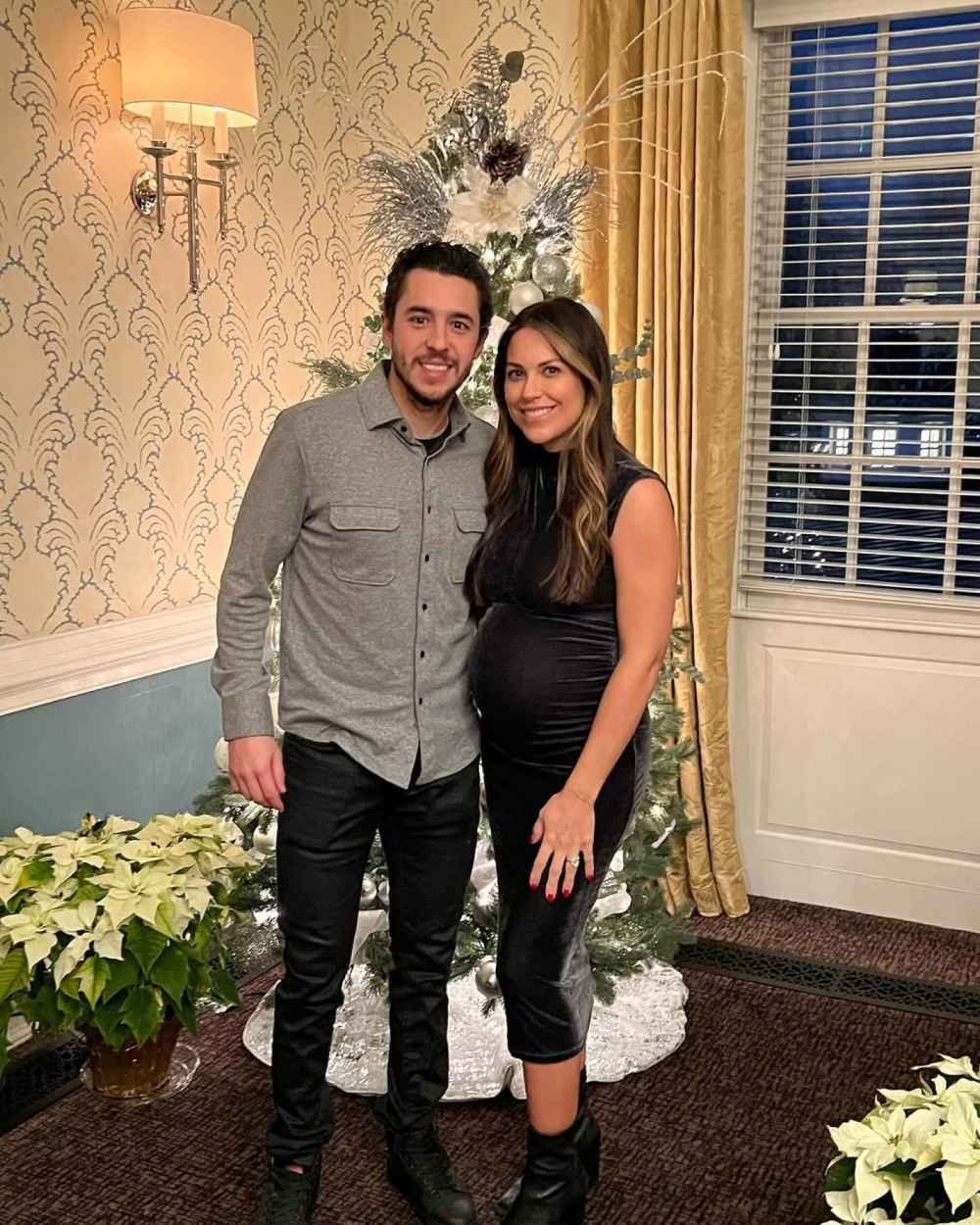
Johnny Gaudreau and Meredith Gaudreau. Courtesy of Meredith Gaudreau/Instagram
“We talk about him every day,” Meredith said of her late husband. “There’s things around town here, I’ll tell Noah and Johnny, and Carter of course, he’s just so young, ‘This is daddy’s favorite ice cream place. He used to always get M&Ms on his ice cream.’”
She noted that she also frames “little candid pictures” and puts them next to the places where they were taken, like a photo of Johnny blowing out his birthday candle at their kitchen table.

Meredith Gaudreau had “a bad gut feeling” before hearing the news of husband Johnny Gaudreau’s death. During the Thursday, March 12, episode of Kylie Kelce’s “Not Gonna Lie” podcast, Meredith recalled the night she found out that Johnny had died. Meredith told listeners that Johnny’s uncle was the one who delivered the news of his […]
“I can see the kids pick them up and can kind of start putting two to two together,” Meredith explained.
Meredith added that she has also kept Johnny’s memory alive by keeping his possessions close by.
“His clothes are all still in the closet. His shoes are on the shoe rack,” she revealed. “[The kids] wear his shoes. They play with his hats. I’ll still wear some of his sweatshirts. I’ve kept everything.”



Meredith Gaudreau with kids Noa, Carter and Johnny Jr. Courtesy of Meredith Gaudreau/Instagram
Meredith isn’t the only one honoring Johnny and Matthew daily, their mother, Jane Gaudreau, exclusively told Us in April that they were preparing for the 2nd Annual Gaudreau Family 5K Run/Walk & Family Day.
The event, which took place in May in New Jersey, benefited the newly established Gaudreau Family Foundation, created to honor the enduring legacies of the brothers.
“I don’t think people throughout the hockey world — throughout South Jersey to Columbus to Calgary — I don’t think they realize how much they did for us,” Jane shared. “By them talking to us and bringing them into their world and seeing what they could do for us or how they could help keep John and Matty’s legacies alive, they just helped us so much with our grief.”
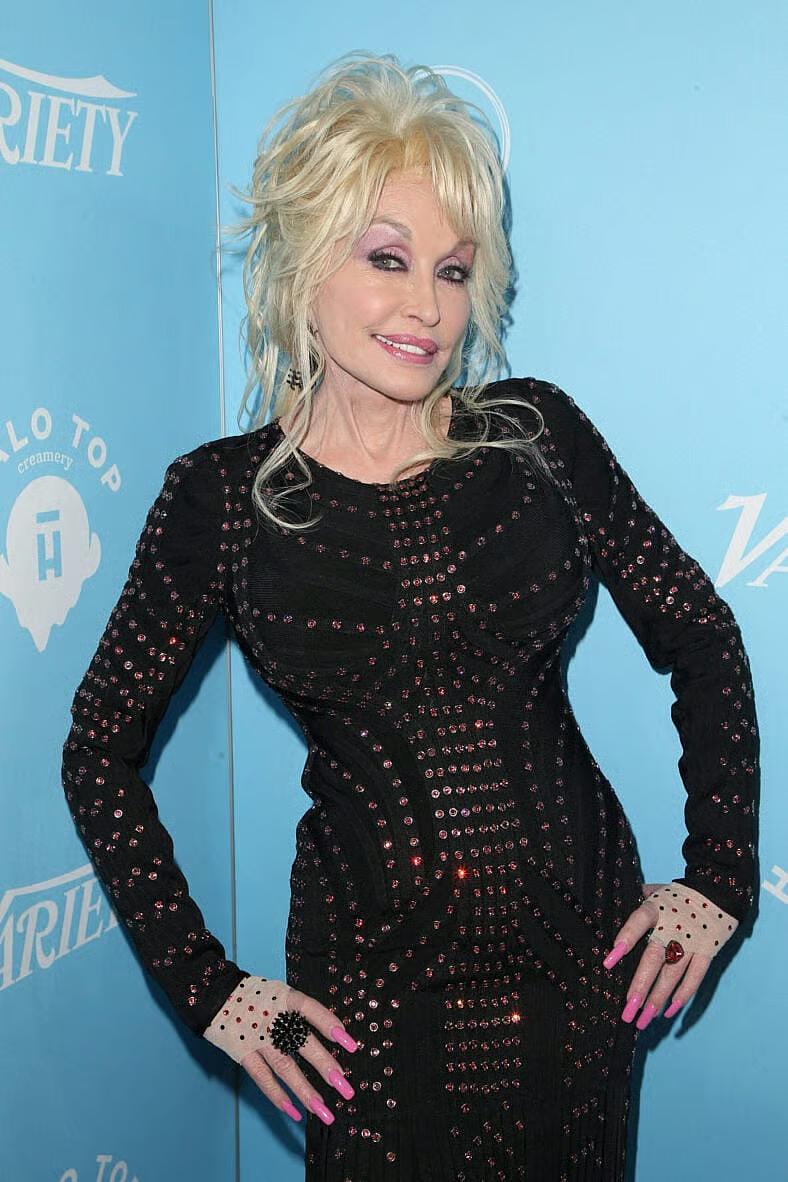
Dolly Parton reportedly spent much of her final year secluded inside her sprawling Tennessee compound as her health quietly deteriorated. Although the country icon continued making carefully managed social media appearances, insiders claim she rarely traveled, stopped accepting new projects and became unable to welcome most visitors. The extent of her retreat was allegedly known only to a small circle, allowing Parton to protect both her privacy and the glamorous public image she had maintained for decades.

Sources told the Daily Mail that Parton had largely withdrawn from public life long before her death at age 80. “She really didn’t leave her home in Tennessee for the past year. She stayed inside,” an insider claimed.
Parton’s property reportedly offered enough space and privacy for her to remain secluded without feeling confined to one small area. “The house is massive, and there are vast grounds, so she didn’t need to leave,” the source explained.
According to the insider, it became clear approximately six months before Parton’s death that her health was affecting her ability to work and travel. “Six months ago, I was told that she was not taking on any new projects, that she had to focus on her health, and was not able to travel or have visitors,” they said. “But no one would say what she had. There were whispers it was cancer, but no one would confirm it.”
Only A Small Circle Reportedly Knew How Sick She Was

Parton was famously protective of her private life, and sources claim she applied that same discretion to her declining health. “Her health problems were much worse than she was willing to tell fans, obviously, and she was bad off for many months,” one insider alleged. “She didn’t want the world to know that she was very sick.”
Another source said even people within Parton’s broader personal and professional circles were not given specific information. “Dolly only confided in a very small, intimate circle what she was going through,” the insider claimed.
That secrecy reportedly allowed Parton to keep the true severity of her condition out of the public eye while she underwent treatment. “She publicly tried to blame her illness on how she let herself go after Carl passed last year,” they said. “It’s true his death took its toll severely on Dolly, but she’s been sick and receiving treatments for months.”
Her Husband’s Death Preceded Her Retreat

Parton’s husband, Carl Dean, died in March 2025 at age 82 following nearly 60 years of marriage. The loss reportedly sent the singer into an extended period of private grief and contributed to her withdrawal from the public eye. Her difficult year continued when her older brother, Coy “Denver” Parton, died in July.
Four days before her own death was announced, Parton acknowledged that she had neglected some of her health concerns while caring for Dean. “I am dealing with some health issues that I just didn’t pay attention to when I was watching over Carl,” she told PEOPLE.
However, Parton attempted to reassure fans that she remained active and optimistic about her recovery. “It’s not like I haven’t been through hard times with my health. I’m still healin’, I’m still workin’.”
Country Icon Reportedly Knew Her ‘Time Was Almost Up’

Insiders now claim Parton understood the seriousness of her condition when she delivered that final update. “When Dolly told PEOPLE she was still working and healing, she knew her life was almost over,” one source claimed. “She tried to reassure her legions of fans that she wasn’t critically ill. But she knew her time was almost up. She was being her brave Dolly self, not wanting to let her fans down.”
The insider suggested that Parton’s final public remarks were intended to protect fans from worrying about her rather than provide a complete account of her health. “It was tough for Dolly not to play the sick card when she knew she didn’t have long to go,” they added. “But she was an actress as well as a singer, and she pulled it off incredibly, fooling almost everyone. She didn’t want her fans to worry. She wanted them to see the Dolly they’ve loved for decades.”
Singer Died Following A ‘Brief Battle’ With Cancer

Parton was admitted to a Nashville hospital on Friday, the same day her final interview was published. Her team confirmed four days later that the country legend had died following a “brief battle” with cancer.
The specific type of cancer was not disclosed.

Starting with his 2014 epic Exodus: Gods and Kings, director Ridley Scott has worked extensively with multiple-camera setups. This process hasn’t gone down too well with some of his collaborators, including cinematographer John Mathieson, who worked with him on Gladiator and Gladiator II. Mathieson was in a unique position to witness how drastically Scott’s style has changed in two decades, and he got himself in trouble when he described the director’s new shooting style as “lazy” in an appearance on The DocFix Documentary Storytelling Podcast. “It’s a bit rush, rush, rush. That’s changed in him,” said Mathieson. “But that’s the way he wants to do it, and I don’t like it, and I don’t think many people do, but people love his films, and he’s Ridley Scott and can do what he wants.”
Now, while promoting his new movie The Dog Stars, Scott responded to Mathieson’s comments and explained why he prefers working with multiple cameras simultaneously. In an interview with Discussing Film, Scott stated that criticizing multi-camera setups “was the stupidest thing” Mathieson could have done. “With multi-camera, if there’s ever an error, it’s all captured simultaneously. It’s easier, for a very experienced editor. Actually, it’s better all around. By having a multi-camera, I do two or three takes, not 15. Some people do 40 takes, and if you’re doing 40 takes, you don’t really know what you want,” Scott said. “I’m lazy?” he asked incredulously. “You’ve got to know where to put (the cameras). I’m blessed with a very good eye.” Scott, who is about to turn 90, said that he also makes elaborate storyboards before shooting, which further reduces the time he spends on set.
Josh Brolin Nearly Quit ‘The Dog Stars’ Because of Ridley Scott’s Multi-Cam Setups
Scott had earlier likened his multi-camera setups to working on stage. While Christian Bale and Jacob Elordi have found the process invigorating, it took Josh Brolin some time getting used to it. He was so taken aback by it that he nearly quit The Dog Stars after one day on set. In an interview with Film Stories, Scott explained why he adores this approach. “I always use 11 cameras. Four to 11 cameras. So you schedule for the day, but you’re done by 11 o’clock. And the actors say, ‘Goddamn, we did 40 set-ups this morning’. And they’re thrilled to bits with themselves,” he said.
The Dog Stars will be released theatrically on Friday. Scott is now planning a Treasure Island movie. Stay tuned to Collider for more updates.

- Release Date
-
August 28, 2026
- Runtime
-
119 minutes
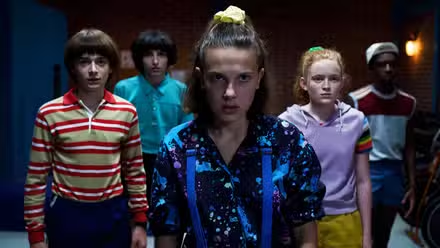
Sci-fi covers a lot of ground, but some stories use the genre’s elements so cleverly that they are impossible to ignore. Streaming has embraced sci-fi in recent years, leading to a major renaissance on television, and each new series has carved out a unique niche, including everything from aliens and technology to dystopian disasters. One of the most fascinating examples is Apple TV’s Severance. Its unique concept makes it undisputedly sci-fi, but it also draws characters and viewers alike into the mysteries surrounding the sinister Lumon Industries.
While sci-fi has a growing presence on TV, one of the most exciting entries in the genre is a book that has yet to make it to the screen. Stuart Turton‘s The 7 1/2 Deaths of Evelyn Hardcastle was published in 2018 and quickly became a bestseller, even coming close to getting a Netflix adaptation. With a time-loop murder mystery that’s tailor-made for episodic television, The 7 1/2 Deaths of Evelyn Hardcastle deserves its own miniseries.
What Is ‘The 7 1/2 Deaths of Evelyn Hardcastle’ About?
The sci-fi genre thrives on futuristic settings, whether the story takes place in a dystopian world or one with advanced technology, but The 7 1/2 Deaths of Evelyn Hardcastle is unique in that it takes place in the English countryside in the 1920s, making it akin to a period drama without sacrificing any sci-fi elements. The story follows Aiden Bishop, a man with amnesia who arrives at Blackheath Manor in time for a party, but the event quickly turns dark when the host’s daughter, Evelyn Hardcastle, is killed that night.
The bigger twist comes the next morning, when Aiden wakes up as a different guest in the manor and relives the same day. Then, he learns that he is competing with two other individuals to solve Evelyn’s murder, and only the winner gets to leave. With only eight chances to uncover the identity of Evelyn’s killer, he relives the same day on a loop, each time getting a different perspective on the impending tragedy. While this conceit could risk becoming repetitive, the book’s setup allows for new narrative revelations with each cycle. With memorable characters and plenty of surprises, The 7 1/2 Deaths of Evelyn Hardcastle is a thrilling whodunit, perfect for fans of period stories and murder mysteries with a sci-fi twist.
‘The 7 1/2 Deaths of Evelyn Hardcastle’ Deserves Another Shot at Adaptation
Previously, Netflix saw the potential of The 7 1/2 Deaths of Evelyn Hardcastle and announced a television adaptation in 2020, but it was canceled a few years later. Though it’s unclear why the series was scrapped, the book has unique adaptation challenges, given the likelihood that eight different actors would be portraying the story’s main character. While these elements are unconventional and would undoubtedly require creative solutions, any adaptation has the potential to instantly distinguish itself in the overcrowded TV landscape.
The 7 1/2 Deaths of Evelyn Hardcastle‘s unique format also lends itself to an episodic adaptation. Many shows, especially in the sci-fi genre, struggle to tell their story on streaming, but this novel is set up to be the perfect miniseries, with its time-loop structure perfectly dividing a season into eight distinct episodes. Like Severance, The 7 1/2 Deaths of Evelyn Hardcastle keeps the reader guessing with its combination of sci-fi and mystery, telling a story like no other in a genre that is rapidly becoming more dominant on the small screen.

- Release Date
-
February 17, 2022
- Network
-
Apple TV
- Showrunner
-
Dan Erickson, Mark Friedman
- Writers
-
Anna Ouyang Moench, Wei-Ning Yu
Entertainment
Jason Statham’s Remake of a Burt Reynolds Action Thriller Surpassed the Original in Every Way
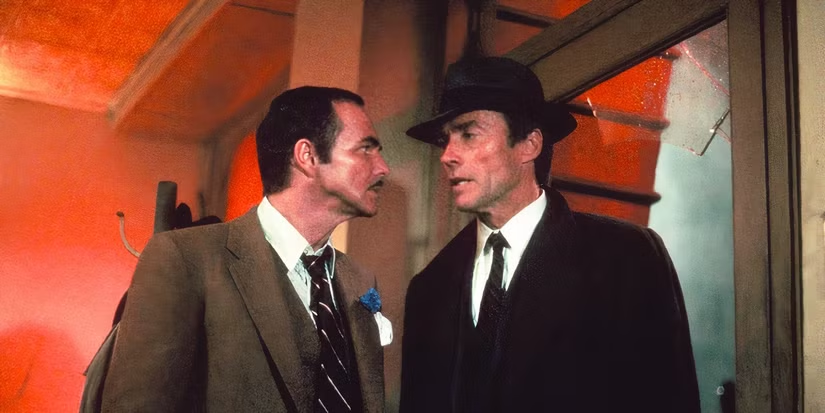
William Goldman’s 1985 novel Heat had the makings of a gritty crime thriller destined to be adapted for the big screen with its exploration of the moody life of a former mercenary-turned-bodyguard, plagued by a gambling addiction and a desire to flee Las Vegas. Goldman’s novel was adapted twice — first, in the 1986 thriller of the same name starring Burt Reynolds under the direction of Dick Richards, and then the 2015 version, called Wild Card, starring Jason Statham by director Simon West.
Reynolds and Statham share something in common: both are world-renowned for their likable charm and ability to handle their own stunts. Yet, where Statham has enjoyed positive collaborations on his films, Reynolds’ bruised ego in the latter half of his career often led to high-profile embarrassments. Neither adaptation of the Goldman novel enjoyed box-office success. However, the Statham version would ultimately become the better take.
What Is William Goldman’s ‘Heat’ About?
According to Sean Egan‘s book William Goldman: The Reluctant Storyteller, the original novel was inspired by the Oscar-winning writer’s distaste for the city of Las Vegas and the seedy means of making a living there. Reynolds’ Heat and Statham’s Wild Card are narrowed down to the Goldman book’s highlights: Las Vegas tough guy Nick “The Mex” Escalante (renamed “Nick Wild” in the Statham version) lives a lonely existence as a “chaperone” with dreams of raising enough money to flee away from Sin City to Venice, Italy. He often gambles in the casinos and takes small jobs to achieve his financial goals, such as allowing a lovelorn client to beat him up to impress a date. The action kicks into gear when Nick gets hired by a sex worker named Holly to get payback against young gangster Danny DeMarco and his thugs who viciously assaulted her. With special combat skills involving edged weapons, Nick succeeds in beating the thugs and allowing Holly to commit a cringe-worthy act on DeMarco’s family jewels.
In the key subplots, Nick gets hired to toughen up a meek rich man, Cyrus, who becomes his unlikely companion. Additionally, Nick seeks to take his earnings from Holly’s job to gamble at the blackjack table to raise enough money to flee to Venice. His luck runs out when he blows all the earnings on a single bet. As Nick finds another path out of Vegas thanks to Cyrus’ generosity, a vengeful DeMarco defies his mobster father “Baby” by hunting the ex-mercenary down.
‘Heat’ Was Burt Reynolds’ Failed Attempt at a Career Comeback

Reynolds saw the Goldman novel as an opportunity to resuscitate his fading movie star status. Recounting this period of his life in his memoir But Enough About Me, the megastar of the ’70s had a string of box office disappointments in the early ’80s and suffered a serious injury to his jaw on the set of City Heat co-starring Clint Eastwood. Additionally, the audience turning to new leading action stars of the day, including Arnold Schwarzenegger and Sylvester Stallone, caused the Smokey and the Bandit star to look like a relic of the past. After the failure of his 1985 crime-thriller Stick, Reynolds needed a significant makeover as an on-screen hero. No more fast cars and witty banter with his friend Dom Deluise. The ‘80s was all about men with more action and less talk. Reynolds had to recapture the gritty edge he displayed in his 1981 hit Sharky’s Machine.
On paper, the character of Nick had all the qualities that made Reynolds popular in his prime: masculine, loyal to friends, and a spark in his eye when it came to the ladies. Unfortunately, Heat’s production was troubled right from the start, beginning with director Robert Altman being involved. According to Patrick McGilligan‘s book, Robert Altman: Jumping Off the Cliff – A Biography of the Great American Director, the acclaimed filmmaker behind M*A*S*H dropped out when Goldman refused to change the screenplay adaptation of his novel. Richards took over based on his past collaboration with producer Elliott Kasner on the adaptation of Raymond Chandler‘s Farewell, My Lovely. Reynolds reveals in his memoir that he did not get along with the new director, resulting in a physical altercation that led to a years-long lawsuit. Between Reynolds’ fading star power and the behind-the-scenes creative issues, Heat was nowhere near the intense street-level thriller Goldman described in the novel. Barely released to theaters in 1986, Heat became an infamous footnote in Reynolds’ historic filmmography.
Jason Statham’s Brutality Is on Full Display in ‘Wild Card’
When Wild Card was made decades later, the film was tailored to the British action star known for his proficient martial arts skills and charming wit. Yet, it went as far as faithfully adapting the original screenplay that Goldman wrote before it was altered in production. The story beats remained mostly the same as Heat but with one key difference: Statham is more believable as a prime badass in every scene than the aging, tired-looking Reynolds. Reynolds’ performance in Heat mirrored the state of his career in 1986. Instead of relying heavily on executing big stunts and Southern charm, he plays Nick like a burned out warrior exhausted by the thrills. Though the film leans heavily on Reynolds’ attempt at giving a realistic performance, he ends up losing his signature charisma in the process. Statham, however, is far more action-driven while playing a man wanting out of a violent world.
‘Wild Card’s Director Had Previously Worked With Jason Statham

Unlike the Reynolds/Richards feud, Statham and West already had a positive working relationship with The Expendables 2 and The Mechanic. With both men having a depth of experience in action, the fight sequences have a greater intensity, closer to Statham’s Crank movies, than the ‘70s-looking approach that Heat took on. One clear-cut example is the scene of Nick using edged items against DeMarco’s thugs. Heat relies on slow-motion shots and quick cuts of Reynolds striking at the camera to hide his physical limitations with age. Wild Card’s version, however, goes even further in cranking the motion of the shots, similar to The Matrix’s bullet-time technique, for the audience to get the full effect of Nick’s brutality.
Wild Card’s more cohesive actor/director partnership goes beyond what’s on the screen. Director West, who replaced Brian De Palma on the project, had a better collaboration with Goldman than the filmmakers of the 1986 film. Recalling an early conversation with Goldman in an interview with Den of Geek, West’s direction of Statham for nearly every scene in Wild Card is driven by the writer’s description of Nick as the most dangerous man in Vegas “even when he’s not doing anything, everybody in the room knows that, and everybody knows his history, what he’s capable of. And so, he ultimately, doesn’t have to do that much, because he is the toughest guy in Vegas.” With that description in mind, the character of Nick was the perfect embodiment of the no-nonsense Statham as opposed to the remorseful Reynolds.
‘Wild Card’s Cast Elevates the Jason Statham Action Movie

Another aspect of Wild Card that makes it a superior film to Heat is its supporting cast. Though Heat enjoyed fine performances from Karen Young and Diana Scarwid, the rest of the cast, including WKRP in Cincinnati‘s Howard Hesseman, appeared as if they were only there to collect a paycheck. Statham, however, has been fortunate enough to surround himself with bigger stars, whether it is The Expendables, Parker, or The Beekeeper. The performances in Wild Card shine with high-caliber talents breathing life into Goldman’s street-level characters, including Milo Ventimiglia as DeMarco, Hope Davis as Nick’s card dealer friend Cassandra, Jason Alexander as Nick’s pal Pinky, and Stanley Tucci as Baby.
The standout of Wild Card’s ensemble is Michael Angarano as Cyrus, originally played by Peter MacNichol in Heat. The former’s take on the self-made millionaire has a strong apprentice characteristic next to Nick akin to Ben Foster’s role opposite Statham in The Mechanic. The ability of Angarano’s Cyrus to hold his own to Statham’s Nick is much stronger than MacNichol softening Heat’s gritty tone by playing the role as Reynolds’ latest comedic sidekick.
Wild Card did not do strong enough business in theaters to warrant a new franchise for Statham, as Heat failed to stop Reynolds’s box office slide. Yet, the differences in both films’ stars and the behind-the-scenes atmosphere made a huge difference in the overall quality. While Heat became an infamous chapter in Reynolds’ long career, Statham’s performance of Wild Card only added to his credibility as a legit modern-day action star, appearing in newer popular films like A Working Man and The Beekeeper.

- Release Date
-
January 14, 2015
- Runtime
-
92 Minutes
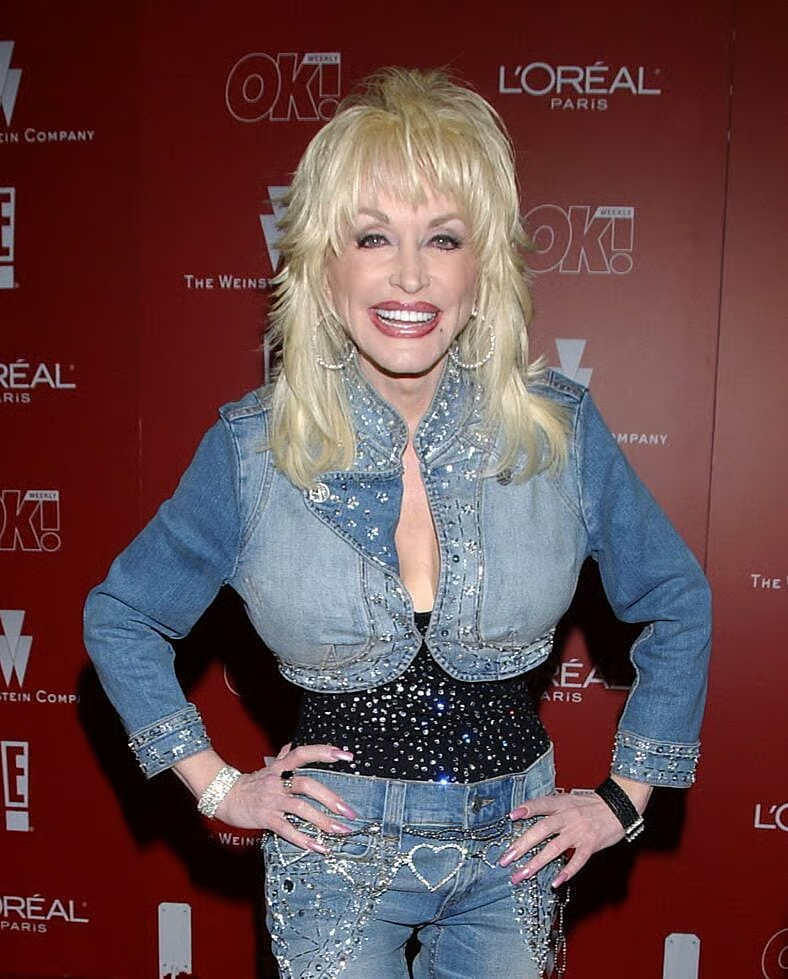
CNN has apologized to Dolly Parton’s family after mistakenly airing a photograph of Las Vegas tribute performer Kelly Vohnn while reporting on the country music icon’s death. The image appeared during “Laura Coates Live” approximately 12 hours after Parton’s family announced that she had died at age 80. Vohnn said she learned about the mistake when friends began flooding her phone with messages claiming they had seen her on CNN.

According to the New York Post, CNN used a photograph of Vohnn during its coverage of Parton’s death. The network later acknowledged the mistake in a short statement. “We regret the error and apologize to the Parton family,” CNN told the outlet.
Vohnn said the photograph had been taken in December when she attended a Las Vegas screening of “Song Sung Blue,” the musical drama starring Kate Hudson and Hugh Jackman.
The 58-year-old performer was stunned to discover that her red-carpet photo had been presented during coverage of Parton’s passing. “I started getting all these texts in from friends saying that I was on CNN, and I couldn’t believe it,” Vohnn said.
“I was already heartbroken at losing Dolly because of how much she has given to me as a woman and an artist,” she continued. “But then to see these images of me on screen was just weird.”
Kelly Vohnn Blasts CNN Over ‘Embarrassing’ Error
Vohnn, who has portrayed Parton throughout her career as a tribute performer, criticized CNN for failing to correctly identify the woman in the image. “Somebody at CNN really messed up and didn’t do their research,” she said.
The performer argued that the network had decades of genuine Parton photographs and career moments from which to choose. “I felt so sorry and apologetic for Dolly, because over her career there are so many wonderful images and moments that they could have chosen from, and CNN just picked something not appropriate,” Vohnn said.
The Parton impersonator also made it clear that she had never tried to convince anyone that she was Parton. “To be clear, I have never represented myself as being Dolly ever in my life,” she explained. “I have always been known as a tribute act for her and many other stars. It was quite embarrassing, to be honest.”

Although Vohnn considered reaching out to the network, she said her grief following Parton’s death took priority. “I thought about calling CNN, but was really consumed by the grief of losing Dolly [and] I just wanted to be at home with my thoughts, raising a glass of wine to that brilliant woman,” she explained.
Parton had played a significant role in Vohnn’s life and career, even though the two women were not personally connected in the way the mistaken image may have suggested. “Dolly has been a real force in my life, helping me through the lowest and highest moments of my life,” Vohnn said. “She really changed the world for so many people [and] for me personally.”
Kelly Vohnn Built A Career As A Tribute Performer
Born and raised in Toronto, Vohnn began performing in the Keith Burton Tribute Show before pursuing her own career in country music. She recorded a debut album titled “A New Beginning” and later returned to tribute work while raising three children. Vohnn eventually relocated her family to Las Vegas, where she developed her one-woman production, “Kelly Vohnn Divas.”
Her career also included appearances in Las Vegas shows such as “Cowboy Cabaret” and “Cowboy Christmas.” Vohnn portrayed multiple celebrities while working as a “Dealertainer” at the Imperial Palace, combining casino dealing with live impersonation performances.
Parton was not her only signature character. Vohnn also became known for portraying Reba McEntire and won a Reba look-alike contest in New York City in November 2010.
Dolly Parton Died At Age 80

Parton’s family announced that the singer died “peacefully” at age 80. A small, private service will be held for close family members, according to the family’s statement.
Her publicist, Marcel Pariseau, later said Parton died “after bravely facing a brief battle with cancer.”
NewsBeat2 minutes ago
Blood Moon lunar eclipse: Here’s what time it will be visible in the UK tonight

Business3 minutes ago
At Close of Business podcast August 28 2026

Crypto World4 minutes ago
Visa Partners With Upbit Parent on Stablecoin Payments

Fashion1 month ago
Weekend Open Thread – Corporette.com

Fashion1 month ago
Weekend Open Thread: Brooks Brothers

NewsBeat1 month ago
London Mayor Sadiq Khan handed a peerage by Keir Starmer alongside 15 other Labour figures… just days before the PM leaves No10

News Videos15 minutes ago
Why the UK is Preparing for a Financial System Collapse #uknews #finance #reset

News Videos1 hour ago
The Money Isn’t The Only Value #RealEstate #Entrepreneurship #Money #Business #ForYou #shorts

News Videos1 hour ago
#rolex #elitewatches #watch #luxury #luxurywatches #money
-

 Fashion7 days ago
Weekend Open Thread: Madewell – Corporette.com
-

 Crypto World2 days ago
SpaceX stock could rise 75% to $240, JPMorgan says
-

 Business6 days ago
Musk’s Tesla, SpaceX Confirm $16.8 Billion ‘Terafab’ Chip Plant as World’s Largest Building in Texas
-

 Crypto World6 days ago
anatomy of crypto’s biggest liquidation event since 2021
-

 Crypto World3 days ago
A $30 Billion AI Fund Implodes, Now the SEC Is Investigating Wall Street’s Role
-

 Politics6 days ago
6 months on, Irish renters crushed by effects of government housing bill
-

 Crypto World2 days ago
Did Trump Just Move SpaceX Stock With One Truth Social Post?
-

 Business5 days ago
Mystery AI Model ‘Ox Alpha’ Draws Developers With Free Access as Chinese Lab Origins Remain Debated
-
 NewsBeat6 days ago
The ‘Lucky Dip Gang’ causing carnage for clicks: After five thugs were killed speeding in the wrong direction on a motorway, GUY ADAMS investigates a sick new trend… and why police aren’t even allowed to pursue them
-

 Crypto World2 days ago
Warsh Jackson Hole keynote puts financial innovation first
-
 Crypto World6 days ago
Nvidia Stock Suffers Longest Losing Streak Since 2022: Will Q2 Earnings End It?
-

 Business4 days ago
Moderna CEO warns China is pouring state money into mRNA technology
-

 Business2 days ago
Walmart takes aim at younger shoppers with new fashion brand
-

 Business3 days ago
NVIDIA Stock Drops Nearly 2 Percent to $210 on Seventh Losing Day Ahead of Critical AI Earnings
-

 Tech6 days ago
Unitree’s New Superman Robot Claims to Outjump and Outrun Every Human, Usain Bolt Included
-

 Sports5 days ago
Deshaun Watson fires back at Browns fans after being booed: ‘It’s a disrespectful thing’
-

 Business7 days ago
UK firms in critical financial distress rise 9% to 53,756
-

 Business6 days ago
Will Tesla Stock Be Higher or Lower a Year From Now? Here’s What Wall Street Analysts Are Saying
-
 Crypto World5 days ago
Google Gemini AI Predicts Ethereum Could Become the Trade Retail Misses in 2026
-

 Tech7 days ago
Faster chip in a familiar form factor
You must be logged in to post a comment Login