
Entertainment
5 Superhero Movie Sequels of the 2000s That Surpassed the Originals

Unfairly or not, sequels have had a less-than-great reputation over who knows how many years now for being inferior to the stories that came before. It’s not exclusive to movies, since book sequels had existed before feature films were really a thing, but there have been a lot of movie sequels, to put it mildly. And some have missed the mark, or felt cynically made, potentially just existing to piggyback off the success of one movie. A sequel being worthy of standing alongside the original is desirable, of course, but then the instances where sequels are arguably better than the originals have proven rare enough that such films have been praised a ton (see The Empire Strikes Back, Toy Story 2, and debatably The Godfather Part II, which more than filled what were already some pretty big shoes).
To focus on one genre and one decade, though, the 2000s seemed like a pretty great one, in hindsight, for sequels to superhero movies. The following ones are all “first” sequels, in the sense that they’re all basically a “Part 2” to a single movie that came before. All but one of these sequels got a third movie, and all those third movies were inferior to the second ones, so the momentum wasn’t perfectly kept up in any example here. Still, the fact that in this decade, five superhero movies came out and improved upon originals that were already good to great in quality is worth celebrating, and so these sequels have all played a part in making superhero films as dominant as they have been throughout the 2010s and until now, too (the 2020s, at the time of writing).
5
‘X2’ (2003)
The first X-Men movie came out in 2000, and it was pretty good. For its time, it was pretty great. Nowadays, it’s pretty good. Quite a lot in the superhero/comic book movie sphere has surpassed it, including X2, which might not be the very best X-Men movie, but it’s a contender (and might only place behind the likes of X-Men: Days of Future Past and Logan, if the latter counts). It does what good sequels tend to do by hitting the ground running and giving more interesting things for most of the returning characters to do. If you want Professor Charles Xavier to do a lot, you might be disappointed, and the same goes for Cyclops, though the latter is infamously discarded across the first three X-Men movies, so it’s not as surprising that happens in X2.
Also, X2 looks ever greater when you see where the X-Men films went, because 2006’s X-Men: The Last Stand is not very good at all, and unfortunately squandered the momentum the run of films up until that point had been building. Still, it’s good to just focus on what works, and X2 holds up well. It’s got better action than the first, a great villain played by Brian Cox, and a good mix of returning characters and interesting new ones (as people tend to say, Nightcrawler is indeed a highlight). This one just gets most things right, as far as superhero movies with ensemble casts go, and it’s definitely the best of the “original trilogy” of X-Men movies.
4
‘Blade II’ (2002)

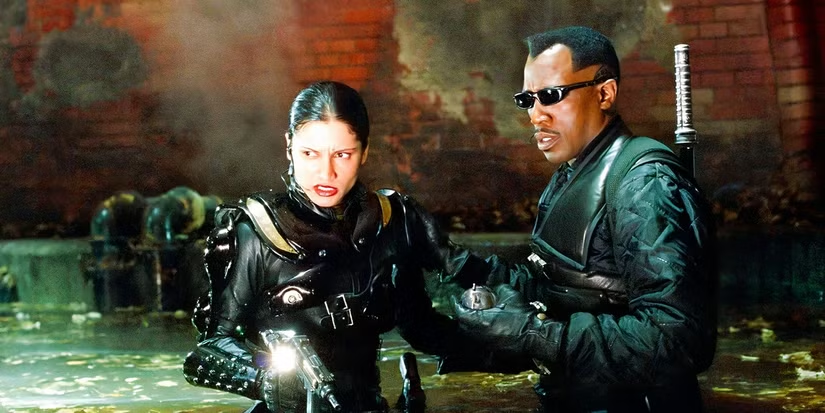
Of all the movies here, Blade II is probably the furthest from great, but quality-wise, it still more than delivers. And also, of all the movies here, there’s probably the smallest difference in quality between it and the movie it’s a sequel to. Blade (1998) is quite good, and also fairly ahead-of-its-time, given it was a successful R-rated comic book movie at a time when that was quite the novelty. And for one more thing, calling Blade II better than Blade might not be the most popular opinion, since both are well-regarded, and Blade (1998) might be the slightly more consistent and straightforward film. It’s unlikely anyone would consider Blade: Trinity the best of the bunch, though.
There’s sufficient eccentricity here that gives the movie a bit more personality than the first, even if that first movie gives the title character a bit more to do.
That one’s a mess that makes X-Men: The Last Stand look not all that bad in comparison. Blade II is much easier to like, and it’s technically the strongest of the bunch, since Guillermo del Toro was brought in to direct this one, and though he didn’t go full del Toro, he went fairly hard on the del Toro-isms. There’s sufficient eccentricity here that gives the movie a bit more personality than the first, even if that first movie gives the title character a bit more to do, and is particularly appreciable as a shock to the system (so to speak) for superhero movies overall.
3
‘Hellboy II: The Golden Army’ (2008)

Guillermo del Toro did another superhero sequel a few years on from Blade II: Hellboy II: The Golden Army. Between then, he also directed the first Hellboy, so Hellboy II: The Golden Army feels heavier with his style, compared to Blade II, because both films feel more like passion projects, or movies where he had more control. Hellboy (2004) was not a huge hit, but a couple of years later, del Toro did Pan’s Labyrinth, and no, that one’s not a superhero movie, but it was a perfect movie. So del Toro probably had a lot of freedom going into his first post-Pan’s Labyrinth movie, and he poured it into Hellboy II: The Golden Army. Like the first, it wasn’t really a hit in the financial sense, though it did rock, at least.
Since The Golden Army, there have been two Hellboy movies not directed by Guillermo del Toro, and neither of them did well financially. The whole series seems a bit cursed, as far as box office is concerned. Also, the two more recent ones aren’t great, so at least del Toro’s are actually good. Money ain’t everything, and the important thing is that Hellboy II: The Golden Army has aged so well in the nearly 20 years since its release. It’s a great dark fantasy movie on top of being a fun and fast-paced superhero film, and it effectively set up a third installment that sadly never came to fruition. 2008 was a crowded year for superhero movies, so The Golden Army probably got buried under Iron Man and another film that’ll be mentioned shortly (since it was also an excellent sequel), though it’s held up well, and even if not enough people have watched it, you’ll probably struggle to find too many people who have watched it and don’t have nice things to say about it.
2
‘Spider-Man 2’ (2004)

Spider-Man 2 is so good. It’s so, so good. It’s perfect. How is it #2 here? Well, this rambling isn’t necessarily ranked, though if it was, there’s an argument to be made that the one movie that appears below is somehow even better than Spider-Man 2. With Spider-Man 2, though, this is about as good as a live-action Spider-Man movie can possibly be. And there have been other great ones, with Spider-Man: Brand New Day being quite recent at the time of writing, and also beloved, in part because it scratches the same itch as Spider-Man 2. Peter Parker is going through a lot in both, even by Peter Parker/Spider-Man standards. And he is the ultimate underdog/relatable hero, so the more he struggles, and the more he has to overcome, the better the story he’s at the center of usually is.
Having a great villain also helps, and you get that with Doc Ock here, who’s about as iconic as the already incredible Green Goblin, who was the main antagonist of Spider-Man (2002). As for Spider-Man (2002), that movie was also great, being even more important than the first X-Men movie for establishing just how a superhero film could be done on a proper blockbuster scale. The tone’s a bit chaotic with that first movie, and some of the effects don’t hold up, but otherwise, there’s not much done wrong in the first Spider-Man. So, to highlight Spider-Man 2 as a movie that does hold up, in its entirety, and improves upon just about everything found in that first film? It’s a pretty bold statement to make, but it’s accurate.
1
‘The Dark Knight’ (2008)

Christopher Nolan made his first superhero movie in 2005, when he directed Batman Begins, and that was also his first full-fledged blockbuster. Like with X-Men, Blade, and Hellboy, it was good for its time, albeit not quite as exciting nowadays. There are a few flaws that feel more evident nowadays, but the foundation is still good, and it was one of those first movies in a series that walked so that the next one could run. The Dark Knight actually didn’t run. It got in a monster truck, accelerated to 100 miles an hour in the span of a few seconds (it’s a really modded-out monster truck or something), ran over all the other runners, and crossed the finish line without being disqualified, somehow. It just did that much right, and proved that good.
It’s all undeniable. And like a long-distance runner who is allowed to mod a monster truck, use it instead of running, and then get away with murdering their competition, it’s hard for many movies to compete with The Dark Knight. It overshadows Batman Begins, and then it was too difficult to match, quality-wise, when it came to Nolan directing The Dark Knight Rises in 2012 (still, at least that movie’s better than X-Men: The Last Stand and Blade: Trinity). The Dark Knight goes above and beyond, in terms of what you’d expect out of a superhero/comic book movie, and also in terms of what you might expect from a sequel (even a good sequel). It really is simply that great.

Continue Reading
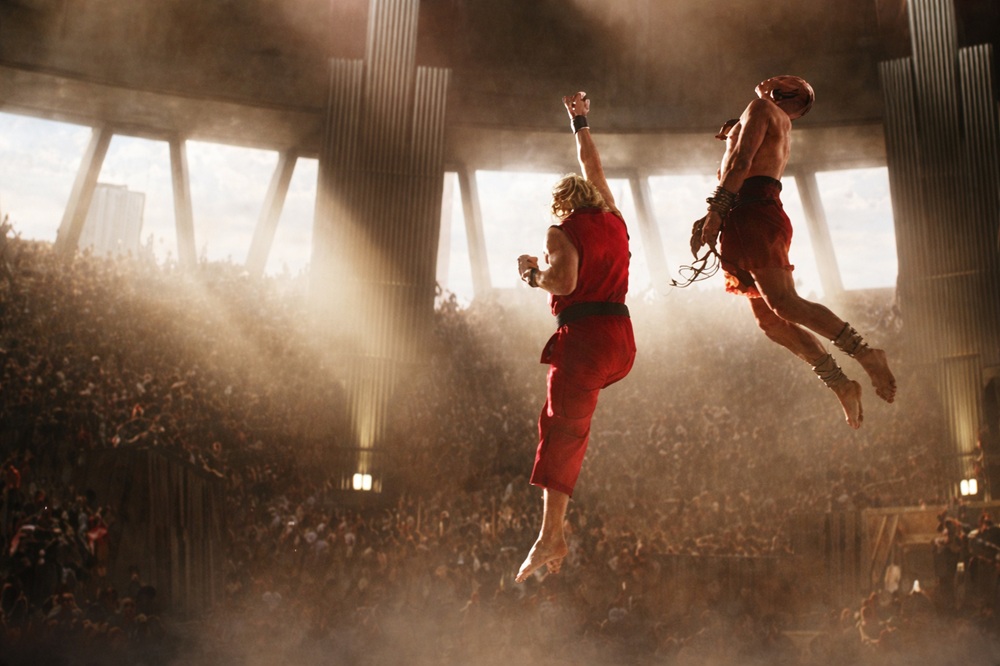
Paramount Pictures and Legendary Entertainment have unleashed a new trailer for Street Fighter, giving fans another action-packed look at the upcoming live-action adaptation of Capcom’s legendary fighting franchise.
The trailer debuted as Paramount and Legendary kicked off the film’s global World Warrior Tour in Tokyo, bringing the movie back to the country where the Street Fighter franchise was born.

Street Fighter [legendary pictures]
Set in 1993, Street Fighter follows former friends and fighters Ryu and Ken Masters, played by Andrew Koji and Noah Centineo. After growing apart, the two are pulled back into the fight when Chun-Li, played by Callina Liang, recruits them to compete in the World Warrior Tournament.
What initially appears to be a battle to determine the world’s greatest fighter soon becomes something much more dangerous, with a conspiracy lurking behind the tournament and Ryu and Ken eventually forced to confront both each other and their pasts.
The latest footage continues to embrace the wild personality of the games, mixing martial arts action with the colorful characters and larger-than-life style that have defined Street Fighter for decades.

Cody Rhodes as Guile [paramount]
And there are plenty of familiar faces joining the fight.
The massive cast includes Jason Momoa as Blanka, David Dastmalchian as M. Bison, Cody Rhodes as Guile, Joe “Roman Reigns” Anoa’i as Akuma, Curtis “50 Cent” Jackson as Balrog, Vidyut Jammwal as Dhalsim, Orville Peck as Vega, Olivier Richters as Zangief, Hirooki Goto as E. Honda and Mel Jarnson as Cammy. Eric André also appears as tournament announcer Don Sauvage.
Kitao Sakurai directs the film, which is produced by Legendary Pictures in association with Capcom. Sakurai recently explained that his goal was to avoid making an “off-the-shelf” video game movie, instead leaning into martial arts cinema, comedy and the distinct personality of the games.
Street Fighter hits theaters on October 16, 2026.

Summary
- Collider’s Steve Weintraub talks with Gal Gadot for Prime Video’s The Runner.
- Gadot discusses her extensive training, channeling Tom Cruise, and filming in London.
- She also teases her hopes for the Fast & Furious franchise and Doug Liman’s thriller, Bitcoin.
Recently, Collider spoke with Wonder Woman star Gal Gadot about Prime Video’s new action-packed thriller, The Runner, from director Kevin Macdonald (The Last King of Scotland). In the movie, Gadot plays a high-powered London attorney, Maia, whose morning jog is cut short by a cryptic phone call informing her that her son has been abducted. This anonymous caller explains that Maia must race through London and carefully follow a series of instructions — and that her son’s life depends on her participation in this sick game.
In this interview with Collider’s Steve Weintraub, which you can watch above, Gadot discusses Macdonald’s “cerebral and methodical” filmmaking, the whirlwind shooting experience in London, how Tom Cruise inspired her, and why she’s more interested in starring in “The Foodie” than The Runner 2. Gadot also comments on the upcoming final installment of the Fast & Furious franchise, and what it was like on the set of Doug Liman’s (Edge of Tomorrow) Bitcoin, working opposite Casey Affleck (Manchester by the Sea) and Pete Davidson (Saturday Night Live).
Gal Gadot Reveals What She Wants To See in the Final Fast & Furious Movie
Gadot plays Gisele Yashar in the franchise.

COLLIDER: The Fast & Furious franchise is about to end. It has a release date. I’m still not sure it’s getting made, but what do you hope happens in the final Fast & Furious movie?
GAL GADOT: Everybody come together and… I don’t know. I think part of the reason why it’s taking so long is to make sure that the script is being completely figured out in a perfect way, and I think it takes time. But I know there’s so many people involved who love this franchise — I’m one of them — and I hope we will finish on a very, very high, great note.
I do as well. And I do hope it comes back to LA full circle with the first film.
GADOT: That’s a great idea. You see. Why are you asking me? You have all the answers.
That’s what I would like.
Gal Gadot Channeled Tom Cruise for ‘The Runner’
The Mission: Impossible star kept her motivated throughout the shoot.

After making this movie, what is your current relationship with running? Is it love it, hate it, or never again?
GADOT: I have a love-hate relationship with running, but it’s better because before I simply hated running. So now it’s like, I love it, I know it’s good for me. It’s like eating broccoli: I know it’s good for me, it’s not my favorite, but after I choose to eat broccoli, I know I’ve made the right decision. It’s kind of the same thing. I didn’t fall in love with running, and that was my hope. But also, to be fair, it kind of abused the way we used the running. How can one expect to love running after I run an entire film all the time nonstop?
I think you did more running in this movie than Tom Cruise in all the Mission: Impossibles, because he’s always running. There’s the famous montage of him running. But in all seriousness, when you signed on for this, were you like, “Oh, I can do this,” and at what point in the shoot were you like, “What did I sign on for?”
GADOT: It’s funny you mentioned Tom Cruise. Tom Cruise was the one person I kept thinking about whenever it got really, really difficult. I was like, “You can do it. Tom Cruise does it. You can try and do it as well.”
I think it’s one of those things that you just take a big leap of faith and trust the process. None of us knew how exactly we were going to be able to film it and to capture everything. We weren’t able to lock down all of London. We had to have the camera guy on a skateboard or on rollerblades capturing everything, holding the camera at me, hardly being able to see.
It was like everything about making this film was challenging, and I like it. I like the idea of one overcoming a challenge, and also, as much as in my life I like certainty, I like to let the path reveal itself when you’re doing something creative like this. So, I just trusted the process, and I became as ready as I could. I trained for nine months, and that’s it. And we have a great movie.

There are a lot of shots where you are clearly running through real people in London. How many takes were actually ruined because people recognized who you are while you’re filming? Because they must see a camera. They see you.
GADOT: Not many, because they wouldn’t approach while we were shooting. People were very respectful. They had the double take and stuff, but they only approached me after we cut, which was great, because then not a lot of the shots were ruined.
But I can tell you a funny story. We were very limited when we were filming in the tube, and at one point I had to go, just me, my security guy, and the camera guy, to the tube to a different station, get on the thing, and just the both of us were filming it, and it was just me there. I had this, like, bloody cut on my forehead, and I was so worried that people would come, worried about me, and actually people didn’t mind it too much. I was telling the camera guy, “Wow, I thought people would be like, ‘Is everything okay? You have something. What’s going on?’” But that wasn’t the case. It was interesting. It was a social experiment that was very interesting to do.
If Kevin calls you tomorrow and says The Runner 2 takes place on a treadmill, are you taking his call or hanging up on it?
GADOT: So I told him that I think the sequence, if we had The Runner, the next one should be The Foodie. The one after it should be The Spa, or something like that, I think. I think the running kind of… It was a lot; let’s just put it this way.
Gal Gadot Teases Her New Doug Liman Thriller ‘Bitcoin’
She stars opposite Pete Davidson and Casey Affleck.

Before I run out of time with you, I’m a big fan of Doug Liman, and you did that movie with him called Bitcoin. What can you tell people about this film? Is it based on anything real, or is it a Hollywood take on it?
GADOT: I think it’s everything all together, and it’s crazy. We finished filming it a few months ago. It was a crazy experience. It was amazing to be able to work with Doug Liman and Pete Davidson and Casey Affleck. But the tone of the film is like Bitcoin — it’s real, but it’s not real at the same time type of thing.
One of the things about Doug that’s very unique is he will redo things like he’s a very unique filmmaker. So what was your experience working with Doug as compared to, say, Kevin on, on The Runner?
GADOT: Doug is so wonderful. He would try different things at different times. He’s very associative. He’ll have different ideas. He’ll have us reshooting a scene we already shot because he wants to play with it. He’s very that type of director.
And Kevin was amazing on this film. I feel like he’s more cerebral. He’s very methodical with the way that he films and the way that he thinks. He kind of knows what he wants to get from the very first moment.
The Runner is available to stream on Prime Video.

- Release Date
-
September 2, 2026
- Runtime
-
84 Minutes
- Director
-
Kevin Macdonald
The Sergio Leone movie you’re probably most likely to have seen is The Good, the Bad and the Ugly. That one might well be the best, or at least you can understand why it’s the most iconic. The Sergio Leone movie you’re second most likely to have seen… uh, that’s a bit harder to guess. It’s something that isn’t The Colossus of Rhodes, which was his directorial debut. That movie came out in 1961, and it’s kind of understandable why few people know about it. It’s not very good, and Sergio Leone’s style doesn’t really shine through. It took until the Dollars trilogy for him to become recognized as a director, with the aforementioned The Good, the Bad and the Ugly being the final movie in that trilogy, even if it’s possible that it takes place before A Fistful of Dollars and For a Few Dollars More chronologically.
Those movies didn’t make Sergio Leone legendary in his time, because spaghetti Westerns weren’t always taken seriously, and it feels like more people have come to recognize how good they are in the years since. Sergio Leone directed another loose trilogy after the Dollars films, and these ones also weren’t fully appreciated to the extent they should’ve been. Like, the Academy Awards aren’t everything, even when they get more things right, but none of Leone’s movies ever got a single Oscar nomination, which is kind of absurd, frankly, just for how they look and sound alone (Ennio Morricone’s scores are always a highlight). The second Leone trilogy has been more appreciated as time has gone on, too. It’s admittedly more of a thematic trilogy than the already loose Dollars trilogy, but the films share a “Once Upon a Time” motif in their titles, so that’s how they’re linked, and that’s why they’re being ranked. Well, one movie only kind of has “Once Upon a Time” in one of its titles. It’s complicated. Speaking of complications…
3
‘Once Upon a Time… the Revolution,’ AKA ‘Duck, You Sucker!’ (1971)

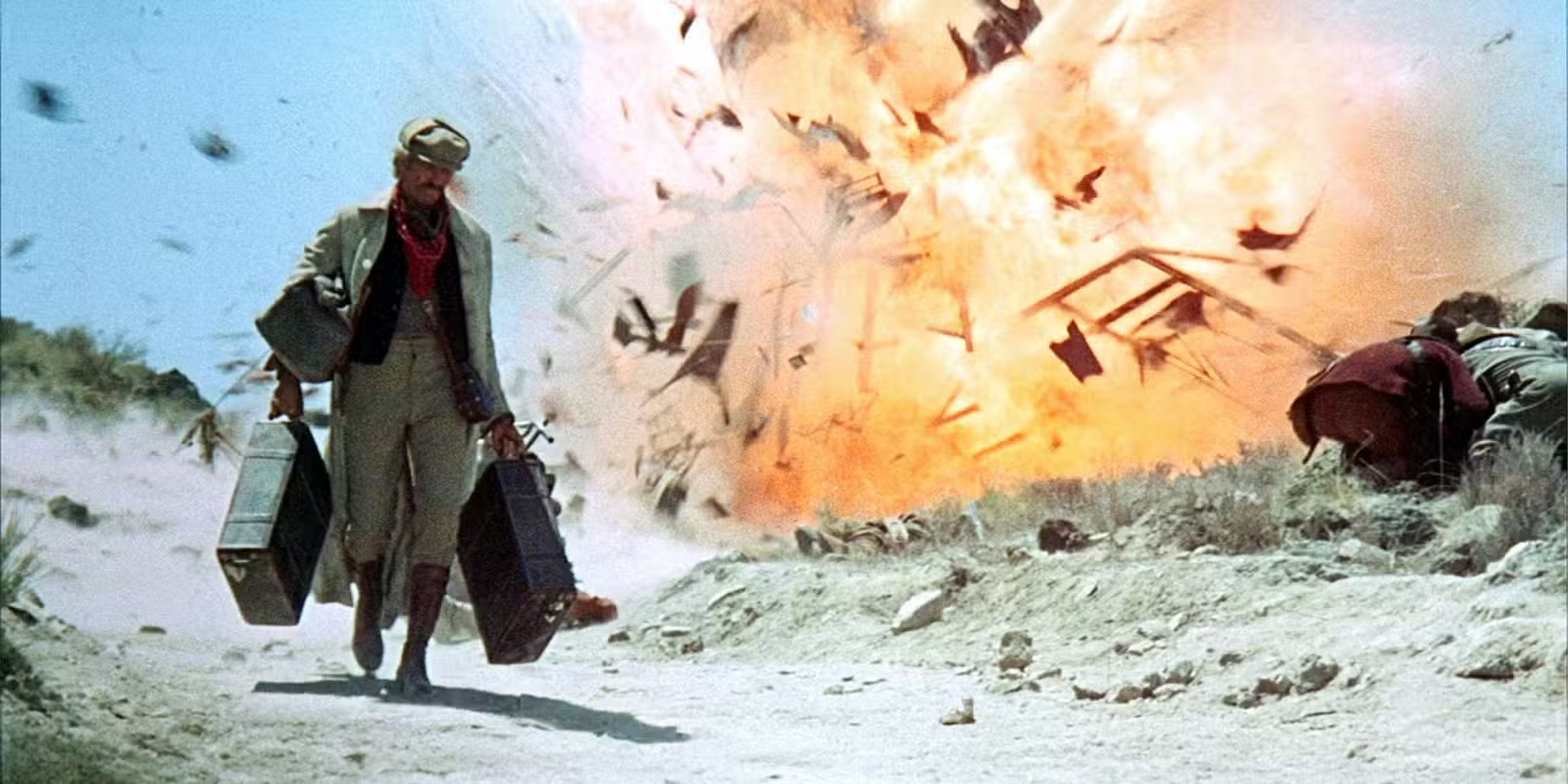
This is the complicated movie, when it comes to titles. It’s hard to know what to call this movie, which is the second of the Once Upon a Time trilogy, but isn’t often referred to by its “Once Upon a Time” title. The best title would be Once Upon a Time… the Revolution, though, because that links it with the other two movies, and it also sounds the best. Like, the most popular title is probably Duck, You Sucker!, which is the worst of the bunch. You’ll also sometimes see this movie called A Fistful of Dynamite, which is a tiny bit better, but still not as good as Once Upon a Time… the Revolution. A Fistful of Dynamite just feels like an attempt to link it to A Fistful of Dollars, and that’s misleading, because this is a considerably longer, bleaker, and more challenging Western than A Fistful of Dollars. Actually, it’s bleaker and more challenging than all the Westerns Leone directed (the genre for which he’s best known, since his only non-Westerns were The Colossus of Rhodes and his final film… but more on that final film a little further down).
Once Upon a Time… the Revolution is one of the most underrated movies of its era, or maybe even of all time.
Anyway, it’s Once Upon a Time… the Revolution. That’s the best title. Using it here might well help further the idea that it should be called that, over the other titles. Once Upon a Time… the Revolution is one of the most underrated movies of its era, or maybe even of all time, and it’s fantastic, to the point where having to rank it last here hurts. But it’s the kind of film that might get, like, an A-, if you were grading it, while the other two Once Upon a Time movies are both well and truly A-grade, or possibly even worthy of an A+. Once Upon a Time… the Revolution does indeed play out against the backdrop of the 1910s Mexican Revolution, only just scraping by into the period of time that most Westerns take place in. It functions as a war movie at the same time, and then it’s also intensely tragic at points, being maybe the most drama-heavy of any Sergio Leone film. It’s offbeat and potentially not for everyone, but it’s got a lot to offer, and it’s extremely well-made, all the while having an admirably unique tone, too.
2
‘Once Upon a Time in the West’ (1968)
Unambiguously called Once Upon a Time in the West, this one is the first in the Once Upon a Time trilogy, and it’s pretty much a coin flip between this and the other movie, if you’re trying to determine the best of the bunch. Once Upon a Time in the West is also the Sergio Leone Western that you might well find people placing above The Good, the Bad and the Ugly, and it’s hard to be envious of the people making such a decision, because it’s very hard to pick a favorite of the two. Leone just knew how to make a Western, and Once Upon a Time in the West is perfect while being very different tonally and pacing-wise from the also pretty much perfect The Good, the Bad and the Ugly. There are four main characters here, and the plot mostly involves a bloody dispute over a piece of land that’s highly desirable. That’s simplifying things a bit. Once Upon a Time in the West isn’t really too narrative-focused.
What it does dramatically is still interesting, and there is eventually a ton of emotion here, once certain things come to light in the film’s final act. Once Upon a Time in the West does draw things out before then, miraculously without ever feeling boring. That’s especially apparent in the long opening scene, which has a trio of people waiting at a remote train station for another person to arrive. That’s it. You’re watching people wait, and Leone makes it entertaining. The same goes for a good many other sequences that can’t really be called set pieces, because they’re not particularly explosive or action-packed, but they’re riveting in unexpected ways. The whole movie is kind of like that, and it’s hard to put into words just what works so well about Once Upon a Time in the West. You also can only go so far in trying to rave about how good this film looks and sounds, too. Everyone brought their A-game, and it really does feel like Sergio Leone’s ambitious vision for the whole epic was well and truly realized.
1
‘Once Upon a Time in America’ (1984)

Once Upon a Time in America shook things up, as an entry in Sergio Leone’s filmography, by being his sole gangster movie, and also being the only one based on a book. It’s not super accurate to say it’s the only Sergio Leone movie based on a pre-existing story, since A Fistful of Dollars was rather infamously an unofficial remake of Yojimbo, but yeah, still not a book. The source material here, a novel called The Hoods, by Harry Grey, is fairly obscure. And it was published in 1952, while Once Upon a Time in America spans decades and ends up in the 1960s, so it’s not a direct adaptation or anything. To keep the focus on the film, it doesn’t really start in the 1910s and end in the 1960s, because it’s told in a non-chronological way… but the earliest events in the movie take place during the former decade, and the final events (chronologically speaking) of the movie take place in the latter decade.
So, to call Once Upon a Time in America an epic would be an understatement, because it’s about a long stretch of time, and then it’s also about four hours long, too. Or it’s a bit longer, if you watch the most complete cut. It’s only the severely cut-down original U.S. cut that has to be avoided, because it was chopped down to 139 minutes, and the storytelling was made chronological. It ruined the film, or that’s what the people who saw that cut say, and you have to go by their opinions because that’s not a widely available cut nowadays. Once Upon a Time in America probably stood the best chance of being properly appreciated in its time, since it was clearly a labor of love, and epic gangster movies had done well in the previous decade, what with The Godfather and its sequel coming out then and all. Honestly, Once Upon a Time in America is about at their level, quality-wise. It’s a more brutal and despairing gangster movie than even The Godfather Part II, and goes to some incredibly dark places, but with reason, and it’s powerfully done as a stark look at crime and a group of genuinely irredeemable gangsters. On a technical front, it matches how impressive Leone’s previous several movies had been, too. It’s unfortunate that Once Upon a Time in America ended up being a swansong, since it was Sergio Leone’s final film, and he wasn’t old when he passed away in 1929 (at 60 years of age). Still, what a legacy he ultimately left behind, and the three Once Upon a Time movies are all essential in strengthening said cinematic legacy.

Once Upon a Time in America
- Release Date
-
June 1, 1984
- Runtime
-
229 Minutes
- Writers
-
Harry Grey, Leonardo Benvenuti, Piero De Bernardi, Enrico Medioli, Franco Arcalli, Franco Ferrini, Stuart Kaminsky, Sergio Leone

Counting On alum Joy-Anna Duggar decided to wait to publicly announce her pregnancy — and she wouldn’t have it any other way.
“Thank you all so much for the love on our pregnancy announcement,” Duggar, 28, wrote via her Instagram Stories on Wednesday, September 2. “We are over the moon and cannot wait.”
Duggar and her husband, Austin Forsyth, announced on Tuesday, September 1, that they are expecting another baby. The couple already share sons Gideon, 8, and Gunner, 2, as well as daughter Evelyn, 6. (Duggar suffered a stillbirth in 2019 and named her late daughter Annabell.)
“It’s [definitely] been challenging keeping it under wraps b/c [because] I feel like, with each pregnancy, I show sooner,” she noted on Wednesday. “But, having a lil time for us to soak this in quietly as a family has been so special.”
To share her pregnancy news, Duggar asked Gideon and Evelyn to snap maternity portraits in their family’s living room. In the images, Duggar cuddled up to Forsyth, 32, as they looked over sonogram photos.
“Decided to have the kids take these photos for us on a whim,” the former TLC personality wrote in a follow-up upload on Wednesday. “They turned out to be so cute.”
Joy-Anna is one of Jim Bob and Michelle Duggar’s 19 children. She received a flurry of support from her siblings amid her pregnancy.
“Sooooo excited to meet this baby!!” Jinger Duggar replied, while sister-in-law Maddie Duggar added, “Sooooo excited to meet baby!!!! You look amazing ♥️.”

Joy-Anna Forsyth (née Duggar) is there for her sisters during their pregnancies, despite suffering a miscarriage in June. “I thought it was going to be a lot harder being around [Kendra Duggar (née Caldwell), Abbie Duggar (née Burnett) , Lauren Duggar (née Swanson), and Anna Duggar (née Keller) … because there are three sisters that […]
While raising her growing family, Joy-Anna has continued to honor Annabell, who died at 20 weeks.
“That was extremely hard. I felt like, at first, I was like, ‘I’m going to be strong and I’m going to push through this,’” Joy-Anna recalled of her loss on the Wednesday episode of Jinger’s podcast. “But after the dust settled and, like, a new normal had to start happening, it was really hard.”


She continued at the time, “I really had to work through a lot of hard things and … I guess in a lot of ways, I didn’t know how to handle it. I was like, ‘I don’t want to turn into this bitter person that just can’t move on from the past, like, I want to be able to work through this.’ It felt like I would never see light at the end of the tunnel.”
According to the influencer, the fog from her grief slowly began to lift after six months.
“True joy comes from the Lord, and I think my kids help me have a little bit of happiness here and there in the dark moments,” she recalled. “It is really hard to find joy in those hard moments.”
A strange thing happens with truly great novels. Their premise stops being the part you remember most. Years later, what comes back is a moral complication, a voice, a particular room, the feeling of somebody making the wrong choice for reasons you understand too well. Plot gets you inside. The book’s way of seeing people is what follows you home.
That is especially true of the six novels on this particular list. They deal with slavery, migration, political power, cloning, parenthood, and the collapse of civilization, yet none of them can be reduced to the large subjects printed on their jackets. Their real force comes from making history and systems feel painfully private. Or maybe let’s put it this way — these are books that keep expanding after you finish them.
6
‘The Underground Railroad’ (2016)

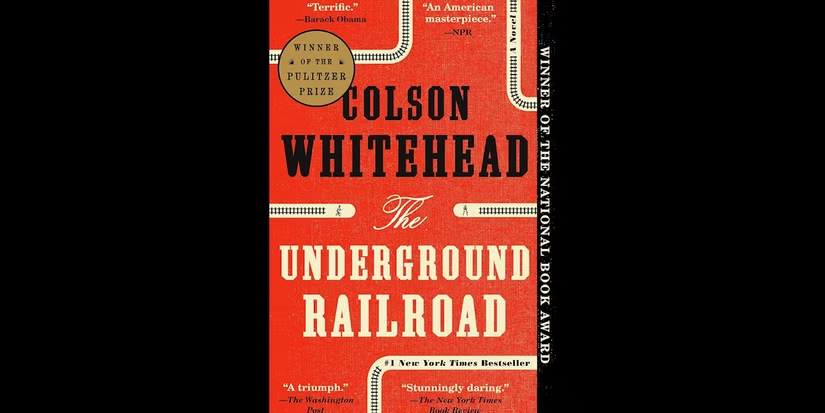
The Underground Railroad follows Cora, an enslaved young woman on a Georgia plantation who escapes with Caesar and discovers that the Underground Railroad is literally operating beneath the country through hidden stations and trains. Colson Whitehead takes a historical network and makes it physical, then uses each stop on Cora’s journey to expose a different American method of controlling Black life. South Carolina initially offers apparent safety. North Carolina reveals another form of terror. The geography keeps changing, while the larger machinery of racism simply learns new disguises.
That speculative choice gives Whitehead enormous freedom without loosening the historical weight. Slave catcher Ridgeway pursues Cora with an almost ideological devotion, treating her escape as an insult to the national order he believes in. Cora’s own understanding of freedom keeps evolving because survival in one place does not guarantee dignity in the next. The novel won both the National Book Award and the Pulitzer Prize, but its staying power comes from how naturally history, horror, adventure, and allegory coexist. It moves quickly enough to feel dangerous and leaves enough behind to make every station worth thinking about afterward.
5
‘Never Let Me Go’ (2005)

Kathy H. remembers growing up at Hailsham, an English boarding school where the children are encouraged to create art, remain healthy, and accept rules whose real purpose they barely understand. Never Let Me Go gradually clarifies that Kathy, Ruth, Tommy, and their classmates were created as organ donors. Their lives have been designed in advance by a society that prefers not to look too closely at the human cost of extending everyone else’s. Kazuo Ishiguro never turns that discovery into a conventional rebellion story. The horror is that these characters have been raised so completely inside the system that its limits feel almost natural to them.
Kathy’s calm narration is devastating because memory does most of the emotional work. She recalls schoolyard jealousies, cassette tapes, friendships, sex, minor betrayals, and the possibility that love might somehow earn two people more time. Tommy’s childhood anger becomes more painful once adulthood explains what he could sense without understanding. Ruth’s behavior also grows richer when insecurity and regret begin catching up with her. Ishiguro makes an enormous ethical crime visible through people remembering very ordinary days, which is precisely why the book hurts. The science fiction stays quiet. The humanity does not.
4
‘Pachinko’ (2017)

Pachinko begins with Sunja growing up in a poor Korean family during Japanese occupation and follows the consequences of one relationship across generations. After becoming pregnant by Koh Hansu, a wealthy married man, she accepts a marriage proposal from Isak, a Christian minister who takes her to Osaka. Japan offers the family opportunities Korea could not, but it also places them inside a society that treats Koreans as permanent outsiders. Children are born there, businesses are built there, and still the question of belonging refuses to disappear.
Min Jin Lee makes that history intimate through money, food, work, education, marriage, religion, and the small humiliations people learn to anticipate before entering a room. Sunja selling kimchi to support her family carries as much importance as larger historical events because survival is built from those decisions. Noa tries to move through Japanese society by distancing himself from what others despise about his background. Mozasu finds another path through the pachinko business, where luck, manipulation, and economic possibility sit together rather neatly. The novel spans decades without losing sight of the people paying for those decades. You finish with the feeling that one family has somehow taught you an entire century.
3
‘Wolf Hall’ (2009)

Thomas Cromwell is usually remembered as one of the cold operators surrounding Henry VIII. Wolf Hall does something far more interesting. Hilary Mantel enters his perspective during the king’s effort to end his marriage to Catherine of Aragon and marry Anne Boleyn, turning Tudor politics into a world of negotiations, debts, religious pressure, memory, family alliances, and people constantly measuring what another person might want. Cromwell begins the novel carrying the death of his wife and daughters while navigating the political collapse of his mentor Cardinal Wolsey.
The pleasure is in watching how quickly his mind works. Cromwell remembers favors, recognizes weaknesses, understands money, and notices when somebody’s public position no longer matches the private reality underneath it. Mantel’s present-tense prose keeps sixteenth-century England from feeling embalmed, while the famous use of “he” pulls the reader unusually close to Cromwell’s consciousness. Henry remains dangerous partly because everybody around him has to convert royal desire into lawful reality. Anne is equally alert to the stakes of every conversation. Wolf Hall won the Booker Prize and began one of modern historical fiction’s greatest trilogies, yet the immediate appeal is simpler. Politics has rarely felt this alive at table level.
2
‘The Road’ (2006)

Few books make love feel this practical, frightened, and necessary. A father and son travel south through a burned America in The Road, pushing their possessions in a shopping cart and trying to survive cold, hunger, armed strangers, and a landscape where almost nothing living remains. Cormac McCarthy removes nearly every comfort associated with post-apocalyptic adventure. There are no rebuilding montages, clever factions, or exciting scavenger runs. Food means another day. A locked cellar can contain something worse than starvation. The father’s entire idea of the future has narrowed to keeping the boy alive long enough to reach somewhere safer.
That simplicity makes every moral decision enormous. The father has learned to distrust almost everyone, while the boy keeps asking whether compassion still has a place in a world where kindness can be fatal. Their language about “carrying the fire” becomes a way of preserving some idea of goodness when civilization can no longer enforce one. McCarthy’s stripped prose can make a can of Coca-Cola, a remembered meal, or a shared blanket feel almost sacred because scarcity has changed the value of ordinary things. The novel won the Pulitzer Prize, though awards are almost beside the point once these two begin walking.
1
‘The Known World’ (2003)

The Known World won the Pulitzer Prize in 2004, but its greatness sits deeper than recognition. The book begins with the death of Henry Townsend, a formerly enslaved Black man in antebellum Virginia who became a slaveholder himself. That fact immediately disrupts any comfortable way of organizing the world around him. Henry owns people because the society he lives in has taught him that property, race, status, and freedom can coexist inside grotesque contradictions. After his death, the plantation begins losing its fragile order, and Edward P. Jones widens the story through Henry’s widow Caldonia, the enslaved people he owned, neighboring families, white authorities, and lives that will continue long after the immediate events have passed.
Jones refuses to arrange these characters according to easy moral categories. A person can suffer under one hierarchy and still participate in another. Affection can exist inside ownership without making ownership less monstrous. The narration moves freely across time, sometimes telling us what becomes of a seemingly minor character decades before the present story reaches that future, which gives the novel the eerie authority of a historian who already knows where everybody ends up. That structure turns one Virginia county into a complete social system with memory stretching in every direction. The Known World literally makes American history harder to simplify once you have lived inside its contradictions.
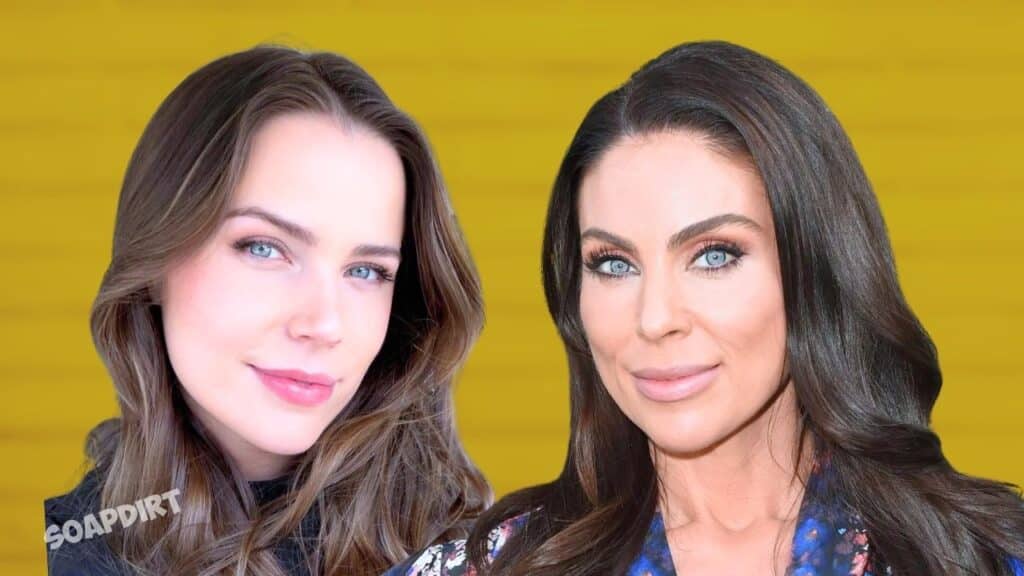
Days of Our Lives hints that with the current events happening in Salem, it seems like the perfect time for Chloe Lane (Nadia Bjorlin) to return and reconnect with her sister Joy Wesley (AlexAnn Hopkins) and with friends and maybe some old flames.
And we may see Chloe returning in the not too distant future. But it will not be Nadia Bjorlin in the role. Now, let’s talk about why Chloe is needed for storyline reasons, what Nadia Bjorlin said about her return. That’s a big red flag, and the actress who might be recast Chloe Lane, who is already on set and has been for a while.
Days of our Lives: Nadia Bjorlin Exits
So, it’s been almost 3 years since Nadia Bjorlin exited Days of Our Lives when Chloe Lane left Salem. That was October 2023. Chloe took off out of town after major relationship drama and what was rumored to be some behind the scenes possible real life drama as well. If you recall, Xander Cook (Paul Telfer) was involved with Chloe at that point and they had a hot and heavy romance and then Xander proposed.
And after a couple weeks of considering it, Chloe finally said yes and they were going to elope. But then she called it quits with Xander and that was when Chloe found out Xander was the biological father of Sarah Horton (Linsey Godfrey)’s little girl Victoria and things fizzled. In the end, it was just that Chloe felt like she and Xander were a rebound and she left him.
And then Chloe turned to Xander’s brother, Philip Kiriakis (John-Paul Lavoisier), who was one of her exes. If you recall, you know, they’d been off and on since her girl days back at Salem High. And then Chloe decided she’d had enough heartbreak and drama in Salem. So, Chloe and Philip left for New York City to get themselves both a nice fresh start.
Chloe Put Family First on DOOL
And the storyline at the time was that Chloe wanted to reunite with her son Parker Jonas and she wanted to be near her parents Craig Wesley (Kevin Spirtas) and Nancy Wesley (Patrika Darbo). So, Chloe and Philip decided that by leaving town they could focus on each other, their new relationship, and lead a quieter life close to her family and also to put her close to where there’s more opera career opportunities.
So, the timing of Nadia’s exit was suspect because it was around the time several women had been let go during that whole Albert Allar scandal. He was fired in August 2023. Camila Banis’s last air date as Gabi Hernandez was November 2023, right after Nadia made her exit. Martha Madison exited between the two of them. But she later came back, but she was part of all that firing spree as well.
And John-Paul Lavoisier’s exit was short-term to facilitate Nadia Bjorlin’s exit because he was back about a year later and then has been on the front burner of Days of Our Lives ever since. So, Philip told everybody when he came back that he and Chloe just didn’t work out. But the exes remain good friends and they recently talked. And this week we had Philip lecturing Joy Wesley for not telling Chloe or her parents about her back surgery and denying them the chance to come help out her and Alex Kiriakis (Robert Scott Wilson). Joy refused.
Big Clue on Days of our Lives
And the thing is though when they named somebody repeatedly that can be a clue about casting and recast. And in a recent interview Nadia Bjorlin said she turned down an offer to return to Days of Our Lives. She refused for a couple of reasons. But mostly that she now lives in Ireland. Her husband’s from there and they live there with their two kids. So, that’s a big reason not to rejoin the cast of Days. But the Chloe actress said it hurt her heart not to come back. But she essentially gave her blessing for another actress to take over as Chloe.
Days of Our Lives: Sofia Mattsson in Salem?
And meanwhile, we have another actress that’s been on set for more than 6 months who’s in a mystery role. That is former General Hospital star Sofia Mattsson, who landed an undisclosed role on Days. And that was announced back in March and they released the standard dressing room door photo behind the scenes.
She used to play Sasha Gilmore on General Hospital. But her contract wasn’t renewed and they wrote her out. And we’ve been wondering if there was a chance she would play recast resurrected Abigail Deveraux DiMera.
But signs point in another direction. For one thing, Sofia is a natural blonde. She’s from Sweden. She became an American citizen four years ago. And I mentioned her natural blonde, typical Swedish looks because in her Days casting announcement, her hair is a really dark brown, like Chloe Lane dark brown. I think Sofia Mattsson could be a great fit to play recast Chloe because it sounds like Nadia Bjorlin is never coming back to Days. And there’s several reasons to bring Chloe back even if Nadia didn’t want to come back and it forced a recast.

Chloe Needs to Return to DOOL
First off, her younger sister Joy is battling spinal stenosis while trying to trap her baby daddy Alex into a relationship. So Chloe may come back to set her sister straight and Chloe may want to rekindle things with Philip. He was her most recent Salem partner. But he’s back on good terms with Gabi Hernandez and they’re fake engage so she can do the Monte Carlo poker game with him.
So, I don’t know. I feel like Philip may not be a big part of a Chloe return if it’s happening. I tend to think if Sofia Mattsson is playing Chloe and there’s romance in her future, it would be with a different ex because we know Sarah is going to wind up back with Xander and that means Brady Black (Eric Martsolf) is going to need comfort after Sarah breaks his heart.
Brady and Chloe have been married. They’ve been engaged. They’ve been close friends for years. And any return of Chloe’s always pulls Brady in emotionally. If you remember, Philip was so jealous of Chloe and Brady, he faked his death. He used his prosthetic leg to frame Brady for killing him to get him out of the way. And of course, poor Brady’s always been unlucky in love. And now we’re waiting for the ball to drop when Sarah dumps him for Xander.
Rachel Interferes Again on Days?
But will Brady’s daughter Rachel Black (Lorelei Olivia Mote) accept Chloe being back in her dad’s life if she’s coming back? Because Rachel actively interfered with Brady when he was in a relationship with Chloe. She did the same thing to Ava Vitali (Tamara Braun), only much worse since Rachel had her kidnapped. When Chloe and Brady tried to rekindle, it was like 2022, 2023, Rachel made it very clear she only wanted her mom Kristen to be with Brady.
And Rachel was hostile to Chloe. And so she ultimately decided Brady had to prioritize things with Rachel. Chloe took a step back because she didn’t want to come between them. Brady hated that. And after Chloe walked out on Brady, that’s when she and Xander got involved. But we’ve seen big changes in Rachel over the last few months. She told her dad, Brady, that’s thanks to her Bay View therapist. Rachel now knows having Kristen in her life isn’t a good thing. And Rachel’s better off without her chaotic mom around, which is sad but true.
Not only that, but Rachel has also accepted that her dad Brady and mom Kristen won’t reunite romantically, and she seems to be okay with Brady dating Sarah now. And that’s a far cry from Rachel poisoning Sarah with pistachio ice cream knowing she’s allergic to tree nuts. If Chloe and Brady do wind up together again, if Chloe is indeed returning, I can see Rachel apologizing to Chloe for her past behavior.
Days of our Lives: Sofia Mattsson Debut Coming Up
Anyway, we’ll see if she is coming back. We won’t know for a few more months. But there’s clearly storyline reasons to have Chloe return, especially since it’s confirmed that Days reached out to Nadia Bjorlin about a return, which means the storyline dictated it, and that may be why they hired Sofia Mattsson.
The interview Nadia did about saying that Days wanted to bring her back was a recent interview. But she did not reveal when Days asked her to return. So, that doesn’t mean because the interview is new that the request was new. It might have been made many months ago. So, it was early this year when Sofia Mattsson was hired. So we’ll see, but the timeline seems to be a fit for them hiring her potentially as recast Chloe.
Throughout history, many fiction books have sold a remarkable number of copies; but only a few have been so commercially popular that they’ve gone down in history as the best-selling works of literature in history. There is nothing quite like sitting down with a good fictional story to read through and quickly grow addicted to, and the ten highest-selling fiction books of all time have clearly been so popular that millions upon millions of people were dying to get their hands on a copy.
From foundational fantasy masterpieces like The Hobbit to ancient texts like Dream of the Red Chamber, the best-selling fiction books ever published are proof that the joy of reading is a truly timeless thing. Even to this day, they continue selling millions of copies around the world, so that they will very likely never cease to be remembered as essential classics of the art form.
10
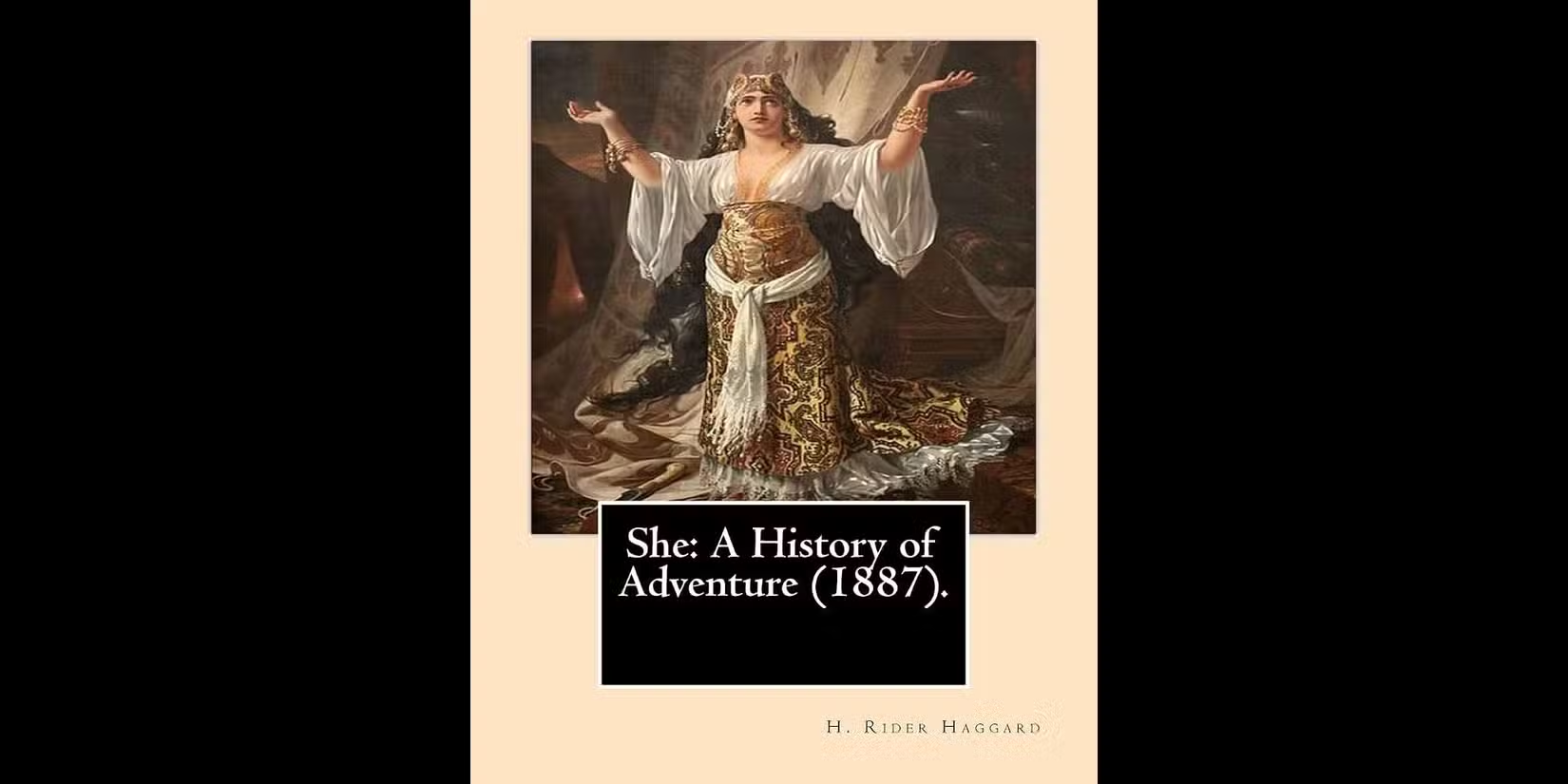
‘She: A History of Adventure’ (1887)

H. Rider Haggard‘s Gothic British novel She: A History of Adventure was originally serialized in The Graphic magazine between 1886 and 1887, until finally being published in book form that same year. The book, a massively influential pioneer of the lost world genre, was so immensely popular upon publication that it has never been out of print. A whopping 139 years after its publication in book form, it’s still just as enjoyable and admirable today as it was back then.
She has been able to sell around 83 million copies around the world.
Over the course of that nearly one-and-a-half century, She has been able to sell around 83 million copies around the world. It set a wholly new blueprint for fantasy fiction, and its influences can still be felt across adventure classics as foundational as Tarzan or as modern as Indiana Jones. But on top of being so iconic that everyone should read it at least once in their lives, even if only to be able to appreciate how influential it truly has been, it’s also just as fast-paced and fun to read today as it surely was back in the 19th century.
9
‘Alice’s Adventures in Wonderland’ (1865)

Nowadays, Lewis Carroll‘s Alice is one of the most iconic characters in all of English-language pop culture, and Wonderland is easily one of the best-known fictional worlds in the history of literature. It all had to start somewhere, though, and that “somewhere” was Alice’s Adventures in Wonderland. This paragon of Victorian literature and pioneer of the literary nonsense genre helped usher in a new era of children’s literature, where books became less didactic and more focused on entertaining kids and helping their imaginations flourish.
It’s no wonder why Alice is far and way one of the best-selling fantasy books of all time, with its having sold around 100 million copies worldwide to date. Fum, whimsical, and wonderfully (pun not intended) imaginative, it’s such a fresh and creative novel that anyone—regardless of their age—should still be able to thoroughly enjoy it today. Many a fantasy book from the 19th century feels a bit dated by modern standards, but not Alice’s Adventures in Wonderland, which is still one of the most important pillars of fantasy pop culture.
8
‘The Hobbit’ (1937)

It would be a later fantasy novel by J. R. R. Tolkien that would revolutionize the fantasy genre in a way that it had never seen before, but that isn’t to discredit the value and importance of the world’s introduction to Middle-earth, the magical children’s novel The Hobbit. The book was an immediate critical and commercial success, and that’s hardly surprising. This is, after all, the sort of book you know will be a masterpiece just from reading the first 10 pages.
The Hobbit has sold around 100 million copies worldwide, and even that still isn’t enough considering just how delightfully timeless, entertaining, and influential it has proven to be over the years. Whether as a bedtime story, as a breezy weekend read for a fantasy fan, or as a re-read for anyone who loves Middle-earth, it’s an absolutely perfect whose commercial success shouldn’t be surprising in the slightest.
7
‘Dream of the Red Chamber’ (1791)

Also known as The Story of the Stone, Dream of the Red Chamber is an ancient family saga penned by Cao Xueqin, considered one of the Four Great Classic Novels of Chinese literature—and thus, a must-read for anyone interested in the history of world literature. Surprisingly deep in its psychological scope and wonderfully intricate in its plotting, it follows the rise and tragic fall of a wealthy aristocratic family.
Since its publication over two centuries ago, Dream of the Red Chamber has sold over 100 million copies worldwide, a continued commercial success that’s nothing short of impressive for a text so old. Through its depth, thematic layeredness, and profoundly humanist and emotional tone, the novel has transcended cultural and language barriers over the centuries. It offers social commentary on themes like wealth and social decline that’s still shockingly timely in 2026.
6
‘And Then There Were None’ (1939)

British writer Dame Agatha Christie is one of the most legendary writers in the history of literature not only because she authored several of the most iconic thriller and mystery novels ever, but also because she’s the most translated author in history and the best-selling fiction writer of all time. A staggering number of those sales come from what’s both her highest-selling book ever and the highest-selling mystery book ever by an admirable margin: And Then There Were None, one of those essential thriller books everyone should read at least once.
To date, And Then There Were None has sold around 100 million copies around the world—over 20 million more than the next best-selling mystery thriller ever, Dan Brown‘s The Da Vinci Code. All of that commercial hype is perfectly warranted. And Then There Were None is a brilliant subversion of the whodunnit formula which has aged like fine wine, creating an atmosphere of psychological dread that’s still just as effective today as it surely was back in 1939.
5
‘Harry Potter and the Philosopher’s Stone’ (1997)

Setting J. K. Rowling‘s condemnable personal views aside is always necessary when talking about the best-selling books in history, because there’s no conversation about the topic than can elude the highest-selling book series in history: Harry Potter. The most commercially successful novel of the bunch is the one that started it all, a children’s fantasy novel which revolutionized the publishing industry as a whole: Harry Potter and the Philosopher’s Stone, published as Harry Potter and the Sorcerer’s Stone in the United States.
A landmark in the genre’s history whose nearly-unprecedented pop-cultural importance and level of influence simply can’t be overstated.
It’s one of the best fantasy books of the last 100 years, a landmark in the genre’s history whose nearly-unprecedented pop-cultural importance and level of influence simply can’t be overstated. Having sold around 120 million copies around the world to date, Sorcerer’s Stone continues to further enshrine itself as one of the most timeless pieces of children’s literature the world has ever seen.
4
‘The Alchemist’ (1988)

When it comes to world literature, few regions have had an output more historically important than Latin America. Case in point: the great Brazilian author Paulo Coelho, whose The Alchemist sold quite poorly when originally published in Portuguese. It was after finding a larger publisher and landing an English translation that slow-burning word-of-mouth (and even Coelho’s embracing of Internet piracy) would eventually transform what was originally a flop into one of the most widely-read novels in history.
This wonderful fantasy adventure has historically received some criticism for presenting ideas and themes that are at times deemed too simplistic, but it’s precisely the universal accessibility of its philosophical messages and musings that has allowed it to sell around 150 million copies worldwide. That’s without even counting the people who have read The Alchemist through the piracy that Coelho himself supported in an effort to get his book even further out there.
3
‘The Lord of the Rings’ (1954–1955)

As incredible as The Hobbit is and as massively influential as it was back in the ’30s, it wouldn’t be until the ’50s that Tolkien would publish an epic novel which would completely change the course of fantasy literature’s history: The Lord of the Rings, far and away one of the most ambitious books of all time. Published in three volumes, this fantasy epic is widely regarded as the greatest and most foundational of the entire 20th century.
Due to its often being sold in three separate volumes, the book’s sales numbers aren’t the clearest, but it’s generally accepted that it has sold a little over 150 million copies worldwide to date. Indeed, over the years, The Lord of the Rings has never ceased to be a pillar of modern fantasy, Tolkien’s writing having completely redefined the way several future generations of fantasy authors would approach the genre going forward.
2
‘The Little Prince’ (1943)

French author and aviator Antoine de Saint-Exupéry‘s The Little Prince was written and illustrated by him at the suggestion of a publisher, who said that he should write a children’s book to calm himself during his self-imposed exile in New York during World War II. What Saint-Exupéry ended up writing is one of the most important novellas in history, the second most translated literary work ever published, right behind only the Bible.
It’s one of the most perfect fantasy books ever published, making the fact that it has sold around 200 million copies worldwide all the less surprising. Saint-Exupéry’s deceptively simple and charming prose is a great way to get children to enjoy The Little Prince, but the book hides such beautifully complex and profound truths about the human condition and being an adult that anyone, regardless of their age, should consider it essential reading.
1
‘A Tale of Two Cities’ (1859)

Calling Charles Dickens one of the greatest and most influential authors in the history of the English language could be considered an understatement, seeing as he’s almost universally hailed as the most prominent novelist of the Victorian era. For proof of why, one needn’t look any further than his best-selling work, the historical novel A Tale of Two Cities.
The book is an absolute masterpiece, but that doesn’t make it any less surprising or admirable that it has sold more than 200 million copies around the world since its publication, making it the best-selling fiction book in history. Dickens’ writing can feel a bit slow or overly dense at times, but A Tale of Two Cities is nevertheless a pretty-much-perfect must-read. It’s a truly timeless story about love, sacrifice, and revolution which will likely only continue to be a commercial juggernaut as the years continue to pass.
It’s by no means an exaggeration to say that Hollywood’s Classical era—typically understood to have spanned between 1930 and 1960—revolutionized science fiction cinema. Though it wouldn’t be until later that the genre would reach its true peak in Hollywood, there are still plenty of classical American sci-fi masterpieces from Hollywood’s Golden Age which have become essential cornerstones of the sci-fi cinema canon.
Whether it’s a horror classic like Island of Lost Souls, a space opera like Forbidden Planet, or a wholly different kind of sci-fi classic altogether, the genre produced many great films throughout the Classical period of American cinema. It was around the late ’60s and the ’70s that sci-fi really became one of Hollywood’s leading blockbuster genre juggernauts, but those who think that no true sci-fi masterpieces were produced in the US before that are dead wrong.
10
‘Village of the Damned’ (1960)

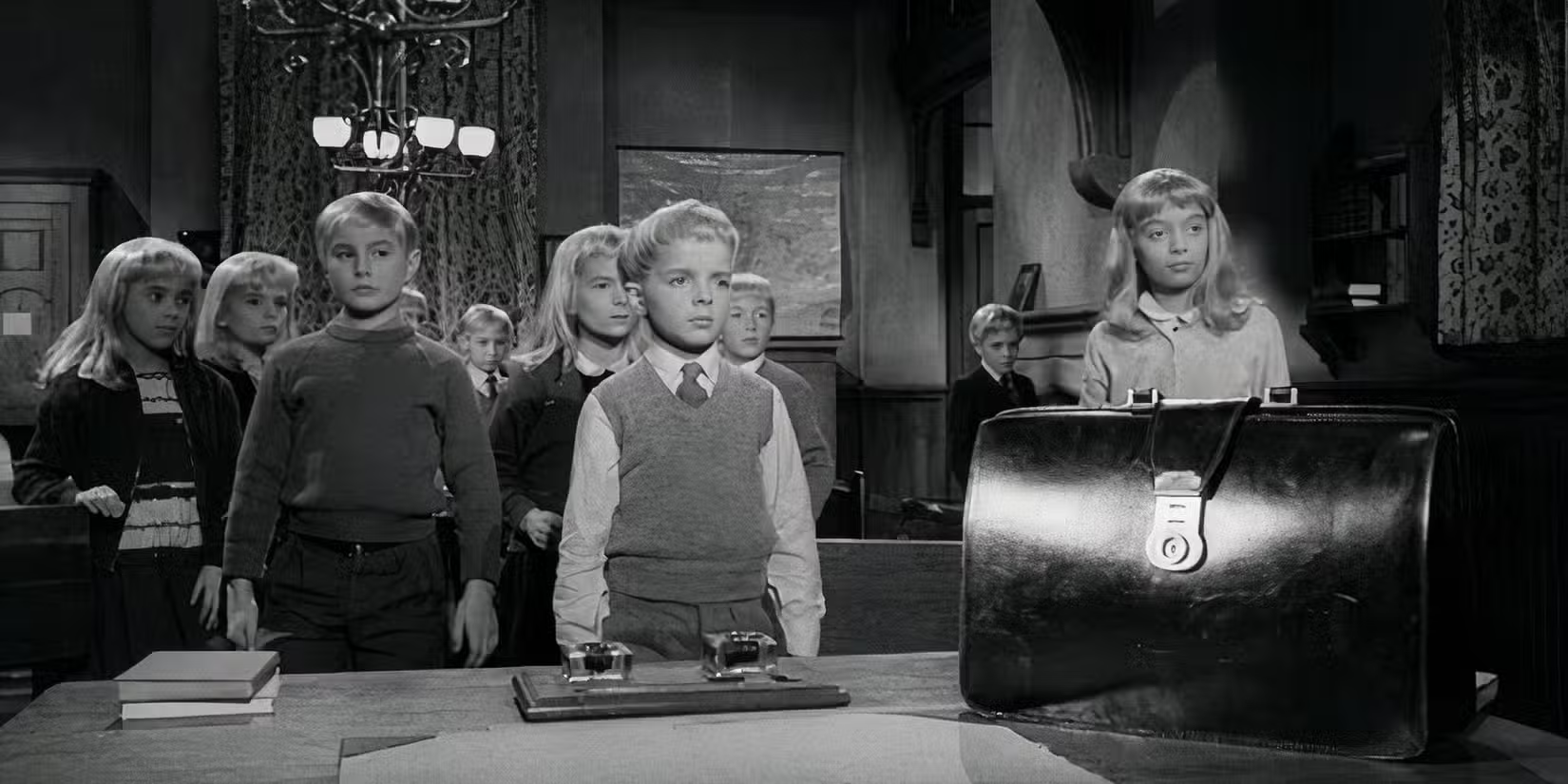
German-British filmmaker Wolf Rilla never made a film more prominent or timeless than Village of the Damned, based on John Wyndham‘s 1957 sci-fi novel The Midwich Cuckoos. This British-American production was one of the last sci-fi films produced during what’s strictly considered Hollywood’s Golden Age, and what a way this was to close off such a phenomenal period of sci-fi filmmaking.
Turning a tight budget into a tremendous hit, Village of the Damned was widely successful immediately upon release, and has continued to only get better with age. Its approach to horror is powerfully quiet and subtle, which helped further enshrine the “creepy killer children” trope in mainstream horror. Scary, atmospheric, and incredibly dark in tone, it’s one of the best sci-fi horror gems from the ’60s.
9
‘Forbidden Planet’ (1956)

Fred M. Wilcox‘s Forbidden Planet is a true landmark of ’50s genre filmmaking and an important precursor of modern sci-fi cinema, helping prove just how seriously the genre deserved to be taken. Its plot often considered an uncredited adaptation of William Shakespeare‘s The Tempest, the film has been recognized as both the first sci-fi film to depict humans traveling in a manmade faster-than-light starship and the first to be set entirely on a planet orbiting another star.
Thanks to this, Forbidden Planet continues to be remembered as one of the most foundational and influential space operas in the history of cinema 70 years after its release, and that’s why it’s one of those classic sci-fi movies that are still a must-watch in 2026. Thanks to it, audiences realized that even a low-budget sci-fi B-movie could deliver a fully serious and artistically-executed story.
8
‘Dr. Jekyll and Mr. Hyde’ (1931)

Many a great (and not-so-great) film has been made adapting the revolutionary Gothic horror novella Strange Case of Dr Jekyll and Mr Hyde by Scottish author Robert Louis Stevenson, arguably none of them better than Rouben Mamoulian‘s 1931 version. This pre-Code horror gem deservedly earned Fredric March the Academy Award for Best Actor in 1932, but great acting is by no means the only thing that makes this classic a must-watch.
Even with a budget of over half a million dollars, which was quite high for a horror film at the time, Dr. Jekyll and Mr. Hyde was just as successful as the many great Universal horror pictures from the era. Time, too, has been kind to it, with the film still seeming surprisingly creepy and audacious thanks to its inventive special effects, March’s performance, and the uniquely pre-Code depiction of sexuality and violence.
7
‘Island of Lost Souls’ (1932)

Based on H. G. Wells‘ groundbreaking 1896 novel The Island of Doctor Moreau, Erle C. Kenton‘s Island of Lost Souls is another exceptional sci-fi horror film that could have only possibly been produced during the pre-Code era of Hollywood’s Classical period. It was Paramount’s follow-up to Dr. Jekyll and Mr. Hyde, and in more ways than one, it’s generally regarded as the superior film.
But even setting comparisons aside, Island of Lost Souls is a must-see for those who love Golden-Age-Hollywood sci-fi and horror. Thanks to Charles Laughton‘s iconic terrifying performance as Dr. Moreau, the film’s chilling and psychologically-tense atmosphere, and the lack of strict Hays Code restrictions allowing Kenton to deliver body horror and other transgressive elements that couldn’t have worked just a couple of years later, Island of Lost Souls has aged like fine wine.
6
‘Frankenstein’ (1931)

Throughout the ’30s, Universal started making low-budget horror movies, largely in order to keep themselves financially afloat after the stock market crash of 1929. From the cycle of horror movies came several of the best in the history of Hollywood’s Golden Age, the most iconic of the bunch arguably being James Whale‘s sci-fi horror classic Frankenstein from 1931.
On top of introducing the world to one of the best sci-fi horror movie monsters ever, Frankenstein completely reshaped the horror film genre. It may not be all that scary by modern standards, but this adaptation of the Mary Shelley novel that birthed sci-fi as a whole is so well-made, so visually impeccable, and so well-acted by Boris Karloff that it hasn’t gotten old in the slightest as a classic sci-fi masterpiece.
5
‘The Incredible Shrinking Man’ (1957)

On top of several incredible sci-fi classics that tend to receive every bit as much praise as they deserve, Hollywood’s Golden Age also produced many criminally underappreciated sci-fi gems. Case in point: Jack Arnold‘s The Incredible Shrinking Man, which may look like a cheap B-picture on the surface, but was actually an A-level Universal production with a respectable budget and some very high ambitions.
As the years have passed, it has grown into more and more of a classic sci-fi cult classic.
The movie’s reception was only slightly positive back in 1957, but as the years have passed, it has grown into more and more of a classic sci-fi cult classic. This pulpy premise that you’d expect to see in a B-picture is transformed into a surprisingly profound meditation on human identity and mortality, proving just how philosophically rich and thematically deep sci-fi could be when in the hands of a talented enough team.
4
‘The Invisible Man’ (1933)

H. G. Wells’ 1897 sci-fi novel The Invisible Man is one of the genre’s most important from the late 19th century, and fittingly, Universal’s film adaptation of the same name instantly became one of the most important Hollywood sci-fi productions from its era. As if any more proof were needed that James Whale was an undisputed master of sci-fi horror, The Invisible Man is a gem that has aged like fine wine.
For one, the visual effects were nothing short of jaw-droppingly revolutionary back then, and they’re still just as charming and impressive today. Add to that a powerhouse voice performance by Claude Rains; some exceptionally-written character development; and Whale’s perfect blend of sci-fi creativity, horror, and humor, and you get one of the defining pre-Code masterpieces of 1930s Hollywood.
3
‘Invasion of the Body Snatchers’ (1956)

Released during one of the many peaks of the Cold War, Invasion of the Body Snatchers has come to be retroactively read as a film all about the paranoia and fear that became inherent to the era. Those who don’t much care about the political implications of sci-fi and horror, however, should still be perfectly able to have a hell of a time with this Don Siegel classic, generally regarded as one of the most iconic Hollywood horror classics.
With its impressive score of 97%, Invasion of the Body Snatchers is one of the best-rated alien invasion movies on Rotten Tomatoes, and for plenty of good reasons. Eerily atmospheric, visually perfect, full of underrated performances, and perfectly understanding of everything that makes sci-fi horror fans tick, it’s an essential ’50s classic without which Hollywood horror would simply have never been the same.
2
‘The Day the Earth Stood Still’ (1951)

Well before he became an Oscars darling with epics of the caliber of West Side Story and The Sound of Music, Robert Wise directed The Day the Earth Stood Still, one of the best classic movies from 1951. Based on Harry Bates‘ 1940 short story Farewell to the Master, this legendary classic is yet another sci-fi classic intimately tied to the Cold War era of the United States.
The film proved tremendously influential, thanks to the way it elevated sci-fi from cheap creature features and B-picture fare into art that could prove itself to be philosophically complex, full of clever social commentary, and all-around as serious as any other genre. With its bold anti-war message and the way it manages to be hugely entertaining while prioritizing restraint over pure spectacle, it’s the sort of sci-fi masterpiece that every movie fan should watch at least once in their lives.
1
‘Bride of Frankenstein’ (1935)

Who, if not James Whale, could possibly be worthy of being considered among the directors of not just one, not just two, but three of the best sci-fi movies from Hollywood’s Golden Age? And which James Whale masterpiece could possibly be considered the era’s best American sci-fi outing if not Bride of Frankenstein, one of the best movie sequels ever created?
The film was critically and commercially successful upon release, but its reputation has only kept growing more and more since its release, with its now being considered among the greatest cinematic cult classics of the 1930s. It has been embraced by mainstream cinephiles, LGBTQ+ cinema scholars, horror lovers, and midnight screening fanatics alike over the years, and it will likely only keep being every bit as entertaining a few decades from now as it is today.

The Bride of Frankenstein
- Release Date
-
April 20, 1935
- Runtime
-
75 minutes
- Director
-
James Whale
- Writers
-
Mary Shelley, William Hurlbut, John L. Balderston, Josef Berne, Lawrence G. Blochman, Robert Florey, Edmund Pearson, William Hurlbut
-

Boris Karloff
The Monster
-
Colin Clive
Henry Frankenstein
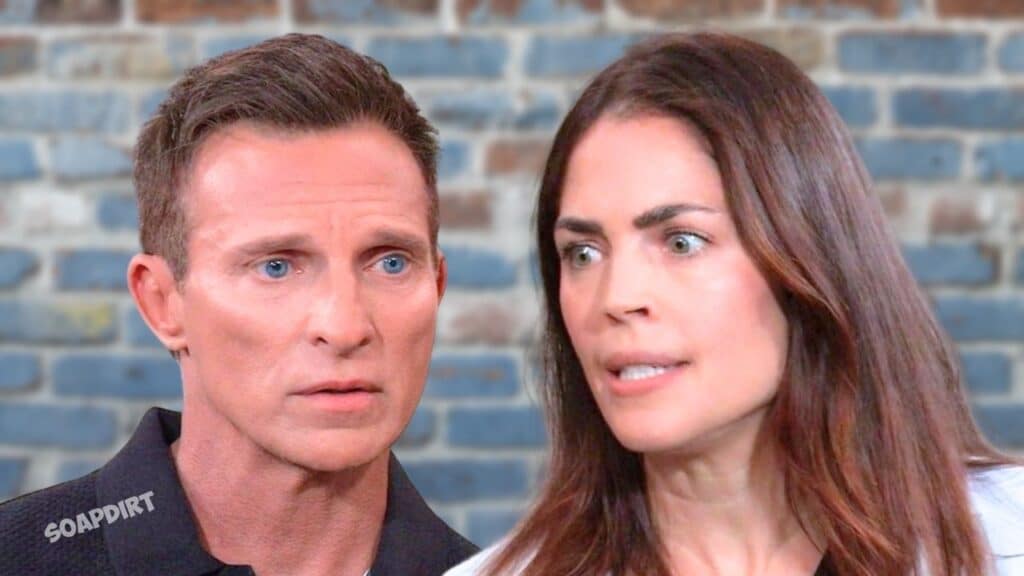
General Hospital has Britt Westbourne (Kelly Thiebaud) thinking that she’s going to get some info from Anna Devane (Finola Hughes) about her dead brother. But little does Britt know, Anna is setting a trap for her, and things are going to get really scary for Britt this week.
But there’s a hero in the wings waiting to save her. Today we’re going to talk about Britt Westbourne going missing this week and Jason Morgan (Steve Burton) worrying about her and he may figure out Anna Devane is to blame and save his girlfriend.
General Hospital: Anna Opens Up to Valentin — Britt Confides in Lucas
All right, so this week we saw Britt hanging out at the Metro Court bar with Lucas Jones (Van Hansis). They were having drinks and talking about guys. It was really chill. Meanwhile, Anna was with Valentin Cassadine (James Patrick Stuart) at the gun range for target practice. And Anna told him even though Cesar Faison (Anders Hove) is dead, Anna just can’t shake him or his memory.
And she told Valentin that makes her vulnerable. Anna told Valentin there are people who want to follow in Faison’s footsteps. People like Cassius Faison (Ryan Paevey) people like Britt. But Valentin countered and said Ross Cullum (Andrew Hawkes) was the one tormenting her, not the other two. And they know that Cullum’s dead and gone.
Anna’s Spiraling on GH
But Anna hates that Cassius was able to fool her. Anna’s angry that she believed Cassius was Nathan. Even though Valentin reminded Anna that Cassius fooled literally everybody, not just her. But Anna insisted she’s not supposed to be just anybody. She thinks she should have known Cassius was not Nathan. And because of ghost Peter August (Wes Ramsey) constantly yammering in Anna’s head, she thinks that Britt is a threat to her and that she won’t be safe until Britt is dead. But Valentin has no idea that Peter is living rent-free in Anna’s head, encouraging her to do these acts of violence she’s planning.
However, Valentin does know that something is wrong because he wanted to take Anna for a drink after the range, but she insisted on staying behind to continue practice shooting some more. And she told Valentin he couldn’t stick around. She said she didn’t need a babysitter. And then Anna made a calculated move. She called Britt and flat out lied and said she got some info from her WSB sources about Cassius and his death and what happened to his body. But Anna’s got no intention of actually looking into Cassius’ death and didn’t reach out to the WSB.
General Hospital: Anna Tricks Britt
But Anna knows that Britt and Liesl Obrecht (Kathleen Gati) are desperate for answers. They of course want to know more about what happened to Cassius, whom everybody thinks is dead. And as you know, the only people who know that Britt’s brother is alive is Z (John Oliver) and Cassius himself.
Then they set it up using Josslyn Jacks (Eden McCoy) to make it look like Cassius was the villain. And Britt knows how much Liesl needs some closure about Cassius. So, Britt was real excited to get that call from Anna, and she told Britt she would get in touch with her later to tell her where to meet to get the info.
General Hospital: Anna’s Dark Behavior
And as Anna was talking to Britt, we saw Anna tracing the bullet holes in her paper target at the range. That’s a scary red flag. Also, if you remember, Anna recently convinced Sonny Corinthos (Maurice Benard) to sell her some of his remote mountaintop acreage. And Anna lied and told Sonny that she wants to build a little retreat for herself to get away from it all because of her recent struggles.
He recommended therapy, but she was like, “nah.” And from the moment that Anna talked to Sonny about getting a remote piece of property, I immediately had a feeling Anna was going to use that spot as a place to torture and kill Britt. We even did a video about it right after those Sonny scenes because it’s quiet and secluded with nobody around. Perfect place to do crime.
Anna’s Sinister Plot on GH
And Anna has already picked out the perfect spot, it seems, to do some bad things to Britt because Peter told her to. We also know this week Anna lures Britt out there promising her the info about Cassius that Liesl wants. Britt asks Anna why they had to meet all the way out there. And she pulls a gun on Britt.
And it takes a really scary turn as Anna says, “So no one can hear you scream.” So this coming out of Anna’s mouth is going to terrify Britt. And it’s going to be even worse because I think Anna’s going to start talking to ghost Peter in front of Britt. That seems inevitable.
Britt Goes Missing on General Hospital
Once Anna snatches her, obviously it’s going to be noticed. Elizabeth Webber (Rebecca Herbst) will be calling and leaving messages asking why Britt missed work. Anna can use Britt’s phone though to send back a text saying she’s taken off or she’s out sick or she quit or whatever. I’m betting that Lucas would reach out as well. And of course, Anna can handle that with a text.
Honestly, Elizabeth and Stella Henry (Vernee Watson) might believe that Britt just took off again and was flaking out on her job at General Hospital because she’s a repeat offender. However, I don’t think Jason will buy this for a minute. He knows Britt wouldn’t leave town without telling him and has no reason to leave at all. And there’s nothing that Anna can text from Britt’s phone that will convince Jason otherwise.
Anna’s Strategy on General Hospital
So, it looks like Anna may trap her and then leave Britt out there because we know Anna is heading back to Port Charles, possibly for alibi purposes. Based on official General Hospital spoilers after that, Jason and Anna cross paths. And I’m betting that Jason’s going to realize something is off with Anna, just like Valentin realized it, because Jason knows Anna pretty well by now.
Jason may figure out Anna’s lying to him and seems nervous, but Jason may not know why. Meanwhile, he’s worried about Britt. And if Jason reaches out to Liesl, because remember, they’re supposed to have that barbecue that she was going to have, that family dinner they were talking about. If she doesn’t know where Britt is, then Jason may get more worried.
Jason Gets Suspicious on GH
And if he and Liesl realize nobody’s heard from Britt, then Jason’s going to start asking around. He may go see Liz up at General Hospital, talk to Lucas, talk to Nina Reeves (Cynthia Watros), and then Jason may circle back to Anna and say he wants to open a missing person’s case. And I expect she’ll tell Jason the PCPD can’t open a case because Britt has a history of going missing. She’s an adult. She sent text messages. You know, if Jason says the messages seem strange, Anna may argue it doesn’t matter. Those texts are proof that Britt’s not missing. Just another red flag.
And if Jason has suspicions but gets nowhere with Anna, but senses she’s being evasive, we could see Jason turning to Sonny to talk things over. I would suspect he would then tell Jason Anna seemed anxious when she visited and Sonny suggested therapy and she pushed back. And Sonny will likely mention to Jason that he sold some mountain acreage to Anna. I don’t think Sonny would mention it with the idea of, “Oh yeah, that’s probably where she took Britt.”
But Sonny may mention it as an aside about Anna’s mental health struggles and that she wanted to build a retreat there. Especially if Jason goes looking for Anna after that, finds out she’s not at the PCPD when she should be, she’s not at her place, Emma Scorpio Drake (Braedyn Bruner) doesn’t know where she is, and she’s not taking calls. So Jason’s smart enough to put two and two together and suspect that Anna might have done something to Britt.
Jason Gets Anna Help on General Hospital
And Jason may hope Anna isn’t responsible for Britt going missing, but wants to make sure. And I suspect he’ll go out to that remote property, and Jason plays hero, saves Britt, but then also needs to save Anna from herself. I’m sure Britt would want to press charges, and from there, Jason will try and talk Britt out of it.
There’s a lot of ways for this to go, and I’m sure Jason’s take when all this comes out is Anna needs help, especially when he finds out Peter is in her head. I’m guessing Jason may have to remind Britt of all the second chances she’s gotten and that there’s a reason she needs to show Anna some grace.
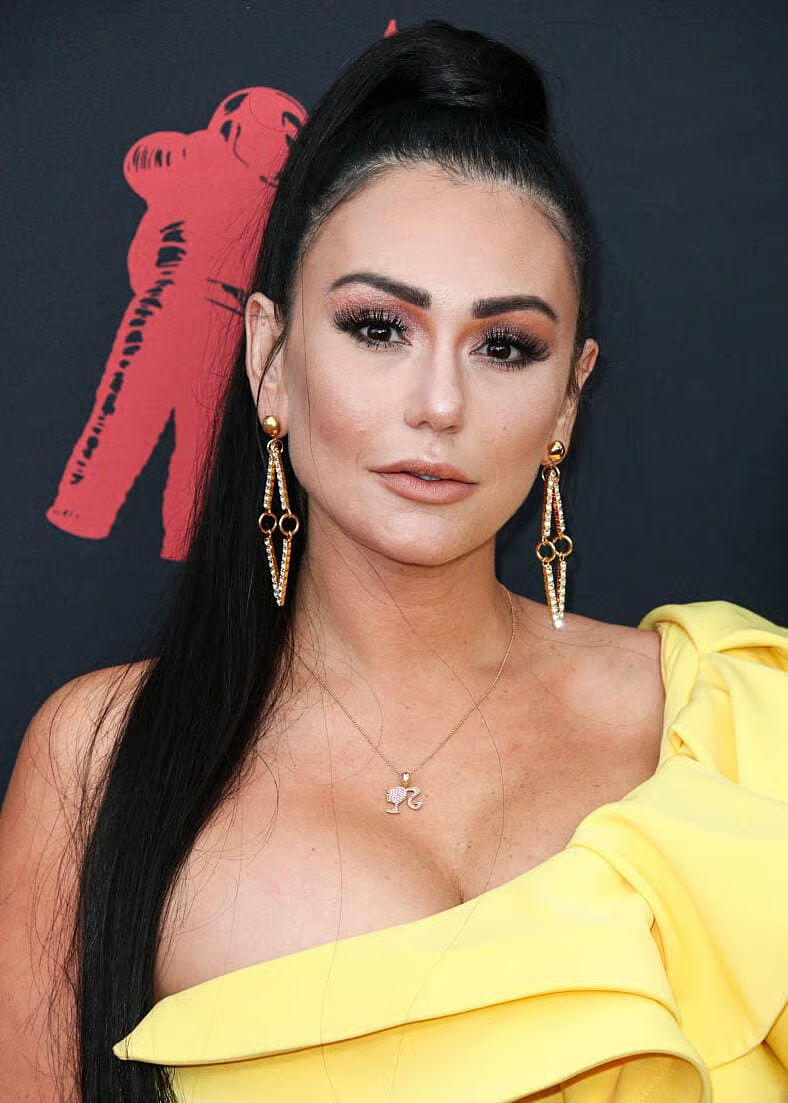
Jenni ‘JWoww’ Farley has revealed a terrifying health scare she recently faced.
The “Jersey Shore” star gave fans a glimpse into how things looked very different from what she imagined for the first day of the school year with her kids due to her medical issues. She disclosed that although the illness did not hit her with a shock wave, it was still a horrible experience.
Jenni ‘JWoww’ Farley has been open about her health battles in the past, including her struggles with substance use, boxing injuries, and TMJ dysfunction.
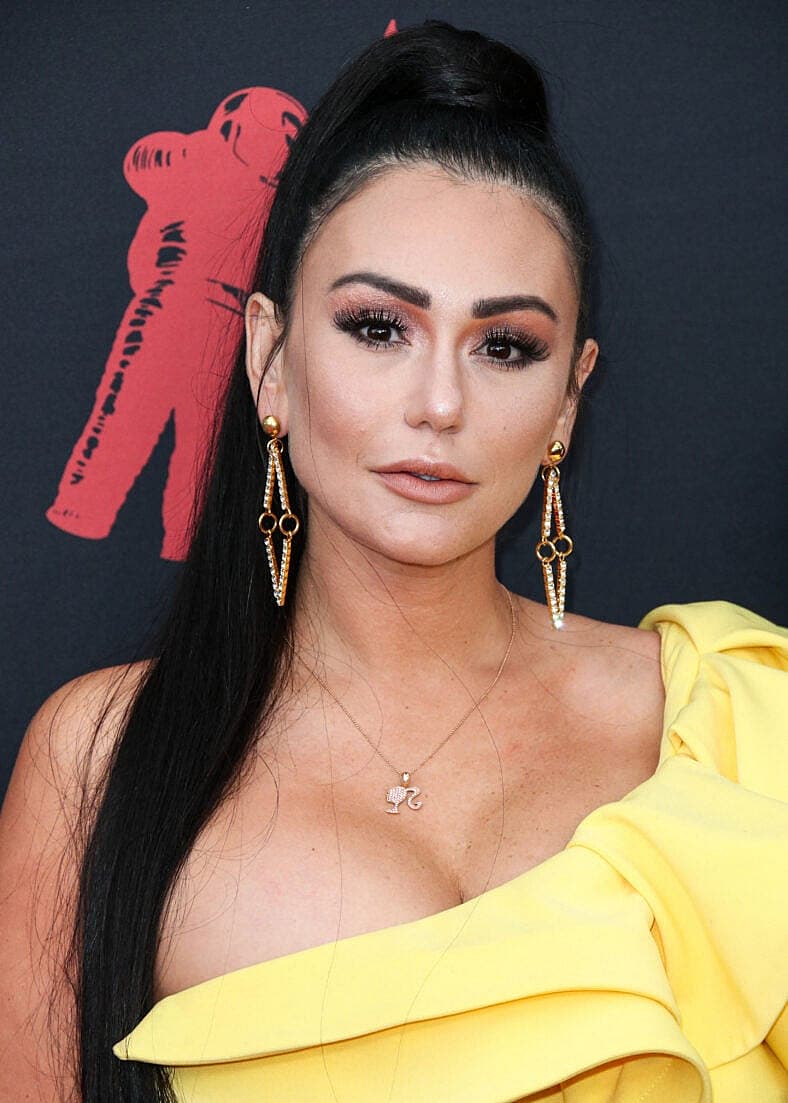
JWoww spilled the beans on a frightening health scare that landed her in the hospital. The reality TV star disclosed that she has spent the past week, which she described as “one of the hardest weeks of my life,” fighting to recover fully.
She detailed that her focus has been on trying to get healthy enough to be back home with her husband and kids after being hospitalized due to a “horrible kidney infection and appendicitis.”
The “Jersey Shore: Family Vacation” star admitted the illness didn’t come out of nowhere, as she had been experiencing certain symptoms in recent months. “Weight loss, exhaustion, constantly feeling off JWoww wrote, adding, “… and then last Friday, my body finally said, ‘We aren’t making it like this anymore.’”
Fans sent prayers for a speedy recovery to the TV personality. “Sending nonstop prayers, love, and hugs your way,” a commenter wrote. “Hope you have a speedy recovery, Jenny,” another added.
‘First Day Of School’ Pictures Looked Different For The TV Star This Year
“Not the ‘first day of school’ picture I wanted to post… but then again, I guess we wouldn’t have one. [red heart emoji]” JWoww’s Instagram post began. She attached a lengthy caption to a photo in which she posed in a hospital gown with her two kids, Meilani and Greyson, and to a video showing her straightening her daughter’s hair in what appears to be a hospital bathroom.
She said it was a tradition to do Meilani’s hair on the first day of school, so despite her health issues, she had to make it work. The TV personality praised her husband, Zack Carpinello, for making sure the kids got to the hospital “extra early” so they could spend some quality time together.
“We didn’t get the normal first-day morning. We got hospital bracelets, a hospital room, backpacks, hair supplies, and a memory I don’t think any of us will ever forget,” JWoww penned. She explained that this year’s situation made her realize how many other children will be going to school having dealt with things “that may have changed their lives forever” over the summer.
JWoww advised her fans to remind their children to be kind to others because they never know what secret battles they are fighting.
More From The Blast
Fans Previously Raised Concerns About Jenni ‘JWoww’ Farley‘s Weight
JWoww’s hospitalization comes about three months after she addressed online criticism of her weight. At the time, fans reacted to a swimsuit photo she posted, highlighting that she looked underweight.
In response to the critics, the media personality made a video clarifying that she had been working out, but not to lose weight. She also revealed that she received a Google alert about an article claiming that she looked “deathly sick.”
“I don’t even know what to say,” she said in the video. “A girl can never win. You gain weight, you’re a fat piece of sh-t. You lose weight, you must be dying of some sort of horrendous disease.”
JWoww noted that her weight fluctuates due to factors like her age, routine, and gender. She also disclosed that she was briefly ill after a trip to Miami, which contributed to the weight loss. The TV star highlighted how the world is never satisfied, as there is always talk about whether she is gaining or losing weight.
The Mom Of Two Had Postpartum Mental Health Struggles
The “Snooki & JWoww” star previously revealed that she went through what she believes to be postpartum psychosis during her motherhood journey. She described the experience as deeply disorienting and difficult to put into words, adding that it inspired her psychological thriller “Nanny Cam.”
According to the Cleveland Clinic, Postpartum Psychosis is a rare, reversible but severe mental health condition that affects people after they give birth. Hallucinations, delusions, thoughts of self-harm, and disorganized thinking, among others, characterize it.
In an interview with Kylie Kelce, JWoww revealed that after having her daughter, she was filming “Snooki &JWoww” at a production house outfitted with cameras. After the show wrapped, she realized she had become so anxious that she began installing cameras in her real home, too. She disclosed that she became extremely paranoid during that time, and even though “Nanny Cam” had been dramatized, it could be someone’s real story.
Jenni ‘JWoww’ Farley Is Not The First ‘Jersey Shore’ Star To Have Kidney Issues
In 2013, “Jersey Shore” OG, Ronnie Ortiz-Margo, was hospitalized for kidney stones. His rep at the time confirmed that he was suffering from kidney stones after he wrote “Hospital” on X on April 28.
According to The Los Angeles Times, Ortiz-Margo was admitted to an Orlando, Florida-area hospital shortly after he expressed that “he started feeling uncomfortable.” The feeling began while he was promoting his new beverage, Smush Cocktails, at the Wine and Spirits Wholesalers of America convention.
His rep shared that the TV star was in a lot of pain and was expected to remain hospitalized for several days. He later told some followers on social media that he had both a kidney stone and an infection. He described the experience as “uncomfortable” and the “worst feeling” he wouldn’t wish on anyone.

News Videos2 minutes ago
Vijay mallya #vijaymallya #trending #viralvideo #money #scam #viralnews #trendingshorts #bollywood

NewsBeat3 minutes ago
Four new homes for Cambridge University students said to ‘enhance street scene’ approved

Business4 minutes ago
lululemon Q2: Why I'm Not Touching This Even After The 19% Drop

Fashion2 months ago
Weekend Open Thread – Corporette.com

Fashion1 month ago
Weekend Open Thread: Brooks Brothers

NewsBeat2 months ago
London Mayor Sadiq Khan handed a peerage by Keir Starmer alongside 15 other Labour figures… just days before the PM leaves No10
News Videos2 minutes ago
Vijay mallya #vijaymallya #trending #viralvideo #money #scam #viralnews #trendingshorts #bollywood

News Videos16 minutes ago
What’s the purpose of life #life #shorts #kbc #finance #memes #anirudh

News Videos23 minutes ago
Money VS Passion | Vusi Thembekwayo #vusithembekwayo #money #passion #viral #shorts
-

 Fashion6 days ago
Weekend Open Thread: Maeve – Corporette.com
-

 Crypto World7 days ago
Bitcoin’s 22% rally now needs real demand to outlast Treasury liquidity boost
-

 Business7 days ago
Apple Confirms September 9 Keynote and Reveals Its Full Pre-Order Schedule
-

 Crypto World23 hours ago
CLARITY Act could advance within weeks, Atkins says
-

 Business7 days ago
Salesforce Stock Soars 19% as Blowout Earnings and Agentforce AI Growth Silence Software Skeptics
-

 Business6 days ago
Onto Innovation Stock: AI’s Next Bottleneck Is Yield (NYSE:ONTO)
-

 Crypto World6 days ago
Bitcoin price tests $82K resistance as Brandt stays long
-
 Tech5 days ago
Hugging Face built a $4.5 billion empire on free AI models. Now Nvidia is buying it for $12.9 billion
-

 Business6 days ago
iPhone 18 Pro Pre-Orders Could Shift to Saturday as Apple Reportedly Avoids September 11 Anniversary
-

 Crypto World2 days ago
Elon Musk Says Grok 4.7 Lands in 10 Days and Will Beat Every Model
-

 Crypto World7 days ago
Truflation calls for Fed rate cut after PCE forecast
-
 Entertainment6 days ago
‘Adults’ Creators Break Down Season 2’s Most Shocking Moments and Tease a Potential Season 3
-
 Tech7 days ago
The fix for the AI agent that hijacked a company’s DNS: it can propose the change, but it can’t approve it
-
 News Videos5 days ago
Charlie Munger on Robinhood: No one should believe that Robinhood’s trades are free
-

 Tech6 days ago
PaperCut releases second emergency patch for exploited flaws
-

 Tech5 days ago
Tamagotchi Ring Takes the 30-Year Digital Pet and Places it on Your Finger
-

 Tech5 days ago
As the influencer economy drives retail sales, Seattle startup raises $22M to play matchmaker
-
 Crypto World2 days ago
Bitcoin slips below $77.5K as macro pressure offsets ETF inflows
-

 Crypto World18 hours ago
Kalshi seeks CFTC approval for WTI perpetual
-

 News Videos4 days ago
News kii Crypto ugu danbeeyey & Suuqa oo dhaqaaqey
You must be logged in to post a comment Login