
Entertainment
8 Best Sci-Fi Movies That Made $1 Billion, Ranked

Whether it be revolutionary technologies that reshape the human experience or vast, intergalactic worlds light-years away, there is an inherent joy and fascination with sci-fi storytelling that has made it a staple of cinema ever since the early days of the medium. These sci-fi films prove to be that much more striking and memorable when given a massive blockbuster scale and stature to bring their visions to life, with many of the most acclaimed and recognizable sci-fi success stories crossing over into the luxurious $1 billion club.
These massively successful titans of the sci-fi genre have taken a myriad of different paths to box-office success, whether it be continuing the impact of beloved film franchises or utilizing craft and technology to bring a striking original vision to life. While not every sci-fi film that has made $1 billion is of overwhelming high quality, the very best of this selection have proven to be some of the most recognizable and acclaimed sci-fi films of their respective eras.
8
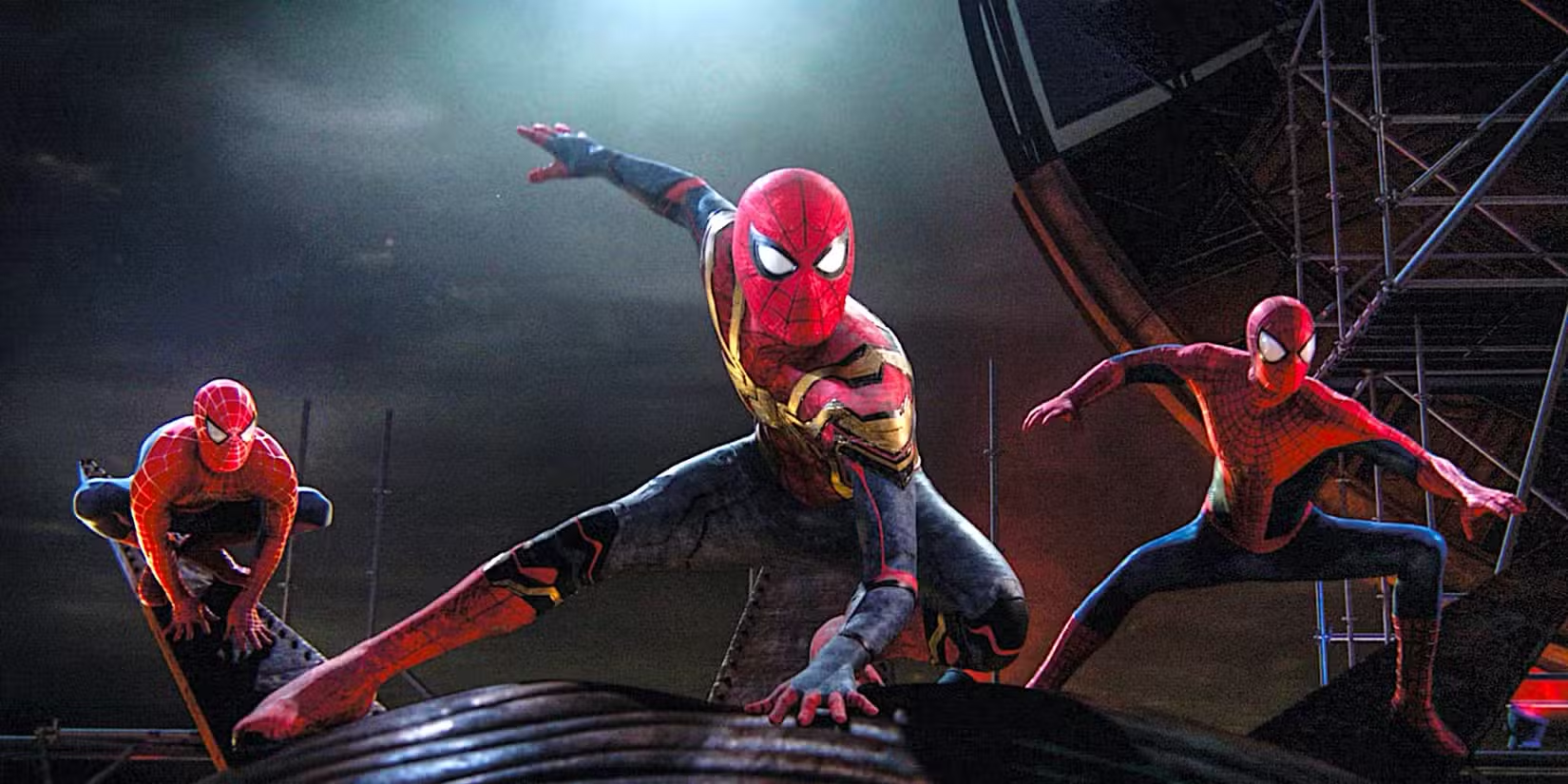
‘Spider-Man: No Way Home’ (2021)

Spider-Man was a massively popular character long before his introduction into the MCU, with a deep-rooted history of iconic film outings and iterations of the character for each generation. Spider-Man: No Way Home effectively taps into the long-lasting history of the character, bringing back iconic villains and heroes from Spider-Man films of the past to create a glorious love letter to the character’s live-action blockbuster history.
While a lot of the box-office success of the film can be attributed to the highly anticipated and memorable return of iconic Spider-Man actors Andrew Garfield and Tobey Maguire, it certainly helped that the film had its fair share of great action sequences and emotional story beats. It sticks to what makes the fundamentals of Spider-Man so enticing as a superhero, building upon the development and arcs of previous MCU films, and acts as the definitive outing of the character in the MCU and one of the best Spider-Man films to date.
7
‘Avengers: Endgame’ (2019)

Acting as a culmination of over a decade’s worth of films in the wider multiverse of MCU filmmaking, it isn’t exactly shocking that Avengers: Endgame made box-office records and was at one point the highest-grossing film in box-office history. The film stands as a love letter to the MCU as a whole, with callbacks and references to each film leading up to this point while still telling a sprawling, highly entertaining action film that gives each character a moment to shine.
Even as the MCU continues to have new entries and build-up anticipation for the next Avengers film, it’s difficult to imagine any other film in the MCU coming close to the complete global dominance and cultural impact that this iconic finale had. It has stood as a towering achievement for what is possible not just within the MCU but in extended-universe storytelling in film as a whole, proudly known as one of the defining blockbuster successes of the 21st century.
6
‘Star Wars: Episode VII – The Force Awakens’ (2015)
.jpg?q=49&fit=crop&w=500&dpr=2)
While legacy sequels are all the rage nowadays for bringing back hardcore fans and continuing the stories of beloved films, Star Wars: The Force Awakens was truly the first film to succeed in this regard, bringing a classic franchise into the modern age. Releasing over 30 years after Return of the Jedi and over a decade after Revenge of the Sith, this monumental return to the Star Wars franchise was received with overwhelming excitement and praise from long-time fans.
While Disney’s handling of Star Wars as a brand has arguably been muddied and not nearly as impactful in the decade since its release, it’s hard to ignore just how impactful The Force Awakens was, not just for sci-fi blockbusters, but blockbuster filmmaking in general. It still holds the record for the highest-grossing film at the North American box office and is held in much higher regard than the two sequels that it would receive.
5
‘Avatar: The Way of Water’ (2022)

Releasing 13 years after the previous blockbuster juggernaut, Avatar: The Way of Water certainly had a lot to live up to in terms of legacy and anticipation following the highest-grossing movie of all time. James Cameron‘s groundbreaking marvel of visual achievement and technological advancement made perfect use of the time since the last film’s release, with masterful top-notch CGI visuals that are still unmatched by any other high-budget blockbuster of the modern era.
The beautiful underwater sequences make the absolute most of both the groundbreaking motion capture technology as well as the absolute limit of 3D filmmaking at a blockbuster scale. Cameron’s style of filmmaking has such a distinct vision in terms of pushing blockbuster filmmaking to its absolute limits, with The Way of Water perfectly encapsulating what sci-fi blockbuster filmmaking is capable of. While the Avatar franchise will surely continue to deliver memorable sequels in the coming years, The Way of Water is important for proving to audiences that Avatar was far from just a one-time success story.
4
‘Avengers: Infinity War’ (2018)

While a lot of the praise and prominent success of the MCU’s finale is largely attributed to the brilliance of Avengers: Endgame, it is arguably even more impressive that Avengers: Infinity War was able to set the stage and stand as its own cinematic event without feeling like only half of a complete story. The impact and success of Endgame wouldn’t have been nearly as large without Infinity War setting the stage and proving the quality of bringing together all corners of the MCU into one explosive blockbuster event.
Even today, the film still stands as one of the most ambitious superhero movies ever made and a landmark title in the MCU’s success, with inherent charm and pacing that gives it an edge over Endgame in terms of standalone quality. A lot of the greater success and individuality of the film can be attributed to how it centers around the looming threat of Thanos (Josh Brolin), with each hero finding their own way to try and stop his conquest of universal destruction.
3
‘Rogue One: A Star Wars Story’ (2016)

While the actual trilogy of mainline Star Wars films under Disney had a relatively rocky reception from fans, one of the absolute best things to come out of the Disney era of Star Wars was being that much more willing to experiment with spinoffs and standalone stories, with the best example being Rogue One: A Star Wars Story. Its entry into the $1 billion gross club can certainly be attributed by continued excitement from The Force Awakens the previous year, but that doesn’t take away from the strength and effectiveness of Rogue One as a standalone experience.
This dynamic adventure of a rogue group of resistance fighters uniting for a mission to steal the Death Star’s plans proves to be all the more effective thanks to its high stakes, entertaining characters, and emotional action-packed climax. Even with the occasional hiccups like distracted de-aging CGI, the film proves to be leaps and bounds ahead of Disney’s other Star Wars efforts and has aged tremendously in the decade since its release.
2
‘Avatar’ (2009)

It’s impossible to discuss the topic of sci-fi blockbusters without talking about James Cameron’s Avatar, the film that currently holds the record for the highest-grossing movie of all time and manages to be just as groundbreaking and visually striking today as when it was released 17 years ago. The film ushered in a wave of 3D filmmaking in the wake of its success, as its revolutionary utilization of the technology not only helped it achieve massive box-office success, but completely redefined for many audiences what film was capable of.
Avatar proved to be a generational, must-watch experience that was pushing the medium of filmmaking forward with its brilliance, standing tall as a culmination of Cameron’s exceptional career and creating a sprawling, mesmerizing sci-fi world. This perfectly directed sci-fi epic is often the first film that comes to mind when considering massively successful sci-fi films at the box-office, made all the more impressive that it achieved this as a completely original film, not a part of a pre-existing franchise.
1
‘Jurassic Park’ (1993)

Jurassic Park is an interesting case when it comes to its inclusion in the $1 billion club, as while it didn’t earn $1 billion during its original box-office run, it would make it over the edge thanks to various re-releases over the years, with it now standing at $1.1 billion grossed worldwide. However, Steven Spielberg‘s sci-fi adventure masterpiece is still one of the most important and highly acclaimed sci-fi blockbusters ever released, being massively influential for the entire genre and featuring revolutionary visuals that still hold up over 30 years later.
The film proved to be so overwhelmingly successful as a worldwide phenomenon that it once held the title of the highest-grossing movie of all time at the box office, a mantle that it would hold until the release of Titanic 4 years later. Still, the film’s substantial legacy grows with each passing year, as it’s the oldest film to have grossed $1 billion and has seen a myriad of spinoffs and sequels that have further defined its cinematic legacy.


Continue Reading

The late influencer Sara Gilson’s ex-husband, Lyle Landers, has offered to pay for her funeral in the wake of her death in an alleged murder-suicide plot carried out by her estranged second husband, Jeremiah “Shawn” Duffey.
Landers told TMZ on Thursday, July 30, that he promised Gilson’s parents that he would give her the funeral she deserved since he is in a stable financial position. (Gilson and Landers shared two children before divorcing.)
Following Gilson’s death, Landers confirmed to the outlet that he spent his birthday on Tuesday, July 28, picking out a funeral plot for the late TikTok personality. A private ceremony is expected to be held in her honor later this week.
A GoFundMe page that was recently set up to benefit Gilson’s two children has already raised more than $33,000. (Per the fundraising page, donations will go to the children’s “immediate needs, counseling, education, funeral expenses, and other costs that arise as they begin this unimaginable journey without their mother.”)

Influencer Sara Gilson filed three protective orders against Jeremiah Duffey — the first and second were filed five years ago and the third was filed one month before he allegedly killed her in an apparent murder-suicide. According to court documents obtained by Us, Gilson filed her first request in August 2021, claiming she was the […]
Gilson and Duffey were found dead at ages 43 and 48, respectively, by law enforcement officials in their Owasso, Oklahoma, home on July 23. Owasso police officers responded to the residence after receiving a 911 call from “a juvenile caller advising his step-father had shot his mother.” (Police suspect the case was a murder-suicide plot orchestrated by Duffey though the investigation is ongoing.)
The shocking crime was preceded by Gilson taking out an order of protection against Duffey on the same day in June as a local mother asked for her own restraining order on behalf of her teenage daughter. The mother’s petition alleged that Duffey sexually abused her daughter while coaching her basketball team. (Duffey was being investigated for the alleged sexual abuse by Oklahoma police at the time of his death.)
Weeks after she was granted an order of protection, Gilson publicly accused Duffey of pedophilia in a July 11 TikTok video. The hairstylist took part in a TikTik trend where she pretended to be interviewed for a true-crime documentary.
“Preparing for when Netflix drops a documentary about my soon-to-be ex-husband, who I just found out is a pedophile,” she wrote over the clip, while captioning the video, “I wish I was joking.”
@mrsgilson I wish I was joking. #plottwist #netflix #documentary
While the clip has now gone viral with more than 2.3 million “likes,” Landers told TMZ on Thursday that he hopes the video is not how Gilson is remembered.
“The world sees her TikTok video and they assume that’s who she is. That’s not her. She was a mom. That’s the real her,” he insisted.
As for Duffey, his ex-wife, Stephanie Ramsay, revealed earlier this week that the alleged killer will not have a funeral because his family do not want to honor his memory. Instead, Ramsay and Duffey’s five children have chosen to have him cremated so his remains can be put in a private family funeral plot.
Details are emerging about Gilson and Duffey’s troubled marriage, including information about alleged financial and legal issues. Per The Oklahoman, Gilson previously filed a restraining order against Duffey in 2021 but it was dismissed when she did not attend a hearing.


Us obtained court documents showing that Duffey filed for Chapter 7 bankruptcy in 2024 and listed a Glock 19 pistol, valued at $450, as one of his assets at the time. He listed Sara as a codebtor and specified her monthly income as a hairstylist and influencer at just over $3,000.

Jeremiah “Shawn” Duffey and Sara Gilson. Courtesy TikTok / Sara Gilson
However, Duffey allegedly told the Owasso Police Department in Oklahoma in March 2024 that his semi-automatic handgun was allegedly stolen from his car. According to a police report obtained by Us, he claimed that his “vehicle had been broken into and items [were] stolen,” including a handgun he valued at $800.
If you or someone you know is struggling or in crisis, help is available. Call or text 988 or chat at 988lifeline.org. If you or someone you know is experiencing domestic violence, please call the National Domestic Violence Hotline at 1-800-799-7233 for confidential support. If you or someone you know is experiencing child abuse, call or text Child Help Hotline at 1-800-422-4453.
The term “action film” has been around since the 1910s, but the action genre we know and love today was originally established during the New Hollywood Movement by classics such as Goldfinger, Dirty Harry, and Enter the Dragon, and hit its peak of popularity in the 1980s with iconic hits including The Terminator, Die Hard, and Raiders of the Lost Ark. Since then, action movies have entered a new age that has redefined the genre with intense action sequences, compelling stories, and memorable characters, proving that the genre is more than just a spectacle of explosions and fight scenes.
While there have been an abundance of stellar action movies released since 2000, there are a few exceptional entries, such as John Wick, The Bourne Ultimatum, and Casino Royale, that transcend the genre with unwavering thrills and intriguing players, making them some of the greatest action movies of the 21st century. From Mission: Impossible — Fallout starring Tom Cruise as the legendary Ethan Hunt to Quentin Tarantino‘s Kill Bill: Volume 1, these are the six best action movies released since 2000, ranked!
6
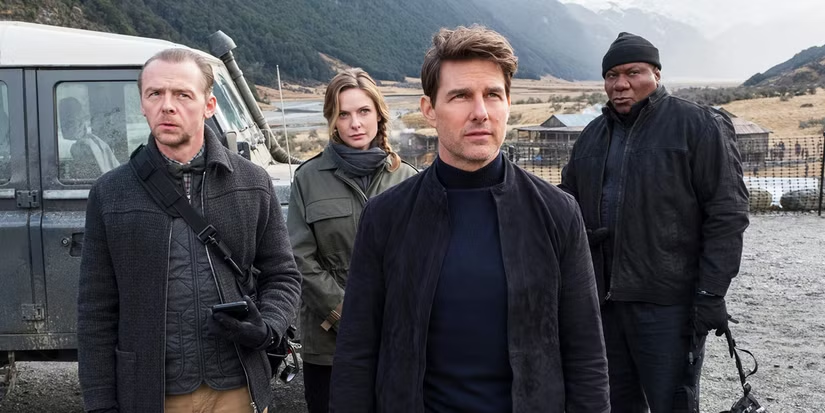
‘Mission: Impossible – Fallout’ (2018)

Tom Cruise reprises one of his famous roles as IMF agent Ethan Hunt in Christopher McQuarrie‘s Mission: Impossible — Fallout, marking the sixth installment in the hit action film franchise. Set two years after the events of Mission: Impossible — Rogue Nation, Hunt and his team, Benji Dunn (Simon Pegg) and Luther Stickell (Ving Rhames), work with a CIA agent, August Walker (Henry Cavill), to track down a dangerous arms dealer and a group of terrorists who have three plutonium cores, but when the weapons go missing, the mission intensifies into a desperate race against time to stop a potential nuclear attack.
Mission: Impossible — Fallout features some of the most ambitious practical stunts ever filmed, including Cruise’s HALO jump, helicopter chase, and brutal hand-to-hand combat scenes, which were all performed with little to no CGI. Its expertly choreographed action, memorable villains, and stunning cinematography not only set a new standard for modern action films, but it also showcases how to maintain the nostalgia of a popular franchise while still forging a fresh and original path. By blending thrilling spectacle with genuine suspense and emotional depth, Mission: Impossible – Fallout has become a benchmark against which many contemporary action movies are measured.
5
‘Man on Fire’ (2004)

Denzel Washington stars in Ridley Scott‘s 2004 action thriller, Man on Fire, as a former CIA operative turned personal bodyguard, John Creasy, who is employed by a wealthy businessman in Mexico City, Samuel Ramos (Marc Anthony), to protect his nine-year-old daughter, Lupita “Pita” Ramos (Dakota Fanning). When Pita is kidnapped by a notorious gunman, Creasy goes on the warpath to find her before it’s too late, leaving a path of bloodshed, vengeance, and destruction behind him every step of the way.
Unlike many action films, Man on Fire gives equal weight to character development and explosive action, which makes Creasy’s journey both compelling and emotionally impactful, setting it apart from other modern action thrillers. Washington delivers a powerhouse performance, conveying the genuine danger of a man who has nothing else to lose with a blend of unpredictable menace and surprising vulnerability. Between Washington’s unforgettable performance, Scott’s sharp direction, and its timeless tale of revenge, Man on Fire continues to endure decades after its original release and is, hands down, one of the best action movies of the 21st century.
4
‘John Wick’ (2014)

John Wick is a top-tier action thriller that ultimately reinvented the modern action movie with its innovative fight choreography, stylish world-building, and relentless pacing, and has since grown into one of the most popular action film franchises to date. Keanu Reeves stars as the titular character, a retired assassin and grieving widow, who, after his dog is killed by a sadistic mobster (Alfie Allen) and his crew, comes out of retirement to track down those who are responsible, ultimately serving up his own form of street justice and merciless revenge.
What begins as a simple revenge story evolves into a thrilling showcase of expertly choreographed gunplay, martial arts, and tactical combat, often referred to as “gun-fu,” essentially cementing John Wick as one of the best action movies in recent years. Director Chad Stahelski‘s emphasis on practical stunts, long takes, and realistic action sequences gives the film a distinctive style and undeniable edge that has influenced countless action movies since its release. Combined with Reeves’ committed and emotionally fueled performance, a richly imagined underworld of assassins, and jaw-dropping action scenes, John Wick set a new standard for the genre and launched one of the most successful action franchises of the 21st century.
3
‘Casino Royale’ (2006)
Casino Royale is the second adaptation of Ian Fleming‘s spy novel of the same name and revitalized the legendary James Bond franchise with a grittier, more realistic approach, essentially appealing to both original fans of 007 and newcomers to Fleming’s iconic MIF agent. Daniel Craig makes his grand debut as Bond, who, after earning his license to kill, is tasked with taking down a private banker and terrorist financier, Le Chiffre (Mads Mikkelsen), by playing him in a high-stakes poker game at the Casino Royale in Montenegro.
The movie explores Bond’s early career while blending high-stakes espionage with intense action and emotional depth, making Casino Royale a modern standout in the action genre. Despite being a remake, Casino Royale leaves its own distinct mark on the franchise with a career-defining performance by Craig and memorable action-packed sequences, notably the opening black-and-white chase and the tense finale in Venice, which is a masterclass in practical stunt work and expertly choreographed action. By combining thrilling action, sophisticated storytelling, and a standout performance from Craig, Casino Royale successfully reinvented one of cinema’s most iconic heroes and set a new benchmark for modern spy and action films.
2
‘The Bourne Ultimatum’ (2007)

The Bourne Ultimatum is loosely based on the third novel in the Bourne Trilogy series written by Robert Ludlum and masterfully combines fast-paced action with intelligent storytelling and emotional depth. The movie picks up after the events of The Bourne Supremacy and follows Jason Bourne (Matt Damon), a CIA assassin with dissociative amnesia, as he continues to search for information about his past before joining the top-secret black ops program, Treadstone, while evading the relentless pursuit of the CIA and a similar program known as Blackbriar.
The film’s intense foot chases, intense hand-to-hand combat, and realistic car pursuits are filmed with a kinetic style that creates a constant sense of urgency without sacrificing clarity, ultimately solidifying the film’s place among the best of the best modern action thrillers. Damon’s understated performance adds depth to Bourne’s struggle for identity, which makes the action feel more personal and meaningful. The Bourne Ultimatum was a major success and went on to win three Academy Awards, including Best Film Editing and Best Sound Mixing. With its gripping plot, relentless pacing, and groundbreaking approach to realistic espionage action, The Bourne Ultimatum raised the standard for modern spy thrillers and influenced countless action films that followed.
1
‘Kill Bill: Volume 1’ (2003)

Quentin Tarantino’s iconic action thriller Kill Bill: Volume 1 combines breathtaking action and unwavering suspense with the director’s distinctive style of storytelling and distinct visual spectacle, and is regarded by many as one of the greatest modern action movies to ever grace the silver screen. The movie stars Uma Thurman as a former mercenary known as the Bride, who becomes hellbent on tracking down and exacting her revenge on a group of assassins and their leader, Bill (David Carradine), after they tried to kill her and her unborn baby.
Kill Bill: Volume 1 features some of the most iconic action sequences of the 21st century, including the unforgettable showdown with the Crazy 88 and the climactic duel against O-Ren Ishii. Drawing inspiration from martial arts films, spaghetti westerns, and anime, Tarantino creates a visually striking and uniquely stylized experience that only a filmmaker of his caliber could achieve with such precision and passion. With its expertly choreographed sword fights, memorable characters, dynamic soundtrack, and bold cinematography, Kill Bill: Volume 1 redefined the revenge action genre and remains one of the most influential and celebrated action films of the modern era.

Shania Twain is refusing to let critics dictate how she feels about growing older.
After years of battling insecurities over her changing appearance, the country music icon says she has finally reached a place of acceptance, embracing menopause, rejecting unrealistic beauty standards, and refusing to let body shamers steal her confidence.
The 60-year-old singer’s latest comments also shed new light on a painful health setback that forced her offstage during her Las Vegas residency, revealing how menopause played a bigger role than fans ever realized.

Speaking candidly to PEOPLE, Twain reflected on the difficult transition into menopause and how it contributed to a frightening injury she suffered while performing in Las Vegas in 2019.
The singer explained that dehydration, poor nutrition, and hormonal changes combined to create what she described as the “perfect storm.”
“I ripped two muscles in my thigh,” Twain recalled, explaining that she had not yet adjusted to the Nevada climate and wasn’t consuming enough water, salt, or protein while experiencing severe menopausal symptoms.
The injury forced her to reevaluate how she cared for herself, especially as she struggled with physical changes she didn’t fully understand at the time.
Twain Says Aging Changed How She Sees Herself

Shania Twain admitted that seeing her body change was emotionally difficult.
“I go from being this young, stunning figure, beautiful skin, everything’s in the right place,” she said, admitting she eventually reached a point where she “couldn’t look in the mirror” because all she noticed were what she considered imperfections.
Instead of continuing to fight the natural aging process, however, the Grammy winner said she gradually realized that prioritizing her well-being mattered far more than chasing youth.
Shania Twain Reveals Why She Stopped Looking In The Mirror

Twain’s latest remarks build on admissions she has made over the past year about her complicated relationship with body image.
Earlier this year, she revealed that there was a period during her Las Vegas residency when she “hated” her body and became consumed by every perceived flaw she saw in the mirror. Rather than feeling empowered by her appearance, she admitted she often focused on what had changed instead of appreciating where she was in life.
Those feelings eventually gave way to a healthier outlook. Today, Twain says she no longer feels pressure to recreate the body she had decades ago.
“I’m not trying to be 30. I’m not trying to be 25, and I won’t be ever again,” she told PEOPLE, encouraging others to enjoy themselves in the present instead of constantly wishing they looked younger.
She added another message that has become central to her outlook on aging, noting, “Vanity is not worth torture.”
The singer also acknowledged that aging has required adjustments in other parts of her life, joking that she can no longer play tennis the way she did in her 30s and has instead adapted her game rather than trying to push her body beyond its limits.
Shania Twain Has A New Message For Body Shamers

While Twain has faced criticism about her appearance throughout her career, especially as she continues wearing bold stage outfits in her late 50s and early 60s, she says she has reached a point where outside opinions simply don’t carry the same weight.
Instead of allowing online criticism to influence how she dresses or performs, the singer has embraced a philosophy centered on confidence rather than perfection.
She declared that her body “is not shameable,” making it clear that she refuses to let strangers determine how she should feel about herself.
That mindset remains unchanged. Rather than trying to erase every sign of aging, Twain said she’s learning to embrace each stage of life as it comes.
“I just have to get over this because every day that goes by, I’m getting older,” she explained, adding that the physical changes that once bothered her no longer define how she sees herself.
For Twain, accepting those changes has become liberating instead of discouraging.
Twain Has Spoken Honestly About Her Body Before
This isn’t the first time Shania Twain has spoken openly about her relationship with her appearance.
The country superstar has repeatedly explained that confidence didn’t always come naturally, despite being widely regarded as one of music’s biggest sex symbols during the 1990s and early 2000s.
As previously reported by The Blast, Twain recently admitted she spent years criticizing her body behind the scenes, even while fans viewed her as one of the entertainment industry’s most glamorous performers.
She acknowledged that she often overlooked the confidence she possessed when she was younger because she was too busy searching for flaws.
Looking back now, Twain says she wishes she had appreciated herself more during those years instead of allowing insecurities to overshadow them.
That realization has become one of the biggest lessons she hopes others can learn from her own experience.
In the world of television, very few shows get the chance to continue past their first or second season. This is especially true in the modern era, where streaming platforms and on-demand viewing dominate over cable or network television. As a result, many platforms produce several of their own original series of many genres, in an effort to get people to buy a subscription.
This is getting more and more common in the fantasy genre since it’s experiencing a massive surge right now. A lot of good, enjoyable series are being made, but many aren’t getting the opportunity to make it past their second season. However, there are also some that are brand new, so they only have a few seasons in the first place. In any event, these are the most perfect fantasy shows that have fewer than 20 episodes.
10
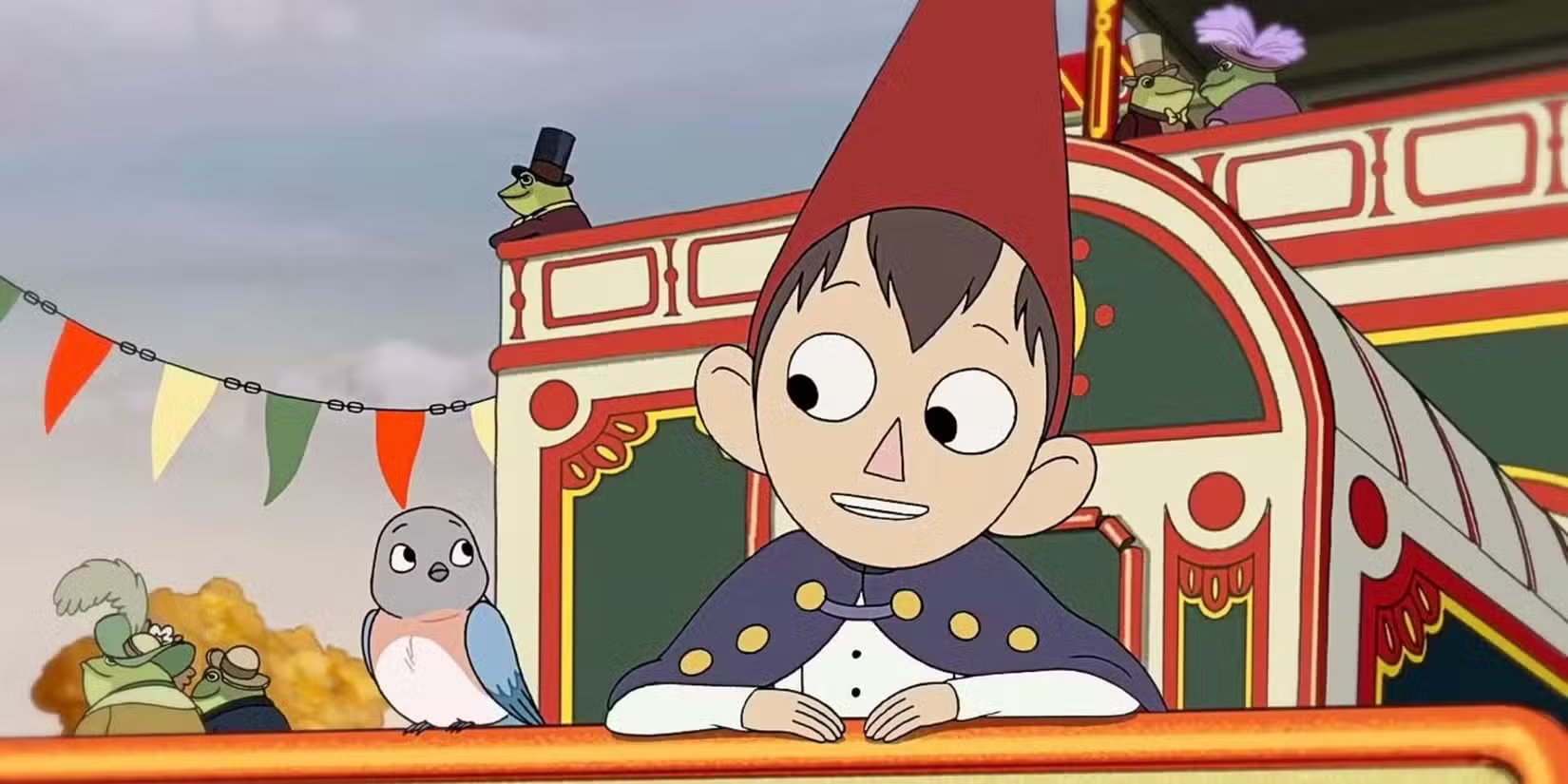
‘Over the Garden Wall’ (2014)

Over the Garden Wall is a Cartoon Network animated miniseries that was something of a passion project for its creator; one with a lot of star power to back it up. The premise follows two half-brothers living in a fairy tale world, who become hopelessly lost in a dark, gloomy forest called “The Unknown.” Desperate to find their way home, they encounter many strange and wondrous things.
Even though it’s only a miniseries with a handful of episodes, it gets way deeper than anyone ever expected it to, especially for a kids’ show. For that reason, it’s become a bit of a cult classic, popular among both kids and adults. Things get much darker than its whimsical introduction, exhibiting how even TV shows and cartoons can be a form of art. Over the Garden Wall might be short, but it’s exactly the length it needs to be to make its point.
9
‘A Knight of the Seven Kingdoms’ (2026–Present)

A Knight of the Seven Kingdoms is the second prequel series to the earth-shattering HBO original, Game of Thrones, which was originally based on the unfinished novel series by George R. R. Martin. This show is set roughly 100 years prior to the events of the main show, and is much smaller but more intimate in scale. The premise follows a traveling knight and his misfit squire as they make their way around Westeros accepting local contracts.
While it lacks the epic scale of Game of Thrones, this show has much more adventure in it, as well as a lot more comedy. Since the cast is substantially smaller, there is also a better level of character development and chemistry between the principal actors, so it’s a decent departure from the formula fans of the original are used to. As of right now, there’s only one season, which makes it a short but sweet binge.
8
‘Arcane’ (2021–2024)

Arcane is based on the immensely popular MOBA video game, League of Legends. The 3D animated series follows two of the game’s playable champions in a tale of love, sacrifice, friendship, and individuality. The world of League of Legends is quite an interesting place, featuring elements of sci-fi, fantasy, and even steampunk. Normally, video game adaptations are terrible, but Arcane successfully breaks the mold here, thanks to direct intervention from the game developers.
This animated series bears a really unique art style that isn’t seen anywhere else. It actually resembles the game graphics, which is a nice touch. Even though the show only lasted two seasons before ending its story, it was critically acclaimed, earning high review scores and even an Emmy or two. Very rarely, if ever, is an Emmy given to a video game adaptation, much less an animated video game adaptation. The short length of this show means it doesn’t take long to watch, but it makes for an unforgettable experience.
7
‘Guillermo del Toro’s Cabinet of Curiosities’ (2022)

Film director Guillermo del Toro is known for his dark fantasy and horror films, and has received a lot of critical praise for the way he builds tension and atmosphere. Almost every one of his films is eerie, but fun to rewatch multiple times. Being a modern master of the fantasy genre, Netflix offered him a deal for an anthology miniseries, which he took. The result is Cabinet of Curiosities, which is underrated, but truly special.
Since it’s an anthology series, all the episodes are independent of each other and function as mini-movies ranging from 40 to 60 minutes long. Part fantasy and part horror, each episode is loaded with del Toro’s signature style, to the point that the show feels like a playground for his imagination. It’s a passionate love letter to filmmaking and a dark fantasy experience that will make you really think. There are actually fewer than 10 episodes, never mind 20, so it’s another one of those shows that you could easily finish in a day if you really wanted to.
6
‘One Piece’ (2023–Present)

One Piece is a live-action remake of the 1999 anime series of the same name, which is actually still ongoing. The main character is Monkey D. Luffy (Iñaki Godoy), an aspiring young pirate who has swallowed a Devil Fruit, granting him the ability to stretch himself like rubber at will. The series is set on a vast ocean world where pirates rule the waves and treasure lies hidden beneath the sand.
One treasure in particular is said to contain more wealth than any other, which causes most pirates to vigorously search for the final piece of the broken map that can lead to the treasure’s whereabouts. Filled with comedy, ridiculousness, but also high seas adventure, the live-action version of One Piece is much more palatable to non-anime fans and does a fantastic job of bringing a beloved series to life in a new way. There are only 16 episodes so far, so it’s easy to binge, too.
5
‘Shadow and Bone’ (2021–2023)

Shadow and Bone is a high fantasy series based on the novels of the same name by Leigh Bardugo. The series is set in Bardugo’s Grishaverse, which is a setting vastly different from any other fantasy world. A lot of fantasy stories tend to favour settings akin to Medieval Europe, which makes the Victorian London-esque world of Shadow and Bone a breath of fresh air.
This show has a really intricate magic system, hilarious punchlines, and some highly memorable characters, none of which got nearly the amount of attention they so desperately deserved. The show was unfortunately axed after just two seasons due to low viewership, in spite of audiences loving it. The experience of Shadow and Bone might be short, but it’s one heck of a ride.
4
‘The Dark Crystal: Age of Resistance’ (2019)

The Dark Crystal: Age of Resistance is the prequel series to the 1982 Jim Henson film. This means it’s created with puppets, all meticulously detailed and fascinating to watch. All sets are, for the most part, hand-crafted as well, meaning a tremendous artistic effort went into this show. It’s honestly despicable that Netflix gave it the axe after only one season, despite critical acclaim.
The Dark Crystal‘s story takes audiences back to the world of Thra, where no humans exist, only strange and mysterious creatures. The show is set just after the Dark Crystal splinters, releasing the vulture-like Skeksis into the world, who intend to enslave the native life forms of Thra and forge an immortal empire. It’s a beautiful and family-friendly show that you could realistically knock back in a day if you really wanted to since it was only given a handful of episodes.
3
‘The Mighty Nein’ (2025–Present)

The Mighty Nein began as a custom campaign from a tabletop role-playing game that was recorded and uploaded as a podcast. This is actually the second series from this background, the first being The Legend of Vox Machina. Set in the same universe, The Mighty Nein is an animated series about a group of misfit thieves, low-lives, and ne’er-do-wells who unexpectedly come into the possession of a magical artifact that could determine the fate of the world.
Like Vox Machina, the show is voiced by the original podcast members, so it feels nice and familiar to returning fans. For non-fans, it adds an extra layer of authenticity and rawness to their performance. While slightly more underrated than its predecessor, The Mighty Nein has done well for itself so far, and is a great introduction into the vast world created by the podcast.
2
‘Kingdom’ (2019–2021)

Kingdom is a South Korean fantasy horror set in the historical kingdom of Joseon at the turn of the 17th century. Amidst royal feuds, the scheming Haewon Cho clan makes a dangerous attempt at seizing the throne, using a mythical resurrection plant. This accidentally unleashes a zombie horde, although these undead don’t behave anything like the typical zombies you’ve seen in fiction.
Unfortunately, this show got soft-cancelled by Netflix after two seasons and one special feature-length episode. Based on a web comic turned graphic novel, Kingdom has political intrigue, family drama, feuding nobles, gruesome violence, and strong elements of horror, all of which were received very well by critics and fans alike. There’s no indication that it will ever come back (which is infuriating, considering it ended on a cliffhanger), but the 13 episodes that do exist are phenomenal all around.
1
‘Percy Jackson and the Olympians’ (2023–Present)

Based on the beloved YA novels of the same name by Rick Riordan, Percy Jackson and the Olympians is about the titular Percy (Walker Scobell), a troubled boy who discovers he is the son of the Greek god Poseidon. To learn how to hone his powers, he is sent to Camp Half-blood, along with other demigods. Here, he is exposed to a hidden world where Greek mythology comes to life.
This series of books saw a disastrous attempt at movie adaptations in the 2010s, but the show is, thus far, much more faithful and miles more entertaining. This is largely because Riordan himself has a much heavier hand in the show’s production than he did for the movies. In any event, the show is great for teens, tweens. and adults, is filled with wonder, and is just plain fun. So far, there are only 16 episodes, most of which are only 30-40 minutes long, so it’s easy to binge in one short weekend.

Percy Jackson & the Olympians
- Release Date
-
December 19, 2023
- Network
-
Disney+
- Showrunner
-
Jonathan E. Steinberg, Dan Shotz
-

Walker Scobell
Percy Jackson
-
Leah Sava Jeffries
Annabeth Chase
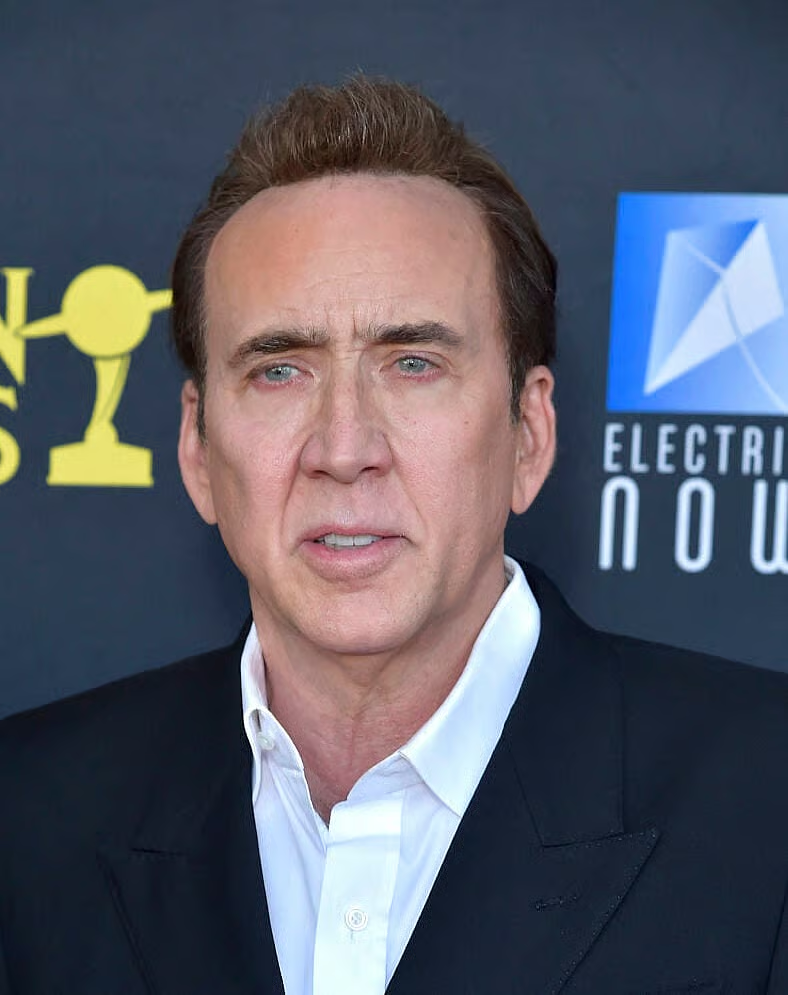
Netflix is facing a $105 million lawsuit after a master copy of an unreleased Nicolas Cage thriller was allegedly stolen from the streaming company’s Hollywood offices. Swiss billionaire Simon Afram, who personally financed and produced the $45 million film “Fortitude,” is accusing Netflix of breach of contract after its digital cinema package disappeared nine days after being delivered. Netflix disputes that it is financially responsible for the loss and has accused Afram’s attorneys of engaging in “hostile attempts to extort money” from the company.

An unencrypted master copy of “Fortitude” was hand-delivered to Netflix’s Hollywood headquarters on June 15 at the streamer’s request. The transfer was reportedly part of the movie’s ongoing sales process. Studios reviewing potential acquisitions commonly request a digital cinema package, or DCP, that can be projected inside a commercial theater.
Netflix executives screened “Fortitude” the following day. However, Netflix Original Film director Sean Berney informed parties connected to the production on June 25 that the drive containing the film had been stolen, according to an email included as an exhibit in the lawsuit.
“This is a first for us. Unfortunately, someone stole a good amount of drives from our office desks this past week. We’ve been working through this with our security teams to no luck,” Berney wrote, per Page Six. “Our piracy teams are on high alert with the breach and will monitor, but they are likely just selling the drives for scrap given they would require a [key delivery message].”
Berney continued, “We will of course create a new DCP or reimburse you for this missing drive. Apologies again and here to answer anything further and/or connect you with our security teams.”
A source at Netflix claimed the other missing drives were empty and did not contain additional projects. The complaint does not clarify whether the stolen DCP was the only existing master copy of “Fortitude.”
Lawsuit Claims Netflix Waited To Disclose The Theft

Afram’s lawsuit alleges Netflix may have known about the missing drive for as long as one week before informing the filmmakers.
“Netflix’s email indicated that Netflix had known about the theft of the DCP for potentially a full week without ever advising plaintiffs that Netflix had allowed” Fortitude’s DCP “to be stolen right off a Netflix desk,” the complaint states.
The producer’s attorneys argue that Netflix’s proposed response failed to account for the film’s production cost and potential market value. Creating a replacement DCP would reportedly cost approximately $800, while Afram invested more than $45 million into developing and producing the project over seven years.
The case was filed in federal court in California’s Central District. Afram is represented by Caroline Mankey and Christopher McAndrew of Akerman, along with Neville Johnson and Hyura Choi of Johnson and Johnson.
‘Fortitude’ Was Inspired By A Real-Life World War II Spy

“Fortitude” centers on Dusko Popov, a real-life World War II double agent and playboy who reportedly helped inspire Ian Fleming’s James Bond novels. At an earlier stage in the project’s development, Martin Scorsese was considering directing Simon Afram’s screenplay as a potential Leonardo DiCaprio vehicle. The final version instead reunited Cage with filmmaker Simon West, who previously directed him in the 1997 action movie “Con Air.”
The movie also stars Ben Kingsley and Ron Perlman, with a supporting ensemble that includes Matthew Goode, Michael Sheen, Art Malik, Jordi Mollà, Lukas Haas, Ed Skrein, Alice Eve, Paul Anderson and Emilio Sakraya. Court documents describe the film as “tonally in the vein of ‘Ocean’s Eleven’ meets ‘Inglorious Basterds.’”
“The resulting damage to Plaintiffs is profound,” the lawsuit states. “Through its mishandling of the Film and subsequent dismissiveness, Netflix has jeopardized Plaintiffs’ investment of over $45 million and the significant value of the Film itself. Netflix has also deprived the Film, its cast, and its creators of the opportunity to bring their work to market and receive recognition that a properly marketed worldwide release likely would have generated.”
Netflix Denies It Bears The Risk Of Loss

Netflix pushed back against Afram’s allegations in a statement, arguing that the film was delivered without sufficient industry safeguards.
“Netflix disputes any claim that it bears the risk of loss for a film delivered without the proper industry-standard safeguards. While we do not own the rights to ‘Fortitude,’ we take content security seriously and have taken extra measures to support the filmmaker and his team. This includes conducting a thorough investigation and offering to monitor known piracy sites for any unauthorized distribution or sale,” the streamer stated.
Netflix also addressed why it has not provided Afram’s legal team with details about its investigation. “We have declined to share anything about our ongoing investigation with the law firm representing Simon Afram, given their hostile attempts to extort money from Netflix over this situation, including immediately demanding $165 million for the film rather than work with us in good faith,” the company added.
Although Afram is now seeking $105 million, Netflix claimed his attorneys initially demanded $165 million.
Producer Explains Film’s Alleged $112.5M Value

Afram’s attorneys based their damages calculation partly on what they believe the film could have earned through a properly handled worldwide release. According to the complaint, the estimate considers early interest from studios and distributors, audience test scores, feedback from sales agents and the commercial potential of the genre.
The lawsuit claims “the film can be conservatively estimated to at least break even, which in the motion picture industry translates to revenues of at least 2.5 times the production budget, or $112,500,000.”
Afram also emphasized that his concern extends beyond recovering his personal investment. “I spent seven years of my life bringing this incredible true story to the screen. But this film was never mine alone. It belongs to the extraordinary cast and their performances of a lifetime that deserve to be seen and recognized. It represents the moment these artists have earned,” he said.
The lawsuit now leaves a federal court to determine whether Netflix can be held responsible for the missing DCP and whether its disappearance caused the nine-figure damages Afram claims.
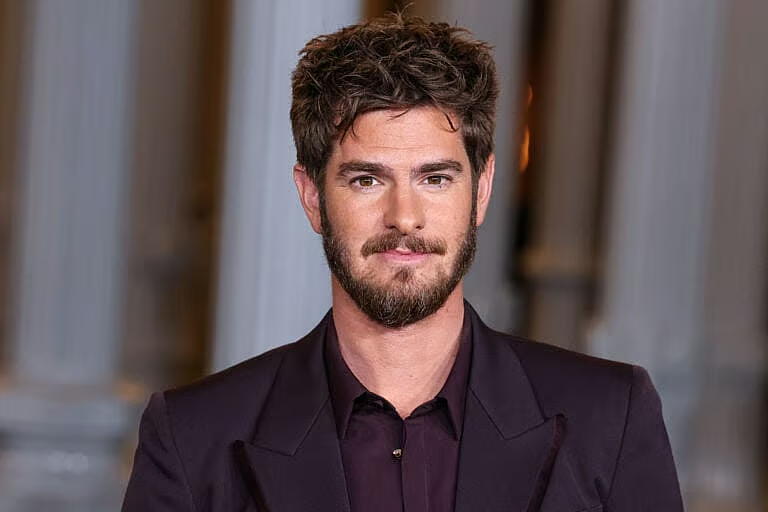
“Spider-Man” star Andrew Garfield will not forget this milestone collaboration in a hurry!
The filmmaker has made ground-breaking movies and won millions of hearts on his acting journey, but only a few records can break the one he holds for appearing alongside Claire Foy twice.
Andrew Garfield and Claire Foy first appeared in the 2017 flick “Breathe” and have linked up a second time for this soon-to-be-released project, “The Magic Faraway Tree.”

The actor caught up with US Weekly at the screening of the upcoming movie at the New York City Regal Union Square to express how he feels about appearing with Foy.
Declaring her admiration for the filmmaker as an actress, a person, and a brand, Garfield expressed, “I love being her friend, and collaborating with her is a highlight of my career — both times.”
He described her as a rare actor and an even rarer human being who makes everything around her fun and everyone around her happy. He added that acting alongside the legend has somewhat made his craft better.
The British actor gushed about Foy being so full of grace for people, for an experience, and how she never holds on to anything tightly, also teaching her how to do the same.
“She teaches me a lot about letting go of control and letting go of having to micromanage everything. She’s someone who’s very, very happy to go with the flow with things, and I find that quite inspiring,” Garfield concluded.
The Actor’s Co-Star Can’t Keep Calm About His Brilliance

Foy returned the favor about Garfield’s person in a separate interview, praising his talent and brilliance in front of the camera lens. The actress recalled Garfield on set as a warm, silly personality who was fun to be around.
She added that it was very relieving to see the actor in a different dynamic with the kids, and to see him play the character. Garfield himself described working with the kids as very joyful, adding that existing in the countryside during shooting, feeling the air was amazing.
The upcoming movie also reminded the movie star of his childhood, remembering what it is to be connected to the inner child part everyone carries that never goes away. He stated that he feels very lucky to be able to spend a couple of months in the summer with the cast, Foy and the kids, thanks to Simon Farnaby’s incredible script.
Garfield will appear alongside Phoenix Laroche, Billie Gadson, Delilah Bennett-Cardy, Nicola Coughlan, Rebecca Ferguson and Nonso Anozie in the upcoming movie.
Andrew Garfield Previously Took A Break From Acting To Recalibrate

In 2022, the British actor got candid with Variety about taking a much-deserved break from acting to rest and figure out what to do next with his career. This confession came shortly after he scored his second Oscar nomination for his performance in “Tick, Tick … Boom!.”
While he is not displeased about the upward trajectory in his career, he admits that his thirst to be ordinary has remained unquenched for a while. As shared by The Blast, the actor also lost his mother to pancreatic cancer in 2019, which left him in precise agony, making it very difficult to move on.
Garfield, who featured in “Spider-Man: No Way Home” alongside Tobey Maguire to become one of his most successful projects ever, also spoke on his future playing the friendly neighborhood superhero character.
As far as he was concerned back then, Garfield affirmed that he was done embodying that character, despite the fact that he earlier pranked his fans about making an appearance in “No Way Home.”
The 42-Year-Old Attached Some Strong Conditions To His Future As ‘Spider-Man’
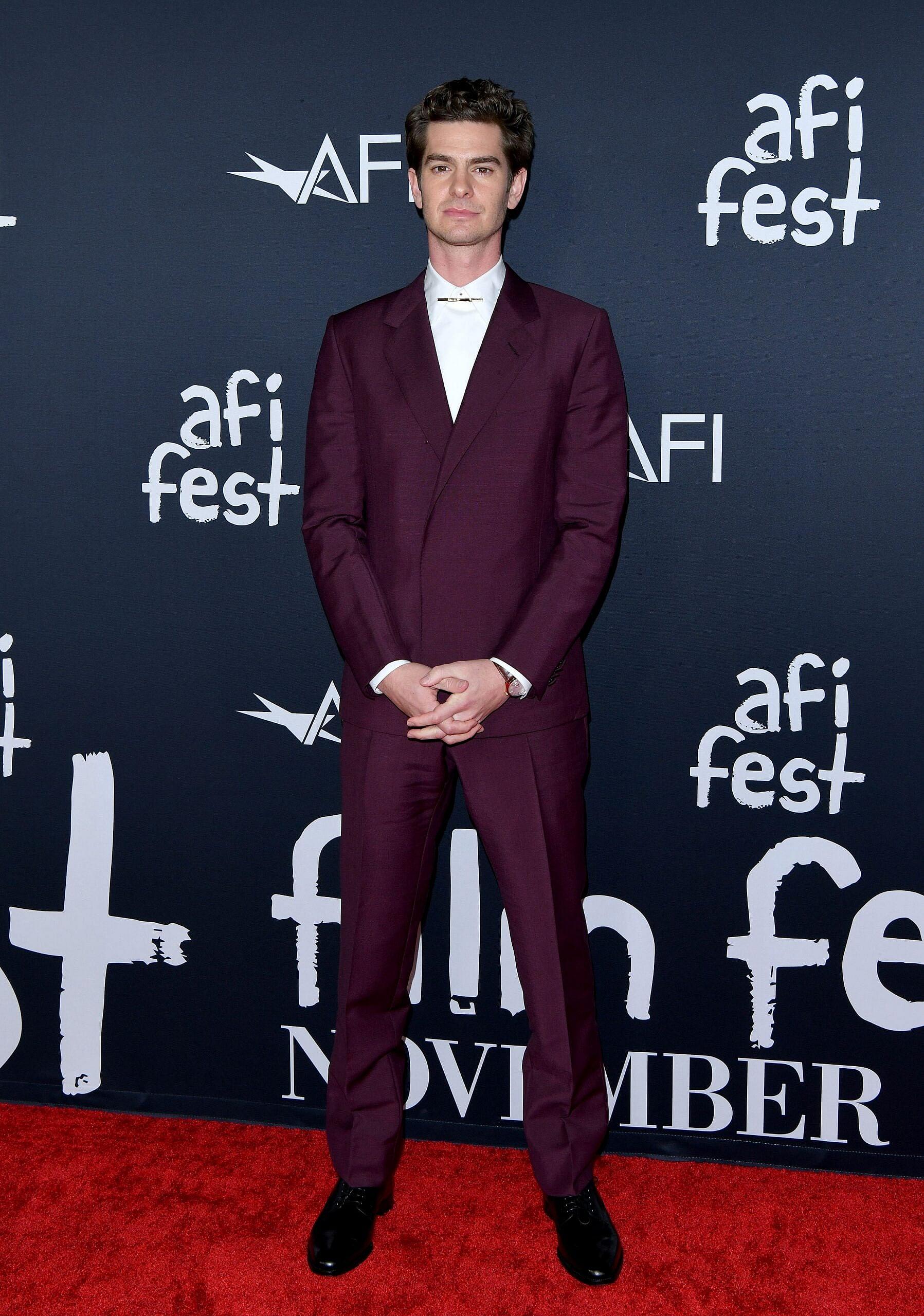
In his interview with GQ in 2025, as shared by PEOPLE, he affirmed that he would not be appearing in the fourth installment of the “Spider-Man” franchise, “Brand New Day.” In the same publication, he added that he might consider returning as Spider-Man if it felt in line with his soul and promised to be fun.
He made the atmosphere lighter, noting that if the paycheck got a bit bigger, it may hasten his consideration process. Garfield joked that he might end up having five kids at some point, and he may need to start saving up for school tuition, and the money from such a sweet deal may just come in handy.
He admitted the same truth in a 2024 interview where he stated that it would take a great concept for him to accept the Peter Parker role again. Nevertheless, he was happy to have been a part of the entire journey, and he would have never had the foresight to do that on his own.
‘Spider-Man: No Way Home’ Still Holds The Franchise’s Record

Garfield’s was part of the movie, which broke the record as the biggest opening post-COVID and the third-biggest opening ever at the worldwide box office, according to Deadline. It trailed right behind 2019’s “Avengers: Endgame,” which earned $1.22B, and 2018’s “Avengers: Infinity War,” which raked in $640.5M at the box office.
For the latest installment of the franchise, “Spider-Man: Brand New Day,” it is projected to get a $450M debut at the worldwide box office, which would be Sony’s biggest global opening ever. It comes after 2021’s Spider-Man: No Way Home, which began with a $600.5M worldwide start, and ahead of 2003’s Spider-Man 3’s $381.6M.
“Spider-Man: Brand New Day” has a Rotten Tomatoes critics score of 89%, right behind the last installment, which grabbed a 93%. The latest installment is also predicted to break several records across Europe and Latin America.
Andrew Garfield will surely give everyone a show when that movie drops!
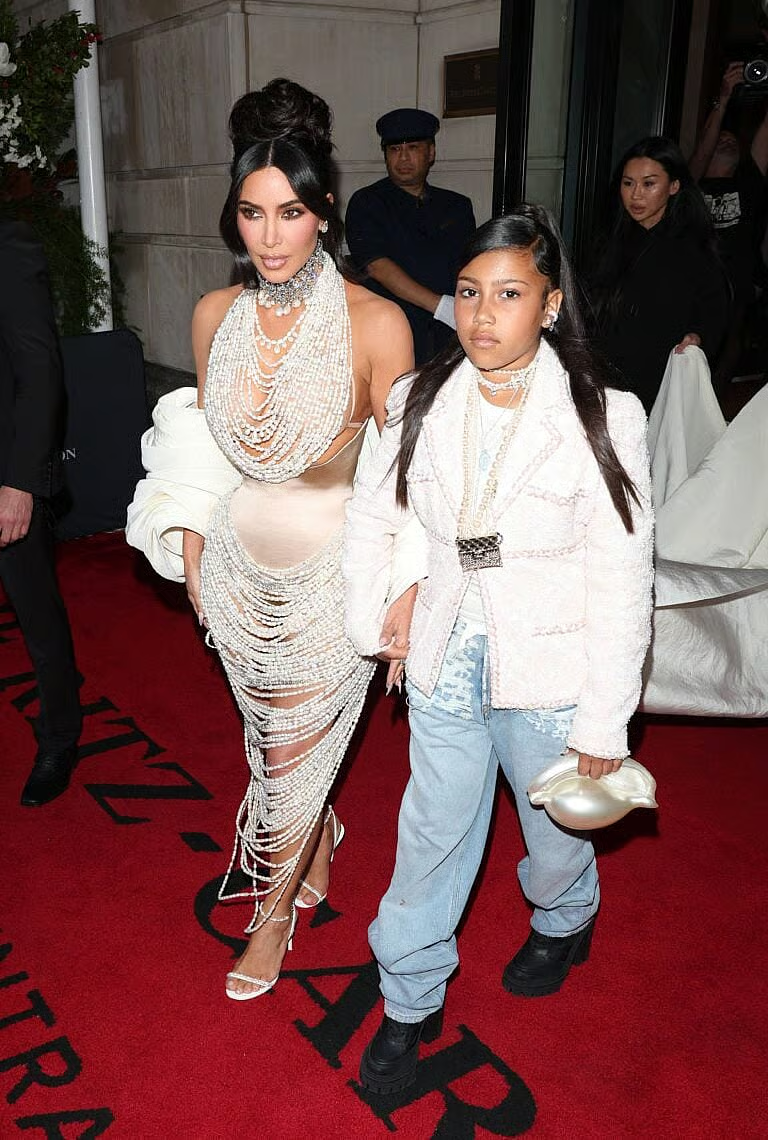
North West has finally addressed the sudden collapse of what would have been her first headlining tour, leaving fans with a promise after multiple scheduled dates quietly disappeared.
The 13-year-old daughter of Kim Kardashian and Kanye West was set to hit the road alongside rapper Molly Santana for the Kimokawaii Tour, but after several shows were canceled, North broke her silence to reassure supporters that although the tour is over, something new is already on the horizon.
Rather than leaving fans guessing, North West took to her Instagram Stories to personally confirm that the Kimokawaii Tour would not be moving forward.
“I was really excited to go on tour w molly santana sadly it isn’t happening anymore but i have something special for u guys see ya soon,” she wrote per the Daily Mail.
The brief message marked the first time the teenager publicly addressed the situation after online speculation intensified over disappearing tour dates.
While she acknowledged her disappointment, she stopped short of explaining why the tour had been scrapped, instead choosing to leave fans with a hopeful promise about what’s still to come.
The canceled run would have been a milestone for the aspiring performer, marking her first headlining tour alongside rapper Santana with 14 scheduled stops across North America beginning August 5 in Dallas.
Santana Apologized Directly To Ticket Holders
Shortly after North West’s statement, Santana shared a longer message expressing regret to fans who had already purchased tickets and made travel plans.
“To everyone who bought tickets to the tour i sincerely apologize i know a lot of you have taken time out of your busy schedules and spent your hard earned money planning to be there,” she wrote on Instagram Stories.
Santana said connecting with her audience remained one of the most rewarding parts of being an artist. “Nothing makes me more happy than the opportunity to share more amazing memories with you all and i hope to see you soon,” she continued.
Closing her message, the rapper thanked supporters for their patience and loyalty. She noted, “You are all so greatly appreciated and please know that i never take your time or support lightly i love yall so much & i promise i will make this one up to you.”
North West Leaves Fans Waiting For Her ‘Something Special’
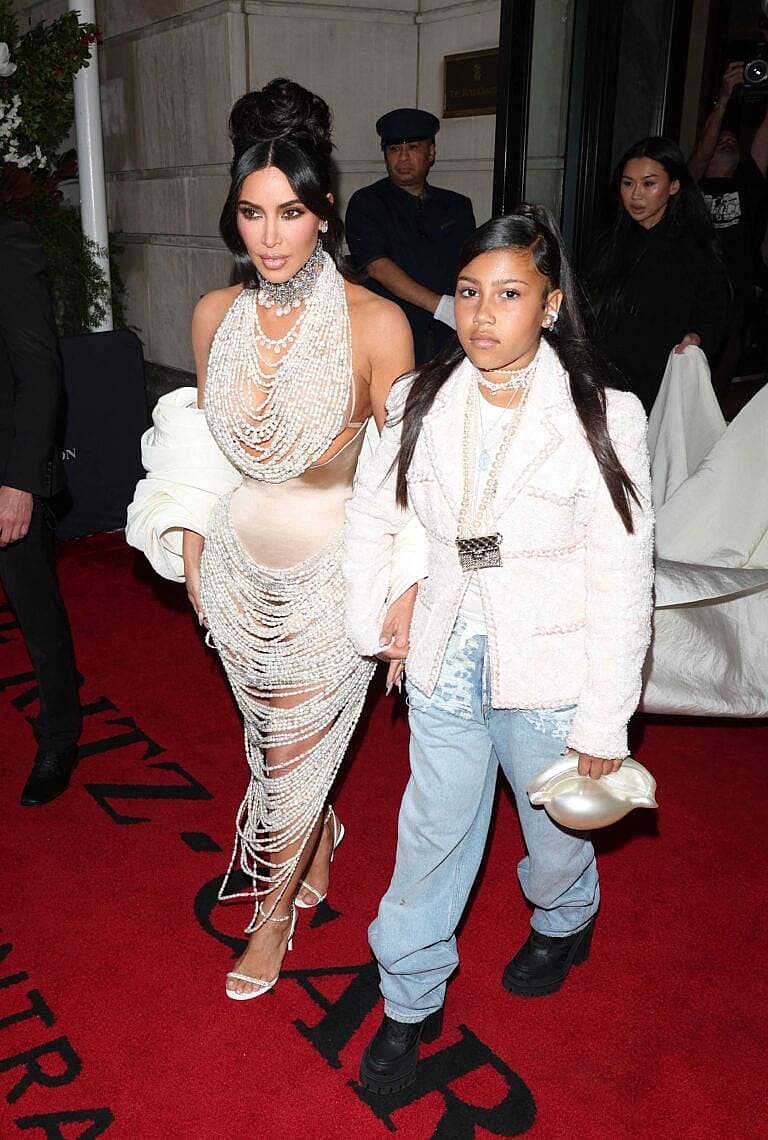
While North declined to explain why the Kimokawaii Tour was called off, she made it clear that she wasn’t planning to stay away for long.
Her promise of “something special” immediately sparked curiosity among fans, especially as the tour continued disappearing from official platforms.
Ticketmaster has since marked the August 5 Dallas opener and the August 17 Toronto show as canceled, while AXS removed the August 27 Los Angeles date from its listings.
The Kimokawaii Tour page has also been taken down from Santana’s official website, further signaling that the North American run has been shelved.
Neither artist has indicated whether the canceled performances will be rescheduled, leaving fans eagerly awaiting details about the project North hinted is already on the horizon.
North Reached A Major Milestone Before Her Tour Plans
If North West’s latest promise is any indication, she isn’t letting the canceled tour define her next chapter.
Fans already got a preview of her growing confidence as a performer when she stepped onto a major festival stage for her first solo set.
In June 2026, the then-12-year-old made her first-ever solo music festival appearance at Lyrical Lemonade’s Summer Smash in Bridgeview, Illinois, stepping onto the stage in an all-black Balenciaga outfit, oversized sunglasses, and blue pigtails.
During the set, North performed “TALKING,” her collaboration with her father Kanye, along with songs from her debut EP, “N0rth4Evr.”
The crowd enthusiastically cheered her on as both of her parents celebrated the milestone from the audience and on social media.
Kim later shared backstage photos and performance clips on Instagram, while Kanye reposted videos of the performance on his own account.
North West’s Biggest Cheerleaders Are Her Own Family
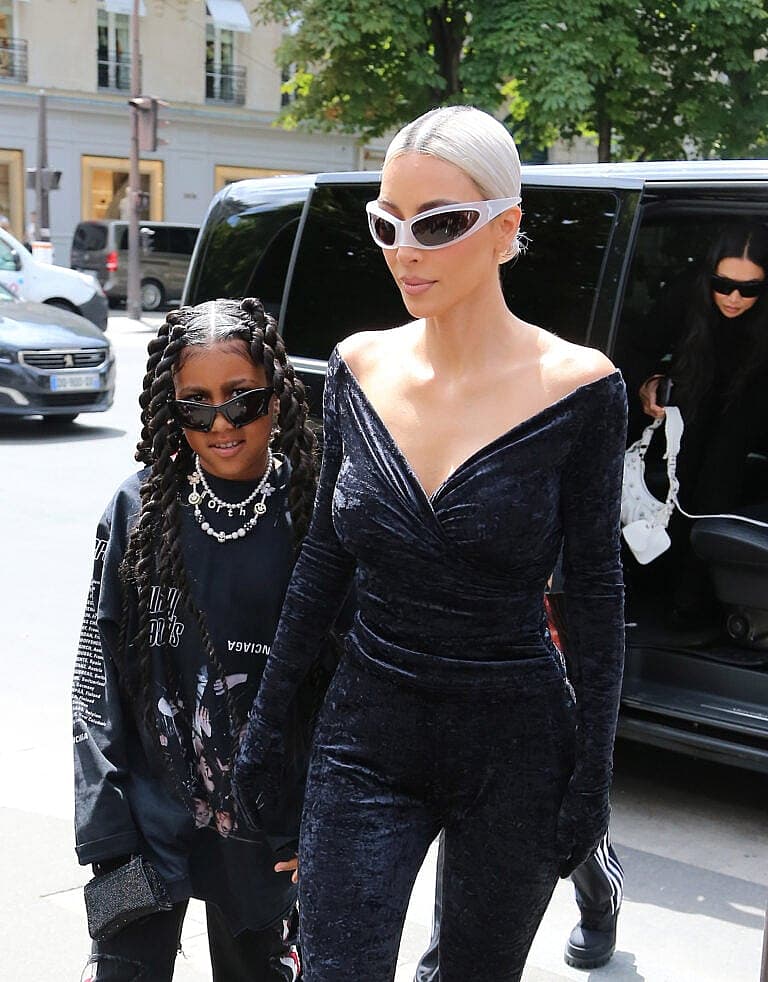
North’s growing confidence as a performer has been matched every step of the way by unwavering support from the Kardashian-Jenner family.
When she released her debut EP, “N0rth4evr,” in May, her famous relatives turned the milestone into a family celebration.
As PEOPLE reported, North gave fans a glimpse of the festivities on Instagram Stories, showing off balloon displays spelling out the EP’s title and other decorations Kim arranged at home as snippets of “Aishite” played in the background.
Elsewhere, Kris Jenner, Khloé Kardashian, and Rob Kardashian each took to Instagram Stories to share screenshots of themselves streaming the six-track project, with Rob making one of his rare social media appearances to publicly celebrate his niece.
The support continued offline during North’s two-day Complex LA pop-up event, where Kanye greeted fans, posed for photos, and signed merchandise before Kim later joined the celebration.

Us Weekly has affiliate partnerships. We receive compensation when you click on a link and make a purchase. Learn more!
Everyone wears sandals with dresses. Kate Hudson, however, wore a unique shoe style that not only appears more elevated, but also transitions beautifully from summer to fall. We found her luxe look on sale for only $40!
While posing with her daughter in Athens, Greece, Hudson wore a silky blue dress and jelly-looking woven flats. Her nude shoes have a subtle hint of shine, as do these Amazon wonders. They’re a triple threat of fashionable style, hitting three major trends at once. As one reviewer puts it, they’re “an affordable way to get the jelly look, mesh look and ballet slipper all in one.” Sold!
Get the Cushionaire Siesta Lattice Jelly Flats for $40 (was $60) at Amazon! Please note, prices are accurate at the date of publication but are subject to change.
These Cushionaire Siesta Lattice Jelly Flats nail Hudson’s vibe to a T. And no, they aren’t the sticky, sweaty jellies you may remember from the ’80s. The revived style is refined, cushioned and genuinely wearable, so don’t be surprised if you choose these slip-ons daily.

Nothing elevates an outfit quite like an expensive-looking bag, and Chrissy Teigen wore the most luxe version of all. Her Bottega Veneta crossbody costs thousands, but we found the signature look for only $42 on Amazon. Seriously, nobody will know the difference! During a European family vacation in Croatia, Teigen stepped out in the most […]
The woven design gives them a contemporary flair while the round toe keeps things classic. Hence, these chic flats are polished enough to wear with wide-leg pants, midi skirts and silky dresses à la Hudson, and you’ll probably do all of the above.
One Amazon shopper said they “needed something other than flip-flops or sneakers” and wrote that “these are perfect.” Another happy fan shared, “Not only are [they] the cutest jelly shoes, but [they’re] the most comfortable ever! I have tried several jelly shoes but [they] always hurt my feet. I can walk miles in these.”
Hudson makes classy look easy because — with the right pieces — it actually is. All you need is your favorite dress, these trendy flats and the confidence to rock the combo. We’re totally here for the jelly flats renaissance.
Get the Cushionaire Siesta Lattice Jelly Flats for $40 (was $60) at Amazon! Please note, prices are accurate at the date of publication but are subject to change.
Looking for something else? Explore more chic shoes, and don’t forget to check out all of Amazon’s Daily Deals for more great finds!
UsNow Summer Sale Alert: These Chic Fashion Finds are over 30% off – Plus Free Shipping
Welcome to summer with our biggest sale of the year. This summer’s chicest dresses, tops and swimsuits are all over 30% + free shipping. Inventory is limited so hurry before they’re gone.

If you’re seeing Nicole Kidman‘s woven shoe style all over your feed, same. Whether you call it a sneakerina, ballet sneaker, ‘jazz shoe’ or anything in between, there’s no denying it appears expensive. We found Kidman’s luxe look hiding on Amazon! For the 2026 Wimbledon Tennis Tournament, Kidman paired a cream-colored power suit with ballet […]
2026 has already been a rampaging year for cinematic excellence, with everything from universe-traversing adventure epics like Project Hail Mary to psychologically chilling indie box office hits like Obsession. It shapes as being a monumental year for fantasy in particular, with titles like The Odyssey, Toy Story 5, and even HBO’s small-screen exploits like House of the Dragon and A Knight of the Seven Kingdoms highlighting the full emotional scope of the genre.
This booming interest in fantasy stories presents a wonderful opportunity for movie lovers to indulge in cinema’s rich history in the genre as well. Whether it’s due to thematic similarities between past classics and cultural hits of this year or celebrating major anniversaries of some of fantasy film’s greatest ever titles, these fantasy masterpieces are all must-see movies in 2026.
‘The Odyssey’ (2026)

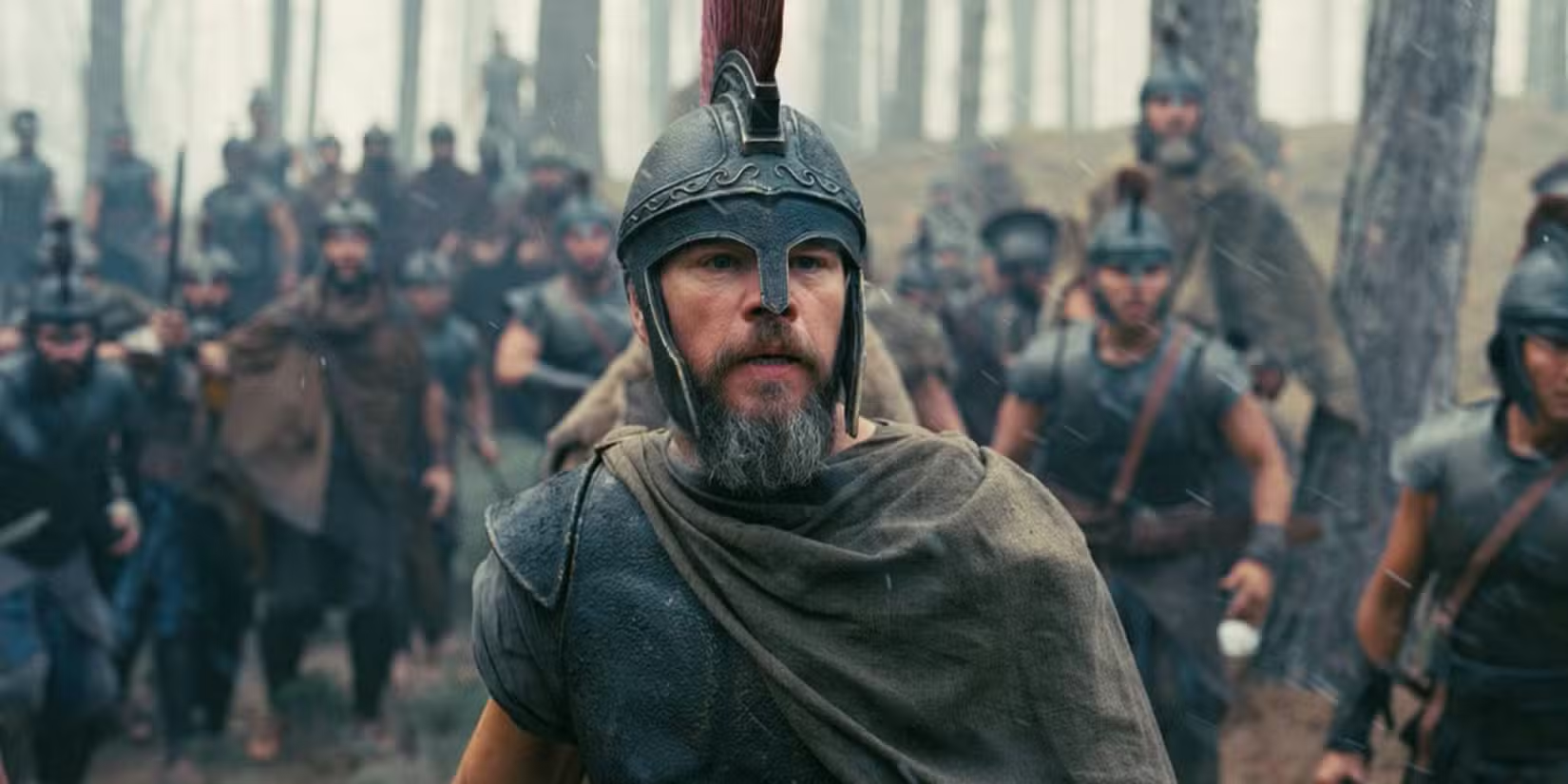
It could be presumptuous to herald The Odyssey as an instant classic, but its widespread fanfare and universal critical acclaim certainly signal that Sir Christopher Nolan’s latest movie will be discussed for many years to come. Powered by the filmmaker’s trademark commitment to practical filming, Homer’s epic poem is brought to the screen with an unmistakable sense of gravitas that stems from its commanding ensemble cast as much as it does from its stunning visuals and bold adaptive storytelling.
Every step of Odysseus’s (Matt Damon) famous journey is depicted with astute craft and imposing magnitude. The Odyssey has enshrined itself as not only the must-see cinematic event of the year, but as one that demands to be watched on the biggest screen possible. Whether it will come to be viewed as Nolan’s greatest film is yet to be seen, but it is undeniable that it features every bit of the gripping cinematic brilliance and enormous scale that have made him the defining director of the 21st century thus far.
‘Nostos: The Return’ (1989)

While it isn’t a traditional classic of mainstream cinema, Nostos: The Return is something of a revered gem as far as international arthouse movies go, and there has never been a better time to revisit it than right now. Adapting The Odyssey, it follows Odysseus’s (Luigi Mezzanotte) voyage home after the Trojan War. However, it’s more of a spiritual exploration of themes of memory, the passage of time, and humanity’s complex relationship with nature rather than a narrative-driven story.
Dialogue is minimal, and what dialogue there is is a made-up concoction of ancient Greek, Sanskrit, and Latin; the bold creative decision allows the visual storytelling and cinematic poetry to take center stage. While it understandably won’t appeal to everyone, those who love Nolan’s interpretation of The Odyssey and want to delve deeper into Homer’s world and themes would do well to find Nostos: The Return to explore the story in a completely different fashion.
‘The Lord of the Rings: The Fellowship of the Ring’ (2001)

Originating from the mind of J. R. R. Tolkien, the stories of Middle-earth have become a defining masterpiece of high fantasy storytelling. 2026 marks a significant year for the franchise in media, as it marks the 25th anniversary of the groundbreaking release of The Lord of the Rings: The Fellowship of the Ring. The magnificent introduction to the fantasy realm for many, it immerses viewers in the majesty, wonder, and danger of Middle-earth.
The film sees Frodo Baggins (Elijah Wood) and the fellowship begin their journey to destroy Sauron’s evil ring of power in the fires of Mount Doom. Beautifully handled by Sir Peter Jackson and his team, the Oscar-winning film is viewed by many as being the single greatest fantasy movie of all time, an utterly enchanting masterpiece that has proven ageless with its emotional depth and technical mastery.
‘Harry Potter and the Sorcerer’s Stone’ (2001)

Harry Potter and the Sorcerer’s Stone is particularly relevant this year, with fans eagerly awaiting the HBO adaptation of this esteemed fantasy series. However, an incredibly high bar has been set by the original 2001 film, which found a perfect balance between childlike wonder, enrapturing adventure, and detailed worldbuilding to be utterly enchanting from start to finish.
From its humor and charm, ability to marry backstory and character depth with propulsive entertainment, and rich allure that is as universally accessible as it is infectious, Harry Potter and the Sorcerer’s Stone is a true masterpiece of the genre. Whether it’s diehard fans of the series returning to it for the umpteenth time, adults returning to a childhood favorite decades later, or even a first-ever viewing, the first Harry Potter movie deserves to be celebrated anew in 2026.
‘Pan’s Labyrinth’ (2006)

Pan’s Labyrinth is the perfect mix of fairy tale awe, dark fantasy horror, and real-world drama. Complimented by director Guillermo del Toro’s trademark Gothic style, it unfolds in Francoist Spain as young Ofelia (Ivana Baquero), along with her heavily pregnant mother, relocates to a remote farmhouse at the behest of her brutish stepfather, a military captain hunting down rebels. Amid the woodland, Ofelia meets a faun who tells her she can return to her rightful place as the Princess of the Underworld if she completes three dangerous tasks.
While it indulges in moments of shocking violence and visceral terror, Pan’s Labyrinth excels. At its heart, it maintains a sense of fairy tale innocence, beautifully complemented by outstanding visuals and a spellbinding score that brings the fantasy allure of the picture to vibrant life. With 2026 signaling 20 years since the movie premiered, now is as good a time as any to rewatch the morbid, mystifying, and majestic masterpiece.
‘Spirit: Stallion of the Cimarron’ (2002)

In the Chinese calendar, 2026 is a remarkably rare year as, for the first time since 1966, it stands as the year of the Fire Horse. While the cult classic animated gem Spirit: Stallion of the Cimarron may not feature any stallions ablaze, it is the perfect movie to celebrate this incredibly rare milestone. It captures the spirit of the zodiac, which embodies intense passion, strong independence, fearless courage, and nobility in leadership.
Combining fantasy beats with a rich Western setting, Spirit follows mustang stallion Spirit (Matt Damon) as he roams the wild expanses of the American frontier, forming an unlikely friendship and finding love while becoming an unsung hero of the Old West. The 2002 DreamWorks Animation release is largely a forgotten gem of the form, but it remains a childhood favorite for many who grew up in the era, thanks to its tender balance of historical adventure, kid-friendly fantasy, and animated splendor.
‘Labyrinth’ (1986)

Even in such a vast and eclectic field of cult classics produced by the 1980s, Labyrinth is a standout, offbeat gem that mixes wondrous puppetry and dark fantasy edge. Bolstered by David Bowie’s unforgettable performance as the Goblin King, it follows young Sarah (Jennifer Connelly) as she ventures into the villain’s labyrinth, having to successfully navigate the mind-boggling maze in 13 hours to save her baby brother.
Despite its middling box office performance and mixed reviews, Labyrinth has emerged as an infectious fan favorite that has aged gracefully. The practical creature designs and Jim Henson’s impressionable puppetry have become tactile and unique in the modern world of CGI effects that strive for realism. Picture theaters the world over will be hosting re-screenings this year to commemorate the film’s 40-year anniversary, making it a perfect time for fans to revisit the cult gem as well as for intrigued fantasy lovers to experience the movie for the first time.
‘Excalibur’ (1981)
When did fantasy cinema stop looking like this? Embracing a sense of stylized eccentricity, John Boorman blends gleaming chrome armor with the gorgeous landscapes of Ireland and eye-catching lighting techniques to conjure a visual spectacle of irresistible majesty. However, far more than just a stunning exercise in style, Excalibur also thrives as one of the best retellings of Arthurian legend ever put to screen, one that isn’t afraid to stray into the moral foibles of dark fantasy to bring a distinct edge to the familiar story.
Even as its efforts to cram the entirety of Arthurian lore into its 141-minute runtime sometimes lead to clunky and hurried storytelling, Excalibur still absorbs viewers with imposing, dreamlike beauty and indulgent excess. It also features an unforgettable operatic soundtrack, several captivating action sequences, and an ensemble cast of young upstarts who went on to become some of the biggest stars of their generation. Excalibur is a treat of ‘80s fantasy awe that is arguably even more enthralling 45 years on.
‘Faust’ (1926)

Anniversaries are a big deal in cinema. From minor milestones like 10 or 15 years to more substantial landmarks like half-century celebrations, movie lovers always grasp an opportunity to commend the films of yesteryear when such dates arrive. Few movies have had the opportunity to enjoy a centennial sensation, but F. W. Murnau’s silent fantasy classic is one that can hopefully attract some attention, especially given how it delves into religious and moral themes with piercing depth despite not being afforded the luxury of sound.
Instead of dialogue, the German picture leans heavily on ageless expressionist visuals, innovative special effects, and brilliant physical performances. It depicts a grim tale of corruption, redemption, and deceit following a misguided old alchemist led astray by a demon as he tries to help his plague-riddled village. Derived from traditional folklore tales and a portion of Johann Wolfgang von Goethe’s 1808 play, Faust endures even 100 years later as a striking fantasy-horror movie that all cinema lovers should seek out.
‘Spirited Away’ (2001)

Another magnificent triumph of animated cinema that is revered by many as being the greatest picture the form has ever seen, Spirited Away is a masterclass in worldbuilding, visual style, and fairy tale storytelling that stands as a magnum opus in Hayao Miyazaki’s illustrious career. Produced by Studio Ghibli, the Japanese film follows a young girl as she finds herself lost in a magical realm and having to work under the thumb of supernatural beings to save her parents, who have been turned into pigs.
Striking a deft balance between sheer otherworldly wonder and softly subdued eeriness, Spirited Away is a transfixing viewing experience, an enrapturing immersion into one of the most magical worlds ever conceived for cinema that is both exciting and wicked. Marking 25 years since the animated family classic was first released, 2026 is a perfect opportunity to return to Miyazaki’s majestic fantasy imagination.
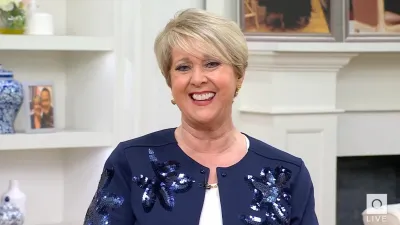
QVC host Rick Domeier is ready to begin a new chapter away from the shopping network.
“At the end of the year, I’ll be going down a very different road — a road I’ve never been on before. It’s called retirement road,” Domeier, 65, exclusively shared with Us on Wednesday, July 29. “I heard it’s fun, and I’m going to be retiring at the end of this year, end of December.”
The longtime host — who joined QVC in October 1994 — officially announced the news live on air during his Rick St. Nick show on Thursday, July 30, as part of QVC’s Christmas in July finale.
According to Domeier, the decision was made after some long, thoughtful chats with his wife, Amy.

After 37 years with QVC, Mary Beth Roe hosted her final show on the shopping network. “Everything in the show tonight is something that I chose and it really is special,” Roe, 65, shared with viewers during My Time with Mary Beth — Retirement Celebration on Friday, March 21. “The people that are here tonight […]
“We both agreed that now’s the perfect time for me to kind of cruise down retirement road while most of this engine is still functioning,” he joked. “That’s going to give me the next few months to thank the incredible people I work with backstage, the producers, the directors, the on-air talent and thank the most important person at QVC, which is the QVC customer, for having been with me and accepted me for what will be 32 years.”
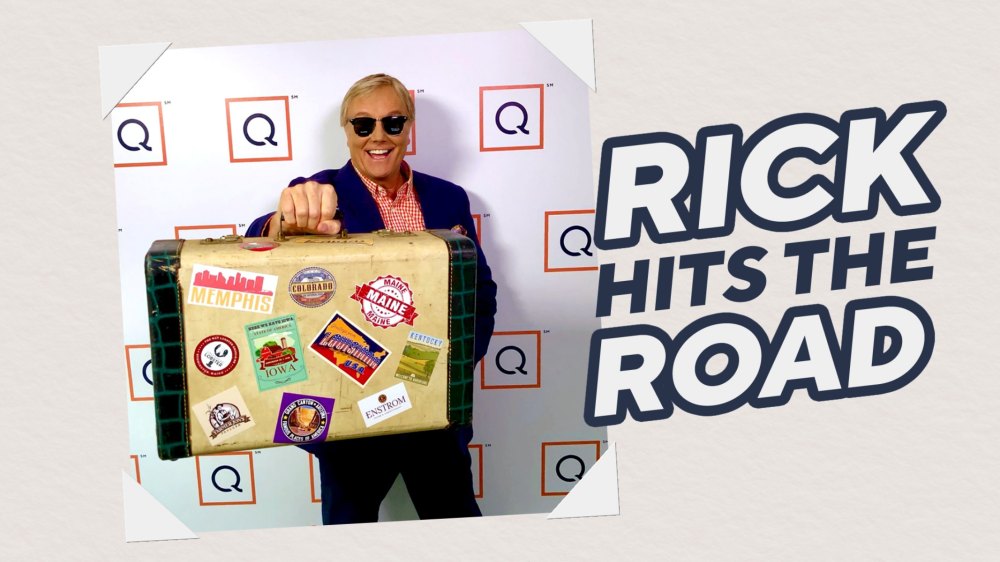
Rick Domeier Courtesy of QVC
In his final months on air, Domeier certainly won’t be slowing down.
While he looks forward to hosting special shows with Valerie Parr Hill, spotlighting food brands like Corky’s and Rastelli and highlighting beautiful jewelry with David Markstein, Jill Bauer and JAI, there’s something new Domeier will be launching.
“They’re giving me a new show. It’s called Rick Hits the Road. We’re going to do some broadcasts from different cities,” he teased. “The first stop is New Orleans. That’s coming up next week. It’s going to be with Jimmy Stovall and Ali Carr and the crew, and we’re going to meet the QVC customer. More stops to come.”
When looking back on his QVC journey, Domeier realized viewers watched him get married, become a father of two sons and work with several celebrities, including the late Joan Rivers.
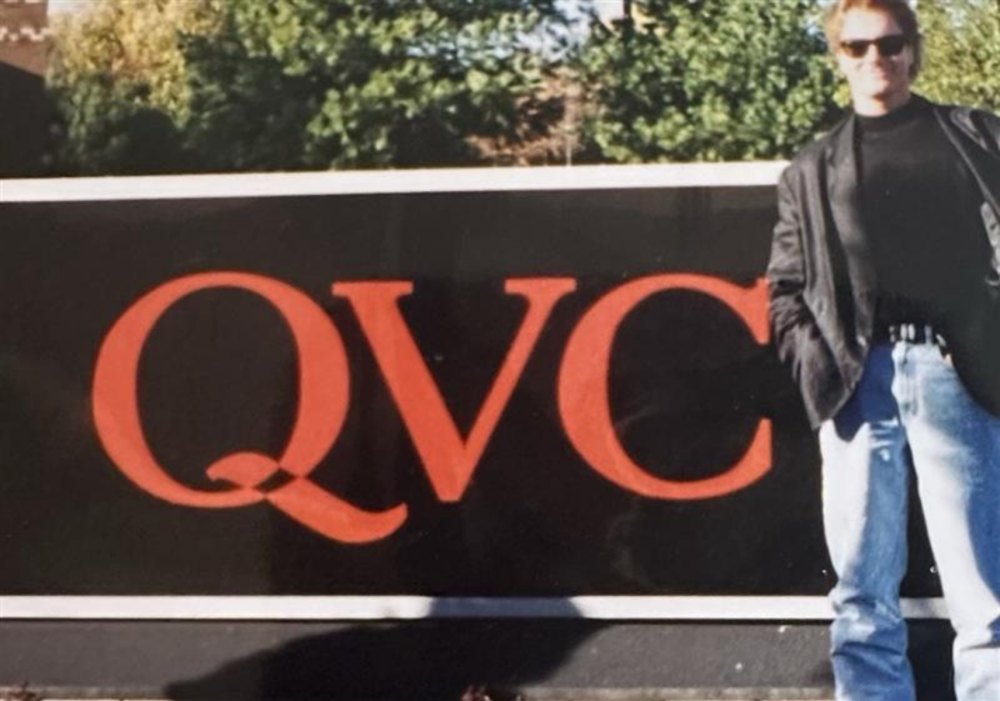
Rick Domeier Courtesy of QVC
As he looks toward the future, Domeier is excited to spend quality time with family and friends — without the thought of an alarm clock to kick off a Today’s Special Value.
“My wife and I are gonna spend some time together. … We have a lot of travel ideas,” he teased. “There’s also a wedding coming up with my son that’s coming up in 2027. There’s also an opportunity to reconnect with friends. I also want to stay in touch with the team that I work with now. I’m really into fitness and longevity for obvious reasons. I want to keep that going, so it’s all about exploring and learning and then sharing. I kind of want to document how this goes. I want to find out what retirement is all about.”

Some QVC shoppers can’t help but make a connection with some of the network’s products — and hosts. Over the years, viewers have developed close bonds with longtime program hosts who have a gift of selling everything from fashion and beauty products to food and electronics. Every so often, some of the program hosts decide […]
While it’s too soon to announce an official retirement show, QVC viewers know the network loves to honor their talented hosts with special programs before they say goodbye.
If Domeier were a betting man, he predicts there’ll be “moments” to remember.
“There’ll be clips. There’ll be people stopping by,” he predicted. “I do think that there’s going to be a live audience show or two. I want that to happen. I want it to be in person. I want it to be celebratory. I am excited about this next chapter. I want it to be more fun than sad.”

Business58 seconds ago
Shabaz Asks: Are Billionaires Bad?

Crypto World2 minutes ago
Blockchain-Powered Invoice Financing: Unlocking Faster Cash Flow for Businesses

Entertainment3 minutes ago
Sara Gilson’s Ex-Husband Lyle Covering Funeral Expenses


-

 Fashion7 days ago
Weekend Open Thread: Brooks Brothers
-
 Sports5 days ago
Commonwealth Games boxing: Jadumani Singh seals dominant 5-0 win over Pakistan’s Sumama Rehman to enter quarter-finals | Commonwealth Games News
-

 Business2 days ago
Why Trees Belong on the Risk Register
-

 Tech4 days ago
Intel is reversing course and bringing hyper-threading back to its server chips
-

 Crypto World6 days ago
Ripple bought a bank in pieces. The $4 billion audit
-

 Politics4 days ago
Luke Littler dismantles Gerwyn Price to retain title in Blackpool
-
 Entertainment7 days ago
A New Post-Apocalyptic Gundam Anime Series Blasts Into SDCC
-

 Politics3 days ago
The Part of the Electric Transition Nobody Wants to Discuss
-

 News Videos5 days ago
BITCOIN JUST ENTERED THIS CRITICAL ZONE…
-

 Business2 days ago
Major shareholder moves on Canyon
-

 Crypto World5 days ago
XRP Ledger adds $2.6B as RWA inflows rank second
-

 News Videos1 day ago
Bitcoin Enters the 3rd Stage of the Bear Market
-

 Politics5 days ago
Spain sweeps the board at 2026 World Cup with individual awards
-
 Entertainment3 days ago
‘Stargate’ Creator’s New Sci-Fi Series Returns for Season 3 Tomorrow
-

 Entertainment5 days ago
Sara Gilson Killed By Husband After Viral “Pedophile” TikTok Video
-

 Crypto World3 days ago
Kraken Enables Retail Access to Jersey Mike’s IPO via Tokenized Shares
-

 Tech6 days ago
Anthropic launches Claude Opus 5, a cheaper AI model for coding, agents and enterprise workflows
-

 News Videos3 days ago
Claude: Build Financial Dashboards in Minutes (2026)
-

 Tech3 days ago
New macOS Sequoia & Sonoma security updates for older Macs
-

 Politics20 hours ago
Luke Littler’s dominance sparks GOAT debate
You must be logged in to post a comment Login