
Entertainment
Actress Breaks Silence On Sydney Sweeney, Zendaya ‘Feud’

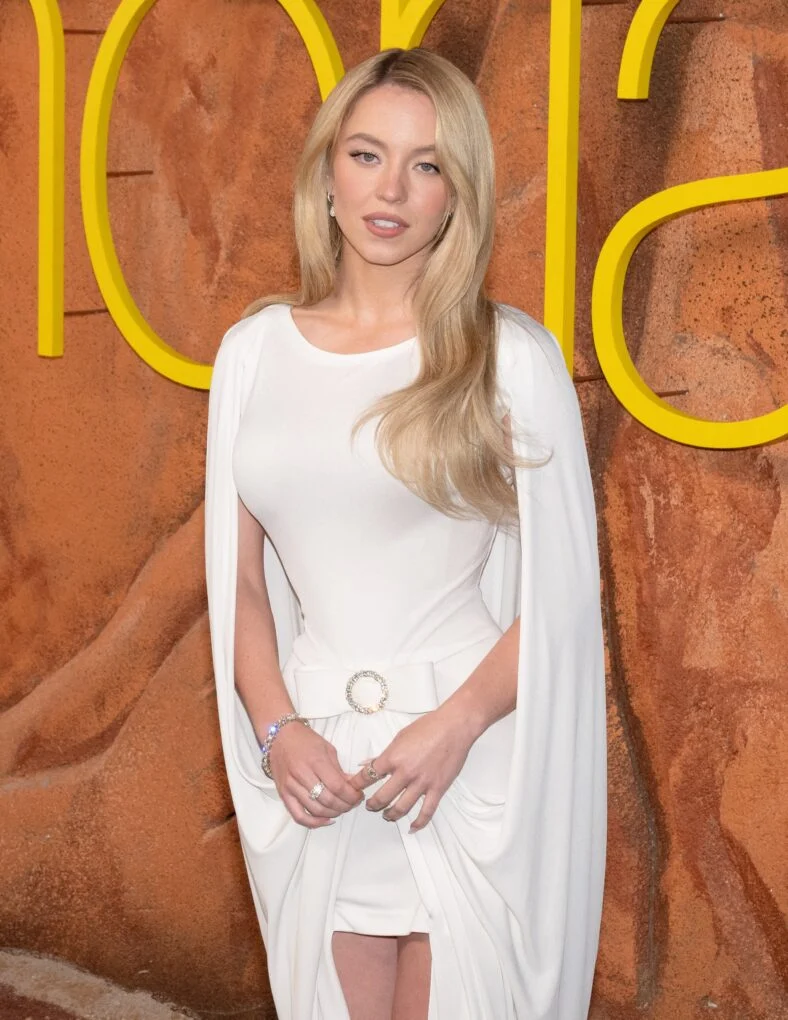
HBO’s “Euphoria” is back, but instead of just storyline buzz, the spotlight is once again landing on rumored off-screen drama between its biggest stars. And now, an actress from the hit show is setting the record straight amid ongoing speculation about tension between Sydney Sweeney and Zendaya.
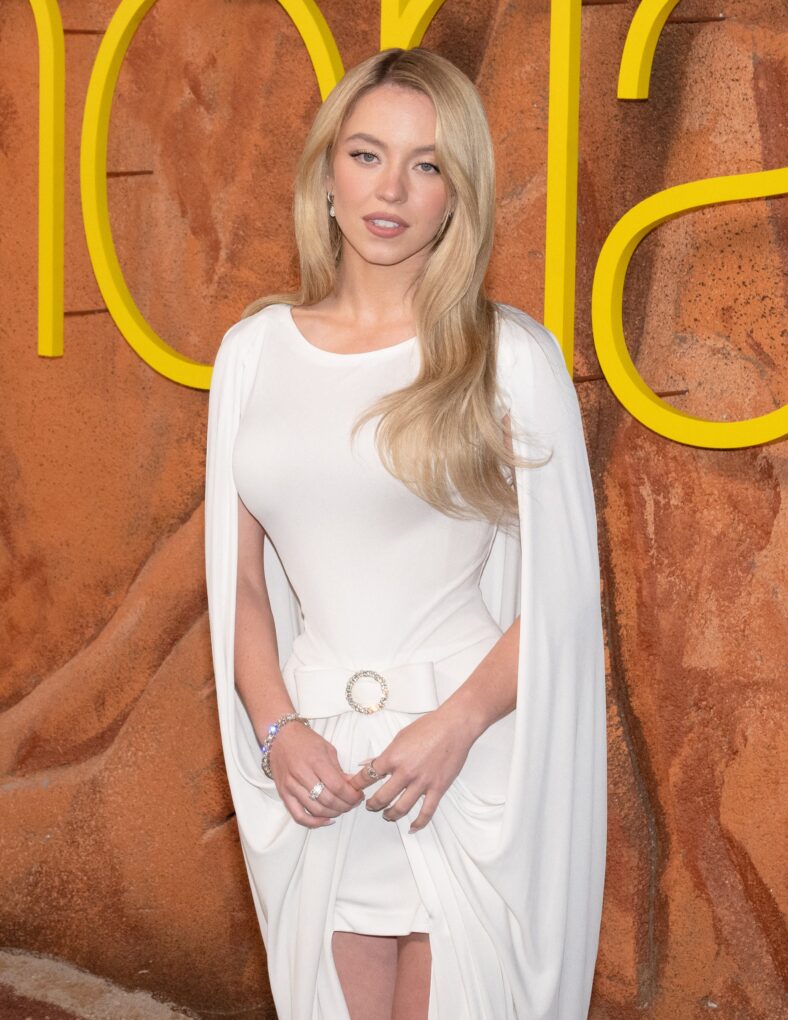
Jessica Blair Herman, who appears in the series as a neighbor to Sweeney and Jacob Elordi’s characters, pushed back on the rumors during a recent interview. “They really did,” she said of the cast getting along. “And I’m not just saying that.”
Herman doubled down, insisting there was “no drama” behind the scenes, adding, “Really, they’ve created this beautiful working relationship, and everyone wants to do the work, to come in and do the job.”
According to Herman, one major factor fueling the rumors is simply how the show is structured. “To be fair, when I was there, they’re not sharing scenes,” she explained. “Their storylines are very separate, you’re shooting on different days and stuff.” That separation has likely contributed to fan speculation, especially as viewers continue to analyze every public interaction between the two actresses.
‘Euphoria’ Actress Insists Zendaya And Sydney Sweeney Have ‘No Drama’
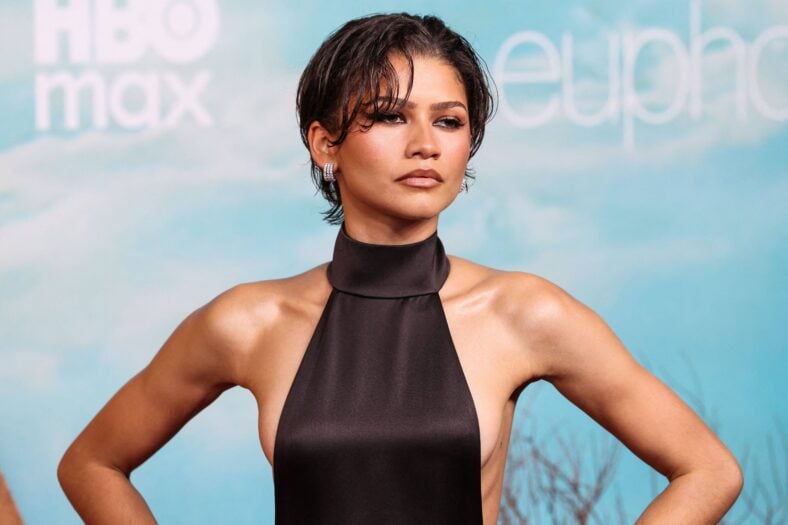
Rumors reignited earlier this month at the Season 3 premiere, where social media users claimed Sweeney and Zendaya appeared to avoid each other on the red carpet. Clips quickly circulated online, with fans dissecting body language and interactions, including moments where Zendaya was seen chatting with Hunter Schafer while seemingly not engaging with Sweeney.
The chatter only intensified after Sweeney was noticeably missing from a Season 3 cast photo, though a source later claimed she was filming at the time. Still, the moment added fuel to years-long whispers of tension, which have also been linked to rumors involving Zendaya’s boyfriend, Tom Holland.
Sydney Sweeney Slams ‘MAGA Barbie’ Label

Beyond feud speculation, Sweeney has also faced online scrutiny over her perceived political stance, with some critics labeling her “MAGA Barbie.”
Earlier this year, she addressed the controversy, pushing back against how she’s been portrayed. “I’ve never been here to talk about politics. I’ve always been here to make art, so this is just not a conversation I want to be at the forefront of…” she said. “I think because of that, people want to take it even further and use me as their own pawn.”
Sweeney also admitted the situation has been frustrating to navigate. “I haven’t figured it out. I’m not a hateful person. If I say: ‘That’s not true,’ they’ll come at me like: ‘You’re just saying that to look better.’ There’s no winning. There’s never any winning,” she said. “I just have to continue being who I am, because I know who I am. I can’t make everyone love me. I know what I stand for.”
Zendaya has also been vocal about her views in the past, including a 2020 Instagram post on voting rights where she wrote, “Vote this MF out.”
‘Euphoria’ Season 3 Sparks Backlash Over Sydney Sweeney’s Controversial Cassie Scene
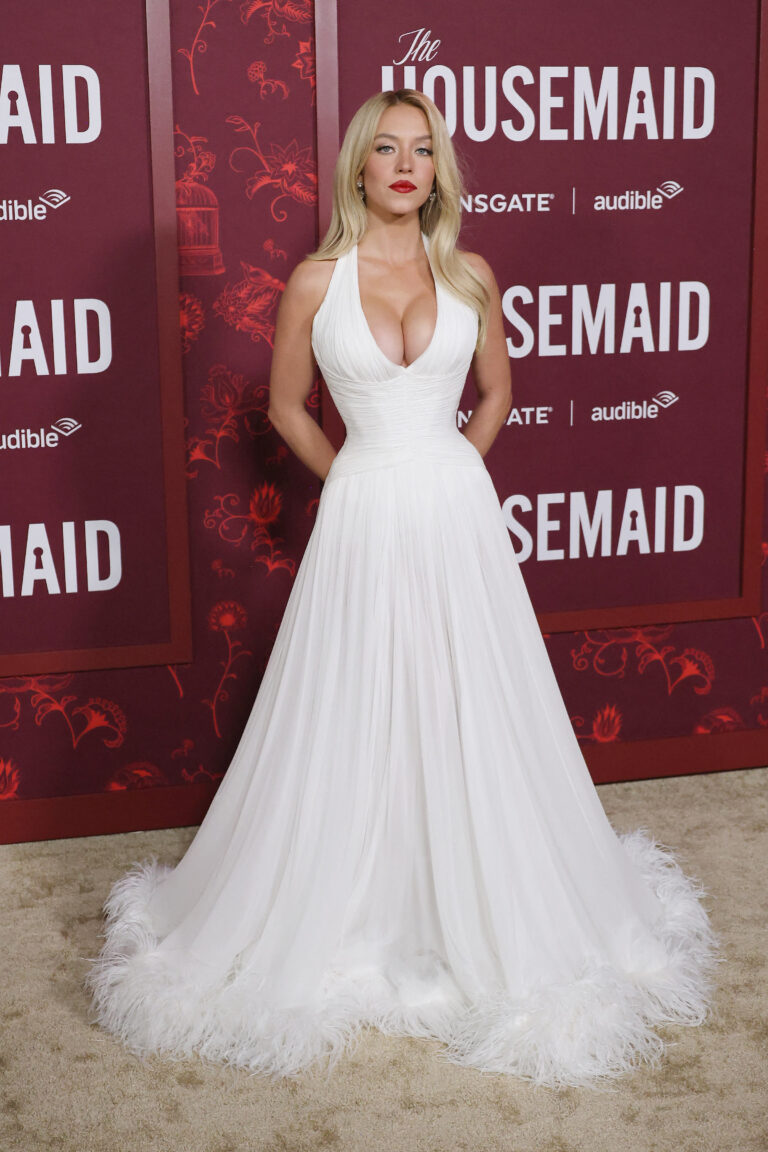
The off-screen chatter isn’t the only thing stirring debate. “Euphoria” has already faced backlash, which started just one episode into Season 3. Fans quickly sounded off online over a controversial scene involving Sydney Sweeney’s character, Cassie, with many criticizing the moment as over-the-top and uncomfortable.
In the episode, Cassie is seen dressed as a dog while creating content for her followers, later telling Jacob Elordi’s Nate that she wants to start an OnlyFans account to fund their wedding, a plot point that immediately sparked debate.
‘Euphoria’ Creator Sam Levinson Defends Controversial Scene

Show creator Sam Levinson addressed the controversy, explaining the scene was intentionally designed to feel jarring. “[Cassie] has got her dog house and her little dog ears and the nose, and that has its own humor, but what makes the scene is the fact that her housekeeper is the one filming it,” he told The Hollywood Reporter. “What we wanted to always find is the other layer of absurdity that we’re able to tie into it so that we’re not too inside of her fantasy or illusion. The gag is to jump out, to break the wall.”
Levinson added that the moment was meant to underscore just how disconnected Cassie has become from reality, with the creative team, including cinematographer Marcell Rév, carefully crafting the setting to amplify that unsettling tone.


Congressman Ro Khanna, a Democrat representing California’s 17th congressional district, has expressed disappointment after King Charles III reportedly refused to meet with survivors of convicted child sex offender Jeffrey Epstein.
“It’s very disappointing after the British Ambassador [Sir Christian Turner] told me that the King would talk about the survivors and sex trafficking,” Khanna, 49, told Us Weekly in a Tuesday, April 28 statement — the same day that Charles, 77, was a no-show at a roundtable discussion in Washington, D.C., that united Khanna, 49, with Epstein survivors.
“The King’s failure to acknowledge the pain his brother had caused is a moral failure and emblematic of an elite impunity that is an ongoing affront to survivors,” Khanna added.
Among those in attendance at the roundtable was Sky Roberts, younger brother of Virginia Guiffre, an Epstein survivor who also accused the monarch’s brother, former Prince Andrew, of sexually assaulting her when she was a teen. (Andrew Mountbatten-Windsor has repeatedly denied the allegations.)
Us Weekly has reached out to Buckingham Palace for comment.
Just hours earlier, Roberts, 36, also criticized Charles — who is currently visiting the U.S. upon invitation by President Donald Trump — for not accepting an invitation to the meeting, hosted by Khanna.
“Survivors are here sitting with members of Congress, still fighting to be heard, still pushing for real accountability, while many of the powerful figures connected to these systems remain just out of reach, unable to acknowledge survivors face to face,” Roberts said, per reporting by The Guardian on Tuesday. “You would expect this to be a moment for the king to give a message to the world that he stands with survivors.”

Rep. Ro Khanna of California DANIEL HEUER / AFP
In the immediate hours that followed the roundtable, Khanna also reflected on Charles’ decision to skip the roundtable to members of the press, per reporting by ABC’s Eyewitness News.
“I thought the king owed that to the survivors, given his brother’s serious allegations of abuse, and I thought it would have been an incredible moment and statement to show that it doesn’t matter how much wealth you have, how much power you have,” he said prior to providing a statement to Us. “No human being is dispensable and the survivors deserve justice. He unfortunately declined that request.”
The New York Times reported last week that a lawyer for Charles and Queen Camilla, who joins the king during this U.S. visit, stated that Charles’ omission from the roundtable was due to “ongoing police inquiries” underway in the U.K. and that the king was “unable to meet survivors or comment directly on the matters under inquiry.”
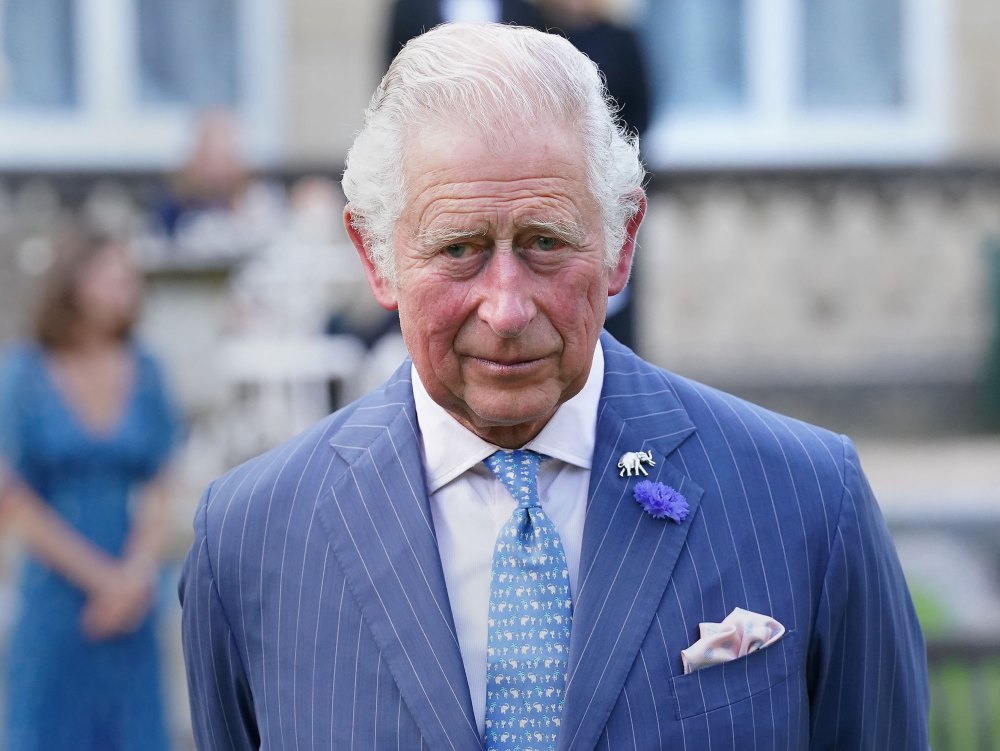
King Charles III Jonathan Brady – WPA Pool/Getty Images
The report, published on Wednesday, April 22, stated that a letter read, “the king and queen have consistently made clear their support for all victims of abuse, wherever and however perpetrated.”
As a result, Charles avoided any mention of Epstein, or his brother’s former relationship with the late billionaire, while addressing Congress earlier on Tuesday.
Epstein, who died by suicide in 2019 while awaiting his trial for child sex trafficking, remains at the center of a criminal investigation currently examining Andrew’s professional activity, specifically allegations the former royal shared confidential government information with the convicted pedophile while he was in public office.


The former prince, who was stripped of his royal titles in October 2025, has repeatedly denied all allegations of misconduct.
If you or someone you know has been sexually assaulted, contact the National Sexual Assault Hotline at 1-800-656-HOPE (4673). https://www.rainn.org/
If you or someone you know is experiencing child abuse, call or text Child Help Hotline at 1-800-422-4453.
https://www.childhelphotline.org/
Entertainment
“Stranger Things: Tales From '85” scores quick season 2 renewal, will return sooner than expected
:max_bytes(150000):strip_icc():format(jpeg)/Stranger-Things-Tales-From-85-Luca-Diaz-Brett-Gipson-020226-facf85253f6c43ae815fab9f7fb2abf7.jpg)
The animated “Stranger Things” spinoff was just released last week.
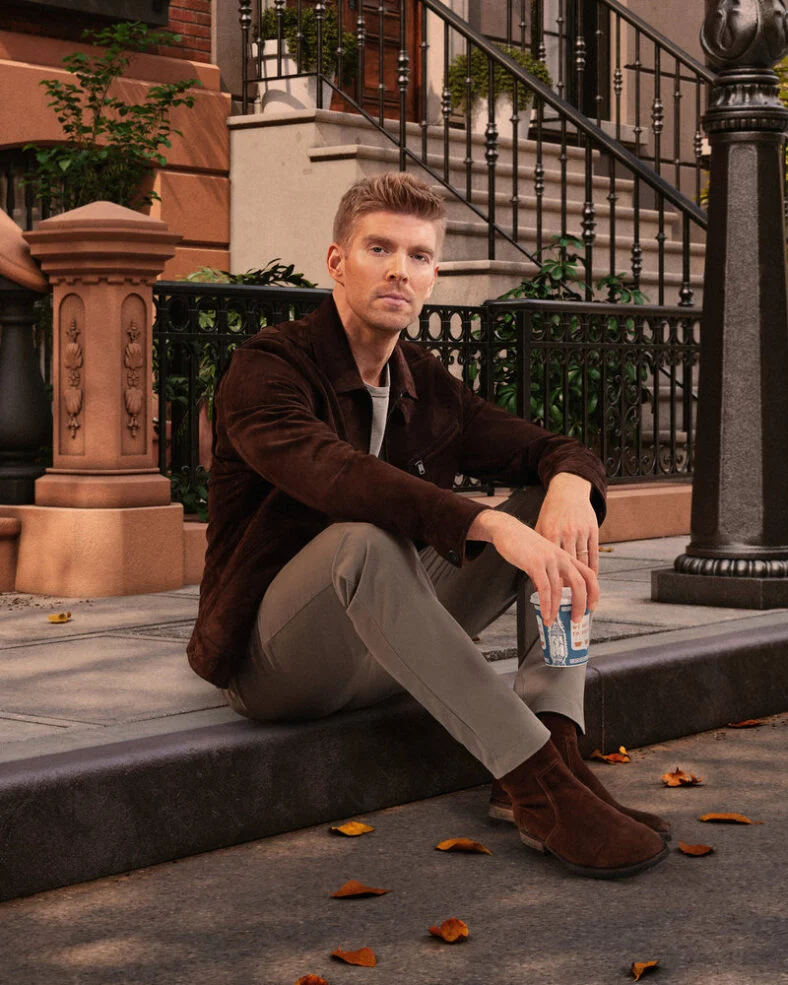
Kyle Cooke has no time for his “Summer House” co-star, West Wilson. On social media, the Bravo OG slammed Wilson for allegedly leaving Amanda Batula to fend for herself during the explosive reunion taping.
Cooke’s comments come weeks after Wilson admitted he was in a relationship with the former’s soon-to-be ex-wife, Batula. Their newfound relationship has stirred up chaos in the Bravosphere due to Wilson’s past connection with Ciara Miller.
On Threads, Cooke replied to a fan who expressed their disappointment in Wilson for reportedly failing to defend Batula at the “Summer House” reunion.
“He’s all PR and zero intention or integrity,” Cooke wrote, as reported by Page Six. Continuing, Cooke, who joined the cast of “Summer House” in 2017, said the sit-down gathering was a “brutal beat down” before implying Wilson left Batula to fend for herself.
“I can’t recall a moment when he had Amanda’s back,” Cooke finished.
Batula And Wilson Confirm Their Secret Romance Weeks Before The ‘Summer House’ Reunion
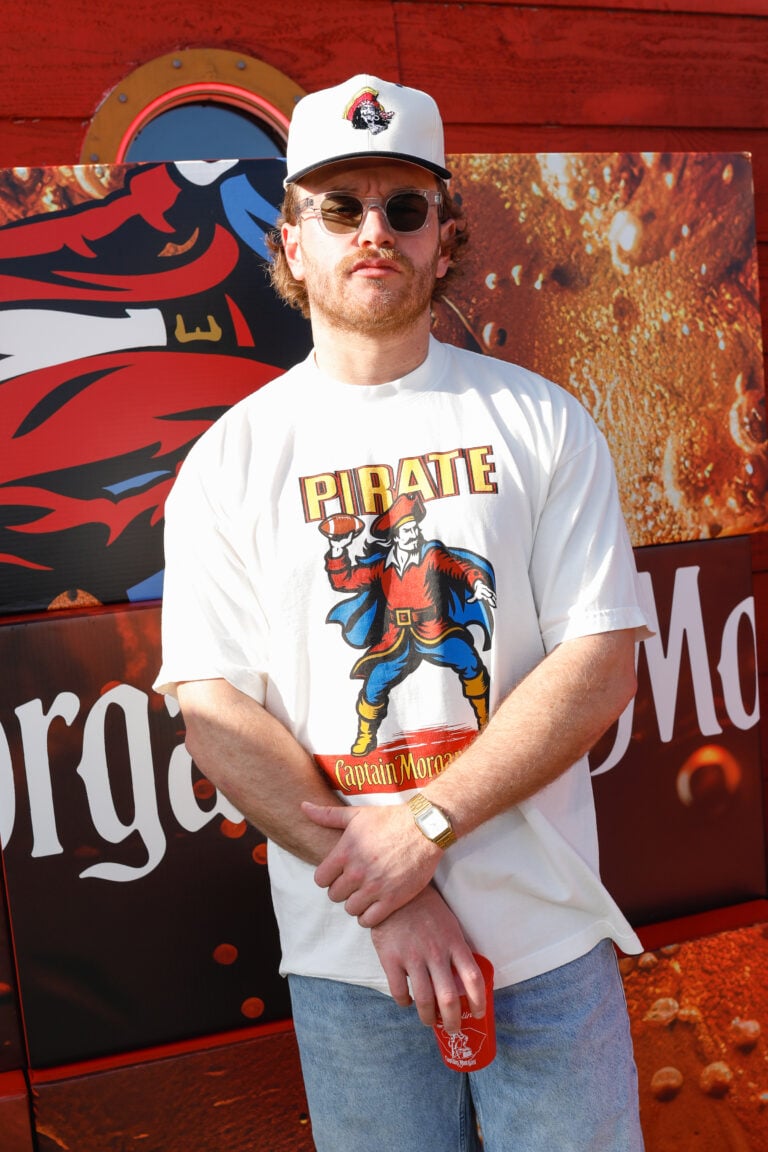
Wilson and Batula have been the talk of the town over the last few weeks, given the pair confirmed their secret romance via Instagram after months of speculation.
“We’ve seen the growing online speculation, so while this is still very new, we wanted to provide some clarity,” the pair wrote online. “It was never our intention to purposely hide anything. Given the complicated relationship dynamics involved and the scrutiny that comes with being on a reality show, we need a little space to process things privately before speaking on it.”
While nontraditional relationships are common among Bravo stars, Wilson and Batula’s relationship has garnered significant backlash due to their proximity to Miller.
Miller, who joined “Summer House” in 2021, dated Wilson briefly in 2023. In a 2026 episode, Miller was candid with the audience about the pressures of dating interracially.
“I don’t think you guys also realize the interracial aspect that exists and all the s— that goes on,” Miller said. “I get a lot of blowback that’s very racial, obviously, being in this position. I was the first Black person in this house, and then dating publicly, dating white guys publicly, is a whole contraption that I don’t think you guys can understand or can even empathize with.”
Things Reach A Boiling Point At The ‘Summer House’ Reunion

Drama between the “Summer House” cast only intensified when an unauthorized clip from the upcoming reunion was shared online. In the footage, Miller can be heard slamming Batula for betraying her and disrespecting their years-long friendship.
Although the leaked recording gave some viewers a sneak peek of what could come during the special, it garnered a disappointed reaction from the network, including Andy Cohen, who begged fans to let the show play out the way its supposed to.
Cooke also chimed in, condemning the audio’s release before defending his cast mates, saying that none of them were behind the leak. “The audio itself, from all of the cast, sounds like it’s audio from our mics,” he said, adding that there was “no way” it came from a cast member.
Cooke And Batula Split
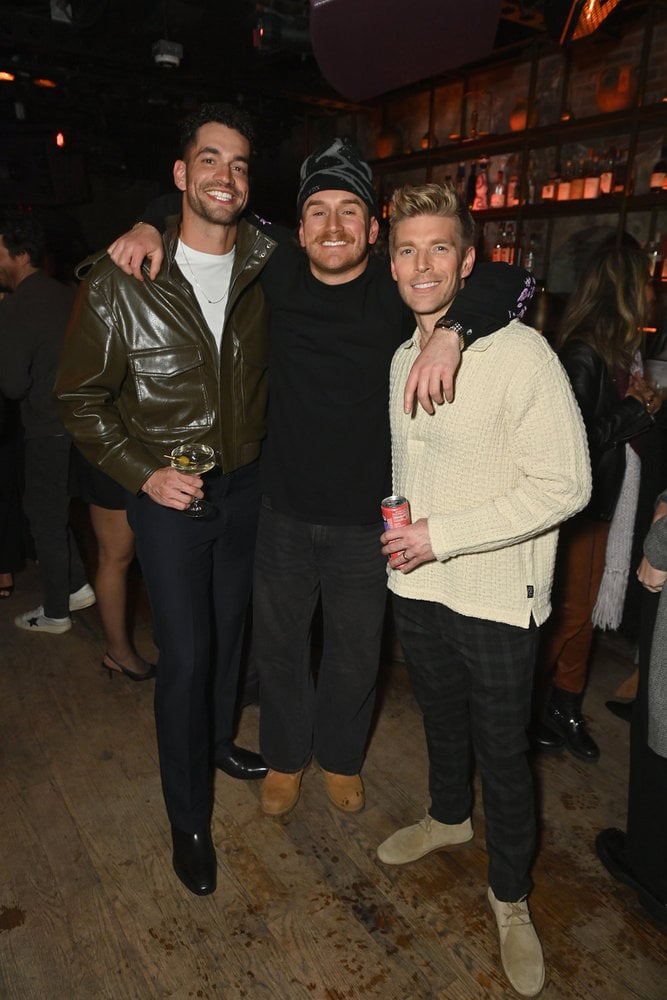
Before Wilson and Batula broke the internet, the latter was the topic of conversation after announcing her split from Cooke.
“After much reflection, we have mutually and amicably decided to part ways as a couple,” the pair wrote on Instagram, according to PEOPLE. “We share this with a heavy heart and kindly ask for your grace and support while we focus on our personal growth and healing.”
They went on to say that while asking for privacy felt “ironic” because of their jobs, they added that “your kindness and respect will go a long way as we try to navigate our next chapter.”
Cooke Wishes He Did Things Differently In His Marriage
On the most recent season of “Summer House,” fans are seeing the demise of Batula and Cooke’s marriage in real time. One of their biggest issues is over Cooke’s desires to become a high-profile DJ.
Speaking with Cohen on “Watch What Happens Live,” Cooke admitted that he wished he made more of an effort to be a better spouse to Batula, whom he married in September 2021.
“I don’t think, going way back then, I understood that those trust issues from, my gosh, like 2018, would have such a big impact,” he said. “But I will say, to almost counter that, I never used to be a proponent of living with someone before you propose, and now I am.”
Entertainment
Carrie Underwood opens up about leaving Hollywood for 'rewarding' life on Tennessee farm
:max_bytes(150000):strip_icc():format(jpeg)/Carrie-Underwood-Opry100-A-Live-Celebration-Farm-042826-1aa3e96896124c1a95721c3b73669a51.jpg)
The ‘American Idol’ judge said that she’s covered in dirt and poop while working on her 400-acre farm.
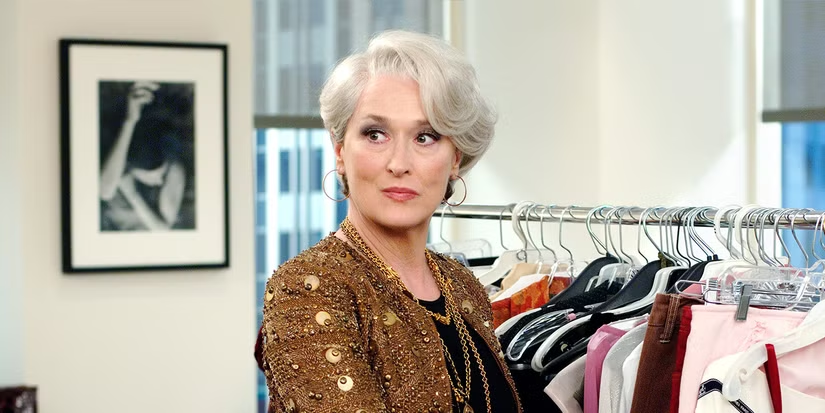
It’s been two decades since The Devil Wears Prada gifted us the sharp stilettos, sharper one-liners, and the unforgettable peek behind the glossy pages of Runway Magazine. In that time, we’ve gawked at Miranda Priestly’s (Meryl Streep) icy quips, cheered over Andy Sachs’ (Anne Hathaway) transformation, quoted Emily Charlton (Emily Blunt) and Nigel Kipling’s (Stanley Tucci) sassy remarks, and argued endlessly over which outfit should be the fan-favorite. Now, with its long-awaited sequel premiering this weekend, expectations are sky-high as to where the story is set to go.
The first film worked because it had a perfect mix of biting satire, heartfelt growth, emotional dips, and jaw-dropping fashion. The sequel has the rare chance to expand on that magic (and then some). It does want to follow in its predecessor’s footsteps and become another comfort movie, right? So, here’s our non-negotiable checklist: the six things The Devil Wears Prada 2 must include, or we’ll be tossing it out faster than last season’s cerulean sweater.
1
More Fashion Montages, Please

Who could forget Andy’s iconic fashion montage set against the backing track of Madonna‘s “Vogue”? It’s basically the cinematic equivalent of a triple-shot espresso in a bedazzled cup. Between the quick cuts, the outfit reveals, and the sense that the New York streets themselves are strutting along with Andy, the sequence is pure joy and in dire need of an update. We are, after all, living in an age where everyone’s obsessed with fashion reveals and sharp transitions.
Plus, think of the music landscape we have today. We could have everything from Beyoncé to Chappell Roan to Sabrina Carpenter to Dua Lipa. The scoring possibilities are endless. And if the glimpses of the costumes are anything to go by, Andy’s fashion evolution definitely needs to be celebrated, pinstriped pants and all. After all, fashion is the heart of the story.
2
More Cameos From People in the Fashion Industry

One of the most delightful surprises in the original film was spotting the cameos of real-life fashion faces. It blurred the lines between movie magic and the real industry, making the story world feel even richer. For the sequel? Let’s crank that up. A little bit of meta never hurt nobody, so even a couple of blink-and-you’ll-miss-it cameos could make the movie sparkle. Although it would be more fun if the cameos weren’t about the figures playing themselves. Remember Gisele Bündchen casually playing a Runway employee? We need more of that.
Imagine Miranda giving the side-eye to a new co-worker played by Tom Ford or Emily bonding with Law Roach over martinis. If the director is bold enough, he’ll give the people what they really want and put Anna Wintour in the mix (please, even if it’s for a five-second gag — the jokes write themselves). Either way, these cameos are like Easter eggs for fashion lovers. It may be indulgent, but in a movie like this, indulgence is the point.
3
Better Friends for Andy

It’s been an ongoing joke now that, despite Miranda’s harrowing and antagonistic ways, the true villains of The Devil Wears Prada were her so-called “support system.” Because, let’s be real — her friends weren’t great. They seemed far more interested in keeping Andy in her dowdy writer’s box than in celebrating her growth. And don’t get us started with Nate (Adrian Grenier). The man is the dictionary definition of an unsupportive partner, whining and chastising Andy for the sacrifices she made for her career while doing the exact same thing for himself.
In the sequel, Andy needs people who understand her ambition without mistaking it for selfishness. Sure, with Tracie Thoms returning, Lily can be the exception and show a change of heart, but let’s get Andy a new crew. Whether they’re other fellow journalists or creative industry types, she needs people who get what it’s like to chase a dream. Yes, they can call her out when needed, but they must cheer her on when she lands a win, too. Hopefully, Patrick Brammel‘s character becomes the love interest she deserves (though we need not worry if the recent set pictures are anything to go by).
4
A (Slightly) Dethroned Miranda

There’s no doubt about it — Miranda Priestly is an icon known for her icy authority. But sequels are all about evolution, and while there were humanizing moments, for the majority of the original film, Miranda was pretty much untouchable. So wouldn’t it be fun to see the fashion titan meet her match? Perhaps a younger, hungrier rival threatens her reign, or maybe the rise of the digital age may just chip away at her power. The latter may likely be the case if the rumors are true. But whatever it is, knocking down the Queen of Runway would be ripe for drama.
And with several mega-stars now joining the cast, any one of them could easily slot into that rival role. Our personal preference? Let’s hope the other rumors are true and have Emily Charlton call the shots. The poeticism is too good an opportunity to miss. Still, this doesn’t mean we want Miranda groveling or irrelevant. Her strength is her weapon, and watching her outmaneuver new threats in the post-print era could be a thrilling narrative twist.
5
A Juicy Reunion Between the Main Trio

Despite its chaos, the chemistry between Miranda, Emily, and Andy was magnetic — part high-fashion workplace drama, part Mean Girls in couture. Every scene between them had layers, whether it was respect, envy, disgust, or begrudging admiration. Sure, we may have gotten a semblance of closure at the end, but imagine the tension of a reunion years later. Has Emily finally stepped out of Miranda’s shadow? Has Miranda done a 180 and held a petty grudge against Andy for leaving? Does Andy have any guilt about leaving the fashion industry? We need answers.
A Devil Wears Prada sequel without the trio back together would be a crime, but their first scene together needs to be more than just cordial small-talk. We want power plays, veiled insults, and maybe a surprise alliance (or rivalry) no one saw coming. Put them in an elevator to trade barbs, have them side-eye each other across a boardroom table, or let them scheme together at a gala to take down a common enemy. It’s been 20 years — the people deserve a punchy reunion.
6
More Nigel!

Nigel Kipling was the creative heartbeat of Runway — Miranda’s closest confidante, who could turn her vague, godlike commands into actual, high-fashion brilliance. From his quick wit to his warm but brutally honest pep talks with Andy, Nigel brought style, heart, and soul to the office…only to be thrown aside. Remember the Paris betrayal? He was moments away from a career-making promotion at James Holt’s (Daniel Sunjata) company when Miranda pulled her coldest move yet, pushing Jacqueline Follet (Stéphanie Szostak) instead, all to save her own position as Runway’s editor.
The sting of that blindsiding still lingers, especially since Nigel, ever gracious, insisted that Miranda “would pay him back.” If the sequel wants to right the wrongs of the past, it’s time for Nigel’s redemption. Give him another promotion, the accolades, or even a delicious subplot where he gets to turn the tables on Miranda. Either way, Tucci’s charisma could carry half the movie, and it’s about time we let him.

The Devil Wears Prada
- Release Date
-
June 29, 2006
- Runtime
-
109 minutes
- Director
-
David Frankel
- Writers
-
Aline Brosh McKenna, Lauren Weisberger
Next: 10 Movies From 2006, That Are Now Considered Classics, Ranked
Entertainment
Margot Robbie, Chris Pine, & Chiwetel Ejiofor Teamed Up for This Underrated Sci-Fi Thriller No One Ever Talks About
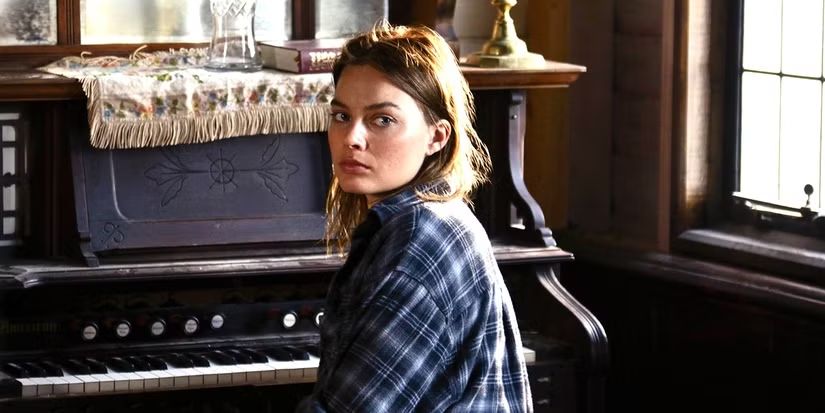
Post-apocalyptic films, despite the global scale of their premise, work best as introspective reflections on humanity, exploring all the strengths and flaws that come with the mortal experience. While many sci-fi stories explore the adventurous aspects of surviving the end of the world — rugged survivalism, mutated creatures, and abandoned cityscapes, the most compelling stories in this genre are centered around the question of what it truly means to continue living in a world that is desolate, unforgiving, and lonely. This is a critical distinction that separates apocalyptic and post-apocalyptic movies, separating the Roland Emmerich-style disaster movies from the slower burn of other films.
Z for Zachariah is one such example of a character-driven drama set in the end-of-days. The film delves headfirst into this question of human survival and coexistence as it explores the lives of three unlikely survivors of a nuclear apocalypse, forced to navigate life within the confines of a miraculous safe haven. Based on a novel from 1974, the underrated sci-fi picture is one of the most personal post-apocalyptic stories out there, featuring a starkly minimal cast of just three actors — but when that cast includes Margot Robbie, Chris Pine, and Chiwetel Ejiofor, there’s still an overabundance of talent and depth present throughout the film. Directed by Craig Zobel, the indie sci-fi thriller still has plenty of post-apocalyptic intrigue, but in a dead world, the most compelling stories are about the scarce few that remain. Despite the star power in the film, Z for Zachariah only received a limited release and minimal media attention. However, a retrsopective look back at the picture proves that it’s an underrated and important addition to each of these actor’s respective filmographies.
‘Z for Zachariah’ Takes a Personal Approach to the Post-Apocalyptic Genre

Z for Zachariah is set in a dying world rendered uninhabitable by a nuclear apocalypse. However, within an isolated valley in the Southern United States, a young woman named Ann Burden (Robbie) lives a miraculous life shielded from the radiation outside her humble homestead. Surviving thanks to the miraculous microclimate in the valley, Ann and her dog Faro keep a simple and steady life as they plant and harvest in preparation for the impending winter, motivated by the ever-dimming hope that her family will return from their expedition outside. But Ann’s loneliness is poised to come to an end when John Loomis (Ejiofor), an engineer and researcher, finds his way into the valley. Upon discovering that the valley was spared from excessive radiation, Loomis rushes to bathe in a seemingly crystal-clear lake. However, Ann discovers him and warns him that the water is irradiated because it comes from outside the valley. Without second thought, Ann swiftly takes the stranger into her home and nurses him back to health.
Once Loomis regains his strength, he and Ann continuously grow closer to one another as they steadily build a life in the valley, supplementing each other’s survival despite the secrets that keep a degree of distance between the pair. John’s engineering background proves to be an immeasurable asset as he begins undertaking projects around the farm, improving the scarce living conditions with practical and hands-on solutions that make survival significantly more comfortable. But just as a shade of normalcy begins to form for the pair, a stranger arrives in the valley and shakes up the already tenuous balance. Caleb (Pine), a miner who survived the apocalyptic fallout by remaining underground for months, arrives with rumors of a town of survivors further south. Similar to her earliest interactions with Loomis, Ann proves to be trusting and earnest upon meeting another living person, eager to give help to a fellow survivor. In contrast, Loomis feels suspicious and skeptical of Caleb, initially planning to ask him to leave before being dissuaded by Ann. The initial meeting and following days after Caleb’s arrival are marked by a cold tone, one that dances between Loomis’ suspicion and the group’s dependence on each other for continued survival, adding significant tension to the film with the sole addition of one new character.

Chiwetel Ejiofor Directed One of the Best Underseen Films of 2024, and Its Now on Netflix
Ejiofor’s second film as director is a powerful twist on the typical coming-of-age story.
That focus on character interactions and tension is what makes this movie stand out from others in the genre. Despite being a sci-fi film, Z for Zachariah takes a far more grounded approach than others in the genre. Most of the science in the film is relatively small-scale and realistic, focused on realistic survival strategies such as fixing a water wheel to generate power, even with the dramatic background of nuclear fallout just outside the valley. And despite the differing professional backgrounds of each character, it’s quickly affirmed that each of them brings a set of skills that are essential for their survival. Loomis uses his engineering background to manually pull fuel from an abandoned gas station, Ann’s farming knowledge keeps them fed, and Caleb’s hands-on mechanical experience proves a welcome addition. While the fiction part of science-fiction in the film is mostly in the background, the destruction of the nuclear apocalypse still serves as the overarching catalyst for the central conflict: the tension between the survivors.
The Survivors Navigate Love, Trust, and Jealousy During the End of Days
The small-scale perspective of this post-apocalyptic film means that John, Caleb, and Ann won’t be solving the problem of saving the entire world — in fact, because of the safe haven of their miraculous valley, their immediate survival isn’t a pressing concern as it would be for other characters in the same genre. The valley is one of the most hospitable settings of a film set after nuclear fallout, which allows the central narrative to truly sit with the characters and their interpersonal relationships. Even though there are fewer than a handful of characters, it’s Margot Robbie’s portrayal of Ann that serves as the central foundation for the entire film. It’s her stalwart care of the farm before Caleb and John arrive that provides such a safe haven for them to arrive at, and it’s her earnestly friendly personality that enables coexistence in such a tense environment. Ann is a kindhearted and steady Southern belle, faithful and optimistic even after suffering immeasurable loss. While Robbie’s Southern accent wavers at times, her performance is nonetheless endearing and heartfelt, maintaining an irrefutable charm despite the melancholic tone of the story. One of the keys to Robbie’s performance is her measured restraint. Despite her character’s innocence and naïveté, she’s not an easily manipulated farm girl but a young woman driven by her staunch hope and values.
The other characters then play important juxtapositions to Ann’s character. In contrast to Ann’s steady faithfulness, Ejiofor’s Loomis is a stoic and troubled figure. Despite his reliable nature and incredibly useful expertise, Loomis carries a haunted past on his shoulders, a burden and distance expertly portrayed by Ejiofor’s performance. While Ann holds onto hope due to her religious upbringing, Loomis continues to push forward because of his own resilient dependence on science. But though he doesn’t hold the same religious faith as Ann, Loomis does remain respectful of the source of her unwavering conviction. Loomis relies on his scientific background as the foundation for his continued perseverance, but intellectual knowledge alone soon proves lacking for sufficient survival. Despite being the most tangibly useful member of the group, Loomis also harbors the most insecurity and guilt about his past — shortcomings that prevent him from truly connecting with Ann and Caleb. Though his presence proves vital for improving the physical conditions of their home, his detachment keeps their living situation cold and the tensions hot throughout the film.
While John and Ann serve as the foundational relationship in the story, Caleb is the wildcard that disrupts whatever shade of stability they are forming. A religious person like Ann, Caleb retains his southern charm and manners that make him easy for the young woman to connect to. Even with her trusting nature, Ann’s trust in Caleb is formed through their shared beliefs and backgrounds, which serve as nostalgic remembrances of life before the apocalypse. However, Caleb isn’t introduced as a straightforward charming gentleman, but as someone who carries an air of danger around him. For once, Pine’s striking eyes aren’t painted as the charming baby blues of a romantic lead, but like the ice-cold stare of a wolf, indicating a strong defiance and confidence. Just as John and Ann’s relationship begins to deteriorate over concerns about issues of trust and affection, Caleb and John enter a Cold War over their third companion’s attention. It’s a cold and passive-aggressive war, one that cannot be fought outright, but remains a nagging tension throughout all their interactions. Each moment between the two is thrilling, as the audience is unsure what they are going to say, or even worse, what they are going to do.
At first, the quietly brewing love triangle between Ann, Caleb, and John may feel out of place, considering the more pressing concern about survival in such an inhospitable environment. However, its inclusion in the film instead makes these characters feel all the more human; it makes their unexpected coexistence in the valley feel like the random shuffle of existence, rather than an intentionally written narrative. There is something viscerally human about John’s jealousy over Caleb. Despite his mechanical expertise and knowledge, his inner emotional turmoil ultimately supersedes his own rational thinking. Caleb, on the other hand, is painted in a more intentionally antagonistic lens, lording arrogantly over the other man at any given opportunity. However, even with this initial framing, both characters are multidimensional and can be seen from the other lens. John is still fallible and deserving of criticism and Caleb, despite his air of mystery, likewise deserves a chance to prove himself trustworthy. Ultimately, the two men are forced to remain cordial, forced to work with one another, and forced to believe that everything will be okay.
At the center of it all is Ann, whose guarded optimism about the world serves as the guiding beacon of hope in Z for Zachariah. Though her companions often underestimate her because of her youth, Ann is equally as complex a character as her male counterparts. While she remains optimistic and hopeful, she demonstrates an acute understanding of the reality of the situation. Although her hope for the future is often misinterpreted, she is not naive — though she is still flawed. Similarly to the other two characters, Ann’s approach to processing complex emotions suffered from her time in isolation, making her susceptible to emotionally charged and unsteady decisions. While audiences might get frustrated at moments when the characters act irrationally, it’s these moments that make them feel more human and relatable. So even when they’re all trying their best, the small contingent of survivors still have to contend with their internal turmoil, just as much as they have to deal with the harsh external world.
The Film Is Slow and Contemplative With its Characters

Audiences shouldn’t watch Z for Zachariah with expectations of an adrenaline-pumping sci-fi thriller, despite the genre it falls under. The film is slow, contemplative, and brutally realistic about the interpersonal struggle between flawed people; John’s jealousy, Ann’s uncertainty, and Caleb’s arrogance all seep into every minute action that they have. Their actions and words are layered with subtext and complex motivations which leave audiences in a constant state of uncertainty. That ever-present discomfort feels right at home in a post-apocalyptic setting, where each moment isn’t guaranteed. While it’s not the central focus of the movie, questions about race, science, and religion all permeate throughout the narrative. There’s no denying that John’s identity as a black man contrasts with both Ann and Caleb, who are not only both white, but were raised in similar communities. Even after society has collapsed, the characters are unable to completely separate from the world they once knew, forcing them to contend with the remnants of their old lives as they endeavor to build a new one.
Where other post-apocalyptic movies like Mad Max focus on emotions like rage in their exploration of humanity, Z for Zachariah carries an overarching tone of sadness and melancholy that permeates throughout the entire film. Even with a runtime of just over an hour and a half, the movie feels like it lasts much longer because of the deliberate pace of each passing day. For every minor victory that the characters earn, there is still the void of society and community that dwarfs whatever happiness is attained. Robbie, Ejiofor, and Pine all deliver some of the most subtle yet emotional performances of their career, embodying characters that are not typical in their resumes with notable depth and contemplation. If you’re a fan of any of these actors, Z for Zachariah is certainly worth viewing. In this brief glimpse of a potential haven, it truly feels like these characters are the last survivors of the end of the world — there’s no hope of rescue, and maybe no reason at all to even continue living. Even within the safe haven they were seemingly blessed with, the characters in Z for Zachariah live with uncertainty in every breath, questioning what it means to live, alone, in a dead world.
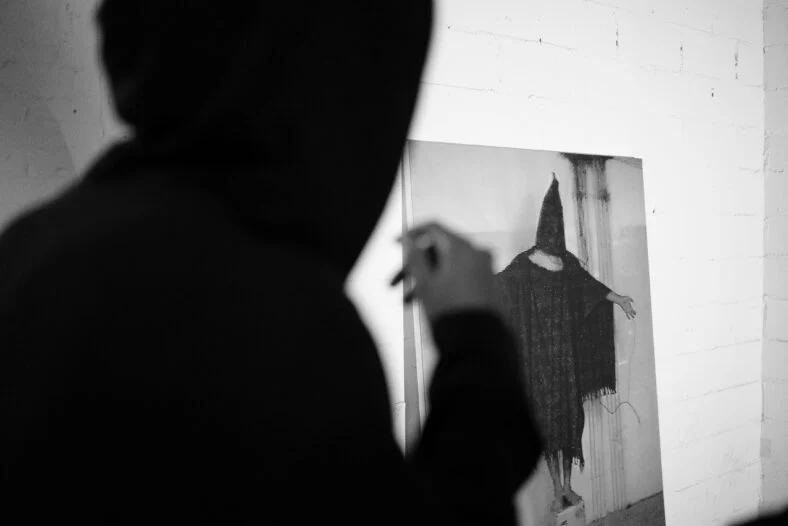
When “Our Hero, Balthazar“ began filling theaters across New York and Los Angeles without a Sundance launch, a major festival platform, or a traditional studio campaign, the film industry was caught off guard. The people who actually built the release, however, were not. The film, directed by Oscar Boyson and featuring an ensemble cast led by Jaeden Martell, Asa Butterfield, and Noah Centineo, alongside Avan Jogia, Chris Bauer, Jennifer Ehle, Anna Baryshnikov, Becky Ann Baker, and Pippa Knowles, launched in tandem with a fine art exhibition in a raw Brooklyn warehouse, with no traditional studio campaign behind it.
The exhibition, titled “American Wasteland,” was hosted by Relaispunkt, locally known as RP.1, the curatorial arm of Base 36, an independent cultural network that has built its own infrastructure outside the gallery establishment. Base 36 is the core; its projects are the extensions.
From Le Parti’s years of DJing and running after-hours and warehouse events out of his Brooklyn studios, the network took shape across cities: RP.1 operating out of Berlin, and across Los Angeles and Berlin, with a recurring presence in the Downtown Los Angeles and Skid Row area, “Play,” an after-hours and warehouse party, and “Sibyl,” an art advisory. All built on the same instinct: activate the space, own the infrastructure, don’t wait for permission.
The exhibition is the work of Jet Le Parti: a painter, poet, musician, and publisher whose practice has spent years accumulating force outside the channels that typically decide what gets seen. Where Boyson came up through the Safdie brothers’ orbit, producing “Good Time” and “Uncut Gems” before stepping into the director’s chair, Le Parti built his own orbit entirely. He is not an outsider artist in the romantic sense. He deliberately chose where to build, then built it.
When the two projects collided, it wasn’t a promotional alignment. It was two people investigating the same American crisis, arriving at the same room from opposite directions.
‘Our Hero, Balthazar’ Turns Rejection Into Sold-Out Success

Image Credit: Relaispunkt.1
Oscar Boyson has spent his producing career inside a gritty, unflinching tradition of American independent cinema, films about people on the verge of coming apart. As a director, “Our Hero, Balthazar,” co-written with Ricky Camilleri, the former HuffPost journalist turned screenwriter, and executive produced alongside Halsey, is his most direct engagement with the consequences of a collapsing masculine mythology.
The film zeroes in on the specific cruelty of the environments teenage boys are placed inside, tracking the fallout of edgelord internet culture and the performance of masculine identity in the attention economy. Where most films about this terrain reach for sociological distance, “Our Hero, Balthazar” stays close: drawing from the raw, proximate lineage of Larry Clark’s “Bully,” the performances refuse the safety of retrospective judgment. The team approached the release not as a standard theatrical run but as a deliberate cultural act: a film meant to be encountered inside an exhibition that was already asking the same questions.
When the film was turned away by Sundance and SXSW, the team refused to wait for permission to exist. They found a shared ethos in Peter Gold at WG, who architected the unconventional distribution play. Through a pipeline coordinated between WG, Picturehouse, Arkhum Media Rights, and Base 36, the film went directly to audiences. Base 36 and RP.1 connected their community to it, driving turnout, moving tickets, and contributing to multiple sold-out screenings across New York. It didn’t need a traditional campaign. It needed the right people in the right rooms.
This Exhibit Takes A Shocking Look At American Decay

Image Credit: Relaispunkt.1
The film’s reception cannot be separated from that room. Le Parti transformed the warehouse into an extensive study of late American decay, operating, as he typically does, outside the permitting logic that governs institutional spaces. His is a practice of accumulation and witness: he grew up in the American South inside the military apparatus, and his work has never metabolized that origin cleanly. What remains is violence absorbed as atmosphere, institutional failure rendered as aesthetic fact, the fatigue of endurance as formal principle.
“Rocketman,” a work by London-based Base 36 artist L.S. Toy, offers a frame-by-frame, photorealistic rendering of active-duty airman Aaron Bushnell’s self-immolation in protest of the Gaza war, holding the image at the scale the decision deserves. Toy’s practice is built around media-heavy subject matter: hyperrealistic paintings of scenes drawn directly from news coverage, political commentary rendered in industrial greyscale, and works that have tested the legal boundaries of image and currency.
‘American Wasteland’ Blurs Line Between Real And ‘Simulated’ Violence

Image Credit: Relaispunkt.1
Nearby, Le Parti’s “Pawn Shop” reconstructs the police scene from the street where his own brother was shot, refusing the distance between private catastrophe and public history. Alongside military diagrams and works like “Sisyphus,” treated here not as classical allusion but as a lived condition, the myth stripped of its consolations, the exhibition features collaborative image-works by Reign.925, the visual project of “Le Parti and Toy,” created together, where school-shooting imagery bleeds into “Call of Duty” aesthetics without ironic distance. The effect is a kind of double exposure: real violence and its simulation rendered indistinguishable, which is precisely the point.
The triptych “Phases of the Nuclear Option” maps the procedural steps toward annihilation in the calm, bureaucratic language of the military itself, the aesthetic of institutional inevitability. At the center of the exhibition is “Ramble,” a long poem from Le Parti’s self-published debut manuscript “Every Day Is a Countdown,” which tracks the evolution of modern violence from the manosphere to the mainstream. The show is, in essence, his poetry made spatial, a poet who refused to soften his language for traditional publishing and who built the room to hold it instead.
Noah Centineo Backs ‘Underground’ Art-Film Collaboration
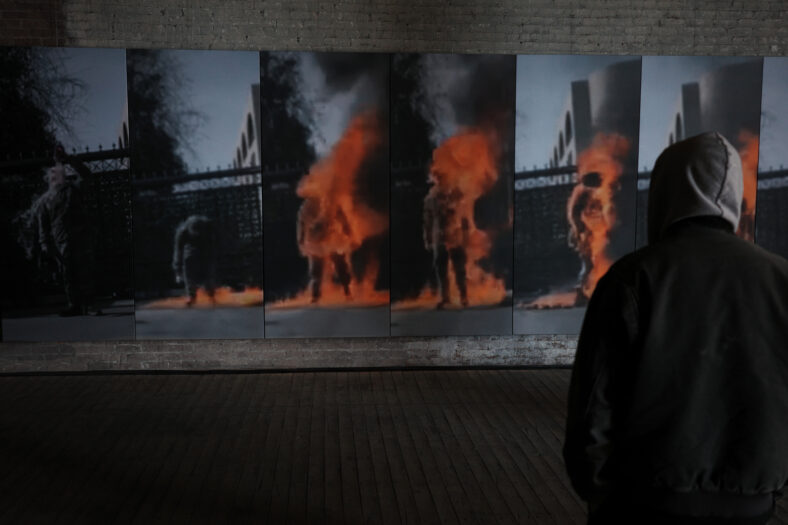
Image Credit: Relaispunkt.1
The two projects grew from relationships outside the usual industry circles, and from a conversation that began, as many things in Le Parti’s orbit do, through Converting Culture, his editorial platform and magazine. It was there that the idea for the exhibition first took shape as something more than an idea: a felt necessity.
Noah Centineo, who appears in Boyson’s film and had long been a collector of Le Parti’s work, and Enzo Marc, whose Arkhum banner is also attached to the film as a production company, came in behind it together. Nobody was waiting on a grant. It came from people who already believed in each other’s work.
During the exhibition’s opening, Boyson articulated the link connecting the two mediums, asking: “Why does dark humor feel like the only way to find catharsis amongst the horror show we’re living in? And what would you call the horror show we’re living in? I mean, it’s the American wasteland, man.”
Le Parti’s answer was blunt. It’s all just atmosphere now, he said, people wake up, see a child die online, scroll to delivery options, order something, share a story, move on. Extreme violence has become ambient, absorbed into the scroll. Words are just noise. Maybe the art is too. But we’re still recording it. What Le Parti is describing is less a failure of empathy than a structural condition: a culture so saturated with images of its own catastrophe that outrage has become another content category. The exhibition doesn’t solve that. It just refuses to look away.
And the film, in its own way, is proof of the same condition. You don’t arrive at dark comedy about school shooters as a viable form of entertainment unless the culture has already done the work of normalizing the subject matter. “Our Hero, Balthazar” could only exist, could only find an audience willing to laugh and wince and sit with it, because the ambience Le Parti is describing has already settled in. The film isn’t commenting on desensitization from the outside. It was made from the inside. That’s what makes it a document as much as a film, a timestamp of exactly where America is right now, rendered in the only register the moment could hold.
‘American Wasteland’ Challenges How Stories Reach Audiences
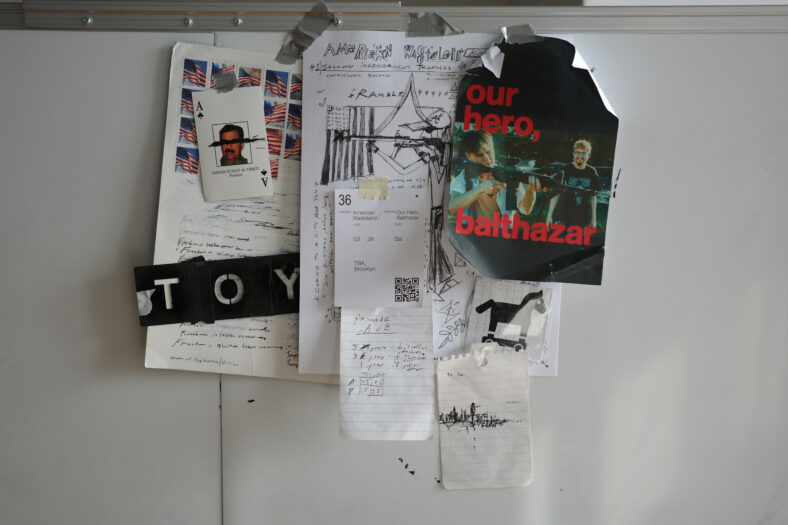
Image Credit: Reliaspunkt.1
Neither the film nor the exhibition is context for the other. They are operating on different registers of the same problem. Le Parti works at the systemic level, the military apparatus, the cultural infrastructure that normalizes violence, the long American tradition of absorbing catastrophe without consequence. Boyson works at the phenomenological level, two boys, one country, the specific texture of the damage done. The distinction matters: one maps the structure, the other inhabits it. Together, they argue that neither register is sufficient on its own.
Together, they pulled off what the conventional apparatus could not, and would not. “American Wasteland” and “Our Hero, Balthazar” didn’t prove a theory about independent distribution. They proved something older: that when the work is honest, and the room is right, the audience finds it. Institutions are optional.
“Our Hero, Balthazar” is currently in distribution through Picturehouse. “American Wasteland” was presented by RP.1 / Base 36, featuring works by Jet Le Parti, L.S. Toy, and Reign.925. “Every Day Is a Countdown” by Jet Le Parti is available through Base 36.
By Chris Snellgrove
| Updated

Star Trek has some of the most passionate fans on the entire planet. For the most part, those fans are unified in their love for this decades-old sci-fi franchise. However, there are a few things the fandom has bitterly debated over the years. One of the most intense arguments involves a seemingly innocuous question: can Vulcans lie? Some fans are convinced that these logic-loving aliens are far too moral and upstanding to deceive anybody. Other fans believe Vulcans are fully capable of lying and have successfully convinced the galaxy that they always tell the truth.
This persistent Star Trek myth goes back to The Original Series and claims made by characters like Spock and Dr. McCoy. Eventually, this myth was busted by Tuvok, who reluctantly told Seven of Nine that Vulcans were capable of lying but generally preferred not to do so. After decades of fan debate, this finally settled the matter. However, what most fans don’t know is that Tuvok accidentally busted this myth far earlier in the show. In “Twisted,” he blatantly lies to Captain Janeway in a scripted exchange that seriously upset Tuvok actor Tim Russ.
The Man, The Myth

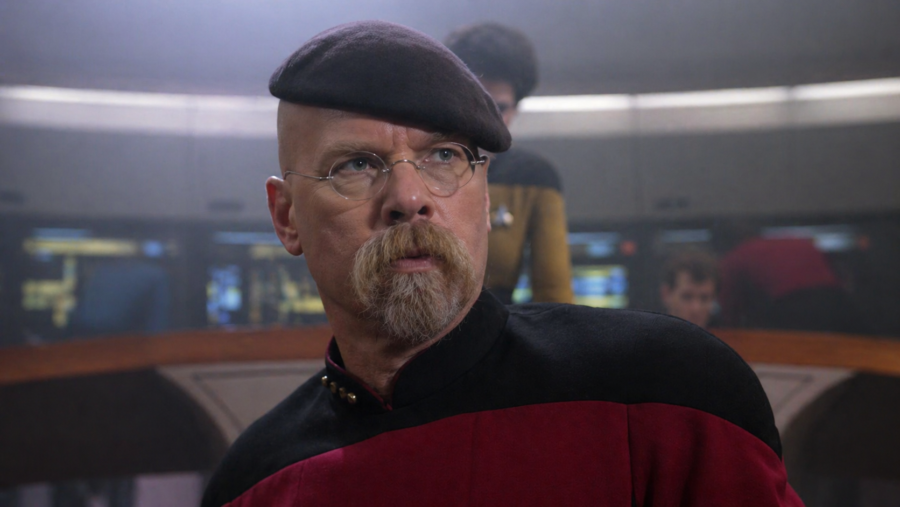
First, we need to talk about how the “Vulcans don’t lie” myth came about. Back in The Original Series episode, “The Enterprise Incident,” a Romulan commander asks Spock if it’s true that Vulcans can’t lie, and Spock responds, “It is no myth.” This idea is also backed up by Dr. McCoy, who offered his medical opinion on the matter in “The Menagerie, Part 1” when he says of Spock, “the simple fact that he’s a Vulcan means he’s incapable of telling a lie.” Even the android Data agrees. In the Next Generation episode, “Data’s Day,” he wrote a message to Bruce Maddox about how Vulcans couldn’t lie.
If you pay close attention, though, Spock himself sometimes justified telling blatant lies. In The Wrath of Khan, when Saavik realizes Spock told Kirk that Enterprise repairs would take longer than they did, she confronts him: “You lied!” Spock (who was speaking in code to Kirk) simply replies, “I exaggerated.” In The Undiscovered Country, his apprentice, Valeris, does something similar. When asked to name her fellow Starfleet traitors, she says she does not remember. When Spock asks, “A lie?”, she responds, “A choice.”
A Secret Onscreen Lie
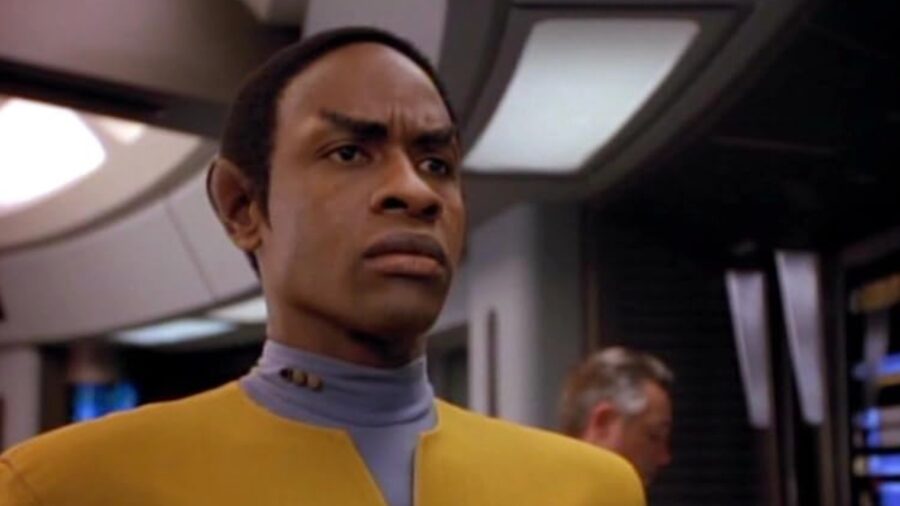
When he began working on Star Trek: Voyager, Tuvok actor Tim Russ seemingly bought into the idea that Vulcans don’t lie. In an interview with Cinefantastique, the actor discussed some dialogue from the episode “Twisted” that he disagreed with. “There’s a line in an episode we just finished, ‘I’ve always respected the Captain’s decisions.’ And that line was difficult to say.” Elaborating, he said, “[The] line was difficult to say when, in fact, we know he […] violated protocols [in ‘Prime Factors’] by taking matters into his own hands.” He’s referring to an earlier incident where Tuvok traded Starfleet technology to aliens for technology that could transport the Voyager crew 40,000 light-years.
To those closely watching Star Trek: Voyager, this settled the old debate: Vulcans can lie, as we saw Tuvok do to Captain Janeway. On other occasions, Tuvok has found ways to (like Spock before him) justify his deception. After he tells Chakotay, “As a Vulcan, I am at all times honest,” the commander says that Tuvok clearly lied when he passed himself off as a loyal member of the Maquis. Tuvok replies, “I was honest to my own convictions within the defined parameters of my mission.” To this Vulcan, it seems, lies are in the eye of the beholder.
A Borg Assimilates The Truth

Later, Star Trek: Voyager would bust this old franchise myth in a much more blatant way. In the episode “Hunters,” Seven of Nine asks, point-blank, if Vulcans can lie. Tuvok reluctantly admits to her that Vulcans have the capability of lying, but that he has never found it useful or necessary. Given Tuvok’s previous moral flexibility, this information might square the circle with the line about always respecting Janeway’s decision. In Tuvok’s mind, he may respect her decision without following it.
With any luck, this helps settle the debate, once and for all. Vulcans can lie. They just mostly choose not to do so. This explains what they are capable of while also explaining their reputation for honesty. If nobody ever sees you lying, why would they doubt you are honest? If you doubt what I’ve written, though, you can always wait until First Contact Day and ask the first Vulcan you see about all this. Don’t worry: I’m sure he’ll tell the truth!
Entertainment
David Duchovny’s Best 7-Part Series Quietly Becomes a Late-Night Favorite 12 Years Later
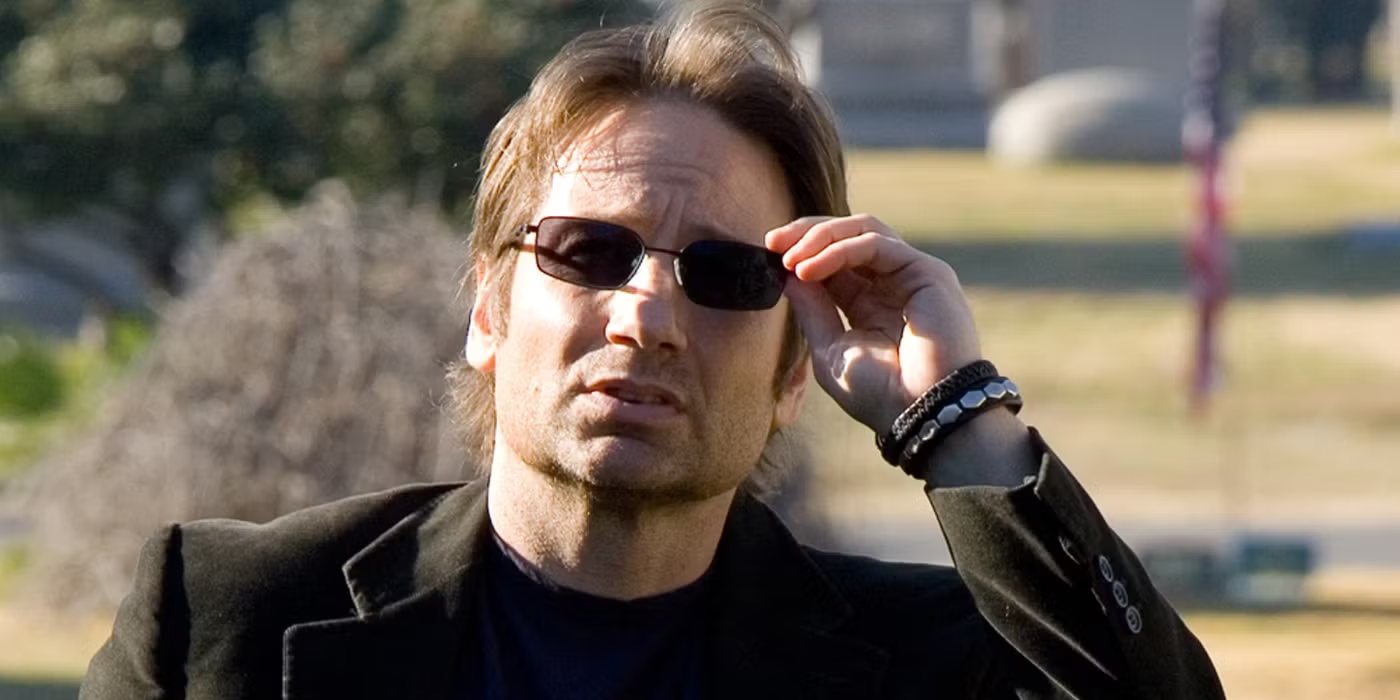
Overshadowed by actors in his wake like James Gandolfini, Jon Hamm, and Bryan Cranston, David Duchovny is quietly one of the most accomplished television stars of his generation. Before the prestige television boom in the 2000s, The X-Files pushed the envelope for episodic storytelling. After playing Fox Mulder on the Fox mystery series for 194 episodes, Duchovny could’ve made a living off playing true believers in the supernatural and otherworldly existence in any genre.
For his X-Files follow-up, however, Duchovny graduated to premium cable to play the anti-Mulder, a misanthropic writer who doesn’t want to believe anything other than his hedonistic urges. Californication, airing on Showtime for seven seasons, was the Emmy winner’s victory lap, tracking his on-screen versatility. Now charting high on the Apple TV Store, the dramedy deserves your consideration as one of the unsung gems of the prestige TV era.
What Is ‘Californication’ About?
Created by Tom Kapinos, hailing from the Dawson’s Creek writers’ room, Californication follows Duchovny as Hank Moody, a self-loathing, narcissistic author struggling with a long-term case of writer’s block. While gifted in his prose, Hank’s addiction to alcohol, drugs, and sexual escapades has made him radioactive in the publishing industry and a force of self-destruction that alienated him from his former partner, Karen (Natascha McElhone), and their daughter, Becca (Madeleine Martin). Through a series of shenanigans and genuine acts of reformation, Hank hopes to reconnect with his family, all while navigating his tumultuous career under the guidance of his manager, Charlie Runkle (Evan Handler).
Running from 2007 to 2014 across 84 episodes, Californication earned David Duchovny a Golden Globe for his performance as Hank Moody. Similar to Fox Mulder, Hank is steadfast in his belief in a higher power, but in this case, he’s convinced that life is hell, as his claim to fame is the acclaimed novel titled God Hates Us All. Deep down, though, Hank isn’t as much contemptuous of the world as he is resentful of himself. Not only is creative writing psychologically draining, but the business apparatus surrounding it is especially poisonous, especially when Hollywood studios are adapting watered-down versions of his work on the big screen. Hank’s internal angst is an archetypal case of midlife crisis, but his approach to handling these woes goes beyond buying a sports car or dating a partner decades his junior. Rather, Californication enters each season pondering whether Hank will make it through without being sentenced to jail or death.
‘Californication’ Balances Raunchy Comedy With Sincere Family Drama
While it lost its way in the back half of its run, Californication‘s early seasons are superb, striking a perfect chord between raunchy comedy and poignant drama that grappled with serious issues such as addiction and fatherhood. Hank’s various hijinks caused by his promiscuity and debauchery were en vogue at the time, and they still feel fresh thanks to the show’s pointed criticism of the character. Because he’s played by Duchovny, it’s hard not to be amused by his candor and brash sensibilities, but the actor imbues all the character’s actions with pity and even darkness. Although he acts like he doesn’t care, Hank is actively calling for help during his bouts with the law, scandalous affairs, and conflicts with publishers. The series is also an accurate, if not cathartic, look into the writer’s process and how defeating it can be for even the sharpest minds. On top of it all, Californication tackles the intersection between art and commerce, which kicks into a new gear when Hank tries his hand at writing screenplays.
If the focal point of the narrative revolved around Hank’s career prospects, Californication wouldn’t have an ounce of its dramatic undercurrent, nor would you even really care that much about this egotistical cynic. What makes the audience pull for Hank is his determination to get his life on track by winning over Karen and Becca, two strong-minded individuals who refuse to tolerate his toxic behavior. Thanks to the conviction in Duchovny’s performance, you’re convinced that he’s actively fighting the demons inside his heart and soul to finally settle down. McElhone also shines as an aggrieved ex-girlfriend who can’t walk away from Hank, and she goes toe-to-toe with Duchovny in every scene, matching his grating persona with a steely defense. Both a raw family drama and a witty showbiz satire that unpacks the seedy side of Los Angeles, Californication will surprise you with its layered characterization that upends the norms for raunchy comedies set in a sex, drugs, and rock-and-roll culture.
There are various things you could focus on when it comes to trying to define which sci-fi movies are the most realistic, because maybe a realistic sci-fi movie is one that gets predictions right. Or maybe it’s more important whether it felt believable at the time. Or a bit of both can be considered. Or, an outlandish idea can be taken and made to feel realistic.
There aren’t as many outlandish idea films below, with more of a focus on films that felt like they could’ve become true one day, or still feel like they might be eventually proven prescient. If you want science fantasy movies, then these are not the films you are looking for. But if you’re into hard science fiction, and sci-fi that keeps things realistic (or realistic-feeling), then you’re in the right place.
10
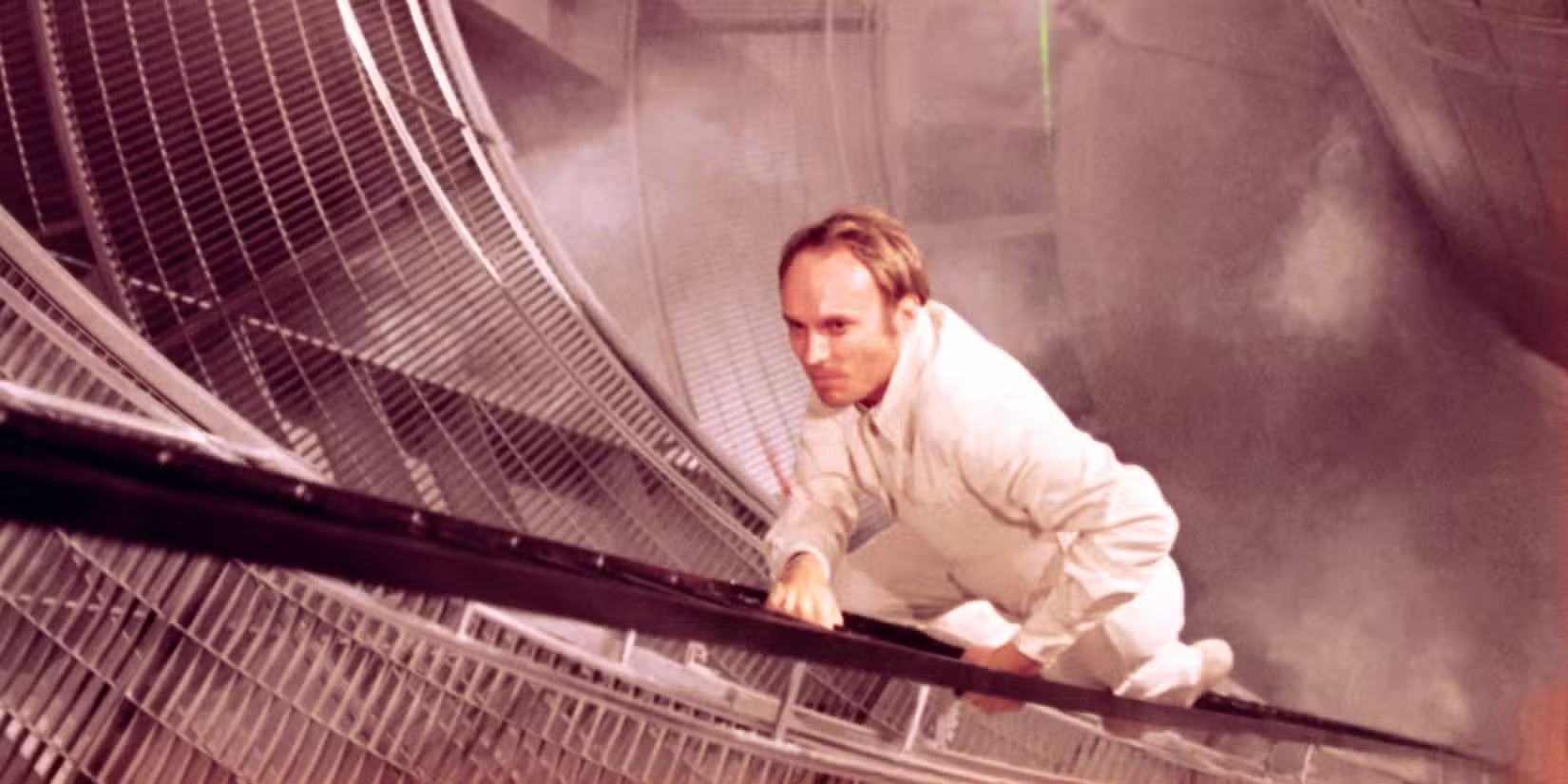
‘The Andromeda Strain’ (1971)

Based on the Michael Crichton novel of the same name (and doing a solid enough job as far as adaptations go), The Andromeda Strain is about the discovery of an extraterrestrial organism brought to Earth via a crashed satellite. There’s also a great many deaths in a small town near to where the satellite landed, which raises the issue of things turning into a full-on viral outbreak.
Yes, it’s one of a fair few virus-related movies released in the decades before the world was changed by an actual full-on global outbreak, so whether that makes The Andromeda Strain more or less interesting nowadays… eh, it’s up to you. There’s a real emphasis on science here, more so than most science fiction movies, and that makes The Andromeda Strain a bit dry and almost too methodical in its approach to the premise at hand, but those qualities are also admirable, on the other hand.

Contact is easy to compare to Arrival (2016), which might well be the better film, but Contact is probably even more grounded, and it was also based on a novel by Carl Sagan, who co-wrote the screenplay, too. And Sagan was a scientist first and a novelist/screenwriter second, so it’s not too surprising, then, what Contact chooses to focus on narratively and thematically.
It’s about possibly finding evidence of extraterrestrial life, then looking at what might logically happen in the lead-up to making actual, you know, contact with said potential extraterrestrial life. It’s more than solid as a piece of science fiction, though maybe less engaging if you’re after something that’s more broadly entertaining or blockbuster-ish in nature (plenty of other movies out there like that, though, including some by the director of Contact, Robert Zemeckis).
8
‘After Yang’ (2021)

There’s a real lack of flashiness in After Yang, and even if there’s a pretty strong sense of drama throughout, it’s not really heightened or big in any way. Call it a slow-burn, if you want, or the kind of film that’s much more concerned with characters over narrative, but the approach works, so long as you’re willing to be patient.
Essentially, After Yang is kind of a family drama, but the family is made up of a married couple, an adoptive daughter, and an android son. The android starts to experience problems, which threatens the whole family unit and forces them to slowly confront the idea of life without – or after – Yang, the android. Lots of the realism comes from the scope being limited, so huge special effects aren’t really needed to showcase a different/futuristic world, and the way it’s all acted and paced. The lifestyle and family dynamic explored here both feel very natural and, for lack of a better word, real.
7
‘Gattaca’ (1997)

It’s not directly said when Gattaca takes place, but the setting is a somewhat dystopian one mostly defined by the fact that eugenics is commonplace, and all the genetic selection makes births that take place by more natural means rare. The protagonist, played by Ethan Hawke, was born outside the eugenics program, and so he is discriminated against and feels as though he has to work harder in certain areas of life.
From there, you can unpack Gattaca as something that comments on more present-day or past kinds of discrimination, or something that looks at the sorts of hardships that could occur in a future where genetic selection plays more into the act of giving birth. That’s all to say there’s a lot to think about with this fairly believable take on near-futuristic ideas/issues, and there’s also a bit to feel, when it comes to Gattaca, since there’s something of a love story in here, too.
6
‘Gravity’ (2013)

It was internally debated whether Gravity should even go here, since it’s more of a survival/thriller film that just so happens to be set in space, and not deep in space, either. It’s all rather mundane for something that could be considered science fiction, but it does explore the effects of the Kessler syndrome in a manner that has not happened to Earth… yet.
There are new things explored, to some extent, even if the spacewalk mission that goes wrong is pretty low-key, at least initially. It’s still easier to call Gravity science fiction than something like Apollo 13 or The Right Stuff, which do indeed go into space, but explore real-life things that happened as part of actual space programs. Anyway, Gravity has some realistic things (it certainly looks and feels real) alongside some inaccuracies, but there’s enough of the former to make it feel worth including here. It’s also an impressive ride of a film, not to mention one with a very satisfying and cathartic finale.
5
‘Moon’ (2009)

Anything that can be said about the premise of Moon runs the risk of sounding like a spoiler, so there’s your warning. The biggest reveal won’t be discussed, but you sort of have to hint at it, otherwise, it’s a movie you can only really summarize as being about a guy who is the only human being at a mining site on the Moon. There is also GERTY, who’s an AI assistant.
There’s a mundane sort of quality to Moon early on, and then even when things get a bit wilder and more outwardly sci-fi in nature (rather than being mostly a slice-of-life thing about loneliness on the Moon), there’s still an attempt to explore such stuff in a relatively believable way. It gets the balance right, with the whole thing being entertaining, interesting, unique, and eventually thought-provoking, too.
4
‘Ex Machina’ (2014)

Of all the movies about AI made in the last decade and a half, Her (2013) might’ve been better than After Yang, and perhaps even a little better than Ex Machina, too, but those non-Her films just feel a bit more real. Her’s idealism was nice, and maybe even still is nice, but something like Ex Machina, which has a more cynical approach to AI overall, just feels more realistic and/or believable, nowadays.
There’s a humanoid robot with advanced artificial intelligence in Ex Machina, and she ends up becoming alarmingly self-aware, posing a threat to her creator and another man who won a contest to see the robot in action before the rest of the world. It works as a sci-fi drama that builds tension enough to eventually also feel like a thriller, with it being engaging on all those fronts, plus lots of it feels genuinely convincing, too.
3
‘Primer’ (2004)

Understandably, Primer has a reputation for feeling like the most grounded and plausible of all the movies out there that deal with some kind of time manipulation, whether you want to call it a time loop or a time travel-related story. There are two guys, and they have a device that lets them experience time backwards, so as long as things are set up properly, being inside the device for five hours will lead to going back five hours in time.
There are so many interesting complications, dilemmas, and outright bizarre events that occur once the device’s capabilities are stretched, and the movie sort of dares you to keep up.
That’s simplifying things a little, but you do need to keep things brief when summarizing Primer in only so many words. There are so many interesting complications, dilemmas, and outright bizarre events that occur once the device’s capabilities are stretched, and the movie sort of dares you to keep up. Even if things fly over your head on a first watch, it remains compelling, and – as everyone says – the fact that Primer was done on so small a budget is also very much worth celebrating and admiring.
2
‘Children of Men’ (2006)
Quite a lot has been written about watching Children of Men some years after its initial release, and only a little is going to be written here. Put simply, it feels like one of the most regrettably prescient science fiction movies in recent memory, and maybe some of that comes from it being set 21 years in the future, which is, at the time of writing, pretty much the present, but even then.
Children of Men does have global infertility as the biggest problem its dystopian world is facing, and there isn’t anything in real life that’s as existentially devastating, but there are so many fears around various things in the last couple of decades that could destroy humanity, eventually. There was unease in the 2000s, when Children of Men was made, and it was a film with heightened unease, showcasing a worst-case scenario for what was then the near-future. Now, time has caught up, and the worst-case scenario feels a little more believable. Again, that’s simplifying things, but there are plenty of other think-pieces out there about the soul-crushing prescience of this film.
1
‘2001: A Space Odyssey’ (1968)

An easy pick, sure, but hopefully also a welcome one, 2001: A Space Odyssey is likely the film people think of first when they hear the term “hard science fiction.” It’s also successful in living up to the “Odyssey” part of its title even more than the “2001” and “Space” parts, though it’s certainly willing to tick those off, too. Basically, 2001: A Space Odyssey is about human evolution across a mind-bendingly long period of time.
Part of that involves the distant past, and some of it seems to involve the near future, while the center of the film is a little more concerned with events that happen in and around the titular year. While the scope of 2001: A Space Odyssey is much grander, it shares something in common with the far more intimate aforementioned Primer: rewatches of either prove very rewarding. Also, even if 2001: A Space Odyssey had some predictions that were off, they felt realistic at the time. And then there’s the fact that almost all the special effects hold up, keeping some of the film’s most impressive sequences still looking very much believable all these decades later.

2001: A Space Odyssey
- Release Date
-
April 10, 1968
- Runtime
-
149 minutes
- Director
-
Stanley Kubrick
- Writers
-
Stanley Kubrick, Arthur C. Clarke
-

Keir Dullea
Dr. David Bowman
-
Gary Lockwood
Dr. Frank Poole

G Money – Sabiduria Ft @TrampaBillone (Video Official)

Royal Bolton Hospital new Transfer of Care Hub opening
Thungela executives receive dividend equivalent shares

Manchester United reach agreement with Casemiro over contract clause amid transfer speculation

US brings back mandatory military draft registration

Steven Gerrard disagrees with Gary Neville over ‘shock’ Chelsea and Arsenal claim | Football


-

 Tech2 days ago
Register Renaming | Hackaday
-

 Fashion5 days ago
Weekend Open Thread – Corporette.com
-
 Crypto World4 days ago
Hyperliquid $HYPE Rally Builds Momentum as AI Sector Enters Prove-It Phase
-

 Politics7 days ago
Making troops accountable for war crimes threatens US alliance, ex-SAS colonel warns
-

 Politics7 days ago
Disabled people challenge government SEND proposals over segregation concerns
-

 Business5 days ago
Patterson-UTI Energy, Inc. (PTEN) Q1 2026 Earnings Call Transcript
-

 Business7 days ago
Rolls-Royce Voted UK’s Most Iconic Trade Mark as IPO Register Hits 150
-
 Sports3 days ago
IPL 2026: Ruturaj Gaikwad registers slowest fifty of the season, enters all-time unwanted list | Cricket News
-

 Politics1 day ago
Drax board avoid their own AGM, accused of greenwashing & environmental racism
-

 Politics7 days ago
Zack Polanski responds to home secretary’s taser threat
-
Politics7 days ago
Wings Over Scotland | How To Get Away With Crimes
-

 Politics7 days ago
Starmer handler McSweeney to be dragged from shadows by Foreign Affairs Committee
-

 Politics7 days ago
‘Iran is still a nuclear threat’
-

 NewsBeat3 days ago
LK Bennett closes all stores after entering administration
-
 Sports6 days ago
Tim Bradley names the current best in the world: “Better than Inoue and Usyk”
-

 Crypto World5 days ago
Michael Saylor says BTC winter is over. Market analyst disagrees, says bitcoin was in a pullback
-
 Entertainment4 days ago
Mariah Carey Slams Deposition Claims In Brother’s Lawsuit
-
Business6 days ago
Altimmune prices $225 million public offering at $3 per share
-
Entertainment6 days ago
Michael B. Jordan and Austin Butler's “Miami Vice” movie will bring the action back to the '80s
-
Crypto World5 days ago
Is Algorand One of the Few Quantum-Resistant Blockchains? Here’s What the Data Shows
You must be logged in to post a comment Login