
Related: Bye, Jeans! Even Gwyneth Paltrow Is Wearing This Luxe-Looking Pants Style
Advertisement



Avengers: Doomsday is shaping up to be another massive Marvel Studios event, but fans apparently won’t need to prepare for another three-hour Endgame-sized marathon.
Co-director Anthony Russo has revealed that Avengers: Doomsday currently runs approximately two and a half hours.
Speaking with Fandango about the challenge of bringing together the film’s enormous collection of characters, Russo described Doomsday as a focused and propulsive story despite its scale.
“It’s a two-and-a-half-hour movie or so,”
Russo said while explaining how the filmmakers structured the story around a central narrative.
The “or so” is important, as Marvel Studios has not officially announced a final locked theatrical runtime. Earlier reports had placed Doomsday at around two hours and 45 minutes, but Russo’s latest comments suggest audiences could ultimately be looking at something closer to 150 minutes.

Avengers: Infinity Wars [marvel studios]
If that holds, Doomsday would be remarkably close in length to Avengers: Infinity War.
The original The Avengers clocked in at 2 hours and 23 minutes in 2012, while Avengers: Age of Ultron was slightly shorter at 2 hours and 21 minutes.
The Russo brothers significantly increased the scale with Avengers: Infinity War, which ran 2 hours and 29 minutes. Avengers: Endgame then became the longest Avengers movie by a wide margin with a runtime of 3 hours and 1 minute.
That gives the franchise the following runtime progression:
The Avengers — 2 hours, 23 minutes
Avengers: Age of Ultron — 2 hours, 21 minutes
Avengers: Infinity War — 2 hours, 29 minutes
Avengers: Endgame — 3 hours, 1 minute
Avengers: Doomsday — approximately 2 hours, 30 minutes

Avengers: Age of Ultron [marvel studios]
The comparison with Infinity War may be the most interesting. Doomsday is expected to juggle another enormous ensemble while bringing together characters from across different corners of the Marvel universe, yet its current runtime is only about one minute longer than Infinity War.
Joe and Anthony Russo previously demonstrated with Infinity War that a huge collection of characters can be managed within a fast-moving story without requiring a three-hour runtime.
Whether Doomsday ultimately lands exactly at 150 minutes remains to be seen, but Anthony Russo’s comments provide the clearest indication yet of what audiences should expect when Marvel’s next Avengers event arrives in theaters.
Avengers: Doomsday hits theaters December 18, 2026.
For decades, popular culture has sold audiences one dominant image of Hollywood dealmaking: the agent as shark, circling clients and rivals alike in a business where loyalty is currency and everyone is expendable. Jeremy Piven’s Ari Gold in “Entourage” — reportedly modeled in part on real-life superagent Ari Emanuel — cemented that caricature for a generation of viewers. Now, with Emanuel’s own memoir hitting shelves, a very public debate has broken out over whether that snake-pit portrait is even true.
Emanuel, the co-founder of WME and one of the most powerful dealmakers in entertainment history, has built a reputation on ferocity. His memoir, by most accounts a gripping and unusually candid read, leans into that mythology rather than away from it, describing an industry defined by constant maneuvering, personal turmoil and professional combat. It’s the version of Hollywood that makes for great television and, apparently, a page-turning memoir.
But not everyone who spent a career in the trenches recognizes that picture. Rick Nicita, who spent nearly six decades in the movie business — including 40 years as an agent at William Morris and later as co-chairman of CAA — has pushed back publicly, arguing that the industry he knew was less jungle than community.
Writing in response to Emanuel’s book, Nicita described representation not as warfare but as stewardship: guiding “gifted artists through the maze of potential opportunities and pitfalls” that make up a Hollywood career. He recalled regularly urging clients to take less money upfront in exchange for projects that would pay off creatively and financially down the line — advice delivered, he says, “not with rage but with a sense of responsibility and collegiality.”
Nicita’s operating philosophy, summed up in what he calls his career mantra — “Tell the truth artfully” — paints agenting as less about domination and more about translation: understanding what a client actually wants, whether that’s an Oscar, a payday, or simply room to make the art they care about, and then quietly engineering a path toward it.
That doesn’t mean Nicita denies Hollywood has its share of bad actors. He readily concedes the industry has always had “liars, poseurs and generally unpleasant members,” and he even expresses a kind of nostalgia for larger-than-life rogues of an earlier era — producers like Dino De Laurentiis and Ray Stark, colorful characters driven as much by passion as by money. Their absence, he suggests, has left today’s executive suites comparatively “bland.” What he objects to isn’t the idea that Hollywood has sharp elbows; it’s the implication that predation is the whole story.
Underlying his argument is a practical insight that any veteran dealmaker would recognize: in an industry this small, burning bridges is bad business. “Today’s competitor could be your colleague tomorrow, and often was,” Nicita writes, describing relationships that had to survive the deal itself, since everyone would be back at the table again soon enough. Treating Hollywood as a zero-sum battlefield, in his telling, is not just uglier than necessary — it’s short-sighted.
Nicita is careful to acknowledge that the business he came up in bears little resemblance to today’s entertainment landscape. Streaming economics, shifting audience tastes and consolidation among studios and agencies have reshaped the incentives that once governed how deals got made and how careers got built. The mailroom-to-mogul pipeline, the personal relationships forged over decades, the long-game thinking he describes — all of it exists in a media ecosystem now dominated by algorithms, franchises and quarterly earnings calls.
Still, he insists something essential has survived the transformation: an industry that, whatever its flaws, is ultimately made up of people who show up to work because the work itself — creating stories that move audiences worldwide — still matters to them.
Whether readers side with Emanuel’s dog-eat-dog account or Nicita’s more collegial memory likely says as much about which era of Hollywood they experienced as it does about the industry itself. What’s clear is that even among the people who built modern Hollywood, there’s no single agreed-upon version of what it actually was — or is.
Many beloved monsters are popular culture’s mainstay, and one of the most prominent is the vampire. These undead terrors of the night are known for preying upon the living by draining their bodies of blood, which can sometimes turn their victims into vampires as well, shapeshifting into animal form and having an aversion to sunlight. Due to their long list of powers and numerous ways they can be adapted—from tragic figures to savage predators—vampires have appeared in a plethora of movies and television shows.
The medium of animation is one of the best for bringing vampires to life. Unconstrained by the limitations of physical reality, vampires can be portrayed as fast, powerful predators that only the bravest of heroes can overcome. Or they can be more on the silly side, especially if it’s a kid’s show, but even this lighthearted approach doesn’t make them any less memorable. These are the best vampires in animation, ranked by how effective they are and how lasting their legacy is.

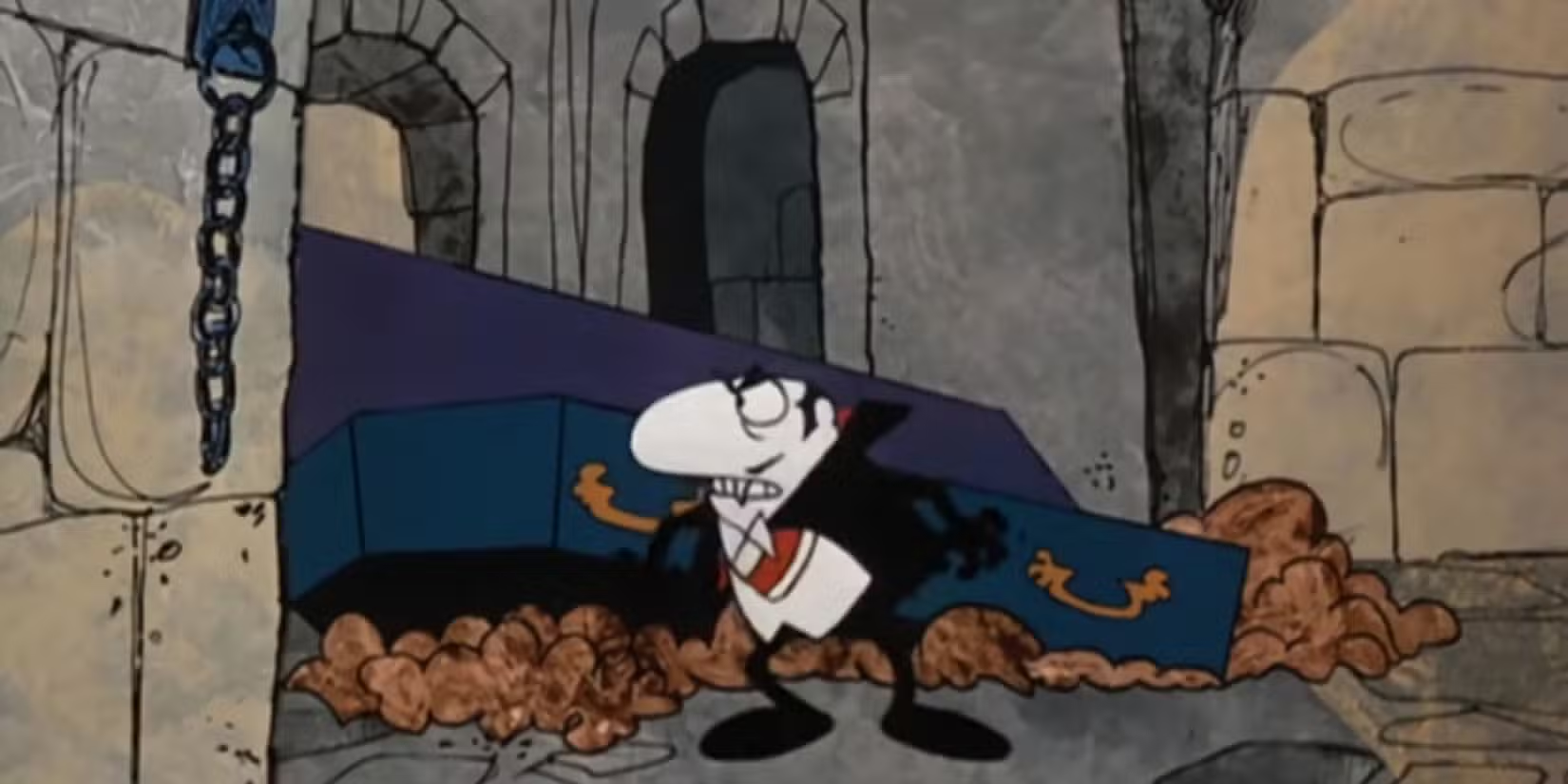
The Pink Panther finds himself lost in the Transylvanian wilderness and heads towards a castle to seek shelter. The building is full of all sorts of spooks, and a coffin in the basement, which the panther buries before going to sleep. Unfortunately, the coffin was the bed of a diminutive Dracula, who plans to have the panther for breakfast.
Pink Plasma‘s version of Dracula is far from the most intimidating, but he might be among the most persistent. No matter how many times he gets thwarted by the panther and chased around his own moat by a persistent shark, he keeps getting back up and trying again. It’s pretty commendable, even if it never works, and there’s something adorable about hearing him say “Blah, blah,” while running after his prey.

Once every century, a ritual can be performed to awaken the wicked vampire Count Duckula (David Jason). However, the most recent ritual accidentally substituted tomato juice instead of blood, causing Duckula to be reincarnated as a vegetarian. Since he lacks the usual vampire’s hunger for blood, he tries to adjust to the modern world, despite the wishes of his servants.
Duckula is an example of the friendly vampire trope, and a pretty good one at that. In Count Duckula, the underrated ’80s cartoon, he just wants to live a normal life distanced from his vampiric heritage, but every adventure he goes on tends to go from bad to worse. Jason’s performance does a great job conveying Duckula’s desire for a peaceful life while also giving the count a nice helping of dry wit.

After getting lost yet again, Bugs Bunny (Mel Blanc) finds himself in Transylvania. Unable to get help from a two-headed vulture (Julie Bennett), he approaches an ominous castle owned by the vampire Count Bloodcount (Ben Frommer) to ask for a phone. The count insists Bugs spend the night at the castle, but his attempts to feed on the rabbit are thwarted by a book of magic words.
Count Bloodcount is another classic example of a vampire, complete with a spooky castle, billowing cloak, and Eastern European accent. The animators have a lot of fun bringing him to life, with many of his movements giving him the appearance of a living shadow. His threat level is mitigated a bit due to how easily Bugs overcomes him, but all in all, he still leaves an impact as one of the more memorable minor Looney Tunes antagonists, especially thanks to his and Bugs’ magic duel near the end.

In his youth, Dracula (Phil LaMarr) was the world’s most powerful vampire and a boyhood icon to the Grim Reaper (Greg Eagles). He married a woman named Tanya (Diahann Carroll) and had a human son with her, but due to a misunderstanding, Tanya attacked him in his bat form, so Dracula left her. He now lives in a retirement home for other monsters but still knows how to cut loose and have fun.
This version of Dracula is an homage to the classic Blacksploitation film Blacula, which helps make him stand out compared to other adaptations. His love for dancing, take-no-nonsense attitude, and habit of calling people “Dummy” make him one of the most popular characters in The Grim Adventures of Billy & Mandy. Later, it is revealed that Dracula is the grandfather of Irwin (Vanessa Marshall), and though he’s upset to know his family is full of nerds, Dracula seems to try his best to be a good grandfather.

To defeat Star Command, Evil Emperor Zurg (Wayne Knight) creates NOS-4-A2 (Craig Ferguson), a robot that can drain the energy from other machines. He nearly succeeds by controlling the robotic space ranger XR (Larry Miller and Neil Flynn) but is defeated by Team Lightyear, who helps XR break free of the energy vampire. NOS-4-A2 later escapes his captivity and breaks free of Zurg’s influence, traveling the galaxy to sate his hunger for energy.
Making NOS-4-A2 a robot vampire allowed the crew of Buzz Lightyear of Star Command to still hit the horror notes found in vampire fiction without making the censors angry, since you can do all sorts of violence as long as it’s to a robot. Though he primarily affects machines, his bite, in combination with the radiation of the Canis Lunis moon, can transform humans into cyborg monsters called Wirewolves. Personality-wise, NOS-4-A2 checks all the boxes for a good animated vampire villain, accentuated by the posh British accent Ferguson chose to go with.

Following the death of his wife, Martha, Dracula (Adam Sandler) builds a hotel for monsters to keep his friends and his daughter, Mavis (Selena Gomez), safe from humans. As she ages, Mavis longs to explore the human world, though her father does everything in his power to keep her safe in the hotel. Despite his efforts, she eventually meets a human named Johnny (Andy Samberg), and the two fall in love.
Mavis brings youthful energy and a more level head to the Hotel Transylvania series, especially as the films continue. Compared to her father, she is more adventurous and compassionate, willing to see the brighter side of humanity. Eventually, she and Johnny have a son, and while motherhood does see Mavis become a bit more protective and take on some of Dracula’s parenting traits, she never loses her fun-loving spirit.
.jpg?q=49&fit=crop&w=500&dpr=2)
Dracula’s hotel for monsters is threatened by the arrival of Johnny, a human who happened upon it by random chance. Fortunately, Johnny helps Dracula and the rest of the monsters see that humans in the modern day aren’t as bad as the ones they had to hide from, and he becomes Dracula’s son-in-law when he marries Mavis. Dracula does his best to adjust to this new reality, especially when they have a child named Dennis (Asher Blinkoff), but it proves to be easier said than done.
Sandler’s take on the Prince of Darkness is more comedic and domestic than other portrayals, which pairs wonderfully with the expressive animation from veteran director Genndy Tartakovsky. He checks a lot of boxes for the protective helicopter parent who means well but can take things a bit too far, and has a bad habit of making plans behind Mavis’ back. Still, when the chips are down, he’s willing to endure even the sun itself if it means making his friends and family happy.

While trying to look for a hidden treasure stash in Gotham City’s graveyard, the Penguin (Tom Kenny) accidentally discovers the tomb of Dracula (Peter Stormare), whose remains were moved to Gotham after he was killed. Penguin accidentally spills some of his blood on the corpse, reviving Dracula, who enthralls Penguin to be his mortal servant. As he preys on humans to regain his strength, he prepares to resurrect his lost love, which brings him into conflict with Gotham’s Dark Knight, Batman (Rino Romano).
The Batman vs. Dracula is a spinoff of perhaps the most underrated Batman show, and it pulled no punches when it came to adapting the Prince of Darkness. When on the hunt, Dracula is a terrifying predator, ambushing his prey from the shadows with lightning-fast reflexes and pinpoint accuracy. When not hunting, he is civil enough but always reminds humans of his superiority, captured perfectly through Stormare’s arrogant yet charismatic delivery.

When Count Dracula (Graham McTavish) declared war on humanity, he summoned many powerful vampires to serve on his war council. The last to arrive was Carmilla (Jaime Murray), a powerful female vampire with nothing but disdain for men due to the abuse she suffered at the hands of her old master. She quickly begins to lose faith in Dracula’s plans to wipe out humanity and makes plans of her own to usurp control and dominate humans instead.
Castlevania is full of fantastic vampire characters, and Carmilla stands as one of the best. She likes to present herself as a Machiavellian schemer whose ambitions know no bounds, but beneath her charismatic facade is a broken woman lashing out at the world and desperate for a sense of control. Murray’s performance captures both sides of Carmilla, though some of her best work comes when the mask slips, and she is forced to confront those traits in herself that she despises in others.

The life of vampire king Vlad Dracula changed forever when he met a human scientist named Lisa (Emily Swallow). Amazed at her lack of fear and good heart, Dracula eventually married Lisa, and they had a son named Adrian (James Callis). Sadly, Lisa was burned at the stake for suspected witchcraft, causing Dracula to declare war on all of humanity with an army summoned straight from Hell.
Castlevania‘s take on Dracula is a major reason for this show’s high ranking among vampire television. He lives up to his reputation as the most powerful vampire through gorgeously animated action sequences, where he effortlessly fights off heroes and other vampires with superhuman strength and hellish abilities. Yet, Dracula’s greatest moments are the ones where his inner pain and shreds of humanity come to the surface, showing that, no matter how much power you have, we can all be brought down by grief.

Live television ratings have long been treated as the definitive scorecard in the entertainment business, but the latest numbers out of ABC suggest that story is increasingly incomplete. New multi-platform data shows that both “Dancing with the Stars” and freshman-turned-sophomore drama “R.J. Decker” are pulling in significant audiences well after their initial broadcasts, a trend that is reshaping how networks judge success — and, in at least one case, may have helped save a show from the chopping block.
“R.J. Decker,” the crime series starring Scott Speedman, entered its second season on shaky ground. The show had been considered a renewal bubble candidate after its freshman run last spring failed to make much noise in traditional same-day ratings. But its Season 2 premiere, freshly slotted behind “Dancing with the Stars” on Tuesday nights, has found new life in delayed viewing. According to seven-day cross-platform figures spanning Hulu, Hulu on Disney+ and a single ABC encore airing, the premiere drew a total audience of 9.61 million — the show’s best streaming showing since the second episode of its debut season back in March. The halo effect didn’t stop there: curiosity generated by the new season also drove a surge in viewership of the original pilot episode, which posted its biggest streaming week in nearly five months.
That kind of ripple effect is exactly what networks hope for when they pair a struggling scripted series with a ratings workhorse. By placing “R.J. Decker” directly after “Dancing with the Stars,” ABC effectively handed the drama a built-in audience of viewers who might never have sampled it otherwise. The strategy appears to be paying off, at least in the early going, giving the series a second chance to prove its staying power with a broader base of streaming-first viewers.
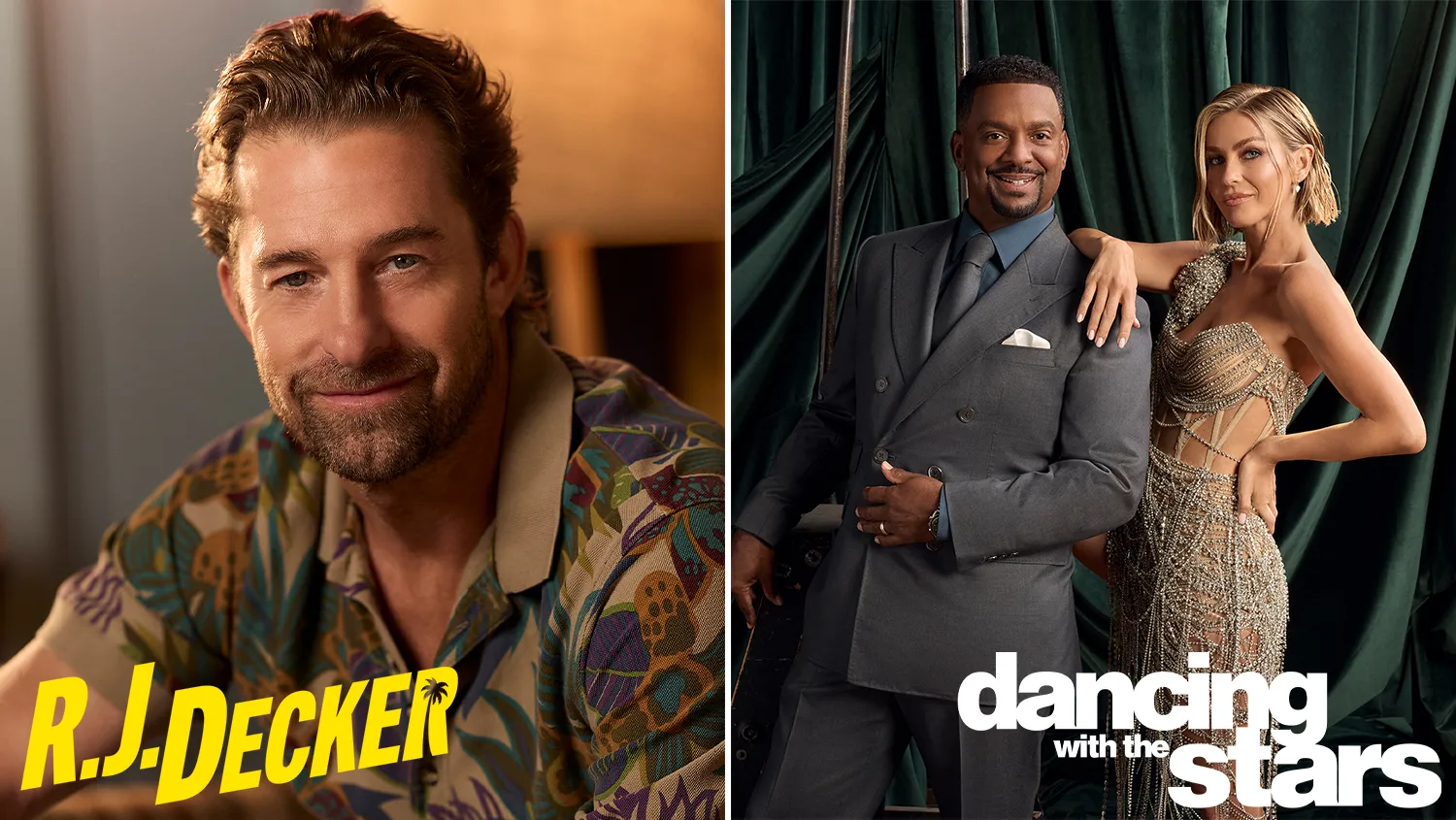
Meanwhile, “Dancing with the Stars” itself continues to defy expectations for a show now well into its third decade on the air. The Season 35 premiere faced a difficult comparison point: last year’s Season 34 debut was a standout hit for the long-running reality competition. Yet the new season still managed to climb 17% above that benchmark, pulling in 9.98 million viewers over seven days across Hulu, Hulu on Disney+ and other digital platforms, compared to 8.50 million for the prior season’s opener. Measured against the show’s initial same-day broadcast audience of 6.77 million, the multi-platform total represents a 47% jump — a reminder of just how much of the show’s real audience now lives outside the traditional Tuesday-night broadcast window.
Perhaps more notable is the broader trajectory: since “Dancing with the Stars” returned to ABC in 2023 after a stint on Disney+, the series has grown its audience every single season, whether measured in live same-day numbers or the fuller seven-day multi-platform tally. That kind of consistent growth is a rarity for any series in its 35th installment, let alone one built around a format — celebrities paired with professional dancers competing week to week — that has been a staple of American television for two decades.
Industry watchers say the numbers underscore a broader shift in how success is defined in the streaming era. Same-day linear ratings, once the only currency that mattered for advertisers and network executives alike, are increasingly viewed as a partial snapshot rather than the full picture. Shows that might look soft on paper the morning after they air can reveal themselves to be far more resilient once delayed streaming and on-demand viewing are factored in over a full week — a dynamic that clearly worked in favor of both “R.J. Decker” and its higher-profile lead-in.
For ABC, the pairing of a proven reality staple with an unproven scripted drama looks, for now, like a smart bit of scheduling chess. Whether “R.J. Decker” can sustain its newfound momentum once the novelty of its premiere fades remains to be seen, but for a show that was reportedly fighting for its survival just months ago, a nearly 10-million-viewer multi-platform debut is about as strong a lifeline as network television can offer.
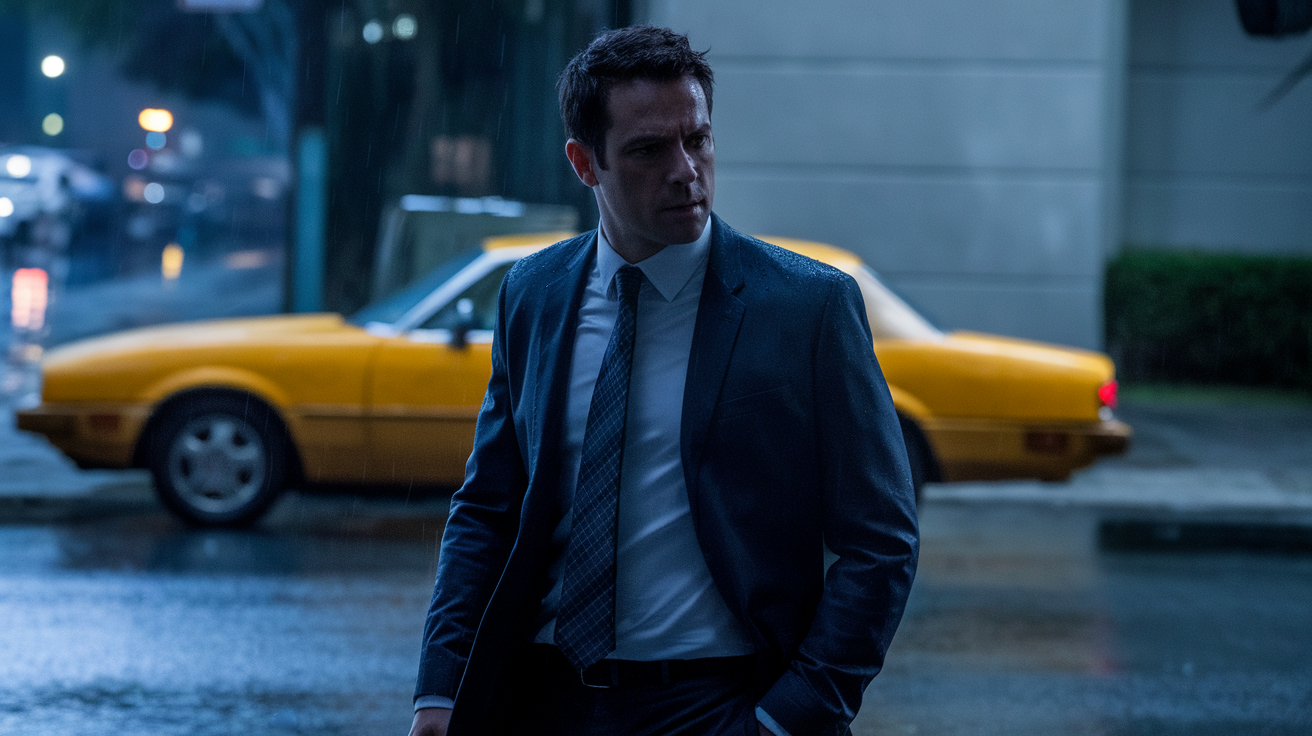
Hollywood’s game of musical chairs continues, with rising actor Daniel Zolghadri tapped to replace Charles Melton in Elijah Bynum’s upcoming crime thriller “My Darling California,” according to a report from Variety. The shuffle adds another name to what has already shaped up to be one of the more intriguingly cast independent productions on the 2026 calendar.
Zolghadri, who broke through with a starring turn in Prime Video’s “Tales from the Loop” and has since built a résumé of sharp supporting work, will take on the role of Kent — described in the film’s official logline as a young man “caught in an escalating conflict that quickly spirals beyond his control” after a figure from his past resurfaces and forces him to confront “long-buried questions.” It’s the kind of morally tangled, slow-burn role that has become something of a specialty for the actor, whose recent credits include “Y2K,” “If I Had Legs I’d Kick You” and “Lurker.”
No explanation has been given for Melton’s departure from the project, and representatives for the “Riverdale” and “May December” star did not immediately respond to requests for comment. Cast exits of this kind are common in the lead-up to production, often tied to scheduling conflicts rather than any dispute over the material, but the timing — with the film reportedly gearing up to shoot entirely in California — suggests the production was eager to lock in a replacement quickly rather than delay.
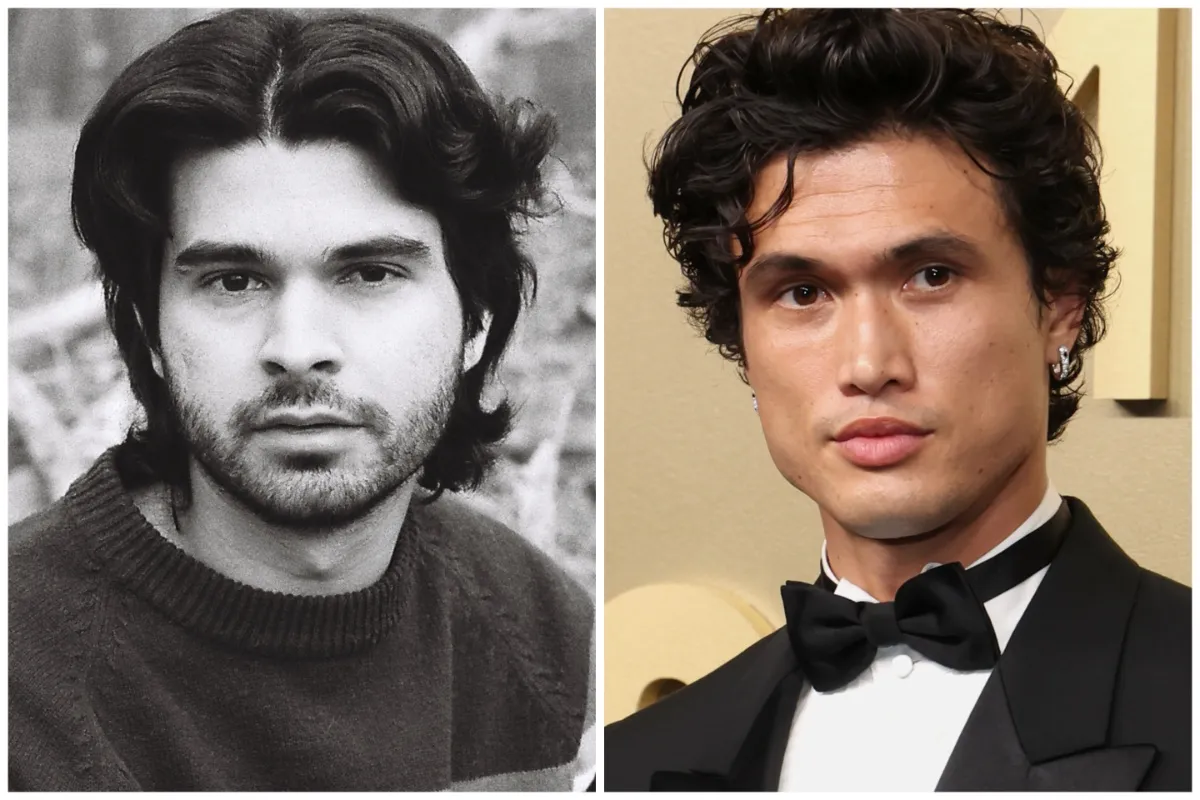
Whatever the reason for the shakeup, Zolghadri is stepping into a genuinely stacked ensemble. “My Darling California” boasts Jessica Chastain, Chris Pine, Chris Evans, Mikey Madison and Don Cheadle, a lineup that reads more like an awards-season drama than a typical crime picture. The story is set in 1980s Los Angeles and follows a televangelist and his newscaster wife as they scramble to contain a spiraling, multi-faceted scandal threatening to unravel their public lives — a premise that seems tailor-made for the kind of moral rot and media spectacle that has become a recurring theme in prestige period pieces set in that era.
Director Elijah Bynum, best known for the A24 coming-of-age drama “Hot Summer Nights” (which helped launch Timothée Chalamet’s film career) and the more polarizing 2023 drama “Magazine Dreams” starring Jonathan Majors, seems to be continuing his interest in stories of ambition curdling into desperation. Pairing that sensibility with a cast of this caliber signals a production aiming squarely at the kind of adult-oriented, character-driven filmmaking that has become increasingly rare in an industry dominated by franchise tentpoles.
For Zolghadri, the casting represents another significant step up the ladder. After cutting his teeth in smaller roles in Bo Burnham’s “Eighth Grade” and HBO’s “Fahrenheit 451,” he’s spent the past few years quietly accumulating credits in acclaimed indies, including his latest, Alexandrea Pechman’s “Magazine,” which premiered at the Toronto International Film Festival earlier this month. He’s also lined up to star in “The Temple” from directors Yonah Lewis and Calvin Thomas, as well as Annie Baker’s “Ancient History” for A24 — a run of projects that positions him as one of the more sought-after young actors working in the independent film space right now.
“My Darling California” is being produced by David Hinojosa, Alex Coco and Sébastien Raybaud, alongside Scott Budnick and Ameet Shukla of 1Community and Emily Blavatnik and Danny Cohen of Access Entertainment, with Len Blavatnik and Zach Nutman serving as executive producers. The project was developed, financed and sold by Anton, which is handling international sales alongside CAA Media Finance for U.S. and global rights.
With a starry cast, a filmmaker known for stories of ambition and downfall, and now a fresh lead in Zolghadri, “My Darling California” is shaping up to be one of the more closely watched crime dramas heading into production — a reminder that even amid last-minute cast changes, the pedigree behind a project can keep anticipation high.

Big Brother is one day away from the BB28 finale and there’s still good stuff happening to talk about. We’ve got outrage from the fans over Dee Valladares entry into the jury house. Julie Chen Moonves said who she wants to win this season. And the latest on the AFP polls. Plus, outrage of the day.
Let’s start with Julie’s preference for the winner of BB28. Last year she said she thought Morgan Pope would win but didn’t say she should. In other seasons, Julie stated a clear preference.
In BB18 she wanted Paul Abrahamian to win. And in BB13 Julie said she wanted Rachel Reilly to win. Julie said she wants Taylor Brown to win for a lot of reasons. Julie brought up the Taylor not leaving her pod thing.
But Julie said in every diary room session, Taylor knew every beat of what was happening. Julie said that Taylor’s smart and won competitions when she had to. Julie said Taylor started winning comps at the end that were not easy.
She also said she wants Taylor to win because they both love Jesus. And Julie said she thinks Taylor has mercy and grace. And we know Julie never wanted a Survivor to win.
Speaking of finale night. Rick Devens and Drew Campbell were talking about how to answer juror questions if they are in the chairs. Devens joked about referring questions over to Drew that he did not want to answer.
And then they both joked about refusing to answer idiot questions. Meanwhile, Taylor worked on her hair. It took hours to take out her extensions. She wound up with a trash bag full and said “this is so heavy—can’t believe I had this on my head.”
Taylor said that’s why her head hurt. Taylor got a perm kit to straighten it so looks like she might do a sleek look. And Drew offered to help Taylor take out her extensions. Drew said he’s really bored and could help. Taylor said no.
Cory Wurtenberger from BB25 said on a podcast that it’s a rule you can’t talk game in jury but said production can’t and doesn’t enforce it. Cory said when a new juror comes in, lots of crew are there to film so you cannot talk game.
But they leave and Cory said there’s only about two handlers to five jurors. Cory said the handlers do not care if you talk game just not in front of cameras. He said everybody talks game if they want.
Cory also said you get to keep your DVD you bring into jury with your eviction and all the goodbye messages. Cory said the goodbye messages impacted his vote and said some of them showed each other their goodbye messages.
Here’s latest outrage. People are upset that Dee might have gone into the jury house rather than doing just the jury round table and being sent directly off to hotel sequester.
They usually pull the jurors out of the jury house a couple of days before the finale and stick them into a hotel where they can’t talk to each other or see any news. That’s standard.
There was an interview that said, “We caught Dee on her way to the jury house.” And people started screeching. First, the jury roundtable films at the jury house and Dee was participating in it, so of course she’d be there.
Second, if Dee did wind up in the jury house for a couple of days because of the weird lag this season with extra days before finale, so what? The outrage is the assumption she’s vote rigging for Devens or Drew.
Even if Dee went straight into sequester, when they’re in the green room finale night, I expect her to whisper in people’s ears. I would not be shocked if Devens came out at F3 and whispered in Angela Murray and Dee’s ears before he sat down.
Devens and Dee are Survivors and tribal council whispering is standard. Speaking of Survivor, Devens was specifically told before he came into Big Brother that he could not lie about advantages or create fake advantages—something Devens was known for on Survivor.

Julie said that Dan Gheesling was not hosting round table this year and it was going to be somebody who’s played the game before but was not a winner. People are thinking it might be Morgan Pope from BB27.
Dee was evicted on September 24th. And then on September 26th, Morgan posted that she was filming something really cool today and said, “Stay tuned.” I’ve seen people saying Morgan denied filming round table on her Patreon, but didn’t personally see it.
Finale night is ninety minutes that should be jam packed. Julie said Rome Seymour and Lyric Medeiros will do an update at the finale. But Julie said it’s not what you think. People think Rome and Lyric are going to announce they’re engaged. But that seems too obvious. Maybe they’re already married…
In the most recent AFP polls, Drew’s in the lead with Devens a close second and Yash Patel in a distant third. Everybody after them are in single digits. Voting ends Thursday at noon EST, 11:00 am Central, 9:00 am Pacific.
Taylor thinks that Mallory Aurichio or LaTrice “Lala” Verrett will win America’s Favorite Player. Drew thinks it might be Yash.
And Julie said in a recent interview she’d like to see Jason De Puy, Yash and Kamuela “Kamu” Kirk back to play Big Brother again but then said she’s on the fence about Kamu, maybe Haley Thogmartin instead.
:max_bytes(150000):strip_icc():format(jpeg)/young-sheldon-tout-9fc8ec4667a846f88718a3608ca21fca.jpg)
This prequel series is now as old as the boy genius was when it premiered.

For five years, two vintage Polaroid cameras stood permanently rigged inside a rambling, dilapidated apartment in Germantown, Philadelphia. They were not props or set dressing. They were witnesses. Behind them was artist Katherine Hubbard, and in front of them, again and again, was her mother, Antonette Berger — a woman whose mind was slowly slipping away from her, and whose defiant, theatrical spirit refused to go quietly.
The result, a body of work titled The Great Room and collected in the book One Fifty One, is now on view as part of Hubbard’s solo exhibition at Studio Voltaire in London. It is, by any measure, an unusual entry in the entertainment and art world’s autumn calendar — not a celebrity memoir or a splashy biopic, but an intimate, unflinching record of illness, intimacy and the strange intrusions of caregiving, told through a family’s most private rooms.
Hubbard’s story begins, as so many pandemic-era stories do, with a nagging unease that took time to name. In 2020, visiting her mother in Philadelphia after Covid restrictions eased, Hubbard began to sense that something in Berger’s behaviour had shifted. “It was impossible at the time to say what I was noticing, but something was off,” she has said. The eventual diagnosis was LATE — limbic-predominant age-related TDP-43 encephalopathy, a condition that mimics Alzheimer’s but progresses more slowly, eroding memory and daily function over a longer, more agonising arc.
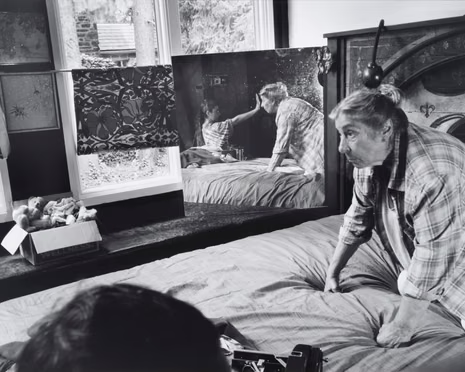
What followed was, in Hubbard’s words, a “painful, drawn-out and confusing process,” followed by grief. Thrust into the role of what she calls “a caretaker under duress,” she responded not by looking away but by looking harder — setting up her cameras in her mother’s apartment and refusing to take them down.
The apartment itself is no ordinary backdrop. Berger owned and rented out the sprawling, maze-like building for four decades, and it functioned for years as something like a neighbourhood hub — tenants dropping by, complaints about broken pipes, a constant hum of people. It stood in sharp contrast to the “more modest” house where Hubbard actually grew up, and its grandiose, crumbling scale gives The Great Room — a title borrowed from Berger’s own name for the apartment’s main living space — its startling visual drama.
Some of the images verge on the theatrical in the most literal sense. At one point, Hubbard built her mother a makeshift stage out of a set of rotting 1960s mirrored doors she found abandoned in the garage, mounting them on stands so Berger could wheel them around the room. Mirrors recur throughout the series, and Hubbard describes them as a deliberate strategy: a way to insert herself into the frame alongside her mother rather than observe from a safe distance. “It’s a way of never leaving my mum alone in the image, to project myself into the image,” she explains. “If I’m in the image there with her, it changes some of the authority and power dynamics of the camera.”
That refusal to simply document from outside — to instead share the frame, the vulnerability, even at one point posing nude and covered in Vaseline to make body prints with her mother — gives the work an emotional charge rarely seen in photography about illness. These are not clinical or pitying images. Berger, described by her daughter as “incredibly headstrong, eccentric, and difficult,” often commands the frame with an unexpected authority, bathed in the kind of majestic light more commonly associated with portraiture of the powerful than the ailing.
Hubbard is candid about the limits of the camera in the face of a disease that erases the very thing photography claims to capture. “The camera fails us in so many ways,” she says, “and the absurdity with dementia is that I was constantly making lots of images of things that can’t be shown in an image. But I make images because of how they feel, not how they look.” It’s a striking admission from an artist whose work depends on the visual, and it reframes the entire project: not as an attempt to preserve her mother’s likeness before it’s gone, but as an attempt to hold onto a feeling — presence, tenderness, the strange choreography of care — that resists straightforward depiction.
As the years passed, mother and daughter moved through daily domestic rituals together in the apartment, eventually beginning the slow, sorrowful work of packing it up so Berger could move into a care facility. Hubbard describes a turning point in the process when the camera itself seemed to disappear from their awareness. “Something wonderful happened at some point where we both stopped thinking about the cameras, and we stopped seeing ourselves as an image — the cameras were just present, and the time to make photographs created interruptions into an otherwise brutal, demanding time.”
That sentence perhaps best captures what makes The Great Room resonate beyond the art world into something more universally recognisable: the way ritual — even one as unusual as a standing photo session — can become a lifeline amid the exhausting, disorienting work of caring for a parent whose mind is receding. In an entertainment landscape often dominated by spectacle, Hubbard’s exhibition offers something quieter and more enduring: a daughter’s attempt to keep making pictures of a person who is, in her words, “completely her own person,” for as long as that person remains reachable through a lens.
The Great Room and related installations are on show as part of Katherine Hubbard’s solo exhibition at Studio Voltaire in London, alongside the publication of her book One Fifty One.
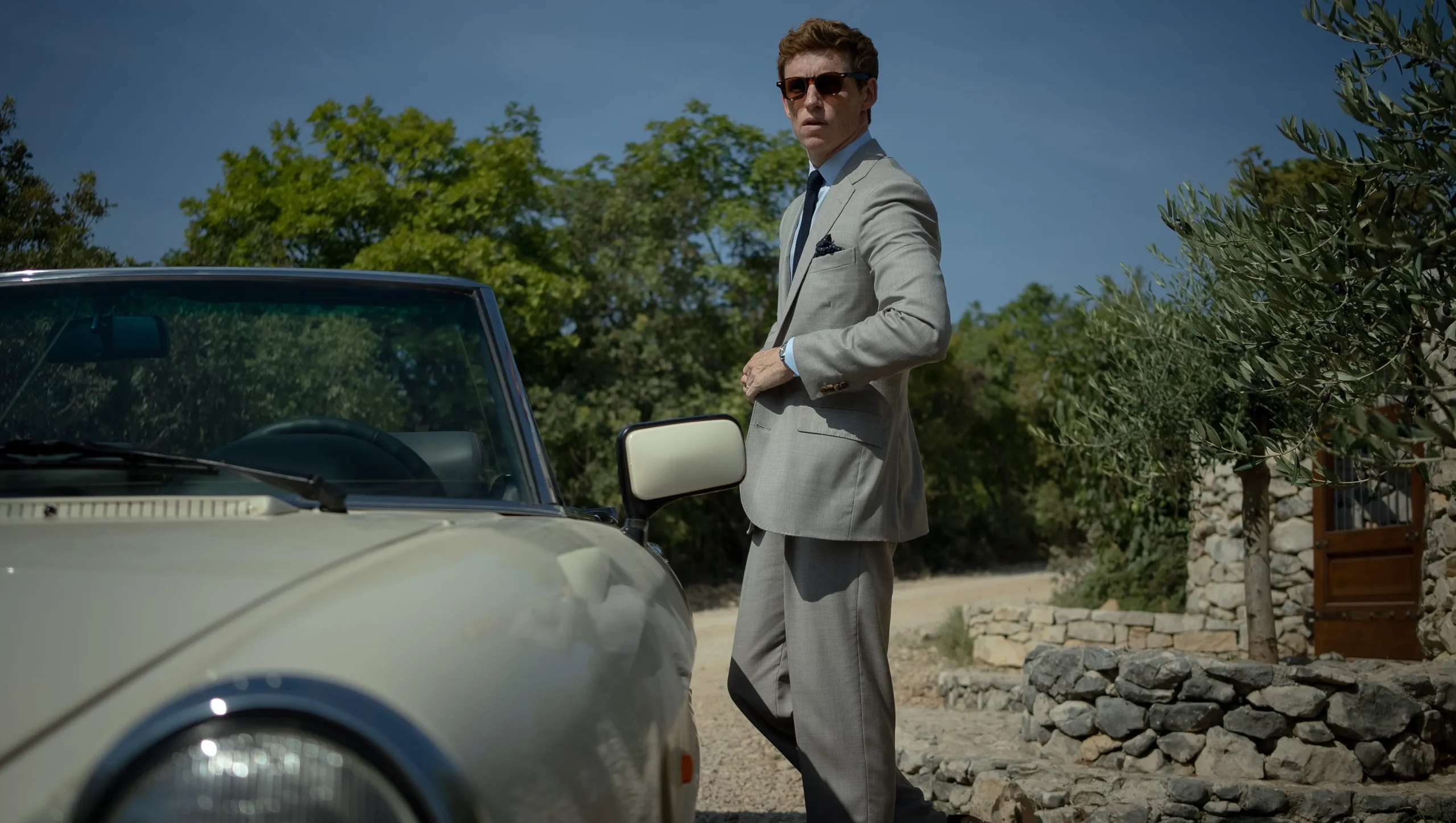
Sky is preparing to hand its buzziest dramas, including “The Day of the Jackal” and “Brassic,” a shot at Britain’s biggest free-to-air stage, as the broadcaster works through the final stages of its £1.6 billion ($2.1 billion) takeover of ITV’s network operations.
Cécile Frot-Coutaz, chief executive of Sky Studios and the company’s content chief, confirmed the strategy at the Royal Television Society London Convention on Tuesday, telling attendees that Sky wants to experiment with “windowing” its premium originals onto ITV in the years ahead. Deadline first reported the broad outlines of the plan back in July; Frot-Coutaz’s remarks now put official flesh on the bones.
The idea, as she described it, is fairly simple: air earlier seasons of a hit show like “The Day of the Jackal” on ITV shortly before a new season debuts on Sky, using the free-to-air platform to build buzz and pull in viewers who might not otherwise encounter the series. “There’s various permutations,” Frot-Coutaz said, suggesting the company is still working out exactly how far it will push the model.

It isn’t a wholly new idea for Sky. Frot-Coutaz pointed to “Brassic,” the gritty Lancashire comedy-drama, as a test case — Sky previously placed its first four seasons on Netflix and found the exposure translated into fresh viewership rather than cannibalizing its own audience. “We saw that we had been able to find some new headroom [in viewing] because we’d exposed the show to an audience that we didn’t have,” she said.
The ambitions don’t stop at scripted drama. Sky, which Frot-Coutaz noted controls roughly 40,000 hours of sports programming, is also eyeing a bigger free-to-air footprint for its live events coverage — including the tantalizing prospect of Premier League football reaching viewers who don’t currently pay for Sky. “There’s also huge opportunities in terms of putting more sports on free-to-air,” she said. “We think everybody wins from that. The viewer wins, but also the leagues win.”
The comments came on a day of broader reflection on the deal’s implications for British broadcasting. ITV chief executive Carolyn McCall, speaking earlier at the same event, said her company had little alternative but to sell its network arm to Sky given the intensity of competition reshaping the industry, describing the landscape bluntly as “ferocious.”
Crucially for ITV loyalists worried about losing familiar staples, McCall stressed that the takeover comes bundled with a £2.1 billion output deal guaranteeing ITV Studios will keep producing shows such as “Love Island” and “Coronation Street” for broadcast on ITV through 2032. Asked whether Sky might try to unwind that commitment down the line, McCall didn’t mince words: “Good luck.” She added that Sky, far from scaling back, is likely to commission even more from ITV Studios — which will continue operating independently and remain listed on the London Stock Exchange despite the change in ownership upstream.
Taken together, the remarks paint a picture of a deal designed less to dismantle ITV’s identity than to fuse it with Sky’s deep bench of prestige content and sports rights. For viewers, that could eventually mean stumbling across a Sky original or a Premier League match without needing a subscription — a shift that, if it plays out as described, would mark one of the more consequential changes to how premium British television reaches its audience in years.
Us has affiliate partnerships. We receive compensation when you click on a link and make a purchase. Learn more!
If your end goal is looking polished, you probably reach for black pants. But Kate Middleton makes the case for something even richer, classier and more fun, and it lines up with one of the biggest 2026 color trends. We found her chocolate-brown pants style on sale for only $20!
During a recent royal visit to the Isle of Bute in Scotland, Middleton stepped out in an outfit that seemed elevated without even trying. She wore a simple sweater, Chelsea boots and brown jeans that put boring black jeans to shame. Cocoa-toned denim read warmer, softer and much more expensive — effortlessly.
Get the Gloria Vanderbilt Amanda Tapered Jeans for $20 (was $23) at Amazon! Please note, prices are accurate at the date of publication but are subject to change.
These Gloria Vanderbilt Amanda Tapered Jeans have that same chocolatey shade, high rise and flattering tapered look. And if you’ve sworn off tapered ‘skinny-leg’ silhouettes, we get it, but hear Us out. Cotton-and-elastane fabric makes them as stretchy as lounge pants.

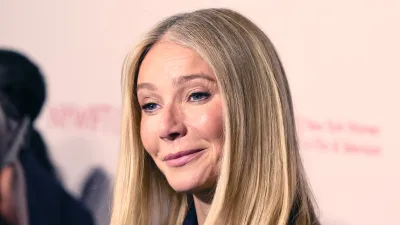
If it seems like rich girls are wearing polished trousers instead of denim, that’s because they are. Gwyneth Paltrow joins the crew, wearing billowy wide-leg pants that take any casual look to classy heights. This similar pair is only $40! At a conference discussing Goop, Paltrow wore a simple sweater and wide-leg trousers. Wide-leg pants, […]
One five-star shopper wrote, “Absolutely the most comfortable jeans I’ve ever worn. Form-fitting yet stretchy . . . I own three pairs now and switch between colors (first pair is seven years old and still in excellent condition).
Style these comfy wonders like Middleton with a sweater and Chelsea boots, or lean into evening mode with a silky blouse and heeled mules. Another happy fan, who picked brown, shared, “I bought this for a trip I’d planned where I’d need to dress them up. Easily pairs with dressy sweaters and tops.”
Chocolate brown denim has that rare quality of feeling both current and completely timeless, and Middleton’s Isle of Bute look is the proof. At only $20, these pants are a low-stakes way to nail the trend.
Get the Gloria Vanderbilt Amanda Tapered Jeans for $20 (was $23) at Amazon! Please note, prices are accurate at the date of publication but are subject to change.
Looking for something else? Explore more stylish jeans, and don’t forget to check out all of Amazon’s Daily Deals for more great finds!
UsNow Fall Sale Alert: These chic fashion finds are up to 60% off – plus free shipping
Welcome to fall with our biggest sale of the season. Our favorite dresses, tops, handbags, and shoes are all on sale + free shipping. Inventory is limited so hurry before they’re gone.

Often, we find ourselves choosing between comfortable and stylish jeans. But Halle Berry reminds Us that we don’t have to take sides. In fact, her chic, cool-girl denim style naturally balances both, and we’re copying it for only $40! Spotted running errands in Los Angeles, Berry wore a black tank, a designer hat, Mary Jane […]

After months of speculation that overseas tourists might soon have to pay to walk through the halls of the British Museum or gaze up at the Natural History Museum’s blue whale, the UK government has settled the question: admission will remain free for all, regardless of where visitors call home.
The Department for Digital, Culture, Media and Sport confirmed the decision on Tuesday, closing the door on a proposal floated earlier this year that would have seen international visitors charged for entry to England’s 15 national museums, 12 of which are based in London. The idea had been under review since March, as ministers searched for new ways to plug funding gaps at cash-strapped cultural institutions.
In the end, officials concluded the risks outweighed the rewards. A DCMS spokesperson said charging overseas visitors could deter domestic ones too, and that any financial upside “would not be felt equally across the sector” — meaning some museums might have profited while others were left worse off.

Culture Secretary Lisa Nandy framed the decision as a matter of principle as much as policy. “Our museums are the places that light up the world,” she said. “That’s why they must be free, forever, for everyone to access.”
The debate had been reignited by a review from former Labour minister Baroness Margaret Hodge, published last year, which argued that charging foreign tourists would bring Britain into line with countries such as New Zealand and Singapore, both of which operate tiered pricing models favouring residents. But that argument ultimately failed to sway the government, which has now reaffirmed a policy dating back to 2001, when free admission to national collections was first introduced.
For the institutions themselves, the announcement brings a mix of relief and cautious optimism. The British Museum and the Natural History Museum are among the most visited attractions in the world, drawing 6.4 million and 7.1 million visitors respectively in 2025 alone. Their directors welcomed the news, even while acknowledging that a charging scheme might have offered a short-term financial boost.
Natural History Museum director Dr Doug Gurr put it plainly: “Free museums aren’t a cost to the economy — they’re a key reason the economy benefits from tourism in the first place.” He added that while his own institution stood to gain from charging tourists, the wider museum sector would likely have suffered, and called instead for a share of tourism revenue to be reinvested directly into the attractions that help generate it.
British Museum director Nicholas Cullinan struck a more historical note, pointing out that free access was baked into the institution’s founding mission nearly three centuries ago. “When the British Museum was founded as the world’s first public national museum in 1753 it was to be free for ‘all persons’,” he said. “So, we are delighted by the government’s announcement that free entry for all will be maintained.”
The government insists it isn’t abandoning museums to fend for themselves financially. Alongside the decision, DCMS pointed to a package of support that includes £760m for museums through the broader £1.5bn Arts Everywhere Fund, £600m in infrastructure investment for national collections, and a £13.6m transformation programme designed to help institutions build more sustainable business models for the future. Ministers say they will also work with Arts Council England on a long-term strategic plan for the sector, with further details expected in the coming months.
The stakes are considerable. According to DCMS figures, national museums contribute more than £1bn a year to the UK economy, drawing global visitors who often spend on hotels, restaurants and shops well beyond the museum gift shop. Supporters of free admission argue that any entry fee — however modest — risks undermining that broader economic pull, particularly for budget-conscious travellers weighing up how to spend their limited time and money in London.
Not everyone was pushing for charges, either. Earlier this autumn, several museum leaders publicly warned against introducing fees for overseas visitors, cautioning that the administrative cost of policing who counts as a “tourist” versus a UK resident could itself eat into any revenue gained — to say nothing of the reputational risk of appearing to charge foreign guests more than locals.
For now, the message from Whitehall is unambiguous: Britain’s museums will remain, as they have been for nearly a quarter of a century, open to everyone at no cost. Whether that guarantee proves durable amid ongoing funding pressures across the arts and culture sector remains to be seen — but for millions of visitors planning trips to London and beyond, the free ticket stays firmly in place.




Weekend Open Thread: J.McLaughlin – Corporette.com


Anthropic turns Claude into an AI marketplace with 2,000+ plugins and connectors


OpenAI is preparing “o,” an always-on ChatGPT assistant that could handle email
Perpetua Resources at Mining Forum Americas 2026: shift to construction


Flock Safety camera hack yields 1.6M images, but expert says network safe


These 17 Amazon Fall Dresses Totally Conceal the Tummy


5 Major New Technologies Elon Musk’s Companies Are Racing to Build Across Space, AI and Robotics This Year

Wall Street Giant Warns AI Agents Could Trigger a New Kind of Bank Run
Greatland Resources at Mining Forum Americas 2026: cash-rich growth push

Crypto’s Split Screen: Washington Tightens the Rules as Markets Wobble and Hackers Strike Again
Security Breaches, Wall Street Deals and Tax Headaches Define a Turbulent Week in Crypto
Explainer-What has turned the Afghan Taliban and Pakistan from partners to foes?


Andreessen Horowitz backs AI-era college alternative with $42M


Alternatives to Animal Testing Are Finally Taking Off

Being student with no income, while ur Family talks about financial problems around u#viralytquotes


Tokenised Deposits vs Stablecoins: Why Thailand’s Cautious Path Differs from Hong Kong and Singapore


KOSPI Closes at 7,080.92 Up 0.9% as Samsung Leads Into Chuseok After Giving Back Open


Anthropic rolls out up to $250 in free Claude Code credits, but only for cloud sessions


Romania, Georgia and Latvia Lead Latest WHO-Based Ranking


What is the Budget and what could be in it?


You must be logged in to post a comment Login