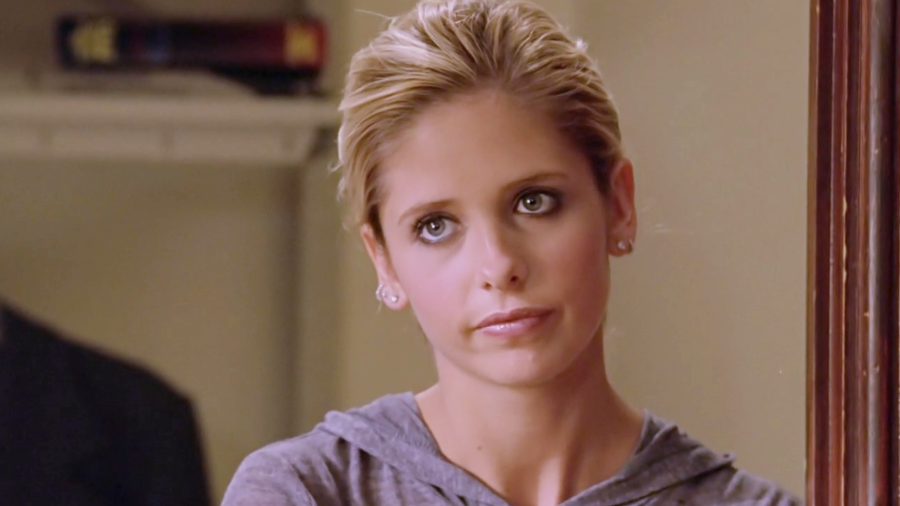
It has been a very rough time to be a fan of Buffy the Vampire Slayer. In the last year, Michelle Trachtenberg, who played Buffy’s sister, tragically died. Last week, Hulu officially killed the TV show revival that was going to bring Buffy Summers back to the small screen. Most recently, Nicholas Brendon, who played Xander Harris, died at the age of 54.
It didn’t take long for his former Buffy costars to write memorial posts on social media platforms such as Instagram; some were better than others, but all of them were moving in their own way. However, as someone who had been keeping up with the Xander actor before his death, I am haunted by a secret that the fandom doesn’t really want to talk about. You see, Nicholas Brendon hated Sarah Michelle Gellar, and he made a series of very nasty, very public allegations about her mere days before he died.
The Zeppo’s Last Ride
This came in the form of Facebook, where Nicholas Brendon went live on March 14, less than a week before his untimely death. The video seems that much more surreal now: Brendon is constantly moving back and forth in a rocking chair (he had an eclectic passion for rocking chairs) while violently coughing; he blamed the smoke from his cigarette, joking at one point that he sounded like Bane. During the 45-minute video, he discussed several aspects of Buffy the Vampire Slayer before suddenly and unexpectedly leveling various accusations against lead actor Sarah Michelle Gellar.
The comment started innocuously enough, with Nicholas Brendon saying, “I believe that the way that the show ended shouldn’t have ended the way that it did.” Soon, though, he singled out Sarah Michelle Gellar, claiming that “She worked really hard, but she sort of f***ed the show, in a way.” Specifically, he hated how “She told everyone she was leaving way too late into the series, so Chris Snellgrove Joss [Whedon] was not prepared for that…it wasn’t fair to the crew, the cast or the show.”
A Surprise Defense Of A Canceled Icon
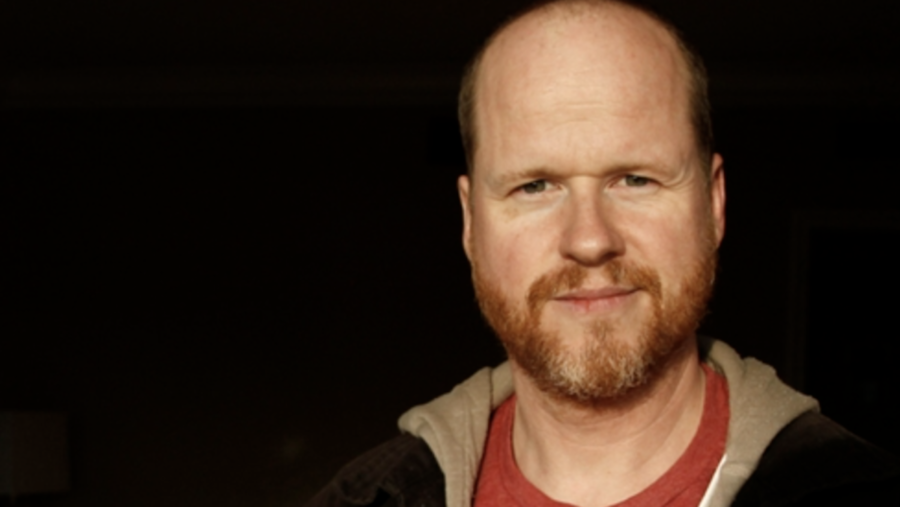
Speaking of the controversial showrunner, Brendon was seemingly one of the last of the Buffy actors to openly support Joss Whedon. In this same Facebook video, he argued that Hulu should not have tried to reboot Buffy without Whedon’s involvement; however, Whedon quietly retired from public and professional life after multiple allegations that he created a hostile work environment and was personally toxic towards his cast. After Cordelia actor Charisma Carpenter made a series of damning allegations about Whedon, she was openly supported by Buffy actors like David Boreanaz, Michelle Trachtenberg, and Sarah Michelle Gellar.
While Brendon had not often publicly criticized Gellar, many read his continued defense of Whedon as an indirect criticism of her. For example, the Buffy Summers actor offered a short and simple stance of support for Charisma Carpenter, writing, “I stand with all survivors of abuse.” Meanwhile, Brendon supported Whedon and minimized allegations against him, claiming they were just “bullsh*t…cancel culture.”
Advertisement
In that creepy Facebook video right before he died, Brendon didn’t mince words: in addition to continuing his full-throated support for Whedon, he also blamed Gellar for wanting to stop acting in Buffy the Vampire Slayer after Season 7. Previously, Gellar claimed that she wanted to leave the show because she was physically and mentally exhausted; she wanted to enjoy life with her new husband (Freddie Prinze, Jr.), and she felt there was nothing new to do with her character. It didn’t help that, like many Buffy fans, she really hated Season 6.
Saying Goodbye To Our Childhood Hero
Sadly, Brendon saw her departure as a personal attack that took away his meal ticket. To some degree, he was right: he never had any major roles after Buffy ended. Arguably, though, this was due less to his skills as an actor and more to the very public drug and alcohol addictions he suffered from. By all accounts, Gellar was always supportive of Brendan, whose struggles went all the way back to their Buffy days. But that support didn’t keep Brendon from seeing her as an enemy in the end.
All of this adds another layer of tragedy to Nicholas Brendon’s untimely death. His career peaked decades ago, and he obviously resented Sarah Michelle Gellar for leaving the show and prematurely ending the greatest role he would ever have. Given enough time, Brendon could still have been a part of any future attempts to reboot Buffy the Vampire Slayer. Now, though, he was taken from us far too soon, and in a horrific twist, he died hating the woman who helped make him famous.
The sci-fi genre has received a lot of attention recently with shows like Pluribus, Severance, Murderbot, and many more. However, one notable entry into the genre that deserves more attention isn’t particularly new. In 2009, sci-fi fans were introduced to the fascinating superhero comedy Misfits, which follows a group of teens in trouble with the law as they accidentally gain supernatural powers, placing them in danger. Not only is it an original take on the traditional superhero origin, but with five seasons,Misfits will keep you entertained for a while, especially as it only gets better.
With a talented cast, many of whom were only beginning their careers, Misfits becomes a coming-of-age story as the characters grow from misbehaving teens into more balanced, though still flawed, adults. Even as the cast changes, the show remains engaging with its dark and cynical exploration of superpowers. In this way, Misfits was ahead of its time. These days, there are many gritty superhero shows that question the traditional story, from The Boys to Umbrella Academy to Doom Patrol, but at the time, Misfits was a unique concept. This deconstruction of the superhero narrative highlights the characters’ flaws as well as their powers, creating a more complex and rewarding story that viewers can easily invest in.
Advertisement
What Is ‘Misfits’ About?
While there are many twists along the way, Misfits follows a group of superpowered teens as they figure out who they are. The story begins with Alisha (Antonia Thomas), Simon (Iwan Rheon), Kelly (Lauren Socha), Curtis (Nathan Stewart-Jarrett), and Nathan (Robert Sheehan), five young individuals doing community service, when a supernatural thunderstorm hits. This gives them unexpected superpowers, or most of them. Nathan struggles to figure out what he can do, while Alisha realizes she can arouse people with a touch, Simon turns invisible, Kelly develops telepathy, and Curtis can rewind time. Yet, they are not the only ones affected; their probation officer, Tony (Danny Sapani), receives superstrength, but it also amplifies his rage, sending him into a frenzy directed at the children. After killing him in self-defense, they must hide the truth of what happened, including their powers, which is easier said than done, especially once Tony’s fiancée and fellow probation officer, Sally (Alex Reid), comes into their lives.
However, with five seasons, that is only the beginning of their journey. The threats they face grow, going from angry probation officers to religious cults and power-switching villains. This allows the story to develop in unexpected ways, and it certainly takes advantage of that. Misfits often takes bizarre twists, incorporating concepts like time travel and resurrection, which are always good for a surprise. However, the show also features grounded elements by showing realistic character struggles, such as difficult family situations, exploring sexuality, and a lack of self-confidence. The result is an exciting series that is impossible to stop.
The cast of Misfits after they’ve been knocked onto the groundImage via Channel 4
While superheroes have become widely popular, Misfits doesn’t follow all the classic hallmarks of that genre. The series is a less optimistic version of the story as the characters struggle more than ever after they get their abilities. With a grim and violent tone, Misfits doesn’t follow your typical heroes, and that is especially clear in the abilities they receive. The group doesn’t get random powers, but ones that highlight their flaws and insecurities. Take Simon, for example, who often feels ignored and isolated even before he can turn invisible, which only amplifies those feelings. Similarly, Curtis’ power of rewinding time is tied to his feelings of regret. This unconventional method of assigning power highlights the character’s personal struggles and makes their abilities darkly ironic.
Advertisement
As a show centering around the young and superpowered, Misfits is in the vein of Gen Vor Marvel’s Runaways, but it was years ahead of its time. When the show premiered in 2009, superheroes were not yet at the peak of their popularity, and a show that highlights the flaws in the hero system was not what people were looking for. However, today, these are some of the most intriguing additions to the genre. Misfits picks apart the traditional superhero story with its dark commentary. Featuring themes of trauma and redemption, the series gets deeper than you might expect, yet it maintains the wit fans love, making it a perfect binge that never loses its touch.
Misfits is streaming on Hulu in the U.S.
Advertisement
Advertisement
Release Date
2009 – 2013-00-00
Showrunner
Advertisement
Howard Overman
Directors
Howard Overman, Tom Green, Jonathan van Tulleken, Tom Harper, Wayne Yip
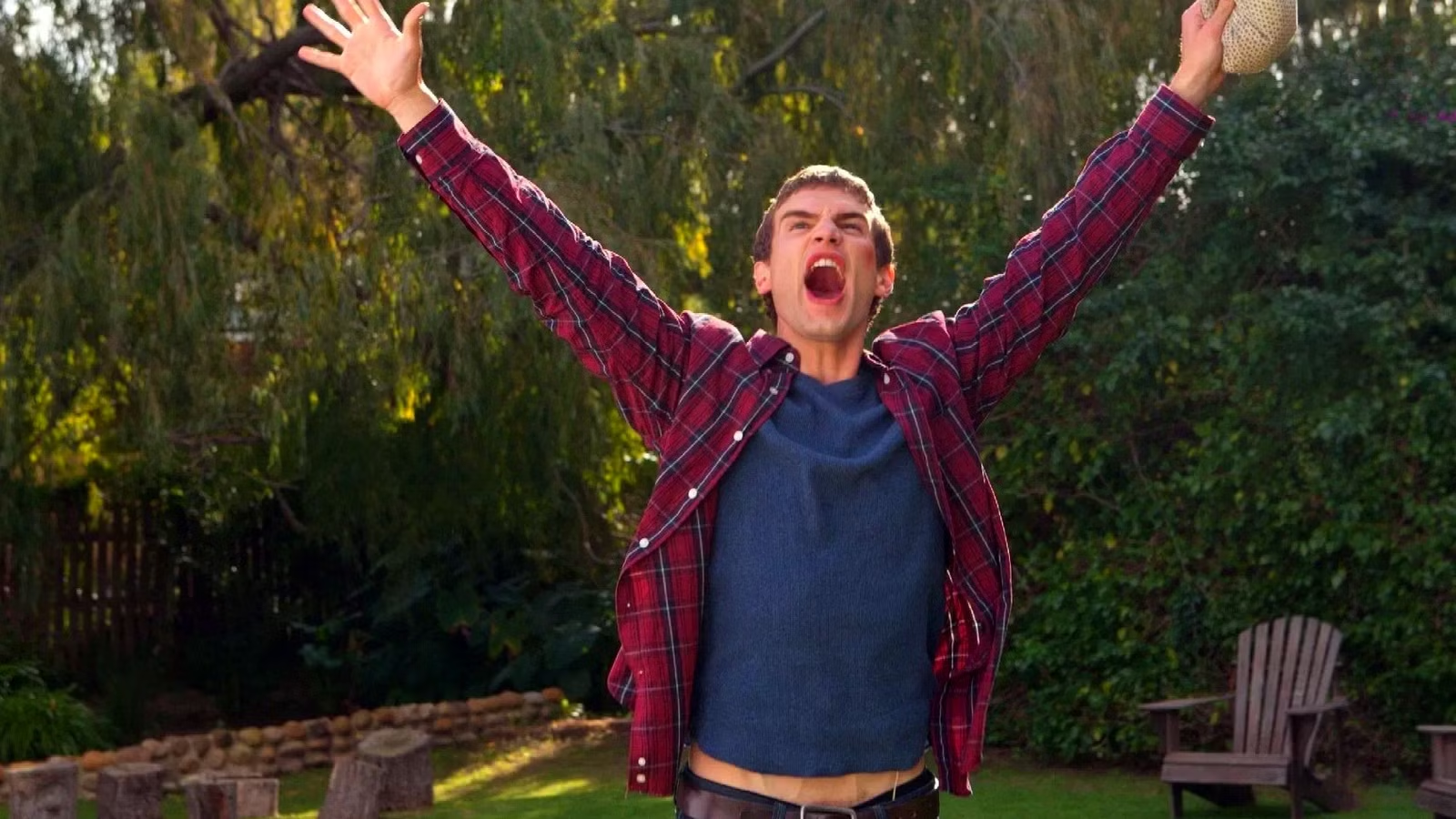
Actor Alex Russell as Matt, screaming and throwing his arms up while standing in a garden in Chronicle.Image via 20th Century Fox
While Warner Bros. proceeds confidently with its DC Universe — an interconnected franchise of superhero films and shows — its sister platform, HBO Max, is preparing to remove one of the most inventive spins on the Superman template. The movie in question will celebrate its 15th anniversary next year, although it’s unlikely that anyone will bring much attention to it considering its tainted legacy. The film’s director and writer didn’t get along, and they’ve both had their separate downfalls over the years. However, one of the three main stars of the movie recently won the Best Actor Oscar and has emerged as a bona fide star.
The movie was released in 2012, and much like its found-footage precursor Cloverfield, became a word-of-mouth hit. It was welcomed with positive reviews and audience support, going on to gross around $125 million worldwide against a reported budget of $25 million. Following the film’s success, both the director and writer were courted by studios and given the reins for larger projects. The movie we’re talking about, of course, is Chronicle — the found footage superhero film that flips the Superman origin story on its head. It follows three young boys who gain superpowers after being exposed to a meteor. While they initially have fun discovering their powers, the corruption begins to kick in not long afterward.
Advertisement
Advertisement
Collider Exclusive · Marvel Personality Quiz Which MCU Hero Are You? Spider-Man · Daredevil · Iron Man · Punisher · Thor · Cap
Six heroes. One destiny. Answer 10 questions to discover which Marvel Cinematic Universe hero shares your personality, values, and fighting spirit. Will you swing, fly, or thunder your way to glory?
🕷️Spider-Man
😈Daredevil
🤖Iron Man
Advertisement
💀Punisher
⚡Thor
🛡️Cap
Advertisement
01
What drives you to do what’s right? Choose the answer that feels most like you.
Advertisement
02
It’s 2 AM. Where are you? Your answer says more about you than you’d think.
Advertisement
03
How do you handle a villain who keeps escaping justice? Every hero has a method. What’s yours?
Advertisement
04
How do you feel about keeping a secret identity? The mask — or the lack of one — says everything.
Advertisement
05
You’ve lost someone important because of your heroism. How do you carry that? Every hero pays a price. The question is how they pay it.
Advertisement
06
What’s your role when working with a team? Who you are under pressure is who you actually are.
Advertisement
07
Where do you draw the line between justice and revenge? The answer defines what kind of hero you really are.
Advertisement
08
When you’re not saving the world, what does life look like? The person behind the mask is always the more interesting story.
Advertisement
09
What keeps you up at night? Fear is useful data — if you’re honest about what you’re actually afraid of.
Advertisement
10
The battle is lost. You’re outnumbered, outgunned, and exhausted. What do you do? This is your tiebreaker — choose carefully.
Advertisement
Your Hero Has Been Identified Your MCU Hero Is…
Based on your answers, the Marvel hero who matches your spirit, values, and instincts has been revealed.
Advertisement
Queens, New York
🕷️ Spider-Man
Advertisement
You carry the weight of the world on shoulders that are younger than they should have to be — funny, loyal, and endlessly self-sacrificing.
You do the right thing not because it’s easy, but because no one else will.
You understand that responsibility isn’t a burden you choose — it’s one that finds you.
Whether it’s a neighbourhood mugging or a multiverse crisis, you show up.
Peter Parker’s lesson — that great power demands great responsibility — isn’t a slogan to you. It’s the code you live by, even when it costs you everything.
Hell’s Kitchen, New York
😈 Daredevil
Advertisement
You fight in the shadows between law and chaos, guided by a fierce moral compass that refuses to let the guilty walk free.
You use every tool available — your mind, your body, your faith — to protect those the system overlooks.
You’ve looked into the darkness and chosen not to become it, though the line has never been easy.
Matt Murdock’s duality — champion in the courtroom, devil in the alley — mirrors your own.
Relentless, conflicted, and unwilling to stop. That is exactly you.
Stark Industries, Malibu
🤖 Iron Man
Advertisement
Brilliant, driven, and occasionally insufferable — but always the person who solves the unsolvable problem.
You lead with your mind and back it up with resources, innovation, and a stubbornness that borders on heroic.
You started out looking out for yourself, but somewhere along the way the world became your responsibility.
Tony Stark’s arc — from ego to sacrifice — is your arc too.
You build, you plan, and when the moment comes, you’re willing to give everything. Because in the end, you’re Iron Man.
New York City
💀 The Punisher
Advertisement
You’ve been through fire that would break most people — and it did change you, completely. What’s left is unyielding, relentless, and operating by a code forged in grief.
You don’t ask for forgiveness, and you don’t expect gratitude.
You see a corrupt, broken world and you’ve decided to do something about it, consequences be damned.
Frank Castle’s war is born from love twisted by loss — and so is yours.
Uncompromising and unflinching — the world may not agree with your methods, but your conviction is absolute.
Asgard · Protector of the Nine Realms
⚡ Thor
Advertisement
Powerful, proud, and on a lifelong journey to become worthy of the legend you carry.
You lead with strength but have learned — sometimes painfully — that true greatness comes from humility and growth.
You’re larger than life, yet more vulnerable than you let on.
Thor’s story is one of transformation: from arrogant prince to worthy king, from isolated warrior to beloved protector.
You bring the storm when it’s needed — and the warmth when it matters just as much.
Brooklyn, New York · The Avengers
🛡️ Captain America
Advertisement
You believe in something bigger than yourself — and you fight for it even when the world has moved on and nobody else will.
You don’t bully the small guy, and you never stop when it gets hard.
Steve Rogers didn’t become a hero when he got the serum — he was always one. So were you.
Your strength isn’t in your fists; it’s in your refusal to compromise what’s right, no matter the cost.
In a world full of people taking the easy road, you’re the one who picks up the shield and stands up — every single time.
Advertisement
Here’s How Long You Have Left To Watch ‘Chronicle’ on HBO Max
Chronicle also addresses issues such as teen bullying and mass shootings in the U.S. Directed by Josh Trank and written by Max Landis, the film featured Dane DeHaan, Alex Russell, and Michael B. Jordan. Chronicle holds a “Certified Fresh” 85% score on the aggregator website Rotten Tomatoes, where the critics’ consensus reads, “Chronicle transcends its found-footage gimmick with a smart script, fast-paced direction, and engaging performances from the young cast.” Trank went on to direct the ill-fated Fantastic Four reboot of 2015, which he disowned a day before its release following an arduous production. The movie failed both critically and commercially. It featured Jordan as the Human Torch, a role that was previously played by Chris Evans and subsequently played by Joseph Quinn in 2025’s The Fantastic Four: First Steps. Jordan starred in Sinners in 2025, eventually winning the Best Actor Oscar for his dual performance. Chronicle is streaming on HBO Max, but only until May 1. Stay tuned to Collider for more updates.
Roommates, the baddies are outside for Coachella this weekend, and the link-ups are heating up timelines. Jhené Aiko and Sexyy Red have fans going wild after they popped out together following their performances in the desert. Now, folks online are wondering if a collab might be on the way.
Jhené AIko & Sexyy Red Have Fans Gagging Over Their Coachella Link-Up
Fans are calling Sexyy Red and Jhené Aiko the duo they never knew they needed after their Coachella link-up. Both of the girlies hit the stage in the desert and later posed for photos together. Red even dropped clips from their time together on X (formerly Twitter). Folks online loved seeing them side by side and joked that they’re twinning since they share the same name, but it’s spelled differently.
Fans Are Livin’ For Jhené x Janae
After The Shade Room dropped the clips of Jhené and Red, the comment section was flooded with heart-eye and fire emojis. Some fans joked that the video basically shows their two personalities in one.
Instagram user @d.denisee__ wrote, “Janae and Jhené 😂😂😂❤️ my two personalities.”
Advertisement
Instagram user @siannemadi_ wrote, “Ouuuuu I love thisssss 😛😍”
While Instagram user @chocc__littt wrote, “Love a Pisces and Aries duo.”
Then Instagram user @kaizarimfalme wrote, “Y’all keep talking bout this y’all two personalities personified but they basically the same personality, Jhene just a singer. 😂”
Another Instagram user, @pancho_villatoro, wrote, “On the clock vs off the clock.”
Advertisement
Instagram user @alishaxolivia wrote, “I love this. Sexy vibes with everyone ❤️”
Then another Instagram user @registered_foodiee wrote, “random but here for it!”
While another Instagram user @ninaboo_51 wrote, “So when’s the collab 😍😍😍😍”
Finally, Instagram user @joyprivatelife_ wrote, “wait this is cute af 🥹”
Advertisement
Lizzo Pulls Up To Coachella For Surprise Performance With Sexyy Red
Sexyy Red popping out with Jhené Aiko wasn’t the only surprise at Coachella. She shocked fans when she brought out Lizzo for a special performance during her set. Lizzo came through, playing her flute and twerking for the crowd. The vibes hit a 1,000 as Red teased a new record while they were onstage. Peep the video below.
Some late-’90s thrillers are too weird to stay dead forever. Turbulenceis absolutely one of them. The movie bombed when it hit theaters back in 1997, but it has exactly the kind of over-the-top premise and wild villain energy that streaming viewers love rediscovering. That’s especially true when the villain is Ray Liotta in full maniac mode.
And funnily enough, the movie has climbed its way to the top of the streaming charts across the country. In fact, if you note the streaming charts now, you’ll note that it was sitting just behind the top title on the service. That’s a pretty amazing second life for a movie that made only about $11.5 million worldwide in theaters.
The full main cast of Turbulence includes Lauren Holly as Teri Halloran, the flight attendant forced to take control of the plane; Liotta as Ryan Weaver, the chained serial killer who turns the flight into a nightmare; Brendan Gleeson as Stubbs, the armed robber being transported alongside him; Hector Elizondo as Aldo Hines; Rachel Ticotin as Martha; Jeffrey DeMunn as FBI agent Frank Sinclair; John Finn as the air traffic controller helping from the ground; and Ben Cross as pilot Captain Matthew Reynolds.
Advertisement
Advertisement
Collider Exclusive · Sci-Fi Survival Quiz Which Sci-Fi World Would You Survive? The Matrix · Mad Max · Blade Runner · Dune · Star Wars
Five universes. Five completely different ways the future went wrong — or sideways, or up in flames. Only one of them is the world your instincts were built for. Eight questions will figure out which dystopia, galaxy, or desert wasteland you’d actually make it out of alive.
💊The Matrix
🔥Mad Max
🌧️Blade Runner
Advertisement
🏜️Dune
🚀Star Wars
Advertisement
01
You sense something is deeply wrong with the world around you. What do you do? The first instinct is often the truest one.
Advertisement
02
In a world of scarcity, what resource do you guard most fiercely? What we protect reveals what we believe survival actually requires.
Advertisement
03
What kind of threat keeps you up at night? Fear is useful data — if you’re honest about what you’re actually afraid of.
Advertisement
04
How do you deal with authority you don’t trust? Every dystopia has a power structure. Your approach to it determines everything.
Advertisement
05
Which environment could you actually endure long-term? Survival isn’t just tactical — it’s physical, psychological, and very much about where you are.
Advertisement
06
Who do you want in your corner when things fall apart? The company you keep is the clearest signal of who you actually are.
Advertisement
07
Where do you draw the line — if you draw one at all? Every survivor eventually faces a moment that tests what they’re actually made of.
Advertisement
08
What would actually make survival worth it? Staying alive is one thing. Having a reason to is another.
Advertisement
Your Fate Has Been Calculated You’d Survive In…
Your answers point to the world your instincts were built for. This is the universe your temperament, your survival instincts, and your particular brand of stubbornness were made for.
Advertisement
The Resistance, Zion
The Matrix
You took the red pill a long time ago — probably before anyone offered it to you. You’re a systems thinker who can’t help but notice the seams in things.
Advertisement
You’re drawn to understanding how the system works before figuring out how to break it.
You’d find the Resistance, or it would find you — your instinct for spotting constructed realities is the machines’ worst nightmare.
You function best when you have access to information and the freedom to act on it.
The Matrix built an airtight prison. You’d be the one probing the walls for the door.
The Wasteland
Mad Max
The wasteland doesn’t reward the clever or the well-connected — it rewards those who are hard to kill and harder to break. That’s you.
Advertisement
You don’t need comfort, community, or a cause larger than the next horizon.
You need a vehicle, a clear threat, and enough fuel to outrun it — and you’re good at all three.
You are unsentimental enough to survive that world, and decent enough — just barely — to be something more than another raider.
In the wasteland, that distinction is everything.
Los Angeles, 2049
Blade Runner
You’d survive here because you know how to exist in moral grey areas without losing yourself completely.
Advertisement
You read people accurately, keep your circle small, and ask the questions others prefer not to answer.
In a city where humanity is a legal designation rather than a feeling, you hold onto something that keeps you functional.
You’re not a hero. But you’re not lost, either.
In Blade Runner’s world, that distinction is everything.
Arrakis
Dune
Arrakis is the most hostile environment in the known universe — and you are precisely the kind of person it rewards.
Advertisement
Patience, discipline, and political awareness are your core strengths — and on Arrakis, they’re survival tools.
You understand that the long game matters more than any single victory.
Others come to Dune and are consumed by it. You’d learn its logic and earn its respect.
In time, you wouldn’t just survive Arrakis — you’d begin to reshape it.
A Galaxy Far, Far Away
Star Wars
The galaxy far, far away is vast, loud, and in a constant state of violent political upheaval — and you wouldn’t have it any other way.
Advertisement
You find meaning in being part of something larger than yourself — a cause, a crew, a rebellion.
You’d gravitate toward the Rebellion, or the fringes, or whatever pocket of the galaxy still believes the Empire’s grip can be broken.
You fight — not because you have to, but because standing aside isn’t something you’re capable of.
In Star Wars, that willingness is what makes all the difference.
Advertisement
Is ‘Turbulence’ Worth Watching?
turbulence-plane-crash-socialImage via MGM
Well, in a so-bad-it’s-good way, sure. Roger Ebert‘s review stated that Turbulence is the kind of thriller that never stops moving, even though almost none of it makes sense. The movie throws a killer, a storm, a nearly empty 747, and a long list of disasters into one story, then keeps piling on more chaos without worrying much about logic. The result is not tense so much as completely ridiculous.
“There are more questions. Like, if a 747 sheers off the roof of a high-rise restaurant, wouldn’t that cause it to crash? Like, if a 747 plows through an outdoor billboard, wouldn’t that cause it to crash? Like, if it sweeps all the cars off the roof of a parking garage, wouldn’t that cause it to crash? Like, if it gets a truck caught in its landing gear, what would happen then? (‘It’s a Ford!’ a sharp-eyed observer says, in a line that–for once–I don’t think represents product placement.) Oh, yes, there are many moments I will long remember from Turbulence. But one stands out. After Lauren Holly outsmarts and outfights the berserk killer and pilots the plane through a Level 6 storm, the FBI guy still doubts she can land it. ‘She’s only a stewardess,’ he says. To which the female air traffic controller standing next to him snaps, ‘She’s a . . . flight attendant!’”
One situation involving a paycheck has folks doing a serious double-take. And now, Rene Nichole Coleman is at the center of a case that’s raising plenty of eyebrows. Because baby… this wasn’t just a little mix-up. This is the kind of payday that’ll have everybody checking their direct deposit real quick.
According to reports, authorities arrested Rene Nichole Coleman, 50, in Jonesboro, Arkansas, months after a judge reportedly found probable cause to charge her with felony theft involving more than $5,000 but less than $25,000. The case stems from an alleged payroll error at her former job. And apparently, officials say she was mistakenly paid an eye-popping $1,650 per hour for a 12-hour shift. Investigators claim Coleman, who normally earned $16.50 an hour, ended up receiving an overpayment totaling $19,388.
Company Demands Money Back As Dispute Escalates
Once the company realized the mistake, the CEO reportedly attempted to recover the funds, but things took a turn when Coleman allegedly refused to return the money. Reports state that the employer then brings the situation to law enforcement, providing financial documents and emails to support the claim that the overpayment was made in error. Authorities say the situation escalated after attempts to resolve the issue directly failed.
Advertisement
Missed Meeting Leads To Arrest And Court Date
According to investigators, Coleman initially agreed to speak with authorities about the situation but never showed up for the meeting. Authorities later issued a bench warrant, took her into custody on Monday, and booked her into the Craighead County Detention Center. Furthermore, a judge set her bond at $15,000, and she is expected to appear in court again on May 18 as the case continues to unfold.
Before John Frusciante joined the Red Hot Chili Peppers and solidified the “classic lineup,” quit the band in 1992, was replaced by Dave Navarro for One Hot Minute, rejoined in 1998, quit again in 2009, was replaced by Josh Klinghoffer, and returned yet again in 2019, the band’s sound had already been molded by another guitar genius: Hillel Slovak. Netflix’s latest rockumentary, The Rise of the Red Hot Chili Peppers: Our Brother, Hillel, looks back at those early days when Anthony Kiedis and Michael “Flea” Balzary were just kids from broken homes, and how their best friend and spiritual brother Hillel offered them a lifeline through art, music, and, most tragically, drugs.
The Rise of the Red Hot Chili Peppers tells a heartbreaking story about the band’s early, turbulent years as kids running amok through Los Angeles in the 1980s, shaped by their environment and an unbreakable friendship. Through beautifully composed segments featuring archival photos brought to life with striking animation, the documentary feels kaleidoscopic at times, like a drug-induced fever dream, and brutally sobering at others. We hear from band members past and present as they reflect on their soul brother Hillel Slovak and how instrumental he was in shaping them into the musicians they became.
The coolest picture of Hillel Slovak ever
While a healthy amount of time is spent on the thrill of starting a punk-funk hybrid band in 1980s Los Angeles, Slovak’s life, impact, and lasting legacy takes center stage, doing the impossible by making an ending fans already know still land like a gut punch that makes you want to call up an old friend and check in.
From Triumph To Tragedy
While I’m fighting every urge to wax poetic about the band whose frontman once sang “Say what? You got a pumpkin in yo pants,” I can’t understate the emotional weight of The Rise of the Red Hot Chili Peppers. It’s a look at the band’s early days, when both Flea and Kiedis felt completely lost as teenagers. They abused drugs, got into all sorts of trouble, and, thanks to unstable home lives, were mostly unsupervised and searching for something to hold onto.
The Rise of the Red Hot Chili Peppers: Our Brother, Hillel (2026)
They went from lost to found when they met Hillel Slovak in high school, not yet realizing how chaotic their lives would become as they bonded over art, music, and their freewheeling youth, something that they thought would last forever.
Flea spends a healthy amount of time talking about how he might never have picked up a bass if Hillel hadn’t needed someone to play for one of his earlier projects, Anthym. Around this time, the Red Hot Chili Peppers were conceptualized, though scheduling conflicts created tension between Flea, Kiedis, then-drummer Jack Irons, and Slovak, who was committed to his other band, What Is This?
Advertisement
Their debut album featured Jack Sherman on guitar, but things didn’t click. By the time they were preparing to record their 1985 sophomore effort, Freaky Styley, Slovak had returned to the fold, and everything started to take shape on an almost cosmic level. That momentum carried into 1986’s The Uplift Mofo Party Plan, but by then, things were already starting to spiral.
Drugs had taken hold of both Kiedis and Slovak. Flea managed to stay relatively grounded, but the band dynamic was constantly on the verge of collapse just as they were finding their footing. Kiedis got sober, for the first time of many in the band’s documented history, but Slovak couldn’t escape his heroin addiction, which ultimately claimed his life in 1988.
Anthony Kiedis, Flea, and Hillel Slovak in The Rise of the Red Hot Chili Peppers (2026)
Known as a constant source of positivity and inspiration, it almost feels like Slovak gave his light to the people who mattered most while his inner darkness slowly closed in.
The documentary closes on a somber but reflective note. John Frusciante speaks about Slovak’s legacy and how it shaped his own early playing with the band. Flea and Kiedis get visibly emotional as they remember their best friend, taken far too soon, even after all these years. A true artist and a deeply sensitive soul, Hillel Slovak was one of those rare musicians who radiated authenticity without ever trying. With his life cut short just as the band was beginning to take off, there’s no telling how differently things might have turned out if he had overcome his demons.
It’s A Great Watch, Even If You’re Not A Fan
Archival photo of Flea and Hillel Slovak in The Rise of the Red Hot Chili Peppers: Our Brother, Hillel (2026)
Listen, whenever I talk about how much I love the Red Hot Chili Peppers, the first thing people bring up is how Anthony Kiedis openly discusses some pretty troubling behavior in his 2004 memoir, Scar Tissue. And yes, that book has aged terribly, and yes, Kiedis probably has some explaining to do when he arrives at the pearly gates. But that’s not what The Rise of the Red Hot Chili Peppers is about.
This documentary is focused on the life and legacy of Hillel Slovak.
For casual fans, that might seem like an odd choice, especially since most of the band’s classic albums feature Frusciante’s guitar work. But it’s worth remembering that Frusciante was only 18 when he joined the band, and Slovak was already his biggest influence. Slovak ran so Frusciante could sprint.
Advertisement
Archival photo of the Red Hot Chili Peppers
What makes the documentary especially compelling is how it uses archival material to tell its story. As someone who nerds out over old band photos and music history, I was genuinely surprised by how many images from those early days I’d never seen before. They capture the band at their youngest and most naive and explosive, and then those same images are brought to life through trippy, psychedelic animation that makes them jump off the screen and straight into your living room.
It’s a visually visceral way to show youth running wild, and the early days of a band that would eventually take over the world at a time when they were still figuring out where their next meal was coming from.
A very young Flea and Hillel Slovak in The Rise of the Red Hot Chili Peppers: Our Brother, Hillel (2026)
It’s heavy, heartfelt, and feels like it could be the first chapter of something larger. Maybe I’m reading too much into the title, but I’d love to see a follow-up documentary that picks up around the Mother’s Milk era, when Frusciante’s first stint with the band propelled them into superstardom. Until that happens, this is more than enough to keep me at bay.
In the meantime, I’ll be spending the weekend slapping the bass and revisiting those early records, because if nothing else, this documentary is a reminder of where it all started for a band that shaped my own early musical identity in more ways than I could ever reasonably articulate.
The Rise of the Red Hot Chili Peppers: Our Brother, Hillel SCORE
Tennis champ Coco Gauff responded to online criticism after the athlete’s sizzling photoshoot highlighting her natural hair.
“So, I deleted TikTok and Twitter for a month,” Gauff, 22, began in a Thursday, April 9, TikTok video. “[When I returned, I saw] thousands of people talking about the way that I look and not in a positive way.”
Gauff shared photos from a Miu Miu campaign via Instagram earlier this month.
“Big bag day means my @miumiu Vivant can carry just about anything I need 🤎,” she wrote via Instagram on April 2, sharing photos of herself posing on a tennis court.
Advertisement
In the snaps, Gauff wore a red polo and navy skirt from the famed brand, which she accessorized with a leather tote bag. For glam, she wore minimal makeup and tied her tresses in an updo.
“It was literally me and my social person. We shot that ‘shoot’ in my parents backyard,” Gauff explained on Thursday. “The creative concept … was to show how [the bag] can be used in everyday scenarios.”
For the campaign, Gauff also served as her own stylist.
“I did my hair and my makeup [and] that’s exactly how my hair and my makeup looked for dinner [after the shoot],” she stated. “We took the photos and, like I said, the concept was using the bag everyday, so I did my everyday hair and makeup because that’s what was said to do. I personally don’t like to slick back my hair super sleek because it does damage my hair.”
Gauff acknowledged that she has “4C hair,” commonly defined as a type of curl that is very tight and springy. Attempts to slick back or straighten tight curls can damage a person’s natural hair.
“I do play tennis, so most of the time when I’m wearing it in a bun, I choose to allow my natural hair to be at present in its 4C self,” she stated. “I don’t want it to be super slicked back because that’s just not good for my hair. That’s how I do my hair.”
Advertisement
Gauff further stressed that she didn’t want to “apologize for the way [her] hair looked” because both she and her friends liked the styling in the moment and when the photos were released.
“There are other girls who have the exact same hair as me and I just wanted them to see [and] feel represented that your hair is literally fine the way it is,” the tennis phenom said. “My hair was good enough for a high-fashion fashionable brand Miu Miu to promote one of their newest launches. If my 4c hair is good enough for that, then yours is good enough to do whatever you need it to do. I’m not going to apologize for that.”
“You’re amazing. sending you LOVE,” Kerry Washington wrote in the comments section, while Angel Reese added, “You are gorgeous QUEEN! Love you, my girl.”
Chloe Kim also replied, writing, “You are so so beautiful I can’t believe anyone’s saying otherwise?!”
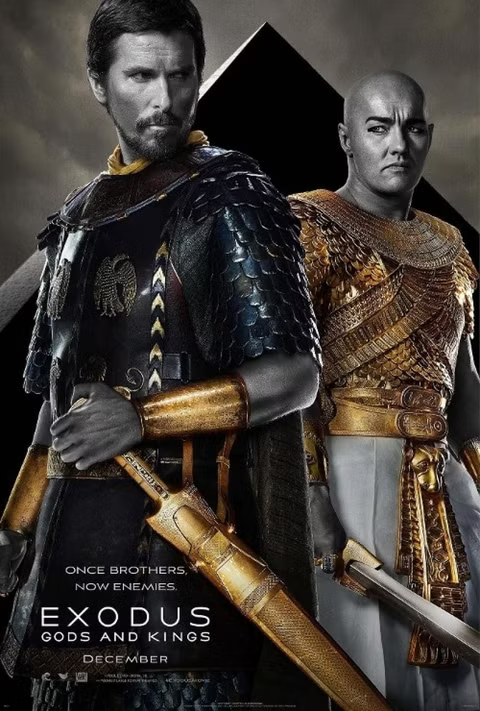
There are plenty of Ridley Scott movies people love to argue about, and Exodus: Gods and Kings is definitely on that list. The biblical epic made money worldwide, but it never really escaped the “what if this had worked better?” conversation. Now it’s getting another shot with viewers thanks to free streaming.
FlixPatrol’s Tubi chart for April 5 places the film inside the platform’s U.S. top 10, and it’s pretty clear to see that the movie is showing up well as one of the service’s bigger library performers right now. The movie grossed about $268 million worldwide against a reported $140 million budget.
The full main cast of Exodus: Gods and Kings includes Christian Bale as Moses, the Egyptian-raised leader who becomes the liberator of the Hebrews; Joel Edgerton as Rhamses; John Turturro as Seti I; Aaron Paul as Joshua; Ben Mendelsohn as Hegep; Sigourney Weaver as Tuya; María Valverde as Zipporah; Ben Kingsley as Nun; Indira Varma as the High Priestess; Hiam Abbass as Bithia; and Isaac Andrews as Malak.
Advertisement
Advertisement
Collider Exclusive · Sci-Fi Survival Quiz Which Sci-Fi World Would You Survive? The Matrix · Mad Max · Blade Runner · Dune · Star Wars
Five universes. Five completely different ways the future went wrong — or sideways, or up in flames. Only one of them is the world your instincts were built for. Eight questions will figure out which dystopia, galaxy, or desert wasteland you’d actually make it out of alive.
💊The Matrix
🔥Mad Max
🌧️Blade Runner
Advertisement
🏜️Dune
🚀Star Wars
Advertisement
01
You sense something is deeply wrong with the world around you. What do you do? The first instinct is often the truest one.
Advertisement
02
In a world of scarcity, what resource do you guard most fiercely? What we protect reveals what we believe survival actually requires.
Advertisement
03
What kind of threat keeps you up at night? Fear is useful data — if you’re honest about what you’re actually afraid of.
Advertisement
04
How do you deal with authority you don’t trust? Every dystopia has a power structure. Your approach to it determines everything.
Advertisement
05
Which environment could you actually endure long-term? Survival isn’t just tactical — it’s physical, psychological, and very much about where you are.
Advertisement
06
Who do you want in your corner when things fall apart? The company you keep is the clearest signal of who you actually are.
Advertisement
07
Where do you draw the line — if you draw one at all? Every survivor eventually faces a moment that tests what they’re actually made of.
Advertisement
08
What would actually make survival worth it? Staying alive is one thing. Having a reason to is another.
Advertisement
Your Fate Has Been Calculated You’d Survive In…
Your answers point to the world your instincts were built for. This is the universe your temperament, your survival instincts, and your particular brand of stubbornness were made for.
Advertisement
The Resistance, Zion
The Matrix
You took the red pill a long time ago — probably before anyone offered it to you. You’re a systems thinker who can’t help but notice the seams in things.
Advertisement
You’re drawn to understanding how the system works before figuring out how to break it.
You’d find the Resistance, or it would find you — your instinct for spotting constructed realities is the machines’ worst nightmare.
You function best when you have access to information and the freedom to act on it.
The Matrix built an airtight prison. You’d be the one probing the walls for the door.
The Wasteland
Mad Max
The wasteland doesn’t reward the clever or the well-connected — it rewards those who are hard to kill and harder to break. That’s you.
Advertisement
You don’t need comfort, community, or a cause larger than the next horizon.
You need a vehicle, a clear threat, and enough fuel to outrun it — and you’re good at all three.
You are unsentimental enough to survive that world, and decent enough — just barely — to be something more than another raider.
In the wasteland, that distinction is everything.
Los Angeles, 2049
Blade Runner
You’d survive here because you know how to exist in moral grey areas without losing yourself completely.
Advertisement
You read people accurately, keep your circle small, and ask the questions others prefer not to answer.
In a city where humanity is a legal designation rather than a feeling, you hold onto something that keeps you functional.
You’re not a hero. But you’re not lost, either.
In Blade Runner’s world, that distinction is everything.
Arrakis
Dune
Arrakis is the most hostile environment in the known universe — and you are precisely the kind of person it rewards.
Advertisement
Patience, discipline, and political awareness are your core strengths — and on Arrakis, they’re survival tools.
You understand that the long game matters more than any single victory.
Others come to Dune and are consumed by it. You’d learn its logic and earn its respect.
In time, you wouldn’t just survive Arrakis — you’d begin to reshape it.
A Galaxy Far, Far Away
Star Wars
The galaxy far, far away is vast, loud, and in a constant state of violent political upheaval — and you wouldn’t have it any other way.
Advertisement
You find meaning in being part of something larger than yourself — a cause, a crew, a rebellion.
You’d gravitate toward the Rebellion, or the fringes, or whatever pocket of the galaxy still believes the Empire’s grip can be broken.
You fight — not because you have to, but because standing aside isn’t something you’re capable of.
In Star Wars, that willingness is what makes all the difference.
Advertisement
Is ‘Exodus: Gods and Kings’ Actually Any Good?
Well, not really. Collider’s review stated that Exodus: Gods and Kings fails in the most important way: it never tells the story in a compelling way. The film has all the basic pieces of the Moses story — betrayal, destiny, freedom, and conflict — but it handles them in the dullest way possible. Scott seems far more interested in giant effects and destruction than in the people or ideas at the center of the story.
“Does it really matter how high the waves were when God parted the Red Sea? Does watching eight hundred chariots fall off the side of a mountain qualify as anything more than an unintentionally comic tribute to Ramses’ stunningly incompetent leadership? I understand that some people go to the movies for mindless entertainment, but this story comes with weight, and Scott doesn’t want to do the heavy lifting. He wants an excuse to make Gladiator again where the wise, handsome general gets revenge by rallying slaves to his cause. Religion and history are meaningless in Exodus: Gods and Kings as is everything else that doesn’t involve the swinging of a sword, the clash of a chariot, the burning of a city, or the parting of a sea.”
Since almost as far back as cinema goes, people have liked watching big creatures stomp around on screen. The Lost World (1925) was a definitive early dinosaur movie, and even if they’re not monsters necessarily, they kind of serve the same purpose in an action/adventure or horror kind of movie. Then there was King Kong (1933), and he’s endured in ways that are obvious, because that story is timeless, movie apes of any size are cool and fun, and because King Kong is always the sort of thing you can remake or rework and show off whatever special effects are cutting-edge at the time of production.
But are those movies kaiju films? Some might say King Kong is, and certainly, King Kong has had some crossovers with – and battles against – the most legendary of all the big screen kaiju, but for this ranking, we’re going to go with a narrow definition of “kaiju movie.” Any giant monster movie from Japan, or influenced by the Japanese monster movies that started getting popular in the 1950s onwards, counts as a kaiju movie. Oh, and the monster has to be huge; like, as in multiple storeys high. This is the one thing that keeps The Host (2006) from appearing here (though that is an excellent monster movie and the creature there is plenty big for the story being told… just not as comparable “kaiju-sized” as the other monsters featured in the movies below).
Advertisement
5
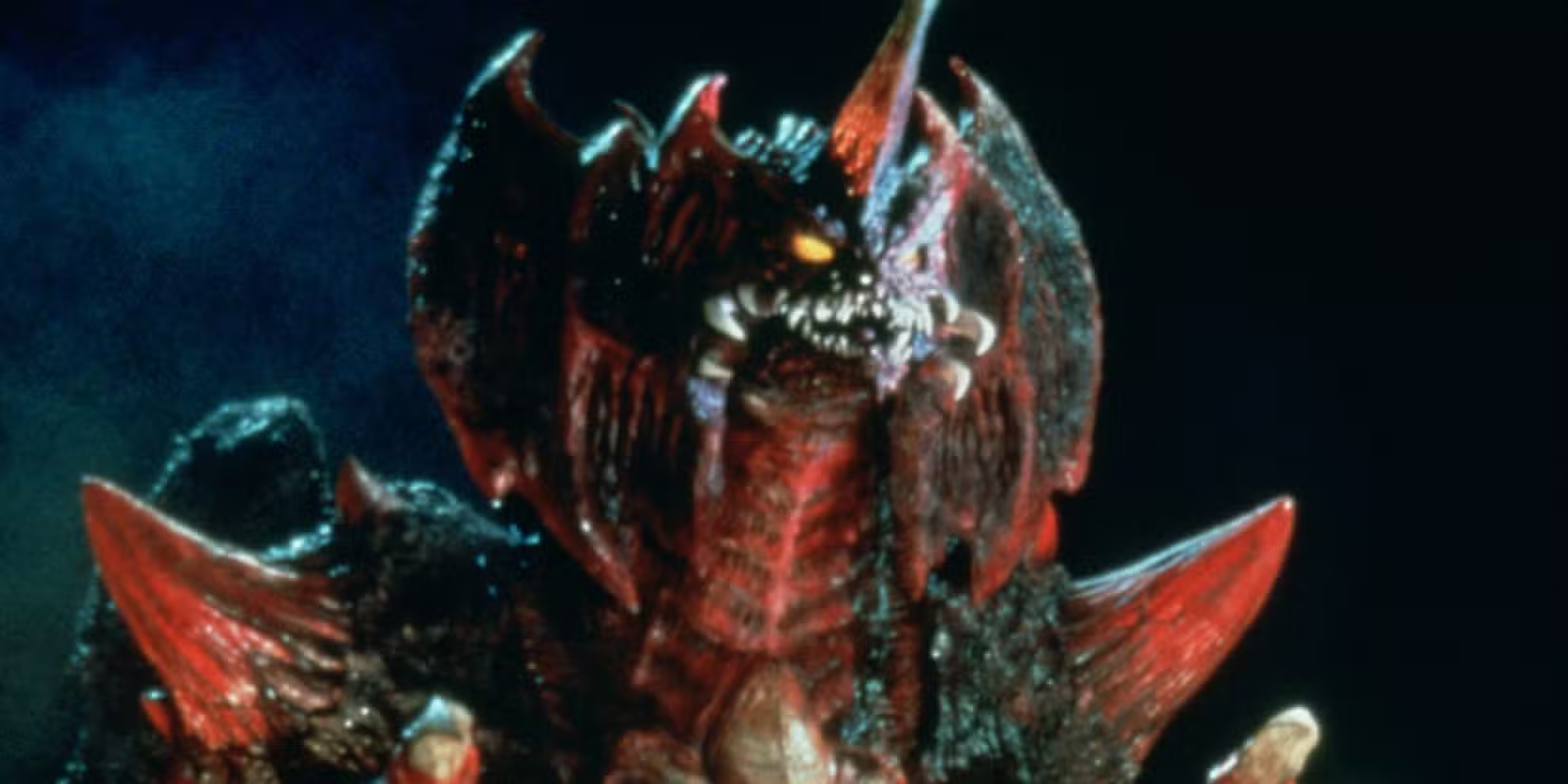
‘Godzilla vs. Destoroyah’ (1995)
Image via Toho
Yes, Godzilla is going to show up a few times here, and the first movie in that series being mentioned is one of its saddest, and one that might’ve felt, in 1995, like the end of the series as a whole. It’s Godzilla vs. Destoroyah, which concludes the Heisei era of Godzilla movies, which began in 1984 with The Return of Godzilla. There were five movies between that one and Godzilla vs. Destoroyah, and the sense of continuity from film to film is surprisingly strong, and there is a definite arc for Godzilla and the way humanity sees/treats him. He also gets an adoptive son in the final three movies of the Heisei era, Godzilla Junior, and he’s not as irritating/silly as Godzilla’s adopted son from the Showa era, Minilla.
Godzilla vs. Destoroyah is pretty thrilling and exciting, and easily one of the best Godzilla films.
Advertisement
You get attached to both Godzilla Senior and Junior, which makes them going up against Destoroyah all the more traumatic, since he’s one of the most powerful monsters in the history of the Godzilla series. Oh, and in Godzilla vs. Destoroyah, Godzilla (Senior) is also melting down, basically being like a nuclear reactor with legs, so that makes the stakes feel unbearably high, and some of the more intense scenes feel genuinely somber. That might make it sound like a downer, but Godzilla vs. Destoroyah is still pretty thrilling and exciting, and easily one of the best Godzilla films. It’s genuinely great science fiction, and represented new heights, at least on an emotional front, for the franchise (and maybe even kaiju movies more generally).
4
‘Pacific Rim’ (2013)
Image via Warner Bros. Pictures
Advertisement
Though it might have been logical to restrict “kaiju movies” to ones made in Japan, Pacific Rim was just too good to leave out. Also, the giant monsters that are a threat in this movie are officially labeled as kaiju, in-universe, so it makes sense for Pacific Rim to be a kaiju movie in more than one way. Further, though it wasn’t a Japanese production, and Guillermo del Toro is not a Japanese filmmaker, Pacific Rim is spiritually in line with a good deal of Japanese entertainment, and not just classic kaiju movies. See, to fight the kaiju, humanity has constructed giant pilotable robots, and they function like mechs, and there are, of course, plenty of shows and movies (particularly of the animated kind) about mechs from Japan, so that checks out further.
Pacific Rim is a good-hearted movie, and it just wants you to have fun. The humans are mostly all good people, and the ones who aren’t so great learn the errors of their ways and stuff, so the movie’s ultimately rather idealistic. Plus, the monsters are unambiguously monstrous and need to be stopped via a punch or two or three-hundred to the face(s) with a big metallic fist. Or an oil tanker. Deploy a sword, why not? Pacific Rim is big, goofy, silly, and quintessentially crowd-pleasing. Well, it should’ve been. It didn’t set the box office ablaze necessarily, but it had enough of a fanbase to get a sequel in 2018, and that sequel was, unfortunately, a waste of time. It seemed to kill momentum for further movies. Oh, well. At least we’ll always have the rather perfect original film.
3
‘Godzilla Minus One’ (2023)
At the time of writing, Godzilla Minus One is the most recent Japanese film in the Godzilla series, and already feels worthy of being considered one of the very best. It had that kind of well-deserved impressive reputation almost straight away, just because it’s very no-nonsense and broadly approachable in a way few kaiju movies have ever been. Well, to be fair, some of the broader kaiju movies have been rather silly and hard to get invested in on any sort of dramatic front, but that’s not an issue with Godzilla Minus One. You understand the stakes here straight away, and feel the desperation of everyone in Japan, while recovering from the end of World War II, having to go right into dealing with the emergence of Godzilla.
Advertisement
The first movie also took place not long after the end of World War II, but not as close as the period Godzilla Minus One ended up being set in. It goes a long way toward making the scenes without anything by way of monsters feel particularly engrossing, as in Godzilla Minus One is a good character-driven drama alongside being an exciting giant monster movie with all the thrills and action that often come with such a genre. It’s the best of both worlds, or if there are multiple worlds/genres here, then it’s the best of all the worlds. If you’re new to Godzilla, or are only familiar with the American movies and want to get a handle on the Japanese side of the series, the best place to start is either at the start, or with Godzilla Minus One. It really is that good and essential.
2
‘Gamera 3: Revenge of Iris’ (1999)
Image via Toho
The 1990s was a wonderful time for Gamera, since that’s the only decade in the monster’s history when he didn’t just stand alongside Godzilla, but might well have even trumped him for a bit, after having existed in Godzilla’s shadow for about three decades prior. The trilogy from 1995 to 1999 was responsible for that, with these movies doing what the Heisei era did for Godzilla, but with more consistency and what felt like purposeful planning from movie to movie. Each one builds on the other immensely, so you can’t really watch and appreciate Gamera 3: Revenge of Iris without first watching Gamera: Guardian of the Universe (1995) and Gamera 2: Attack of Legion (1996).
Advertisement
So, consider those two movies honorably mentioned. They get the ball rolling with a newer take on Gamera that makes the giant turtle-like kaiju a good deal more interesting, and even one you can take seriously, at least by giant monster movie standards. Gamera feels like a real force of nature in Gamera 3, in particular, and it almost does for Gamera what Godzilla vs. Destoroyah achieved for Godzilla. There is a ton of spectacle and charm in this movie, and with the two Gamera movies that preceded it, making the trilogy a no-brainer of a recommendation for anyone who’s even just a little fond of Godzilla and keen to see some more kaiju movies that don’t involve the King of the Monsters himself.
1
‘Godzilla’ (1954)
Godzilla in the original 1954 movie staring down the Japanese army and reading for combatImage via Toho
Finishing with the start of things might seem backwards, but Godzilla (1954) deserves to be held in particularly high regard, and thereby saved until the end here, crowned as the best of all the kaiju movies. With the greatest handful of movies in this long-running series, you can, like, pick six, assign them all a number from 1 to 6, then roll a die, and pick whichever one’s the luckiest. There are maybe half-a-dozen Godzilla movies that could’ve gone here. But for now, it’s the original, which was so instrumental in the development of the whole kaiju genre, as it’s now understood. It also came out during an incredible year for Japanese cinema, so it’s honestly important and historically/culturally significant beyond the realm of the giant monster movie.
Advertisement
1954’s Godzilla stands out for how grim and horror-focused it is, with Godzilla being equal parts tragic and terrifying. Later Godzilla movies like Shin Godzilla sometimes had him being more tragic, and then you’ve also got movies like Godzilla, Mothra and King Ghidorah: Giant Monsters All-Out Attack, where he’s not really tragic, and is instead more just terrifying. This original film, though, gets the balance right, and while there is some spectacle here, the heaviness is what really sticks with you, and it’s something you can still feel 70+ years later, even with the knowledge that it kick-started a series where, eventually, the titular monster did some absolutely crazy things (flying kick in Godzilla vs. Megalon, anyone?).






















:max_bytes(150000):strip_icc():format(jpeg)/Ralph-Fiennes-Harry-Potter-Deathly-Hallows-Part-2-041126-01e6df3b6ad64f3f9f0d032f65511750.jpg)













































You must be logged in to post a comment Login