Related: Gisele Bundchen Shares Rare Glimpse of Baby as She Celebrates Turning 45
Advertisement



Gisele Bündchen had some help from her 1-year-old son during her latest workout session.
On Saturday, August 8, the supermodel, 46, shared an adorable photo of her and husband Joaquim Valente’s baby boy — whose name they have not publicly shared — mimicking her workout routine. In the photo, Bündchen balances her hands on two weights while using a resistance band around her legs, as her son strikes a similar pose.
“It’s so sweet to see how little they are when they start watching and emulating what we do,” she wrote in the Instagram caption on Saturday. “They’re learning from us even when we don’t realize it.”
She added, “Moments like this remind me that my actions matter more than what I say, because so much of who they’re becoming is shaped by the example they see every day. What a gift and a beautiful responsibility it is to be a mom.”
Bündchen and Valente, 38, welcomed their baby son in February 2025, making the model a mother of three. (She also shares two older children — Benjamin, 16, and Vivian, 13 — with ex-husband Tom Brady.)
In May 2025, Bündchen shared a carousel of adorable photos of her newborn, including one where he wore an “I ❤️Mom” sweatsuit while draped over her shoulder.
“I’ve been quiet over here but very busy living life. Sometimes, the most beautiful moments aren’t shared — they’re simply lived,” she wrote in the Mother’s Day post. “Lately, I’ve been embracing the slower rhythms, the real connections, the beauty in the lessons that come with being present. Today, on Mother’s Day, I [e]specially miss my mom, but my heart is full. Being a mother it’s been my greatest gift, a journey that humbles me, teaches me, and fills me with gratitude every single day. To all the mothers out there, your love shapes the world in ways words can’t describe. I see you, I honor you. Happy mother’s day! Sending so much love your way.”

Gisele Bündchen is sharing a rare glimpse of her new baby. The Brazilian supermodel took to Instagram on Wednesday, July 23, to celebrate her 45th birthday and included some snaps of her newborn, whom she welcomed with boyfriend Joaquim Valente in February. The sweet pics include her little one hanging out with her family and […]
She opened up to Vogue France that same month about how her and Valente’s daily routines drastically changed after welcoming their little one.


“Now that my little one is sleeping through the night, I’m back in control of my routine,” she said in May 2025. “As any new mom knows, it’s incredible how much sleep — or lack of it — can change everything! But once again, I feel truly grateful: being able to be home with my kids and enjoy every moment with them is priceless.”
Asked to describe what a day in her life looked like at the time, Bündchen shared, “[It’s] being with my family, especially when we can do outdoor activities together. Spending time with them is what makes me happiest.”
Bündchen and Valente ended 2025 with another major milestone, as Us confirmed that they obtained their marriage license in Miami on December 1 and tied the knot two days later. (The couple started dating in June 2023.)
With the release and massive financial success of The Odyssey, Christopher Nolan has managed to further enshrine himself as not only one of the most popular filmmakers currently working, but perhaps even the current king of the Hollywood blockbuster landscape. Infused with plenty of clear influences and plenty of Nolan’s distinct auteurial vision, this grand adaptation of Homer‘s epic poem can already be counted among the best films of the 2020s so far.
It should come as no surprise, considering just how unprecedentedly large a cast ensemble it contains, that The Odyssey features several of the strongest and most memorable acting performances ever seen in a Christopher Nolan film. Not everyone in the cast delivers top-tier work, but eight actors in particular brought their absolute A-game, their performances standing out as some of the best that the fantasy epic genre has seen in years.

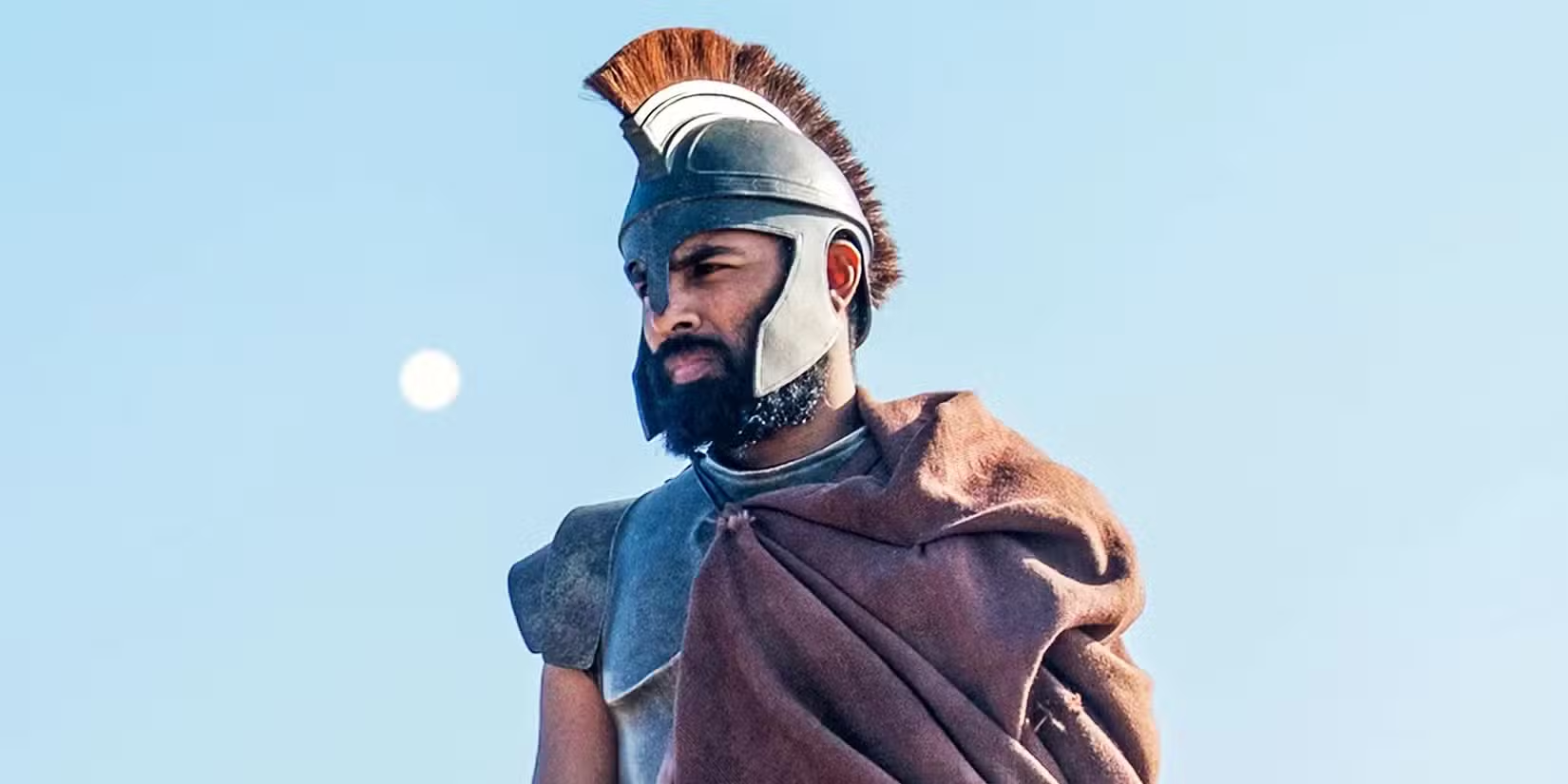
From his leading role in Danny Boyle‘s Yesterday to his brief turn in Nolan’s Tenet, Himesh Patel has had plenty of opportunities to show that he’s a highly talented and versatile actor. Thankfully, The Odyssey gives him plenty more of those kinds of opportunities. He plays Eurylochus, Odysseus’ second in command. In Homer’s original poem, he’s more of an unpleasant troublemaker, whereas in Nolan’s version, his challenges of Odysseus’ decisions feel like they come from a place of true care and loyalty.
Patel brings a tremendous amount of depth and range to a role that often demands an awful lot of him, allowing Eurylochus to feel like a three-dimensional friend to Odysseus. The Odyssey is one of the best adventure movies since 2000, in large part, precisely because it allows its actors to imbue their characters with emotional layers beyond the mythical archetypes they’re supposed to represent. Patel succeeds at that task wonderfully, even if some of the other performers he shares scenes with outshine him at times.

Zendaya is one of those gargantuan stars who currently rule Hollywood, an actress who has come a long way since her Disney Channel days and is currently a box office magnet. She further demonstrates why she’s gotten to this point in The Odyssey, where she plays the goddess Athena, who protects Odysseus throughout his journey. Nolan also throws a brilliant twist regarding her character toward the end of the film, which completely recontextualizes Zendaya’s performance and makes it get better on rewatch.
With her participation in the Dune films, Zendaya is able to claim that she’s been in some of the best sci-fi epics of recent times. Now, with The Odyssey, she can say that she also starred in one of the best fantasy epics of the last 50 years. The script doesn’t give her a lot of dialogue to work with, but Zendaya elevates Athena’s character through her deeply meaningful facial expressions and powerfully understated demeanor.

A whopping 16 years after having shared the screen with stars as huge as Leonardo DiCaprio in Inception, Elliot Page returns to Nolan’s filmography in The Odyssey. Contrary to what the army of transphobic trolls over on Twitter claimed, Page plays Sinon, a character who actually originated not in the original Homeric text, but rather in Virgil‘s Aeneid. Nolan’s decision to bring that character over to his version of The Odyssey ended up being brilliant, because Sinon stands out as one of the film’s most memorable characters—largely thanks to Page.
It had been years since Page’s last appearance in a major mainstream motion picture, and what a return to form this is. The actor is only present in a few key scenes of the story, but he absolutely steals every single last one. The sequence in the Underworld particularly stands out, giving Page a chance to show off his emotional range and tremendously potent facial expressions in a scene that serves as a major turning point in the narrative, largely thanks to him.

Anne Hathaway reunites with Nolan after The Dark Knight Rises and Interstellar in The Odyssey, and this may very well be the meatiest and most emotionally complex role that the director has offered Hathaway thus far. Nolan has always struggled to craft three-dimensional, fully-rounded female characters, and even though Penelope (Queen of Ithaca and Odysseus’ patient wife) isn’t really his best work in that department, Hathaway brings a level of depth to the role that those who love the source material should find captivating.
It’s arguably no small reason why The Odyssey is one of Nolan’s highest-rated movies on Letterboxd. Penelope often acts as the film’s beating heart, her fortitude and fierce sense of agency anchoring the emotional core perfectly, and that’s all in Hathaway’s credit. There’s a balance between poignant vulnerability and unbreakable strength in the actress’ performance that can’t have been easy to find, and the whole movie is all the better because of it.

From family comedies like the Ice Age movies to meaty dramas like Carlito’s Way, John Leguizamo has proven on several occasions just how hugely versatile he can be, but his praises have often gone tragically unsung. That is no longer the case. If Leguizamo’s has been one of the most talked-about performances from The Odyssey, it’s for good reason, because this really is the most admirable work of his whole career.
As Eumaeus, Odysseus’ swineherd and unwaveringly loyal friend, Leguizamo gets to prove the surprising length of his dramatic chops without ever feeling out of place. The actor’s strong yet tender performance is crucial to the story’s emotional effect, not to mention the seamlessness of Leguizamo’s acting as a blind old man. Gentle yet impossible to ignore, the actor’s take on Eumaeus will likely go down in history as one of the most beloved performances in Nolan’s filmography.

Only the greats are able to take a very limited amount of screen time and hijack every last second of it. That must mean that Samantha Morton is one of the greats, because her brief yet unforgettable turn as Circe, the fearsome witch of the island of Aeaea, is a scene-stealer unlike any other performance a Nolan movie has ever had to offer. She’s central to a terrifying sequence that proves why this is one of Nolan’s best R-rated movies to date.
The mystery and hugely effective body horror of the entire Circe-centric section of The Odyssey largely relies on the quality of Nolan’s direction, but Morton’s performance is just as much to thank. Scary without ever going overboard into cartoonish territory, Morton adds so many layers of emotion and interpretation to Circe. Indeed, she ends up sticking out as one of the movie’s most memorable characters, despite the fact that she’s in it for a strikingly short amount of time.
Reuniting with Nolan after their collaborations in Interstellar and Oppenheimer is Matt Damon. Taking on the gargantuan role of Odysseus, one of the most iconic heroes in the history of fiction, was a casting decision that drew deserved skepticism upon its announcement. Now that The Odyssey has been released into the world, however, even those who weren’t doubtful about Damon as Odysseus ended up having their expectations smashed.
Of course, it helps that the script gives Damon far more to work with than any other actor—but even in a vacuum, the star’s version of Odysseus is wonderfully compelling, nuanced, and multifaceted. Starring in one of his best movies about going home, Damon delivers what’s perhaps his best performance in decades. His Odysseus is a tortured, psychologically complicated man carrying the weight of guilt and trauma around for years, and Damon sells that just as well as he does the film’s moments of wonder and adventure.

Long gone are the days of Robert Pattinson being looked down on as “the sparkly guy from Twilight.” Across fields like voice acting in movies like The Boy and the Heron, indie cinema in masterpieces of the stature of The Lighthouse, and blockbusters like The Batman and Nolan’s own Tenet, Pattinson has established himself as one of the most chameleonic actors of his generation. In The Odyssey, he offers yet another transformational performance, this time as Antinous, Penelope’s sleaziest and most persistent suitor.
Antinous is the closest thing that The Odyssey has to a main antagonist, and Pattinson sells the part like an Oscar-nomination-worthy pro. Sneaky, cunning, and deliciously cowardly, the actor’s take on Antinous makes him a presence to look forward to every time the film cuts away from Penelope and her suitors. It’s the sort of performance that has everything: presence, depth, entertainment value, and an actor at the very top of his already-phenomenal game.


When Warner Bros. unveiled the first trailer for Kevin Costner’s ambitious passion project, a four-part Western film franchise that the actor was aiming to self-finance, a cheer erupted among fans of old-school Hollywood studio movies. This was during the heyday of the superhero genre, and in the aftermath of the director-driven blockbuster Oppenheimer’s industry-altering box-office success. Warner Bros. had famously shot itself in the foot with a controversial 2021 release strategy that saw each movie on its slate being released day-and-date on HBO Max and in theaters, resulting in Christopher Nolan publicly severing ties with the studio. Among the many victims of Warner Bros.’ 2021 strategy was Cry Macho, which many believed could have been Clint Eastwood’s final film as a director.
The era of filmmaker-driven studio movies, especially at Warner Bros., was believed to be over. But then management changed and with it, the studio’s strategy. Suddenly, movies like Sinners and One Battle After Another were given the green light. And among the studio’s 2024 slate was Costner’s ambitious Western. This was the project that the actor-director quit Yellowstone over, and now, the series’ first two installments were getting a major theatrical release. The first part was scheduled for release in June, followed by the second part in August. But then, tragedy struck. The first installment underperformed at the box office, which resulted in Warner Bros. shelving the sequel. The third installment, which Costner had partially begun working on, was put on hold.
We’re talking, of course, about Horizon: An American Saga — Chapter 1. The movie was partially self-financed by Costner at a reported production budget of $50 million, but it grossed only $38 million worldwide. The hope was for it to find its audience at home before future installments are produced. While the movie is available for audiences in the United States on HBO Max, it saw a bump into the top 10 movies on Prime Video in Ireland this past week. Horizon received mixed reviews and is now sitting at a 51% score on the aggregator website Rotten Tomatoes. But the world’s biggest Western aficionado, Quentin Tarantino, singled it out as one of the few recent movies that he really enjoyed, alongside Steven Spielberg‘s West Side Story.
Stay tuned to Collider for more updates.

June 28, 2024
182 minutes
Howard Kaplan, Mark Gillard
Editor’s Note: The following article contains spoilers for Spider-Man: Brand New Day.
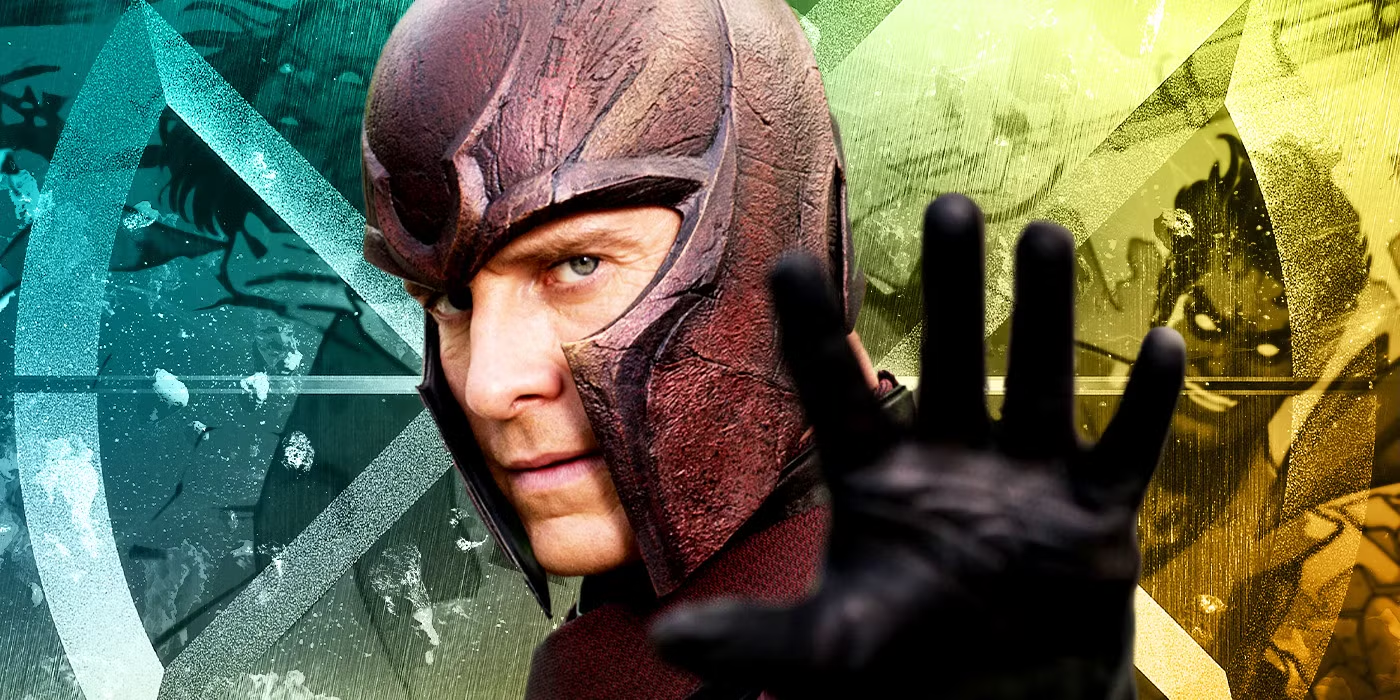
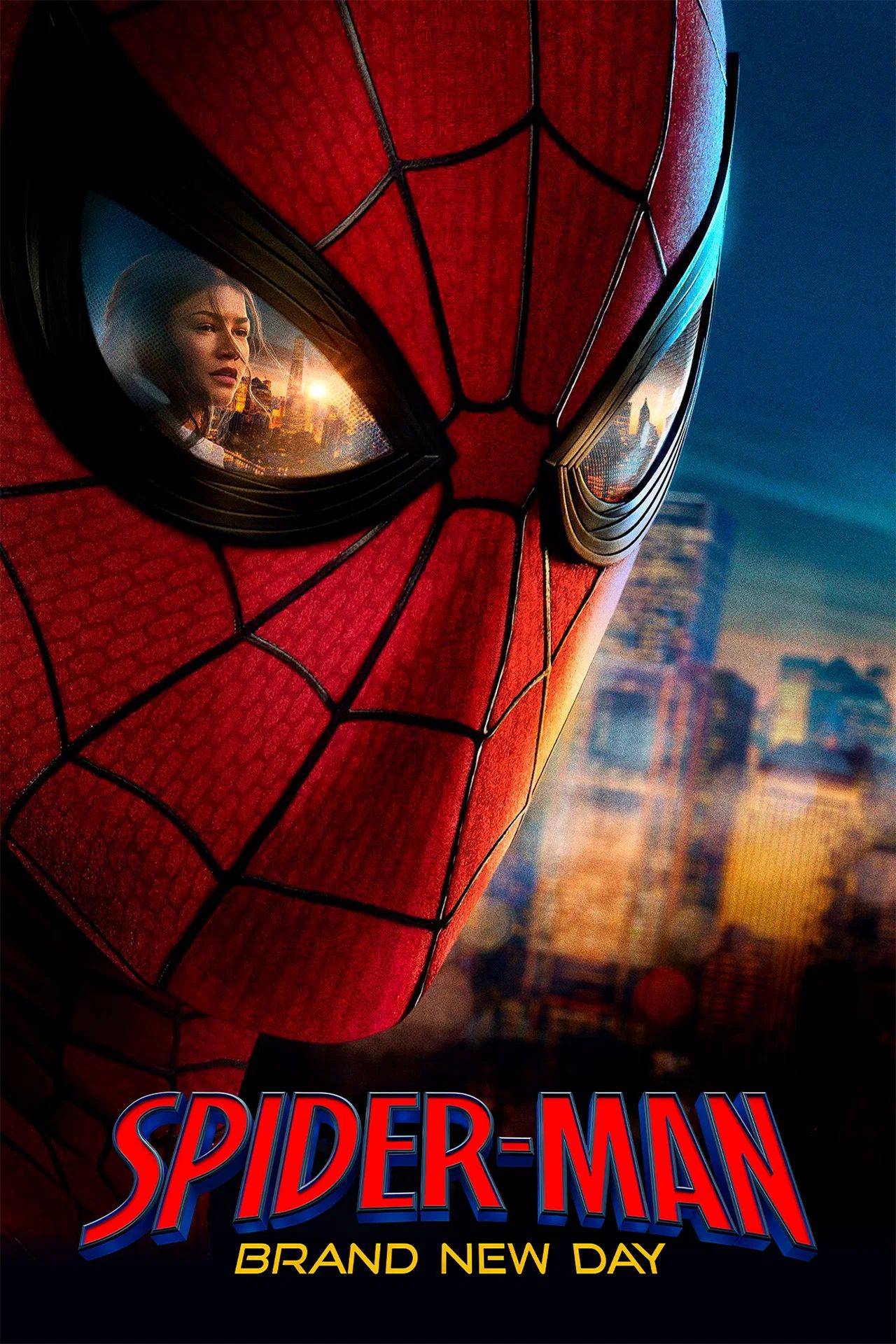
Marvel Studios is moving full steam ahead with its upcoming X-Men reboot, as three of the iconic mutant heroes have either entered or are set to enter the Marvel Cinematic Universe. First up is Jean Grey (Sadie Sink), who was introduced as an antagonist in Spider-Man: Brand New Day. Next, Marvel announced that it had cast Samara Weaving as Emma Frost, the telepath better known as the White Queen. Now, a new report says that Heartstopper alum Kit Connor is the frontrunner for Cyclops. These casting choices hint that director Jake Schreier is looking to take inspiration from one of the most popular X-Men storylines of the modern era, Astonishing X-Men.
Written by Joss Whedon and illustrated by the late John Cassaday, Astonishing X-Men was a return to form for the X-Men. It brought fan-favorite Kitty Pryde, aka Shadowcat, back into the fold. It saw the X-Men returning to wearing more traditional superhero outfits after Grant Morrison had them donning black leather for New X-Men. More importantly, the biggest shake-up saw Cyclops and Emma Frost leading the Xavier Institute for Higher Learning, effectively signaling a new era in X-Men comics. If Schreier is drawing from these comics, he could deliver a version of the X-Men that fans and newcomers have yet to see on the big screen.
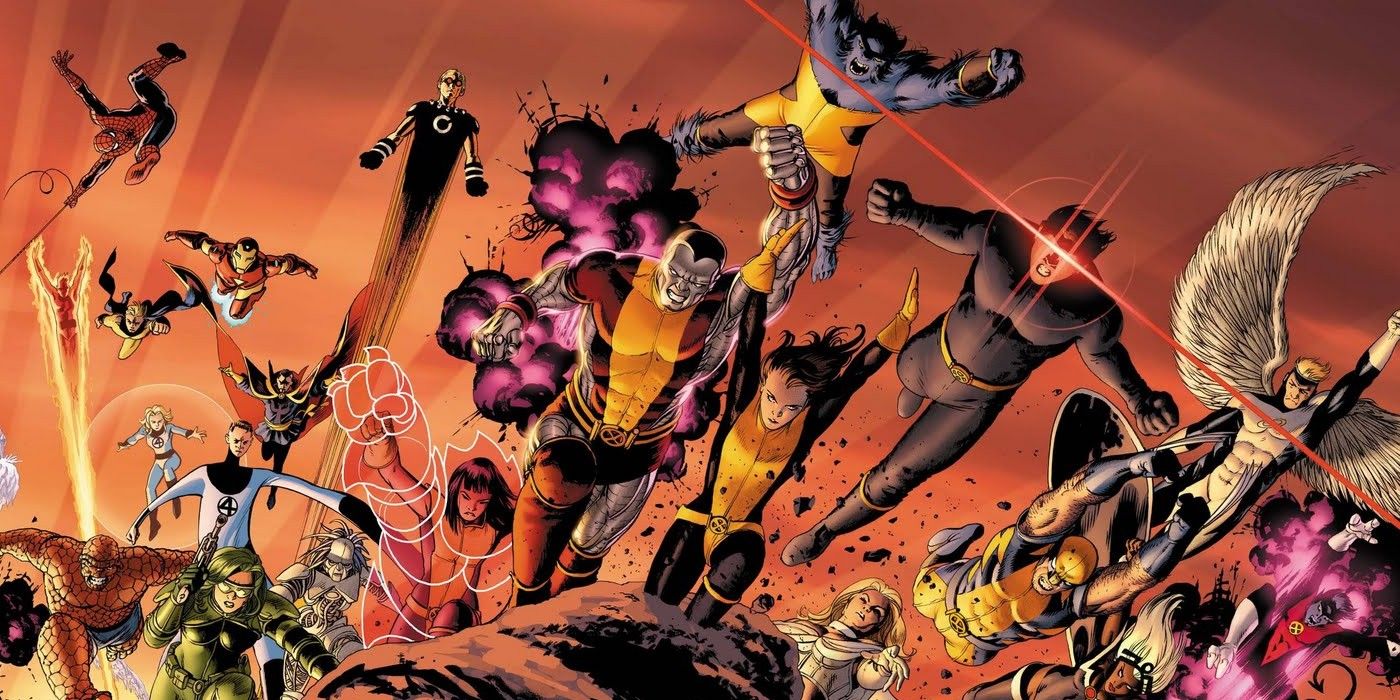
What makes Astonishing X-Men such a standout among X-Men comics is how it manages to push the franchise forward while still staying true to its core concepts. The very first storyline, “Gifted,” features a “cure” that will strip mutants of their powers, raising debates around the halls and within the X-Men themselves as Beast contemplates taking the cure himself. It also introduces Ord, an alien warrior who created the cure as he fears a prophecy that one of the X-Men will destroy his homeworld. The fact that the opening arc managed to touch on the cosmic elements of classic X-Men stories like “The Dark Phoenix Saga” and the underlying metaphor of being feared for your differences that fuels the X-Men makes it a great read, and the perfect foundation for a new X-Men movie.
In casting Cyclops and Emma Frost, the X-Men reboot doesn’t just signal that it’s taking cues from Astonishing X-Men, but that it’s separating itself from 20th Century Fox’s take on the mutant heroes by shifting the focus to a different group of mutants. Most of the storylines in Fox’s X-Men movies tended to revolve around Wolverine, Magneto, or Charles Xavier; if Marvel Studios is taking those three off the board, it frees up Schreier to focus on other characters and remind people why they’re so iconic. Cyclops is a prime example of this, as X-Men ’97 has reminded fans why Xavier chose him to lead the X-Men.
It’s no surprise that Astonishing X-Men might be one of Jake Schreier’s inspirations, as he and the rest of the crew on the X-Men reboot have expressed their love for the comics on multiple occasions. Perhaps the biggest fan is screenwriter Lee Sung Jin, who revealed that he was a massive fan of Gambit in addition to growing up with the X-Men:
“I’m such a huge fan of X-Men. My dad was in town for my daughter’s birthday recently. My mom and dad both were, and I told him the news about X-Men, and he was like, ‘That’s the good one, you know.’ I have such fond memories of me and my dad, Saturday morning, every morning, waking up, I think it was 9:00 or 10:00 a.m. central time, and we’d watch every single episode, read the comics, and I was a huge Gambit fan growing up, so the love is very strong.”
Lee’s X-Men fandom means he can offer a great solution to a major obstacle in the upcoming reboot: how Cyclops and Emma interact. Most fans know about the duo’s romantic relationship in the comics, but given that Samara Weaving is 12 years older than Kit Connor, they probably won’t see that relationship forming on screen. Whatever Lee, Schreier, and the rest of the crew do with the story, it’s clear that they understand what makes the X-Men tick, and why Astonishing X-Men is a perfect storyline to draw inspiration from.
image
large
Specifications
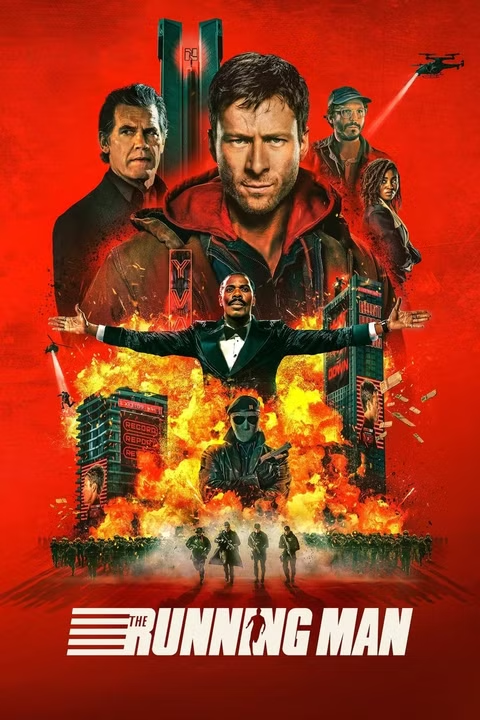
2025 was a successful year for fans of Stephen King adaptations. The Life of Chuck, starring Tom Hiddleston, proved one of the year’s most underrated gems, as the adaptation of King’s 2020 novella of the same name struggled to find success at the box office. However, on streaming, The Life of Chuck finally earned its flowers, which is a similar story to the year’s best King adaptation, The Long Walk.
Based on King’s 1979 novel of the same name, starring Cooper Hoffman and David Jonsson, The Long Walk appeared in many people’s “best of 2025” lists, despite not exploding into triumph in theaters. Hunger Games director Francis Lawrence‘s adaptation has also since become a streaming sensation, even ranking as one of the most-watched movies on HBO Max in July. But the most high-profile King adaptation of last year is undeniably The Running Man, directed by Edgar Wright (Shaun of the Dead and Baby Driver), and starring Glen Powell.
Also featuring Josh Brolin, Colman Domingo, Lee Pace, and more, this was the second adaptation of King’s 1982 novel, following a 1987 effort by director Paul Michael Glaser. Both movies received a mixed reception, but they differ on one vital factor. The 1987 version was famously disapproved of by King, who disliked its changes to the tone and message of his original work. However, 2025’s adaptation received, in Wright’s words, “a big thumbs up” from King, who “really liked the adaptation, and he liked what we’d kept in, and he liked what we changed.” Almost a year later, The Running Man is still a streaming hit, officially ranking as one of the ten most-streamed movies on Paramount+ in the world.
Next on the long production line of King adaptations is a fresh new interpretation of the author’s debut novel, Carrie, which has already received a big-screen classic adaptation (and a 2013 remake). Now it is getting the TV series treatment, with perhaps the safest pair of hands available, The Haunting of Hill House and Doctor Sleep craftsman Mike Flanagan, taking charge. Curse of Chucky alum Summer Howell is lined up to star, with the series slated to debut later in 2026 in time for the bestselling novel’s 50th anniversary.
The Running Man is currently available to stream on Paramount+. Stay tuned to Collider for the latest streaming stories.

November 11, 2025
133 minutes
Edgar Wright
Michael Bacall, Edgar Wright
Nira Park, Simon Kinberg, Edgar Wright
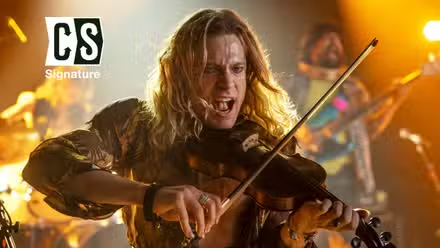
At long last, the queen has risen. After three seasons with Louis de Pointe du Lac (Jacob Anderson) and Lestat de Lioncourt (Sam Reid) as the respective titular figures of AMC’s Interview with the Vampire and The Vampire Lestat, Akasha (Sheila Atim), the mother of all immortals, is stepping into her rightful spotlight for Season 4. Like the previous seasons, the show now known as Queen of the Damned pulls its fresh title from the next book in Anne Rice‘s bestselling The Vampire Chronicles series, 1988’s The Queen of the Damned.
With series creator Rolin Jones stepping down from showrunner duties for Season 4, Queen of the Damned also has a new leader in Hannah Moscovitch, promoted from her previous role as executive producer and staff writer. Viewers can never quite predict how the remarkably intuitive and visionary team will adapt Rice’s material; The Vampire Lestat takes more structural and narrative liberties than its predecessor seasons, and those sensational remixes still strike gold. There’s some guesswork involved in looking ahead to Season 4, but here are the major events that AMC’s Queen of the Damned will likely weave into its story.
After surviving his near-death beheading and approaching something close to internal peace, Season 3’s final minutes skip into the future, where Lestat mournfully overlooks the apocalyptic results of Akasha’s reign. Viewers may have to wait several years before they can behold Lestat’s infamous concert, but the performance closes The Vampire Lestat novel. The songs themselves go off without a hitch; the aftermath, not so much. The first signs of trouble arrive when a group of vampires perishes from apparent spontaneous combustion in front of Lestat, Louis, and Gabriella (Jennifer Ehle). Not long after, a panicked Marius de Romanus (Christopher Heyerdahl) psychically contacts Lestat, but it’s too late: Lestat’s music has fully awakened Akasha from her slumber, and she abducts him.
The Queen of the Damned significantly expands Rice’s vampire lore and character ensemble. The novel’s five-part structure tracks familiar faces from the present as they scramble to flee from Akasha’s wrath, introduces new individuals from the past, and covers the entire history of vampiric existence. The initial chapters rewind to the hours before Lestat’s concert. Many characters, vampire and human, are circling the venue. Daniel Molloy (Eric Bogosian) and Khayman, an amnesiac vampire, have been dreaming about the same red-haired twins. Armand (Assad Zaman) doesn’t share Daniel’s visions, but stays close by his love’s side.
As for Jesse Reeves, an adept human psychic and Talamasca agent, she suspects there’s more to her redheaded aunt Maharet than meets the eye. Indeed, Maharet is one half of the mysterious twins popping up in strangers’ minds. An ancient vampire, she’s been quietly guarding her countless human descendants for thousands of years, Jesse included. Once the concert wraps, chaos erupts — hundreds of vampires across the world suddenly die from immolation.
When Lestat finally wakes, he finds himself imprisoned by Akasha. She has slaughtered Enkil and selected Lestat as her new eternal consort, and she claims responsibility for the countless dead vampires. She intends to liberate women from their vicious oppressors. How? By killing 90% of the male population. If humanity starts anew, with Akasha installed as their goddess, the world can finally know peace. Yet for all her female rage, Akasha is the furthest thing from a benevolent savior.
Maharet shelters with the other vampires who escaped Akasha’s initial murders — Louis, Gabriella, Daniel, Armand, Khayman, Marius, and more — and reveals their vampire mother’s origins. Thousands of years ago, Maharet and her sister Mekare were gifted human witches with a unique connection to various spirits. Akasha and Enkil ruled Egypt, then called Kemet. The royal couple destroyed the twins’ home and insisted the young women command the spirits in their names. The worst entity of all, the nefarious Amel, favored the sisters and developed a taste for Akasha’s blood. Amel infiltrated Akasha’s dying body and created the original vampire. Enraged, Akasha repeatedly and reprehensibly tortured Maharet and Mekare. Her brutality caused Khayman to betray his queen; he helped the witches feel, and all three swore revenge.
By the book’s final part, Akasha hunts down the group and drags Lestat along. She demands their obeisance; refusal equals execution. Mekare, previously absent, chooses that dramatic moment to arrive and unleash the full force of her sorcery and her millennia of fury. She slices off Akasha’s head, eats her organs, and Amel accepts her as his new host — in Maharet’s words, as the Queen of the Damned.
Rice’s imaginative third installment loosely inspired the 2002 movie Queen of the Damned, starring the magnificent Aaliyah as Rice’s tyrannically compelling villainess. Aaliyah’s marvelous performance is universally beloved and irreplaceable, but the character is in perfect hands with the utterly riveting, majestic Atim; her Episode 5 debut strikes with enough staggering elemental force to rival an earthquake. Season 3’s cliffhanger conclusion hints at Akasha unleashing far more catastrophe than Rice depicts. I don’t know about you, but I’m ready for whatever nightmares unfold.

2026 – 2026-00-00
AMC
Jonathan Ceniceroz, Ryan Kattner, Anusree Roy, Hannah Moscovitch, Kevin Hanna, Rolin Jones
Jacob Anderson
Louis de Pointe du Lac



The success of Obsession and Backrooms this year will likely alter the filmmaking landscape as we know it, with studios doubling down on projects aimed at younger audiences and betting big on ambitious filmmakers. The two movies were released in close proximity to each other, creating a sort of “Barbenheimer” effect for Gen Z horror and grossing a combined total of around $900 million worldwide. However, the seeds for the films’ success were sown very recently. In the months leading up to Obsession and Backrooms, a worrying number of franchise horror movies underperformed at the box office while standalone originals such as Weapons broke out. One of the biggest original horror hits during this time is now streaming on Hulu, while a sequel remains in active development.
The movie in question was released theatrically in 2024, and it emerged as an instant hit thanks to a viral marketing campaign. The pre-release buzz for the movie revolved around a mysterious central performance by Nicolas Cage, which reportedly terrified his co-star Maika Monroe during one scene, causing her heart rate to spike. The studio, Neon, used this tidbit to market the movie, much like how Paramount publicized the original Paranormal Activity by releasing a trailer focusing on the audience’s reaction to the movie’s biggest scares. In the movie, Monroe plays an FBI investigator with supernatural abilities who tracks down a demonic serial killer played by Cage.
By now you’ve probably guessed that we’re talking about Longlegs, which emerged as a blockbuster with around $130 million at the global box office against a reported budget of under $10 million. The movie was directed by Osgood Perkins, who served as one of the executive producers on Backrooms, along with James Wan and Shawn Levy. Longlegs received positive reviews and is now sitting at a “Certified Fresh” 85% score on the aggregator website Rotten Tomatoes. The site’s consensus reads, “Saturated in disquieting mood while leveraging a nightmarishly gonzo performance by Nicolas Cage, Longlegs is a satanic horror that effectively instills panic.” A follow-up film with both Cage and Perkins returning will be released by Paramount.
While Longlegs is trending on the Apple TV Store in Bolivia and Ecuador, you can watch it on Hulu in the United States. Stay tuned to Collider for more updates.

July 12, 2024
101 Minutes
Whenever people talk about prestige television shows, they usually focus on long-running, network landmarks like Grey’s Anatomy or cultural phenomena like Breaking Bad. What are generally overlooked are the shorter shows that are often better than the multi-season hits that dominate pop culture. Several miniseries of the 21st century have proven that sometimes less is more and redefined how we look at television shows.
In their limited runtime, well-made miniseries work like well-written short stories with tight pacing, assured conclusions (or intriguing cliffhangers), and no filler episodes. From TV classics like Tinker Tailor Soldier Spy to acclaimed modern gems like Ripley, these series are easily some of the greatest television shows of all time, and they’re all utterly satisfying despite being just a few episodes long. With that in mind, here’s our selection of some of the greatest series available to stream with eight episodes or fewer.

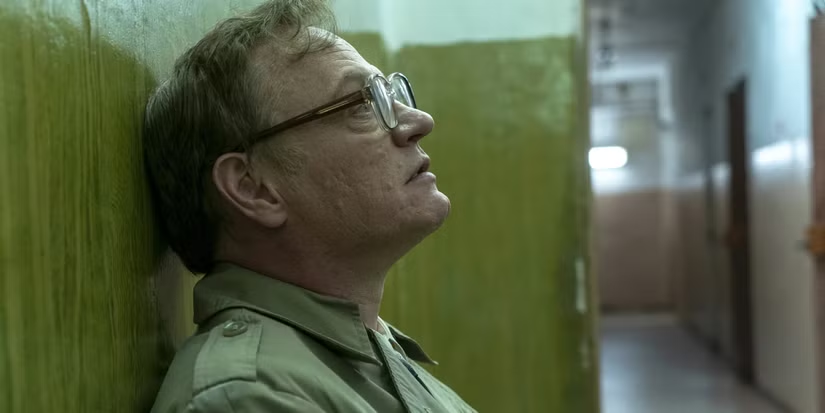
Craig Mazin’s critically acclaimed television drama Chernobyl dramatizes the titular nuclear disaster in Ukraine in 1986, which destroyed the entire industrial town and has affected human and natural life in the area for generations. The HBO series focuses on the events leading up to the disaster, the people who were involved, and how the first responders dealt with the aftermath. Jared Harris, Stellan Skarsgård, Emily Watson, Paul Ritter, Jessie Buckley, and Barry Keoghan portray various real-life personalities associated with the incident.
Released in 2019, Chernobyl was a very unique show at the time with its tightly paced five-episode narrative, standing out among multi-season hits. While the lines between facts and fiction often get blurred, the narrative successfully translates scientific realities and brutal tragedy into atmospheric horror and psychological dread. Through its powerful performances, architectural accuracy, and masterful cinematography, the historical miniseries masterpiece captures the intensity and graveness of the decades-old tragedy in its limited runtime like no other.

A classic war TV series created by David Simon and Ed Burns, based on war journalist Evan Wright’s non-fiction book, Generation Kill dramatizes Wright’s experiences as a reporter during the 2003 U.S. Invasion of Iraq. The series sees Wright, portrayed by Lee Tergesen, becoming an embedded reporter in the United States Marine Corps 1st Reconnaissance Battalion, facing various challenges alongside the Marines on their way to Baghdad in the first phase of the war. Other real-life figures are played by Alexander Skarsgård, James Ransone, Jon Huertas, Marc Menchaca, and Stark Sands.
Gripping and tense, Generation Kill is a clever deconstruction of the chaotic reality that unfolded during the invasion and is considered to be one of the most accurate depictions of the war. At the time of its release, the series was one of those rare shows without any genre or TV clichés, lauded for its raw realism, which leaves a lasting impression on the viewer. Generation Kill has since become a genre landmark like Band of Brothers and ranks among the greatest war shows made in the 2000s.

Directed by Toshio Kawaguchi, Pluto is an anime series adaptation of Naoki Urasawa and Takashi Nagasaki’s manga, Pluto: Urasawa X Tezuka, in turn inspired by the legendary manga series, Astro Boy. Set in a neo-futuristic world where humans and robots cohabit on a delicate balance of existence, the show follows a string of gruesome murders, with robot detective Gesicht of Europol investigating and finding himself entangled in a mind-boggling, sinister conspiracy that could forever destroy the world of humans and robots. The Japanese voice cast features Shinshū Fuji, Hiroki Yasumoto, Koichi Yamadera, Yoko Hikasa, and Minori Suzuki as main characters.
The original manga successfully expands the iconic universe of Astro Boy to greater heights, and Netflix’s series adaptation of Pluto breathes life into that masterful world-building. With its complex themes and remarkable character evolution, the anime series raises critical questions about human beings and the unique experience of being human. Exceptionally thoughtful and beautifully designed, Pluto thrills, intrigues, and delights with stunning art and haunting music that captivates you in every minute of its eight episodes.

Among all of John le Carré’s novels adapted for television, the BBC’s Tinker Tailor Soldier Spy remains one of the finest. Directed by John Irvin, the series follows MI6 spymaster George Smiley, played by Alec Guinness, who is brought back from retirement to run an internal investigation inside the British Secret Service to identify a Russian double agent among the high-ranking senior agents. The series also stars Michael Jayston, Anthony Bate, George Sewell, Ian Bannen, and Patrick Stewart.
While the 2011 film adaptation of Tinker Tailor Soldier Spy is more popular among modern-day fans, the 1979 miniseries is a masterpiece of spy television. The series has been praised for its utmost faithfulness to the original novel and Guinness’s perfect portrayal of the grizzled British spy. The seven-episode BBC show is also notable for reflecting its contemporary realities and authentic sentiments during the height of the Cold War, bringing more artistic depth and psychological weight to the narrative.

In his first television project, Alex Garland brings his sci-fi storytelling mastery to Devs, a thriller miniseries centered on an experimental quantum computing company called Amaya, where Lily, a software engineer, investigates the sudden death of her boyfriend. As Lily dives into the inner workings of the company and its CEO, Forest, she discovers a game-changing technology that raises life-altering questions of morality, ethics, and existentialism. Sonoya Mizuno stars as Lily and Nick Offerman as Forest, with Allison Pill, Zach Greiner, Carl Glusman, Cailee Spaeny, Stephen McKinley Henderson, and more in supporting roles.
An intellectual, ambitious, and visually distinct show, Devs was a stand-out sci-fi show of its time. Though it ran alongside similar high-concept shows like Westworld and Dark, Devs became unique with its niche concept, which brilliantly merges themes of quantum physics, determinism, and tech cultism in a tight narrative without ever missing out on any element. Mind-bending and inventive, Devs moves like a dream, despite its deliberate pace, captivating the audience in its imaginative story and hypnotic visuals.

Steven Zaillian’s second-ever television show (after The Night Of), Netflix’s Ripley is a neo-noir psychological thriller miniseries adapted from Patricia Highsmith’s popular crime novel, The Talented Mr. Ripley. It tells the story of the titular conman, Tom Ripley, who travels from New York to Italy to convince wealthy heir Dickie Greenleaf to return home to America. But when Tom meets Dickie, he develops a dangerous psychosexual obsession with him, with deadly consequences. Andrew Scott leads the cast as Tom Ripley, with Johnny Flynn, Dakota Fanning, Eliot Sumner, Margherita Buy, and Maurizio Lombardi playing other main characters.
Presented through rich black-and-white cinematography, with Hitchcockian motifs and elements of Giallo cinema, Ripley is a visual feast that delights in every frame. Zaillian puts a very stylish spin on Highsmith’s popular antagonist and turns the vintage crime fiction into an opulent contemporary masterpiece. Driven by invested performances by its main cast, headlined by Andrew Scott’s chilling antagonist, Ripley is undoubtedly one of the most perfect shows Netflix has ever produced.

Created by Mike Nichols and based on Tony Kushner’s Pulitzer Prize-winning play Angels in America: A Gay Fantasia on National Themes, Angels in America revolves around various characters living in 1985 New York City, whose lives and stories intersect through common themes of mental health, emotional struggles, and AIDs. Featuring a mix of fictional and historical characters and powerful symbolism, the six-episode series centers on Prior Walter (Justin Kirk), a gay man suffering from AIDS who is visited by an angel. The series also stars Meryl Streep, Patrick Wilson, Mary-Louise Parker, Emma Thompson, Jeffrey Wright, and more, with Al Pacino in his first major TV role.
Originally released as a TV movie, Angels in America became the most-watched cable film of its time and has since remained an HBO landmark, every episode of which is masterfully made. Set against the backdrop of the radically changing American social and political landscape of the ’80s, the series explores grave themes in the most artistic and aesthetic way possible, delivered through remarkable A-list performances. The series has since been critically praised for its depiction of AIDS, and it became the first of only three programs in Emmy history to sweep every major eligible category and all four acting categories.

Created and written by Russell T. Davies and based on John Preston’s non-fiction crime novel, A Very English Scandal is a three-part British historical drama series fictionalizing the infamous Thorpe Affair of 1976-1979, in which Member of Parliament and Leader of the Liberal Party Jeremy Thorpe was accused of conspiring to murder his alleged former lover, Norman Josiffe aka Norman Scott. The BBC series follows 18 years of events leading up to the affair becoming a public scandal. Hugh Grant and Ben Whishaw star as Thorpe and Norman, respectively, with Alex Jennings, Patricia Hodge, Monica Dolan, Paul Hilton, and Jonathan Hyde in notable roles.
A Very English Scandal is a gripping political drama that gives a shocking look into British politics and society of the time and engrosses the audience with its clever writing and cruel humor. Hugh Grant delivers a refreshing performance as the deeply conflicted politician, as does Ben Whishaw as his unstable ex-lover. A sophisticated and stylish satire, the BBC series has earned critical acclaim for revisiting the dark real-life case with sharp writing and masterful acting.
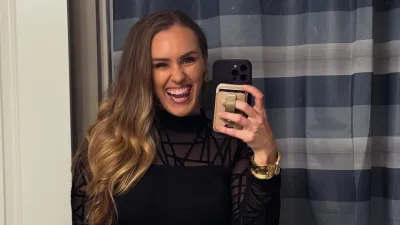
Influencer Jen Hamilton celebrated her “Jendependence” by throwing some serious shade over her estranged husband Brian Hamilton’s alleged “double life” with an older woman.
“August 4 was going to be a really hard day for me. It was going to be my 14th wedding anniversary. The first one after finding out about my husband’s diabolical betrayal,” Jen, 35, wrote via Instagram on Saturday, August 8. “So I threw a party for all my work friends. So many people showed up! They loved on me so hard and I told them EVERYTHING.”
Jen announced her split from Brian after nearly 14 years of marriage in June and later accused him of living “a double life with a woman who was 56 years old.” (Brian has not responded to Jen’s accusations.)
On Saturday, the Birth Vibes: Stories and Strategies for an Empowered Birth author shared photos from a “Jendependence” party on what would have been her 14th wedding anniversary on Tuesday, August 4. In one photo, Jen flips the double middle finger to a blazing fire that is burning her former bedsheets.

Influencer Jen Hamilton seemingly shared a glimpse of a text conversation with estranged husband Brian Hamilton following their split. “I truly hope you take advantage of every resource that has been given to you,” Jen, 35, appeared to write to Brian, as seen in a screenshot she shared in an Instagram video on Wednesday, July […]
“I burned the bedsheets which held years of my own personal repression and the lies he told. He cannot hurt me anymore,” she insisted. “Boooo to cheating on your loving and faithful wife with a grandma. No offense to grandmas. She just is one.”
Jen mentioned that she is discovering new ways of reframing what has been a very traumatic few months.
“I am getting to the point now that I’m grateful for what this has brought me,” she concluded Saturday’s post. “Because now I get to create my own future instead of living in the knowing that things would never get better for me. I’m so grateful for my friends. And for that night. Happy Jendependence to me.”
Late last month, Jen admitted that there may still be aspects of Brian’s alleged “double life” that she’s not aware of.
“Me, now? Me, big, strong girl. Okay? Me, independent girl. Me, ‘don’t need no man’ girl. Me, ‘get out of bad relationship’ girl. But I feel like I need to get out ahead of something,” Jen joked on July 29. “If anything comes out about other things this guy’s done in my marriage, just listen. Me, now? Me, big, strong girl. Me, independent girl. Me, back then? Me, insecure girl. Me, desperate girl.”
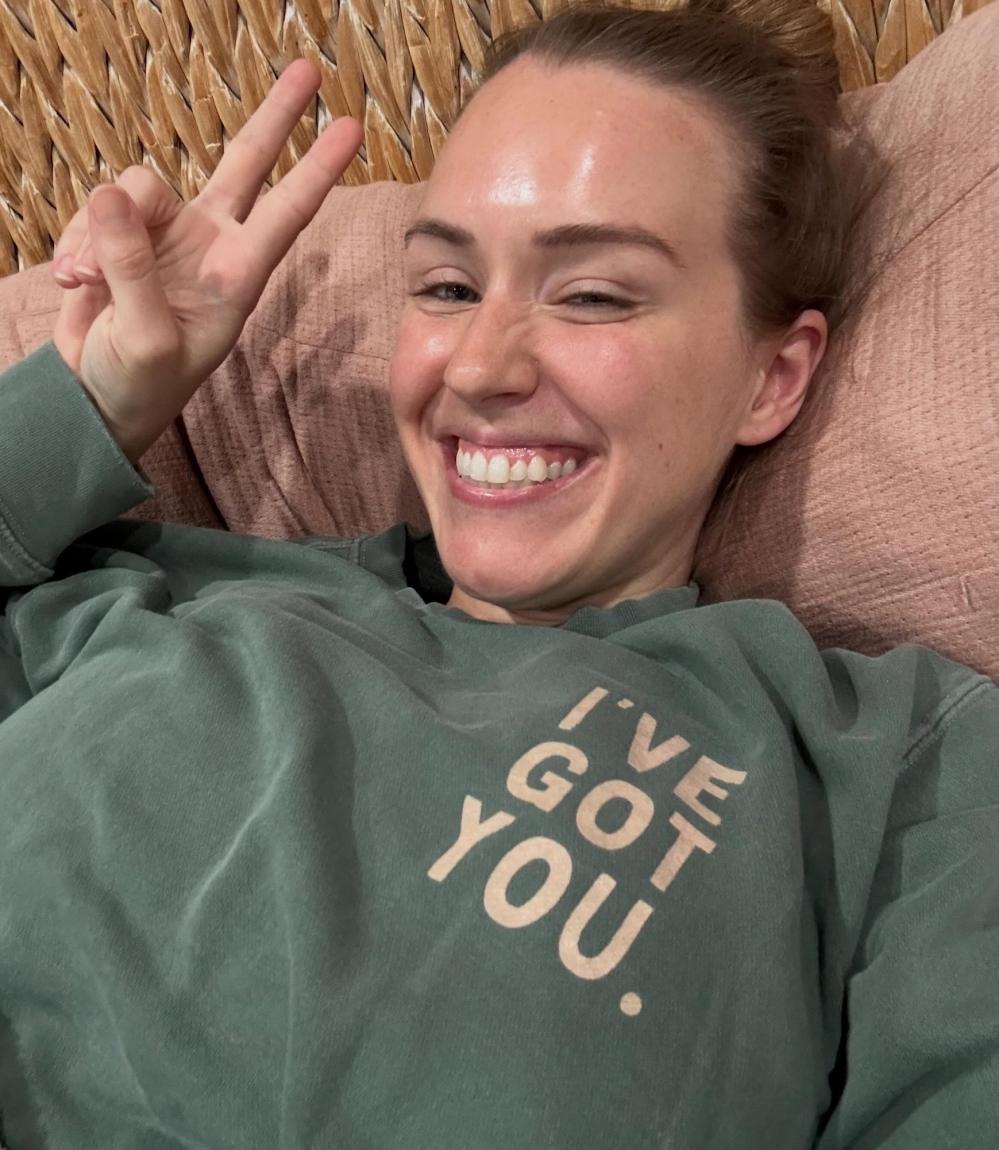
She added, “Yes, he had a double life with a woman who was 56 years old. Yes, I should have left him way earlier — giving myself grace. I am so fortunate to have the means and resources to leave a bad relationship. There are so many women who are unable to do so, whether from finances, resources, etc.”
Jen previously expressed hope that something positive would come out of such a difficult period in her life. She therefore launched the Sisterhood of Solidarity fashion line — featuring clothing and apparel with empowering slogans such as “We Rise Together,” “Keep Going,” and “G.Y.A.U. (Get Your Ass Up)” — to raise money to help women get out of troubled relationships.
Influencer Jen Hamilton is in her carefree era amid her divorce from husband Brian Hamilton. Jen, 37, took to Instagram on Sunday, July 26, to share a mirror selfie in which she showed off her sexy ensemble for a night out: a certifiable black high-neck “revenge” top with sheer patterned sleeves, paired with high-waisted jeans, […]
“One thing that I love to do is take something terrible that is happening and turn it into something good for other people,” Jen explained to her followers on July 23. “What I recognized through this process is that I am so fortunate to be able to get out of a situation that I didn’t need to be in because I have the resources to do so. So many women do not have that.”
As she gets started on her second book, Jen has vowed not to give up Hamilton as her last name because it has become so synonymous with her brand.
“It’s my name now,” she pledged via Instagram on July 27. “I made this name special and I’m gonna keep it.”
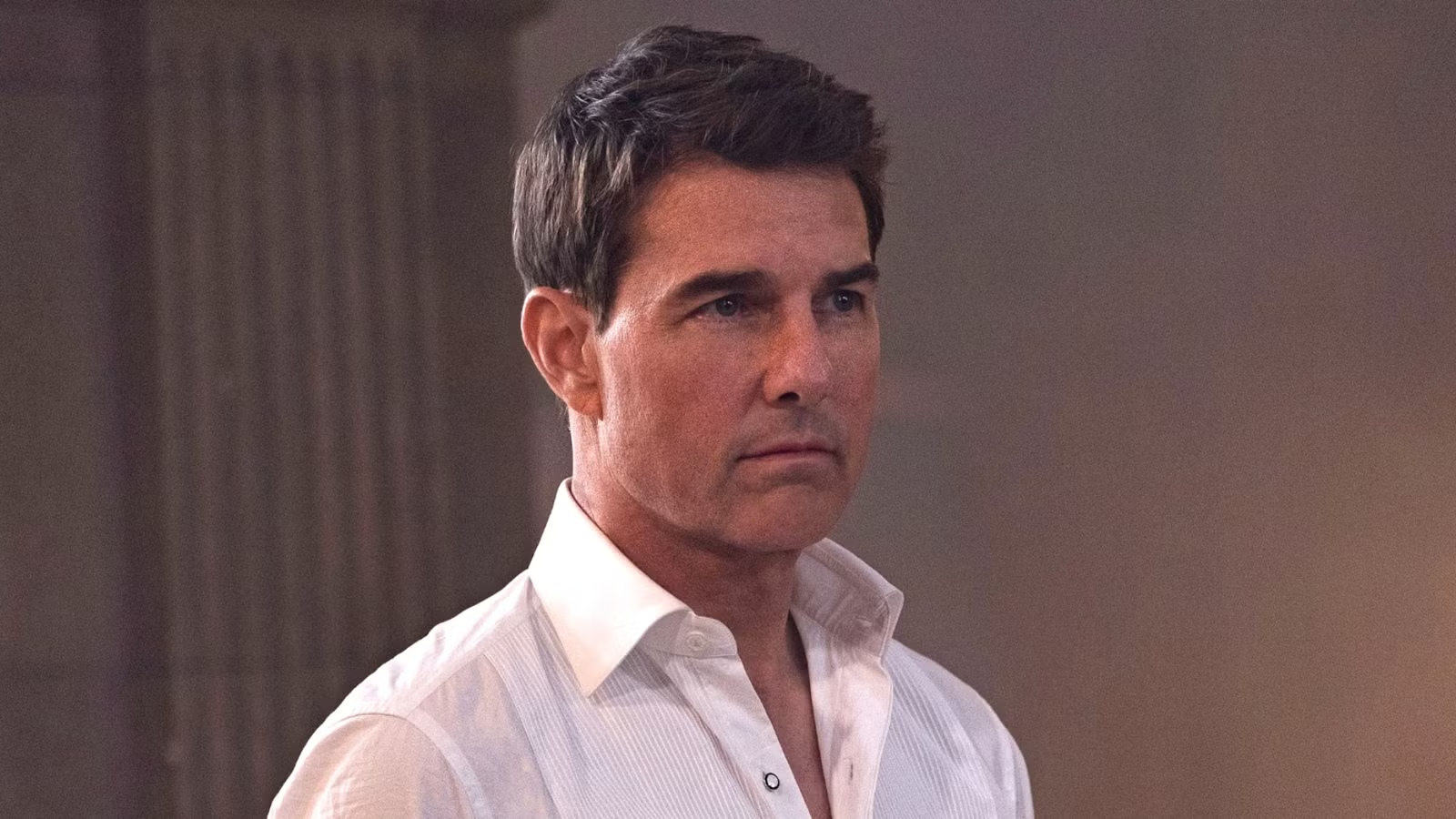

Tom Cruise is aiming to have a massive year in 2026, as he stars in his first original movie in almost 10 years with Digger, which hails from director Alejandro G. Iñárittu. Most experts predict that Cruise will receive an Oscar nomination for his performance in the film, and were he to win, it would certainly be one of the biggest moments in movie history given his contributions to the industry in the last 40+ years. It’s now been four years since Cruise played a role other than Ethan Hunt when he starred as Captain Pete Mitchell in Top Gun: Maverick, which is one of the most successful movies of all time. The last few years he’s been focused on closing out the Mission: Impossible franchise with a pair of the best action movies ever.
The final chapter in the Mission: Impossible saga unfolded over two films, Dead Reckoning and The Final Reckoning, which are both streaming on Paramount Plus for all subscribers. While The Final Reckoning has found homes on other streaming platforms like Prime Video and even Amazon MGM+, Dead Reckoning has also been streaming on Netflix for a few months now. However, earlier this week, Netflix announced that the second-to-last Mission: Impossible movie is being removed from the platform on August 24. Fans who want to check out the last Mission: Impossible movie still streaming on Netflix have only two weeks to do so before it will only be available to watch on Paramount Plus. There’s no word yet on if the film will move to another service like Hulu or HBO once it is no longer streaming on Netflix.
There has been no announcement yet on if Tom Cruise plans to make another Mission: Impossible movie, but with the last film being titled The Final Reckoning, it doesn’t exactly seem likely that another franchise entry is in the cards. The ending of the last Mission: Impossible movie certainly led audiences to believe the franchise has reached a natural end, but it wouldn’t be that shocking to see Cruise resurrect one of his most beloved characters. Some fans have also pointed to other big stars, like Michael B. Jordan, as a perfect candidate to take over the Mission: Impossible franchise.
Check out Mission: Impossible — Dead Reckoning on Netflix before it’s removed on August 24, and stay tuned to Collider for more streaming updates.

July 12, 2023
164 minutes
Christopher McQuarrie
Erik Jendresen, Christopher McQuarrie
There’s no denying that crime movies are wildly entertaining, but they don’t even come close to a great crime novel. The biggest advantage these books have over the screen is that they can place readers in uncertain situations and immerse them in paranoia. A moment that might last a few seconds in a film can become an entire page of doubt. Readers don’t just watch someone solve the mystery.
They actively piece together the evidence, forming theories, and realizing how easy it is to be misled in stressful situations. In fact, crime novelists created the rules of the genre long before filmmakers brought them to life on the screen. To prove that, here are the best crime books of all time that have had a lasting impact on the genre.

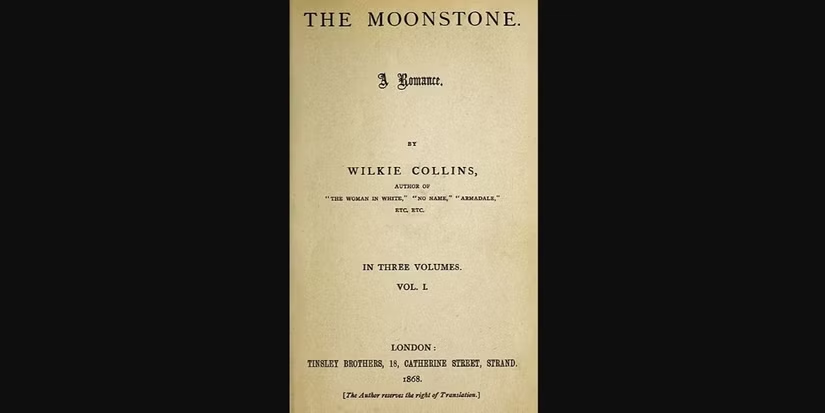
Wilkie Collins’s The Moonstone is a defining crime novel because of how many familiar conventions it established before they became the norm. The story begins when a sacred yellow diamond is stolen during a British military campaign in India. Years later, the soldier who stole it leaves the jewel to his niece, Rachel Verinder, as a gift for her eighteenth birthday. Rachel proudly wears the diamond during a celebration at her family’s country estate, but by the following morning, it has vanished from her bedroom. The crime seems impossible, and that’s when eccentric Scotland Yard detective Sergeant Cuff enters the picture. He begins questioning and testing everyone present at the scene, and as he does, the case becomes increasingly complicated, especially when the suspicion falls on Rachel herself.
The Moonstone features a country-house crime, an inside job, incompetent local policemen and several red herrings, elements that would later become essential to detective fiction. The increasingly complex story is also told through several narrators, each offering a different version of events, so the audience never knows who to trust. The Moonstone may move more slowly than a modern crime thriller, but it created the blueprint that generations of crime writers are still following.

Red Harvest by Dashiell Hammett follows an unnamed investigator known only as the Continental Op, who is summoned to the Montana mining town of Personville by newspaper publisher Donald Willsson. The locals call the town “Poisonville,” and the nickname fits since the police are corrupt, rival gangsters control the streets, and wealthy industrialist Elihu Willsson has helped create the very criminal empire he now wants removed. Before the Op can even meet Donald, though, his client is brutally murdered in an alley. Op solves the crime and accepts a second assignment from Elihu to clean up the city and destroy the gangs controlling it. Now, the way Op chooses to do so is by lying and leaking information and convincing the town’s criminals to turn against each other. This leads to a sharp rise in tension, where the investigator becomes responsible for almost as much chaos as the people he was hired to eliminate.
Red Harvest unfolds with an ambiguity that practically defines the thriller genre now. Instead of separating the detective from the criminal world, the story places Op directly in the corruption to show how his judgment is affected by it. There is no clear path to victory in this town where every institution has been compromised, and that’s what makes Red Harvest so intriguing till the very last page. The novel made crime fiction grittier and introduced a world where justice and violence operated as two sides of the same coin.

Thomas Harris’ The Silence of the Lambs is one of the most influential and recognizable thriller stories of all time, and for good reason. The novel follows FBI trainee Clarice Starling, who is unexpectedly sent to interview imprisoned psychiatrist and cannibalistic serial killer Hannibal Lecter. Jack Crawford, the head of the FBI’s Behavioral Science Unit, hopes Lecter may have information that will help the team capture Buffalo Bill, a serial killer who kidnaps women and tortures them in unimaginable ways. Now, Lecter immediately recognises that Clarice is being used to draw information out of him, so he turns every conversation into an exchange. He offers cryptic clues about Buffalo Bill, but only when Clarice reveals something personal in return.
Their interviews become the novel’s greatest source of tension because Lecter never needs to raise his voice or leave his cell to feel dangerous. On the other hand, Clarice is inexperienced and working within an institution dominated by older men. She knows that one mistake could destroy her career. However, even then, Harris never reduces her to a helpless victim. Her intelligence, empathy, and determination allow her to recognize connections that more experienced investigators overlook. The novel shifts between all these storylines and uses the smallest of details to lay the foundation for the next big reveal. Hannibal Lecter may be the character everyone remembers, but the heart of the story belongs to Clarice till the very end.

Michael Connelly’s The Black Echo — one of the best books of the ’90s — introduces Harry Bosch, an LAPD homicide detective and Vietnam veteran whose sincerity to his job has made him unpopular within his own department. The story begins when a body is discovered inside a drainage pipe near the Mulholland Dam. The routine overdose becomes personal when Bosch identifies the victim as Billy Meadows, a fellow “tunnel rat” who served beside him during the war. Bosch soon finds evidence connecting Meadows’ death to a major bank robbery where the criminals entered a vault through underground tunnels. Now, the case falls under federal jurisdiction, and the detective is forced to work with the FBI, particularly agent Eleanor Wish.
Their investigation moves between Los Angeles streets, veterans’ halfway houses, bank vaults, and the tunnels beneath the city, while internal affairs detectives follow Bosch and treat him with the same suspicion as the criminals. The tunnel connection adds another layer of depth to the mystery, and Bosch’s experience underground helps him understand how the robbers operate. At the same time, though, it forces him to confront memories he has spent years trying to forget. The Black Echo is complex without ever losing its momentum, and Connelly builds this world one precise detail at a time. The story’s early-1990s technology may now seem dated, but the investigation itself remains sharp because it relies on pure human instinct over anything else.

The Lincoln Lawyer is another Connelly masterpiece on the list. The story follows Los Angeles criminal defence attorney Mickey Haller, an attorney who runs his practice from the back seat of a chauffeured Lincoln Town Car. His clients are usually drug dealers, gang members, prostitutes, and anyone else able to pay his fee. After working inside the justice system for years, Haller is convinced that trials are not really about truth, but about negotiation, manipulation, and finding the weakness that can break the opposing case apart. He seems to have found the perfect client when wealthy Beverly Hills real-estate agent Louis Roulet is accused of brutally attacking a woman he met at a bar. Roulet has money, no serious criminal record, and he insists that he was set up. At the same time, inconsistencies in the victim’s account give Haller several possible ways to create reasonable doubt. However, things take a turn when evidence begins connecting Roulet to an earlier crime involving one of Haller’s former clients, which forces the attorney to confront the possibility that his own legal strategy may have helped place an innocent man in prison.
This moral conflict is what essentially drives The Lincoln Lawyer and gives the audience a reason to keep turning the page. Connelly grounds the story in the practical details of criminal defence, yet the human element of the story is always at the center. The Lincoln Lawyer became the first entry in the long-running Mickey Haller series and transformed the courtroom into a psychological battle where there is no clear right answer.

Raymond Chandler’s The Big Sleep begins with a fairly simple blackmail case that gradually expands into something much darker. The story follows private investigator Philip Marlowe, who is hired by the wealthy General Sternwood to deal with a blackmailer targeting his younger daughter, Carmen. The seemingly straightforward case quickly pulls Marlowe into a much larger web of pornography, gambling, blackmail, disappearance, and murder. Soon enough, Marlowe discovers that nearly everyone connected to the Sternwood family is hiding something. Things get even more complicated as people disappear and Marlowe has to deal with corrupt businessmen, wealthy socialites, and gangsters.
The Big Sleep doesn’t unfold like an organized puzzle, with every loose end neatly tied up. The confusion in the narrative is intentional, because it’s meant to reflect this messed-up world Marlowe has entered. The protagonist’s voice is one of the most compelling things about the novel, since his bitter humor and sharp observations are the key to uncovering what is actually happening. The plot is almost secondary to the story’s atmosphere and compelling characters. Marlowe’s real challenge is holding onto his sense of right and wrong while moving through a city where nearly everyone has compromised theirs. Humphrey Bogart eventually brings Marlowe to life in the acclaimed 1946 film.

Arthur Conan Doyle’s The Hound of the Baskervilles is a classic crime mystery for the ages. The story begins when Dr. James Mortimer visits Sherlock Holmes with the story of an old family curse. According to legend, generations of the Baskerville family have been haunted by a monstrous supernatural hound. When Sir Charles Baskerville is found dead on the grounds of his Devon estate with an expression of terror on his face, Mortimer discovers enormous paw prints near the body. Now, as Sir Henry Baskerville prepares to claim the estate, he fears the curse may be ready to strike again. Holmes initially dismisses the legend as superstition, but things take a turn when Sir Henry receives an anonymous warning to stay away from the moor. That’s when Holmes and Watson have to determine whether someone is using the legend to hide a very real crime.
The mystery itself is compelling, but the atmosphere is what makes the novel unforgettable. Most of the story takes place around Baskerville Hall and the isolated moors of Devon, where thick fog, dangerous marshes, distant howling, and empty landscapes make the supernatural explanation feel extremely possible. Even though Holmes trusts logic, Doyle places the reader in an environment where things don’t always make sense. The novel also makes excellent use of Dr. Watson since he spends much of the case investigating alone. Readers discover the mystery beside him, never knowing whether to trust reason or fear. The Hound of the Baskervilles was the third of Arthur Conan Doyle’s four Sherlock Holmes novels and remains one of Holmes’ most compelling cases to this day.

In the Woods by Tana French begins in 1984, when three children enter the woods near the Irish town of Knocknaree, but only one returns. Adam Ryan is found covered in blood and unable to remember what happened to his two friends. Twenty years later, Adam calls himself Rob and has become a detective in Dublin’s Murder Squad. When a young girl is found dead in those same woods, Rob is assigned to the case alongside his partner and closest friend, Cassie Maddox. The connection between the two incidents instantly makes the investigation feel personal, and the story gradually explores what the case does to Rob. He has spent most of his life distancing himself from his childhood and burying the memories he cannot understand. Returning to Knocknaree begins to weaken that carefully constructed identity.
What makes things really interesting is that Rob is an extremely unreliable narrator. His memory has lapses, and his judgement becomes increasingly emotional as he tries to hide his connection to the woods from his superiors and Cassie. In the Woods really explores how childhood fears shape people, and everything in Knocknaree turns into a symbol of Rob’s past. In the Woods is a memorable crime-mystery book because it doesn’t just focus on two heinous crimes, but also the very man at the center of it all.

The Maltese Falcon is another Hammett title that deserves to be on this list. The story begins when a mysterious woman hires private detective Sam Spade and his partner to follow a man she claims has run away with her sister. However, the next morning, Spade’s partner is found dead, and so is the man they were following. That prompts the police to suspect that Spade may be involved in the case. The detective then realizes that his client has lied about almost everything and that several dangerous people are searching for a valuable black statuette known as the Maltese Falcon. This sets up a pretty entertaining mystery, but the novel’s real tension comes from trying to understand Spade as a person.
The readers judge Spade in the same way the other characters do. He constantly negotiates with criminals, withholds information from the police, and appears willing to work for whoever offers him the best deal. Even when he seems to have chosen a side, his next decision can completely change the power dynamics. Spade’s unpredictability makes him one of crime fiction’s defining antiheroes. He may lie and manipulate, but there are certain lines even he refuses to cross, and the novel gradually reveals those limits as the story progresses. The Maltese Falcon helped popularise hard-boiled detective fiction and established the model for the morally ambiguous private investigator who would later become a staple for the genre.

The Long Goodbye by Raymond Chandler follows private investigator Philip Marlowe, who meets Terry Lennox, a troubled man with a scarred face, a wealthy but unhappy wife, and a serious drinking problem. Marlowe helps him without asking for anything in return, and the two develop an unusual friendship over occasional drinks. When Lennox later appears at Marlowe’s home asking for a ride to Mexico, Marlowe agrees, even though he suspects his friend is running from something serious. Soon afterward, Lennox’s wife is found dead, and Lennox is blamed for the crime. The case is closed almost immediately, but Marlowe just cannot accept the convenient explanation. His investigation eventually connects him to Roger Wade, a successful novelist whose career and marriage are being destroyed by alcoholism. Although the two cases initially appear separate, Chandler gradually brings them together without allowing the mystery to overpower the characters.
The Long Goodbye feels a lot more personal compared to Chandler’s earlier novels. The connection between Marlowe and Lennox lays the foundation for the narrative, and this loyalty also humanizes Marlowe more than ever before. The author uses the investigation to criticise how money and power can control popular opinion, which adds another layer of nuance to the already intriguing mystery. The neo-noir adaptation of The Long Goodbye is worth watching for readers who enjoyed the 1953 novek.




Zack Polanski: an incitement to murder Nigel Farage?


Frugal Friday’s Workwear Report: Cap-Sleeve Pointelle Crewneck Sweater


Weekend Open Thread: Mattifying Sunscreen


DTCR: Deleveraging And A Hedge Fund Collapse Point To A Possible AI Bottom


XRP Ledger urges node upgrade after manifest flood


Jordan Coyle & Cordiamo take Laya Arena Stakes at RDS


Can Astrology Help Find Gold and Silver Trends? A Financial Astrology Guide


US Tech Stocks See Largest 5-Week Inflow in History: Can Nasdaq Break Its Downtrend?

US stocks: Dow closes at record on Mideast optimism; SpaceX, AMD drag Nasdaq


Reform UK And Greens Sink To Lowest Favourability Ratings To Date


Nvidia Stock Climbs 2.5% as Chip Sector Rally Builds Ahead of AMD Earnings, Nvidia’s Own Report Looms


OpenAI teases Astra, its next major AI model, after it solves 10 long-standing math problems


Polymarket targets $20 billion valuation as competition heats up in prediction market sector


OpenAI, Anthropic AI agents targeted real people and systems in cyber tests


Supply chain issues impact Ingredion


#crypto #cryptocurrency #cryptonews #cuet2026 #ceuta


Myspace owners announce plans to relaunch the once-popular platform


Crypto.com Partners with UFC for UFC 331 Event

CLARITY Act Senate Vote Locked In, But 60-Vote Hurdle Looms Large


Huge SPINS!! (for me) #slots #casino #gambling #money #jackpot



You must be logged in to post a comment Login