

Entertainment
Marvel’s ‘X-Men’ Director Officially Addresses Those Casting Rumors [Exclusive]

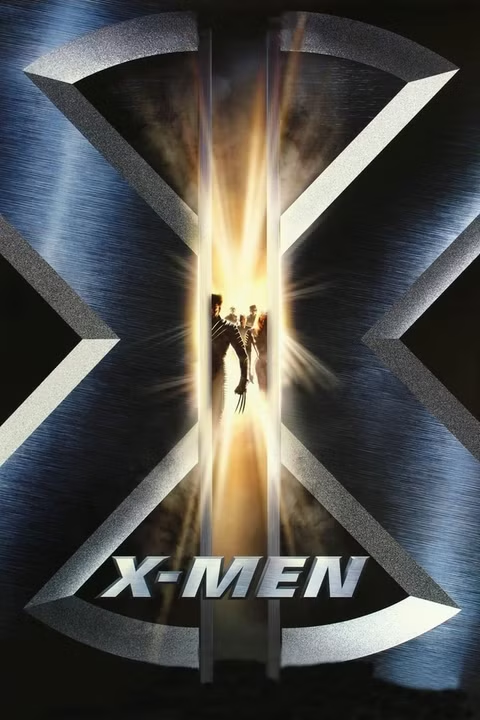
With Marvel Studios moving forward on its X-Men reboot under director Jake Schreier, speculation surrounding the cast has reached a fever pitch. Fans have spent months debating which actors should join the iconic mutant team, while online rumors and alleged “insider reports” continue to circulate across social media. Given the X-Men’s status as one of Marvel’s most popular and enduring franchises, that level of interest is hardly surprising. However, according to Schreier, audiences may want to approach many of those reports with skepticism, as not everything being shared online should be taken at face value.
Speaking with Collider’s Perri Nemiroff at the Gotham Television Awards, Schreier — nominated as a producer for Outstanding Limited or Anthology Series on Season 2 of Beef — addressed whether casting has begun on Marvel Studios’ upcoming X-Men movie and, while the director confirmed that conversations are happening, he also made it clear that most of the casting rumors floating around online are not coming from inside the production.
“We’re talking about things, we’re thinking about things,” Schreier said. “I can tell you most of the stuff that gets posted online, I don’t know where it comes from, because it doesn’t come from our room, and it isn’t what we’re discussing. But there is a process.”
Now, if we were being particularly picky, we’d note that Schreier said most of the stuff online. So maybe out there, somewhere, one lucky fan has posted a fan casting that might well be on the money and if that happened, you can bet stomachs dropped around the room. But for now, it’s top secret and that’s probably the way it should be. After all, Marvel is in the process of a big cultural reboot and the X-Men is one of their final cards they’ve yet to play. They need to get this right, and you can bet they’re feeling some of the pressure. But then, pressure turns coal into diamonds, so let’s have some faith.
Who Will Star in Marvel’s X-Men Reboot?
As for who will actually appear in the movie, it’s clearly still up in the air, but it’s important to remember that Marvel is already employing some of the original X-Men characters in Avengers: Doomsday, with Patrick Stewart, Ian McKellen, James Marsden, Rebecca Romijn, Kelsey Grammer and Alan Cumming all returning for the mega-picture. Channing Tatum, who finally debuted as Gambit in Deadpool & Wolverine, is involved too, and we’re betting he’d love to stay involved, if that were an option. For now, the next X-Men movie remains officially under wraps, but Schreier’s comments have made one thing clear. Don’t check your timeline for casting news, Marvel will let you know when it’s time.
Marvel Studios’ X-Men does not yet have a release date.

- Release Date
-
July 13, 2000
- Runtime
-
104 minutes
- Director
-
Bryan Singer
- Producers
-
Avi Arad, Lauren Shuler Donner, Ralph Winter, Richard Donner

Continue Reading
By Chris Snellgrove
| Published

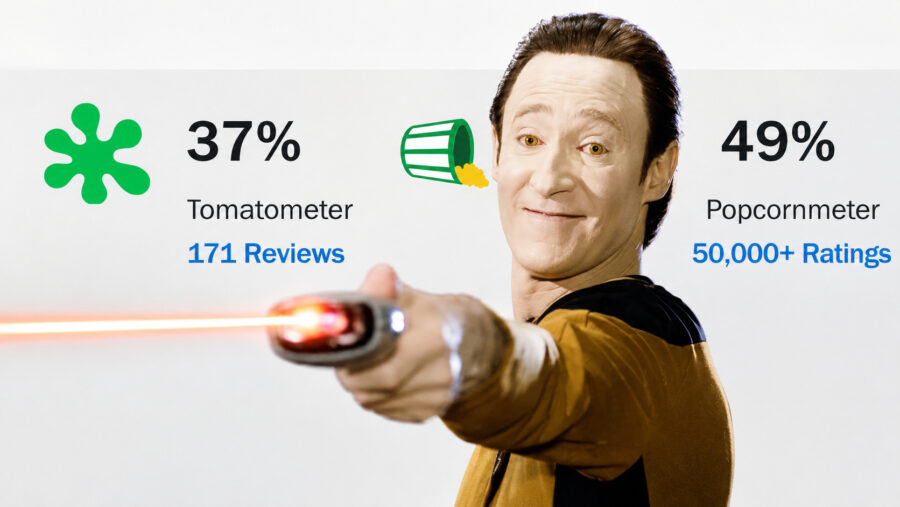
When Star Trek: The Next Generation came to the big screen, it mostly followed in the footsteps of the movies that came before. The films based on The Original Series established a strange pattern where the odd-numbered films were weaker and the even-numbered films were stronger. The Motion Picture was slow and plodding, for example, while The Wrath of Khan was exciting and action-packed. As for the TNG crew’s movies, Generations was an uneven, nostalgic mess, while First Contact was an unqualified banger. When Insurrection turned out to be nothing more than a prolonged episode of Next Generation, fans consoled themselves that the next, even-numbered film would blow us all away.
Sadly, Star Trek: Nemesis was a trainwreck that brought the TNG movies to a crashing halt and very nearly killed the franchise. Now, nearly a quarter of a century later, fans are still debating where that ambitious movie (Picard fights an evil clone played by Tom Hardy!) went wrong. We don’t have to wonder any longer, though. On Jonathan Frakes’ and Brent Spiner’s hit podcast, they recently had Nemesis alumnus Ron Perlman as a guest. They all took turns blaming that movie’s failure on director Stuart Baird, whom Perlman decried in the bluntest possible way: “He was not a director, he was a f***ing editor that the studio owed a favor to.”
A Head-To-Head Podcast
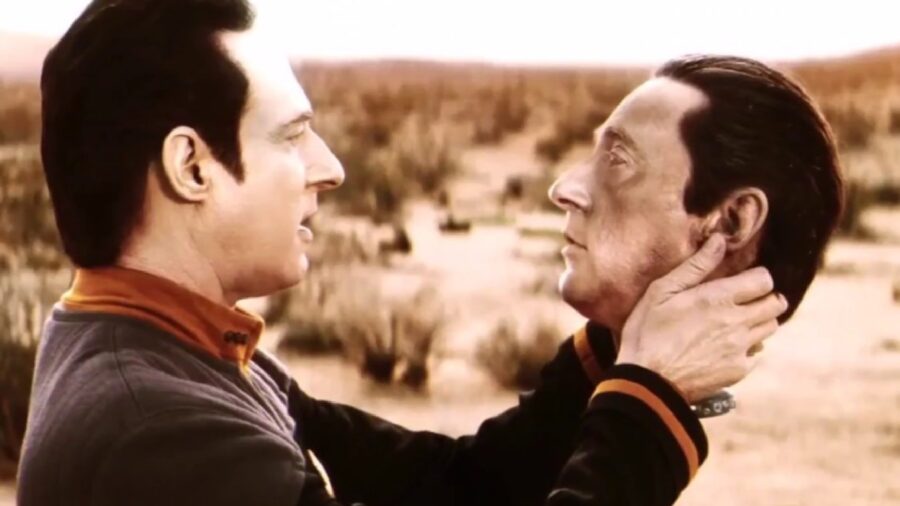
In case you don’t know, Jonathan Frakes and Brent Spiner have a new-ish podcast, Dropping Names With Brent and Jonny. It’s not designed as a Star Trek podcast, but the two of them keep hosting guests from the franchise that made them both famous. In a recent episode, they hosted Ron Perlman, the Hellboy actor who appeared in Star Trek: Nemesis as a creepy Reman. Once the conversation turned to Nemesis, Perlman didn’t pull any punches regarding director Stuart Baird, someone he said that the Star Trek: Nemesis cast agreed had “had no people skills whatsoever.”
After this, Perlman kept going, declaring that Baird “was not a director, he was a f***ing editor that the studio owed a favor to.” Elaborating, Perlman claimed that Baird “saved a lot of their turkeys. They would bring him in when they had a turkey, and he would recut it and turn it watchable. So he was a very talented editor, but he was not a director… He’s not a filmmaker.” This is in reference to Baird being an acclaimed editor who had previously worked on fan-favorite movies like Lethal Weapon and the original Superman. Later, he worked on two of the best modern James Bond films: Casino Royale and Skyfall.
When Hell Met Boy
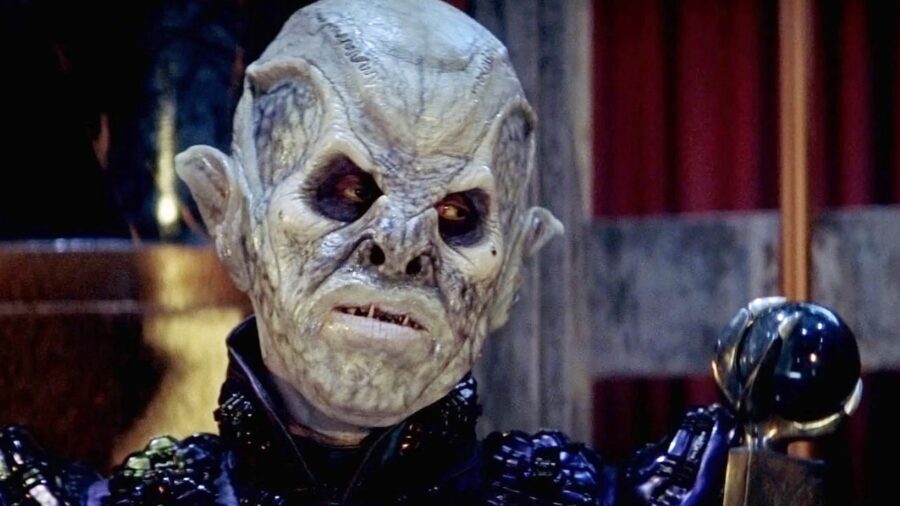
As for the two Star Trek: The Next Generation actors, Brent Spiner was more moderate in his criticism: he agreed that Bair “was not a director” but gave the man his props as an editor. This is fair, really: Baird might have been the worst possible choice for directing Nemesis, but his killer editing work for some of the coolest franchises in the world earns him a place in the geek hall of fame. Frakes was more direct in his criticism, noting that Baird turned down offers of advice from himself and Patrick Stewart “because we’d done 182 episodes and three movies together.” However, the director “was not interested in talking to us at all about how we rolled.”
Pretty much everyone in the room agreed that Baird was a very gifted editor. However, Ron Perlman was convinced that such an inexperienced director getting the job was an indication that Paramount had no respect for Star Trek: Nemesis or the skills it would take to bring that movie to life. “[It’s] that attitude, like, ‘anybody can do this, you know, let’s just give it to that guy.’”
I’m Sensing A Terrible Director, Captain
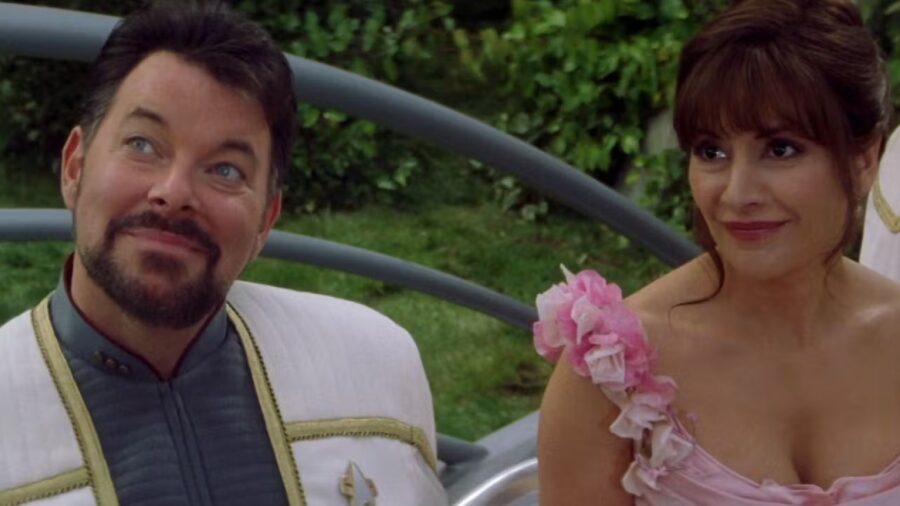
Regardless of who you blame, Nemesis was arguably the worst movie in Star Trek history. Its critical and commercial failure spelled the end of the films featuring the Next Generation crew. When the franchise did come back, it was in the form of Star Trek (2009), a complete reboot of The Original Series. Weirdly enough, that movie also featured the Enterprise fighting an advanced Romulan warship led by a bald, charismatic commander. Such a creative rip-off might make you wonder if JJ Abrams (Trek’s filmmaker) was ever a very good director. But at least he’s a good editor, right?
I mean, one who forgot to remove all those lens flares. Oh, and forgot to make The Rise of Skywalker make any sense. But, uh, otherwise gifted, we promise!
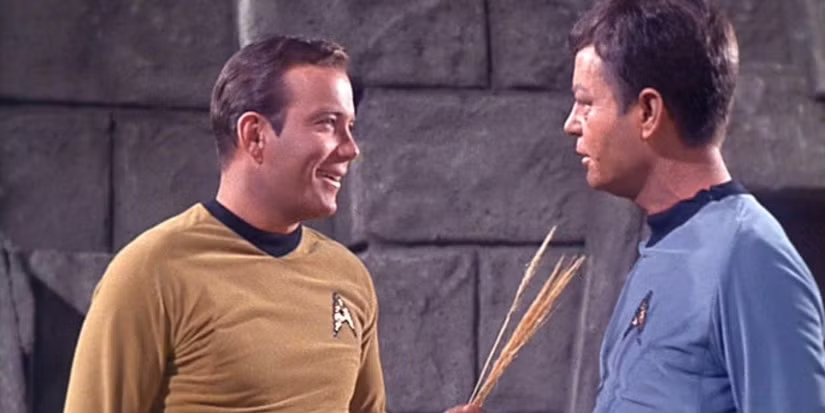
Next year, Star Trek will have been on the air for sixty years. Fourteen movies and almost a thousand TV episodes later, the franchise can still look back to the very first episode that was ever aired, “The Man Trap,” for inspiration. Its blend of science fiction, horror, action, and thoughtful introspection set the show on the past that it would ultimately follow for six decades. It all started with the death of one character who was never really seen on-screen: Nancy Crater.
Star Trek: The Original Series premiered on NBC on September 8, 1966, with “The Man Trap,” a tale of lost love, extinction, and salt vampires. The brainchild of Gene Roddenberry, it introduced viewers to a cast of characters who are still gracing televisions to this day: William Shatner‘s stalwart Captain James T. Kirk, Leonard Nimoy‘s stoic, logical Mr. Spock, and DeForest Kelley‘s cantankerous, hot-headed Dr. Leonard “Bones” McCoy. Although it was ultimately cancelled after three seasons, it would accrue a legion of fans, living on in syndication and spin-offs to this day.
What Was the First Episode of ‘Star Trek: The Original Series’?
However, “The Man Trap” wasn’t even supposed to be the first episode of Star Trek. The first pilot for Star Trek was “The Cage”: it starred Jeffrey Hunter as Captain Christopher Pike, and was rejected by the network. However, Lucille Ball, whose studio, Desilu, was producing the series, still thought the project had legs and commissioned a second pilot. That episode, “Where No Man Has Gone Before,” replaced Pike with Shatner’s James Kirk, and won over the network; parts of “The Cage” would later be used in a two-part episode, “The Menagerie,” which established Pike as Kirk’s predecessor.
However, when it came time to decide what episode would be broadcast first, there was some debate. “Where No Man Has Gone Before” had too much exposition, and another episode, “Mudd’s Women,” was seen as too salacious. Thanks to its horror elements, “The Man Trap” was chosen as the series’ pilot.
What Was TV Horror Like in the 1960s?
On TV, horror was the domain of The Twilight Zone and its rival, The Outer Limits. The Twilight Zone was the brainchild of Rod Serling, who was Roddenberry’s longtime friend, and had ended its run in 1964 after five seasons; both Nimoy and Shatner starred on memorable episodes of the show. George Clayton Johnson, who penned the episode, was a veteran of the series as well; one of his episodes, “Nothing In the Dark,” featuring a young Robert Redford, is one of the series’ most acclaimed entries. However, by 1966, both series were off the air, and a new flavor of horror was in the air.
For decades, horror had been seen solely in black and white. The American horror canon was strictly monochromatic, from the silent horrors of Lon Chaney Sr., to the Universal Monsters of the 1930s and 40s, to Alfred Hitchcock‘s chilling Psycho. However, the genre was moving into color, challenging censors and moral guardians, with the horrors of Britain’s Hammer Film Productions spattering crimson all over movie screens on both sides of the Atlantic. Star Trek was filmed in vibrant color, one of several contemporary series meant to sell color TV sets, and it was about to bring full-color horror to America’s living rooms.
What Happens in ‘The Man Trap’?

The episode opens with the USS Enterprise paying a visit to the planet M-113 and its only inhabitants: Professor Robert Crater (Alfred Ryder) and his wife, Nancy (Jeanne Bal); years ago, Nancy and Dr. McCoy had been lovers, but they hadn’t seen each other in decades. It’s clear from the start that there’s something unusual about Nancy: Bones sees her in the flower of her youth, Kirk sees her as middle-aged, and Crewman Darnell, who accompanied them, sees her as a different woman entirely. She leads him off alone, and the next time we see him, he’s dead, with his cold flesh covered in lurid sucker-marks.
His death presages the many “redshirts” who would come to gruesome ends in future episodes, although he wears blue. Nancy is the culprit; she’s a shapeshifting vampiric creature, subsisting off salt leeched from living beings. Nancy, disguising herself as another dead crewman, makes her way aboard the Enterprise and begins stalking the ship’s crew. In two tension-filled scenes, it encounters, but does not attack, Uhura (Nichelle Nichols) and Janice Rand (Grace Lee Whitney); befitting the horror tropes of the time, they’re both women, although the Nancy-creature clearly doesn’t discriminate.
What Happened to Nancy Crater?

Eventually, Kirk and McCoy learn from the half-mad Crater that the real Nancy is long-dead, killed by the very creature that now impersonates her. Desperate for companionship, he allowed the creature to take on her form and kept it alive with salt tablets. We are left to imagine that the comfort the creature provided him was solely emotional; anything more would have been far too horrifying for 1960s network television. After it kills Crater, his usefulness now seemingly at an end, Kirk, Spock, and Bones finally confront the creature aboard the ship, where it reveals its true, monstrous appearance. Here, too, it is a more visceral monster than those featured in its predecessors; it resembles a cross between an ape, a lamprey, and a desiccated human corpse. Spock, whose Vulcan blood makes him unappetizing to the creature, cannot harm it, even with his prodigious strength.
It’s up to Kirk to finally end it once and for all with a phaser blast. However, the creature is not simply a monster to be killed and forgotten about. Professor Crater likened the creature to the American buffalo, which once roamed the plains in vast herds before being exterminated. The creatures exhausted the planet’s salt supplies and died out; the one that impersonated Nancy was apparently the last of its breed. As the episode ends, Kirk ponders having rendered their species extinct, and tells Spock that he was “thinking about the buffalo.”
“The Man Trap” wouldn’t be the last time Star Trek ventured into the horror genre. In The Original Series alone, Psycho‘s Robert Bloch adapted his own “Yours Truly, Jack the Ripper” into “Wolf in the Fold,” a tale of the undying spirit of murder, and penned “Catspaw,” a Halloween-themed episode featuring a haunted castle, an eerie pair of aliens, and a sinister black cat. Subsequent series have dabbled in horror, as well, with everything from the corpse-like Borg to a race of mind-controlling, body-invading bugs. Strange New Worlds‘ third season just featured an episode set on a planet inhabited by ravenous, mindless zombies. The blueprint for it all is in “The Man Trap,” the story of a woman who was killed and had her killer take her place by her husband’s side.
All episodes of Star Trek are available to stream on Paramount+ in the U.S.

- Release Date
-
1966 – 1969-00-00
- Showrunner
-
Gene Roddenberry
- Directors
-
Marc Daniels, Joseph Pevney, Ralph Senensky, Vincent McEveety, Herb Wallerstein, Jud Taylor, Marvin J. Chomsky, David Alexander, Gerd Oswald, Herschel Daugherty, James Goldstone, Robert Butler, Anton Leader, Gene Nelson, Harvey Hart, Herbert Kenwith, James Komack, John Erman, John Newland, Joseph Sargent, Lawrence Dobkin, Leo Penn, Michael O’Herlihy, Murray Golden
- Writers
-
D.C. Fontana, Jerome Bixby, Arthur Heinemann, David Gerrold, Jerry Sohl, Oliver Crawford, Robert Bloch, David P. Harmon, Don Ingalls, Paul Schneider, Shimon Wincelberg, Steven W. Carabatsos, Theodore Sturgeon, Jean Lisette Aroeste, Art Wallace, Adrian Spies, Barry Trivers, Don Mankiewicz, Edward J. Lakso, Fredric Brown, George Clayton Johnson, George F. Slavin, Gilbert Ralston, Harlan Ellison
Exes Kyle Cooke and Amanda Batula are raising eyebrows after reuniting — and seemingly having a blast together — after taping the In the City reunion.
The estranged couple, who announced their split in January, were photographed on Thursday, June 11, exiting a New York City studio after filming the season 1 reunion of their Bravo show.
In one photo, Kyle, 43, and Amanda, 34, both had big smiles on their faces and were laughing. Amanda appeared to be playfully slapping Kyle’s hand in the picture, which People published on Friday, June 12.
Amanda, who is now dating her and Kyle’s Summer House costar West Wilson, was wearing calf-high suede boots, striped booty shorts and a chambray shirt on the sunny day.
Kyle Cooke and estranged wife Amanda Batula made their first public appearance together since their drama with Summer House costar West Wilson erupted earlier this year. The former couple — who announced their separation in January — posed together on the red carpet at the New York City premiere for their Summer House spinoff show, […]
Kyle, meanwhile, wore a white button-down shirt, matching white slacks, suede loafers and carried an orange suit coat in his hand.
In a second picture, the exes once again appeared to be joking around and laughing as Kyle lightly wrapped his arm around Amanda’s back.
“I can tell that it’s staged but there isn’t enough #InTheCity promo in the world that would make me excuse this fake s***,” one user wrote via X while reposting the images. “I’m telling you now, if he takes her back I’m done with everybody. ‘Protecting’ Amanda has been Kyle’s control tactic. #SummerHouse.”

Amanda Batula and Kyle Cooke. Courtesy of Kyle Cooke/Instagram
Another user tweeted, “I am all for exes being cordial and friendly, this seems a bit far….. he has this weird protective nature towards her that some of us see as being manipulated and/or gaslit. I suspect it is rooted in guilt.”
“UGGHHH!!!! Something is off with this s*** … my brain is sensing we’ve all been dooped here!! 🤣,” a separate user wrote in the comments section of People’s Instagram post. “I need to see all the moving parts DAMMIT!!!”
Another commenter replied, “Does this infuriate anyone else?”
Fans’ frustration over seeing Kyle and Amanda acting cordial comes just days after the three-part Summer House reunion came to an end on Tuesday, June 9, in which the cast called out Amanda and West, 31, for starting a romance behind everyone’s back.
As Summer House viewers know, Kyle and Amanda were married four years before they announced in January that they’d parted ways.
One month later, Amanda sparked rumors that she was hooking up with West after the pair were spotted together on several occasions. (West, for his part, dated Amanda’s former BFF Ciara Miller in 2023 and was cozy with her during summer and fall 2025.)
On March 31, Amanda and West confirmed their romantic relationship sending shockwaves through the cast and the Bravoverse.
The cast reunited in April to film the reunion, which aired from late May through Tuesday’s episode.

Summer House fans called out Amanda Batula and West Wilson’s touchy-feely dynamic before the costars confirmed their romance. While most eyes were on Kyle Cooke after he called Amanda a “f***ing dumbass bitch” during the March 24 episode of Summer House, some were fixated on how West, 31, jumped in to defend Amanda, 34, and […]
“We are not using the word ‘love’ right now,” West revealed during part 3 of the reunion, revealing that he had been “monogamous” with Amanda since they released their statement.


After both West and Amanda alleged that they didn’t hook up in 2025, Kyle called out West for his betrayal, saying, “I considered you one of the best things to happen to this show because I considered you one of my best friends.”
Kyle admitted when he and Amanda broke up “it was not a good marriage,” but took issue with West “completely” isolating Amanda by pursuing her when she was “vulnerable.”
“I hope that one day probably not all of these friendships will be mended but I do hope some of them can be. That’s a main priority,” West claimed at the end of the reunion, while he and Amanda said they wanted to continue to pursue their relationship.
By Chris Snellgrove
| Published
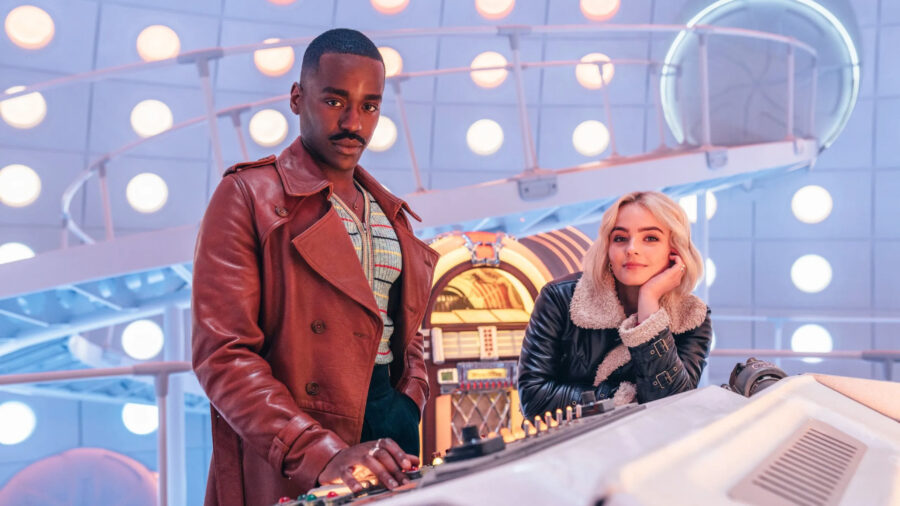
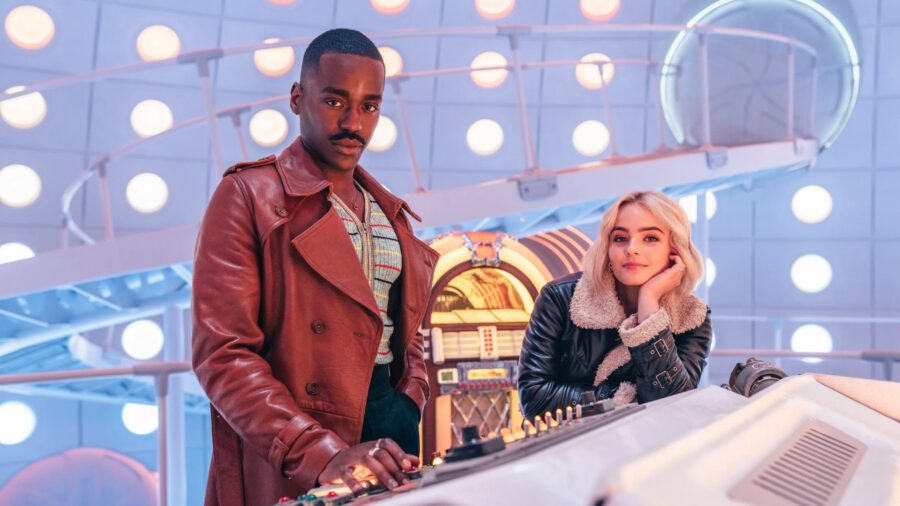
It’s been a bad year for Doctor Who fans. First, Disney declined to renew their deal with the BBC, meaning that no new seasons featuring Ncuti Gatwa’s Doctor. Originally, fans still had a Christmas Special to look forward to, but the BBC revealed this week that the special was canceled and they had parted ways with showrunner Russell T. Davies and his production company. That means the show will be off the air for years as the BBC tries to find a new showrunner, a new lead actor, and (most importantly) a new production company that could finance a relatively expensive, effects-heavy show like Doctor Who.
Understandably, the fandom is upset that we’ll be without new Doctor Who for several long years. Fans are also angry because the cancellation of the show and the Christmas Special means we won’t get a follow-up to the big reveal at the end of the most recent season. That last episode showed Ncuti Gatwa’s Doctor somehow regenerating into Billie Piper’s Rose character. Now, we may never figure out what was up with that or another major cliffhanger involving the Doctor’s granddaughter. There may be a silver lining to the show’s cancellation, though: thanks to some parallel dialogue involving a favorite Companion, the show begins and ends on perfect notes!
War Of The Roses
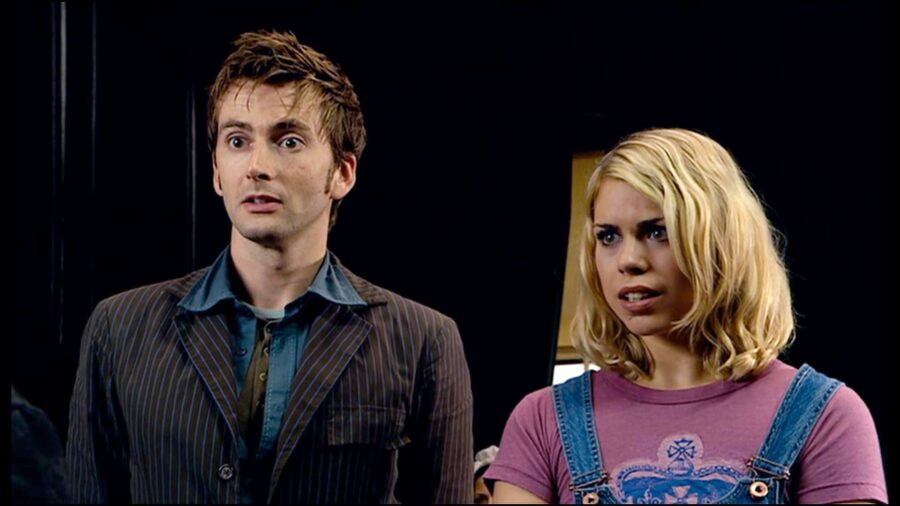
Why are fans so angry that we won’t be getting new Doctor Who anytime soon? The main source of annoyance is that the most recent season laid out some huge mysteries that will likely never pay off. For instance, Susan, the Doctor’s granddaughter, appeared and told the Doctor to find her. This is a character that hadn’t appeared onscreen in decades, so her reappearance made for a tantalizing mystery. Additionally, Ncuti Gatwa’s Doctor regenerated into the body of Rose (played by Billie Piper). It’s not explained why this happened or whether she is really the Doctor or not. That’s yet another mystery likely to go forever unsolved.
However, thanks to the untimely cancellation of the 2005 Doctor Who series, the show accidentally has the perfect beginning and ending. In the debut episode “Rose,” the titular character has the very first line, saying “Bye!” to her mother. And in the final episode, “The Reality War,” the Doctor regenerates into Rose’s body, and she gets the final word of an entire era: “Hello!” Obviously, there’s some weird parallelism between the episodes, with the same character bidding goodbye to someone she knows in the very beginning and saying hello to everyone she doesn’t know at the end. Given that Russell T. Davies was the showrunner for both these episodes, the similarities are likely intentional.
What’s It All Mean?
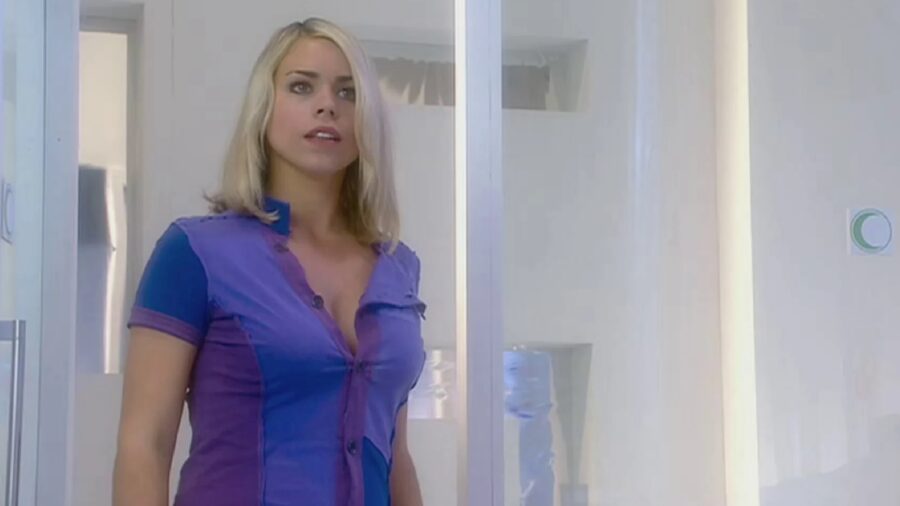
What could the similarities mean, though? Maybe the parallel dialogue is a hint that we are seeing the reappearance of her Bad Wolf form. Alternatively, the dialogue may be symbolic of the character’s journey. In “Rose,” she was all too happy to leave her mundane life behind to go on cosmic adventures with the Doctor. Bidding goodbye to her mother may symbolize her departure from normie life into an adulthood that spans all of time and space. Later, Rose embraced a normal life with a normal copy of the Doctor in a parallel universe. Maybe her older self’s “hello!” symbolizes her willingness to embrace timey-wimey adventures yet again.
Or, it could just be a coincidence. “Hello” and “goodbye” are very mundane words, and they may have been written simply to represent Rose’s comings and goings. Still, “The Reality War” helps create a perfect bookend for the 2005 era of Doctor Who. With the same character possibly talking to herself across the decades, the parallelism between this script and “Rose” means that Doctor Who has a perfect beginning and ending. Plus, mundane dialogue aside, each episode has a secret weapon: the sudden appearance of Billie Piper, one of the sexiest women in sci-fi history. Bad dialogue? Forget about it. When she’s onscreen, they can let this lovely lady say whatever she wants!
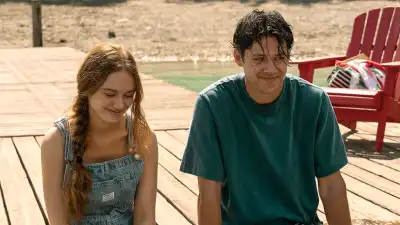
Prime Video’s Every Year After hinges on a shocking twist — but is the big secret actually related to another love triangle with two brothers?
Based on Every Summer After by Carley Fortune, Every Year After follows Percy (Sadie Soverall), who grew up vacationing in Barry’s Bay and spending all her time with the Florek brothers: Sam (Matt Cornett) and Charlie (Michael Bradway).
Warning: Spoilers below for season 1 of Every Year After.
Years after a heartbreaking split from Sam, the pair reunite, but something is holding Percy back from reconciling their relationship: she had sex with Charlie during a rough patch with Sam. In Fortune’s book, Sam reveals that he already found out about the shocking hookup.

Fans of Carley Fortune’s beloved book Every Summer After may notice a few changes to the storylines in the adapted Prime Video show, Every Year After. The story begins with Percy (Sadie Soverall) returning to Barry’s Bay after learning about the death of ex Sam’s (Matt Cornett) mom — and dealing with her lingering feelings […]
On screen, however, Sam is oblivious to Percy and Charlie’s one-night stand — which this time occurs after an official breakup while Sam is at college —and how it contributes to her cutting things off with him in the past.
Despite Percy having individual connections with both Florek brothers, Fortune addressed the people who compared Every Year After‘s surprise reveal to Prime Video’s other successful book to screen adaptation series The Summer I Turned Pretty, which followed Belly’s (Lola Tung) complicated love triangle with brothers Jeremiah (Gavin Casalegno) and Conrad (Chris Briney).
“It’s not about a person choosing between other people,” Fortune, 42, explained exclusively to Us Weekly of her story. “That’s what a love triangle is, when there is equal kind of tension in the triangle. It’s just not what it is. I think the show is very much about important places and those people and places that stay with us for many, many years. It’s about coming home.”
She continued, “It’s about how we grow and we evolve, but the younger versions of ourselves are always with us. I think it’s very tender.”

Fans of Off Campus and The Summer I Turned Pretty should be tuning into Prime Video’s Every Year After — but where will they recognize the cast from? Based on Every Summer After by Carley Fortune, Every Year After follows Percy (Sadie Soverall), who grew up vacationing in Barry’s Bay. After spending all her time […]
Aurora Perrineau, who plays Chantal in the series, also shared her take.
“I think it has the same yearning as The Summer I Turn Pretty, but I think it’s really not a love triangle,” she told Us. “I don’t think it’s a love triangle. I think, also, it’s just a bit more adult, because it’s about adults.”
Perrineau, 31, called Every Year After more of a “conversation of forgiveness” between Percy and Sam.
“I think it’s something that a lot of people — maybe not in the exact scenario have dealt with — but it is that thing of trying to understand how to forgive people and if you can,” she shared. “I think that that’s something that people will attach to.”
Every Year After is streaming now on Prime Video.

By Robert Scucci
| Published

Of all the Stranger Things characters I could possibly latch onto, I was always partial to ole Dusty Bun, portrayed by Gaten Matarazzo. He’s the only younger character throughout the entire series’ run who looked like he actually wanted to be on the adventure of a lifetime that everybody else seemed bored to death with by Season 5. Matarazzo brings that same energy to his most recent effort, Pizza Movie (2026), and it’s reason enough alone to check out the Hulu Original stoner comedy.
If you’re into the likes of Cheech & Chong, Harold & Kumar, and even some of the higher-quality Seth Rogen stuff, like Pineapple Express, you’ll feel right at home with Pizza Movie because it hits most of the beats you’re familiar with. Pizza Movie is ultimately a stoner comedy, but with one caveat: its protagonists aren’t your typical stoners. They’re just college roommates who occasionally like to party and accidentally eat a very powerful hallucinogen.
Don’t Get This Twisted, Pizza Movie Is Very Funny

Most of the comedy in Pizza Movie comes from its visual effects, twists in perspective, facial reactions, and constant escalation. What I didn’t understand, though, was why this had to be an attempt at reviving the raunchy college comedy. Aside from the setting, this movie, and the humor driving it, could have taken place anywhere. In all honesty, it probably would have worked better in a random suburban house while the parents were out of town rather than on what appears to be a mid-tier college campus.
We’re introduced to roommates Jack (Gaten Matarazzo) and Montgomery (Sean Giambrone), who are relentlessly bullied after an incident earlier in the semester in which the former accidentally got the entire football team listed on the sex offender registry. Every so often, they hang out with Lizzy (Lulu Wilson), who has also distanced herself in order to preserve her reputation.

Dejected and wondering what to do after their coveted bottle of booze is smashed by their tormentors, the roommates stumble upon what appears to be an Altoids tin with the word M.I.N.T.S. written on top. They later learn it stands for Mind Igniting Neural Tuning Stimulants. They each ingest one of the little candies and are horrified to discover they’re about to go on the trip of a lifetime, complete with hallucinations, alternate timelines, nightmare flashbacks, and revelations about the true nature of reality.
They also learn that eating pizza, which they ordered earlier, can counteract the drug, so they set out to retrieve their pie knowing full well they’ll have to navigate hallways, dorm rooms, and stairwells filled with the jocks who hate them, as well as power-tripping RAs led by Blake (Jack Martin), who are allergic to fun and trying to get enough underclassmen documented so they can ship them off to Gralk Hall, the worst house on campus.

Not knowing any of this, Lizzy, who initially tries purchasing a party bus to impress the jocks, also ingests M.I.N.T. and reluctantly joins up with Jack and Montgomery, who are well past the point of tripping face. The only way they can save themselves from a complete break from reality is the pizza being kept warm by the Snackatron 3000 delivery robot downstairs.
This Didn’t Need To Be A College Comedy
While Pizza Movie wins serious points for leaning so hard into absurdity and physical comedy, especially in the third act, I’m completely confused as to why it had to be a college movie. On one hand, it makes sense for the setup because you need a group of antagonists and a bunch of young people packed into one condensed space to make it all work, but this could have just as easily, and more effectively, taken place in a suburban neighborhood while somebody’s parents were out of town.

A group of bullies could show up, our heroes barricade themselves upstairs after eating a M.I.N.T. given to them by one of their guests, and then learn they need to ride their bikes across town to get a pizza. If anything, this would enhance the story because they could get lost in the woods or be tripping so hard that they think the jungle gym at the playground is actually a Saw-style murder castle. The humor feels limited by making this whole thing yet another “run through the quad screaming” kind of endeavor.
It’s also worth noting that this is the first movie I’ve seen in a hot minute where college is portrayed as an average state school or low-tier private school experience. The living spaces are overcrowded and claustrophobic, and it’s actually a fairly accurate representation of what college life is like for a majority of underclassmen. While films like Animal House and Van Wilder offer a more luxurious-looking experience where everybody lives in decked-out frat houses, what we get here is a dorm room shared by two, sometimes three people.

The classic raunchy college comedy made young adults think they were missing out on campus life. Pizza Movie makes me glad I commuted to the university and lived at home.
Still, as much as the college setting rubbed me the wrong way, Pizza Movie is a solid stoner comedy that successfully accomplishes what it sets out to do. It’s a drug-induced slapstick chase plot, and it’s done well.

Pizza Movie is streaming on Hulu and Disney+.
Few fantasy heroes in the current culture are as immediately recognizable as Harry Potter. The Boy Who Lived was at the center of one of the largest and most popular fantasy franchises that dominated both books and film for well over a decade, and it continues to be massively popular. Warner Bros. has invested a staggering amount of money into a new series adaptation of the novels, banking on fans having enough nostalgia for the character to make it worth the time, money, and effort. Whether or not that upcoming series is able to escape the shadow of the immensely successful films remains to be seen, but regardless, Harry Potter will remain an immensely beloved hero — that doesn’t mean he’s the most likable, though.
As portrayed by the very likable Daniel Radcliffe in eight films, the character received a fair amount of depth, portrayed with the emotional volatility of an adolescent going through growing pains but imbued with emotional maturity beyond his years. He could also be a whinging, self-centered muppet who was often given a gargantuan amount of leeway by some of the Hogwarts staff because of his traumatic past. You know who else suffered tragically at the hands of Voldemort yet continually got the crap end of the broom without ever acting like a stubborn jerk? Neville Longbottom. And just like Neville, other fantasy heroes are deserving of more praise than Harry bloody Potter, and these are ten of them.
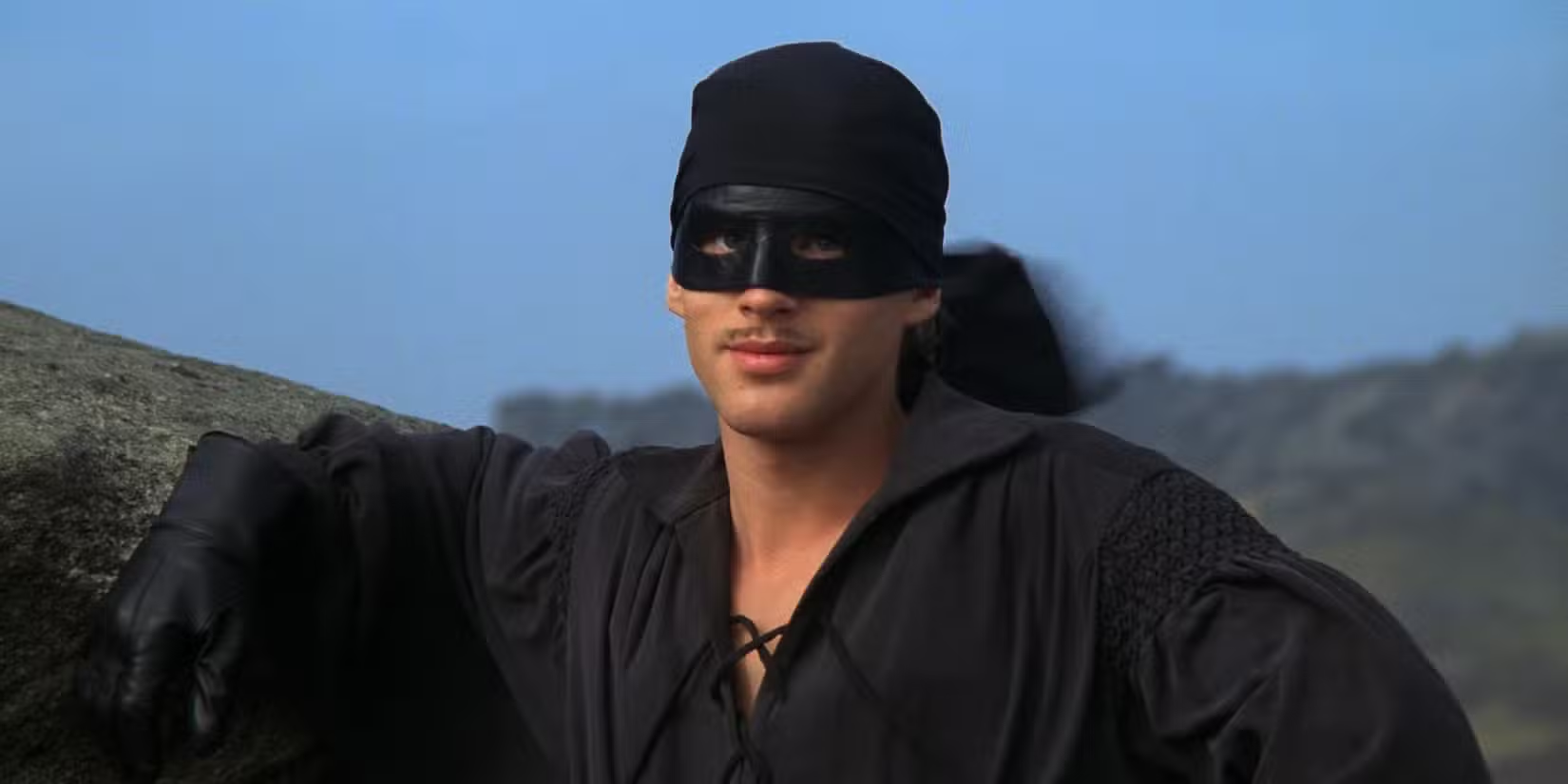
Wesley (Cary Elwes) – ‘The Princess Bride’ (1987)

Rob Reiner‘s fantasy comedy classic The Princess Bride is filled with likable and memorable characters. Every role is impeccably cast, and every actor gets a moment to shine. When a supporting cast is this colorful, it’s often that the blander hero gets left in the dust, but that’s certainly not the case for Carey Elwes‘ charming rogue Wesley. Quick-witted and even quicker with a sword, Westley is the kind of dashing and devoted hero that fantasy stories are filled with, further elevated by Elwes’ brilliant comedic timing and ability to balance self-awareness with genuine emotion. It’s the same magic that makes The Princess Bride such a timeless classic, and who wouldn’t rather have Wesley come to save them over Harry Potter?
Beginning as a humble farm boy hopelessly in love with the fair maiden Buttercup (Robin Wright), Wesley goes missing and returns years later to find her unfortunately betrothed to Chris Sarandon‘s comically loathsome Prince Humperdinck. He fights with his wits and his brains to save Buttercup, all with a smirk and charm reminiscent of the classic screen heroes played by Errol Flynn and Douglas Fairbanks. Elwes is perfectly cast as Wesley, and while he’d amp up the comedic absurdity to parodic levels for his role in Mel Brooks‘ Robin Hood: Men in Tights, he’s never been more likable.
Inigo Montoya (Mandy Patinkin) – ‘The Princess Bride’ (1987)

You can’t bring up The Princess Bride without talking about its true hero, Inigo Montoya. As a revenge-driven swordsman who goes from criminal to drunken wretch to reinvigorated hero, Montoya is never anything less than compelling, and is made immensely likable by Mandy Patinkin’s iconic performance. He is at the center of some of The Princess Bride’s most memorable scenes, whether it’s his charming first swordfight with Wesley, the comedy gold of haggling with Miracle Max, or his emotionally climactic duel with the six-fingered man who killed his father.
When introduced as one third of the criminal trio that includes Wallace Shawn‘s temperamental and loquacious Vizzini and Andre the Giant‘s gentle giant Fezzik, Montoya seems to be just another roguish swashbuckler. It’s when he reveals his backstory to Westley that we understand the full depth of his pain, which Patinkin plays with absolute sincerity. The character’s famous repeated line is delivered with conviction every time, and the actor brings a different flavor to it every time. He’s ferociously funny, unexpectedly moving, and undeniably likable. In a movie where every character is a classic, Inigo Montoya reigns supreme.
Willow (Warwick Davis) – ‘Willow’ (1988)

Developed by producer George Lucas and directed by steady hand Ron Howard, the ’80s fantasy cult film Willow may not have left a cultural footprint remotely close to the size of the Harry Potter franchise, but it’s beloved by its fans and features a terrific lead performance by the tremendously likable Warwick Davis. The actor originally got his start playing the fan favorite Ewok Wicket in Return of the Jedi and has appeared in all kinds of sci-fi and fantasy franchises, including Harry Potter. The actor is awesome and underutilized, and Willow is one of his best characters.
Willow is a Bilbo Baggins-esque figure from a town of little people referred to as Nelwyn, who has adventure thrust upon him when he discovers a baby prophesied to bring down an evil sorceress. She sends her legions to kill the child, so Willow reluctantly leads an expedition to return the child to safety. In his quest, Willow is joined by the roguish anti-hero Madmartigan (Val Kilmer), and a lesser actor would have been blown off the screen by the movie star. Yet Davis imbues Willow with a decency that makes him infectiously likable. While not a success at the box office, Willow has more than enough magic to take on the star of the Wizarding World.
Edward (Johnny Depp) – ‘Edward Scissorhands’ (1990)

There’s something about pure innocence that makes a character impossible not to like, and there are few fantasy heroes more innocent than the titular character in Tim Burton‘s suburban fairytale Edward Scissorhands. The juxtaposition between Burton’s gothic design of the character, created in collaboration with Stan Winston, and Johnny Depp‘s gentle childlike performance gives Edward an ethereal quality that permeates the entire movie around him. In many ways, Edward is the quintessential Tim Burton protagonist, a tragic hero whose purity was too good for the rest of the world, ultimately dooming him to a life of solitude.
Left alone in a castle after his creator (Vincent Price) dies, Edward is found by Dianne Wiest‘s kindly Avon lady, who brings him to her pastel home in the suburbs. Despite her and the rest of her family’s attempts to integrate Edward into their so-called normal society, jealousy and fear spread among the suburbanites. Burton excels at films featuring misfits who fail to conform, whether it’s Jack Skellington in The Nightmare Before Christmas or the titular character in Pee-wee’s Big Adventure, but Edward is his most clearly autobiographical. Burton treats this misfit with an even greater level of empathy and warmth, and the character is by far his most likable hero.
Babe the Pig (Christine Cavanaugh) – ‘Babe’ (1995)

In fairness to Harry Potter, when it comes to likability, it’s hard to compete with a talking pig. Even so, speech is no guarantee that a pig is going to be likable; just look at the villains from Animal Farm or the titular character of Gordy. That latter had the misfortune of coming out only a few months prior to Babe, and has forever lived in the charming, sheep-herding piglet’s shadow. There’s an alchemy in the combination of animal performers, animatronics, and the voice of Christine Cavanaugh that is special, even among other cinematic talking animals.
The film, which is based on the novel The Sheep-Pig by Dick King-Smith, follows the orphaned piglet as he is brought to Hoggett Farm, where he’s prepped to become a ham dinner before he proves his worth as an unlikely sheep herder. It’s the kind of family-friendly fantasy film that could easily be cloying, but instead is just effortlessly charming, much like the titular pig. Canavanaugh, who is best known for voicing Chuckie in Rugrats and Dexter in Dexter’s Lab, brings a softer tone to the character, imbuing Babe with an earnestness that matches his lovable pink exterior. It’s not recommended that anyone should be trying to own pigs as house pets, but it’s not hard to see why they would want to after watching this little porcine charmer.
Samwise Gamgee (Sean Astin) – ‘The Lord of the Rings’ (2001-2003)
Everybody needs a friend like Samwise Gamgee. This Hobbit from The Lord of the Rings was considered the chief hero of the trilogy by its author J.R.R. Tolkien, and that is reflected in his screen portrayal by Sean Astin in Peter Jackson‘s epic film adaptations. With an unwavering loyalty and moral conviction that even the power of the One Ring can’t corrupt, Samwise is the platonic ideal of a sidekick, but he’s so much more than just that for Frodo. Without Sam, it’s undeniable that Frodo likely would have succumbed to the influence of Sauron and all of Middle-earth would have fallen.
There are a dozen different moments of Sam’s heroism that you could pick out as his best, whether it’s his stubborn refusal to let Frodo go it alone in The Fellowship of the Ring, his inspiring speech at the end of The Two Towers, or his defiant face-off with the giant spider Shelob in The Return of the King. Most fans would likely list his final heroic act of carrying Frodo into Mount Doom at the climax of their journey, but there’s also something quietly special in the moment Sam takes his furthest steps out of the Shire at the beginning. The Hobbit has no idea of what perils await him, but he’s ready to face all of them for his friend. Samwise is one of the best fantasy heroes, and Astin’s inherent likability made him the perfect choice for the character.
Buddy (WillFerrell) – ‘Elf’ (2003)

Will Ferrell is one of the most gifted comedic talents to come out of the ’90s. Beyond his character work on Saturday Night Live, the actor proved a consistently hilarious presence in movies in the 2000s. While most of his characters were of the more arrogant variety, like Ron Burgundy and Ricky Bobby, he also gave audiences an all-time icon with the impossible-to-dislike Buddy in the Christmas fantasy favorite Elf. Fish-out-of-water stories like this often become dull because they repeat the same jokes ad nauseam, but Ferrell has such an infectious and lovable energy to his performance that it makes his antics endlessly entertaining.
Buddy is a human child who hitched a ride in Santa’s bag one Christmas, and has since been raised as an elf in the North Pole. When he discovers his true parentage, he makes a pilgrimage to New York City to meet his real father, played by professional curmudgeon James Caan. Ferrell makes jokes as broad as eating gum stuck to a subway entrance or as simple as pressing all the buttons in an elevator effortlessly, and they all feel tied to who Buddy is as a character. He’s filled with wonder and endlessly curious about the world around him, and we could all stand to be a little bit more like Buddy.
Giselle (Amy Adams) – ‘Enchanted’ (2007)

A character who shares more than a few qualities with Buddy, Enchanted‘s Giselle is a bubbly princess transplanted from her magical kingdom to New York City, where her infectious energy and musical spirit enchant every character she meets. It’s another character that could become grating in the hands of a different actor, but Amy Adams weaponizes her charm to make Giselle lovable and aspirational. She sings and dances across the screen in a manner befitting a Disney princess, and Adams is guileless in the role.
Like many Disney princesses before her, Giselle dreams of meeting her Prince Charming and living happily ever after, but after she’s transported into the real world, she meets a dreamy divorce attorney who challenges her optimism. Like Buddy or Edward Scissorhands, Giselle is a magical character who instigates more growth in those around her than they do in her, but just because she doesn’t have any more dimension than her 2D animated counterparts doesn’t make her any less endearing. Adams is incapable of being insincere as an actress, and she makes Giselle truly feel like she’s stepped out of an animated fantasy.
Hiccup (Jay Baruchel) – ‘How to Train Your Dragon’ (2010)

Hiccup from the How to Train Your Dragon franchise probably has the most outward similarities with Harry Potter. Both are young protagonists who exist in magical worlds and have had extraordinary expectations placed on their shoulders. While Harry wants nothing more than to live up to the example set by his heroic parents, Hiccup finds himself directly at odds with what his father expects from him. It’s that distinction that makes Hiccup all the more compelling in his first adventure. He’s empathetic, courageous, intelligent and awkwardly charming, all of which makes him eminently likable.
Voiced by Jay Baruchel, Hiccup is the antithesis to his heroic Viking father Stoick (Gerard Butler), the leader and dragonslayer of their village. Hiccup is a more intellectual sort who invents weapons to fight the winged beasts, one of which helps him down an infamously dangerous dragon. Upon discovering that the feared Night Fury is a gentle animal, he bonds with it, giving it the name Toothless, and together they try to bring peace between their two species. How to Train Your Dragon was an unexpected masterpiece from DreamWorks, featuring some breathtaking visuals, spectacular action and surprising emotional depth, and it all rests on its unlikely but likable hero.
Mirabel (Stephanie Beatriz) – ‘Encanto’ (2021)

Encanto is a fantasy musical with vibrant visuals and instantly memorable songs by Lin-Manuel Miranda. It explores themes of family identity and generational trauma through magical realism and Colombian culture, which informs all of its characters, including its hero. Voiced by Stephanie Beatriz, Mirabel is an ordinary girl living in a magical world. As the only Madrigal without a magical gift, Mirabel should have a mountain-sized chip on her shoulder, especially given the constant reminders that she isn’t “special.” Instead, the bubbly, quirky character takes it all in stride, even though she feels excluded from her family.
Mirabel’s exclusion is only exacerbated when she begins to see fractures in the magic that built her family’s home and gave them their powers. Her attempts to save her family are thwarted not by some malevolent evil force or character, but by her demanding Abuela. The familial struggle within Encanto is relatable regardless of the cultural specificity of the story, and Mirabel is likewise a relatable hero with all the quirks and flaws inherent to a teenager, even one without magical family members. Beatriz brings both a bubbly energy and an impressive vocal range in her performance, making Mirabel an irresistible character who shows Harry Potter that you don’t need magic to be magical.

Us Weekly has affiliate partnerships. We receive compensation when you click on a link and make a purchase. Learn more!
Quiet luxury is a style many assume is off limits to shoppers on a budget, but that’s absolutely not the case — especially when you start with a wardrobe basic. In fact, building a closet around quiet‑luxury tops is one of the simplest ways to tap into the trend. These luxe-for-less picks set the tone for that polished, pared‑down look that instantly reads designer. And thankfully, there are countless quiet-luxury blouses that won’t break the bank, enhancing your personal style and meeting everyday wardrobe needs.
Whether you prefer breezy denim blouses, off-the-shoulder tops, sleeveless summer sweaters or a silky satin tank, these 17 quiet-luxury tops are the secret to looking wrapped in luxury this summer. Shop our top picks below from retailers like Amazon, Quince, Macy’s and Walmart — starting as low as $5.
17 Quiet‑Luxury Summer Tops That Look Expensive
1. Our Favorite: Over 1,000 shoppers picked up this sleeveless wool‑blend sweater in the past month, and it’s easy to see why. Reviewers love its flattering fit, luxe feel, surprising breathability and unmistakable quiet‑luxury vibe.
2. Preppy Style: Preppy and polished, this V-neck polo sweater has that prep‑school refinement and looks plucked from a boutique. And with so many hues available — including a chic black and white — choosing just one feels impossible.
3. Waist Slimming: It’s hard to choose what’s most stunning about this wrap-waist blouse. With a chic mock neck, oversized cap sleeves and a slimming waist, it packs a ton of quiet-luxury details into one beautiful presentation.
4. Pretty Pleats: Get that custom-tailored look with a pleated short-sleeve blouse. Designed with a flattering fit-and-flare aesthetic, the polished option looks great with wide-leg trousers, tailored skirts, structured shorts and other quiet-luxury staples.
5. Celeb Loved: Worn by celebs like Mindy Kaling, Quince’s short‑sleeve cashmere tee instantly makes an outfit look expensive. Thanks to the breezy, lightweight feel, it’s a piece you can easily wear straight through summer.

If you dream of having a wardrobe filled with Aritzia clothing pieces, same. But why drop your entire paycheck if you don’t have to? We found 13 Aritzia-style gems hiding in Amazon’s Hot New Releases section, and we seriously can’t tell the difference. Somehow, they’re all under $30! With clean lines, rich neutral colors and […]
6. Resort Ready: It’s not summer without linen, and this button‑up shirt looks like it costs three times its price. Adorned in quiet‑luxury‑centric colors like navy, black and white, it brings that crisp, resort‑ready polish that never goes out of style.
7. Beautiful Basics: Stealth wealth is all about the basics, and there’s nothing more rooted in sophisticated simplicity than a fitted baby tee. This Abercrombie style nails that sleek, sculpted look that elevates every outfit — even plain denim.
8. One and Done: A classic mock‑neck bodysuit is a quiet‑luxury staple. The answer to ‘what should I wear?’ is sleek, sculpted and slimming, with everything from tailored trousers to cut-off shorts.
9. Demure Details: It’s a universal truth that off-the-shoulder tops look impossibly chic. This Spanx iteration doesn’t just accentuate your shape — it’s a great building block in any quiet-luxury closet.
10. Classic Denim: No fashion wardrobe is complete without a classic button-up denim shirt. This tie-front top puts a breezy spin on the classic piece, creating a soft, relaxed shape that looks effortless yet elevated.
11. Button-Up Beauty: Leave it to Levi’s to have the most irresistible button‑up cotton vest of the summer. Whether you rock it on its own or layer it with a crisp button‑down, it has that minimalist silhouette that reads pricey and polished.
12. Silky Smooth: It’s no surprise this satin scoop-neck tank is such a hit with Macy’s shoppers. The Donna Karen design has a relaxed, drapey fit that shines on its own or layers beautifully under a structured blazer.
13. Easy-Breezy: Asymmetry is a popular design feature in quiet‑luxury tops. Such is the case with this pricey‑looking cowl‑neck blouse from Anne Klein — a little drape, a little drama and a whole lot of appeal.
14. Summer Essential: You’ll look like you walked straight out of the Hamptons in this breezy button-up blouse. Made with a gauzy cotton-linen blend, the whole vibe is ‘I summer by the water,’ even if you don’t.
15. Buy Every Color: A bit of bounce and a lot of beauty bring this lace crewneck alive. Reviewers say the go-to Walmart top looks way more expensive than it actually is — proof that designer labels are overrated.
16. Easy To Layer: Ribbing is an underrated, quiet‑luxury detail, and it’s front and center in this slimming ribbed tank. You can get the whole elevated look for under $10 with this Walmart gem.
17. Classic Print: This cropped gingham tank is surprisingly sleek for such a playful pattern. Source the style in both brights and muted neutrals to match whatever mood your summer wardrobe is in.

Summer 2026 top fashion trends are leaning slightly feminine, and floral blouses are leading the charge. Instead of the loud, overly busy prints of years past, this season’s must-have tops feel a tad more elevated, with puff sleeves, delicate embroidery, soft color palettes and silhouettes that look straight out of an upscale boutique. You don’t […]

Everyone knows Spock (Leonard Nimoy) as probably the most influential character in science fiction. Whenever you mention the genre to people who aren’t that familiar with it, everyone tends to know at least the Vulcan salute or “Live long and prosper.” As iconic as those are, however, they are far from being the finest our favorite half-Vulcan has to offer. With so much of him on Star Trek, from The Original Series to the movies, it might seem difficult to pinpoint Spock’s best moment, but look no further than Star Trek II: The Wrath of Khan and his iconic line: “The needs of the many outweigh the needs of the few.” It captures his essence perfectly, and is definitely among pop culture’s most misquoted and misunderstood lines.
Spock Uses His Most Famous Line To Justify His Sacrifice in ‘The Wrath of Khan’
There are certain quotes that break the barriers of genre and media to reach even those who are oblivious to where it comes from, often resulting in them being delivered out of context or with completely different intentions than what they are really about. Spock’s “The needs of the many” is one such case. He says it not once, but twice in The Wrath of Khan, and both are all about his arc in the movie, but barely anyone outside the Star Trek fandom remembers or even knows the context.
First, he says it to his old pal, Admiral James T. Kirk (William Shatner), when what starts as a training course for cadets aboard the Enterprise suddenly becomes an actual high-stakes mission. Spock is the ship’s captain, but tells Jim that he should take command, since he is the senior officer and the regulation commands it. Jim repeatedly refuses, but Spock reaffirms it as a must for that mission, given the circumstances, stating that “the needs of the many outweigh the needs of the few,” to which Jim completes: “Or the one.”
Later, after Khan (Ricardo Montalbán) attempts to deliver his final blow against the Enterprise, the ship’s warp drive is damaged, making it impossible for them to escape. Spock then decides to go into the radiation-flooded engine room to restore power, sacrificing himself while locking his friends out. In his final moments, he and Jim recite the “needs of the many” quote again, but with the deliveries reversed, and Spock finishes it with “The one.” So, in the movie, it’s all about Vulcan logic and sacrifice.
Spock’s Quote Is the Epitome of Vulcan Utilitarian Philosophy
Thankfully, situations like the one that requires Spock’s sacrifice aren’t that common in the real world, but his “The needs of the many” line is still delivered quite often, and in contexts where it doesn’t apply at all. It’s usually taken as a way to justify unfair decisions based on a simplistic calculation of cost over consequence, where benefiting the majority is worth overlooking the needs of minorities, often going so far as the majority imposing their will on the minorities, and that’s not what it is about at all.
To fully understand it, we need to look at why it exists. “The needs of the many” goes back to utilitarianism, an ethical theory which states that the most moral course of action is always the one that achieves the greatest good for the greatest number of individuals, and this is intrinsically tied to Vulcan nature. They are known for their sometimes annoying predilection for logical reasoning over anything else; so, when Spock says that to Jim in both circumstances, he is taking a selfless stance, as he understands himself to be the minority.

This Forgotten 5-Part Sci-Fi Series From ‘Star Trek’s Creator Is the Perfect Late-Night Binge
Gene Roddenberry’s other sci-fi series is a fantastic 5-season adventure.
However, utilitarian ethics is favored by the Vulcans for a very good reason. As distant genetic “cousins” to the vicious Romulans, they are actually deeply emotional individuals, and had to learn over millennia how to coexist amongst themselves. For Vulcans, “the needs of the many outweigh the needs of the few” is about survival of the species, not intellectual or moral high ground. Otherwise, a single individual may lead to a crisis that puts the collective in danger because of individual wills.
Spock Himself Understands That the Truth of His Quote Is Purely Circumstantial

You may tell yourself you would also sacrifice yourself if you were in Spock’s shoes in that scene in The Wrath of Khan, but the truth is that most of us wouldn’t. He does what he does because, despite being half-human, he was raised Vulcan, so Spock understands what true selflessness demands when the need arises, and understands that such decisions aren’t available to everyone. Kirk, for example, never once considers it, because his goal has always been to save everyone, not the majority.
People also forget (or simply don’t know) that the very next movie, Star Trek III: The Search for Spock, actually reverses the “Needs of the many” line to great effect, as Jim and his crew figure out how to bring Spock back once they learn how. Spock even left a “fail-safe” of sorts behind, too, because he knew that the truth of his sacrifice was purely circumstantial, not a fail-proof ethical truth. Deep down, we all know that saving everyone is the only objectively right thing to do, and Spock would kind of agree, too.
All these reflections are what make “The needs of the many” the greatest quote in science fiction. It’s a simple and rather straightforward line, but one that evokes the kind of moral questioning that’s typical of the best works of the genre. Star Trek particularly excels at this kind of provocation, turning human ethics and morals into poignant moments that really put them into perspective. So, next time someone pulls out the trolley problem and delivers this banger, feel free to let them know that this isn’t what the line is about at all.
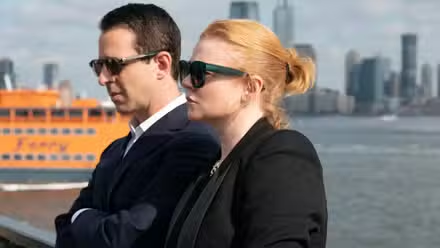
HBO developed its reputation for television excellence by making gritty, mature shows that included the sort of graphic content that would never be permitted on a network program. While the best shows in HBO history offered more than just shock value, the transgressive nature of the material suggested that it was “dangerous” in a way that was enticing to audiences. Compared to its contemporaries, Six Feet Under was a fairly traditional family drama that didn’t necessarily require a prestige distributor. However, Six Feet Under distinguished itself as a probing exploration of life, relationships, and death that was as artful as it was authentic. The series managed to turn its dark subject matter into a poignant, occasionally funny encapsulation of the totality of human existence, and it still holds up just as well 25 years later.
‘Six Feet Under’ Strikes the Perfect Tone Between Workplace and Family Drama
Six Feet Under is the story of the Fisher family, who own and operate a funeral home. After the family patriarch Nathaniel Sr. (Richard Jenkins) dies, control of the business is passed along to his sons David (Michael C. Hall) and Nate (Peter Krause), who are also tasked with caring for their mother Ruth (Frances Conroy) as their sister Claire (Lauren Ambrose) prepares to graduate from high school. Six Feet Under is both a workplace drama and a family story, exploring how one business interacts with the partners, loved ones, and acquaintances of the recently deceased. While Six Feet Under never chose sentimentality when it could provide a more honest outlook, it did celebrate the profundity of life’s most minor moments in a way that most television shows wouldn’t think to portray.
The framing device of Six Feet Under is quite clever, as each episode opens by showing how someone died before they were prepared by the Fishers, who are also tasked with planning the funeral. These introductions can be darkly funny, tragic, or unexpected, but they play an important role in showing how precious life is and how quickly it can be taken for granted. What distinguishes the Fisher family’s practices from other funerary businesses is that they make efforts to understand someone’s last wishes and honor their life, despite not always being prepared to support the bereaved. Although it seems like the characters might be hardened by their experiences, the Fishers only become more involved with the entire community through their business. By offering insights into people who have no control over how they will be remembered, Six Feet Under explores the realistic ways grief can emerge and how it doesn’t always occur in the way that one might expect.

The commentary on death is fascinating because Six Feet Under opened itself up to conversations about the meaning of life and offered interesting perspectives on faith, forgiveness, and human frailty. However, the HBO series has endured as a great drama because of its well-defined characters, each of whom evolves immensely over the course of five seasons. Nate begins the story as a somewhat reckless, uninvolved participant in the family who ends up having one of the most complicated arcs as he searches for what he wants in life. David offers the most grounded perspective because he is the closest thing to his father’s heir apparent, but Six Feet Under was also trailblazing in its nonjudgmental depiction of a gay character, as well as the difficulties he faced coming out. Claire’s journey is perhaps the most fascinating because she has an opportunity to grow up over the course of the show and often has a perspective that grounds her brothers; although both Nate and David are essentially in the shadow of their father, Claire is willing to diverge from the family path, often resulting in intense standoffs with their mother.
‘Six Feet Under’ Retains Its Quality Throughout All Five Seasons
Six Feet Under still feels like a high-quality HBO show today because the series was artful with its visual inventiveness and found a way to explore subconscious desires and anxieties in a way that hadn’t been seen before. Dreams rarely feel surreal when they are occurring, and Six Feet Under was able to walk in its characters’ shoes as they had their reality reconstructed in response to trauma. Although the show never ascribed to a single religion, spiritual undertones are present throughout, particularly in the way that characters communicate with loved ones who have departed. One of the best framing devices that Six Feet Under developed was bringing back Jenkins as a ghostly version of Nathaniel Sr., who looms so large in his children’s memory that they are able to visualize him.
Six Feet Under is the rare show that retained a consistent level of quality throughout without ever having a “jump the shark” moment; even the fourth-season episode where David is kidnapped, which could have felt completely ridiculous, is well-handled because of its stunning real-time execution. The greatest legacy of Six Feet Under is that it has what may be the best series finale of all time in “Everybody’s Waiting,” which wraps up every character’s fate with just the right amount of gravity and ambiguity. Although it is an emotionally involving show that is often quite harrowing, Six Feet Under remains a masterpiece that demonstrates how empathetic great television can be.

NewsBeat55 seconds ago
‘I went to Trafford Centre’s new chocolate pick ‘n’ mix and got more than I bargained for’

Business2 minutes ago
Gold heads for second weekly loss on rate rise expectations

Crypto World3 minutes ago
Anthropic Cuts Off Access to Fable 5 and Mythos 5 Over US Directive


-

 NewsBeat5 days ago
Alexander Zverev wins the French Open to finally earn a 1st Grand Slam title
-
 Entertainment6 days ago
The Best Mystery Series of All Time Is Surging on Streaming 30 Years After It Ended
-

 Crypto World5 days ago
Anatomy of the June crypto crash: Fed, Iran, Saylor
-

 Crypto World2 days ago
Oppenheimer backs SpaceX as $70 billion retail frenzy builds
-

 Crypto World2 days ago
Markets Rally as SpaceX IPO Looms Amid Iran Tensions and Inflation Surge
-
 Crypto World7 days ago
Senator Cynthia Lummis Calls CLARITY Act the Most Consequential Financial Legislation of This Generation
-
 NewsBeat6 days ago
Alexander Zverev conquers demons and outlasts Flavio Cobolli to win French Open for first major title
-

 Tech6 days ago
Microsoft unveils seven homegrown AI models in new bid for ‘long term self-sufficiency’
-

 Tech7 days ago
Hackers now exploit SolarWinds Serv-U flaw to crash servers
-

 Business5 days ago
High Stakes for Wembanyama as New York Pushes for 3-0 Lead
-
 Business6 days ago
The Pain Points Taking a Fragile Tech Rally Down a Notch
-

 Tech5 days ago
Notion restores access to Anthropic after service disruption
-
 Crypto World5 days ago
Eli Lilly (LLY) Stock Surges 4% Following Breakthrough Sleep Apnea Trial Results
-
 Business6 days ago
The investment to transform historic St Helen’s ground in Swansea
-

 Crypto World6 days ago
Trump’s AI Ownership Plan Could Benefit Anthropic at OpenAI’s Expense
-
 Sports4 days ago
Bangladesh beat Australia after 20 years in ODIs, register only their second win over six-time world champions | Cricket News
-
 Business7 days ago
Forensic Expert Floats Handyman Theory in Disappearance of Savannah Guthrie’s Mother
-

 Tech6 hours ago
NanoClaw integrates JFrog registries to secure AI agent downloads
-

 Tech17 hours ago
This Week In Security: Microsoft On Microsoft, Register Your Domains, Linux On ARM, And FreeBSD Joins The File Cache Club
-

 Politics2 days ago
Politics Home | Healey Resignation Is “Colossal Failure Of Government”, Says Former Labour Defence Secretary
You must be logged in to post a comment Login