Related: Selma Blair Just Made Summer 2026‘s Divisive Shorts Trend Look So Chic
Advertisement




Us Weekly has affiliate partnerships. We receive compensation when you click on a link and make a purchase. Learn more!
We hate to admit it, but once the temperature reaches a certain degree, our sense of style starts to slip. Who can think of a cute outfit when you’re sweating bullets straight out of the shower? Thankfully, Selma Blair has already done the hard work for Us, putting together a breezy, warm-weather look that only requires one standout piece: a white button-down tank top.
The actress was recently spotted rocking the easiest (yet timeless and totally chic) outfit formula while out in Los Angeles. Aside from slipping on staples we already own — a.k.a. denim cutoffs and strappy brown sandals — Blair wore Madewell’s Lace Inset Pintuck Sleeveless Top, which quickly became the star of the show. Surprisingly, her exact airy, eye-catching tank is still available at Nordstrom in sizes XXS through XXL.
Get the Madewell Lace Inset Pintuck Sleeveless Top for $88 at Nordstrom! Please note, prices are accurate as of the publishing date but are subject to change.
Made from 100% cotton and machine washable, this bold yet versatile tank is a summer staple that will serve you well. It somehow does it all, standing out against basics (thanks to its dainty lace design), yet still working as a neutral when styled with more elaborate items, like a polka-dot skirt or striped capris. It’s essentially your best button-down, but with a seasonal twist — quick to throw on, loose enough to keep you comfy, and polished enough to read as put-together, even when you’re not trying hard.

It seems like every time we open Instagram, another influencer is telling Us that something we love wearing is suddenly uncool. We’ve decided to stop paying attention, especially when it comes to the debate about Bermuda shorts. Not everyone wants to rock booty-baring options, and after seeing how Selma Blair styled her denim pair, we’re totally sold on […]
As Blair demonstrated, the Madewell find looks dreamy with denim, but nothing’s stopping you from slipping it on under a cardigan and pairing it with trousers for the office. This is also the top you’ll reach for when dressing up, since it works well with satin bottoms, like the luxe-looking midi you’ve been meaning to wear. While it does show your arms, the bubble-like shape will keep your midsection hidden, so there’s no need to struggle with shapewear when it’s 90 and humid outside.
Despite a stylish celebrity endorsement, the sleeveless shirt is still flying under the radar, with just one 5-star review on Nordstrom’s site. That means you’ll be ahead of the game when the world eventually catches on and sizes sell out, leaving some of the most stylish women bummed they didn’t discover it sooner. And trust Us, this top is bound to be a must-have in the months ahead — Katie Holmes recently wore a similar breezy design, as did Dakota Johnson.
Shop this Blair-approved pick now, and be prepared to reach for it once (or twice) or twice a week once things really heat up!
Get the Madewell Lace Inset Pintuck Sleeveless Top for $88 at Nordstrom! Please note, prices are accurate as of the publishing date but are subject to change.

Celebs rarely wear the same pieces, but Katie Holmes and Dakota Johnson totally matched. They wore billowy white blouses with jeans and flats, a.k.a. the easiest everyday formula. All you need is one of the boutique wonders below to recreate it. These spring-to-summer blouses are loose yet never frumpy, balancing flow and structure like art. […]

By Jonathan Klotz
| Published

The hottest genre in literature right now is dark romantic fantasy, or romantasy as fans have called it, and often it can combine with another genre, urban fantasy. When you take the witches and werewolves out of the forest and out of the middle ages, put them in the heart of a city, you get urban fantasy. As popular as it is, urban fantasy television shows have fallen out of favor, and even one of the most successful book series of all time, The Dresden Files by Jim Butcher, was unable to get a decent adaptation. It’s so different in fact, that even Butcher told fans to treat it as an alternate reality.

The Dresden Files aired a grand total of 12 episodes on The Sci-Fi Channel in 2007. Starring Paul Blackthorne (Known now as Quentin Lance from Arrow) as Occult Detective Harry Dresden. Based out of Chicago, in the novels, Harry often finds himself at the center of supernatural power struggles. They could be economic, political, or over an ancient relic, the point is, the world of The Dresden Files novels is dense with layer upon layer of intrigue and hundreds of characters to keep track of.
That’s not the case for the television series, which adapts a case of the week format, and never even skims the surface of the real appeal of Butcher’s novels. Another change is Bob, an intelligent spirit, manifests as Terrence Mann, while in the novels, he’s an invisible spirit who enjoys working through Dresden’s cat (Terrence made it work, but that was the only star tof the character’s changes!). Book plots sort of appear, if you squint and tilt your head, you’ll see “Storm Front” and “Fool Moon” in two episodes. Why The Sci-Fi Channel decided to option the novels and then throw them out is a complete mystery. Fans knew the series was in trouble even before the pilot ever aired.

The pilot, “Storm Front,” was developed as a two-hour movie of the week to serve as a backdoor pilot into launching the series. That never happened. Instead, the third episode aired as the first episode of the series, and the pilot was butchered to one-hour and aired as Episode 8. Studios airing shows out of order used to be a common occurrence, notably with Fox messing around with Dollhouse and Enlisted, but this was a whole new level of interference.
Paul Blackthrone at least fit the mold of Harry Dresden and gave it his all. If anyone were to adapt the current novels, the older, wiser version of Harry would perfectly fit Blackthorne’s performance. The problem is that he started out as younger, a little bolder, little more daring, and not quite as beaten down by the politics of the supernatural world. As a case of the week urban fantasy, The Dresden Files is fun, as The Dresden Files brought to life, it’s one of the worst adaptations of all time.
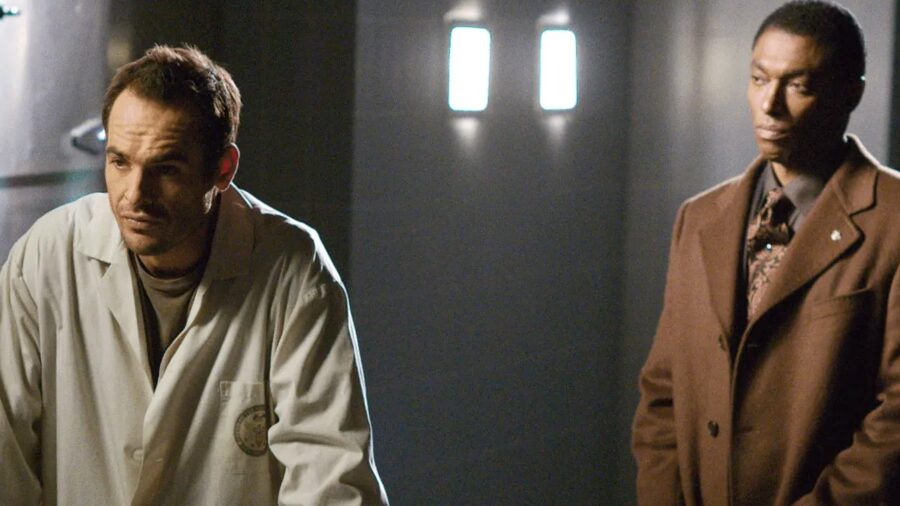
Jim Butcher, author of The Dresden Files, warned fans that the series would be different and to not treat it as a direct adaptation of his novels. Even with that warning, fans were upset that Bob was a literal ghost, Officer Karrin Murphy was now Connie Murphy and a completely different character, and they decided to not tune in. With low-ratings, The Dresden Files was mercifully canceled months after airing.
In the last decade, urban fantasy is in the same neglected place as it was back in 2007. A resurgence thanks to What We Do In The Shadows and Lucifer, proved to be short-lived, with only Supernatural truly catching on. The Buffy revival was canceled in pre-production, Carnival Row would come back if we lived in a just world, and The Winchesters could have been something great if given time to grow. At any moment, The Dresden Files could be attempted again, especially with the continued popularity of the novels, which will, supposedly, come to an end with the 25th book.
In the meantime, you can watch The Dresden Files series for free on Pluto TV, Tubi, Plex, and The Roku Channel.
:max_bytes(150000):strip_icc():format(jpeg)/tom-hanks-woody-toy-story-5-061726-701edff551fa4b92ae976305ff0c7aa5.jpg)
“I had no idea. The Sheriff?”
:max_bytes(150000):strip_icc():format(jpeg)/Spider-Man-Brand-New-Day-Tom-Holland-Hulk-061726-f98b332e16e14b6da48b63b3a828570d.jpg)
Run, Peter, run!
By Jonathan Klotz
| Published

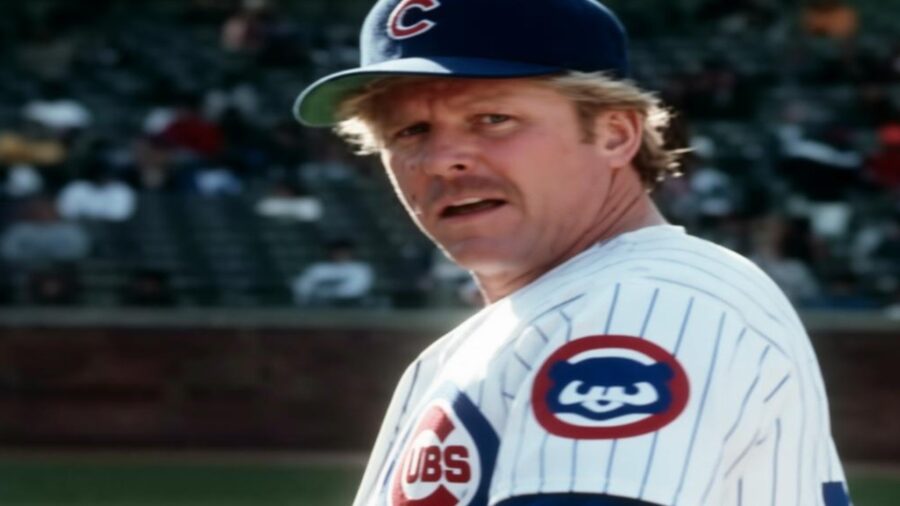
Summer means going to the beach, pool parties, blockbuster movie releases, a debate over the Song of the Summer, and baseball. America’s pastime enters the halfway mark in early July when it doesn’t have to share the spotlight with any other sport. Baseball movies have fallen away over the last two decades, but in the 90s, they were everywhere. Angels in the Outfield, The Sandlot, Little Big League, Major League II, A League of Their Own, and the one that took every elementary school by storm, Rookie of the Year. Now that it’s on Netflix, a whole new generation is learning that if you break your arm in the right place, you too can help the Chicago Cubs win the World Series.

Rookie of the Year stars Thomas Ian Nicholas as Henry, a Little Leaguer who trips, launches himself into the air, and busts his arm. The healing process enhanced his muscles and now he can throw a baseball over 100 MPH with amazing accuracy. Tossing a 12-year old onto a professional team is absurd, but this was 1993, and honestly, the real-life Chicago Cubs would have done the same if it got them to the World Series.
The plot of the film is paper thin with an important life lesson about family, but Thomas Ian Nicholas does a great job holding everything together with a constant look of amazement on his face. Henry can’t believe he’s playing for the Chicago Cubs, and with his hero, Chet Steadman (Gary Busey). All that goodwill goes away when he realizes the Cubs have an incompetent manager, played by the director, Daniel Stern, and his own dad is conspiring to send him to the worst team in Major League Baseball, the one place no self-respecting athlete should go, the team everyone hated for good reason: The New York Yankees.

Rookie of the Year was a huge hit at the box office, earning $50 million and becoming a staple of sleep overs and school movie days. The numbers aren’t available, but as anyone who lived through the 90s will tell you, this movie was everywhere. It’s still well-remembered today, but it’s not the best baseball movie of the 90s. It’s not even the best baseball movie of 1993.
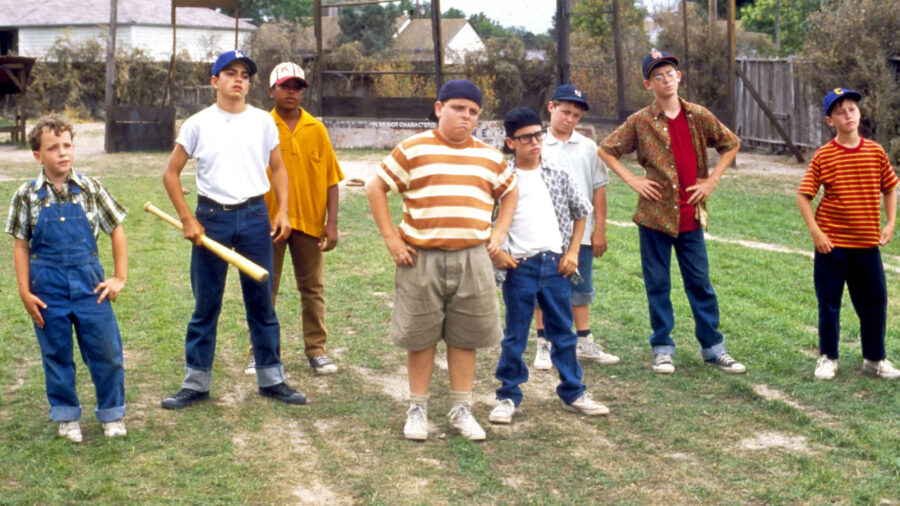
In April of 1993, timed with the start of the baseball season, Disney released The Sandlot. The coming of age story set in 1962 resonates deeper than the pure wish fulfillment of playing for the Chicago Cubs. The Sandlot didn’t make as much money, wasn’t as popular with the elementary school crowd, but over time, it’s been properly recognized as one of the greatest baseball movies, greatest coming of age movies, and best kid movies of the 90s.
Rookie of the Year is currently streaming on Netflix, where the first week it was available, it was ranked in the top 10 Kids Movies. Kids today don’t get the same type of sports movies that 90s kids did, but they can still appreciate the breezy fun of a Little Leaguer tossing 100 MPH fastballs.
By Robert Scucci
| Published

You know what’s a pretty good indicator that a movie is going to be a total disaster? When it’s called Def-Con 4 (1985), suggesting that we’re in a profound state of imminent danger, which would actually be DEFCON 1. Everything about this movie is as misguided as its title, but like a trainwreck, or a crash-landed space station, it’s impossible to look away. The film starts out as a space-based Cold War thriller, but somehow ends up traversing the wasteland like Mad Max. Watching these genres collide is jarring because there are so many different ideas and set pieces competing for attention.
For a film shot on an $800,000 budget, it’s actually pretty impressive how many scenery changes there are in Def-Con 4. But here’s the counterpoint: it’s pretty obvious why this one only earned a little over a million dollars at the box office, barely breaking even on its production budget. Even worse, the film has an abysmal 19 percent Popcornmeter score on Rotten Tomatoes across more than a thousand ratings, and in this case, the numbers don’t lie.

Having sat through the whole thing out of morbid curiosity, I can’t in good conscience recommend Def-Con 4 to anybody who actually wants to watch a decent movie. But if you’re willing to stick around for something fueled almost entirely by raw potential, you may find yourself wondering what other kinds of work writer-director Paul Donovan was involved with. That road eventually leads to LEXX, one of the raunchiest sci-fi series of all time.
Def-Con 4 opens with one of the most wonderfully misguided bits of Cold War optimism you’ll ever see, assuring viewers that the ultimate nuclear defense system has made global conflict “unthinkable.” Naturally, within minutes, the world is on fire. Set aboard the orbital weapons platform Nemesis, the film follows astronauts Cecil Howe (Tim Choate), Eva Jordan (Kate Lynch), and Walker (John Walsch) as they watch helplessly from space while escalating tensions between the United States and Soviet Union erupt into full-scale nuclear war. Cut off from Earth and unable to determine if anybody survived, the crew is eventually forced back to a planet they barely recognize.

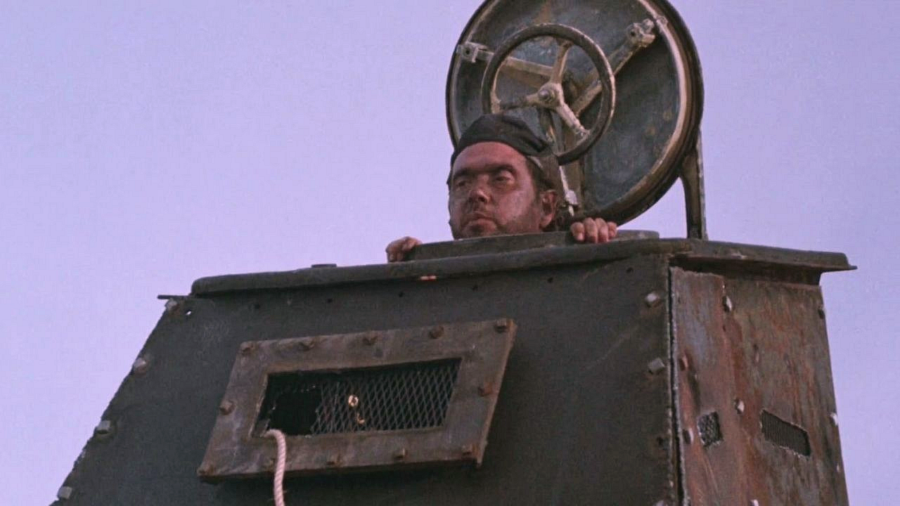
Once on the ground, Def-Con 4 shifts into full post-apocalyptic mode, introducing a wasteland populated by desperate survivors, paranoid militias, and enough homemade armor plating to make George Miller blush. Along the way, Howe crosses paths with world-weary survivalist Vinny McKinnon (Maury Chaykin), the imprisoned J.J. Jameson (Lenore Zann), and the increasingly unstable Gideon Hayes (Kevin King). What follows is a low-budget but surprisingly ambitious mix of nuclear paranoia, survival thriller, and dystopian sci-fi that feels like somebody tossed The Day After, Escape from New York, and a VHS copy of Mad Max into a blender and hoped for the best.
As much as I wanted Def-Con 4 to succeed, it was pretty much doomed from the start. Like most lower-quality Mad Max clones, it’s undone by its own overambitious worldbuilding. The film constantly asks you to bite off more than you can possibly chew, and then, when you’re begging for something to wash it all down, it busts out the hotdog cannon to finish you off.

It’s not that any of its plotlines are difficult to follow either, which is what’s most tragic about Def-Con 4. The story beats are perfectly serviceable, but they never have time to fully develop before we’re onto the next thing. I could see it working as a movie closer to the two-hour range, where its conflicts actually have time to meaningfully gestate, but they don’t, so everything feels rushed in the worst possible way.
While I maintain that Def-Con 4 isn’t 19 percent bad, it’s not exactly a diamond in the rough either. In terms of raw potential, it’s an impressive feat when you consider its financial limitations. But if less attention had been focused on worldbuilding and more on characterization, we’d have a pretty fun adventure on our hands. It’s still a fun watch, but ultimately underwhelming when all is said and done.


As of this writing, Def-Con 4 is streaming free on Tubi.
By Robert Scucci
| Published

Over the years, I’ve changed my stance on whether movie adaptations need to remain materially faithful to their source, and generally speaking, I’m all about filmmakers taking creative liberties. Stanley Kubrick’s version of The Shining is a prime example because it’s a bona fide horror classic, and it doesn’t necessarily take away from your enjoyment of Stephen King’s novel. You can read the book and enjoy it for what it is, and then appreciate Kubrick’s vision in bringing the story, inspired by King, to life through a visual medium, complete with his own artistic signature on it.
I think this is how it should be. Nobody wants to hear a cover song that sounds exactly like the original. When done right, you get to enjoy two different versions of the same thing. In most cases, I see no downside.
At least, I felt this way before watching 2009’s Dragonball Evolution.

I need to come 100 percent clean here and admit that not only do I know nothing about the Dragon Ball series, I don’t really know anything about manga or anime in general. Here’s why that matters. When an intellectual property with a legacy as far-reaching as Dragon Ball gets adapted into a film, it’s insane to think that decades of lore could fit into a single feature-length movie. No reasonable person should expect that.
But it should represent the source material in an appealing enough way to leave curious viewers like myself asking for more. After sitting through Dragonball Evolution on a dare, I can safely assert that this film did not accomplish that.

Going into Dragonball Evolution with zero expectations other than “you’re going to laugh your ass off at how bad this is,” I had an open mind. It’s rated PG, so clearly mass appeal was a priority, meaning I wasn’t expecting anything ultra-violent or any particularly dark imagery. I was maybe expecting a family-friendly adaptation of a beloved franchise that could serve as a solid entry point for casual viewers. At the very least, if done well, it could have been a competent stand-alone film that taps into Dragon Ball canon without overwhelming somebody like me, who doesn’t want to absorb entire universes just to enjoy a single piece of media.
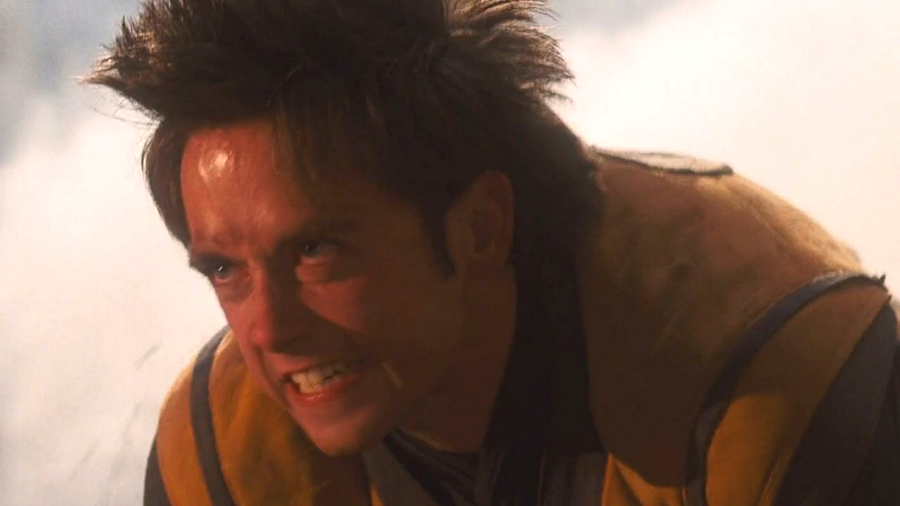
Instead, we get Goku (Justin Chatwin), who looks and acts like a cross between the “Dude, You’re Getting a Dell!” guy and Jessie Pinkman from Breaking Bad. Not Aaron Paul, the actor. Jessie Pinkman specifically. He’s a reluctant hero who trains under the guidance of his grandfather, Gohan (Randall Duk Kim). On his 18th birthday, he’s given a Dragonball with four gold stars in it and told that there are six others just like it, each with a corresponding number of stars. What Goku and Gohan don’t know, however, is that the Namekian Demon King Piccolo (James Marsters), with the help of his loyal henchwoman Mai (Eriko Tamura), is hellbent on collecting all seven Dragonballs and willing to kill everybody in his path to get them.

Goku has a crush on Chi-Chi (Jamie Chung) and stares at her for awkwardly long stretches in class before accidentally revealing his powers to her while she’s trying to open her locker. It’s implied that he has powers he can’t display in public. He’s also a pretty well-trained fighter, but apparently can’t do that in public either. To illustrate this point, Goku gets into a “fight” at Chi-Chi’s party that mostly involves him cleverly dodging his bullies so they inadvertently beat themselves up. I could get that from any Steven Seagal movie and walk away from it way more entertained.
Anyway, Piccolo kills Gohan, and Goku very flatly says, “I will avenge you,” before setting out to find Master Roshi (Chow Yun-Fat), who trained his grandfather but needs to be brought up to speed on Piccolo’s antics. From this point on, Goku becomes acquainted with ninja garb that looks like a Scorpion costume you’d find in the Spirit Halloween bargain bin. Dragonballs are located thanks to Bulma (Emmy Rossum), who, when we first meet her, claims to have no idea what a Dragonball is, but seconds later reveals that she has a custom-made device specifically designed to track them that she had been developing for years.

Goku goes “Gahhh!” but it sounds more like my 5-year-old when he’s pretending to be angry and stomping on his block towers.
We now know that live-action anime adaptations can capture the minds, hearts, and imaginations of the masses. Most recently, One Piece made waves on Netflix while staying faithful to the source material in a way that’s not intimidating to newcomers who are just looking to get their feet wet. It’s not an unattainable goal by any stretch of the imagination, and if the right talent puts the right amount of care into a project, you should expect nothing less.

Dragonball Evolution offers nothing to latch onto. It doesn’t matter if you’re a diehard fan going into it, and it doesn’t matter if you know nothing about Dragon Ball. It’s a stand-alone movie, and there was plenty of fertile ground to sift through in search of a meaningful story and a hero’s arc I’d actually care about. For a movie that reportedly cost around $30 million to make, you’d expect somebody close to the original IP to be on the payroll making sure its legacy stayed intact.
Ironically, series creator Akira Toriyama was brought on as a creative consultant, but much of his input was reportedly ignored. It’s a double-edged sword because the short-term loss was that director James Wong and company took a chainsaw to his pride and joy. The flip side is that the movie was so poorly received that Toriyama’s interest in the franchise was rekindled, eventually leading to his involvement in later projects like Dragon Ball Z: Battle of Gods and Dragon Ball Super.

While I freely admit that I’m the last person you should ask about Dragonball Evolution’s merits as an anime adaptation, I am a movie fan, and I can tell you there are no redeeming qualities here. It feels like the Dragonball name was tacked onto a lackluster script, and the studio thought that would be enough to launch a cinematic universe that could compete with the MCU. Instead, we’re left with Justin Chatwin publicly apologizing for starring in the film because he knows what he did.
DRAGONBALL EVOLUTION SCORE
As of this writing, Dragonball Evolution can be rented or purchased on demand through YouTube, Fandango at Home, and Amazon Prime Video.

Bunnie Xo opened up about her journey to motherhood months before her separation from husband Jelly Roll.
“I just want women to know it doesn’t matter what age you are when you’re ready to be a mom, be a mom and when you’re able to be a mom, be the best mom that you can be,” Bunnie, 46, exclusively told Us Weekly in January. “God, you know, gave me Bailee to do a run-through to make sure because my biggest fear was that I was always going to inflict trauma on my child like my parents did to me.”
Jelly Roll, 41, welcomed daughter Bailee, 18, and son Noah, 9, before marrying Bunnie in 2016. (The country singer has primary custody of Bailee, whom Bunnie helped raise throughout her relationship with Jelly Roll.)
“I never wanted to have kids, and raising Bailee has really showed me that, ‘Hey, maybe I actually can do this,’” Bunnie told Us. “Granted, you know, everybody gets some sort of trauma in their life, whether it’s on purpose or not, but I think I might be able to crush this mom role, and to be able to do it with my husband is going to be really amazing.”

Jelly Roll’s daughter, Bailee Ann DeFord, previously called her father’s estranged wife, Bunnie Xo, her “fav person.” Bunnie, 46, was the subject of an Instagram grid birthday tribute posted by Bailee Ann, 18, in 2023. “Happy birthday to my fav person, my idol, my mentor, the most gorgeous woman i know, a kick ass business […]
At the time, Bunnie and Jelly Roll were undergoing in vitro fertilization (IVF) treatments to expand their family.
“We are keeping it very close to our chest,” Bunnie teased to Us of her fertility journey. “I always say, repeatedly, that the world loves to ruin beautiful things. … So, we’re excited.”
Nearly five months later, Us confirmed on Monday, June 15, that Jelly Roll filed for divorce from Bunnie after 10 years of marriage. Per the divorce docs, the pair separated last month.


“The husband would respectfully show unto the court that these parties are unable to live together successfully as Husband and Wife,” the court documents read. “Plaintiff charges that the parties have suffered irreconcilable differences as would entitle either of them to a divorce in the event they execute a Marital Dissolution Agreement that provides for an equitable division of the parties’ assets and apportions responsibility for payment of the parties’ debt.”
While neither Jelly Roll nor Bunnie have publicly addressed their breakup, Bailee addressed the situation in a candid social media video.
“I am disgusted at how invested everyone is in a very clearly private family matter. It’s fkn crazy,” she wrote via TikTok in a video published Tuesday, June 16. “Go on somewhere y’all. Worry ‘bout your house — not mine. I’m not speaking on it — yet.”

By Robert Scucci
| Published

If you grew up when Napoleon Dynamite (2004) was first making the rounds, you either loved or hated the film. Personally, I was always a big fan because it did the unthinkable by having so many aggressively quirky characters not wear out their welcome. That awkward humor that would later become the norm through series like The Office and Parks and Recreation is very much indebted to Napoleon Dynamite for proving that, so long as everybody is earnest, they can remain wacky and off-kilter whenever they’re on screen.
2019’s The Planters operates in this lane and very much feels like a spiritual successor to Napoleon Dynamite, with a healthy amount of Wes Anderson influence thrown in for good measure. My first thought, before I even looked up what people were saying about the film, was that its lead, writer-director Alexandra Kotcheff, is like a cross between Napoleon Dynamite and Aubrey Plaza. When I finally made my way over to IMDb to check out some reviews, I learned that I was not alone in this assessment.

The Planters is one of those films that finds joy in meandering through its scenery. Its story centers on Martha Plant (Alexandra Kotcheff), a young woman who lives alone in her grandparents’ house after their passing. By day, she’s a telemarketer for an air-conditioning company, but she learns she’s about to be terminated after making only five sales, even though she’s been working for them for years. She flatly reads her scripts, gets hung up on, and repeats the process with a blank face and total lack of enthusiasm.
Outside of her regular job, Martha is a self-proclaimed planter, which, to the best of my understanding, involves stealing trinkets from a local thrift store, putting them in old cookie tins, burying them in the desert, and returning a day later to collect money from the now-empty tins. It’s a strangely elaborate black-market arrangement, but she’s only doing it for a few extra dollars here and there.

One day, while doing planter stuff, Martha has a run-in with a vagrant woman named Sadie Mayflower (writer-director Hanna Leder), who’s first seen with a football helmet chained to her face. Martha takes her in, feeds her, gives her a place to sleep, and continues to go about her days. As luck would have it, Sadie is actually a great salesperson and thinks she can save Martha from losing her telemarketing job by helping her hit a new quota she has only a month to fulfill.
The problem, though, is that Sadie is revealed to suffer from a split personality disorder, and there’s no reasonable way to predict who she’ll become next. One day, Sadie is helping Martha close deals, and before you know it, she’s banging a rattle, acting like an infant, and begging for a bubble bath. The relationship dynamic is further explored when Richard Cox (Phil Parolisi), a man with car troubles, shows up to stay and quickly falls in love with Martha, who remains completely oblivious to his obvious infatuation.

If the relationship dynamic in The Planters isn’t strange enough, it’s worth mentioning that one of the cookie tins in Martha’s cabinet is home to a collection of stop-motion Bible figurines that depict various passages from the Old Testament whenever Sadie opens it. She seems enlightened whenever she encounters the tin, prompting her to seek religious guidance at a nearby church. Martha eventually discovers it herself, and I’m still trying to figure out where all of this actually fits into the movie, aside from offering a “that’s so random” element to an already quirky premise.
I’m sure there’s some allegory to consider here, but presently, it’s lost on me. It could be about how we’re all empty until we experience some sort of spiritual awakening, or it could simply be an effort to pad the runtime. I’ll leave that interpretation up to you, but I can’t say I’m upset that these sequences are in the film. If anything, they serve as a thematic bookmark between acts, as something kooky typically happens after these moments.

The Planters, despite some of its more questionable creative decisions, is one of those movies that’s fun to throw on and vibe with. There’s really not much going on in terms of major events. The entertainment value comes from a quirky yet wholesome group of strangers who make a much bigger deal out of the situations they find themselves in. It’s Napoleon Dynamite for tired millennials, and it’s a rewarding watch if you go into it with those expectations.
As of this writing, The Planters is streaming for free on Tubi.

:max_bytes(150000):strip_icc():format(jpeg)/Lil-Nas-X-2025-Vanity-Fair-Oscar-Party-061726-54fbd34a54d8418f8d15dac6c988c755.jpg)
The rapper was arrested last August after allegedly roaming the streets of Los Angeles nearly naked.
The 1980s were admittedly far from a cinematic golden age. Studio filmmaking was often a little too cautious and formulaic during this period, and the auteur-driven efforts of the ’70s became all too rare. Nevertheless, the decade produced more than a few classics, bangers that succeed on literally every level.
These movies are the focus of this list. Whether redefining sci-fi, revolutionizing action cinema, or delivering timeless adventures and dramas, these ’80s movies remain as powerful and entertaining today as they were upon release. Decades later, they’re still the cinematic equivalent of perfection.

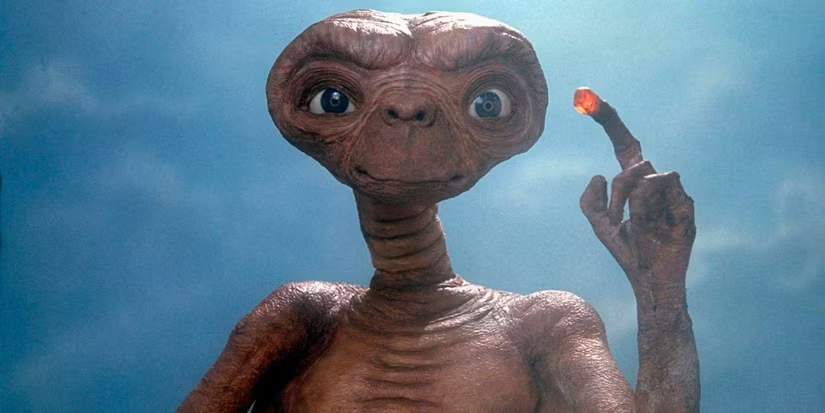
“E.T. phone home.” Steven Spielberg perfected his recipe for cinematic wonder with E.T. the Extra-Terrestrial, so much so that he arguably never attempted to top it again. Here, he turns the simple premise of a lonely child befriending a stranded alien into a timeless gem, almost a kind of modern fairy tale. Our hero, Elliott (Henry Thomas), slowly forms a bond with E.T. while trying to keep him hidden from adults and government authorities.
E.T. is one of the most well-rounded blockbusters ever, balancing spectacle and emotion. The movie succeeds on multiple levels at once: as a thrilling adventure, a snapshot of childhood, a special effects showcase, a time capsule of American suburbia in the 1980s, and as a feel-good fable. The soaring finale, culminating in that iconic bicycle flight sequence and farewell, all set to music by John Williams, is one of the most powerful endings in movie history.

“Yippee-ki-yay, motherf—r.” One of the most influential action blockbusters of all time, Die Hard sees Bruce Willis turning in one of his defining performances as John McClane, an off-duty New York cop visiting Los Angeles for Christmas, who finds himself trapped inside a skyscraper after terrorists seize the building during a corporate party. What unfolds is one of the most perfectly paced action thrillers ever made. Every victory creates a new problem, and every setback raises the stakes.
At the eye of the storm is McClane himself, one of the most likable ’80s movie heroes. Rather than being some suave and invincible superhero, he’s just a relatively ordinary person with some skills and grit. He’s exhausted, barefoot, bleeding, and increasingly irritated, yet he doesn’t give up. Opposite him is the equally compelling villain Hans Gruber, played with icy charm by the great Alan Rickman.

“I never had any friends later on like the ones I had when I was twelve. Jesus, does anyone?” Rob Reiner was truly on fire from the late ’80s into the early ’90s, and Stand By Me is very much case in point. Here, he masterfully adapts a Stephen King novella, telling the story of four boys (Wil Wheaton, River Phoenix, Corey Feldman, and Jerry O’Connell) in 1950s Oregon who set out on a journey to find the body of a missing child.
On paper, it sounds almost morbidly simple. In execution, it becomes an essential coming-of-age movie. Reiner understands that the real story isn’t the body, but the fragile friendships formed during that strange moment between childhood and adolescence. The boys joke, argue, confess fears, and slowly reveal emotional wounds they barely understand themselves. In the process, despite being rooted in a very specific time and place, Stand By Me touches on universal experiences.
“If my calculations are correct, when this baby hits 88 miles per hour… you’re gonna see some serious s—t.” There may not be a more tightly constructed screenplay in blockbuster history than Back to the Future. It carries us effortlessly through the improbable story beats, making everything feel natural and fun. From the get-go, we’re on board with Marty McFly (Michael J. Fox) accidentally traveling from 1985 back to 1955 in a time machine built by eccentric scientist Doc Brown (Christopher Lloyd), forced now to prevent his own erasure from existence.
The script is clever without ever feeling mechanical or overwrought. The plotting is intricate, constantly adding setups or visual gags that only pay off much later. The finished product is lightning in a bottle, magic that could never be recaptured or engineered in a lab, not even by the solid but not-quite-as-great sequels. Its casting is ideal, the pacing is impeccable, the direction is lively, and every emotional beat lands perfectly.

“Nobody trusts anybody now… and we’re all very tired.” Set in an isolated Antarctic research station, The Thing begins when a dog wanders into camp while being pursued by armed Norwegians. Soon, the Americans discover they are dealing with a parasitic alien organism capable of perfectly imitating any living creature it infects. The genius of the premise lies in how quickly trust evaporates.
Any character could already be infected, meaning every interaction becomes charged with suspicion. Their rapidly increasing paranoia poses almost as much of a danger as the monster itself. In this regard, the movie functions simultaneously as sci-fi horror, psychological thriller, and social collapse drama. Audiences disliked this bleak mood on release, but The Thing was quickly canonized as a cult classic, and its influence on sci-fi has been profound, not least thanks to the groundbreaking practical effects from Rob Bottin.

“It’s not the years, honey. It’s the mileage.” Spielberg strikes again. Raiders of the Lost Ark is the Platonic ideal of the adventure movie, harking back to the pulp serial of the 1930s and ’40s, but giving their tropes a grand, blockbuster treatment. Harrison Ford is endlessly likable here as the whip-wielding archaeologist, racing against the Nazis to locate the biblical Ark of the Covenant before its supernatural power falls into the wrong hands.
From the legendary opening temple sequence onward, the movie moves with almost impossible confidence. Every set piece feels distinct and memorable, emerging naturally from the plot and the characters’ decisions. It’s not simply empty spectacle for spectacle’s sake. The truck chase, the marketplace pursuit, the flying wing battle, and the famous boulder sequence are exciting not simply because of what happens but because the audience understands the goals, obstacles, and risks involved.

“Do. Or do not. There is no try.” The Empire Strikes Back took Star Wars from an impressive space opera adventure to a full-blown mythology. It upped A New Hope‘s stakes and scope in every way, while also getting deeper, darker, and more emotionally resonant. In it, Luke (Mark Hamill) trains under Yoda while Han Solo (Harrison Ford), Leia (Carrie Fisher), and the rest of the Rebel Alliance flee from the growing power of the Empire. It all culminates in Darth Vader’s iconic reveal, adding an element of Shakespearean family drama.
The movie also contains some of the finest worldbuilding in cinema history. The frozen wastelands of Hoth, the murky swamps of Dagobah, and the floating city of Cloud City are all striking and immersive. Each location expands the galaxy while serving the needs of the story. The universe suddenly feels much larger and more lived-in than before.

“Get away from her, you bitch!” Where Alien was claustrophobic horror, Aliens transforms the same premise into a war movie without losing the terror that made the original great. James Cameron ramps up the action, giving the protagonists guns this time but pitting them against not one alien but swarms of them. Amidst the mayhem, Ellen Ripley (Sigourney Weaver) forms a bond with the young Newt (Carrie Henn) and fights hard for both their lives.
The tone is varied, nimbly shifting from frightening to funny to suspenseful to moving. The action sequences are masterful throughout. The initial hive assault, the automated sentry gun sequences, the colony escape, and the climactic battle are exciting even now. Then there’s the addition of the alien queen, another fantastic horror creation that somehow improved on the already phenomenal creature design from the first film.

“There are simply too many notes.” Amadeus is a brilliant statement on artistic genius and the pain of envy. Told from the perspective of aging composer Antonio Salieri (F. Murray Abraham), the movie recounts his obsession with Wolfgang Amadeus Mozart (Tom Hulce), whose vulgar behavior and childish personality stand in stark contrast to the divine brilliance of his music. It could easily have made for a dry history lesson, but director Miloš Forman turns the world of classical composition into all-out psychological warfare.
Salieri cannot understand why God would grant transcendent talent to someone he considers immature and irresponsible while leaving him comparatively ordinary. That emotional contradiction powers every scene, summoning the spirit of Cain within him. The performances are incredible across the board, Peter Shaffer‘s screenplay is intelligent and frequently hilarious, and, on top of all that, the movie treats us to some of the greatest music in human history.

“All those moments will be lost in time, like tears in rain.” Blade Runner combines the very best of sci-fi and noir. Set in a rain-soaked Los Angeles of the future, it follows Rick Deckard (Harrison Ford), a weary “blade runner” tasked with hunting down rogue replicants. Although that setup sounds pulpy, the film initially confused some audiences expecting a faster-paced blockbuster thriller. Over time, however, its brilliance became impossible to ignore. Blade Runner is philosophical and aesthetically innovative, delving into genuinely ambitious themes.
Making the “antagonist” Roy Batty (Rutger Hauer) so sympathetic was a narrative masterstroke, elevating the movie above pretty much every other sci-fi of its time. Most importantly of all, Blade Runner embraces ambiguity. Are memories enough to define a person? Is humanity a biological fact or a moral quality? What gives life meaning when death is inevitable? The film trusts viewers to wrestle with these ideas themselves.




No Jackpot Winner as $257 Million Prize Rolls Over to $269 Million Monday Draw


Weekend Open Thread: Tuckernuck – Corporette.com


Oppenheimer backs SpaceX as $70 billion retail frenzy builds


Markets Rally as SpaceX IPO Looms Amid Iran Tensions and Inflation Surge

Zimbabwe Requires Crypto Businesses to Register Annually Under New FIU Regulations


NanoClaw integrates JFrog registries to secure AI agent downloads


Bitget enters Argentina’s regulated crypto market through PSAV registration


This Week In Security: Microsoft On Microsoft, Register Your Domains, Linux On ARM, And FreeBSD Joins The File Cache Club


El Nino has formed in the Pacific and could set records, forecasters say

Dutton Ranch star claims they ‘didn’t see any disruption’ on set following Chad Feehan’s exit from Yellowstone spinoff fueled by Taylor Sheridan clash rumors


Politics Home | Healey Resignation Is “Colossal Failure Of Government”, Says Former Labour Defence Secretary

Donnie Wahlberg & More Heat Up Las Vegas at Circa’s Barry’s Downtown Prime

Opendoor Ends India Operations, Fueling a Bigger Conversation About AI and Outsourcing


Belfast burns, while Met chief points finger at Iran and Russia


First Time Since 1971: Australia Register Historic Low In ODI Cricket


FBI searches office of Ohio voter registration group


AT&T: Verizon's 27% Outperformance Sets Up A Solid Entry Point

Anthropic is spending $150M to embed 1,000 AI fellows inside nonprofits. No degree required.


Modi thanks Trump for wishes as US attacks Indian seafarers

‘The Pitt’s Fan-Favorite Doctor Confirms Noah Wyle Gave His Blessing to Return [Exclusive]



You must be logged in to post a comment Login