
Entertainment
‘Widow’s Bay’ Team Tease the Future of Apple TV’s Stephen King-Inspired Series


Summary
- Collider’s Steve Weintraub talks with Widow’s Bay star Matthew Rhys, creator Katie Dippold, and executive producer and director Hiro Murai.
- In this interview, the trio takes us behind the scenes for series inspiration, from Sam Raimi to FX’s Atlanta, and how Rhys approached Mayor Tom Loftis.
- They also discuss the potential for a Season 2 and what that will mean for the series.
We’re nearing the end of the first season of Apple TV’s near-perfect supernatural series, Widow’s Bay, and fans are eager for what’s coming next. Already, the show has garnered high praise from the masterful Guillermo del Toro and drawn comparisons to the king of horror himself, Stephen King. For a streamer that’s staked its claim as the leading sci-fi television, Katie Dippold’s horror comedy not only proves Apple TV’s dedication to stellar storytelling across the board but also to meticulous attention to high-quality in all departments.
Recently, Collider’s Steven Weintraub had the pleasure of moderating an exclusive panel with Dippold, executive producer and director Hiro Murai, and star Matthew Rhys after a special event screening of Episode 3, “The Inaugural Swim.” With the penultimate episode, “Emergency Shelter,” set to premiere this week, don’t miss the full conversation in the video above or in the transcript below for our behind-the-scenes discussion, where Dippold shares the initial inspiration for Widow’s Bay, Murai explains how his previous hit series, Atlanta, helped find the balance between these two genres, and Rhys shares his approach to Mayor Tom Loftis’s exasperation on the haunted New England island. The trio also look ahead to a potential Season 2, what lessons they’ll carry with them, and why Rhys can’t wait to continue the story.
Guillermo del Toro Is Raving About Apple TV’s ‘Widow’s Bay’
Creator Katie Dippold also explains why the show resonates so much with audiences.

COLLIDER: Widow’s Bay is exploding right now. What do you think it is about the series that’s resonating with so many people? What is it like when Guillermo del Toro starts raving about it on Twitter?
KATIE DIPPOLD: That was thrilling. I was out to dinner, and I walked out, and my phone had just blown up like there was some terrible accident or something, and then I saw it was about to tweet, and it lived up to the expectation. It was so exciting. He’s such a hero. He’s such an authentic… I think he’s just what’s good about show business and Hollywood. He’s just so creative, and just the way he lives, like the stories about how his house and his office set up is. I’m a big fan, big fan, so that was a real treat for us all.
What do you think it is about the show that’s resonating with so many people right now? I want to point out that it’s number one on Apple TV. There’s so much buzz on it. What do you think it is that’s connecting with people?
DIPPOLD: Matthew? [Laughs]
MATTHEW RHYS: That’s not for me. That’s for the adults!
DIPPOLD: Honestly, I think one thing that was both exciting and terrifying to us is that we had no idea how it would land with people.
HIRO MURAI: That’s kind of a tough question to answer for us, but I think the thing we kept keying into is we know what it feels like for terrible things to keep happening over and over again, and then you kind of get to this, like, numbed-out state.
RHYS: It’s called Hollywood.
MURAI: Yeah. [Laughs] And there’s something about that that felt baked into the show that was really real and resonant. But it’s not like you’re aiming for it to land a certain way. You’re just kind of trying to do the best version of the show you can.
DIPPOLD: I also feel like, I don’t know, it feels like life has felt like a bit of a nightmare for a while, and I think it’s watching this character go through a nightmarish experience. I don’t know if that’s what’s pulling people in. I’m not sure, honestly.
So someone online called Widow’s Bay the funniest supernatural horror Stephen King never wrote. I’m just curious what your reaction to that is.
DIPPOLD: Oh, that’s a dream description. Stephen King, I feel like he’s a main figure in all of our lives, just what he’s done and what he’s built. Being able to try to live in that world was really a goal, that atmosphere.
How ‘Widow’s Bay’ Found Its Unique Horror-Comedy Tone
“To be honest, I actually don’t like most horror comedies…”

When you’re building a town like Widow’s Bay, what comes first: the mythology, the characters, or the weird local rules?
DIPPOLD: The characters. In the writers’ room, we approached it from different angles, but it definitely started with character. Well, okay, that’s not true. Honestly, I wanted a haunted island to exist off the coast in New England. I really wished that there would be a world that I would take a ferry to and just this strange island, and feel like there are nooks and crannies to discover and little different terrifying stories and different places. That’s just something I wished to exist, but then you can’t do that unless you then focus on the characters living there. So, characters are most important, but a little haunted island is how it starts.
One of the trickiest things to do in anything, especially in a show like this, is the tone and finding the right balance. Can you talk about getting the right tone and finding the tone in the editing room and when you were on set, and same with you when you’re doing the performance?
DIPPOLD: It was constant trial and error. I spent a long time figuring it out. To be honest, I actually don’t like most horror comedies. I have my favorites like American Werewolf in London, Cabin in the Woods, and Shaun of the Dead, and Sam Raimi movies, and those are all very different from each other. But other than those, for the most part, I feel like you’re neither laughing or scared, you know? So, it’s tricky.
So, I was trying to find a way to make sure the scary never feels silly, so it doesn’t feel like a spoof, and then also being brutal on the jokes. Like, there could be a joke that would make us laugh so hard in the writers’ room, but if it felt like it was going to take away from the story, we just have to cut it. So, it was a lot of being really strict on stuff like that. Then it was a lot of feeling it out on set, what felt right and what didn’t.
MURAI: The script was so funny, and it’s clearly also very scary, but when we started talking, I think the most important thing and it was very clear that we just needed to be real and grounded and character-first, so the horror and the comedy of it can just sit on this real kind of baked world.
A lot of that, the execution of that, came from performance and casting. You watch this show now, and you kind of take for granted that Matthew is sort of inhabiting this world and telling you how to watch the show in a really naturalistic way, but if it were any other actor, it would tip your understanding of the show in a different way. So, it was an ongoing conversation, and as we got this group together, it became clearer and clearer what the tone of the show needed to be.

RHYS: You kind of, from the get-go, said, “Look, we’re going to create a very real world with real people, real backstories, real situations. You play it for real, and that’s it.” It was kind of an emancipation of tone then because I was like, “Okay, you do tone with music and editing and cinematography, and we’ll just play it for real.” But it did. It was a great relief to hear you say that.
There is truly no one better than him. What you never did was refer to tone. You always advanced the next take by giving the most laser-specific notes or questions about where should the next part go. So, you’re constantly staying active about the scene, as opposed to being taken away by what tone was. And then he also said, “If you get the tone wrong, I’ll fucking kill you.”
MURAI: I do remember saying that. Yeah, yeah.
DIPPOLD: Yeah, you would shout, “Funnier, please.” [Laughs] He did not do that, I swear.
Katie, your background is heavily rooted in iconic workplace comedy. You worked on Parks & Rec. So, if Mayor Tom Loftis had to deal with a sudden, aggressive town hall visit from Leslie Knope or Ron Swanson while a supernatural fog is rolling into Widow’s Bay, who cracks first?
DIPPOLD: Oh, God, that’s a great question. God, I don’t think any of them would give up, you know what I mean? In different ways. First of all, that scene would be very strange. I kind of think, for different reasons, none of them would give up.
MURAI: I agree.
How ‘Atlanta’ Helped Shape the Horror-Comedy Style of Apple TV’s ‘Widow’s Bay’
“The cinema that they bring to this show is so crazy and beyond my wildest dreams.”

When you go in and pitch Apple on the show, and they’re getting ready to make it, how much do they want to know that you have, like, a three-season plan, or that you have an overarching storyline, and how much is it like, “Let’s just make one awesome season and see where it goes?”
DIPPOLD: I talked them through the first season. We talked a lot about how it would feel. I told him where I saw this season going and how I saw it ending, and gave examples of things that would happen along the way. Then, we spoke about what the show in general meant to us and where we could see it ending, but that was about it. I mean, it sounds like a lot, but it was in a five-minute pitch, so it wasn’t too detailed.
Hiro, you directed the first three and the last two. In the first three, you’re obviously finding the visual aesthetic. The Director of Photography, Christian Sprenger, you’ve worked with many times. Can you talk about coming up with the visual aesthetic for the show and setting the tone and everything for everyone?
MURAI: I’ve worked with Christian for over a decade at this point. I always joke that I have more photos of Christian on my phone than of my wife, because we’ve been on set in so many different places. I think our approach for everything is kind of what we talked about with tone and performance, too. We just want to feel like we’re in a real place first and foremost, especially when the content can be kind of absurd or heightened, and then you just want to find a base level to walk in on.
He’s just so good at finding locations and lighting in a way that feels of the world. There’s nothing really artificial about the way he approaches it, but he also knows how to play up the emotions of the scene. So, he’ll kind of supplement a close-up with a little bit of ambient light just to punctuate a certain emotional beat, but he’s got a really light touch.
Some of this stuff that we’re doing on this show, we kind of played around with on our show, Atlanta, where we played a little bit of comedy-horror, and we really enjoyed the process of playing with those two levers. Because I think they both play with tension building and puncturing, and so it becomes a game of, like, you stay on this set-up longer than you want to, so you as an audience are starting to feel a little weird about it, and then when you cut to the other side, it gives a release valve. So, these are things that we came in wanting to play with, and then we just kind of fleshed it out on the show.
DIPPOLD: Can I just say too, as a comedy writer, the cinema that they bring to this show is so crazy and beyond my wildest dreams for this show. It’s very fun to have a half-hour comedy show look the way they made it. It’s really crazy. So I’m very, very grateful for that.
I completely agree with what you said. This is one of those rare shows where everything works across the board.
Matthew Rhys Tackles a Career First in ‘Widow’s Bay’
“I’ve never done anything like it.”

Matthew, how much of Tom’s deadpan exasperation is meticulous acting and how much is it just your genuine reaction to reading the scripts?
RHYS: A little bit of both, and just exasperation with the people I had to act with, an awful troupe. No, especially in the town hall, there are so many comedy Olympiads in this that you really need to let those people do it. Tom is kind of alone in many ways, and so I wanted to make him feel as if he’s the only person going through these things. So, he’s exasperated not only, obviously, by the scripts, but I just wanted to, at times, isolate him in a way where he’s just like, “Jesus Christ, if only I had an ally on this mad island.” But also, it was just so much fun to do.
Your performance in this is just fantastic. You’ve done a lot of drama, but I’ve never seen you do physical comedy the way that you do in an upcoming episode. What is it like for you when you’re reading the script and you see what you’re about to go through?
RHYS: I’ve never done anything like it. I’d never read anything like this before. We talked earlier about what it was, and why is it this now? I’d never read anything like this before, which is partly, I think, why it’s — it’s very unwell to say it’s doing so well, but it’s doing so well. I think it’s singularly unique.
To go back to physical comedy, I did grow up watching Harold Lloyd. I was obsessed with Harold Lloyd, and so, as much as it terrified me because it’s not something I’d done, I think when you read it, you go, oh my God, that’s going to take a certain degree of… I don’t want to use “slapstick” because it always has to remain somewhere very real. It’s frightening, and we would find it. We’d play around and experiment, and sometimes it was too broad, and sometimes the stunt coordinator would tell me off, and then we’d try and find somewhere in the middle that was real.

DIPPOLD: Can I just say, I think he’s one of the greatest actors of all time. I really do. He really is. He’s going to hate this so much. He’s going to hate this, but he’s truly one of the greatest actors of all time. But also, he’s so funny, but he doesn’t ever try to be funny because he knows what funny is, and he has pitch-perfect comedic timing. So, he’s being very kind talking about the scripts, but I just can’t imagine the show working without him.
I agree. I actually want to dig in a little bit more with your performance because I’ve always loved your work. When you have a big scene coming up on a Monday, something that might take a lot out of you, or physical comedy, whatever it is, what is it like in the days leading up to a day that you have circled on the calendar, knowing it’s going to be a really big day? Are you spending extra time reading lines or practicing?
RHYS: At home it’s like this, “I’ve got a big day on Monday! Shut up! No one understands! Christ!” That’s what the lead-up is. That’s where this physical comedy comes from.
Inside ‘Widow’s Bay’s Most Ambitious Episode Stunt Yet
Ex-SEALs, scuba teams, and sharks had Rhys wondering, “The fuck are we doing in the water?”

Katie, how did you decide what the show’s rules would be in terms of figuring out the line of “How weird can we get?”
DIPPOLD: In terms of the horror, it felt like the fog was a nice entry point because it fits the New England setting, and then it was just thinking of things that would scare us, but were fitting to the island. Like, I would believe that there is an inn that has centuries of terrible history there, like a hag makes sense. You know what I mean? I just feel like there will be some kind of hag on this island. Then it starts to branch out a bit and go in different places, but it felt like trying to slowly lure people in.
I mentioned it earlier, but the set design on this show is just incredible, like the hilarious newspapers and the historical society, the bizarre games in the hotel in Episode 2. Can you talk about working with the set designers and the production design teams in bringing all that to life? Because I really think some of that stuff just adds so much to the show and elevates everything.
DIPPOLD: I have to say, in the room, we’d pitch the comedy board games, and we’d have them all down, but then it goes to this other level. I don’t think the script mentioned anything about the little pieces with the newspaper and the bat. My favorite thing about the Daddy’s Home board game was that I always imagined just kind of an angry dad, but [Hiro] had pitched that more bewildered face, which I think is the funniest detail.
MURAI: We had a lot of fun working on this because it’s so lovingly crafted in the script. The execution was even more fun because we had all these artists and artisans getting to enjoy it, too. We keep talking about it, this set is the most detailed set I’ve ever been on. Every single piece of board game toy, like you’ve spoken about it as an actor, you sometimes would open a drawer, and there would be nothing in there, but in this world, each drawer was custom-built for the character. So, there’s just a lot of love and care in the details.
DIPPOLD: We had a really great production design team who were just absolute maniacs in the best way and just put so much into it. There’s a lot of care, and it was a really great group.
I love learning about the behind-the-scenes of a show or a movie that you can’t read on Wikipedia or in the press notes. For each of you, what’s something you’d love to share or let everyone know about the making of the show? Any surprises? Any cool behind-the-scenes stories?
RHYS: We had to sign a lot of NDAs, so this is quite tough, especially about Jeff Hiller and Dale Dickey getting in a fist fight.
DIPPOLD: [Laughs] This is a weird story, but you know what was a fun moment? I remember when Jeff got nominated for his Emmy in the middle of shooting the season. I was in my office, but I had a monitor on, and the monitor was on standby on Stephen [Root] and Kate [O’Flynn], and I could hear someone introduce, “Oh, Emmy-nominated Jeff Hiller,” and I could see Stephen and Kate so happy for him and cheering for him. This is a weird story, but I remember I was so moved by it. They just looked so happy for him. You know what I mean? It was so sweet. And I’m like, “Oh, these lovely actors that are supporting each other!” That’s a weird story to bring up, but it really stuck.

RHYS: It was one of the happiest experiences I’ve ever had. Really, really deep, deep crying, laughing, directors going, “Please, can you focus?” We’re like, “Yes, yes, sorry!”
MURAI: I have one. When we first started doing the first block, how you would usually work with actors is you shoot the scene, and if you needed to shoot inserts, the actor doesn’t necessarily have to do the motion, like, if you’re getting a shot of someone writing or typing or something. But Matthew was really adamant that he does all of his own insert work because he wanted his physicality and hand in there, and I was just like, “What? Why are you so dedicated to the small things?” And he goes, “Well, there’s a show I did one time where I just kind of did the scene, and then they told me that they were going to get someone else to do the hands of typing on a computer, and so I left. Then later on, I saw the show, and they cut to me typing, and then they showed the hands, and he’s going like…” [flails hands].
RHYS: I’ll tell you what the show was. It was the last, ever, Colombo. That’s not a lie. And I was robbed by the typing hands.
DIPPOLD: I really wanted to do a prank where we did a fake insert shot in one of the episodes to show to you, but we just didn’t have that kind of time.
RHYS: Good.
That’s called Season 2, I think.
DIPPOLD: Also, one of my fondest memories was shooting “The Inaugural Swim” because the production was so crazy. It’s a very ambitious show, and watching Hiro in the wetsuit in the water with another camera in the water, and you have a scuba team for disaster, and you having to swim back and forth, and I’m standing perfectly fine in my normal clothes, I’m like, “Oh, this is a big ordeal. This is a real thing.” That was exciting.
RHYS: They’re all ex-SEALs, and so we’re all in the water, and I said, “So there are no sharks here?” And they went, “Oh yeah, there’s sharks.” I was like, “The fuck are we doing in the water?”
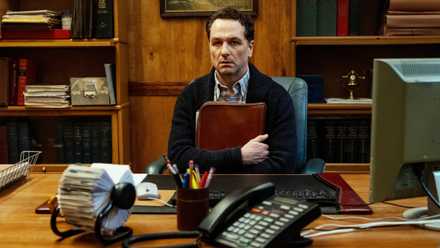
Matthew Rhys’ Horror Series ‘Widow’s Bay’ Is Apple TV’s Weirdest, Boldest Show Yet | Review
‘Widow’s Bay’ premieres April 29 on Apple TV.
Matthew Rhys Says He Was Contending With “Improv Olympiads”
“I don’t stand a chance here. This isn’t fair.”
Matthew, what was the most fun part of playing someone who’s constantly trying to be rational in increasingly irrational situations?
RHYS: It’s the reactions of others. The fun part as a human being, not an actor in this project, was being so amped up, and then you’re looking at Dale Dickey looking at you, and she’s open-mouth coughing. That was the fun. It was the reactions of these people around me that just made it very hard to do. Then you had real improv Olympiads like Neil Casey, who were in a two-shot or a wide, and he’s off, and you’re like, “I don’t stand a chance here. This isn’t fair.” It’s like sprinting against Usain Bolt. It’s like, “I can’t do this.” That was the joy of it, watching those people fly.
DIPPOLD: I just remember Neil was trying to do something because when you shot Neil coming out of the room, there was some divide of time between that bit and the conversation downstairs before you go up. He was trying to either lose or gain weight between the two weeks so when he came out of the room, it looked like he had put on weight. [Laughs] He really was trying his best to do that.
MURAI: I did not know that. That’s really funny.

DIPPOLD: Another favorite Neil Casey thing is in Episode 4. This doesn’t spoil anything, but Neil Casey’s supposed to be eating these deviled eggs, and the director of [Episode] 4 had to have Neil keep eating. He must have eaten 14 deviled eggs.
RHYS: He’s like Cool Hand Luke.
DIPPOLD: And there is not one single shot of him eating a deviled egg in the episode. [Laughs]
That actually leads me to a question that I’m curious about. Everything changes in the editing room. It’s the final rewrite. How did this show possibly change in the editing room in ways you guys didn’t expect?
DIPPOLD: God, there was always more to find. You know what I mean? We were always finding it, like there’s a rhythm. The process of finding the tone was from beginning to end, I would say.
MURAI: Yeah. It’s not a show where the structure of the story changed much in the edit. I think the scripts are always really tight, and there was a clear progression in the story. The things that changed were these microscopic rhythm and timing stuff that really affected the tone and flow of the scenes.
DIPPOLD: Sometimes there’d be big cuts. Sometimes I forget. Like [Episode] 4, for example, has a couple of nights before… You know what I mean?
MURAI: That’s right. That’s right. People have kind of blacked it all out.
DIPPOLD: Yeah, yeah, yeah. The scripts are, say, 36 pages long, and Maria [Mantia], our first A.D., would be like, “These are not 36 pages long.” You know what I mean? It always took much longer, so that was a whole thing.
Matthew Rhys Teases Big Changes Ahead for Tom in ‘Widow’s Bay’ Season 2
“I have horns, I have a goatee, I’ve got hooves.”

Assuming you guys get to make a Season 2, which I’m confident you will have a Season 2, what were the big lessons for each of you that you learned making the first season? Because in the first season, you’re figuring out how to make the show. What were some of the big things you learned that you’ll take with you into a second season?
DIPPOLD: That’s a good question. I don’t know if I have specific examples, but it was a process of learning, because we would constantly on set look at each other and be like, “Does this feel right? Does this feel bad? Does this feel good?” And so I feel like by the end of it, you just sort of learned what works and what doesn’t. So, I’m hopeful, and I may be jinxing it, but I think there’d be a little less trial and error. But maybe that’s wrong. I don’t know if you felt like that.
MURAI: I think that’s right. Season 1 is impossible.
DIPPOLD: Yes.
MURAI: You’re making the plane as you’re flying it. It’s crazy. It’s crazy. Also, the thing about TV shows is that you’re putting the people together, and you hope that it all takes on a life of its own. The actors start riffing off each other, you know your dynamic, and there’s a very organic sense of play there. So by the end of it, I feel like we had a really good grasp of what the show should be in a way that we didn’t when we started.
DIPPOLD: I totally agree.
RHYS: It’s not quite the question, but what I’m more excited about is where we leave off at the end of Season 1. The difference for Tom in Season 2 will be that much greater, and that’s what I’m excited about, is going, “Oh my God, where does he go from there?” Because he’s changed. I have horns, I have a goatee, I’ve got hooves. It’s brilliant. But no, that’s what I’m kind of more excited about, that you’ve laid the groundwork, you’ve done the foundation work, and now that’s all embedded in it, and now you can really hopefully take flight.
DIPPOLD: I mean, in some ways, Season 1 feels like a prequel to life on this island.
RHYS: Right, because we’ve set up so much now that you’re ready to go.
Widow’s Bay releases new episodes exclusively on Apple TV every Wednesday.

- Release Date
-
April 28, 2026
- Network
-
Apple TV
- Showrunner
-
Katie Dippold
- Directors
-
Sam Donovan, Andrew DeYoung, Hiro Murai, Ti West
- Writers
-
Alberto Roldán, Neil Casey, Kelly Galuska, Colton Dunn, Dave Harris, Katie Dippold, Mackenzie Dohr

Continue Reading

Despite being inside prison walls, Kaalan Walker has someone on his team. He’s been serving his 50-year sentence for sexual assault crimes since 2022. He recently featured in his first interview since his incarceration. After its release, Kaalan’s wife, Hannah Walker, took to social media to praise him.
RELATED: Kaalan Walker Riles Social Media UP After Sharing A Life Update Amid His 50-Year Prison Sentence For Sexual Assault
Hannah Walker Praises Her Husband Kaalan Walker
Taking to Instagram, Hannah Walker shared a short caption about her “hunny” Kaalan with a photo of her visiting him in prison. He wore dark blue slacks with a light blue top and white sneakers, while Hannah had on a body-hugging maxi dress and open-toe sandals. They were both smiling in the photo. It’s unclear when it was taken, but Hannah spoke of Kaalan sharing his testimony with the world.
“My hunny 🍯 I’m so proud of the man you are and even more proud to be your wife. Being able to call you my husband is such an honor,” Hannah Walker wrote. “You are going to change the lives of many with your testimony. Cheers to your first interview since incarceration 🥂 link in his bio to watch! @kaalanxwalker”
Hannah’s Comment Section Weighs In On Relationship
Walker got a 50 to life sentence back in October 2022. By then, a jury had already found him guilty on three counts of forcible rape, two counts of unlawful sexual intercourse and unlawful sex with a minor and rape of an intoxicated victim. Additionally, he was found guilty of one count of assault with intent to commit oral copulation. These crimes reportedly happened between 2013 and 2018.
‘Superfly’ Actor Drops First Interview Since Going To Prison
RELATED: Mystikal Reportedly Sentenced To 20 Years In Prison After Pleading Guilty In 2022 Sexual Assault Case
What Do You Think Roomies?

Influencer Sara Gilson filed three protective orders against Jeremiah Duffey — the first and second were filed five years ago and the third was filed one month before he allegedly killed her in an apparent murder-suicide.
According to court documents obtained by Us, Gilson filed her first request in August 2021, claiming she was the victim of domestic violence, abuse and harassment.
“[On] July 31, [I] found hidden camera in my room, which caused a fight. He grabbed his gun and threatened suicide,” Gilson alleged in court docs. “He held me down by my arm, which resulted in bruising. He’s destroyed stolen property. Mentally and verbally abuses me. Continues to threaten to kill himself or lie to the cops and tell them I punched him if I filed a [protective order].”
Gilson also alleged that Duffey — who filed for bankruptcy in 2024 — tried to physically remove her from rooms in her own home.

Influencer Sara Gilson was allegedly killed by her estranged husband, Shawn Duffey, mere weeks after she allegedly accused him of being a pedophile. Tulsa’s ABC affiliate reported on July 23, 2026, that Gilson and Duffey were found dead in their Oklahoma City home after a fatal shooting. A juvenile family member present at the scene […]
“[He] comes in my room while I sleep, forces me to kiss him and calls, texts all day,” she alleged. Her request for a protective order was ultimately dismissed just weeks later on September 7, 2021.
On September 28, 2021, Gilson filed a second petition against her ex-fiancé, claiming domestic violence, stalking and harassment.
In court documents obtained by Us, she alleged that Duffey “showed up at my house, came inside, refused to leave [the] property. Got into a truck parked in [the] driveway that did not belong to him. Grabbed me and forced me to kiss him.”
She alleged while in her driveway that he “screamed, threatened, put hands on me. Since that night, he has called my friends, family and place of business. He emails me, calls my work, my ex-husband. [He] threatens to kill himself, has his mom message me. [He] calls, texts nonstop, and even when blocked he finds a way.”
“I don’t feel safe and things keep getting worse,” she continued to allege in court documents. He drives by my house every night and messages any guy I try to date or talk to.“
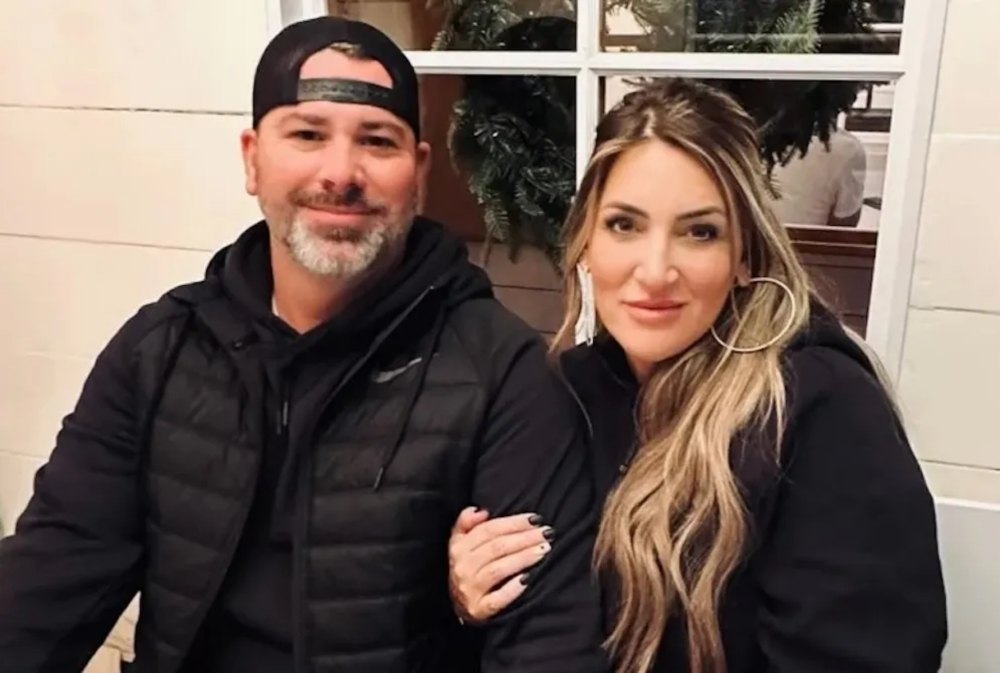
Sara Gilson and Jeremiah “Shawn” Duffey Courtesy TikTok / Sara Gilson
Less than a month later, she filed to dismiss the protective order and the court ordered the dismissal on December 15, 2021.
“[He] has left me alone, and I have no need to worry about his harassment or stalking and have no concern as of now,” she claimed at the time.
Last month, Gilson filed for an emergency protective order against Duffey according to court records obtained by Us.
In her petition filed on June 10, that went into effect the same day and was extended through August 24, she claimed that Duffey had a “firearm on him” and “went on the run.” And at the time, police were searching for him.
She also referred to “pedo charges” in the docs.
In a separate protective order also filed on June 10, a mother in Oklahoma alleged that Duffey had inappropriately touched her 15-year-old daughter at basketball practice.
Influencer Sara Gilson’s late estranged husband Jeremiah “Shawn” Duffey will reportedly not be given a funeral by his ex-wife and children after allegedly killing Gilson and himself. Duffey’s ex-wife, Stephanie Ramsay, told TMZ on Wednesday, July 29, that their five children were responsible for making any decisions about his funeral and burial under Oklahoma law. […]
According to the filing, Duffey was accused of “child abuse” after a fellow basketball coach “observed through a window” that Duffey was “kissing and fondling” the minor on June 9 while taking private meetings with each player to ask about their “basketball goals.”
The other coach called the child’s mother, who claimed in the filing that her daughter later “confided” in her that Duffey had been “sending her inappropriate messages” prior to the alleged office incident.
In her petition, the mother further alleged that “once during an out of town tournament, when the whole team including myself were staying at the same hotel, [Duffey] got her [daughter] to come to his room [and] he touched her inappropriately.”
“[The alleged victim] has also said that he has been giving her money to keep her quiet,” the mother claimed in the docs.
Gilson was reportedly shot and killed by Duffey, two weeks after she accused her former spouse of pedophilia. The pair were found dead in their Oklahoma home on July 23, according to Tulsa’s ABC affiliate.
Per the local outlet, local police officers were called to the scene after a reported shooting left two people dead.
Upon their on-scene arrival, law enforcement officials pronounced Gilson and Duffey dead and interviewed a family member who was present at the time. The unidentified family member alleged that the separated couple died by murder-suicide. An investigation into the fatal incident is ongoing.
According to a radio log exclusively obtained by Us on Thursday, July 30, an unidentified male caller stated that he heard Gilson say, “please don’t kill me” to someone in the room. The man advised the operator that there was a child in the home.
The ex-wife of Jeremiah “Shawn” Duffey, who is accused of fatally shooting wife Sara Gilson before killing himself, claims that he threatened her with a murder-suicide plot multiple times throughout their marriage. In an interview with TMZ published on Wednesday, July 29, Stephanie Ramsay — who began dating Duffey when she was 15 and he […]
A GoFundMe has been established for Gilson and Duffey’s two children as “they navigate the difficult days, months and years ahead.”
“Sara was an incredible mom. Her children were the center of her world, and everything she did was for them,” organizer Brandon Johns wrote on the GoFundMe page. “She loved them fiercely, worked hard to provide for them and dreamed of giving them the best life possible.”
Johns continued, “Thank you for your love, compassion and generosity as we come together to support Sara’s children and honor the beautiful life of an amazing mother, daughter, and friend.”


If you or someone you know is struggling or in crisis, help is available. Call or text 988 or chat at 988lifeline.org.
If you or someone you know is experiencing domestic violence, please call the National Domestic Violence Hotline at 1-800-799-7233 for confidential support.
If you or someone you know is experiencing child abuse, call or text Child Help Hotline at 1-800-422-4453.
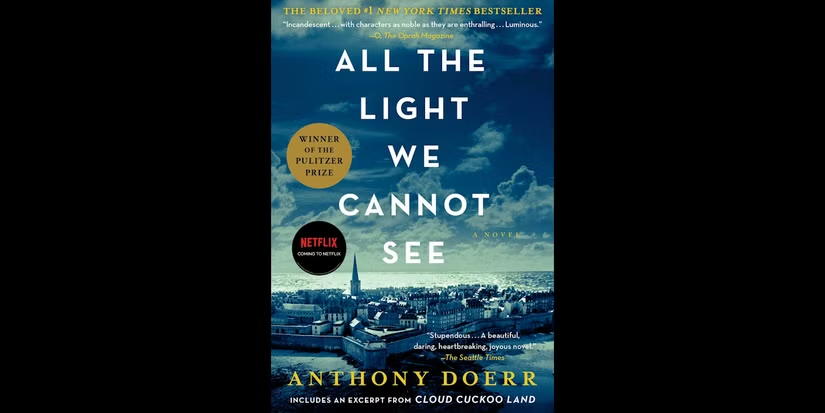
We all love a good plot, but the really great books cast a spell through the writing itself. They’re beautiful on a sentence-by-sentence level, full of striking images or perfectly crafted turns of phrase, balancing description and character work with pure, almost lyrical prose. Every word is a crucial part of the experience.
With that in mind, this list looks at some phenomenal books that are brilliantly written. They go beyond simply having solid worldbuilding or memorable characters; here, the flow of the words is what’s special. Whether lyrical, restrained, philosophical, or emotional, the titles below represent literature at its finest.
‘All the Light We Cannot See’ (2014)

“Open your eyes and see what you can with them before they close forever.” This one was made into a TV series, but the book is a lot better. It introduces us to Marie-Laure, a blind French girl, and Werner, a gifted German orphan whose talent for engineering draws him into the Nazi war machine during World War II. Their seemingly separate journeys gradually converge amid the destruction of occupied France.
The writing style in All the Light We Cannot See is very lyrical, made up of short, striking sentences and chapters (often just a few pages long), and with a focus on sensory details. In particular, Anthony Doerr vividly brings to life Marie-Laure’s impressions of sound, taste, touch, and smell. Character-wise, the novel paints all of the main players in shades of gray; even the good ones are flawed, and even some on the bad side are tragic rather than outright evil.
‘A Gentleman in Moscow’ (2016)

“We are the books we read and the things we love.” This one was also made into a series (featuring a fantastic Ewan McGregor), though, again, reading the novel is a more rewarding experience. The main character here is aristocrat Count Alexander Rostov, who, after the Russian Revolution, is sentenced to lifelong house arrest inside Moscow’s luxurious Metropol Hotel. Over decades, he watches Soviet history unfold beyond the hotel’s walls.
Although cut off from the outside world, Rostov has a surprisingly full life in his confined environment. He discovers purpose, friendship, and love in the hotel, forming a particularly close bond with the nine-year-old Nina and, years later, her daughter Sofia. Rather than plot machinations, the book keeps us engaged through tone, pacing, characterization, and warm prose, as ornate as the hotel itself. Rostov thinks and speaks in a refined, literate way, brought to vivid life by author Amor Towles‘ skilled pen.
‘The Book Thief’ (2005)

“I have hated the words, and I have loved them.” This one has some parallels to All the Light We Cannot See, though it’s a little more fantastical and colorful. Narrated by Death itself, The Book Thief tells the story of Liesel Meminger, a young girl growing up in Nazi Germany whose love of books becomes both a source of comfort and an act of quiet resistance after her foster family begins sheltering a Jewish refugee in their basement.
The framing device is the most striking aspect of the book. Choosing Death as narrator could easily have become a gimmick, but author Markus Zusak makes it an intrinsic part of the story and themes. The Grim Reaper’s weary compassion and dark humor add another emotional layer to the novel. At the same time, Zusak’s descriptions and metaphors are vibrant and memorable, with a treasure to be found on almost every page.
‘Life of Pi’ (2001)

“I must say a word about fear. It is life’s only true opponent.” Yann Martel recently published a great new novel called Son of Nobody, though Life of Pi remains his undisputed masterpiece. It centers on sixteen-year-old Pi Patel, who is stranded on a lifeboat in the Pacific Ocean after a cargo ship sinks, his only companions a hyena, a zebra, an orangutan, and a Bengal tiger.
This premise sets the stage for an unusual survival story, as well as a meditation on faith, truth, and the stories people choose to believe. Martel’s storytelling here is philosophical but lively, full of rich descriptions and intense, naturalistic imagery, nimbly fusing adventure and religious allegory. The narrative structure is inventive, too, unfolding in three different sections and times, each casting the previous one in a new light, and shifting our understanding of the plot.
‘East of Eden’ (1952)

“And now that you don’t have to be perfect, you can be good.” One of Steinbeck‘s essential novels, East of Eden chronicles multiple generations of the Trask and Hamilton families in California’s Salinas Valley. It’s one of the most ambitious family sagas in American fiction, drawing inspiration from the story of Cain and Abel (the title is a Bible quote) and delving deep into big themes like love, jealousy, inheritance, and good versus evil.
Here, Steinbeck’s prose feels deceptively simple, with seemingly offhand sentences carrying hidden meaning or very deliberate word choices. The writing is full of warmth and wisdom, particularly when it comes to the character studies. Figures like Samuel Hamilton, Lee, Adam Trask, and Cathy Ames have remarkable psychological depth, making their triumphs and failures feel relatable and almost timeless. Not for nothing, Steinbeck considered it his magnum opus.
‘The Secret History’ (1992)

“Beauty is terror. Whatever we call beautiful, we quiver before it.” The Secret History opens with a confession: a group of elite classics students has murdered one of their closest friends. From here, the book slowly reveals why it happened. We focus on Richard Papen, an isolated young man who becomes increasingly entangled in an insular, intellectually intoxicating circle of friends studying ancient Greek.
The writing is brilliant throughout, referencing and paying tribute to a lot of classic literature and Greek mythology. Aesthetically, the writing is elegant and immersive, conjuring up a world of fire-lit common rooms and grand libraries, desirable yet mysteriously off-putting, toxic even. Suitably, every conversation, lecture, and dinner party also carries an undercurrent of unease; the characters are smart but arrogant, and their search for beauty and knowledge leads instead to moral decay. The Secret History is intellectual and gripping at the same time.
‘Blood Meridian’ (1985)

“Whatever in creation exists without my knowledge exists without my consent.” Blood Meridian is widely considered to be Cormac McCarthy‘s finest achievement. Inspired by historical events along the Texas-Mexico border, it revolves around the unnamed Kid as he joins the Glanton gang, a brutal group of scalp hunters led by the mysterious, terrifying Judge Holden. The tale is violent and almost mythic, boasting breathtaking descriptions of deserts and mountains along with random outbursts of bloodshed.
Here, McCarthy uses biblical cadences and a ridiculously expansive vocabulary (some ancient terms will have readers reaching for a dictionary), every word contributing to a feeling of cosmic dread. The sentences tend to be punchy and often lack apostrophes or commas, which some critics view as an homage to Faulkner. Taken together, the result is a kind of Gothic anti-Western, a relentlessly grim, bleak, macabre dissection of evil.
‘The Sun Also Rises’ (1926)

“You can’t get away from yourself by moving from one place to another.” The Sun Also Rises is one of Hemingway‘s most well-rounded books, boasting his signature precise, economical prose. It’s about American journalist Jake Barnes, who travels through Spain and France with a group of expat friends in the years after World War I, searching for meaning, love, and distraction. Along the way, Jake falls in love with Lady Brett Ashley.
As usual, the writing style is understated and stripped back, almost hard-boiled. The dialogue is usually simple, and the descriptions are sparse. Rather than explicitly explaining his characters’ inner lives, Hemingway depicts longing, disappointment, jealousy, and loneliness through what remains unsaid. He called this “iceberg theory,” where the limited information we have access to hints at greater, unseen complexity.
‘One Hundred Years of Solitude’ (1967)

“It was as if God had decided to put to the test every capacity for surprise.” A landmark of magical realism, One Hundred Years of Solitude follows seven generations of the Buendía family in the mythical town of Macondo, where ghosts converse with the living, miracles occur without explanation, and history seems destined to repeat itself forever. Here, the extraordinary coexists with the ordinary.
The prose is confident and sincere, presenting the impossible with complete matter-of-factness. García Márquez‘s long, flowing sentences make everything feel simultaneously epic and personal, touching on themes of memory, solitude, and love. Each magical event serves a symbolic purpose, and certain images, color-coded in one of the book’s more accessible techniques, recur throughout. One Hundred Years of Solitude continues to be held in high regard and is considered one of the great classics of world literature.
‘The Great Gatsby’ (1925)

“So we beat on, boats against the current, borne back ceaselessly into the past.” Narrated by Nick Carraway, The Great Gatsby tells us about millionaire Jay Gatsby’s obsessive pursuit of his lost love, Daisy Buchanan, against the glittering backdrop of America’s Jazz Age. The Great Gatsby captured the Roaring Twenties like lightning in a bottle, a world of glamorous parties and lavish mansions, but also illusion and destructive ambition, where cracks show in the American dream.
Nearly every page of the book contains sentences that have become part of literary history, from the brilliant opening line (“In my younger and more vulnerable years, my father gave me some advice that I’ve been turning over in my mind ever since”) to the gorgeous, haunting final paragraph. Likewise, several of F. Scott’s Fitzgerald‘s literary symbols continue to endure, the green light most of all.
Entertainment
Ian McKellen didn’t know Anthony Mackie was Captain America when they met on“ Avengers: Doomsday”
:max_bytes(150000):strip_icc():format(jpeg)/Anthony-Mackie-2026-Sundance-Film-Festival-Ian-McKellen-Olivier-Awards-073026-640b1f30dd58440d90c142fbee269a93.jpg)
Sorry, Cap!
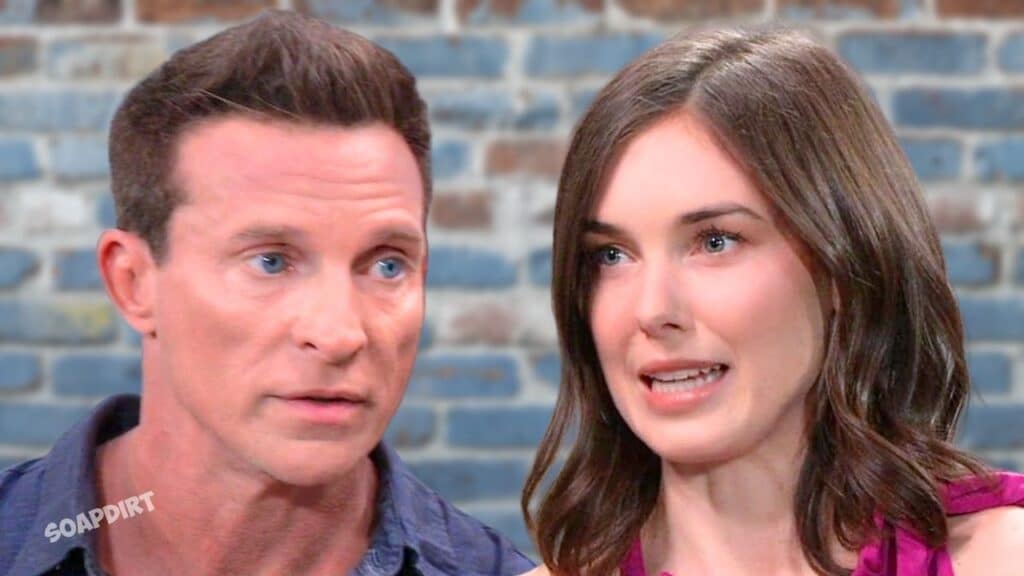
General Hospital fans, we have got another rumor roundup for you from our very reliable sources who leak stuff from behind the scenes at GH. Lots of exciting things to discuss. We’re going to talk about a rumored exit, two possible deaths, and several big returns.
General Hospital: Ric Dies of a Brain Injury
All right, so first I want to talk about the two possible deaths we’re hearing rumors about. The first is Ric Lansing (Rick Hearst). We have heard before that he was going to have some sort of fatal or near fatal medical crisis. And now we’re hearing rumblings again about his character. So, our source says now that Ric may die of a brain injury by the end of the summer.
And our source says this death drama is to make a really good story line for Sonny Corinthos (Maurice Benard). But we’ve had another leak recently from another source that sometimes contradicts the first one, and this one said we may get an Alexis Davis (Nancy Lee Grahn) and Ric reunion. So, those are conflicting leaks from two different backstage sources. One of whom is certain Ric is not leaving, and that’s the leaker that I hope is right because I don’t want Ric dead. But they’ve both given us really good accurate stuff. So, 50/50.
Jacinda Murdered on GH
The next possible death we’re hearing in backstage chatter is Jacinda Bracken (Paige Herschell), the very pretty ex prostitute that Michael Corinthos (Rory Gibson) is dating. Our inside source says Jacinda meets a bad end and it is likely a fatal one. That wouldn’t be terribly surprising if we lost Jacinda because most of Michael’s girlfriends end up six feet under. Our source didn’t know details just that Jacinda might be killed by a third party and it’s blamed on Willow Tait (Katelyn MacMullen). And the source says, of course, she swears she’s innocent, didn’t hurt Jacinda, and is telling the truth, but nobody believes Willow because of everything she’s done.
Our leaker heard it might be related to a break for actress Katelyn MacMullen, who plays Willow. And that brings us to our big exit leak. Although it’s not a permanent exit, but it would be another lengthy break. So, we’ve seen Anna Devane (Finola Hughes) get a long break and also Jason Morgan (Steve Burton). And now it looks like Katelyn MacMullen needs a break.
General Hospital: Willow in the Looney Bin
She’s been in an intense front burner storyline for many months. And we also heard from the leaker that the Willow and Drew Cain Quartermaine (Cameron Mathison) awful story was supposed to actually run longer when I thought it was already too long. But then some stuff going on behind the scenes and some alleged interference changed things. And the leakers said Katelyn MacMullen asked for a work break. And our leakers said Willow will be back after this break and will be acting even worse.
We’ve heard Katelyn’s short-term exit could result in Willow going to Ferncliff or Shadybrook. I can see it because Drew is hellbent on revenge and can’t use legal channels to punish his homicidal wife. So Ferncliff isn’t as good as Pentonville. But at least it would be some consequences for Willow.
Revenge Plots and New Villains Emerge on GH
All right, next. The leaker said, “In case you think Carly Corinthos (Laura Wright) has chilled, she has not. She remains determined to get revenge on Jack Brennan (Chris McKenna) for luring Josslyn Jacks (Eden McCoy) into the WSB. And I wonder if Valentin Cassadine (James Patrick Stuart) is going to share in the revenge because he and Brennan also have beef. Right now, the leaker says Valentin doesn’t know all the crimes that Jack’s been doing. But if Valentin gets info on these, he may use all that for revenge, especially to help Carly.
Also, Valentin is supposed to mix it up more with Sonny, according to the leak, and I’m sure it’s about him trying to get Valentin out of Carly’s life. Our leaker also says that Brennan needs to watch his back because of Jenz Sidwell (Carlo Rota). Now, apparently, this story was pushed forward by two months, and our source says Sidwell’s final arc wraps up in August. And tied to that is this new guy coming this week, Hudson (Troy Appel). Now, supposedly Hudson is the next villain after Sidwell’s out of power. But maybe not the next real big bad.
Brennan Works with Sidwell on General Hospital
Since General Hospital usually brings in more recognizable actors as the main villains, the source thinks Hudson may be connected to the next main villain rather than being the next main villain. And in fact, the source actually said there may be more than one villain. And given that we’re hot off double diabolical demons of Ross Cullum (Andrew Hawkes) and Sidwell, I don’t think we need another two bad guys. But they didn’t ask my input.
One last note on Sidwell. The leakers said Brennan may offer to break Sidwell out of prison if he doesn’t implicate Willow in anything. And if this happens, it’s clearly about Jack Brennan’s interest in someone, which our leaker told us about, and we leaked that was coming a couple of months ago.
General Hospital: Romantic Struggles and Casting News
So, next we have a leak about Britt Westbourne (Kelly Thiebaud) that says she may not last on General Hospital unless they find a workable love interest outside of Jason. They’re on good terms now. That’s supposed to be coming to an end, according to our leaker. And another leak mentioned that they had written a plot for Portia Robinson (Brook Kerr) that wound up cut.
And the leaker said in the wake of Isaiah Gannon’s (Sawandi Wilson) debilitating hand injury, Isaiah was supposed to get addicted to pain pills and get a front burner storyline. But the source says now they’ve heard that Portia may exit. And I hope not if that means Portia is going to be stuck with Curtis Ashford (Donnell Turner).
Also, aside from our usual sources, Steve Burton leaked a little snippet about what’s coming for Jason. He made a subscribers only video and in it Burton was talking about Jason having PTSD after his ordeal. Burton says there’s some dark things that happened in the WSB prison that haven’t been seen yet and that more on that is coming soon.
Major GH Return – Lucky Spencer Back to PC
Next, let’s talk about major returns that we may see. Our leakers said Greg Vaughan is returning as Lucky Spencer in November. Now, we saw recently Greg Vaughan posted on his Instagram thanking fans, thanking various people, and saying he’s moving on to his next chapter. Well, that could mean that he has wrapped his run on Beyond the Gates where he was appearing as Dr. Kial Rollins because there is a rumor that that role was recast with Colin Eglesfield who had been on All My Children.
So, he’s the same age as Greg Vaughan. He’s been seen in Atlanta at Assembly Studios where they shoot Beyond the Gates. So maybe he’s a new character. But that in combination with Greg’s weird Instagram post about moving to the next chapter, he may have wrapped his run at BTG and could be available to come back to General Hospital as Lucky. And we know the Powers that be wanted Lucky back. But Jonathan Jackson wasn’t interested in commuting from LA to Nashville where he lives.
Ethan Lovett Out on General Hospital
We’ve also heard from our leaker that despite the recast with Christian Howard that Ethan Lovett (Christian Howard) is still going to be leaving Port Charles. And adjacent to that, we heard new guy Hudson is going to be involved in storylines linked to Brook Lynn Quartermaine (Amanda Setton) and Harrison Chase (Josh Swickard).
We heard another possible return as Elizabeth Webber (Rebecca Herbst) and Jason’s son Jake Webber (Hudson West) hopefully with the same actor in the role. But just on recurring, not contract, so probably a shorter arc. And the leaker said he may be back this fall for a Drew and Jason storyline. But the source also said if you’re Liz and Jason shipper, don’t get excited. There is no reunion just because their son’s coming back.
Two more possible returns to mention. One is Cameron Webber (William Lipton) could be back to stay. But only if William Lipton is interested in returning. And there’s behind the scenes chatter that Dylan Quartermaine is coming back and maybe related to someone’s storyline. But we’ve also heard Michael and new villain Hudson may both be involved with Serena Baldwin (Kelly Krueger), who’s back on the scene this week, interestingly, the same day that Hudson debuts. So, we’ll see what moves from rumor to spoilers soon.
Anime has consistently delivered some of the most emotional, imaginative, and incredibly immersive works of fictional art over the last 25 years. TV has been much better for it as series after series have been remembered for their striking animation, great fight scenes, epic worlds, and beautifully developed characters, all of which stay with audiences long after the credits roll.
A few of the gems that have succeeded over the years are Mob Psycho 100, which stands out for its use of wild animation and psychic battles to tell a deeply personal tale about self-discovery and acceptance, and My Hero Academia, an epic action anime that turns superhero aspirations into an inspiring story about never giving up or backing down. Both, along with the rest on this list, are influential stories that remain consistent, powerful, and genuinely memorable throughout their run, standing as some of the most perfect anime works of the last 25 years.
9
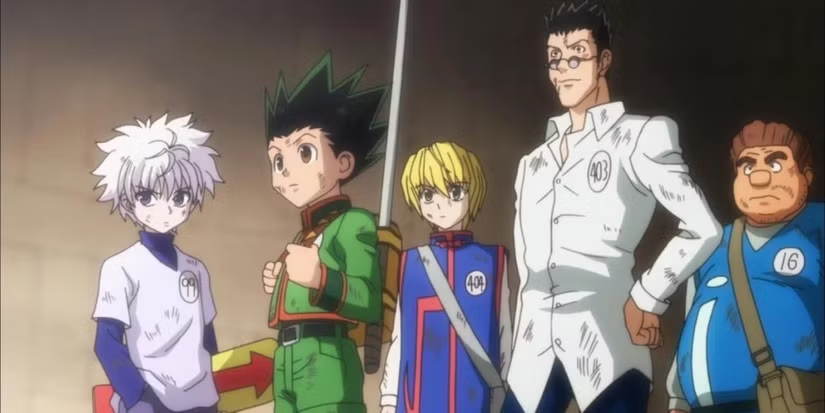
‘Hunter x Hunter’ (2011–2014)

This 2011 remake has lived on in the hearts of anime fans for years since its release. Hunter x Hunter follows Gon Freecss (Megumi Han) as he sets out to become a Hunter and gain his Hunter’s license, in order to better understand the father who abandoned him.
Hunter x Hunter is one of those rare, perfect gems of long-form battle shōnen that becomes far more intelligent as it goes on. It’s a strong anime for first-timers into the genre, a true safe bet for a great time, and what the medium has to offer. Few anime of the last 25 years have balanced strategy, adventure, and character growth as well as Hunter x Hunter has. The series is genuinely masterful, as it delivers a rich adventure story without ever being shallow, an emotional wild-ride without ever being overly sentimental, and extremely clever without losing any of its excitement and fun.
8
‘Steins;Gate’ (2011–2015)

Steins;Gate is genuinely one of the most rewarding anime of the last 25 years, yet somehow its perfection is constantly overlooked. The series centers around Rintaro Okabe (Mamoru Miyano), a flamboyant mad scientist, whose accidental tampering with time begins to fracture the lives around him.
Steins;Gate carefully builds from a rather quirky science-fiction comedy into a devastating time-travel drama that quite literally stuns. It’s a structurally satisfying good time that rewards rewatches, patience, and close attention. Steins;Gate is fantastically good, standing strong as a smart sci-fi anime with a beautiful emotional payoff. It’s an underrated bout of perfection that hosts memorable characters, emotional stakes, and a clever structure. Not many are able to deny Stein;Gate‘s brilliance as it easily transitions from nerd comedy into a wrenching time-loop tragedy, marking it as one of the greatest sci-fi dramas ever made.
7
‘Mob Psycho 100’ (2016–2022)

This coming-of-age tale is one that is undeniably magnificent and woefully underrated. Mob Psycho 100 focuses on a young middle schooler, Shigeo “Mob” Kageyama (Setsuo Ito), as he struggles socially while wielding incredibly absurd amounts of psychic power that threaten to go out of control at the height of his emotions.
Anyone who has seen even just a bit of Mob Psycho 100 can point out why it’s so incredibly perfect. With each episode, the series gets better, and with each season, the character growth becomes even more astonishing. Mob Psycho 100 is not only emotionally satisfying, but it stands as one of the most entertaining sci-fi action shows ever made. It’s a top-of-the-shelf kind of anime that has ranked high among some of the most exciting in the genre of the last decade, despite its criminally underrated status.
6
‘Made in Abyss’ (2017–2022)

This incredible work of fiction stands as one of the most haunting watches on this list of the most perfect anime of the last 25 years. Made in Abyss centers on little Riko’s (Miyu Tomita), who descends into the Abyss in search of her mother, accompanied by a mysterious robot boy named Reg (Mariya Ise).
Made in Abyss is the embodiment of deceptive beauty, with its host of colors and seemingly whimsical adventure story. In actuality, the breathtaking fantasy builds a world that features emotional devastation for audiences and characters alike. It’s an often overlooked anime that wields a perfection that is truly rare in the modern genre. Made in Absyss‘ story is no doubt far darker and more unsettling than its lighthearted appearance initially suggests, but its emotional power, atmosphere, and astonishingly immersive quality make it the ideal addition to this list.
5
‘Monster’ (2004–2005)

Monster has to be one of the greatest anime ever created, as it delivers an equal sophistication as the best live-action psychological thrillers. The thriller follows Dr. Kenzo Tenma (Hidenobu Kiuchi), who saves a child’s life and slowly comes to the realization that that same child is Johan Liebert (Nozomu Sasaki), who may become one of the most terrifying human beings to ever exist.
Monster is a suspenseful thrill ride that stands out because of its discipline. It’s a true gem not only for its mature storytelling but also for its continuous high quality of gripping content. Monster is masterfully constructed from beginning to end, with its suspense that grows through choices, conversations, memories, and the psychological damage left behind by past influences. Few anime of the last 25 years have shown the spectacular maturity, tension, and continuous high quality that Monster has, making it one of the most perfect shows ever made.
4
‘Demon Slayer: Kimetsu no Yaiba’ (2019–2024)

This iconic action anime is a masterpiece that owns the stage in story and intensity. Demon Slayer: Kimetsu no Yaiba follows Tanjiro Kamado (Natsuki Hanae), a boy who becomes a Demon Slayer after his family is massacred, with only his sister Nezuko (Akari Kitō), remaining, but completely transformed.
Demon Slayer: Kimetsu no Yaiba is a true action staple. It’s a visually overwhelming bout of intense action that has exceeded countless expectations. Demon Slayer is easily dubbed perfect by fans for all it brings: an epic story, brutal action, memorable characters, emotional weight, and some of the most stunning animation ever seen in the medium. The anime is a series that boasts immense popularity—which is very well-deserved—a defining anime that stands at the top with several other greats of the last 25 years.
3
‘Attack on Titan’ (2013–2023)

Attack on Titan is a true cultural phenomenon. The brilliant action anime focuses on friends Eren Yeager (Yûki Kaji), Mikasa Ackerman (Yui Ishikawa), and Armin Arlert (Marina Inoue), who begin as survivors trapped behind walls and grow into avenging soldiers as time goes on.
Attack on Titan is genuinely in a league of its own. It’s one of the few long-form anime that has maintained an extraordinary level of quality season after season. What begins as a brutal survival story develops into a spiraling tale of oppression, war, freedom, and the devastating consequences of the morally grey line between good and evil. Attack on Titan is literal perfection and stands today as one of the most defining TV events of the century, masterfully cementing its place on this list.
2
‘My Hero Academia’ (2016–2026)
This visual feast of an anime is one that not only delivers quality animation but also a fantastic story. My Hero Academia centers around the initially powerless Izuku Midoriya (Daiki Yamashita), who is born into a world where superhuman abilities are common, only to be given the chance of power inheritance by the hero he admires most.
My Hero Academia is one of the top-defining shōnen of the last decade, as it turns simple heroic dreams into a story about responsibility, effort, and courage. Even with a large cast of characters, the series remains gripping, giving each character time to shine in the spotlight. A huge part of My Hero’s perfection is how earnestly it believes in heroism while still throwing out the question of what being a hero truly means. The series takes its audience on a journey rife with laughter, love, tears, and loss, offering viewers a modern shōnen with an emotional payoff that definitely places it high among the best and the brightest.

Fullmetal Alchemist: Brotherhood is the ultimate anime fantasy watch that provides audiences with a well-balanced story. The impeccable anime follows brothers Edward Elric (Romi Park) and Alphonse Elric (Rie Kugimiya), who commit the central sin of human transmutation, lose their bodies in the attempt, and then join the military in order to embark on a mystical journey to reclaim what was taken from them with hopes of finding the philosopher’s stone.
Whether it be story, animation, action, or fantasy, Fullmetal Alchemist: Brotherhood delivers on all fronts. The series is often treated as the gold standard for a complete anime adaptation, and it is as plain as day to see why. Very few anime have matched the level of gripping storytelling that Fullmetal Alchemist: Brotherhood has. It hosts both blockbuster action and intricate plotting, with memorable antagonists, a coherent power system, and absolutely no lull in the middle of it all. It’s a truly epic tale, rife with content that never feels bloated or unnecessary. In fact, the action fantasy is the kind of perfect series that has had a hand in defining what true anime excellence means over the last 25 years.
Us Weekly has affiliate partnerships. We receive compensation when you click on a link and make a purchase. Learn more!
Karlie Kloss‘ accessory game proves that sometimes one item can really make an entire outfit. The supermodel stepped out carrying a timeless quilted handbag style that instantly elevated an otherwise sweet summer look. It certainly makes a strong case: classic accessories never go out of style. The only catch? Her designer version costs $3,621, however, we found a bag that delivers the same luxe vibe for $23.
Kloss was spotted in New York City on July 28 wearing a fitted gingham dress with simple ballet flats and a quilted black Chanel bag that tied the entire outfit together. The structured accessory balanced the feminine dress perfectly, proving that a classic quilted handbag is one of the easiest ways to make any outfit look instantly more polished. Luckily, recreating the look doesn’t require a designer budget.
Get the Diuy Quilted Leather Crossbody Bag for $24 at Amazon! Please note, prices are accurate at the date of publication, July 30, 2026, but are subject to change.
The Diuy Quilted Leather Crossbody Bag captures the same sophisticated feel with its padded exterior, polished chain strap and classic twist-lock closure. In addition to black, the bag also comes in beige, baby blue, coral red and several other shades, making it easy to find one that suits your personal style. At just $24, it’s proof you don’t need to splurge to get the same timeless, celeb-approved aesthetic.

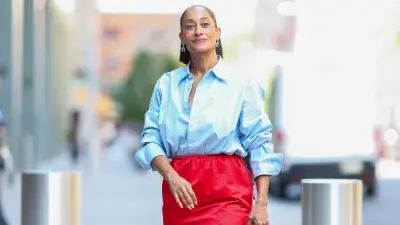
Tracee Ellis Ross just gave the classic raffia bag a sophisticated, city-girl twist. Instead of saving the woven accessory for beach vacations, the actress styled it with polished separates, instantly elevating the piece for everyday wear. Luckily, you don’t need a designer budget to recreate her chic look. Ross was spotted in New York City […]
Beyond its expensive-looking design, this crossbody is surprisingly practical for everyday wear. The soft vegan leather makeup gives it that classic sleek finish, while two main compartments and a zippered pocket keep your phone, keys, cards and lipstick neatly organized. Whether you’re headed to brunch, date night or running errands around town, this purse is one you’ll find yourself wearing over and over.
Shoppers say it looks far more expensive than its affordable price tag. One reviewer called it the “ideal accessory to elevate any outfit with a touch of femininity and sophistication,” adding that the chain strap gives it an “air of timeless elegance.” Another buyer praised the “rich looking” design, saying it’s “great for going out in the evening when you only need a few small items to carry.”
Yes, Kloss’ $3,621 quilted bag is undeniably classy, but timeless style doesn’t have to cost thousands. A polished quilted crossbody, like this $23 Amazon version, instantly elevates everything from breezy summer dresses to jeans and a blazer, making it a wardrobe staple you’ll wear season after season.
Can’t get enough of Kloss’ polished quilted bag style? Shop more chic Amazon picks below.
Shop more black quilted crossbody bags that we love:
Not your style? Explore more quilted crossbody bags here, and don’t forget to check out all of Amazon’s Daily Deals for more great finds!
UsNow Summer Sale Alert: These Chic Fashion Finds are over 30% off – Plus Free Shipping
Welcome to summer with our biggest sale of the year. This summer’s chicest dresses, tops and swimsuits are all over 30% + free shipping. Inventory is limited so hurry before they’re gone.

The hack to looking effortlessly chic this summer might not be an expensive designer handbag or the latest trend — it could be as simple as a classic white tank. Alessandra Ambrosio reminded Us that the wardrobe staple has all the makings of a supermodel essential, and the best part is you don’t have to […]
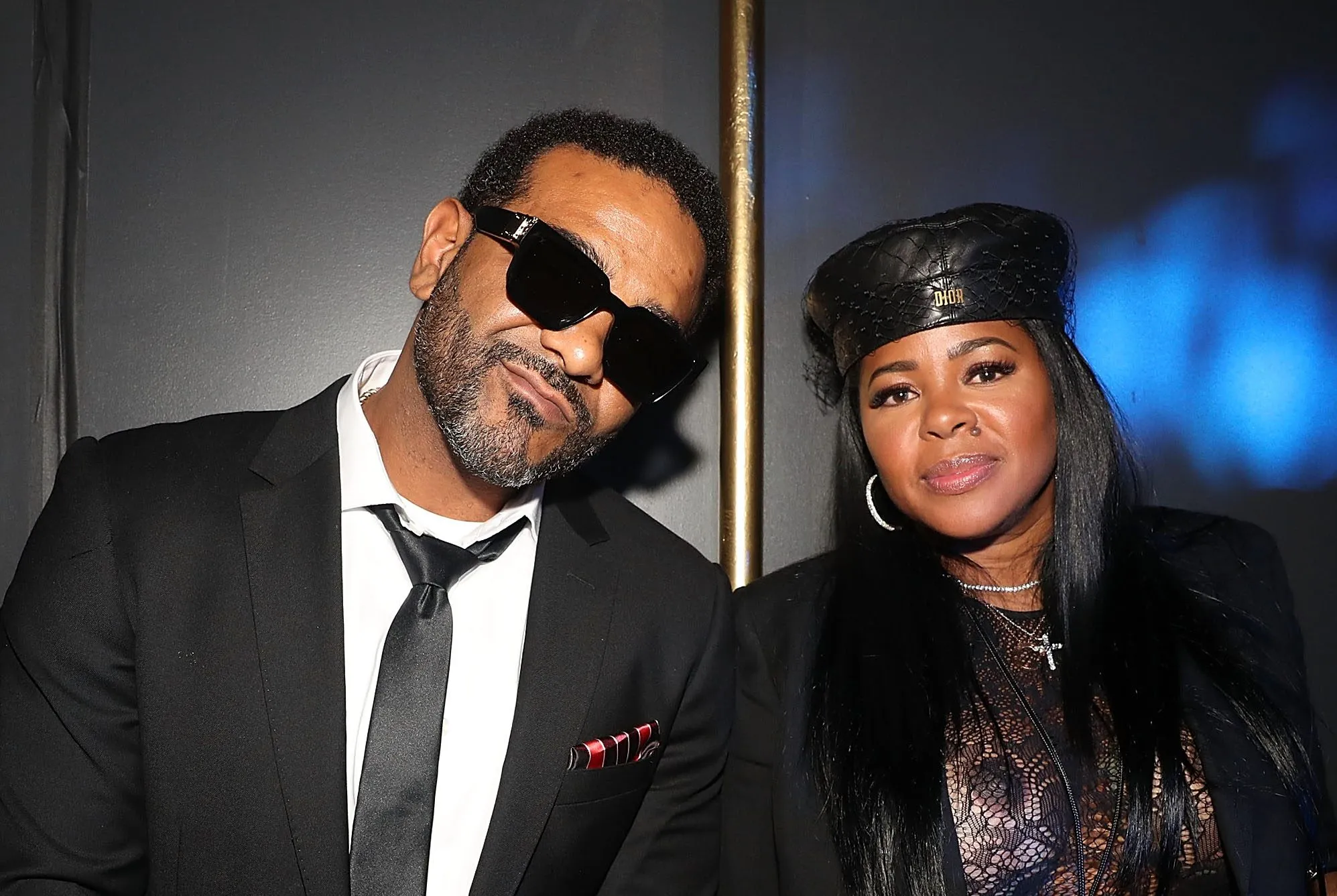
Jim Jones is making it clear that he always thought Chrissy Lampkin was that girl! Chrissy recently dropped a fire throwback flick on social media, and fans wasted no time flooding her comment section with compliments and heart-eye emojis, and Jimmy jumped right in the mix to join them.
RELATED: Jimothy Bugging? Social Media Mentions Chrissy Lampkin After Jim Jones Shares His Stance On Having Women In His Club Section (VIDEO)
Jim Jones Gasses Chrissy Lampkin UP After She Drops Throwback Photo
Chrissy Lampkin came through with a fire Throwback Thursday post, dropping an Instagram flick of herself styling and profiling in a preppy-chic look. Chrissy served in a tied-up tee, pleated skirt, strappy platform sandals and a vintage Christian Dior bag. The comment section instantly lit up with fans letting her know she’s all been THAT Girl! Jim Jones also slid into the comments to let his lady know she was looking good.
Fans Send Heart Eyes After Chrissy Shares A Vintage Gem
Once The Shade Room reposted Chrissy’s photo, folks immediately flooded the comment section with reactions. Plenty of people hyped her up alongside Jim, saying she’s been fine forever, while others said she’s literally aging backwards! Peep some of the reactions below.
Instagram user @empresscocoa wrote, “She’s always been that girl.”
Instagram user @un_leyshed wrote, “This lady been fine her whole life!!”
While Instagram user @dominiquechinn wrote, “She always show up so beautifully ❤️”
Then Instagram user @journeyonjett wrote, “She is one of the most naturally beautiful women out here! Wow.”
Another Instagram user @miss.chinadoll wrote, “She looks good and very youthful. Go Chrissy! 😍”
Instagram user @deemonrovia wrote, “Mind you, Chrissy is 55 yrs old. She is so gorgeous!”
Then another Instagram user @talktometoya wrote, “I want whatever she’s having 😍😍”
While another Instagram user @princess_kynn wrote, “She aging backwards 😍😍😍”
Finally, Instagram user @jetsetbrowngirl wrote, “She’s so beautiful 😍”
Chrissy Lampkin Keeps The TL In A Chokehold With Her Looks
When Chrissy pops out you can bet she’s going to always serve and slay! Back in May, she had timelines going crazy while celebrating her 55th birthday with a tropical getaway. Fans loved the vibes as she showed off her curves in a black cutout swimsuit. Jimmy couldn’t help but notice too and hopped in her comments with some spicy words, writing, “What under tht hat sexy 👀😎”
RELATED: Big Energy! Fans Are Flooding The Comment Section After Jim Jones Celebrates 50th Birthday With Chrissy Lampkin (VIDEO)
What Do You Think Roomies?
Entertainment
“Spider-Man” producer confirms she asked Tom Holland and Zendaya not to fall in love: ‘Nothing you can do’
:max_bytes(150000):strip_icc():format(jpeg)/Tom-Holland-Zendaya-071726-8e50320bd400484381fbfef73ec0d093.jpg)
Former Sony chairwoman Amy Pascal explains why she didn’t want the stars to find love with each other in real life.

University of Tennessee linebacker Arion Carter will miss the first two games of the 2026 college football season as he serves an NCAA suspension for accepting a $427 airline ticket from an agent after he declared for the NFL Draft.
The NCAA explained its decision with a statement on Wednesday, July 29.
“NCAA rules are clear: student-athletes may not sign with agents to pursue NFL draft opportunities, and this student-athlete knowingly violated those longstanding rules,” the statement read. “When student-athletes violate NCAA rules, the school declares them ineligible and works with the national office to determine requirements for reinstatement, which can include repayment and/or withholding from competition.”
Carter, 21, initially declared for the draft after the 2025 season, but re-aggravated a foot injury during the pre-draft process and needed surgery. He decided at that point to return to the Volunteers for his senior season.
A suspension such as this one was commonplace in the NCAA before the name, image and likeness era, when the college sports organization championed amateurism and railed against athletes receiving any compensation related to what they do on the court or field.
Over the past half-decade, however, the line between amateur and professional has blurred considerably, with schools spending millions of dollars to compile their football and basketball rosters. Some star athletes have even opted to stay in college, rather than turn pro, because they can make more as the big man on campus than riding the bench in the NFL or NBA.
Tennessee football head coach Josh Heupel released a statement after the NCAA’s decision came down, praising Carter and voicing his displeasure with the suspension.

Former Georgia Bulldogs wide receiver Zachariah Branch was arrested on a pair of misdemeanor charges just days before he is expected to be picked in the 2026 NFL Draft. Branch, 22, was booked on Sunday, April 19, in Athens, Georgia and charged with “obstructing public sidewalks/streets — prowling” and “obstruction of a law enforcement officer,” […]
“Arion Carter represents everything that is right about college athletics, dedicating all four years of his career to the University of Tennessee,” Heupel said in a statement shared via the Vols’ social media accounts. “His high character, loyalty and leadership within our program are unmatched.
The statement continued, “We disagree with the NCAA’s ruling on punishing Arion with a multi-game suspension this fall. Arion made the right decision for his future health and well-being. He will proudly graduate from Tennessee in public health with Dean’s List honors in August. Our team stands behind AC and his family, and we can’t wait to be on the field with him during training camp next week.”
The Volunteers open the 2026 season on Saturday, September 5 at home against Furman University. Their second game is on the road against Georgia Tech. Tennessee is a projected fringe-top 25 team and will be favored in both games, even without Carter.

Sports2 minutes ago
Millie De Lune on comeback trail in 2026 after tendon issue

Tech3 minutes ago
Flock Cameras Are Being Destroyed Across the US

News Videos4 minutes ago
Bitcoin Holders: I Can’t Stay Quiet Any Longer!!


-

 Fashion6 days ago
Weekend Open Thread: Brooks Brothers
-
 Sports4 days ago
Commonwealth Games boxing: Jadumani Singh seals dominant 5-0 win over Pakistan’s Sumama Rehman to enter quarter-finals | Commonwealth Games News
-

 Business1 day ago
Why Trees Belong on the Risk Register
-

 Tech4 days ago
Intel is reversing course and bringing hyper-threading back to its server chips
-

 Crypto World5 days ago
Ripple bought a bank in pieces. The $4 billion audit
-

 Politics4 days ago
Luke Littler dismantles Gerwyn Price to retain title in Blackpool
-
 Entertainment7 days ago
A New Post-Apocalyptic Gundam Anime Series Blasts Into SDCC
-

 Politics3 days ago
The Part of the Electric Transition Nobody Wants to Discuss
-

 News Videos4 days ago
BITCOIN JUST ENTERED THIS CRITICAL ZONE…
-

 Business2 days ago
Major shareholder moves on Canyon
-

 Crypto World5 days ago
XRP Ledger adds $2.6B as RWA inflows rank second
-

 News Videos17 hours ago
Bitcoin Enters the 3rd Stage of the Bear Market
-

 Politics5 days ago
Spain sweeps the board at 2026 World Cup with individual awards
-
 Entertainment2 days ago
‘Stargate’ Creator’s New Sci-Fi Series Returns for Season 3 Tomorrow
-

 Entertainment5 days ago
Sara Gilson Killed By Husband After Viral “Pedophile” TikTok Video
-

 Crypto World2 days ago
Kraken Enables Retail Access to Jersey Mike’s IPO via Tokenized Shares
-

 Tech6 days ago
Anthropic launches Claude Opus 5, a cheaper AI model for coding, agents and enterprise workflows
-

 News Videos2 days ago
Claude: Build Financial Dashboards in Minutes (2026)
-

 Politics13 hours ago
Luke Littler’s dominance sparks GOAT debate
-

 Tech3 days ago
New macOS Sequoia & Sonoma security updates for older Macs
You must be logged in to post a comment Login