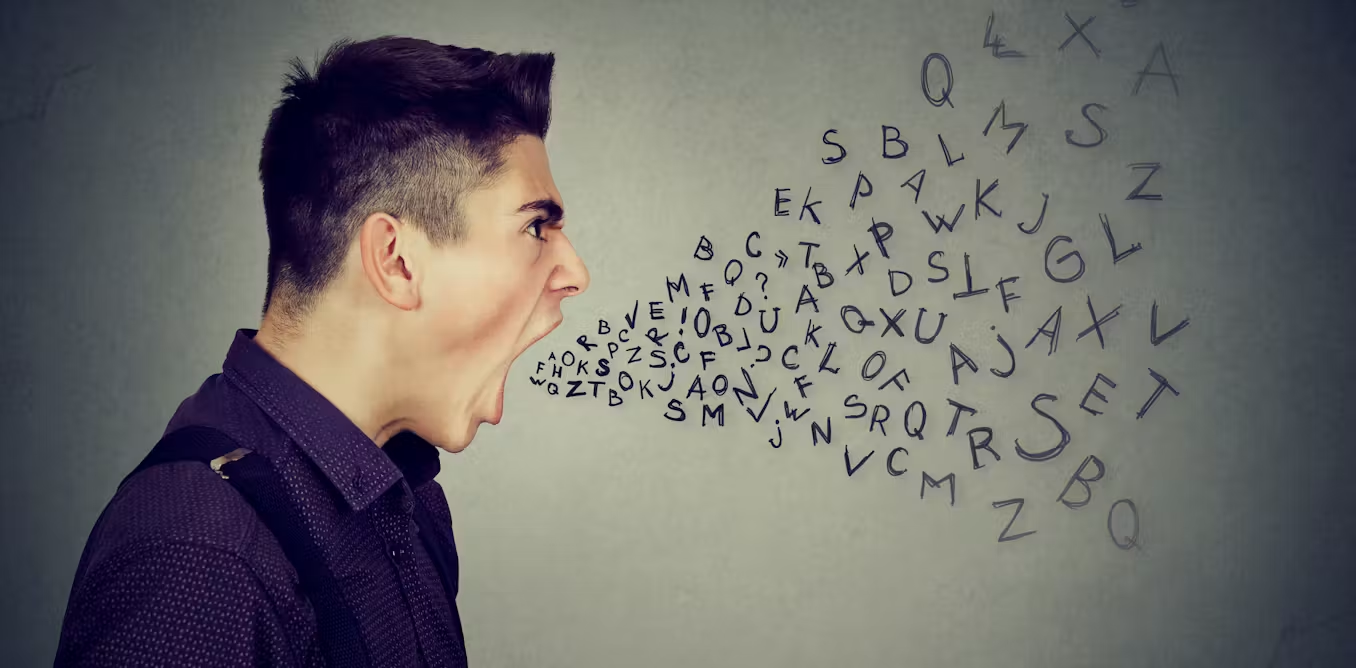
Some people love to swear. In the workplace, some of those people might be in charge.
You may have worked with one (or be one) yourself. The team leader who likes to pepper a pep talk with spicy language, or the manager who uses swear words to express themselves in the clearest possible terms.
How colleagues respond to colourful language varies. Some might enjoy it, while others are unbothered. It can also be considered a sign of poor leadership, unprofessional – and simply unnecessary.
Our research suggests people’s reactions to a sweary boss depend not only on what is being said, but also on who is listening and where they live.
Advertisement
We found that there is not a single “correct” way for leaders to communicate. But overall, employees were less satisfied with supervisors who frequently used profanity.
So if you’re wondering whether filling meetings with swear words is a good management strategy, it’s probably safer to avoid them.
But some people in our study of 5,660 employees in 19 countries reacted in exactly the opposite way. Those who considered themselves to have more psychopathic and machiavellian personality traits – so with lower levels of empathy – reported greater satisfaction with their leader as profanity increased.
Psychopathy and machiavellianism both involve a certain level of emotional detachment and a willingness to disregard social norms, including the norm that bosses shouldn’t swear. For these people, a boss who swears may come across as more genuine and confident, unconstrained by unnecessary rules.
Advertisement
Employees with stronger narcissistic traits (characterised by a sense of entitlement and a need for admiration) were surprisingly indifferent. Swearing neither impressed nor offended them very much. Their feelings of satisfaction towards their bosses barely changed.
But personality turned out to be only half of the story. The country people lived in also mattered. In societies with higher levels of income equality, such as Sweden and Austria, personality differences were more visible. This meant that the same manager using the same kind of bad language could be viewed as approachable by one employee and unprofessional by another.
In countries with lower levels of equality, however, such as South Africa and Mexico, these personality differences almost disappeared. Regardless of their individual characteristics, employees generally reacted negatively to leader profanity.
Swearing is caring
Why might this be? Research on economic inequality suggests that in more unequal societies, people become more attuned to status and rank. Workplace hierarchies carry greater weight, so a leader’s swearing is less likely to be read as friendliness or authenticity and more likely to be seen as a display of dominance. In these places, the social context appears to override individual personality differences.
The practical message for leaders is refreshingly simple. Communication is never just about the words we choose. The same sentence can inspire one employee, offend another and leave a third completely unmoved.
This also explains why leadership advice often sounds contradictory. One expert encourages leaders to “be authentic”. Another recommends maintaining professionalism at all times. In reality, both can be right, but this depends on the people involved and the cultural environment.
So, should leaders stop swearing altogether? Not necessarily. But they should recognise that effective leadership isn’t about finding one communication style that works for everyone.
It’s about understanding your audience. Knowing your team is just as important as choosing the right (or wrong) words.
I think we should stop calling it a ‘postcode lottery’. A lottery implies that you’ve got some luck in this – but you’ve only got luck if you happen to live in that particular place. You don’t get any more luck once you’re there. You’re stuck.”
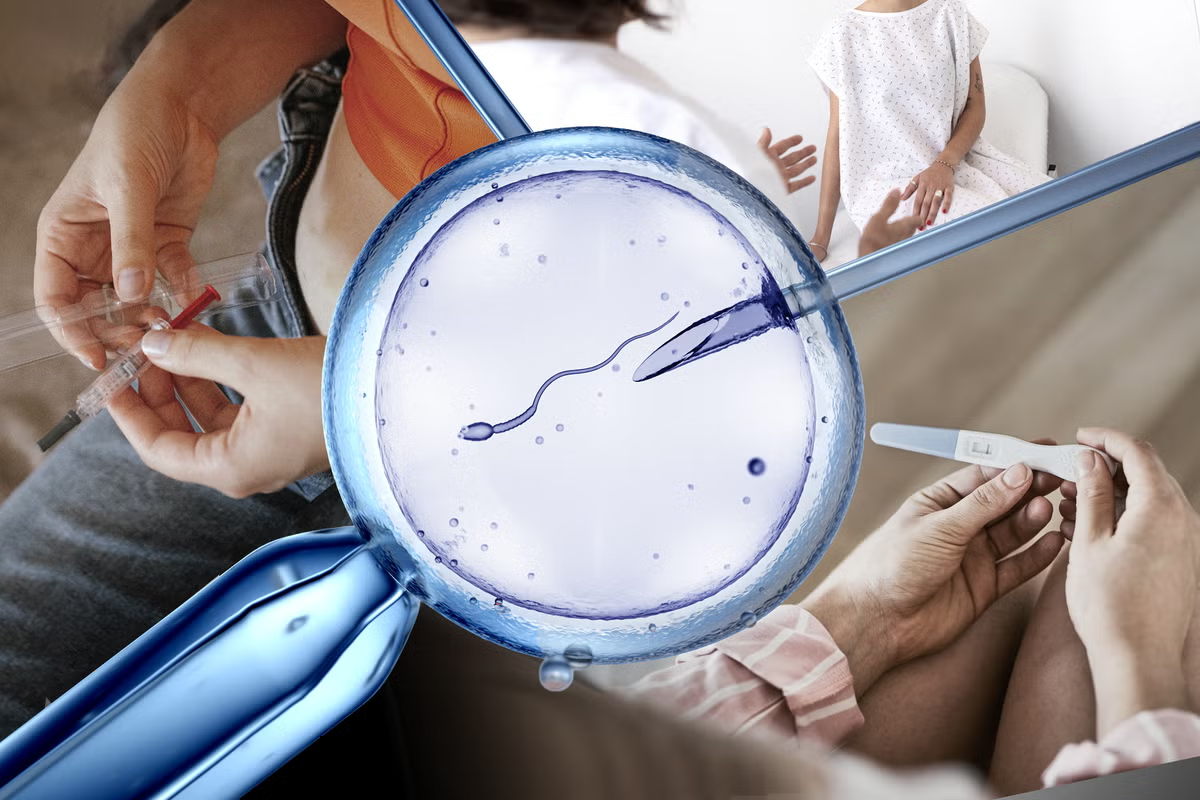
Sarah Norcross, director of the Progress Educational Trust (PET), a charity that improves choices for people affected by infertility, is talking about the current access to fertility treatment. More specifically, access to in vitro fertilisation (IVF) on the NHS in England.
It’s a particularly relevant topic, given that today, 25 July, is World IVF Day: it commemorates the birth of Louise Joy Brown in Oldham, Greater Manchester, in 1978, the first baby ever conceived through IVF.
But although Brown’s remarkable legacy lives on, nearly 50 years later IVF provision is something of a roulette in the very country in which the pioneering treatment was invented. Eligibility and the number of cycles couples are entitled to vary wildly between areas. Rules are governed by NHS local integrated care boards (ICBs), which are able to conjure up their own policies at will.
Advertisement
In some places, IVF is offered to women up to the age of 42; in others, it’s capped at 35. In some places, couples are offered three full rounds of IVF; in others, one partial round. In some places, as long as there are no children from the current relationship, the couple will be eligible; in others, the existence of any kids from previous relationships immediately prohibits treatment.
There is no rhyme or reason to this – it’s just an issue of resource distribution amid a health service stretched wafer thin. It is, as Norcross says, “grossly unfair”.
The “luck” element is significant even at a granular level. PET research has revealed that female GPs are nearly 20 per cent more likely than their male peers to refer patients for NHS-funded fertility treatment.
IVF births now account for roughly one child in every UK classroom (Getty/iStock)
“Whether you can access treatment, what provision you’ll receive and under what conditions is fundamentally inequitable,” says Gwenda Burns, chief executive of the Fertility Alliance, a national charity offering support to those struggling with infertility.
Rather than improving, provision is getting substantively worse. In the past year alone, five separate ICBs in England have reduced their IVF offering.
Advertisement
On 1 April 2026, NHS Greater Manchester cut the number of cycles offered from up to three to just one. Katherine Sheerin, NHS Greater Manchester’s chief healthcare commissioning officer, said that, while they know the decision will be “upsetting and disappointing” for some, “access to NHS-funded IVF depends on where someone lives, and that variation is unfair and cannot continue as it is. Moving to a single policy removes this postcode variation.”
From 1 February 2026, NHS Cheshire and Merseyside ICB also went from offering two or three cycles to one. “We have a responsibility to ensure services are provided fairly for everyone across the region and by moving to a single funded IVF cycle, we can continue to offer treatment in a consistent way that remains clinically appropriate and financially sustainable,” a spokesperson told The Independent.
Whether you can access treatment and what provision you’ll receive is fundamentally inequitable
Gwenda Burns, Fertility Alliance
Advertisement
Across South Yorkshire, IVF cycles were slashed from two to one in December 2025. “This decision has not been taken lightly by the Board,” Chris Edwards, interim chief executive at NHS South Yorkshire, said of the decision. “However, in a difficult financial climate we have a responsibility to balance the needs of all our communities and ensure that we are delivering the best possible value for money within the resources available.”
At the beginning of July 2025, NHS Sussex’s ICB reduced the number of cycles patients can receive from three to one; they declined to comment when approached by The Independent.
Finally, in a double blow, Kent and Medway quietly announced in April this year that they would cut provision from two cycles for women up to the age of 40 to one cycle for women 37 and under.
On the ground, these changes have caused patients and doctors a huge amount of stress as they’ve tried to fast-track referrals to beat the deadline. “We’ve just been trying to get people through as quickly as possible so they can get their two or three rounds,” says Nicola Tempest, a consultant gynaecologist and lecturer at the University of Liverpool.
Advertisement
Holly, a 39-year-old psychotherapist who lives in Margate, was one patient whose IVF came under threat after Kent and Medway’s shrinkflation. Following a two-year wait for treatment, she and her partner started their first cycle in January; by the end of February, it had “dramatically failed”, she says. “We didn’t get any embryos, and we were extremely unprepared for that. I was utterly devastated.”
The UK birth rate has been falling for years – making IVF treatment all the more vital (Getty/iStock)
On top of this grief, more anxiety was piled on. For her second round, Holly was required to get an AMH test, which measures a hormone that indicates how many eggs someone has. By this point, it was the end of March.
“I had an appointment with my fertility doctor and she told me about the change in funding,” says Holly. “She said, ‘you have to get this AMH test done now, because otherwise you might not get your second round.’”
The NHS’s free AMH test would take too long – Holly was forced to arrange the test privately at a cost of more than £100, get up at 4am the next morning, and race home afterwards in time to start work.
“The stress was insane, and the potential implications were incredible,” she says. “To go from two rounds to one, four embryo transfers to two…”
Advertisement
The sudden reduction of eligibility due to age in Kent and Medway was particularly brutal; 38 is the age at which, according to some studies, women see a more rapid decline in fertility, and are therefore more likely to need assisted reproduction.
We didn’t get any embryos, and we were extremely unprepared for that. I was utterly devastated
Holly, psychotherapist
One academic review, for example, found that the rate of women defined as infertile who conceived without medical intervention within a year held steady at 29 per cent from the ages of 35 to 38. After that, it dropped far more quickly.
Advertisement
In fact, the backlash in Kent and Medway has been severe enough that the ICB has very recently pressed pause on this deeply unpopular move. “NHS Kent and Medway has listened to feedback following its decision to change the criteria for fertility services from 1 April 2026, and is now reviewing that change,” a spokesperson told The Independent. While the review is underway, the original criteria have been reinstated.
While this is undoubtedly good news, the likelihood that IVF provision will stay the same or improve during this next review process seems low if the national landscape is anything to go by.
Ignoring guidance
Putting aside the ICBs that have recently cut access, it is very rare to find one that is following NICE guidance. NICE stands for the National Institute for Health and Care Excellence – the official arm of the UK government responsible for providing evidence-based guidance, advice and standards for the NHS.
Advertisement
NICE updated its IVF guidelines in March this year, replacing the previous recommendations issued in 2013. These state that people who meet the eligibility criteria and are under 40 should be offered three full cycles of IVF. If they have not conceived after three cycles and are still under the age of 40, healthcare providers should consider up to three further cycles.
The number of cycles is crucial because, although it might sound obvious, the more cycles someone has, the higher the chance overall that they will have a baby. “Clinically, multiple cycles increase the overall chance of a live birth,” says Burns. “Reducing from three to one dramatically lowers the cumulative probability of success.”
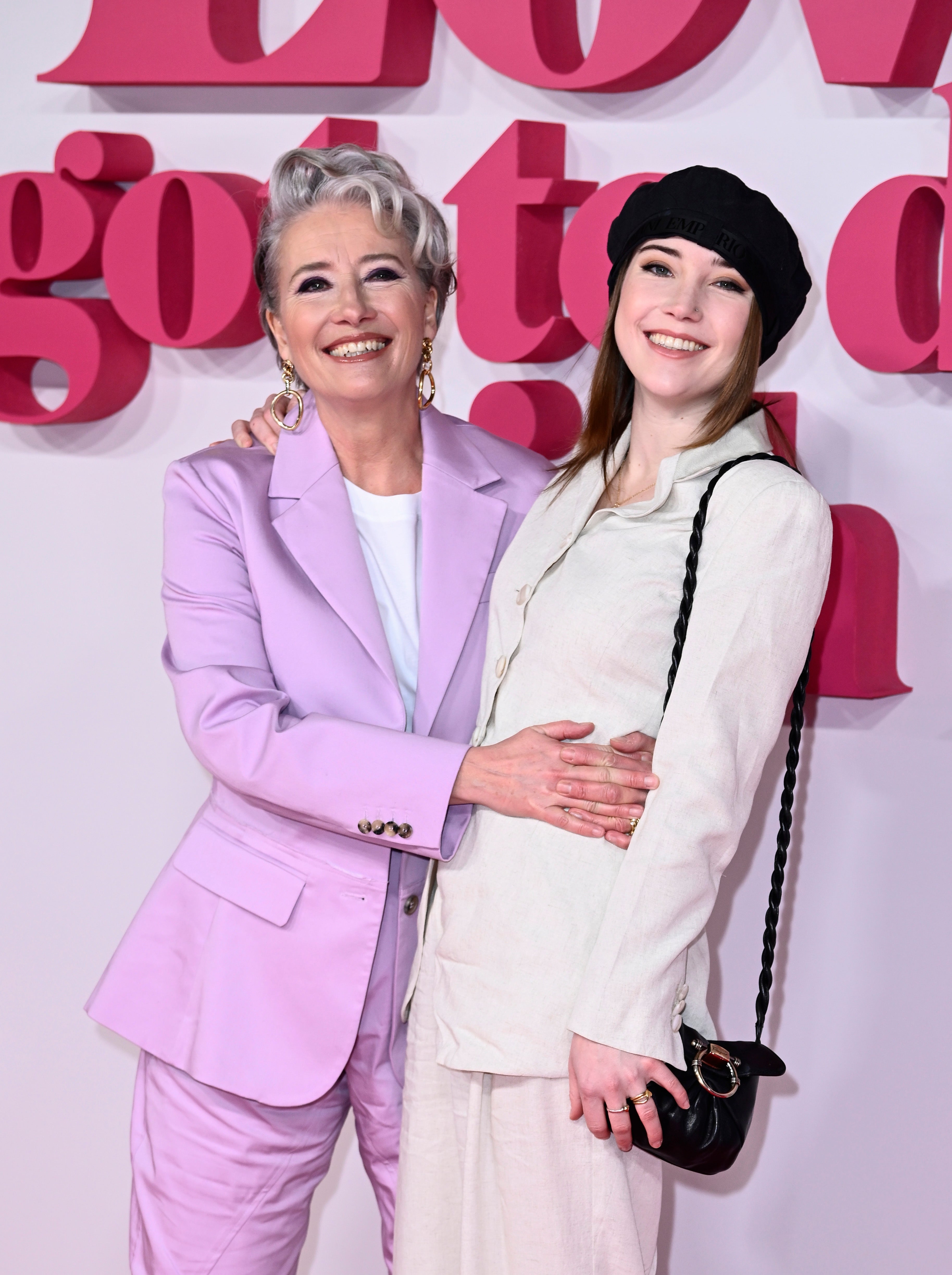
Emma Thompson (left) has been open about conceiving her daughter, Gaia (right) via IVF at the age of 40 (Getty)
Depressingly, only two ICBs in the whole of England are currently offering the recommended three full cycles: North East London and North East and North Cumbria.
The number of cycles is only one part of the story, too; some ICBs offer “non-full”, rather than “full” cycles. NICE guidelines define a “full” cycle as one in which, after egg retrieval and fertilisation, every resultant viable embryo has been transferred (one at a time – multiple embryo transfer is no longer practised in the UK) or one has resulted in pregnancy. But some ICBs will only transfer one viable embryo after retrieval, while others may cap it at two. Currently, only 11 of the 42 ICBs in England offer “full” cycles.
“It’s hard to communicate the message because it’s so complicated – but the bottom line is that, in many cases, we’re seeing ICBs making massive cuts and salami-slicing care,” says Norcross.
Advertisement
The issue is that NICE guidance is just that – guidance. There is no obligation to adopt it, and most ICBs simply choose not to as a cost-cutting exercise.
Not a ‘lifestyle choice’
Fertility treatment is frequently framed as a “luxury” or a “lifestyle choice”. This problematic viewpoint was recently spouted by Reform UK county councillor Bridget Porter in Kent, who compared IVF to “butt lifts” and “boob enhancements”, saying that increasing spending on fertility would be “frivolous”, reports the BBC.
Yet reproduction is anything but. The World Health Organisation (WHO) defines infertility as a “disease of the reproductive system”, and it’s becoming an increasingly pertinent public health problem, given that fertility and birth rates are declining the world over.
Advertisement
In 2025, births in England and Wales fell for the fourth year in a row and hit their lowest level for nearly 50 years, according to ONS data. The number of children born per woman in England and Wales has fallen to 1.4, well below the replacement rate – the number of babies per woman needed to sustain a population size – of 2.1.
This demographic shift is a cause for concern. “If you’ve got too many older people being supported by a much smaller young taxpaying population, it’s going to cause massive problems,” says Kevin McEleny, a consultant urologist and chair of the British Fertility Society (BFS). “One way of mitigating it is by allowing those who want to have children to do so.”
Are we really saying that the rich middle class are more entitled to have children than working class people?
Kevin McEleny, British Fertility Society
Advertisement
But while countries like Denmark and France are addressing their ageing populations by increasing fertility treatment provision, England is not.
Economically speaking, for every £1 spent on IVF, a country gets 8.5 times this back in terms of tax recouped from the children produced via the treatment, according to research. “The people who do healthcare economics have said these children are an asset,” says Norcross. “You get a really good return on your investment as a government.”
The difficulty is that political decisions are often made on a short-term basis, with those in charge looking from election to election rather than prioritising policies that will reap rewards in 40 years. And yet access to free fertility treatment is popular with the public; in a survey conducted by IPSOS on behalf of PET, 57 per cent of respondents said they thought IVF should be offered on the NHS.
The case for change
Advertisement
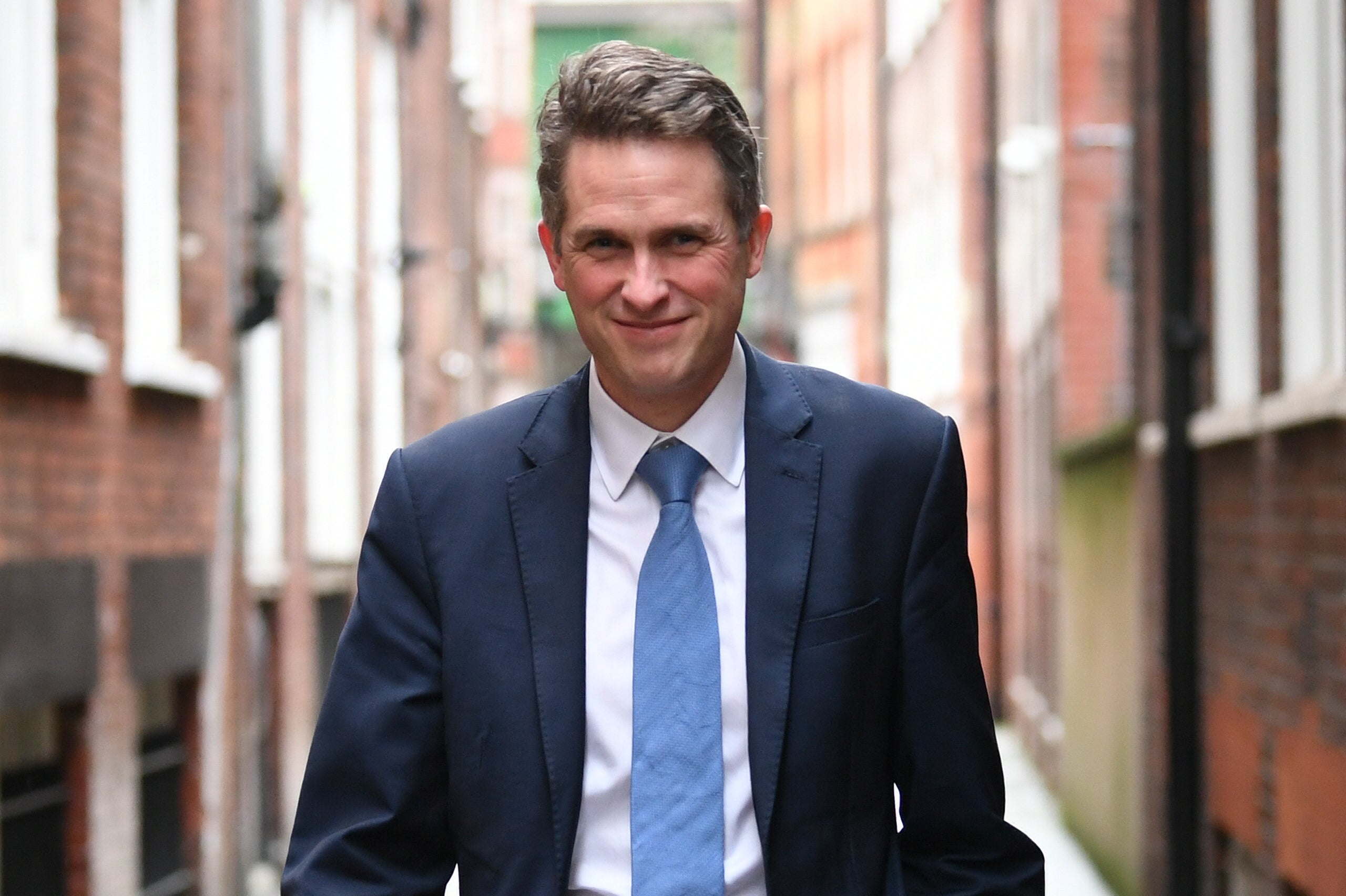
Some politicians are making the case for change, with Conservative MP Sir Gavin Williamson proposing a bid to amend the NHS bill to force ICBs to follow NICE recommendations on IVF.
“This is the country that invented IVF, yet Integrated Care Boards are rationing it unevenly,” he says. “NICE guidelines exist precisely to prevent this, and they are being ignored. Enforcing them across every region is the obvious fix, and it is long overdue.”
Conservative MP Gavin Williamson is leading the charge in making NICE guidelines on IVF mandatory (PA)
In the meantime, a lack of access to free fertility treatment is already creating a two-tier society. Only 25 per cent of IVF cycles in England are done through the NHS, according to the latest HFEA data, which means that 75 per cent are paid for privately, at a cost of £5,000 to £8,000 a pop.
For same-sex couples, there is an in-built bill before they have any chance of accessing NHS care. In the vast majority of areas, they must have completed at least six cycles of (unsuccessful) self-funded artificial insemination (IUI) before they’re considered for treatment, costing from around £750 per round, rising to £1,400 if donor sperm needs to be purchased – a total of £4,500 to £8,400.
Advertisement
“Are we really saying that the rich middle class are more entitled to have children than working class people?” asks McEleny. “Is that the kind of country we want to live in?”
It doesn’t have to be this way. Across Scotland, NHS boards follow the gold standard: three full rounds for women up to 40. They did a phased implementation, first introducing two rounds, then extending to three. “We’re meant to be a UK NHS, not an NHS England and an NHS Scotland,” points out Burns, “so why isn’t there equitable treatment across the country in line with the NICE guidelines?”
McEleny concludes with this warning: “There will come a time, mark my words, when they will be desperate for people to have more children. By then it’ll be too late. Make it easier now.”
Pregnant Holly Ramsay takes a seat in the stands to watch husband Adam compete in the 100m breaststroke at the Commonwealth Games as he bags a place in the final
Holly Ramsay was spotted taking her seat in the stands to watch her husband Adam compete in his 100m breaststroke heat at the Commonwealth Games.
Ramsay-Peaty, who debuted his new name on his cap at the games, won his heat despite a 10-minute delay caused by a detached lane rope.
He posted the fastest qualifying time and advancing comfortably to the semifinals and then progressed through the semifinals to book his place in the final.
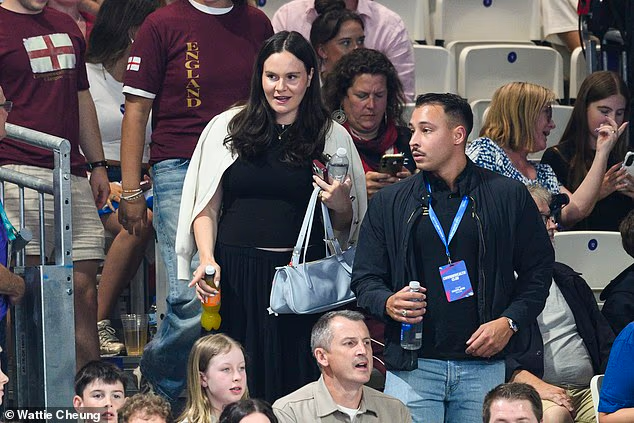
His pregnant wife Holly, 26, watched on in the crowd to support her partner, 31, displaying her blossoming baby bump after announcing they are expecting.
Advertisement
Ahead of the race, influencer announced last month she is expecting a baby girl with Adam, shared a snap to her Instagram Stories of Adam in his new ‘Ramsay-Peaty’ swimming cap and wrote: ‘So Special.’
Holly Ramsay was spotted taking her seat in the stands to watch her husband Adam compete in his 100m breaststroke heat at the Commonwealth Games
His pregnant wife Holly, 26, watched on in the crowd to support her partner, 31, displaying her blossoming baby bump after announcing they are expecting
Advertisement
Ramsay-Peaty, who debuted his new name on his cap at the games, won his heat despite a 10-minute delay caused by a detached lane rope
Ramsay-Peaty’s heat was temporarily halted as he was on the blocks when a lane divider broke off, requiring an official to strip to the waist and enter the pool to reconnect it.
But he duly wasted no time in recording the fastest time of the morning, 59.46 seconds, with only two rivals, Australia’s Sam Williamson and Filip Nowacki of Jersey, also finishing in under a minute.
The three-time Olympic champion is taking part in his fourth Commonwealth Games having clinched his first medals as a 19-year-old in Glasgow in 2014.
Advertisement
Ramsay-Peaty has described these Games as a ‘full circle moment’ as he looks to reignite his career.
A silver medal at the Paris Olympics in 2024 helped him refocus after a difficult 2023 in which he withdrew from a series of events in order to focus on mental health concerns.
His win in the 100m in 2014 began eight years of almost total dominance in the event. That streak came to an end in dramatic fashion in Birmingham four years ago when he trailed home in a shock fourth place in the event.
Ramsay-Peaty told TNT Sports: ‘Job done, really. We’ve got a busy two weeks coming up, so we’re reserving energy where we can.
Advertisement
‘Last time I was here, I was very young. We barely had any world records to my name, or known world records to my name, so it’s been a very long journey.’
Join the discussion
Should family drama ever overshadow an athlete’s achievements on the world stage?
His pregnant wife Holly, 26, watched on in the crowd to support her partner, 31, displaying her blossoming baby bump after announcing they are expecting
Advertisement
The three-time Olympic champion is taking part in his fourth Commonwealth Games having clinched his first medals as a 19-year-old in Glasgow in 2014
Holly Ramsay cheered husband Adam Peaty on from the sidelines as he powered through to the semi-finals of the men’s 100m breaststroke at the Commonwealth Games on Friday
Ramsay-Peaty debuted his new name on his swimming cap at the Commonwealth Games as he hopes his new moniker will bring him luck.
The three-time Olympic swimming champion is using his full name for the first time to compete at a major championship after marrying TV chef Gordon Ramsay‘s daughter Holly last December.
Advertisement
Sadly his parents did not attend the wedding and are assumed to not be attending the Commonwealth Games amid a falling out. Adam remains estranged from them.
Earlier this month, the Daily Mail revealed that Adam’s pregnant sister Bethany – the only member of his family to still be in contact with the couple – has now sensationally fallen out with Holly.
Not only are they no longer communicating, but this time it is Adam who is stuck in the middle, trying (and so far failing) to mend fences. Read the full story here.
The roots of the family conflict go back to September 2024, when Adam and Holly snubbed wider members of the Peaty family by not inviting them to their engagement party.
Advertisement
Caroline, who spent years ferrying her son to early–morning training sessions, was also not invited to Holly’s glamorous hen do at Soho Farmhouse in the Cotswolds, even though the bride’s mother, Tana, and friends including Victoria, were at the extravagant bash.
Adam changing his name to Ramsay-Peaty and registering under the double-barrel surname for the Games in Glasgow is the latest blow for his estranged loved ones – especially as Ramsay is placed first before Peaty.
A source said previously: ‘Adam may be rich but we have something that he hasn’t and that is brains, loyalty, integrity and family.
‘Money makes for a cold bedfellow. It can’t hold you tight when things go wrong or when you have a bad day.’
Advertisement
They added: ‘When you live to be famous you aren’t living, you are playing a role. Fame is but fleeting but family is forever.’
Holly shared a snap to her Instagram Stories of Adam in the new swimming cap and wrote: ‘So Special’
The athlete duly wasted no time in recording the fastest time of the morning, 59.46 seconds, with only two rivals, Australia’s Sam Williamson and Filip Nowacki of Jersey
Holly shared this snap of Adam ahead of the semi-final
Advertisement
The influencer, 26, announced last month she is expecting a baby girl with Adam
Sadly his parents, Caroline and Mark, did not attend the wedding and are assumed to not be attending the Commonwealth Games amid a falling out. Adam remains estranged from them
Adam’s heat was temporarily halted as he was on the blocks when a lane divider broke off, requiring an official to strip to the waist and enter the pool to reconnect it.
The athlete duly wasted no time in recording the fastest time of the morning, 59.46 seconds, with only two rivals, Australia’s Sam Williamson and Filip Nowacki of Jersey, also finishing in under a minute.
Advertisement
The three-time Olympic champion is taking part in his fourth Commonwealth Games having clinched his first medals as a 19-year-old in Glasgow in 2014.
Adam has described these Games as a ‘full circle moment’ as he looks to reignite his career.
A silver medal at the Paris Olympics in 2024 helped him refocus after a difficult 2023 in which he withdrew from a series of events in order to focus on mental health concerns.
His win in the 100m in 2014 began eight years of almost total dominance in the event. That streak came to an end in dramatic fashion in Birmingham four years ago when he trailed home in a shock fourth place in the event.
Advertisement
The athlete, who is due to return for his semi-final on Friday evening, told TNT Sports: ‘Job done, really. We’ve got a busy two weeks coming up, so we’re reserving energy where we can.
‘Last time I was here, I was very young. We barely had any world records to my name, or known world records to my name, so it’s been a very long journey.’
Adam won his first of four Commonwealth titles in Glasgow 12 years ago and he is looking to add to that tally this weekend in a major staging post before the LA 2028 Olympics.
Here’s a selection of 10 routes across the county, from tough fell climbs to easy strolls, that showcase some of the best scenery Lancashire has to offer.
Pendle Hill
Distance: around 5 miles | Time: 2–2.5 hours
No list of Lancashire walks would be complete without Pendle Hill, the moorland peak forever tied to the county’s 17th-century witch trials.
Advertisement
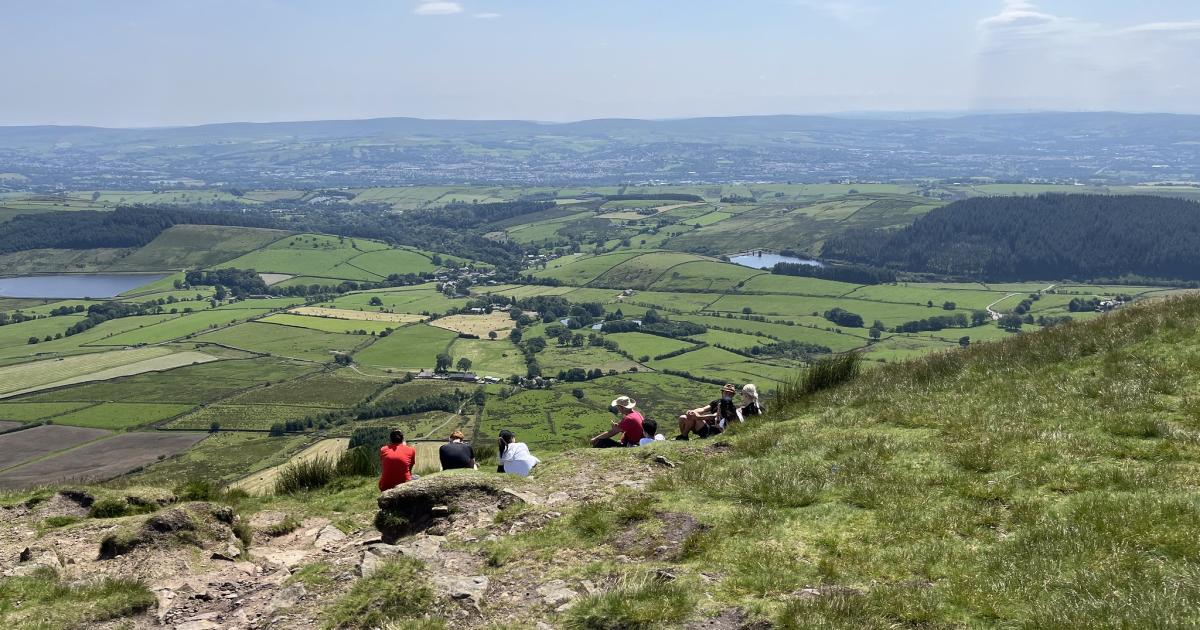
The climb from Barley is steep in places, but walkers are rewarded with views stretching across much of Lancashire from the summit.
The Tolkien Trail
Distance: around 5.5–7 miles | Time: 2.5–3 hours
This circular route from Hurst Green takes in the grounds of Stonyhurst College and stretches of the River Ribble.
The landscape around Hurst Green is often linked to J.R.R. Tolkien, who stayed at nearby Stonyhurst College, although the extent of its influence on Middle-earth remains debated.
Nicky Nook
Distance: around 3–3.5 miles | Time: 1.5–2 hours
Advertisement
For a shorter fell walk with a big pay-off, Nicky Nook near Scorton is hard to beat.
The climb is modest, but the views over towards Morecambe Bay and the Fylde coast make it a favourite for those short on time.
Ward’s Stone
Distance: around 8–10 miles | Time: 4–6 hours
Those wanting somewhere wilder should head for Ward’s Stone, the highest point in the Forest of Bowland National Landscape.
It’s a more demanding and remote outing, better suited to experienced walkers comfortable navigating open moorland.
Advertisement
Preston Guild Wheel
Distance: 21 miles (can be split into shorter stages) | Time: 7–9 hours for the full circuit
Not every walk on this list involves hills.
The Preston Guild Wheel is a flat, fully signposted 21-mile route circling the city, and can easily be split into shorter stages for those preferring level ground.
Advertisement
Warton Crag
Distance: around 3.5 miles | Time: 2 hours (Crag Road way)
Overlooking Carnforth and Morecambe Bay, this limestone hill in the Arnside and Silverdale National Landscape combines ancient hill fort remains with some of the best coastal views in the county.
Longridge Fell
Distance: around 5–7 miles | Time: 2.5–3 hours
A moderate circular walk taking in panoramic views across the Ribble Valley towards Pendle Hill and the Bowland Fells beyond.
Advertisement
On a clear day you can even see the Lake District fells.
Downham
Distance: around 3.5 miles | Time: 1.5–2.5 hours
For something gentler, one of the circular walks around Downham offers a chance to explore one of Lancashire’s most picturesque villages, framed by classic Pendle countryside.
The village can be seen in the 1961 classic ‘Whistle Down The Wind’. Local schoolchildren from the Lancashire villages around Burnley and Clitheroe were used as extras
Roddlesworth Reservoir
Distance: around 3–4 miles | Time: 1.5–2 hours
Advertisement
This woodland and reservoir loop in the West Pennine Moors near Blackburn is popular with families thanks to its easy paths, and comes into its own during the autumn colours.
Not to mention the relaxing sound of flowing water, as well as the peaceful sights and sounds of Roddlesworth wood.
The Ribble Way
Distance: around 6–6.5 miles (Ribchester section) | Time: around 3 hours
Rather than tackling the whole 72-mile long-distance trail, shorter stretches around Ribchester or Whalley make for an easy riverside walk that still captures the best of Lancashire’s countryside.
Advertisement
Several of these routes, including Pendle Hill, Ward’s Stone and Nicky Nook, fall within the Forest of Bowland National Landscape, making it well worth building a day out around more than one walk if time allows.
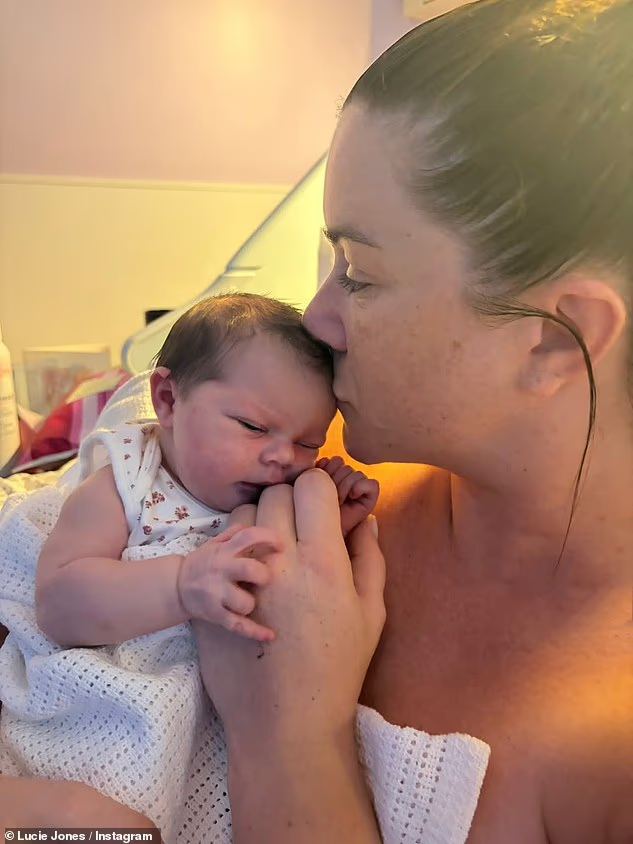
X Factor star Lucie Jones has announced she has welcomed her first child, a baby girl on Instagram on Friday.
The singer, 34, announced the happy news by sharing a series of adorable photos to social media with partner, restaurateur George Hersey.
Lucie, who starred on the hit ITV competition in 2009, revealed the sweet name she and George have chosen for their baby girl.
Lucie wrote: ‘Elowen Hersey-Jones. We are so lucky to be parents to the most perfect angel on the planet. This little girl has dropped in to change everything and we are utterly besotted.’
Advertisement
A number of friends took to the comments to congratulate the couple including McFly star Tom Fletcher‘s wife Giovanna.
The Welsh performer has enjoyed a whirlwind romance with George since the breakdown of her eight-year marriage to Ethan Boroian.
X Factor star Lucie Jones has announced she has welcomed her first child, a baby girl on Instagram on Friday
Advertisement
The singer, 34, announced the happy news by sharing a series of adorable photos to social media with partner, restaurateur George Hersey
Although the couple have only been together since last year, they have known each other for many years, with their longstanding friendship eventually blossoming into a relationship.
Lucie found fame after she finished in eighth place on The X Factor back in 2009, which also featured the likes of Olly Murs and Stacey Solomon, with Joe McElderry winning.
She went on to represent the United Kingdom in the Eurovision Song Contest 2017 with the song Never Give Up on You,’ finishing with 111 points in 15th place.
Advertisement
After she was voted out of the X Factor, Lucie went on to find huge success in musical theatre.
The young star played Cosette in Les Miserables opposite Nick Jonas and performed the role of Meat in the 2013 Arena Tour of We Will Rock You.
In 2016, she played Elle Woods in the UK Tour of Legally Blonde the Musical and was cast as Maureen Johnson in Rent.
Most recently, Lucie has returned to the West End juggernaut once again, this time, starring as Fantine at the Sondheim theatre until April.
Advertisement
Earlier this year, Lucie made her first appearance at Glastonbury Festival, which took place at Worthy Farm.
Lucie admitted she was ‘delighted to be involved’ ahead of the three-day stint.
The pop star previously represented the UK in Eurovision, and credited the contest for ‘changing her life’.
Join the discussion
Advertisement
Should celebrities introduce their newborns and private lives so openly on social media?
Lucie, who starred on the hit ITV competition in 2009, revealed the sweet name she and George have chosen for their baby girl
Lucie wrote: ‘Elowen Hersey-Jones. We are so lucky to be parents to the most perfect angel on the planet. This little girl has dropped in to change everything and we are utterly besotted’
Advertisement
A number of friends took to the comments to congratulatate the couple including McFly star Tom Fletcher’s wife Giovanna
The Welsh performer has enjoyed a whirlwind romance with George since the breakdown of her eight-year marriage to Ethan Boroian
Lucie finished in eighth place on series six back in 2009, which also featured the likes of Olly Murs and Stacey Solomon, with Joe McElderry winning
She also revealed she still keeps in touch with people on the show, including Joe McElderry, who Lucie is heading to Ibiza with.
Advertisement
Lucie announced the exciting news on Instagram with her official Glastonbury poster.
‘Worthy Farm, here I come. I’m so ridiculously excited to share that I will be performing at Glasto 2025,’ she wrote.
‘Joined by a band led by the unmatched @jonrangerinsta and guided as always by the best of the best @noisebyjonny.
‘I’m there to make some festival history in being the first musical theatre artist ever to perform at the festival.
Advertisement
‘Cannot wait to see the happiest people in the world – the glasto ticket holders – at Astrolabe on Thurs Fri and Sat! Let’s all defy gravity in a field together babyyyyyyyyy!!’
US Defence Secretary Pete Hegseth has admitted that China and Russia were “enabling some of the things Iran is doing” and President Donald Trump warned the countries against participating in the Iran war
US President Donald Trump has warned China and Russia against participating in the Iran war.
Advertisement
The American leader wrote in a post on X on Friday, July 24 that it “would be very bad for them” if they assist the Middle Eastern country.
Iran retaliated by striking sites across the region and closing the Strait of Hormuz waterway, through which 20% of global oil traded passes.
Last month, the US and Iran signed a Memorandum of Understanding to bring the war to a close within 60 days. But both sides have failed to achieve lasting peace, with attacks resuming this month.
Mr Trump wrote in a post on Truth Social on Friday that both China’s President Xi Jinping and Russia’s President Vladimir Putin have said they will not supply weapons to Iran.
“President Xi, at our recent meeting in Beijing, China, told me that he would not, under any circumstances, give or sell Weapons to the Islamic Republic of Iran — And that statement included Chinese Companies,” his post read.
“Likewise, President Putin, despite the horrible War going on in Ukraine (The relationship remains, as it does with President Zelenskyy), told me that he would not sell Weapons to Iran,” the post continued.
Advertisement
“Therefore, two major Countries that people speak of often in terms of Iran are, in my opinion, not participating.
“If they did, it would be very bad for them — Certainly not in their best interests.”
This week, US Defence Secretary Pete Hegseth was asked if Russia and China were helping Iran.
Advertisement
He said there were details that “ought to remain classified” but admitted that China and Russia were “enabling some of the things Iran is doing”.
How much is this jaunt costing, Mr Burnham? Taxpayer left to foot massive security and transport bill for No10 North – including new PM’s private jet to Manchester
Andy Burnham hailed yesterday as the ‘best day of my life’ as he opened a temporary ‘No10 North’ office in Manchester.
The Prime Minister praised the project after flying in on a Government jet for 38 minutes from Scotland, where he attended the Commonwealth Games’ opening on Thursday night.
He dismissed fears about the bill facing taxpayers for the ‘gimmick’ and huge security operation, saying: ‘What does it cost for everybody to troop down to London every time there’s a meeting when you need to make an argument about something?’
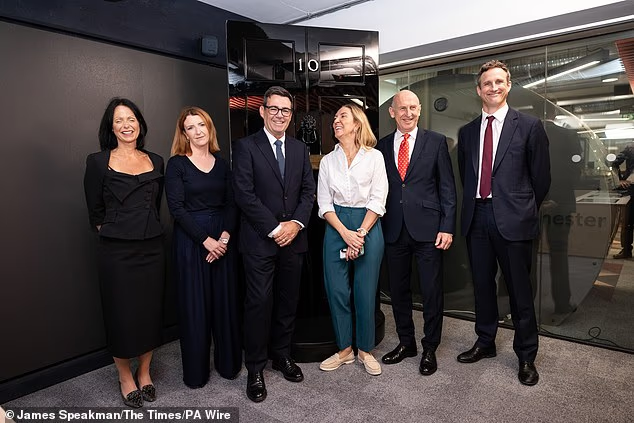
He posed in front of a fake No10 door with Cabinet Office minister Louise Haigh, Cabinet Secretary Dame Antonia Romeo and Chancellor John Healey.
Advertisement
Mr Burnham is making great play of his decision to be based part of the week in Manchester, where his family lives and he used to be mayor.
The so-called ‘King of the North’ wants to use the arrangements as a symbol of his drive to devolve power out of Westminster.
However, construction has not even started yet on the site earmarked to become the PM’s base in the city, and it will not be operational until 2032.
Instead, Mr Burnham is using Heron House, a Government office in the centre that is used by GCHQ, a pub and a register office – a bridal party was seen going in yesterday.
Advertisement
Andy Burnham in No10 North in central Manchester with (l-r) deputy chief of staff Caroline Simpson, Cabinet Office minister Louise Haigh, Cabinet secretary Dame Antonia Romeo, chancellor of the exchequer John Healey and director-general for No10 North Sam Lister
Armed police officers on duty as Andy Burnham arrived at so-called ‘No10 North’ in Manchester for the first time on Friday
Advertisement
Security at the building has been hugely increased and workers have been busily sprucing up nearby Albert Square.
No10 has insisted there will be no extra costs to the taxpayer, but experts have warned that the bill for fortifying an office for the PM and providing round-the-clock armed police will be eye-watering. Downing Street and much of the Government estate in Whitehall is closed off to the public.
Addressing staff at the Manchester office yesterday, Mr Burnham said: ‘I cannot tell you what a proud moment this is. I think this might be the best day of my life.
‘I’m not joking. I know you think I am, but I’m not. Things are just completely coming full circle here, for me to be here with you all in the heart of Manchester this Friday morning at the end of a fairly big week is just everything to me.
Advertisement
‘Because it’s almost exactly 35 years since I left this city as a recently graduated young man, couldn’t find a job in the city.
‘It was in a pretty bad place at that time, it’s fair to say. The 80s turned into the 90s. There wasn’t much.
‘And that really is an experience that I’ve never forgotten. My generation of people growing up here, and it’s true of places all over the country, to get on in life you had to leave where you were because things weren’t here.’
He added that No10 North was an example of ‘putting power in every postcode so that people can turn things around for themselves and make changes just as this great city has done and the other English cities are doing through devolution.’
Advertisement
Join the discussion
Should taxpayers have to fund a second No10 and PM flights for political symbolism?
A bridal party was seen going into the same venue on Friday as the Prime Minister arrived with his team
A replica of the No10 door designed by UK artist Jason Bruges in support of the GREAT Britain Campaign is displayed as the PM holds a National Economic Council meeting at No 10 North
Advertisement
The Treasury approved the ‘outline case’ for a civil service ‘digital campus’ in Manchester in March this year, after being in development since the council acquired the disused retail park in 2017.
That is now envisaged as the permanent No10 North.
Construction is due to begin at the five-acre site over the coming years but the ‘target’ for it becoming operational is not until 2032 – three years after the latest date for the next general election.
This week the PM’s spokesman said: ‘The running of No10 North will be covered by existing Cabinet Office budgets. There is no additional cost to taxpayers.’
Advertisement
Share or comment on this article:
How much is this jaunt costing, Mr Burnham? Taxpayer left to foot massive security and transport bill for No10 North – including new PM’s private jet to Manchester
The sun is setting on the midweek match at Didsbury Cricket Club. The high street wine bars and gastropubs are humming with early evening drinkers.
It’s the sort of scene which has led this area to be branded as the ‘Notting Hill’ of Manchester, albeit a leafier version of the London original which gave rise to the Conservative Party‘s famous ‘Notting Hill Set’.
Given that Andy Burnham is now leading Britain’s political elite up the M6 to start business at ‘Number 10 North’, we might soon hear talk of a new ‘Didsbury Set’.
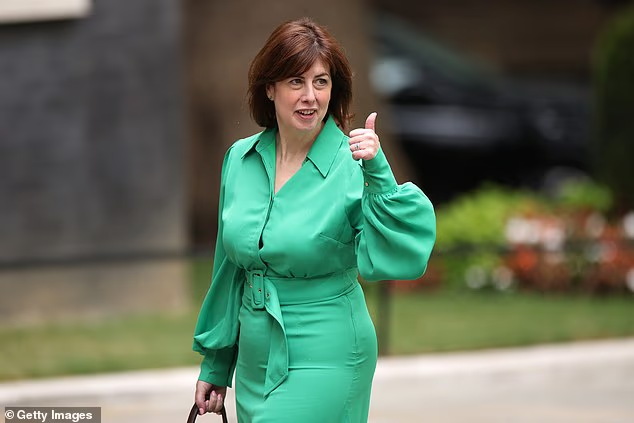
Or perhaps not if we are to listen to his staunch ally and neighbour, Lucy Powell, whom Mr Burnham has appointed as his new Education Secretary.
Advertisement
Born and bred in Didsbury, the south Manchester suburb where she still lives, Ms Powell would prefer us to think of this part of town as a bit of a dump which has been dragged up by its bootstraps.
But then, quite a few aspects of the Lucy Powell life story don’t quite add up.
For a start, we have her claim that she alone out of everyone at her allegedly impoverished Catholic sixth form college made it to Oxford in her year.
‘I was the only one out of that very big sixth-form college, 2,000 people, to get into Oxford that year. I cried the day I got the offer because I didn’t want to go,’ the MP for Manchester Central told the BBC’s Nick Robinson last year. The Financial Times has since discovered that this was clearly not the case, according to at least two contemporaries at Xaverian College.
Advertisement
In talking down her past, Lucy Powell is of course loyally echoing Andy Burnham’s mantra that northern Britain has been wronged by ‘Westminster”https://www.dailymail.com/”Whitehall”https://www.dailymail.com/”the South’
Her Tory opponents wasted no time highlighting the howlers in her first social media post in the new job
In fact, there were several Oxbridge successes. Alumni recalled teachers going to great efforts to get their star pupils prepared for entrance exams and interviews.
Advertisement
A spokesperson for Ms Powell has now said that ‘she is more than happy to be corrected’ and ‘was in no way diminishing the achievements of others’.
I arrive at Xaverian (now closed for the summer) to find a rather fine campus with a handsome, well-tended green quad at its centre. Some buildings are Victorian, others brand new.
The whole place exudes a sense of purpose, as does its website which goes out of its way to stress that the sky is the limit. I can’t imagine that the current staff are too thrilled that the Education Secretary remembers it as a struggling backwater with a single bright star – Ms Powell herself.
Nor was she remotely grateful for her passport to Somerville College, Oxford, to read chemistry. She gave it a year and then quit for King’s College, London, citing the elitist atmosphere.
Advertisement
‘Oxford was not for a state school girl from the North doing maths and chemistry. I was like a duck out of water,’ she told the Times Education Supplement.
How on earth did Margaret Thatcher – another northern state school girl who studied chemistry at Somerville – survive when she turned up in 1943?
Ms Powell’s claims are met with snorts of disbelief from other northern state school girls who went through Oxford University at around the same time.
‘Everyone arrived feeling like a duck out of water. Then you just started swimming. There were far more northern girls doing science than Etonians,’ says Miranda, a Mancunian at a neighbouring college who went on to be a successful London lawyer.
Advertisement
Ms Powell, 51, has also complained about her early encounters with ‘mansplaining’ men, though that would not have been an issue at Somerville College.
It did not admit men until the year after she left.
One of the first to arrive there was Sam Gyimah. He might arguably have felt more of a duck out of water than Ms Powell, not only being a man but from an ethnic minority to boot.
He had also come from a state school but had, previously, grown up in Ghana. Mr Gyimah somehow stayed the course, was later elected president of the Oxford Union and, like Ms Powell, went on to be elected to Parliament (he now has a career in finance).
Advertisement
No one could accuse Oxford of being a Right-wing citadel of Tory toffs. After all, it famously refused to give the first female prime minister in British history an honorary degree because of her Conservative credentials.
Join the discussion
Should politicians exaggerate their backgrounds to seem relatable, or does honesty matter more?
Ms Powell welcomes members to a Labour Party press conference in central London earlier this month
Advertisement
There are similar holes in Ms Powell’s stories of life growing up in Didsbury, now a byword for bourgeois respectability. Ms Powell recalls it, simply, as ‘Manchester under Thatcher’, a place where schools were ‘starved of resources’. ‘It wasn’t that posh then,’ she has said.
All the residents I talk to acknowledge that Didsbury has been upwardly mobile for years, while the older ones say it was never that bad in the first place.
‘If you wanted a fight, you’d go up to the centre of town. If you wanted a drink, you’d come to Didsbury,’ says retired surveyor Frank O’Brien, recalling the 1980s and ’90s. ‘They used to put up the prices a little bit here to keep the riff-raff out.’
Ms Powell’s first secondary school was Parrs Wood High School, which can’t have been too bad since it also produced fellow Cabinet minister Lisa Nandy. Indeed, it was recently dubbed ‘the new Eton’ by the Manchester Evening News.
Advertisement
Ms Powell hails from impeccable middle-class educational aristocracy. The Times Education Supplement has reported that her mother was a headteacher who led a multi-academy trust, while a grandfather, two aunts and an uncle were also heads (one aunt was awarded the CBE).
She has acknowledged that her father, a social worker, benefited from the ‘social mobility’ of a grammar school education, though she is of course adamantly opposed to grammar schools now.
Ms Powell has joked about her own middle-class credentials. ‘I’ve married a doctor, you know – nothing more middle-class than that!’ she told the BBC (she has two school-age children and an adult stepson).
She is also an ardent fan of Britain’s largest annual jamboree for the middle-classes, telling Vogue that she has attended the Glastonbury Festival 23 times.
Advertisement
Quite how far she is removed from the mean streets of Britain’s inner cities was highlighted by last year’s famously haughty response on the Radio 4 current affairs show Any Questions, when a fellow panellist (from Reform) raised the sexual abuse of young girls by grooming gangs.
‘Oh, we want to blow that little trumpet now, do we?’ Ms Powell retorted. ‘Yeah, OK, let’s get that dog whistle out.’
Following instant Tory and Reform calls for her dismissal from her Cabinet post as Leader of the House, she apologised the next day. Her values, she insists, remain shaped by her working-class roots: ‘My mum is the daughter of Irish immigrants. My dad grew up in a two-up two-down with an outside toilet. I have the ethics and pride that comes through that, being respectful and polite rather than ‘mucky middle class’ as I call it – the posher you are the less you bother.’
So how will she compare to her predecessor, Bridget Phillipson, the dour scourge of the independent sector? There seems little sign of ideological change.
Advertisement
The woman who proudly wore a ‘Never Kissed A Tory’ T-shirt to Manchester’s 2022 Pride parade has previously said that she thinks private schools should not just have VAT slapped on them but should lose any charitable status altogether.
Nor are the omens too hot for literacy standards. Her Tory opponents wasted no time highlighting the howlers in her first social media post in the new job: ‘Absolutely thrilled the [sic] be appointed Education Secretary.’
In talking down her past, she is of course loyally echoing Andy Burnham’s mantra that northern Britain has been wronged by ‘Westminster”https://www.dailymail.com/”Whitehall”https://www.dailymail.com/”the South’. It is Ms Powell’s story and if she prefers to be seen as a victim rather than an inspirational Mancunian success, so be it.
But a batsqueak of gratitude to all those teachers who set her on her way would not go amiss.
Homer’s Odyssey, with its fabulous monsters and intense tale of human endurance, was a natural candidate for Christopher Nolan’s latest Hollywood blockbuster. But amid all the fantasy and heroic human drama, there are two far more homely scenes in the poem which remain among the epic’s most memorable. Both involve animals.
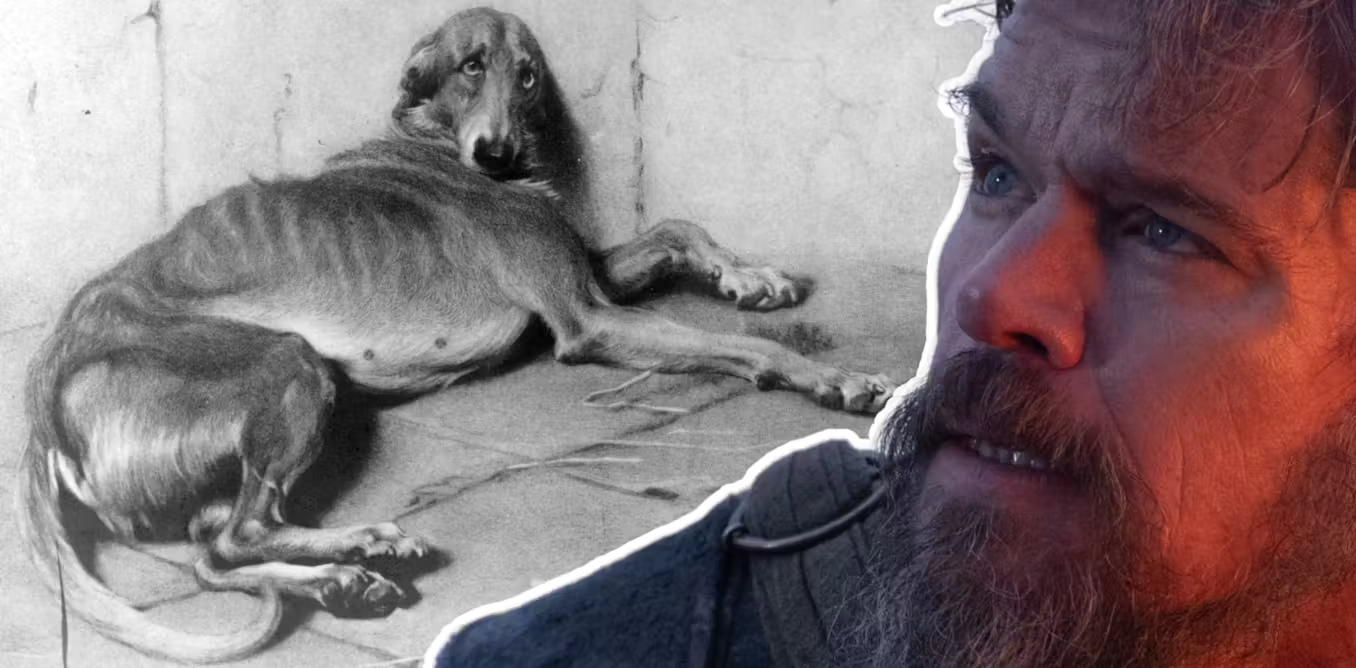
One is the touching, tragically brief reunion of the hero (played in the film by Matt Damon) with his faithful dog Argos. It’s a deceptively low-key episode which reflects powerfully on the epic’s themes of patience, loyalty and loss.
The other is the man-eating cyclops’s sudden display of a softer side. He addresses his favourite ram as Pepon, a term of endearment elsewhere applied to close friends and relatives. The cyclops wonders aloud if the ram is grieving for his master’s lost eye, or sharing his desire for revenge.
Both episodes demonstrate Homer’s remarkable capacity to ground the heroic world in the whole range of human experience, and to stress the essential links between humans and the natural world. The wide-ranging world of Homeric heroes involves not just fantastic beasts, powerful divinities and aristocrats, but ordinary men, women and creatures.
The bonds between humans and animals, whether working or otherwise, are richly represented in both literature and visual arts throughout ancient Greek culture.
Odysseus’s wife, Penelope, has pet geese which she describes as “warming her heart” when she sees them. Penelope weeps for them when, in a dream, they are killed by an eagle.
Advertisement
Argos is reunited with Odysseus in the 2024 film, The Return.
In Homer’s other epic poem, the Iliad, Hector calls on his chariot horses to remember the sweet mash his wife used to feed them, even before she attended to her husband. And Achilles’s horses weep when his friend Patroclus is killed – they are frozen in mourning “like a pillar on a man or woman’s tomb”.
In later Greek literature, there is a well-established corpus of epitaphs memorialising dogs. The 6th-5th BC poet Simonides is sometimes attributed as the author of this vivid tribute inscribed on the gravestone of a female hunting dog:
Although you are dead, huntress Lycas, I fancy that the beasts still tremble at your white bones in this tomb: your valour is known to high Pelion and far-seen Ossa and the peaks of Cithaeron with their lonely pastures.
Human-animal bonds in ancient Greek art
Extensive research documents the widespread depiction of both working dogs and lapdogs in vase painting and sculpture. The Beazley Archive pottery database in Oxford lists well over 1,400 examples of dogs in vase paintings from 700-200BC – and examples survive from earlier still.
The British Museum collection includes a bowl from the Mycenaean period (1750 to 1050BC) in which the Homeric epics are set. It depicts a man struggling to control two rather frisky small dogs on leads.
Although there is only sparse evidence of the Greeks using dogs in warfare, vase paintings showing warriors bidding their family farewell frequently include a dog. The latter may be interpreted either as accompanying the warrior or being left behind.
In a more domestic context, dogs positioned beneath the couches of men at a symposia enjoying wine (and other bodily pleasures) are a recurring visual theme, as in a well-known example from Corinth (600–590 BC).
While dogs, especially hunting dogs, may figure in art and funerary monuments as a status symbol, they also appear in contexts suggesting a close affectionate bond. A relief from Sparta shows a seated man with high-status accoutrements but also with a small dog pawing at his knees.
In classical Athenian funerary reliefs, such dogs are a recurring motif, predominantly accompanying figures of young age and especially children.
One example is the grave monument for a young girl named Euchalia, which depicts her with her parents, grandmother and a small dog poised on its hind legs and pawing at her knees. The dog is probably what was called a Meletian – a lapdog breed noted for its affection and gentleness.
What Argos symbolises
Dogs were not universally viewed positively in the ancient world – “dog” is a derogatory term applied as an insult to both women and men in the epics. But Argos’s fidelity is a marker both of Odysseus’s value to his own society, and of the worth of that society beneath all its disruption and decay.
While Odysseus is clearly needed back in Ithaca, he requires the support of down-to-earth slaves like the swineherd Eumaeus – and perhaps the psychological validation that Argos’s fidelity provides too.
Advertisement
The Argos episode contrasts with the start of book 14, where Odysseus first arrives home. There, his own guard dogs at Eumaeus’s farmstead fail to recognise him and prepare to attack:
Suddenly then the baying dogs caught sight of Odysseus, and rushed upon him with loud barking, but Odysseus sat down, in his cunning, and the staff fell from his hand. Then in his own farmstead he would have suffered cruel hurt.
This is a sobering marker of how long Odysseus has been away, and how alien he and his home have become to one another. The point is reinforced when Odysseus’s son, Telemachus, arrives and the same dogs greet him with the sort of affection Argos later shows Odysseus.
How the character of Argos inspired Christopher Nolan’s The Odyssey.
This painfully parallels the way Odysseus must stand and look on as the swineherd and his own son – who cannot recognise him – reunite affectionately “like father and son”. It’s a reminder of all that Odysseus has missed through his long absence.
Advertisement
The Odyssey treats Argos’s story with a skilful balance of earthy realism, sharp irony and poignancy. Homer contrasts the dog’s energetic youth with his current neglect – sat on a dunghill, riddled with vermin when he is briefly reunited with his master.
There is a strong emotional connection, but physical contact and reunion prove impossible. Argos is too feeble to move towards Odysseus despite his pricked ears and wagging tail. Odysseus, although moved, dares not show recognition for fear of disclosing his identity at a dangerous moment, when he is surrounded by the murderous suitors trying to win Penelope’s heart.
Heart-warmingly, the faithful companion gets to see his master one last time before he dies. But there remains a sense of frustrated fulfilment that highlights the darker side of Odysseus’s story – all that can never be recovered after long absence, despite all that is regained.
Heroism and heroic achievement are highly valued and often celebrated in the Homeric poems. But these poems also celebrate and mourn the everyday relationships with man, woman and beast alike, which in this story are of equal – and perhaps more lasting – value.
She is due to appear before a special sitting of Trim District Court in Co Meath on Friday evening
17:50, 24 Jul 2026Updated 18:03, 24 Jul 2026
Gardaí investigating a suspected dissident republican bomb intercepted in a car near the Irish border have charged a woman in her 20s in connection with the case.
The accused, who was the driver of the car, is due to appear before a special sitting of Trim District Court in Co Meath on Friday evening.
Earlier the Garda described the bomb seized from the vehicle as “extremely significant”.
Advertisement
In an intelligence-led swoop, members of the Garda’s Special Detective Unit stopped the vehicle travelling on the N2 south of Carrickmacross, Co Monaghan on Wednesday afternoon.
It is understood the device found contained suspected military grade explosives.
Garda sources have described the bomb as “highly sophisticated” and “advanced”.
Another suspect, a man aged in his 40s, remains in custody at a Garda station in the Dublin area.
Advertisement
Garda Commissioner Justin Kelly confirmed details of the operation as he spoke to media at a Garda graduation event in Co Tipperary on Friday morning.
“To be clear, what we found was an extremely significant seizure,” he said.
“So this was an explosive device.”
Commissioner Kelly added: “Any seizure of this nature is really concerning.
Advertisement
“However, we certainly know that there are a small minority of dissident republicans who did not agree with the Good Friday Agreement. They did not put weapons and explosives (out of use), they didn’t, you know, go through with the proper process in relation to decommissioning.
“So that is something that we continue to deal with.
“There’s a small minority of these individuals – I would describe them as radicalised republicans – and this is a threat that we’re going to continue to face for some time in An Garda Síochána.”
Ireland’s Minister for Justice Jim O’Callaghan described the seizure as “very worrying”.
Advertisement
“I think it evidences the fact that there is an ongoing threat in respect of dissident republican activity,” he said.
“But I also know that there’s been great co-operation between the PSNI and An Garda Síochána and, I think, I suppose the developments recently and the work of An Garda Síochána indicate the benefits of having that close co-operation between the PSNI and An Garda Síochána.”
PSNI Assistant Chief Constable Davy Beck said police on both sides of the Irish border shared a “joint commitment” to tackle the dissident republican terror threat.
“I very much welcome this significant seizure and the arrests made by our colleagues in An Garda Síochána, with whom we work very closely on a daily basis,” he said.
Advertisement
Northern Ireland Secretary Sir Chris Bryant commended the Garda for thwarting a potential attack.
“Intercepting a dangerous device like this undoubtedly saved lives and kept communities safe on both sides of the border,” he said.
“Strong cross-border security co-operation remains as vital as ever.”
DUP leader Gavin Robinson described the development as “chilling”.
Advertisement
The east Belfast MP questioned whether the Irish government needed to increase its focus on tackling dissident republicanism.
“All those involved in stopping this deserve enormous credit,” he said.
“Their actions may have prevented innocent families from suffering unimaginable tragedy.”
Sinn Féin Stormont Assembly member Gerry Kelly described those responsible for the explosive device as “reckless”.
Advertisement
“Those responsible represent no one, are void of support and have nothing positive to offer our communities. Their actions are entirely reckless,” he said.
“Those involved should abandon their futile actions, leave the stage once and for all, and allow our communities to continue moving forward together in peace.”
We hope you love the products we recommend! All of them were independently selected by our editors. Just so you know, HuffPost UK may collect a share of sales or other compensation from the links on this page if you decide to shop from them. Oh, and FYI — prices are accurate and items in stock as of time of publication.
Sighhh. The start of the autumn term will be here before you know it – and I’ll hazard a guess you’re already busy shopping for back to school essentials.
I hate to break it to you but, inevitably, all the hard work you put into finding the perfect shoes, uniform, and backpack for your darling little one will soon be overshadowed by them ungratefully (kidding! sort of…) losing something within the first five minutes of being in the classroom.
But, reader, what if I told you there was a way to prevent feeling like you’ve lost days off your life?
Advertisement
Before you kick up a fuss, don’t worry: I’m not going to tell you to spend hours meticulously sewing labels into the seams of their uniform and sports kit. That would just be insulting!
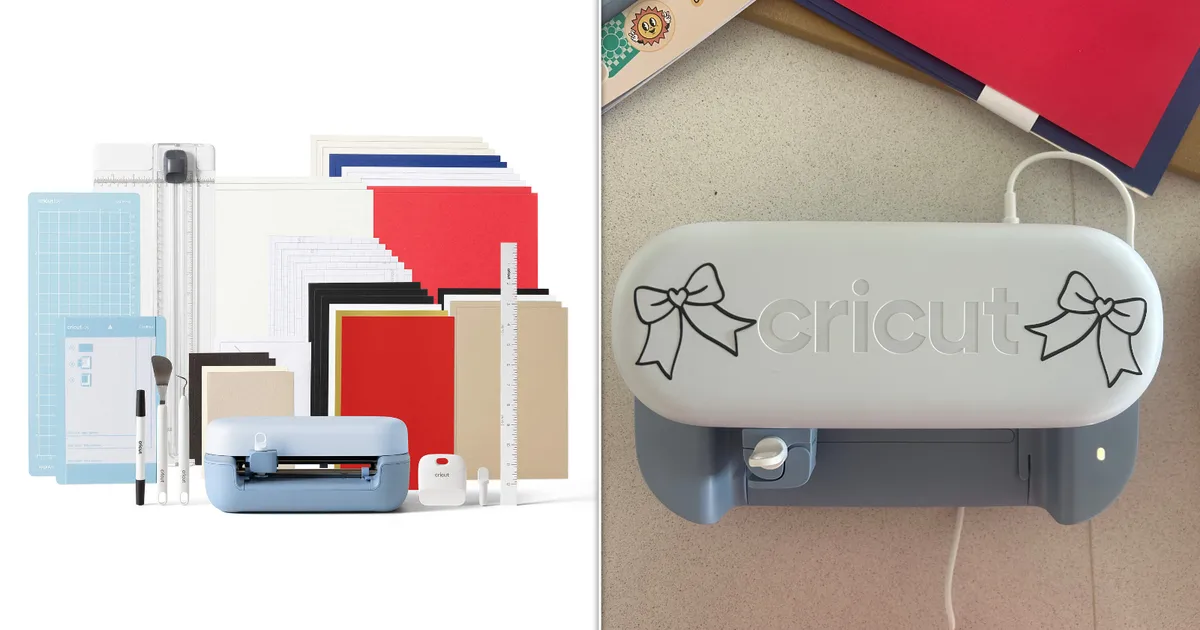
Actually, I’ve found a much better way: a Cricut machine.
You can finally stop fretting each and every evening about whether your kid is going to make it home with the same belongings they left home with that morning, because this machine will make sure everything is indisputably theirs.
There’ll be no more playground swapsies, or not being able to tell their bottle apart from that other kid’s.
Advertisement
Cricut puts the solution to fuss-free labels back in your hands – or if we’re being fussy, inside your phone.
This handy dandy machine lets you make as many stickers, labels, and decals you like in mere minutes.
Whether you want to splash their name across everything they own, or decorate their notebooks and planner for the school year ahead, Cricut has thousands of designs available for you to customise to their taste.
Once you’ve chosen the design that speaks most to you, you then load your material of choice into the machine, which cuts out or draws the shape you’ve selected, ready for use.
Advertisement
While I’m not personally going back to school this autumn, I’ve never grown out of the urge to stick things all over my belongings, so I decided to give it a whirl to figure out how long it would take me to make two vinyl stickers.
From start to finish, the entire process of setting up the machine, to finished designs, took me 15 minutes.
After syncing the machine up with the Cricut app on my phone, I settled on two bow designs to decorate my beloved new item.
I selected the size I wanted the cut outs to be, and flipped the image so I could have two mirroring each other.
Advertisement
Then, I loaded the vinyl practice sheet into the machine, and I was away.
While something like this would’ve taken me nearly an hour to make by hand, the Cricut cut each of the stickers in less than a minute.
You can choose from tons of free label designs that you can print on vinyl paper to stick on everything from their water bottle, to their notebooks, binders, and pencil cases.
Or, if you need a label for their clothes, Cricut also sells wash-proof iron-on vinyl so you can transfer your designs to fabric.
Advertisement
But it’s not only useful for back to school: I’m already dreaming of everything Cricut will come in handy for when it comes to gifting season.
If you buy a range of materials, you’ll also be able to craft your very own custom labels, cards, and gifts to give people come Christmas.
The Cricut machine itself is only £99 – which, if you think about how much money you’ll lose having to re-purchase lost belongings, is totally worth it.
It also comes with all the materials and tools you need to get started on your first 35 projects, so that when you’ve mastered how to use it you can buy vinyl, card, and foil you want to let your – and your kids’ – creativity whirl.






















































You must be logged in to post a comment Login