Anyone with information is being asked to come forward
A teenager who is missing from her home in Greater Manchester was last seen three days ago in Kirkham, Lancashire, police have revealed.
Advertisement
Greater Manchester Police are asking for help in locating Lexi, 15, so they can check she is safe and well. No surname for her has been revealed.
Lexi was last seen at 12pm on Wednesday 16 September at Bryning Farm Lane, Kirkham. She has links to Wigan.
Click here to get the biggest stories straight to your inbox in our Daily Newsletter
She is described as white, 5ft 5in tall, and was wearing a burgundy red coat, black flare leggings, a cream tube top and possibly New Balance trainers when she was last seen.
Advertisement
She has chest length black hair which was in a ponytail with clip in extensions and was carrying a clear bag, reports Lancs Live.
Officers are becoming increasingly concerned for Lexi’s wellbeing.
If you have seen her or have any information please contact Wigan Police on 0161 856 7165. In an emergency call 999.
Tottenham vs Aston Villa – Premier League LIVE: Spurs go BEHIND before the half-time break as new signing finds the net – as hosts’ wait for FIRST goal of the season goes on
Tonali tries to show Manzambi how it’s done and boots his own effort goalwards, this time low towards the corner. It curls wide, but Spurs are awarded a corner, and then another as Mings heads the ball out.
Tottenham go short, Robertson swings in a cross, Villa get it away, Bentancur takes on Gomes, knocks in another ball… and it’s corner number three thanks to Mings.
Ruggeri meets the cross at the front post, but only directs it into the danger zone! But Villa get it clear, temporarily.
Advertisement
Solanke is appealing for a handball but… nah mate. Checked and cleared by VAR.
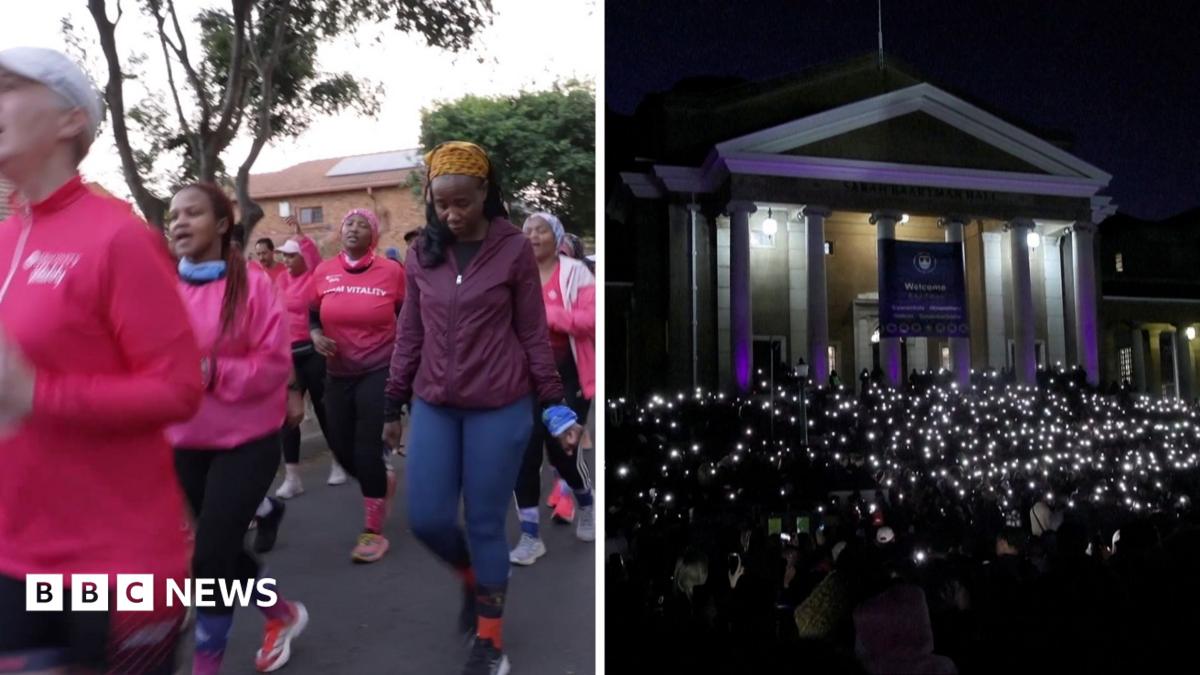
The jogger, known as “Tsontso”, went missing during a routine run.
Runners organised an event in city of Centurion to honour her and defend women’s right to run freely.
Advertisement
“This is for her – we just want to live and go running and come back home without having to think that it may be one of us”, said Nonhle Mpohlo.
In Cape Town, people gathered in a vigil to honour the victims and called on the government to act.
The police have since set up a task team to investigate the murders and have urged women in the Kempton Park area to avoid walking or running alone “particularly in isolated areas”.
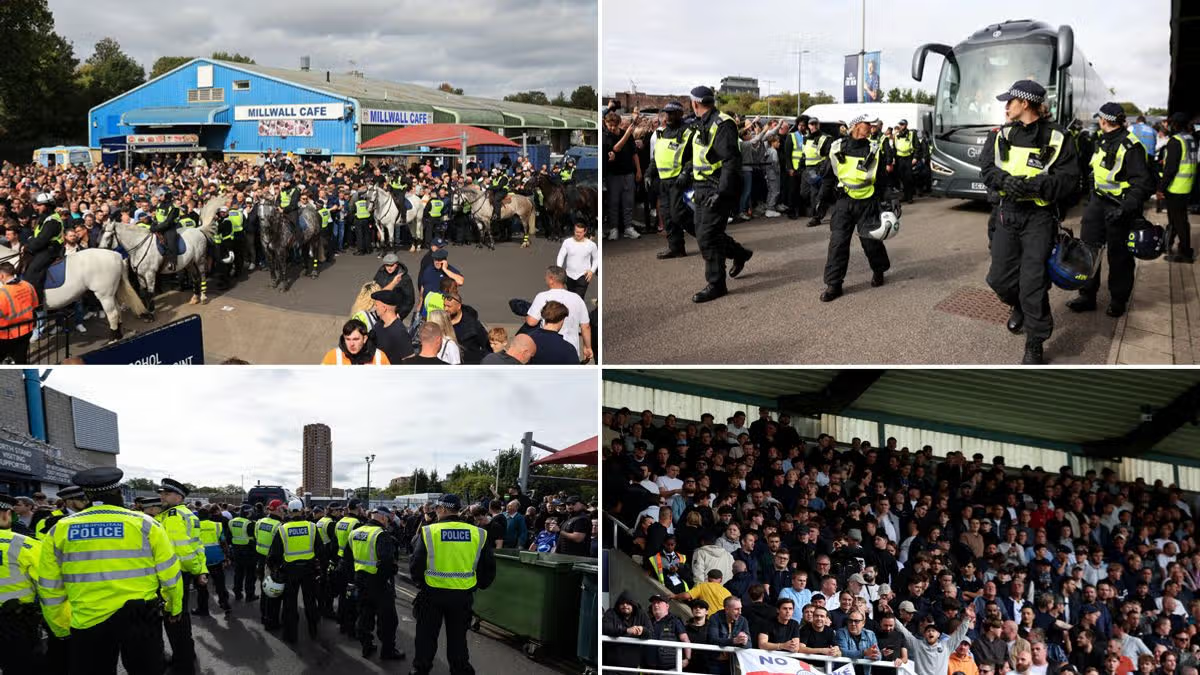
West Ham boss Nuno Espirito Santo has spoken about the rivalry between the teams, but emphasised that matters will be played out on the pitch.
“All of us have experienced matches like this, they are so special for the clubs,” said the Portuguese manager. “I’ve been involved in many rivalries in my career, many of our players also – and we know everything is inside of the pitch.
“Inside of the pitch is where things happen, what dictates the games. It’s not the noise, it’s not the 40,000 or the 20,000, it’s inside the pitch. Of course, it’s a special game and we’re aware.”
In Ireland, “scalding the pot” means pre-heating a teapot with hot water before making the tea (and in my household, it was seen as mandatory).
It involves pouring very warm water into the container and carefully swirling it to warm the ceramic up.
Of course, this isn’t just an Irish thing – it’s a global phenomenon that can help tea better infuse into water, as the temperature stays steady for longer.
Advertisement
As it turns out, the added step could make your coffee taste better, too.
OXO writes that you should use any extra hot water to “pre-heat the French press or your mug by pouring it in, swirling it around a few times and then dumping it out before pouring in your coffee”.
Stumptown Coffee Roasters shared that the move can “maintain the temperature while brewing”, while Coffee Sensor explained that stable temperatures can lead to better coffee extraction.
Some Redditors say pre-heating their French press has led to tastier cups of coffee, though commenters suggest it might be a better option for ceramic cafetières.
Advertisement
Any other tips?
You should also stir your coffee grounds when using a French press for a more even immersion.
BBC Good Food recommends we “half fill the cafetière with the hot water, pour it over the grounds, and stir with a spoon” before topping it up.
Starbucks points out that this “saturates” the grounds uniformly, giving a more consistent flavour.
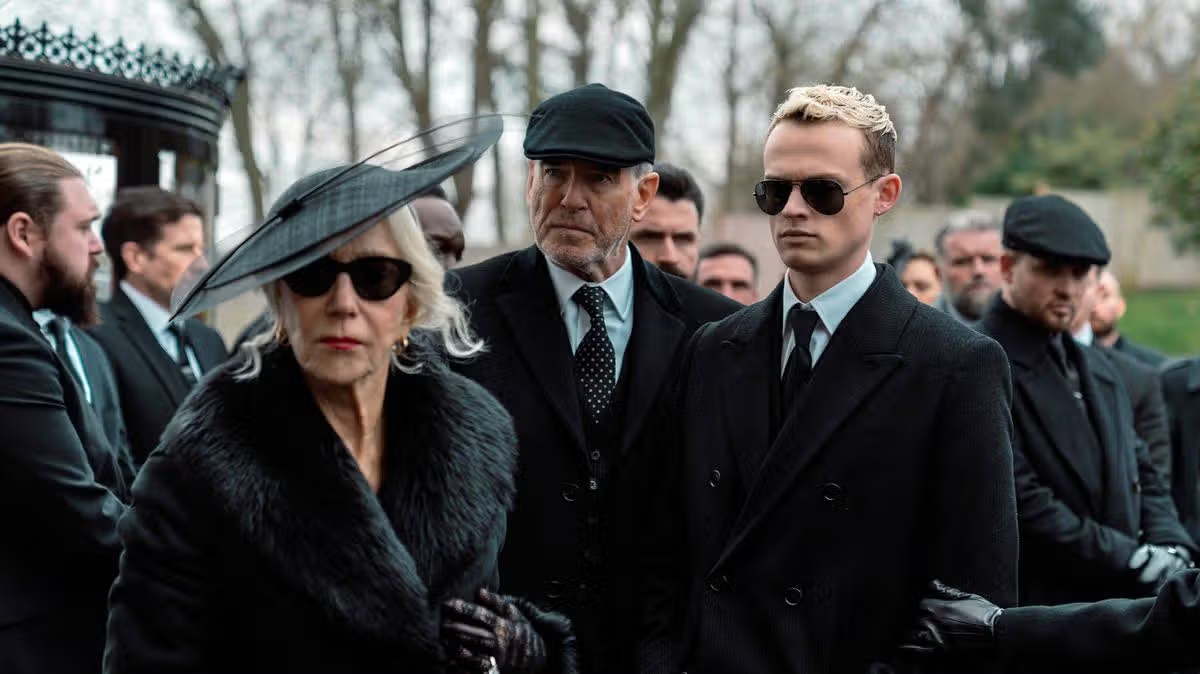
In the wake of the traumatic events of series one, the opening instalment portrayed Conrad Harrigan (played by Pierce Brosnan) as an unpredictable figure, showing no reluctance in pursuing extreme measures against a competing mob. At the same time, his bonds with his offspring remain fractured, with his daughter Seraphina (Mandeep Dhillon) ostracised and his son Kevin (Paddy Considine) still grappling with the consequences of his disloyalty.
Advertisement
Numerous startling disclosures have already emerged regarding the Harrigan lineage, particularly notably that Eddie Harrigan (Anson Boon) was not in fact Kevin’s son. Here is everything you need to know about the Harrigan family tree following the series two premiere.
Conrad Harrigan
Conrad serves as the head of the family, who originate from Ireland but operate from London. He is volatile and unrelenting but displays sensitivity around his wife, Maeve, despite their persistent quarrelling, reports the Express. His vulnerability lies in his impetuous character, with his hasty decisions frequently plunging him into yet more serious difficulties.
Maeve Harrigan
The strong-willed and formidable female protagonist, Maeve Harrigan, serves as the family’s matriarch who fiercely maintains her independence and frequently acts without her husband Conrad’s knowledge. Maeve would go to great lengths for her children, with one notable exception – Seraphina, Conrad’s daughter from a different relationship.
Kevin Harrigan
Kevin is Conrad’s son, who ultimately turned against his father at the conclusion of series one, recognising that Conrad’s power was diminishing. Kevin and Conrad share a turbulent relationship and regularly clash, particularly after it emerged that Conrad had an affair with his wife, Bella.
Bella Harrigan
Bella is Kevin’s spouse in the programme and Eddie Harrigan’s mother. She harboured a dark secret, knowing that Kevin was not truly Eddie’s biological father. While Bella possesses considerable power independently, she frequently crumbles when placed under strain.
Eddie Harrigan
Eddie Harrigan is Bella’s son and he shares a particularly close relationship with Maeve Harrigan, whom he believes to be his grandmother. Eddie represents the defiant youngster who fancies himself as invincible, much like his grandfather (or in fact, father), though his vulnerabilities are often exposed.
Seraphina Harrigan
Seraphina ranks amongst the family’s most profitable members and oversees money laundering operations, yet while she proves a valuable resource to much of the family, she frequently becomes Maeve’s target, who remains determined to prevent Conrad from naming her as his heir. Seraphina is Conrad’s daughter, born from an affair Conrad had with an exotic dancer. Her unwavering loyalty to Conrad has made her among his most cherished children.
Brendan Harrigan
The eldest son of Conrad and Maeve, Brendan, met a tragic end in the opening season after he and Seraphina fell into the hands of a Mexican cartel run by Jaime Lopez (Jordi Mollà). His horrific and violent death was broadcast live to the Harrigan family, who watched helplessly as he was attacked with a chainsaw. Remarkably, Seraphina managed to escape without injury.
MobLand season 2 is streaming weekly on Paramount+.
Mounting defence expenditure is widening Russia’s budget deficit and increasing strain across its wartime economy, as business and consumer sentiment weakens and economic growth slows.
Economists note, however, that these difficulties do not point to an immediate financial meltdown or economic collapse. High global oil prices linked to the Iran war continue to shore up essential export revenues, allowing the state to fund its four-and-a-half-year-old invasion of Ukraine – for now.
In addition, low unemployment rates and generous government spending in poorer regions are helping to suppress domestic discontent.
Yet experts caution that underlying long-term challenges are steadily weakening the economy, creating risks that could eventually precipitate a crisis.
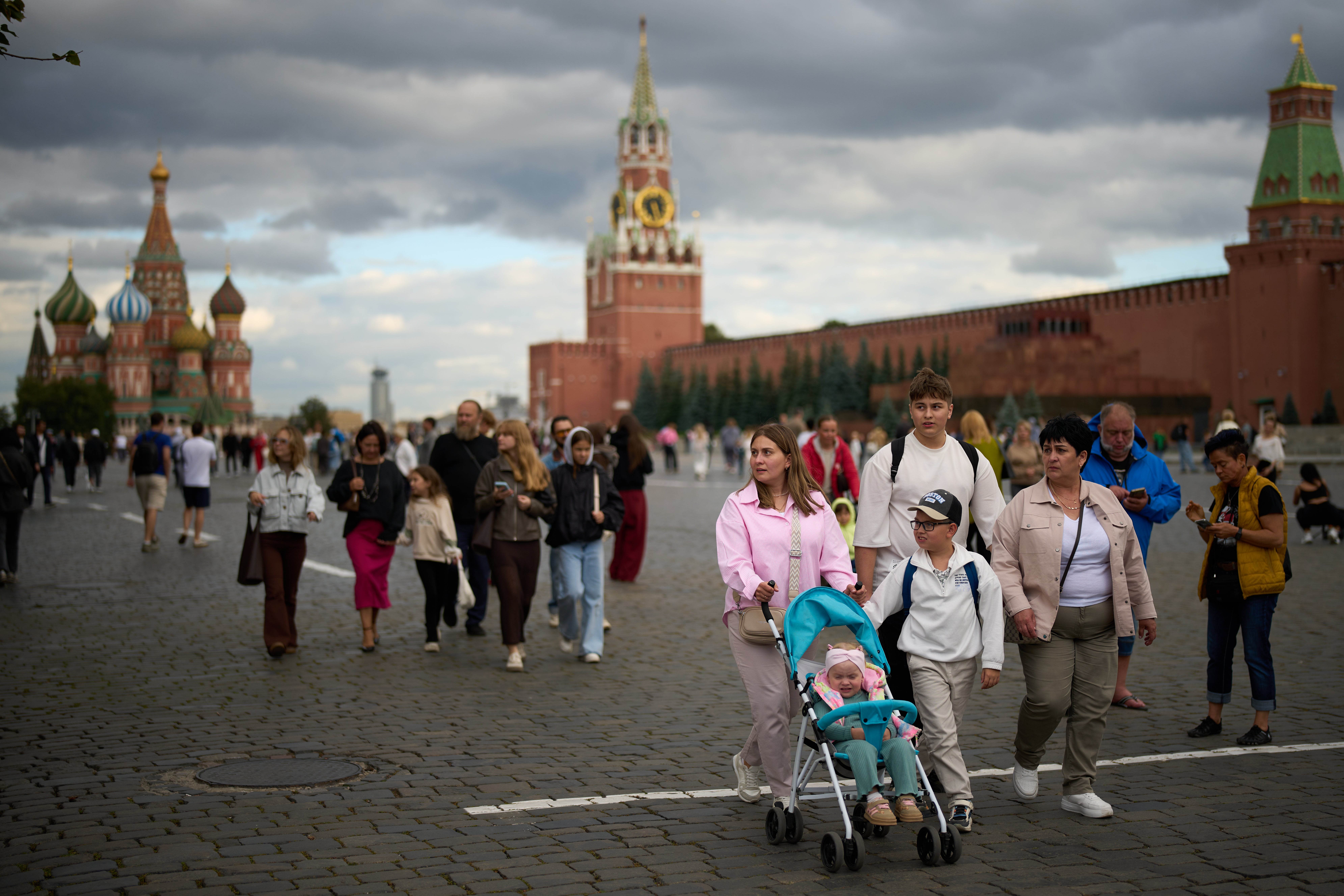
People walk through Red Square in Moscow (AP)
Consumers are more pessimistic
Indicators of consumer sentiment have drifted down since a peak in 2024-25, when increased military spending was pumping up growth and wages. More recently, consumers have coped with higher fuel prices and shortages due to Ukrainian drone attacks that knocked out refineries.
At the same time, growth has slowed from a peak of over 4 per cent annual expansion in 2023-24. The government foresees 0.6 per cent this year, and the economy shrank in the first quarter before rebounding somewhat in the second.
Advertisement
The consumer sentiment index compiled by the Levada Centre, an independent Russian pollster, fell to 94 over the summer, down from 116 in spring and summer of 2025. Readings under 100 indicate that consumer sentiment is more negative than positive.
People asked about the election in Moscow responded with mostly basic concerns about pensions and prices.
Alexander Vertukhin, a 72-year-old retired military prosecutor, said the government should be focusing on “a decent standard of living for pensioners”.
As for his own situation, “I’m doing fine, both financially and in every other respect”, he said.
Advertisement
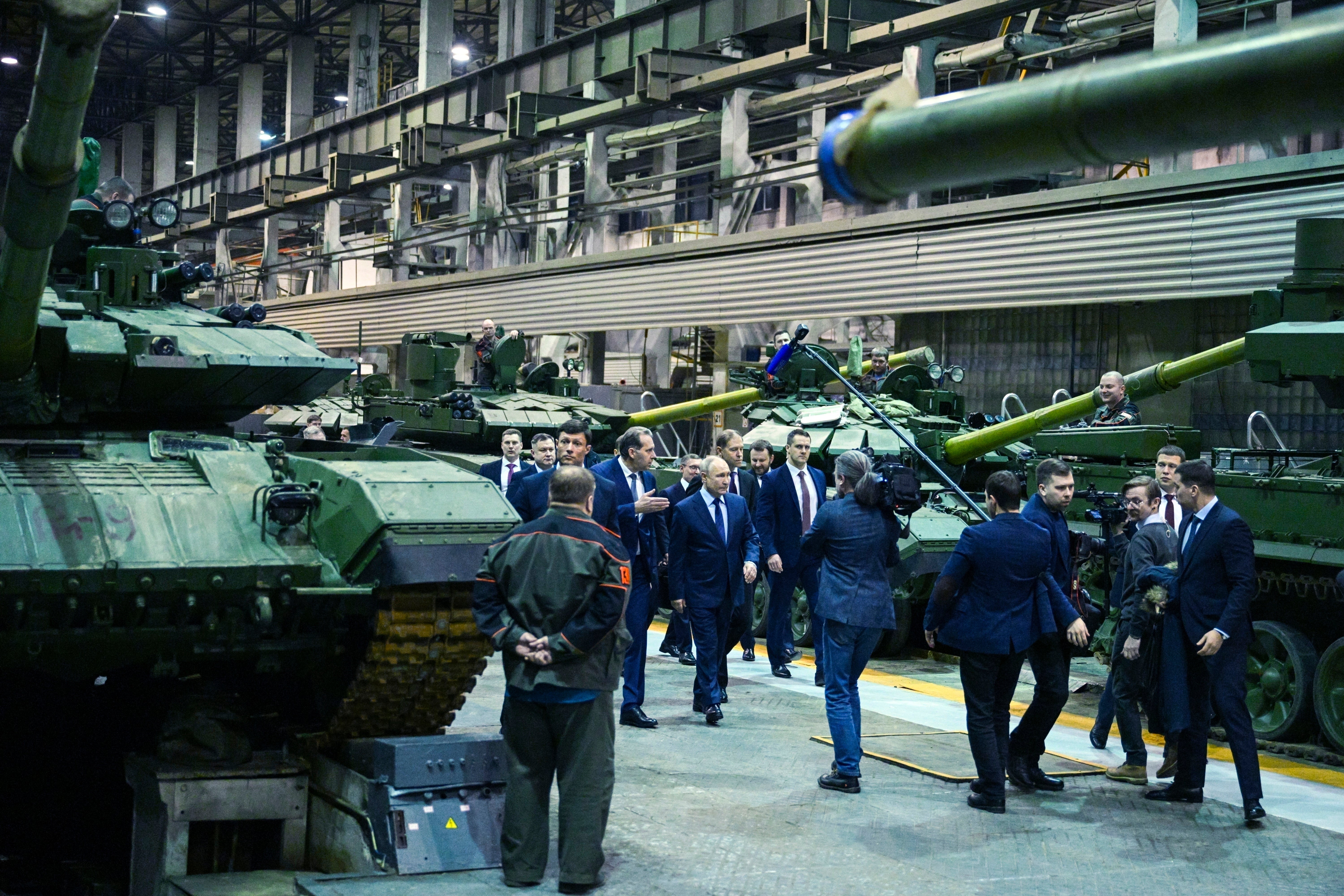
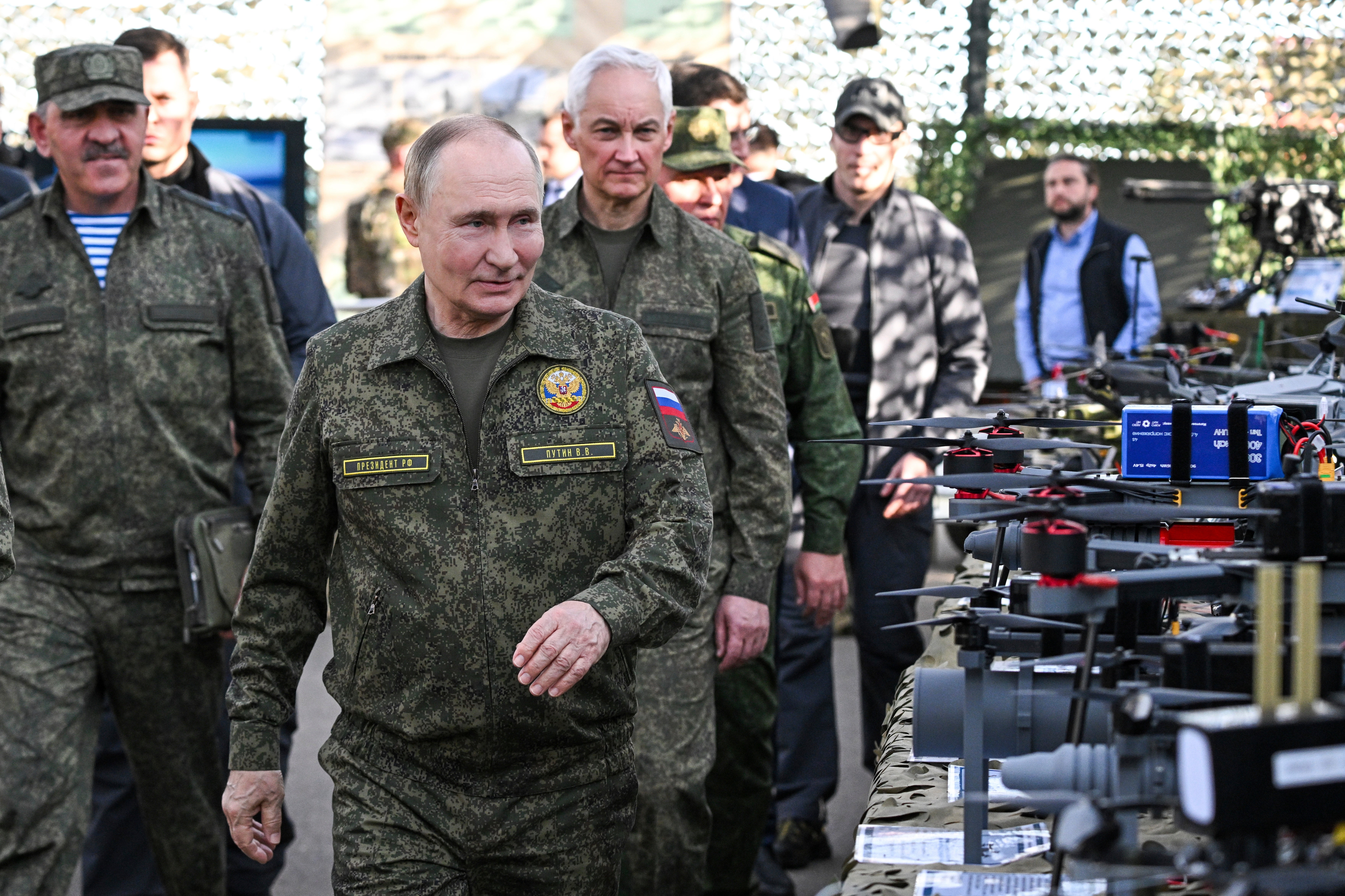
Russian President Vladimir Putin, centre, visits the Uralvagonzavod factory in Nizhny Tagil (Sputnik)
“Overall I’d like housing to become more affordable, I’d like pensioners to be able to live decently instead of merely surviving,” said Dmitry Kirillin, 26.
“I’d also like travel in our country to be more affordable. Those are the main things that first come to mind, if I gave it more thought I could probably name more.”
He added, “I’d like prices to rise more slowly, if that’s possible in the current situation.”
The fuel situation and Wildberries strikes have made the war more visible to people but do not constitute a crisis, said Chris Weafer, CEO of the Macro-Advisory Ltd. consultancy active across the former Soviet Union. He described the economy as in a state of “tolerable stability” and the public mood as “grumbling” but not protesting.
“The economy is under strain – it’s stagnant to the effect that it’s stable but not growing,” Mr Weafer said.
Advertisement
“But it’s not facing recession either.”
Most people “are not that affected” by the Ukrainian strikes, he said. “Just because your shopping habits are disrupted, that’s not going to change the public support for the Kremlin.”
One key sign of stress is Russia’s budget deficit and the government’s efforts to find new sources of money. Putin has resorted to increasing value-added tax paid by consumers at the cash register, raising a raft of other fees and tightening taxation of small businesses. But the deficit has continued to climb.
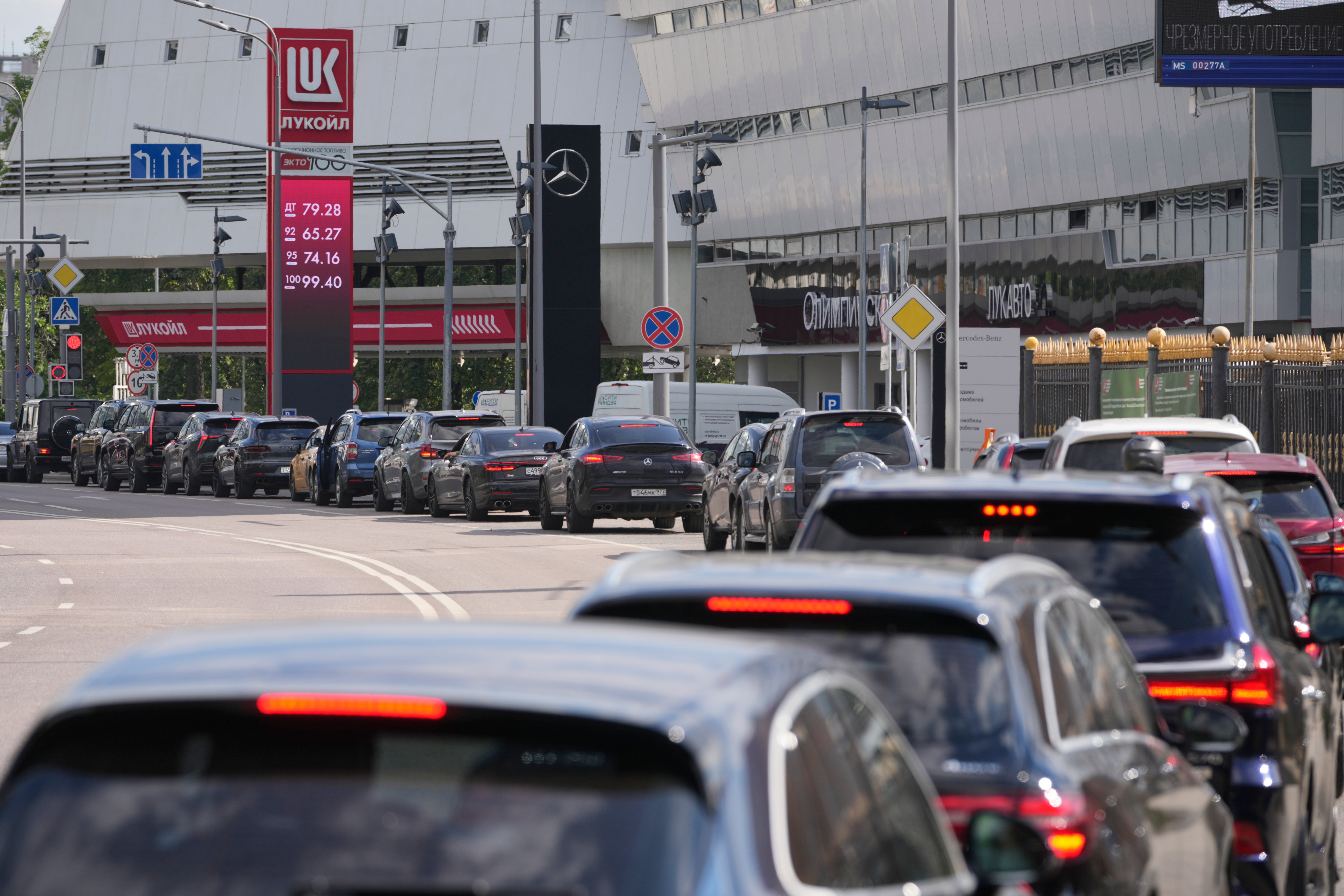
Motorists line up at a Lukoil petrol station in Moscow (AP)
By the end of July, budget data showed a deficit of 2.8 per cent of annual economic output – almost twice the original annual budget target. Available resources in Russia’s reserve fund have dwindled to 1.6 per cent of GDP, meaning the Kremlin needs to borrow from domestic banks.
That, however, means paying high borrowing costs, with interest rates on Russian bonds as high as 17 per cent, according to Janis Kluge, an expert on Russia’s finances at the German Institute for International and Security Affairs.
Budget stress is “adding to doubts about how long Russia can sustain the war”, he wrote in a recent report. Russia’s central bank has kept rates high to contain the inflation caused by war spending. That stresses civilian companies who don’t get the privileged access to credit afforded defence firms.
Another source of war funding has been increased private lending by Russia’s compliant banks to defence-related companies, meaning those debts are not showing up in the deficit figures.
Advertisement
Western sanctions hit hard
Over the long term, Western sanctions deprive Russia of new investment that would make the economy more productive.
And the risk factors – high spending, low growth, rising debt and elevated borrowing costs – lead some economists to warn that while Russia’s economy has not collapsed, its structural foundations are eroding dangerously.
The current trajectory is “unsustainable”, according to Torbjörn Becker at the Stockholm School of Economics. Still, “the timing of a crisis remains highly uncertain”.
Advertisement
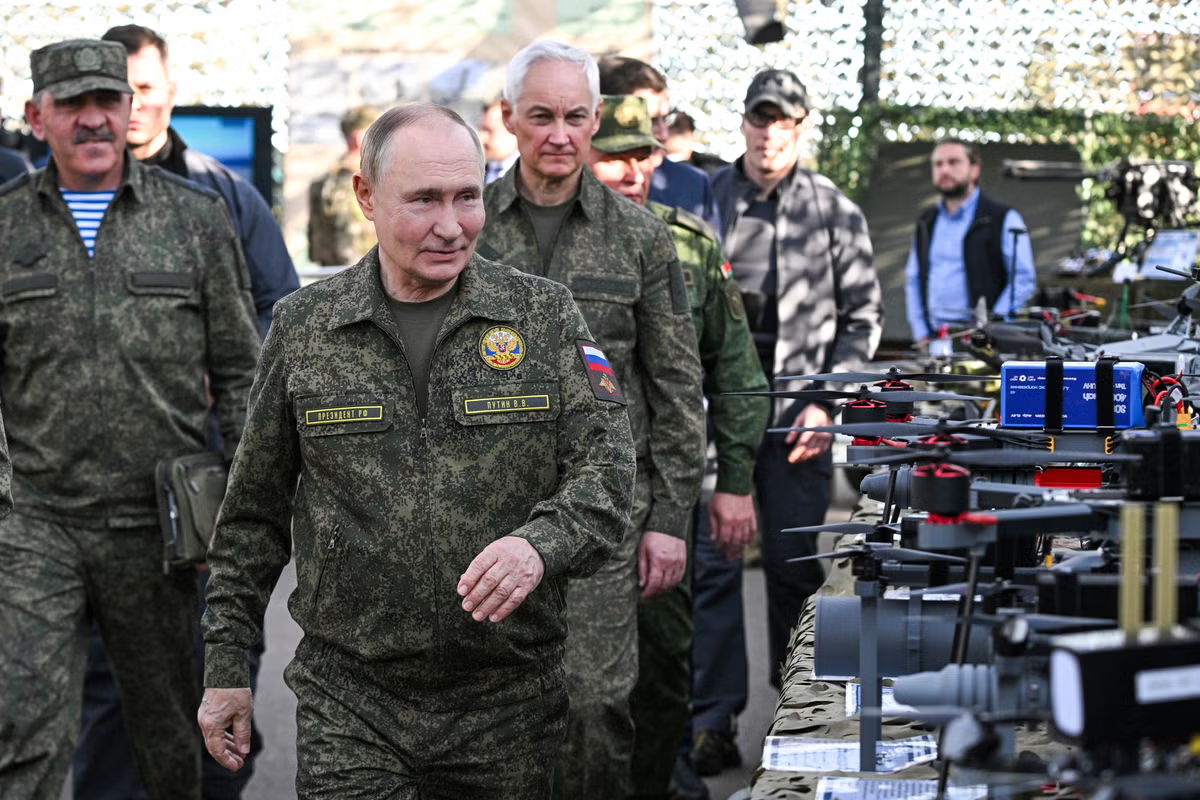
Russian President Vladimir Putin, accompanied by Deputy Defence Minister Yunus-Bek Yevkurov, left, and Defence Minister Andrei Belousov, right, inspects weapons and equipment during military drills at the Mulino training ground (Sputnik)
Higher oil prices help Russia
Oil export earnings, which had fallen below US$10 billion per month ahead of the Iran war, rebounded to $15.8 billion by June and $13.8 billion in July.
Russia’s budget constraints “may effectively disappear for as long as elevated energy prices persist,” Mr Becker wrote.
To change that, tougher measures against Russia’s sanctions-evading oil tanker fleet must be a priority, he argued.
Poor regions benefit from war spending
Advertisement
Money for defence factories and enlistment bonuses has been a boon to Russia’s provinces, which are poorer than Moscow and St. Petersburg. With factories often running full blast, unemployment is just 2.2 per cent nationwide.
The Uralvagonzavod tank factory in Nizhny Tagil in the Urals region increased its workforce from about 20,000 to more than 38,000 since the invasion of Ukraine as it launched 24-hour production, according to a recent report from the Centre for Strategic & International Studies on Russia’s defence industries.
Kupol, which makes drones and surface-to-air missiles, is the largest industrial enterprise in the Udmurtia region on the Volga River and more than doubled its output in 2025.
Shortages of skilled labor are restraining production in defence firms and across the economy, compounded by the emigration of several hundred thousand mostly younger people due to fears of conscription and political repression.
Advertisement
Kremlin says stability is ‘ensured’
Kremlin spokesperson Dmitry Peskov said month-to-month deficit figures were volatile and that “this is not a figure that should be cause for concern. Macroeconomic stability is absolutely ensured.”
But the chief economist of Russia’s state-owned VEB.RF state development bank, Andrei Klepach, warned in a speech that due to sanctions and economic isolation, “we’re falling behind in the technological and economic competition in the world”, and that “we can’t win the competition in this war of attrition”.
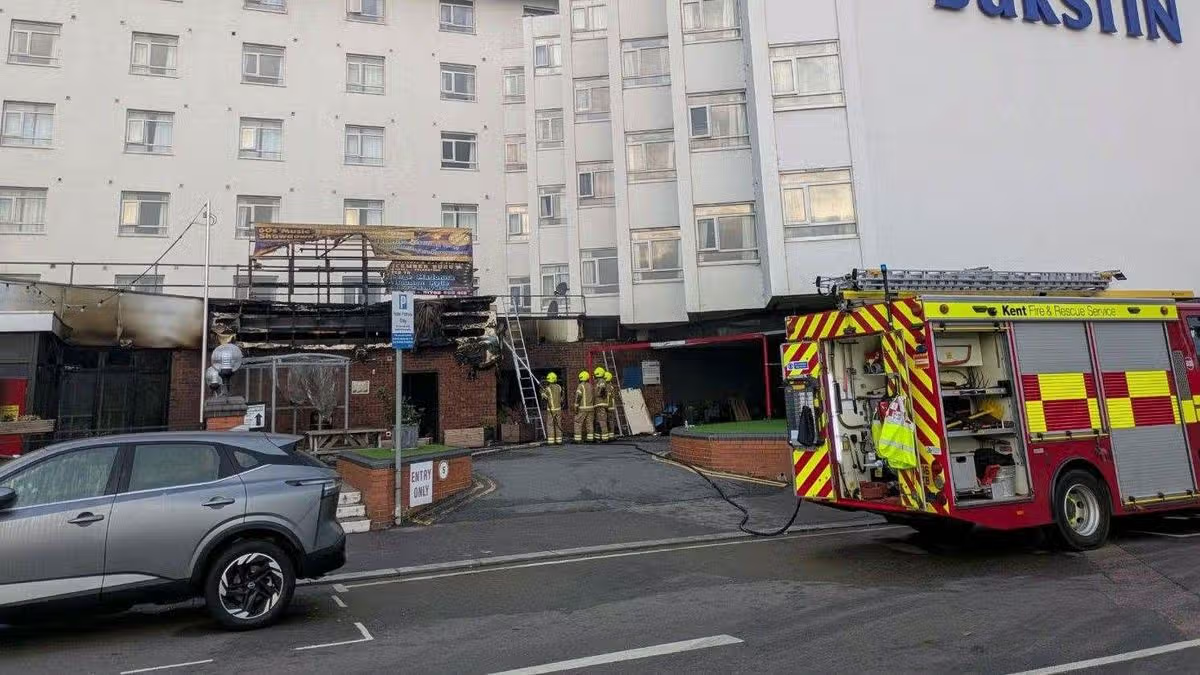
A US hotel guest said he was forced to leave the building via a fire escape at around 1:15am before hearing what he believed were “a couple of explosions”.
Jeff Gardner, 44, said over a hundred people had rushed out of the hotel in the early hours of the morning, with many left watiting for hours before being given somewhere to stay.
Hotel guest Jeff Gardner(Image: Cover Images)
Mr Gardner, who is from Texas, was staying at the hotel as part of an ancestry trip, where he was visiting places connected to the results of his DNA test. The fire broke out on the first night of his two-night stay.
Advertisement
He said he saw “grey smoke that turned blacker,” and heard “a couple of explosions” which he assumed were cars or gas tanks blowing up.
Describing how some guests had been forced to leave the hotel without being fully dressed, he said: “Some people in pyjamas and one guy just had some sweatpants on,” he said. At least I got my clothes. I didn’t get my bag. I don’t have my passport.”
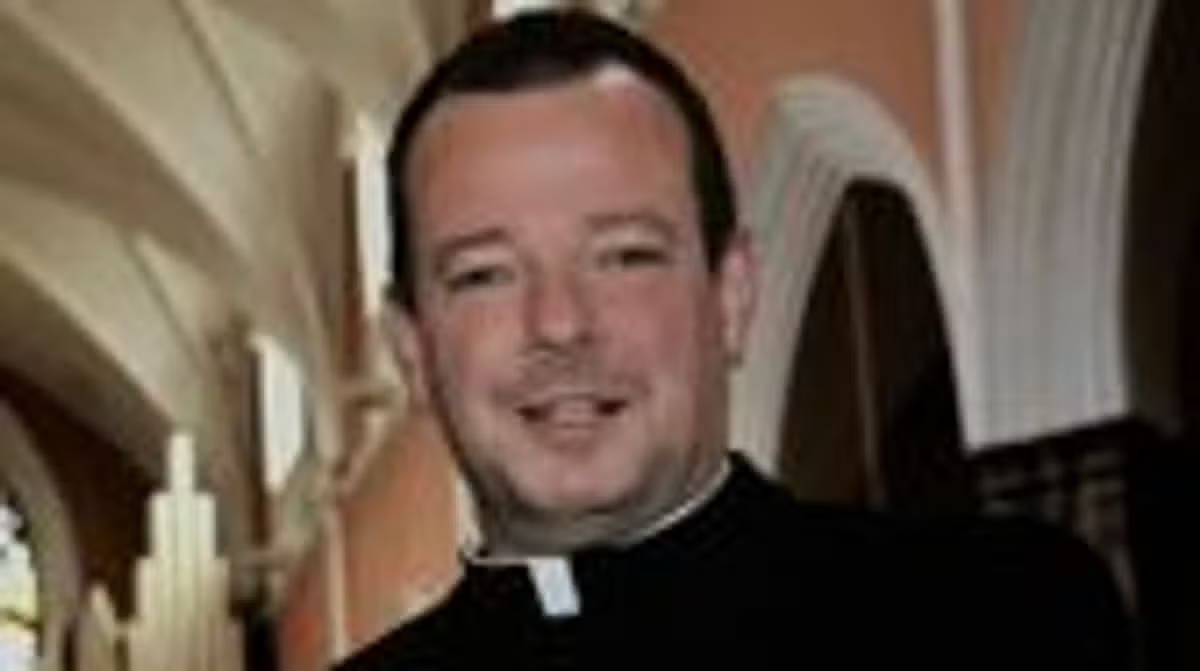
The 55-year-old’s sudden death was announced by both parishes on Friday, prompting an outpouring of tributes from parishioners and organisations in the area. He had only taken up his new position on September 6, having celebrated his first Mass at the Church of Mary Immaculate in Collon just last Sunday.
St Patrick’s Parish in Dundalk said it was “saddened to share the news of the sudden death of our previous parish priest”.
Fr Mark had served in Dundalk since shortly after his ordination, working as curate, administrator and parish priest during his 22 years in the town.
Advertisement
His death notice described him as the beloved son of Irene and the late Joe, cherished brother of Dwyer (Majella), Sinead (Steven) and John (Sonia), much loved uncle to Caoilean, Connor, Caoimhín, Coleen, Dara, Kate, Emily-Rose, Joseph, Rory and Eathan and granduncle to Ada and Donnchadh.
It added that his death is deeply regretted by his loving family circle, Archbishop Eamon Martin DD, Cardinal Seán Brady JCD, Bishop Michael Router DD, the clergy and religious of the Archdiocese of Armagh, his parishioners, former parishioners and many friends.
On Saturday, September 19 there will be a public visitation from 5pm and lying in repose for Mass at 6.30pm in the Church of the Nativity of Our Lady, Ardee. Arrival at 9.30pm for Night Prayer in St. Patrick’s Church, Dundalk.
On Sunday, September 20, his remains will be lying in repose for the 9am and 11am Masses in St. Patrick’s Church, Dundalk, with removal following the 11am Mass to repose at Fr. Mark’s family home, Lisnastrane Park, Coalisland BT71 4PW.
Advertisement
On Monday, September 21, Requiem Mass will be held in Holy Family Church, Coalisland at 2pm. Burial afterwards in the cemetery adjacent to St. Mary and St. Joseph’s Church, Coalisland.
Speaking to the Dundalk Argus before leaving St Patrick’s at the end of August, Fr Mark reflected on the difficulty of departing a community where he had spent his entire priestly ministry.
“It’s with a very heavy heart that I am leaving, but that is part of the priesthood. My whole ministry has been in Dundalk, so it will be strange going somewhere else.”
He had previously described his departure as emotional, while acknowledging that moving between parishes was part of his vocation.
Advertisement
“I am leaving with a heavy heart…my whole ministry has been in Dundalk,” he told the local newspaper.
His new parishes also confirmed his death in a statement, saying they were “with deep sadness” sharing the news of the “unexpected death this morning of our parish priest”.
“We mourn such a profound loss and especially remember Fr. Mark’s family in our prayers in these days.”
Advertisement
One parishioner recalled his first Mass in Collon last Sunday, saying he had spoken enthusiastically about his plans for the coming decade before eventually retiring.
Tributes have also been paid by the Order of Malta Ireland’s Dundalk Ambulance Corps, which said Fr Mark had made a lasting impact during his years serving the community.
“During his many years of service, he touched the lives of countless people through his kindness, dedication and commitment to his parish community.”
Dundalk South councillor Sionainn McCann also paid tribute to the priest, remembering his connection to Dundalk and his personality.
Advertisement
“Terrible news. Fr. Mark originally from Coalisland always had a smile and joke ready. He cared deeply about the town and will be sorely missed.”
Before entering the priesthood, Fr Mark studied business and worked at Belfast’s Europa Hotel before deciding to pursue his vocation.
Reflecting on his years in Dundalk in his interview with the Argus, he said his approach to priesthood had always centred on the community he served.
“My ministry has always been one of serving the people.”
The popular country music artist married longtime love Simon Sheerin in Kilronan Castle back in 2022
12:11, 19 Sep 2026Updated 12:16, 19 Sep 2026
Cliona Hagan says the years have flown by, four years on from her magical wedding to husband Simon Sheerin.
The country music star tied the knot in 2022, and said the day was filled with love and laughter.
Co Tyrone woman Cliona and Simon “loved every bit” of their wedding day.
Advertisement
“My husband Simon and I got married at Kilronan Castle in Roscommon and it was absolutely magical,” Cliona told RSVP Magazine.
“We can’t believe it has been four years, where has the time gone? We loved every bit of it.
“It was quite a big wedding, there were almost 200 people at it. It took a year to plan.
“Thank goodness I had a fantastic wedding planner to help me out with it, otherwise I would have gotten nothing done!”
Advertisement
On the morning of the wedding, Cliona felt very calm.
She said: “I thought I was going to be jumping around the place but I was actually really calm and relaxed. To be honest, I just couldn’t wait to see Simon.
“We spend so much time with each other and we work with each other too, so it was so weird being away from him the night before and morning of.”
Cliona’s father-in-law sang for the couple’s first dance, which is the standout memory of the day for the singer.
She said: “We went for What God Has Joined Together. It’s quite an old song and I had never heard it before, but Simon’s dad was up there, singing it with a guitar and I just thought it was so special.
“It is something we always remember about the day and it is a really lovely memory to have.”
For any future brides currently planning their wedding, Cliona has simple advice: “This is going to sound crazy, but I would actually say, have a sandwich before the ceremony!
Advertisement
“Hunger ramps up with excitement and emotions of the day. I personally couldn’t eat a lot before I went to the chapel, but afterwards I was like, ‘Oh my God, I’m going to faint if I don’t have food!’.
“So I would recommend having a sandwich or snack beforehand, because it’s going to be another few hours before you have your dinner.
“Another tip is to take some time out together when you get to your venue.
“As soon as we got to Kilronan Castle, we took some time to go to our room and decompress and have a moment for ourselves before getting back into the swing of things.
Advertisement
“We didn’t get photographs for half an hour after we arrived.”












![No Money [ DJ BEN RMX ]](https://wordupnews.com/wp-content/uploads/2026/02/1770218101_maxresdefault-80x80.jpg)


































You must be logged in to post a comment Login