





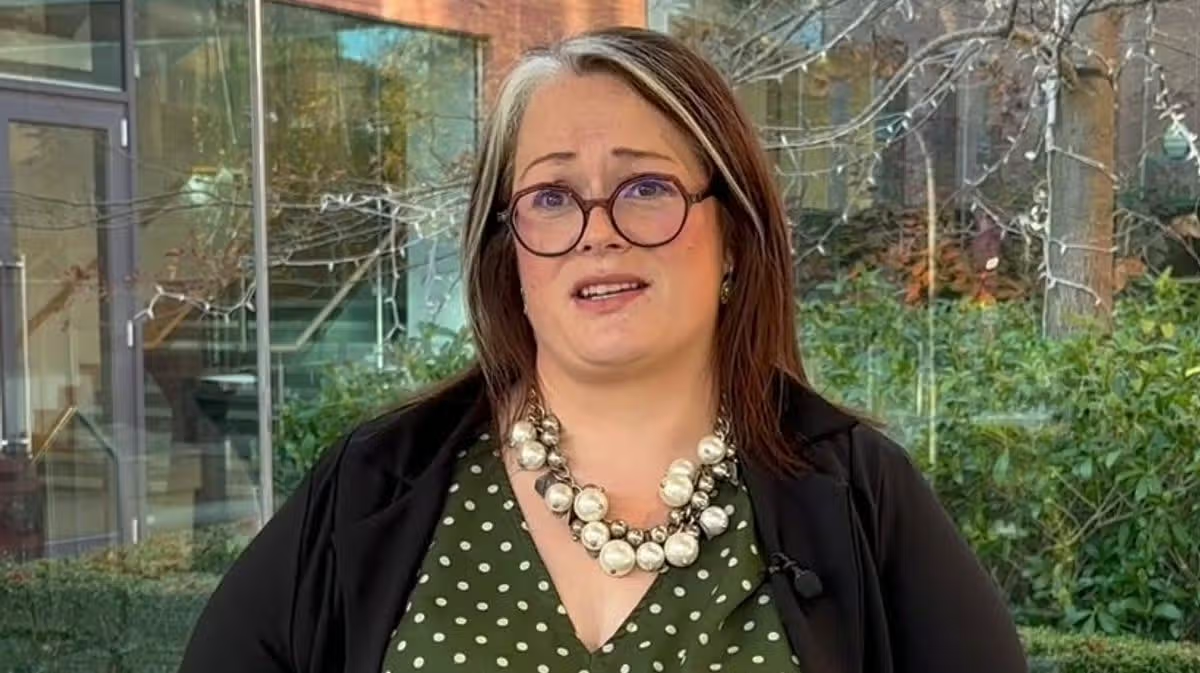
She has been trolled online for her weight but says it won’t stop her from telling other women about the condition.
An MLA has said she won’t let online trolling stop her from raising awareness of gestational diabetes.
Alliance representative Sian Mulholland was speaking at a Diabetes in Pregnancy study day, organised by the Belfast Trust and attended by clinicians from across Northern Ireland.
Gestational diabetes happens if your body cannot produce enough insulin, which regulates blood sugar levels, to meet extra needs in pregnancy.
Ms Mulholland, who represents North Antrim, said: “I’ve had comments directed at me that I’m a walking advert for diabetes it had made me really hesitant to even say that I actually had the condition.
“It’s one of the reasons it’s taken me this long to talk about it. There’s a real lack of understanding that any woman can get gestational diabetes. There are risk factors but it’s not controlled to one group of women.”
Ms Mulholland also spoke about the misconceptions around the condition: “People not understanding what you could or couldn’t eat, what that would mean for your pregnancy and the biggest thing that people didn’t understand is that GD goes away immediately after you’ve had your baby.”
While any pregnant woman can develop GD, that possibility is increased if her BMI is above 30, she’s previously had a baby weighing over 10lbs, or if a close relative has diabetes.
Gestational Diabetes can also increase the likelihood of developing type 2 diabetes after the baby is born.
“For me it was understanding that taking care of myself post-partum may have staved off a diagnosis of type 2 diabetes a little bit further. But it’s also reeling that back and knowing that it’s not your fault and trying to break that burden of blame and guilt,” Ms Mulholland added.
Women with gestational diabetes are more likely to give birth to a baby that’s bigger than normal, or they may give birth earlier, with GD raising the likelihood of giving birth before full term. Mums are also at a higher risk of pre-eclampsia, which causes high blood pressure during pregnancy.
Ms Mulholland says that despite the trolling and nasty comments, she sees her position as MLA as a platform to let other women know that GD is a common, manageable condition.
She explains: “I had to put my thran head on – a good North Antrim word! – and realise that actually I can’t let faceless trolls get in my way of using my platform to encourage people to get their bloods tested to look out for the symptoms of diabetes, and to speak to their healthcare providers.
“And if you are someone who’s just been diagnosed with GD to realise it isn’t your fault and speak to your healthcare providers about getting full holistic support for you and your baby but also just to keep in mind that you could not have changed anything,” she adds.
Belfast Trust’s diabetes specialist midwives Deborah Burns and Jacquie Simpson organised the Diabetes and Pregnancy Study Day, which attracted clinicians from across Northern Ireland.
Deborah said: “We want to improve the maternity care experience for women with diabetes in pregnancy, so we started by educating our staff. This has expanded from Belfast Trust staff to regionally.
“Diabetes in pregnancy can lead to complications. It’s a complex condition so it’s important to that we all know how to look after these women and keep them and their babies safe during pregnancy.”
Gestational diabetes doesn’t usually cause any symptoms but if you’re noticing increased thirst, needing to pee more often than usual, and/or a dry mouth it is important to contact your GP or midwife. You may then be sent to your local Maternity Service for a GD test.
Most cases are only picked up when your blood sugar level is tested during screening for gestational diabetes. If you have been diagnosed with gestational diabetes, this may be manageable with changes to your diet and eating habits and monitoring your blood glucose levels.
However, there are times when medication may still be needed. Women with gestational diabetes are under the care of a specialist team of midwives, nurses and doctors.
For all the latest news, visit the Belfast Live homepage here and sign up to our daily newsletter here.



























































You must be logged in to post a comment Login