Americans lost close to a billion dollars to AI scams in one year – and cybersecurity experts fear this is only the beginning.
Nearly $900 million was stolen in scams that incorporated AI in 2025, according to the first report of its kind from the FBI. The bureau also received more than 22,000 reports about such schemes to its Internet Crime Complaint Center.
One woman in California lost more than $5,000 when a scammer used AI to impersonate her daughter’s voice. Another woman in Ohio lost $1.5 million after fake FBI agents convinced her to drain her bank accounts.
Internet scams are not new; they’ve been around as long as people have been logging on. Fake Nigerian prince emails, phishing schemes and all types of malware have long been digital landmines for people surfing the web. But AI is now changing the cyber con game and costing Americans millions in the process — a number that is only going to grow as AI improves, which it does by the nanosecond.
Advertisement
Michael Machtinger, deputy assistant director of the FBI Cyber Division, told the Wall Street Journal that AI-created fraudulent communications “can look very official and very legitimate to even the most trained individuals.”
An FBI report found that Americans lost nearly $900 million to scammers using AI in 2025. That figure is expected to rise (AFP/Getty)
‘Today’s AI is the worst AI you will ever use’
As AI companies pitch the public on the urgency of adopting their technology, criminals have been more than willing to heed that advice.
Like everyone else playing around with Claude, Gemini, Grok, and ChatGPT, scammers are still figuring out exactly what they can pull off using the chatbots, according to Jake Braun, executive director of the Cyber Policy Initiative at the University of Chicago’s Harris School of Public Policy.
He told the WSJ that as AI continues to improve, the means by which criminals can use it to bilk people out of their money will likely only get more sophisticated too.
Advertisement
“The AI companies like to say that today’s AI is the worst AI you will ever use. What’s also true is that these are the lowest number of AI complaints we are ever going to see,” he told the paper.
Bob Sullivan, host of AARP podcast The Perfect Scam, explained in March that AI has helped scammers flood the internet with fraudulent offers and malicious schemes.
“We’re getting deluged,” Sullivan said. “A couple of years ago, you might have encountered one or two AI-generated scams a year. Now scammer call centers are sending out tens of thousands of scam messages per minute.”
Wide range of grifts
Advertisement
Consumer protection agencies have collected long lists of all the various ways scammers are using AI to try to rip people off. Both California’s Department of Financial Protection and Innovation and New York City’s Consumer Worker and Protection agency have compiled lists of the methods criminals are using.
A new spin on an old grift is the use of deepfakes to convince people they’re talking to someone they trust — or someone they want to trust like a celebrity or a public figure — in order to convince them to send them money. AI scammers might deepfake a photo or a video of a relative in a tough situation or a celebrity as a means of establishing credibility.
Romance schemes follow a similar tack, using fake images or videos — or even voices — of attractive people or celebrities to convince a victim that they’re interested in them. Once trust has been secured, that’s when the scam hits. The account will then ask the person for money or assistance, and with people’s emotions clouding their judgment, they have been known to fork over thousands of dollars.
While some criminals seek to exploit concern for loved ones or a desire for romance, others appeal to greed.
Advertisement
Criminals are using AI voice cloning, deepfake images and video generation to pose as celebrities or loved ones in an effort to steal from unsuspecting people (Getty/iStock)
According to law enforcement agencies, some scammers have created entirely fictional influencers to convince people to invest in fake businesses or to support their non-existent work.
The student told Wired that he used Google’s Gemini AI to create the fictional influencer and raked in thousands off the “super dumb” — in his words — MAGA crowd who ate up the rhetoric.
But it’s not just so-called “super dumb” people falling for AI scams. Advice, especially online, has typically been aimed at older Americans who may be less fluent in technology and unaware of the red flags associated with fraud. However, the new FBI report suggests broader messaging may be needed to teach a much younger group of Americans how to keep criminals out of their wallets.
Targeting teens
Advertisement
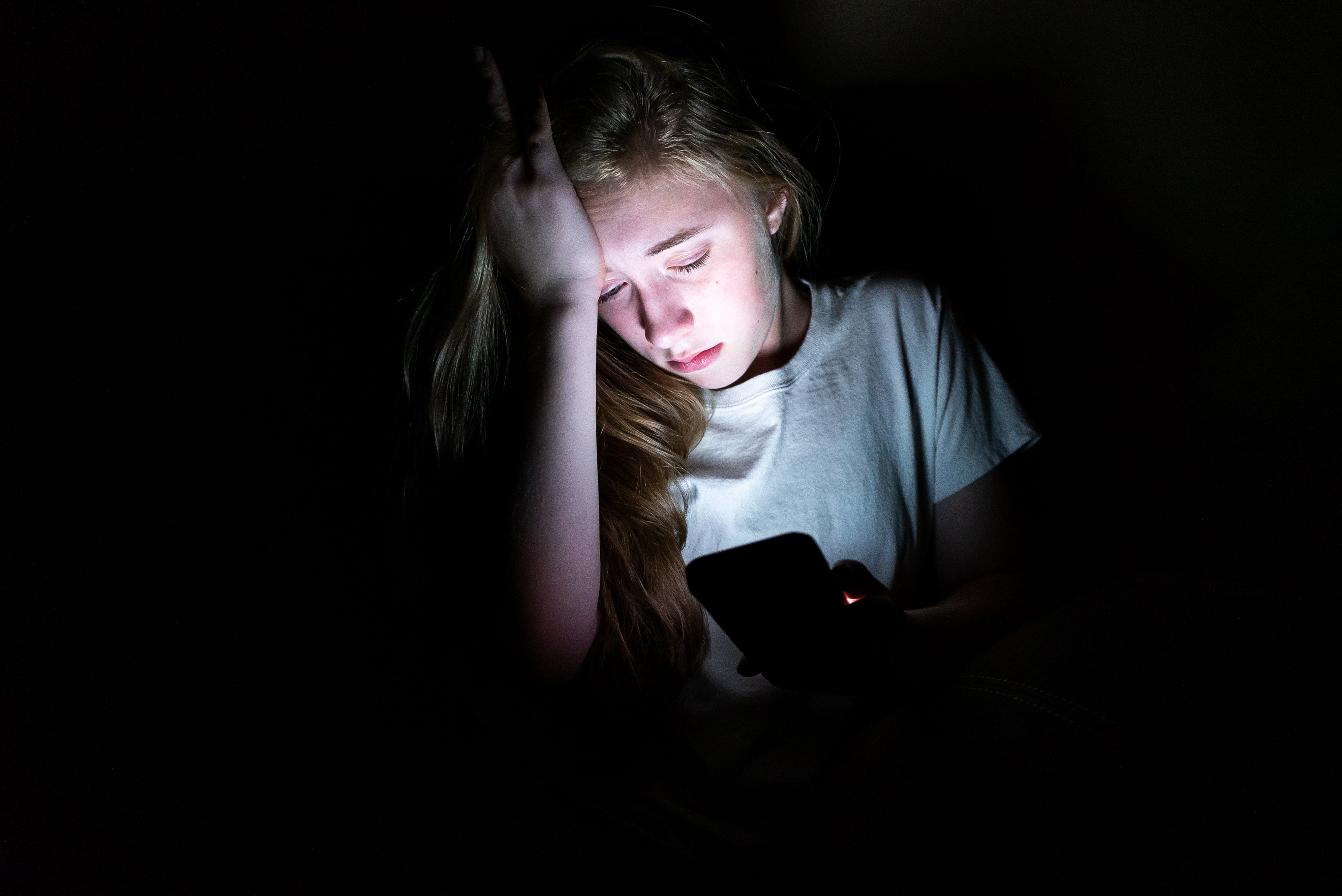
According to the FBI, teens have become a prime target for scammers in recent years. The bureau reports that it received 31,000 complaints to its crime complaint center from people under the age of 20 last year. That’s up 74 percent from 2024 and is nearly triple the number of complaints it received from the same demographic in 2015.
Ade Clewlow, associate director and senior adviser at cybersecurity consulting firm NCC Group, told the WSJ that teens who have grown up online are more likely to trust what they encounter on the internet and “are just as susceptible as anyone else” to fraud.
Social media sites are especially useful for scammers because they allow them to peer into a target’s network of friends and family and search for vulnerabilities they can exploit.
Focusing on a target’s family was exactly how scammers managed to steal more than $5,000 from Deborah Del Mastro of San Francisco.
Advertisement
Earlier this month, Del Mastro answered a phone call and received terrifying news; a voice on the other end of the call told her they had kidnapped her daughter, Sarah, and demanded a ransom.
She told Good Morning America that the voice told her there was “someone here that you need to talk to” before she heard her daughter’s panicked voice.
“I hear my daughter’s voice — sobbing, trying to breathe, having a panic attack,” Del Mastro said. “And [the voice] says, ‘I’m so sorry, Mom. I am so scared. I’m so sorry.’”
The kidnappers demanded she send $5,400 to multiple locations in Mexico if she wanted to see her daughter again. She obliged, fearing for her daughter’s safety. Once she had hung up with the kidnappers, she called her daughter only to find that she was fine.
Advertisement
Del Mastro realized then she’d been scammed, likely by an AI clone of her daughter’s voice.
Scammers have already used deepfakes and voice cloning to steal thousands — and in one Ohio case, more than a million dollars — from victims (Getty/iStock)
Erin West, founder of Operation Shamrock, an organization focused on combating scammers, told KGO that even seconds-long audio clips of a person’s voice — like what might be included in a video shared to Facebook or Instagram — can be used to create believable voice clones.
“What they can do with just a few seconds of your voice [is] they can clone it, and they can essentially produce sound that sounds exactly like you,” she told the broadcaster, adding that AI voice cloning is “only getting worse, and it will only continue to get worse with the use of AI and deepfake technology.”
Another woman in California fell victim to a similar scam. When Abigail — no last name given — received a Facebook message from someone claiming to be Steve Burton, a longtime star of the legendary “General Hospital” soap opera, she readily accepted the message.
The two chatted, moving their conversation from Facebook to WhatsApp. Their conversations continued, and eventually Abigail received a video from the person claiming to be Burton. The man in the video — who looked and sounded just like the soap star — called Abigail “my queen” and promised to love her.
Advertisement
Abigail’s daughter, Vivian Ruvalcaba, told Fox News that she saw the video and warned her mother it was AI, but her mother was convinced it was real.
Before she realized it was all a lie, Abigail had sent the fake Burton $81,000 and sold her condo — at $200,000 under its estimated value — on a promise that she and the faux celebrity would run away together to live in a beach house.
If impersonating loved ones or celebrities isn’t bad enough, fraudsters have also used AI to more convincingly impersonate government workers.
Scammers and disinformation peddlers can use deepfakes — enhanced by AI technology — to make convincing clones of politicians, celebrities, and even loved ones with as little as a few photos or video clips posted online (AFP/Getty)
Fake government officials
The FBI’s report found that government impersonation schemes are becoming not only more prevalent but more sophisticated. The bureau’s complaint center received more than 32,000 calls last year about government impersonation schemes, up from around 17,000 in 2024.
Advertisement
“What began as clumsy phone calls from fake IRS agents demanding gift cards has evolved into something far more sophisticated and far harder to dismiss,” Judson Dressler, director of the risk operations center at cyber risk company Resilience, told the WSJ.
Fraudsters use spoofing to make their calls appear legitimate on caller ID systems; lift official seals and logos off agency websites; and employ AI deepfake audio and video to create convincing fakes of public officials, Dressler said.
One 93-year-old woman in Ohio reportedly lost $1.5 million to a government impersonation scam when a fake FBI official convinced the woman that criminals were targeting her assets. They warned her she needed to drain her bank accounts and deposit the money into crypto ATMs for safety. The thieves took the money, with no means for her to recover her savings.
In 2025, Consumer Reports delivered a petition signed by 75,000 Americans to the Federal Trade Commission asking it to hold companies that produce products capable of AI voice cloning accountable for the scams made possible by the technology.
Advertisement
Staying safe in the age of AI
As AI improves, it will become increasingly difficult to know not only what information is real, but whether the people you’re talking to online even exist.
In an effort to better educate the public on the latest methods fraudsters are using, the FBI has bolstered its resources available on IC3.gov.
One way Americans can protect themselves from digital scams is to always verify that the person they’re communicating with is legitimate. If someone calls or messages from a government agency, for example, it’s good practice to call the agency directly to verify the identity of the person.
Advertisement
There’s almost never a time when an agency or company needs immediate payment. If someone contacts you demanding money immediately, that’s a good time to pause and verify, according to the FBI.
According to Navy Federal Credit Union, which released guidance for avoiding AI scams earlier this year, Americans may also want to limit how much of themselves they share online. AI needs very little — a few photos, a few seconds of voice — to create a compelling clone that can be used against your loved ones.
If you suspect you’ve been a victim of a scam, you should act quickly and notify your bank, as well as file a report on IC3.gov. Machtinger told the WSJ that reporting is crucial to stopping fraudsters.
“It could help you and prevent numerous other individuals from falling prey to similar kinds of criminal activity,” he said.
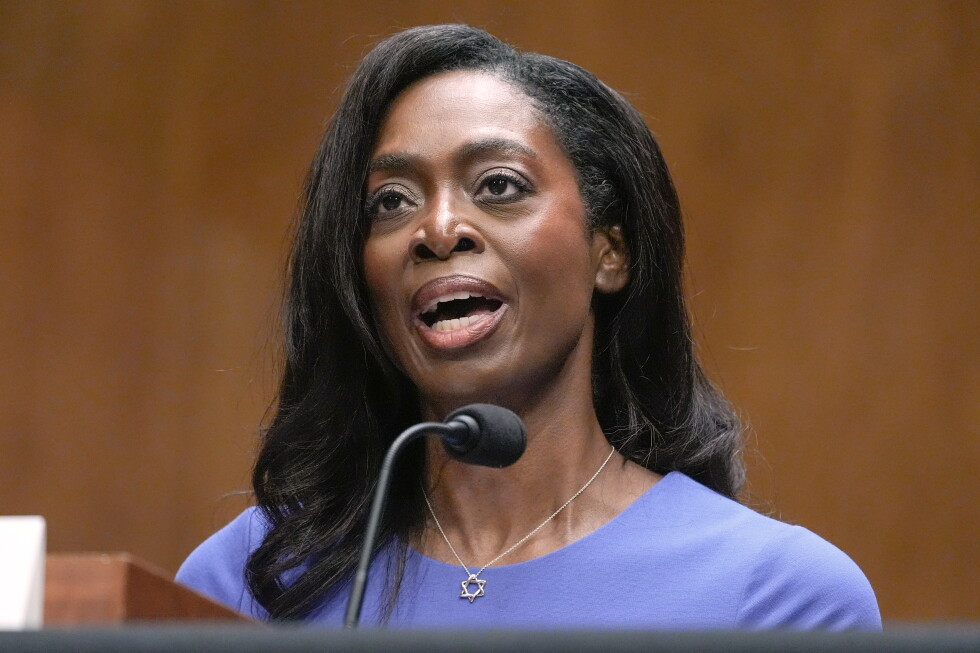
NEW YORK (AP) — A Senate committee on Thursday advanced Dr. Erica Schwartz’s nomination to be director of the nation’s top public health agency, setting aside concerns that she will not stand up to political meddling.
If confirmed by the full Senate, the 54-year-old would become the 22nd director of the Atlanta-based Centers for Disease Control and Prevention, which is charged with protecting Americans from preventable health threats. Her resume includes medical and law degrees, a stint as deputy surgeon general, and a leadership position at the U.S. Coast Guard.
Schwartz appeared to be on shaky ground after a hearing before the Senate Health, Education, Labor and Pensions Committee this month. The chairman, Sen. Bill Cassidy, R-La., and others questioned whether she would be willing to stand up to Republican President Donald Trump’s health secretary, Robert F. Kennedy Jr., if he ordered CDC to do something that was unsupported by science and good public health practice.
But when the committee met last week, Cassidy said he had spoken with Schwartz after that hearing and to others who knew her.
Advertisement
“I’m confident that she knows what she is doing and will stand against those who do not,” said Cassidy, whose support was necessary for the nomination to go forward.
The committee’s near party-line vote Thursday moved Schwartz’s nomination ahead.
Among those who opposed her was Sen. Bernie Sanders, a Vermont independent.
Advertisement
“The issue at hand is not complicated,” Sanders said last week. “Will we have people in the Trump administration who have the guts to stand up to people who are anti-science and into conspiracy theories?”
The CDC has faced more than a year of unrest
The CDC has been in turmoil since Trump returned to office last year.
Largely due to layoffs and resignations, the agency has lost 3,000-plus employees, more than one-quarter of its workforce. Morale has plummeted as a succession of mostly temporary leaders have come and gone. The front office has been staffed by political appointees with little or no training in medicine or public health.
When Schwartz was nominated in April, public health experts were cautiously optimistic, citing her background. They also noted she was the choice of Trump and not Kennedy, a leading voice in the anti-vaccine movement before he was tapped to oversee the CDC and other federal health agencies.
Advertisement
Kennedy had promised not to change the nation’s vaccination schedule but later attempted a substantial rewrite of vaccine recommendations for kids. Some of those efforts were put on hold this year by a federal judge.
Kennedy’s actions have rankled Cassidy, a physician who initially expressed doubts about Kennedy as Trump’s pick to be health secretary. Cassidy ultimately signed off on the nomination after Kennedy promised not to change the nation’s childhood vaccine recommendations.
Public health groups seek reassurance
At Schwartz’s hearing in July, Cassidy and some other senators asked her what she would do if Kennedy or other political appointees instructed the CDC to make changes that were not supported by science. Schwartz pledged to “never betray the science,” but she repeatedly declined to dissent from some of the actions Kennedy has taken.
The National Public Health Coalition, an organization of former and current CDC workers, was not reassured by her responses.
Advertisement
“The public needed to hear clear commitments about how she would protect CDC guidance from political pressure,” the group said in a statement. “Too often, her stated commitments were incomplete, vague, or missing.”
The group said senators should require specific written commitments from Schwartz on scientific independence, evidence-based vaccine policy, conflicts of interest and other issues.
At the hearing, Schwartz said she was unaware that CDC programs that worked to prevent smoking and promote vaccinations had been curtailed. She declined to commit to taking down a CDC website that suggests a link between childhood vaccines and autism. She said she had not seen it, though she agreed existing medical evidence has not found a link.
Last week, Cassidy said that “as a sign of good faith” officials at the Department of Health and Human Services had modified the page. But this week, it continued to argue that “vaccines do not cause autism” is not an evidence-based claim, despite numerous studies that have found no such link.
Advertisement
Dr. Georges Benjamin, executive director of the American Public Health Association, interpreted Schwartz’s performance as someone trying to please different factions. He disagreed with how she answered several questions, but continued to support her nomination.
Schwartz is qualified, might be able to rebuild the CDC’s depleted command structure and could start to rebuild public trust in the agency by focusing on bipartisan concerns such as foodborne disease outbreaks, he said in a recent interview.
Dr. Daniel Jernigan, a former top CDC official who resigned from the agency in August, echoed that.
If Schwartz is not confirmed, “it will mean a continued rudderless journey for CDC,” he said.
Advertisement
For Kennedy, “having to start over is probably what he wants — many more months with no one stopping him from pursuing the same anti-science and anti-vaccine efforts he has been pursuing,” Jernigan said.
The CDC has had several leaders under Trump
Schwartz was the third Trump nominee for the office in the past 18 months.
The first was a former Florida congressman, Dr. David Weldon. His Senate hearing in March 2025 was canceled an hour before it was to begin. Weldon said at the time that he had been told not enough senators were willing to vote for him.
The White House then moved on to Susan Monarez, who had been serving as the CDC’s acting director. Monarez was confirmed by the Senate, but she was ousted in less than a month. Trump administration officials said she was not aligned with the president’s agenda so they terminated her.
Advertisement
Since then there have been a series of HHS officials as acting CDC director.
___
The Associated Press Health and Science Department receives support from the Howard Hughes Medical Institute’s Department of Science Education and the Robert Wood Johnson Foundation. The AP is solely responsible for all content.
PASSAIC, N.J. (AP) — A boy died and a second child was missing after the two 10-year-olds went into a rain-swollen river while playing in a park in Passaic, New Jersey, authorities said.
A third child in the water, age 11, survived. The local mayor said her life might have been saved by her brother, the 10-year-old who drowned.
“As he was going under, he pushed her and she ended up by the rocks and she climbed up,” Passaic Mayor Hector Lora told reporters Wednesday night. “She’s alive right now.”
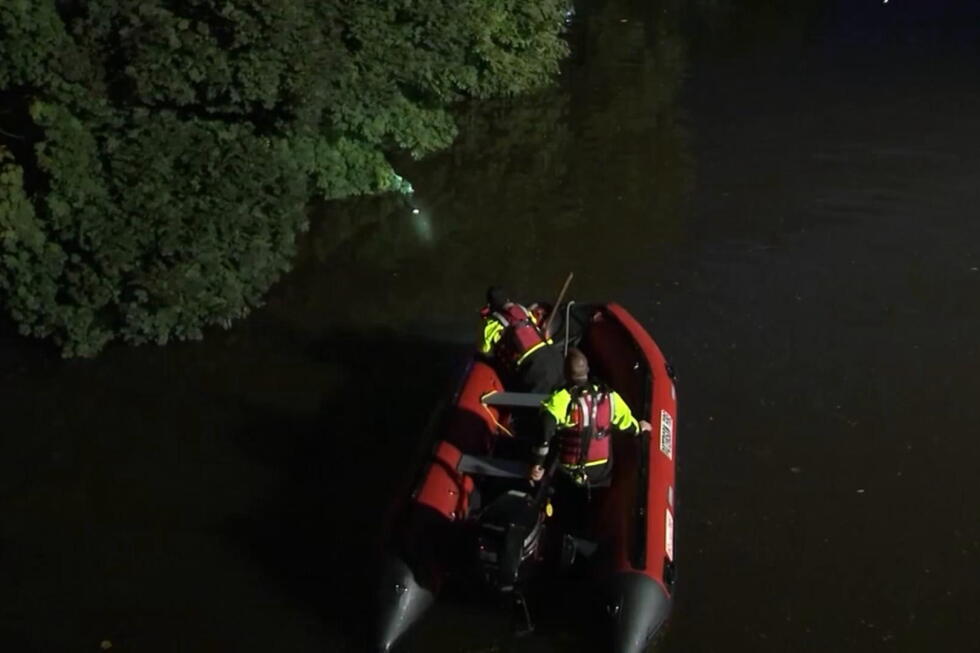
The other 10-year-old, a girl, was still missing early Thursday. Multiple boats and divers searched the river.
Advertisement
“The families really need your prayers and your support,” Lora said early Thursday in a video on Facebook.
No names have been released.
The three children were seen in the Passaic River in Pulaski Park. It wasn’t immediately clear how they ended up in river, which was higher than usual because of heavy rainfall in the region, police in neighboring Paterson said. Firefighters in that community had rescued about 20 people who became trapped by rapidly rising floodwaters.
Lora said that first responders got calls at about 6:20 p.m. and a man in the park tried to rescue the children before they arrived.
Advertisement
“He went in about 5 meters deep (16.4 feet) and when he got too deep and the current was pushing him away, he could not reach them,” Lora said. “The gentleman expressed to us his obvious pain and hurt.”
Rescuers used sonar technology to search the river.
The river flows about 80 miles (129 kilometers) through forest land and suburbs before entering more urban areas and emptying into Newark Bay. Passaic is about 10 miles (16 kilometers) north of New York City.
GP practices could close if temperatures continue to climb to sweltering highs, fresh guidance suggests.
The Royal College of GPs has made the extreme recommendation to keep doctors and patients safe in the ongoing heatwave.
The UK is currently battling its fourth spell of scorching weather, with temperatures reaching 34C on Wednesday.
The heat is expected to ease off slightly before picking up again next week and reaching 27C in some parts of the country.
Advertisement
The medical body has published a series of guidelines on its website for family doctors, advising ‘closure or relocation if indoor temperatures reach 30C (86F) inside’.
It comes amid scores of accounts from patients who say they’re struggling to see their GP. Around a third of all appointments take place over the phone, NHS data shows.
A recent poll found that one in three elderly patients were forced to fill in online forms by their doctors surgery, which put many off booking an appointment.
Patients have told of waiting months to see a GP, with some claiming their health deteriorated as a result.
Advertisement
GP practices should consider closing or relocating if indoor temperatures reach 30C, health leaders have advised
As well as potential closures, the Royal College guidance advises clinic staff to ‘use thermometers to check room temperatures frequently – for comfort, temperatures should be below 26C.’
High indoor temperatures in sweltering conditions can leave staff dehydrated, stressed and more likely to make errors in judgment, the RCGP said.
Advertisement
Vulnerable patients are also more susceptible to the adverse effects of heat, increasing the risk of dehydration, stroke and organ failure.
As such, the college is advising practices to take extra measures to keep their premises cool, and fast track high-risk patients for same-day appointments in hot weather.
GP surgeries should also consider earlier start times to avoid the hottest part of the day, the RCGP’s guide reads.
It comes as the Doctors’ Association UK called for a maximum legal working temperature in GP surgeries in June, after a survey of NHS staff saw 83 per cent of staff describe their workplace as ‘very’ or ‘dangerously hot’.
Advertisement
Earlier this month, surgeons admitted they were having to stop operations part way through due to dehydration, dizziness and risk of fainting.
Advertisement
‘There is nothing extraordinary, nor is it an isolated incident,’ Dr Tim Lane, president of the Royal College of Surgeons, said.
‘It is a symptom of a deeper problem: too many of our hospitals are no longer equipped to deal with the hot summers Britain now experiences.’
The latest guidance comes amid the cancellation of blood tests due to the hot weather and restrictions on air-conditioning units.
Blood samples are susceptible to degradation in the heat, resulting in unreliable test results.
Advertisement
But guidance states that GP surgeries should explore every other avenue to reduce indoor temperatures before using air conditioning units, making it extremely difficult for surgeries to keep room temperatures below the 25C required to store blood samples safely.
Meanwhile, the NHS faces a ‘summer onslaught’, with record A&E attendances in June.
Shocking figures today revealed deaths in Britain linked to soaring temperatures in May and June this year are already nearly double the entire figure for 2025.
Across these two months there have already been 2,877 heat-related fatalities. Last year, there were just 1,504 total heat deaths recorded.
Advertisement
‘These figures highlight the significant danger that very hot weather can pose to people’s health,’ Dr Ross Thompson, Principal Environmental Public Health Scientist at UKHSA said.
The total of 2,877 deaths is almost double the 1,504 across the UK heatwaves over the three months from June to August last year.
Health Secretary Yvette Cooper added: ‘The sweltering heat has had a serious impact this summer on people’s health and on our NHS.
‘For many years, we have been used to winter pressures in our NHS and the need to support those who are vulnerable in the coldest weather.
Advertisement
‘But now we are seeing the summer heat have an increasingly serious impact on the health of thousands of people, and on the pressures facing our NHS too.’
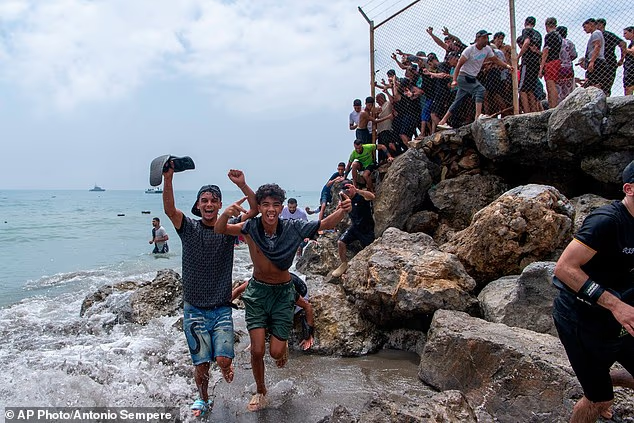
Thousands of migrants have stormed Spanish territory with dramatic videos showing large crowds overwhelming border guards in the enclave of Ceuta in northern Africa.
Extraordinary footage shows huge numbers of migrants sprinting up beaches, swimming ashore and dispersing into the streets of the tiny Spanish territory which borders Morocco, with some shouting ‘Long live Spain‘.
The president of the territory, Juan Jesus Vivas, has declared a ‘total humanitarian and social emergency’, with at least 60 migrants washing up dead and camps completely overwhelmed.
It comes after Spain’s socialist government approved plans to give around 500,000 undocumented migrants legal status earlier this year.
Advertisement
‘In the past few days more than 1,500 migrants, both adults and minors, have come to Ceuta by sea,’ said Vivas in televised comments on Wednesday.
‘The reception centres are saturated – there is no more room for anyone in them and according to yesterday’s figures the number of people entering is more than 200 a day.’
According to EFE, hundreds of youths could be seen scaling the security fencing – which was not being guarded by police at the time – and entered Ceuta, while members of the Moroccan auxiliary force responsible for security on the ground withdrew as the young people passed.
Spain’s interior ministry said in a statement that several ministries were ‘acting in coordination to respond with the utmost speed and efficiency to the situation in Ceuta’.
Advertisement
Young migrants celebrate as they arrive onto the shores of Ceuta in Spain
Migration from Morocco into Spain’s two north African territories, Ceuta and Melilla, has long been a politically sensitive issue between the two countries
Police help migrants who crossed into the Spanish enclave of Ceuta from Morocco
Advertisement
Migrants try to cross into the Spanish enclave of Ceuta from Morocco, Thursday, July 30
Migrants cheer after they cross into Spain from Morocco
Interior Minister Fernando Grande-Marlaska would travel to Ceuta on Friday ‘to monitor the situation’ and meet officials, it said.
The ministry said the government had increased its resources ‘to guarantee security and control of migration as well as the necessary humanitarian aid, so that no lives are put in danger at sea’.
Advertisement
It said the Moroccan government was working ‘faithfully and permanently with Spain and collaborating closely to deal with the situation’.
The ministry added: ‘Moroccan security forces are preventing the arrival of numerous people who are trying to reach Ceuta from Morocco.’
Vivas said facilities for unaccompanied minors were operating at 2,400 per cent of capacity.
In comments to Onda Cero, he described the situation as a national emergency and called for a ‘decisive, forceful, immediate and coordinated’ response under a single command structure.
Advertisement
Ceuta, together with Melilla – another Spanish autonomous city located in North Africa – represents the European Union’s only land border with Africa.
Both cities periodically experience surges in attempted crossings by migrants seeking to reach Europe.
Arrivals were currently averaging about 300 people a day, according to Vivas.
At that pace, he warned, Ceuta could face a situation comparable to the May 2021 migration crisis, when more than 8,000 people entered the enclave in just two days.
Advertisement
Vivas also pointed to the human cost of the crossings, saying 60 bodies had been recovered at sea in recent months, and argued that stronger migration controls would help prevent further deaths.
The interior ministry said Moroccan security forces were helping to curb arrivals from its territory.
Vivas called for changes to Spain’s immigration framework, saying legal shortcomings exposed by a recent Supreme Court ruling needed to be addressed.
Earlier this month, the Supreme Court ruled that migrants intercepted at sea while attempting to reach Ceuta or Melilla cannot be summarily returned under the enclaves’ special border-rejection regime.
Advertisement
The ruling established that migrants who arrive by sea cannot be immediately pushed back across the border without due process, unlike those who cross into Spain by land – by climbing over the border fence, for example.
Grande-Marlaska, in an interview with Spanish television channel laSexta, acknowledged authorities were facing ‘an extraordinary, exceptional situation’.
He asserted that ‘we are dealing with it with the means that we already have deployed there permanently’.
Spain’s Civil Guard, maritime Rescue Services and even the Red Cross have been using boats to pick up swimmers before taking them to Ceuta. Hundreds of migrants are now sleeping outside a migrant reception centre that is over capacity.
Advertisement
Those attempting the crossing are mainly Moroccans, along with a small number of Algerians who had been living in Morocco while trying to migrate to Europe, according to activists in Morocco and Ceuta.
It was not clear what prompted so many migrants to swim to Ceuta.
Some activists, including Omar Naji, president of the Moroccan Association of Human Rights in Eastern Morocco, expressed doubt that the Supreme Court ruling was behind the surge.
Most Moroccans would have been unaware of such legal decisions, he said.
Advertisement
Vivas called for changes to Spain’s immigration framework, saying legal shortcomings exposed by a recent Supreme Court ruling needed to be addressed
The interior ministry said Moroccan security forces were helping to curb arrivals from its territory
Thousands of migrants pictured on the beach of Ceuta
A migrant uses a rubber ring while trying to cross into the Spanish enclave of Ceuta
Advertisement
Migrants are intercepted by Spanish Civil Guard officers after arriving in the Spanish enclave of Ceuta from Morocco
The timing of the crossing, occurring after Spanish Prime Minister Pedro Sánchez met with Algerian President Abdelmadjid Tebboune last week, reminded Naji of the border crisis of May 2021.
At the time, Morocco was accused of easing border controls and allowing migrants to cross into the enclave after Spain allowed Polisario Front leader Brahim Ghali to receive medical treatment at a Spanish hospital, triggering a diplomatic crisis between Rabat and Madrid.
The pro-independence Polisario Front for decades has claimed to be the legitimate representative of the indigenous Sahrawi people of disputed Western Sahara.
Advertisement
On Wednesday, Spain’s interior minister praised Moroccan authorities, saying they were cooperating and that the relationship with the kingdom was ‘close and based on loyalty’.
‘They are also limiting irregular departures,’ he told laSexta.
It comes as four migrants died attempting to cross the Channel overnight.
Three women and a man lost their lives in separate incidents on the French side of the Channel overnight.
Advertisement
The tragedies unfolded shortly after Wednesday witnessed what was thought to have been the largest number of small boat crossings this year.
Unofficial estimates reported by GB News put the total at 730, beating the 710 seen on June 15.
And a small boat overturned in the early hours of Thursday causing the death of a passenger and leading to the ‘near drowning’ of a baby.
The disaster unfolded in the early hours of Thursday morning in the sea off Neufchâtel-Hardelot, south of Boulogne.
Advertisement
Local mayor Paulette Juilien-Peuvion described how more than 100 people, including women and children, were attempting to board a flimsy inflatable designed for around 15 passengers.
‘One man died and six were seriously hurt,’ she said during a visit to the scene later in the day.
Meanwhile, three women were found dead near the port of Dunkirk, French authorities said on Thursday. They are understood to have been on a separate boat to the man who died.
The women were brought to shore as French emergency services rushed to the scene; however, attempts to resuscitate them failed and all three were declared dead.
Alice Haine, head of personal finance at Hargreaves Lansdown, said: “Savings rates have been gradually drifting lower since peaking in the autumn of 2023, but with inflation easing to 2.6% in June, savers can still secure inflation-busting returns of up to 5% on both easy-access and fixed options.
The moon will move to cover the sun in a total solar eclipse for people in Greenland, Iceland and Northern Spain.
The UK will only experience a partial eclipse, but around 90% of the sun will be covered by the moon meaning people should still be in for a spectacular sight in the skies.
It is the most complete eclipse seen in the UK since 1999.
So as the day approaches, the all-important question for any outdoor event in London will be asked “what is the weather forecast?”
Advertisement
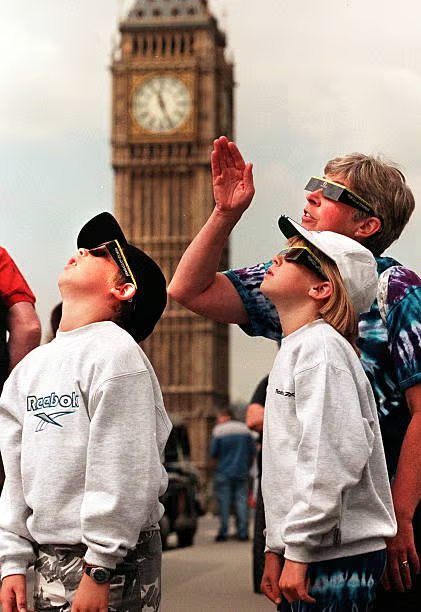
A woman and her two children watch the start of the eclipse on Westminster Bridge in central London 11 August 1999. London skies were mostly cloudy for the event
AFP via Getty Images
What will the weather be like in London for the solar eclipse?
The eclipse takes place in summer, so there’s a better chance of clear skies than you’d expect in autumn or winter.
But at the moment its too far away to accurately predict the weather.
Advertisement
Hopes have been raised of clear skies by the Met’s long term forecast for the UK up to August 12 that says while some rain may come at the start of the month, “it will likely become mostly dry once again as we head toward mid-August”.
It says: “Temperatures closer to average, still the potential for some warmer interludes, especially in the south, although perhaps not the heat we have seen in recent weeks.”
The long-term forecast for the rest of the month also suggests it will be dry around the middle of the month, stating: “Dry and settled conditions will probably dominate much of this period.”
But a long-term forecast on the BBC website predicts cloudy weather in London during the eclipse.
Advertisement
We’ll be updating the forecast as we get closer to the day.
This year’s solar eclipse will begin at 6.17pm on August 12.
The whole phenomenon will last around an hour and 49 minutes until 8.06pm.
The height of the eclipse is expected at 7.13pm for Londoners.
Bread is delicious and oh-so-versatile, but it can also be a major cause of bloating.
This is often because some people are sensitive to wheat or gluten, which means when you munch on your favourite sandwich or perhaps a deliciously crunchy slice of toast, it triggers stress on the gut and digestive system.
Cue: bloating, gas and possibly even stomach ache.
Gastroenterologist Dr Joseph Salhab (who goes by The Stomach Doc on social media) previously shared a series of simple food swaps for people who end up with post-bread bloating.
Advertisement
“If bread gives you gas and bloating, then you’re going to want to try this,” he said in a TikTok video.
1. Sprouted bread
First up on the doctor’s list of food swaps is sprouted bread.
According to Sporked, sprouted bread is made from whole grains that have been allowed to germinate and sprout before being ground to flour.
Advertisement
“Your classic white bread and other more processed breads use refined wheat flour, whereas whole grain bread uses the entire grain kernel to make the wheat,” explained Sporked’s writer Matt Crowley.
“Sprouted bread takes this a step further, letting those grains sprout before they’re turned into flour.”
According to Dr Salhab, “the act of sprouting can break down some of the gluten and some of the bloating-causing ingredients called FODMAPs”.
2. Flaxseed bread
Advertisement
Next on the gastro doctor’s list is flaxseed bread, which is pretty much what it says on the tin: bread made with ground flaxseeds, which are high in fibre and omega-3.
Probably the one we’re all most familiar with – especially in an age where people are shifting away from buying ultra-processed white bread at the supermarket.
Advertisement
Sourdough is “made from naturally occurring yeast and lactic acid bacteria that are naturally present in flour, rather than using baker’s yeast, to leaven the dough,” according to Cultured Food Life.
“In traditional sourdough recipes, you’ll find three ingredients: sourdough starter, salt, and flour.”
“The fermentation process when making sourdough bread also helps break down some of the gluten and helps break down the fructans which is one of the most common causes of bloating,” said Dr Salhab.
Advertisement
The great thing about sourdough is that it’s available in most bakeries and supermarkets.
While all of these bread types are lower in gluten, they don’t eliminate it completely, added the doctor, so wouldn’t be suitable for those with coeliac disease or gluten allergy.
And if you experience bloating that lasts longer than three weeks, speak to your GP as the issue can also be caused by other underlying health issues like IBS and ovarian cancer.
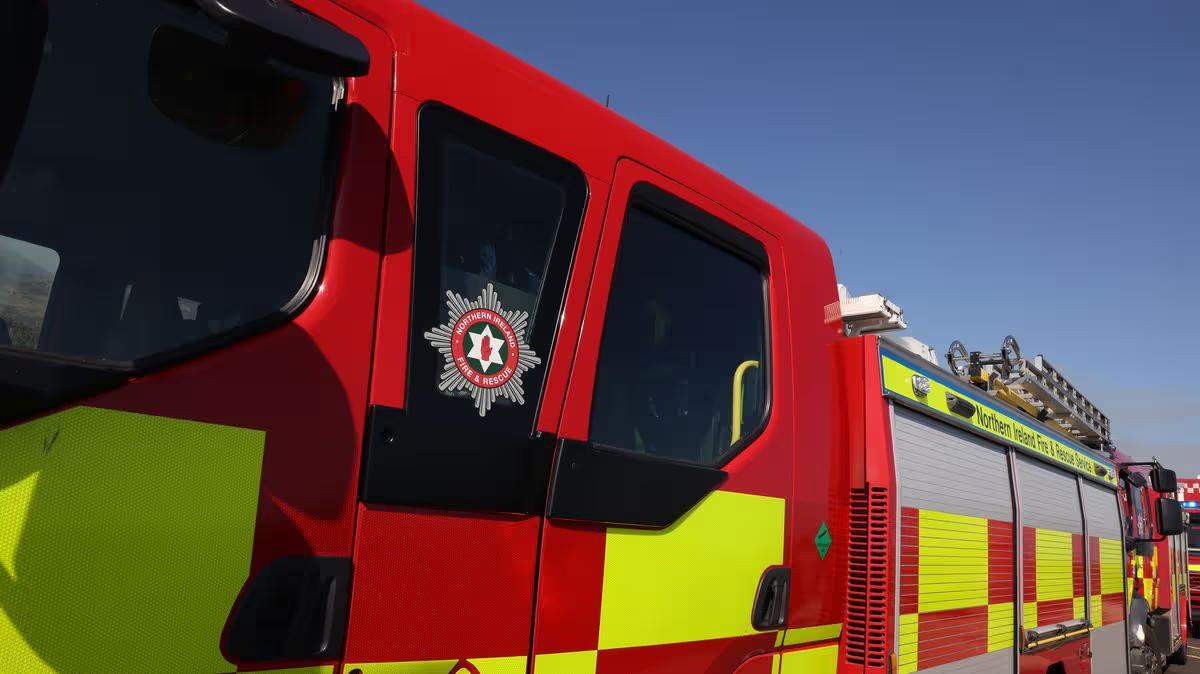
No one was in the home at the time but significant damage was caused. Police are now investigating to establish the full circumstances surrounding what happened, including whether ignition was deliberate.
A PSNI spokesperson said: “Police in Armagh are appealing for information and witnesses following a house fire in Tandragee.
“A report was received shortly after 3.20am this morning, Thursday 30th July, of a house on fire in the Mullavilly Heights area of the town.
“Thankfully, there was nobody present in the property and therefore no injuries reported. Significant damage was caused to the property, however.
“Enquiries are ongoing at this time to establish the full circumstances surrounding what happened, including whether ignition was deliberate.
“Officers are appealing to anyone who was in the area at the time and saw any suspicious activity, or who might have any information which might assist, to contact police using our witness appeal form at https://reporting.psni.police.uk/appeals quoting 161 of 29/07/26 or call us on 101.
A ten-year-old visiting California with his family briefly lost consciousness and went limp amid ferocious waves – before a teenage lifeguard dramatically rescued him.
Nathaniel Rai, of Dallas, Texas, had waded into the ocean while on vacation with his mother and sister at Seabright Beach in Santa Cruz on Saturday.
After a sneaker wave swelled much farther up the beach than expected, the young boy began to get swept out to sea, Scott Vander Dussen told the Los Angeles Times.
‘From what I gathered, he assumed he was going to die,’ his father, Sumit Rai, told ABC 7.
Advertisement
‘He was drowning. He knew he was drowning. He blacked out. He went unconscious. When he came out of the water, he was clearly limp. It doesn’t look like he was breathing.’
But thanks to the quick-thinking actions of lifeguard Ryder Williams, Rai survived.
The 16-year-old was caught on camera jumping into action immediately after seeing the boy’s head bobbing in the waves.
Advertisement
Lifeguard Ryder Williams, 16, holds on to ten-year-old Nathaniel Rai in Santa Cruz on Sunday
The lifeguard pulls the limp boy out of the water amid rough waves at Seabright Beach
Rai, from Dallas, Texas, had been on vacation in California when he nearly drowned
Williams could be seen in the footage with his arms wrapped around the boy as waves surged all around them.
Advertisement
When the monstrous waves then crashed down, the teenager was seen ducking underneath the water – refusing to let go of Rai.
As they approached the shore, fellow lifeguard Aaron Bohnen could be seen helping drag Williams and Rai up the beach.
Rai appeared to be limp as he was brought closer to shore, before a third lifeguard lifted him up.
When they carried the boy to safety, those on the beach applauded.
Advertisement
Reflecting on the rescue, Williams said he was ‘at the waterline 15 yards down-coast of Tower 2, when I looked up and saw a child about 20 [yards] up from the tower lose his footing in ankle-deep water.’
At that point, he ran into the ocean to try to reach the child.
‘After the first wave, I was unable to pull him out because he was limp and the waves were pushing so hard,’ Williams told ABC 7 on Wednesday.
Many online credit Williams with saving Rai’s life after watching footage of the event
Advertisement
Rai’s father tells ABC 7 how his son briefly lost consciousness in the ferocious waves
‘There were two to three more waves before lifeguard Aaron Bohnen entered the water to help me. There were bystanders who jumped in to try to help and I yelled at them all to get back to shore.’
Once the boy was safely back on the beach, Williams said he and Bohnen assessed the child, after which he resumed his regular lifeguard duties.
‘I’m grateful to have had the opportunity to return the child to his family safely,’ Williams said. ‘This is my job and I love what I do.’
Advertisement
He then added that he is ‘thankful for my fellow lifeguards who perform rescues just like this every day.’
But many who saw the video credited Williams with saving Rai’s life, with Vander Dussen claiming he had been just ‘moments from not coming back.’
‘A few seconds, a few degrees, a few yards of distance and this is a very different story with a very different ending,’ Vander Dussen said as he shared the video.
It quickly circulated on social media – even garnering the attention of President Donald Trump, who invited the teenager to the White House to receive a civilian honor.
Advertisement
‘We’re going to bring this heroic young man and his family into the White House, with perhaps, the boy he saved to give him a High Civilian Honor,’ the commander-in-chief posted on X, adding that the teen was ‘very brave.’
Fellow lifeguard Aaron Bohnen helps with the rescue after the boys move closer to the shore
Other lifeguards also said Williams handled the situation like a professional.
He intentionally dipped himself and the boy below the surf rather than battle the waves above, thereby minimizing exposure to the powerful currents that threatened to sweep them both deeper out to sea, Tom Gill, president of the United States Lifesaving Association, told the San Francisco Chronicle.
Advertisement
‘The first thing I see when I look at that video is an incredibly brave young man putting his life on the line to save someone else,’ Gill said.
‘That is so much water moving, so much power. The wherewithal, the poise, the training, the confidence to stay with that rescue – that had to take everything that young man had.’
Gill also said Williams ‘probably would have loved’ to just wrap his flotation device around the boy.
Instead, his calm, steadfast effort kept the boy’s airways above the water as he methodically worked his way back to shore.
Advertisement
Wyatt Werneth, a spokesman for the American Lifeguard Association, added that the video shows Williams’ grit and determination.
‘He was above and beyond the standard,’ Werneth insisted. ‘Out of 100 16-year-olds that we hire a year, I might have one that was up to the measure of this young man.’
The teenage lifeguard undertook five different rescues during his Saturday shift in Santa Cruz
Williams suffered ‘some road rash on his forehead’ after saving Rai, when he hit his head on the sand but was otherwise left unscathed, his father, Shane Williams, told the California Post.
Advertisement
The emotional toll of the rescue was also apparent when the teenager returned home from his shift that day.
‘He told me when he got home, he said, “Dad, I wasn’t going to let go of that kid because I knew if I let go of him, he was going to drown and I wasn’t going to let that happen,”‘ Shane recounted.
‘And it brought a tear to my eye when he said that. It was pretty amazing.’
Yet the teenager has apparently remained humble, telling his family only that ‘It was all in a day’s work’ and ‘This is what I do.’
Advertisement
He then wound up rescuing two others following the now viral moment with Rai in situations his grandfather, George Williams, said were ‘more gnarly.’
In total, the teenage lifeguard undertook five different rescues during his Saturday shift.
Shane said his son’s actions that day reflect the kind of caring person he has always been.
‘He just wants to give back to his community because he grew up there,’ the proud father said.
Advertisement
But Rai’s father said his family is just fortunate, ‘because of Ryder and those people that helped, that he actually survived this.’
‘God bless them and you know, thank you, I cannot express sufficient gratitude,’ Sumit said.
‘There’s nothing more valuable to me than my children. And to save one of them and their lives, especially at such a young, tender age, you know, which is such a premature way to lose someone, I can’t thank them enough.’
‘I’m just so grateful that Ryder and others were there to help pull him out and save his life,’ the father continued. ‘Otherwise, I can’t imagine what life would look like today.’
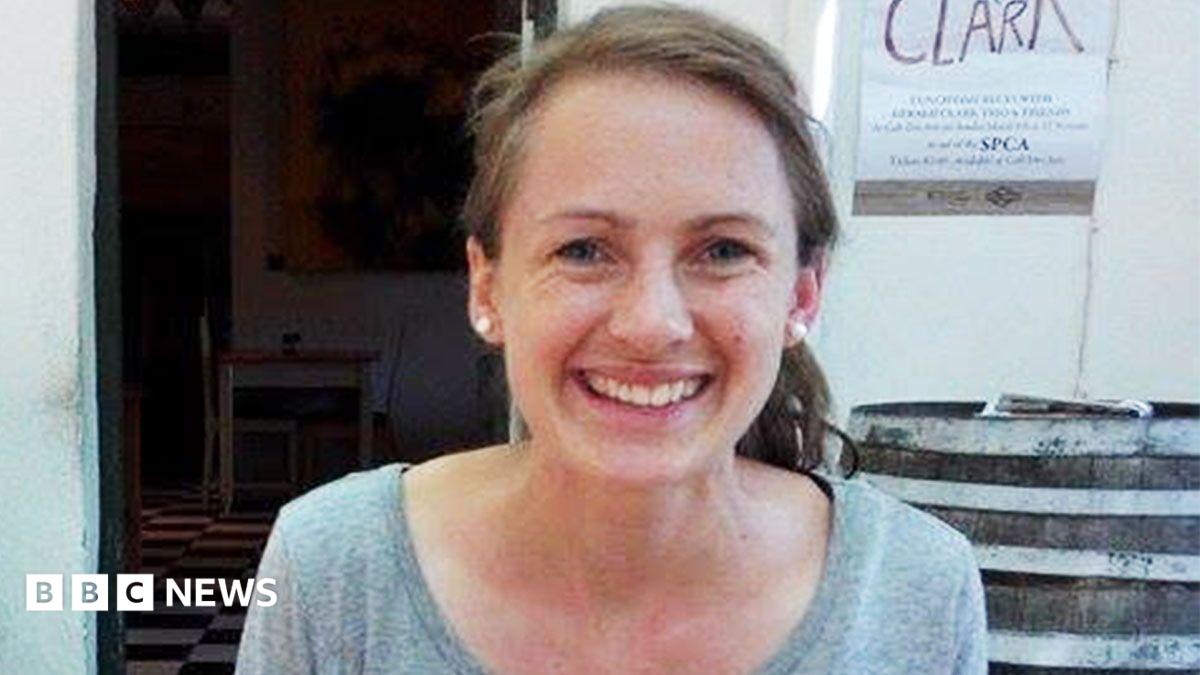
First Minister John Swinney said Ross’s family would be supported by the Scottish government and the Foreign and Commonwealth Office.
He said: “This is an absolutely appalling case that has been reported overnight.
“And obviously I’m deeply concerned that such a tragedy has taken place.”
Helena Smith, The Guardian’s correspondent in Athens, told BBC Radio Scotland that the body was found in a derelict building in downtown Athens, “in an area that is booming, full of Airbnbs”.
Advertisement
She said: “It is very popular with people travelling through Athens and young foreigners who have elected to make the Greek capital their home.”
Smith said that Ross had family in Edinburgh and “connections” to Greece – staying with a friend in Athens before she disappeared.
She added: “It would seem that someone had control over her mobile phone after she died and was sending messages to distract the authorities and close friends from trying to track her down.”






















































You must be logged in to post a comment Login