Bournemouth head coach Andoni Iraola is one of the leading candidates to replace Ruben Amorim permanently if Michael Carrick does not get the job
Andoni Iraola insisted he is in no rush to take his next job after Bournemouth beat Fulham to keep their hopes of European football alive. Iraola has been heavily linked to the Manchester United position, and it is understood he is one of the frontrunners should Michael Carrick not take the job.
Advertisement
Carrick was appointed interim boss in January after Ruben Amorim’s explosive press conference following the draw at Leeds. His return was initially seen as temporary so as to steady the ship and allow Ineos time to conduct a ‘thorough’ managerial search. However, his tenure has been superb.
Click here to find out the latest Manchester United news in our daily newsletter
Big name candidates such as Julian Nagelsmann, Thomas Tuchel and Luis Enrique are seen as unattainable this summer. Iraola, who has confirmed he is leaving Bournemouth at the end of the season, is seen as the best option aside from keeping Carrick. Following Saturday’s game, the 43-year-old refused to comment on other jobs.
Advertisement
“I’m in no rush,” Iraola responded. “I will not talk about my future. I’m fully focused on trying to finish this season with a reward, something tangible for the [Bournemouth] players and supporters.” He added: “It was not an easy decision [to leave] but once it is made you feel relief.
“I feel we have used it in a positive way. Since that day, we’ve had great results but also the mood.
“Everyone is clear, the relationship is so clean and honest. Okay, this is going to happen, next season Marco Rose will be our manager.
Advertisement
“Everyone knows what’s happening. We are in good place and can use this in a positive way.”
United drew both matches against Bournemouth this season. The first was a classic 4-4 draw at Old Trafford before recently holding on to take a point off the Cherries with ten men.
Sky has upgraded its Ultimate TV and Sky Sports bundle to now include HBO Max, Netflix, Disney+, discovery+ and Hayu, as well as 135 channels and full Sky coverage of the Premier League and EFL.
Sky broadcasts more than 1,400 live matches across the Premier League, EFL and more with at least 215 live from the top flight alongside Formula 1, darts and golf.
Millions of Britons occasionally or habitually bite their nails, a practice often linked to stress, anxiety and even boredom.
And while some may see it as a relatively harmless habit, it can create dental issues that can make you appear older than you actually are.
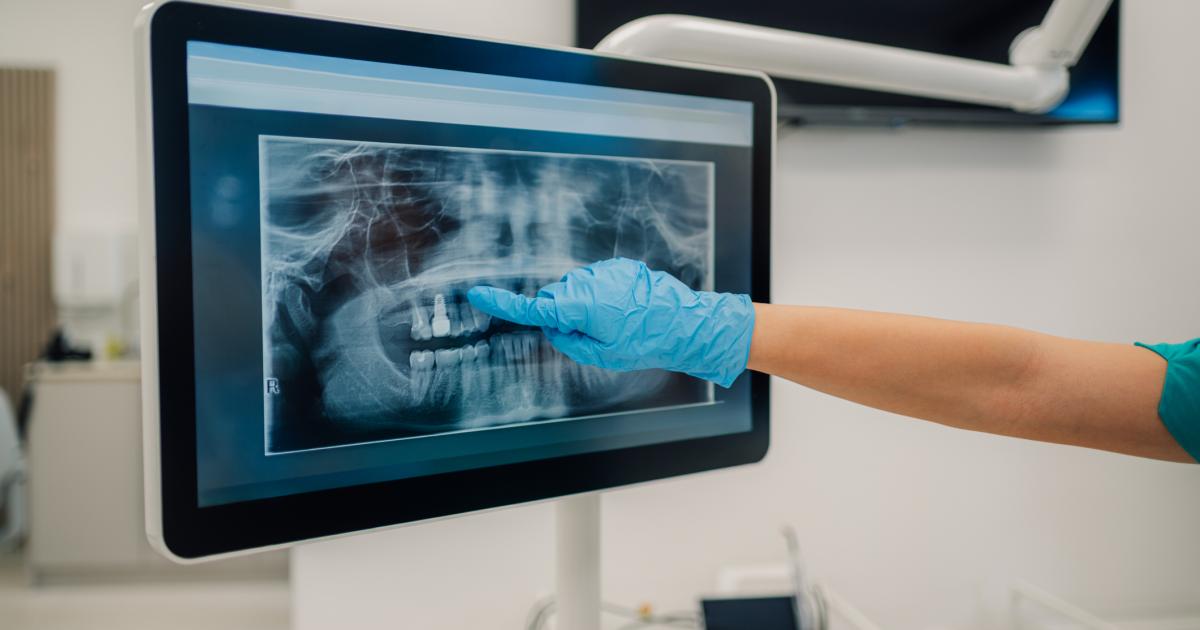
Dr Tony Taunk of dental solutions experts Implant Perfection said: “Lots of people bite their nails and it’s an incredibly common habit, but many of them won’t realise the long-term damage it can do.
Advertisement
“The pressure of biting down on the nail can damage the front teeth, wearing down its enamel and leading to misalignment and gaps over time.
“It is also linked to teeth-grinding, which wears down teeth and can contribute to headaches and jaw problems.
“Older people tend to have more worn-down teeth thanks to decades of chewing and biting while younger people don’t tend to have the same level of natural wear and tear.
“Another natural effect of getting older is our teeth tend to get more discoloured thanks to years of enamel thinning and more exposure of dentin, the yellowish tissue that’s at the core of teeth.
Advertisement
“Nail biting can certainly accelerate enamel damage, leading to a smile that looks older than it is.”
Nail biting, otherwise known as onychophagia, is often referred to as an impulse control problem, a behavioural condition which makes it difficult to resist an urge or temptation.
Many people do it without thinking, and stress is considered one of the most significant causes.
It can also be a frustrating habit to have, given the health problems it is linked to, as well as a potentially negative perception of a person’s appearance.
Advertisement
Dr Taunk added: “Our smiles are one of the key features people notice about us, and even the smallest issue can make a difference to our appearance.
“As we get older, our gums naturally recede and this can cause the tooth’s root to be more visible when we smile.
“Nail biting can accelerate enamel damage, natural wear and tear and receding gums, so it’s certainly an everyday habit that can make us look older.”
“Aside from the appearance aspect, biting our nails can also lead to serious illnesses and, of course, long-term damage to the nail.
Advertisement
“Bacteria gets transferred from the fingertips and nails to the mouth, and this heightens the risk of issues such as stomach bugs, colds and salmonella.”
Implant Perfection is one of the UK’s leading specialists in dental implant solutions, combining precision, innovation and experience to achieve a healthier smile.
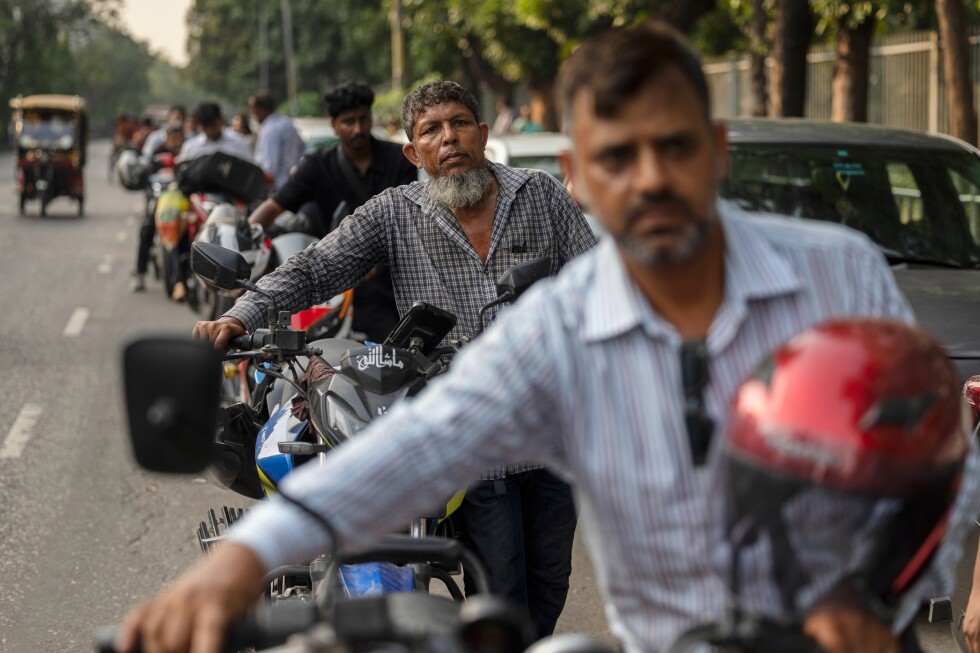
DHAKA, Bangladesh (AP) — Tariqul Islam lost his savings after setbacks in his clothing business about a year and a half ago and turned to ride-sharing on his motorbike to make ends meet. Until recently, he spent hours in fuel lines as supply disruptions linked to the war in Iran ripple into Bangladesh.
The 53-year-old father of four fears the strain will worsen if the war drags on, saying long hours waiting for fuel have sharply cut his income and made it increasingly difficult to support his family in Dhaka, the nation’s capital, including a daughter at university and a son in college.
“My family was managing fairly well through ride-sharing,” he said. “But after the fuel shortage began, I would buy fuel one day and run the bike for two days. As a result, I had to sit idle for one day, which reduced my income.”
The strain in Islam’s household reflects a broader squeeze in Bangladesh, heavily dependent on imported fuel, where energy shortages have disrupted daily life, slowed industrial output and raised concerns about economic growth as global tensions push up costs and strain supplies.
Advertisement
Conditions have eased slightly in recent days, with shorter queues at fuel stations after the government increased supplies, but concerns persist across sectors.
Across Asia, governments are facing similar strains as the war-driven surge in energy prices rattles economies dependent on imported oil and gas.
Higher fuel costs are leading to inflation and squeezing household budgets, while industries from manufacturing to transport are facing rising operating costs and supply disruptions.
Advertisement
The Asian Development Bank in late April cut growth forecasts for developing Asia and the Pacific, warning that war-driven energy disruptions would slow economies and fuel inflation. It now expects growth of 4.7% in 2026, with inflation rising to 5.2% as oil prices climb and financial conditions tighten.
Many are hoping for a quick end to the conflict and a return to normal.
“If this situation continues, we will have to move back to our village and find some other way to earn a living,” Islam, the struggling father said. It is not possible to survive in Dhaka by doing ride-sharing under these conditions.”
Energy crunch weighs on Bangladesh’s economy
Rising energy prices are also expected to strain Bangladesh’s finances, with the government likely to spend an additional $1.07 billion on LNG subsidies in the April-June quarter alone if global prices remain high.
Advertisement
Bangladesh has sought supplies from its big neighbor India, which has responded positively as it has diversified sources, including Russia, of fuel.
Already, authorities have imposed austerity measures to manage the crisis as global lenders warn of slower growth in the nation of more than 170 million people. Gas and diesel shortages have triggered more frequent power cuts in industrial zones.
The government has also shut fertilizer factories to divert gas to power plants, restricted evening hours for shopping malls and introduced fuel rationing.
The World Bank said in April it expects growth in Bangladesh to slow to 3.9% in the fiscal year ending in June 2026, warning that a prolonged Middle East conflict could fuel inflation, widen the current account deficit and strain public finances through higher energy subsidies.
Advertisement
Jean Pesme, the World Bank’s division director for Bangladesh and Bhutan, said the economy already faced “pre-existing vulnerabilities and challenges, in particular on the economic and employment front.”
The rising costs now are “obviously making the fiscal situation more difficult.”
He also warned that authorities should be cautious in raising fuel prices, saying higher costs could hurt farmers and agriculture.
Bangladesh garment industry is hit as exports slow
The energy crunch is also driving up costs and threatening Bangladesh’s garment exports, the backbone of its economy, business leaders say.
Advertisement
Anwar-Ul Alam Chowdhury, president of the Bangladesh Chamber of Industries, said exports to Europe and the U.S. could face a significant setback. Shipments have fallen between 5% and 13% in recent months, he said. He worries that customers could lose confidence in Bangladesh’s ability to deliver and that competitor nations such as India, Vietnam and Cambodia could gain market share if the crisis persists.
Chowdhury said factory output has dropped by 30% to 40% for various reasons and that the situation has worsened since the U.S. and Israel launched their war against Iran, while business costs have risen by about 35% to 40%.
Bangladesh, the world’s second-largest garment exporter after China, earns about $39 billion annually from the sector, which employs around 4 million workers, mostly women from rural areas.
Alvi Islam, director of Arrival Fashion Limited, said manufacturers are facing higher costs for petroleum-based materials such as sewing threads, poly bags — plastic bags used in packaging — and cartons, while spending more on diesel generators to cope with frequent power cuts.
Advertisement
His company, which exports products worth about $40 million annually, now runs generators at least four hours a day during production.
“For that reason, the cost of doing business for exporting garments has increased quite significantly in past one month,” he said.
Workers worry about livelihoods
Garment worker Mosammet Runa, 35, said she fears for her family’s future if the war continues.
“Millions of people like us depend on this industry. It is how we survive,” said Runa, who, along with her husband, earns about $400 a month to support their family of six.
Advertisement
She said a prolonged conflict could wipe out jobs and called for an end to the fighting.
“We are innocent people. The world should not make us victims,” she said.
___
AP journalist Al Emrun Garjon contributed to this report.
British passengers are now preparing to be flown home to isolate at Arrowe Park Hospital on the Wirral
11:04, 10 May 2026Updated 11:04, 10 May 2026
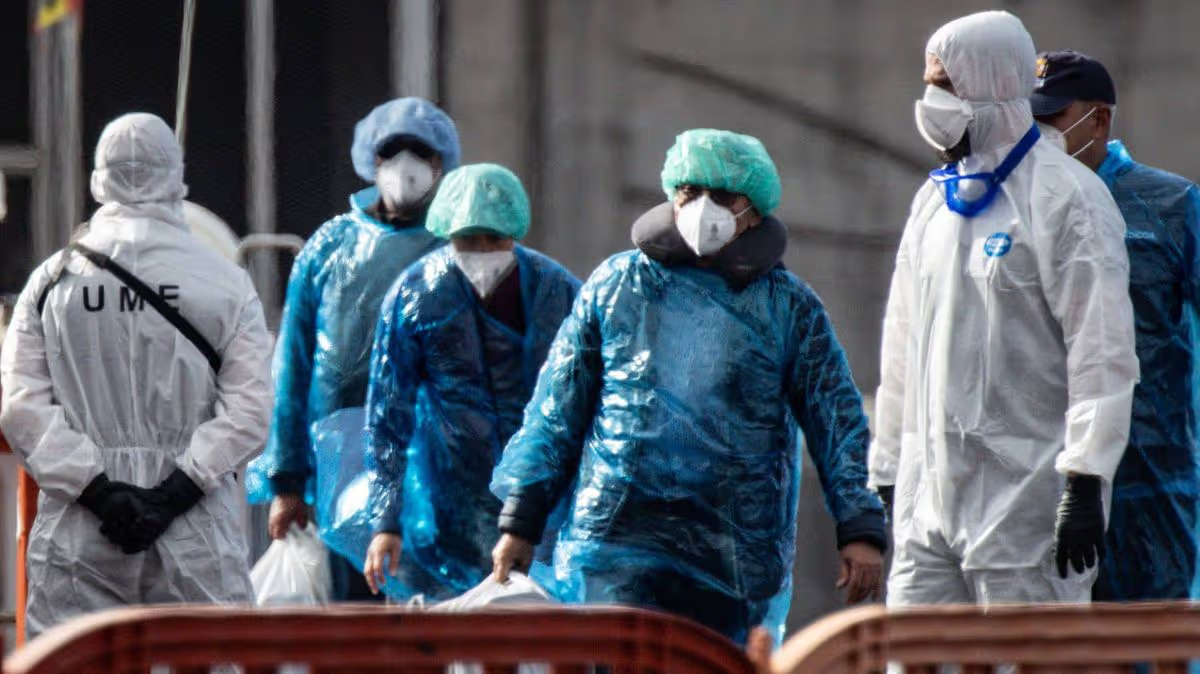
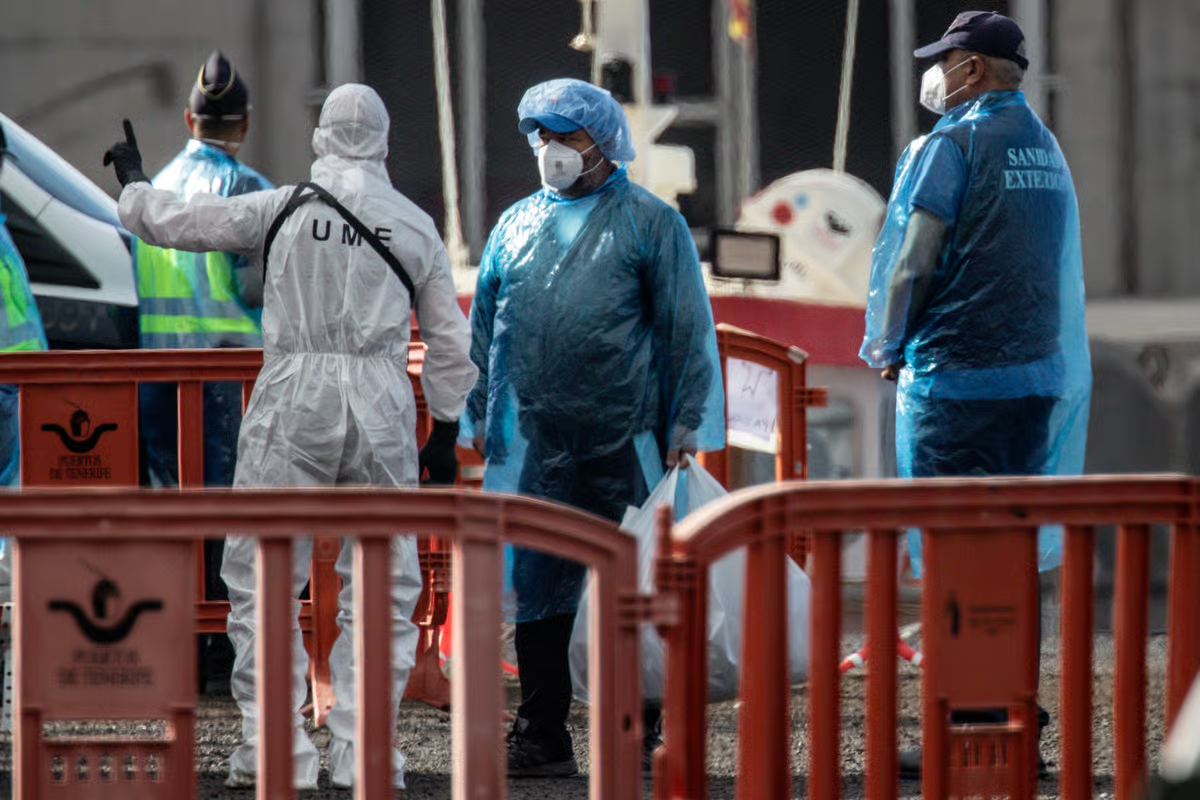
Passengers are being removed from a cruise ship struck by a hantavirus outbreak this morning, as the MV Hondius has docked in Tenerife.
British nationals aboard are now making preparations to be transported home for isolation at the UK’s original Covid quarantine location. The MV Hondius reached Tenerife on Sunday morning, with Spain commencing evacuations of the vessel organised by nationality.
The UK Health Security Agency (UKHSA) confirmed British passengers will be relocated to an isolation facility at Arrowe Park Hospital on the Wirral, Merseyside, following their repatriation to the UK via a chartered flight. Representatives from the UKHSA and Foreign Office were scheduled to meet the MV Hondius upon its arrival in Tenerife, one of Spain’s Canary Islands, with British nationals aboard undergoing hantavirus testing prior to disembarkation.
Advertisement
Should individuals test negative and show no symptoms, they will be transported directly to a chartered repatriation flight staffed by medical professionals and equipped with personal protective equipment including face masks.
In a social media statement on Sunday morning, World Health Organisation (WHO) director-general Dr Tedros Adhanom Ghebreyesus stated: “The disembarkment of the first group of MV Hondius passengers has started. WHO experts on the ground are working with the Spanish Health Ministry on the epidemiological assessment of the passengers and coordinating charter flights with the Interior Ministry.” Upon their arrival back in the UK, passengers will be accommodated in a dedicated facility at the Arrowe Park site, separated from the hospital’s main public zones, where they will undergo medical evaluations and screening as a safety precaution. The site previously served as the UK’s initial Covid quarantine site, with blue tarped fences surrounding accommodation blocks being installed on Sunday morning, reports the Irish Mirror.
Emergency authorities across the North West region indicated passengers would remain in the “managed setting” for as long as 72 hours. They confirmed the NHS Trust and hospital continues “operating as normal” with no danger posed to patients, visitors or staff, emphasising that “people should continue to come forward for care as usual”.
Advertisement
After completing their isolation period, public health experts will determine whether individuals can self-isolate at their own residences or at alternative appropriate venues depending on their domestic circumstances. British nationals returning home will remain in self-isolation for 45 days and will be prohibited from using public transport to reach their destinations.
The WHO confirmed on Saturday that no passengers aboard the MV Hondius were displaying symptoms, while the UKHSA maintained the threat to the public “remains very low”. The UN health body reported six confirmed hantavirus infections associated with the MV Hondius, with four patients presently receiving hospital treatment.
The health body confirmed that a total of eight cases, including three fatalities, had been documented – with one previously suspected case being reclassified following a negative hantavirus test. The UKHSA stated that three British citizens are amongst the eight cases – two involving confirmed hantavirus and a third suspected case.
Advertisement
The two confirmed British cases are receiving hospital treatment in South Africa and the Netherlands, while the third British citizen with a suspected case is receiving support on the British overseas territory of Tristan da Cunha, where they reside.
Six paratroopers, alongside an RAF consultant and Army nurse from 16 Air Assault Brigade, were parachuted onto the South Atlantic island, with oxygen supplies and medical aid also dropped on Tristan da Cunha, which is typically accessible only by sea.
The Ministry of Defence (MoD) confirmed this marked the first occasion that medical personnel had been parachuted in to provide humanitarian support.
Ensure our latest news and sport headlines always appear at the top of your Google Search by making us a Preferred Source. Click here to activate or add us as Preferred Source.
He added: “Spain’s authorities have prepared a careful, step-by-step plan: passengers will be ferried ashore at the industrial port of Granadilla, far from residential areas, in sealed, guarded vehicles, through a completely cordoned-off corridor, and repatriated directly to their home countries.”
Lucius Books has moved into its new store at 70 Micklegate.
The specialist traders have been a staple of York since 2004 and began a restoration project to transform the shop – once home to Ken Spelman Booksellers – three years ago.
Recommended reading:
The company, which started trading in rare works in 1993, has steadily grown over the years and opened a larger premises at 144 Micklegate in January 2019.
Advertisement
The book company has settled into the historic four-storey building dating back to the 1500s (Image: Newsquest)
The man behind it, James Hallgate, told The Press in January 2026 that the store’s Grade II* listed building, originally built around 1500, had needed extensive work.
He said: “The roof and guttering needed replacing. There was little in the way of modern conveniences such as heating, and the building needed completely rewiring.
“We were able to return several aspects of the building to the original layout, for example uncovering the original cellar stairs.
“Then it was a case of bringing the building up to modern standards of efficiency, in an environmentally conscious manner that respects its history.”
Advertisement
The store features books and art spread across two floors. The historic building, once home to Ken Spelman Booksellers, took three years (Image: Newsquest)
The original stairs down to the building’s cellar are a prominent feature in the bookshop, with visitors able to look at the piece of history below their feet through a viewing glass set in the floor.
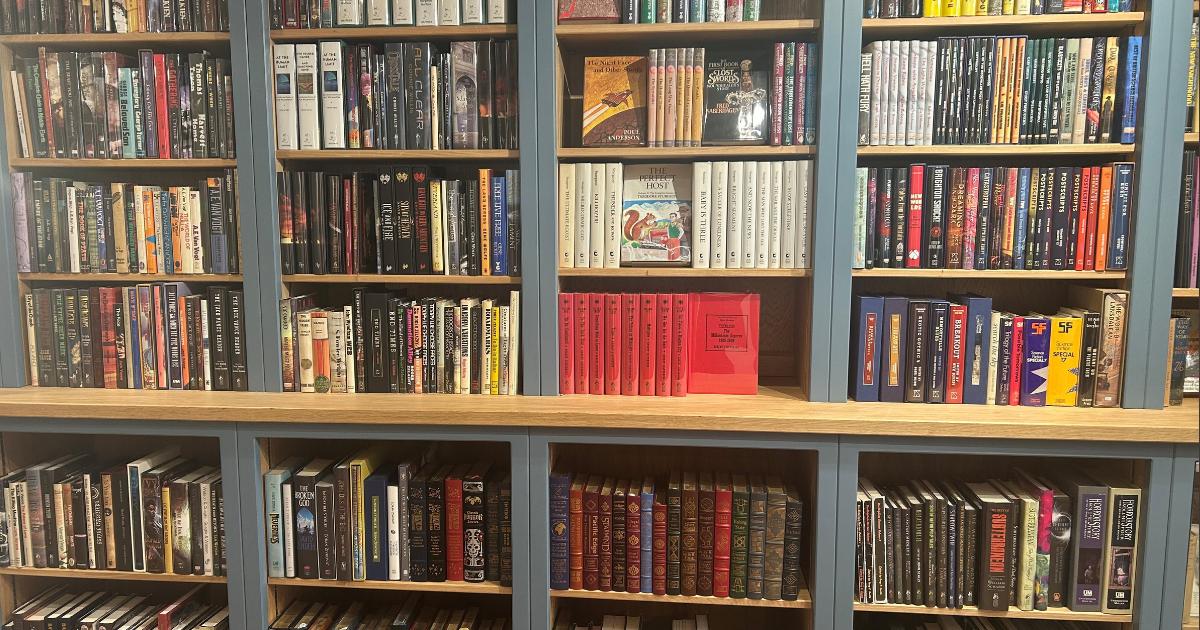
The shop’s bespoke shelving is filled with hundreds of one-of-a-kind, antiquarian books, which have been individually selected and catalogued by a member of James’s team.
Speaking about this, James said: “Building a large stock book by book is a labour of love, and some books are in our hands only for a matter of hours before they are off to a new home.”
Hundreds of years old, the stairs to the buildings cellar are a feature in the store, visible by a floor viewing glass (Image: Newsquest)
James first started dealing in rare books aged 16 after attending book fairs with his father.
Advertisement
After more than three decades building his collection, James has grown Lucius Books into one of the most prominent dealers of rare books and manuscripts in the north.
He is an elected member of council for the Antiquarian Booksellers Association and chair of its standards committee.
He also runs two of the largest book fairs in the UK and is a faculty member of the York Antiquarian Book Seminar.
For more on James and Lucius Books, please visit here.
Reform UK deputy leader Richard Tice has refused to condemn one of his party’s new councillors who said Nigerians should be melted down to fill potholes.
Glenn Gibbins, who was elected in the Hylton Castle ward in Sunderland on Thursday, made the remarks on social media in 2024.
He was one of 1,500 new Reform councillors elected as Labour’s vote collapsed in its traditional heartlands.
On the BBC’s Sunday with Laura Kuenssberg programme, Tice repeatedly refused to condemn the remarks, and accused Reform’s critics of “smearing and sneering”.
Advertisement
Attempting to deflect from the row, he added: “I’m going later to a campaign against the scourge of anti-semitism, which is the greatest threat facing us, particularly in London but elsewhere across the UK. That’s what people are really concerned about. If people have said daft things, of course it’ll be looked at.”
Kuenssberg told him: “One of your new Sunderland councillors, so a man who was elected to represent Reform, suggested melting Nigerians to fill potholes. Is that person who has expressed those views someone you are happy to see represent Reform?”
Tice replied: “Laura, this weekend we are celebrating our incredible successes. Like any party, you have internal processes to look at where people have said or done the wrong thing.”
Asked if he condemned the remarks, Tice said: “I condemn anything that is wrong or inappropriate.”
Advertisement
But asked if he condemned the councillor’s specific comments, he dodged the question and said: “The key thing is voters have heard all of this smearing and this sneering against all of us and they voted for more Reform because they want action, they want delivery. They’re sick of the failures of the Tories and Labour.”
Wath Richard Tice(Reform MP) refuse to condemn outright a newly elected Reform Sunderland councillor for suggesting “melting Nigerians to fill potholes.” #bbclaurakpic.twitter.com/4HboXUfxpn
Subscribe to Commons People, the podcast that makes politics easy. Every week, Kevin Schofield and Kate Nicholson unpack the week’s biggest stories to keep you informed. Join us for straightforward analysis of what’s going on at Westminster.
Moreover, those who voted for Reform and the Greens have now seen that a vote for their parties can in fact result in them winning seats. With just a handful of results yet to be declared, the joint tally of council seats won by Reform and the Greens stands at 2,063, almost 200 more than the total of 1,864 won jointly by the Conservatives and Labour. Meanwhile, Britain’s traditional third party, the Liberal Democrats, have won 842 local council seats too.
Celtic aiming to extend winning streak with Hearts in their sights
Celtic are the league’s in-form side under Martin O’Neill, winning four in a row since a 2-0 defeat at Dundee United in mid-March. They left it late to beat 10-man Hibs last weekend and can now trim Hearts’ advantage to one point with a win over Rangers at Parkhead.
That would mean the title is in Celtic’s hands heading into the final two games of the season: a trip to Motherwell on Wednesday and, gulp, a home match against Hearts on the final day of the season next Saturday lunchtime.
Advertisement
Jamie Braidwood10 May 2026 09:05
Good morning
What next in this thrilling title race? It’s only the small matter of an Old Firm between Celtic and Rangers, neither of whom are leading the way with just a week of the season remaining. That’s because Hearts, bidding for a first league title since 1960, went four points clear at the top last night.
It sets the stakes for this afternoon perfectly. Celtic have to win and can reduce the deficit to just one point if they do. Rangers are definitely in must-win territory, and need a miracle too. We’ll have all the build-up between now and 12pm.
When reports emerged that hundreds of people had been killed in an attack on a primary school in southern Iran, a small team of investigators rushed to social media.
It was the first day of the joint US-Israeli strikes, and misinformation began to spread online. Restrictions imposed by Iranian authorities made it dangerous for people who witnessed the strike to speak out.
That left the Human Rights Watch’s digital investigation team with the critical task of uncovering the facts and establishing the truth surrounding the attack.
The team of eight, which investigates war crimes worldwide, immediately got to work, painstakingly analysing every piece of digital evidence to reconstruct the events of what has been one of the deadliest incidents in the ongoing war in the Middle East.
Advertisement
From their offices in London, Berlin, Geneva, and California, they scoured social media for any footage or information they could find.
The digital investigations team analysed the attack on a primary school in southern Iran (Human Rights Watch)
Over the next week, they spent hours verifying and analysing scores of videos and photographs recorded immediately after the strike or during search-and-rescue operations, as well as from funerals.
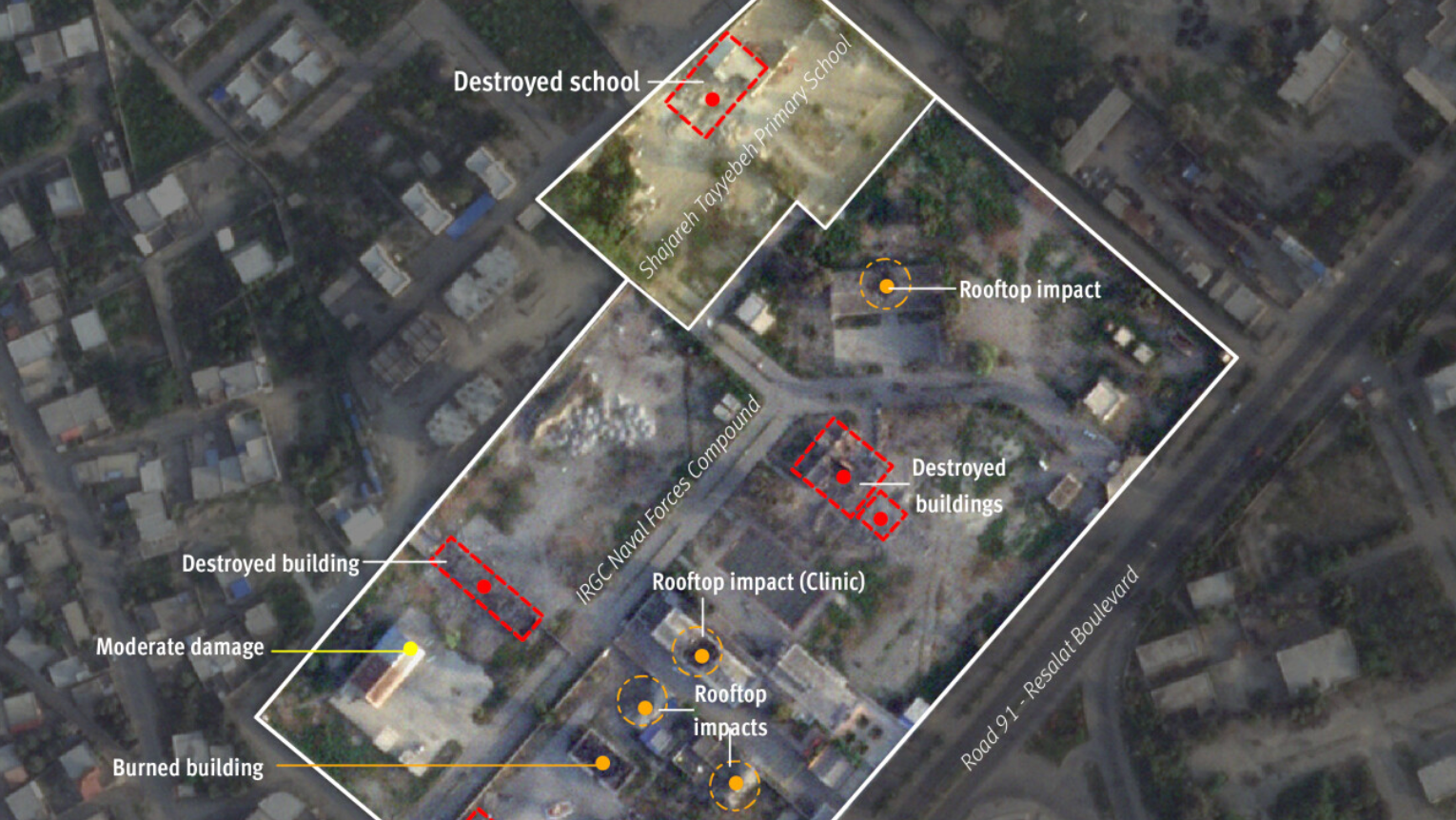
Satellite images from the past 25 years were reviewed by the team and compared to those captured following the attack. They showed both the site and the nearby cemetery where victims were apparently buried.
They revealed that at least eight structures across the compound had been directly struck by munitions, including at least one that had been hit and severely damaged the school.
Sophia Jones, who is part of the team, said: “A prompt and thorough investigation is needed into this attack, including if those responsible should have known that a school was there and that it would be full of children and their teachers before midday.”
Advertisement
A report was published a week later, which called for the US and Israel to immediately assess their responsibility and prosecute anyone responsible for war crimes.
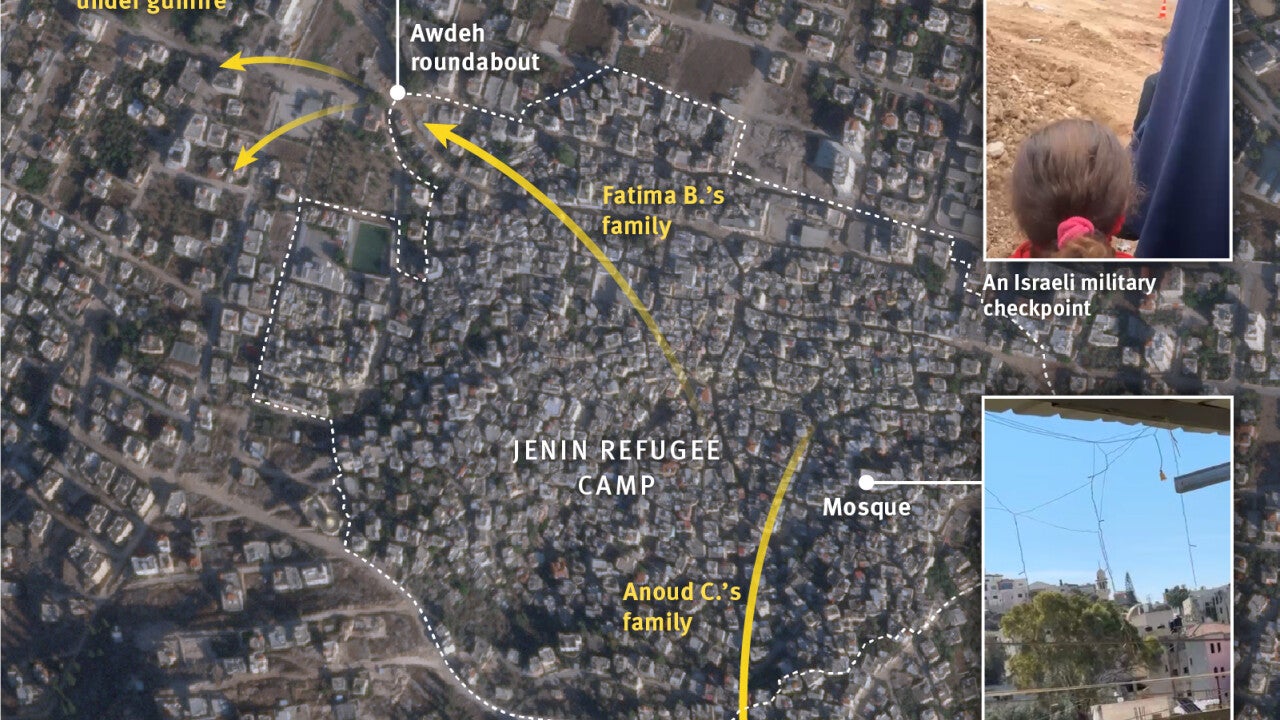
The team investigated Israel’s displacement of Palestinians in the West Bank (Human Rights Watch)
What is the digital investigations lab?
The case is one of many for the team, whose work ranges from tracking down suspected criminals to analysing immigrant deportation patterns, using technology to investigate conflict violations and human rights abuses worldwide.
Dubbed the team’s digital investigations lab, the team uses social media, artificial intelligence, and satellite imagery to identify and hold perpetrators to account by documenting crimes and abuses.
Their work spans protests in Europe and conflicts in the Middle East to deaths in custody in El Salvador, as well as violence in countries including Burkina Faso, Sudan, and Myanmar.
Advertisement
The team was established a decade ago and investigations can take anywhere from days to years. Their findings are published reports, which expose wrongdoing and aim to put pressure on governments and policymakers to act.
Sam Dubberley, who directs the organisation’s technology, rights and investigations division, said the work is essential at a time of rapid misinformation.
“It’s definitely becoming a much faster space where human rights defenders are under a lot more pressure than they ever used to be,” he told The Independent.
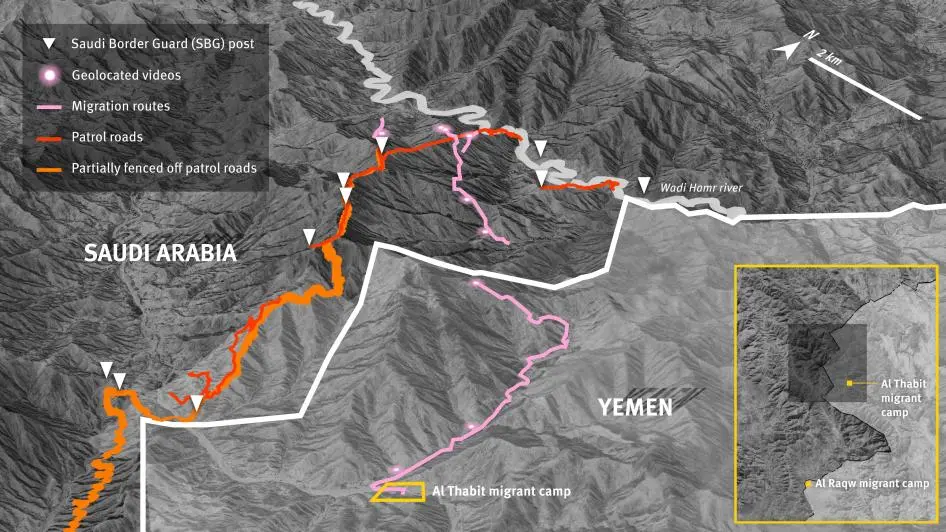
3D model of likely Saudi border guard posts and patrol roads near fences identified with satellite imagery (Human Rights Watch)
How are they using technology?
The team is constantly across social media platforms, hunting for photos, videos, or audio of attacks, which they verify and fact-check.
Advertisement
They investigate military units, alleged perpetrators, or victims to determine who they are, what they have posted online, and whether there is evidence they were involved in a crime.
“People post videos that you think they never would, often in spaces where they think it’s not so public, like smaller Telegram groups,” Mr Dubberley explained.
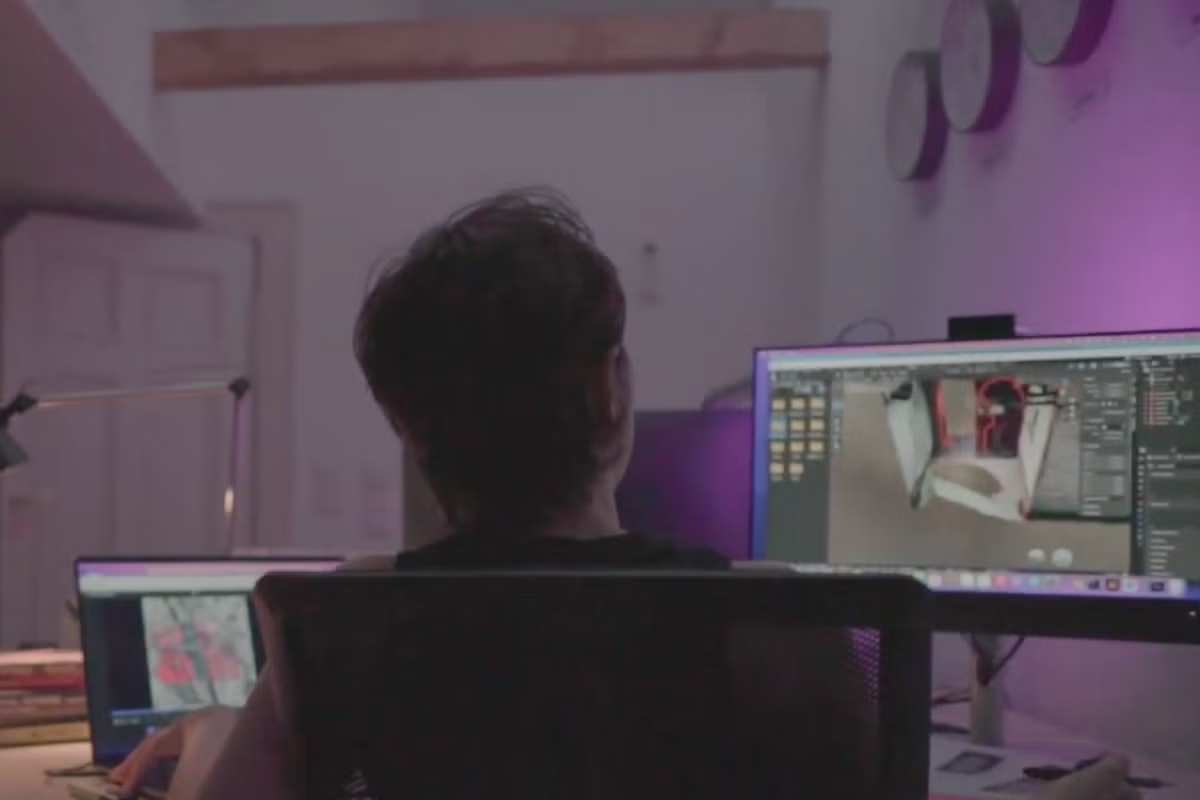
One of their main tools is satellite imagery analysis, which is used to track the destruction of villages or sites. They painstrakingly reconstruct areas of attacks using 3D models to provide clear evidence of the before-and-after effects.
Artificial Intelligence is an essential part of their operations, helping them gather data from foreign government websites or mine data sets for patterns in arrest rates.
Advertisement
Earlier this month, they published a two-year-long report into civilian killings in Burkina Faso. The team used AI to uncover essential information and analyse nearly 40,000 posts, which exposed the activities of perpetrators at a scale that would have been impossible to cover otherwise.
Where are they working?
Digital tools have made it possible for the team to investigate alleged crimes everywhere, including in countries where they can’t enter, such as Russia, Iran, or Myanmar.
Advertisement
Mr Dubberley said: “Technology allows us to look over those walls that are being built, even in places like China. Looking over the Great Firewall, it’s very hard, it’s very difficult, it requires brave people, but it’s possible.”
Iran’s internet blackout has made it difficult for them to obtain and verify information, but they are still able to reach sources via WhatsApp, Telegram, and other social media. “People know technology is key for them to have their stories told,” Mr Dubberley added.
“We know that capturing their stories and verifying them is a really important way for us to do our work, and for us to achieve accountability and prevention.
“It’s important, of course, to investigate what’s going on in the Middle East right now. It’s important to investigate what’s going on in Ukraine, and we do that.
Advertisement
“But it’s also really important to make sure that we have the resources to investigate situations that are forgotten.”
What have they achieved?
One of their biggest achievements, Mr Dubberley said, was a 2023 report that found that Saudi border guards had killed hundreds of Ethiopian migrants and asylum seekers who tried to cross the Yemen-Saudi border between 2022 and 2023.
The organisation was able to map the route used to cross the border thanks to geospatial and open-source researchers from the digital investigations team, who verified videos and images recorded by migrants and border residents.
Advertisement
Analysis of satellite imagery allowed them to assess the development of security infrastructure on the border and identify burial sites near migrant camps, which had grown considerably.
Following the report, the German Justice Ministry suspended its training programme for Saudi Arabian border guards.
“We got so many media hits, that was part of the strategy, to embarrass Saudi Arabia as much as anything else, to see if we could get the killings to at least slow down, and for a while at least, they did,” Mr Dubberley concluded.

















































You must be logged in to post a comment Login