The male was arrested after aa foot chase with officers
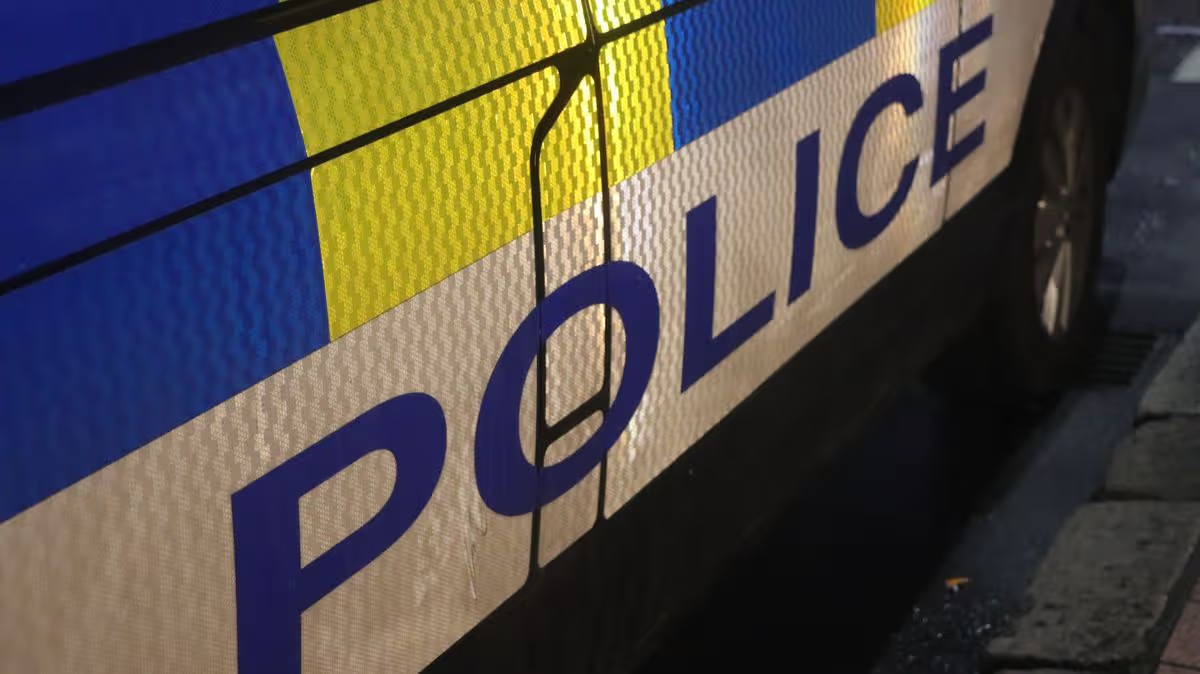
A male who was armed with a knife and a knuckle duster has been arrested in North Belfast after trying to gain access to a property in the Woodvale area.
Advertisement
Police were called to the incident on Monday, April 7, following reports of a man armed with a knife trying to get access to a property with officers attending the scene and chasing a suspect.
The male was caught and searched by officers who found a knife, knuckle duster and drugs. They were then arrested on suspicion of a number of offences.
A PSNI spokesperson said: “Last night, your local officers responded to a report in the Woodvale area that a male was trying to get access to a property armed with a knife.“Police attended and after a foot chase safely detained the suspect a short distance away.“The male was searched and a knife, knuckle duster and drugs were located. The male was arrested for a number of offences including Possessiong of an Offensive Weapon.“Knife crime has devastating consequences. Carrying a weapon doesn’t make you safer it puts lives at risk, including your own.“Our officers are committed to protecting the public every single day. They will continue to act swiftly to keep our communities safe.”
“Now that Balmoral is more publicly accessible, it’s possible to appreciate how central the Prince Consort’s interests in architecture, design, landscaping and estate management were to its creation, and how effectively the King, who shares these passions, has added a new layer of interest and style, while preserving and enhancing the original.”
The hit BBC show’s newest adventure, Circuit Breaker, releases in just a few weeks.
Circuit Breaker is a major, interconnected multimedia storytelling event centring around the Fugitive Doctor, played by Jo Martin.
It will span audio dramas by Big Finish Productions, as well as novels, comics from Titan Comics, mobile games, and digital platforms to unfold a single escalating crisis.
Advertisement
Doctor Who teases return of Osgood 11 years since character was last seen
Jo Martin’s Fugitive Doctor was first introduced in 2020 alongside Jodie Whittaker’s 13th Doctor, in the episode titled Fugitive of the Judoon.
Martin has since appeared in several Big Finish Productions audio dramas depicting stories starring the Fugitive Doctor.
However, she is not the only returning Doctor Who character for the Circuit Breaker storyline.
Ingrid Oliver will also be reprising her role as Petronella Osgood, having previously played the character opposite the 10th, 11th and 12th Doctors, played by David Tennant, Matt Smith and Peter Capaldi.
Osgood was a scientist who worked for UNIT, working as an assistant to Kate Stewart, and notably first appeared in the show’s 50th anniversary, The Day of the Doctor, in 2013.
Advertisement
She was last seen in season 9’s The Zygon Inversion, back in 2015.
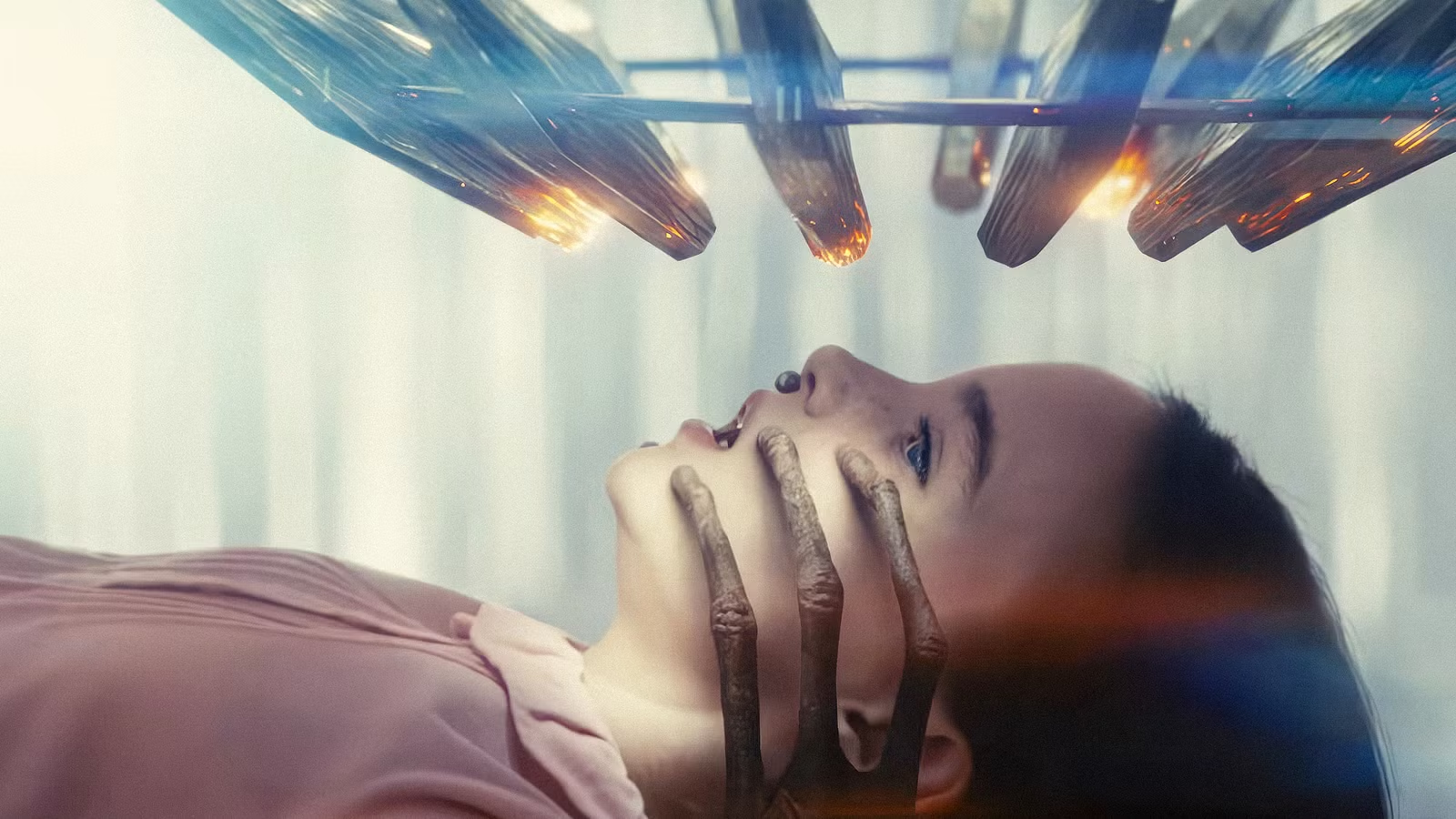
Now, a new image teasing Osgood’s return was posted to the show’s social media, with the caption: “Osgood is awaiting YOU in the Black Archive! Sign up to UNIT HQ on the #DoctorWho website for exclusive access to the first instalment of CIRCUIT BREAKER, coming 25th June!”
Osgood is awaiting YOU in the Black Archive! 🫵🌐
Sign up to UNIT HQ on the #DoctorWho website for exclusive access to the first instalment of CIRCUIT BREAKER, coming 25th June! pic.twitter.com/iOLmeKOY6o
Circuit Breaker was originally revealed by BBC Studios last year.
It is an “epic, multi-platform adventure unfolding this summer across audio, publishing, gaming and digital, bringing fans together for one connected, must-follow Whoniverse event”, the Doctor Who website says.
It explains: “The story event will see a single, escalating crisis play out across multiple formats, with each chapter unlocking new clues, new dangers… and a new side to the Time Lord.
“Circuit Breaker brings together a range of longstanding Doctor Who partners, including Titan Comics, Doctor Who Magazine, BBC Audiobooks, East Side Games, Puffin, BBC Books and Big Finish, each delivering a unique chapter of the story across the summer.”
Advertisement
The first chapter of the story launches on the in-universe UNIT website on June 25.
A synopsis for the story reads: “In the depths of UNIT’s most secure facility, the Black Archive, familiar objects have been pulled through time and space surrounded with a dangerous energy signature threatening to tear reality apart.
“With time running out, newly appointed Head of the Black Archive, Osgood (Ingrid Oliver) and her assistant Andrew (Omari Douglas) turn to the only person who can help… the Doctor (Jo Martin).
“This is no ordinary crisis, and not the Time Lord they are familiar with.
Advertisement
Recommended reading:
“As the Doctor confronts her most infamous enemies such as the Daleks, Cybermen, Sontarans and a rogue Weeping Angel, she is forced to complete a mission with an insidious presence lurking in the shadows.
“Secrets begin to surface, and trust between UNIT and the Doctor begins to erode as those who idolise her start to question if she really is the Time Lord they thought they knew…”
Will you be following along with Doctor Who’s Circuit Breaker storyline this summer? Let us know in the comments.
Will this week be one to remember or a damp squib? (Summer Game Fest)
The Monday letters page is loving 007 First Light and its amazing montage, as readers are glad that Fable has been pushed back until next year.
Games Inbox is a collection of our readers’ letters, comments, and opinions. To join in with the discussions yourself email gamecentral@metro.co.uk
A promising week It’ll be Monday by the time you show this (if you show it!) and what I’m hoping will be the biggest week for video games this year. We’ve got the State of Play on Tuesday, Summer Game Fest on Friday, and Xbox on Sunday. I’m also seeing rumours of Nintendo on Thursday but if not they’ll be sometime this month I should think.
There’re usually two candidates for the biggest moments on the gaming calendar, with not-E3 week and The Game Awards. Although this year you’ve also got the launch of GTA 6. That’s obviously the biggest overall, but I’m hoping this week will be the biggest in terms of reveals and news and general upbeat-ness.
Advertisement
We’ve had a few years like this now, but 2026 really is shaping up to be an ugly mixture of great game releases and absolutely everything else about the industry being awful. I’m hoping that this year we get a lot of positive news, not just of new games, but maybe new hardware, lowering prices, and Nintendo, Sony, and Microsoft acknowledging the problems and saying they’re going to do better.
I know I’m being naïve there, but I hope we get something to be optimistic about for all three formats. It feels like a long time since we’ve had optimism in anything and it’s starting to wear on me. Crispin
Expert, exclusive gaming analysis
Sign up to the GameCentral newsletter for a unique take on the week in gaming, alongside the latest reviews and more. Delivered to your inbox every Saturday morning.
Advertisement
Yearly Call So Fable is delayed till 2027. I’m surprised Call Of Duty hasn’t been delayed, I know some people would rather play Call Of Duty back in the day. I’d choose Call Of Duty over everything but times really have changed. Wasn’t so long ago Xmas number one was always Call Of Duty, now it’s Battlefield or EA Sports FC but when a company says there going to make $8 billion in the first year of a game coming out everyone knows you don’t release a game a month before or a month after.
Maybe give it a good five months for that and as big as Call Of Duty was it won’t make £1.5 billion in the whole year before the next one comes out, never mind the $8 billion Rockstar are saying it’s hoping it will do. If I was Microsoft, I’d delay it. I really would, because I’ve got a feeling on November 19th, on my friend’s list, it’s going to be saying GTA 6 they’re playing. Call Of Duty is a big game but compared to what GTA 6 is going to be, it’s going to make Call Of Duty look like an ant on a hilltop. David
GC: You are grossly overstating how much Call Of Duty’s popularity has dwindled. Its reveal trailer is now at 48 million after just three days. Plenty of games are coming out within five months of GTA 6, including Fable.
Advertisement
Back to school Can’t say the Persona 6 leaks were particularly interesting… I mean, the characters have some high school anime designs that are slightly different to the high school anime designs of the last lot. Great, tell us something we don’t know.
However, I wonder where they’re going to take the franchise generally? Persona 5 was such a great realisation of the concept that I’m struggling to come up with something that wouldn’t be a step backwards. It’s as perfect a piece of young adult fiction as I can remember, up there with other media like Harry Potter or Hunger Games. Also, despite the anime inflection the games story is as relevant today as it was in 2016, if not more so. It feels like they had a real lightning in a bottle moment, so no wonder it’s taken them a while to come up with the follow-up.
The quality of Metaphor: ReFantazio shows Atlus still have the talent to pull something out the bag. That game shows where obvious improvements could come about too… in the technology. It’s a great game but the art design carries it and it looks terrible on my 4KTV, it’s basically a PlayStation 3 game. Post Clair Obscura they need to up their game, though Persona 6 has been in development for years at this point, so is likely similar. Even Atlus’s own Shin Megami Tensei 5 in Unreal 4 looks far better, especially after it was ported to modern platforms from Switch. Marc
Best. Montage. Ever. Having just completed the Malta training sections, I’m enjoying 007 First Light. During the opening mission the game did feel like it was on autopilot a bit, but I must say that with regards to the game’s locations, characters, and dialogue the developers really have managed to capture the essence of Bond, and it was a great relief to me that the man himself isn’t annoying at all.
What I found particularly interesting during the Malta training mission was the playable montage. So here the game was cut together just like a film. Bond/the player starred in a series of short playable scenes in slightly different locations. I wonder if this cinematic device has been used in other games. This was the first time that I’ve seen it implemented. I think the technique worked because it gave the player different things to do while driving the narrative forwards at an entertaining pace.
I’m looking forward to seeing what else First Light has to offer. Personally, I’d like a bit more gunplay but otherwise so far so good. Michael Veal (@msv858)
Don’t miss Gaming news! Add us as a Preferred Source
As a loyal GameCentral reader, we want to make sure you never miss our articles when searching for gaming stories. We have all the latest video games news, reviews, previews, and interviews, with a vibrant community of highly engaged readers.
Advertisement
Click the button below and tick Metro.co.uk to ensure you see stories from us first in Google Search.
GameCentral has been delivering unique games news and reviews for over a decade
Max disappointment My PS5 has stopped working in this heat, so I’ve gone back to my Xbox 360 and dug out Max Payne 3. I forgot how good this game is!
Advertisement
I won’t go on a list about why but it’s hard hitting and the gunplay is second to none. I’m probably the only person on the planet who isn’t interested in GTA 6 but if they ripped off the gameplay from this then I’d buy it on day one.
An absolute classic. Simon
GC: They had the chance to do so with GTA 5, but they didn’t. So the chances seem very slim.
Wise move Sensible decision, I feel, to move Fable back to February 27. I always felt Microsoft made a mistake putting Indiana Jones And The Great Circle out in December. Made the game feel a bit of an afterthought and missed the nominations for that year’s awards.
Advertisement
It’s why I’m happy to take Microsoft’s reasons for the delay as stated and genuine, rather than just cover for it not being ready. With Wolverine in September, Call Of Duty in October, and GTA 6 in November, along with a lot of other games, it is a busy period.
Microsoft have delayed big games like Starfield and Halo Infinite, after the Craig the Brute mocking, and made no bones about the reason being they’re not ready.
It’s only really haters that respond negatively to delays for that reason. Anyone actually interested in the game would rather a delay and for it to be ready than put out unfinished. Which is why I think Microsoft would of just said that if that was the reason for Fable being moved to next year.
Microsoft even put a funny Easter egg in Halo Infinite for Craig the Brute. I say funny but as they botched the post launch content for that game, it’s more a sad testament to their incompetence rather than taking ownership of their failings.
Advertisement
Due to things like that I’m really not sure how Fable will turn out. I have my fingers crossed though and if it’s as good as Indiana Jones And The Great Circle, and deserves success, then moving it out of a busy release schedule that includes the most anticipated game ever, so it can enjoy more column inches upon release, is a sound decision. Simundo
Adding to the list Very pleased Microsoft chose to delay Fable. As an Xbox Series X owner I don’t need it this year, just my personal opinion.
And it’s one less game for me to focus on, as I still haven’t found the time for Resident Evil, Forza, or 007 First Light yet, not to mention when and if GTA 6 ever comes out. Besides, they should take their time with Fable and make it decent at least. icelticghost
Advertisement
Bond is back I completed 007 First Light over the weekend and thoroughly enjoyed it. More Uncharted than Hitman, but you can feel the influences of both.
I really enjoyed switching between melee, guns, and gadgets in combat, in a very satisfying and free-flowing way. There were a few too many situations where the game just has loads of enemies firing at you from all angles though. I died too many times during a particular part near the end.
What I would like to see is a crossover with Agent 47. They’ve already done a Bond mission in Hitman, with Mads back as LeChiffre, so I don’t see why not.
Ideally, they’d have the same event in both games, and you could play as Bond and 47 in their own games and see the same scenario from the different perspectives and skillsets.
Advertisement
I could see them having a little chat and 47 mentioning he’s never been bothered about having to have a licence in order to kill.
I’ve got the Tacsim side of the game to explore now. I’m hoping it’s not just various combat scenarios and there’s more of the Hitman style investigations and problem solving.
I hope the game sells well and iO can make the next game so heavily signposted by the events at the end. I also hope that whenever they cast the new movie Bond they don’t force him in the game and stick with Patrick Gibson as he was excellent throughout. Euclidian Boxes
Inbox also-rans Any plans to review Necrophosis: Full Consciousness? Art direction and visuals look morbidly interesting. Lizardpudlian
Advertisement
GC: Not at the moment, no.
Thank you for reminding me of the Billy Hatcher And The Giant Egg theme tune, definitely one of the all-time greats! Coursier
The small print New Inbox updates appear every weekday morning, with special Hot Topic Inboxes at the weekend. Readers’ letters are used on merit and may be edited for length and content.
Advertisement
You can also submit your own 500 to 600-word Reader’s Feature at any time via email or our Submit Stuff page, which if used will be shown in the next available weekend slot.
You can also leave your comments below and don’t forget to follow us on Twitter.
John Baker, now 69, was working a few miles off the coast of the Inner Hebrides island when he came across the strange vessel in May 2005.
Neil Pooran, Press Association Scotland News Editor and Sally Hind Deputy Chief Reporter
00:01, 01 Jun 2026
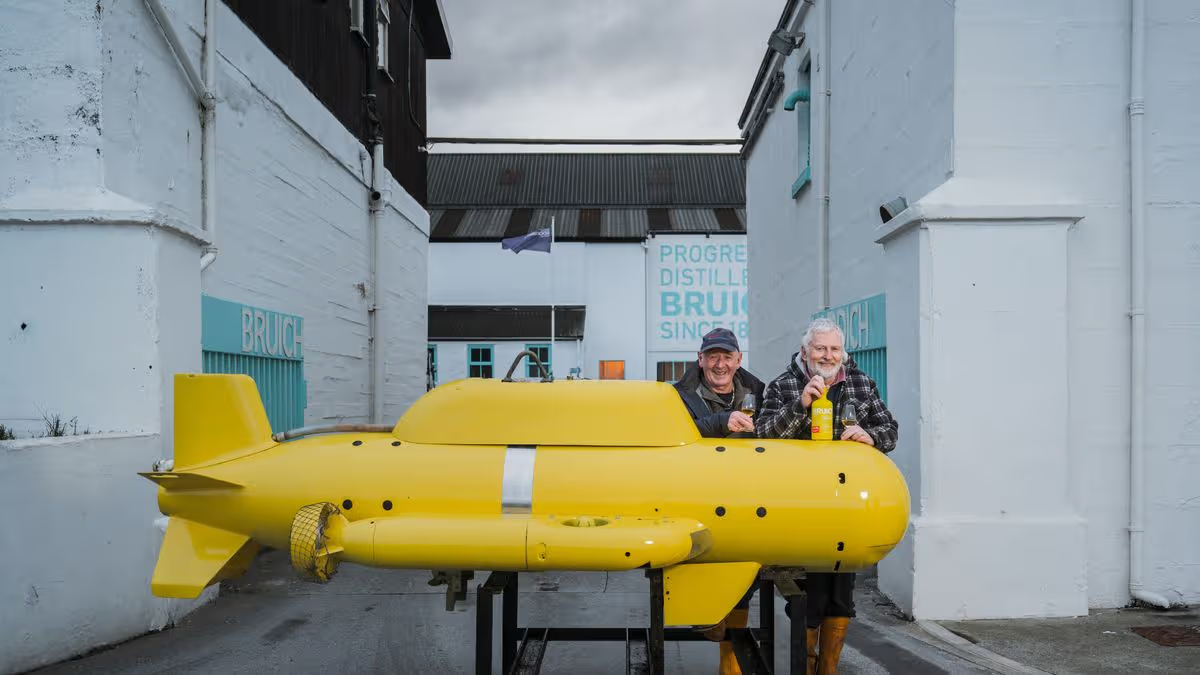
Two fishermen have recalled how they unexpectedly hauled in a “yellow submarine” off Islay more than 20 years ago, with their surprising catch prompting a months-long mystery.
John Baker, now 69, was working a few miles off the coast of the Inner Hebrides island when he came across the strange vessel in May 2005.
He reeled in the 10ft craft, which weighed around 850kg.
Advertisement
Despite Royal Navy markings on the side of the yellow submersible, the Ministry of Defence initially denied it owned it.
The submarine then found its way into the garden of Harold Hastie – Mr Baker’s brother-in-law – in Port Ellen, where it became a local tourist attraction.
The mystery around the ownership of the “yellow submarine” prompted international media attention.
Advertisement
It was only in September 2005 that the Royal Navy dispatched minesweeper HMS Blyth to retrieve the craft, after eventually admitting it was its property.
The “yellow submarine” was in fact a remotely-operated vehicle used in mine-clearing operations.
Bruichladdich distillery, which is based on Islay, is releasing a special version of its Yellow Submarine whisky this year.
In a video recorded for the distillery, Mr Baker said he initially thought the craft was some kind of buoy when he spotted it in the water, before realising it was “something significant”.
Advertisement
He said: “There was no way of getting it aboard, so we got a rope on it and started towing it.
“The weather wasn’t helping – it was hard going – but we knew we had to get it ashore and figure out what it was.
“We knew it was some kind of submersible, but we had no idea where it had come from.”
The Ministry of Defence initially denied it owned the submersible, but when the fishermen were able to provide serial numbers the official story changed.
Advertisement
Mr Hastie, now 72, reflected on the international attention created by the mystery.
He said: “It just grew arms and legs. What started as a local curiosity became something people were talking about all over the world.
“One minute it’s sitting there in Port Ellen, the next we’re doing interviews with everyone – every newspaper in Britain, BBC World Service, even calls from overseas.
“It just went mad.”
Advertisement
Mr Baker became something of a local celebrity after his discovery of the craft.
Advertisement
He said: “I didn’t buy a dram for three months.
“Everywhere you went, people wanted to hear about it.”
While the “yellow submarine” was still on the island, Bruichladdich quickly created a whisky named after the strange vessel.
The distillery is now releasing a new 14-year-old limited edition single malt of its Yellow Submarine whisky.
Advertisement
In 2018, Bruichladdich acquired and restored a replica version of the submersible.
It now stands in the distillery courtyard as a permanent reminder of the episode.
Get more Daily Record exclusives by signing up for free to Google’s preferred sources. Click HERE
Heavy rainstorms are forecast to sweep across the UK on Monday (June 1)
16:03, 31 May 2026Updated 16:11, 31 May 2026
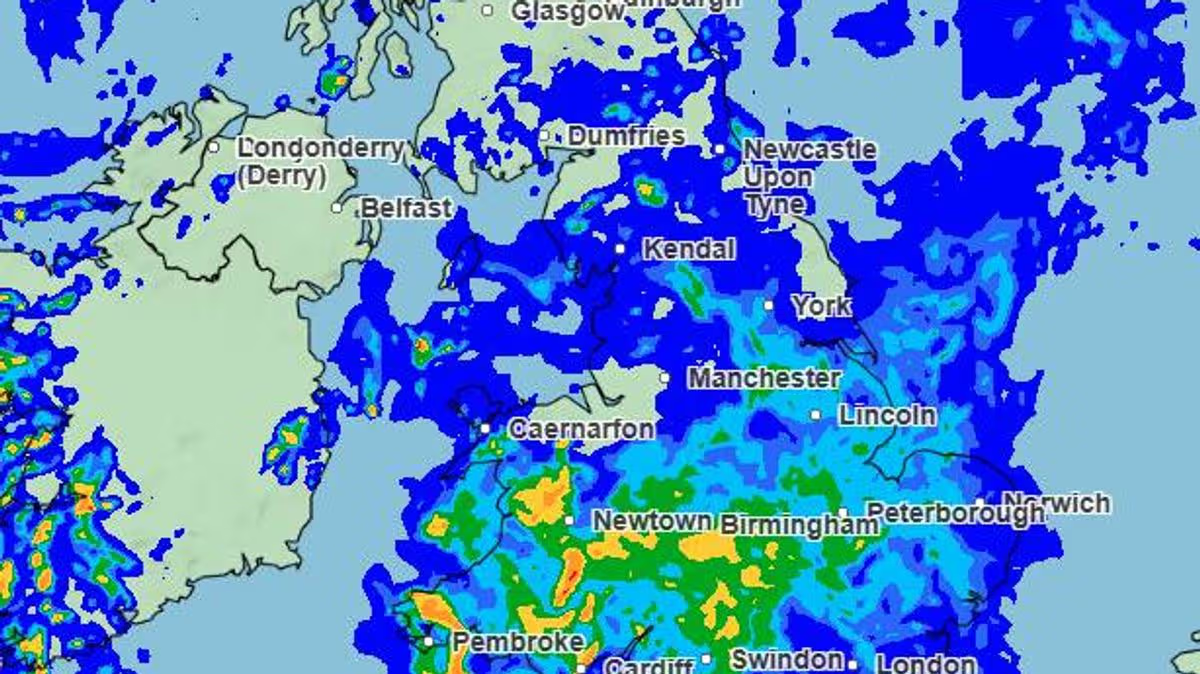
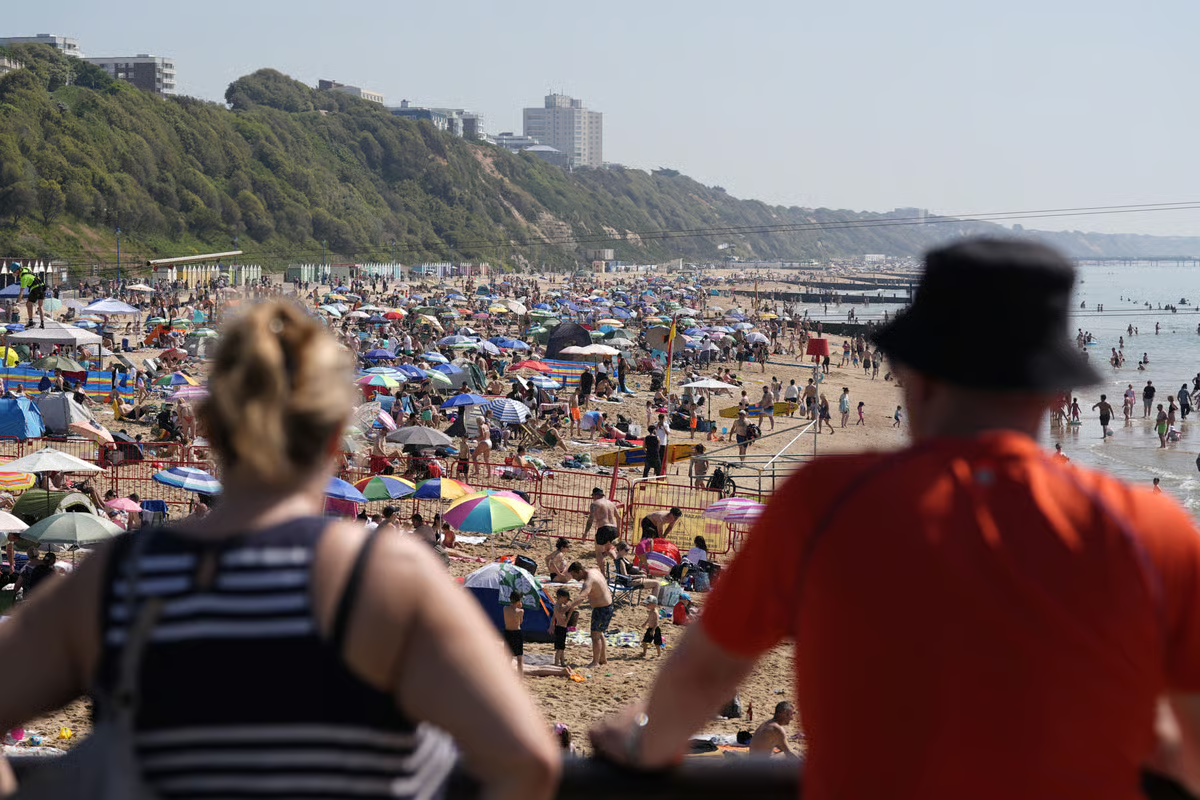
Cambridgeshire’s heatwave is due to come to an abrupt end, with heavy rain forecast for Monday (June 1). Heavy rain is due to sweep across the UK, with rainstorms forecast throughout the week, bringing an unsettled start to the summer.
Met Office weather maps indicate heavy downpours are predicted across most of the UK over a 30-hour period, initially striking Wales and parts of the north-west of England before spreading across the country, where 34 counties are in for a thorough drenching.
While the maps display a wave of blue across the UK indicating light showers, yellow markers highlight areas bracing for heavy downpours of 4 to 8mm per hour, while orange denotes even heavier rainfall of 8 to 16mm.
Advertisement
From Monday (June 1) at 1pm, rainfall is set to sweep across England, stretching well into Tuesday night at around 7pm, before clearing, affecting the vast majority of the country.
The warning comes just days after the UK recorded its hottest-ever May day, with temperatures reaching a scorching 35.1C at Kew Gardens, London, on Tuesday, reports the Mirror.
The Met Office’s long-range forecast up until Wednesday (June 3) paints a markedly different picture, with meteorological summer beginning on an unsettled note. Spells of rain on Monday could well be followed by further heavy and thundery showers on Tuesday.
“The widespread heatwave will gradually reduce in intensity in the coming days,” with a transition to more unsettled and cooler weather for many, the Met Office said. Chief Forecaster Chris Bulmer said: “We’re now starting to see this spell of very hot weather break down.
Advertisement
“While parts of the southeast could still reach highs of 32C on Thursday, many areas will begin to feel fresher conditions moving in through Friday and into the weekend as a weak cold front moves southeast and becomes more established across most of the UK by Saturday. As the heat starts to ease, the weather will also turn more changeable, with some showers and thunderstorms possible.
“By the weekend, temperatures should be much closer to average for the time of year with accompanying rainfall for many through the weekend and into the start of next week.”
The Met Office has indicated that from Monday onwards, further periods of rain or showers are likely to sweep across the UK, albeit potentially interspersed with brighter spells. Temperatures are expected to be closer to average than they have been in recent days,” it adds.
Pampered teens Kyrah, Myles and Keegan were given a rude awakening on Channel 5’s Trading Places.
Tianna Corbin TV Reporter
23:30, 31 May 2026
A Birmingham teenager received a harsh reality check during the most recent episode of Channel 5’s reality programme, Trading Places.
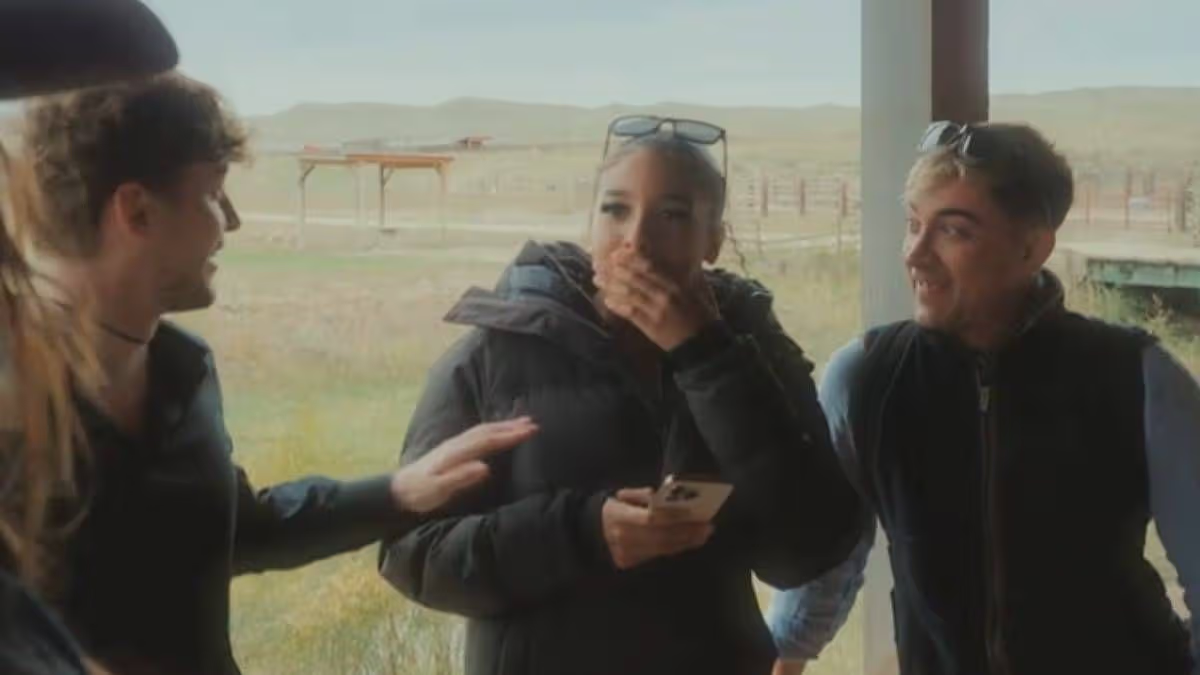
During the broadcast on Sunday, May 31, audiences watched pampered British youngsters – Kyrah, Myles and Keegan – depart the UK and travel to Wyoming to experience the demanding work of cowboy life on a cattle ranch.
Advertisement
For a week, the group would discover the daily routine of the cowboys as they confronted the brutal reality of ranch life in preparation for an eight-mile cattle drive at the end of the week.
Yet, before they even commenced their duties, Kyrah, Myles and Keegan were far from satisfied with their living arrangements, which didn’t appear to concern Kaitlin, who runs the ranch alongside her brother Tucker.
Upon viewing their lodgings for the duration of their stay, Kyrah remarked, “I don’t think I’ve ever stayed in anything as basic as this. There’s no TV!”
As Myles contributed, “My pet peeve is when the double bed is two singles, that is my idea of hell.” Kaitlin responded: “Well, welcome to hell.”
Enquiring why their beds hadn’t been made beforehand, Kaitlin informed the group they would be in charge of their own accommodation. She continued, “I gave you guys clean sheets, but you guys are going to have to put this together.”
While the trio remained disappointed that the accommodation wasn’t already ready for them, Kaitlin reminded them it wasn’t a hotel, and they were there to work like ranch hands. She stated: “You can sleep on an unmade bed, I don’t care, I really don’t.”
Later in the episode, Kaitlin was swift to scold the trio upon taking them to the cattle auction, as Kyrah, Myles and Keegan weren’t thrilled with the outing, reports Birmingham Live.
Advertisement
Before entering the auction, she told them, “I want you to remember, you’re under my name. So, if we do something bad out here, it’s going to look bad on me.”
Issuing her instructions, Kaitlin told them to count how many cattle were coming off the trailer. When they missed one out, she highlighted the importance of accuracy, pointing out it could have resulted in a loss of $3,000.
As they continued counting and being put to work, the group appeared to grow bored with what had been asked of them, which didn’t go down well with Kaitlin.
Advertisement
Myles remarked, “I’m bored with this.” Kyrah agreed, adding, “There’s no stimulation in my brain. I’m just standing there.”
Kaitlin quickly snapped: “You know what we’re going to do? Everybody come stand right here and shut the f**k up. I’m going to see if you guys can stand here and not talk. Literally, stand here in silence, and we’re going to watch, right here. Shut up.”
Before embarking on their journey to America, viewers got to learn a bit more about the trio as Birmingham teenager Kyrah confessed she’s ‘spoiled rotten’ by her parents and is yet to find her purpose.
Advertisement
Meanwhile, 22-year-old Myles, who is also spoiled by his parents, expressed his desire to better himself, while self-confessed mummy’s boy Keegan told viewers he’s ready for something new but is holding himself back.
In the end, the trio successfully completed the eight-mile cattle drive and were praised by the cowboys on the ranch.
Obsession has very quickly become the horror movie the whole world is talking about.
The second feature-length offering from YouTuber-turned-filmmaker Curry Barker, Obsession centres around two friends who enter a nightmare scenario when one of them makes a life-changing wish for the other to fall in love with him “more than anyone in the fucking world”.
A modern-day “be careful what you wish for” cautionary tale, the film has received rave reviews, including an enviable 96% critical score on Rotten Tomatoes and 4.2 stars on Letterboxd, with particular praise for its break-out star Inde Navarrette.
But despite dominating the pop culture conversation right now, how much do we really know about what went into Obsession’s creation?
Advertisement
Here are 17 behind-the-scenes secrets you’d probably never heard about how the film of the moment came together (and be warned – there are plenty of spoilers ahead)…
Interestingly enough, the idea for Obsession was inspired by a classic episode of The Simpsons
The story goes that Curry Barker first had the idea for Obsession after inviting his friends over to watch an episode of It’s Always Sunny In Philadelphia that he had a small role in.
“Before the episode [aired] there was a Simpsons episode where [Bart] has a monkey paw, and he’s making wishes and stuff,” he recalled to Triple J, referring to The Simpsons’ second Halloween special Treehouse Of Horror II.
Advertisement
In the episode – based on WW Jacobs’ short story The Monkey’s Paw – the family travels to Morocco and buys a cursed monkey’s paw at a market, which grants their wishes with sinister consequences.
Curry admitted: “I was just excited to see my Always Sunny episode, but it hit me right then and there on the couch that Obsession idea that I had would be perfect if it was a wish movie.
“And so I actually remember the moment, I remember being on the couch, and being like, ‘oh my god’ and writing. It down. And after that, I just kept developing and developing that idea.”
The Simpsons’ brush with a monkey’s paw was an unexpected inspiration for Obsession
He also told Variety: “I was thinking that I’ve never seen a straight crazy horror [based on that idea]. We’ve seen ‘be careful what you wish for’ tons of times. But we’ve never seen my version of it. I instantly started thinking about what I could do with that…”
Advertisement
Once he had the idea that Obsession would be about a ‘wish come true’ gone awry, Curry Barker had to decide what form the wish would actually take
“I didn’t want to use the Monkeypaw because it was too recognisable,” he told IndieWire. “And so then I went down this rabbit hole of trying to find things that you could make a wish off of.
“You’ve got the wishing well, you have shooting stars, a wishbone you break in half, but nothing really worked well for the movie.”
In the end, he reasoned: “Screw it. I’m going to make something up.”
Advertisement
And so, the One Wish Willow came to be – with Curry Barker’s designer mum helping him bring it to life
He told Moveable Fest: “My mum actually helped me design that. She’s a graphic art designer, and I told her I wanted it to look kind of timeless, like it’s from the ’50s or the ’80s, and I wanted it to have this very retro feel, like it’s been around forever and you can’t really pinpoint when it was made.
“I also wanted it to look inviting, and almost creepy in the way that it looks so friendly, like it couldn’t hurt anything.”
The One Wish Willow as seen in Curry Barker’s Obsession
That’s not the only way that Obsession was a family affair for director Curry Barker, though
Remember that cringe-worthy party scene where Nikki makes everyone uncomfortable by, among other things, reading out an excerpt of an incestuous love story based on Hansel And Gretel?
Advertisement
Well, it turns out, it was written by Curry’s dad.
The director told Polygon: “My dad had just started his screenwriting journey and I was like, ‘Yeah, if you want to give it a stab’. So I let him write it and he did some really creepy stuff.”
“My dad’s been a writer for a while,” he added. “My dad writes novels and stuff, and now he’s a full-time screenwriter. And my dad has a mind that lends itself well to that type of creepy stuff. So I guess like father, like son.”
And speaking of that sinister Hansel And Gretel story, what was that actually all about?
Advertisement
Well, Curry said he wanted that to be a manifestation of Nikki’s mind warping different kinds of love, having previously considered Bear to be a brother figure to her before his wish for her to fall in love with him.
“I knew I wanted it to be about Hansel And Gretel,” he said during his Polygon interview. “I knew that I wanted it to be about brother and sister because the kind of thing I was doing there is that if you remember Nikki tells Bear in the beginning of the movie that she kind of sees him as a brother.
“And so that’s kind of that, like brother and sister being together. It’s not right and it’s not supposed to happen, but it is. And that’s kind of the movie.”
Nikki’s impromptu reading gave Obsession one of its most memorable scenes
There was no formal choreography when it came to Nikki’s creepy way of moving
“Nikki’s movement was something that Curry and I built from scratch,” Inde told The Hollywood Reporter. “Not because we didn’t want to take any inspiration. It was just as soon as we got attached to the project, we just really spearheaded. It was a fast track.
Advertisement
“We filmed it in 26 days, and it was an indie-budget film, so we didn’t have a lot of things at our disposal. But that created this organic movement for me.”
She continued: “I’m not a movement person. I’ve never really done that before. I used to dance, but Curry would be on the opposite side of me, mimicking something with his body, and then I would do it in a way, and be like, ‘No, no, like this’. And so we would mirror each other.”
“Technically, the choreographer would be Curry Barker,” she added with a laugh.
No CGI was used to make Inde Navarrette’s facial expressions in Obsession so scary, either
Advertisement
In fact, the team relied on good old-fashioned makeup contouring to achieve Nikki’s unsettling look.
“I think they call it contour in the makeup world, but you can kind of just accentuate things,” he recalled to Polygon.
“The goal was never to make her look too demon, because if you go demon, then you’re just making her eyes really dark and her mouth really dark, and then you’re in that uncanny valley. We wanted her to still look human but not quite human. But also, it was 90% her.”
Inde Navarette’s Nikki goes to some terrifying depths in Obsession
Obsession’s duct-taped door was a practical effect, too
“I was so impressed with the art department to see what they did with that,” Curry beamed. “What’s funny is we were shooting so out of order that sometimes we had to take that duct tape down to shoot one scene and then put the duct tape back up to shoot another scene.
Advertisement
“So, what the art department did to make it really easy is, 90% of that duct tape is not taped to the door. It’s like a big sheet. So there’s a big sheet and then tons of tape. And so the only tape that’s attached to the wall is on the outskirts. Once you remove that, you can kind of remove this big piece that they had designed. It was really smart.”
Curry Barker has lifted the lid on how Obsession achieved the duct-taped door effect
One especially grisly Obsession scene had to be tweaked to appease the censors
In the original cut, the scene where Nikki smashes in Sarah’s head with a brick was much more graphic, but to ensure the film got a wider release, Curry had to make some tough decisions.
“That was definitely a scary moment for me as a director,” he admitted to The Guardian. “Especially as I had just watched the movie in Toronto with a crowd that really reacted to that scene.
“Hearing the news that I might have to cut it down was quite devastating at first. But we cut it down and I feel like the integrity of the scene is still there … I’m actually surprised at how much they let us keep in.”
Advertisement
Similarly, Inde insisted to The Hollywood Reporter that version of Obsession shown at TIFF was “not that different” to what we all saw in cinemas.
“[When] I kill Sarah, we reduced the amount of head smashes because it was too long,” she claimed.
“I really loved the response at TIFF, because people really liked how long it is and how aggressive Nikki is. It shows how obsessed she is, what she’s willing to do for Bear and how far she’s willing to take it. It’s just really intense.
“Also, what was cut was the aftermath. Curry wanted to play with the idea of what does a human body do after that sort of smashes, like there’s gurgles come out, so there was gurgles, there was like human sounds that might have been too gruesome for an R rating, so they kind of downsized it.”
Advertisement
She added: “TIFF definitely got a really gruesome, gruesome version, but it sounded like they liked it.”
The opening scene was added in at the last minute
“The original opening of this movie was actually at Bear’s house [when he found] the dead cat, and you’re just thrown in and you don’t really know what’s going on,” Curry told Movable Fest.
During the editing process, he “decided to open” up the story, bringing back actors Michael Johnston and Cooper Tomlinson to shoot the new opening set at a diner.
Advertisement
Obsession had a few alternative endings, too
In the version of Obsession that made it into cinemas, Bear’s hold over Nikki comes to an end when he dies, at which point she screams in terror when she realises what she’s done.
Before Nikki became horror’s new “final girl”, though, Curry had planned for the character to die alongside the rest of her friendship group.
“I was really obsessed with this Romeo And Juliet ending, actually,” he told Entertainment Weekly, revealing that it was his dad who told him to have Nikki live, instead.
Advertisement
“We shot both,” he noted. “We shot this ending that you see in the movie, and we shot the ending where she ends it all.”
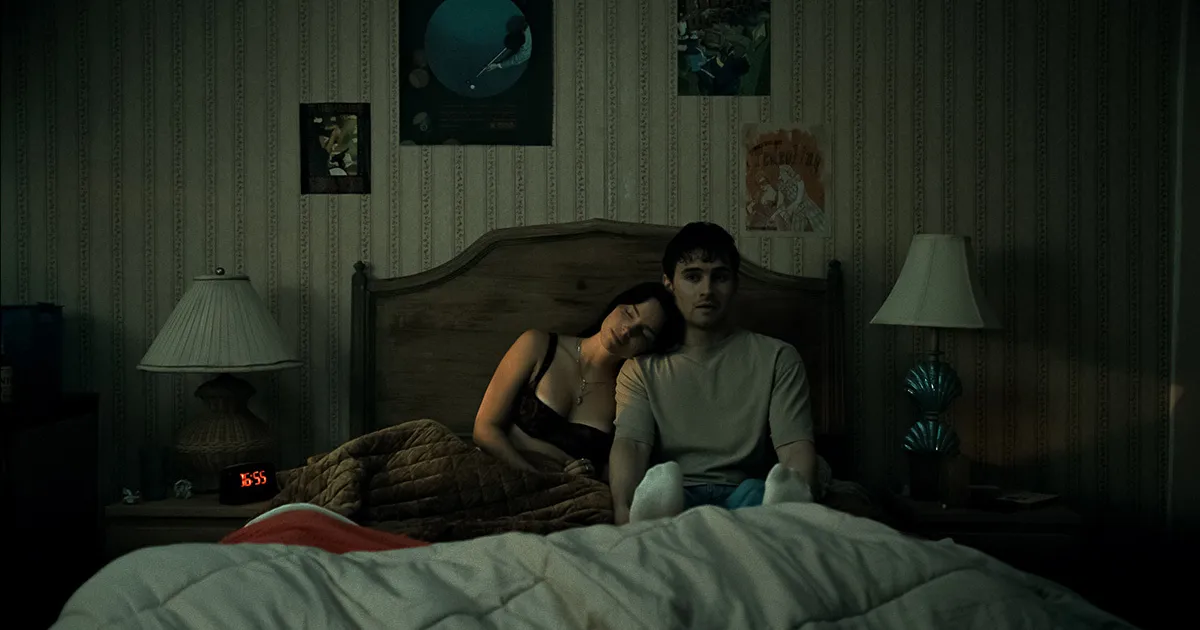
Nikki and Bear pictured in the final moments of Obsession
He added: “We had shot a ton of different versions of the official ending, the one that’s in the script, the one that I was excited about, and I was like, ‘Okay, we’ll do one ending where [Nikki] survives, but we’ll just do one take of it, and then we’ll move on’.”
In fact, Obsession’s shocking ending was shot in only one take
Because of the complicated technique used to capture it – and the fact that Curry was still set on Nikki dying – he recorded the ending that made it into the finished film in one take.
“It was a very technical shot, and so we only gave her one where she survives,” he told Entertainment Weekly, revealing that Inde’s “performance was so good” he had to include the scene in his movie.
Advertisement
He revealed: “I just remember my dad and multiple people around me being like, ‘Dude, I think it’s way more disturbing if she just survives this thing’. I was like, ‘Ah, you’re right’. And so we switched it.”
Inde told The Hollywood Reporter: “The original ending was that I was going to choose that I didn’t want to live that way anymore, after all of the trauma and pain. [At the] last second, they were like, ‘Let’s just try this one thing’, and from other people’s perspective, which is high praise for me, and I really, really appreciate it, they did one take, they felt like it was magical and electric, and they knew that that was the ending.
“At the end of all of this, it was such a release to get all of what I felt like Nikki was experiencing out of my body. I’m really glad that she didn’t die. I’m really glad that she’s considered a horror final girl, that I think is the sickest title ever.”
Inde Navarette’s performance as Nikki in Obsession is one you’re going to be hearing a lot about in the next few weeks and months
One other scene that went through ‘so many different versions’ was Sarah and Bear’s private conversation in the car
“There was a version where Sarah tells Bear that Nikki admitted to her that Nikki actually had feelings for Bear,” Curry recalled to Polygon. “I thought that was really heartwrenching if it turns out that Nikki liked Bear along and then this happened, but that obviously didn’t make it in.”
Advertisement
He also pointed out: “No one ever has picked up on this, but there’s this line in the beginning that says Nikki was crying in the break room. You can hear it at the trivia bar. They talk about, ‘Why was Nikki crying in the break room?’ And Ian’s like, “I don’t know, maybe she…” But really it’s because Ian had told her that he wanted to [end their casual hook-ups].”
Curry Barker had a very specific intention while making everything in Obsession so centre-focussed (and no, it wasn’t to do with vertical video)
“I wanted to shoot this centre-composed and have extra head space because I wanted it to feel uncomfortable in its loneliness,” he told Variety.
“There’s something about centre-composed that forces you to look and pulls you in in a way that traditional composition may not. I’ve seen a lot of horror filmmakers I look up to recently shooting in that way.”
Advertisement
When putting together Obsession, Curry Barker never envisaged the ‘incel’ label that many have thrown at his protagonist, Bear
Michael Johnston as Bear in Obsession
“He just makes some bad decisions but I think it starts from a really innocent place,” the director told The Guardian. “It’s what he chooses to do after that that’s bad.”
He also noted: “Embarrassingly, I wasn’t even familiar with the term incel until someone brought it up to me.”
Curry Barker actually makes a cameo in Obsession you might have totally missed
You know that part where Bear calls up an operator for the One Wish Willow helpline?
Advertisement
“It was me,” Curry admitted to Polygon. “I recorded that dialogue in my room, way after we shot the movie. I was editing in my room so I was able to just do whatever I wanted with it. I just got my phone out and I was just like, ‘Hey, what’s up?’.”
And finally, is there any chance of an Obsession sequel? Kiiiind of…
Curry has claimed he’d “definitely” be up for another film set in the Obsession world, but introducing a different set of characters and, crucially, another wish.
“It wouldn’t have these characters, but it would have the One Wish Willow,” he teased to Polygon. “It would be [about] that same selfishness of a person who wants something that’ll only benefit them and not really thinking about other people.
Advertisement
“The horror would come out of what happens when you wish for something that you think is going to be good, but it’s not. That’s the theme, and so there’s so many different stories.”
During her Hollywood Reporter interview, Inde also revealed that she’d “absolutely” be up for playing Nikki again, even though she “really” loves the idea that the story is “kind of left there”.
“It’s like a memory, whenever you look back to yourself at like 24, 23, 22 those are all chunks, and they begin and end at a certain point. I think that’s kind of like this story. It begins and it ends, and then it’s new Nikki, if you will,” she added with a laugh.
The little boy watched the assailant wash his hands in a nearby stream before leaving, then clung to his 23-year-old mother’s body until they were found.
Advertisement
Officers who arrived at the scene had to prise him away.
‘It was an incredibly high-profile case. A mother and her young child walking on Wimbledon Common in the middle of the day – you don’t expect that sort of thing to happen. There was huge public sympathy,’ forensic scientist Angela Gallop tells Metro.
Police quickly sealed off Wimbledon Common and began one of the largest murder investigations the Metropolitan Police had ever seen. Three incident rooms were set up, while helicopters, mounted officers and forensic teams combed the area.
Witness appeals went out almost immediately through television bulletins and newspapers, triggering a media frenzy. The nation was shocked by the brutality of the broad daylight attack.
Advertisement
André Hanscombe took his son Alex back to Wimbledon Common with detectives as part of their investigation (Picture: Courtesy of Netflix)
Appeals for witnesses went out almost instantly and André spoke to the media as police desperately tried to find clues of who killed Rachel (Picture: Courtesy of Netflix)
In a race against time to find the killer, detectives and psychologists worked with Alex for months, trying to glean information as his anxious father André Hanscombe watched on, fearful of the long-term effects of repeated questioning.
Behind the scenes, the heartbroken dad was desperately trying to keep life as ‘normal’ as possible for his traumatised son.
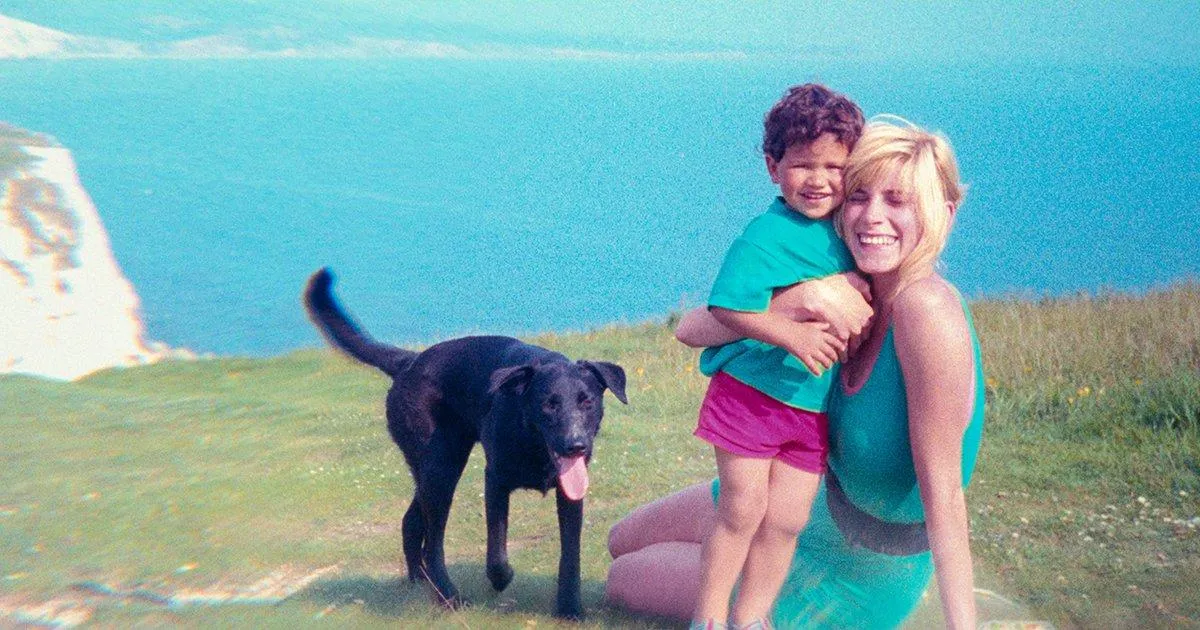
‘Literally hours after the event, I kept as close to the routine Rachel and Alex shared together as I could,’ André explains, as he shares never-before-seen pictures of Rachel and Alex.
‘I was blessed to have two incredibly loving parents who cared deeply about me,’ says Alex (Picture: Courtesy of Netflix)
André says that keeping life for Alex as normal as possible would have been very important to Rachel (Picture: Courtesy of Netflix)
Rachel and André had dreams about moving to France and having more children together (Picture: Courtesy of Netflix)
Rachel was a real nature lover, says André (Picture: Courtesy of Netflix)
‘That would have been important to her and was important to me. My aim was building a routine he could rely on, from having the same bowl of cereal for breakfast, having a walk, and doing ordinary things – even going back to parks that looked almost identical to the place where the attack took place.’
Now 36, Alex adds: ‘But at the same time, in many ways that was impossible, we couldn’t return to our home, which was surrounded by reporters and because there was a killer on the loose.
‘We were staying temporarily with family and friends, until ultimately we were tracked down and moved to another country, where we lived in rented accommodation, ready to pack up and move on in a moment’s notice.’
Advertisement
With DNA testing at the time fruitless, police struggled to find concrete leads.
Colin Stagg spent 13 months in prison on remand awaiting trial for the murder of Rachel (Picture: PA)
In September 1992, Colin Stagg was arrested after viewers of Crimewatch said he resembled the photofit of the killer. He was released but arrested again in 1993 and later charged with Rachel’s murder. After spending over a year in custody, the case collapsed at the Old Bailey in 1994.
Years passed with no answers. Meanwhile, there was more violence.
Police were investigating a series of sexual attacks that became known as the Green Chain rapes, carried out across parks and open spaces in south-east London between 1989 and 1993.
Then, in November 1993, Samantha Bissett, 27, and her four-year-old daughter Jazmine were found murdered at their home in Plumstead, south London.
Advertisement
Samantha Bissett and her four-year-old daughter Jazmine whose bodies were discovered at their flat in Plumstead, south London in November 1993 (Picture: PA)
It was one of the most shocking cases detectives had ever encountered.
Retired Detective Sergeant Roger Boydell-Smith, the exhibits officer at the time, remembers the moment he entered the flat.
‘My detective superintendent put his arm around me and said, “Roge, brace yourself, son, because this is the worst one I’ve ever seen”.’
Recalling what he saw for Netflix documentary The Murder of Rachel Nickell, Roger says: ‘When we walked in, it became apparent that Samantha had been possibly stabbed to death in the hallway, dragged through to the living room and placed on a large cushion in a star formation, and she’d been mutilated.’
The detectives then found four-year-old Jazmine dead in her bed beneath a duvet, suffocated and sexually assaulted.
Advertisement
‘I’ve dealt with lots of murders in my career. This one was horrific. It does affect you emotionally,’ Roger tells Metro.
The police took hundreds of fingerprints but were unable to find any that could not be eliminated as belonging to family or visitors. There was no DNA or other clues.
Moving to France with his son was a ‘turning point from the heart,’ says André (Picture: Courtesy of Netflix)
‘Alex always had a huge appetite for life, and I want people to know that, and to know that he’s doing well.’ (Picture: Courtesy of Netflix)
They soon drew potential links with Rachel Nickell’s murder 16 months earlier – young mothers, extreme violence, multiple stab wounds while children present – but the Nickell investigation team rejected the idea, says Roger.
‘It’s extremely rare that strangers attack members of the public. Children being present is even rarer. He’s probably done something similar before.
‘We couldn’t fathom out how, within a gap of 16 months between the Wimbledon common murder and the Plumstead murder, two different people could carry out such ferocious, audacious crimes. So was it possible that the same person committed both?’
Advertisement
At the time, Colin Stagg was still awaiting trial and the investigation team were convinced they had man who killed Rachel.
Angela Gallop and Roger Boydell Smith both worked on the case (Picture: Netflix)
‘For us to suggest that they might have got the wrong man didn’t go down very well,’ remembers Roger.
Prior to the murders of Samantha and Jazmine, an artist’s impression of the Green Chain rapist was distributed widely across Southeast London’s public places and police stations.
A member of the public reported a man called Robert Napper and the police went to visit him at his Plumstead bedsit.
He was cooperative and gave his details, but failed to attend a later appointment to provide samples. Napper was eventually ruled out, partly because he was thought to be taller than the assailant.
Advertisement
‘That was a catastrophic decision because he went on then to murder the Bissetts,’ says Roger. ‘He could have been caught quite easily. The officers involved will have to live with that for the rest of their lives.’
Robert Napper was responsible for a series or rapes across South London as well as the three murders (Picture: PA)
When evidence from Samantha’s flat was later re-examined it revealed a shocking discovery – one of the prints inside was Napper’s.
He was arrested and inside his tiny bedsit, detectives found a padlocked red toolbox containing knives, a book about methods of strangulation and an map of London what was covered in markings and doodles – one of which was very near the spot where Rachel was killed.
Napper was later convicted of the killings of Samantha and Jazmine on the grounds of diminished responsibility and detained indefinitely at Broadmoor Hospital in 1995.
Tragically, one woman who never saw justice served was Samantha Bissett’s mother.
Advertisement
Maggie Morrison, 53, collapsed at her home in Stonehaven, Aberdeenshire, 48 hours before Napper was convicted. Her husband Jack said she’d died of a broken heart.
‘Samantha was an only child, and her mother, Margaret, never recovered from the loss of her only grandchild and her only daughter,’ says Roger.
‘It’s just very, very sad case. So many lives were ruined.’
Following Napper’s conviction, the independent police watchdog found a “catalogue of errors” in the investigations, concluding missed opportunities that allowed the killer to remain free.
Meanwhile, Rachel’s murder remained unsolved and Alex and André – now living in France to keep Alex safe while the killer remained loose – started to accept that they would never get answers.
Advertisement
‘I had some familiarity with France but moving there meant losing our home, leaving behind family and friends – in short, everything that was our life. It was a turning point decision made from the heart,’ remembers André.
‘Rachel and I had dreams about moving to France and having more children together. She was a real nature lover, so [for me and Alex] to be out there enjoying the changing seasons, being able to walk in bare feet and pick the fruit from the trees – she would have loved to share those moments with us.
‘It was idyllic – or, it would have been idyllic in any other circumstances, which was unbearably bittersweet.’
In 2002, forensic scientist Angela Gallop, who worked on high profile cases including James Bulger, Princess Diana and George Harrison, was asked to review the evidence in Rachel’s case.
Advertisement
It took police more than15 years to solve Rachel’s murder (Picture: Courtesy of Netflix)
It was painstaking work. Evidence had to be re-analysed in conditions that eliminated any risk of contamination.
‘We thought – right, we’ve got to make our technique more sensitive. We need to do something slightly different,’ she tells Metro. It took two years, but they ended up with a DNA profile that they could feed it into the database – and matched with Robert Napper.
‘We went back to the crime scene, looked at all the samples and items that were collected, and noticed that there was a cast of a footwear mark on the muddy ground,’ recalls Angela. ‘And we thought – that’s interesting.’
The cast mark was smaller than Napper’s shoe that had been kept in evidence. So the team analysed the boggy ground in the glade where Rachel’s body had been found.
‘We discovered that if you press foot down on the on the ground, and then lift the shoe, the mud closes around it. So when you then cast the mark, it will be smaller than the shoe that made it.’
Advertisement
They also found paint flakes in Alex’s hair that matched paint from a toolbox containing knives and other weapons that had been found in Napper’s flat.
It was enough to see the killer finally brought to justice for Rachel’s murder.
In January 2016, Robert Napper, then 42, pleaded guilty at the Old Bailey to the manslaughter Rachel Nickell. He remains in the high-security psychiatric facility Broadmoor Hospital today.
34 years on from Rachel’s murder, Netflix are releasing two titles based on her story – the three-part drama series The Witness, starring Kerry Godliman and Claire Rushbrook, and a documentary, The Murder of Rachel Nickell.
Advertisement
Alex and André have been involved in both, with the dramatisation being based on Alex’s memoir, Letting Go.
Alex wrote a memoir about his life following his mother’s murder, called Letting Go (Picture: Courtesy of Netflix)
André contributed to the documentary and worked as a consultant on the dramatisation, alongside Alex (Picture: Courtesy of Netflix)
Talking about his early childhood, Alex says: ‘I have memories of both my parents together, some very early memories. I was blessed to have two incredibly loving parents who cared deeply about me, went the extra mile for me and were willing to suffer for me.
‘My mother suffered to protect me in her last moments, and my father suffered to protect me from there. Our relationship hasn’t always been easy, but nothing has ever been able to take away the love I have for my father, and I believe nothing ever will.’
André adds: ‘ People saw those headlines about a tragedy, a small nearly-three-year-old child, what he saw that day, and headlines saying he may never talk again from the trauma he suffered.
‘I know that the most important thing to Rachel would be his recovery, and of course it was the most important thing to me as well, having suffered abuse as a small child.
Advertisement
‘Alex always had a huge appetite for life, and I want people to know that, and to know that he’s doing well.’
A scene from The Witness, starring (L to R) Jahsaiah Williams as Alex, Eleanor Williams as Rachell , and Jordan Bolger as André Hanscombe (Picture: Courtesy of Netflix)
However, Alex believes his mum never got the justice she deserved.
‘For 33 years, the police have washed their hands of their responsibility and their failure to do their job to serve and protect,’ he says. ‘They failed to take the killer off the street years before the attack on my mother and me.’
A Met Police spokesperson told Metro:
‘We are deeply sorry for the failings in the investigation into Rachel Nickell’s death.
Advertisement
‘We accept that we should have done more to identify Robert Napper as a suspect, which could have prevented a number of serious attacks by him.
‘Since Rachel’s murder, the Met has overhauled how it investigates homicides, including better training of detectives, new forensics techniques and closer work with the Crown Prosecution Service.’
Both the drama series The Witness and documentary The Murder of Rachel Nickell will be available to watch on Netflix from Thursday, June 4.
A former Roman villa was also found in the village
Railways used to be the most popular form of travel before cars became more common. Across Cambridgeshire, there were many more railway stations than there are today.
Advertisement
However, over time, these stations disappeared and became something else. One old railway station that has totally disappeared was in Stow-cum-Quy. The former station opened in June 1884 and was first run by Great Eastern Railway. It was located around four and a half miles from Cambridge and two miles outside the city boundary.
Quy was never the busiest station, as it lay in a small village that had a population of only around 360 people in 1884. This population dropped down to 307 in 1931. Passenger numbers were never recorded to be high at the station. Quy was the least used station on the Mildenhall branch and it held this title for the whole time it was open.
From 1894, the station didn’t have a station master due to it being so quiet. It was then unstaffed in June 1935 and tickets were only able to be bought from a conductor on the train.
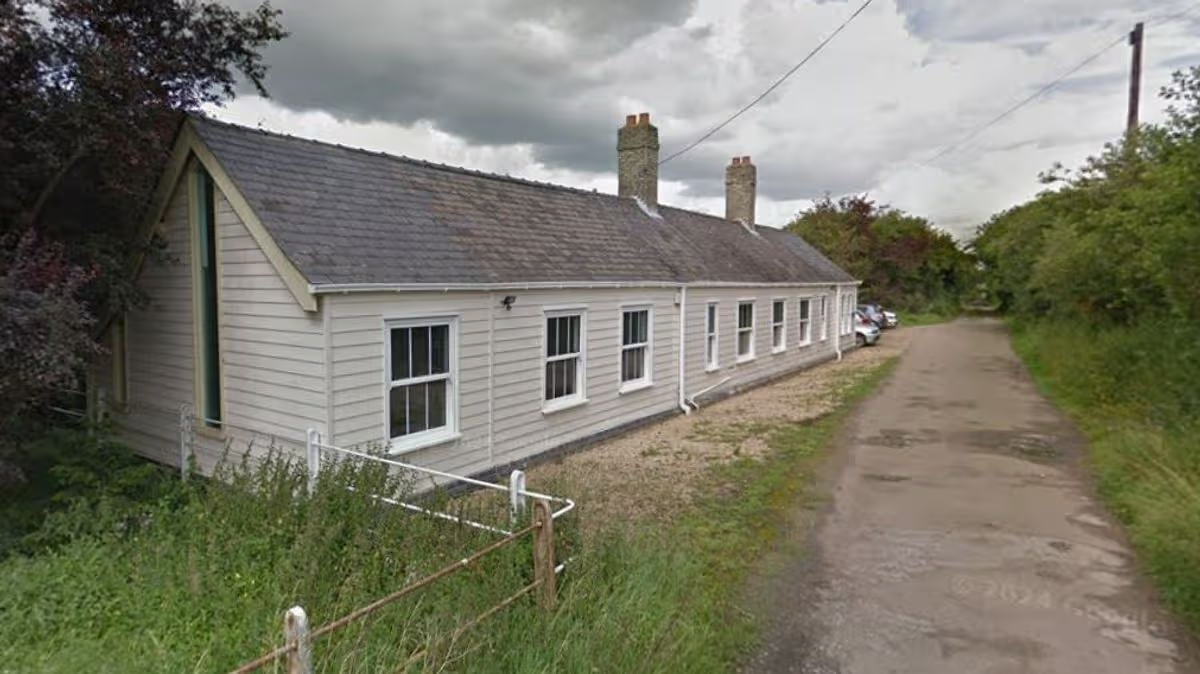
The station managed to survive the economies of the 1930s, however it finally closed to passengers in 1962, and fully closed in 1964. If you visited the village today, you wouldn’t even know there was a former station – it’s almost like it disappeared. Like many former railway stations, Quy station was turned into private homes. The old station house still stands, however it has undergone a face lift in recent years.
Advertisement
As well as a lost railway station, Stow-cum-Quy also has a name that is hard to pronounce. Some may think it’s pronounced like ‘stow-come-kai’, however it’s pronounced like ‘stow-come-kwai’.
Another important part of the village’s history is its link to Roman times. It was once where a Roman villa was situated. The villa was found just to the west of Quy Hall, a Grade II listed country house.
There have also been remains from the Bronze Age and Saxon Times found, showing how Stom-cum-Quy has stood the test of time.
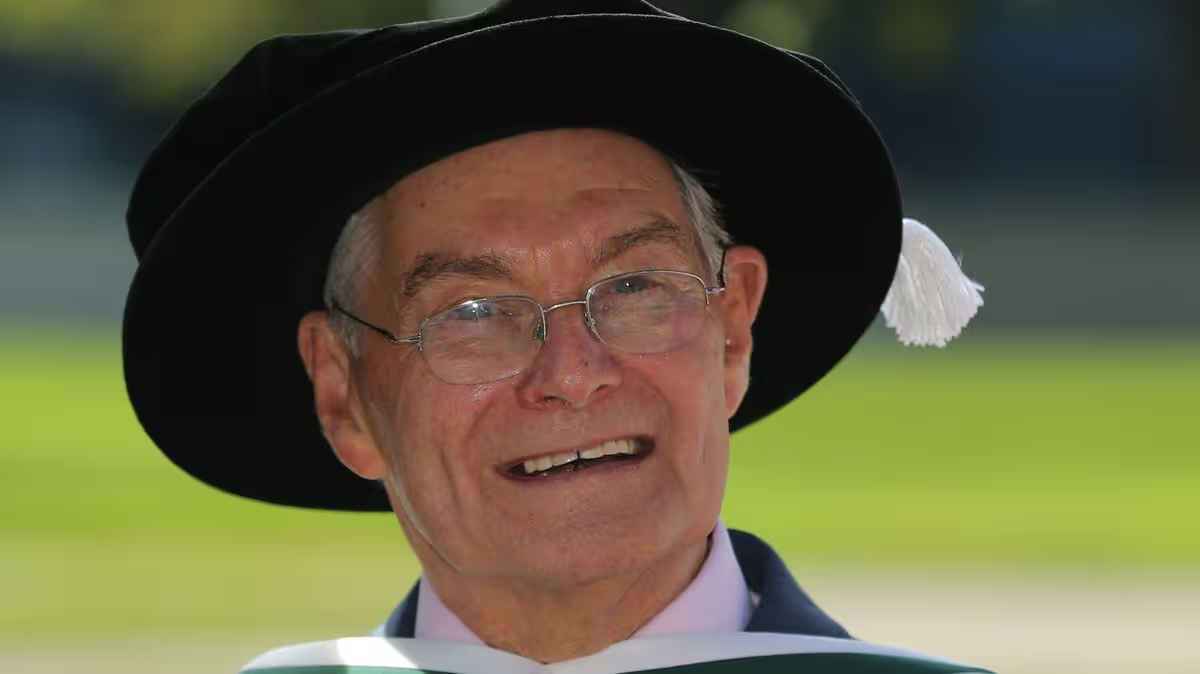
Mr Reichental was deported from his home in Slovakia to the Bergen-Belsen Nazi concentration camp at the age of nine, where he survived until the site was liberated in 1945.
21:21, 31 May 2026Updated 21:30, 31 May 2026
Irish President Catherine Connolly has led tributes to Holocaust survivor Tomi Reichental, who has died at the age of 90.
Mr Reichental was deported from his home in Slovakia to the Bergen-Belsen Nazi concentration camp at the age of nine, where he survived until the site was liberated in 1945.
Thirty-five members of his family were murdered in the Holocaust.
Advertisement
Mr Reichental moved to Ireland in 1959 and went on to become an educator on the horrors of the Holocaust.
Ms Connolly expressed her “deepest condolences” to Mr Reichental’s family and friends.
“Tomi made an exceptional contribution to Irish society, bringing his personal experience of Bergen-Belsen and of his family’s suffering in the Holocaust to public attention and, through his experiences, made a very significant contribution to the causes of peace and understanding,” she said.
“He will be deeply missed by all those who had the privilege of learning from him.”
Advertisement
In a statement on social media, Taoiseach Micheal Martin wrote: “Deeply saddened to learn of the passing of Tomi Reichental, someone who dedicated his life to teaching new generations about the evil of the Holocaust.”
Oliver Sears, founder of Holocaust Awareness Ireland, said in a statement on social media: “Everyone who met Tomi remarked on his ability to tell his story with honesty, dignity, and humanity.
“Through his testimony, he demonstrated how easily people can be othered and how entire communities can be demonised.
“His unwavering contribution to Holocaust education and interfaith relations will never be forgotten.
Advertisement
“The Jewish community has lost a beloved son. Ireland has lost a cherished citizen.”
Founder of the Irish Muslim Council, Shaykh Dr Umar Al-Qadri, described Mr Reichental as “a remarkable human being, whose life journey embodied both the tragedy of humanity’s darkest moments and the hope that can emerge from resilience, forgiveness, and compassion”.
He posted on social media: “He consistently spoke out against hate, division, and the dehumanisation that paves the way for violence and atrocity.
“He was also a passionate supporter of Syrian refugees in Ireland. Having experienced persecution and displacement in his own life, he showed immense empathy towards those fleeing war and oppression.
Advertisement
“His compassion for refugees was a testament to his belief in our shared humanity and our collective responsibility to care for the vulnerable.”
He said: “Today, I join people of all faiths and backgrounds in mourning his loss. I am heartbroken by his passing.”











































You must be logged in to post a comment Login