The four crew of Nasa’s Artemis II mission have shared a “spectacular moment” as their craft left Earth’s orbit and started its final push towards the far side of the Moon.
During the first public video conference with the crew, Commander Reid Wiseman said they saw a “spectacular view” as the spacecraft moved away from Earth.
“You can see the entire globe from pole to pole… It was the most spectacular moment and it paused all four of us in our tracks,” he said.
In what is the first crewed mission to the Moon since Apollo 17 in 1972, the four astronauts on the Artemis II mission spent the first 25 hours of the flight circling the Earth after the launch from Cape Canaveral in Florida on Wednesday evening.
Advertisement
The spacecraft is now heading around the far side of the moon and back again.
Nasa’s Artemis II moon rocket lifts off from the Kennedy Space Centre (Chris O’Meara/AP) (AP)
Canadian astronaut Jeremy Hansen said the crew were glued to the windows to see the “phenomenal” view.
He said: “Humanity has once again shown what we are capable of, and it’s your hopes for the future that carry us now on this journey around the moon.”
Hansen told Nasa‘s mission control that the crew “firmly felt the power” of those who had worked hard on the Artemis II mission
“Humanity has once again shown what we are capable of,” he said. “It’s your hopes for the future that carry us now on this journey around the Moon.”
Advertisement
After spending about a day in Earth’s orbit, Orion‘s engines, navigation and life-support systems were checked and given the final approval. The engine burn began pushing the spacecraft thousands of kilometres per hour.
The five minute and 55 second engine burn went “flawlessly”, Nasa’s Dr Lori Glaze said afterwards.
Orion is now set to head around 4,000 miles beyond the moon with a lunar flyby on Monday the next major milestone which will send the crew some 252,000 miles (406,000 kilometres) into space before returning to Earth.
The four astronauts on the Artemis II mission spent the first 25 hours of the flight circling the Earth after the launch from Cape Canaveral in Florida on Wednesday evening (NASA)
The current record for the furthest spaceflight is about 248,000 miles, held by members of the Apollo 13 lunar mission in 1970, which was hit by technical problems.
However, if something does go seriously wrong the astronauts can still turn back using a U-turn which will get them home within 36 hours.
Advertisement
The astronauts will get to see a total solar eclipse on the sixth day of the mission as the spacecraft cruises beyond the Moon.
While the astronauts will not touch down on the Moon, the Artemis II mission paves the way for a future lunar landing and also lays the foundation to send a crew to Mars.
The mission previously had to be postponed by two months because of hydrogen fuel leaks and clogged helium lines.
Nasa is seeking to return a crew to the lunar surface by 2028, before China does in about 2030.
Personal Independence Payment rates are rising from April 6, 2026, with millions of claimants set to receive more money for daily living and mobility support
Levi Winchester Money Editor
03:00, 04 Apr 2026
Millions of claimants are set to see their Personal Independence Payment (PIP) rates increase next week. Here is a breakdown of how much more you could receive.
PIP is the principal disability benefit for those under state pension age, awarded to individuals who require assistance with day-to-day tasks as a result of an illness, disability or mental health condition.
Advertisement
Rather than qualifying through a specific list of conditions, eligibility is determined by how your condition impacts your daily life. PIP is administered by the Department for Work and Pensions (DWP).
The benefit comprises two components, both of which will rise by 3.8% from April 6, 2026. The daily living element currently stands at £73.90 per week for the standard rate and £110.40 per week for the enhanced rate. These figures will increase to £76.70 per week and £114.60 per week respectively, reports the Mirror.
The mobility component currently sits at £29.20 per week for the standard rate and £77.05 per week for the enhanced rate. These will rise to £30.30 per week and £80 per week. Claimants may be entitled to both the daily living and mobility components simultaneously.
PIP is typically awarded for a period of between nine months and 10 years, after which the claim is subject to review. Your award may be adjusted should your condition improve or deteriorate.
Advertisement
The DWP will ordinarily approve a PIP claim without a formal assessment for those who are terminally ill, with the award lasting three years before review. PIP is available to individuals aged 16 and over who are below state pension age.
If you’re receiving PIP and reach state pension age, your claim will typically carry on. You may be eligible to submit a fresh claim at state pension age if you qualified for PIP within the previous 12 months.
Everything you need to know about Storm Dave before it is due to arrive this weekend | Belfast Live
Need to know
Storm Dave is set to arrive just in time for the Easter Weekend
Rob Currell Live news reporter
19:10, 03 Apr 2026
Advertisement
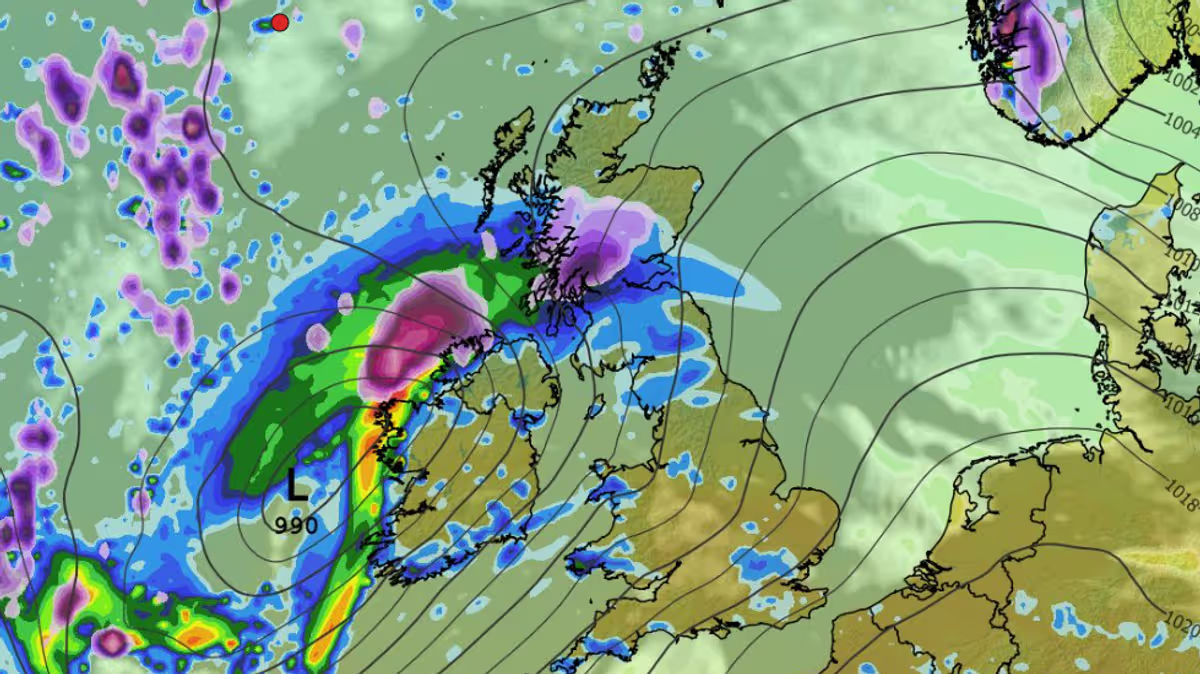
Centre of Storm Dave passing over Northern Ireland tomorrow afternoon(Image: WxCharts)
As Northern Ireland gears up for the Easter weekend, Storm Dave threatens to ruin festivities with expected winds of up to 80mph.
Northern Ireland is set for a windy Easter weekend with the weather warning in place for Storm Dave now extended as hazardous winds are anticipated to start on Saturday, April 4, at around 2pm and persist until Sunday, April 5 at 3am.
The Met Office says a low-pressure system from the Atlantic will bring very strong winds in the north of the UK on Saturday evening into Sunday.
A number of yellow weather warnings for wind have been issued covering the whole of Northern Ireland which will be lashed by gale-force winds.
It is expected that Storm Dave may cause property damage and traffic disruption across the region as gusts could hit as high as 80mph.
Road, rail, air and ferry services are likely to be affected, with longer journey times and cancellations possible.
Power cuts may occur, with the potential to affect other services, such as mobile phone coverage.
Some damage to buildings, such as tiles blown from roofs, could happen and injury or death from flying debris is possible.
Injuries and danger to life could also occur from large waves and beach material being thrown onto sea fronts, coastal roads and properties.
All six Northern Ireland counties are expected to be affected by the storm this weekend.
The latest guidance from the Met Office states there will be: “A rapidly deepening area of low pressure, Storm Dave, will pass close to Ireland before crossing Scotland on Saturday night, clearing into the North Sea on Sunday. Whilst some uncertainty remains in the exact track and shape of Storm Dave, a spell of strong southerly veering westerly winds is expected to affect Northern Ireland. Gusts of 50-60 mph are expected fairly widely with 60-70 mph in more exposed locations.”
A smoky and fast-growing wildfire Friday in windy Southern California has prompted multiple evacuation orders and warnings.
The Springs Fire broke out at around 11 a.m. Friday and by the evening had grown to about 5.47 square miles (14.17 square kilometers), with fire crews starting to contain it. The cause of the fire east of Moreno Valley in Riverside County is under investigation. It was not immediately known how many households are under evacuation warnings or orders.
The fire was burning in a populated — but not densely so — unincorporated part of Riverside County, in a recreational area near the city of Moreno Valley, which has a population of roughly 200,000. The city is 10 miles (16 kilometers) southeast of Riverside and 64 miles (103 kilometers) east of Los Angeles.
“It’s windy out there,” said Maggie Cline De La Rosa, a public information officer for the California Department of Forestry and Fire Protection in Riverside County.
Advertisement
Alex Izaguirre, a spokesperson for the Cal Fire Riverside County, said the wind is “spreading the smoke,” prompting concerned calls from residents in neighboring cities who can see and smell the smoke.
The National Weather Service issued a wind advisory for San Bernardino and Riverside County valleys through Saturday afternoon, with gusts of up to 50 mph (80 kph) expected.
“Tree limbs could be blown down and a few power outages may result,” the advisory read.
Liam Rosenior’s men have had a bruising last few weeks, crashing out of the Champions League and faltering in the race to finish in the Premier League top five.
The Blues were beaten heavily by Paris Saint-Germain on the continent, losing 8-2 on aggregate in the last 16.
In the league, they stumbled to defeats by Newcastle United and Everton as they lost ground on Manchester United, Aston Villa and Liverpool in their bid to secure a top-five place.
This Easter fixture against League One’s basement boys Port Vale gives Chelsea a huge opportunity to stop the rot and return to winning ways, with the added bonus of reaching a major semi-final.
Advertisement
Vale themselves are practically down already from the third tier, 14 points adrift of safety with eight games left to play.
The Valiants are currently led by experienced head Jon Brady, but they don;t come into this clash with any kind of consistent form.
A 1-0 win over Bolton Wanderers in late March was a pleasant surprise, but they were brought crashing down to earth with 1-0 and 4-0 defeats by Doncaster Rovers and Wycombe Wanderers respectively.
In the FA Cup, however, they have been a completely different prospect.
Advertisement
They stunned Sunderland in the fifth round to earn their place in the hat for the last eight, with Ben Waine’s first-half strike enough to send them through at Vale Park.
That followed another upset in the fourth round, as they beat Bristol City by the same scoreline at home, with Waine notching in extra time.
Date, kick-off time and venue
Chelsea vs Port Vale is scheduled for a 5.15pm BST kick-off on Saturday, April 4, 2026.
Advertisement
The match will take place at Stamford Bridge.
Where to watch Chelsea vs Port Vale
TV channel: In the UK, the game will be televised live on BBC One as well as TNT Sports 1. Coverage on the BBC starts at 5pm BST, while the TNT coverage begins at 4.30pm.
Live stream: You can stream the game live and for free on BBC iPlayer with a TV licence. TNT Sports subscribers can also catch the contest live online via the HBO Max app and website.
Advertisement
Live blog: You can follow all the action on matchday via Standard Sport’s live blog, with expert analysis from Dom Smith at the ground.
Chelsea vs Port Vale team news
After a season of what feels like continued injury crisis, there seems to be light at the end of the tunnel for Rosenior.
Yes, there are still absentees, but nowhere near as many as Chelsea have had to deal with this term.
Advertisement
Benoit Badiashile was struck down with a virus ahead of the international break and could be in line for a return here, while Filip Jorgensen underwent a “small operation” on a groin problem.
Jamie Gittens was seen back in team training, but was held back from the 3-0 defeat at Everton after suffering a slight setback in his hamstring rehabilitation.
As for Vale, they have a few former Premier League stars in their ranks.
They include ex-Manchester United goalkeeper Ben Amos, former Burnley and Watford striker Andre Gray, and the old Norwich winger Onel Hernandez.
Advertisement
On the treatment table, however, are two of their star players.
Midfield orchestrator George Byers, formerly of Sheffield Wednesday, is out, and so is target man Jayden Stockley.
Ex-AFC Wimbledon defender Ben Heneghan and Ryan Croasdale are also sidelined.
Chelsea vs Port Vale prediction
Advertisement
This should – in theory – be a relatively straightforward game for the hosts.
But questions are still likely to be asked of the fringe players, and of Rosenior, depending on how much he rotates here.
With the FA Cup now the Blues’ only remaining hope of silverware this term, surely he goes strong?
The visit highlighted the essential role charities and volunteers play in reaching people in ways others can’t and also the ‘turbo rockets’ for voluntary, community, and social enterprise (VCSE) organisations.
The MP learned about Community First Yorkshire’s Create 26, an event aimed at sparking ideas and fostering leadership and collaboration within the region.
The event, already creating excitement, offers a range of activities designed to challenge traditional thinking, boost confidence, and encourage fresh ideas.
The workshops cater to everyone, with limited spaces filling up quickly.
Advertisement
The Ripon Cathedral is set to host a Rural Housing Conference on June 12.
The MP learned about Community First Yorkshire’s Create 26 event (Image: Community First Yorkshire)
The conference will bring together planners, landowners, housing providers, and community leaders to address the growing shortage of affordable rural homes.
In financial news, the government has announced £53 million in support for vulnerable households struggling with rising heating oil costs.
This support, through the Crisis and Resilience Fund, is accessed through local authorities.
Advertisement
Meanwhile, North Yorkshire Citizens Advice and Law Centre now offers tailored advice for clients with a migrant background across the region.
For more information about Create 26, visit https://www.communityfirstyorkshire.org.uk/
The Ministry of Health has stated that there are multiple injuries and local hospitals have been put on high alert to treat those who have suffered injuries in the incident
At least 60 people have been injured after a ‘structural collapse’ at a football stadium in Peru.
Advertisement
Hospitals are on high alert after the incident which has taken place at the Alejandro Villanueva Stadium.
The Estadio Alejandro Villanueva, popularly known as Matute, is a football stadium located in the Matute neighborhood of the La Victoria district in Lima, Peru. Club Alianza Lima play their home games at the stadium.
Those injured are currently being evaluated by medics on scene, according to the authorities.
In a statement on X, the Ministry of Health for Peru said: “The Ministry of Health (Minsa) reports that, following the report of a structural collapse at the Alejandro Villanueva Stadium, in the La Victoria district, eight units were mobilised through the Mobile Emergency Medical Service (SAMU) to provide prehospital care to those affected, in coordination with the General Volunteer Fire Department of Peru.
Advertisement
“According to the preliminary report, 60 people have been recorded as injured, who are currently being evaluated and treated. Three of them have been transferred to the National Hospital Arzobispo Loayza.
“Additionally, an alert has been issued at the National Hospital Dos de Mayo and other hospitals in anticipation of the possible arrival of more injured individuals. The Health Emergency Operations Center (COES Salud) continues with permanent monitoring of the event and coordination of the health response.”
According to reports, the incident took place during an Alianza Lima gathering ahead of a match against Universitario.
The M6 motorway is closed tonight (Good Friday, April 3) due to a police incident.
The southbound carriageway is shut to traffic at Junction 27 (Standish).
The closure was first reported at around 10.20pm.
Advertisement
A National Highways spokesperson said: “The M6 is closed southbound at J27 Standish because of a police incident. Traffic is being taken off at the exit slip and can rejoin on the entry slip. There are delays of 10 minutes on the approach.”
Inrix, the traffic data company, said: “All traffic being temporarily held due to police incident on M6 Southbound at J27 A5209 Crow Orchard Road (Standish).”
This is a breaking news incident. We will bring you further updates as they become available on our dedicated feed below.
The Daily Telegraph reports that one of the helicopters involved in the rescue of the F-15 crew member was trailing smoke as it returned to Iraqi territory but landed safely.Closer to home, the paper says Labour are “to unleash up to 12,000 shoplifters” under new laws “scrapping most prison sentences of under one year”. The paper quotes a spokesman for the justice ministry saying the the move is “part of a wider, urgent reform to ensure our prison system isn’t pushed to the brink of collapse ever again”.
At high noon on a scorching summer day, retired samurai Kohei finds the fearsome Kumagoro writhing around a field in agony. The stricken man’s name translates as “demon bear”, and he’s the proprietor of a bar of the same name. Kohei finds him next to a temple famous for a tragic legend of familial loss and despair.
This setting frames the second instalment of The Samurai Detectives, written by Shōtarō Ikenami between 1972 and 1989 and newly translated by Yui Kajita. The novel is steeped in mystery, legend, and the ties and tensions of blood kin, fierce loyalty and pride.
Returning to 18th-century Edo Japan, we leave behind the complex machinations of political assassination plots of the first book. This volume explores the seedier underbelly of the city that became modern-day Tokyo, with a new cast of characters.
A depiction of an onikuma (demon bear) by Shunsensai Takehara in the Ehon Hyaku Monogatari (1841). WikiCommons
In addition to the “demon bear” bar owner, these include an upwardly mobile but corrupt samurai willing to hew down innocent passersby, an aged father-warrior seeking his missing son, a street-vendor looking to “muscle-up”, a beloved merchant’s daughter who keeps disappearing, and a kosamebo (“demon drizzle monk”) who visits in the rain.
In the centre of all this is Kohei, the protagonist samurai-detective, and his son, the upright warrior Daijiro. They’re joined by some familiar faces from their previous adventures.
Life is looking up for the two, with a bit more money and food for Daijiro. But at heart, Kohei is still the wily old samurai whose age belies his mental and physical abilities.
There are also the familiar temptations of cosmopolitan Edo: the easy sex, the allure of money and, underpinning it, the ever-present violence – all of which threaten to topple any one of the characters that succumb to it. Sex and love make for powerful motivators but it’s money that provides the lubricant for the inevitable violence.
Advertisement
Family betrayals and fatherly care
Ultimately, the second Samurai Detective volume is a meditation on the ties of parent-child relationships – and what happens when they go wrong. Satelliting Kohei and Daijiro’s admirable father-son, master-pupil, warrior-comrade dynamic of respect and care are other examples that range from love to despair.
Social, moral and natural justice all play their part in this complex society – though in a pinch, the rough justice of the warrior code will do. This is clear through the number of arms, legs and noses that go flying during the many sword fights.
In this volume, Kohei and Daijiro unravel mysteries shaped by complicated family relationships. At the heart of these stories are contrasts between care, respect, love and loyalty – and on the other side, neglect, abandonment, betrayal and abuse.
The ensuing resolutions use revenge as their motivator. But there are underlying concerns of power, hierarchy and money that structure the intricate society of Edo.
The Samurai Detectives: Volume 2, The Killer on the Streets by Shōtarō Ikenami, translated by Yui Kajita. Penguin
Towards the end of the book, another tragic, unresolved character from the previous volume returns: a figure of doomed, forbidden love. While portrayed as monstrous, we come to understand that worse still was the cruelty of parental abandonment that sets the chain of events in motion. Ultimately, these are also about the abandonment of the samurai code, something that underpins all the stories in this book.
Balancing all this is the fatherly care of Kohei – not only for Daijiro, who he continues to train, but for all the characters who come his way.
From the continuing concern for Mifuyu, the warrior-daughter of the most powerful lord in Edo, to the disappeared son of his own son’s former teacher, Kohei feels the pull of a collective responsibility to the younger ones. Even the lower-status merchant daughters and unagi eel sellers on the street are not below his level of concern.
Advertisement
They fuel an inquisitiveness that leads Kohei to undignified actions, such as hiding in toilets to overhear plots of intrigue – and ultimately investigate.
As a sequel, The Samurai Detectives: The Killer on the Streets does more than paint an ongoing series of mysteries in Edo Japan. It highlights the necessity of respect, love and care in the creation of a stable society.
This article features references to books that have been included for editorial reasons, and may contain links to bookshop.org. If you click on one of the links and go on to buy something from bookshop.org The Conversation UK may earn a commission.
Since its creation last year, Scarborough Town Council has been in “ongoing discussions” regarding the transfer of North Yorkshire Council-managed allotment sites to the parish authority.
Following an inspection of allotments in the town, councillors have said that any transfer of the allotment sites is conditional on agreeing a “fully costed and funded remediation package” or NYC undertaking necessary remedial works prior to their transfer.
At a full meeting of the town council on Thursday, April 2, members were told that while dozens of plots are abandoned and unused, 340 people are on waiting lists for allotments in Scarborough.
Cllr Sarah Mason placed on record “serious concerns regarding the historic and ongoing management of allotment sites within the Scarborough area and the implications this has for any proposed transfer of responsibility from North Yorkshire Council”.
Advertisement
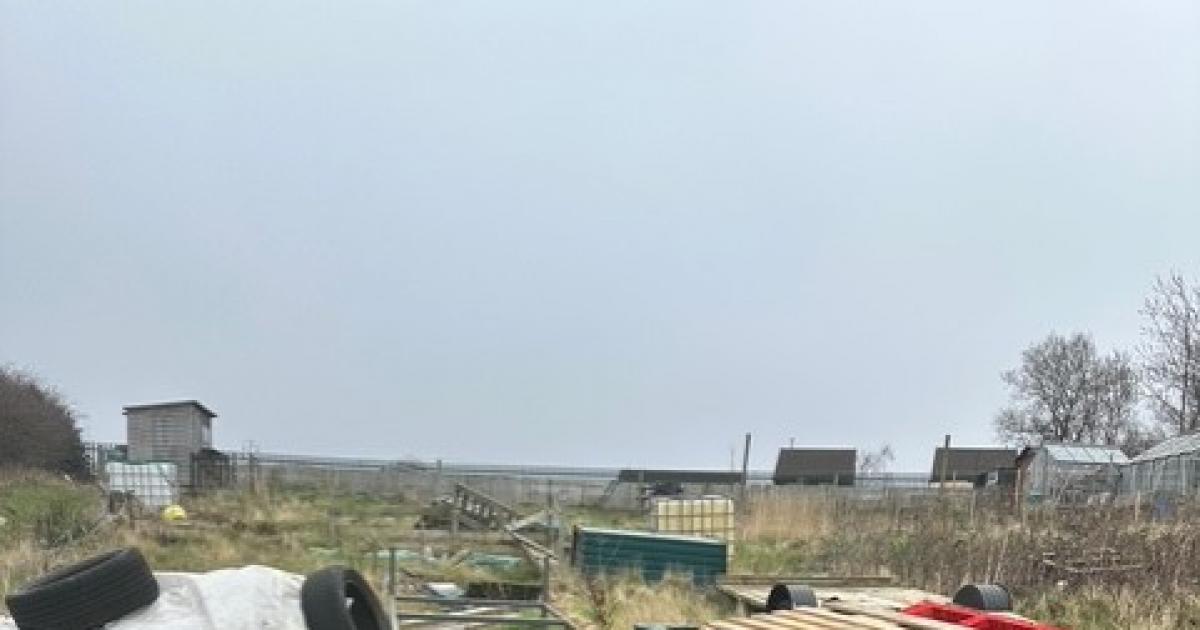
Scarborough Allotments. Sarah Mason/Stc.
Speaking at the full meeting, she said: “I have undertaken a recent walkabout and inspections across all five sites, and it has revealed a pattern of long-term neglect, unclear tenancy arrangements, unmanaged risks and a significant number of plots are unused or abandoned despite long waiting lists”.
She said that one site contained “significant amounts of rubbish, including asbestos sheeting”.
Cllr William Stuart noted that “there are some very good allotment holders in Scarborough who are really committed and they are just as frustrated as we are”.
A motion approved at the meeting noted the financial, compliance, legal, operational, and reputational risks that the town council faced if an immediate transfer of allotments was undertaken.
Advertisement
Scarborough Allotments.. Sarah Mason/Stc.
It stated that in their current state, the sites could not be considered fully fit for transfer without substantial remedial works or a funded plan to address the highlighted issues.
Cllr Mason told colleagues: “There is one structure of concern on a plot which is predominantly made with asbestos sheets and is on the verge of collapse, and this has been requested on numerous occasions to be removed.
“No regular checks have been carried out, even though this is part of the contract to the plot holders.”
Scarborough Allotments,. Sarah Mason/Stc.
She added: “Across all sites, we have observed long-term neglect of maintenance, large numbers of unused or abandoned plots and unclear boundaries between plots, poor communication with plotholders and severe lack of management regarding clear tenancy terms, boundaries, responsibilities, and implementation”.
Advertisement
Town councillors pledged to send a formal letter to North Yorkshire Council setting out the authority’s findings and concerns and requesting “full documentation and clarification of responsibilities and seeking a clear proposal for remediation and/or funding prior to transfer”.























































You must be logged in to post a comment Login